Senate Majority Leader John Thune (R-S.D.) said conversations are taking place over President Trump's appointment of Bill Pulte as acting national intelligence director as the GOP leader seeks to rally senators to extend a key spy powers law, Section 702 of the Foreign Intelligence Surveillance Act, by the end of the week. “All I know...
Senate Majority Leader John Thune (R-S.D.) said conversations are taking place over President Trump's appointment of Bill Pulte as acting national intelligence director as the GOP leader seeks to rally senators to extend a key spy powers law, Section 702 of the Foreign Intelligence Surveillance Act, by the end of the week. “All I know...
New rules for bar security staff are coming to Nova Scotia after recent incidents involving employees, including the death of a patron outside a Halifax bar in 2022.
New rules for bar security staff are coming to Nova Scotia after recent incidents involving employees, including the death of a patron outside a Halifax bar in 2022.
WASHINGTON, June 13 — Anthropic said on Friday it has been ordered by the US government to suspend access for all foreign nationals to its Fable 5 and Mythos 5 artificial intelligence models, citing national security concerns.The company said it received the export control directive on Friday from the government, which gave no specific details of its national security concern.It is Anthropic’s understanding, however, that the government believes it has b
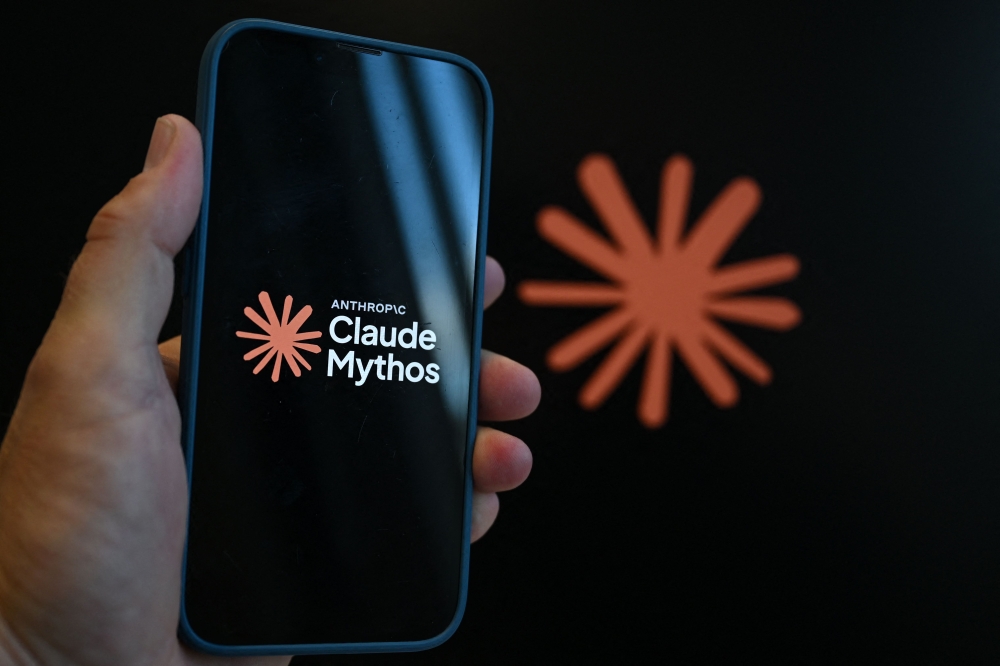
WASHINGTON, June 13 — Anthropic said on Friday it has been ordered by the US government to suspend access for all foreign nationals to its Fable 5 and Mythos 5 artificial intelligence models, citing national security concerns.
The company said it received the export control directive on Friday from the government, which gave no specific details of its national security concern.
It is Anthropic’s understanding, however, that the government believes it has become aware of a method of bypassing, or “jailbreaking,” Fable 5, according to the company’s statement.
“The net effect of this order is that we must abruptly disable Fable 5 and Mythos 5 for all our customers to ensure compliance. Access to all other Anthropic models will not be affected,” Anthropic said.
Anthropic added that it believed there was a “misunderstanding” and that it is working to restore access to the models as soon as possible. — Reuters
Google launched its own email service all the way back in 2004 (remember the hype around a free 1GB of email storage space?). In the years since, it’s become the default email service for many of us—in part because of its close ties to so other Google apps, like Google Drive, Google Maps, and Google Photos.
We’ve also seen plenty of competing products launch over the last two decades, so if you’re thinking about leaving Gmail, you have plenty of other options. Apple and Microsoft are two of t
Google launched its own email service all the way back in 2004 (remember the hype around a free 1GB of email storage space?). In the years since, it’s become the default email service for many of us—in part because of its close ties to so other Google apps, like Google Drive, Google Maps, and Google Photos.
We’ve also seen plenty of competing products launch over the last two decades, so if you’re thinking about leaving Gmail, you have plenty of other options. Apple and Microsoft are two of the big names that will gladly take over the responsibility of managing your inbox.
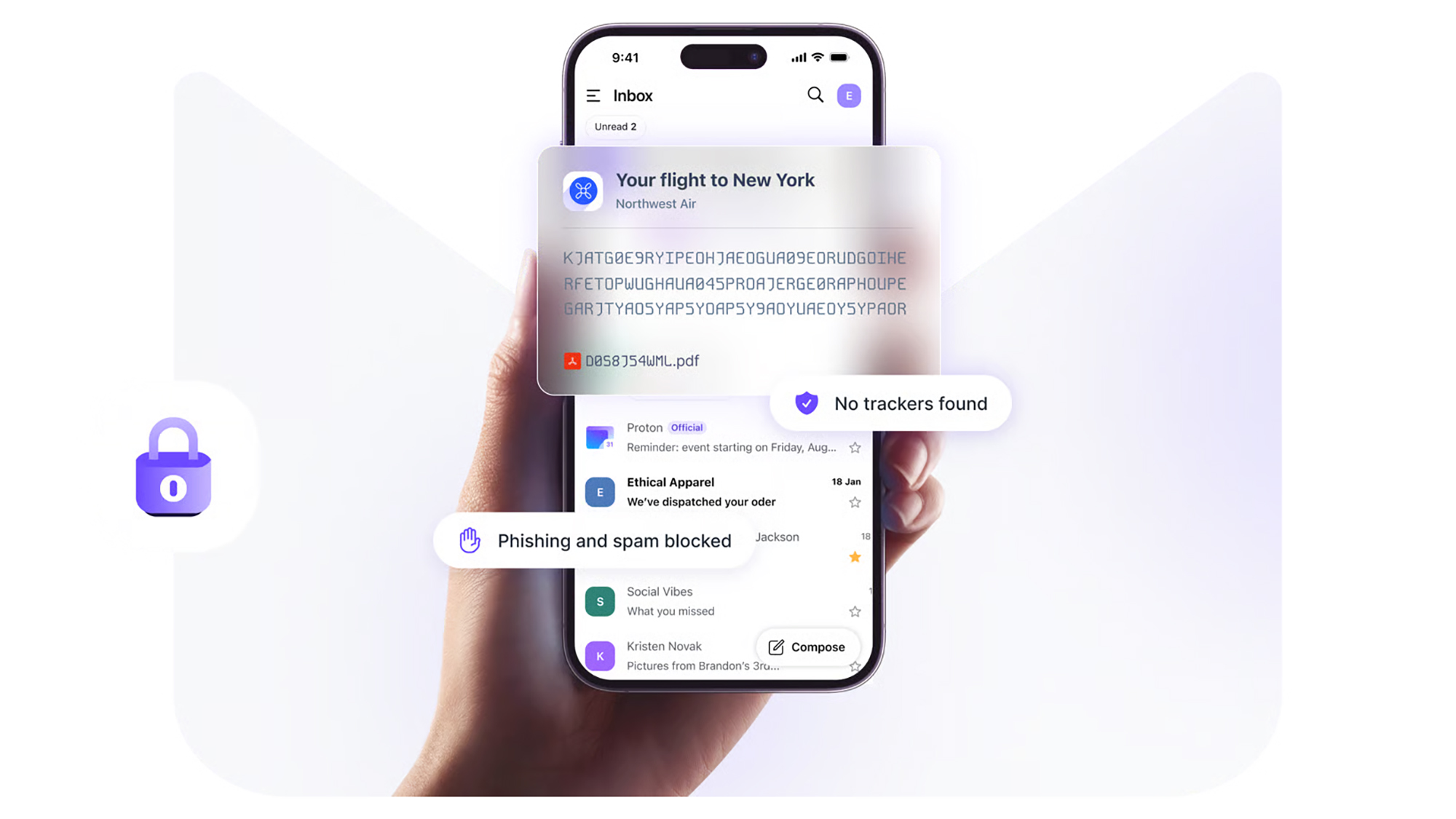
Then there’s Proton Mail, part of the Proton suite of products that prioritizes privacy and security. We’ve previously compared Proton Docs and Google Docs, and here we’re going to take a look at how Proton Mail stacks up against Gmail. It may be worth your while to switch, especially if you’re unsure about Google’s privacy policies.
Gmail vs Proton Mail: The basics
Both services are available on the web, and have dedicated apps for Android and iOS. Both have free options, with premium plans also available: Proton Mail gives you 1GB of storage for free, while Gmail gives you 15GB (though bear in mind this is also shared with Google Drive and Google Photos).
Paid plans start at $1.99 a month for Gmail and $4.99 a month for Proton Mail, but it’s hard to do a straight comparison, as a lot of other upgrades are included. Google gives you more AI features as well as more storage room, for example, while Proton gives you more usage across its VPN, Calendar, and Drive tools in addition to the extra cloud storage.
If you prefer to use a third-party email client like Apple Mail or Outlook, this is easily done on Gmail and only takes a few steps. With Proton Mail, it’s more involved: You need to sign up for a premium subscription, and use the Proton Mail Bridge app. This ensures end-to-end encryption, so not even Proton itself can read your emails (this isn’t something Gmail offers by default).
Proton Mail focuses on security and privacy. Image: Proton
Gmail vs Proton Mail: Key features
When it comes to key features, both Gmail and Proton Mail have plenty to offer, though with Proton Mail your use of labels and filters is restricted on the free plan. It supports folders though, which Gmail doesn’t. And if you pay for Proton Mail, you can set up multiple email addresses to work through one inbox, which again Gmail doesn’t support.
It’s similar with the email scheduling and snoozing features, and automatic email forwarding to another inbox. This is all free in Gmail, and requires a subscription in Proton Mail. There is also an undo send feature on both platforms, free of charge, that you can use to quickly bring back messages you’ve sent in error.
Ideally, you need to be paying for Proton Mail: Otherwise you run into restrictions on filters, folders, and labels, and the number of messages you can send (150 per day). With Gmail, all of this is supported by advertising and data collection This is the distinction Proton focuses on: You’ll never see a single advert inside Proton’s products.
Gmail vs Proton Mail: Interface
Both Gmail and Proton Mail offer a clean, modern-looking app interface that’s easy to navigate around and intuitive in the way it works. Both platforms let you customize the interface too—so you can tailor the look and feel to suit yourself (Gmail does offer more in the way of tweaks, however).
Both email platforms support keyboard shortcuts on the desktop, which can be very helpful for powering through emails and clearing out your inbox. There’s also well-done integration with the other apps offered by these companies—including Google Drive and Proton Drive, and Google Calendar and Proton Calendar.
You could argue that the Gmail app is a little bit more polished, especially on mobile, but there’s not much in it. Both platforms support conversation grouping, where emails from the same thread are bunched together for easy reference (but both also let you turn this off, if you prefer the traditional approach).
Gmail vs Proton Mail: Privacy
While Gmail may be ahead on the scorecard up to this point, it’s here that Proton Mail strikes back. The Proton offering is way ahead here, and offers full end-to-end encryption for your emails, plus password-protected emails, and expiration dates for emails.
Gmail provides some of these features in a more limited way, but they’re not enabled by default, and aren’t as comprehensive as the Proton Mail equivalent. While Google’s email servers are encrypted, Google holds the decryption keys—so messages can be accessed by Google or agencies approved by Google. The full, end-to-end encryption that Proton Mail provides means no one but you can read your emails.
Both these platforms do well in terms of anti-spam and anti-virus protection for your inbox. But on other privacy and security features, Proton Mail wins: The VPN bundled with all plans (even the free one), for instance, and the complete absence of ads.
Gmail is packed with features and functions. Image: Google
Gmail vs Proton Mail: Verdict
As you can see, the primary reason to switch to Proton Mail from Gmail is privacy and security. And if that’s what’s most important to you, then you’ll probably be okay with paying a few dollars more a month to get those features, and to make sure you’re not being tracked or advertised to in your inbox.
There’s still a lot to be said for Gmail though. It’s ubiquitous and compatible with a host of third-party apps and tools, it’s got loads of customization options and other features to play around with, and if you can stick under the 15GB storage limit then you get unlimited use of everything for free, too.
You also need to think of the inconvenience cost, of course, and it may take a while before all your contacts are right up to date with your new email address. Of course, if there are some contacts you’d rather not hear from again in the future, then switch away.
KUALA LUMPUR, June 11 — The close relationship between Malaysia and Japan is becoming increasingly important amid a more challenging and uncertain global environment, with both countries sharing common interests in strengthening energy security, economic resilience, technological development and regional stability, says Prime Minister Datuk Seri Anwar Ibrahim.In a Facebook post yesterday, he said his first official visit to Japan, which began on Monday and lasted
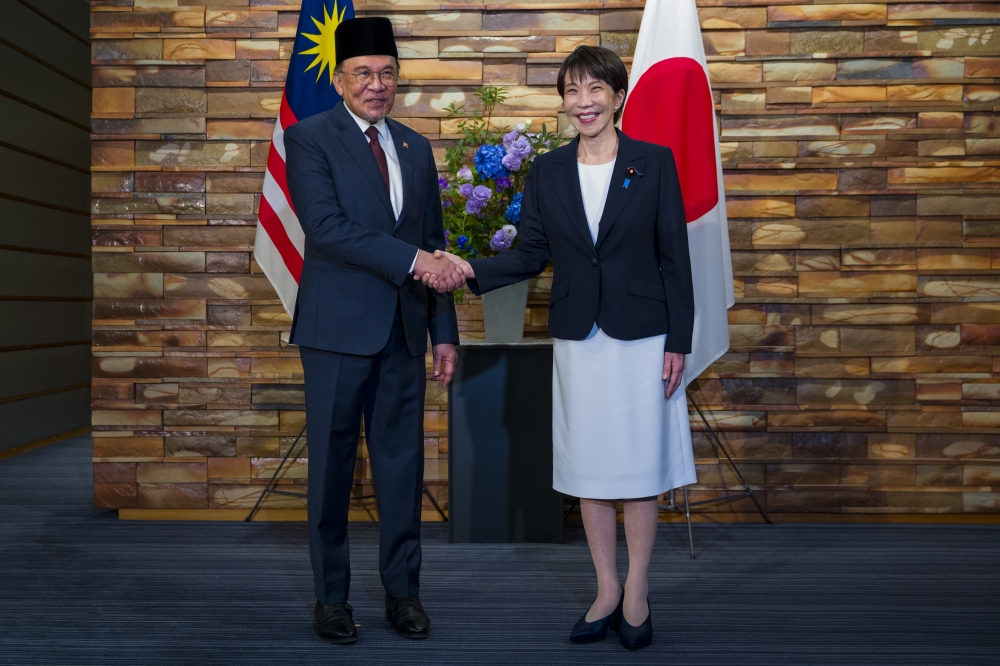
KUALA LUMPUR, June 11 — The close relationship between Malaysia and Japan is becoming increasingly important amid a more challenging and uncertain global environment, with both countries sharing common interests in strengthening energy security, economic resilience, technological development and regional stability, says Prime Minister Datuk Seri Anwar Ibrahim.
In a Facebook post yesterday, he said his first official visit to Japan, which began on Monday and lasted three days, marked an important milestone in further strengthening the special relationship between the two countries, since diplomatic ties were established in 1957.
Anwar said Malaysia and Japan had since continued to grow as close friends and trusted strategic partners.
“I subsequently led the Malaysian delegation in a meeting with Japanese Prime Minister Takaichi Sanae and members of the Japanese administration at the Kantei, which was the highlight of my official visit to Japan that concluded today.
“Upon my arrival at the Kantei, I was welcomed by Prime Minister Takaichi before being accorded a guard of honour, accompanied by the national anthems of Malaysia and Japan,” he said.
Anwar, who is also Finance Minister, said the visit was expected to open up broader opportunities for new areas of cooperation between the two countries.
The official visit was undertaken at the invitation of the Japanese government, and Anwar and his delegation departed for Malaysia yesterday. — Bernama
Two out of three journalists say the working environment in Hong Kong has changed “for the worse” in the past year, according to the latest survey by the Foreign Correspondents’ Club.
Journalists outside Wan Chai’s District Court, on August 29, 2024. Photo: Kyle Lam/HKFP.
The 2026 FCC Press Freedom Survey, which received 78 responses from members, found that “67 per cent of respondents said the working environment for them as a journalist had changed for the worse in the last 12 months.”
Two out of three journalists say the working environment in Hong Kong has changed “for the worse” in the past year, according to the latest survey by the Foreign Correspondents’ Club.
Journalists outside Wan Chai’s District Court, on August 29, 2024. Photo: Kyle Lam/HKFP.
The 2026 FCC Press Freedom Survey, which received 78 responses from members, found that “67 per cent of respondents said the working environment for them as a journalist had changed for the worse in the last 12 months.”
The FCC pointed out that the survey “happened to take place” after Apple Daily founder Jimmy Lai was convicted and sentenced to jail, as well as Beijing’s national security office in Hong Kong, the Office for Safeguarding National Security (OSNS), summoned representatives of several major foreign media outlets, shortly following the deadly Wang Fuk Court fire.
At the meeting, the OSNS warned that some media organisations had spread false information and smeared the government in reports on the massive blaze at the housing estate in Tai Po, which killed 168 people and displaced thousands of residents.
‘Watershed moment’
One respondent said that the warning by the OSNS to foreign journalists “should be seen as a watershed moment here in Hong Kong. It has created an increased chilling effect.”
About a quarter of respondents said they experienced minor or significant interference in their work, with most describing incidents while covering the Tai Po fire. One journalist said they were told to leave when they were “speaking to survivors in a corner, disturbing no one.”
A resident in Wang Sun House, Wang Fuk Court, on April 20, 2026. Photo: Kyle Lam/HKFP.
Another respondent said that the 20-year sentence handed down to Lai “only further chills the local reporting environment.”
More than 50 per cent said sources had become less willing to be quoted during the same period, the survey found.
One respondent was quoted as saying that “the scope of what is ‘acceptable’ in terms of who can be quoted” has narrowed each year.
“It has reached the point where non-political voices who question policy-making or have reservations about certain aspects of it will get cut or reduced significantly by editors,” the respondent added.
Fewer respondents had a clear sense of what subjects are sensitive in the most recent survey, down from 78 per cent last year to 65 per cent this year, with one respondent saying the Beijing-imposed national security law “is still rather fluid and capricious.”
Half of the respondents said they were “slightly concerned” about arrest or prosecution in relation to their work as journalists, while 41 said they were not. The remaining 9 per cent said they were very concerned.
The Foreign Correspondents’ Club, Hong Kong. Photo: Kelly Ho/HKFP.
A third of respondents said their organisations had downsized in Hong Kong. Among them, a third cited the political and legal environment as well as corporate cost-cutting.
But 17 per cent of respondents said their organisations had increased staff in the city, with 40 per cent of them citing “the growing importance of Hong Kong” and increased investment.
“Press freedom remains engrained in Hong Kong law, but as is apparent from the results of our survey, the sentiment for working journalists in the city has been in flux,” said FCC President Morgan Davis.
“The FCC supports journalists’ fundamental right to conduct their work freely and without fear of intimidation or harassment,” the club said in its statement.
“We will continue to safeguard press freedom in the city, via engagement with the journalism community and relevant stakeholders, in order to make sure that Hong Kong remains an international hub for media, business and finance.”
China’s market regulator announced a sweeping investigation on Friday against three major brokers running cross-border trading, as it launched a two-year crackdown on investment leaving the country.
Photo: David Dennis via Flickr.
China does not allow private individuals to directly invest in overseas markets, requiring them to trade assets only through approved third-party channels.
However, regulations differ in the semi-autonomous city Hong Kong, and some brokers have been able to l
China’s market regulator announced a sweeping investigation on Friday against three major brokers running cross-border trading, as it launched a two-year crackdown on investment leaving the country.
Photo: David Dennis via Flickr.
China does not allow private individuals to directly invest in overseas markets, requiring them to trade assets only through approved third-party channels.
However, regulations differ in the semi-autonomous city Hong Kong, and some brokers have been able to legally operate there, attracting investors from mainland China to open trading accounts in the Chinese finance hub.
Authorities have sought to regulate the loophole in recent years, and in 2022 barred private Chinese investors from opening accounts with such brokers.
The China Securities Regulatory Commission (CSRC) said on Friday it will probe and impose penalties on Hong Kong-registered brokers Futu and Longbridge, as well as New Zealand-registered Tiger Brokers.
Regulators said the brokers had conducted securities-related business in China “without obtaining the necessary approvals or licenses”, violating China’s securities law.
The CSRC said in a separate statement Friday it will join forces with seven other bodies, including the Ministry of Public Security and the People’s Bank of China, to carry out a two-year campaign targeting illegal cross-border securities activities.
The campaign aims to “completely eradicate the illegal cross-border operations of overseas securities, futures and fund management institutions”, it said.
Futu said in a filing that Chinese authorities have proposed a fine of about 1.85 billion yuan (US$271 million).
Futu “has already ceased opening accounts for applicants with mainland Chinese identities… has consistently engaged in active dialogue with regulatory authorities and complied with their rectification requirements”, it said in a statement.
Photo: Rhoda Kwan/HKFP.
Chinese investors accounted for about 13 percent of the firm’s total client base of 29.2 million users registered globally, it added.
UP Fintech, a US-listed brokerage firm who owns Tiger Brokers, said CSRC fined the company 308.1 million yuan and confiscated 103.1 million yuan of illegal income.
The firm “accepts the penalty with sincerity,” it added.
The two brokers’ CEOs were also fined.
Chinese authorities’ aim “is to gain full control of capital outflows, and to block any loopholes of these illegal activities”, Kelvin Lam, a China-focused economist at Pantheon Macroeconomics, told AFP.
“What China is trying to do at the moment is to make sure no overseas branches of these companies… take funds out of Chinese investors and help them to invest overseas,” Lam said.
Hong Kong cross-border brokers have operated in a regulatory grey zone until now, he said, but authorities are seeking to fully stem the flow of Chinese investment out of the country.
“Rather than worrying the fact of capital leaving China illegally, the aim of Chinese authorities is to seek full control of the situation rather than anything else,” Lam said.
Shares in Nasdaq-listed Futu tumbled more than 25 percent in Friday’s trading, with UP Fintech dropping about 20 percent.
President Trump’s acceleration of the start date for his controversial pick to lead the intelligence community is pushing both sides to dig in on their impasse over renewing the nation’s spy powers, further complicating even a short-term extension. House and Senate efforts to bring a bill to the floor to reauthorize Section 702 of the...
President Trump’s acceleration of the start date for his controversial pick to lead the intelligence community is pushing both sides to dig in on their impasse over renewing the nation’s spy powers, further complicating even a short-term extension. House and Senate efforts to bring a bill to the floor to reauthorize Section 702 of the...
President Donald Trump and Israeli Prime Minister Benjamin Netanyahu leave at the conclusion of a joint press conference at Trump's Mar-a-Lago residence in Palm Beach, Florida, on December 29, 2025. | Jim Watson/AFP via Getty Images
At its outset, the war known as Operation Epic Fury in the United States and Operation Roaring Lion in Israel marked a historic first: the first time the two countries’ militaries went to war fighting side by side. By all accounts, Prime Minister Benjamin Net
President Donald Trump and Israeli Prime Minister Benjamin Netanyahu leave at the conclusion of a joint press conference at Trump's Mar-a-Lago residence in Palm Beach, Florida, on December 29, 2025. | Jim Watson/AFP via Getty Images
At its outset, the war known as Operation Epic Fury in the United States and Operation Roaring Lion in Israel marked a historic first: the first time the two countries’ militaries went to war fighting side by side. By all accounts, Prime Minister Benjamin Netanyahu was one of the key voices — if not the most important voice — influencing President Donald Trump’s decision to launch the military operation, which has now lasted more than 100 days. And yet, it’s been clear from the start that there were differences in the two countries’ priorities when it came to the war. Those differences have never been more evident than they were this past weekend.
On Sunday night, Iran launched its first direct attack against Israel since the tentative ceasefire in the conflict in early April, firing a barrage of missiles at several targets including an air base; Tehran said it was retaliation for Israel’s prior offensive in southern Lebanon. Trump said on Sunday that he had urged Netanyahu not to retaliate in order to allow ceasefire talks to continue. He also told the Financial Times in an interview on Sunday that Netanyahu “won’t have any choice,” but to accept a US-negotiated ceasefire, adding, “I call the shots,” he said. “I call all the shots. He doesn’t call the shots.”
Publicly, it looked like Netanyahu had defied Trump, although subsequently, sources told the Wall Street Journal that Netanyahu had made clear to Trump in a conversation on Sunday that he had to retaliate, and Trump had simply urged him to keep it limited. Either way, it’s a signal that when it comes to this war, the two leaders’ incentives are moving in opposite directions. The airstrikes come just a week after a tense phone in which Trump called Netanyahu “fucking crazy” and accused him of ingratitude over what Trump felt was Israel’s disproportionate military actions in Lebanon. On Sunday, according to Trump, he warned Netanyahu that if he escalated the war further, he might soon be left to fight Iran alone.
The divisions here are not new. Israel’s end goal, from the start of the operation, has been regime change in Tehran, whereas the United States was more concerned about maintaining regional stability. As was the case in Gaza, Israeli officials felt the ceasefire with Iran was imposed on them by the United States and that their objectives had not yet been met.
Compounding the issue, both leaders are trailing heading into pivotal elections. Netanyahu faces the very real possibility of losing power in national elections in late October. Trump’s Republicans may lose one or both houses of Congress in midterm elections in November.
While Trump likely still believes he can salvage a victory out of Epic Fury and has shown he won’t cut a deal with Iran at any price, it would clearly be in his best interest, and in the interest of his party, for him to end an unpopular war that has driven up the cost of living for American voters as quickly as possible.
In Israel, meanwhile, the war is extremely popular, and resuming it may redound to the benefit of Netanyahu, reeling in the polls over his ongoing corruption trial as well as criticism over the security failures that led to the October 7, 2023, terrorist attacks. After months in and out of bomb shelters, it would certainly be harder to make the case to Israeli voters that it was all worth it if the war ends with Iran’s regime still in place, rebuilding its missile forces, its proxy networks, and perhaps even its nuclear program. Israel’s military is also pushing ever more aggressively into Lebanon in response to rocket attacks from Iran’s ally Hezbollah, despite US-led efforts to reach a ceasefire there.
“There was no way that Netanyahu — when he’s so close to an election when he’s underwater, and when people are already angry about what’s going on in northern Israel [where Hezbollah is firing missiles] — could simply not respond to direct Iranian ballistic missiles on Israeli territory,” said Michael Koplow, chief policy officer at the US-based Israel Policy Forum.
Both leaders are also at pains to demonstrate that they are not letting the other one “call the shots.” Netanyahu has been under increasing criticism from his electoral opponents for turning Israel into a client state of the United States and being unable to stand up to Trump; the criticism will only get louder if Israel is pressured into agreeing to a US-brokered ceasefire viewed as favorable to Iran. Trump, meanwhile, is taking heat from opponents as well as members of his own coalition for taking marching orders from Israel. Netanyahu has incentive to show he can defy Trump. Trump continues to emphasize that he’s the dominant partner in the relationship.
The biggest point of stress in the partnership in the coming weeks may be Lebanon. Israel views Hezbollah as an imminent threat and wants to separate the issue from the negotiations with Iran, preserving its ability to strike in Lebanon as it sees fit. The Iranians, as they did on Sunday, are eager to link the two battlefields, demanding that any ceasefire also cover Lebanon. That means that the Trump administration — for whom the issue of Hezbollah is far less existential — is increasingly viewing Israel’s actions in Lebanon as an obstacle to ending the wider war. Trump has already pushed Israel to curtail some of its operations and avoid strikes on the Lebanese capital, Beirut.
It will certainly complicate efforts to bring this war to a close if the United States has to negotiate a ceasefire not only with its adversary, Iran, but with its ally, Israel, as well. But ultimately, there’s probably a floor to just how bad relations between Trump and Netanyahu can get. For all that he’s far more willing than other US presidents to publicly say things that seem calibrated to humiliate the Israeli leader, Trump is also far more willing to accede to Israel’s actual policies — in Iran, Lebanon, or the Palestinian territories. For his part, Netanyahu can only go so far when it comes to publicly breaking with Trump.
The real test for whether something has fundamentally changed in the US-Israeli relationship is likely to come when one or both of these leaders are out of office.
Foreign spies are fitting turtles and fish with sensors to create underwater maps of China’s coastline, Beijing warned Friday in apparent reference to its Western competitors.
A sea turtle swimming underwater. File photo: OhCan, via Pexels.
In a social media post ominously titled “Under the deep blue, undercurrents are surging”, the Ministry of State Security said international spy agencies are using “new types of espionage equipment” to steal sensitive marine data.
“Relatively large m
Foreign spies are fitting turtles and fish with sensors to create underwater maps of China’s coastline, Beijing warned Friday in apparent reference to its Western competitors.
A sea turtle swimming underwater. File photo: OhCan, via Pexels.
In a social media post ominously titled “Under the deep blue, undercurrents are surging”, the Ministry of State Security said international spy agencies are using “new types of espionage equipment” to steal sensitive marine data.
“Relatively large marine animals with sensors attached have been discovered in certain waters of China,” the ministry said, in a section titled “spy turtles, spy fish”.
The clandestine creatures were found “swimming in a specific area, collecting sensitive data about the marine environment such as water temperature, salinity and ocean current, transmitting it overseas via satellite”, it said.
Foreign groups also used solar-powered wave gliders, buoys with high-precision sensors, and devices loaded onto cargo ships capable of capturing “port dynamics” in real time, it added, without naming a particular agency.
The data collected would be used to create “underwater maps” that can “identify weak points in China’s coastal defences, posing a serious threat to China’s national security”, according to the ministry.
The ministry urged proper security checks on equipment received from abroad, and called on fishers to report any fishy-looking buoys or devices found at sea.
Beijing and Western governments have long traded accusations of espionage.
Last year Beijing warned government workers to remain vigilant of “honeytrap” schemes, after a public servant was lured by the “seductive beauty” of a foreign agent.

 Login
Login