Tension prevailed at the Kanpur Police Commissionerate after around 40-50 armed personnel of the ITBP (Indo-Tibetan Border Police) gathered at the premises demanding action in an alleged medical negligence case involving the mother of an ITBP commando, prompting authorities to order a fresh investigation into the matter. The personnel reportedly took positions at various points inside the commissionerate complex, expressing anger over the lack of action on a complaint filed by ITBP commando Vika
Tension prevailed at the Kanpur Police Commissionerate after around 40-50 armed personnel of the ITBP (Indo-Tibetan Border Police) gathered at the premises demanding action in an alleged medical negligence case involving the mother of an ITBP commando, prompting authorities to order a fresh investigation into the matter.
The personnel reportedly took positions at various points inside the commissionerate complex, expressing anger over the lack of action on a complaint filed by ITBP commando Vikas Singh. The situation remained tense for nearly an hour before senior police and health officials intervened and held discussions with representatives of the force.
The protest stemmed from allegations that negligence during treatment at a private hospital in Kanpur resulted in the amputation of the hand of Singh's 56-year-old mother, Nirmala Devi.
Complaint over treatment of ITBP jawan's mother
According to Singh, a resident of Fatehpur currently posted with the 32nd Battalion of the ITBP at Maharajpur, his mother was initially undergoing treatment for breathing difficulties, weakness and other health issues. After her condition deteriorated on 13 May, doctors at the ITBP hospital referred her to a higher medical centre included in the force's approved panel.
Singh alleged that due to heavy traffic, he took his mother to a private hospital at Tatmil where she was placed on oxygen support and administered treatment through a cannula inserted into her hand. He claimed that an incorrect injection was subsequently administered, causing her hand to turn black and swell progressively.
As her condition worsened, she was shifted to another hospital on 14 May. Despite treatment efforts, doctors later informed the family that infection had spread extensively in her hand, making amputation necessary. The procedure was reportedly carried out on 17 May.
“My mother's hand was cut off right in front of me,” Singh had said while seeking action against the hospital management and doctors, alleging that negligence was responsible for the injury.
कानपुर में ITBP का पारा चढ़ गया है !!! अपने साथी की माँ का हाथ काटे जाने के मामले में 40-50 जवान अपने अधिकारियों के साथ CP से मिलने पहुंचे हैं। बताया जाता है कि ITBP अधिकारी अस्पतालों की जांच में स्वास्थ्य विभाग की रिपोर्ट से नाराज़ हैं। #Kanpur#UPPolice@NBTLucknowhttps://t.co/vMFct8Fmn3pic.twitter.com/HVktqJbIci
The case drew widespread attention after Singh visited the Police Commissionerate on 19 May carrying his mother's amputated hand in a thermocol box and demanding action against the hospital. Police Commissioner Raghuvir Lal subsequently referred the matter to the Chief Medical Officer for investigation.
However, according to the report, the initial inquiry submitted by a committee constituted by the Chief Medical Officer did not arrive at a clear conclusion regarding alleged negligence, and no immediate action followed.
The perceived delay in action reportedly led to dissatisfaction among ITBP personnel, culminating in the gathering of armed jawans and officers at the commissionerate demanding accountability and a definitive inquiry.
Fresh inquiry ordered
Following discussions involving senior police officials, health authorities and ITBP representatives, Chief Medical Officer Haridatt Nemi announced the constitution of a fresh investigation team led by two senior officers.
“A team has been formed under the leadership of two senior officers to investigate the matter, which will visit the spot and conduct a thorough investigation of the entire case and submit its report,” Nemi said.
He added that officials had already interacted with ITBP representatives and addressed some of their concerns. According to Nemi, the inquiry would involve recording statements from all parties, examining medical records and completing other procedural requirements before a final conclusion is reached.
Additional allegations against hospital
The report also cited ITBP liaison officer Arpit Singh as alleging that a woman constable and an inspector of the force had previously died while undergoing treatment at the same hospital. He said he had personally come forward to support action against the institution and sought a thorough investigation into its functioning.
These allegations have not been independently verified, and no findings regarding negligence have yet been established by the inquiry.
Officials said the fresh probe would determine whether medical negligence occurred and what further action, if any, may be warranted based on the findings.
Tense situation in Kanpur as ITBP personnel storm Police Commissionerate over medical negligence
A 26-year-old man was killed and eight others injured after a four-storey under-construction commercial building collapsed near Delhi's Saket Metro Station on Saturday evening, triggering a massive multi-agency rescue operation.The deceased was identified as Ravi, who was declared "brought dead" at the AIIMS Trauma Centre, according to the Delhi Fire Services (DFS).Officials said a total of nine people were pulled out from the debris. Two were rescued by local residents before emergency teams ar
A 26-year-old man was killed and eight others injured after a four-storey under-construction commercial building collapsed near Delhi's Saket Metro Station on Saturday evening, triggering a massive multi-agency rescue operation.
The deceased was identified as Ravi, who was declared "brought dead" at the AIIMS Trauma Centre, according to the Delhi Fire Services (DFS).
Officials said a total of nine people were pulled out from the debris. Two were rescued by local residents before emergency teams arrived, while seven others were rescued by personnel from the National Disaster Response Force (NDRF), Delhi Disaster Management Authority (DDMA), Delhi Police and civil defence units.
The injured have been identified as Saika Khan (27), Aditya Sharma (24), Tarun Kumar (26), Anuj Dikshi (25), Neelam Yadav (25), Kshitij Pratap (25), Aastha (25) and Vishal (24). All are undergoing treatment at the AIIMS Trauma Centre.
#Delhi- A multi-story building collapsed near Saket Metro Station, causing panic.
According to fire officials, additional manpower and lighting have been deployed in response to the possibility of people trapped under the debris.
The building in Saidullajab, near Saket Metro Station, collapsed on Saturday evening, reducing the structure to a heap of concrete and twisted metal.
Authorities said the ground-plus-three-floor building, which was under construction, came crashing down onto a nearby tin-shed canteen where several youngsters were having dinner, trapping multiple people beneath the rubble.
Eyewitnesses said the collapse occurred around 6 pm, sending panic through the area.
Rescue teams rushed to the site soon after the incident, deploying heavy machinery and specialised equipment to search for survivors buried under the debris.
Officials said the search operation remains underway as teams continue to comb through the rubble to ensure no one is trapped beneath the collapsed structure.
The cause of the collapse is yet to be determined.
Authorities are expected to investigate whether construction norms were violated and if any negligence contributed to the tragedy.
Watch more Pingu fun!: www.youtube.com/watch?v=ZjHx73qtshE&list=PLu9Ki5Wn5H5eZ_lsFoMKcbll6lNtXNywz
Be sure to Subscribe! https://www.youtube.com/user/pingu?sub_confirmation=1
Pingu is a charming and cheeky young penguin who is always up to mischief. Along with his mom, dad, little sister, and all his friends, Pingu gets himself into comical situations in the snowy world in which he lives.
Be sure to subscribe to our channel so you can be the first to watch all the great Pingu videos avail
Watch more Pingu fun!: www.youtube.com/watch?v=ZjHx73qtshE&list=PLu9Ki5Wn5H5eZ_lsFoMKcbll6lNtXNywz
Be sure to Subscribe! https://www.youtube.com/user/pingu?sub_confirmation=1
Pingu is a charming and cheeky young penguin who is always up to mischief. Along with his mom, dad, little sister, and all his friends, Pingu gets himself into comical situations in the snowy world in which he lives.
Be sure to subscribe to our channel so you can be the first to watch all the great Pingu videos available on YouTube!
https://www.youtube.com/user/pingu?sub_confirmation=1
Watch more Pingu fun!: www.youtube.com/watch?v=ZjHx73qtshE&list=PLu9Ki5Wn5H5eZ_lsFoMKcbll6lNtXNywz
Be sure to Subscribe! https://www.youtube.com/user/pingu?sub_confirmation=1
Pingu is a charming and cheeky young penguin who is always up to mischief. Along with his mom, dad, little sister, and all his friends, Pingu gets himself into comical situations in the snowy world in which he lives.
Be sure to subscribe to our channel so you can be the first to watch all the great Pingu videos available on YouTube!
https://www.youtube.com/user/pingu?sub_confirmation=1
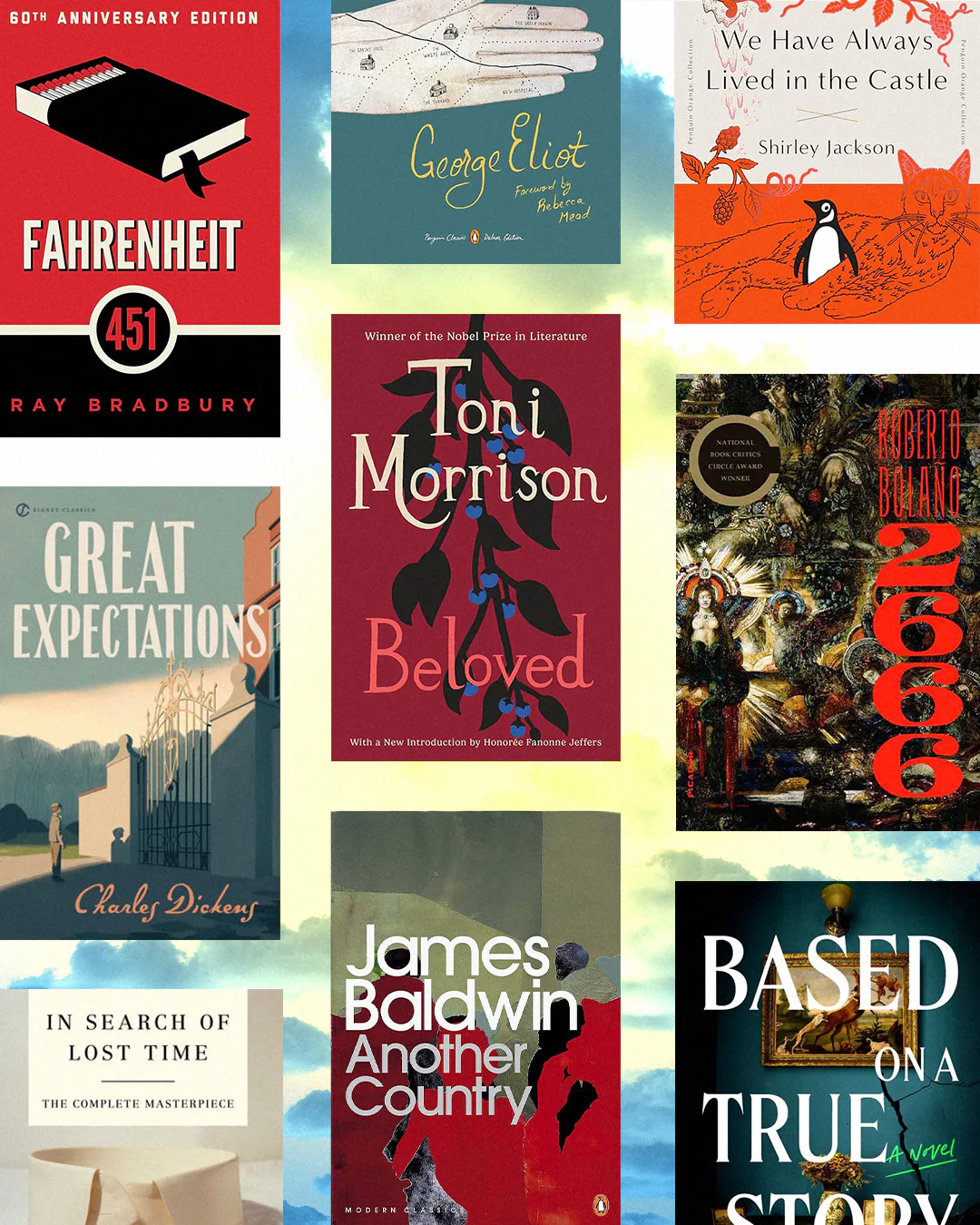
Images courtesy of the publishers. Collage by Kimberly DuckIn the past few years, classic novels have risen from the ashes—or dusty bookshelves—becoming popular material for film studios, authors, and yes, readers, to revisit with gusto. It all began with Jane Austen, ever the bellwether. Last year marked the legendary novelist’s 250th birthday, unleashing a swarm of festivals, parades, and a rise in book sales. Next came Wuthering Heights—the hotly debated film adaptation starring Margot Robbie
Images courtesy of the publishers. Collage by Kimberly Duck
In the past few years, classic novels have risen from the ashes—or dusty bookshelves—becoming popular material for film studios, authors, and yes, readers, to revisit with gusto. It all began with Jane Austen, ever the bellwether. Last year marked the legendary novelist’s 250th birthday, unleashing a swarm of festivals, parades, and a rise in book sales. Next came Wuthering Heights—the hotly debated film adaptation starring Margot Robbie and Jacob Elordi sent droves to bookshops, increasing sales of the novel by over 100 percent before the premiere. Netflix’s Frankenstein (also starring Elordi) adaptation boosted sales by 180 percent the week after release. More book-to-screen works are on the way: Netflix has a Pride and Prejudice remake up its sleeve, along with an East of Eden series starring Florence Pugh; The Odyssey will hit theaters this summer.
But movie adaptations are merely one limb of the tree. Retellings are everywhere in contemporary literature, from King Lear to David Copperfield. On TikTok, #classicliterature has over 80,000 posts and has spawned plenty of accounts devoted to unpacking hefty texts, pushing classic novels out of academic corners and into mass consumption.
With this attention comes the spiky topic of classification: What qualifies as a classic, and who gets to decide? The old canon has been long due for a refresh, and the cruise ship of change is finally righting its course: once-overlooked books by marginalized authors are receiving their roses. Take, for example, Doubleday’s new Outsider Editions imprint. Due out mid July, the publisher will release its first batch of essays, novels, short stories, and memoirs from underrepresented authors who probably weren’t discussed in your English class.
Regardless of how known a title may be, some readers may bristle at the thought of diving into a classic (surely a holdover from weekends scaling mountains of assigned reading.) But with the pressure off, these titles can provide unique entry into themes and concepts still very much alive across art forms. Not to mention, it’s usually best to read the book before seeing the movie.
For the classically curious, we enlisted 14 authors to share their favorite titles—both well-known and unfamiliar—with guidance on how to approach the old chestnuts.
“I reread Moby Dick every year—the eccentricity of Melville’s language surprises me each time I step back into it,” says Kaveh Akbar, author ofMartyr!. “He’s laugh-out-loud funny. Nowadays I’ll try out different recorded versions, letting the language wash over me like song.”
“I’m in a poetry group where my role is to ask, ‘Is the poet maybe kidding?’ In this case: YES HE IS! If you read just for the fun of it, Melville is a hoot and a half,” says 2018 Pulitzer-Prize Winner for Fiction, Andrew Sean Greer, author ofLess and forthcoming novel,Villa Coco. “Enjoy it and skip whatever blubber-boiling you like. But do challenge yourself to ask, ‘Is he kidding?’ Then all of it will be pure fun.”
“Great Expectations has everything: Family, ambition, escaped convicts, bullies, class differences, a vengeful bride left at the altar who weaponizes a young woman to take her revenge on men, secrets kept and revealed, and a (sort of) happy ending. Oh, and a murder or two,” says Francine Prose, author of many novels including the forthcoming,Five Weeks in the Country. “The best way into the book is to read it aloud. The complex sentences and 19th-century diction soon begin to seem as familiar as everyday speech.”
“Maybe its ubiquity as a ‘classic’ is one reason why actually reading the text is such a revelatory experience—it’s a far weirder and more pleasurable book than its presence on countless syllabi would suggest,” says Julie Buntin, author ofMarlena and forthcoming novel,Famous Men. “Pick it up and be open to it—within a few chapters, the sentences unspool easily, sweeping you up.”
Best for: Those who will do just about anything to inhabit the world ofThe Goldfinch (including watching the movie), or feel it’s high time to read the real thing after bingeing the 1998 film adaptation.
“It’s just great,” says Kiley Reid, author of novels,Such a Fun Age andCome and Get It. “And it has the best opening chapter I can remember reading, with a character that you never see again. There’s action and fires and running from the law, and yet, it reads slow and delirious, like a middle-of-the-night fever dream.”
“Almost everyone feels that they should read it; hardly anyone actually has. I’m speaking as a skeptic who held out until about 15 years ago,” says 1999 Pulitzer Prize Winner for Fiction, Michael Cunningham, author of The Hours, and the forthcoming memoir,Unsayable: My Life in Writing. “In Search of Lost Time isn’t difficult—Ulysses is difficult. Proust’s book is just long. In Search of Lost Time, all seven volumes of it, is probably the most thorough, incisive account of what it’s like to live on the planet earth. It contains the highs, the lows, and the middles. Read it with at least one friend—there are some Arctic stretches, and you’ll need encouragement to keep going.”
Greer suggests “Swann in Love, the second part of volume one in Proust’s In Search of Lost Time. Read 10 pages a night and let it wash over you. There is always something to make you gasp: with beauty, with insight, with heartache. It will do what all great fiction aspires to: it will change you.”
Best for: Those who finished theMy Struggle series, took zero breaks while attending a showing of Oppenheimer or plan to watch the Masters Golf Tournament in its entirety.
“Beloved by Toni Morrison is not only a deeply felt and vividly rendered story, it’s also a testament to what’s possible in fiction,” says Angela Flournoy, author of The Turner House andThe Wilderness. “Morrison breaks so many ‘rules’ in this novel, but it all works. First-time readers shouldn’t be intimidated by Beloved—it’s a book that puts memory at the center of the narrative, and holding onto that fact will help you appreciate its beauty.”
Best for: Fans ofLincoln in the Bardo, those who consider Jesmyn Ward a living legend (she is) or were early acolytes of Sinners.
“While it was published in 1993, and calling it a classic makes me feel old, I still think Octavia Butler’s Parable of the Sower should be considered a classic,” says Paige Lewis, poet and author of forthcoming novel,Canon. “In this dystopian novel, set in the then-future of 2024, teenager Lauren Olamina struggles to survive in an America that’s collapsing because of a fascist government, corrupt police, climate change, and resource scarcity-related violence. Something my students like to point out is the difference between the young characters in the book and the older characters. The older people in Lauren’s community sit around hoping for the world to go back to ‘the good old days,’ while it is clear to 15-year-old Lauren that this sort of passivity is detrimental.”
Best for: Those who have rereadThe Roadseveral times, read (and now are watching) The Testaments, and are eager for the return of The Last of Us.
“The Buddha in the Attic follows a group of Japanese ‘picture brides’ as they come to America in the 1900s, marry men they’ve never met, and settle into their new lives,” says Katie Yee, author ofMaggie; Or, A Man and Woman Walk Into a Bar. “You should read it because it’s been banned in several school districts. You should read it because it’ll surprise you, with its humor in quiet moments. You could read it because it’s short: only 144 pages. Ultimately, though, you should read it because the ending will shock you. It’s one of those rare, perfect novels that marries form and content; the pain at the heart of these characters is felt even in its structure, in the bones of the book.”
“This is quite possibly my favorite novel of all time, and I dare anyone to read the opening paragraph and resist the urge to read it in a single sitting,” says Kevin Wilson, author of several short story collections and novels includingNow is Not the Time to Panic,Nothing to See Here and most recently,Run for the Hills. “Merricat Blackwood lives with her sister and uncle in Blackwood Manor, in isolation from the rest of the town ever since their family died by poisoning. In such a short span of time, I was blown away by how much of our secret desires—which we hold so deeply inside ourselves—could rush to the surface.”
Best for: Readers seeking out O.G. weird-girl lit, watched Wednesday with absolute delight or still carry a torch for season one of Euphoria.
“I recently picked up my dad’s old paperback of Another Country, which I first read in college, and realized just how much it formed me as a writer,” says Rob Franklin, author ofGreat Black Hope. “Its vision of bohemian 1950s New York is uncompromising—kinetic, haunting, with teeth. I’ve heard the book dismissed as relentlessly bleak, but what I love about it—and what I think it gets so right—is its portrayal of how intimate relationships across identity lines are so often pressure-tested by larger systems. We see characters like Ida (a Black woman) and Vivaldo (a white man) who are bonded by grief but also speaking across an unbridgeable distance (side note: it also has this HBO Max Industry thing going on, where every character is randomly bisexual, which I adore). Read it to pick apart the craft. Watch the way the sentences move. Ask yourself: ‘Which questions does Baldwin attempt to answer about love, sex, politics, and history? And what do these reveal about the author, the tensions in his own life he may have been trying to resolve?’”
Best for: Folks who religiously watch Industry, couldn’t get enough ofPalaver (orMemorial) by Bryan Washington, or long for old New York.
“This is a novel many encounter in adolescence that is often misread—or miscategorized—as an ode to the impact of a beloved teacher. It is not that,” Buntin says. “Miss Brodie’s intrusive command of her ‘set’ of girls is a portrait of fascism writ small: a tart, bracing evocation of the lure—and danger—of a charismatic leader with dangerous ideals. Spark is bolder than most contemporary writers by miles. In a breathless twist of a single sentence, we sometimes learn a character’s entire fate. My recommendation for how to approach it is this: Look twice. Nothing by Muriel Spark is exactly what it seems.”.
Best for: Those who have made The Virgin Suicides their entire personality or are searching for something likeElection meetsNever Let Me Go.
“I remember reading this in college and finding it sexy, but exotic,” says Xochitl Gonzalez, author ofOlga Dies Dreaming,Anita de Monte Laughs Last and forthcoming,Last Night in Brooklyn. “The government, and the weight of government in the lives of these protagonists, seemed to me utterly foreign (at least, in the turbo-charged optimism of mid ’90s America). It is a book of living passionately in private. This is considered a ‘book of ideas,’ but ones that feel relatable in the current American moment, where so much is swirling around that feels beyond our control. What we can do, no matter what, Kundera reminds us, is to feel the lightness of being alive.”
“This novel should be read by everyone, multiple times,” says Deesha Philyaw, author of short story collection,The Secret Lives of Church Ladies and forthcoming novel,The True Confessions of First Lady Freeman. “Set in the 1920s in a Black hilltop community called The Bottom, which overlooks a fictional white Ohio town, Sula should first be read for its portrayals of friendship between young girls, of the chaos of love and death, of mothers as mysteries (and murderers), and of daughters as dreamers. It should be read again to behold the novel’s singular Black women characters, some who live by their own rules and others who suffocate beneath the rules they believe propriety demands. Finally, it should be read a third time, at a minimum, to savor Morrison’s incomparable prose and feats of language, for exquisite lines such as, ‘Like any artist without an art form, she became dangerous.’”
Best for: Those who feltThe Heaven & Earth Grocery Store alter them on a molecular level, or gobbled upKin and subsequently listened to every podcast episode on which Tayari Jones has appeared.
“The main attraction of this monumental novel is Eliot’s ability to show the deep complexity of every human being,” says Charlotte Wood, author ofThe Natural Way of Things andStone Yard Devotional, among others. “Her masterly control of the great sweep of the narrative is staggering—she zooms in to focus on the tiniest personal detail, then out to the broadest possible examination of British society and politics, then back again to the intimate. I do recommend some assistance if, like me, you’re daunted by the magnitude of the story and its reputation. Enter the Secret Life of Books podcast, with its brilliant Middlemarch Book Club. Also: commit! I had an iron rule of 20 pages a day, no matter what.”
Best for: Readers with a lengthy trip ahead or have read Infinite Jest without gloating.
“This should be a classic—and maybe already is,” Prose says. “One of the most deeply strange and original novels I know, 2666 seems at first like one thing and then keeps changing into something else. The first chapter is a wry comedy about a love triangle involving three academics. But the book is about to get stranger and darker. A magazine reporter goes to Mexico to write an essay about boxing and plunges into the terrifying realities of the U.S.-Mexico border, where thousands of women have been murdered. There’s a huge cast: an herbalist and seer, a detective, a young man who goes to work for the narcos, a writer who may or may not have vanished. By the end, we understand that Bolaño has done nothing less than examine the politics of the border, the depths and complexities of human nature, and the nature of evil.”
Magazine/fanzine about comics.This item belongs to: texts/comic_fanzines.This item has files of the following types: Archive BitTorrent, Comic Book RAR, DjVuTXT, Djvu XML, Item Tile, Metadata, OCR Page Index, OCR Search Text, Page Numbers JSON, Scandata, Single Page Processed JP2 ZIP, Text PDF, chOCR, hOCR
This item has files of the following types: Archive BitTorrent, Comic Book RAR, DjVuTXT, Djvu XML, Item Tile, Metadata, OCR Page Index, OCR Search Text, Page Numbers JSON, Scandata, Single Page Processed JP2 ZIP, Text PDF, chOCR, hOCR
Little-known fact: I started my career as an event planner for a catering company. It was actually the perfect first job for me, combining my passions for food, design, and gathering people together. (The downsides included insane hours and high-stress clients, but it was a good experience for 22-year-old me.)
Though I’ve long been out of the event planning biz, I still love to host a party. But instead of the champagne towers and elaborate dessert bars of my past life, today my ideal type o
Little-known fact: I started my career as an event planner for a catering company. It was actually the perfect first job for me, combining my passions for food, design, and gathering people together. (The downsides included insane hours and high-stress clients, but it was a good experience for 22-year-old me.)
Though I’ve long been out of the event planning biz, I still love to host a party. But instead of the champagne towers and elaborate dessert bars of my past life, today my ideal type of gathering is a casual, kick-your-shoes-off affair, preferably outside in the sunshine. After all, everything tastes better al fresco!
That said, anyone who’s ever invited people for a casual backyard dinner knows: an outdoor party comes with its own set of challenges. Blazing sun, pesky mosquitoes, maintaining food temperatures (and keeping the flies away) are details that can make or break the festivities. My background in catering, combined with the countless parties I’ve thrown through the years, has taught me some invaluable lessons that I employ to make my own gatherings feel (almost) effortless.
So today, we’re rounding up the most frequently asked questions I get about how to host a summer party. I hope that you’ll be inspired to find the next open evening on your calendar (yep, weeknights work, too!), shoot a few texts to some friends, and grab some snacks to whip up a simple, delicious spread.
Read on for a handful of my tried-and-true secrets, menus, inspiration, and planning advice you need to host in style all season long.
Q: What’s the best way to invite people to a casual summer party?
A: Three words: keep it chill. An invitation sets the tone, so for a simple outdoor party, don’t overthink it! In my opinion, a group text or email is the way to go. And I’ve found that when I make things really easy on myself, I’m naturally inclined to invite friends over more frequently. In addition to arrival time, I like to let people know the approximate time we’ll be eating so we’re not firing up the grill multiple times over the course of an evening (i.e., “come at 4 to swim, burgers at 6!”)
It’s also helpful to provide a loose dress code so people know what to expect. Swimsuits? Shorts? Summer dresses? Since summer parties can have drastically different dress expectations, everyone will appreciate a few clues as to what they should wear.
Q: What are some simple menu ideas? I feel like I’m always stuck in the kitchen while everyone else is outside having fun.
A: I have a few strategies to keep the menu simple—the one I choose will depend on the type of party and who’s coming. Here are some ideas to get you started:
Snacks for dinner. Summer is the perfect time to curate a delicious spread of store-bought staples with a few artisanal treats. Assemble a snacking board full of delicious cheeses, olives, crudités, dips, dried fruit, nuts—really, your options are endless. Green goddess dressing is downright addictive, and the perfect accompaniment for any type of seasonal veggies.
Semi-homemade feast. The goal is to relax and hang out with your guests, so no matter how experienced a party thrower you are, it’s great to have a few hacks up your sleeve. To save tons of time, try a “semi-homemade” approach. Buy the main course from a fave spot (like a roast chicken from the deli, or bagels from your favorite bakery) and fill in with homemade sides and salads that can be made in advance and will make it feel like you cooked it all.
Throw it on the grill. Rule #1 when planning a menu: you don’t want to include anything that will have you cranking out food like a short-order cook when guests are there. Which is where the grillreally comes in handy. I like to have my proteins already marinated or seasoned before guests show up so that all that’s left to do is throw them on the grill. Often, I’ll also grill the veggie sides to keep things really easy on myself—and keep clean-up to a minimum!
A: Grilling is one of the most low-maintenance ways to cook for a group—with a little know-how. Here are my tips for grilling clean-up that save tons of time:
Oil the Grill Grates: Before grilling, oil the grates to prevent food from sticking. Use a brush or paper towel dipped in oil.
Pre-Clean the Grill: While the grill is heating up, use a grill brush to scrape off any residue from previous cooking sessions.
Marinate in Bags: Marinate meat and vegetables in resealable plastic bags. This reduces the number of dishes you need to clean. Then I use tongs to transfer them straight from the bag to the grill, so the only dish that’s actually getting used is what you’re serving it on.
Clean While Warm: After cooking, while the grill is still warm (but not hot), use a brush to remove any remaining food particles.
Q: What should I serve to drink that won’t leave me refilling glasses all night?
A: I sound like a broken record, but the key is to keep it as simple as possible—less time spent bartending means more time sipping cocktails yourself! For just about any summer occasion, you can get away with 3 drinks and call it a day:
A fun batched cocktail. Sangria, margaritas, punch—pre-mix a big pitcher, then let guests help themselves. A few favorite pitcher drinks? This Mezcal Paloma and this Strawberry Rosé Sangria are about as summery as they come. Aperol Spritz is a summer cocktail beloved by all, perfect for an Italian menu. Or, try a Blood Orange Margarita for a delicious twist on a classic.
A rosé or a white wine. This is a perfect thing for guests to contribute when they ask what they can bring to the party.
Flavor-infused water. Fill a large carafe with water and add fruit or herbs for a festive touch. Bonus points for providing a fun non-alcoholic option like sparkling lemonade or iced tea.
A good rule of thumb is to plan for 1 1/2 drinks per person per hour. And at an outdoor summer party, always have more water and ice than you think you’ll need.
Q: What if it’s super hot on the day of my party?
A: Again, have way more water at the ready than you think you’ll need! And—sunscreen is a non-negotiable. Do your guests a favor and have some sunscreen available for them to reapply as needed (browse our favorite clean options). I love the look of outdoor umbrellas, and I typically scatter 2 or 3 around a party space for lifesaving shade.
Q: What are some good outdoor activities to keep the vibes high?
A: Go all in on the carefree vibes of summer and plan some classic party games and activities to make your gathering unforgettable. A few of my faves:
Yard games like bocce ball, croquet, and cornhole are great for encouraging people to let loose and have a good time together.
Music is crucial to the vibe, so don’t leave this to chance. My favorite for hanging out and eating dinner is the Daybreak playlist from Casa Zuma. And you can always turn up the beat as the night goes on and see if an impromptu dance party breaks out.
Q: How can I cut the small talk and have engaging conversations?
A: You’re speaking my love language—good conversation is the key to any gathering! We put together a list of conversation starters to inspire thoughtful and engaging chats. Keep a few of these in your back pocket and you’ll step into every interaction with confidence (and curiosity!) And I guarantee, the party will never get boring.
Hosting is a practice, and gathering with loved ones is an opportunity to savor the sweetness of the season. We only get so many summers in our lifetime, after all, and squeezing every bit of joy out of it is well worthwhile. So light the candles, chill a few bottles of wine, and let the season do what it does best: bring people together.
This post was last updated on June 12, 2026, to include new insights.
Simple is good, especially when you can put all the ingredients for a comforting chicken soup in a slow cooker, shred the chicken and transfer the soup to glass containers — you can even pack some for lunch. Pearled barley is rich in beta-glucans, a type of soluble fiber that may help reduce cholesterol, and barley has been shown to provide satiety and a feeling of fullness (1, 2).
Active time: 20 minutes | Total time: 5 hours, 20 minutes
Slow Cooker Chicken and Barley Soup
Ingredients
Simple is good, especially when you can put all the ingredients for a comforting chicken soup in a slow cooker, shred the chicken and transfer the soup to glass containers — you can even pack some for lunch. Pearled barley is rich in beta-glucans, a type of soluble fiber that may help reduce cholesterol, and barley has been shown to provide satiety and a feeling of fullness (1, 2).
Active time: 20 minutes | Total time: 5 hours, 20 minutes
Slow Cooker Chicken and Barley Soup
Ingredients
4 cups (960g) low-sodium chicken broth
1 large onion, chopped
3 large carrots, chopped
4 celery stalks, chopped
2 garlic cloves, minced
¼ cup (50g) pearled barley, dry
1 tbsp fresh rosemary, finely chopped
1 bay leaf
1/2 tsp black pepper
1 lb (454g) chicken breast, raw
¼ cup (15g) Italian parsley, chopped
½ lemon, juiced
Directions
Place the stock, onion, carrot, celery, garlic, barley, rosemary, bay leaf and black pepper in a large slow cooker, stir to combine. Place the chicken breast on top and cover the pot tightly. Cook on high for 2-3 hours or low for 4-5 hours, or until the chicken is easily shredded and reaches an internal temperature of 165°F.
Uncover, then use tongs to remove the bay leaf and place the chicken on a plate. Let cool slightly, then use two forks to shred the meat. Return the chicken to the pot and add the parsley and juice from ½ a lemon, stir and serve.
Aussie~mobs posted a photo:
Written on reverse:
Military Medal
Sgt William Francis Bloxom
With Father, Mother, Sister and Niece
1st World War
WW1 service:
Regimental number - 174
Place of birth - Richmond, Victoria
Religion - Roman Catholic
Occupation - Salesman
Address - 23 Elm Grove, Richmond, Melbourne, Victoria
Marital status - Single
Age at embarkation - 24
Next of kin - W Bloxom, 23 Elm Grove, Richmond, Melbourne, Victoria
Enlistment date - 9 July 1915
Rank on enlistment - Private
Uni
Written on reverse:
Military Medal
Sgt William Francis Bloxom
With Father, Mother, Sister and Niece
1st World War
WW1 service:
Regimental number - 174
Place of birth - Richmond, Victoria
Religion - Roman Catholic
Occupation - Salesman
Address - 23 Elm Grove, Richmond, Melbourne, Victoria
Marital status - Single
Age at embarkation - 24
Next of kin - W Bloxom, 23 Elm Grove, Richmond, Melbourne, Victoria
Enlistment date - 9 July 1915
Rank on enlistment - Private
Unit name - 29th Battalion, A Company
AWM Embarkation Roll number - 23/46/1
Embarkation details - Unit embarked from Melbourne, Victoria, on board HMAT A11 Ascanius on 10 November 1915
Rank from Nominal Roll - Lance Corporal
Unit from Nominal Roll - 32nd Battalion
Fate- -Returned to Australia 8 May 1919
Medals -
Military Medal
'At NAUROY on 30th September 1918. For bravery and devotion to duty. He twice went out over the op under very heavy Machine Gun and Shell fire and assisted to bring in wounded. This was an extremely difficult task as he had to crawl flat on his face and drag the wounded along.'
Source: 'Commonwealth Gazette' No. 109
Date: 15 September 1919
Date of death - 4 July 1961
Place of burial - Boxhill, Cemetery
WW2 service:
Name - BLOXOM, WILLIAM FRANCIS
Service - Australian Army
Service Number - V8047
Date of Birth - 04 Dec 1891
Place of Birth - RICHMOND, VIC
Locality on Enlistment - DIAMOND CREEK, VIC
Place of Enlistment - -MELBOURNE, VIC
Next of Kin - BLOXOM, DOROTHY
Date of Discharge - 06 Aug 1940
Rank - Private
Posting at Discharge - SPECIAL TRAINING SCHOOL S C
Prisoner of War - No
QR code
Read online now
Download for free
For your e-reader or reading app — Kindle, Kobo, Apple Books, Calibre etc.
EPUB3
★ Recommended for most devices!
Kindle → Use Send-to-Kindle
Kobo, Nook etc → Transfer via USB
Phone, tablet or computer → Open in a reading app
Reading guide
Other formats & older devices
Plain Text (accessible)
EPUB (older e-readers)
EPUB (older e-readers, no images)
Kindle
Older Kindles
This holy card's depiction of Mary, the Immaculate Conception, draws on symbolism from the Book of Revelation. The Marian Library, University of DaytonEvery year in March, tens of thousands of Americans take to the streets – and bars – to celebrate St. Patrick, the patron saint of Ireland. Similarly, Mexican Americans celebrate the Feast of Our Lady of Guadalupe, Mexico’s patron saint, in December.
But did you know that the U.S. has its own patron saint? Nearly 200 years ago, in May 1846, Cath
But did you know that the U.S. has its own patron saint? Nearly 200 years ago, in May 1846, Catholic priests and bishops named the Virgin Mary patroness of the United States of America – specifically, under her title as the Immaculate Conception, referring to the belief she was conceived without sin.
According to the Catechism of the Catholic Church, which summarizes doctrine, a saint is a holy person who “leads a life in union with God through the grace of Christ and receives the reward of eternal life.” Catholics may venerate saints and ask them to intercede with God on their behalf. Some are recognized, whether formally or informally, as “patrons” of particular situations, conditions, identities or places, often inspired by their life on Earth.
We are librariansat the University of Dayton who work in the Marian Library and the U.S. Catholic Special Collection. We recently created a digital exhibit with objects pointing to the history of this devotion to Mary as the Immaculate Conception in the United States – objects that reflect both patriotism and faith.
One important title is Immaculate Conception, referring to the Catholic belief that Mary was free of “original sin” and therefore suitable to be the mother of Jesus Christ. The Catholic Church teaches that all other people are conceived with original sin as a result of Adam and Eve’s disobedience to God in the Garden of Eden.
Originally, the idea that Mary was free of original sin was widely debated within the Catholic Church. But the teaching was defined as dogma on Dec. 8, 1854, by Pope Pius IX. The feast day of the Immaculate Conception is now celebrated by Catholics on Dec. 8 each year. Even before its official acceptance, devotion to the Immaculate Conception influenced the art and teachings of the Catholic Church.
Patroness of the United States
How did Mary, as the Immaculate Conception, become patroness of the United States?
John Carroll, who became the first American bishop in 1790, was devoted to Mary throughout his life. In 1791, he and other American Catholic clergy consecrated the Diocese of Baltimore to Mary, asking her to “[preserve] from all evil” the people of the diocese.
Rembrandt Peale’s portrait of John Carroll, the first Catholic bishop from the United States.Wikimedia Commons
Half a century later, in 1846, a council of priests and bishops from across the country officially named Mary, under her title as the Immaculate Conception, the patroness of the entire United States, asking her for “the aid of her prayers.”
Devotion to the Immaculate Conception has remained an important part of the faith lives of many American Catholics, even if they are unaware of her patronage of the United States. This devotion is demonstrated by the many churches that are named for the Immaculate Conception, jewelry depicting the Immaculate Conception and the inclusion of the Feast of the Immaculate Conception as a holy day of obligation in the U.S. – a day when Catholics are expected to attend Mass.
On Feb. 7, 1847, the Vatican approved the request to make Mary, as the Immaculate Conception, the patroness of the United States. This was seven years before the dogma was defined by the pope, pointing to the popularity of this devotion even before official recognition.
Bicentennial holy card
Many items in the Marian Library’s collection, such as holy cards, also demonstrate American Catholics’ devotion to Mary as the Immaculate Conception. A holy card is a small portable devotional tool, often including an image of Jesus or a saint on the front. Typically, a prayer, devotion, scripture passage or commemoration of an important event is printed on the reverse side.
One of our cards features an image of Mary as the Immaculate Conception above the words: “Immaculate Mary, Patroness of the United States, Pray for Us.” The reverse commemorates the bicentennial of the United States in 1976, followed by the motto of the United States, “In God We Trust.”
The image of Mary is a reproduction of “The Immaculate Conception of El Escorial,” a painting by 17th-century Spanish painter Bartolomé Esteban Murillo in the collection of Madrid’s Museo del Prado. The painting reflects artistic traditions that symbolize the theology behind the Immaculate Conception.
This holy card draws on symbols from the Book of Revelation.The Marian Library, University of Dayton
Mary is shown with a blue garment: a color associated with faith, humility, the heavens and the sea. Since blue pigments were very expensive during the Renaissance, the color was reserved for important figures, particularly paintings of Mary.
Other symbols, though, are specific to Mary as the Immaculate Conception. She stands with a moon beneath her feet, inspired by the “apocalyptic woman” from the Bible’s Book of Revelation: “a woman clothed with the sun, with the moon under her feet, and on her head a crown of twelve stars.” Catholic theologians interpret this figure as a reference to Mary, establishing her as mother of all Christians.
In other artwork of the Immaculate Conception, Mary is depicted with a snake beneath her feet, a crown of 12 stars or a dragon – also inspired by Revelation, Chapter 12.
American rosary
Another important object of Catholic devotion, the rosary, encourages reflection on the lives of Jesus and Mary. The word can refer to a physical object – a set of 50 beads or knots on a string – or certain sets of prayers, including Hail Mary and Our Father. Touching the beads as they pray helps Catholics keep track as they recite the prayers.
This rosary mixes religious devotion with patriotic colors.The Marian Library, University of Dayton
The “American Rosary” in our collection was designed by Marie George of New York in 1956, though archivists do not know exactly who she was. It uses beads in the patriotic colors of red, white and blue, and it includes a Miraculous Medal, which depicts Our Lady of the Immaculate Conception. A card included with the rosary encourages Catholics to offer prayers “for World Peace, with Justice and Charity.”
Across centuries
For much of U.S. history, Catholics in the United States often faced prejudice and discrimination. In the mid-19th century, when Mary as the Immaculate Conception was named patroness, the Protestant majority of the U.S. was deeply suspicious of Catholics’ loyalty to the pope.
The bicentennial holy card and the American rosary from the following century, both dedicated to the Immaculate Conception, reveal how American Catholics still sought to demonstrate that their faith and their patriotism did not conflict with each other.
In 2026 – the 250th anniversary of the United States, and the 180th anniversary of Mary’s patronage – some of that history may feel distant. The Catholic Church elected the first American-born pope, Leo XIV, in 2025, and the United States has seen a surge in Catholic conversions in 2026. But Catholics still ask Mary, as patroness of the U.S., for her intercession: not only in their lives, but for their country.
The authors do not work for, consult, own shares in or receive funding from any company or organization that would benefit from this article, and have disclosed no relevant affiliations beyond their academic appointment.
Recycling in Ontario is changing in a big way. As of January 1, 2026, the province has fully transitioned to a new Blue Box system that changes who is responsible for recycling and is intended to make the process more consistent across Ontario.
Under the new rules, recycling is now managed and funded by the companies that produce packaging and paper products, rather than municipalities. This shift is known as Extended Producer Responsibility (EPR). The idea is that companies should take more r
Recycling in Ontario is changing in a big way. As of January 1, 2026, the province has fully transitioned to a new Blue Box system that changes who is responsible for recycling and is intended to make the process more consistent across Ontario.
Under the new rules, recycling is now managed and funded by the companies that produce packaging and paper products, rather than municipalities. This shift is known as Extended Producer Responsibility (EPR). The idea is that companies should take more responsibility for the waste they create, while making recycling systems easier for residents to navigate.
The goal is to recycle more, send less waste to landfills, and move toward a more circular economy. But for many Ontarians, the new rules also raise a lot of questions. Here are some of the most common ones.
Frequently Asked Questions
1. What changed in Ontario’s recycling system in 2026?
Ontario’s Blue Box program is now fully run by producers – the companies that create packaging and paper products. That means they are responsible for collecting, sorting, and recycling those materials.
An organization called Circular Materials now helps operate the Blue Box program across Ontario.
For most residents, the day-to-day experience may still look similar. The province will continue using the same blue boxes, the same curbside pickup and will continue to accept many of the same items. But behind the scenes the system has changed significantly, with the goal of creating more consistent recycling rules across the province.
2. Why is Ontario changing its recycling system?
Before this transition, municipalities shared the cost and responsibility of recycling programs, and each city or region often had its own rules. That meant something recyclable in one community might not be accepted in another.
The new system is meant to reduce that confusion. By making producers responsible for the materials they put into the marketplace, the Blue Box program should, in theory, put more pressure on companies to reduce unnecessary packaging and design products that are easier to recycle. However, advocates have raised concerns about the true efficacy of this program, including looser reporting requirements, lack of transparency in operations, increased incineration of recyclable materials, and the exclusion of many groups like multi-residential buildings, public spaces and schools.
3. Will recycling rules still differ depending on where I live?
Historically, yes. What you could recycle in Toronto might not have been accepted in London, Kingston, or another municipality.
The new Blue Box system is designed to make accepted materials more consistent across Ontario. However, some local differences may still exist in how recycling is collected. For example, some municipalities may use blue boxes, while others use large recycling carts. Pickup schedules and collection contractors may also vary by region.
So while the rules about what can be recycled are becoming more standardized, the way recycling is collected may still look different from place to place.
4. Can I recycle…?
If you’ve ever stood over your recycling bin wondering, “can I recycle this?” You’re not alone.
Some cities across Ontario have helpful tools. For example, if you live in Toronto, one of the easiest ways to check is by using the Waste Wizard, an online tool that lets you search specific items and find out whether they belong in recycling, garbage, organics, or special drop-off.
Although Toronto’s Waste Wizard is one of the best-known examples, other municipalities across Ontario offer similar search tools or waste apps. They can be especially helpful for sorting items like black plastic, coffee pods, takeout containers, or mixed-material packaging.
The updated Blue Box program expands the list of accepted materials. In many cases, you can now recycle more types of packaging than before, including items like foam containers, black plastic, and certain flexible plastics. But contamination — such as food waste, liquids, or hazardous materials — can still create major problems in the recycling stream.
5. If the province has one system, why do municipalities still matter?
Even though the recycling rules are now set at the provincial level, municipalities still play a major role in waste management.
They are often responsible for services like garbage collection, green bins or organics, household hazardous waste depots and local public education. Municipalities also help residents understand changes to collection schedules, bin types and local disposal options.
In other words, the province may be standardizing the recycling system, but municipalities are still an important part of how that system works in practice.
This is one of the most important questions and one of the hardest to answer simply.
Recycling can help reduce landfill waste and recover useful materials, but it is far from a perfect solution. In Canada, recycling rates remain low. Currently, only 7% of Ontario’s waste is recycled through the Blue Box. This is due to a combination of factors, including contamination, complex materials, and limited recycling markets.
Ontario’s new recycling system is intended to improve outcomes by making producers more accountable and expanding what can be collected. But recycling alone will not solve the waste crisis.
Reducing waste in the first place and reusing materials whenever possible remains essential.
7. What should I do with electronics or hazardous waste?
Electronics and hazardous materials should never go in your Blue Box.
Items like batteries, old phones, chargers, paint, propane tanks, light bulbs, and cleaning chemicals require special handling. If they are placed in recycling, they can contaminate other materials, damage equipment, or create safety risks for workers.
Instead, these items should be taken to a designated drop-off depot, household hazardous waste site, or e-waste collection program in your municipality. Many communities in Ontario offer permanent depots or seasonal collection events for these materials.
If you are unsure, your municipality’s waste lookup tool is the best place to check.
The Bottom Line
Ontario’s new recycling rules are a major shift. By making producers responsible for the packaging they create the province is trying to improve recycling and reduce confusion for residents.
But even the best recycling system depends on public understanding and participation. Knowing what belongs in your Blue Box and taking the extra moment to check when you’re unsure can make a real difference.
At the same time, recycling is only one part of the solution. If Ontario is serious about reducing waste and protecting the environment, we also need to focus on addressing the systemic root of continuous waste generation in the first place.

 Login
Login