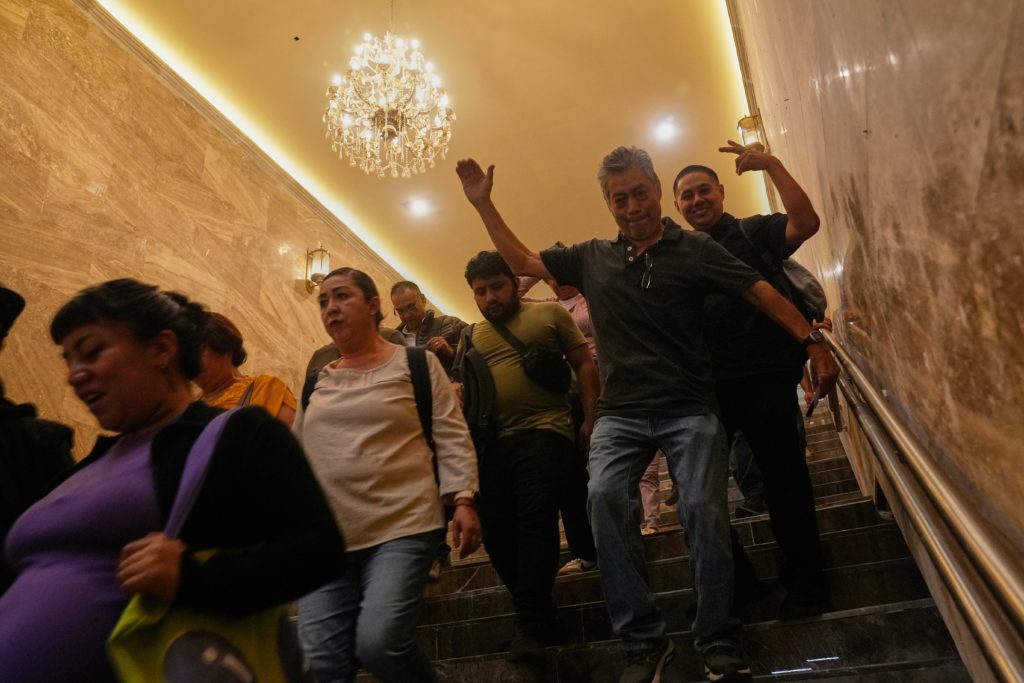
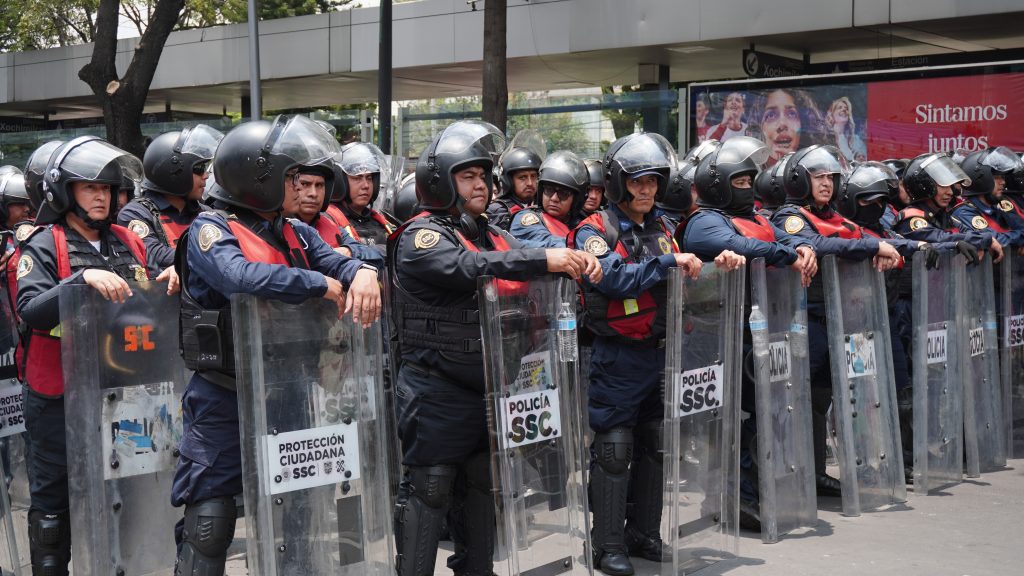
Mexico City installed a chandelier in its metro for the World Cup. Cue the mocking memes


![]()
KUALA LUMPUR, June 6 — Unifi TV has secured the rights to broadcast all 104 matches of the 2026 Fifa World Cup live in Malaysia, offering football fans comprehensive tournament coverage across three dedicated channels at less than RM1 per match.
Telekom Malaysia Bhd said the high-definition (HD) coverage would be available to both Unifi TV subscribers and non-subscribers, enabling fans nationwide to follow the tournament from any location and on multiple devices.
The full-season pass is priced at RM60, while existing Unifi TV subscribers are eligible for a special rate of RM50 to access all matches from June 11 to July 19.
“New customers can qualify for the discounted offer by subscribing to a Unifi TV package from as low as RM12 per month,” TM said in a statement today.
The Fifa World Cup 2026 season pass also includes access to more than 70 premium Unifi TV channels, including HBO, Cinemax, AXN, beIN SPORTS, SPOTV and tvN Movies, from June 11 to July 10.
TM said football fans seeking greater flexibility could opt for a daily pass priced at RM20 beginning June 12.
The company said viewers would be able to watch matches live in HD and access highlights, full-match replays and related content across smart televisions, mobile phones, tablets and web browsers.
TM Chief Business and Consumer Officer Anand Vijayan said the offering reflects Unifi TV’s continued commitment to bringing large-scale live content to Malaysians while strengthening its position as a leading digital platform for sports and entertainment.
“As one of the world’s most anticipated sporting events, the Fifa World Cup 2026 deserves a viewing experience that is accessible, seamless and immersive,” he said.
Interested customers can subscribe via the Fifa World Cup 2026 page on Unifi’s website, while existing subscribers may also purchase passes through the MyUnifi app, Unifi Self-Care Portal or Unifi TV 2.0 app.
The 2026 Fifa World Cup will be co-hosted by United States, Mexico and Canada from June 11 to July 19, with the opening match to be held in Mexico City while the final in New Jersey. — Bernama

![]()
MEXICO CITY, June 10 — The World Cup kicks off tomorrow with Fifa betting that the enduring appeal of the greatest footballing show on earth can rise above mounting anger at ticket prices and a US immigration crackdown that has seen fans, a top referee and team officials barred from the tournament.
A record 48 teams and millions of fans are set to descend on the United States, Canada and Mexico for the first World Cup co-hosted by three nations, the largest and most logistically complex edition of the tournament ever staged.
The action gets under way at Mexico City’s iconic Estadio Azteca on Thursday, with co-hosts Mexico taking on South Africa at 1 pm local time launching a sprawling, nearly six-week-long spectacle that will culminate in the final at New Jersey’s 82,500-seat MetLife Stadium on July 19.
Can Lionel Messi, at the age of 38, settle any lingering debate about his status as the greatest player of all time by leading Argentina to a second consecutive World Cup title?
Or can Messi’s great rival, the 41-year-old Cristiano Ronaldo, defy father time by inspiring a talented Portugal team to its maiden World Cup win?
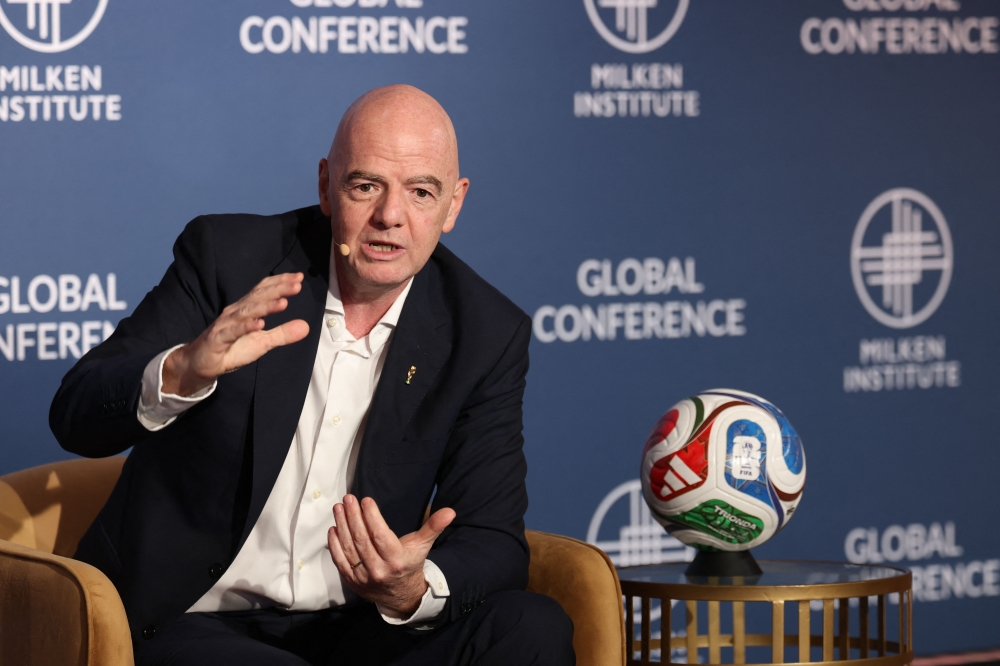
Those questions and more will be answered over the course of a tournament that Gianni Infantino, the president of world football’s governing Fifa, has bullishly hyped as “the greatest show that the planet has ever seen.”
Ticket fury
Yet Infantino’s breezy assurances have run into hurricane-force headwinds of scepticism during a build-up dogged by concerns over affordability, politics and conflict in the Middle East.
The skyrocketing cost of tickets has triggered a global backlash which has left Fifa and Infantino struggling to mount a convincing public relations defense.
The most expensive ticket for the 2022 World Cup final in Doha cost around US$1,600 at face value; in 2026 the most expensive face value final ticket being sold by Fifa is an eye-watering US$32,970.
That kind of stratospheric inflation has been prevalent across the tournament’s 104 matches, where seats for many games remain available on secondary re-sale markets despite huge demand.
Even Infantino’s staunch ally, Donald Trump, has balked at the cost, reacting with surprise when told of the $1,000 price tag for tickets to the USA’s opening game with Paraguay in Los Angeles on Friday—the first game on US soil.
“I wouldn’t pay it either, to be honest with you,” the US president told the New York Post last month.
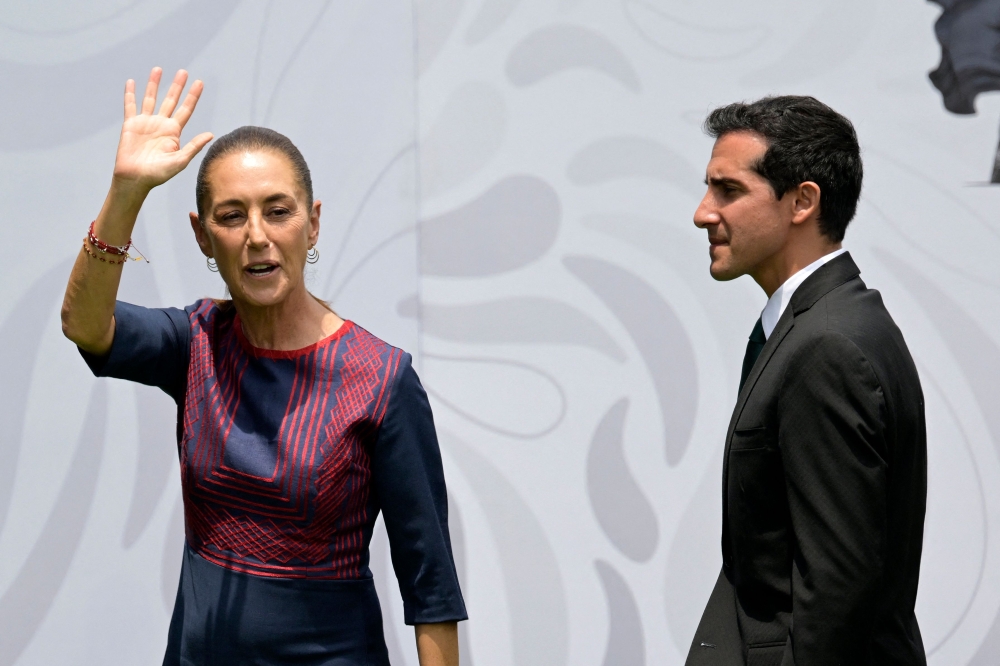
Mexico’s President, Claudia Sheinbaum, who is grappling with teacher protests in Mexico City that threaten to disrupt Thursday’s opener, has meanwhile said she will not attend any games in Mexico.
Exclusion and fear
Other critics have questioned whether the World Cup party will be soured by the tense political climate in the United States.
Human Rights Watch says the Trump administration’s immigration, demonstrations and press freedom could lead to a World Cup defined by “exclusion and fear.”
Those concerns were given a fresh jolt of momentum on Monday when Fifa confirmed that Somali referee Omar Artan would play no part in the tournament after being denied entry to the United States.
Artan was turned back when he arrived at Miami International Airport on Saturday over what US authorities said were “vetting concerns.”
The Somali official was just the latest in a growing list of people who have been barred from entering the United States for what Infantino has billed as the “most inclusive” World Cup in history.
The US-Israel military strikes launched against Iran in February have also loomed large over the tournament, where Iran are due to play three group games in the United States, starting with their opener against New Zealand on Monday.
Iran have switched their base camp from Tucson, Arizona to the Mexican city of Tijuana.
While Iran’s players are free to travel in and out of the United States, some 15 administrative and management staff have been denied visas by US authorities in a move Iranian authorities have condemned as “deliberate and discriminatory treatment.”
Fans have also fallen foul of US immigration policies, with a group of Scotland supporters having their entry permits revoked at the last minute.
Expanded field
On the field, the decision to expand the tournament to 48 teams—up from 32 in 2022 -- is likely to strip the group stage of any sense of jeopardy.
The tournament will see a range of other innovations.
For the first time in World Cup history, every game will feature cooling breaks in the middle of each half, a measure designed to mitigate the effects of searing heat and humidity expected at many of the tournament’s 16 venues.
Players and referees will need to adjust to several new rules being rolled out at the World Cup, including teams being required to make substitutions inside 10 seconds to prevent time-wasting.
A crackdown on racist abuse will see players risk a red card for covering their mouth with a hand, arm or shirt during a confrontation with an opponent. — AFP

![]()
MEXICO CITY, June 9 — Mexican President Claudia Sheinbaum said yesterday she could guarantee a peaceful World Cup opening ceremony this week, despite concern over ongoing protests.
A teachers union has threatened demonstrations at Thursday’s opening game between Mexico and South Africa in the capital if the government doesn’t respond to demands for salary raises and pension reforms.
“We are going to guarantee... that the celebration of the World Cup is well-executed, in peace and tranquility,” Sheinbaum said in her daily press conference.
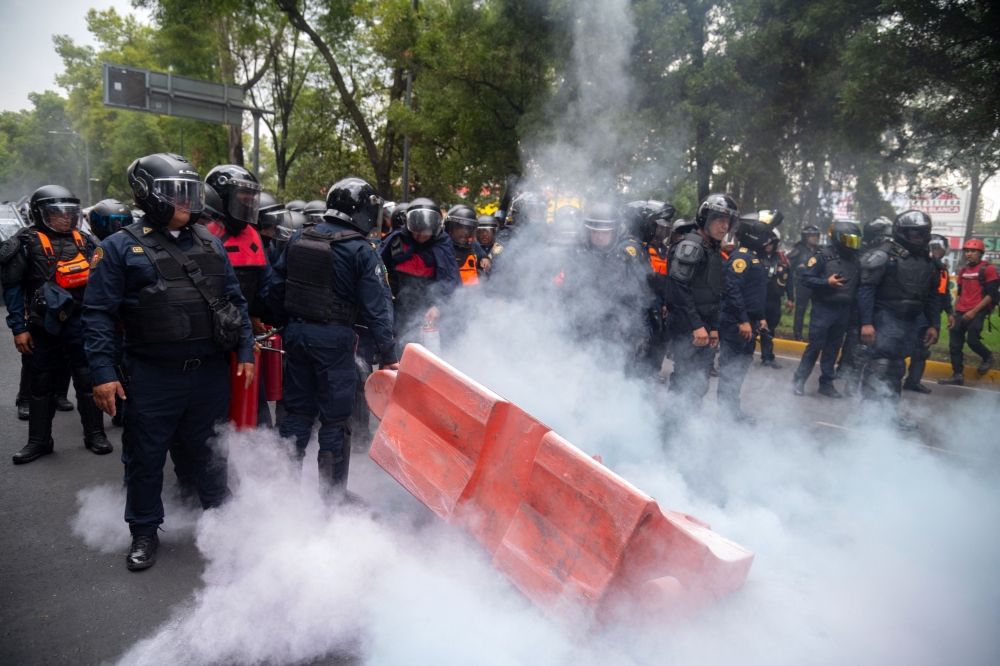
Last week, police dispersed protesters with teargas and rubber bullets outside the historic Zocalo square where authorities have erected a massive screen for a World Cup fan zone.
The streets surrounding the square remain closed off with metal barricades, which Sheinbaum has said are meant to guard against “provocations.”
Protesting teachers also toppled commemorative statues of players in downtown Mexico City last week.
Though Sheinbaum has maintained open dialogue with the teachers, the union has deemed government proposals insufficient.
Joining the protests are hundreds of people from the Ayotzinapa teachers college, who are demanding further efforts to investigate the disappearance of 43 students from the rural school in 2014.
Mexico City police said they discovered 59 homemade explosive devices on one of the bus convoys entering the capital on Monday, posting a photo of dozens of small white pipes with fuses on X.
Tourists ‘freaked out’
The teachers’ sprawling tent camps have flooded the city center, leading to complaints from businesses that tourists will stay away during the World Cup.
“The access to our restaurant is closed off, the people aren’t coming, the tourists are freaked out,” 31-year-old waiter Jonathan Herrera, who was protesting against the encampment, told AFP.
Around 50 people waited to cross through one of the metal barricades under the watch of police, where one restaurant glued a poster reading “we’re still open.”
US tourist Heather Lutz, 64, expressed support for the protesters.
“No government likes their city to look real” during big events like the World Cup, she said.
The tournament is the ideal moment to “generate pressure” to win concessions from the government, 42-year-old teacher Dinora Diaz told AFP in the street encampment.
Negotiations
Sheinbaum’s government explained on Monday their proposals to the teachers union, proposing the creation of a new state-owned company to administer pensions.
But the government dismissed the possibility of reversing pension laws, arguing it would cost around $400 million.
The teachers have rejected the government’s proposals while the Secretary of Governance Rosa Icela Rodriguez called for the strikers to lift the blockades.
“It’s fundamental that the legitimate exercise of the right to protest can coexist with the rights of those who live in and move through this great city,” the official said. — AFP

![]()
MEXICO CITY, June 11 — FIFA President Gianni Infantino defended the way soccer’s governing body had handled visa issues ahead of the World Cup, saying on Wednesday that it was working to find solutions but could not override government decisions.
Speaking on the eve of the tournament opener between co-hosts Mexico and South Africa, Infantino addressed concerns surrounding Somali referee Omar Abdulkadir Artan, who was barred from entering the US despite having a valid visa.
“It is unfortunate what happened to the referee from Somalia,” Infantino told a press conference.
“We are not the kings of the world who can rule over governments and police forces. We are a sports organisation.”
The case has drawn attention to immigration challenges ahead of the June 11-July 19 tournament after US authorities said Artan was denied entry because of his links to “suspected members of terror organizations”.
Infantino said Fifa was continuing to work behind the scenes to resolve outstanding issues but stressed that immigration decisions ultimately rested with national authorities.
“We always try to find solutions,” he said. “Sometimes to immediately start screaming and shouting has the opposite effect of finding a solution.”
Asked whether visa-related controversies had made him regret selecting the US as one of the host nations, Infantino said he had no regrets.
“There are issues; it’s normal for an event of this magnitude,” he said. “Some come from the United States, some from Canada, some from Mexico. We deal with all of them.”
The FIFA president also pointed to Iran’s participation in the tournament as evidence of his organisation’s efforts to navigate complex political circumstances.
“People were saying Iran couldn’t come to the World Cup,” Infantino said. “I promised them they will come.”
He said ensuring Iran’s participation despite geopolitical tensions demonstrated football’s ability to bring people together.
We want to unite the world
The Swiss-Italian executive repeatedly returned to a message of unity, saying the World Cup could provide a welcome distraction at a time of global conflict and uncertainty.
“When Iran plays, the stadium will be full and I hope there will be a positive atmosphere because this is football,” he said. “We want to unite the world.”
Infantino also defended Fifa’s ticket pricing after criticism from some supporters who argued that the cost of attending matches had become prohibitive.
Fifa has sold more than six million tickets for the tournament, which now has 48 teams, and demand had exceeded expectations by “a factor of 10 or more”, he said.
“The starting price at $60 is the lowest entry price of any of the American sports in the playoff phases,” Infantino said.
“If you sell it at a lower price point, it would have gone on secondary markets at much higher prices. Every dollar that comes in goes back to the development of football.”
The World Cup kicks off today at Mexico City’s Estadio Azteca, which will become the first stadium to host matches at three men’s World Cups, with Infantino predicting one of the most competitive tournaments in the events history.
The FIFA president said factors including altitude, climate, travel and the expanded format would add further unpredictability before concluding: “Let the celebration begin.” — Reuters

![]()
MEXICO CITY, June 10 — A protest blocked an avenue leading to Mexico City’s Azteca Stadium for hours yesterday, just days before the 2026 World Cup kicks off at the venue.
As football fans flood into tournament co-hosts the United States, Canada and Mexico, the Central American country is grappling with chaotic teacher protests in its capital.
Thousands took part in yesterday’s protest, which was led by a breakaway group of the CNTE teachers union following a week of demonstrations that President Claudia Sheinbaum has called a “provocation.”
“As if to say, ‘Look at how bad the situation is in Mexico,’” she told a press conference.
A police blockade prevented the demonstrators from reaching the Azteca Stadium, which will host the World Cup opening match on Thursday.
With thousands of officers deployed and concrete barriers set up around the venue, protesters rallied on the street for around three hours before dispersing.
Mexico City’s security chief Pablo Vazquez said in a statement that the movement had been peaceful.
Sheinbaum said earlier that the opening match was “guaranteed,” though the left-leaning leader again ruled out using police to repress the demonstrations.
Her government has favored dialogue with the protesting teachers, but to no avail.
“We’re going to continue our struggle,” said protester Austreberto Flores.
The CNTE teachers union has been on strike since last week to demand a salary raise and the reversal of a pension law—which the government considers unfeasible.
The teachers have also set up camp near the World Cup fan zone in Mexico City’s Zocalo square.
On June 1, police dispersed protesters in the area with rubber bullets and teargas.
“They want to make it seem like there is mass social turmoil in Mexico, and that’s not true,” Sheinbaum has said of the protests.
The teachers have called for demonstrations on Thursday that will also include families of so-called “disappeared” people, who are alleged to have been killed or kidnapped by Mexican authorities or criminal gangs.
The 2026 edition of the world’s biggest football extravaganza is the most logistically complex ever staged.
A vast global TV audience is set to tune in to the opening ceremony and match pitting Mexico against South Africa.
Mexico is still rushing to complete renovations at subway stations and at its main airport ahead of the tournament. — AFP

![]()
MEXICO CITY, June 12 — Dozens of protesters clashed with police yesterday outside the Estadio Azteca in Mexico City as South Africa and Mexico played the first match of the World Cup before 80,000 fans.
Groups of teachers, relatives of Mexicans who have gone missing, and student activists gathered early yesterday outside the stadium amid a heavy police presence.
Some protesters breached barriers and exchanged blows with officers guarding the stadium’s perimeter, moments after Mexico scored the tournament’s first goal.
A handful of youths smashed vehicle windows with bats as police fired tear gas and dispatched mounted officers to corral the protesters, who scattered on foot.
Mexico’s government has faced weeks of protests, mainly by teachers demanding better working conditions.
For a time it appeared the protests might prevent the city from staging an official World Cup fan zone in its famed Zocalo.
But thousands of fans poured into the plaza shoving and jostling their way through metal barriers, creating chaotic scenes shortly before kick-off in the opening game. — AFP
Medellín, Colombia – Since early May, Mexico’s National Institute of Migration (INM) has carried out a wave of raids targeting migrants, mainly of Venezuelan and Central American origin, in Mexico City.
NGOs across the city have denounced the intensified anti-migrant operations, with reports that those submitting to legal processes seeking asylum or residency in Mexico are being detained despite having the correct documentation.
The recent tactics used by the INM, such as raiding houses, taking away migrants’ cellphones and documents, and targeting online delivery drivers, have been compared to the tactics used by the United States Immigration and Customs Enforcement (ICE).
Rights groups have in recent weeks denounced the immigration raids, with Lorena Cano, the juridical coordinator for the Institute for Women in Migration (IMUMI), calling them “totally irregular.”
A group of NGOs – including Support to Venezuelan Migrants, IMUMI, and the Juridical Clinic Alaíde Foppa of the Iberoamerican University – made a formal complaint before the National Commission for Human Rights earlier this month denouncing the targeting of online delivery drivers in a shopping center in the upmarket neighborhood of Polanco.
They also criticized that many people who were already undergoing the processes for refugee status were transported to a migrant station in Itzapalapa before being sent to Villahermosa and Tapachula, cities in the south of the country, despite Mexico City describing itself as a “sanctuary city” for migrants.
A spokesperson for Casa Tochan, a migrant shelter in Mexico City, told Latin America Reports that “not only is this a flagrant violation of human rights, it’s also a violation of the rule of law. We don’t know what’s happening with those who’ve been detained because they’re unreachable – they haven’t been given the right to the phone call that they’re entitled to in the event of a legal arrest.”
The Supreme Court has also described the recent raids as unconstitutional.
Despite reports and testimonies shared on national and international news media, the INM has publicly rejected the notion that they are carrying out “raids”, instead stating that their actions come following a “request for cooperation from the competent authorities of Mexico City, with the intention of preventing any criminal acts.”
Some speculate the operations are part of a beautification drive ahead of the World Cup games, of which Mexico is a co-host.
Meanwhile, the Mexican Commission for Refugee Assistance (COMAR) has been facing severe delays since the COVID-19 pandemic, with southern states like Chiapas being hit the hardest. Since Claudia Sheinbaum took office in October 2024, there have been 18 migrant caravans leaving from Tapachula, Chiapas. Members of the David Caravan, which set off at the end of April, cited the extreme delays in COMAR’s asylum processing as a key reason for their movement.
Featured image description: Government building in Mexico City
Featured image credits: ProtoplasmaKid via Wikimedia Commons
The post Wave of raids target migrants in Mexico City ahead of World Cup appeared first on Aztec Reports.
The post Wave of raids target migrants in Mexico City ahead of World Cup appeared first on Latin America Reports.
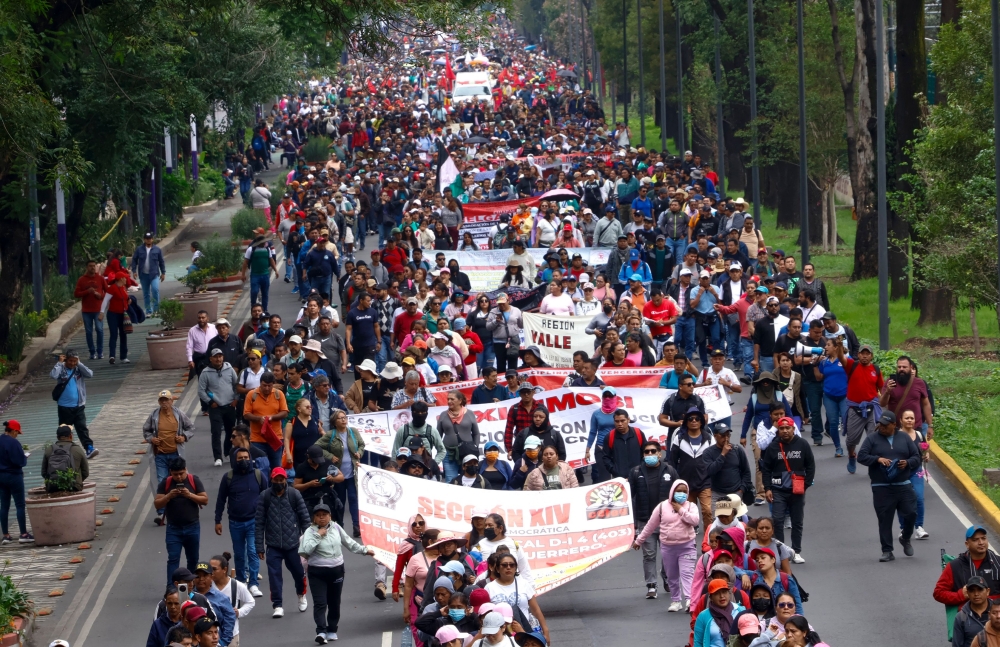
Mexico City, Mexico – A national strike by hundreds of teachers affiliated with Mexico’s National Coordinating Committee of Education Workers (CNTE) has entered its fourth day, paralyzing much of the country’s capital.
The mobilization – which opposes pension reforms – escalated on Wednesday when protesters broke into the headquarters of the Public Education Secretariat (SEP), damaging the government building and injuring at least two police officers.
With no end in sight to negotiations between union representatives and authorities, the ongoing demonstrations threaten to disrupt the World Cup, which begins one week from today.
The union has blocked highways connecting Mexico City to nearby cities, vandalized public monuments, and established a large encampment a few blocks from the presidential palace.
The CNTE is simultaneously deploying actions in at least four other states, with more regions expected to join in the coming days.
The CNTE’s central demand is the derogation of a 2007 reform to a law passed by Mexico’s social security institute dismantling a solidarity-based pension scheme and shifting workers into individually managed private accounts. Teachers are also demanding a 100% salary increase and the elimination of the USICAMM, the body that oversees teacher hiring and promotions.
Negotiations have been conducted jointly by Secretary of Government Rosa Icela Rodríguez, Education Secretary Mario Delgado, and the director general of the ISSSTE, but no agreements have been reached so far.
The three officials were formally authorized by President Claudia Sheinbaum to conduct and close negotiations on the government’s behalf, despite CNTE demands for a direct meeting with the president.
Secretary Rodríguez said the state’s ability to grant concessions is limited by fiscal constraints: “What cannot be done is due to a lack of budget, not a lack of will.”
Filiberto Frausto Orozco, a CNTE leader from Zacatecas, warned that if the government rejects their demands, “there will be no more negotiations.”
The union has also threatened to disrupt the FIFA World Cup inauguration, scheduled for June 11 at Estadio Ciudad de México.
Earlier this week, teachers blockaded Paseo de la Reforma and toppled statues of footballers installed to promote the tournament.
Sheinbaum campaigned on promises to address teachers’ labor grievances, but after one and a half years in office, her government has yet to deliver on the pension reform rollback the CNTE has long demanded.
On the streets, rank-and-file teachers say they are prepared for a prolonged fight. Saray López Alamillo, who has been in the classroom for six years and is an active CNTE member, expressed full support for the union’s escalation strategy.
“In my school we have talked about it and we are ready to take this fight to the end,” she told Latin America Reports.
For many teachers, the cost of protest is immediate and personal. The government docks wages for each day teachers miss class while demonstrating.
López Alamillo knows this firsthand: “Last year, they deducted 3,000 or 4,000 pesos from my paycheck for almost eight consecutive pay periods.”
The teacher added that the losses directly hurt her ability to cover basic household expenses.
For some teachers those deductions are enough to keep them home. For others, like López Alamillo, the financial punishment only sharpens their resolve.
With negotiations deadlocked and the World Cup opening a week away, the standoff is entering a critical phase. Neither side has shown signs of yielding.
Featured image description: Union members marched in Mexico City this week.
Featured image credit: CNTE via Facebook.
The post Mexico City teacher strike threatens to disrupt 2026 World Cup kick-off appeared first on Latin America Reports.

![]()
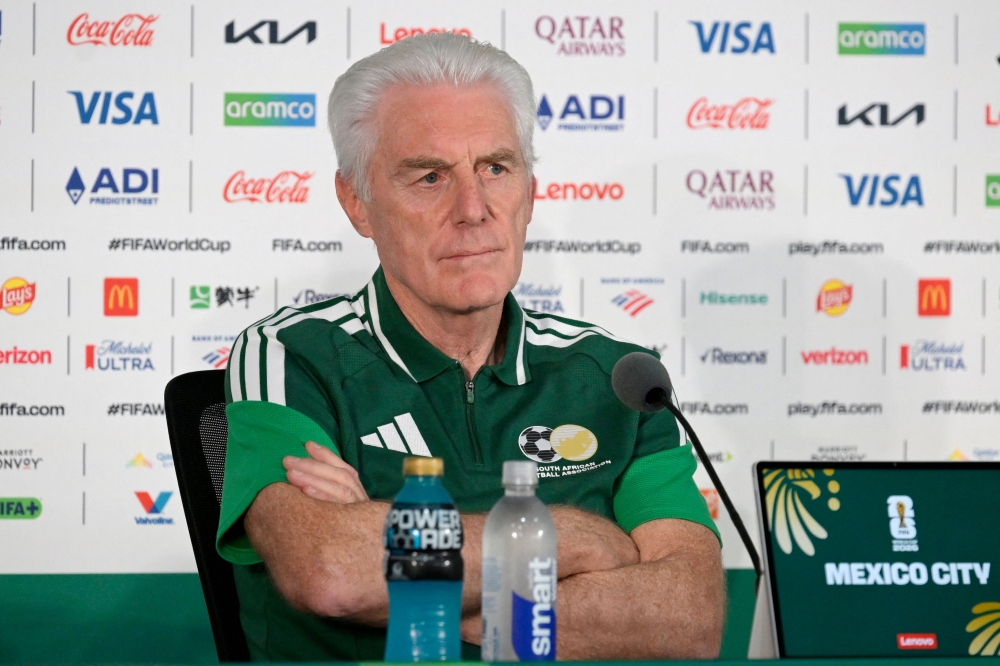
MEXICO CITY, June 11 — South Africa coach Hugo Broos has challenged his players to block out an expected wall of sound today when they take on co-hosts Mexico in their World Cup opener.
Broos, 74, will be making an emotional return to the Estadio Azteca when he leads South Africa into their daunting Group A assignment in Mexico City.
The former Belgium international experienced first-hand the noise of the Azteca during the 1986 finals in Mexico, where he played in the Red Devils’ opener against the hosts.
Broos is bracing for more of the same today in a game that he regards as pivotal to South Africa’s chances of advancing beyond the group stage.
“There will be a big crowd and there will not be so much South African support,” Broos said. “So that is a big help for them (Mexico).
“They will have 85,000 Mexicans shouting and singing. But we have to focus on our game. And if we can do that, if we are not too influenced by the noise of 85,000 Mexicans, then we can have a good game.”
Broos believes Mexico are the team to beat in Group A.
“I think they’ve won nearly all of their last 10 games,” Broos said of “El Tri”.
“So they’ll be a team with confidence...they’re the best team in the group.
“So tomorrow it will be a very tough game. We need to be at our best level, but I can assure you our team is ready to fight for every metre and every ball.”
Broos meanwhile admits he is no fan of the expanded 48-team World Cup, citing the gruelling travel schedule his team faces that includes games in Atlanta and Monterrey.
“It’s a bit too big when you play with 48 countries,” he said. “Forty years ago it was a World Cup in Mexico, but now it is modern times, and we have to adapt.
“It’s more exhausting than the previous World Cup, when you are with less countries but we have to accept it.”
Mexico have played in seven World Cup opening matches but have never won one—a run that coach Javier Aguirre said he was determined to put right.
“We have to break the statistic,” Aguirre said at his pre-match press conference.
“I didn’t know that fact; I’m going to share it with the players. It will be another source of motivation.”
Today, Aguirre will relive the experience of playing a World Cup on home soil 40 years after doing so as a player in 1986.
“Since I arrived 22 months ago, I have had no greater emotion than experiencing a World Cup at home again,” said the 67-year-old coach. — AFP

Mexico City, Mexico – As FIFA’s opening ceremony kicked off inside the Azteca Stadium on Thursday afternoon, a parallel scene played out on the streets surrounding it.
Several social movements converged on Mexico City to protest what many activists are calling the “World Cup of Dispossession”, a tournament they say has been built on the backs of the country’s poorest citizens, while their most urgent demands go unmet.
Among the most prominent were the CNTE teachers’ union, collectives of searching mothers of the disappeared, and parents of the 43 Ayotzinapa students – trainee teachers who were forcibly disappeared in 2014.
The protesters mobilized mainly near the Azteca Stadium, blocking all major access routes to the venue and the Zócalo, where a massive fan fest had been programmed.
Security forces deployed what city authorities called “the last mile” – a security perimeter extending roughly one mile around the Estadio Azteca, designed to prevent anyone without a ticket from accessing the grounds. But even before reaching that cordon, some protest groups were surrounded and blockaded by police to prevent them from advancing.

Several protesters were wounded during clashes with police and journalists detained during the day, among them independent reporter Axel Hernández, who was stopped while walking to the protests, his equipment searched under the pretext of an explosives check. “When they found nothing but posters, they claimed they were going to arrest us for putting up posters,” he told Latin America Reports.
Police drove Hernández and a colleague 10 km from the point of detention before releasing them.
Aaron Gardúñez Jiménez, Director General of the Human Rights System Implementation Agency of Mexico City, acknowledged monitoring eight to ten simultaneous protest actions — some peaceful, some “complex” — but maintained that “despite the difficulties, freedom of expression was guaranteed throughout the day.”
Erika, a member of the feminist collective “We exist because we resist,” who asked her last name to be anonymous for security reasons, had a personal reason to march: her daughter was murdered in 2023. From her perspective, the government is not merely failing to meet protesters’ demands, it is actively trying to silence them. “We want her [Sheinbaum] to listen to us, to put herself in our shoes and make a commitment,” she demanded.
Alejandro Gutiérrez, a Mexico City secondary school teacher and active CNTE member, said negotiations with the government were advancing but only superficially, with proposals that fail to address the union’s core demand: the repeal of the 2007 ISSSTE Law reform that dismantled handed pensions over to private capital management.

President Claudia Sheinbaum navigated the World Cup opening day under considerable political pressure. She had already announced she would not attend the opening match, gifting her ticket to a girl from a low-income family. When the Zócalo encampment threatened the fan fest, she acknowledged there were 18 alternative venues where people could watch for free.
Her tone throughout the week has been deliberately restrained. Sheinbaum invoked the spectre of historical repression directly: “They want us to fall into repression on the eve of the World Cup. We are not going to fall into that provocation. We are not Díaz Ordaz.” The reference is to Gustavo Díaz Ordaz, who ordered the massacre of student protesters at Tlatelolco in October 1968 — just days before Mexico City hosted the Olympic Games. As heirs of the left that emerged from those protest movements, Sheinbaum’s government is acutely aware of what any misstep would mean.
The president had initially denied there was any social unrest ahead of the tournament — a position that became increasingly untenable as the week progressed. Mexico is already navigating a deteriorating relationship with the United States ahead of July trade negotiations, political scandals, and lingering security concerns following a burst of cartel violence in Guadalajara in February.
While the World Cup presents an enormous economic opportunity for the country, projected to generate US$3 billion for hotels, restaurants and sports venues, it also provides a platform for social and political movements to take their battle to the world stage.
With stagnant teacher salaries, decades of impunity in the Ayotzinapa case, and a crisis of forced disappearances that has left over 100,000 people missing across the country, the stakes of the tournament in Mexico go far beyond the fulltime score.
Featured image description: A protestor holds a football next to a riot police officer.
Featured image credit: Jorge Alfonso.
The post Mexico World Cup puts spotlight on protest movements appeared first on Latin America Reports.
Medellín, Colombia – Since early May, Mexico’s National Institute of Migration (INM) has carried out a wave of raids targeting migrants, mainly of Venezuelan and Central American origin, in Mexico City.
NGOs across the city have denounced the intensified anti-migrant operations, with reports that those submitting to legal processes seeking asylum or residency in Mexico are being detained despite having the correct documentation.
The recent tactics used by the INM, such as raiding houses, taking away migrants’ cellphones and documents, and targeting online delivery drivers, have been compared to the tactics used by the United States Immigration and Customs Enforcement (ICE).
Rights groups have in recent weeks denounced the immigration raids, with Lorena Cano, the juridical coordinator for the Institute for Women in Migration (IMUMI), calling them “totally irregular.”
A group of NGOs – including Support to Venezuelan Migrants, IMUMI, and the Juridical Clinic Alaíde Foppa of the Iberoamerican University – made a formal complaint before the National Commission for Human Rights earlier this month denouncing the targeting of online delivery drivers in a shopping center in the upmarket neighborhood of Polanco.
They also criticized that many people who were already undergoing the processes for refugee status were transported to a migrant station in Itzapalapa before being sent to Villahermosa and Tapachula, cities in the south of the country, despite Mexico City describing itself as a “sanctuary city” for migrants.
A spokesperson for Casa Tochan, a migrant shelter in Mexico City, told Latin America Reports that “not only is this a flagrant violation of human rights, it’s also a violation of the rule of law. We don’t know what’s happening with those who’ve been detained because they’re unreachable – they haven’t been given the right to the phone call that they’re entitled to in the event of a legal arrest.”
The Supreme Court has also described the recent raids as unconstitutional.
Despite reports and testimonies shared on national and international news media, the INM has publicly rejected the notion that they are carrying out “raids”, instead stating that their actions come following a “request for cooperation from the competent authorities of Mexico City, with the intention of preventing any criminal acts.”
Some speculate the operations are part of a beautification drive ahead of the World Cup games, of which Mexico is a co-host.
Meanwhile, the Mexican Commission for Refugee Assistance (COMAR) has been facing severe delays since the COVID-19 pandemic, with southern states like Chiapas being hit the hardest. Since Claudia Sheinbaum took office in October 2024, there have been 18 migrant caravans leaving from Tapachula, Chiapas. Members of the David Caravan, which set off at the end of April, cited the extreme delays in COMAR’s asylum processing as a key reason for their movement.
Featured image description: Government building in Mexico City
Featured image credits: ProtoplasmaKid via Wikimedia Commons
The post Wave of raids target migrants in Mexico City ahead of World Cup appeared first on Aztec Reports.
The post Wave of raids target migrants in Mexico City ahead of World Cup appeared first on Latin America Reports.