Normal view

  • ✇SoraNews24 Japan
  • 7-Eleven’s new green tea rice ball and sweets are only available in Japan’s top tea-growing area Casey Baseel
    And no, that’s not Kyoto. With green tea being the most culturally significant drink in Japan, and Kyoto being considered the heart of the country’s traditional culture, it’s easy to make the assumption that Kyoto must be where most of Japan’s green tea is grown. However, while Kyoto Prefecture does produce Japan’s most famous high-end matcha, the honor of Japan’s number-one green tea grower, in terms of amount grown, actually goes to Shizuoka Prefecture. So for its newest batch of special gre
     

7-Eleven’s new green tea rice ball and sweets are only available in Japan’s top tea-growing area

15 June 2026 at 03:00

And no, that’s not Kyoto.

With green tea being the most culturally significant drink in Japan, and Kyoto being considered the heart of the country’s traditional culture, it’s easy to make the assumption that Kyoto must be where most of Japan’s green tea is grown. However, while Kyoto Prefecture does produce Japan’s most famous high-end matcha, the honor of Japan’s number-one green tea grower, in terms of amount grown, actually goes to Shizuoka Prefecture.

So for its newest batch of special green tea snacks and sweets, 7-Eleven Japan is using Shizuoka-grown tea, called Shizuokacha. Specifically, the convenience store chain is using Shizuoka-grown ichibancha, the first picking of the harvest season, when the tea leaves are said to be their most robustly flavorful.

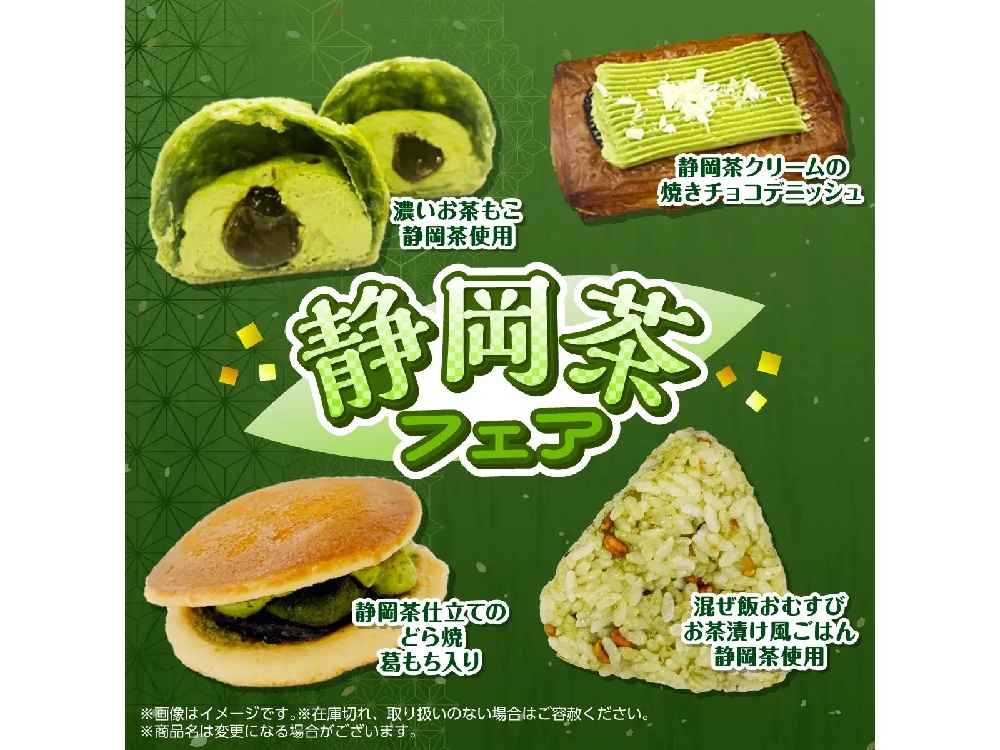
That ichibancha Shizuokacha will be going into such tempting treats as the Ocha Moko, a green tea cream puff with a very verdant filling of green tea cream and sauce, and the Kuzumochi Dorayaki, which sandwiches green tea mousse, an (sweet red beans), and starchy mochi between a pair of pancake-like cakes.

And since green tea can lend itself to Western-style sweets too, 7-Eleven’s Shizuokacha Fair lineup includes a Shizuoka green tea cream-topped chocolate Danish and cake with so much Shizuokacha that 7-Eleven promises it won’t only have the flavor of green tea, but also the aroma of it.

But maybe the most intriguing of all is 7-Eleven Japan’s new green tea musubi (rice ball).

This eye-catching musubi gets its color from mixing Shizuokacha tea leaves in with the rice. The additional ingredients of nori (dried seaweed) and katsuo (bonito) don’t just add appealing complexity to the flavor profile, they’re meant to give you the flavors of ochazuke, a traditional Japanese dish of rice with green tea poured over it, in a handy format that’s easy to eat when you’re on the go.

These items will be available for a limited time, so ordinarily this is where we’d tell you to rush to the nearest 7-Eleven Japan branch. However, as part of an initiative to support smaller farms and promote consumption of locally grown produce, the Shizuokacha rice ball and above-mentioned Japanese sweets are only available at 7-Eleven branches in Shizuoka Prefecture (the Danish and cake can be found at branches in Shizuoka’s neighbor, Yamanashi Prefecture, as well). So instead, we’ll tell you to hurry to Shizuoka, which, if you’re into green tea, definitely deserves a spot in your Japan travel plans.

Source, images: PR Times
● Want to hear about SoraNews24’s latest articles as soon as they’re published? Follow us on Facebook and Twitter!

  • ✇Malay Mail - All
  • Can AI speak baby? Japanese apps are trying to crack the code Malay Mail
    TOKYO, June 12 — For centuries, exhausted parents have relied on a familiar checklist when a baby starts wailing: hungry, sleepy, wet nappy, wind or simply in need of comfort.Now, a growing number of parents in Japan are adding something else to the routine — artificial intelligence.Meet the latest entrant into the booming world of parenting tech: apps that claim they can translate infant cries into actionable advice, turning late-night guesswork into something t
     

Can AI speak baby? Japanese apps are trying to crack the code

12 June 2026 at 05:31

Malay Mail

TOKYO, June 12 — For centuries, exhausted parents have relied on a familiar checklist when a baby starts wailing: hungry, sleepy, wet nappy, wind or simply in need of comfort.

Now, a growing number of parents in Japan are adding something else to the routine — artificial intelligence.

Meet the latest entrant into the booming world of parenting tech: apps that claim they can translate infant cries into actionable advice, turning late-night guesswork into something that looks a little more like a diagnostic dashboard.

One of the buzziest newcomers is Babylingual, a free app launched in March by 25-year-old Japanese father Moto Numazawa. The idea came not from a Silicon Valley lab, but from the living room of a first-time parent trying to prepare for the chaos of raising a newborn.

According to Kyodo News, Numazawa developed the app after his wife became pregnant, believing modern parents — especially those in increasingly common nuclear families — often have fewer relatives around to lean on for childcare advice.

In late April, he tested the app on his three-month-old son, Saku. Holding a smartphone close as the baby cried, Babylingual returned its verdict within seconds: “I’m hungry.”

The app didn’t stop there. It displayed a probability gauge comparing different possible causes of distress before suggesting: “It might be feeding time.”

The diagnosis wasn’t entirely off-base. About three hours had passed since Saku’s last feed. After being fed, he promptly drifted off to sleep in his mother Yu’s arms.

Babylingual draws on previous research indicating that babies may produce distinct vocal patterns linked to different needs. It sorts cries into five categories, while also allowing parents to save recordings to share with other caregivers and access voice-guidance features intended to help soothe infants.

Yu told Kyodo News the app had proven useful in situations where Saku’s needs were harder to decipher.

“I didn’t understand why he was crying when he had a build-up of gas in his stomach, so the app helped me,” she said.

Numazawa is quick to position the technology as an assistant rather than a replacement for parental instinct.

“Parents and children develop alongside each other,” he said. “I hope the app can help communication between them.”

Babylingual isn’t alone in this increasingly crowded corner of the AI economy.

Cross Medicine, a venture company affiliated with Tokushima University, has developed Awababy, an app trained using more than 160,000 recordings of baby cries alongside data on soothing techniques.

Awababy analyses infant vocalisations across 11 emotional categories and suggests possible responses. According to company president Koga Nakai, usage spikes during the middle of the night — precisely when sleep-deprived parents are least likely to have someone they can call for reassurance.

The company also believes the technology could help ease parental stress and potentially reduce the risk of post-partum depression. Local governments are already taking notice.

Mishima city in Shizuoka prefecture recently trialled Awababy with residents and is considering offering the service free of charge. Meanwhile, the town of Oyama has begun distributing user IDs to eligible parents of newborns.

For all the hand-wringing about AI replacing human connection, Japan’s crying-baby apps offer a different vision of the future — one where algorithms don’t take over parenting, but simply help decode one of humanity’s oldest mysteries.

After all, every parent wants the same thing at 3am: to know what the baby is trying to say.

❌
Subscriptions