 Login
Login
Unknown Photographer Who Took First Royal Portrait Honored With Blue Plaque
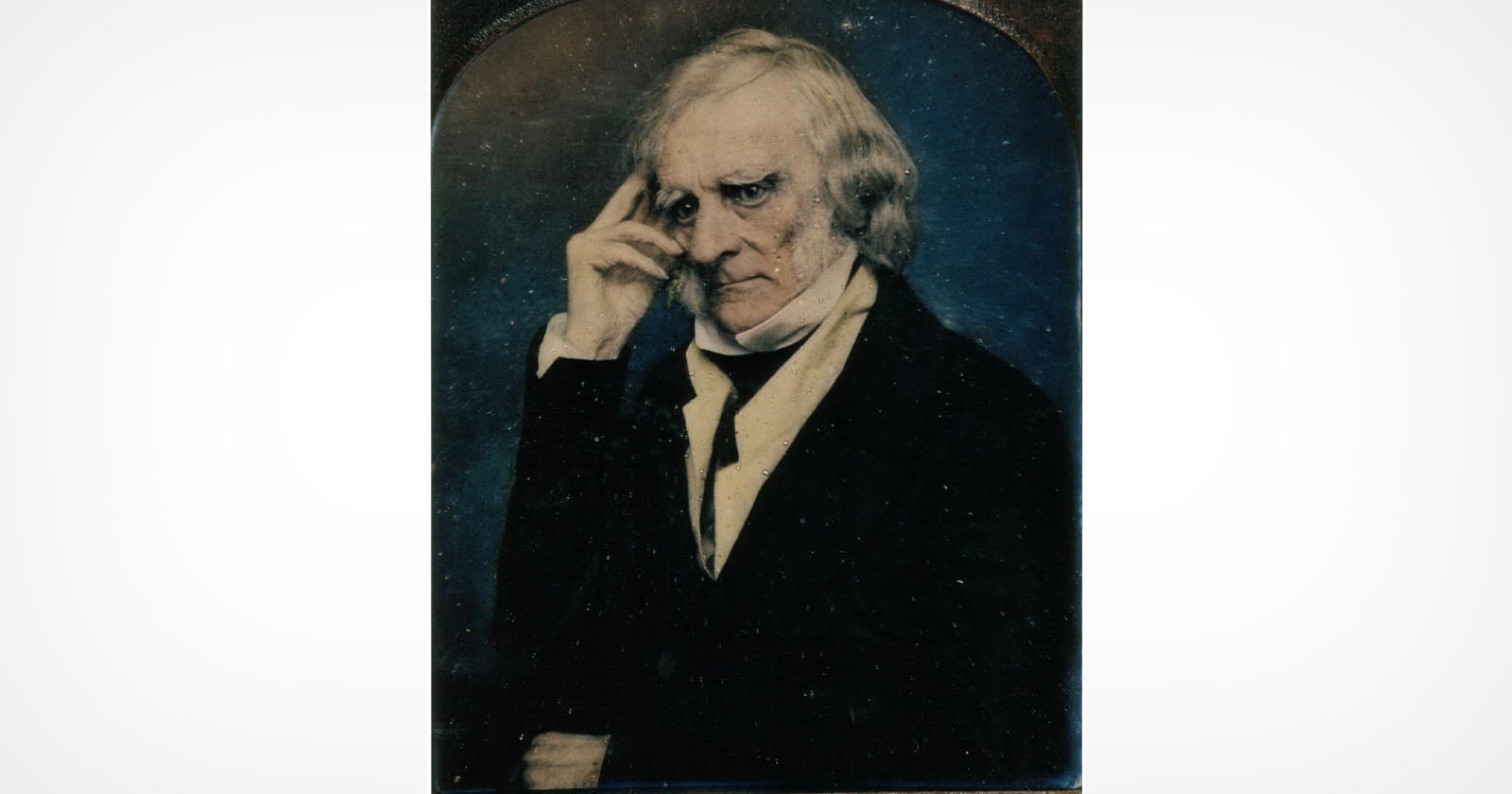
A photographer believed to have taken the very first portrait of the British Royal Family has been honored with a blue plaque in the English city of Brighton.

A photographer believed to have taken the very first portrait of the British Royal Family has been honored with a blue plaque in the English city of Brighton.

In works that merge sculpture, fashion, and kite-making, Hai-Wen Lin traverses the thresholds that connect one’s physical self, the mind, and the elements. The artist describes their practice as “an act of reorienting: looking back, looking forward, looking in, looking up.”
Using a wide range of materials, Lin creates vibrant, abstract compositions in textile often manipulated with cyanotype patterns or dyed with natural hues such as indigo and turmeric. They make kites “that speak the language of clothing,” blurring definitions of craft, art, garments, and acts of play.

Lin has long been interested in chance operations, documentation of daily life, and ways of releasing control. They artist first learned to sew as a way to explore and navigate questions of gender. During graduate school, they landed on the concept of a kite as a way of loosening up in terms of research and getting out into the open—literally embracing the wind. They were thus inspired by a stirring question: “What does it mean to care for, drape, dress, and accommodate change and instability?”
Lin’s pieces employ an array of materials and processes, such as discarded paintings, a variety of fabrics, jewelry findings, and more. “Two Can Share Heaven,” for example, incorporates dyed cotton, faux fur, polyester, velvet, and silk—the latter of which harkens to historical fashion.
The artist also occasionally includes experiential, ephemeral additions in the works’ materials lists, such as “a burning sensation, a desire to be lost” in a piece titled “Sunday, April 2nd 5:13–7:31pm,” among others, and titles sometimes reflect the dates and times when the kites were worn as garments.

Lin is fascinated by the tradition of Japanese paper sode dako, or “kimono kites,” which resemble the silhouette of the timeless robes. “It’s very simple, but the idea of the body in flight, is of course a powerful image,” Lin says, adding:
When I was young, my dad would have us write wishes on pieces of paper and send them up the kite lines when we flew them. If they disappeared when you reeled the kite back in, it meant the wish had been granted. So the kites have always been about a sense of wish-making. I think clothing offers a similar sense of aspiration for a lot of people.
Lin’s kites can just as easily be described as textile sculptures or apparel. They drape beautifully in exhibition spaces like abstract tapestries, severed from their free-flying, outdoor associations. They wrap around the human form like elegant, ethereal, shapeshifting mantles.

“What continues to interest me in this dialogue is the ways in which clothing and weather have always been in conversation,” Lin says, continuing:
Clothing is an interface that delineates our bodies from the environment, so I’m interested in reversing and reorienting that relationship. What would it mean to clothe the weather instead? I often refer to my works as clothing for the wind. I think of dress and clothing as a form of care. I love that we forecast weather and that we forecast fashion. It’s all a kind of attempt at discerning some kind of future. How do we care for a future sky with the clothes we make and wear now?
Loosely modeled after Chinese dragon robes, which were popularized among emperors and dynastic officials during the Tang Dynasty, “Two Can Share Heaven” explores notions of togetherness and cooperation. Unlike traditional garments, the artist designed the piece to be worn by two people as “a simple but direct challenge to the notion of a single ruler blessed by gods,” they share. “Here, power must be shared, redistributed, and negotiated between two.”
The Museum of Arts and Design (MAD) has awarded Lin the 2025 Burke Prize, a prestigious grant given to an artist under the age of 45 working in the U.S. whose practice revolves around contemporary craft. If you’re in New York, see Lin’s work at MAD from February 28 to October 11. The artist is also currently working toward a solo exhibition at the Knoxville Museum of Art. Follow updates on Instagram.


Do stories and artists like this matter to you? Become a Colossal Member today and support independent arts publishing for as little as $7 per month. The article Ethereal Kites by Hai-Wen Lin Transform into Elegant Garments and Sculptures appeared first on Colossal.

When we think of somewhere we’ve been, what are the first things to come to mind? Perhaps there are memorable smells, a sense of other people being around, or a particular quality of light. But what if we remembered landscapes and experiences through plants? For Hillary Waters Fayle, flower petals, seeds, and foliage combine into a kind of album of various places, which she then uses to create bold cyanotypes.
The artist has long worked with botanicals and other organic materials, notably embroidering foraged leaves and feathers with meticulous geometric designs. With the series Portraits of Place, which she’s been pursuing for the past six years, Fayle precisely arranges individual petals and leaves into intricate, symmetrical, mandala-like compositions on acrylic.

She starts by collecting and drying botanicals from specific locations, such as Grace Farms Foundation in New Canaan, Connecticut, or Maymont Park in Richmond, Virginia. These are then laid onto watercolor paper that’s been painted with UV-sensitive iron salts. After being left out in the sun, these result in the bright blue cyanotypes that chronicle the outlines—perhaps one could even say the spirit—of the distinctive layouts.
“The way these portraits illustrate a very particular place and time via botany can be a way to define the relationship that the people of that place have with the land—almost like a modern-day florilegium,” Fayle tells Colossal. She continues:
All of these pieces are so different and special to me, but it has been particularly meaningful to make portraits of areas that are going to change drastically in the near future, either from development or rising sea levels, fire, etc. It feels like a way of preserving and honoring the land and all that is present there right now.
Flowers and plants symbolize the natural evolution of particular spaces, such as a gardener adding new bulbs or birds depositing seeds. They symbolize the nature of seasons and life cycles, emphasizing a relationship that is simultaneously enduring and ephemeral. See more on the artist’s Instagram.


Do stories and artists like this matter to you? Become a Colossal Member today and support independent arts publishing for as little as $7 per month. The article Hillary Waters Fayle Creates ‘Portraits of Place’ from Seeds, Foliage, and Petals appeared first on Colossal.

“Matter is memory, and memory is a medium,” says artist Annalise Neil, whose surreal cyanotypes brim with animals, fungi, geological specimens, shells, and more that she augments with watercolor. Recently, the artist has been adding rich, earthy tones with natural dyes such as wild strawberry leaf, oak gall, loquat leaf, and chestnut. She has used botanical teas to shift the natural blue color of the cyanotypes for quite a while, but the sepia tonality has emerged as a larger focus lately, which allows her to layer hues like browns and purples.
Neil’s experiences in nature profoundly influence her individual pieces in a process that she poetically describes as “melting, rolling, pinching, sanding, walking across meadows, cheek on sun-warmed boulders.” This year, she’s a resident artist at Volcan Mountain Foundation in Julian, California, which merges artistic and scientific inquiry. “I endeavor to create work that will lead to contemplation and reflection and that invites a thoughtful examination of our relationship to reality and our surroundings,” she says.

“For my site-specific work, I begin by hiking for many days and photographing intriguing things I find, including birds and mammals, plants, geological forms, and insects,” she says. “As I photograph specimens in wild and cultivated spaces, I capture a brief version of their existence that I transmute into a negative and then into a cyanotype.” The images are then supported on hand-carved wooden panels.
Neil’s work is currently on view in shows in San Diego: Unfold Projects Exhibition 01: We Must Imagine It, presented in collaboration with ICA San Diego and continuing through August 2, and Organica: Flora to Fauna at The Granger Hotel in San Diego, curated by JFIN Collective, which continues through the end of the year. See more and follow updates on the artist’s Instagram.


Do stories and artists like this matter to you? Become a Colossal Member today and support independent arts publishing for as little as $7 per month. The article Natural Dyes Merge with Mixed Media in Annalise Neil’s Dreamy Cyanotypes appeared first on Colossal.
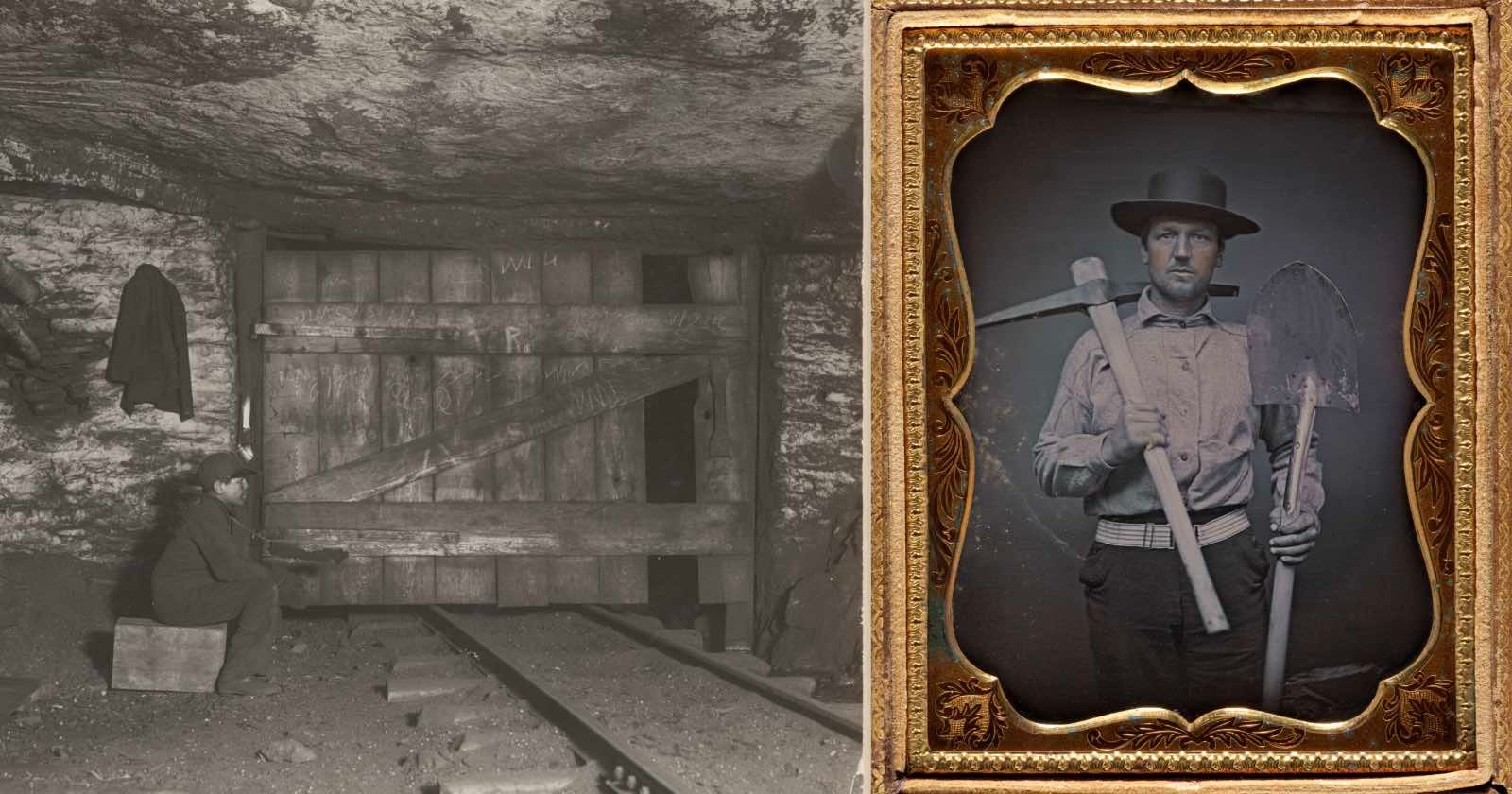
A new exhibition will examine how generations of photographers have captured mining and industry in the United States, from early daguerreotypes depicting the California Gold Rush to images of rapid industrialization in the 20th century.


