Reading view

India's border policy testing fragile reset with Bangladesh

For much of the past year, India and Bangladesh have been attempting to repair a relationship shaken by one of the most consequential political upheavals in South Asia in recent decades. 

Following the collapse of Sheikh Hasina's autocratic government in August 2024 and the subsequent rise of a new political order in Dhaka, both countries have gradually moved from mutual suspicion toward cautious engagement.

Diplomatic contacts have resumed. Official rhetoric has softened. After months of uncertainty, New Delhi and Dhaka appeared to recognize an inescapable reality: geography leaves them little choice but to cooperate.

Yet while diplomats work to rebuild trust, events along the 4,100-km border are increasingly pulling the relationship in the opposite direction.

A growing dispute over alleged 'push-ins' — attempts to force individuals across the border into Bangladesh outside established repatriation procedures — has emerged as the most immediate challenge to the fragile thaw. The issue now threatens to overshadow efforts by both governments to stabilise ties after nearly two years of diplomatic strain.

The controversy intensified this week after West Bengal's new BJP chief minister Suvendu Adhikari claimed that around 4,800 people had already been sent from India to Bangladesh and that another 836 individuals were being held in detention centres near the border awaiting deportation.

Speaking at a BJP programme, Adhikari said Indian authorities had begun removing alleged illegal immigrants who did not qualify under the Citizenship Amendment Act (CAA)."We have started the work of deporting infiltrators who do not fall under the purview of CAA," he was quoted as saying by Indian media.

He further claimed that holding facilities had been established in border districts and indicated that additional deportations would take place in the coming days.The remarks immediately drew attention in Bangladesh, where officials have repeatedly objected to what they describe as unilateral attempts to send people across the frontier without prior verification or diplomatic coordination.

Bangladesh's response was swift but revealing. "There has been zero push-in," Border Guard Bangladesh (BGB) spokesperson Lt-Col Abu Hasanat Mohammad Mahmud Azam said on Monday, 8 June. The statement did not deny that attempts had occurred. Rather, it reflected the BGB's position that none had succeeded.

According to Azam, Bangladeshi border guards had foiled approximately 30 push-in attempts within the previous 72 hours alone. While he could not provide an exact number of individuals involved, his comments underscored the scale of the recent activity along the border.

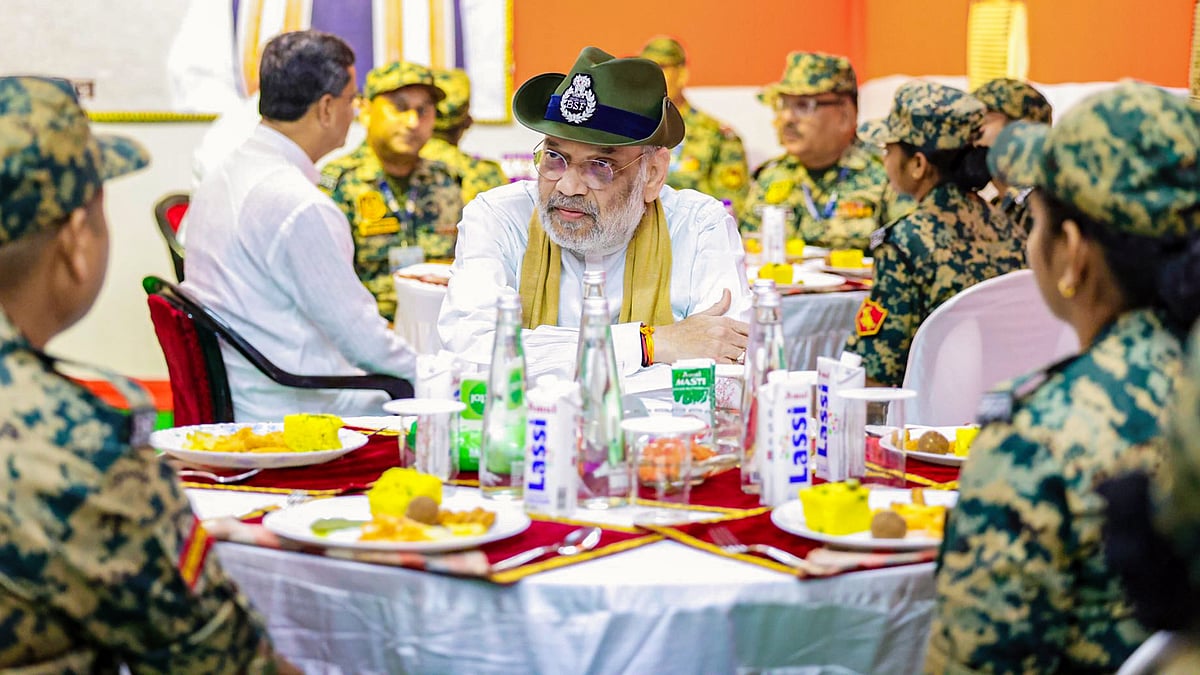
The issue is now expected to dominate discussions at the 57th director general-level conference between the BGB and India's Border Security Force (BSF), which opened in New Delhi on Monday.

Bangladesh's delegation is being led by BGB director-general Maj-Gen Mohammad Ashrafuzzaman Siddiqui, while BSF director-general Praveen Kumar heads the Indian side.

On the eve of the meeting, Bangladesh's home adviser Salahuddin Ahmed signalled that the issue would be raised directly with Indian authorities. "We will, Inshallah, resist all attempts of border push-ins. However, these issues should primarily be resolved through diplomatic discussions," he told reporters in Dhaka.

The dispute goes beyond competing numbers. At its core lies a disagreement over how undocumented migration should be managed between two countries that share one of the world's longest land borders.

Bangladesh has consistently maintained that it does not oppose the repatriation of its citizens if their nationality is properly established. What it rejects is the practice of returning individuals without verification through established bilateral mechanisms.

Dhaka's position is straightforward: if India believes someone is a Bangladeshi national residing illegally in India, that claim should be processed through existing verification channels before any repatriation takes place.

Officials argue that anything else risks creating legal uncertainty, humanitarian complications and disputes over nationality. The issue has become increasingly contentious because of conflicting claims about who is actually being sent toward the border.

Bangladesh has previously alleged that many individuals pushed toward its territory were later identified as Indian citizens. According to Bangladeshi officials, approximately 2,479 people were pushed toward the border between mid-2025 and early 2026, with a significant number subsequently determined not to be Bangladeshi nationals.

India, meanwhile, has emphasised that it continues to use formal mechanisms. Indian authorities have said approximately 2,680 suspected Bangladeshi nationals were referred to Dhaka for nationality verification through established channels.

The widening gap between official procedures and developments on the ground is increasingly becoming a diplomatic problem.

The dispute cannot be separated from domestic politics inside India. For years, concerns over undocumented migration from Bangladesh have been a central theme in the BJP's political messaging, particularly in states bordering Bangladesh. The issue has shaped electoral campaigns, informed policy debates and become intertwined with broader discussions about citizenship and national identity.

Initially, much of that politics revolved around Assam, where the National Register of Citizens became one of the defining political projects of the BJP era. More recently, however, the focus has shifted toward West Bengal, where immigration remains a potent political issue and where the BJP has made significant electoral gains.

That shift matters.

Political success creates political expectations. Having campaigned heavily on promises to address illegal immigration, the BJP faces growing pressure to demonstrate tangible results. For critics in Bangladesh, the recent increase in alleged push-in attempts appears less like routine immigration enforcement and more like an extension of domestic political messaging.

Whether that interpretation is accurate or not, perception increasingly matters. The problem for New Delhi is that border incidents are colliding with larger strategic objectives.

When Sheikh Hasina's government fell in 2024, India lost its closest and most dependable partner in South Asia. For more than a decade, New Delhi had built much of its Bangladesh policy around a single political relationship. The sudden transition left Indian policymakers navigating an unfamiliar and less predictable environment.

The months that followed were marked by diplomatic caution. Political trust declined. Trade slowed. Anti-India sentiment, never entirely absent from Bangladeshi politics, resurfaced with renewed intensity.

The recent improvement in relations emerged not from sentiment but necessity.

India depends on Bangladesh for connectivity to its northeastern states and for regional stability along a strategically sensitive frontier. Bangladesh, meanwhile, relies heavily on India for trade, energy cooperation and access to regional markets.

Neither country can afford prolonged estrangement. Yet every reported push-in incident complicates efforts to rebuild trust.

In Bangladesh, the issue resonates far beyond migration policy. It touches on questions of sovereignty, national dignity and the nature of the bilateral relationship itself. Reports of attempted push-ins reinforce a narrative held by many Bangladeshis that India continues to approach its smaller neighbour from a position of entitlement rather than partnership.

That perception carries consequences.

Bangladesh's political landscape has changed significantly since 2024. The country that emerged after the fall of the Hasina government is more politically pluralistic, more openly nationalistic and increasingly determined to diversify its international relationships.

The BNP-led administration has sought to pursue a more autonomous foreign policy while expanding engagement with China, the United States and other international partners. Although India remains indispensable, Dhaka is no longer willing to define its foreign policy primarily through its relationship with New Delhi.

That reality presents India with a strategic choice. If New Delhi seeks a stable relationship with post-Hasina Bangladesh, it will need to recognise that coercive border practices — whether real or perceived — carry costs that extend far beyond migration management. Every disputed push-in strengthens those within Bangladesh who advocate greater distance from India and reduces the political space available for cooperation.

The irony is that both countries ultimately want the same outcome: a secure border, orderly migration management and a stable bilateral relationship.

Achieving those goals requires more than diplomatic statements. It requires consistency between what governments say across negotiating tables and what happens along the frontier.

The current diplomatic thaw remains tentative and reversible. The border dispute has become its first major test.

If India and Bangladesh fail to resolve the issue through established legal and diplomatic mechanisms, the frontier may once again become the place where broader ambitions for cooperation come undone. For two neighbours bound by geography, economics and security interests, that would represent a setback neither side can afford.

Faisal Mahmud is a Dhaka-based journalist
  •  

No, the Sony a7R VI Doesn’t Make the a1 II Obsolete

Two Sony Alpha cameras are shown side by side on an orange background, separated by a large "not equal to" symbol, indicating a comparison or difference between the two models.

As soon as I learned about the exciting and excellent new Sony a7R VI and got my hands on it a few weeks ago, I knew exactly what people would be asking once they learned about the camera's new, faster stacked sensor and 30 FPS burst shooting rates. Why would any photographer choose the Sony a1 II over the a7R VI? And I was right. I heard this question at least a dozen times at Sony's a7R VI event in New York City without any prompting whatsoever.

[Read More]

  •  

Fire and patience: How V.D. Satheesan fought through Kerala’s political maze

There was a time when Kerala’s political class feared uttering the words “lottery mafia” too loudly. The network was believed to be too wealthy, too politically connected and too deeply embedded within the system. By the mid-2000s, the interstate lottery business had grown into one of Kerala’s most shadowy underground economies, thriving on desperation, poverty and false hope.

Daily wage earners across villages, coastal settlements and working-class neighbourhoods spent precious earnings on lottery tickets sold through sprawling networks that critics alleged operated beyond effective regulation.

Allegations surfaced about fake Bhutan lottery tickets, forged printing systems, benami operations, tax evasion and money laundering linked to Tamil Nadu-based lottery baron Santiago Martin. Politicians spoke privately about the syndicate’s influence over sections of politics, media and the state machinery, but few were willing to confront it openly.

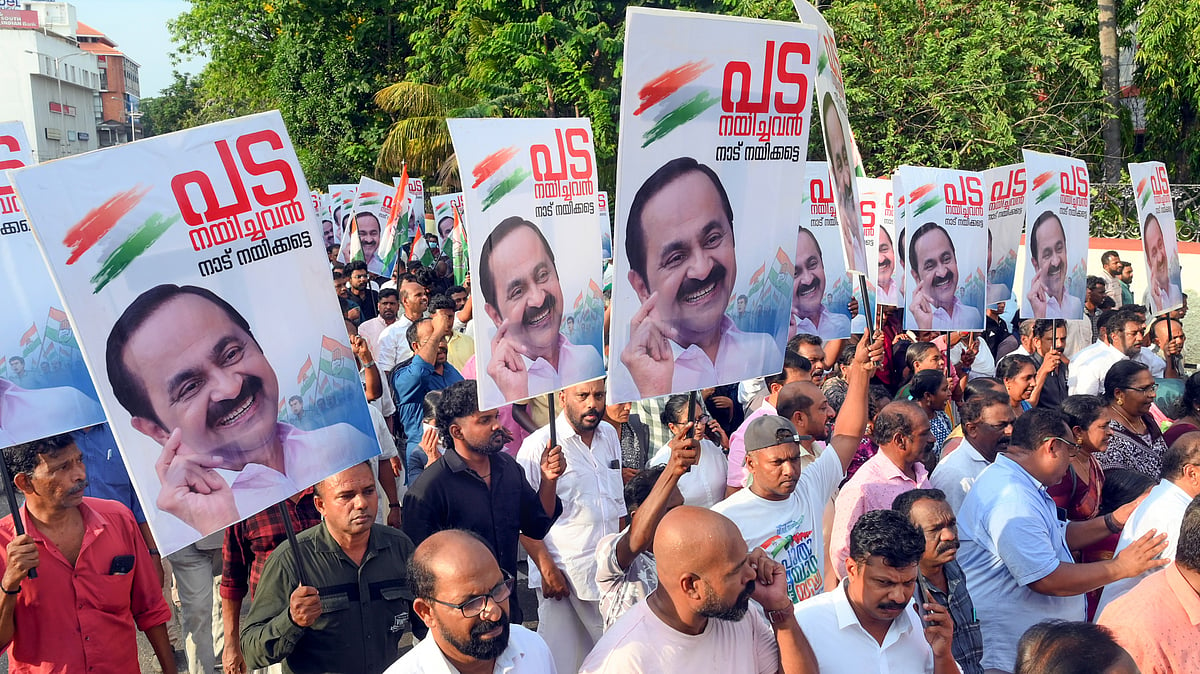
It was during this period that a young Congress MLA from Paravur, V.D. Satheesan, began relentlessly pursuing the issue inside the Kerala Assembly. Armed with documents, financial records and painstakingly collected evidence, Satheesan transformed what many considered a politically dangerous subject into one of Kerala’s defining public confrontations.

He alleged that the lottery business had evolved into an organised exploitation racket that preyed upon the poor while corrupting public institutions. He demanded investigations into fake Bhutan lottery operations, questioned the legality of interstate lottery mechanisms and repeatedly highlighted the nexus between business interests and politics.

Unexpectedly, Satheesan found an unlikely ally in Kerala’s then chief minister, V.S. Achuthanandan. Though ideological warmth across political lines was rare in Kerala, the veteran Marxist appeared to recognise in the young Congress legislator a seriousness that transcended party divisions.

Achuthanandan, who had built his own political career fighting entrenched interests, understood that Satheesan was not merely performing outrage for television cameras. He genuinely believed the lottery network represented a dangerous political and financial menace.

The relationship between the two remained politically adversarial, yet marked by unmistakable respect. Achuthanandan had already initiated strong action against illegal interstate lottery operations and supported investigations into alleged irregularities involving Bhutan lotteries and forged tickets. Satheesan’s interventions strengthened that campaign.

Political observers at the time described the anti-lottery movement as a rare bipartisan moral confrontation against organised financial exploitation — an unusual moment in Kerala’s deeply polarised political culture, where a communist chief minister and a Congress opposition MLA effectively reinforced each other’s battle.

#WATCH | Thiruvananthapuram: On KC Venugopal and Ramesh Chennithala, VD Satheesan, after being named Keralam CM, says, "Both are my leaders and my seniors. I'm junior to them. They have helped a lot with this wonderful victory. As a General Secretary Organisation, he helped a lot… pic.twitter.com/s4ni63RlL0

— ANI (@ANI) May 14, 2026

That confrontation altered Satheesan’s political trajectory permanently.

It transformed him from a promising legislator into one of Kerala’s most respected political figures, a leader whose credibility rested not merely on rhetoric but on preparation, persistence and legislative rigour.

Today, as Satheesan joins the ranks of Kerala chief ministers alongside leaders such as E.M.S. Namboodiripad, C. Achutha Menon, E.K. Nayanar, K. Karunakaran, Oommen Chandy and Achuthanandan himself, what distinguishes his journey is the absence of inevitability.

His rise did not follow the familiar route of dynastic inheritance, factional entitlement or organisational patronage. For years, Kerala politics described his career using the Malayalam expression 'between cup and lip', because power repeatedly appeared within reach only to slip away at the final moment.

To understand Satheesan’s political personality, one must return to the social and emotional landscape of his childhood. Born in 1964 in Nettoor near Kochi, he grew up in a middle-class family shaped by discipline, modesty and the values of education. His father worked in the public sector, while the family remained deeply connected to ordinary Kerala life, where social mobility depended heavily upon education, reading and hard work.

Unlike many future politicians who inherited visible political capital from influential families, Satheesan grew up without the aura of political privilege. What his upbringing offered instead was seriousness and aspiration.

Friends and contemporaries remember him as intensely curious, observant and deeply drawn to reading. He was interested not merely in electoral politics but in ideas themselves. Literature, constitutional debates, economics, political history and social theory attracted him early. That intellectual curiosity later became one of the defining characteristics of his public life. Even ideological rivals would eventually admit that Satheesan rarely entered a debate without studying every possible dimension of an issue.

His educational journey reflected that temperament. He studied at Sacred Heart College, Thevara, before pursuing a Master’s degree in Social Work from Rajagiri College. Later, he studied law and practised in the Kerala High Court.

The combination of social work training and legal education shaped his political approach significantly. Social work exposed him to questions of inequality, marginalisation and public policy, while legal training sharpened his argumentative precision and documentary discipline. Together, they produced a politician capable of combining emotional politics with constitutional and legal clarity.

Politics entered his life through student activism rather than privilege. During his years in the Kerala Students Union and later the NSUI, Satheesan developed a reputation not only as a fiery activist but also as a meticulous organiser. He became chairman of the Mahatma Gandhi University Union during 1986-87 and gradually emerged as one of the articulate young faces of Congress student politics in Kerala.

#WATCH | Thiruvananthapuram | State Police Chief Ravada Azad Chandrasekhar and Law & Order ADGP H Venkatesh, along with other senior police officials, arrived at Contonment House and met Chief Minister designate VD Satheesan,

(Source: VD Satheesan Office) pic.twitter.com/yOhHUj2Ctg

— ANI (@ANI) May 14, 2026

Those years shaped traits that still define him. One was discipline. Another was democratic instinct. Satheesan never evolved into the feudal-style Congress politician insulated by sycophancy and distance. Party workers often speak of his accessibility. Young leaders could disagree with him. Journalists could question him sharply. Grassroots workers could approach him directly.

Yet behind that accessibility lay strict expectations regarding preparation, seriousness and organisational discipline. He demanded hard work not only from himself but from those around him.

His personal life too remained relatively grounded despite his political ascent. Those close to him describe a family-oriented man deeply attached to his wife and daughter, someone who maintained emotional balance even during turbulent political phases. Friends often remark that his family environment helped preserve stability in a profession marked by insecurity, betrayal and exhaustion.

Unlike several Kerala politicians who consciously cultivate flamboyance, Satheesan’s public style remained restrained and understated.

Interestingly, his electoral journey began with defeat. He first contested from Paravur in 1996 and lost. But the setback neither embittered nor discouraged him. Five years later, he returned stronger, winning the constituency and eventually transforming it into one of the Congress party’s safest strongholds.

Across six consecutive victories, Satheesan steadily built the image of perhaps Kerala’s most research-driven MLA. His Assembly speeches drew attention not merely because they were aggressive but because they were layered with data, audit references, documentary evidence and legal scrutiny. He possessed a rare ability to simplify highly technical subjects for ordinary public understanding.

His interventions covered some of Kerala’s most difficult public questions. He repeatedly raised the suffering of Endosulfan victims in Kasaragod, foregrounding human tragedy rather than administrative language. He intervened forcefully on coastal erosion, fisherfolk rehabilitation, wetland destruction and hill cutting. Long before environmental politics became fashionable within mainstream parties, Satheesan had already begun framing ecology as a democratic and livelihood issue.

His opposition to the SilverLine semi-high-speed rail corridor became especially significant. Satheesan recognised early that the project was not merely about infrastructure but also about debt, ecology, displacement and democratic consent. He travelled extensively across affected regions, met families facing displacement and converted scattered anxieties into a broad political movement.

The anti-SilverLine campaign eventually became one of the defining struggles that helped revive the Congress-led Opposition after years of drift and demoralisation.

Yet throughout this rise, power inside the Congress repeatedly eluded him.

When the Congress-led UDF returned to office under Oommen Chandy in 2011, Satheesan was widely regarded as among the most deserving younger legislators for cabinet entry. But factional calculations, caste-community balancing and entrenched organisational structures denied him ministership. The episode became symbolic of his political journey: admired publicly, resisted internally.

For decades, Kerala Congress politics revolved around entrenched factions and delicate community equations. Satheesan never fully belonged to those traditional structures. His independence strengthened his public credibility but complicated his organisational prospects. Several senior leaders admired his intellect while simultaneously remaining wary of his bluntness and assertiveness.

Even his eventual elevation as Opposition Leader after the Congress defeat in 2021 came only after intense internal resistance. Senior leaders were reluctant to yield space to a younger generation. But once Satheesan assumed leadership, the emotional climate within the Congress changed rapidly.

He transformed the Opposition from a defensive coalition into an aggressive political force. Congress workers who had psychologically collapsed after repeated defeats suddenly rediscovered confidence and energy.

Well-known academic and political observer Prof. M.N. Karassery believes Satheesan’s democratic instinct distinguishes him from many contemporary politicians. “Kerala respects leaders who can take clear positions despite pressure,” Karassery says. “Satheesan earned hostility from influential communal and caste leaderships because he refused to reduce politics into appeasement management. That gave him moral legitimacy.”

Satheesan’s confrontations with influential social figures such as Sukumaran Nair, Vellappally Natesan and Kanthapuram A.P. Aboobacker Musliyar strengthened his image among younger voters seeking leaders willing to move beyond old identity vetoes.

His rise also cannot be understood without examining his complicated but ultimately important relationships with Congress organisational general-secretary K.C. Venugopal and senior colleague Ramesh Chennithala. Both were rivals at different moments. Both also became crucial to his eventual ascent.

Chennithala represented organisational continuity and grassroots networks. Venugopal represented national influence and Delhi access. Satheesan represented issue-based politics, public credibility and generational transition. The Congress ultimately needed all three. Their collective involvement helped deliver the UDF’s landslide victory in this election.

K.P. Noushad Ali, the newly elected Congress MLA from Ponnani and one of Satheesan’s strong supporters during the chief ministerial contest, believes workers identify emotionally with Satheesan’s struggles. “He never behaved like power was his birthright,” Noushad Ali says. “Even when repeatedly sidelined, he continued working with the same intensity. That resilience inspired younger Congress workers.”

Lakshmi Subhash, social activist and assistant professor at an aided college in Palakkad, sees in Satheesan a rare combination of intellect and empathy.

“Students and younger professionals connect with him because he reads seriously, studies deeply and prepares thoroughly. But he is also emotionally accessible. That combination is uncommon in contemporary politics.”

Congress leader Soya Joseph from Thrissur believes Satheesan restored emotional confidence within the party itself. “After repeated defeats, many workers had psychologically surrendered. Satheesan changed that mood completely. He convinced the party that survival itself required unity, clarity and fighting spirit.”

Perhaps that is the central meaning of Satheesan’s rise. He arrives at Kerala’s highest office not as a leader manufactured smoothly through patronage systems but as the product of a long political struggle shaped by exclusion, delay, resilience and recovery.

Like Achuthanandan before him, he discovered that political integrity can command respect even across ideological boundaries. Like Oommen Chandy, he cultivated accessibility. Like Achutha Menon, he developed a reputation for intellectual seriousness and administrative engagement.

But fundamentally, Satheesan’s authority emerged through legislative politics itself: through research, argument, democratic confrontation and relentless public engagement.

For a state that takes immense pride in political literacy, that may be the most significant aspect of his story.

K.A. Shaji is a South India–based journalist who has chronicled rural distress, caste and tribal realities, environmental struggles and development fault lines. More of his writing here

  •  

Photographers Are Livid About a Photo Festival’s Camera-Busting Rage Room

A hammer is striking an old Praktica film camera, causing it to break apart with debris and small pieces flying, all shown with a red tint.

The Belfast Photo Festival is still over a week from starting in Belfast, Northern Ireland, but it has already instigated serious outrage among photographers. The Belfast Photo Festival will include a major interactive public exhibition that invites visitors to pick up a hammer and destroy "obsolete" cameras, and not everyone is on board.

[Read More]

  •  

The Governance Gap Threatening Long-Term Ecological Archives

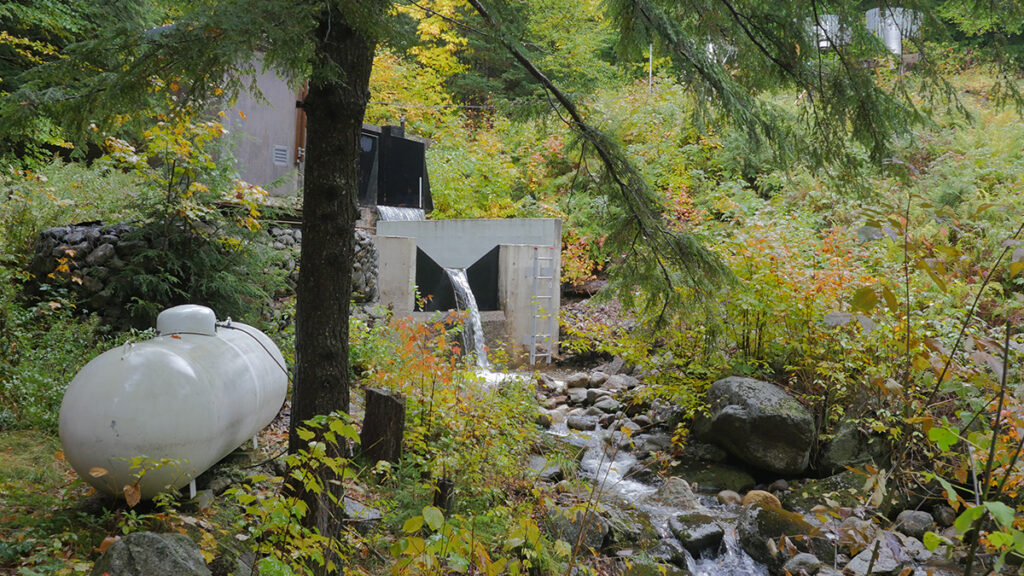
Concrete stream weir in a forest channel measuring water flow at Hubbard Brook Experimental Forest, N.H.

On 31 March 2026, the U.S. Department of Agriculture announced the closure of 57 of its 77 U.S. Forest Service research facilities. The scientific community’s response was warranted: Save the science, restore the funding, protect the researchers.

All of that is correct. But it misses a structural problem inherent in agency governance, one that will recur at every reorganization until the Earth science community builds an instrument to prevent it.

In massive reorganizations like the ones federal agencies are currently experiencing, the threat to long-term research facilities is not primarily a lack of funding. The true threat is an oversight of administrative architecture. There appears to be no general federal requirement to have a successor stewardship plan in place before reducing the output or outreach of a long-term research facility—or closing it entirely.

The Physical Archive Is Not a Digital File

Hubbard Brook Experimental Forest in New Hampshire was among the sites under review during the Forest Service restructuring but has since received a public reprieve. The future of Bartlett Experimental Forest, also in New Hampshire, remains unresolved. The governance problem, however, extends beyond either site.

Hubbard Brook’s physical archive holds more than 60,000 barcoded and cataloged samples: water, soils, plant material, and physical cores spanning 7 decades of continuous collection and stored under active environmental controls in a dedicated building on site.

These samples cannot be digitized. They cannot be migrated to a remote server, backed up to cloud storage, or emailed to a university partner. The samples require a functioning building, active temperature management, and a named human steward responsible for their integrity.

  • Shelves filled with labeled environmental samples in long-term storage.
    The physical archive at Hubbard Brook holds more than 60,000 barcoded and cataloged samples stretching back to the founding of the facility in 1955. Credit: Anthony Veltri
  • Close-up of labeled core sample from a tree labeled “84 yrs”
    The archive includes core samples of trees dating to long before the experimental forest was established, and the archive maintains each as a managed scientific record with continuity of custody. Credit: Anthony Veltri
  • Rock core samples are arranged in trays for analysis.
    Core samples like these document the watershed at Hubbard Brook and anchor long-term understanding of system processes. Credit: Anthony Veltri

The archive at Hubbard Brook is impressive, but a governed record is defined by continuity, provenance, and stewardship, not by the number of observations it contains: Data volume is not data value. A 70-year unbroken record of watershed chemistry, maintained by named stewards who documented what they were measuring and why, is a governed product. Without that stewardship and physical anchor, volume can become noise.

The failure to maintain archives like this is likely not malicious; it is an example of administrative indifference or perhaps a lack of awareness or understanding. Environmental controls, for example, get zeroed out of a budget line item, and nobody notices until the temperature in the facility drifts. By then, the sample record has degraded in ways that cannot be reversed.

This Is Not a Hubbard Brook Problem

Many physical archives, calibration sites, and long-duration sampling programs operate without a formal requirement for stewardship continuity.

Hubbard Brook is the most visible instance of a pattern—the lack of a successor stewardship plan—that runs across the entire 84-site federal Experimental Forests, Ranges, and Watersheds network. The March order that identified Bartlett Experimental Forest and 56 other research facilities across 31 states for closure was executed without a mandatory requirement to identify successor stewards for what gets left behind.

Nor is the pattern unique to experimental forests. The Long Term Ecological Research network spans 28 core sites. AmeriFlux includes more than 500 monitoring locations across North America.

Throughout all these systems, many physical archives, calibration sites, and long-duration sampling programs operate without a formal requirement for stewardship continuity under agency reorganization.

What We Stand to Lose

Long-term physical archives provide scientists and other stakeholders the ability to ask future questions of past reality. Nobody collecting water samples at Hubbard Brook in 1963 was thinking about PFAS (per- and polyfluoroalkyl substances), for instance, but the baseline its site samples provide is why we can track the chemicals today. The same continuous record was central to the regulatory science behind the Clean Air Act amendments of 1990.

Archival value compounds silently and becomes visible only when someone needs it.

Archival value compounds silently for decades and becomes visible only when someone needs it.

When these archives fail, the loss is not historical. It is operational. Regulatory agencies rely on long-baseline records to determine whether interventions are working. Without a continuous physical reference, observed changes cannot be distinguished from measurement drift, instrumentation bias, or natural variability. The results are policy decisions made without a defensible scientific baseline.

Federal investment in continuous collection at a site like Hubbard Brook runs to tens of millions of dollars over decades. That investment is not recoverable once continuity is broken.

Unlike a paused research grant, a degraded physical archive cannot be restarted. You can photograph a sample, but you cannot rerun its chemistry 40 years from now if the physical sample has degraded.

In 2017, a double mechanical failure at the University of Alberta destroyed 12.8% of the Canadian Ice Core Archive over a single weekend, permanently erasing records dating back 12,000 years. That incident was accidental. A mechanical malfunction is a failure of equipment. Administrative disposal without a named successor steward is a failure of governance. One arrives without warning. The other can be prevented.

The Community Already Knows How to Do This

The Earth observation community has already built the governance model we need. We are not yet applying it to long-term ecological research infrastructure.

GRUAN, the Global Climate Observing System (GCOS) Reference Upper-Air Network, operates under the World Meteorological Organization and GCOS, with explicit named stewardship obligations. Upper-air observations—measurements of temperature, humidity, and wind through the atmosphere—are foundational inputs to weather forecasting and climate monitoring. Each GRUAN station has a designated principal investigator with a documented succession obligation.

ICOS, the Integrated Carbon Observation System operating across Europe, applies the same logic to terrestrial ecosystem observations through formal site-level stewardship agreements and named succession requirements.

In the United States, the National Ecological Observatory Network is funded by the National Science Foundation (NSF) and operated by Battelle, a science and technology nonprofit, under a contract that includes explicit data continuity obligations.

These systems did not emerge by accident. They were explicitly designed to solve a known failure mode: Distributed observational networks cannot maintain their own calibration integrity without a separately governed reference layer. That design decision is documented, enforced, and funded. The absence of an equivalent requirement in long-term ecological research infrastructure is not a technical limitation. It is a governance omission.

The pattern is consistent across every network that has solved this problem: Named continuity obligations must be written into the governance structure before the need becomes acute.

The Governance Instrument

The best outcome is the continued, uninterrupted operation of facilities like Hubbard Brook.

Any federal agency action that would reduce operational support for a long-term research facility should require a formal continuity plan before the action takes effect.

If reductions move forward, however, the proposed fix is specific and not novel: Any federal agency action that would reduce or eliminate operational support for a long-term research facility should require a formal continuity plan before the action takes effect. That plan must name a successor steward for each active long-term dataset and for each physical archive under active environmental control.

In practice this means specificity: the name and institutional affiliation of the successor, a funded maintenance budget sufficient to sustain environmental controls and sample integrity, documented protocols for custody transfer, and a timeline for uninterrupted handoff. The plan must demonstrate that the successor steward has the operational capacity and funded mandate to preserve the archive’s physical integrity and continuity.

Laboratory microwave digestion system displays a foliage sample preparation method.
This instrument prepares plant samples collected at Hubbard Brook using standardized methods. Consistent preparation is what makes results comparable across time and labs and why continued stewardship is so important. Credit: Anthony Veltri

The default should be continued stewardship by the responsible federal entity. If a change in custody is legally permitted and genuinely unavoidable, any successor steward, whether another federal unit, a university partner, a consortium, or another entity, must have a funded mandate, demonstrated technical capacity, enforceable continuity obligations, and the ability to maintain the archive without interruption.

Protocol demands that if the agency cannot name a viable successor steward, the agency cannot execute the closure. This requirement does not prohibit closure; it prohibits closure without continuity of custody.

The instrument requiring a research facility to have a formal continuity plan should be applied not on a site-by-site basis, but uniformly across networks. A limitation narrowly written to protect a named facility invites the agency to execute the same administrative disposal at adjacent sites while technically complying with the specific requirement. The governance is structurally sound only if it applies across the network.

How This Actually Happens

The pathways that would make such an instrument possible already exist.

Agencies can impose continuity requirements through policy directives, appropriations language, or funding conditions. The federal Office of Science and Technology Policy and the Office of Management and Budget have coordinated interagency data management guidance before, and a directive requiring named successor stewardship before any facility reduction does not require legislation. Sen. Jeanne Shaheen (D-NH) has already secured fiscal year 2026 language directing the Forest Service to prioritize staffing at long-standing experimental forests; attaching successor stewardship language is the logical next step. NSF, the Department of Energy, and NOAA could require stewardship continuity guarantees from partner agencies as a condition of incorporating facility data into federally funded continental-scale products.

Buildings and watershed infrastructure at Hubbard Brook
Scientists recognize that agencies reorganize and funding for facilities can be downgraded. That is why preserving a continued record of any long-term research facility must be part of the facility’s governance structure from the outset. Credit: Anthony Veltri

What is missing is the requirement itself—and the strategic initiative to establish it. The Earth science community has the standing, the documented models, and the mechanisms to close those gaps.

This is not an argument against reorganization. Agencies reorganize. Budgets shift. Research priorities evolve.

The argument is that reorganization cannot be permitted to destroy multigenerational scientific infrastructure through administrative indifference when a specific, enforceable governance requirement can prevent it. The Earth observation community built GRUAN because it recognized that no federation of climate datasets can be a substitute for a governed anchor point. Long-term ecological research infrastructure needs the same recognition applied to the administrative layer that governs its continuity.

The scientific enterprise already knows how to do this. The governance has not caught up yet.

Author Information

Anthony Veltri (anthony@anthonyveltri.com) is an independent practitioner and former physical scientist and senior policy analyst with the USDA Forest Service Washington Office, where he worked on enterprise architecture and governance in federal programs, including those supporting scientific research.

Citation: Veltri, A. (2026), The governance gap threatening long-term ecological archives, Eos, 107, https://doi.org/10.1029/2026EO260172. Published on 27 May 2026.
This article does not represent the opinion of AGU, Eos, or any of its affiliates. It is solely the opinion of the author(s).
Text © 2026. The authors. CC BY-NC-ND 3.0
Except where otherwise noted, images are subject to copyright. Any reuse without express permission from the copyright owner is prohibited.
  •  

Three Things I Learn This Week: Squeejiks, Swimsuits, and Shnobble

I’m known to go down a rabbit hole from time to time and many of those threads come from something I saw on social media. Here’s three things I learned this week about Popeye (and billionaires), Marvel Comics Swim Suit Edition, and Will Eisner Mural in Copenhagen.Be a Non-AI Generated PopeyeTom Hientjes‘ reposted a Popeye […]

  •  

Of sugar highs and water lows

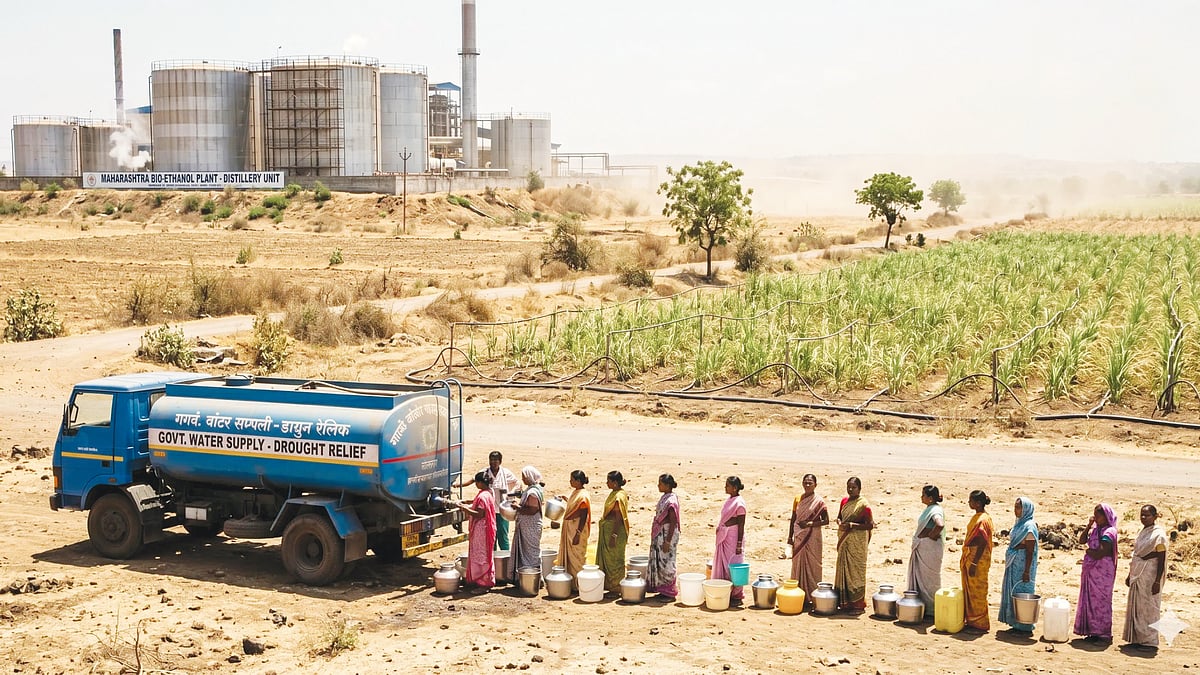
Think one day at a time. This was the strategy of farmers to stay afloat in Takwiki village, in Maharashtra’s drought-prone Dharashiv district in the summer of 2013. A crippling water scarcity devastated its economy, driving people out in search of work and water.

Three more devastating droughts have since ravaged Marathwada region in which Takwiki falls, and each time, some of its people left the village and translocated to other places.

That year, Maharashtra crushed 80 million tonnes of cane to produce 8 million quintals of sugar. Sugar mills in Dharashiv crushed over 25 lakh tonnes of sugar-cane — a record.

In my successive trips to this village and tens of others in this rain-shadow, low-rainfall, arid region of the state, one paradox stood out: villages that clamour for tankers to supply drinking water grow tonnes of water-guzzling sugarcane for the state’s sugar daddies. This, in a changing climate.

Year after year, they dig deep borewells to extract groundwater to irrigate cane crops, feeding factories that produce millions of tonnes of sugar and now ethanol, while a large section of people, especially in summer, are crying themselves hoarse for drinking water during drought years.

A few years ago, a geologist at the Maharashtra government Groundwater Surveys and Development Agency (GSDA) told me that Marathwada was sucking water from the palaeolithic age to grow orchards and cultivate sugarcane. The crisis is that serious.

In 2013, when the harangued district collector wrote to chief minister Prithviraj Chavan pleading for the suspension of the Diwali-to-March crushing season to preserve water for drinking needs, the entire political class was up in arms against him. He was snubbed, and transferred. People went without water, were forced to buy cans and packaged water by shelling out astronomical sums, but sugar mills worked round the clock, using millions of litres of water to produce the sweetener.

Cut to 2026. The water crisis has worsened, yet the Centre wants to push for vehicles to run on 100 per cent ethanol — produced by sugar factories — to tide over fuel shortages in the aftermath of the war in West Asia. It intends to amend the regulatory framework for mills, bringing ethanol into the framework in addition to sugar, molasses and other byproducts. This year, more of Maharashtra’s sugarcane will not become sugar, but ethanol — fuel for India’s vehicles.

The shift is part of India’s aim to achieve, over time, 100 per cent ethanol blending in petrol. Oil marketing companies are expanding procurement and sugar mills across Maharashtra are rapidly adding distillation capacity. What was once a by-product — molasses — has now become a central economic driver.

For five years, the Centre and states have, through policy tweaks, incentivised private and cooperative sugar factories to invest heavily in ethanol production. But in a state where water is already contested, the ethanol story is not just about energy. It is about how water is being used — and who decides.

Last week, the Modi-government took a step toward enabling cars in India to run entirely on ethanol. Under normal circumstances, such a move would be welcome. But these are not normal times. Ongoing geopolitical tensions in West Asia have disrupted global oil supplies, raising fears of fuel shortages. Reducing dependence on petrol and diesel is therefore understandable.

Early in April 2026, the ministry of consumer affairs, food and public distribution released the draft Sugarcane (Control) Order 2026 that aims to replace the 1966 order, to ‘modernise the sugar sector’. Aside from what it will achieve and why, among the 14 key proposals in the draft is the move to expand the regulatory scope to include ethanol production from sugarcane juice, syrup and molasses, formally integrating ethanol into the regulatory framework.

In principle, this seems like a forward-looking decision. But implementing it now is akin to digging a well when thirsty. Energy demand is predictable and should have been prepared for in advance. This policy carries two serious risks.

The first concern is impending water scarcity.

This year’s forecasts by multiple agencies including the IMD suggest that the 2026-27 monsoon may fall short by around 8 per cent due to the looming shadow of El Niño. Governments — right from the Centre down to municipalities — are already preparing for water shortages. Cities like Mumbai have announced water cuts.

Against this backdrop, accelerating ethanol production begs a critical question. Ethanol manufacturing requires enormous quantities of water. Using conventional methods, producing one litre of ethanol can require up to 10,000 litres of water. Even when produced from grains like rice or maize, efficiency is limited — one tonne yields about 475 litres of ethanol. So how economic and ecological is the decision to harp on higher ethanol blends?

In India, ethanol is primarily derived from sugarcane. In Maharashtra alone, nearly 350 sugar factories have invested heavily in ethanol production. Yet from a tonne of sugarcane juice (about 1,000 litres), only 70 litres of ethanol is produced. The process is doubly water-intensive: first, to grow a crop that guzzles vast quantities of water, and then, to expend further energy and resources to extract ethanol from it.

Just as you need to spend money to earn money, producing energy also consumes energy. The question is how much and at what cost.

If water itself is scarce, as in the regions that cultivate sugarcane, should it be used for drinking, farming and essential needs — or diverted toward fuel production? The answer is obvious. That is why pushing ethanol production at this moment appears deeply problematic.

The second concern is overcapacity and policy distortion.

Before the current energy crisis, the government had strongly incentivised ethanol production. As a result, India’s ethanol production capacity has increased dramatically — from about 518 crore litres a decade ago to nearly 2,000 crore litres today. However, current demand is only about 1,100 crore litres. In other words, capacity far exceeds demand.

Even within ethanol production, there is a hierarchy. Ethanol made from sugarcane is now being overshadowed by ‘new’ ethanol derived from grains like rice (also a water-guzzling crop) and maize. Government procurement policies appear to favour these newer producers, spelling uncertainty for traditional sugar-based ethanol producers — mainly sugar mills.

In Maharashtra and elsewhere, around 350 such producers have invested heavily, encouraged by earlier policies. But oil companies are now procuring only about half of their output, which leaves these producers struggling to recover their investments.

If India moves from 20 per cent blending to 85 or 100 per cent ethanol, demand will rise dramatically. But ethanol has lower energy density than petrol or diesel. This means vehicles require more ethanol to travel the same distance. Higher consumption will therefore drive even greater demand for ethanol production. And that, in turn, means even greater demand for water.

At present, India’s cropping patterns can support ethanol blending up to around 30 per cent. Moving to 85 or 100 per cent would require a massive expansion in ethanol-producing crops.

This raises other concerns. Sugarcane and rice — both water-intensive crops — are already under scrutiny. Yet they continue to receive policy support due to political considerations and food security needs. This has led to growing pressure on water resources. In addition, excessive irrigation brings risks like soil salinity and land degradation, as seen in Satara.

Ethanol has altered the financial logic of the sector. Instead of being trapped in cycles of sugar surplus and low prices, mills now have an alternative market.

Industry voices argue that ethanol has effectively stabilised the sector — indeed, Union minister Nitin Gadkari, a strong advocate for and player in the sugar sector and biofuels, recently claimed that without ethanol, a majority of mills in western Maharashtra would have shut down. There is little doubt that ethanol has revived the mills. But its mindless expansion rests on sugarcane and water, disregarding concerns about water availability and food security.

At the heart of Maharashtra’s ethanol turn lies a familiar political economy, now reconfigured rather than replaced. The cooperative sugar mill — once the backbone of rural patronage — has evolved into an increasingly private agro-industrial hub that converts cane into sugar, power and fuel.

Control over mills meant control of credit societies, transport contracts, labour networks, subsidies and ultimately electoral influence, particularly in western Maharashtra. Ethanol deepens this nexus. By improving cash flows through assured procurement by oil companies, it strengthens both cooperative and private mills, linked to political families across parties.

The beneficiaries are layered: mill owners secure new revenue streams, political actors consolidate influence through financially viable institutions, and relatively larger cane-growing farmers gain from more reliable payments.

The costs, however, are more diffuse — borne by regions like Marathwada, where groundwater is overdrawn to sustain cane, and by smallholders locked into a water-intensive crop because mills dictate local cropping patterns.

In effect, ethanol has not democratised the sugar economy; it has shifted its centre of gravity from a cooperative-led model to a hybrid regime of cooperatives and private mills, tightening the nexus between water, capital and political power while expanding it into newer, more fragile landscapes.

As Amey Tirodkar notes in Frontline, ‘sugar built Maharashtra’s cooperative power structure’, a structure now under strain. The traditional cooperative model, once the backbone of rural political control, is being reshaped by debt, rising costs and uneven access to ethanol capacity.

Mills with capital and political backing are adapting — investing in distilleries and securing new revenue streams — while weaker cooperatives struggle with unpaid dues running into thousands of crores. The result is a reconfiguration: from a broad-based cooperative network to a more uneven landscape where private mills and politically aligned entities consolidate control.

In this transition, ethanol acts as both stabiliser and filter — rewarding those who can invest, marginalising those who cannot. The benefits accrue upward, to mill owners and political actors, while the risks — water depletion, crop dependency and income volatility — are pushed onto farmers and labour.

In Maharasthra, sugarcane is not just a crop but a system of power. From Kolhapur and Sangli to Ahmednagar and Solapur, the geography of sugar overlaps with the geography of political influence. Cooperative mills historically anchored local economies, shaping access to credit, employment and electoral mobilisation.

Ethanol reinforces this system. By strengthening mill finances, it increases the institutional leverage of sugar networks. It also locks farmers into cane cultivation. Studies show that in Maharashtra, expansion in sugarcane production has been driven more by increase in area than productivity, indicating a steady spread of the crop across regions. That expansion has increasingly moved into drought-prone regions like Marathwada, or parts of western Maharashtra, where the ecological costs are far higher.

The impact of this transition is not the same across Maharashtra. Western Maharashtra — with canal irrigation systems and relatively higher rainfall — has historically supported sugarcane cultivation. Regions like Kolhapur, Sangli and Pune form the core of the sugar belt.

But Marathwada and parts of Vidarbha tell a different story. Here, sugarcane depends on groundwater extraction. Repeated droughts have already exposed the fragility of this model. Despite this, cane acreage has expanded into these regions, driven by the economic pull of mills. Ethanol risks accelerating that trend.

The shift also has implications for cropping diversity. As more land is committed to cane, less water is available for millets, pulses and oilseeds — crops that are both nutritionally and ecologically more suited to dryland agriculture. In effect, ethanol may be narrowing the state’s agricultural choices and aggravating the water crisis even as it expands its energy options.

Jaideep Hardikar is a senior Nagpur-based journalist and author of Ramrao: The Story of India’s Farm Crisis. Read more by him here

  •  

Sony MDR-7506 Headphones: The Standard to Which All Others Are Measured

A pair of Sony headphones rests on a wooden surface. The image features "PetaPixel Reviews" text in the bottom left corner, partially overlapping the headphones.

PetaPixel is expanding its coverage into headphones, but specifically their use through the lens of how a videographer would use them. In the field, at their desk, and while traveling, every videographer and editor has them, and the standard by which they all should be judged is the Sony MDR-7506.

[Read More]

  •  

Why ‘Indian’ is becoming a bad word in the West

Five years ago, I wrote a piece debunking the myth of ‘Hinduphobia’. This was the time that several Hindutva organisations in North America and Europe were trying to popularise the term as a political counterweight to Islamophobia. The strategy was clear: if Muslims could rally around discrimination, prejudice and violence directed at them, so could Hindus fan threat perceptions to shield Hindutva politics in India. Criticism of majoritarian nationalism in India was repackaged as hatred of Hindus.

Five years on, this enterprise is still alive and kicking, even though the world has changed a lot since 2021. Donald Trump’s return to the White House has emboldened far right movements across much of the Western world. Anti-immigrant rhetoric has become mainstream. White nationalist groups that once operated on the political margins now enjoy much greater visibility and influence. In this new environment, Indians living abroad are increasingly finding themselves at the receiving end of racism and xenophobia.

This reality must be acknowledged. Anti-India(n) sentiment is real. It is ugly and growing. Reports of attacks on Indians in Ireland, Italy, Australia, Canada, the UK and US have become more frequent. Online spaces have witnessed a surge in openly racist language directed at Indians.

In the US, even successful Indian Americans like Vivek Ramaswamy — who enthusiastically aligned themselves with Trump — have discovered that their loyalty offers little protection from racial prejudice. For White supremacists, Indians are outsiders, regardless of their wealth, education, political beliefs or professional standing.

A group of Indians act like this abroad and the whole country has to suffer from racism pic.twitter.com/B5JxMXruL9

— Lord Immy Kant (@KantInEastt) May 28, 2026

But this anti-Indian racism is still not ‘Hinduphobia’. The hostility directed at Indians is not rooted in their Hindu identity. It is part racial prejudice, part economic anxiety, part broad anti-immigrant sentiment and politics — but also a reaction to progressively bolder assertions of Hindu nationalism and cultural arrogance from some sections of the Indian diaspora.

For decades, Indians abroad enjoyed an enviable reputation. They were seen as hardworking, educated, entrepreneurial and law abiding. They were the ideal immigrants and the subjects of many immigrant success stories. Their achievements in medicine, engineering, academia, technology and business earned them respect and admiration. But the default perception of Indians is changing.

Diaspora nationalism is a key ingredient of this change. Over the past ten or so years, the Modi government has tried to cultivate a sense of civilisational pride among overseas Indians. Taking pride in one’s heritage or cultural roots is one thing, but when pride turns into arrogance, it is likely to provoke.

Many affluent Indians abroad, particularly upper caste Hindus, have begun to see themselves not simply as successful immigrants but as representatives of a rising global power. They have absorbed the delusional narrative that India under Modi has become a superpower, a great civilisation-state that is reclaiming its rightful place at the centre of world affairs. This delusion has spawned an exaggerated sense of entitlement.

In some diaspora circles, there is a growing tendency to look down on other migrant communities while simultaneously expecting special treatment from host societies. Professional success has produced an expectation that Indians deserve greater recognition and influence. This inflated sense of self-worth and entitlement has not gone unnoticed.

Everyday a new reel of our great tourists appear! Here’s a Marwari group supposedly having fun abroad. Fun is ok, but this is nuisance! pic.twitter.com/tm3EL42zc8

— Harsh Goenka (@hvgoenka) June 10, 2026

The Indian diaspora’s cultural arrogance, aggressive nationalism and lack of respect for local social norms has become a theme of public debates in the West.

Attention is drawn to the fundamental mismatch between societies that discriminate on the basis of caste and those that regard equality as a foundational value. Universities, workplaces and community organisations have reported tensions linked to caste identities that people in the West had never encountered earlier.

Indian tourists are also contributing to this adverse perception of the Indian diaspora. A growing appetite for ‘foreign holidays’ in India’s upwardly mobile middle class has produced millions of first-time international travellers.

Social media is filled with videos of Indian tourists ignoring regulations, disturbing public spaces, disrespecting local customs or engaging in reckless behaviour. This is possibly a tiny minority but we live in an era were virality trumps statistics.

One standout feature is a sense of entitlement that flows from an inflated sense of India’s standing in the world and Modi’s global stature. Sustained exposure to the Modi government’s nationalist propaganda has convinced this rambunctious lot that India is already a superpower; that Modi is the world’s most popular leader; that ‘Indian culture’ is universally admired; that Indians command special respect wherever they go. When this imagined status collides with reality, it often produces behaviour that local populations find hard to stomach.

None of this makes racism acceptable. Never. The responsibility for racist actions lies with the perpetrators. Yet understanding why negative perceptions are spreading requires more than condemnation. It requires a close reading of the social and political context in which these perceptions take hold.

****

Another uncomfortable reality concerns racism within sections of the Indian community itself. Anti-Muslim prejudice, anti-Black stereotypes, hostility towards refugees and support for exclusionary nationalist politics are becoming defining attributes of the Indian diaspora.

The contradiction is striking: some of the most strident critics of racism against Indians simultaneously support political movements that demonise migrants, Muslims and other minorities in India and elsewhere.

This contradiction is most evident among Indian supporters of Trump and other far-right movements. Many believed that economic success and political loyalty would secure acceptance within conservative nationalist circles. They eagerly embraced anti-immigrant rhetoric directed at others while imagining themselves exempt from its consequences.

But White nationalism does not distinguish between Hindus and Muslims, Sikhs or Christians, nor between rich and poor, nor even between conservative and liberal. When racial anxieties intensify, every ‘foreigner’ is a target.

While anti-Indian racism is real, Indians abroad must resist the temptation to package all criticism as racism. All complaints about social behaviour are not xenophobic. Discussions about caste discrimination are not anti-Indian. Nor is criticism of majoritarian nationalism in India an attack on Hinduism.

The hostility Indians are facing in parts of the Western world is a product of two parallel developments. As much as it stems from a resurgent far right eager to scapegoat immigrants, it also flows from their own racial and caste prejudices, cultural arrogance and support of toxic Hindutva, which has eroded the goodwill accumulated over generations.

The future of the Indian diaspora in the West depends not only on resisting racism but also on rediscovering the virtues of civic responsibility, on whether they can be respectful of the societies they now inhabit, the countries they now call home.

Views are personal

Ashok Swain is a professor of peace and conflict research at Uppsala University, Sweden. More by the author here

  •  
❌