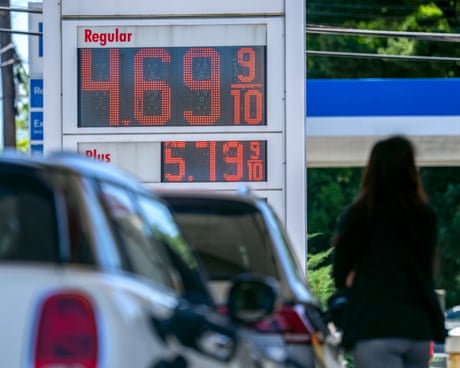
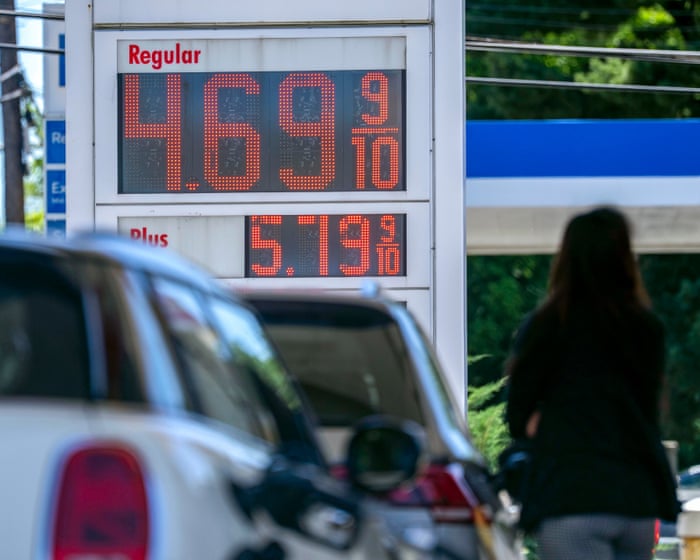
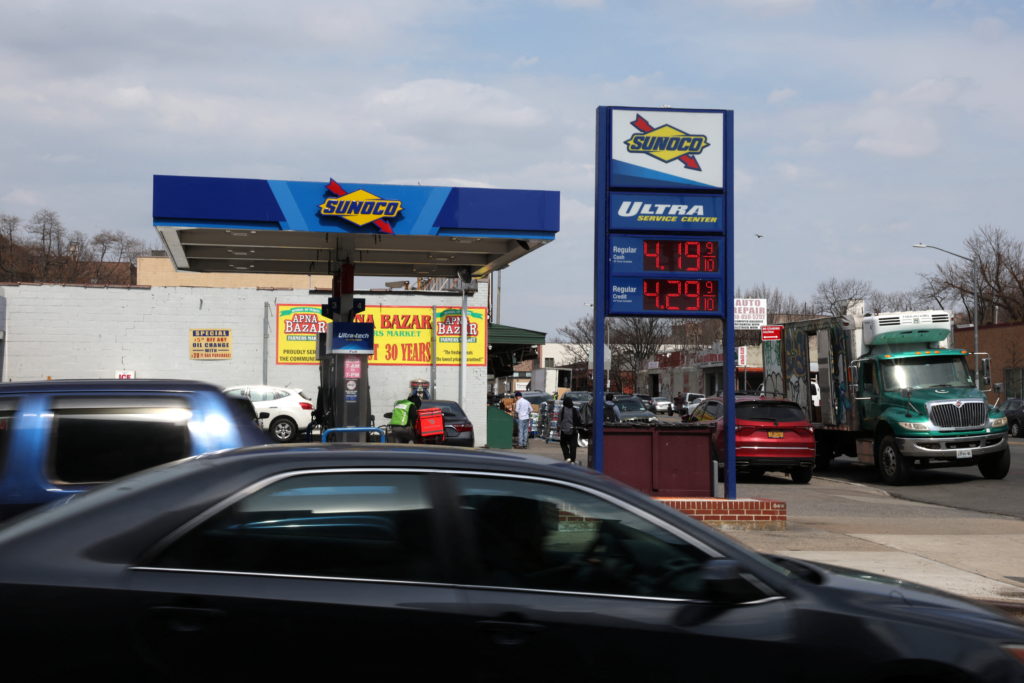
Rising gas prices pushed inflation to a three-year high last month, a headache for the Federal Reserve and a potential political challenge for the Trump administration.
SINGAPORE: The squeeze of the rising cost of living has reached even affluent households in Singapore.
According to Singapore Business Review, citing Sun Life Asia’s third “Financial Resilience Index: Asia Navigates Rising Costs” report released on Tuesday (June 9), rising living costs have affected all income groups, including high earners.
Among high-net-worth individuals (HNWIs) earning at least S$250,000 a year, nearly eight in 10 (76%) said inflation made it more difficult to cover their monthly expenses, while nearly six in 10 (59%) said they would likely need to make moderate to significant changes to their lifestyle if living costs continue to rise.
Still, seven in 10 HNWIs reported feeling financially secure. Nearly three in 10 (27%) also believe they could last a year without income.
The share of highly resilient households in Singapore fell to 21%, from 34% last year. Low-resilience households also more than doubled to 20%, from 9% a year earlier.
Highly resilient households were defined as those that feel financially secure, plan at least five years ahead, are prepared to cope with a financial emergency, consider themselves financially literate, and are confident of meeting their long-term financial goals.
Low-resilience households, meanwhile, tend to feel financially insecure, plan only a few months ahead or not at all, are unprepared for financial emergencies, rate their financial literacy poorly, and lack confidence in achieving their long-term financial goals.
The report also found that only one in 10 respondents feels very secure financially, compared to two in 10 last year.
Rising everyday costs, including groceries (95%), utilities (94%), transport fuel (92%), cooking fuel (91%) and healthcare (91%), remain the biggest concerns among households. Over the past six months, respondents said the costs of food and groceries (80%), utilities (58%) and transport (55%) increased the most.
When asked about their top financial priorities over the next 12 months, they cited daily expenses (55%), retirement savings (44%) and building an emergency fund (37%).
More than half (52%) of respondents also said the rising cost of living remains a barrier to improving their financial control.
While 69% believe having sufficient savings is critical to achieving financial security, only 41% said they could survive without income or external support.
Respondents said they have been cutting back on non-essential spending (54%), tapping into their savings (24%), reducing essential expenses (24%), and pausing retirement contributions (14%) to cope.
Still, those with higher financial literacy were found to be more confident (+44 percentage points) and more optimistic (+41 percentage points) about their financial future, although seven in 10 respondents rated their financial literacy as basic or below basic.
In terms of financial decision-making, 53% use generative artificial intelligence (AI) tools occasionally, with usage expected to rise to 55%. Among HNWIs, 74% already use the tool regularly, while 69% expect to use it more. /TISG
I had been looking forward to the 250th anniversary of our Declaration of Independence, but it seems to be falling flat, and Anderson pinpoints the issue. It doesn’t seem to be widely known, but there are two very different groups set up for the commemoration: America250 is a non-partisan group set up by Congress to […]
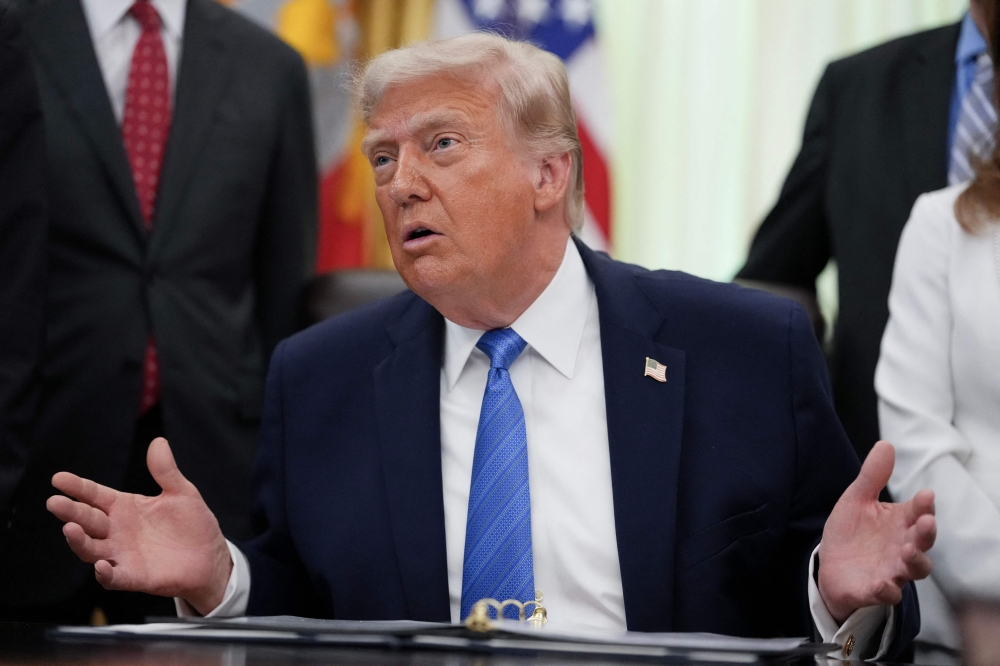
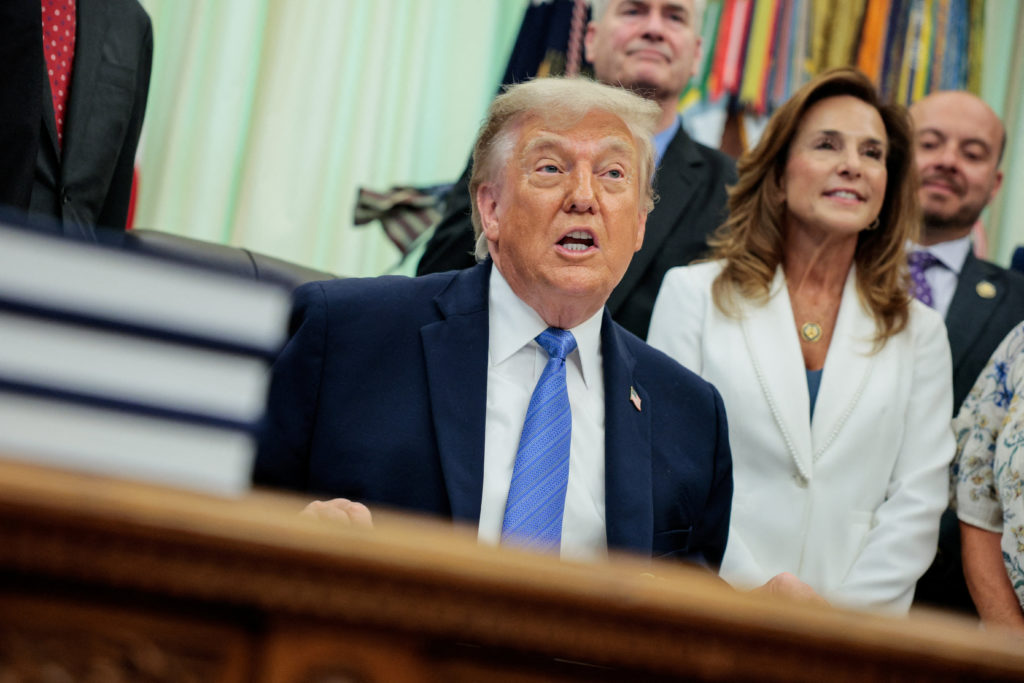
WASHINGTON, June 11 — US President Donald Trump yesterday brushed off concerns about consumer inflation surging to a fresh three-year high in May, on the back of soaring energy prices caused by his war in Iran.
“The numbers were great... I love the inflation,” Trump told reporters, a comment pounced on by Democrats who have made rising prices a cornerstone of their campaign to take control of Congress in November’s midterm elections.
The consumer price index (CPI) rose 4.2 per cent year-on-year, up from the previous month’s 3.8 per cent figure and the highest reading since April 2023.
The Republican Speaker of the House Mike Johnson later argued that the president’s remarks had been taken out of context, but Senate Democratic Minority Leader Chuck Schumer said they demonstrated Trump’s disdain for the financial struggles faced by American families.
“Trump really said, ‘I love the inflation.’ On camera. For all of America to hear. His contempt for you knows no bounds,” Schumer posted on X.
And the Democratic Party posted a new campaign ad on its social media account featuring a video of Trump’s comments.
“Trump said the quiet part out loud—he loves inflation. Every American should see this,” the post said.
The US-Israel war against Iran, launched in late February, has sent energy prices skyrocketing after Tehran retaliated by virtually closing the vital Strait of Hormuz, through which roughly a fifth of global oil and gas normally pass.
Trump also repeated his prediction that inflation would “come down like a rock” after the conflict ends.
Economists have disputed that claim, with oil prices expected to take months to return to pre-war levels, depending on when hostilities end.
Possible peak
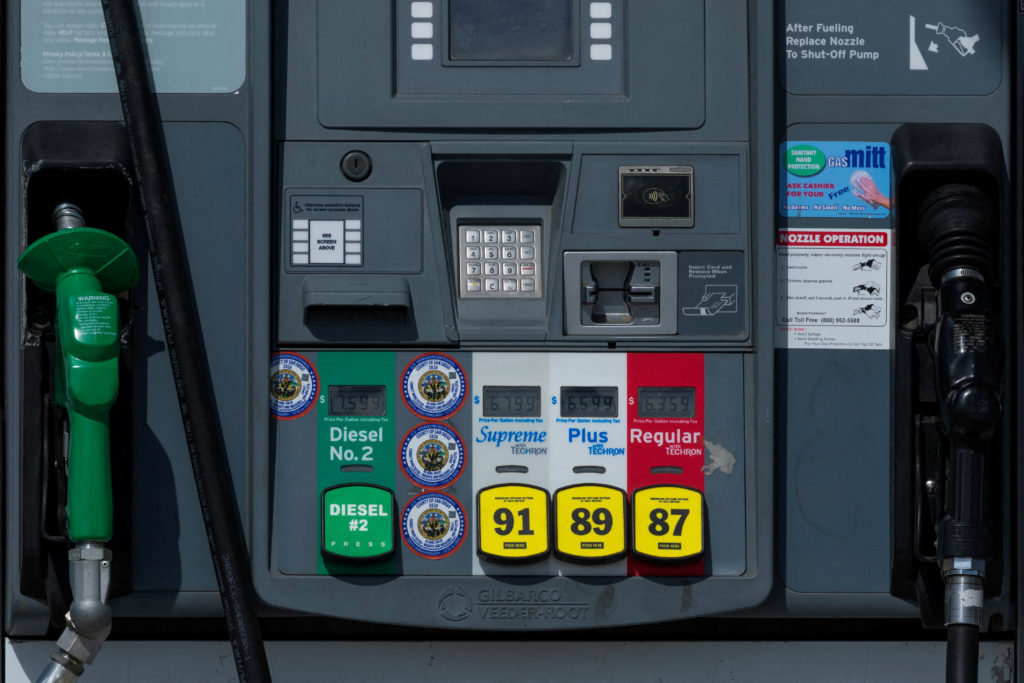
May’s consumer inflation data showed energy prices had risen 23.5 per cent over the same time last year, with gasoline rising by 40.5 per cent.
Grocery prices also rose significantly for the second month in a row, up 2.7 per cent over a year ago.
Other prices to increase over the month included medical care, personal care, airline fares and recreation.
Americans have been dealing with years of higher prices, with inflation remaining elevated long after the Covid pandemic.
Prices have been fuelled by repeated shocks, including the Russian invasion of Ukraine, Trump’s tariffs and now the war on Iran.
Analysts, however, said that gasoline prices at the pump have recently stabilized, potentially indicating a favorable outlook for overall inflation.
“Higher energy prices again pushed up inflation last month, but we estimate that inflation has peaked and will trend lower in the second half of the year,” said Kathy Bostjancic, chief economist at Nationwide.
She added that this was assuming there was a “near-term resolution with Iran to reopen the Strait of Hormuz.”
Core CPI inflation, which excludes volatile food and energy prices, came in at 2.9 per cent in May, up from 2.8 per cent the month before.
“For now, there appears to be little passthrough of higher energy cost onto core inflation, outside of airfare,” said Gregory Daco, chief economist at EY-Parthenon.
No position to cut rates
The US Federal Reserve has a long-term two-percent target for inflation, and the central bank’s key interest rate-setting committee will meet next week.
It will be new chairman Kevin Warsh’s first meeting since taking office last month, and he will be under pressure from Trump to reduce interest rates.
Markets, however, expect the Fed to keep rates steady at this meeting, and are now pricing in rate hikes for later in the year, spooking equity investors.
Before the war, markets had priced in rate cuts for later in the year, with expectations that inflation fueled by Trump’s tariff policy would begin to fade.
The war, however, has complicated the outlook, with more Fed policymakers saying they were concerned about rising inflation, which the central bank would typically address by raising rates.
“The Fed will be in no position to cut rates if this continues,” said Chris Zaccarelli, chief investment officer for Northlight Asset Management. — AFP
The president said that U.S. forces have been removing millions of barrels of oil on a nightly basis, and he had previously "wanted to say it so badly."
Before the conflict began, inflation was at 2.4%, but the closure of the strait of Hormuz has affected energy prices
US inflation jumped to an annual rate of 4.2% in May, the third consecutive monthly increase since the start of the Iran war and a three-year high, as Americans continue to face steep oil prices.
Prices have increased sharply over the past several months, rising at an annual rate of 3.3% in March before going up to 3.8% in April. In February, before the conflict began, inflation was at 2.4%.
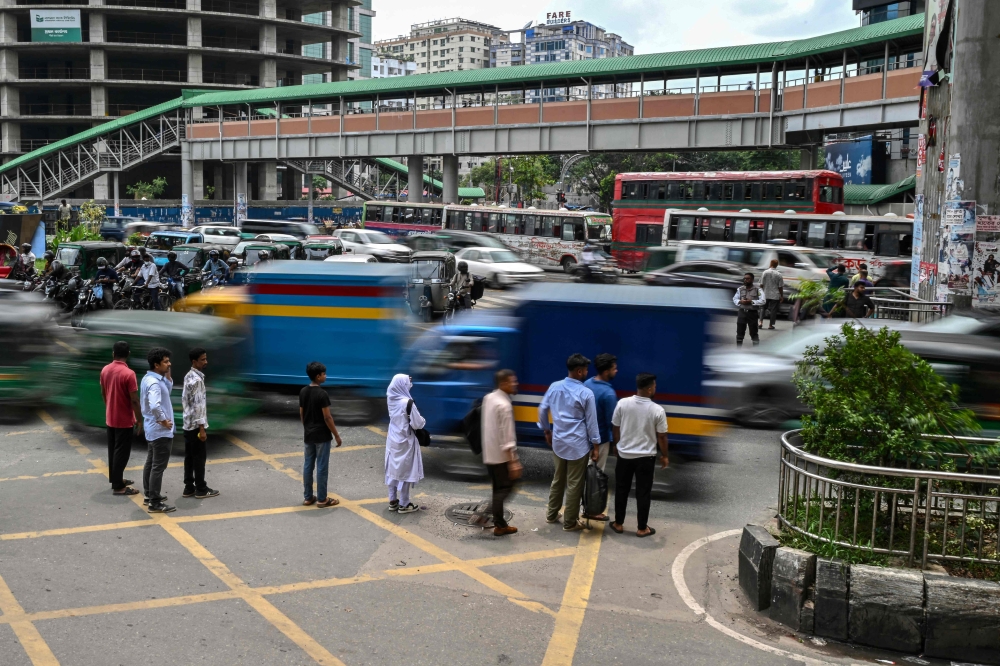
DHAKA, June 1 — Bangladesh raised fuel prices today, six weeks after the previous increase, as the government seeks to ease pressure on state finances affected by the conflict in the Middle East.
The country imports about 95 percent of its fuel requirements, with most coming from the Middle East.
Kerosene was raised to 135 taka (US$1.09) per litre, up from 130, while petrol raised to 140 taka (US$1.14) from 135. Diesel was unchanged.
Authorities are also considering another increase in electricity tariffs.
The latest fuel-price increase is likely to add further pressure to the cost of essential goods in a country that has struggled with persistently high inflation over the past several years.
After a slight decline, inflation stood at 9.04 per cent in April.
Dhaka in March said it was seeking loans of around US$2 billion from multilateral donors to tackle energy security concerns sparked by the surging fuel prices caused by the war on Iran.
In May, the International Monetary Fund said it was in negotiations for a new assistance programme at Dhaka’s request.
Bangladesh is already in the middle of a US$5.7 billion IMF programme, which began in 2023 and was due to run for four years.
While Dhaka and other major cities have largely avoided frequent power outages, rural areas experienced disruptions.
Electricity demand typically peaks during the current summer season, when residents who can afford turn on air conditioning, with temperatures hitting 35C in Dhaka.
Alongside the price adjustments, Bangladesh has been pursuing a range of measures to strengthen energy security, including inviting bids for offshore exploration for natural gas.
Bangladesh’s first nuclear power plant at Ruppur is nearing operational readiness, with the first phase of uranium fuel loading already completed. — AFP
Rising gas prices pushed inflation to its highest level in three years last month, a headache for the Federal Reserve and a potential political challenge for the Trump administration as midterm elections near.
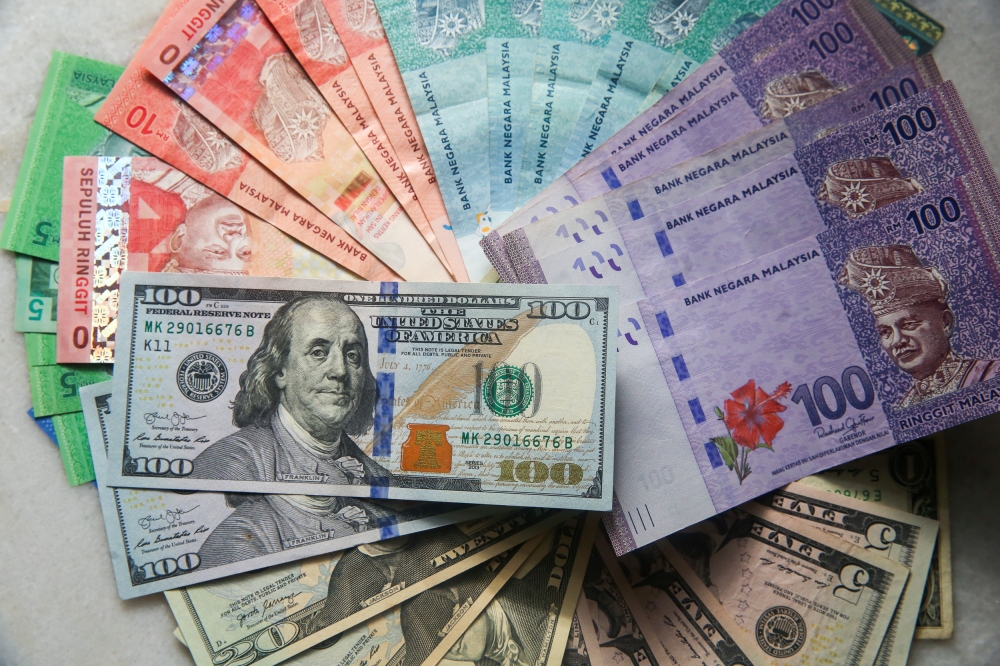
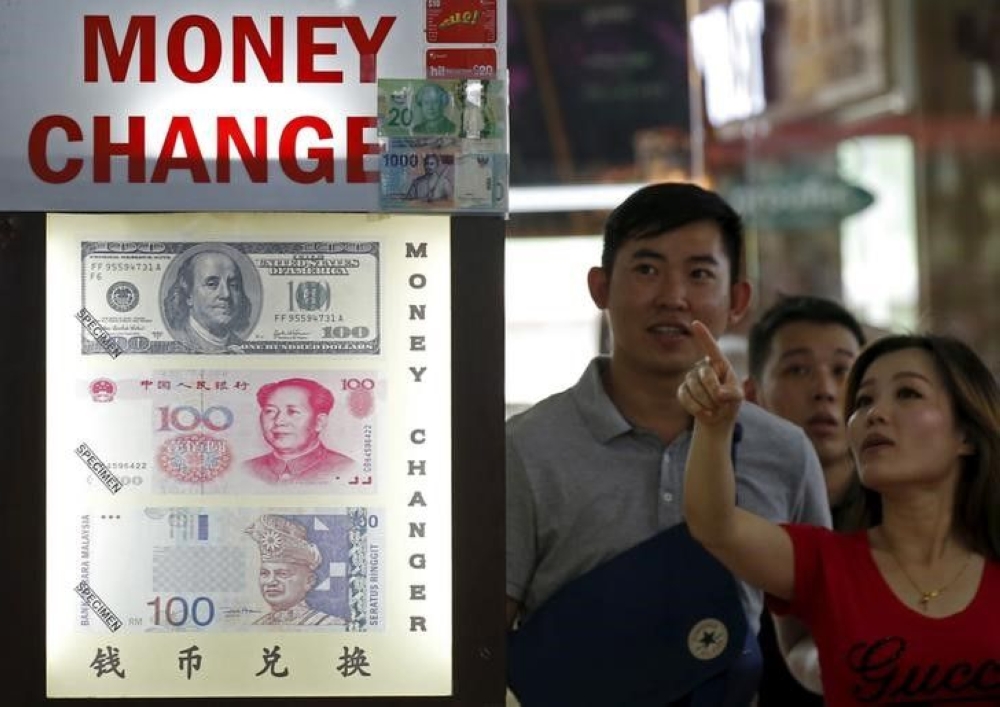
KUALA LUMPUR, June 5 — The ringgit ended lower against the US dollar yesterday on cautious sentiment over rising fuel prices, unresolved geopolitical tensions and global trade uncertainties.
At 6pm, the local currency depreciated to 4.0095/0140 against the greenback from Wednesday’s close of 3.9955/9990.
Bank Muamalat Malaysia Bhd chief economist Dr Mohd Afzanizam Abdul Rashid said elevated fuel prices are expected to exert upward pressure on global inflation as a truce between the US and Israeli forces and the Iranian military remains elusive.
“Hence, traders and investors have become more edgy, with fuel prices expected to remain elevated.
“In addition, the US’ trade protectionist policies are here to stay, leading to further anxiety in market sentiment,” he told Bernama.
On June 2, 2026, the Office of the United States Trade Representative (USTR) published its findings under the Section 301 investigation into alleged forced labour involving Malaysia and proposed a 10 per cent tariff on Malaysian goods upon the expiry of the tariff imposed under Section 122 of the Trade Act 1974 on July 24, 2026.
The Ministry of Investment, Trade and Industry (MITI) noted that no final tariff determination has been made against Malaysia, as the proposed 10 per cent tariff remains subject to the USTR’s ongoing investigation and formal determination.
The ringgit also traded lower against a basket of major currencies.
It eased against the British pound to 5.3872/3932 from 5.3727/3775, slid against the euro to 4.6610/6663 from 4.6400/6440, and slipped versus the Japanese yen to 2.5081/5111 from 2.5005/5027 at yesterday’s close.
The local currency traded mostly lower against regional peers.
It retreated versus the Singapore dollar to 3.1241/1279 from 3.1164/1193, eased against the Thai baht to 12.2708/2903 from 12.1825/1988, and weakened against the Philippine peso to 6.50/6.52 from 6.47/6.48.
However, it was higher against the Indonesian rupiah at 222.1/222.4 versus 222.3/222.7 at Wednesday’s close. — Bernama
KUALA LUMPUR, June 13 — The ringgit is expected to be traded cautiously next week, ahead of the June 16–17 Federal Open Market Committee meeting.
Markets are expected to scrutinise the United States Federal Reserve’s statements and projections for the federal funds rate for the year.
Bank Muamalat Malaysia Bhd chief economist Mohd Afzanizam Abdul Rashid told Bernama that it will be interesting to look at the latest Fed assessment, given the US headline inflation rate was at a three-year high at 4.2 per cent in May.
He said another key focus, which will be closely monitored, is the global central banks’ reaction towards the current oil price shocks.
“Bank of Japan will be deciding their policy rate on June 16, with consensus expecting a 25-basis-point hike to one per cent.
“Reserve Bank of Australia (RBA) will also reconvene to decide their cash rate, but markets are anticipating no change in the benchmark interest rate, which currently stands at 4.35 per cent,” he said.
Meanwhile, SPI Asset Management managing partner Stephen Innes said the big swing factor for next week’s market movement will be updates around the US-Iran peace deal.
“If there is a credible deal, the US dollar could weaken by around three to five per cent over the course of the month. That would be a meaningful tailwind for regional currencies, including the ringgit,” he added.
On a Friday-to-Friday basis, the ringgit eased to 4.0555/0600 against the US dollar from 4.0280/0320 a week earlier.
The local currency traded lower against a basket of major currencies during the week.
It depreciated against the British pound to 5.4429/4489 from 5.4233/4287, eased versus the Japanese yen to 2.5334/5364 from 2.5183/5209, and weakened against the euro to 4.6979/7031 from 4.6882/6928 previously.
It also traded lower against Asean currencies.
It slid against the Indonesian rupiah to 227.0/227.4 from 223.3/223.6, eased vis-à-vis the Singapore dollar to 3.1602/1640 from 3.1390/1424, slipped against the Thai baht to 12.4105/4288 from 12.3433/3605, and declined against the Philippine peso to 6.67/6.68 from 6.55/6.56. — Bernama
Spiking energy prices sent inflation to a three-year high in May, up 4.2% annually. The Labor Department said the cost of energy was responsible for over 60% of the increase. Core inflation, which strips out volatile food and energy prices, was up a more modest 2.9%. Geoff Bennett discussed more with Roben Farzad of Full Disclosure.
 Login
Login