White House Correspondents’ Association Reschedules Dinner, Trump Says He’ll Attend
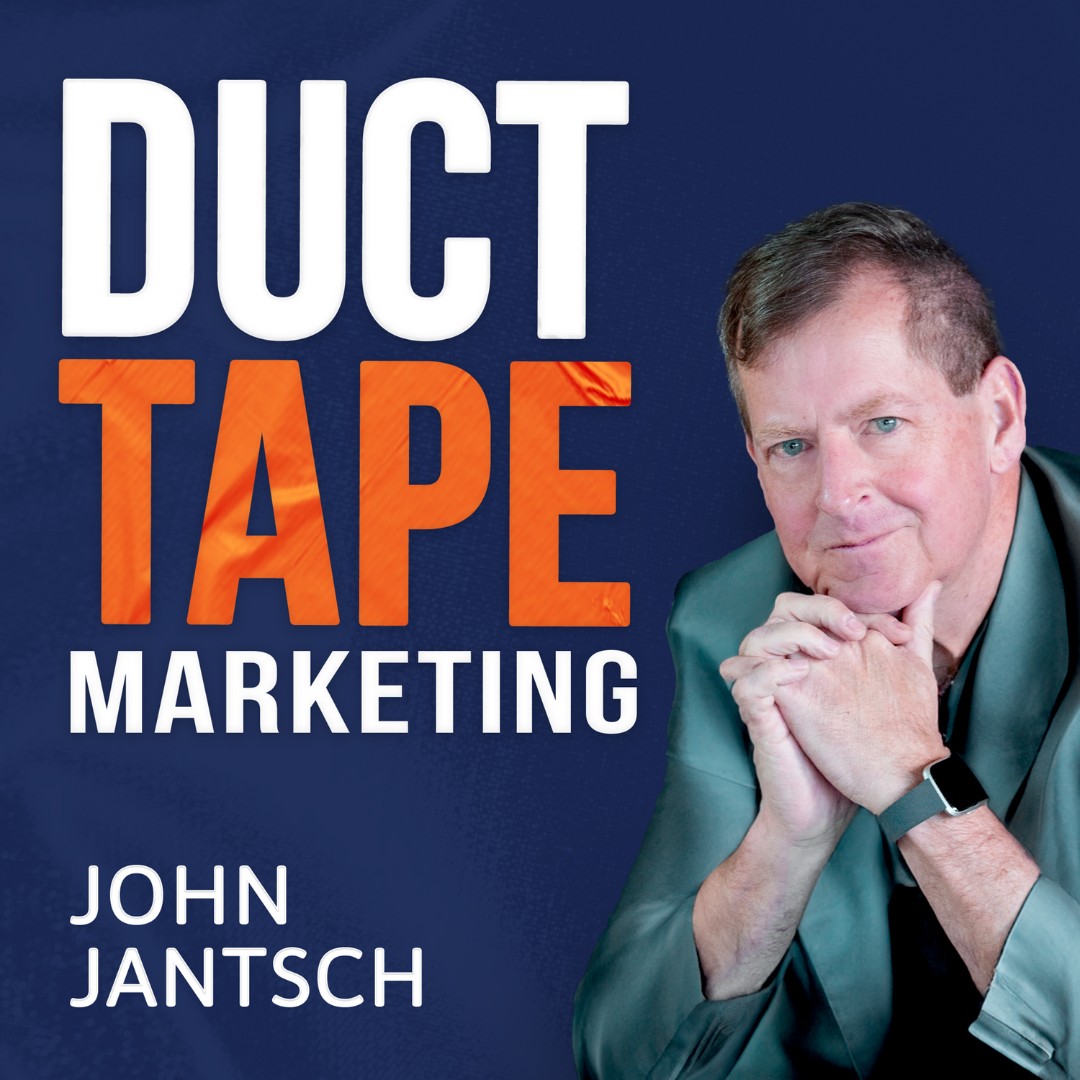
Turn Talks Into Your Most Effective Marketing Tool written by John Jantsch read more at Duct Tape Marketing
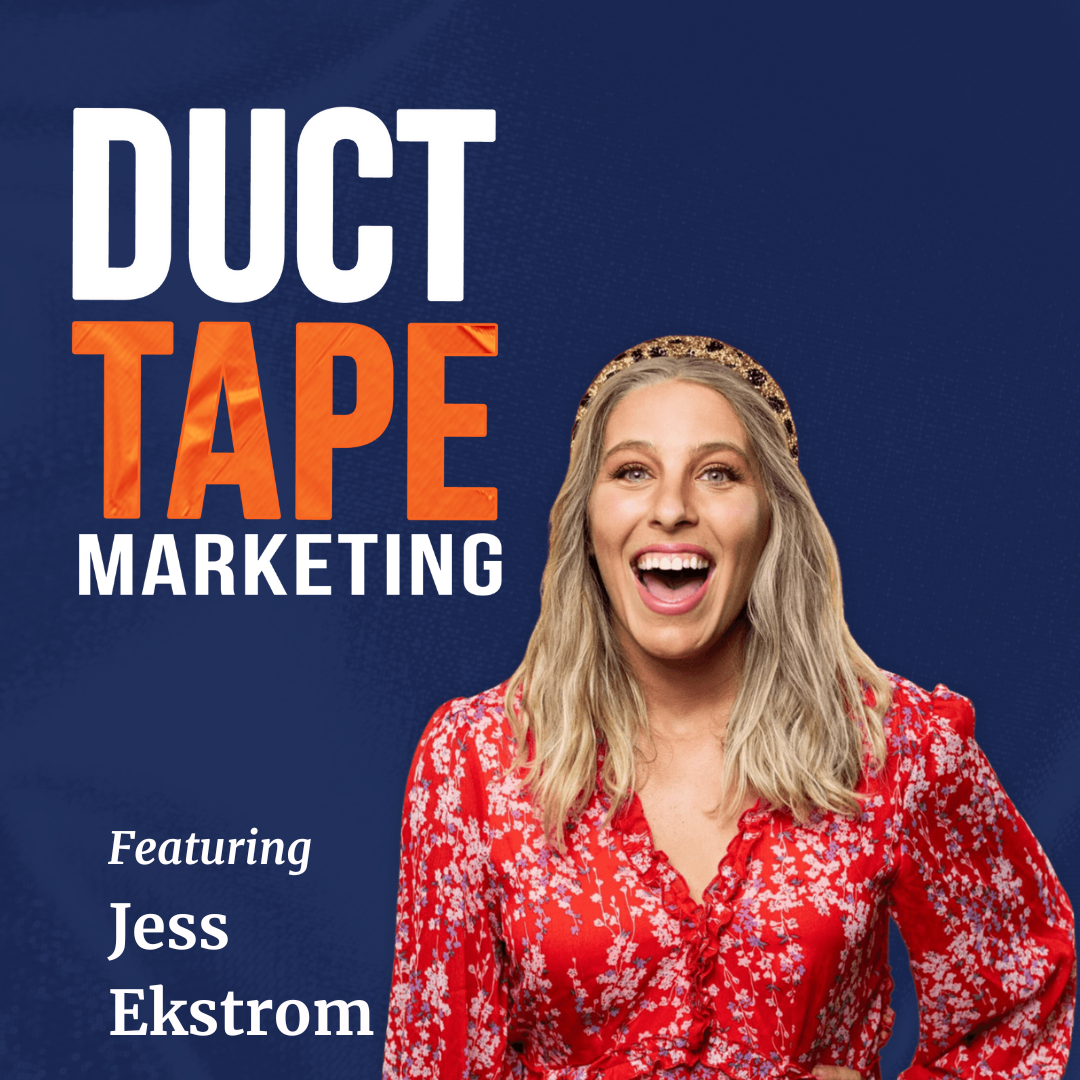
OverviewMost small business owners are sitting on one of the most powerful marketing channels available and never use it. In this episode, John Jantsch welcomes back Jess Ekstrom, founder of Mic Drop Workshop, to make the case that speaking from a stage is not a vanity play. It is a lead generation, brand building, and audience growth strategy that compounds over time.
Jess built her first company, Headbands of Hope, almost entirely by convincing professors to let her speak in class. She did not know she could charge for keynotes until a university emailed asking for her fee. Now she teaches entrepreneurs and founders how to turn their story into a signature talk that earns bookings, builds an audience, and drives business without ever feeling like a sales pitch.
This episode covers the difference between keynote speaking and lead gen speaking, why sharing your failures lands better than your wins, how to build a talk backwards from the outcome, and the mindset shift that dissolves stage fright almost instantly.
Jess Ekstrom is an entrepreneur, two-time bestselling author, and Forbes top-rated speaker. She founded Headbands of Hope as a broke college student and grew it into a nationally recognized brand before it was acquired. She is the founder of Mic Drop Workshop, where she helps women step into their voice and build careers as confident, paid speakers. Her TED talk on the spotlight vs. lighthouse speaker mindset has driven significant attention to her framework. She hosts the Amplify podcast and can be found at micdropworkshop.com.
[00:00] Opening hook: the most underused marketing channel for small business owners is a stage.
[00:37] Jess’s background: building Headbands of Hope by speaking in college classrooms before knowing speaking was a paid profession.
[01:37] The moment she realized speaking could be a revenue channel, not just an advertising channel.
[02:22] The difference between an elevator pitch and a keynote, and why the keynote becomes the product.
[03:18] Keynote speaking vs. lead gen speaking: two lanes, two different business models.
[05:03] How to weave what you do into a keynote without it feeling like a sales pitch.
[07:14] Using a QR code slide deck as a lead magnet from the stage.
[08:26] The difference between wanting to be on a stage and actually having something worth saying.
[09:09] The spotlight vs. lighthouse framework from her TED talk, and why it changes everything about how you show up.
[11:18] Why sharing failures lands better than sharing wins, and what that requires you to give up.
[11:36] Her framework for building a keynote: transformation promise, work backwards, simplify.
[17:35] Why having one signature talk beats being a Cheesecake Factory speaker.
[19:52] The billboard exercise: the simplest way to figure out what you should be speaking about.
“The keynote becomes the product. It’s not about selling your product through the keynote. It’s about raising awareness for it and most importantly, sharing a story in a way that inspires someone to do something about it.”
“The more you give, the less nervous you’ll be. And sometimes that means not looking good.”
“No one wants to learn from someone who’s always been at the top. We need the arc.”
“Stop making people think too hard. The best speakers remind people of something they once knew that maybe they forgot.”
“If you’re not willing to stick with a keynote for three to five years, don’t do it. You’re not giving anyone time to associate your name with a solution.”
Connect with Jess Ekstrom at micdropworkshop.com or find her on LinkedIn.
John Jantsch (00:00.977)
So what if the most underused marketing channel for a small business owner isn't a new platform or a bigger ad budget, but the founder standing up and telling their own story from a stage? Hello and welcome to another episode of the Duct Tape Marketing Podcast. This is John Jantsch. My guest today is Jess Ekstrom. Entrepreneur speaker, mom of two and founder of Mike Drop Workshop, where she helps women step into their voice and become confident speakers. Started her first company.
Headbands of Hope. Longtime listeners may recall we talked about that so many years ago on this show. At the time she was a broke college student, built her entire marketing engine by begging professors to let her speak for five minutes in class. That scrappy beginning turned into a career as a Forbes top rated speaker and two time bestselling authors. She's also the host of the Amplify podcast. So Jess, welcome back.
Jess (00:57.162)
It is good to be back. We're going to have to do a fact check on how many years ago I was on this show, but I know two kids and a new business later. Here we are.
John Jantsch (01:06.471)
Well, how old is oldest child?
Jess (01:09.07)
three. But it was long before that. It was long before that.
John Jantsch (01:10.219)
okay. It was, yeah, I was gonna say, I thought that was gonna be arch. Well, I'll go back and research it. So let's talk, we don't have to go back and relive the headbands of hope, although are you still doing anything with that? Okay, okay, cool.
Jess (01:23.01)
Yep. It got acquired, which was really exciting. Yeah, very exciting. And it was great for me to be able to fully step into my drop workshop and let new people in. And it's doing great.
John Jantsch (01:37.127)
So when, at what point did you realize that speaking was, you know, a lot of people talk about it as free marketing and certainly a lot of people want to be highly paid speakers. When did you just decide, hey, that's really a great way, I mean, that's a marketing channel all by itself.
Jess (01:52.492)
I remember the first email I got from Marshall University that said, what is your fee to come speak to our students? And I had to ask about a dozen people what they meant because I was like, what are they talking about? A fee? I pay? I was so confused. I didn't even realize that this was a channel for income because it had been such a good channel for advertising for me. And one of the things that I teach now in my drop to a lot of founders,
John Jantsch (02:03.301)
You're welcome.
Jess (02:22.416)
is the difference between an elevator pitch and a keynote. You know, an elevator pitch is around what you're selling, you know, the problem you're solving. But a keynote is around the story of your startup and making that story transferable to someone else. and then the keynote becomes the product. So it's not about selling your product through the keynote. It's about raising awareness for it, but most importantly,
John Jantsch (02:25.969)
Mm-hmm.
Jess (02:49.238)
sharing the story in a way that inspires someone to do something about it.
John Jantsch (02:52.903)
So maybe there's not either or, you maybe just tell people both can be true. certainly, well, I haven't asked the question yet. Here are two things. Because I have a lot of people that, there are a lot of people that want to be speakers and they start out at a low fee and maybe they work up, I don't know, let's say $10,000 for a keynote. But then.
Jess (02:58.658)
Both can be true.
John Jantsch (03:18.247)
There were other speakers, myself included, when I was getting started that if I got in a room of 50 prospects, I would come away with $100,000 worth of business. I didn't care about being paid because I knew the opportunity to get in that room was more important than what I might make as a speaker. How do you balance those? And again, like I said, can both be true.
Jess (03:38.796)
I think that there are two different lanes that you have to decide what you want to run in. The keynote is your product, which means it's not about selling a product. It's about delivering a keynote. And then the other lane is called lead gen speaking or selling from stage, which means you get no fee, which is exactly what you're talking about, John, but you have free rein to sell from the stage. And in that case, whatever money you make in the back of the room becomes your fee for being there.
But I am a big advocate for the keynote being the product. And in my drop workshop, I teach people a framework called moment to meaning, where you share a moment, a lived experience, and then what's the takeaway for the audience. Your moment can be a story in your business. It can be for me, you know, I told the story probably on your podcast, losing money to a fraudulent manufacturer, starting my business, Headbands of Hope.
John Jantsch (04:09.223)
Mm-hmm.
John Jantsch (04:35.62)
Mm-hmm.
Jess (04:37.206)
And then the meaning is, you know, failures don't have to be the end. It can be, you know, just a pivot in your story. But now I'm not going up there selling headbands of hope, but now everybody knows about it. And so I don't necessarily think that you have to choose between being a lead gen speaker and a keynote speaker. I think use the story of your company in your keynote and that way it becomes a both and.
John Jantsch (04:49.884)
Right.
John Jantsch (05:03.995)
Yeah, you know, it's funny, I do remember early on, I certainly took that very much that approach of I'm just here to deliver lots of value teach you guys lots of stuff. Hopefully it's awesome. And I remember early on a couple times where people come up to me say, like, what do you actually do? You know, how could I actually hire you? And I thought, maybe I somehow need to work that in more than just I'm just here to teach you stuff. So so how do you kind of balance that? I
Jess (05:21.486)
Mm-hmm. Yeah.
Exactly.
John Jantsch (05:33.605)
I never call it selling from the stage because I didn't have like a $500 course that they could go back there and buy. It was really more that at some point, in fact, I had a speaking engagement that early on in my career, I'm sure I wasn't paid for it. And a gentleman came up and said, I really liked what you said. Can you come talk to us? And that was in 2004. They still the client today. So millions of dollars worth of business from that client came from.
Jess (05:36.056)
Right.
Jess (05:40.301)
Yep.
John Jantsch (06:03.245)
him actually coming up to me and saying, I like what you had to say, but like, how do I hire you? So how do you balance kind of that, you know, that you do want people to know that you can help them solve the problem you just described?
Jess (06:09.826)
So.
Jess (06:14.668)
Yeah, right, exactly.
I think alongside with using how you help people as an anecdote in your keynote as a way to get a point across, are, you know, with I work with coaches, they can say, when I coach people on this topic, I tell them this. Or if you're a podcaster, and you want to promote your podcasts, but without being like, scan this QR code and listen to my podcast and leave a review, you can say here's some really interesting guests I've had on my podcast.
And here's what they said. And it's continuing to further the value that you're delivering to the audience without selling them something. But one kind of hack I will give to that, John, you can still use your keynote as an audience building technique that still delivers value in a way where you're delivering them the notes or the recap or the slide deck from your presentation.
in exchange for an email. So when I speak right before my conclusion, I tell them that they can scan a QR code and it's going to send the slide deck to them so that they have it, they can remember it, it's going to give them discussion questions to bring back to their team. But that is also where they're now in my orbit. Now I can also, they want to hear what I'm doing. The next email I send will probably be about mic drop workshop or my book or my podcast.
And so there are ways that you can use that time on stage to just get people into your orbit in a way that provides value. I've tested a lot of different lead magnets from the stage. The slides or the notes convert higher than anything else that I've done.
John Jantsch (07:57.968)
Mm-hmm.
John Jantsch (08:01.807)
Yeah, yeah. So.
How do you also balance? mean, there's a lot of people that look at speaking and think that's also kind of a very, you know, statusy thing, right? I'm doing a keynote here. You see people on LinkedIn all the time talking about the status thing. But what's the difference between wanting to be on the stage and actually having something worth saying from it?
Jess (08:16.354)
Yeah.
Jess (08:26.094)
Such a good question. And I would say most of the women that I work with lean towards the what do I have to say? And how I teach this, this is actually a concept I gave in my TED talk last year that has done really well. So I'll share it here. It's usually when you have that imposter syndrome coming from
what I call a spotlight mindset. Spotlight speakers go up there, spotlights on them. How do I look? How do I sound? They're concerned with public perception. They want to appear impressive. What does everyone think of me? If a spotlight asks, what does everyone think of me? Then the other kind of speaker is a lighthouse, is, what does everyone need of me? You go up there with, I'm going to solve a problem. Where are they at now? Where are they hoping to go? How can I help? And so when you switch from like, how do I be admired?
John Jantsch (08:57.093)
Mm-hmm. Mm-hmm.
John Jantsch (09:14.097)
Mm-hmm.
Jess (09:25.458)
how can I be helpful? All the sudden speaking is less of a flashy opportunity and more of a impactful moment for you. And the irony is, is that you become better for it, your keynote gets better, my nerves got better. When I stopped going up there trying to be impressive. Instead, I would do my research on the
audience. Okay. This is accountants. What are accountants experiencing in 2026? What are their, what keeps them up at night? Okay. Now that I know where they're at, I can help where they want to go. So I think that shift can help people a lot.
John Jantsch (10:04.813)
you know, what's interesting is, you mentioned it, but I felt this, for sure. You know, a lot of people talk about being afraid of public speaking, you know, and a lot of it's that mentality of I'm on stage, everybody's looking at me. but when it's, what am I here to give? yeah, all of a sudden the stress kind of melts away. least that's been my experience. Yeah. Yeah.
Jess (10:16.76)
Mm-hmm.
Jess (10:24.288)
Yeah. The more you give the less nervous you'll be. And to be real, that sometimes means not looking good. I think sometimes when we speak from a place of a lighthouse, we want to share all the wins that we've had as a business owner. look at this thing I did. I'm on the today show. I sold millions of copies, blah, blah, blah. I did that. It didn't land. I didn't get booked from it. When I started to share moments that went wrong and what I did about it.
That's when the rubber started meeting the road because it wasn't about making me look good. had to admit, yeah, I wired $10,000 to a fraudulent manufacturer. That, that sucked. But here's what I did. That's when I think things started to get noticed. So also just getting out of your head that you have to paint yourself as the hero and paint yourself in the best light. No one wants to learn from someone who's always been at the top. We need the arc.
John Jantsch (11:03.6)
Mm-hmm.
John Jantsch (11:18.439)
No questions, because it's true. Nobody's always been at the top. So it's a lie. So do you have a specific framework that you teach for building a talk that really kind of lands?
Jess (11:21.184)
Mm-hmm. No, true. Yeah, they want to root for you.
Jess (11:36.566)
Yeah. I would say start with the aftermath. Before you think about what you want to say, think about what you want to stay. Like, what do you want to stay in the room after you leave? And so I give, we call it a transformation promise. After people hear you speak, what do want them to do? What do you want them to believe? What do you want them to think? What do you want them to feel?
And then once you have that transformation promise, maybe it's after people hear me speak, I'll give like my example. I speak about motivation and how to create motivation that lasts. So after people hear me speak, I want their whole team to be intrinsically motivated to create lasting motivation. Now I have a North star. Now I have the outcome in mind that I can build my keynote around. So then you work backwards. Well, what are the things that people need to understand in order to create motivation that lasts?
Well, they need to know the science behind motivation, how our brain works. They need to know how to be intrinsically motivated instead of extrinsically validated. They need to know how to define their success. So then I start going down the list of what's a checklist that someone needs to understand in order to arrive at that transformation? And then of course, fill those with, well, when did I learn this? What's the story I can answer here? What's a data point?
But I think one of the most important things you can do as a speaker is to simplify, not complicate. I think the spotlight speakers in us want to sound fancy and want to words and stuff that just is hard to understand. And I think one of the most misconceptions about speaking is to be revelatory and groundbreaking and novel. But the best speakers out there,
are reminding people of something they once knew that maybe they forgot. mean, James clear, like simple habits stack up Mel Robbins, you know, and her like, just go for it with her five second rule. Shonda Rhimes, just say yes. None of these things are new. None of these things are groundbreaking, but they saw a path to own it and put their context and their spin on it. So I would say,
Jess (13:57.782)
work backwards, create a transformation promise, and then stop making people think too hard.
John Jantsch (14:06.543)
It's funny, I remember again, early on in my career of speaking, I'd think, how am I gonna talk for 45 minutes? I need 247 slides in order to fill that 45 minutes, right? And then you find yourself just rushing through. And now the same talk, 10 or 12 slides that you actually live in the moment with the people is a lot.
Jess (14:13.241)
yeah.
Jess (14:16.759)
Yeah.
Jess (14:21.431)
Yeah.
Jess (14:29.102)
totally. It's daunting. That's why it's kind of like, you know, if you're a runner or something, it's like instead of running a marathon and thinking 26.2 miles, it's like, how do you break it into five races of five? And so breaking your talk into smaller talks in that way, because now it's pretty variable. I don't know if you've gotten this, but I get asked to speak for an hour, which typically was a norm. And now it'll be like 45 minutes, 30 minutes.
50. So that way you can just plus or minus some of these microtox within it instead of having to start over every time.
John Jantsch (15:05.511)
Yeah, actually, I had the opposite happen one time. One time somebody didn't show, and so they said, can you fill 90 minutes? And by the way, you're on in about half an hour.
Jess (15:12.204)
Mmm.
Jess (15:16.428)
Yes, that is, you gotta be ready to go at any time, but you did it.
John Jantsch (15:21.095)
So you work with a lot of women. don't know if it's predominantly, but you work with a lot of women. And women have their own brand of head trash, I think, around some of this topic that men don't seem to suffer from sometimes. We don't have imposter syndrome because we think everybody's... That we've arrived all the time, right? So...
Jess (15:26.946)
Mm-hmm. Yeah.
Jess (15:36.909)
Yep.
Jess (15:40.534)
Mm-hmm. Right. Yeah. Why not? Why? Of course someone should listen to me. Yeah.
John Jantsch (15:48.903)
You've built multiple companies, you're a mom of two, you work with a lot of folks who have ambition. Do you see that, what are the places where they're quietly kind of sabotaging their balance, you know, before they even notice?
Jess (16:02.766)
That's great question. I think that they have this facade or like this false sense of a finish line that exists somewhere that is never there. Well, in order for me to be a speaker, I have to reach this amount of revenue or I have to have this amount of status or I have to have this many followers or I need to have this accolade. I see that all the time.
People are like, well, I can't pitch myself to speak because my website isn't live yet. I'm like, you have a LinkedIn. Go for it. And so I think it's, can be comforting to people to, and myself included to say, well, I can't do that yet because I don't have this. It's not, I'm not saying never, but I'm saying this. And I would say that pitching yourself and becoming a speaker is less about this.
John Jantsch (16:35.121)
Yeah.
Jess (17:01.112)
false finish line of being an expert in something and more about being excitedly curious about a topic and willing to put in the work. It doesn't mean that there is like some number or something out there that you have to hit in order to be qualified to pitch yourself. It's like, what are you curious enough about? What's been a theme in your life? What have people asked you for advice on that you're willing to put in the work? Put a keynote together, further your research around it every week and
Put your name out there for opportunities. That's probably the number one thing I would say.
John Jantsch (17:35.911)
So do you specifically try to coach people? Because you've mentioned this several times, your keynote. Is that your thing that you're always working on? And if somebody asks you to speak, that's what you're going to tell them? You're not like, what do you need? But it's like, no, here's what I do.
Jess (17:42.158)
Mm-hmm.
Jess (17:49.738)
Yes. So this, I'm so glad you brought this up because this is another, again, I call it a trap. That sounds like a lot, but mistakes. Sometimes I see speakers come into is they think by being dynamic and being able to speak about 20 different things, it's helping them as a speaker when it's actually hurting them. People want your greatest hit. Like I call it being a cheesecake factory speaker where you go. It's like, no one wants
Alfredo sushi and you know, a burger. It's what is your chef's special? What's the thing that you're really good at? And so tell them what you deliver and how it's going to help them. Don't necessarily ask them what they need and create a talk around that. Doesn't mean you can't find ways to customize your talk to that audience. But if you're starting from scratch, every single time you speak, one, it's a lot more work for you. And two, it's a lot less benefit to them because they are not getting something proven.
Like no one wants to be your trial run at this. Do the reps. Yeah, yeah, get good at it. And they want something that's like, yeah, I've given this talk at Coca-Cola. I've given this talk at Chick-fil-A. You know, I've given this talk here. So build one signature talk. That's what I would recommend.
John Jantsch (18:49.735)
Try out some new material.
John Jantsch (18:58.801)
Right. Right.
John Jantsch (19:06.119)
And I think from a practical reality, you'll just get better at it. You'll see where people laugh. You'll see where people get really engaged. And all of a sudden it's like, okay, I can make that better at that moment. And so as opposed to like, have to figure out the structure of this thing.
Jess (19:11.288)
Mm-hmm. Totally.
Jess (19:16.736)
Yeah, absolutely.
Jess (19:22.742)
Absolutely. mean, you can always keep iterating and always should be iterating. think a keynote is a living and breathing thing. Like I'm never done with a keynote. It's, I'm always editing and improving, but I would say if you're not willing to stick with it for three to five years, then don't do it. I see so many speakers that like every year are changing their thing that they're known for. I'm like, you're not given anyone time to associate your name with a solution.
John Jantsch (19:25.637)
Yeah, right.
Yeah.
John Jantsch (19:41.009)
Yeah, it's funny.
John Jantsch (19:46.172)
Yeah.
John Jantsch (19:52.977)
funny, I'm sure comedians experience this all the time, but I've always puzzled how like same talk, different parts are funny one time and they're not at all to the audience the next time. Same with like, you know, some bit that's supposed to be really touching and like, it doesn't look like anybody got it. I just always, there's no question that really, I just always find that really odd. So.
Jess (20:13.901)
Yeah.
Yeah, exactly.
John Jantsch (20:20.217)
I appreciate just you stopping by the Duct Tape Marketing Podcast. Is there some place you'd invite people to, who want to do more speaking, who want to actually learn how to do it right? What would be the next step for them? What would be the first step I should say for them? And then also how can they find out more about working with you?
Jess (20:40.238)
I would say if you want to start speaking, ask yourself, I actually said this to someone today, so I'll say it here. Imagine I gave you money to buy a billboard in your town and or on your local highway. And it was up to you to put whatever phrase or slogan that you wanted to on that billboard.
what would be the thing that you would put on that billboard? Like what is like a mantra, a theme, like something that you keep coming back to that helps people. And so if you wanna just get started, I would think about like, what would you put on an empty billboard and start there? And then you also...
John Jantsch (21:20.485)
All it comes to mind to me is eat more chicken, but that's already taken, so sorry.
Jess (21:23.777)
Yeah.
That's a place to start, John. And then you have the greatest test group of all time with social media, like test, test, and test again. And then if you want help with that, you can come to us at micdropworkshop.com or follow us anywhere. I'm also on LinkedIn, Jess Ekstrom, where you can find me.
John Jantsch (21:46.853)
Awesome. Well, again, appreciate you taking a moment to stop by and hopefully we'll run into you one of these days out there on the road.
Jess (21:52.672)
Yeah, thanks, John.
Enter your name and email address below and I'll send you periodic updates about the podcast.

This week on The PetaPixel Podcast, Chris, Jordan, and Jaron are in Atlanta, Georgia at the headquarters of KEH to hear what is popular on the pre-owned camera market, what cameras are the hardest to fix, and more.
President Donald Trump has big plans for America’s 250th birthday celebration, which gets underway this month. Some are anodyne: a state fair on the National Mall, for example, and what will reportedly be a record-breaking fireworks display.
Others, though, are focused a little bit more on Trump than America: There will also be a UFC cage match on the South Lawn of the White House (on the president’s birthday), and a planned “Freedom 250” concert has already morphed into a full-blown Trump rally. And the whole thing is being presided over by not one but two groups: America250, Congress’s decade-old initiative to celebrate the country, and Freedom 250, which is the Trump administration’s very own.
So, should Americans still be excited about the big party? Today, Explained asked Semafor editor-in-chief Ben Smith, who explains how America’s bisesquicentennial party got so political. He also talks with Today, Explained co-host Noel King about the dueling groups behind the celebrations, how the Freedom 250 concert fell apart, and what else is planned for the anniversary.
Below is an excerpt of their conversation, edited for length and clarity. There’s much more in the full episode, so listen to Today, Explained wherever you get podcasts, including Apple Podcasts, Pandora, and Spotify.
What do you think President Trump is trying to say with this celebration?
I think President Trump is trying to celebrate America as he sees it, which is not totally separate from celebrating himself.
Do you believe that what President Trump is up to is justified?
Most Americans think it’s a good idea to celebrate big national anniversaries.
There’s a congressional body called the Semi-Sesquicentennial Commission. It’s been around for years, preparing to put up flags at football games, and have a ball drop in Times Square, and do cheerfully generic celebrations of America’s 250th anniversary. The Trump administration thought that was kind of sleepy and didn’t have the kind of flair for spectacle that Donald Trump likes. They wanted more glam, and more fireworks, and more cage matches on the White House lawn.
When I was talking to people at these two rival semi-sesquicentennial committees, they are mostly staffed by people who were trying hard, at least for a while, to get along and not have the 250th birthday of America descend into the partisan mayhem that every other thing in America descends into.
Are they competitive now? Are they still working together?
They’ve always been competitive and eyeing each other with a bit of mutual disdain. Because the Republicans control Congress, and because Trump basically controls the Republican Party, two-thirds of the money Congress allocated went to the White House branch, not to the congressional branch.
The congressional bipartisan [committee] got $50 million to play with and raised a bunch of outside money, and so they were kind of grudgingly satisfied. In fact, there had been a plan to explore darker elements of America’s past, which, when Trump won, they dropped, because the White House doesn’t like doing that.
Much has been made of the concert series. Can you talk us through where that all began and where we are right now?
There was an idea that came out of the White House-led arm that I think is kind of a fun idea: a Great American State Fair, to have the spirit of state fairs — which are, in fact, genuinely delightful American institutions — on the Mall in Washington. And as part of that, there would be big concerts with beloved artists.
Artists in general, most of them have learned lessons about staying away from politics. [And] Donald Trump is very unpopular right now, which I think has made it particularly hard for him to get any mainstream, popular artists to appear. So what they wound up with was a lineup of lesser artists of the ’90s and the early 2000s: C+C Music Factory: Young MC of the great hit “Bust A Move;” and Vanilla Ice.
I’m a child of the ’80s. I would’ve enjoyed this, but it was kind of an embarrassing lineup to begin with. And then when Young MC realized that he had been, in his view, snookered into doing the pro-Trump version rather than the bipartisan version, he dropped out.
Usually, when you book an artist for something like this, you don’t see this happen, because everybody signs the contract — they realize what they’re signing onto. But these guys are also sensitive to social media and, apparently, did not want any kind of association with the White House or Donald Trump.
And so, only Vanilla Ice is left.
What else is planned? There’s the UFC fight drawing a lot of attention. Any of the initial state fair elements preserved? Do we get a big Ferris wheel?
There will be carnival elements. I’m not sure if there’re going to be giant pigs and cows, but that’s always a fun state fair feature. But mostly, there’s just going to be Donald Trump.
I mean, it’s the most classic cycle of American politics: Trump says, “I want to put on a big bipartisan spectacle,” and it leans a little more partisan than Democrats and these artists are comfortable with, and they drop out, and Trump says, “Well, fine. I’m just going to turn this into a hyper-partisan rally for myself.” Democrats say, “Well, you were always going to do that anyway.” And he says, “No, you forced me into it.” And it’s kind of worse than doing nothing in the end, if the goals were bringing Americans together to celebrate the birthday.
I do think the White House detects an opportunity to accuse Democrats of not being patriotic enough and of selling out America’s birthday celebration. And I think some Democrats are mildly worried that the party will be somehow cast as unpatriotic. But as this thing continues to spiral, I think most Americans likely will just see it as the latest Washington hyper-partisan antics.
This could have been fun, let’s be honest.
I mean, it could still be fun. You don’t know until you go.
It could still be fun. Are you going to go?
If I can, yeah. I live up in New York, so I’ll have to make the trip down.
I’m already predicting — and I could be wrong — that the partisan nature of it will make it less fun than it could have been if we had all agreed to get along.
Maybe less fun for you, more fun for others. It’s actually one of the features of Trump rallies that I think his opponents miss is that they’re very fun for the people who go.
That’s a very good point. So I was going to ask whether Donald Trump actually cares about the people attending, and I think what I’m hearing you say is if they’re his supporters, yeah, he does care that they have a good time.
Yeah, I think he wants to throw a big party for his supporters and not for the “haters and losers.”
What do we know about the fireworks?
Trump loves spectacle. He’s talking about building a massive triumphal arch, although honestly, I’m not sure which triumph it intends to commemorate. If he’s going to have a firework show, it’ll be the biggest firework show in history. Hide your dogs.
Almost a century ago, public health agencies began mandating that milk be pasteurized for human consumption. We’ve been fighting about it ever since.
Many, many scientific studies have shown that the process of pasteurization — heating milk to 161° F for 15 seconds and then rapidly cooling it — significantly kills off harmful bacteria, viruses, and parasites and reduces the risk of transmitting foodborne illnesses.
Those illnesses — including listeria, E. coli, salmonella, tuberculosis, and bird flu — can be fatal for children, the elderly, and immunocompromised people.
Raw milk advocates steadfastly claim that pasteurization strips milk of beneficial bacteria and enzymes, but without evidence: Public health organizations — including the Food and Drug Administration and Centers for Disease Control and Prevention — say that claims of raw milk’s unique nutritional benefits are unsupported.
While the FDA has banned the interstate sale of raw milk since 1987, some members of Congress hope to lift that ban (a House bill to do so is currently in committee). Meanwhile, 18 states are considering more than 40 bills to make it easier to buy and sell raw milk.
Sales of raw milk have spiked as “food freedom” activists argue for their right to make personal health decisions, and wellness influencers promote raw milk as “nature’s superfood.” Health and Human Services Secretary Robert F. Kennedy Jr. has championed raw milk and — before joining the Trump administration — vowed to loosen federal restrictions on interstate sales.
Today, Explained co-host Sean Rameswaram spoke with Anna Merlan, a senior reporter at Mother Jones, about why raw milk is having a moment, the arguments for and against drinking it, and why advocates are disappointed in Kennedy’s lack of action on raw milk.
Below is an excerpt of their conversation, edited for length and clarity. There’s much more in the full podcast, so listen to Today, Explained wherever you get podcasts, including Apple Podcasts, Pandora, and Spotify.
Raw milk is having a moment right now in the United States. What is going on with raw milk?
There is definitely an increasing interest in raw milk, especially the idea of increased raw milk legalization and selling raw milk across state lines, which I think even under the second Trump administration and RFK Jr. is not super likely.
There are 40-plus bills across 18 states that have to do with raw dairy and raw cheese. Raw milk is legal to some degree in 43 states, but it varies widely. In some places, like California, where I live, you can go to the store and buy raw milk. In other places, you can access it through what’s called a herd share, which is a legal agreement where consumers have access to a milking animal or a herd, and they can buy or get the milk directly from the farmer. In other places, raw milk is only legal as pet food, but obviously there’s nothing stopping people if they really insist on it from buying and drinking milk labeled as pet food.
DC is one of the places where raw milk is illegal. In Rhode Island, it is totally illegal, except you can get raw goat milk with a prescription from a doctor. It’s also illegal in Hawaii. But in most places in the US, you’re going to be able to get raw milk in some form.
Remind us why we decided to pasteurize our milk, or what the benefits were?
One of the first big pushes for pasteurization of milk came in the 1930s after the discovery that raw milk could transmit tuberculosis, which was killing a lot of babies. There was a pretty direct relationship between more and more places requiring pasteurization and infant mortality rates going down. And so after that, it was pretty clear to most people in most public health bodies that this was a good idea.
They were saying basically, “Pasteurize your milk and we will keep more kids alive.” And then since that medical breakthrough, we’ve been trying to dial it back. Why are we trying to dial it back? And who’s doing the dialing?
Pretty much since pasteurization became a widespread thing, there has been opposition to it. And the raw milk movement has always argued that raw milk is better for you, that it’s more natural.
For instance, when I talked to Mark McAfee, who’s the founder and CEO of Raw Farm, the biggest raw milk producer in the country, he told me that raw milk makes asthma go away, which is not true, according to public health experts, virologists, and asthma experts. You’ll see arguments that raw milk is good for allergies, that it has beneficial enzymes or bacteria, and this is pretty much the argument that’s been made since the raw milk movement organized and took force — that raw milk inherently has nutrients and good qualities that are stripped from pasteurized milk.
Do these groups that are advocating for more raw milk hew to a certain political party?
Historically, raw milk, like anti-vaccine ideas, cut equally across the right and the left. I grew up in a pretty blue part of New Mexico and would certainly see raw milk being sold and discussed, though not the way that it is now. But a lot of the places that you’re seeing raw milk legislation especially picking up are red states, because of ideas around government regulation and health freedom.
And of course, red state, blue state, crunchy or libertarian, distrustful of government, wherever it might be, you might find some affinity in our current secretary of health and human services, Robert F. Kennedy Jr., who last year famously did a shot of raw milk at the White House.
He sure did. He did a little shooter of raw milk to celebrate the publication of the [Make America Health Again] report, which was meant to be his big capstone piece of writing, presenting solutions for chronic disease, and was full of AI slop and fake citations and which you will notice they don’t talk about very much anymore.
Did that quash his attempt to normalize raw milk at the federal level?
This is what’s super interesting: Before Kennedy was in office as HHS secretary, he was famously really bullish on raw milk. He had this famous tweet in 2024 where he talked about all the things that the FDA was going to stop suppressing under his leadership. He said the FDA’s war on public health is about to end, and he listed all these things, including raw milk. But since then, much to the frustration of big players in the raw milk industry, there actually hasn’t been any federal action to make raw milk more legal or to make it legal across state lines. Kennedy actually hasn’t done anything on that. And Mark McAfee told me that he can’t get Kennedy to return his calls.
One thing that has happened instead, though, is that the Trump administration has suddenly been trumpeting their emphasis on whole milk. You might’ve seen this a few months ago. They were saying, “We’re bringing whole milk back to the schools.” Whole milk is no longer illegal in America, which it never was. A lot of their language around whole milk echoes the language around raw milk that you see among raw milk advocates. But they actually have not talked about raw milk at all.
You can speculate why this might’ve happened — if this is a liability issue, if there are still people at the CDC and the FDA who are like, ‘It would be a really bad idea for the federal government to promote this’ — but I would say that for raw milk and raw dairy advocates, the fact that the Trump administration has not been on their side is clearly a big disappointment.
Are public health officials other than the secretary of health and human services worried about raw milk?
Earlier this year, an infant died in New Mexico from listeria that public health officials there think was probably linked to the infant’s mom drinking it during pregnancy. And there have been a bunch of foodborne illness outbreaks. I think this is a concern for people because raw milk can carry E. coli, Salmonella, Campylobacter, things that can make you really, really sick.
One, obviously, is the increasing availability of raw milk in various places. Another concern is that it is being marketed by health influencers and other people with big social media followings as a miracle cure in a very simplistic way. And it is especially being marketed to parents as a cure-all for children, which is concerning because raw milk and dairy are especially risky for infants, immune-compromised people, and elderly people.
An illness like E. coli that could be serious, but that you would make it through, potentially, as an adult, is incredibly serious for a child and can lead to this thing called hemolytic uremic syndrome, which has sickened and killed children.
The raw milk industry tends to talk about this idea that raw milk is safe if you trust your farmer. But when you talk to a virologist, they will tell you that no matter how well you know your farmer, how much you think you trust the dairy, if you’re not pasteurizing your milk, you’re going to be at more risk of common foodborne pathogens. So you can find the farm to be delightful in every way, and it will not prevent illness.
Ideally, we would not be continuing to litigate really well-established pieces of science, and we could move on to other stuff. But instead, we are talking about raw milk again.
There’s a page on the FDA right now with counterarguments to these common claims that people make about raw milk — for instance, that it contains beneficial bacteria or enzymes or something. There’s very, very good evidence about raw milk’s actual dangers and risks.
7 Steps to Small Business Marketing Success – Episode 2 written by John Jantsch read more at Duct Tape Marketing
OverviewMost small business owners are not failing at marketing because they lack effort. They are failing because they lack a foundation. In this solo episode of the Duct Tape Marketing Podcast, John Jantsch breaks down the second step in his seven-part framework for small business marketing success: diagnosing and solving the “random acts of marketing” problem that keeps businesses busy but stuck.
John walks through the three core elements of a Strategy First approach: defining your ideal client, identifying your true differentiator, and crafting a clear core message. He then ties it all together with the Marketing Hourglass, Duct Tape Marketing’s model for the full customer journey. This episode is built for small business owners, consultants, and marketers who feel like they are doing everything but seeing none of it add up.
Whether you are chasing every new tactic, working with vendors who all have different plans, or generating leads that never convert, this episode gives you a practical framework to stop guessing and start building a marketing system that works.
[00:01] Introduction to the seven-step series and what to expect from Episode 2
[02:23] Reframing random acts of marketing as a systems problem, not a character flaw
[03:10] The Strategy First philosophy and why it has anchored 30+ years of work
[04:00] Breaking down the ideal client profile: beyond demographics to the problem you solve
[06:58] How to find your real differentiator in the voice of the customer
[08:00] What a core message actually is (and what it is not)
[09:21] Introducing the Marketing Hourglass and the seven buyer behaviors
[11:00] Your homework: define your ideal client, the problem you solve, and your core message
“Strategy needs to come before tactics. That’s really been the basis of my body of work.”
“We’re doing a lot of things, but it’s not adding up. Every vendor has a different plan; they’re all executing the way they want to execute rather than around a cohesive plan that the business is directing.”
“Quality, service, experience: those aren’t differentiators. Even if it’s not true, it’s pretty easy for somebody to claim.”
“A core message is not about here’s what we do. It says: this is who we serve, this is the problem we solve for them, and this is how we solve it.”
“After they become a customer, what are we going to do to surprise and delight them and turn them into advocates? Those are intentional marketing activities.”
John Jantsch (00:01.016)
Hello and welcome to another episode of the Duct Tape Marketing Podcast. This is John Jantsch, and again, no guests. This is actually, if you've been playing along, you know that I'm doing a series of seven podcast episodes based on the seven steps to small business marketing success, which is a new workbook program framework that we have created. You can find it at dtm.world/slash seven steps. So
if you did not listen to episode one, you can go to Duct Tape Marketing, go to the podcast tab, and find episode number one if you'd like. it's obviously on Apple and all the other places that you get your podcasts. This is episode number two, and today I am going to talk about one of my favorite topics, and that is random acts of marketing. So I think it's just a hopefully lighthearted way.
To name what is a common affliction, if you will, with a lot of small business owners. We we see somebody doing something, we go to a conference, we read a book, and next thing we know, we're telling the team we need to do this. and we do that for a while or two, and then we change our mind. So that's what random acts of marketing really is. And a lot of times it comes not as a budget problem, not as an effort problem. it's really a foundation problem. So
You know, a lot of times we'll sit around and say our our our marketing is busy, but nothing adds up. Ever said that? We're doing a lot of things, but it's not adding up. every vendor that you hire, you know, somebody do SEO, somebody do content, somebody do ads, they all have a different plan. they're all just executing the way they want to execute rather than around a cohesive plan that that you or the business is somehow directing.
We're doing a lot, but the the pipeline's not only unpredictable, but you know, we're we're not closing as much business. maybe we're even getting leads, but they're the wrong leads. You know, these are all symptoms. really, really diagnostic symptoms, I guess it would be the way to talk about it. I mean, they're not character flaws. So please, if random actual marketing sounds harsh, it's not you. It's really in a lot of cases what you've been told, what you've seen, the advice you've gotten from.
John Jantsch (02:23.562)
from marketers. So I really want to position it that way because let's talk about what would help fix that idea. And it really comes down to something that I have been saying for really more than 30 years now that strategy needs to come before tactics. And that's really that's really been the basis of my body of work, if you will. Everybody that hires our firm hires us to or is at least going to receive
an a part of the engagement that we call strategy first. And it really has very set components, it has a very set purpose that that is really can then inform any of the tactics or any of the acts of marketing now that will now be intentional acts of marketing random rather than random. So first element. I'm gonna talk about really the three core elements, and that is your ideal client.
Not who you're trying to attract, what demographic are you trying to attract, you're trying to attract anybody who has money, but it's it's really a it's a it's a really an exploration into what would make an ideal client. In fact, a lot of times I will tell people, okay, think of your existing clients today or clients you've had over the years, and and and picture one or two or three that you that that you would easily say, I would take.
I would take that kind of client every day because they had the right problem, they had the right attitude, the right beliefs. We were able to solve that problem. We were able to deliver a tremendous amount of value very profitably. those are the elements that really go into an ideal client profile. Now, it doesn't necessarily mean that you will never take anything else as part of your business, but it's a specific
It it might be a set of demographics. I mean, if you are in a certain geographic space and you sell to a certain type of buyer, you can demographically have some elements there. But it's also going to be about the problem that you're uniquely suited to solve really better than any alternatives. It's going to be about their specific situation. And sometimes that can be a 25-year-old demographic and a 65-year-old demographic. It's that they had the same.
John Jantsch (04:47.306)
issue or challenge. So a lot of times people get really stuck on trying to define an age or a gender or a lifestyle or a income. And and it really is much more than that. Those can be components of it, but it's really you really have to get a handle on what the how what problems you can uniquely solve, right? So I'm going to use a home service example. it might be people that have been in their homes for 20 years. They certainly live in certain zip codes.
They are thinking about doing something like aging in place, for example. so those are those are ways that we start kind of refining and narrowing this ideal client. and what happens then is then you could start making decisions, ads, even photos, pricing, content, everything that you are offering, you know, aligns to that person and to the problem that you solve for that person. So
You know, there's there's a saying about, you know, niches. and I I think a lot of people lose, you know, the the what what's the saying? The reach riches are in the niches. I guess it should be reaches are in the niches. I don't know. Riches are in the niches. the the idea that people had with that was that they had to narrowly define an industry or a certain type of person. And again, what I'm suggesting is that
You focus more on the messaging of the problem that you solve and not necessarily industry. I mean, in some cases an industry makes sense, but even inside of that industry, you focus on the client that has or or the client that at least the problem you solve resonates. and talk about that. So the second component then, even if you've narrowly defined who you serve and you're starting to communicate that, the second component is, Well, why you? I mean, how are you different or or you know?
Well, what can you do that is different than what everyone else claims, right? So quality, service, experience, I mean, those aren't differentiators because even if it's not true, it's pretty darn easy for somebody to claim. So
John Jantsch (06:58.114)
The real challenge is to then understand in the voice of the customer, what are they saying? How you're different? How are they communicating the problem that you solve for them? That's going to be one of the real challenges. And this is a this is a really great place to start. and the beauty of this is that it in many cases, you can find this information. You we we've we've for many years done interviews with our clients, clients. That's a great place to start.
But in this day and age, you know, people go and they they make reviews and they make comments and they participate in places like Reddit. and so they're actually sharing, even without you asking in a lot of cases, most cases, frankly, they're sharing what they believe is the problem that you're solving for them. So we would need to really focus on that differentiation and start communicating that. And then the last piece is
what what I have just called for for years your core message. And this is going to be one sentence customer language. is it clear? Is it different? Is it credible? And and it's not about here's what we do. It's not a clever tagline. a core message is very clear that says you know this is who we serve. This is the problem we solve for them and this is how we solve it.
so it the the challenge with it in in many, many years of doing this with folks is there's a real temptation to want to say everything that you do or why you're great. and this is really about, you know, we like for us. I mean, in in duct tape marketing, what I tell people is that that we install small business marketing systems. and that is a huge differentiator, believe it or not. it certainly identifies who we serve, but it also communicates.
the difference. Now, if I were taking a longer version of that, I would say, you know, so that that businesses can, you know, stop guessing, performing random acts of marketing and and start really focusing on what actually moves the needle. So the last component then of a strategy first is something we call the marketing hourglass. So any longtime duct tape marketing listeners know that that you know that is our version of the customer journey.
John Jantsch (09:21.656)
There are seven behaviors. You know, a lot of people call them stages. I like to refer them to them as behaviors that businesses or or buyers want to participate in, and they are no like trust, try by, repeat, and refer. and we have to really think in terms of it's not enough to say, okay, we're going to run an ad so somebody can come to know us. we have to actually then intentionally plan out the steps where we can activate the behavior of like and trust and and that they might be able to try what it
You'd like to work with this. And obviously, we want to keep the buying decision or the buying experience just as high as everything that led them to that. And then after they become a customer, what are we going to do to surprise and delight them and turn them into advocates? Those are all intentional marketing activities that can come directly out of developing this marketing strategy. So you can get this full framework. This is session number two.
I'm going to do five more sessions on this. Hopefully you'll get a chance to listen to the entire series. But if you want to also get the companion workbook that goes with this, it is at DTM.world slash seven steps. So DTM like duct tape marketing.world slash seven steps. So here's what I would give you as your challenge today. Think about your ideal customer. Again, you may not have defined it yet, but think about
Let's hope you have one or two of those, right? So think about who that ideal customer is, if you could go out and find more of them. and thinking about the problem that you really solve for them, not the service or product that you provide, the problem that they are trying to solve when they engage you. and think about, you know, what would be a core message that that you could actually write for them. So that's your your your homework today.
and hopefully we will see you in out there on the road someday, but also in episode number three or step number three of the seven steps to marketing success.
Enter your name and email address below and I'll send you periodic updates about the podcast.

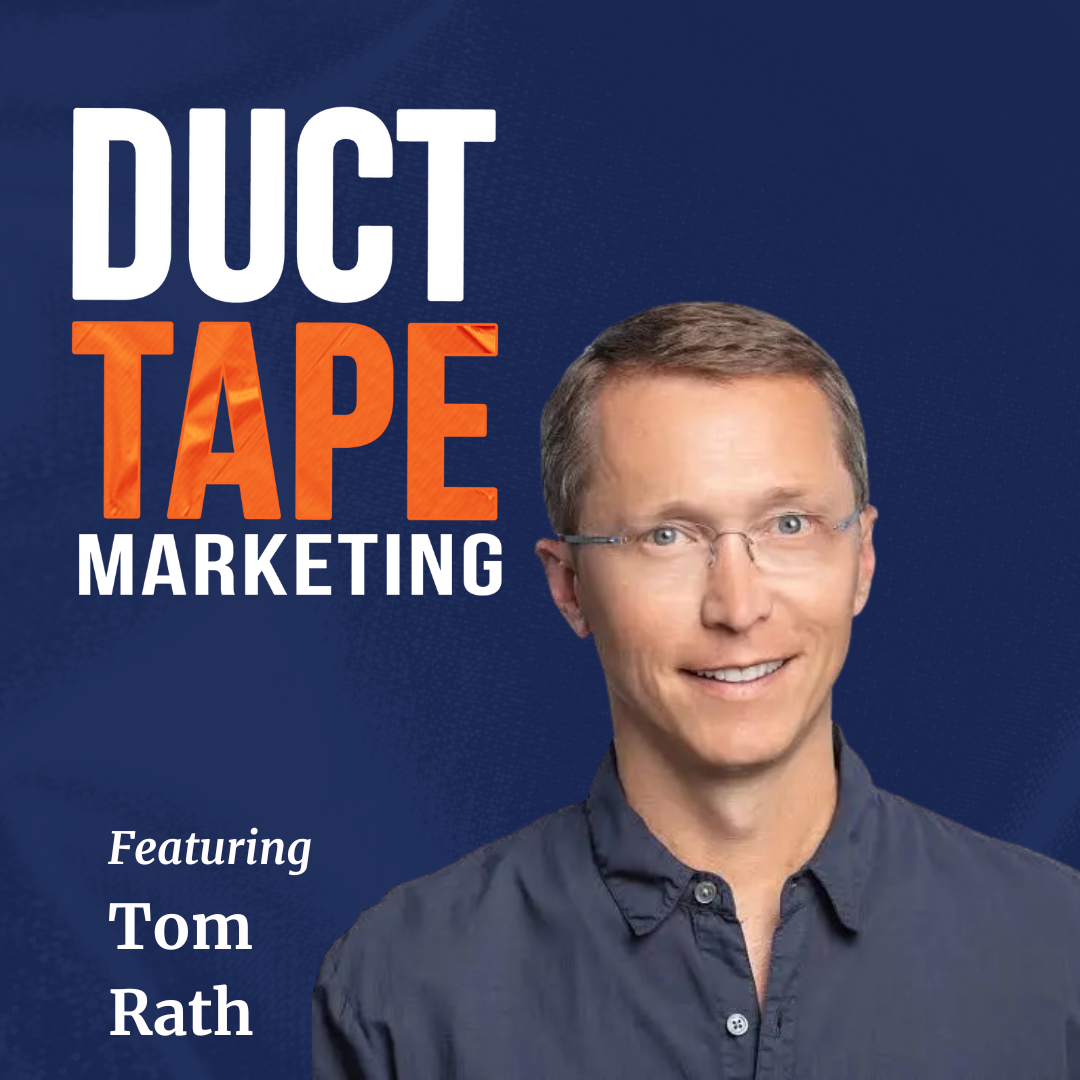
Tom Rath on Purpose, Meaning, and the Question Every Business Owner Needs to Answer written by John Jantsch read more at Duct Tape Marketing
OverviewMost small business owners are not stuck because of strategy. They are stuck because they have drifted away from a clear answer to one question: what is the point? In this episode, John Jantsch sits down with Tom Rath, bestselling author of StrengthsFinder 2.0 and Eat Move Sleep, to explore why purpose is not a grand philosophical destination but a practical tool you use every hour of every day.
Tom draws on decades of research at Gallup and his own experience navigating a life-threatening genetic condition to make the case that meaning is not optional. It is the thing that separates people who build something lasting from people who are simply going through the motions. And with AI accelerating fast, the motions are exactly what will be automated first.
This episode is for business owners who feel quietly stuck, leaders who want to build teams that actually care, and anyone who suspects that the way they are spending their days does not quite match what they would say matters most.
Tom Rath is a number one New York Times bestselling author whose books on strengths, wellbeing, and contribution have sold more than 10 million copies worldwide. He began his career at Gallup, where he helped develop the strengths-based tools used by millions of people globally. He is the co-founder and CEO of CareerSight and the author of What’s the Point, out now. His other titles include StrengthsFinder 2.0, Eat Move Sleep, and Life’s Great Question. Learn more at tomrath.org.
[00:01] Opening hook: the quiet drift away from one simple question is what keeps most business owners stuck.
[00:57] How everything Tom has written about strengths and wellbeing led him to write a book about purpose.
[03:47] Tom’s personal health journey and why a life-threatening diagnosis at 15 shaped how he thinks about time.
[05:33] Why he almost titled the book around the word purpose and what stopped him.
[06:32] How this connects to small business owners specifically, and why the question is more urgent now than a year ago.
[08:39] What the research actually says about chasing income and status as primary outcomes.
[10:18] The relationship between asking what is the point and employee engagement.
[13:57] How to actually get to it: practical steps for building purpose into a workday.
[16:09] The counterintuitive first habit: sleep as the reset button for everything else.
[18:13] Why unlimited vacation policies often produce no vacation at all.
[19:08] How younger generations entering the workforce are changing what meaningful work looks like.
[21:25] How strengths shift as people advance in role and responsibility, and what that reveals about how we develop.
“We always say we’ll have tomorrow. Take it from somebody with life-threatening conditions: you don’t. You never do the stuff you put off till tomorrow.”
“If you’re just the responder, there’s a cloud update coming for you.”
“Purpose unlocked was the working title. I realized we have a semantic challenge. When most of us hear the word purpose, we think of some big grand thing that’s almost intimidating.”
“It’s not like my grandfather’s generation where the job was just a means to an end. People who are 25 expect to have a job that makes a difference in the world. I think that’s good.”
“Start with what the world needs, what your community needs, what your clients need, and then map back to how you can do that well based on who you are.”
Learn more about Tom Rath and his work at tomrath.org.
John Jantsch (00:01.249)
So what if the reason so many small business owners feel quietly stuck, even when the numbers look fine, is not burnout or strategy, but the slow drift away from a clear answer to one question, what's the point? Hello and welcome to another episode of the Duct Tape Marketing Podcast. This is John Jantsch and my guest today is Tom Rath. He's the number one New York Times bestselling author whose books on strength, wellbeing, and contribution have sold more than 10,
million copies worldwide, including Strength Finders 2.0, Eat, Move, Sleep, which we did an episode on this show. Tom started his career at Gallup where he helped build the strengths-based tools used by millions of people. He's now the co-founder and CEO of CareerSight and his new book, What's the Point, is out now. And we're going to dig into why that question matters more than most of us want to admit. So Tom, welcome back to the show.
Tom Rath (00:55.406)
Good to see you again, John.
John Jantsch (00:57.215)
So how is everything that you've written about strengths and wellbeing and contribution kind of made this question, what's the point, something you need to spend a whole book on?
Tom Rath (01:08.758)
Yeah, you know, it's interesting. I realized in my own life and in teams and leaders and people that I'm working with that it's gotten so easy to just go through the motions in a given day because it's I mean, it's almost easier to just feel like you get to inbox zero and you respond to the things you're supposed to respond to your finish your day's tasks. You do your expense reports, you get home and then you catch up with some of your family members. You let a show play on Netflix, let the next one go and you just kind of
become a little more passive in terms of the way you're kind of going through days in life. And that's almost more enjoyable and easier to do sometimes. And so I think we need to, especially with all the automation and everything coming our way right now, we need to do a little bit better job. And at least I realized that I did of kind of shaking myself out of that routine and saying, are you dedicating some time to more creative pursuits? Are you building things? Are you investing more?
deliberate time in relationships and conversations with people that matter so that at the end of the day, you make sure that you reserved at least, I don't know, 20, 30 percent of your time at a minimum for doing things that might really matter a week from now or a year from now or maybe even a decade from now. asking what's the point, not as some broad philosophical sunny day once in a lifetime question, but more as a light for how you prioritize every hour within a day.
is what caught me and has really helped and worked pretty well.
John Jantsch (02:38.359)
Yeah, and I think that's true of many small business owners. mean, the crushing noise seems to take over. if you can, see lots of people advise this, if you can get in the habit of saying, what's like the one thing that if I did that today, that would move the needle instead of all this other garbage, which 80 % of is probably just busy work. So it's not, like you said, it's not just self-development. I mean, it's a very practical business tool, isn't
Tom Rath (03:06.338)
Yeah, and I think that one of the very just I'm always looking for those practical tips and tools from the research. But what I figured out is if you can try and restructure or reprioritize the order in which you do things in a given day so that you ensure that you're not going to go a day without working on some meaningful purposeful items that and that can just be having a 15 minute conversation with someone who works for you and really listening and closing your mouth and giving your device stowed away and investing in someone's development and then realizing that
That kind of is the point and that is the purpose. And that's not a waste of time because it's it's those kind of trust and relationships that really build speed and efficiency and creativity and innovation over time.
John Jantsch (03:47.447)
So many people, there's lots of stories of people being kind of woken up to this idea by something that happened. You've been very open about your own health journey. How is that, in fact, you're one of your last books. We talked about that on the show, but how much has your personal experience sit underneath this new book, you think?
Tom Rath (04:08.33)
It sits under this new book to a degree where, I mean, I probably realized much earlier on because I was told I had a debilitating genetic cancer syndrome when I was 15 that I needed to try and pack more life into those years than a lot of people think about pretty early on. But one of the things I realized when I worked on the book about health, Eat, Move, Sleep, that you mentioned was that even with all those big threats to my health and I had active tumors in my kidneys and pancreas and spine and all over,
That wasn't a very good motivator to skip the cheeseburger and french fries at lunch and to get a salad instead. that research I did on health kind of taught me that we all need better ways to just give ourselves short-term incentives throughout the day to do things that matter and that make a difference because just knowing that in the end the eulogy virtues will matter more than the resume virtues as David Brooks described it, that doesn't stick with me at least.
to change the priorities of what I'm doing within eight hours that I'm working in a day. But what can shift that is when I'm able to connect back an hour that I spend editing a draft with the difference that will make for someone who can read something faster without all the kind of extra bloated sentences and fluff and all the things around it and realizing that that is a part of why I'm doing what I'm doing. And so I think...
You know, one of the things is I started to work on this book that hit me. I hope at the right time is I was going to title the book around the word purpose. I think it was purpose unlocked or something like that. And I realized that right now we have a semantic challenge where when most of us hear the word purpose, we think of some big grand thing that's almost intimidating and it gives us anxiety when in reality we kind of need to learn to just make purpose a part of our toolbox that we.
John Jantsch (05:43.693)
Mm.
John Jantsch (05:53.675)
Right.
Tom Rath (06:02.904)
tap into and use every hour throughout a day essentially. And it can be something pretty pragmatic.
John Jantsch (06:08.661)
It's funny as I listen to you talk about the editing of the draft. had an editor that, that used to tell me, why are you doing all this throat clearing? You know, like get to the point. that's always stuck with me anytime I find myself running on. so you've spent a ton of time in, very large companies, lot of the research and, done at Gallup. I would say that.
Tom Rath (06:22.392)
Yeah.
John Jantsch (06:32.641)
this idea of what's the point. I'm not saying it's exclusive to small business owners, but I've worked with a lot of entrepreneurs. And I think that that question just almost haunts them a lot of times. Do you find that this work is maybe more appropriate for one audience or another?
Tom Rath (06:42.03)
Mm-hmm.
Tom Rath (06:50.594)
I think in smaller businesses that I've been a part of and startups, there's more of a natural and healthy tendency to be asking that question to say, well, what's the point of doing this or we're wasting time doing this. And as you get bigger and as more layers come in, it's a lot easier to have larger groups of people or teams or people on a team who are essentially sleepwalking through a lot of their days. And I think whether you're in a business, large or small,
One thing that's hit me as I've started to have more conversations about what's the point is that I really do think when you look at what AI and automation can and will do not three years from now, but six to 12 months from now, it's the places where people are just going through the motions and responding and doing routine eyes tasks that can easily be done by a machine that will be taken out most rapidly. So I, I've
I've learned more urgency about this question in the last six or 12 months is the tools that I use have gotten so much better. So I think it's going to become maybe a more qualifying and pressing question as well, because I would have been hesitant a year ago to tell people that they need to be builders or they need to be creative or they need to be initiating instead of responding, because I kind of saw that as the purview of some people and not others in my traditional world. But I don't...
John Jantsch (07:54.37)
Yeah.
John Jantsch (08:09.101)
Mm-hmm.
John Jantsch (08:14.295)
Yeah.
Tom Rath (08:17.868)
I don't think that can be the case anymore because if you're just the responder, there's a cloud update coming for you.
John Jantsch (08:25.697)
that's going to do it better than you. That part of it, yeah.
Tom Rath (08:27.682)
Right. I I looked at when I got out of college, I was trying to be a McKinsey consultant or an Accenture consultant. And 99 % of what I was aspiring to do could be done better today by one of by a large language model. Right. It's wild.
John Jantsch (08:39.937)
Yeah. Yeah, absolutely. I mean, I think AI is going to force the point of what's the point might be the only point, you know, really for people that can actually address that. You know, if you ask a lot of people starting a business, they would say the point is, well, make money to have status or the big one to have freedom. You know, the joke's on them on that one. But does your research suggest that the real answer is different?
Tom Rath (08:48.355)
Yeah.
Tom Rath (09:10.112)
Yes, all of the research that I've studied on well-being and positive psychology and kind of workplaces and life satisfaction over time would suggest that the more you treat and put financial status or raw income as kind of the outcome or dependent variable that matters in your life, the less likely you are to be satisfied in terms of where things come out at the end of your life because
There's that kind of hedonic treadmill that researchers talk about where you're always chasing another, whether it's you think another doubling income might make you twice as happy, but in reality that might get you 5 % and you spent twice as much time chasing it.
John Jantsch (09:53.453)
So we've spent a lot of years, last 10, 15 years, where engagement, employee engagement in particular, was a real big metric for employers to say, I'm being successful. Is there a gap between people who are addressing this, what's the point? Do they tend to be more engaged or do they tend to be less engaged or is there a gap that you can actually identify and measure?
Tom Rath (10:01.869)
Right.
Tom Rath (10:18.648)
I think it's kind of asking what's the point in moving with purpose is kind of a definitional component of engagement to me because it means that you're in tune with why you're doing what you're doing throughout the day. I think disengagement to just broadly kind of stereotype what that is, especially that active disengagement people talk about, is when you're either actively frustrated with your job or you're just kind of letting it pass by.
I'm more concerned about people in that sort of neutral state being blindsided as innovation starts to move at the clip it's moving at right now. So I mean, I hope that for friends and family members and people that I care about that we can kind of find ways to snap ourselves out of that and do things with a little bit more intent and purpose in a given day.
John Jantsch (11:12.823)
So many people spend a, I mean, if you throw out sleep, the time they spend at work certainly dominates a lot of how they spend their time. Is it important, do you believe, to have some connection to meaning? Like I'm making a difference, what I'm doing is making a difference in your work for you to really kind of have that what's the point answer?
Tom Rath (11:37.772)
I think so. don't, if there are things that you're doing in the span of a given day that when you really think about it, don't improve the lot in life of another human being or make them a little bit better off. So if you're working as a barista at Starbucks and you have a customer that comes in and she's having a real tough day or kids are dragging on or asking her questions and you take her from a day that's a negative five to neutral, that's a...
pretty big contribution that makes a difference and you need to step back and acknowledge that in the moment or ideally have a manager that acknowledges that and helps you to see it too, right? So I think that is if you're not making those connections and you're like if I'm spending an hour of my day responding to cold emails from people I don't even know or it's not making a difference, that's an hour that's taken away from a good conversation with someone who works for me.
or one of my kids at the end of the day that could be pretty meaningful. And so I think to kind of think about that trade-off in terms of how you allocate your hours has been really helpful too.
John Jantsch (12:40.223)
Yeah, so the message is don't reply to email. Just let it pile up. That's... There you go.
Tom Rath (12:43.768)
Don't reply to pointless emails. And I would say save the responsive stuff for the end of the day if you can, or later in the day where make sure you pump the meaningful stuff in early on or it's gonna get away. We always say we'll have tomorrow and kind of take it from somebody with me with all these life threatening conditions, you don't. You never do the stuff you put off till tomorrow.
John Jantsch (12:50.529)
Yeah, Yeah, right.
John Jantsch (12:56.247)
Yeah.
John Jantsch (13:02.764)
Yeah.
You wrote a book called Life's Great Question. Is this an extension or does this push up against that idea?
Tom Rath (13:12.024)
Well, you know, it's interesting life's great question was kind of about the contribution and other orientation at a pretty high level. so, you know, as I tried to the first book I wrote 25 years ago was called How Full Is Your Bucket? And that was the most kind of just dead simple pragmatic thing, because you get the whole thing in the book's title. Every time you talk to somebody, it either fills their bucket or it takes from it. There's no neutral in between. And you can kind of apply the concept if you don't even read the book description.
Right? And that's, so that's what I was trying to get to with bringing some practice to purpose and meaning and these things that we all want and we think we want to get to in life. But how do you just do it in the next hour or on a Wednesday morning? Right.
John Jantsch (13:57.613)
Okay, so I don't think there's too many people listening, at least listening this long today, that would argue that this is a very important step, a meaningful step, and makes total sense. But how do get to it?
Tom Rath (14:11.79)
Well, I think you get to it by saying, when you step back and look at what we all do for a living, that you mentioned like kind of outcome. if I would argue the outcome is not making more money and the outcome is not more titles or a better title and the outcome is not more followers and some of those kinds of superficial things that you can chase endlessly forever, even if you have a billion dollars. So if you agree with that.
John Jantsch (14:35.2)
Mm-hmm.
Tom Rath (14:40.918)
And you say at the end of your life, I'd rather be a good dad, a good spouse, a good member of my community, someone who ran a business that mattered and a good manager and a good leader and a good mentor. If those are the things that matter, then you almost have an obligation to figure out how you build that into the way you execute your job and the way you lead people and what you're doing in life. And that's not something that you can just say. And it is because it is.
It's something that you have to pump into the conversations you have with the people who work for you, the people who look to you for leadership to spot what they're doing, to tell them where they make a difference. And that's been one of the most powerful strategies I've seen work in this regard is where you can turn that outward and help spot someone else doing something that's meaningful, spot one of their talents that they hadn't noticed. And if you just work on doing that in an outward manner, that's, it makes an immeasurable difference for other people and you kind of pick it up.
in the process as well.
John Jantsch (15:41.111)
So do you have, in this work, do you have a series of, know, sometimes it just takes exercises, you know, to form habits, because I do think a lot of this work is habit, just like you get into busy work and having too much to do is somewhat a habit. Do you have some techniques or practices that you've used to help people break those bad habits and maybe establish a habit that centers them back into this important question?
Tom Rath (16:09.74)
Yeah, you know, I think this is going to sound a little counterintuitive based on what we've been talking about, but I would say the first anchoring habit that I would recommend for anyone listening is to make sure that based on what time you need to wake up tomorrow morning, that you work back from that by eight or nine hours or how many hours you need in bed to get a good night's sleep. And you make sure you get a solid seven or eight, because that's the reset button on the video game that's our life. And then you get up the next morning.
John Jantsch (16:31.958)
Mm-hmm.
Tom Rath (16:37.408)
And you're going to have a lot more energy to say, how do I wake up and tackle things that are more meaningful and more purposeful early on and structure my day so that by 10 o'clock by noon, you ensure that you've had some of those meaningful conversations. You've worked on a project that might continue to make a difference for someone a year from now, or at least a week from now. And to structure your day so you kind of have the ebb and flow of energy and you're more active.
You get things done. have energizing conversations with people and to think about it that tactically. So how do I build the cadence and momentum of that of my day so that I have the opportunity to be my best? And then you allude to this too, where small business owners and leaders are often the very worst at making sure they put their own energy at the forefront and they end up kind of burning out, working longer hours than they probably should.
The small business owners, and I'm one of them, that have done that, I mean, there's this tendency to say, it's okay for me, even though I want my people to have wellbeing and to take a vacation where they're not responding and all that. That's not realistic. If you're doing that as a leader, it sets a tone that it's not socially acceptable for everyone else. So I think we all have to do a little evaluation in the mirror about...
John Jantsch (17:45.463)
Yeah
Tom Rath (18:01.836)
the expectation we're setting for the people in our business, the people we lead, and then do better job of modeling that as leaders as well. So that's another piece of the kind of practical step I'd encourage people to think about.
John Jantsch (18:13.995)
Yeah, I have kids that have worked in large corporations. It was kind of trendy a few years ago to have the unlimited vacation. Like, you don't have three weeks off vacation. And so consequently, nobody took vacation.
Tom Rath (18:25.09)
Yep. I've worked in places where it's unlimited vacation is no vacation and no time off. Yeah.
John Jantsch (18:30.477)
It's funny. So I don't know how much access you have to Gallup data anymore, but I'm sure at some point you had a lot of access to it. Would you, if you had to predict or maybe again, as I said, you've seen the data have the strengths finders outcomes changed dramatically as you people view work differently than maybe they did 15, 20 years ago. Do you, do you think that that like
what people value and even the traits that come up as their strengths would change based on this idea of focusing on the point.
Tom Rath (19:08.206)
You know, I never, in the time I was working on that, I never really saw a lot of variability in the actual traits or talents that were measured there because those were meant to kind of find things that were more enduring or consistent over time. But what I have seen in just longitudinal data and surveys of different generations and cohorts is that the generation entering the workforce today, they have a much higher want and need and threshold for
John Jantsch (19:14.899)
yeah.
Tom Rath (19:38.028)
doing work that they see as meaningful and serving a purpose and making a difference in their community. And to a lot of managers and leaders of my generation, they complained to me like, we have these very, they use the word needy. So sometimes there's a mismatch, right? Yeah, so it looks differently, but I think what you see traces of there is actually good and productive for society, in my opinion, where I think it's a good thing that
John Jantsch (19:52.299)
Yeah, entitled, that's another one.
Tom Rath (20:07.224)
people who are 25 expect to have a job that makes a difference in the world. And it's not like my grandfather or great grandfather's generation where the job was just a means to an end and it was okay if you didn't like it. And there was a whole different expectation there. And so I think that's, I'm surprised it's taken that long to evolve frankly from the industrial era. And we're still kind of coming, we're still recovering from that bad relationship or expectation.
to a degree, I think that's something that we can look forward to. I mean, it's, and people of that generation, they don't want to go be managers at a tobacco manufacturing company or whatever. I think that's good.
John Jantsch (20:48.981)
Yeah, yeah. You know, it's interesting. We use Strength Finder with all of...
We don't just do it once and say, check a box. We do it over a period of time. And one of things I will tell you that I have recognized is that people's, as they advance in maybe position or responsibility, their strengths change. And I think it has a lot to do with what they believe is their strength changes because their role changes. I know that doesn't have much to do with this book.
But I'm curious if you saw or have some insight about that idea.
Tom Rath (21:25.846)
No, it does. a big part of what I've been working on lately is trying to younger people in particular to see a much broader range of what's possible and what's out there in careers. Because by my estimation, most young people when they're asked to choose a major or spend four years studying something or pick a job, they've seen somewhere between two and five possible careers. And you'd need to see 50 just have a broad view of 50 % of the U.S. workforce. I've done the math on this. And so
John Jantsch (21:47.33)
Yeah.
Tom Rath (21:53.494)
we're kind of making huge life decisions with about 5 % aperture in our lens for what we can see out there. And so, I mean, as I get into this, it sounds really boring to say, but we don't know what we don't know. So if you haven't seen these things or you haven't seen these possibilities, it's really hard to answer an interest inventory or a personality assessment or a survey or anything else at all. I think a real fun part of life as we get older is
John Jantsch (22:06.935)
Yeah, yeah.
Tom Rath (22:23.404)
you get to bring in more experiences and have more inputs. And then you're better off at connecting some of those dots and saying, how can I take who I am and meet some new needs there in the world? And that's that's one thing I did write about in this current book is I think we've got to do a better job of not just saying here's who I am as a person, my self-awareness, but saying start with what the world needs, what your community needs, what your clients need, what your customers need, and then map back to how you can do that well based on who you are with your
personality traits and dispositions and interests and all that stuff.
John Jantsch (22:54.797)
Well, Tom, again, was a pleasure having you stop by the Duct Tape Marketing podcast. I wonder if there's some place you'd invite people to learn about your work, obviously pick up a copy of what's
Tom Rath (23:08.898)
Yeah, they can learn about all this stuff at tomrath.org. Thank you, John. I appreciate it.
John Jantsch (23:12.941)
All right, again, appreciate you stopping by me. We'll see you one of these days out there on the road.
Tom Rath (23:17.198)
All right.
Enter your name and email address below and I'll send you periodic updates about the podcast.

Polly Lou Adams Guests On The Latest Cartoon Caption Contest Podcast
Polly Lou Adams (upper left in the photo), who began contributing to The New Yorker in June of 2025, joins two of four CCCP co-hosts, Paul Nesja (upper right) and Nicole Chrolavicius. It’s Episode #249 for those keeping track. Listen here.
Visit Polly Lou Adams website here. ___________________________________________________________________
A New Yorker State Of Mind Digs Into The Issue Of April 25, 1936
A New Yorker State of Mind: Reading Every Issue of The New Yorker Magazine continues its good work.
Cover by Rea Irvin: Born, San Francisco, 1881; died in the Virgin Islands,1972. Irvin was the cover artist for the New Yorker’s first issue, February 21, 1925. He was the magazine’s first art and only art supervisor (some refer to him as its first art editor) holding the position from 1925 until 1939 when James Geraghty assumed the title of art editor. Irvin then became art director and remained in that position until William Shawn officially succeeded Harold Ross in early 1952. Irvin’s last original work for the magazine was the magazine’s cover of July 12, 1958. The February 21, 1925 Eustace Tilley cover had been reproduced every year on the magazine’s anniversary until 1994, when R. Crumb’s Tilley-inspired cover appeared. Tilley has since reappeared, with other artists substituting from time-to-time. Number of New Yorker covers (not including the repeat appearances of the first cover every anniversary up to 1991): 179. Number of cartoons contributed: 261.
____________________________________________________________________________
Article Of Interest…Guy Richards Smit
From The Creative Independent, April 30, 2026, Mr. Smit’s conversation with Brandon Stosay.
Guy Richards Smit began contributing to The New Yorker in 2022.
____________________________________________________________________________
Live Interview Of Interest: Liza Donnelly On Radio Free Rhinecliff
Liza Donnelly, long-time New Yorker contributor, and filmmaker (Women Laughing) will be live today at 5 on Radio Free Rhinecliff. Listen here.
Photo: Eric Korenman
The post Friday Spill: Polly Lou Adams Guests On The Latest Cartoon Caption Contest Podcast; A New Yorker State Of Mind On The issue Of April 25, 1936; Article Of Interest…Guy Richards Smit; Live Interview Of Interest: Liza Donnelly On Radio Free Rhinecliff first appeared on Inkspill.


Eczema is one of the most common skin conditions in children, yet many families still have questions about what causes it and how to manage flare-ups. In the newest episode of the Young & Healthy podcast, host Kate Setter talks with pediatric experts Dr. Jess Trygier and Dr. Mariam Inqeibi about eczema in kids, including
The post Eczema in Kids: What Parents Should Know appeared first on Cincinnati Children's Blog.