Reading view

Black. Zwarte. Noir! An interview with Oluwasegun Babatunde

The Cartoon Museum is currently showcasing a special exhibition titled “Oluwasegun Babatunde: Birth of a Universe.”

Babatunde’s creation stands apart from the typical Black narrative depicted by White creators in a Western context. Instead, he presents a Black narrative from the perspective of a Black creator – a tale featuring a Black superhero. His narrative isn’t about seeking validation within the Western framework or condemning racism. In Babatunde’s view, the focus is on the myriad struggles people face: socioeconomic disparities, oppression, poverty, and also rich cultural heritage and beautiful traditions. Babatunde’s world is a powerful narrative in its own right. We had a chat with him about how he came up with this new superhero universe and what he’s got in mind for the future.

Oluwasegun Babatunde

Oluwasegun Babatunde is a multifaceted creative force. He is an accomplished author, comic book conceptor, and filmmaker. His artistic vision is rooted in the exploration, progression, and presentation of narratives that illuminate the experiences of black people. This vision extends across various mediums, including published literature, comic books, movies, and animations. Babatunde’s literary repertoire includes thought-provoking titles such as ‘Unethical Or Not’, ‘A Good Human Being’,’ My Book Of Afrobeats Stories’, and ‘Lessons from Hollywood’s Rise’, alongside his recent work on Storibud Comics; ‘Olórò, the Grandson of Fádèyí Olóró’ and ‘AfroGods’. 

How did you become interested in creating comics?

Spider-Man was the first comic character that swept me off my feet. Everything about Spider-Man is fascinating, especially the underdog persona. Peter Parker, having so much power, yet choosing to be responsible, helps the real world see the value in not abusing power. So, I could say Spider-Man inspired my comic creative side.

You moved into the creative world after a long career as a clinical embryologist.  What sparked that change, and how do you think your previous career and experience have shaped your creativity?

I started out as a clinical embryologist in 2007 and worked in the field until August 2022 when I hung up my scrubs. I had worked in IVF clinics in Nigeria, Belgium, and the United Kingdom. After fifteen years of serving as a medium, a support in ushering couples in their drive to get pregnant, I think my love for art outgrew my love for the sciences and decided to fully delve into a new career in art. It took two years to fully switch.

My scientific background influences my storytelling. Sometimes, my experience plays into my ideas. Having worked as a scientist, I play with the ideas of what scientific breakthrough I could conceive that is able to alleviate the world’s pain. Other times, I play with a terrible/good experience I have had as a Nigerian, Belgian, and UK resident. This, you would observe in Olórò. Also, things I have witnessed happening to other people are flipped into a story. I edit some things to suit a narrative.

You created “Olórò, the Grandson of Fádèyí Olóró” during the Covid pandemic of 2021. How did you go from the idea of a superhero story set in sub-Saharan Africa, to bringing it to life as a comic?

I have been a fan of superhero comics for about two decades, but the thought to conceive my own never took shape in my head. It would have been preposterous to even consider it! I am merely a fan of the superhero genre. Then, the continuous butchering of the African accent on Black Panther wouldn’t let me be.

All my friends from Africa do not speak like they speak in Wakanda; neither do I. Also, the stories were not directly linked to our realities. There are no African countries as advanced as Wakanda! So there and then, the energy to rewrite our stories in the superhero world became a dream and aspiration.

The moment of discovery for Olórò was a day when I was listening to a song by Olamide, an Afrobeats musician. The song was ‘Inferiority Complex,’ and he mentioned Olórò ‘ (‘Olórò’ is a Yoruba word meaning ‘someone to be feared’) while I was pondering on what the title of my first comic book should be. The name clicked.

The exhibition features a video of you working online with your collaborator, Daniel Egharevba, who is based in Nigeria. What was special about collaborating online during the pandemic, across two different continents?

First of all, collaboration could have been with anyone here in the UK, Europe, or even the Americas, but the cultural elements would not have reached the level I aspired to. So, I had to extend my searches beyond the shores of the UK to back home – Nigeria.

It was very difficult finding someone who understood the nitty-gritty of each character idea and where the vision lies. So, I had to test run more than 5 people. I sunk a few hundred pounds into it, until Daniel came along. He instantly became a perfect fit.

What was special about collaborating online with Daniel was trust. I had to trust that he would get the job done – and so he did.

Oluwasegun Babatunde and Daniel Egharevba Rough storyboarding and finished design, Video (2021)From “Oluwasegun Babatunde: Birth of a Universe”

Unlike Marvel’s Black Panther, DC Universe’s Cyborg, and the lead characters in the new Spider-verse films, which were created by White creators, your comics feature Black characters created by you, a Black creator. What do you see as the main distinctions between the Black characters they created, and the ones you’ve developed?

The black characters in both Marvel and DC comics are mind-blasting. Characters such as Miles Morales, Falcon, DeadShot, BloodSport, Cyborg and Black Manta have mirrored the US or Western realities, taking into account racism and American culture. In my own reality, racism does not exist. We are all black! My characters are all layers of black. Zwarte. Noir! What exists in Storibud Comics are classism, oppressions, penury, deep culture, and aesthetically beautiful traditions. They are what my stories portray.

Your character design, the characters’ hairstyles, accessories, and costumes are very eye-catching, blending modern style with elements reminiscent of traditional African attire. The female characters, in particular, showcase a departure from the typical outfits seen in Western superhero series. Can you share the inspiration behind this distinctive style? Were there specific traditional features you kept in mind while incorporating them?

I have an eye for African cultural features, and I ensured they were well-designed with precision. Some of the early movies of my childhood – Nigerian traditional films – were my major source of influence. Characters such as Abìjà Wàrà Bí Ekùn, Òrìsábùnmi, Fádèyí Olóró, Sòún, and many more were my go-to inspiration.

From “Oluwasegun Babatunde: Birth of a Universe”

How do you envision the creation and increased representation of Black characters by Black creators impacting readers, the creators themselves, and the broader landscape of the comics industry?

I think relatability becomes more easily accessible. People from other cultures, other races, can start appreciating individual races’ niches in the world we live in and in the alternate world of comics.

Also, children born in Africa, living in Africa, or born to African families living in the US, UK, and the rest of Europe and the world can more easily see themselves in the imagery of these comic characters. This will be an avenue to keep black culture alive for many generations and potentially inspire new generations to create their own stories influenced by the works of early black comics adopters. The comics industry can only grow and expand further and larger,  adding more variety and reducing comic book fatigue.

We’ve heard that you’re currently working on your first movie. Could you give us some insights into your upcoming projects and share your goals for the future?

My debut movie is based on the wave of efforts to better the socio-economic status of a fictional West African country called the United African Republic. While the movie is not centered on my comic books, I left a couple of Easter eggs about my comic book characters in there. So, yeah, you get a glimpse into my next installment after this debut movie – a live-action Olórò movie.

By Haruka Katsuyama

Oluwasegun Babatunde: Birth of a Universe is on until Saturday, 30 March and you can buy Baba’s books through the Museum Shop.

If you love Baba’s work as much as we do, you can find out more here:

Instagram: @oluwasegun.babatunde

Threads: https://www.threads.net/@oluwasegun.babatunde

Facebook: https://www.facebook.com/NaijalandOloro?mibextid=LQQJ4d

  •  

Anthony And Joe Russo Talk ‘Avengers’ Theories & Why They Returned To Marvel With Fortnite Creator Donald Mustard — Deadline Live Studio

Anthony and Joe Russo briefly paused work on their twin Marvel projects, Avengers: Doomsday and Secret Wars, last week when they passed by Deadline’s live studio at SXSW London.  The Russos were joined by Fortnite creator Donald Mustard, who also now serves as a partner at the duo’s AGBO studio, and the trio confirmed they […]

  •  

Only 5 MCU Heroes Are Smarter Than Tony Stark

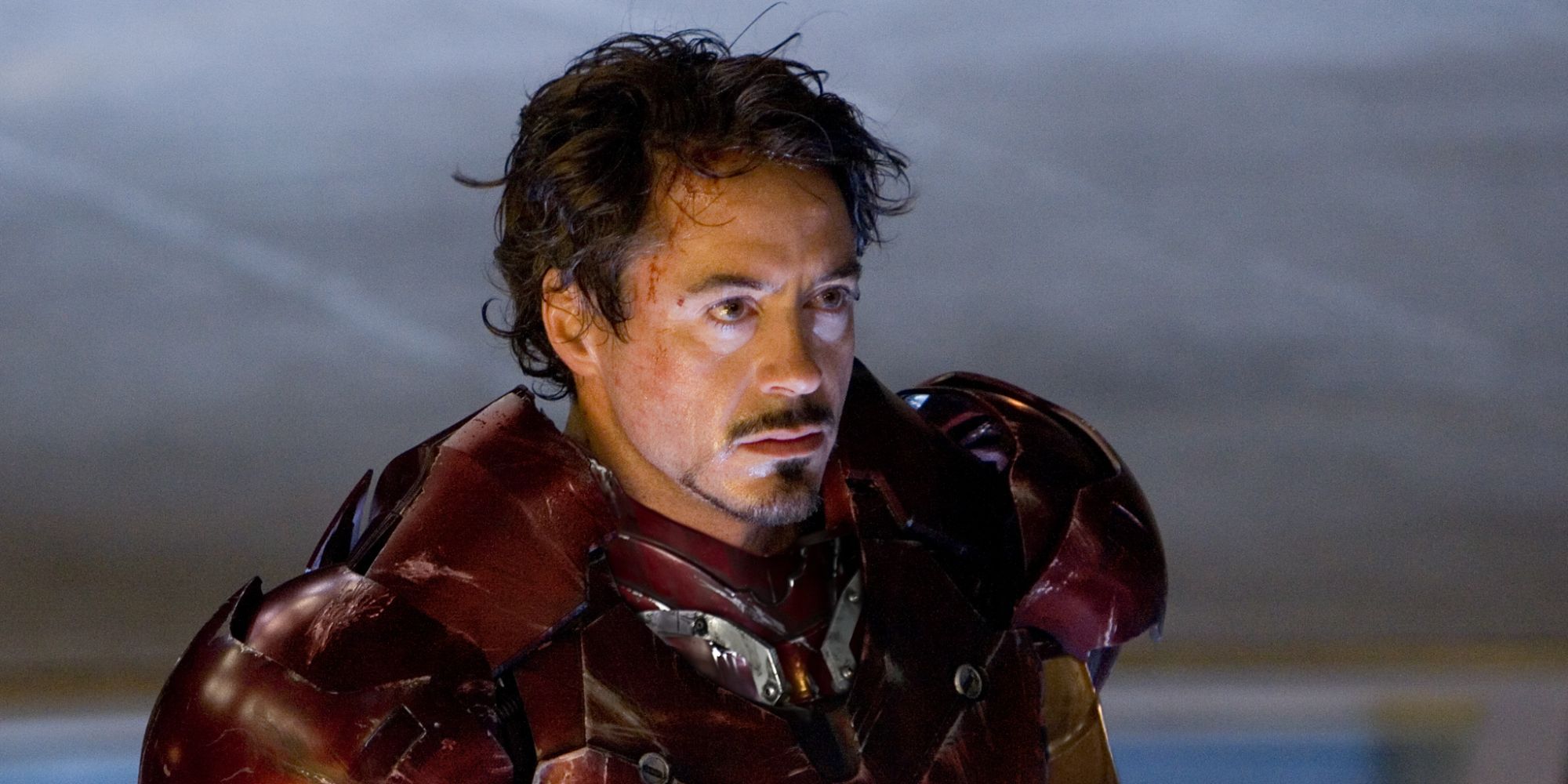
In the MCU, the name Tony Stark commands considerable respect. Within the franchise's context, the now-deceased, self-described "genius, billionaire, playboy, philanthropist" was the former co-leader of the Avengers and the ultimate savior of the universe, sacrificing his life to wipe Thanos (Josh Brolin) from existence. In real life, Tony is an icon of superhero cinema, resuscitating Robert Downey Jr.'s career and becoming the MCU's face for all intents and purposes. The character's eventual death in 2019's Avengers: Endgame marked the end of an era for the franchise and, arguably, superhero cinema as a whole.

  •  
  •  

Disney+’s New Reboot of This 81-Year-Old Series Could Give the Streamer What Marvel and Star Wars Can’t

Over the past few years, Disney+'s most notable new shows have fit into one of two categories: Marvel or Star Wars. From 2024's Agatha All Along to 2022's Andor, the platform has become a go-to for these two ever-expanding universes. But while that's certainly a feat, a new project will finally give the streaming giant something new, and could finally see it reach the same level of success in a whole new genre.

  •  

Sindy: "Every Girl's Best Friend!" UK Comic Strip Serial - Episode 30 (Marvel Comics LTD. 1986) 1of3

JillyBeanSSF posted a photo:

Sindy: "Every Girl's Best Friend!" UK Comic Strip Serial - Episode 30 (Marvel Comics LTD. 1986) 1of3

Sindy: "Every Girl's Best Friend!" UK Comic Strip Serial - Episode 30 (Marvel Comics LTD. 1986) 1of3

*Appeared In: Sindy, "Every Girl's Best Friend!" UK Magazine Issue No. 30 - November 8 (Marvel Comics LTD.) 1986

  •  

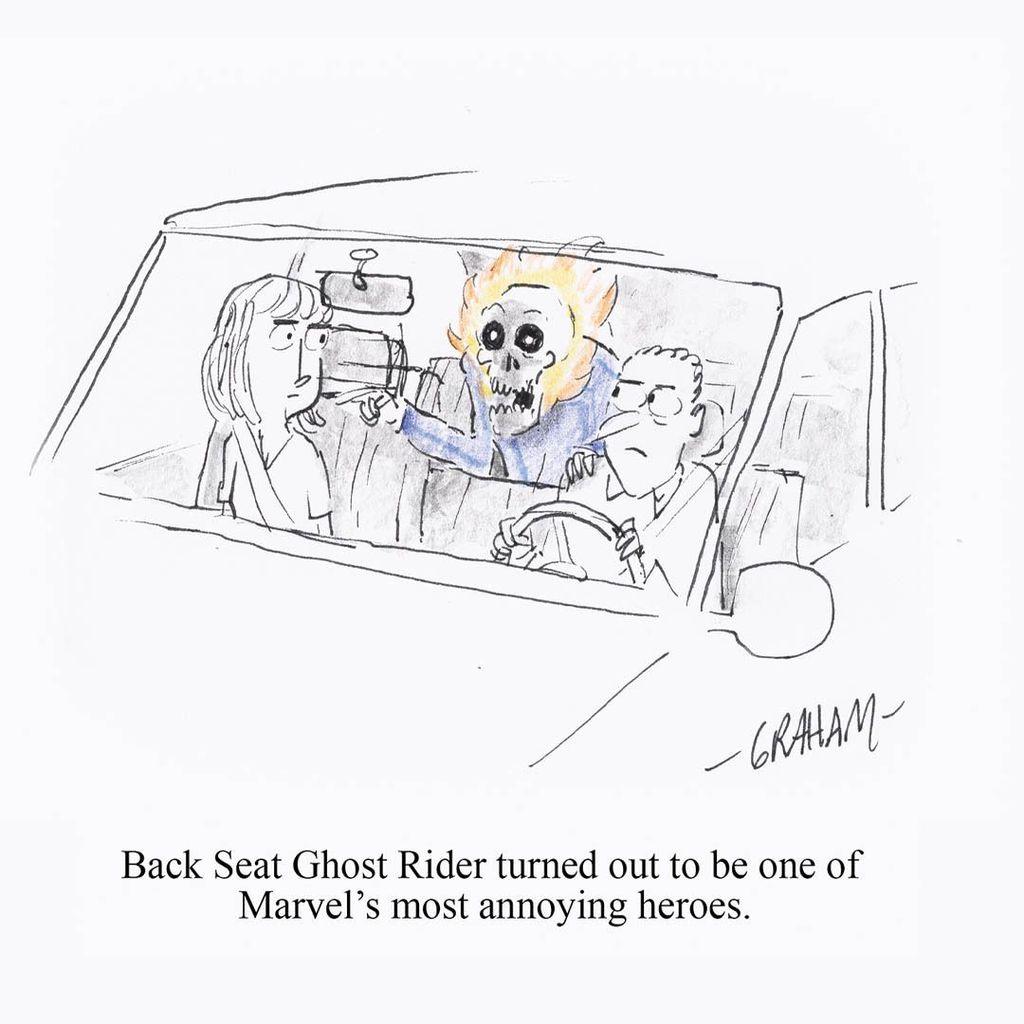
Annoying Hellfire. #grickledoodle #ghostrider #marvel #superheroes #horror…

Annoying Hellfire. #grickledoodle #ghostrider #marvel #superheroes #horror #comics #cartoon #art #drawing #funny #humor

A cartoon illustration of two irritated people driving a car with an obnoxious Ghost Rider leaning and pointing from the back seat. Caption reads "Back Seat Ghost Rider turned out to be one of Marvel's most annoying heroes."
  •  

Disney Officially Renames Its TV Empire

If you grew up watching Disney Channel, Disney XD, or any other younger-skewing shows under the wider Disney banner, then you were likely watching the productions of Disney Channels Worldwide, ABC Cable Networks Group, or whatever name the Mouse House's cable division was under at the time. No matter the title, the mission has remained the same — to provide content made for younger audiences and families, from animated shows like Duck Tales and Phineas & Ferb to live-action favorites like Hannah Montana and Wizards of Waverly Place. In 2020, with Disney merged with 20th Century Fox, the operation shifted under the all-encompassing banner of Disney Branded Television, headed by Disney Channel veteran Gary Marsh, which would handle similar duties across an even wider range with streaming becoming a big part of the formula.

  •  

If This Be My Density… Captain Civilian Returns!

Before The Boys, before Kick-Ass, before Watchmen, there was Captain Civilian.”

Have you ever dreamed of becoming a superhero? If you’re like most of us, the answer is probably yes. But while many left that dream behind in childhood, one man turned it into a reality. In 1985, young art student Steve Marchant set out to explore a bold question: What if a superhero actually existed? Proudly donning a balaclava, goggles and pink pants over a tight black costume, Steve transformed into Captain Civilian. For eight unforgettable months, he patrolled the streets of Plymouth and Dartington College, fully embracing the superhero life. Before long, some of the students began recognising him as their very own ‘hero’- they witnessed and got involved with it firsthand when there was still no internet, no X, and no TikTok—and even some were eager to join his adventure. And soon, The Captain found himself facing an arch-nemesis… Nearly 40 years later, we’ve brought him back—along with a story that’s never been told. It’s a tale of courage, hope, and laughter that will strike a chord with anyone who ever dreamed of being a hero—or even those who didn’t. Don’t miss this legendary, boldly bizarre, and daftest hero’s return!

Steve Marchant (Captain Civilian)
Steve Marchant read too many comics as a boy in Wolverhampton. After two years at art college in Devon he moved to London where he became a cartoonist, a special needs youth worker and a tutor. Since then he has combined all three in his 29-year career at The Cartoon Museum, where he is the education coordinator/tutor/occasional curator.

The very first issue of Captain Civilian from the eminent Marchant Comics Group is currently exclusive to The Cartoon Museum.

It’s a real pleasure speaking with you, Captain Civilian. What was it like putting on the hero’s costume again after all these years?
Making the video for the Heroes exhibition was the first time I’d worn the costume since, I think, 1992. Being made of nylon, I was worried it might have decayed during the years it sat in a suitcase under my bed, but it slipped on fine. And I’d forgotten how just by wearing it, your whole posture changes – shoulders back, chest out – clothes do make the man, as the saying goes.

Your “Captain Civilian” zine, now available in the Cartoon Museum Shop, tells the story of how you came to exist and be recognised in the real world as a hero.   Are there any heroes that particularly inspired you in inventing Captain Civilian? What do you think makes a hero a hero?
What inspired me was all of the superheroes I’d grown up reading, from both Marvel and DC, and in particular the Adam West Batman from the 60s TV series. By the 80s, the Batman in the comics was quite a grim and gritty character, along with other darkly-clad anti-heroes like The Punisher. I wanted to hark back to when superheroes were more fun, I felt that this would enable better interactions with the public.

In real life, heroes don’t wear fancy costumes. Real-life heroes to me are people that put other people before themselves – nurses, doctors, teachers, carers, etc. Having said that,  next time I’m in hospital I wouldn’t mind being tended to by a nurse in a skin-tight outfit. But I suppose I’d need to be in BUPA.

“Every week, Captain Civilian took a break from patrolling with a well-earned mug of tea at the Bomb Shelter Cafe.”

What was the reaction when you stood in front of people with your superhero character and costume after all the trial and error?
As you see in the zine, the costume evolved gradually during the first few months. In its earliest stages, where I wore just tights, underpants, balaclava, goggles, and rubber boots, I got laughs and puzzlement at college (which was fine) and nervous glances from the citizens of Plymouth. They probably thought I was on my way home from a fetish club or something. That’s when I realised that I had to adopt more of the classic costume elements. Once I had a chest emblem and a cape, I was suddenly a ‘superhero’ in peoples’ eyes – or more likely a nutter who thought he was a superhero. If the latter opinion was true (and it probably was), that was okay because the whole point of what I was doing was to discover what would happen if a superhero walked among us. And yeah, that’s when people occasionally engaged with me.

“Just these two key elements turned me from being a hapless pervert into a superhero.”

Like Batman’s Joker or Spider-Man’s Green Goblin, the presence of a vicious enemy or rival makes the superhero story more fascinating (For that matter, without enemies, there can be no superheroes!). We hear that villains have appeared in your Captain Civilian world as well. How did you feel when you finally had an enemy to defeat?
The appearance of The “Orrible Phantom” was completely unexpected, and brilliant. It brought to life the aspect of the Spider-Man comics where he gets blamed for New York being plagued by super-villains, that his presence has brought them forward. A later enemy, The Bingo Master, was very much a collaboration between me and a friend of mine. And even later, I became my own villain, as you’ll eventually see.

Captain Civilian’s rival “Orrible Phantom”

In the 40 years since your days patrolling as Captain Civilian, the world of superheroes has changed, with the diversification of heroes in terms of gender, race, age, and the rise of anti-heroes, etc, (yet most of them still wear tight costumes and capes). But no matter how much times have changed, why do you think superheroes still fascinate people today?
In the 80s, superheroes were very much a niche interest. Things have changed and I think it’s largely down to the ubiquity of superheroes in films and TV over the last 25 years. That has revived the genre and taken it to the greater public. Nowadays you see people wearing superhero T-shirts, jackets, caps, everywhere you go, because they love the movies. They’ve probably never read a comic.

As an avid superhero fan for many years, what part of the ”HEROES” exhibition did you get excited about the most?
I love it all, but I got the biggest thrill from seeing all the old American Sunday newspaper strips such as Flash Gordon, Superman, Batman, and Miss Fury – I’d never heard of her but she predates Wonder Woman, she was the first female superhero. The page of Little Nemo in Slumberland is amazing.

And of course, I’m in the exhibition, which has been fun. When I suggested including Captain Civilian I was kind of half-joking, but everyone thought it was a great idea. And that led to the Captain Civilian zine, which is the first of maybe four or five I’m going to publish. Collect the set!!

Lastly, if someone wants to be a hero like you, what would you advise them to do?
Make sure you have a wee before you go out on patrol.

by Haruka Katsuyama

Captain Civilian and all related elements © and ™ Steve Marchant 2024


Meet The Captain!
Want to meet Captain Civilian? Catch him in action at our latest exhibition, “Heroes”, where you can see him in a special video! But don’t worry—he’ll be making a REAL appearance at The Cartoon Museum soon, with issue #2 of his epic saga in print! 

And don’t forget, our exhibition HEROES: The British invasion of American comics is on until Saturday, 19 October.

  •  

Sindy: "Image Maker" Vintage UK Children's Magazine Paper Doll (Marvel Comics LTD.) 1986

JillyBeanSSF posted a photo:

Sindy: "Image Maker" Vintage UK Children's Magazine Paper Doll (Marvel Comics LTD.) 1986

Sindy: "Image Maker" Vintage UK Children's Magazine Paper Doll (Marvel Comics LTD.) 1986

*Appeared In: Sindy, "Every Girl's Best Friend!" UK Magazine Issue No. 13 - July 12 (Marvel Comics LTD.) 1986

JillyBean's "FLAT CHICKS" The World of Paper Dolls

  •  

Marvel's Most Underrated Villain Team Officially Slithers Into Magic: The Gathering [Exclusive]

The Marvel Universe is packed with legendary heroes, but some of its most memorable characters have spent decades causing problems for them. From world-conquering masterminds to street-level criminal organizations, villains have always been a crucial part of Marvel's storytelling. Now, one of the publisher's most unusual teams is making the jump to Magic: The Gathering.

  •  

Acorn Green: "Woodlands Competition" Vintage UK Children's Magazine Advertisement (Tomy) 1986

JillyBeanSSF posted a photo:

Acorn Green: "Woodlands Competition" Vintage UK Children's Magazine Advertisement (Tomy) 1986

Acorn Green: "Woodlands Competition" Vintage UK Children's Magazine Advertisement (Tomy) 1986

*Appeared In: Sindy, "Every Girl's Best Friend!" UK Magazine Issue No. 20 - August 30 (Marvel Comics LTD.) 1986

  •  
❌