Uruguayan President Yamandú Orsi made a day trip to São Paulo on Tuesday to meet Brazilian business leaders interested in investing in Uruguay, in an agenda Foreign Minister Mario Lubetkin described as an opportunity to "move to a new phase in the levels of commercial development and Brazilian investments" in the South American country. The official delegation included Lubetkin himself, Economy and Finance Minister Gabriel Oddone, Uruguay's ambassador to Brazil Rodolfo Nin Novoa, and the executive director of investment promotion agency Uruguay XXI, Mariana Ferreira.
The Senate will deliver its report from the NDIS inquiry on Tuesday. Butler doesn’t directly answer a question about whether or not he is willing to make any significant changes to the legislation the government has put forward.
He says:
Look, the direction of travel I think is an important one for us to follow through. This largely reflects reviews and insights that we’ve gathered over the last three years since the independent review was done of the NDIS in 2023 and endorsed by all governments at national Cabinet later that year.
I’m utterly convinced this is the right plan for the NDIS… I’m not saying there won’t be any change. We heard ideas from the crossbench in the debate in the House of Representatives. I’ve very much heard that people want greater reassurance about what won’t change because of the reforms we’re putting in place.
We have to constrain that growth. Without reforms it would grow to $20 billion by the end of the decade and that’s simply not a sustainable position.
It’s also allowed us, as I said, to protect the core supports people rely upon for that safety that was part of your introduction.
India has imposed a ban on sugar exports until 30 September 2026 in a bid to safeguard domestic supplies and keep prices under control amid concerns over lower-than-expected production.
The Directorate General of Foreign Trade (DGFT), operating under the Ministry of Commerce and Industry, announced the decision through a notification revising the country’s export policy for sugar.
Under the new rules, the export status of raw sugar, white sugar and refined sugar has been changed from “restricted” to “prohibited”. The restrictions will remain in place until the end of September next year or until further government orders are issued.
However, exports to the European Union and the United States under existing CXL and Tariff Rate Quota (TRQ) arrangements will continue through established procedures outlined in official public notices.
Authorities also clarified that exports carried out under the Advance Authorisation Scheme (AAS) would still be permitted in line with the provisions of the Foreign Trade Policy 2023 and the associated Handbook of Procedures.
India, the world’s second-largest sugar producer after Brazil, had previously approved exports of around 1.59 million metric tonnes after estimating that production would comfortably exceed domestic demand.
The latest restrictions are expected to tighten global sugar supplies and could support international raw and white sugar prices. Analysts believe the curbs may create opportunities for competing exporters such as Brazil and Thailand to increase shipments to markets across Asia and Africa.
The announcement comes shortly after an industry report showed that sugarcane production in India had risen by roughly 10 per cent compared with the previous year, providing support for both sugar manufacturing and ethanol production.
However, the report noted that growth across the sector remained uneven, with stronger gains largely concentrated among mills that have integrated ethanol production facilities.
On Thursday, federal appeals court ruled that President Trump’s 10 percent global tariff is likely legal, deciding it can remain in place until the court delivers its final word. Trump imposed the new levy after the Supreme Court invalidated his previous emergency tariffs as exceeding his authority. Last month, a federal trade court found the new tariff unlawful and blocked officials from forcing a group...
Brazil’s Central Bank following its two days meeting 28–29 April of the Monetary Policy Committee (COPOM) announced the reduction of its SELIC rate by 25 basis points to 14.50%.
Most business leaders believe sustainability costs money. They’re wrong. The proof is sitting right under their noses, bleeding out quietly as waste, excess heat, and byproducts every day the factory runs. Danish manufacturing data shows that more than 20% of raw materials purchased by the average company never reach a finished product. In a sector where resource costs account for more than 50% of total operating expenses — compared to less than 25% for salaries — that’s not a compliance problem or a branding challenge. It’s a structural, strategic failure that most business leaders have never been trained to see. Jasper Steinhausen spent two decades watching that failure play out across more than 100 companies in the Nordic countries. He came to sustainability not from the environmental side, but from marketing, where the core lesson was that people act on what they care about, not on what you think they should care about. When he started connecting the dots between resource-flow analysis and business strategy, the conversation changed. Leaders who tuned out every sustainability pitch suddenly leaned in when the frame was cost reduction, supply chain resilience, and competitive advantage. The “green” problem turned out to be a business problem in disguise — and a solvable one. That reframing is in his book, Making Sustainability Profitable: A Leader’s Guide to Growing a Thriving Business That Makes the World a Better Place. A free digital copy of the book is available at freebook.scoreapp.com — Jasper recommends starting with Chapter Three.
Jasper Steinhausen, Founder and CEO of Business With Impact and author of Making Sustainability Profitable, is our guest on Sustainability In Your Ear.
The argument Jasper makes is structural. Today’s business leaders have been trained rigorously in managing time and money, but almost never in managing material flows, even though materials dwarf payroll in the cost structure of most manufacturing companies. The result is a generation of leaders who are leaving more than half their cost base strategically unmanaged. The narrative problem compounds the structural one. When every leader wakes up believing sustainability is a cost, a constraint, and a compromise, they never get to the question of whether it might be something else. Jasper’s idea, which he posts about on LinkedIn and tests with clients ranging from small manufacturers to government advisory roles, is that the narrative is the first hurdle. The mental transformation has to precede the business transformation. Companies that clear that hurdle and start treating sustainability as an innovation platform consistently find themselves with a layer of competitive advantage their rivals haven’t even thought to open. Our conversation also covers the greenwashing trap, and how to avoid it by going around it entirely. The problem with leading on sustainability as a marketing message, Jasper argues, is that it inverts the logic. The job isn’t to convince customers to care about the planet. It’s to identify the problem they’re already trying to solve and deliver a better solution. Once that happens to be more sustainable because sustainability, done right, produces better outcomes. “Impact follows perceived value,” he says. A water company with a genuinely pure, chemical-free source doesn’t lead with environmental stewardship. It leads with safer drinking water for your kids. The sustainability isn’t hidden — it’s structural. It’s why the product delivers what it promises. Communicating it means doing what you say, saying what you do, and backing every claim with data and a visible roadmap. That’s not a compromise. That’s the only version of sustainability communication that survives contact with a skeptical market.
You can learn more about Jasper’s work at bwimpact.com and connect with him on LinkedIn.
Hello, good morning, good afternoon, or good evening, wherever you are on this beautiful planet of ours. Welcome to Sustainability In Your Ear. This is the podcast conversation about accelerating the transition to a sustainable, carbon-neutral society, and I’m your host, Mitch Ratcliffe. Thanks for joining the conversation.
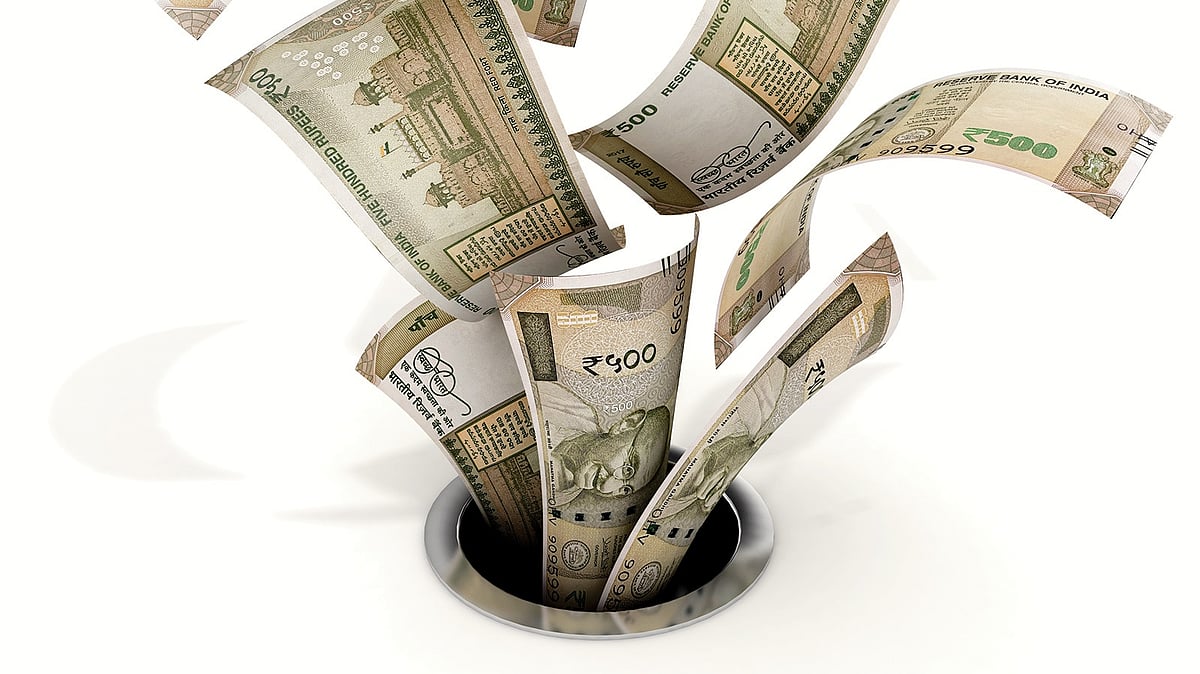
Today we’re going to talk about sustainable business — making it sustainable, making it profitable; in other words, making it a business. Many people still believe that sustainability is just a cost center: a compliance hassle, a PR move, or something that hurts profits. This belief has kept many companies from joining the green transition. Instead, they’re waiting for rules to change or for others to show how it works. But the data tells a different story, and according to our guest today, when manufacturers in Denmark account for all their inputs, more than 20% of raw materials they purchase never reach a finished product. Instead, they bleed out as waste, excess heat, and other byproducts. That’s not just an environmental problem — that’s money leaving through a hole in the floor. And it points to something deeper: sustainability, when done right, isn’t a cost to be managed. It’s a source of competitive advantage that most business leaders have not yet learned to see.
So I’m joined today by Jasper Steinhausen, founder and CEO of Business With Impact, and the author of the book Making Sustainability Profitable. Jasper is a longtime circular economy business consultant to businesses in the Nordic countries. Over the past two decades, he’s worked with over 100 companies and has served as an advisor to the Danish government’s Green Transition Fund. He’s developed a framework — the Impact Blueprint — that guides business leaders through five key actions connecting sustainability with growth, resilience, and profit. Companies that use it have reported their best financial results ever.
So let’s talk with Jasper about common mistakes small and medium-sized companies make when starting with sustainability, how circular economy thinking is really about using resources better and making more profit, and how companies that go beyond compliance can stand out from the competition. We’ll also try to get into some tougher questions: Why isn’t the business case catching on faster? How do you tell real sustainability from greenwashing? And can businesses move quickly enough to meet what science says is needed?
To learn more about Jasper’s work, you can visit bwimpact.com — that’s all one word, no space, no dash. You can find his book Making Sustainability Profitable on Amazon or at your local bookseller. If sustainability is truly a profit driver hiding in plain sight, why do so many business leaders still see it as a burden, and what would it take to change that? Let’s find out right after this brief commercial break.
[COMMERCIAL BREAK]
Mitch Ratcliffe 2:58
Welcome to the show, Jasper. How are you doing today?
Jasper Steinhausen 3:01
Thank you, Mitch. I’m doing really, really well. Looking forward to having this conversation with you.
Mitch Ratcliffe 3:06
Well, thank you for joining me. I really appreciate it. You know, like myself, you’ve been working for 20 years or so at the intersection of sustainability and business strategy. I’m wondering — was there a moment, or maybe a specific client, that made the bell ring for you, that these two things are intimately connected?
Jasper Steinhausen 3:23
Well, for me, the problem is that most people tend to focus on only one problem at a time, right? We tend to isolate problems, especially those we don’t quite understand. And that’s not just a sustainability thing — that’s just how our brains work. But the reality is that sustainability integrates into so many areas in a business, as you probably realize yourself.
And I’ve always been looking at the positive side of things, looking for the opportunity. At some point, back in the mid-2000s or so, I was very much into climate. This was heading up towards COP 15 in Copenhagen, so climate was the thing — also for me. I started looking at climate as the opportunity to innovate and to rethink, and thereby to solve more than one problem at the same time, because there was lots of stuff that needed fixing.
My experience from working in marketing right after I left university was that the more I talked to people about what they care about, the more they listened. So I started connecting the dots: what are the types of problems they do care about? Because a lot of people don’t necessarily care enough about sustainability — it’s not their top priority. So I started to look at it this way: What if I get curious, try to understand what your top priority is, and then figure out how climate — or sustainability, or whatever your slice of this pie is — intersects with that problem? And then speak to solving that problem in a way that also has impact. Basically turning sustainability into the toolbox and using it to solve the problems people actually care about.
And things started moving more easily. Conversations were more interesting to people. From there, I’ve just been refining that process for — yeah, 20-plus years.
Mitch Ratcliffe 5:32
Well, as you say, there are a lot of problems, and the range of challenges a business or policymaker faces today is growing constantly. What do you find the primary motivation is — is it profitability, or is it a combination of financial sustainability and a genuine desire to do better? Where does the motive lie these days?
Jasper Steinhausen 5:56
Well, it depends. Usually I just start by asking people: What are your top priorities right now? What do you really want to succeed with? Not necessarily in sustainability, but where’s your head on the line — what have you promised the board, or your senior leadership, or whoever I’m speaking to in the organization? So rather than having a conversation around sustainability, I find it more interesting to have a conversation about what we really want to achieve.
But I do find that many leaders feel a fairly significant pain around the gap between the values they live by in their private life — the choices they make about food, cars, travel, housing, what they buy, what they choose to repair — and their professional life. In their private life, they make conscious, deliberate choices that factor in sustainability. Then they go to work for eight or nine hours a day, and there they just can’t connect the dots. So they’re basically living a split, unable to live up to their values in their professional life — which is a big part of your life. And that’s painful.
So for some there is an underlying personal pain point, but it always comes back to: I’m being measured on delivering business results. And if you’re not in a company that’s advanced and mature in sustainability — where it’s an integrated part of the brand — well, then it’s a distant second to cutting costs, increasing sales, and attracting talent. So to come back to your question: the short answer is that it’s the business side for the vast majority, but a lot of them have a personal drive underneath. They just can’t connect the two, so they don’t even try. When I help them do that, it becomes a real personal relief as well.
Mitch Ratcliffe 8:30
So what would you say is the most common objection you hear when you make the argument to, say, a room full of CEOs that sustainability can be profitable? Is there a common myth you can dispel right off the bat?
Jasper Steinhausen 8:42
Yeah, I guess they don’t say this, but I’m pretty sure they think it — “BS, this can’t be true” — though they’re polite people and don’t say it to my face. But the thing is, I’ve asked people on every continent, and I get the same response: sustainability is a problem, it’s expensive, it’s hard for business, and you have to compromise in so many ways. That seems to be the decisive narrative globally on what sustainability is.
The reality is that sustainability delivers competitiveness. It drives down cost. It drives innovation. It fuels engagement — and engagement equals productivity, less sick leave, attracting talent, more innovation. And combine all those, as you advance further and further, it also starts to lead to increased customer loyalty, because you make better solutions and find people and companies who see that alignment. There is so much business value to be gained, and people just don’t get that.
When we make what I call a mental transformation — before we’re capable of doing a business transformation — it’s kind of like all of a sudden thinking: well, what have I been thinking for all these years? You can read more about this process in Making Sustainability Profitable.
Mitch Ratcliffe 10:31
Well, you’re describing the recognition of a series of connections that constitute the system in which the business does its work — whatever that work might be. And one of the things that was interesting, and why I wanted to talk with you, is that you frame this all initially as a waste issue. I was surprised by the Danish manufacturing results you reported — that 20% of raw materials never make it into the product or service. For business leaders who haven’t thought about it that way, how does framing sustainability primarily as a resource-efficiency problem change the conversation? Does it make it easier to take that first step?
Jasper Steinhausen 11:08
Well, it’s a really good question. In general, it shifts things quite a lot. The thing is that business leaders don’t really know how to deal with resource flow strategically, and there’s a reason for that. From around the early 1950s to the early 1970s — what’s often referred to as the golden age of capitalism — there was a notion of seemingly endless abundance in energy and materials, and prices just kept falling. So it became less of a strategic issue and more like a cost of operations, something to hand down the chain to the head of manufacturing or wherever it sits today. In leadership literature, it gradually disappeared as a strategic topic, meaning that today’s leaders have never really been trained to strategically look at the flow of resources. They focus mainly on the flow of time and the flow of money.
So through no fault of their own — because nobody ever taught them, it was never part of their education or their portfolio — now this massive area has been ignored. I once had an opportunity to dig into Danish national statistical data — about ten years ago, though I’m quite sure the picture is the same today, perhaps even more significant. Less than 25% of costs go to salary. A bit more than 50% is tied to resources. If you combine these two things — it’s kind of mind-blowing. More than 50% of all costs are not part of leadership’s strategic focus. Let’s leave that for listeners to chew on, because that’s insane when you look at it like that. But it kind of just disappeared.
So when I come in and help rewire this connection — have them look at where the resource flows are — it becomes quite easy to see that there are things really going wrong in how we produce today. When I look at a company or a value chain, I basically see money bleeding out all over the place. If I’m asking how we can increase competitiveness and reduce cost, the first thing I’d say is: well, why don’t we start by stopping some of these holes? And the response is: “Oh, yeah, okay — I hadn’t thought about that.” Because that’s just how things run. Procurement procures, manufacturing produces, sales sells, everybody’s busy, the cost structure is baked into the price, and that’s it. Just intercept a bit and show them what it really is, and it’s kind of “holy moly.” And then you can start doing things.
Mitch Ratcliffe 14:39
Well, you’re describing what happens when suddenly the water is off and you recognize you’ve been counting on it without thinking about it for a long time. Each organization within the entity is in its own silo, focused on its own thing. So how do you move from being reactive to being proactive about sustainability? What does the sweet spot look like in practice?
Jasper Steinhausen 14:58
Yeah, well, I guess you could say that things move a little more easily once you align strategy and offering, and you and your team are working toward something bigger than yourselves. As some of your listeners probably know, we understand quite a lot about intrinsic versus extrinsic motivation. And we know that when we contribute to something beyond ourselves — something bigger — it feels really good.
So if you’re in a company that’s not just about profit, but also a profitable way to be part of making the world a better place — in whatever area fits that company — we can all see that a lot of things in this world are out of balance and moving in the wrong direction, whether that’s climate change, biodiversity, plastics, the amount of chemicals, or something in the social space. Whatever is your flavor, that’s up to you. And the second you can see: “Now I’m part of a team or a culture or movement that’s actually taking some real steps” — and you’re leveraging the full power of a business to do it — it becomes this massively leveraged change. You make better products because you use sustainability as an innovation platform. You put customers’ problems at the center, so you come up with solutions that are better for clients and better for the planet. Your team becomes more engaged, stays longer, works harder. And that’s why they beat the competition. It’s simply a better way of doing business.
Mitch Ratcliffe 17:15
Well, you see yourself within a larger system and a bigger context, and that allows you to find greater motivation as well as more opportunities for innovation. Can you share the principles of the Impact Blueprint — the five steps a leader listening right now on their commute can identify and potentially apply when they get to the office?
Jasper Steinhausen 17:39
Sure. There are five steps: mindset, mission, mapping out a course to move toward it, actually doing stuff, and then going out and talking about it. You can read through all of them in depth in Making Sustainability Profitable — and I’d be happy to gift your listeners a digital copy. Check the show notes for a link to download a free copy.
The mindset step is a lot of what we’ve already been talking about: shifting out of “it’s bad, costly, and a compromise” and into the opportunity space. Don’t start with “what environmental problems should I solve?” Start with “what business problem am I most focused on solving?” and then look at that through the lens of sustainability or resource flow. How does that intersect with the problem? Don’t go in thinking it’s more costly — it’s an innovation game. Find ways to make better solutions.
Mitch Ratcliffe 19:11
Great. We’ll include a link in the show notes.
Jasper Steinhausen 19:15
Perfect. Just read Chapter Three — that’s about a 20-minute read and you’ll be all good to go.
Mitch Ratcliffe 19:23
Chapter Three. Check it out.
Jasper Steinhausen 19:23
Check it out. The mission step is figuring out why we’re all doing this. What’s the bigger thing? Where do we want to go with this? Say you’re a smaller company, or founder-led, or owner-operated — where do I really want to go with this? What’s important to me? And making sure that matches with the business. You can look at a SWOT analysis — strengths, weaknesses, opportunities, and threats — and then match that with what’s personally important to you. Kind of like legacy thinking: what would you like to be known for? Is it children? Is it animals? Is it climate change? And then make sure those match, so you don’t choose an impact area you have no ability to actually move.
I’ve worked with clients who really wanted to do something on climate, but had a business with a very insignificant direct climate impact, or where the impact was tied into a supply chain where they had zero ability to influence anything, because they were a small company with giant suppliers on the other side of the world. So you need to match those things so you actually choose something that gives you a real chance of working on sustainability in a way that also improves your business.
Mitch Ratcliffe 20:56
And those two — mindset and mission — are a great place to anchor the rest of the conversation. What is the minimum viable move in terms of its ability to catalyze the passion you’re talking about for making the world a better place, while balancing the day-to-day challenge of covering payroll at the end of the month? Is there some initial investment or activity that takes you out of your comfort zone — where the silos stop you in your tracks?
Jasper Steinhausen 21:41
Well, you’re very right that getting out of the comfort zone is part of it. I find that the absolute majority of leaders don’t know how to lead sustainability — they see it as this separate thing.
Mitch Ratcliffe 21:54
And I would argue that they may not even know how to lead.
Jasper Steinhausen 22:00
Point taken — yes, duly noted. And especially for smaller businesses. A lot of founders or engineers who suddenly have 20 people on their hands are struggling just to keep everything going. Some even dream about going back to being in the weeds doing the actual work rather than all this leadership stuff. So, yeah.
Mitch Ratcliffe 22:28
The lone innovator is often where a lot of us begin this journey.
Jasper Steinhausen 22:32
Exactly — true. But what I would say is that there’s a lot you can do that doesn’t require big, long-horizon investments. The story about sustainability is very often that it’s about investing for the long view or future-proofing. But what I sometimes refer to as the “brilliant basics” — not a phrase coined by me, but still very valid — is to look at your company and see what you’re going to keep doing for a very long time. You’re going to keep taking raw materials, running them through process A, B, and C, and turning out a product for your customers. And your customers will keep wanting good quality, reliability, and the best possible price. OK — so here is something you can invest in, because it’s going to be ongoing. Are you doing it the right way?
And again, back to the resource flow and waste issue: you are not doing it the right way if you’ve never really looked at it. Unless you’re a very high-volume, low-margin Walmart-type operation that scrutinizes every penny — or you’ve been on the brink of bankruptcy — odds are good you’ve never really looked hard at this. When the Ukraine war broke out four years ago, what we saw here in Europe was a massive, near-overnight increase in energy prices. All of a sudden, companies saw a doubling or more of their energy costs, and for many, that was lethal. All hands on deck.
And within weeks, so many things were changed — none of which required big new investments. It was just smarter practice: let’s produce at night when energy is cheaper; maybe we don’t need the temperature at 98 degrees — maybe 92 is fine. All these things that were never looked at, because it wasn’t on the radar. You can do a lot of that. The minimum viable move is really just getting the basics right.
Mitch Ratcliffe 25:41
So you’re describing that moment of crisis when the reframing is almost automatic — because you don’t have control anymore. This is also a great place to take a quick commercial break, folks, because the wheels have been clipped off the plane. Will we land it? We’ll find out right after a quick commercial break.
[COMMERCIAL BREAK]
Mitch Ratcliffe 26:08
Welcome back to Sustainability In Your Ear. Now, let’s get back to my discussion with Jasper Steinhausen, author of Making Sustainability Profitable and founder and CEO of Business With Impact. So Jasper, one of the testimonials I read about your work is that in a single coaching session, you reframed an entire business through your questions. What do those questions look like when you sit down with somebody who says, “I know I need to do something — I think it might be sustainability.” How do you drill in to find out what they can actually do?
Jasper Steinhausen 26:41
Well, I can walk you back to that specific session, because I think it’s a story that underpins quite well what we’ve been talking about. So it’s a company that sells a water product of really, really high standard, and the founder is passionate about sustainability — but they were struggling a bit with getting traction in the marketplace and getting people to support it, whether that was investors, partners, or whatever. She was clearly more passionate about the sustainability part than a lot of the peers around her that she was trying to persuade.
But the thing is, she had really, really clear water — one of the few sources that could actually claim it was not contaminated with any man-made substances: no plastics, no chemicals, no PFAS, nothing. So I thought: what if we reframe this not as “a sustainable source” but as “better for your health”? How many people walk around caring about what they eat and drink? How many are worried about chemicals in their bodies or in their children? If this was the truly safe source of drinking water, what would that look like compared to pitching it as “the sustainable drinking water”? And she was like —
Mitch Ratcliffe 28:31
However — does that get them away from sustainability as a focus of the company? How do you avoid repositioning defocusing the mission?
Jasper Steinhausen 28:46
Well, the thing is that in order to deliver on that promise, she had to maintain exactly those sustainability standards. I was just reframing from selling the “green” solution to selling the value that comes out of doing that work.
Mitch Ratcliffe 29:03
Back to what I was asking about. So is leading with sustainability the wrong way to think about this, generally?
Jasper Steinhausen 29:12
It depends on your target market. So if you’re targeting people like you and me, it’s probably a good idea to lead with sustainability, because when I’m looking for something, my starting point is: where can I find anyone who’s done something remotely interesting in terms of sustainability? But the majority of people don’t start there. So if it’s green versus better, I’ll almost always go with better. What’s the better outcome that comes out of it?
In the water story, the pitch is cleaner and safer drinking water — P.S., it also happens to be sustainable. And that’s why she would not bottle it in plastic, obviously, because micro-plastics would migrate in and destroy the quality of the product. So it has to be in glass bottles — but you’re still not devaluing your mission. You’re just reframing the value. And basically it goes like this: impact follows perceived value. The job is to figure out what your ideal client perceives as valuable right now, and then show how your sustainable practice supports that. How do my choices become a reason for you to feel more confident in the product — because it helps you with the problem you know you have? And I know that, at the same time, it’s also good for climate or for whatever else. But that’s the icing on the cake.
Mitch Ratcliffe 31:05
One of the things I’ve learned over the years is that basing your product positioning on your own preference can be very challenging, because your preference and values may not map to the market’s. In this case, people are thirsty. They want good, clean, healthy water. Some of them — maybe not even most of them — want it delivered sustainably. Is it really important to lead with sustainability in any way, shape, or form? Or is that a subterranean activity? The thinking should be: let’s do this sustainably — but we don’t necessarily need to pitch that upfront. Let your quality speak first: you’re going to drink good, clean water; it won’t harm your kids; and, by the way, we’re going to be able to continue doing this without having destroyed nature.
Jasper Steinhausen 31:57
Yeah, I would probably go with something like that — but it depends on the room. Say I’m pitching this at Patagonia’s annual leadership assembly. Well, it’s probably a good idea to start by saying this is an amazing, sustainable product. They’re exactly the right audience for that. So it’s audience first — it’s page two of any book on selling.
So if people are on their commute back to the workplace thinking “what do I do?” — it’s just business. Sales is sales. Marketing is marketing. Innovation is innovation. What you can see is that sustainability is just an extra layer in the toolbox — and it’s one you probably haven’t utilized, and one that most of your competitors have never even thought about. That’s why you can beat the competition: by starting to utilize a layer in the toolbox nobody else is looking at, to develop better solutions, better business, lower costs, and more innovation.
And once you’ve done that, there’s a completely separate discussion: how much do you want to flag this externally? That comes back to who your target market is. Some you want to flag it a lot. Others — maybe not. “I’m trying to sell this to the White House right now, okay, I probably shouldn’t lead with sustainability. Let’s save that for later.” But if I’m selling to Patagonia, I probably want to flag it quite a lot. That’s a different discussion. You use the toolbox to make the better solution, and then you make a choice about whether and how much to flag it.
Mitch Ratcliffe 34:02
Well, in a lot of ways, what you’re doing is going around the greenwashing problem by actually focusing on why you’re making the decision. Greenwashing is a credibility killer in this space. If you were to go to Patagonia and say “we’re sustainable,” and it turns out you’re generating vast amounts of PFAS you’re dumping into the local water supply — you’re done with that audience. How do you recommend companies communicate sustainability in an authentic way, without making exaggerated claims? Because often, at the beginning of the process, they’re talking about their long-term goal rather than how they’re actually performing today. How do you begin that reveal in a way that lets people see you’re making progress, but without overpromising?
Jasper Steinhausen 34:51
Yes. If I should put this in really plain English: do what you say, say what you do, and be able to back it up with data. End of story. You could add: please don’t lie. In Europe, there’s regulation against this — it’s tied into marketing law. So making false claims is just breaking the law, the same as trying to sell liquor to minors.
But the key thing is: always be specific. Stay away from the generics — “I’m sustainable,” “I’m green,” whatever. No. We have done this specific thing. The problem is that when sustainability is pursued mainly as a branding exercise, because companies still believe it’s costly for business and the only return is PR — they try to push the envelope as far as possible. And that’s where all the greenwashing problems come from.
Whereas, if you go about it the way we’ve been discussing, the approach is: What are the three to five biggest business problems we have? What are the three to five biggest problems our clients have? Go to work on those. If you solve one of a customer’s biggest priorities, you don’t go out and say “this is amazing for climate.” You go out and say “we just fixed your problem — and, by the way, it’s also better for the climate.” See Chapter 3 of Making Sustainability Profitable for a full walk-through of this approach.
So there are three things to try to get at least a dash of in your communications. First, the mission — the bigger picture, the roadmap, the plan, whatever you call it. Show that this isn’t a standalone thing; it’s one in a series, and here’s what you plan to do next year and the year after. Then spend the majority of your time on the actual results: we have removed X, optimized Y, extended product life by Z. And be able to back it with data. In Europe, you need trusted third parties to verify the data. I’m not sure about the regulations on your end —
Mitch Ratcliffe 38:02
— here, we don’t have regulations anymore. Makes it easier, doesn’t it? Ha. You made reference earlier to potentially selling to our White House — which I’d argue is a fool’s gambit, because you’ll get stabbed in the back. But sorry, folks — it’s true. Do you see, in this environment of political pushback against sustainability, that the green transition is actually taking deeper hold — not just in Europe, but in business everywhere — because of the underlying resource-cost crisis you’ve been talking about? If we don’t find ways to reuse and reduce the cost of virgin material extraction, prices will just keep going up. Are we on the path to a greener, more environmentally responsible economy, or is it more talk than action?
Jasper Steinhausen 39:06
Well, that’s a really good question. There’s a long-form answer and a short form. Which one do you want?
Mitch Ratcliffe 39:13
Let’s go short — we’ve been talking for a while, and the commute for our listener is probably getting close to an end.
Jasper Steinhausen 39:19
I think we are nowhere near realizing the potential, simply because way too few people have the right understanding of what this is all about. There’s a great misconception we’ve referred to a couple of times, and that’s really what’s holding us back. It’s what makes politicians pass the wrong type of laws and legislation; it’s what makes decision-makers pull back again. It’s somewhere between tragic and hilarious — because in the name of cutting costs and increasing competitiveness, we’re ignoring one of the most powerful levers available to do exactly that. This is probably one of the biggest opportunities to increase competitiveness in our time, rivaled only by AI. And yet, because we don’t understand it, we’re removing focus from it.
Mitch Ratcliffe 40:20
That’s a really important point — and it goes all the way back to the beginning of the conversation. You’re in your silo, focused on your particular challenge. If you just look up a little and see the synergistic opportunities in thinking across silos — first to reduce waste overall, and potentially even to begin regenerating nature by putting raw material back into it — that can be transformative.
One problem a lot of businesses have is that they think of the circular economy only as waste management or recycling. How do you talk about that with your clients? How do you make the case for a full life-cycle approach versus “I took care of my part of the job, I hope somebody else does theirs”?
Jasper Steinhausen 41:15
Well, basically — if they’re not ready to talk circularity, I don’t talk circularity. I might get there eventually, but I use different words. If the reason for taking materials back is to get cheaper or less risky raw materials — because right now they’re sourcing everything from the other end of the world, and we’ve all learned that international supply chains are far more fragile than we thought, what with wars and conflicts and all of that — then perhaps the smarter move is to start sourcing from more regional waste streams. OK, well, then maybe we’re talking about de-risking the supply chain, or cutting cost through access to cheaper raw materials. Whatever it is, I try to listen, tune in, and translate.
I’ve trained myself to speak the language of the CFO, CEO, CTO, head of manufacturing, and sales — whatever the role, I can probably find my way into it. The goal is to make sure they feel they’re on their own turf. In reality, I’m just getting them to use my tools — they’re just not necessarily aware of it. And if they are ready to talk circularity, great — we can go as deep as you like. But for most, that’s not the case.
Mitch Ratcliffe 43:09
Well, you’re hitting on the opportunity of the times, really — the era of code-switching, being able to move from one dialogue to another while maintaining continuity. That’s the authenticity piece, the non-greenwashing part we were discussing a moment ago. If this business case is so compelling, why isn’t every company doing it? What’s the real barrier — is it knowledge, lack of incentives, the need for a new culture, or the need to connect with a bigger culture than your organization? How would you encapsulate that for a business leader who asks?
Jasper Steinhausen 43:49
Well, my analysis is that the single biggest — or perhaps the first — hurdle to get over is changing the narrative. When every business leader wakes up every morning thinking “this is bad for business, this is costly, and it’s going to restrict me and force me to compromise” — and then sits down and thinks “OK, I’m trying to cut costs, trying to find new creative ways to expand into new territory” — they immediately think: “I’m probably not going to use this tool, because I know it’s more costly. It restrains me, and I’m trying to create maneuvering space.” When they think that’s what sustainability is, it never fits the purpose.
The reality is, it fits the purpose extremely well. But nobody knows why — which is also why I spend so much time pushing this narrative by posting six days a week on LinkedIn and being lucky enough to be invited onto programs like this. We need this change in narrative, because otherwise people never even get started. They never get to ask the questions. They never open their eyes to realize: “Huh, that’s strange — maybe we should have a look at this.”
Mitch Ratcliffe 45:19
And it’s because, in a lot of ways, we tell ourselves the same old stories — both because they’re comfortable and because you don’t have to explain them to anyone. As you think about the transition we need to make, what’s that one factor you would urge a business leader to consider as they think about the story of their business — is it the missed opportunity to do the world-improving work they want? Is it missed profitability? Or something else?
Jasper Steinhausen 45:51
Well, in the world of today — where competition is as fierce as it’s ever been for most — I would probably lead with the business side. Just: stop wasting money all the time. Stop that. So you could start by simply looking at what percentage of your overall cost is tied to resources, and how much of what you buy is turning into waste.
Waste is the most expensive and idiotic thing we can create. First, you pay good money to get raw materials. Then you pay people and equipment to work on them. You also pay for marketing, advertising, and sales. And by the time you’re nearly done, some of all of this is lost — and then you pay somebody to come and take it away. It’s lose, lose, lose, lose all the way through. And it’s also bad for the world.
So if we could just eliminate some of that, you’ll save money in procurement. You’ll save money in wasted time, salary, machinery, energy — all of it. And you’ll do a really, really good thing for the planet. And you can turn that into part of your story as well — your people will love you for it, and your clients potentially will too, depending on how you position it. It could turn a lose, lose, lose, lose, lose into a win, win, win, win. Or you could stay where you are and just be damned ineffective. It’s up to you.
Mitch Ratcliffe 47:41
I almost don’t know how to follow that last line — because that is the “I’m just going to stick to my guns” approach I hear from so many business leaders: “I don’t have time for that.” But when you open your thinking to new options, almost invariably, any business can recover. How can folks keep up with your thinking? Where can they see you? Posting on LinkedIn every day?
Jasper Steinhausen 48:03
Yeah, it’s fairly simple, because there’s only one person called Jasper Steinhausen. So if you find me on LinkedIn, I’d really love to have you following and engaging with my content. Hopefully there will be something that inspires you. And, as I said, I’ll be happy to gift you a copy of the book — check the show notes for a link to download a free copy. Start with Chapter Three, as we talked about.
Mitch Ratcliffe 48:29
Well, thank you, Jasper, for your time today. It’s really been a great conversation. I appreciate it.
Jasper Steinhausen 48:34
Likewise, likewise. And thank you for doing all of this. Thank you.
[COMMERCIAL BREAK]
Mitch Ratcliffe 48:43
Welcome back to Sustainability In Your Ear. You’ve been listening to my conversation with Jasper Steinhausen — sorry about mispronouncing his name earlier, by the way. He’s founder and CEO of Business With Impact and the author of Making Sustainability Profitable. You can learn more about his work at bwimpact.com — all one word, no space, no dash. And you can download a free digital copy of his book at freebook.scoreapp.com. When you do, check out Chapter Three first.
Jasper’s reframing of sustainability as a resource-efficiency problem hiding in plain sight is an effective tool for sustainability advocates in any organization. Danish manufacturing data shows that more than 20% of raw materials purchased by the average company never reach a finished product — instead, they bleed out as waste, excess heat, and byproducts. And by the way, you can also be wasting electricity excessively or burning too much coal. Don’t do that. That’s money leaving through a hole in the floor, not to mention an environmental impact too long ignored by business.
But as Jasper points out, this isn’t a failure of character on the part of business leaders. It’s a failure of training and culture. Ever since capitalism began, it has ignored the importance of resource costs. Sure, people talk about it — but when you actually look at it, we waste so much it’s insane. Today’s leaders have been schooled in managing time and money, but almost never in managing material flows, even though resource costs dwarf payrolls and account for more than 50% of the total cost in the average manufacturing company.
The second takeaway I urge you to think about is Jasper’s argument that the single biggest barrier to a green transition isn’t regulation, capital, or technology — it’s a narrative problem. In other words, we have to tell the story that becomes behaviors, repeated over and over to become culture. When every business leader wakes up believing sustainability is a cost, a constraint, and a compromise, their mental calculation about its value is over before it begins. Jasper’s bet is that once companies make the mental transformation — recognizing waste reduction, supply-chain resilience, and innovation capacity as the actual deliverables of a sustainable practice — the business case becomes self-evident. The companies that crack this beat the competition simply by using a layer of the strategic toolbox other companies never bother to open.
Finally, there’s the idea that runs counter to much sustainability advocacy: leading with sustainability as a primary value in your marketing is often the wrong move. Jasper’s principle that “impact follows perceived value” makes the job of the sustainable business clear — it isn’t to convince the market to care about the planet; it’s to identify the problem the customer is already trying to solve, and then bring a sustainable practice to bear on that problem in a way that makes the solution visibly better. That water company with the purest, chemical-free source doesn’t lead with environmental stewardship — it leads with safer drinking water for your kids. Sustainability is structural: it goes deeper than product messaging to why the product delivers what it promises. But it’s best positioned as a consequence of quality, not a call to conscience. Yes, it works with some consumers — like myself, who really pay attention — but for most people, we need to lead with quality. And that distinction matters, especially now, because greenwashing remains one of the fastest ways to destroy trust with an audience that cares most about the environment.
Jasper’s suggestion that you should do what you say, say what you do, and back it with data summarizes the challenge for any sustainability effort — whether it’s an internal initiative or the basis for a major product launch. Communicate specific results, not general claims, which we see far too often from companies pitching stories to Earth911. Anchor your results in a visible roadmap, so that your progress today can be seen as the first accomplishment on your road to a more sustainable world — not just the first in a long series of promises not yet kept.
So here’s the tension worth sitting with. Jasper’s model depends on business leaders choosing to look up from their siloed priorities long enough to see the resource flows bleeding money all around them. The global narrative that sustainability is a burden rather than a tool is nowhere near being corrected. It’s still driving policy decisions, investment decisions, and competitive strategy in the wrong direction. The irony is almost painful: in the name of cutting costs and increasing competitiveness, companies are ignoring one of the most powerful levers available to do exactly that — reducing resource costs by eliminating waste.
The window to act is open — wide open — and people are screaming for us to do better. The question is whether enough leaders will decide to stop leaving money and a livable planet on the cutting-room floor. We’ll keep talking with the leaders who do see the light and use it to illuminate the waste we can no longer afford — as a species, as a society, and as an economy.
I hope you’ll also take a look at our archive of more than 540 episodes of Sustainability In Your Ear. We’re in our sixth season, and I guarantee there’s an interview you’ll want to share. Writing a review on your favorite podcast platform will help your neighbors find us — because folks, you’re the amplifiers that can spread more ideas to create less waste. Please tell your friends, family, co-workers, and the people you meet on the street that they can find Sustainability In Your Ear on Apple Podcasts, Spotify, iHeartRadio, Audible, or whatever purveyor of podcast goodness they prefer.
Thank you for your support. I’m Mitch Ratcliffe. This is Sustainability In Your Ear, and we’ll be back with another innovator interview soon. In the meantime, folks, take care of yourself, take care of one another, and let’s all take care of this beautiful planet of ours. Have a green day.
A falling rupee is usually treated as a macroeconomic problem. It raises the cost of imports, worsens inflationary pressures, unsettles investors and dents national pride. But India’s recent experience has produced a curious paradox. The same rupee weakness that creates external stress has also produced a fiscal bonanza for the Union government.
The Reserve Bank of India’s (RBI) defence of the rupee — by selling dollars from its reserves — has yielded large realised profits, which are then transferred to the Centre as surplus. The RBI is thus not merely managing the currency. It is increasingly becoming a fiscal stabiliser, almost a treasurer to the government. This needs more scrutiny.
The RBI central board has now approved a record surplus transfer of Rs 2,86,588 crore to the Union government for FY 25-26. This is higher than the previous record of Rs 2,68,590 crore in FY 24-25, Rs 2,10,874 crore in FY 23-24 and Rs 87,416 crore in FY 22-23. The latest transfer is reportedly backed by robust RBI earnings, including gains from large dollar sales to support the rupee and higher income on foreign assets.
Nearly Rs 2.9 trillion is not a rounding-off item. It is close to 8 per cent of the Centre’s revenue receipts. It gives the government fiscal breathing space without raising taxes, cutting expenditure or borrowing more from the market. At a time of elevated crude prices, geopolitical uncertainty and pressure on the fiscal deficit, this is a very useful cushion. But it’s worrying for the same reason, for a cushion can quietly become a habit.
The arithmetic is simple. The RBI accumulated dollars over many years when the rupee was much stronger. When it sells those dollars today at a weaker exchange rate, it books a rupee gain. Not a paper gain from revaluing forex reserves, but realised gain from actual dollar sales. Under the economic capital framework, unrealised revaluation gains on gold or foreign exchange are not meant to be distributed. But realised income from forex operations can flow into the RBI’s income and then into its surplus transfer to the government.
This means the rupee’s weakness has produced a fiscal windfall. That’s an uncomfortable sentence, but it captures the paradox. The same depreciation that hurts importers, raises the cost of oil, reduces India’s dollar GDP and unsettles foreign investors also boosts RBI profits when dollars are sold.
This matters for another reason. If India’s nominal GDP grows by 10 per cent in rupee terms, but the rupee depreciates by more than 10 per cent against the dollar, then India’s GDP in dollar terms barely grows. This isn’t statistical hair-splitting: global rankings, investor perceptions and geopolitical heft are measured in dollars. A country can grow fast domestically and yet appear stagnant internationally if currency depreciation wipes out the gain. Persistent rupee weakness can, therefore, become a strategic concern.
But that does not mean the rupee must be defended at all costs. India is a current account deficit economy. It imports much more oil, gold, electronics and critical inputs than it exports. It also has a higher inflation rate than the US over the medium term. Some depreciation of the rupee is natural. It can even be desirable. A weaker currency acts as a shock absorber. It protects export competitiveness, discourages non-essential imports and keeps the economy honest about external imbalances.
The danger is not depreciation per se, but disorderly depreciation. That is where the RBI intervenes as it should: to manage volatility, prevent panic and anchor expectations. But defending a level is different from managing volatility. If the market believes that the RBI will always protect a particular exchange rate, then large importers and dollar borrowers may under-hedge their exposures. An artificially strong rupee subsidises imports, penalises exports and delays adjustment. The eventual correction then becomes more painful.
There is also a fiscal morality issue. If defending the rupee produces large RBI profits, and those profits help the Centre reduce its deficit, then depreciation begins to have a hidden fiscal upside. That is not a healthy incentive structure. No government should start treating the central bank’s forex operations as a recurring revenue source.
India’s fiscal system already has an inbuilt support mechanism for government borrowing. Through the statutory liquidity ratio, banks are required to invest a substantial share of their deposits in government securities. This creates a captive market for sovereign debt. It is legal, longstanding and part of India’s financial architecture.
But it is still a form of financial repression: household savings are partly channelled into government borrowing by regulation. If, in addition, the government becomes dependent on large RBI surplus transfers, the line between monetary authority and fiscal support begins to blur.
The RBI is not the finance ministry. Its job is price stability, financial stability, currency management and monetary credibility. It is also banker to the government, but that should not turn it into the government’s cash cow. Elected governments naturally prefer more spending, lower borrowing costs and convenient financing. That is precisely why monetary institutions need insulation.
The rupee story is also linked to India’s external financing challenge. Gross FDI inflows may look healthy, but net FDI has weakened sharply because of repatriation, disinvestment and outward flows. Foreign companies and private equity investors are exiting at attractive valuations. Indian equity markets remain expensive partly because domestic SIP inflows have become sticky and powerful. The SIP habit is good for financialisation and household participation in markets. But it has also created a strong domestic bid that prevents a sharp market correction despite large FII outflows.
This raises a sensitive question. Are Indian domestic investors, through SIPs and IPO subscriptions, indirectly facilitating profitable exits for foreign investors? In many recent marquee IPOs, a large share of the money raised has gone not into fresh capital for the company but into offers for sale by existing investors. New investors buy the promise; old investors take the cash. This is not illegal. It is how markets work. But when it becomes widespread, it deserves scrutiny.
There have also been many high-profile foreign exits or partial exits: Holcim, Ford, Harley Davidson, Citibank’s retail business, Metro AG, GM, Cairn, Lafarge, parts of Vodafone’s story, Disney’s restructuring, Whirlpool’s dilution and others. Each case has its own explanation. But taken together, they point to a larger economic pathology: India is attractive as a market, but not always easy as a place to build, operate and retain capital.
This does not mean foreign confidence has vanished. Google’s data centre plans, Meta and Google’s investment in Jio, and other strategic investments show that global capital still wants exposure to India. But there is a difference between entering India for digital scale and committing patient capital to deep manufacturing. India needs durable FDI, not merely valuation-driven entry and exit.
In this context, the rupee is not just a number on a screen. It reflects oil dependence, gold imports, external financing gaps, portfolio flows, domestic market valuations and confidence in doing business. The RBI can smooth the ride, but it cannot permanently change the road.
Ajit Ranadeis a noted economist. More of his writing here
Corrugated cardboard makes its way from warehouse to mill in about two weeks. In contrast, plastic packaging can take centuries to break down, and even the most optimistic estimates say only 5 to 6 percent of U.S. plastic is actually recycled. This difference highlights both the promise and the challenges of creating a circular packaging economy.
Back in April 2020, when this article first appeared, the recycling industry was still struggling after China banned imported recyclables in 2018. Around that time, DS Smith opened its first North American recycling plant in Reading, Pennsylvania, marking the first closed-loop corrugated packaging system. Five years later, the circular packaging sector has become a $245 billion global market and is expected to nearly double by 2034.
However, growth does not always mean true circularity. The gap between what companies promise and what recycling systems actually deliver is under more scrutiny than ever.
How the Recycling Loop Works and Where It Breaks
Many people picture recycling as a simple process: items go from the curbside bin to a materials recovery facility (MRF) and then become new products. In reality, the process is more complicated. Mixed curbside collections have about a 25 percent contamination rate in baled recyclables from MRFs, so more sorting is needed before they can be turned into new materials. In the past, this extra sorting was often done cheaply in other countries.
After China stopped buying U.S. recyclables in 2018, the U.S. was left with about a third of its collected materials and no place to send them. This led to a crisis: many communities lost their recycling programs, and it became obvious that the U.S. needed more domestic processing and cleaner materials from better recycling programs.
Paper and corrugated cardboard are still the big success stories in circular packaging. In 2024, the U.S. recycled over 33 million tons of cardboard, or about 90,000 tons each day, reaching a recovery rate between 69 and 74 percent, according to the American Forest & Paper Association. The share of recycled paper used at U.S. mills has grown from 36.6 percent in 2005 to 44.4 percent in 2024.
Plastic is still a major challenge. Only about 5 to 6 percent of U.S. plastic packaging is recovered and made into new packaging or products.
A Growing Market With Caveats
Europe is leading the way in recycling growth, thanks to strict regulations. North America is catching up through corporate ESG commitments, extended producer responsibility programs, and state-level policies.
Paper-based packaging leads in circular packaging revenue, making up about 40 percent of the global market in 2024. This is due to advances in fiber recovery technology and the fact that consumers are used to recycling cardboard. Reusable and refillable packaging is growing quickly, but it is still a small part of the market. As a result, the food and beverage sector makes up nearly 47 percent of circular packaging demand, and packaging companies are teaming up with recyclers to meet this need.
Industry consolidation signals how seriously investors have bet on this sector. In July 2024, Smurfit Kappa completed its acquisition of WestRock to form Smurfit WestRock, one of the world’s largest paper-based packaging companies, with $32 billion in combined revenue and 100,000 employees across 40 countries. Separately, International Paper announced an agreement to acquire DS Smith in a deal valuing DS Smith at approximately $9.9 billion. These deals suggest that fiber-based, recyclable packaging is a durable growth market.
The DS Smith Model, Five Years Later
In March 2020, DS Smith opened its first North American recycling plant in Reading, Pennsylvania, right next to an existing paper mill and corrugated packaging facility. These three sites could make, use, collect, and recycle corrugated boxes in about two weeks, creating a true closed loop. DS Smith got clean materials from distribution centers, packaging facilities, and retailers instead of mixed curbside collections, which helped keep contamination low.
Since then, this model has grown significantly. DS Smith, now part of International Paper, and other companies have shown that fiber-based packaging circular systems can work on a large scale. The Ellen MacArthur Foundation’s 2024 Global Commitment Progress Report, which covers over 1,000 organizations representing 20 percent of global plastic packaging production, noted that companies like Amcor have “doubled the share of recycled content in their plastic packaging, making as much progress in four years as in the four decades before,” according to EMF leader Rob Opsomer.
Where Optimism Meets Reality
But the numbers are more complex than market growth projections suggest. The Ellen MacArthur Foundation (EMF) found that the 2025 targets set by its member companies in 2018—to cut virgin plastic use by 18 percent, reach 26 percent recycled content, and achieve 100 percent reusable, recyclable, or compostable packaging—are now mostly out of reach without major changes. Together, these companies have avoided using 9.6 million tons of virgin plastic since 2018, but that is less than 3 percent of annual plastic production. At the same time, the overall market increased plastic packaging use by 8 percent.
Scaling up reusable packaging has been especially hard. Even though 64 percent of EMF Commitment participants have started pilot programs, reuse models make up only 1.3 percent of packaging, according to the Foundation’s 2024 analysis. The main obstacles are structural: the U.S. lacks a shared reverse logistics system, does not offer enough consumer incentives, and has no binding policies to make reuse practical.
Greenwashing has made the credibility problem worse. In October 2024, the legal advocacy group ClientEarth released a report saying that vague plastic recycling claims, like “100-percent recyclable” and circular loop images, mislead consumers about the real environmental impact of products and violate UK and EU consumer protection laws.
“The thing that blew my mind,” said Myles Cohen, founder of consulting firm Circular Ventures, at the September 2024 Packaging Recycling Summit, “is that in the company’s defense, they argued, ‘Hey, our statements were just classic puffery.’” Cohen called greenwashing “a pet peeve that damages not just individual companies but the packaging and recycling industries as a whole.”
Not all circular packaging strategies are equally effective. The evidence shows a clear ranking of materials:
Fiber-based packaging, like corrugated cardboard and paperboard, has proven circularity supported by real infrastructure. The DS Smith model is successful because it uses clean materials and relies on commercial, not residential, collection systems.
Aluminum is the most valuable recyclable material. Recycling just one can saves as much energy as half a gallon of gas. Beverage cans contain 73 percent recycled content, and steel cans are recycled at an 80 percent rate, so metal packaging truly supports a circular system.
Reusable packaging is most effective in closed-loop commercial settings, such as logistics, food service, and institutional supply chains. It does not work as well in consumer retail or quick-service restaurants, where returning packaging is expensive and unreliable.
Compostable packaging is only a limited solution. More industry analysts are skeptical because most communities do not have home composting, industrial composting facilities often reject packaging, and composting creates greenhouse gases instead of recovering materials.
Plastic recycling needs a very specific approach. PET bottles and HDPE containers are recycled more successfully than most other plastics. Flexible plastics like films, pouches, and sachets are still mostly unrecyclable on a large scale and often end up polluting the environment.
The EPA estimates that updating U.S. recycling infrastructure will cost between $36.5 and $43.4 billion, mainly for better packaging recovery, more composting capacity, and improved plastics processing. This investment has been slow to happen because there are no binding policy requirements.
The E.U. Regulatory Push and the U.S. Gap
Europe has moved decisively. The E.U.’s Packaging and Packaging Waste Regulation (PPWR) requires 70 percent of all packaging waste to be recycled by 2030, with plastics recycling rates targeted to double to 55 percent. Member states must cut packaging waste per capita by 15 percent by 2040 versus 2018 baselines. The European Commission is also requiring products claiming to be biobased, biodegradable, or compostable to meet minimum, verifiable standards to combat greenwashing.
In the U.S., California is leading the way with extended producer responsibility (EPR) laws and the new Voluntary Carbon Market Disclosures Act, both aimed at reducing greenwashing in sustainability claims. However, there is little action at the federal level.
At the November 2024 Busan negotiations for a UN Global Plastics Treaty, countries failed to reach a binding agreement. This has left a major policy gap and prevents a coordinated global effort.
What You Can Do
If you want to make a positive difference, it helps to be both a conscious shopper and an active citizen. Here are some steps you can take in your daily life:
Choose fiber and aluminum products. Corrugated boxes, paperboard, and aluminum cans have real end-of-use recycling systems. Recycling these materials truly closes the loop.
Don’t just trust the label. “Recyclable” does not always mean it can be recycled where you live. Check if your local program accepts the material, and use Earth911’s recycling search to see what is accepted in your area.
Focus on reducing packaging, not just recycling. Buying products with less packaging, choosing concentrates, or picking refillable options has a bigger environmental impact than recycling alone.
Support EPR policies. Extended producer responsibility moves recycling costs from cities and taxpayers to the companies that create packaging. This is a structural solution that market growth alone cannot achieve.
Ask companies for details. If you see vague claims like “eco-friendly” or “100-percent recyclable,” ask questions: Where is it recyclable? What infrastructure is used? What percentage of the material is actually recycled? Demand clear, verifiable answers.
If you value the environment, keep a variation on Smokey Bear’s familiar advice in mind: Only you can prevent the economy from burning down the planet. Your response needs to combine thoughtful choices when shopping with active communication with friends, family, the businesses you frequent, and the representatives you elect.
Editor’s Note: This article, originally authored by Gemma Alexander on April 14, 2020, was substantially updated in April 2026.
The Ministry of Tourism highlighted on its social media, through the magazine Sol de Cuba, that Cuba is a safe and enriching destination, according to testimonials shared by travelers on digital platforms.
As the Narendra Modi government completed two years of its third term on Tuesday, 9 June, the Congress launched a sweeping attack on the BJP-led administration, releasing a 'promise versus reality' report that accused the Centre of prioritising publicity over performance and failing to deliver on many of its flagship commitments over the past 12 years.
The 75-page document, prepared by the All India Congress Committee research department, seeks to challenge what the Congress described as the government's "prachar" or propaganda on issues ranging from employment and economic growth to education, agriculture, infrastructure, democracy and foreign policy.
Releasing the report in New Delhi, AICC research department chairman Rajeev Gowda and party leader Amitabh Dubey argued that the gap between the Modi government's promises and outcomes had steadily widened since 2014.
"Over the last 12 years, promises have been accompanied by big announcements, grand statements and headlines," Gowda said. "But the reality is that none of those headlines have translated into anything that is meaningfully transforming the lives of ordinary people."
The Congress leaders sought to portray the Modi government's anniversary celebrations as an exercise in image management at a time when many Indians, they claimed, were grappling with unemployment, rising prices and growing economic insecurity.
Gowda pointed to changes in the Pradhan Mantri Ujjwala Yojana as an example of what he described as shrinking welfare support. He alleged that the government had reduced the number of subsidised LPG cylinders available to beneficiaries, despite earlier promises to provide sustained relief to women dependent on traditional cooking fuels.
"Ten years ago, Indian women were promised freedom from dangerous and unhealthy cooking methods. Today, that promise is being steadily diluted," he said.
नरेंद्र मोदी ने आज भारतवासियों को तोहफा दिया है।
अब उज्ज्वला योजना के तहत लोगों को सब्सिडी वाले सिर्फ 4 सिलेंडर मिलेंगे, जबकि पहले 9 सिलेंडर मिला करते थे। इससे लोगों के लिए चूल्हा जलाना तक मुश्किल हो जाएगा।
A major focus of the Congress critique was employment. The party argued that despite repeated assurances of making India a global hub for job creation, millions of educated young people continue to struggle to find work.
According to Gowda, four out of every 10 graduates remain unemployed, while urban youth unemployment remains elevated. He also claimed that only a small proportion of unemployed graduates secure permanent salaried jobs within a year.
The Congress further accused the government of failing to create opportunities for women. Citing India's position in global gender rankings, Gowda argued that women's participation in the workforce remains far below potential despite repeated promises of inclusive growth.
The party also targeted the government's economic record, claiming that small businesses continue to suffer the after-effects of demonetisation and other policy decisions. "MSMEs are the backbone of India's economy and its biggest job creators, yet tens of thousands of them have shut down," Gowda said, arguing that the sector has never fully recovered from the shocks of recent years.
नरेंद्र मोदी ने कहा था
⦿ लोगों को महंगाई से राहत मिलेगी, लेकिन सच्चाई यह है कि 2014 से अब तक LPG का रेट 123% बढ़ा है। पेट्रोल का रेट 44% और डीजल का 73% बढ़ा है। दूध का 71% और दाल का 84% रेट बढ़ा है
The Congress also sought to raise concerns about the health of India's democratic institutions. Gowda alleged that millions of voters had been removed from electoral rolls and claimed that public trust in democratic processes was being undermined.
Dubey, meanwhile, focused on inflation and the rising cost of living, arguing that everyday essentials have become significantly more expensive during the Modi era. He cited increases in the prices of cooking gas, fuel, milk and pulses, saying the government's promise of relief from inflation had not materialised for ordinary households.
The Congress leader also challenged the government's narrative of India's growing global influence, arguing that the country's economic and strategic vulnerabilities had become increasingly apparent amid ongoing international crises.
On the economy, Dubey accused the government of repeatedly missing its own targets despite ambitious projections. He noted that Modi had pledged to make India a USD 5 trillion economy by 2024 and one of the world's three largest economies, goals that remain unmet.
मोदी सरकार ने कहा था कि इंफ्रास्ट्रक्चर को मजबूत करेंगे, लेकिन सच्चाई यह है कि आज देश में लोग भीषण गर्मी और प्रदूषण से पीड़ित हैं, क्योंकि ये सरकार लगातार जंगलों को तबाह कर रही है।
नरेंद्र मोदी स्मार्ट सिटी की बात करते थे, लेकिन आज लोगों को स्मार्ट सिटी कहीं दिख ही नहीं रहीं।… pic.twitter.com/CqvdeHOK0y
The party further argued that falling private investment, capital outflows and a weakening rupee reflected deeper structural problems in the economy. "The impact of the Modi government's policies is visible in the fact that foreign investors are leaving and even Indian industrialists are choosing to invest abroad," Dubey said.
Congress also attacked the government's record on infrastructure and public services. While acknowledging large-scale spending announcements, Dubey argued that many flagship projects have failed to deliver tangible improvements in daily life.
He cited overcrowded trains, recurring concerns over railway safety and delays in implementing safety technologies such as Kavach as examples of what he described as the gap between official claims and on-ground realities.
मोदी सरकार ने कहा था कि शिक्षा व्यवस्था का आधुनिकीकरण किया जाएगा, जबकि सच्चाई ये है कि लगातार पेपर लीक हो रहे हैं।
• CBSE के OSM सिस्टम ने छात्रों के भविष्य के साथ खिलवाड़ किया है और टेंडरिंग प्रक्रिया में भी घपला हुआ है
The party reserved some of its strongest criticism for the education sector, where it accused the government of presiding over a growing crisis of examination leaks, administrative failures and technological glitches.
Referring to recent controversies involving CBSE and other competitive examinations, Dubey alleged that repeated paper leaks and irregularities had jeopardised the futures of millions of students. "The education system was supposed to be modernised. Instead, students are facing paper leaks, technical failures and uncertainty," he said.
The Congress leader claimed that dozens of examination leaks and multiple re-examinations had taken place in recent years, undermining confidence in the system.
Holding Union education minister Dharmendra Pradhan directly responsible for the situation, the party renewed its demand for his resignation. "Our demand is clear: education minister Dharmendra Pradhan should immediately resign," Dubey said.
One year after the Trump administration launched its tariff offensive against more than 180 countries, Latin America presents a mixed picture: some economies lost competitiveness in the U.S. market, while others redirected exports or negotiated agreements to cushion the blow.

 Login
Login
 Uruguayan President Yamandú Orsi made a day trip to São Paulo on Tuesday to meet Brazilian business leaders interested in investing in Uruguay, in an agenda Foreign Minister Mario Lubetkin described as an opportunity to "move to a new phase in the levels of commercial development and Brazilian investments" in the South American country. The official delegation included Lubetkin himself, Economy and Finance Minister Gabriel Oddone, Uruguay's ambassador to Brazil Rodolfo Nin Novoa, and the executive director of investment promotion agency Uruguay XXI, Mariana Ferreira.







 Brazil’s Central Bank following its two days meeting 28–29 April of the Monetary Policy Committee (COPOM) announced the reduction of its SELIC rate by 25 basis points to 14.50%.





 One year after the Trump administration launched its tariff offensive against more than 180 countries, Latin America presents a mixed picture: some economies lost competitiveness in the U.S. market, while others redirected exports or negotiated agreements to cushion the blow.