Previously, we reported on the birth of a baby western lowland gorilla (Gorilla gorilla gorilla) at Seattle’s Woodland Park Zoo on May 18. His mother Jamani was one of two pregnant western lowland gorillas bearing children from the same father, a silverback gorilla named Nadaya. Since Olympia was due around the same time, we spent the long weekend waiting anxiously for news.
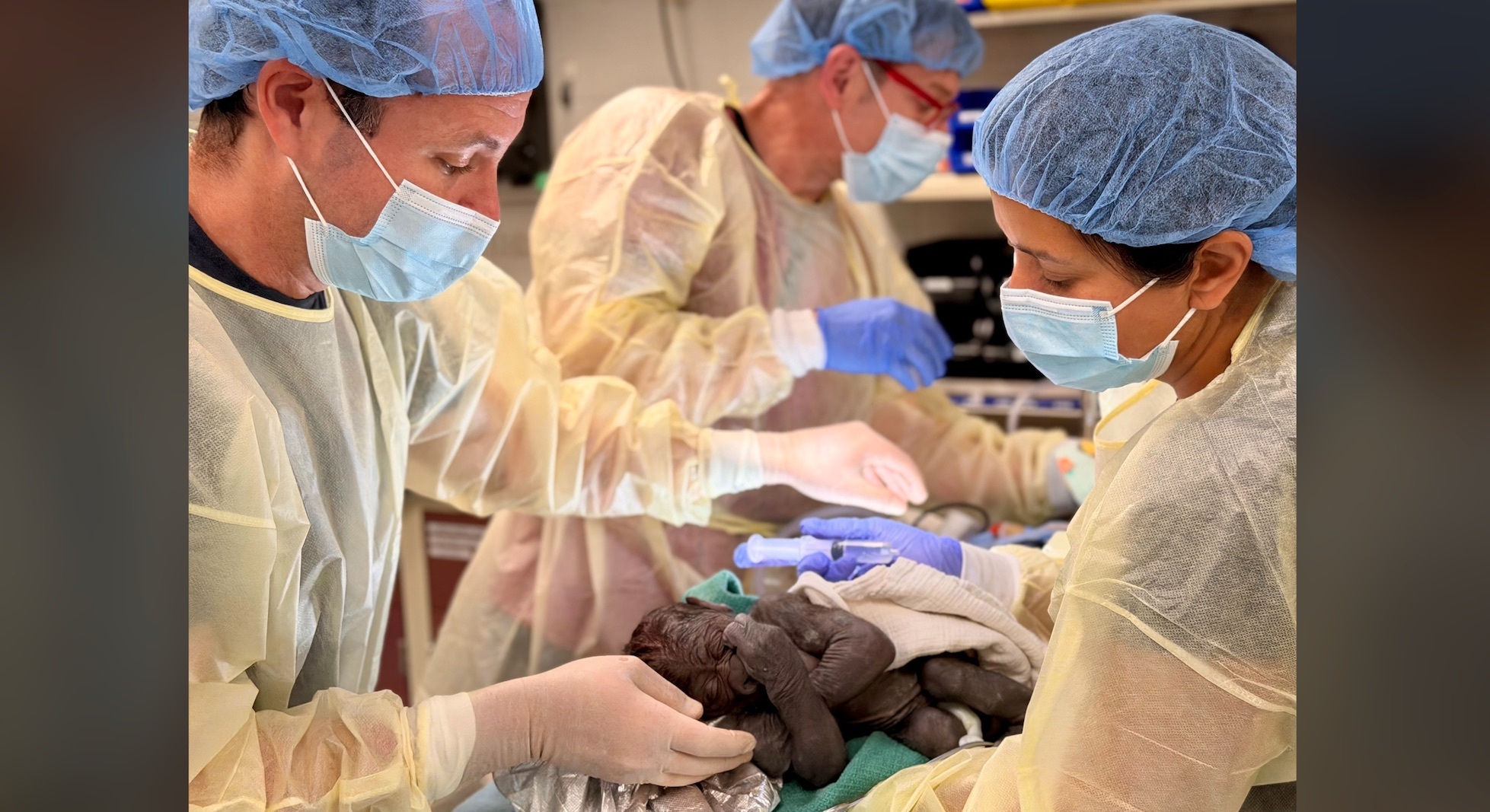
The Woodland Park Zoo’s announcement arrived last night. The baby was born on May 24—five dates past the due date. To bring her baby into the world, the medical team that usually works on humans performed an emergency C-section on Olympia. The procedure is incredibly rare for gorillas, with less than a dozen recorded gorilla C-sections.
“Over the weekend, the decision to proceed with emergency delivery was due to low fluid and intermittent low baby heart rate (found by us with the Butterfly) and critical behavioral information from the keepers team that suggested delayed/paused labor, with confirmation of ruptured membranes (bag of water) by the Team Gorilla OB physicians,” Sachita Shah, emergency physician and VP of Global Health at medical equipment manufacturer Butterfly Network, tells Popular Science. In a previous interview, Shah said that ultrasounds of gorilla fetuses look very similar to ultrasounds of human fetuses.
Butterfly is an all-in-one ultrasound probe that the gorilla care team has been using to monitor the pregnancies. Once the baby came out, “I used The Butterfly throughout the neonatal resuscitation to keep a close eye on the baby’s heart rate as our vital sign so we were able to ensure the safe point to transition from neonatal resuscitation to post natal care,” Shah adds.
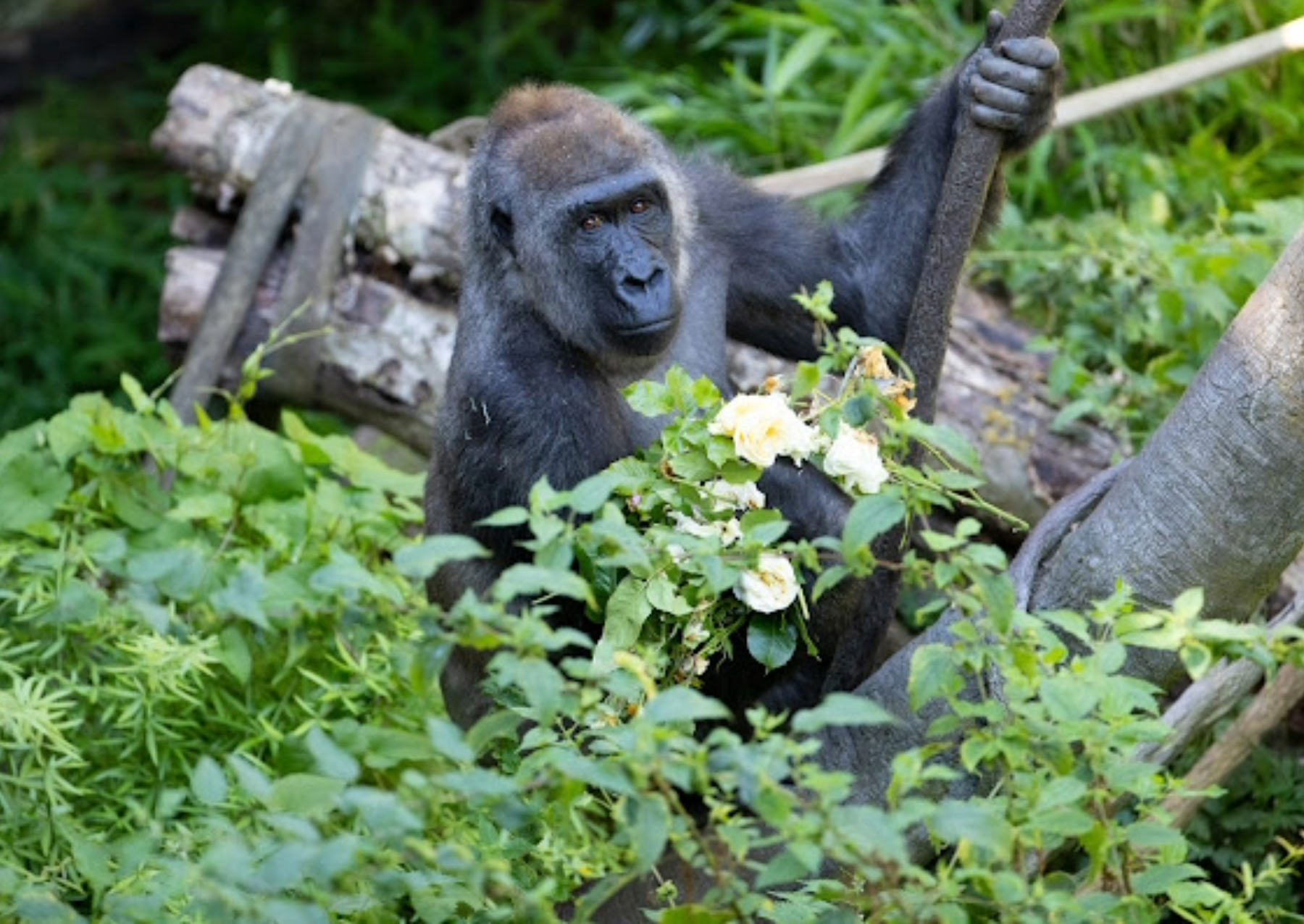
Olympia, seen in her habitat prior to her pregnancy. Image: Jeremy Dwyer-Lindgren/Woodland Park Zoo.
Whether for humans or gorillas, a C-section is a major operation, and Olympia rested without the baby for the first night after the birth. But the newborn wasn’t far away—a gorilla keeper and veterinary technician took care of the baby in a den next to Olympia’s, so she was able to see, hear, and smell it. Both Olympia and the baby boy are now back with their gorilla troop, though Jamani is taking care of Olympia’s newborn as well as her own baby boy.
“So far Olympia’s baby is doing well and maintaining a healthy body temperature. While Olympia recovers from the C-section, our plan is to allow Jamani to continue caring for Olympia’s son while also caring for her own son as long as both infants remain healthy, which is our priority,” Martin Ramirez, Curator of Mammalogy at Woodland Park Zoo, explained in a blog post. “Once Olympia shows signs of being ready for her baby, we’ll move forward with plans to reunite them.”
It remains to be seen what the mother-son duo will look like. However, western lowland gorillas are critically endangered, so the important thing is that both remain healthy.
Spikes, fans, florets, waves, and other characteristics of marine creatures continue to shape the work of Lisa Stevens. The Bristol-based artist’s vibrant practice revolves around ceramic sculptures inspired by sea urchins, coral, nudibranchs, and other underwater organisms. Each piece is unique, with numerous colorful glazes and textures, and they often take on a fantastical quality, incorporating hybrid features that conjure associations with celestial objects, anatomy, and other facets of nature.
Find more on Stevens’ Instagram, plus watch clay sculpting tutorials on YouTube.
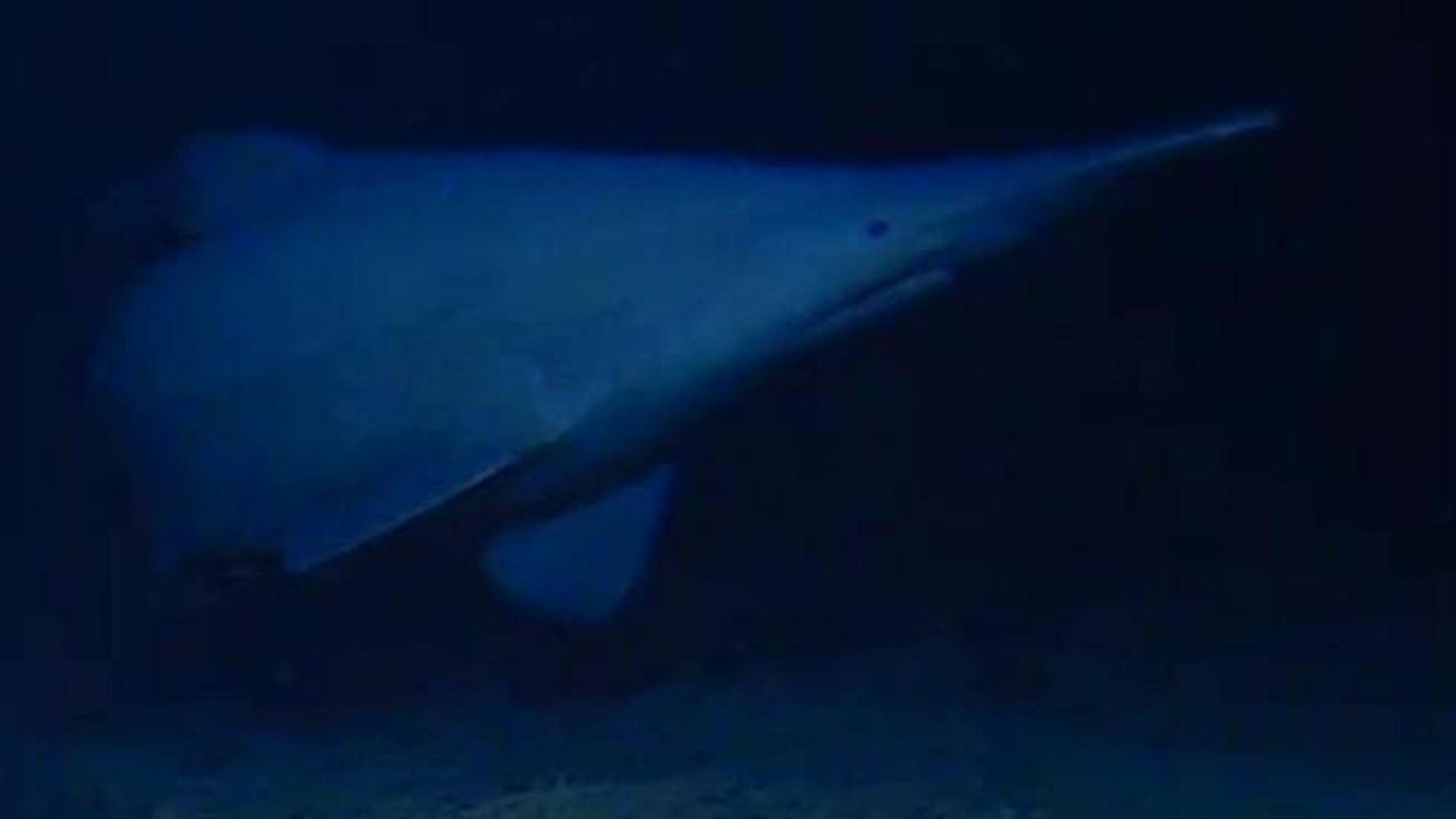
The goblin shark (Mitsukurina owstoni) is one of Earth’s rarest and most elusive sharks. It’s also one of the weirdest. With its distinctive, hornlike snout and protrudable jaws, the pink-skinned living fossil is the only surviving representative of a family lineage that dates back nearly 125 million years.
The goblin shark was first identified in 1898, but sightings remain few and far between. The fish typically remain at a depth of around 3,000 feet, and any encounters with humans have been the result of accidental fishing line snags. The 13-foot-long predators also die quickly after reaching the surface.
However, marine biologists at the University of Hawaii at Mānoa recently captured videos revealing not one, but two goblin sharks swimming in their native habitats. The clips accompany a study published in the Journal of Fish Biology, and showcase the surreal encounters in the Pacific Ocean.One goblin shark was spotted near Jarvis Island (halfway between Hawaii and the Cook Islands) and the other on the slope of the Tonga Trench southeast of Fiji.
“Seeing the most iconic of all the deep-sea sharks alive and looking healthy in its natural habitat is a unique honor,” said University of Hawaii at Mānoa oceanographer and study co-author Aaron Judah.
Spotted on separate expeditions in 2024 and 2025, both videos offer new information on the goblin shark simply based on where they were located. The Jarvis Island sighting extends the animal’s known habitat to the Central Pacific Ocean, while the Tonga Trench recording occurred nearly 2,300 feet deeper than expected.
“The goblin shark is one of these deep-sea charismatic animals that I never thought we’d see alive,” said study-coauthor and Minderoo-University of Western Australia Deep-Sea Research Center founder Alan Jamieson, who spotted the Tonga Trench shark. “To do so was amazing, but to then learn that colleagues in Hawaii also saw one was just incredible.”
Leopards (Panthera pardus) in India are doing pretty well, all things considered. According to a report published in 2024, experts estimate their population in the country at a range of 12,616 to 15,132 individuals, which wildlife biologist Thomas Sharp calls “a healthy number.”
Part of their success could be due to the fact that leopards are enduring in areas close to human settlements where their bigger feline relatives, like tigers or lions, simply can’t—partly thanks to their secretive nature and the fact that they subsist on smaller prey.
“This is a good thing in many ways, with the way the world’s been changing and habitat degradation and everything else,” Sharp, who is the director of conservation and research at the organization Wildlife SOS tells Popular Science. “It’s a good thing that they can hang on in some of these areas. But there’s always a tradeoff, and the negative is they get involved in a lot of human-leopard conflict.”
Unsurprisingly, this sort of conflict is usually to the detriment of the leopard. The big cats rarely attack humans, and when they do, the animal is usually acting defensively, Sharp explains. Leopards will more frequently prey on small animals, such as goats or dogs.
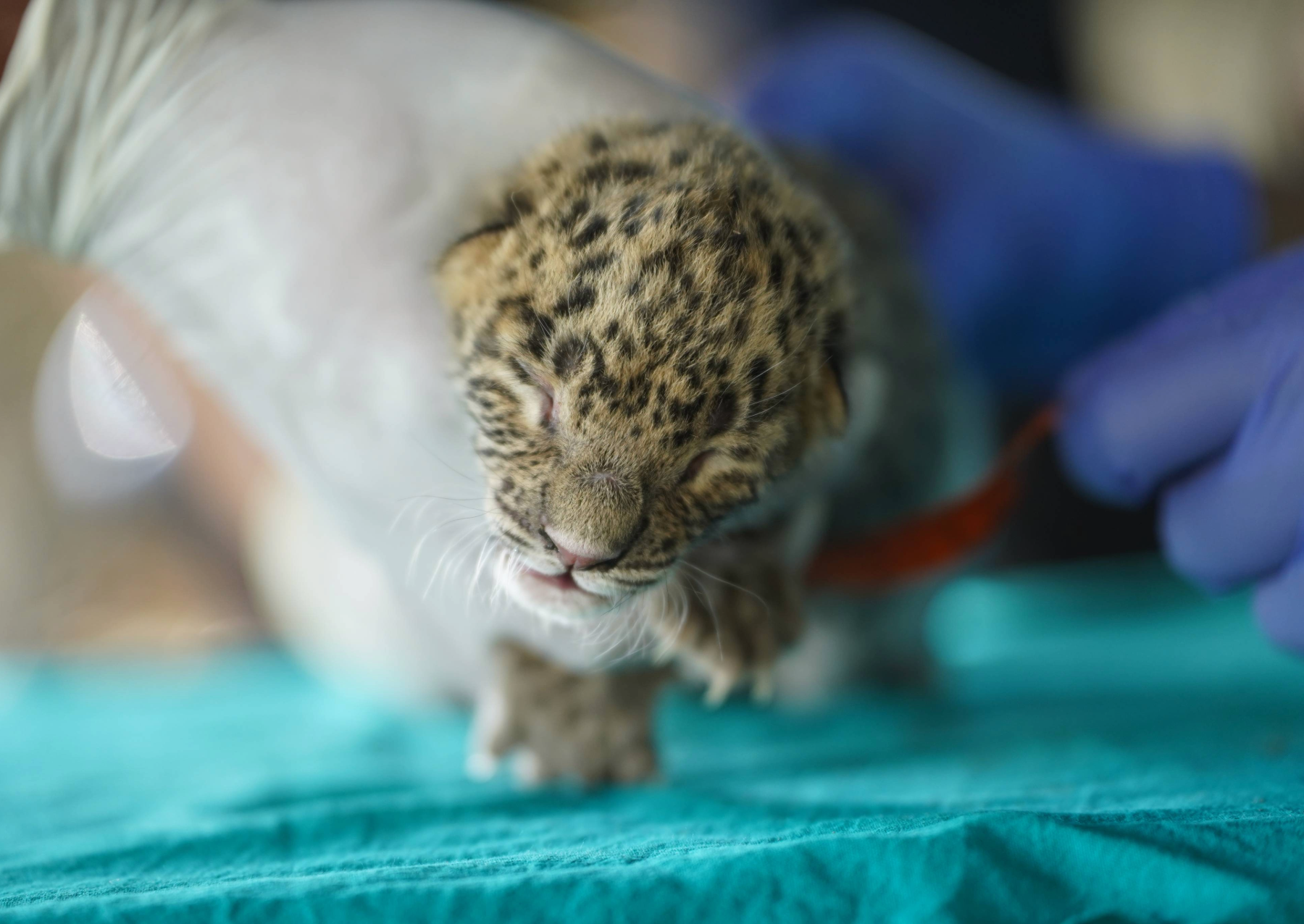
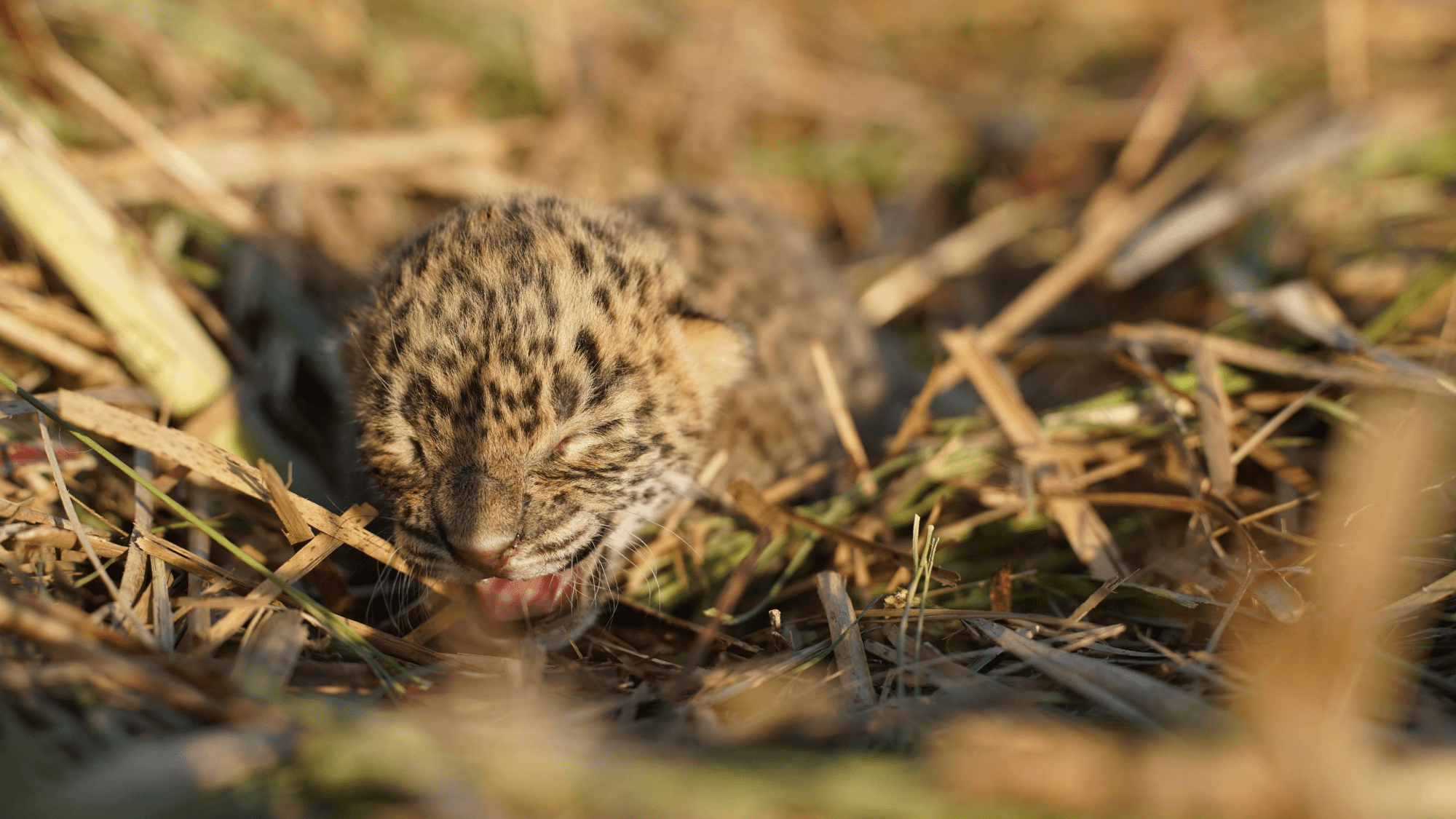
Rescue teams will check the cub’s health as quickly as possible before leaving them near where they were found. Image: Wildlife SOS.
However, areas in India are now seeing more and more cases of a much more cute encounter: leopard cubs hanging out in sugarcane. The dynamic sounds relatively simple. Humans replace leopard habitat with thick sugarcane fields, and so leopards take the change in stride and start to live—and make babies—in the new flora.
With this new dynamic, humans may come across leopard cubs on their own while the mother is off hunting. The discovery could consist of a passerby hearing their meowing, or a farmer finding them as they harvest their crop. Often the well-intentioned individual will think the cubs are abandoned and move them, “or even take them home because they are so cute and willing to play with humans,” Sharp says.
This might sometimes be necessary for their own safety, so they don’t get injured by harvesting machinery. But the removal separates the cubs from their mother.
“A big part of what Wildlife SOS does in these areas is to make sure people know that, if possible, the cubs should be left where they are found,” Sharp explains. “Their mother’s likely going to come back for them within a few hours.”
If the cubs are moved, Wildlife SOS sends a rescue team to check on the cub’s health and then send them back to their mother as fast as possible. Not only do cubs belong with their mothers, but some evidence indicates that a leopard mother can become more aggressive while looking for her babies, so it’s also in the best interest of nearby humans, according to Sharp.
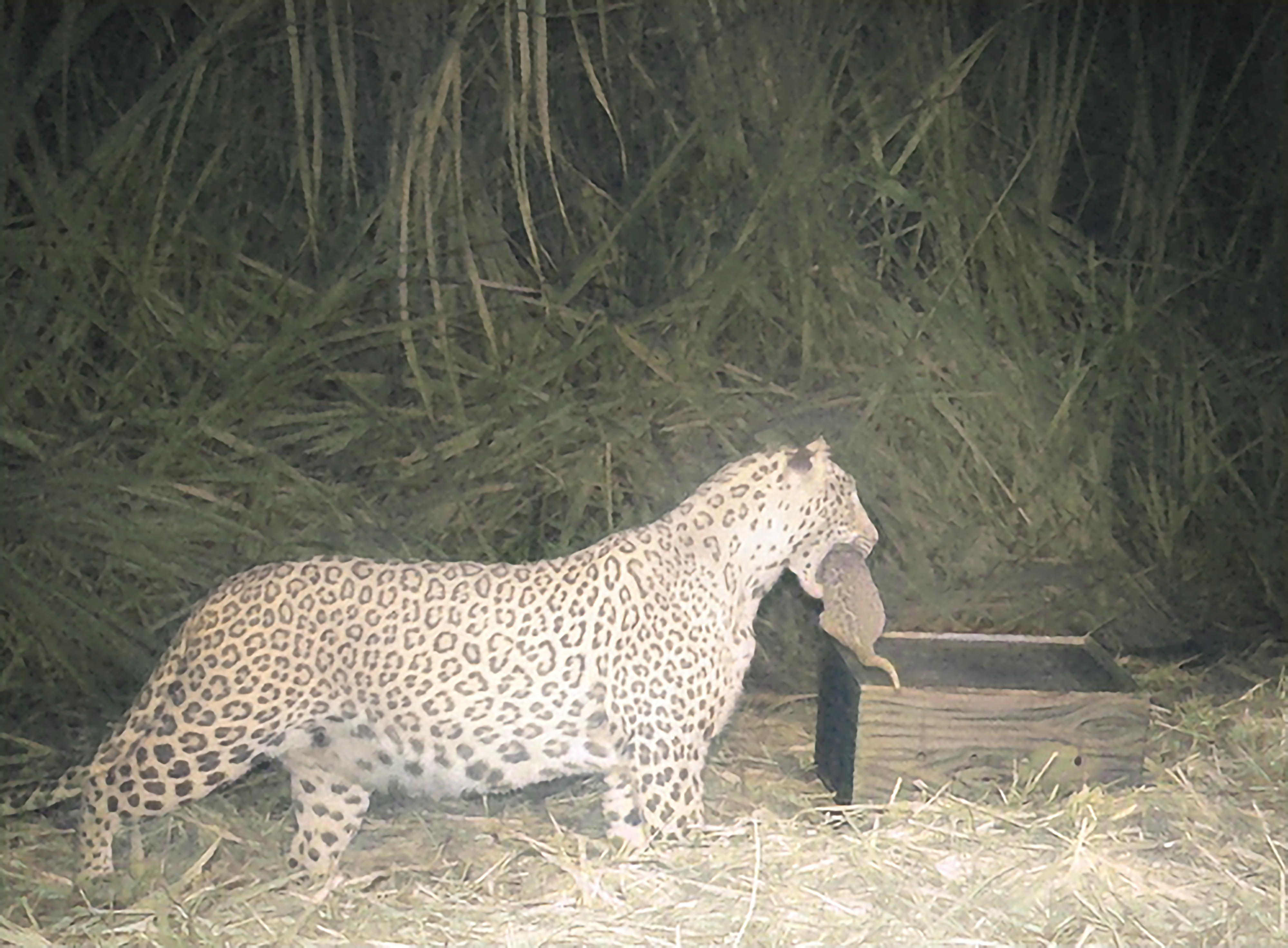
A female leopard reunited with her cub. Image: Wildlife SOS. Akash Dolas
To make the reunion happen, Wildlife SOS will put the leopard cub or cubs in a box where they were found, or as close to that location as possible. The box has holes so that the leopard mother can hear and smell them, and it protects the cubs from other predators while also keeping them from wandering off. When the mother finds them, she’ll usually knock the box over, and then carry her one or more babies somewhere else.
The organization sets up camera traps to keep an eye on the dynamic, making sure that the family is indeed reunited. To date, they have returned 112 cubs back to 73 mothers, and the five cubs that couldn’t be reunited live at the Wildlife SOS leopard rescue center.
Social media is widely considered to be bad for one’s mental health, at least anecdotally. However, it can have some positive impacts, such as videos of animals chewing food very loudly. What could possibly be better than a closeup of an animal’s snout as it crunches on a carrot?
This week, zoos around the United States have been using social media to highlight one particularly cute muncher—tree kangaroos. Ahead of World Tree Kangaroo Day on May 21, conservation organization AZA SAFE (Saving Animals From Extinction): Tree Kangaroo of Papua New Guinea is inviting organizations working with tree kangaroos to compete in this year’s International Tree Kangaroo Crunch-a-Thon.
In the aptly-named competition, participants posted videos on Instagram and/or Facebook of their tree kangaroo eating something. The competition categories are Most Likes, Most Views, and Judges’ Choice, and winners will be announced on May 17, Australian Eastern Standard Time.
The organizers even provide crunchy food recommendations: bell peppers, celery, romaine hearts, snap peas, green beans, cucumbers, and zucchini—with the caveat that the last two vegetables might not have the best crunch.
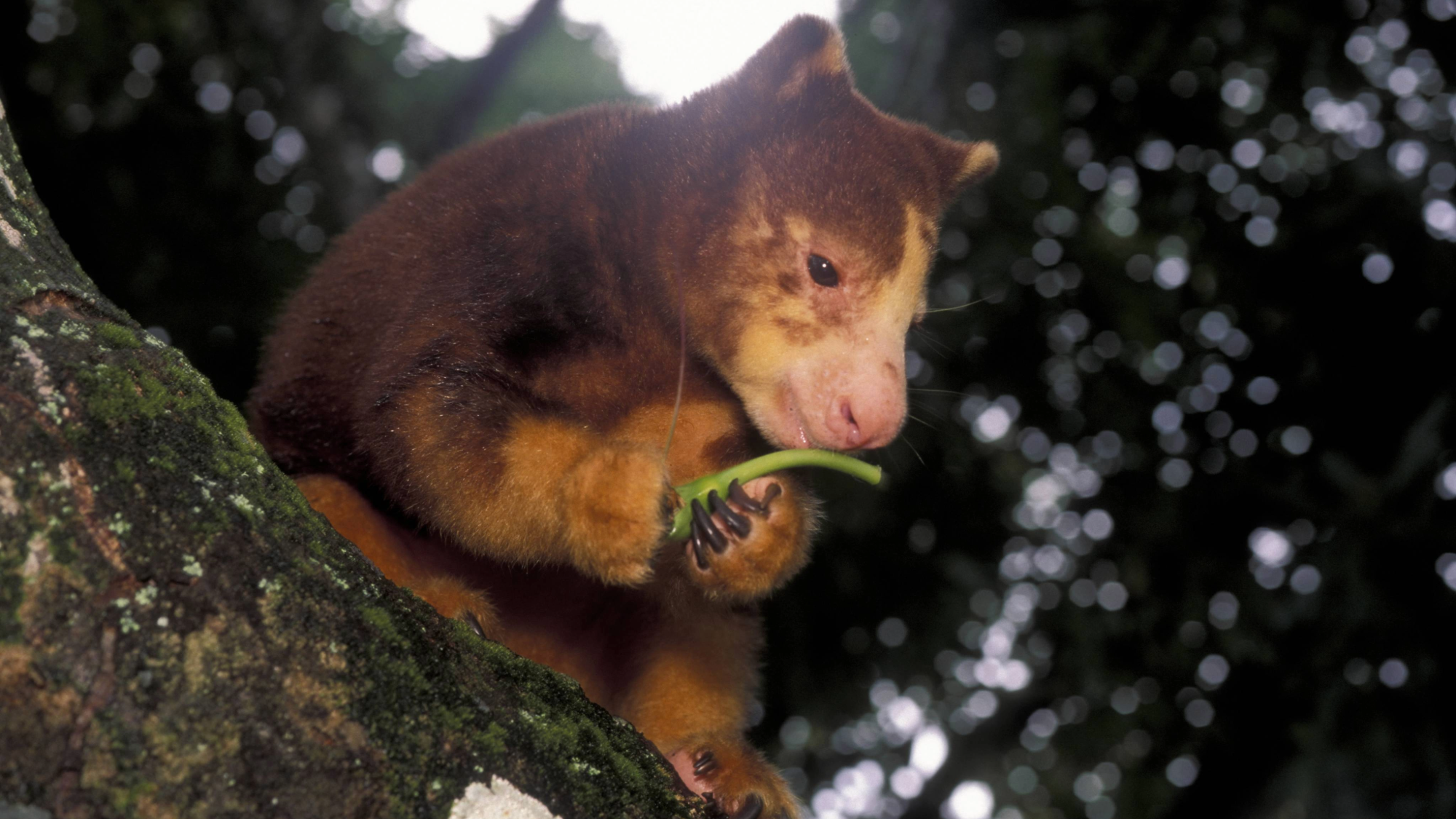
“In partnership with the AZA Tree Kangaroo SAFE program, we’re participating in the Tree Roo Crunch-a-Thon to help shine a spotlight on this endangered species,” reads a social media post by Roger Williams Park Zoo & Carousel Village featuring three munching, pink-nosed brown and white tree kangaroo. “Our Zoo is home to three Matschie’s tree kangaroos – a species of tree kangaroo native to the cloud forests of Papua New Guinea.”
Tree kangaroos are 14 species in the Dendrolagus genus, the sole arboreal kangaroo group. They are herbivorous marsupials with bushy tails, and usually have long arms and padded back feet. Tree kangaroos live in parts of Australia, Indonesia, and New Guinea’s rainforests. The Golden-mantled tree kangaroo (Dendrolagus pulcherrimus) is among the world’s most endangered mammals and only lives in a small area of Papua New Guinea.
In the words of the Crunch-a-Thon organizers, “let the crunching begin!”
The official start of summer is days away, and after a particularly long and cold winter in parts of the United States, many are ready to enjoy the outdoors again without risking frostbite. Warm weather comes with another type of bite, however. One that comes with an unwanted guest attached to your body.
Along with mosquitos and flies, ticks are among our most disliked arachnids. However, their infamy comes with a lot of myths, and with tick season in full swing, it’s important to straighten out a few misconceptions.
False: Ticks can fly
If you’ve heard that ticks can fly and/or jump, you’ll be relieved to know that they can’t. In fact, their legs are pretty unimpressive appendages, according to Escher Cattle, an entomologist at the Regional Government of Cape Cod.
“They have some pretty good grabbers on their front legs and their other legs are pretty decent as well, but really all a tick has the equipment to do is walk around and grab stuff,” Cattle tells Popular Science. They’re not muscular like those of grasshoppers, for example. As for locomotion more generally, ticks don’t have wings, nor are they aerodynamic. As such, they’re also “not physically geared to be dropping out of trees like some kind of paratrooper.”
While a tick might attach onto an animal that takes it up into a tree and then fall, the chances that the skydiving arachnids will land on you is infinitesimal, Cattle says. In fact, ticks generally exist beneath an elevation of at most three feet.
The way a tick actually attaches to a host is by climbing to the top of a plant, sticking its arms out, and waiting for something alive to brush by—a behavior called questing. It does so after sensing chemical cues of something warm, moving, and blood-filled.
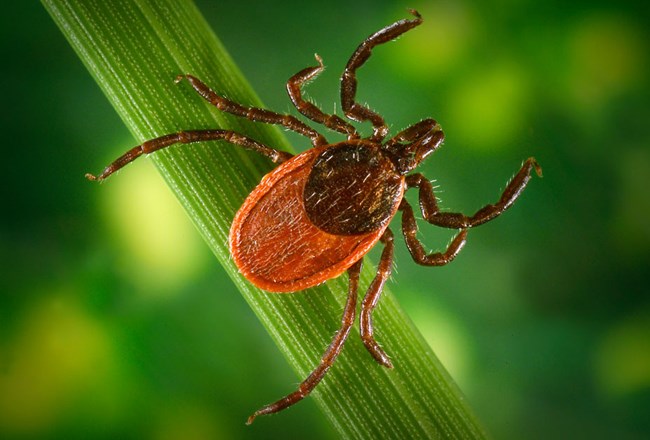
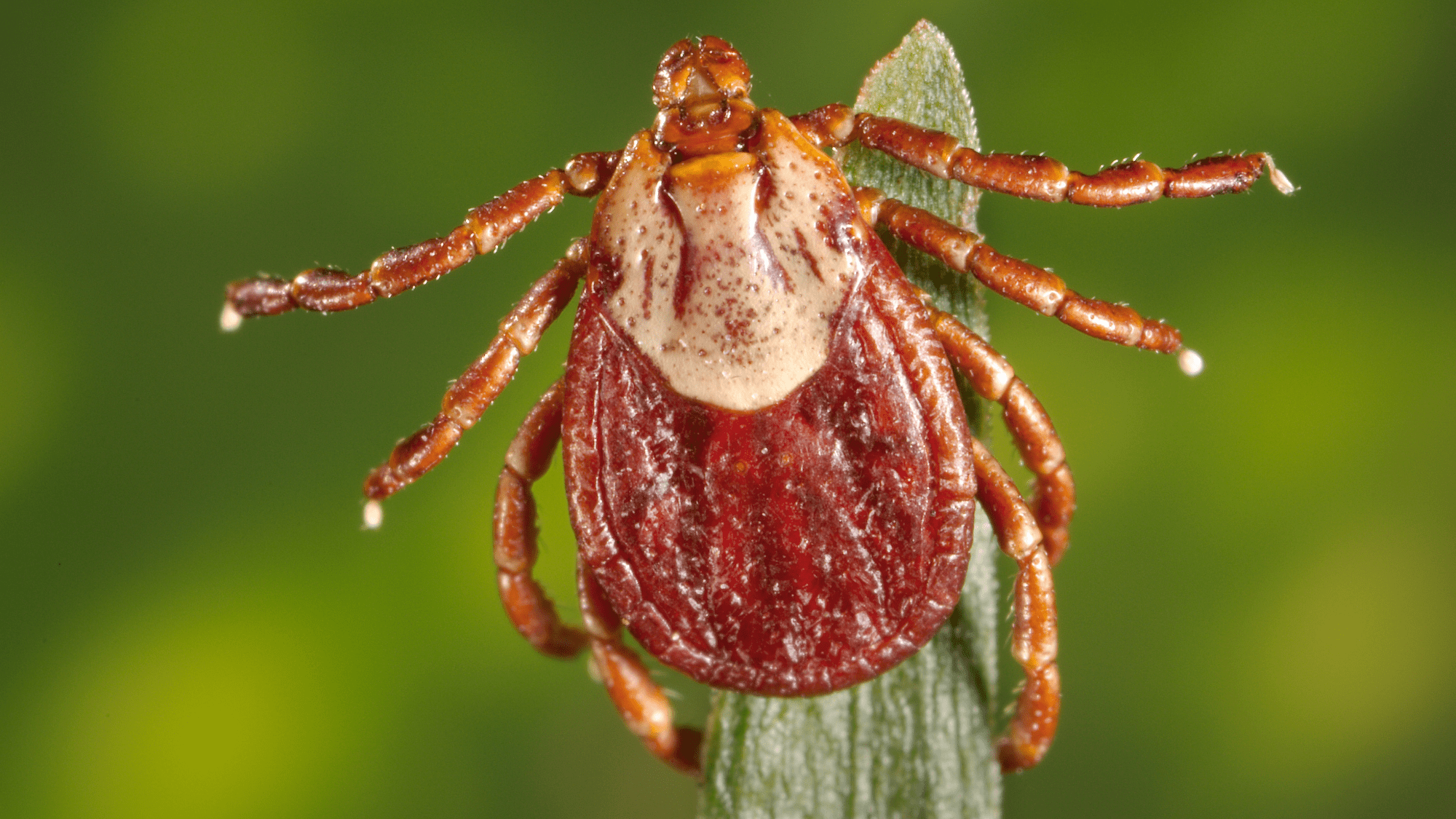
Deer ticks are found in the eastern half of North America. Image: CDC/ James Gathany; William L. Nicholson, Ph.D.
False: Opossums help remove ticks by eating them
Speaking of blood-filled things, one tick myth that Cattle is sorry to dispel is one that paints opossums as tick-eating machines. You may have read that opossums are good to have around because they eat lots of ticks. This popular notion is founded on the results of a study in which researchers put ticks on opossums, among other animals, to investigate how these animals reacted to the pest.
Because the team wasn’t seeing any ticks dropping off the opossums, they assumed the mammals were eating them all. As of now, there is no direct evidence known to researchers of opossums eating any ticks.
One similar belief is that birds such as turkeys and guinea fowl eat ticks. While that’s true, they also carry them around, so having one in your backyard doesn’t automatically mean you’ll have less ticks.
True: They can carry disease
What isn’t a myth, though, is that ticks can be vectors of disease. These include Rocky Mountain spotted fever, tularemia, ehrlichiosis, and most infamously, Lyme disease.
The good news is that you can decrease your chances of catching the disease from a tick bite if you remove the tick within 24 hours. But sometimes, tick bites go unnoticed, so it’s important to check yourself when you come back indoors during warm weather.
Ticks are shockingly cold-resistant, but they usually keep to themselves during the colder seasons. They still can come back out as soon as the sun starts shining—including on those randomly very hot February days.
True: A ‘dorky’ look helps prevent tick bites
If you do find a tick, don’t try to burn or suffocate it off your skin. Use a trusty pair of tweezers, grip it near the mouth parts, and pull it off. If anything gets left behind, your skin will naturally push it out with some time. If you’re not sure how long the tick has been on you, you should contact your doctor.
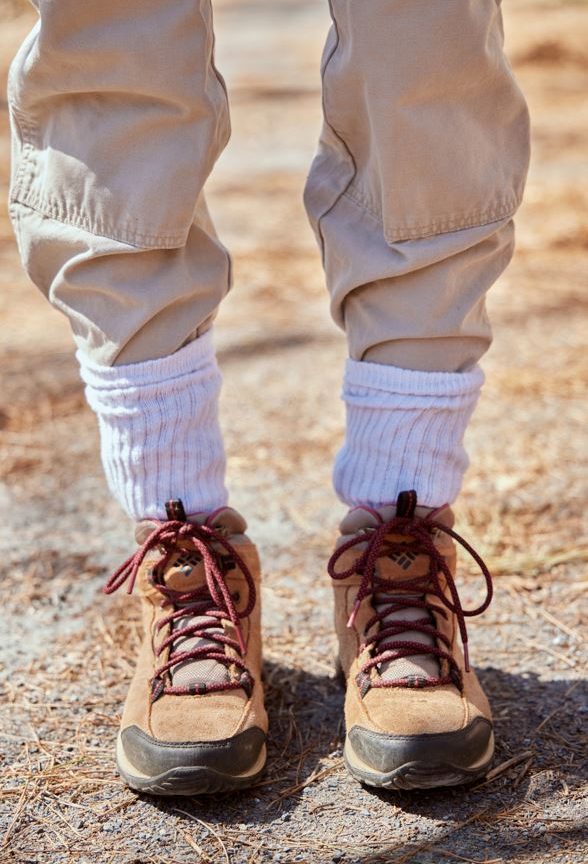
As for tick bite prevention, “I know it looks kind of dorky, but tucking your pants into your socks is a really good tip. Making it so that there are barriers between ticks and your skin as much as possible is extremely good as a strategy,” explains Cattle, who also teaches about tick-borne disease prevention for Cape Cod Cooperative Extension.
Tucking long pants into socks creates a good barrier between ticks and your skin. Image: Delaware Department of Natural Resources and Environmental Control.
You can also apply a synthetic pesticide called permethrin on their clothes and insect repellant on any exposed skin.
Ticks are “very good at what they do,” he concludes, but “I think adopting just a couple habits at a time really makes a difference.”
Update June 9 9:47 a.m. EDT : This story incorrectly identified ticks as insects. They are arachnids.

 Login
Login
:max_bytes(150000):strip_icc():format(jpeg)/Stevie-the-pangolin-01-060826-82ea80e936b741b3afed87ed6a8c500a.jpg "<p>Kelsey Skinner</p>")
:max_bytes(150000):strip_icc():format(jpeg)/san-carlos-lake-1-061026-391ad847dcbc4ee2b20726ac5560b928.jpg "<p>Mark Henle/The Republic / USA TODAY NETWORK via Imagn Images</p>")