Reading view

The State of Polystyrene Recycling In 2026

That foam coffee cup, takeout box, or packing block likely won’t be recycled. It’s not your fault; most Americans lack access to recycling systems for these materials. The plastics industry says it’s improving, and that’s true in some ways. But there’s still a gap between industry claims and what people can actually do when taking out the trash.

Before we talk about why foam is hard to recycle, it’s helpful to know what it really is. “Polystyrene” is the material, though it is often referred to by the brand name “Styrofoam,” and it comes in different forms. EPS is the foam used in coffee cups, takeout boxes, and packing blocks. The hard kind, found in utensils and appliance parts, is GPPS or HIPS. Both are polystyrene but need different recycling methods.

The #6 symbol on the foam container only tells you what kind of plastic it is, not if it can be recycled. If you put it in the bin just because you see a number and the recycling arrows, it can actually contaminate your other recyclables, like paper, cardboard, and aluminum, and might cause the whole batch to be rejected.

The Recycling That Happens Without You

The plastics industry recently launched the Polystyrene Recycling Alliance (PSRA), which commissioned a detailed study of where polystyrene foam is actually recycled in the US. Its headline stat: about 105 million Americans — roughly one in three — have access to recycling services that handle at least one type of polystyrene.

That sounds promising. But one must read the fine print to see the whole picture.

The PSRA–RRS Polystyrene End Markets Study, published in February 2026, is the most detailed inventory of US and Canadian polystyrene recycling infrastructure to date. It identified 81 companies handling recovered EPS and XPS foam, with 119 facilities spread across 30 US states and four Canadian provinces. About 52% of those companies are manufacturing end markets, businesses that actually turn recovered foam into new products like transport packaging and insulation.

Most of this recycling happens through business-to-business systems that regular people don’t use. Big retailers, warehouses, and appliance stores create large amounts of packing foam. They have private deals with haulers who collect the foam, compress it into dense bricks called “densified foam,” and send it to manufacturers, mainly to make new packaging and insulation. Some European and Asian companies also import compressed EPS from North America for manufacturing. There are also more than 700 drop-off locations for foam across the country.

Environmental groups note that EPS drop-off access, in stark contrast to industry claims, currently reaches only about 3% of the US population.

Between 2019 and 2023, Foam Recycling Coalition-funded programs nearly doubled the amount collected, according to Waste Dive‘s reporting. The Alliance reported 168.6 million pounds of EPS foam were diverted from disposal in North America in 2022. But it’s largely invisible to consumers, and almost none of it involves your curbside bin.

For the rigid forms of polystyrene, the stuff in your fridge’s vegetable drawer or your blender housing, the recycling picture is much less encouraging. The same PSRA–RRS study found just 45 companies handling recovered GPPS and HIPS in the US and Canada, and only 13% of those actually turning it into new products. Those 45 companies operate just 50 facility sites across 22 US states and four Canadian provinces, compared to 119 facilities in 30 states for foam. Most post-consumer rigid polystyrene that does get recycled comes from medical equipment and e-waste programs, not household recycling.

For consumers navigating this landscape, Earth911’s Recycling Mystery: Expanded Polystyrene offers a practical guide to what’s currently accepted and where it’s accepted.

Why Curbside Doesn’t Want It

Foam is a recycler’s nightmare, and the reason is simple: it’s mostly air.

EPS is about 95% air by volume. A regular collection truck can fill up with foam that weighs almost nothing, so the hauler spends the same amount of money to collect much less valuable material. Also, foam breaks apart easily, and small pieces can mix with paper and cardboard in the same bin, making everything else less valuable.

A 2024 study in the journal ChemSusChem found that processing polystyrene costs about $1,456 per metric ton, more than for most other plastics. This rate works only when there are grants, subsidies, or a guaranteed supply chain in place, but none of those exist at the scale needed to handle all the foam Americans throw away.

What “Chemical Recycling” Can and Can’t Do

You may have heard that polystyrene can be “chemically recycled,” meaning it is broken down by heat into its original building blocks to make new plastic. While that’s technically possible, it’s not happening on a large scale.

The only US facility dedicated to this polystyrene process, run by a company called Regenyx in Oregon, shut down in early 2024. A National Resources Defense Council report from March 2025 found only eight chemical recycling facilities of any kind operating in the entire US. Most of what these plants produce isn’t new plastic; it’s fuel oil, which means the material isn’t really being recycled so much as burned in a different way. The  Regenyx plant generated approximately one ton of hazardous waste for every ton of usable output, a serious problem the industry doesn’t advertise.

The 79% Nobody Talks About

Here’s a number worth sitting with: only 21% of all residential recyclables in the US actually get recycled, according to The Recycling Partnership’s 2024 State of Recycling Report — one of the most comprehensive independent analyses of the US system.

What about the other 79%? Most of it is lost at home before it ever reaches a recycling facility. People might not have access to a recycling program, might not know what their local program accepts, or just don’t take part. The report, along with EPA plastics data, shows that the overall US plastic recycling rate is only about 5–6%. For foam, which most curbside programs don’t accept, this gap at the household level is even harder to close. The industry’s solution is drop-off programs, but these require people to know where to go, make a special trip, and bring clean, uncontaminated foam. That’s asking a lot.

The Recycling Partnership says the biggest problem in the US recycling system isn’t technology or end markets. It’s getting people involved, and the main way to do that is through funding for education and outreach, which most municipalities lack. The EPA’s 2024 Recycling Infrastructure Assessment estimated it would take $36–$43 billion to upgrade the US system by 2030. A Resource Recycling summary found that nearly half of US states don’t even track how many curbside programs they have. You can’t fix a system if you aren’t measuring it.

How The U.S. EPS Recycling Rate Compares

The US lags well behind other wealthy countries when it comes to foam recycling.

Market data compiled through 2023 indicate that EPS recycling rates for comparable packaging are approximately 88% in South Korea, 83% in Taiwan, and 68% in Japan. Europe averages around 40%, though that figure masks wide variations. Some countries, including Portugal and Norway, approach 90% recovery rates, largely driven by fish box collection programs, while thers sit well below the average. North America comes in at roughly 31%, and that figure is almost entirely commercial collection programs, not household recycling.

It’s worth noting that all of these figures come primarily from GESA (the Global EPS Sustainability Alliance) and affiliated national industry groups, organizations with a direct stake in presenting favorable data. Independent verification is limited.

Japan’s foam recycling program has been running since 1978, and the country’s EPS industry group reports an effective utilization rate of 94.2% in 2024. That “effective utilization” figure includes incineration with energy recovery, not just mechanical recycling. South Korea made packaging producers legally responsible for recycling costs as early as 2000, a policy approach called Extended Producer Responsibility (EPR). The US has no federal EPR law for packaging and only seven states that have passed one so far.

Overall, the US ranked 30th in the world on the 2024 Environmental Performance Index’s waste recovery score. Germany, Japan, South Korea, and most of Western Europe all rank higher.

The Biggest Companies Are Giving Up on Foam

One of the clearest signs about foam’s future isn’t coming from regulators. It’s coming from the brands that use it.

The Ellen MacArthur Foundation (EMF), which tracks voluntary sustainability commitments from over 1,000 companies representing about 20% of global plastic packaging production, released its final progress report in late 2025. Since 2018, signatory companies have removed over 775,000 metric tons of the most problematic plastics, including polystyrene and PVC, from their packaging entirely.

The EMF classifies certain polystyrene formats, especially foam foodservice containers, as plastics that should be eliminated rather than recycled. In its framework for problematic plastics, it consistently identifies these materials as candidates for phase-out, not circularity. That’s the stated view of an organization whose members include Nestlé, Unilever, Coca-Cola, and L’Oréal.

Meanwhile, those same companies are falling short of their overall recycled-content targets for plastics. The share of recycled plastic in the broader global packaging market barely moved — from 3.4% to 4.2% — even as committed companies tripled their own use of recycled content. As Chemical & Engineering News reported in November 2025, plastics recycling is struggling across the industry.

Voluntary commitments move the leaders, but they don’t move the system.

States Are Banning Expanded Polystyrene

Twelve states and three US territories have chosen not to wait for the recycling system to improve. They’ve banned foam food containers completely, and Earth911 tracks these changes. Oregon, California, Delaware, Rhode Island, and Hawaii all joined the ban list as of January 1, 2025.

California’s law included a recycling test: foam producers had to show a 25% recycling rate by January 2025 to keep selling EPS foodware in the state. When CalRecycle reported to the legislature that the industry had fallen far short—the rate was about 6% when the law passed—foam containers were effectively banned.

Not every ban effort has succeeded. Montana’s legislature passed a phase-out bill in spring 2025 — only to have the governor veto it. And while a federal “Farewell to Foam Act” has been introduced in Congress, it hasn’t passed.

Globally, the bans are further along. The EU banned foam food containers in 2021. Canada followed with federal legislation in 2022. Over 97% of Australians now live somewhere with an EPS ban in place, according to Wikipedia’s phase-out tracker.

What Would Actually Fix Polystyrene Recycling

The most honest answer is that recycling alone won’t solve the foam problem. But better policy can.

The Recycling Partnership’s EPR analysis finds that states with Extended Producer Responsibility laws have recycling rates up to 3 times higher than those without them. EPR generates funds for consumer education, access, and infrastructure that cash-strapped municipalities can’t provide on their own.

The PSRA’s end markets study is candid about what’s missing for rigid polystyrene. For GPPS and HIPS to be recycled at scale, the industry needs to solve a chicken-and-egg problem. Sorting facilities won’t invest in the equipment without a guaranteed buyer for the output, and buyers won’t commit without a reliable supply. The study’s concrete suggestion is to offer subsidies per pound to sorting facilities that would need to separate polystyrene from mixed plastic streams. Without that financial nudge, the economics don’t work.

As Earth911 has reported on Oregon and Maine’s early EPR programs, the results so far are encouraging, though implementation is still in early stages. Seven states now have packaging EPR laws, including Maine, Oregon, Colorado, California, Minnesota, Maryland, and Washington, and more are considering them.

The broader lesson is that without policy structures that change the economics, including embracing EPR, mandatory recycled content standards, or bans, voluntary action produces incremental progress against a systemic problem. As Chemical & Engineering News reported, even companies with strong sustainability commitments are falling short.

What You Can Do At Home

Find a drop-off:

  • Search Earth911 for EPS foam drop-off locations near you. These are separate from your curbside bin — call ahead to confirm they accept your specific type of foam.
  • For foam meat trays, most facilities won’t take food-soiled containers, so they must be clean and dry.
  • Retailers like The UPS Store accept clean packing peanuts for reuse.

Cut foam out of your routine:

  • Bring your own insulated mug to the coffee shop instead of accepting a foam cup.
  • When ordering takeout, ask for paper or compostable containers.
  • When shipping things, use crumpled newspaper, shredded paper, or molded pulp instead of foam peanuts.

Push for better policy:

Related Reading on Earth911

The post The State of Polystyrene Recycling In 2026 appeared first on Earth911.

  •  

10 Books to Counter Consumerism

We are constantly bombarded by messages that tell us we need more stuff to be happy. The average American household contains around 300,000 items. The average home size has roughly tripled since the 1950s, and we still rent self-storage units by the millions to hold the overflow.

If you are rethinking your relationship to consumer culture – whether by choice or necessity – we’ve rounded up a list of books to make breaking up with consumerism and easier to understand which of our purchases are really necessary.

(Amazon links are provided for convenience. Your local library and independent bookstore are excellent first stops.)

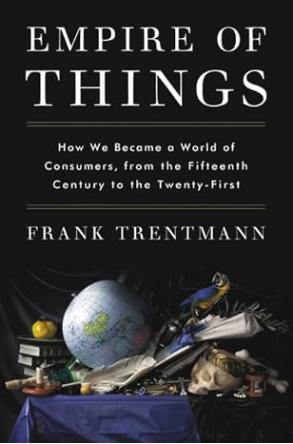
Empire of Things

by Frank Trentmann

Trentmann’s sweeping 2016 history follows material culture from late Ming China and Renaissance Italy through to today’s global supply chains. He shows that consumerism is not a recent American export but a centuries-long international phenomenon, one that has reshaped households, cities, and the planet.

Empire of Things is dense but never preachy, and it gives readers the long view needed to understand what we are actually pushing back against.

No Logo – 10th Anniversary Edition

by Naomi Klein

No Logo was a movement manifesto when it appeared in 1999, and its dissection of branding, sweatshop labor, and corporate cultural takeover reads as prescient now that nearly every screen on earth is an ad surface. To take the next step, pair this read with Klein’s more recent argument about capitalism and ecological collapse, How To Change Everything.

The Conscious Closet

by Elizabeth L. Cline

Cline first exposed the human and environmental costs of fast fashion in Overdressed (2012). The Conscious Closet is the practical follow-up: how to clean out, repair, swap, and rebuild a wardrobe without funding the industry that produces an estimated 92 million tons of textile waste each year. It is the most actionable book on this list for anyone with a closet.

The Myths of Happiness

by Sonja Lyubomirsky

Psychology professor Sonja Lyubomirsky brings the receipts. In The Myths of Happiness, she walks through decades of research showing that material milestones — the raise, the upgrade, the bigger house — produce short bursts of satisfaction that fade quickly. What actually sustains wellbeing is rarely for sale. A clarifying read for anyone tempted to outshop their way to contentment.

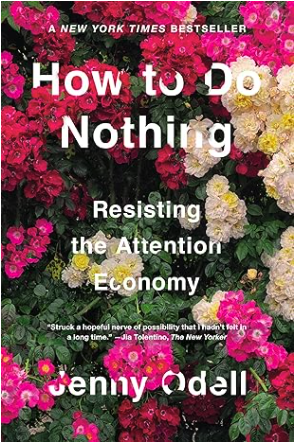
How to Do Nothing: Resisting the Attention Economy

by Jenny Odell

Waste is coming for our minds, too. Odell argues that our scarcest resource is attention — and that the platforms we use have turned it into the raw material of a trillion-dollar industry. How to Do Nothing is not a digital-detox manual; it is a case for reclaiming attention as a political act, with consequences for everything from bird-watching to civic life. More relevant in 2026 than when it was published in 2019.

Less Is More: How Degrowth Will Save the World

by Jason Hickel

Economic anthropologist Jason Hickel makes the case that endless GDP growth is incompatible with a livable planet, and that “green growth” is mostly a marketing exercise. Less Is More (2020) traces 500 years of capitalism and lays out what a degrowth economy could actually look like — one organized around human and ecological flourishing rather than perpetual expansion. The book has helped move degrowth from the margins of academia into the mainstream of the climate debate.

The Day the World Stops Shopping

by J.B. MacKinnon

Journalist J.B. MacKinnon designed The Day the World Stops Shopping (2021) as a thought experiment — what would happen if global consumption dropped by 25%? — and then watched the pandemic run a version of the experiment in real time. He travels from Namibian hunter-gatherer communities to American big-box retail, talking to economists, ecologists, and CEOs. The result is one of the most readable accounts of why we shop, why we cannot easily stop, and what we would gain if we did.

Consumed: The Need for Collective Change

by Aja Barber

Writer and consultant Aja Barber connects fashion, colonialism, and climate in Consumed (2021), a debut that has become a touchstone for the ethical fashion conversation. Where Cline writes as a practitioner, Barber writes as a systems critic, tracing the textile trade’s roots in slavery and racial inequality and asking readers to confront why we fill emotional gaps with purchases. Pointed, generous, and built to be read in two sittings.

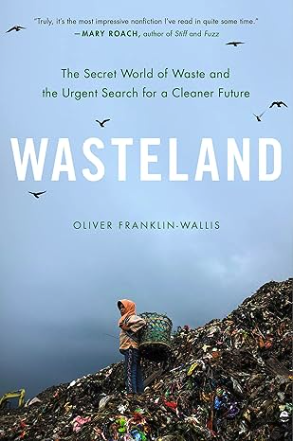
Wasteland: The Secret World of Waste and the Urgent Search for a Cleaner Future

by Oliver Franklin-Wallis

If consumerism is the input, waste is the output we work hardest not to see. Award-winning journalist Oliver Franklin-Wallis follows that output across continents in Wasteland (2023) — from New Delhi’s landfills and Ghana’s secondhand clothing markets to nuclear storage sites and the corporate origins of curbside recycling. Named a Best Book of 2023 by The New Yorker, The Guardian, and Kirkus, it is essential reading for anyone who has ever wondered where “away” actually goes.

Fixation: How to Have Stuff Without Breaking the Planet

by Sandra Goldmark

Sandra Goldmark runs a pop-up repair shop in New York and serves as director of sustainability at Barnard College. Fixation (2020) is her plainspoken case for getting things fixed instead of replaced, and for building a circular economy where good design, reuse, and repair are the default. Her five-rule formula — borrowed in spirit from Michael Pollan — is the most quotable advice on this list: “Have good stuff. Not too much. Mostly reclaimed. Care for it. Pass it on.”

What You Can Do

Reading is a start, not a finish. A few next steps:

  • Start at the library. Most of these titles are available through WorldCat or your local branch. Borrowing keeps a book in circulation and out of a landfill.
  • Audit one category of stuff before adding to it. Pick clothes, kitchenware, or electronics. Inventory what you already own before the next purchase. Most of us own more than we remember.
  • Find a repair option in your community. Take the time to locate repair, reuse, and donation outlets near you before tossing anything broken.
  • Support right-to-repair policy. Several U.S. states have passed right-to-repair laws since 2023; the rest are weighing them. Individual purchasing choices matter more when manufacturers are required to make repair possible.
  • Read one of these books and talk about it. Anti-consumption is harder alone. Book clubs, mutual-aid groups, and faith communities have all become surprising hubs for this work.

Editor’s Note: Originally authored by Gemma Alexander on June 18, 2020, this article was updated in May 2026.

The post 10 Books to Counter Consumerism appeared first on Earth911.
  •  

Best of Sustainability In Your Ear: Project Repat Is Saving US Jobs & T-Shirts From Landfills

Project Repat, founded by Ross Lohr and Nathan Rothstein, had prevented more than 11 million T-shirts from landfills while bringing some sewing work back to the United States when we talked with them in 2019. They’re still going strong. Tune into a classic conversation as Earth911’s Mitch Ratcliffe talks with Rothstein about the inspiration behind Project Repat and the massive changes in U.S. T-shirt manufacturing over the past 30 years. After migrating to Mexico, T-shirt printing jobs have gone overseas and few American companies still make them.

A Project Repat quilt memorializes a soldier’s tours of duty.

Project Repat has a better idea: turn old shirts into keepsake quilts hand-sewn using T-shirts sent by customers. Instead of tossing a T-shirt in the donation bin, it can be turned into a part of a memorable and snug quilt. Love a sports team? Make a quilt of the team T-shirts and jerseys you’ve purchased over the years. Want to remember a school or a company where you worked? In all likelihood, you have the makings of a Project Repat quilt. Reasonably priced  based on the size, Project Repat takes your order and receives your shirts by mail, then turns them into fleece-backed quilt.

Editor’s note: This epsiode originally aired on October 7, 2019.

The post Best of Sustainability In Your Ear: Project Repat Is Saving US Jobs & T-Shirts From Landfills appeared first on Earth911.

  •  

The Search for Sustainable Pavers

Cement and concrete production accounts for about 8% of global carbon dioxide emissions, which is twice as much as in 1990 due to increased construction worldwide. The surfaces under your patio, walkway, or driveway contribute to this, especially when rainwater runs off instead of soaking into the ground.

Since Earth911 first published this guide seven years ago, it has become much easier to find information about sustainable paving. Permeable paver systems made from recycled plastic are now easy to find online and in stores. Carbon-cured concrete pavers are being used in more commercial projects, and there are more recycled-glass and recycled-rubber options than before. While some information is still missing, homeowners now have real choices. Here’s what to look for, what to avoid, and what’s worth buying.

This article contains affiliate links. If you purchase an item through one of these links, we receive a small commission that helps fund our work.

Why Pavement Choices Matter More Now

Two environmental problems converge underfoot. The first is embodied carbon. Cement is responsible for roughly 90% of concrete’s carbon emissions, and the world produced more than 4 billion metric tons of it in 2022. The second is stormwater. Conventional impervious paving funnels rain into storm drains, picking up oil, metals, and tire residue along the way. Permeable pavement can reduce surface runoff by up to 85% compared to traditional pavement, and EPA-monitored studies have documented removal efficiencies of 82–95% for sediment, 65% for total phosphorus, and 80–85% for total nitrogen.

Some U.S. cities now require a certain amount of permeable paving in new parking lots and walkways. Many also offer stormwater fee credits or tax incentives for homeowners who install permeable surfaces. Before starting your project, check with your local stormwater utility. You might be able to save money.

The Greenest Paver Is Often the One You Don’t Buy

Using reused materials is still the most environmentally responsible choice. Salvaged brick, reclaimed flagstone, and broken concrete (also called “urbanite”) were made long ago, so their manufacturing emissions are already accounted for. You can find these materials at architectural salvage yards, through demolition contractors, or at Habitat for Humanity ReStores.

If you can’t use salvaged materials, look for options with three key features: high recycled content, permeability, and enough durability to last for decades and spread out the carbon impact.

How To Compare Pavers

Permeability

Pavement that lets rainwater Pavement that allows rainwater to pass through helps prevent flooding, refills groundwater, and filters out pollutants before they reach streams. The words pervious, permeable, and porous are often mixed up, but they mean different things. Pervious concrete and asphalt let water go through the material itself. Permeable pavers are solid blocks with gaps filled with gravel. Porous or open-cell pavers use grids that hold gravel or grass.specifics, not adjectives. “Eco-friendly” means next to nothing in legal terms, but “made from 100% post-consumer recycled HDPE” is a claim you can evaluate. Reputable manufacturers will state the percentage and source of recycled material on the product page or a downloadable spec sheet.

Embodied Carbon

Carbon-cured concrete pavers are a newer option. Companies like CarbonCure and Solidia add captured CO₂ to the concrete as it cures, locking it in permanently. A study in the journal PNAS found that each kilogram of these pavers keeps about 0.07 to 0.21 kg of CO₂ out of the air. This is helpful, but not as much as some “carbon-negative” marketing suggests. The same study found that pavers made with carbonated aggregates, from companies like Blue Planet and Carbon8 Systems, do even better, storing about 0.4 to 0.77 kg of CO₂ per kilogram.

End-of-Life Recyclability

Pavers can last for decades, but eventually they need to be replaced. HDPE plastic pavers can be recycled in some areas, depending on local programs. Concrete and brick can be crushed and reused as aggregate. Composite pavers made from mixed plastic and rubber are the hardest to recycle because most facilities can’t process them, and most manufacturers don’t have take-back programs.

Paver Types: 2026 Update

Permeable Plastic Grid Systems

Open-cell grids made from recycled HDPE or polypropylene are now the easiest sustainable pavers to find. They can flex with frost, support vehicles if installed correctly, and can be filled with gravel for a solid look or with soil and grass for a softer appearance.

Notable products available on Amazon:

  • TRUEGRID PRO LITE: Made in the USA from 100% post-consumer recycled HDPE, they are rated for 120,000 lb loads, and their surface infiltration rates exceed 800 inches per hour.
  • TRUEGRID PRO PLUS: Heavier-duty 1.8″ depth version rated for 250,000+ lb loads. These pavers are suitable for parking lots and equipment yards.
  • Vodaland EasyPave: 100% recycled PPE plastic available in 2″ depth in black, gray, or green, these pavers can be filled to handle up to 80,000 lbs., depending on base.
  • Vodaland HexPave: These hexagonal recycled-plastic grids feature an abrasion-textured top to prevent slips on slopes. They run shallower with a 1″ depth and support only a 27,000 lb load capacity.
  • ModuTile Permeable Pavers: Made with recycled HDPE, ModuTile are rated at 87% porosity and work well as grass or gravel pavers.

Permeable Concrete Pavers

Solid concrete blocks separated by aggregate joints. Best for homeowners who want a traditional paver look, these are solid concrete blocks with gaps filled by gravel. They are a good choice if you want a classic paver look while also managing stormwater. Unilock still offers permeable options on the East Coast and Midwest. Belgard now shares some sustainability data on its website, but details about recycled content are limited.

County Materials’ REJUVENATE pavers (launched in June 2025) and Techo-Bloc’s systems are also worth a look, and they allow water to drain through. GraniteCrete uses pre-consumer recycled aggregate, gypsum byproduct, fine clays, and organic pigments; the spent material can be pulverized and remixed. These materials perform best in moderate climates. To learn more bout pervious concrete in general and find local craftspeople, visit the American Concrete Pavement Association‘s contractor directory.

Carbon-Cured Concrete Pavers

CarbonCure’s technology is licensed to dozens of precast manufacturers in North America. Solidia’s low-lime cement is licensed to producers including CalPortland and is used in pavers and blocks across the Mid-Atlantic and Northeast.

A note on claims: Peer-reviewed analysis is the most reliable filter for environmental claims. Carbon-cured concrete pavers are typically sold through commercial precast suppliers rather than retail; ask local masonry yards whether they stock CarbonCure-licensed product.

Recycled-Glass Pavers

More pavers are now being made from discarded glass. FilterPave’s Glass Series, for example, uses 40% recycled glass and 60% local stone, held together with a polymer binder. Each square foot of these pavers reuses about 40 beverage bottles. They have porosity rates of 38% to 48%, can handle foot traffic and light vehicles, and add a unique look to your yard. Wausau Tile’s Washed Glass and Blasted Glass series and Tile Tech’s Recycled-Glass pavers also use crushed glass in concrete, which can help your home or building earn LEED credits.

Recycled Rubber Pavers

These pavers are made from old tires. They are lightweight, slip-resistant, and comfortable to walk on. You can find them easily on Amazon.

  • Rubberific Dual-Sided Square Pavers feature 16″ x 16″ x 3/4″ tiles made from 100% recycled rubber, sold individually for small patios and walkways.
  • Aspire Pavers (formerly AZEK Pavers) are made from up to 95% post-consumer recycled tire rubber and plastics. The company reports diverting 500 tires and 1,500 plastic containers per 1,000 square feet of installed pavers. They are sold through DecksDirect and authorized dealers; also available in a permeable variant.

Recycled tire products carry an environmental and health asterisk. Peer-reviewed research published in 2024 showed that end-of-life tire materials, including pavers and crumb rubber, can release polycyclic aromatic hydrocarbons (PAHs), heavy metals, volatile organic compounds, and 6PPD-quinone, a tire additive byproduct that is acutely toxic to salmon.

Two practical takeaways: don’t install tire-rubber pavers near vegetable gardens or salmon-bearing waterways, and choose rubber products that are tested and labeled for low VOC and metal release. The EPA’s tire crumb research is the most-cited federal source.

Reclaimed Brick and Stone

Reclaimed brick and stone are still the best low-carbon option. They are easier to find now at architectural salvage yards, through demolition contractors, and on online marketplaces. Try to find reclaimed materials from your area to cut down on transport emissions.

Buying Guide: Quick Comparison

Sustainable Pavers at a Glance
Type Permeable? Recycled Content Best Use Notes
Plastic grid systems Yes
with gravel or grass fill
Up to 100% post-consumer HDPE/PPE Driveways, patios, parking, walkways Most accessible DIY option
Permeable concrete pavers Yes
joint drainage
Variable; ask manufacturer Patios, walkways, low-speed drives Traditional look, broad availability
Pervious poured concrete Yes
through material
GraniteCrete: 100% recycled Driveways in moderate climates Requires specialty contractor
Carbon-cured concrete Generally no Embodies sequestered CO2 Standard hardscape applications Sold via commercial precast suppliers
Recycled-glass pavers Some series
e.g., FilterPave
20–40% post-consumer glass Decorative patios, plazas Higher cost; LEED-eligible
Recycled rubber pavers Limited Up to 100% recycled tires Rooftops, decks, play areas Avoid near food crops & waterways
Reclaimed brick & stone Yes
with sand joints
100% reused Patios, walkways, garden paths Lowest embodied carbon
Recycled content figures reflect manufacturer disclosures as of May 2026. Verify current specifications before purchase.

What You Can Do

  • Salvage first. Check architectural salvage yards, Habitat ReStores, and local demolition contractors for reclaimed brick and flagstone before buying anything new.
  • Choose permeable when stormwater is the issue. For driveways and parking pads in particular, permeable plastic grid systems filled with gravel are the most cost-effective DIY option.
  • Read recycled-content claims carefully. Demand specifics: percentage, source (post-consumer vs. pre-consumer), and material type. Vague “eco-friendly” labels aren’t enough.
  • Ask about end-of-life handling. Pavers last for decades, but eventually come up. Single-material pavers (HDPE, concrete, brick) are easier to recycle than composites.
  • Avoid tire-rubber products near food gardens or fish-bearing streams. The leaching risk is small but documented; site them where runoff doesn’t enter sensitive systems.
  • Check for stormwater incentives. Many municipalities offer fee credits or rebates for permeable installations. Call your local stormwater utility before you start.
  • Ask about carbon-cured concrete locally. CarbonCure and Solidia have licensed producers in many U.S. regions. Your local masonry supplier may carry it without prominently advertising it.

Editor’s Note: This article was originally authored by Gemma Alexander on May 20, 2019, and substantially updated in May 2026.

The post The Search for Sustainable Pavers appeared first on Earth911.

  •  

Earth911 Inspiration: Living by Sufficiency Rather Than Excess

Today’s quote is from Yvon Chouinard, rock climber, environmentalist, and founder of outdoor gear retailer Patagonia. He said, “Going back to a simpler life based on living by sufficiency rather than excess is not a step backward.” Is it time to simplify your life?

Earth911 inspirations. Post them, share your desire to help people think of the planet first, every day. Click the poster to get a larger image.

"Going back to a simpler life based on living by surriciency rather than excess is not a step backward." --Yvon Chouinard

This poster was originally published on June 26, 2020.

The post Earth911 Inspiration: Living by Sufficiency Rather Than Excess appeared first on Earth911.

  •  

11 Sustainable Men’s Clothing Brands for Spring & Summer Style

Every pair of jeans you buy took roughly 2,000 gallons of water to produce. Every cotton t-shirt, about 700 more. The clothes you wear are the second-largest consumer of water among all industries, and fashion as a whole generates as much carbon as international aviation and maritime shipping combined. Where and how you shop makes a big difference for the planet that you want to get outside, into nature, and enjoy.

Men’s clothing brands are making the moves to reduce damage to the nature. They’re using organic and recycled fibers, paying fair wages, publishing their supply chains, repairing garments for free, and planting trees. Some are even rethinking what fabric itself can be made from.

Still, fast fashion is growing by more than 10% each year and could double to $291 billion by 2032. Only 0.3% of textile fiber worldwide is recycled, and 85% of discarded clothing in the U.S. goes to landfills. The brands here are working hard to change that, which is why they deserve your support.

The Ellen MacArthur Foundation’s A New Textiles Economy report says that if we doubled how often we wear each piece of clothing, greenhouse gas emissions from clothing would drop by 44%. The best way to help is to use what you already have. After that, buying from brands that are truly making an effort is the next best step. Here are 12 such brands.

This article contains affiliate links. If you purchase an item through the Amazon links below, Earth911 receives a small commission that helps fund our Recycling Directory. If you don’t return an item, Amazon shipping is typically more efficient than retail shopping.

The Brands

1. Nudie Jeans

Nudie Jeans has built one of the most honest sustainability programs in denim. Their 2024 report shows that 93% of fiber usage is organic, Fairtrade, or recycled cotton, and in 2024 they finalized their first garments made from regenerative organic cotton—farming that doesn’t just avoid harm but actively rebuilds soil health. They also run 33 free-for-life repair shops across 20 cities, repaired 68,342 pairs of jeans in 2024, and sell pre-owned jeans directly on their site. If you want denim that’s designed to be worn, repaired, and worn again rather than replaced, this is the brand.

Current Pick: Gritty Jackson Jeans

The Gritty Jackson is Nudie’s main men’s jean, with a regular straight fit made from 100% organic cotton. It now comes in styles that use the new regenerative organic cotton. Buy directly from Nudie to use their repair program, or find them on Amazon.

2. Asket

Asket operates on a simple premise, that the most sustainable garment is one you already own. So, the Swedish brand makes a permanent, no-new-seasons collection and publishes the full CO₂ impact and material traceability of every single product on its website. No other brand in this guide is more transparent about what your clothes are made of and what it cost the planet to make them.

Current Pick: Oxford Shirt

The Oxford Shirt comes in seven colors, is made from 100% yarn-dyed cotton, and carries a disclosed CO₂ impact of 5.5 kg per shirt. It’s the kind of shirt you buy once and wear for a decade. Asket ships directly to the U.S and offers  full transparency data for your purchase.

3. prAna

prAna is a great choice for men who want clothes that work for hiking, yoga, or a night out. The brand uses recycled and organic fibers, supports Fair Trade, and shares full supply chain details, including factory names and conditions. Since being bought by Columbia Sportswear in 2014, prAna has kept its focus on sustainability and uses bluesign® certified fabrics.

Current Pick: Stretch Zion Pant II

The Stretch Zion Pant II is prAna’s top men’s pant, made from recycled nylon and bluesign® certified. It’s built for climbing and hiking but comfortable enough for travel. You can find it on Amazon.

4. tentree

tentree has planted over 120 million trees in 13 countries and aims to reach one billion by 2030. That’s ten trees for every item sold. The brand is a certified B Corp, has been carbon-neutral since 2022, and uses organic cotton, TENCEL™ lyocell, hemp, and recycled polyester. They also run a Circularity program that takes back clothes from any brand for resale or recycling. In 2024, they funded 100 beehives at planting sites in Kenya to help support local communities after reforestation projects end.

Current Pick: Juniper Classic Hoodie

The Juniper Classic Hoodieis made from recycled polyester and organic cotton. It’s a simple, versatile layer that comes with tentree’s tree-planting promise. You can find it on Amazon.

5. Warp + Weft

Warp + Weft might be the most underrated brand here. While regular jeans use about 1,500 gallons of water to make, Warp + Weft jeans use less than 10. They treat and recycle 98% of their water, power their mill with solar panels, and use Dry Ozone technology instead of chemical bleaching. All their pieces cost under $100 and come in sizes up to 3X, making sustainable denim more accessible. Their Fall 2024 collection added stretch corduroy, knit denim, and a new relaxed-fit men’s jean.

Current Pick: GRR Relaxed Jean

The GRR Relaxed Jean has a mid-rise and loose leg, made from Warp + Weft’s low-water denim. You can find them on Amazon.

6. Everlane

Everlane ranked first in Remake’s 2024 Fashion Accountability Report, beating 52 other brands and earning its highest score ever. Their 2024 impact report shows that 90% of their materials now meet lower-impact standards, and they have cut Scope 1–3 emissions by 52% since 2019. The ReNew collection, made from recycled plastic bottles and fishing nets, has grown, and 95% of the cotton Everlane uses is certified organic, regenerative, recycled, or farm-traceable. A 2020 labor scandal still affects their “radical transparency” claims, and their goal of 100% preferred materials by the end of 2025 is still in progress. Still, the data shows real improvement.

Current Pick: The ReNew Fleece Jacket

Made from 100% recycled materials and bluesign®-approved dyes, the ReNew Fleece Jacket is the updated staple of the ReNew collection. It’s versatile enough for layering in spring and fall.

7. Nau

Nau started in Portland in 2005 with the goal of proving that business could be a force for environmental good. Now owned by South Korean outdoor company Black Yak, the brand continues to make versatile performance-lifestyle clothing from recycled polyester, organic cotton, TENCEL, and ethically sourced Merino wool, using PFC-free coatings instead of the persistent chemical water repellents most outdoor brands still rely on.

Current Pick: Latitude Crew Pullover

The Aeroshell Hooded Shirt is made from recycled nylon and works well for both city commutes and weekend hikes. You can find Nau on Amazon.

8. Thought Clothing

Thought Clothing, formerly Braintree, is a UK brand built on natural, traceable fibers: hemp, organic cotton, TENCEL, bamboo, recycled polyester, and Merino wool. Their packaging is compostable cornstarch or recycled paper. Hemp is the standout material here—it requires roughly 300–500 liters of water per kilogram to grow, compared to nearly 10,000 liters for conventional cotton. If you’re looking for warm-weather shirts that wear well and wash easy, Thought is worth the international order.

Current Pick: Golf Socks with Panache

The Kinley Golf Course Bamboo Socks in Cobalt Blue are a standout from Thought’s men’s sock line — a golf-course-ready pattern built from a blend of 53% bamboo-derived viscose, 28% recycled polyester, 16% organic cotton, and 3% elastane. Bamboo is one of the fastest-growing renewable crops on the planet, and in fabric form, it delivers genuine performance benefits: the material is naturally breathable, antibacterial, and antifungal, with zero plastic packaging. £7.95 direct from thoughtsocks.com, with international shipping available.

9. Pact

Pact is the easiest brand to start with on this list. They use GOTS-certified organic cotton, Fair Trade Certified™ factories, offer optional carbon offsets at checkout, and use 100% post-consumer recycled packaging. Their prices are much lower than most sustainable brands. Pact covers the basics: underwear, t-shirts, socks, and pants. If you’re just starting to move away from fast fashion and don’t want to spend $100 on a hoodie, this is a good place to begin.

Current Pick: Daily Twill Midweight Pant

The Daily Twill Midweight Pant is an organic cotton trouser with an elastic waistband and drawcord—equally at home at a desk or on a trail. Their Backyard Collection adds organic cotton shorts and button-ups for summer. Find Pact on Amazon.

10. PANGAIA

PANGAIA has moved well beyond the recycled cashmere hoodie it was known for in 2021. The brand now functions as a material science company developing fibers from seaweed (C-FIBER™), fruit waste (FRUTFIBER™), nettles (PANettle™ Denim), and plant-based nylon ((gaia)PLNT). Their PPRMINT™ natural peppermint oil treatment discourages odor-causing bacteria, which means you wash less, and every wash avoided is microplastics not released into waterways. If you want to wear something genuinely on the frontier of what sustainable textiles can be, this is your brand.

Current Pick: Men’s DNA Hoodie

The DNA Hoodie is made from 50% organic cotton and 50% recycled cotton, with an oversized fit and PPRMINT™ treatment. It’s PANGAIA’s most accessible men’s item and a highlight of their collection. Also consider the 365 Hoodie, which comes in C-FIBER™ and recycled cotton blends.

11. Outerknown

Outerknown was co-founded by 11-time world surfing champion Kelly Slater in 2015 and has become one of the most respected men’s sustainable brands in the U.S. Its reputation comes from its supply chain, not just its founder. The brand claims to be the first built on a full commitment to sustainability, using Regenerative Organic Certified® cotton, Fair Trade Certified™ factories, and full transparency about where products are made. Outerknown also has a Pre-Loved resale program for used items.

Current Pick: The Blanket Shirt

The Blanket Shirt is Outerknown’s most iconic piece and deserves its reputation. Made from 100% organic cotton BlanketWeave™ twill with buttons from nuts, it’s built to be the shirt you reach for constantly and wear for years. Available in more than 20 colors and patterns. Also worth considering: the S.E.A. Jeans made from organic cotton denim in a Fair Trade Certified factory. Find Outerknown on Amazon.

No brand on this list is perfect. Every piece of clothing has some environmental impact, and “sustainable” is a spectrum, not a certification. Still, all 12 of these brands are making real, documented efforts to improve: better materials, better factories, more transparency, and in some cases, taking back clothes when you’re done with them.

Buy less and wear your clothes longer. When you do shop, choose brands that can show where their products come from and what their impact is on the planet. That’s the whole approach.

Editor’s Note: Originally published on March 19, 2021, this article was updated in March 2026.

The post 11 Sustainable Men’s Clothing Brands for Spring & Summer Style appeared first on Earth911.

  •  

The World Has a Decarbonization Scoreboard. Here’s What It Says.

Out of 52 climate targets needed to reach net zero by 2050, only six are on track or have been met. The other 46 are behind, failing, or marked as Code Red. This is according to the Speed & Scale tracker, a detailed public scorecard that measures if the global economy is cutting emissions fast enough.

The tracker is part of an initiative started in 2021 by investor John Doerr, known for backing Google and Amazon early on. He used Silicon Valley’s Objectives and Key Results method to tackle the climate crisis. The 2026 edition comes with a new letter from Doerr called “Let’s Build, Friends, Build,” a call to focus on the need to build solutions. As he puts it, pledges alone won’t cool the planet—real progress comes from cutting emissions.

How the Tracker Works

Speed & Scale breaks down decarbonization into 10 main goals, such as electrifying transportation and investing in clean energy. Each goal has measurable key results with targets for 2035 and 2050. Progress is rated on a five-level scale, from Achieved to Code Red. Code Red is the worst rating and is given to areas with over 3 gigatons of yearly emissions and little or no progress.

The 2026 update now uses Climate TRACE, a satellite and AI system, instead of UN country reports to measure emissions. This change raised the baseline from 59 gigatons in 2019 to 74 gigatons in 2024. The increase is not due to a sudden jump in emissions, but because TRACE finds fossil-fuel activity that country reports often miss. Atmospheric CO₂ is now at 429 parts per million, which is about 53 percent higher than before the industrial era.

Where Cost Curves Are Winning

The key results that are on track have one thing in common: clean technology has become the cheaper choice. Electric vehicles show this best. There were about one million EVs on the road ten years ago, but now there are over 50 million. EVs make up more than 20 percent of new car sales worldwide and over half in China. In the first nine months of 2025, enough solar and wind power was built to stop the growth of fossil fuels in electricity. According to BloombergNEF, solar costs have fallen by 84 percent since 2010.

There are now three million more clean-energy jobs than fossil-fuel jobs worldwide, according tothe International Energy Agency. For the 249 Fortune Global 500 companies that report their direct emissions (Scope 1 and 2), those emissions have dropped by 23 percent since 2019. However, Scope 3 emissions, which include supply chain and product use, make up about 95 percent of their total and are not decreasing as quickly.

Code Red: Where the Cost Curve Hasn’t Bent

Methane emissions from oil and gas operations are still going up, even though the IEA says 75 percent could be cut using current technology, often at a net savings. Methane is about 80 times more powerful than CO₂ over 20 years, making it the most cost-effective way to cut emissions, yet progress is going in the wrong direction.

BuildingMost building heating and cooling still relies on fossil fuels, even as a million new buildings are added each month. Heavy industry is also behind: there are no commercial-scale zero-carbon steel plants and only one net-zero cement facility in the world. The tracker says we need 700 steel and 300 cement plants by 2035. Industrial agriculture and livestock are also rated Code Red. Carbon removal is far behind too—by 2025, just over one million metric tons have been removed, according to CDR.fyi, but the plan calls for 14 billion tons per year by 2050.

Where Each Objective Stands

Goal On Track Not On Track
Electrify Transportation Cars Planes and ships failing
Decarbonize the Grid Solar & wind Methane and buildings Code Red
Fix Food None on track Farming and meat Code Red
Protect Nature Gradual 18 soccer fields of tropical forest lost per minute in 2024
Clean Up Industry Pilots only Steel, cement, plastics all Code Red or failing
Remove Carbon Afforestation Scale roughly 10,000x short
Politics & Policy EU NDC aligned U.S. has no national commitment; carbon pricing failing
Movements → Action Clean-energy jobs achieved Voter salience, air quality, education lagging
Innovate Electricity and EV costs Industrial heat, steel, cement, hydrogen all failing
Invest None on track Fossil-fuel subsidies still exceed clean-energy incentives

The Build Imperative — and the 1.5°C Verdict

In his new letter, Doerr says the climate challenge is now shaped by three main forces: rising demand for electricity, the global politics of clean-tech manufacturing, and falling costs thanks to market forces. He writes, “We cannot cut fossil fuels without building the alternative.” The updated tracker shows this change. While the 2021 plan focused on percentage reductions, the 2026 version spells out what needs to be built: 600 million EVs, 700 zero-carbon steel mills, and 30,000 TWh of solar and wind power.

Doerr also shares the toughest update: Speed & Scale now says keeping global warming to 1.5°C is no longer possible. Five more years of rising emissions have used up the remaining carbon budget. The new goal is to stay below 2°C, with the U.S., EU, and China aiming for net zero by 2050.

The post The World Has a Decarbonization Scoreboard. Here’s What It Says. appeared first on Earth911.

  •  

3 Countries’ Food Waste Strategies: What Can They Teach Us?

Each year, the U.S. discards 38 to 40 percent of its food, a stubbornly high figure. Yet, other countries like the Czech Republic, Israel, and Denmark show promising solutions that American cities are beginning to adopt.

The global challenge is similarly daunting. The UN Food and Agriculture Organization estimates that about one-third of all food produced for people worldwide is lost or wasted each year. This is not just a moral issue, since so many people go hungry, but also a big climate problem. Project Drawdown lists cutting food waste as one of the top three ways to fight climate change. Some countries have been working on this for years and offer lessons for others.

Czech Republic: Rooted in Preservation Culture

Home-grown produce from backyard vegetable gardens supplements family meals throughout the Czech Republic. Residents tend fruit trees, greenhouses, and chicken coops. Many rent municipal allotment plots to use as supplemental gardens. Home composting is common and deeply normalized.

Czechs don’t just eat what their gardens yield—they savor the adventure! During mushroom and wild garlic season, families head outdoors to forage together. Extra produce finds a second life as jams or pickles, or gets frozen and fermented into tangy cabbage. Got leftover fruit? Send it to a local distillery for a splash of homemade liquor. Even stale bread avoids the bin, reborn as crispy breadcrumbs straight from your kitchen.

Apps like Nesnězeno let Czech restaurants, bakeries, cafés, and grocery stores sell extra food as discounted ‘rescue bags,’ priced 50 to 70% below retail — for pickup before closing. This connects surplus food with local buyers looking for a good deal. By the end of 2024, Nesnězeno had 1,487 partner businesses, a 132% increase from the year before, and had expanded across all Czech regions. Prague led with 239,000 rescued packages (41% of the total), followed by South Moravian and Pilsen, according to MediaGuru.

The app has been downloaded by more than 3 million users and has saved over 3 million packages of unsold meals overall.

The Czech Republic’s recycling rate for municipal waste went up from 32% in 2017 to 44% in 2021, just below the EU average. However, separating and collecting food waste is still inconsistent. A new national program for collecting kitchen animal-based waste, starting in 2026, aims to fix this.


Mahane Yehuda Market, Jerusalem, Israel
Mahane Yehuda Market, Jerusalem, Israel. Photo: Roxanne Desgagnés on Unsplash

Israel: Food Rescue as National Resilience

Food and water security in Israel are inseparable from politics. Leket Israel, the country’s largest food bank, pursues a mission of “food rescue” that serves Israelis regardless of background, coordinating with farms, packing houses, hotels, and catering operations to redirect surplus food to 200 nonprofits serving those in need.

Bustling outdoor food markets are traditional fixtures in Israeli cities, bringing consumers closer to the source of their food. In such busy places, edible food regularly ends up on the ground. Volunteers with Leket collect leftovers to distribute to people in need.

Leket released its 10th annual Food Waste and Rescue Report in late 2025. The report showed that Israel threw away 2.6 million tons of food, or 39% of what it produced, similar to the U.S. This wasted food was worth about $7 billion, or 1.3% of the country’s GDP. Still, there has been progress: food waste per person dropped 13.3% over the last ten years, from 300 kg to 260 kg per year. This improvement is thanks to more public awareness, serving food on individual plates in cafeterias, and more online food orders. But population growth and higher food prices have kept the total amount of wasted food high.

Leket and its partners now rescue about 45,000 tons of food each year, 2.25 times more than a decade ago. Still, this is only 5% of the food that could be saved in Israel. The Food Donation Encouragement Law, first passed in 2018, was updated in 2024 to give more legal protection to donors and require large public institutions to donate food.

In September 2025, Israel released its first national plan to cut food loss and waste, written by the Ministries of Environmental Protection and Agriculture. This was a big step toward better policy coordination. Israeli AgTech companies are also known worldwide for using technology to reduce food waste. For example, Sufresca makes edible coatings to keep produce fresh longer, and Taranis uses drones and AI to spot crop problems early.

Denmark: Culture as Infrastructure

In Denmark, people often leave free food in boxes on the sidewalk. Signs in front of homes might offer free apples or potatoes, or eggs for sale using the honor system. There are also Facebook groups in every major Danish city for dumpster diving, where people collect edible food that supermarkets throw away after the best-by date.

Supermarkets in Denmark lower prices on food that is close to its best-by date, especially baked goods, which are marked down every evening after 7 or 8 p.m. Food producers and supermarket chains work with groups like Too Good To Go and WeFood, Denmark’s first surplus food supermarket, to sell rescued food at big discounts. Chains like REMA 1000, Coop, and LIDL have also stopped offering bulk-buy discounts that encouraged people to buy more than they needed.

Too Good To Go started in Copenhagen in 2015 and has grown quickly. In 2023, the app saved 121.7 million meals worldwide, up 46% from 2022, and helped prevent about 362,000 tons of CO2 emissions. The app now works in over 17 countries and has more than 85 million users.

The WeFood surplus grocery network, which began as a single location in Copenhagen in 2016, has grown to six stores across Denmark. And a voluntary national commitment, “Denmark Against Food Waste,” united more than 25 food producers and retailers behind a shared goal of halving food waste by 2030. An independent third party measures and publishes annual progress.

What the U.S. Has Borrowed

Some of the ideas first used in these three countries are now catching on in the United States. However, there are still big challenges slowing progress.

Too Good To Go started in the U.S. in late 2020 and has been growing ever since. By mid-2025, the app was available in almost half of U.S. states, including cities such as Boston, Chicago, Denver, Los Angeles, New York, Portland, San Francisco, and Seattle. The number of meals saved grew by 67% each year. In 2024, Circle K convenience stores joined the app nationwide. Too Good To Go now also works with big chains like Whole Foods, Peet’s Coffee, and Just Salad.

Since 2020, most progress on food waste in the U.S. has happened at the state level. In 2024, 29 states introduced 100 distinct food waste bills, and 18 passed. California’s SB 1383, which started in 2022, brought organics collection to 94% of communities and rescued 217,000 tons of surplus food in 2023. Washington state also passed a major law in 2022, requiring businesses that generate large amounts of organic waste to compost or arrange for collection.

Federal legislation has moved slowly. As of 2024, 13 pending federal food waste bills were before Congress, including the bipartisan Food Date Labeling Act of 2023, which would standardize confusing “best by” and “sell by” date labeling  — but none had passed. The lack of national date-label standards is a key driver of household waste, as consumers discard food that is still safe to eat.

In 2015, the U.S. promised to cut food waste in half by 2030. But a 2025 study in Nature Food found that the amount of food wasted per person in 2022, at 328.5 pounds, was about the same as in 2016. The study said that no state is on track to meet the federal goal with current policies. It also pointed out that the U.S. focuses too much on recycling food waste instead of preventing or rescuing it. In contrast, Denmark and the Czech Republic work to keep food from becoming waste in the first place, while U.S. policy mostly deals with food after it’s already lost.

What You Can Do

  • Download Too Good To Go or a similar app to save extra food from restaurants and grocery stores in your area.
  • Volunteer at a local food bank to help get rescued food to people who need it. You’ll also learn more about food inequality in your community.
  • Check out local CSAs and farmers’ markets to help cut down on food lost in big supply chains.
  • Composting at home is a simple way to recycle food scraps. If you live in an apartment, see if your city has a compost drop-off program.
  • Ask your supermarket to start marking down food that is close to its best-by date. This is common in Denmark but not in the U.S.
  • Reach out to your congressional representatives and ask them to support the Food Date Labeling Act. Standardized date labels could make a big difference at the national level.
  • Use the Earth911 recycling search tool to find recycling and food drop-off options near you.

Editor’s Note: Originally written by Chloe Skye on March 10, 2020, this article was substantially updated in April 2026.

The post 3 Countries’ Food Waste Strategies: What Can They Teach Us? appeared first on Earth911.

  •  

Zero-Waste Cleaning and Laundry Tips

One load of laundry can release up to 1.5 million tiny plastic fibers into the water that drains out of your washing machine. Most water treatment plants can’t catch fibers that small, so they end up in rivers, lakes, and the ocean. Scientists now think laundry is responsible for about 35% of the small plastic pieces found in the sea.

That changes what “zero-waste” cleaning actually means today. The plastic detergent bottle is the obvious problem. The hidden problems, including shedding fibers, plastic films sold as “eco-friendly,” mystery fragrance chemicals, and contaminants you’ll never see on a label, are the bigger concern. But here’s the good news: most of the simple ingredients people have used for generations still work, and a few small upgrades make the rest of your routine a lot cleaner.

Cleaning Your Home

Most chemicals in store-bought cleaners haven’t been fully tested for long-term health effects. The EPA’s Safer Choice program certifies products made without ingredients linked to cancer, hormone problems, or harm to wildlife. About 2,000 products carry the label. Almost lost in a 2025 budget cut, the program survived but with fewer staff. Words like “natural” and “green” on packaging aren’t regulated and don’t really mean anything, so look for the Safer Choice label or check the EWG Guide to Healthy Cleaning before trusting a brand.

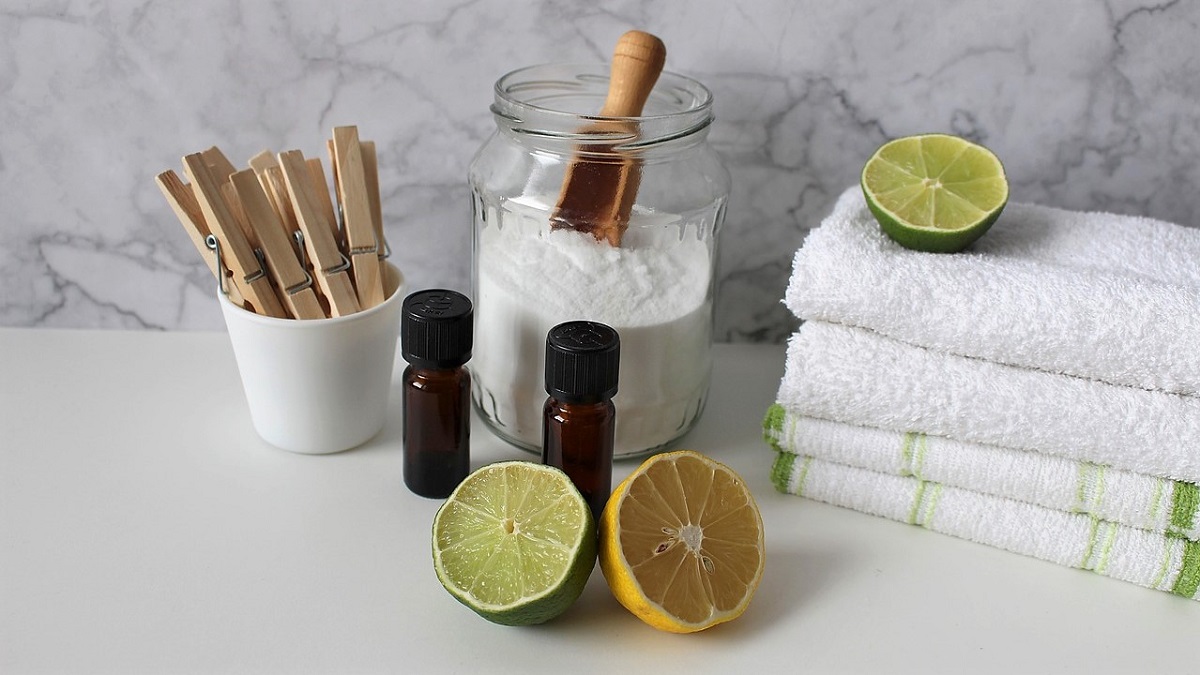
Making your own cleaners gives you control, cuts packaging, and saves money. The basic kit is short: baking soda for scrubbing, white vinegar for windows and mineral stains, lemon juice for cutting boards, 3% hydrogen peroxide (in a dark bottle) for stains and germs, and castile soap for general cleaning. A spray bottle of half vinegar, half water cleans most surfaces. Reuse jars and spray bottles instead of buying new ones.

One important update: older recipes, including earlier versions of this article, used borax as a staple ingredient. Newer research has changed that advice. Europe added borax to its list of substances of very high concern in 2010 because high doses caused reproductive problems in animals, and California lists it as a reproductive toxin under Proposition 65. Borax isn’t banned in the U.S., but the Environmental Working Group recommends skipping it in homemade cleaners. Plenty of borax-free recipes work just as well.

About killing germs: the popular advice to spray vinegar, then hydrogen peroxide, came from a 1996 study on beef tissue, not on home surfaces. Vinegar at normal household strength doesn’t reliably kill many germs, including norovirus and several drug-resistant bacteria, and it isn’t EPA-registered as a disinfectant. For everyday cleaning, vinegar is fine. When real germ-killing matters, when cleaning up after handling raw meat or during a stomach flu outbreak, use 3% hydrogen peroxide alone or an EPA-registered disinfectant.

Never mix peroxide and vinegar in the same bottle and don’t mix bleach with vinegar or any acid; the gases created when these are mixed is dangerous.

Laundry

The laundry room in a great place to start your zero-waste journey.

Microfibers. Synthetic fabrics like polyester, nylon, and fleece shed tiny plastic threads every time you wash them. France passed a law requiring built-in filters on all new washing machines, which took effect January 1, 2025. California passed a similar law in 2023, but the governor vetoed it. Oregon, New York, and several other states have filter bills moving through their legislatures. Until U.S. machines come with filters, you can use a microfiber-catching laundry bag like Guppyfriend or a Cora Ball, or attach an external filter from Filtrol or PlanetCare to your drain hose. These catch up to 90% of fibers.

“Plastic-free” laundry sheets and pods. Most laundry sheets use a film made from polyvinyl alcohol (PVA or PVOH), which dissolves in water. The cleaning industry says PVA breaks down completely in wastewater treatment, but a 2021 study estimated that about 75% of it passes through treatment plants intact and persists in the environment. The science is debated, but the labels aren’t: if you see polyvinyl alcohol, PVOH, or PVA on the package, the dissolving film is a synthetic plastic. Powdered detergent in cardboard, concentrated liquid in glass, or PVA-free sheet brands are alternatives that avoid this question.

A hidden carcinogen called 1,4-dioxane. This chemical isn’t added to detergent on purpose — it’s a leftover from how certain ingredients are made. Because it’s a contaminant rather than an ingredient, manufacturers don’t have to list it. Independent testing has found it in most conventional detergents. New York finalized rules in September 2024 limiting it to 1 part per million, and the EPA officially called it an unreasonable health risk in November 2024. To avoid it, skip detergents listing SLES (sodium laureth sulfate), “PEG” anything, or ingredients with “-eth-” in the name.

Skip dryer sheets. A University of Washington study found dryer vents emit more than 25 different volatile chemicals when scented detergent and dryer sheets are used together. Seven are classified as hazardous air pollutants. Wool dryer balls reduce drying time and static without coating clothes in chemicals. For scent, put a few drops of essential oil on a damp washcloth and toss it in.

Wash cold. About 90% of the energy a washing machine uses goes to heating water. Switching from warm to cold cycles saves about 3.2 kWh per load, roughly the same as running your fridge for 10 months over a year’s worth of laundry. Cold water also makes clothes last longer and shed fewer microfibers. Modern detergents are designed to clean in cold water. Replace fabric softener with half a cup of white vinegar in the rinse cycle. If you’re shopping for a new dryer, heat-pump dryers use 20–60% less energy than conventional ones.

What You Can Do Today

  • Wash in cold water on shorter cycles. Saves energy, money, and reduces microfiber shedding.
  • Use a microfiber-catching laundry bag, ball, or external filter.
  • Skip dryer sheets and fabric softener. Use wool dryer balls and vinegar instead.
  • Read ingredient lists. Avoid SLES and PEG compounds in detergent. Skip products with PVA in their dissolvable film if microplastics matter to you.
  • Make your own cleaners with baking soda, vinegar, peroxide, and castile soap. Skip borax.
  • Look for the EPA Safer Choice label on store-bought products.
  • Never mix bleach with vinegar or any other acid.
  • Support state and federal microfiber filter laws so this stops being a consumer-level problem.

Related Reading

Featured image by Monfocus from Pixabay 

Editor’s note: Originally authored by Sarah Lozanova on May 18, 2016, this article was substantially updated in May 2026.

The post Zero-Waste Cleaning and Laundry Tips appeared first on Earth911.

  •  

Best of Sustainability In Your Ear: Algenesis & Blueview Launch the Algae-Based Polyurethane Industry

Travel back in time to hear the origin story of Algenesis, which started as two companies in one, a biotechnology innovator and footwear maker. Today, the company is a leading maker of bio-based plastics. In 2023, Algenesis had just begun making a new, sustainable material and found a clever way to prove its utility to get big companies to embrace it. Join the conversation hear why a shoe company was the best a practical application to prove the value of a plant-based, compostable bioplastic foam. Stephen Mayfield, a professor of Biology at UC San Diego and director of the California Center for Algae Biotechnology, invented Soleic, an algae-based rubbery foam material that can be used in footwear, surfboards, and other products in the place of petroleum-based polyurethane foam. He launched Algenesis, a biotechnology-based materials science company to commercialize Soleic.

Steve Mayfield and Tom Cooke, CEO and president, respectively, of Algenesis Materials and Blueview Footwear
Steve Mayfield and Tom Cooke, CEO and president, respectively, of Algenesis Materials and Blueview Footwear, are our guests on Sustainability in Your Ear.

Note: This article contains affiliate links that help fund our Recycling Directory, the most comprehensive in North America.

But shoe companies did not come running to use Soleic, which biodegrades completely in sea water and compost piles. Along with Algenisis president Tom Cooke, a footwear and apparel industry veteran who had worked for Reef and Vans, Steve launched Blueview Footwear, maker of the world’s first compostable shoe. Steve and Tom join me today to talk about the evolution of Algenesis and Blueview, as well as the many materials Soleic could replace across a variety of product categories. The companies have also developed compostable, plant-based fabrics and a bioplastic waterproofing technology that biodegrades into organic material in a home compost pile. You can learn more about Blueview Footwear at blueviewfootwear.com and its parent company Algenesis Materials at algenesismaterials.com.

Editor’s Note: This podcast originally aired on February 20, 2023.

The post Best of Sustainability In Your Ear: Algenesis & Blueview Launch the Algae-Based Polyurethane Industry appeared first on Earth911.

  •  

Earth911 Inspiration: The First Step To Sustainability

Today’s inspiration and photo come from Earth911’s Mitch Ratcliffe: “The first step to sustainability is seeing that there is no boundary between you and nature.” This early morning shot of Waughop Lake in Western Washington caught ground fog between a cloudy sky and a perfect reflection in the water below. There is no difference between us and nature, except for the artificial ones we create by imagining boundaries. When we see this essential connection and reverse the artificial disconnections created over millennia, people can imagine a future where we all thrive with a regenerated ecosystem.

Post and share Earth911 posters to help people think of the planet first, every day. Click the poster to get a larger image.


The post Earth911 Inspiration: The First Step To Sustainability appeared first on Earth911.
  •  

The Can That Pays for Your Recycling Bin

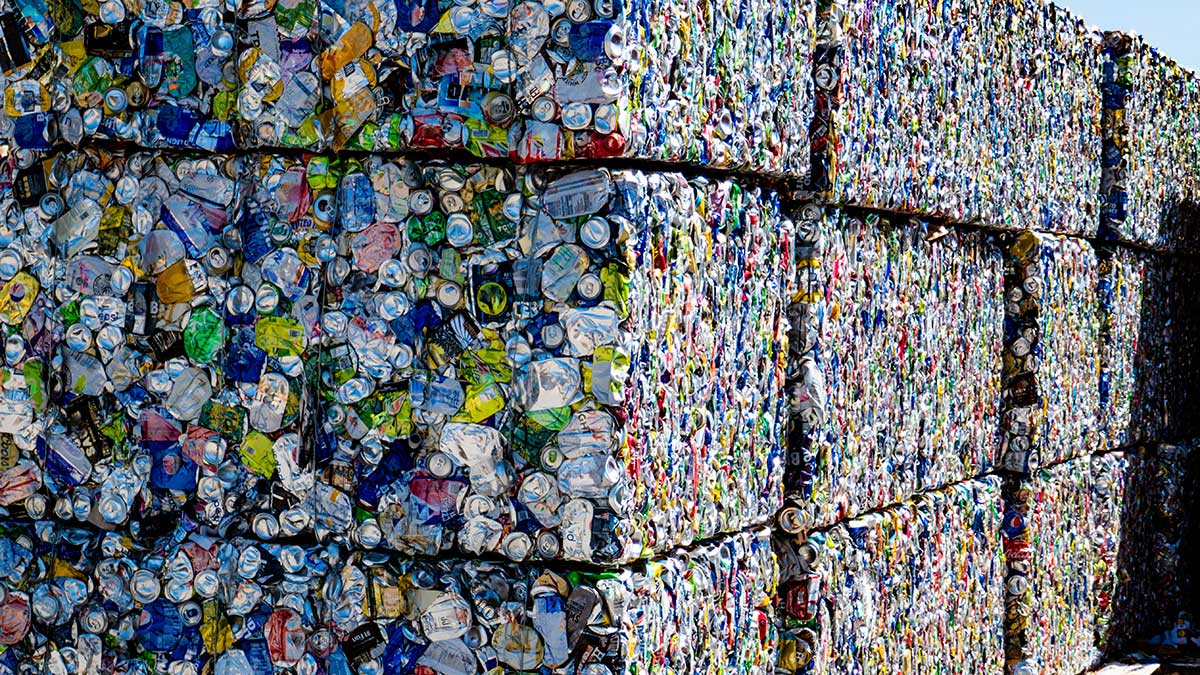
A used aluminum can is worth more, pound for pound, than almost anything else you put at the curb. In late 2024, a ton of crushed and baled cans was selling for around $1,338. Glass, by comparison, sells for roughly, well, nothing. Mixed plastics often cost the recycler money to handle. A single bale of cans, about the size of a small refrigerator, can be worth $40,000 in scrap. In a lot of towns, that one bale is the reason the whole truckful of recyclables is worth picking up.

That makes aluminum the quiet engine of curbside recycling. And right now, fewer Americans are putting cans in their bins than at any time since the early 1990s. According to a 2024 report from the Aluminum Association and Can Manufacturers Institute, the U.S. consumer aluminum-can recycling rate fell to 43 percent in 2023, well below the 30-year average of about 52 percent. Consequently, more than half of every can you finish ends up buried in a landfill instead of back on a store shelf as a new can.

How a recycling plant makes its money

Your bin doesn’t go straight to a recycling factory. It goes to a sorting facility called a MRF, pronounced “murf,” short for material recovery facility. A MRF is essentially a giant conveyor belt with magnets, screens, optical scanners, and people, all pulling the stream into separate piles: cardboard here, paper there, plastics by type, glass, metal.

Each of those piles becomes a bale, a compressed cube of a single material wrapped in wire. The MRF sells the bales to processors, who melt or pulp them into raw material for new products. That sale price, minus what it cost to sort, is the MRF’s revenue.

Most of the bales barely break even. Glass usually loses money. Mixed plastics sometimes make a loss, and sometimes don’t. The bale that consistently makes money is aluminum. A used can returned to a mill is back on a shelf, full of soda or seltzer, in as little as 60 days, using about 95 percent less energy than making aluminum from raw ore. And the metal doesn’t degrade. The same atoms can be recycled over and over, forever, with minimal losses of material during the recovery process.

That combination of high value and infinite recyclability is why aluminum is the only material in your bin that the recycling system genuinely wants. The rest of the content rides on the can’s profit.

Why fewer cans are getting back to mills

The 43 percent national rate hides a sharp split between two kinds of states.

Ten states have a system called a deposit-return scheme, more commonly known as a bottle bill. You pay an extra five or 10 cents when you buy a canned drink and get it back when you return the empty to a store or a redemption center. Those states are California, Connecticut, Hawaii, Iowa, Maine, Massachusetts, Michigan, New York, Oregon, and Vermont, where return rates run from 65 to 90 percent, with Michigan and Oregon — both at $0.10 deposits — consistently reporting the highest recovery rates, according to Container Recycling Institute data.

The other 40 states rely solely on curbside collection. Their rates are about half as high.

The reason is simple. A deposit turns a can from “trash” into “money I’m holding.” It doesn’t take an environmental conviction to bring it back; it takes ten cents on the table. Curbside recycling doesn’t create that signal. It depends on people remembering to rinse and toss every can in the right bin, week after week, with no immediate reward. A lot of cans don’t make it.

What this costs your community

When cans miss the bin, the cost is spread across three areas.

The first is your municipal budget. Many city and county recycling contracts include aluminum revenue as a line item. When that revenue shrinks, somebody covers the gap — usually you, through a slightly higher trash bill or property-tax allocation. According to the Aluminum Association, roughly $800 million worth of cans are landfilled in the U.S. every year. That lost value has to come from somewhere; the gap shows up in your trash bill or your property taxes.

The second is energy. Every can made from raw bauxite ore rather than recycled metal requires far more electricity. Across the volume the U.S. landfills annually, the difference is the equivalent of several large coal-fired power plants’ worth of generation, every year, lit up to make new metal we already have above ground.

The third is the recycling system itself. The aluminum bale is what subsidizes the rest of the bin. When fewer cans go in, the cost of recovering everything else rises — and pressure builds on cities to drop materials they can’t afford to handle. Glass is usually first to go, and it has been abandoned by many municipalities over the last decade.

Why bottle bills are coming back

For most of the late 20th century, the beverage industry fought bottle bills hard. That has flipped. Both the Aluminum Association and Can Manufacturers Institute now back well-designed deposit programs, because the industry has set a 70 percent recovery target by 2030, and the arithmetic doesn’t work without deposits in more states.

Washington State has considered a bottle bill in several recent legislative sessions. Tennessee and Rhode Island also have active or recurring proposals. Since 2019, Vermont, Connecticut, and Oregon have expanded or updated their programs by adding wine and spirits containers, raising deposit amounts, or installing reverse-vending machines that process returns automatically.

Whether recycling scales to your community’s needs depends largely on how loud and informed the local civic conversation gets in the next five years.

What You Can Do

At home

  1. Rinse and recycle every can. Make sure it’s empty and dry before putting it in the bin. A little residue is okay, but food waste lowers the value of the bale.
  2. If you live in a bottle-bill state, don’t crush your cans. Reverse-vending machines need to scan the barcode, and a crushed can can’t be read, so you lose your deposit.
  3. Aluminum foil and trays can be recycled too, but they are sorted separately.
  4. If your state has a deposit system, return your cans for redemption. Cans returned this way go straight to mills with almost no loss during sorting. Curbside cans take a longer route and more are lost along the way.

In your community

  1. Support bottle-bill legislation if your state is thinking about adopting one.
  2. Encourage updates to deposit programs in states with older systems. A five-cent deposit set in the 1970s doesn’t motivate people like it used to. Ten cents is now the standard that works.
  3. Ask your city council how recycling revenue is used. It’s a real part of the budget and directly affects your trash bill. Most people never ask, but those who do usually get answers.

The post The Can That Pays for Your Recycling Bin appeared first on Earth911.

  •  
❌