Taiwanese President Lai Ching-te on Saturday announced his arrival in Eswatini — Taipei’s only diplomatic ally in Africa — after an earlier trip was cancelled when several countries revoked overflight permits.
This handout photo taken and released on May 2, 2026 by the Taiwan Presidential Office shows Taiwanese President Lai Ching-te (L) speaking with Eswatinis Prime Minister Russell Mmiso Dlamini (R) upon his arrival in Eswatini at King Mswati III International Airport in Sikhuphe. Photo: Taiwan Presidential Office/AFP.
Those various African nations withdrew overflight permission following “intense pressure” from Beijing, one of Lai’s closest advisers said at the time, forcing cancellation of the initially scheduled April 22-26 trip.
Lai on Saturday said only that his initial visit had been “suspended due to unexpected external forces”.
But “after days of secret arrangements by the diplomatic and national security teams, we arrived successfully today (Saturday),” he said in a Facebook post.
“I hope this trip will contribute to even deeper friendship between Taiwan and Eswatini, thanks to closer economic, agricultural, cultural and educational links, as well as promote Taiwan’s international cooperation,” he added.
“The 23 million Taiwanese people have the right to embrace the world and engage with the world,” Lai said in a speech before the Eswatini royal family and assembled dignitaries.
“And no country has the right and no country should ever block Taiwan from contributing more to the world,” he added.
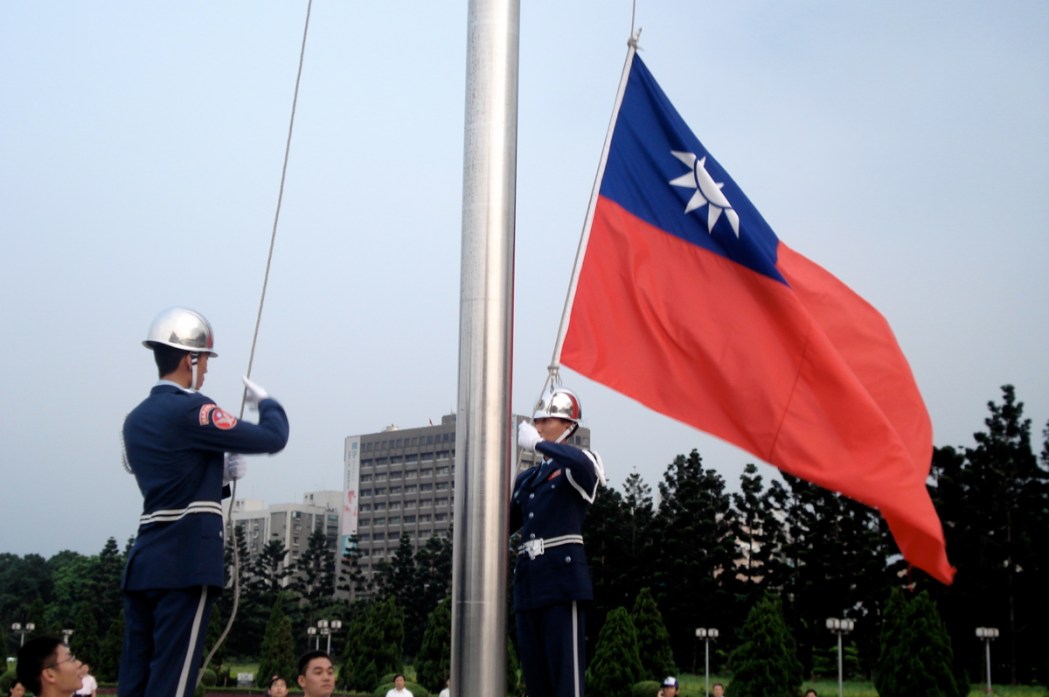
The flags of Taiwan and Eswatini on display in Taipei on May 21, 2024. File photo: Taiwan’s Office of the President.
Earlier Saturday, China’s foreign ministry accused Lai of making a “stowaway-style escape farce” that made him “an international laughing stock”.
“No matter how the DPP authorities collude with external forces … it is all in vain and cannot change the fact that Taiwan is part of China,” an unnamed spokesperson said in a statement on the ministry’s website, referring to Lai’s party.
“We urge Eswatini and other individual countries to see clearly the general trend of history … and not pull chestnuts out of the fire for a handful of ‘Taiwan independence’ separatists,” the statement said.
Eswatini, a small enclave kingdom formerly known as Swaziland, is one of 12 countries that still recognise Taiwan. China has persuaded other nations to break diplomatic ties with the self-ruled island, which it claims as part of its territory.
Lai was due in Eswatini in April for the 40th anniversary of King Mswati III’s accession to the throne, but cancelled the visit after the Seychelles, Mauritius and Madagascar revoked overflight permissions, “unexpectedly and without notice”, according to his office.
As we mark Sunday’s UN World Press Freedom Day, ahead of HKFP’s 11th anniversary next month, our team of seven are soldiering on. We remain on the ground despite unprecedented political and financial pressure last year, including threats and harassment, scrutiny from multiple government departments, pressure on our corporate partners, and false complaints to the authorities.
But press freedom isn’t free – only 0.3 per cent of our regular readers make a recurring donation to our newsroom. In 2025, our newsroom entered a fourth year of deficit with a record HK$1.9 million loss. We made aggressive cutbacks whilst seeking to protect jobs, salaries and output, though a 20-month “random” tax inspection strained resources. On average, we spent HK$159,428 more per month than we had coming in during 2025, but we were able to reinvest our surplus.
On Press Freedom Day, can you help us bridge the gap and protect independent reporting in the city? We accept most payment methods, and all recurring donors receive eight benefits – including a free gift, exclusive content, Editor’s Blogs, and access to HKFP Monitor. Below are 25 reasons to support Hong Kong’s most financially transparent newsroom.
1. Fully independent – no billionaires, conglomerates or governments.
HKFP is not owned by any billionaire tycoon or conglomerate, controlled or funded by any government, nor answerable to any shareholders. We are 100 per cent independent in terms of our structure, finances and editorial output. HKFP has never been beholden to powerful elites or funders.
This means our reporting cannot be influenced by others, and that all decisions are made among the team in-house. Our independence is essential for maintaining the trust of our readers, and for holding those with power to account without interference.
2. Non-profit – answerable to Hongkongers, not shareholders.
Our work has no commercial motive. HKFP seeks to raise enough money to power our newsroom and fulfil our mission. Any funds left over at the end of the year are carried forward to be used in the future. If we experience a deficit, savings from previous years are used to fill the gap. Examine our income and spending here.
For-profit news outlets can suffer from bias, sensationalism and poor trust, as they prioritise stories which generate clicks and revenue, rather than providing a public service for readers. When an outlet becomes reliant on maximising profit, advertising and business interests can conflict with editorial and ethical considerations.
3. Proudly reader-funded – backed by 1,000 monthly supporters.
94 per cent of HKFP’s income comes directly from our readers, ensuring our press freedom and independence. The rest is from advertising, content sales, and licensing. HKFP does not rely on governments, umbrella companies or billionaire backers.
Instead, over 1,000 monthly donors donate an average of HK$200 to help sustain our newsroom – the best situation for our press freedom. Just 0.3 per cent of regular readers are HKFP Members – consider joining us!
4. Hong Kong’s most transparent news outlet.
HKFP is the most transparent news outlet in Hong Kong, if not Asia. We are externally audited every year, and anyone can examine our income and spending since 2015 – the year of our inception.
5. Governed by a comprehensive Ethics Code.
We publish our Policies, Ethics & Best Practices as part of HKFP’s commitment to credible, ethical, and independent journalism. These ever-evolving policies underpin all of our reporting practices.
They govern how we deal with certain topics, like elections; a host of issues like race, disability or hate speech; as well as how we use certain tools, like AI, or undercover reporting. They guide how we deal with accuracy, anonymity, complaints, sourcing and paid-for content, and include a staff code of conduct. The comprehensive code is backed by the Trust Project and Journalism Trust Initiative.
6. Efficiently run – we make every cent count.
HKFP is run as efficiently and prudently as possible, in order to maximise the impact of our donors’ generosity. We make savings by partnering with other media outlets, using free software/tools, and making full use of teamwork and automation.
We do not employ marketing staff, donation managers, or social media editors – every employee is primarily a journalist. In light of a years-long deficit, in 2024-25, HKFP slashed costs by switching insurers and merch store suppliers, downgrading software packages, adjusting staff transport allowances, finding sponsors for key costs, moving to a smaller office and halting most advertising. We make every cent matter, and we disclose our spending annually.
7. Home to multi-award-winning journalism.
HKFP has been nominated for, or won, multiple awards over the years – including from the Human Rights Press Awards, the Hong Kong Press Photographers Association, and the Society of Publishers in Asia.
In 2021, our newsroom was nominated for a Nobel Peace Prize. In 2024, we were nominated for an International Press Institute Free Media Pioneer award, as well as a Reporters Without Borders Press Freedom Prize.
8. No paywalls – accessible to everyone, everywhere.
Our daily reporting will always be paywall-free – we believe our journalism should be free and accessible to everyone. We ensure our news is available wherever your are: on Facebook, Bluesky, Twitter, LinkedIn, YouTube, Instagram, Threads, Flipboard, Apple News, MSN, Factiva, LexisNexis, ProQuest, Telegram (or add our bot: @hkfp_bot) and through our Android and Apple phone apps.
Owing to the lack of independence and ownership issues among fellow news outlets, and given the press freedom situation and dwindling number of newsrooms, HKFP is one of the few trusted sources of news left in the city.
12. Serving Hong Kong’s minorities, as a voice of the voiceless.
HKFP ensures a special focus on sexual, ethnic and religious minorities, and offers trusted coverage of the city’s domestic worker and migrant communities. As an English-language outlet, we also serve the minority who do not read Chinese.
We exist to offer a voice to the voiceless and to hold the powerful to account. In 2022, our original reporting on the city’s underrepresented communities won us backing from Google’s News Equity Fund.
The Trust Project seeks to improve media literacy and battle “fake news,” misinformation and online propaganda. We now join around 300 newsrooms across the world displaying the Trust Mark symbol, including the BBC, The Washington Post, Sky News, CTV and The Economist.
14. The city’s only Journalism Trust Initiative member.
In 2025, HKFP became Hong Kong’s only accredited member of the Journalism Trust Initiative following a months-long external audit. The project is an ISO standard and an international mechanism rewarding ethical journalistic practices.
The standard involved examining HKFP against 130 criteria, and was developed by a panel of 130 experts, including journalists, institutions, regulatory bodies, publishers, and new technology players.
15. 100% NewsGuard rating: Meeting all 9 credibility and transparency criteria.
HKFP meets all nine of the NewsGuard initiative’s credibility and transparency criteria. NewsGuard lists green or red credibility scores for over 6,000 news sites, with assessments carried out by humans, not algorithms.
Our 100 per cent rating reflects that we avoid false content, publish information responsibility, correct errors, label opinion and ads, avoid deceptive headlines, disclose ownership, financing and conflicts, and provide biographical information on writers.
16. Media watchdog Ad Fontes Media rates HKFP highly, above SCMP.
We have been rated by Ad Fontes Media experts as providing reliable, factual reporting from a politically neutral perspective. HKFP scored 43.20 in terms of reliability and news value, similar to NPR, The Wall Street Journal and Bloomberg, and slightly above Sky News, The Economist and the local South China Morning Post.
HKFP is among the most politically balanced news outlets in the world, according to the watchdog’s rating. With a score of 0.24 – meaning “middle” in terms of bias – HKFP is comparable to outlets such as Sky News.
17. Society of Publishers in Asia and Int’l Press Institute members.
We are proud members of the International Press Institute, a 73-year-old global organisation dedicated to protecting press freedom and improving journalistic practice. HKFP is also part of the Society of Publishers in Asia, founded in 1982 to champion press freedom and promote excellence.
18. A clear corrections policy – with all errors fixed and logged.
Our Corrections Policy ensures accuracy and accountability across HKFP’s work, with the date, time and details of any correction appearing clearly at the bottom of articles.
We also maintain a log of every correction made to ensure we are as transparent as possible.
19. HKFP sets standards in the workplace.
We are signed up to Oxfam’s Living Wage initiative to ensure fair pay for all staff, including interns.
Our newsroom offers a wage in line with international news outlets, including a health care plan, mental health support and other benefits. In 2020, we enacted a Freelance Charter to set out fair terms and conditions for external contributors.
20. Our journalism has been cited worldwide.
Our impact is not just measured through clicks – HKFP’s journalism has been cited in countless news reports, as well as by NGOs and governments. Our reporting has been referenced by everyone from The New York Times, to The Wall Street Journal, Bloomberg, the BBC, The Guardian, Reuters and others.
21. We ensure diversity – in our newsroom and in our coverage.
HKFP values inclusion and diversity – both in the newsroom and in our output – as part of our adherence to fair, balanced and accurate coverage. We amplify voices from underrepresented, underprivileged or marginalised groups, and our team seeks to balance opinions from different age groups, genders and ethnic backgrounds.
As part of our Diversity Statement, we have no tolerance for discrimination, prejudice or bullying and encourage job applications from candidates from minority backgrounds.
22. Boots on the ground and here to stay.
HKFP remains in Hong Kong as we can speak to Hongkongers, monitor the legislature, ask tough questions of officials, attend press events, and bear witness at court during key cases.
For now, it is better to have boots on the ground than attempt to report on the city from afar. Whilst the press freedom situation may be more predictable abroad, we can ensure better accuracy and nuance by staying put and navigating the situation.
23. Safeguarding press freedom.
In 2016, we helped to successfully lobby the government to recognise digital media and allow online journalists into press conferences. In 2021, we distributed a free, open-source fundraising platform for the industry. And in 2023, HKFP launched an anti-censorship version of our news app.
Over the years, we have also launched Ombudsman complaints to protect journalists’ access to press events, and co-signed several local and international statements to promote press freedom.
24. HKFP Members enjoy eight new benefits.
Donate monthly or yearly to unlock HKFP member benefits. Members receive an HKFP deer keyring or tote, exclusive Tim Hamlett columns, feature previews, “behind the scenes” insights, early access to our Annual Report, ad-free browsing, merch drops and discounts, and full access to our HKFP Monitor newsletter.
25. We accept most payment methods – it’s easier than ever to donate.
It couldn’t be easier to support us – HKFP accepts Mastercard, Visa, Amex, JCB, UnionPay, PayMe, Octopus, FPS bank transfers, Apple Pay, Google Pay and cheques.
Since Beijing imposed a national security law in Hong Kong in 2020, the city has seen the closure of independent media outlets, journalists jailed, newsrooms raided and government tax audits that appear to disproportionately target the media sector.
Journalists in Hong Kong. File photo: GovHK.
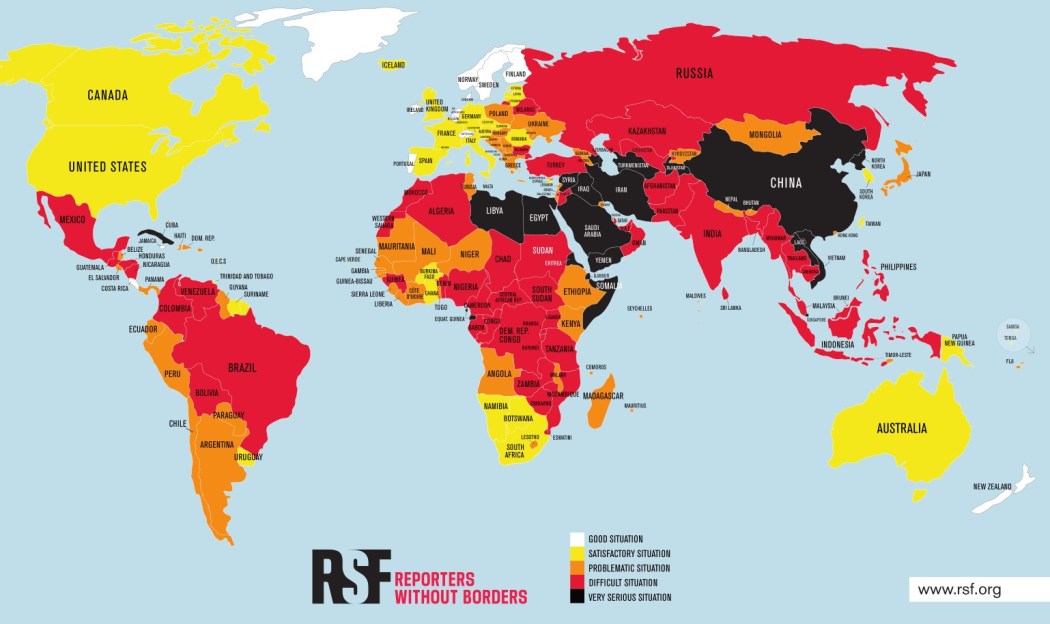
Hong Kong has plummeted in a global press freedom index. It now ranks 140th in the annual Reporters Without Borders Press Freedom Index, down from 73rd in 2019, whilst Chief Executive John Lee has said that press freedom remains intact. HKFP rounds up incidents that indicate how the city’s media landscape has changed.
April 2026
A Hong Kong press union warned that the stalking of journalists has a “chilling effect” on press freedom, after the Security Bureau slammed the group over “groundless speculations” that law enforcement may have tailed reporters from local news outlet InMedia.
Chief Secretary Warner Cheuk said journalists will not be permitted to tag along with survivors of the deadly Tai Po fire when they return to their flats to collect their belongings.
Reporters Without Borders (RSF) said that a French journalist was denied entry to Hong Kong in November, accusing the city’s authorities of “weaponising visas” against foreign media workers.
French journalist Antoine Vedeilhe. Photo: Reporters Without Borders.
Hong Kong remains at 140th place on Reporters Without Borders’ (RSF) global press freedom index of 180 countries and territories, with the NGO highlighting the 20-year sentence handed down to Apple Daily founder Jimmy Lai earlier this year.
March 2026
Hong Kong’s High Court dismissed the Hong Kong Journalists’ Association’s legal challenge against government restrictions on media access to the vehicle registry, years after the government lost in a landmark case concerning a journalist’s use of the registry to obtain records of vehicles involved in the 2019 Yuen Long mob attack
Yahoo Hong Kong announced it will begin winding down its news operation in line with its “strategic evaluation and long-term business planning.” An employee in Yahoo Hong Kong’s news content division confirmed to HKFP that the company would cease publishing original reports from April.
Hong Kong independent bookstore Book Punch owner Pong Yat-ming outside the Kowloon City Magistrates’ Courts on April 10, 2026. Photo: Hans Tse/HKFP.
Three companies linked to the now-defunct Apple Daily newspaper became “prohibited organisations” after the Hong Kong government removed them from the corporate registry.
A former top editor of Apple Daily filed an appeal against his 10-year jail term in a high-profile national security case.
February 2026
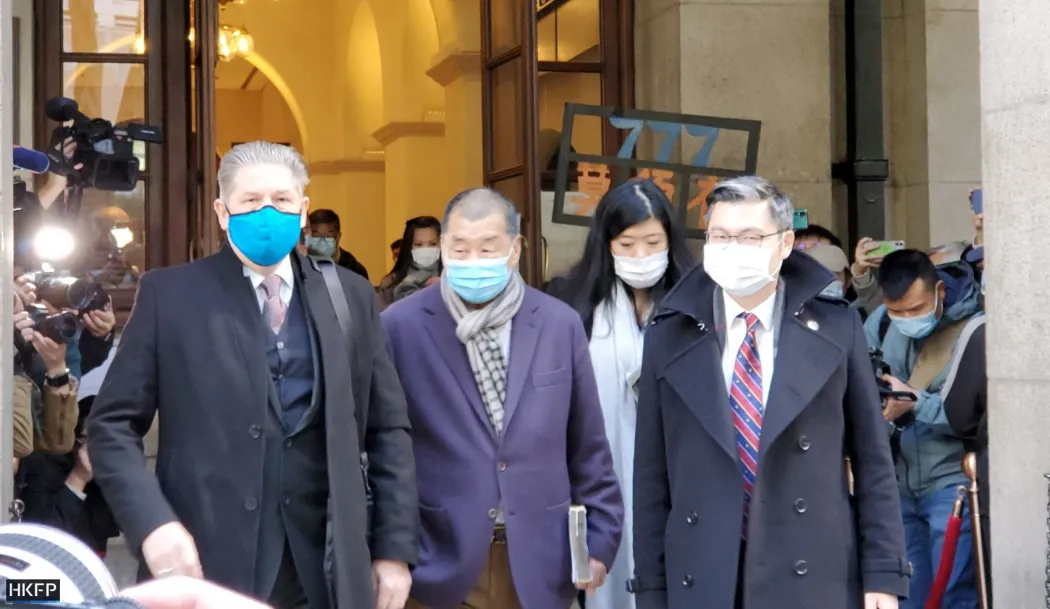
Pro-democracy media tycoon Jimmy Lai was sentenced to 20 years in jail following his conviction for conspiring to collude with foreign powers and conspiring to publish seditious materials. Six former Apple Daily staff who worked for Lai were jailed for 10 years for conspiring to collude with foreign powers.
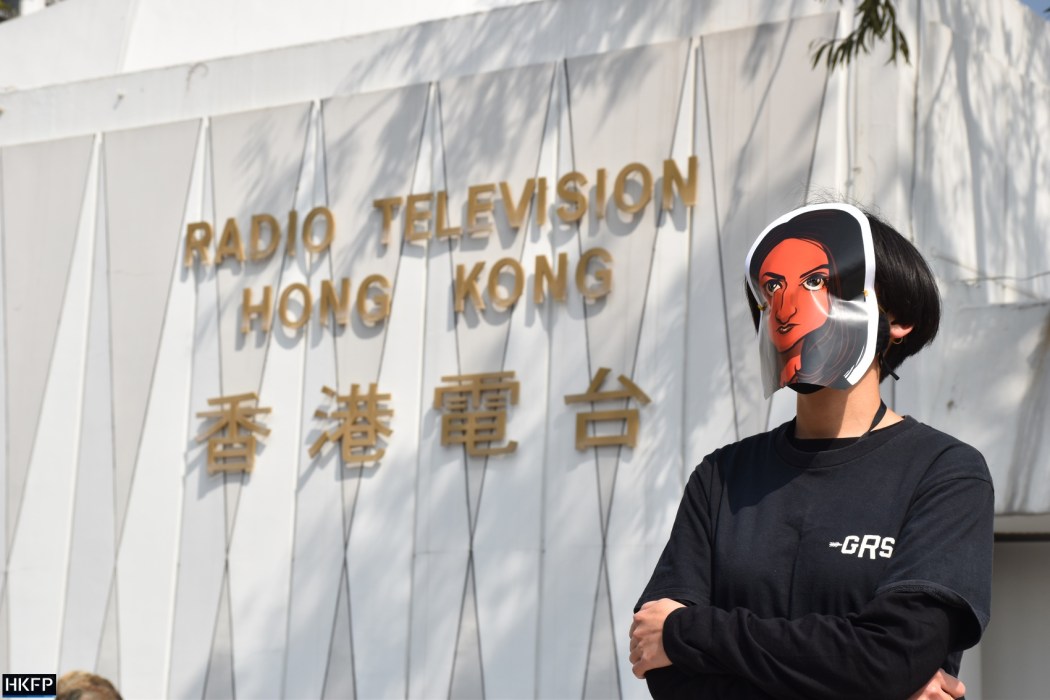
The government-funded broadcaster stopped publishing all of its podcasts, with dozens of shows – in English and Chinese – grinding to a halt on Spotify and RTHK’s self-hosted Podcast One platform.
Hong Kong’s top judge criticised calls to release Jimmy Lai fter the pro-democracy media mogul’s conviction on foreign collusion and sedition charges, saying that such demands “strike at the very heart of the rule of law.”
Hong Kong authorities slammed the European Parliament’s calls for sanctions against Chief Executive John Lee and other officials following the conviction of pro-democracy media tycoon Jimmy Lai in his national security trial last month.
Running for chairperson of the Hong Kong Journalists Association is a “legally protected right,” journalist Selina Cheng said, as her wrongful dismissal lawsuit against her former employer continued.
Hong Kong police officers place a cordon outside the West Kowloon Law Courts Building on December 15, 2025, as the court hands down the verdict of Hong Kong pro-democracy media mogul Jimmy Lai. Photo: Kyle Lam/HKFP.
The Wall Street Journal pleaded not guilty to the allegedly unlawful firing of Hong Kong journalist Selina Cheng, who has accused the paper of sacking her for taking up leadership of the Hong Kong Journalists Association.
A total of 50 films had been required to be edited, and 13 titles had not been approved for screening on national security grounds since Hong Kong amended the Film Censorship Ordinance in 2021, according to authorities.
Hong Kong Journalists Association. Photo: HKFP.
September 2025
The Hong Kong government vowed to help local media overcome “operational pressures” and expand overseas, with Chief Executive John Lee saying in his Policy Address that he would not “interfere with” their work.
A group of former staff from Hong Kong independent media outlet Channel C launched a new online news platform – Channel We – with the financial support of a “white knight.”
Representatives of six independent publishers and bookstores hold a press conference on July 13, 2025. From Left: Leslie Ng of Bbluesky, Chan Wai-hung of Eleven Six Workshop, editor of Post Script Cultural Collaboration, editor of Word by Word Collective, Leanne Liu of Boundary, and Leticia Wong of Hunter. Photo: Kyle Lam/HKFP.
The Hong Kong Journalists Association voted in a new Executive Committee on Saturday, with freelance journalist Selina Cheng re-elected as chair unopposed.
The Department of Justice will not intervene in Hong Kong Journalists Association chairperson Selina Cheng’s lawsuit against her ex-employer, the Wall Street Journal, over her alleged unlawful termination after taking on the union’s leadership role.
Foreign Correspondents’ Club President Morgan Davis. Photo: Foreign Correspondents’ Club, Hong Kong, via Facebook.
May 2025
Hong Kong’s independent news sector, including companies, staff and family members, was facing simultaneous tax audits and backdated demands, the Hong Kong Journalists Association said, adding that the situation reflected a worsening press freedom environment.
Hong Kong tumbled five places, to 140th, in the annual Reporters Without Borders Press Freedom Index, entering the “red zone” – meaning a “very serious” situation – for the first time, alongside China.
Hong Kong’s security chief condemned a legal scholar for “undermining the rule of law” after the latter wrote an opinion piece criticising a court ruling that sent an ex-lawmaker to jail for “rioting” in the Yuen Long attack in 2019.
Former Meta executive Sarah Wynn-Williams accused the social media giant of developing a censorship tool to monitor viral content in Hong Kong and Taiwan when Facebook attempted to gain access to the Chinese market.
Secretary for Security Chris Tang and Fight Crime Committee member Roland Wong meeting the press on September 27, 2023. File photo: Kyle Lam/HKFP.
February 2025
Selina Cheng, chairperson of the Hong Kong Journalists Association, accused her ex-employer, The Wall Street Journal, of breaching the city’s laws protecting employees’ right to join union activities by firing her after she took on the union’s leadership role.
The Hong Kong Journalists Association postponed its annual fundraising dinner after the Regal Hongkong Hotel axed its venue booking, citing “water leakage causing unstable power supply.”
A student union at the Chinese University of Hong Kong cancelled the screening of a Burmese film set in Myanmar’s ongoing civil war, citing a last-minute government warning that hosting the event may break the law.
Veteran journalist Sum Wan-wah of the Chinese University of Hong Kong spoke in defence of student reporters who were accused by an official of making “sweeping generalisations” in a video documentary about district-level “care teams”.
Hong Kong pro-democracy media tycoon Jimmy Lai continued to give testimony as he denied he acted as a “middleman” to help Taiwan re-establish diplomatic ties with the US.
A ceremony for care teams. File photo: Kyle Lam/HKFP.
December 2024
Former Hong Kong journalists Chan Cheuk-sze and Kathy Wong won best documentary short at the 61st Golden Horse Awards in Taiwan for their debut film Colour Sampling Ideology.mov, a 59-minute visual analysis of colour symbolism in politics in Hong Kong and Taiwan.
More Hong Kong residents than ever perceived the city’s news outlets to be self-censoring and shying away from criticising local and Beijing authorities, the Hong Kong Public Opinion Research Institute found. In total, 65 per cent of the survey respondents perceived news outlets to have practiced self-censorship, up eight per cent from the previous year, and marking a record high.
An independent media outlet in Macau took down a report about various facilities being shut down before Chinese leader Xi Jinping’s three-day visit to the territory to mark the 25th anniversary of its handover to Beijing. The report was taken down “due to ‘unavoidable’ reasons,” according to All About Macau’s statement.
Hong Kong documentary filmmakers Chan Cheuk-sze (right) and Kathy Wong (left) leave the stage after winning the best documentary short film at the 61st Golden Horse Awards in Taipei, Taiwan, on November 23, 2024. Photo: Executive Committee of the Taipei Golden Horse Film Festival.
Hong Kong Journalists Association chairperson Selina Cheng sued The Wall Street Journal over her “unlawful dismissal,” after she was fired by the paper in July. Mediation with the US-based newspaper had been “ineffective,” she told reporters, after taking her case to the Labour Department, stating that she had been laid off unlawfully because of her participation in a union.
Hong Kong Journalists Association chairperson Selina Cheng and her lawyer Adam Clermont walk out of the Labour Relations Division (Hong Kong East) on November 12, 2024. Photo: Kyle Lam/HKFP.
The Court of Appeal overturned a warning by Hong Kong’s media watchdog that a satirical current affairs programme on RTHK had “insulted” the city’s police force. Judge Jeremy Poon ruled that satirical nature of the comments made in the programme meant that the requirement for accuracy, stipulated in the code of practice, was not applicable.
Associated Press photojournalist Louise Delmotte was denied entry to Hong Kong, months after an extension of her work visa was rejected by the city’s immigration authorities. Delmotte had won multiple photojournalism awards in the city, including for her exclusive shots of pro-democracy figure Jimmy Lai in a maximum security prison last August.
Former chief editor of shuttered Hong Kong media outlet Stand News Chung Pui-kuen was jailed for one year and nine months over publishing “seditious” materials. Stand News’ former acting chief editor Patrick Lam, who was initially handed 14 months in jail, walked free after the judge considered Lam’s poor health and the time he had spent in pre-trial detention. The judges ruled that the two editors had not been conducting genuine journalism, “but participating in the so-called resistance.”
Ex-Stand News acting chief editor Patrick Lam leaves District Court at 7.30 pm on September 26, after District Judge Kwok Wai-kin reduced his initial sentence for “conspiracy to publish and reproduce seditious publications,” on health grounds and allowed him to walk free. Photo: Kyle Lam/HKFP.
The chief editor of Ming Pao urged columnists to be “prudent” and “law-abiding” when writing for the newspaper, warning that otherwise, “crisis may come”. The memo read: “For Ming Pao to conduct itself and its mission in Hong Kong’s new era, as well as to exercise the role of the fourth estate, is a heavy responsibility and a long path that requires extra caution.”
The Hong Kong Journalists Association issued its annual press freedom index, which recorded a rating of 25 out of 100, the lowest since the survey was first conducted in 2013. Reporters said they were hesitant to criticise the government and that it had become harder for the media to function as a watchdog and to access information.
Ex-chief editor of independent Hong Kong media outlet Stand News Chung Pui-kuen and former acting editor-in-chief Patrick Lam were found guilty of sedition, marking the first such conviction of journalists in Hong Kong since the former British colony returned to Chinese rule in 1997. Judge Kwok Wai-kin ruled that Stand News was “a tool to smear and slander central and [Hong Kong] government” during the 2019 protests.
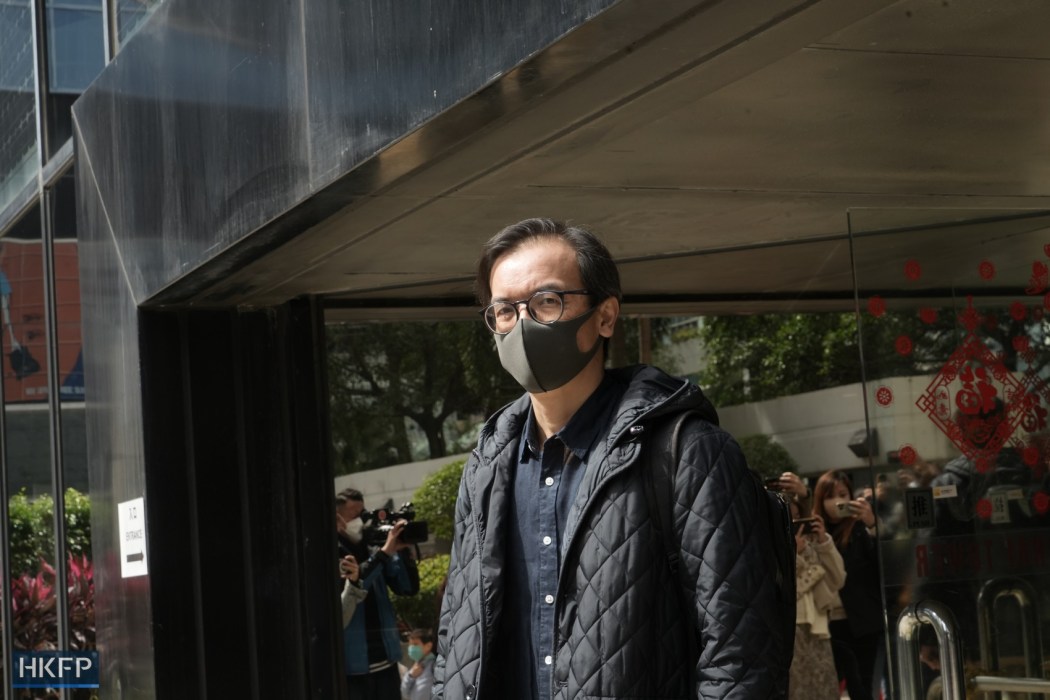
Former Stand News editor-in-chief Chung Pui-kuen leaves District Court in Wan Chai, Hong Kong, on August 29, 2024, after being found guilty of conspiring to publish “seditious” materials. Photo: Kyle Lam/HKFP.
The Court of Appeal rejected jailed media tycoon Jimmy Lai’s application to take his bid to hire a British lawyer to the city’s apex court. The 76-year-old wanted to challenge an appeal court’s ruling in April, when it sided with a decision from the Committee for Safeguarding National Security that barred him from hiring a British lawyer for his ongoing national security trial.
Selina Cheng, chair of the Hong Kong Journalists Association, speaks to reporters after being fired from The Wall Street Journal, allegedly over her role in the press union, on July 17, 2024. Photo: Kyle Lam/HKFP.
Hongkongers’ trust in the news “increased substantially,” rising to 55 per cent of those surveyed for an annual study of news consumption habits, the highest since the city was first examined in 2017, according to a report released by the Reuters Institute for the Study of Journalism.
Police carry cordon tape in Causeway Bay, Hong Kong, on June 4, 2024, the 35th anniversary of the 1989 Tiananmen crackdown. Photo: Kyle Lam/HKFP.
May 2024
Indian cartoonist Rachita Taneja and Hong Kong’s Wong Kei-kwan, better known as Zunzi, were awarded the biennial Kofi Annan Courage in Cartooning Award on May 3, World Press Freedom Day. Wong published satirical comic strips in Ming Pao for 24 years before the comic was suspended in May 2023.
The Wall Street Journal said it would shift its Asia headquarters from Hong Kong to Singapore. The US newspaper’s editor-in-chief, Emma Tucker, said in a letter to staff that the shift would also involve an unspecified number of layoffs.
The Immigration Department in Tseung Kwan O, Hong Kong, on June 11, 2024. Photo: Kyle Lam/HKFP.
March 2024
The Safeguarding National Security Ordinance took effect on March 23, after being passed into law by Hong Kong’s opposition-free legislature four days earlier. Known as Article 23, authorities said it was needed to plug loopholes left by Beijing’s security law, while United Nations High Commissioner for Human Rights Volker Turk warned that “such provisions readily lead to self-censorship and chilling of legitimate speech and conduct, in respect of matters of public interest on which open debate is vital.”
Andy Li, one of the 12 Hong Kong fugitives caught by China’s coastguard in August 2020 while trying to flee to Taiwan, took the stand in media mogul Jimmy Lai’s national security trial. Testifying against the Apple Daily founder, Li said that Lai’s “radical” stance was common knowledge and that he had financed a global advertising campaign.
The Chinese University of Hong Kong removed copies of the University Community Press from campus, saying the publication was “unauthorised” and could not be displayed without permission. The publication, formerly known as CUHK Student Press, was managed by the student union before the body was forced to shutter in 2021.
Radio Free Asia closed its Hong Kong office over staff safety concerns after Article 23 was enacted. The US-funded news outlet said that it no longer had full-time staff in Hong Kong and has closed its physical office, citing “concerns about the safety of RFA staff and reporters.”
Hong Kong authorities condemned the BBC’s reporting on Article 23, saying its report about the remission of sentences for security law convicts was “extremely misleading,” and condemned “fact-twisting” remarks by what it deemed anti-China organisations quoted in the report.
Hong Kong officials including Chief Executive John Lee and Secretary for Security Chris Tang leave the Legislative Council after the passage of Article 23 legislation on March 19, 2024. Photo: Kyle Lam/HKFP.
February 2024
Ex-Apple Daily publisher Chan Pui-man took the stand in media mogul Jimmy Lai’s national security trial, saying Lai told Apple Daily to play up the business sector’s concerns regarding the Beijing-imposed national security law in its coverage. She also said that Apple Daily had launched its English version to rally international support.
Ronson Chan, chair of the Hong Kong Journalists Association, said the “vague” legislative proposal for Article 23 had caused journalists working in the city to feel like they were in danger. Citing a survey conducted by the press union, he said more than 75 per cent of journalists believed Article 23 would only have a negative impact on press freedom.
Secretary for Justice Paul Lam attends a meeting on March 19, 2024 as the Legislative Council resumes the debate on a proposed domestic security law required under Article 23 of the Basic Law. Photo: Kyle Lam/HKFP.
Apple Daily’s last edition is issued on June 24, 2021. File photo: Kelly Ho/HKFP.
December 2023
The HKJA raised concerns after Japanese media reported that South China Morning Post (SCMP) reporter Minnie Chan had gone missing after a work trip to China. Responding to an enquiry from HKFP, SCMP said Chan was on personal leave concerning a private matter and also threatened legal action.
The verdict in the trial against two former editors of now-defunct news outlet Stand News was postponed again pending a higher court’s ruling, expected in 2024.
A Hong Kong judge called for an investigation after prosecutors claimed that video footage linked to a rioting case during the 2019 Yuen Long mob attacks had been released by an online media outlet ahead of the trial.
Net satisfaction with press freedom in Hong Kong stood at negative 8 per cent, while 13 per cent of people believed the local news media had given full play to the freedom of speech, according to a PORI survey.
Sebastien Lai, the son of detained media mogul Jimmy Lai, spoke at a UN event on media freedom, as the government slammed the occasion as “political manipulation.”
Ronson Chan, the head of the HKJA, was found guilty of obstructing a police officer while reporting last September and was sentenced to five days in prison before being granted bail pending appeal.
The national security trial of pro-democracy media mogul Jimmy Lai was delayed again to December to ensure that one of the handpicked judges will have finished presiding over another landmark national security case involving 47 democrats.
The West Kowloon Magistrates’ Courts received written closing statements in the trial against journalist Ronson Chan, who stands accused of obstructing a police officer.
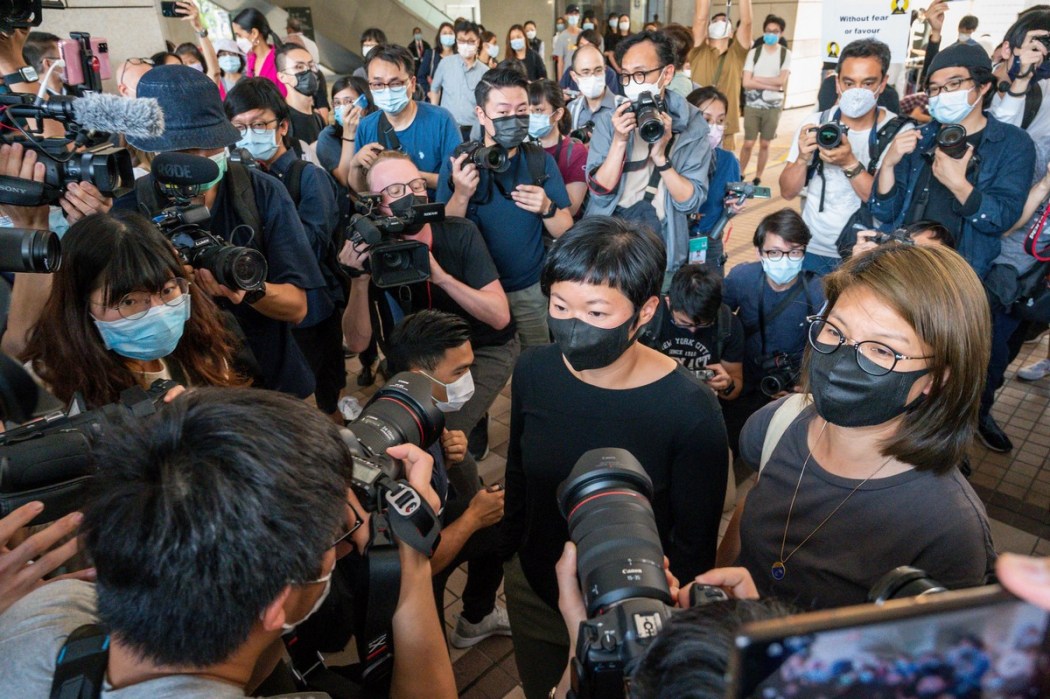
A Hong Kong press group urged the city’s police to provide an explanation after its former chairperson was led away by officers while she was reporting on the 34th anniversary of the Tiananmen crackdown.
The Hong Kong government condemned US politicians’ calls for a joint effort with the UK to prioritise the release of pro-democracy media mogul Jimmy Lai by sanctioning Hong Kong officials, prosecutors, and judges involved in national security law detentions.
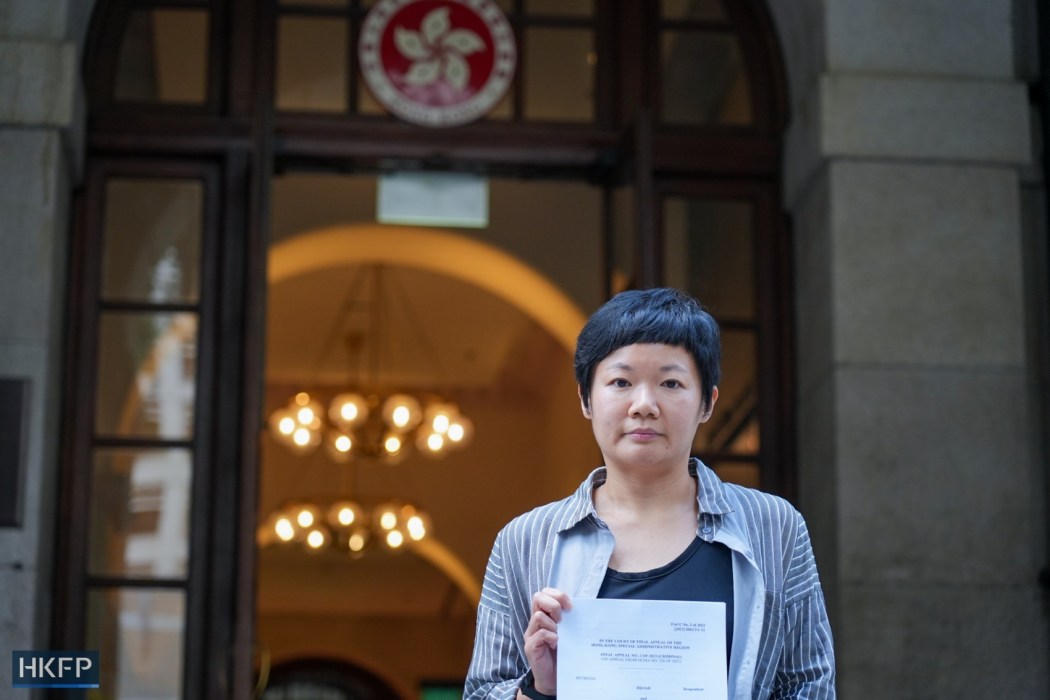
Journalist Bao Choy’s conviction for making false statements to access vehicle records was quashed after five judges ruled unanimously in favour of her appeal at the city’s top court. Her sentence was also set aside.
The Court of Appeal blocked media tycoon Jimmy Lai’s bid to challenge a national security search warrant of his phones, which he said contained protected journalistic materials, at the city’s top court.
Hong Kong journalist Bao Choy stands outside Hong Kong’s Court of Final Appeal after winning her appeal against her conviction for making false statements to obtain vehicle records, on June 5, 2023. Photo: Candice Chau/HKFP.
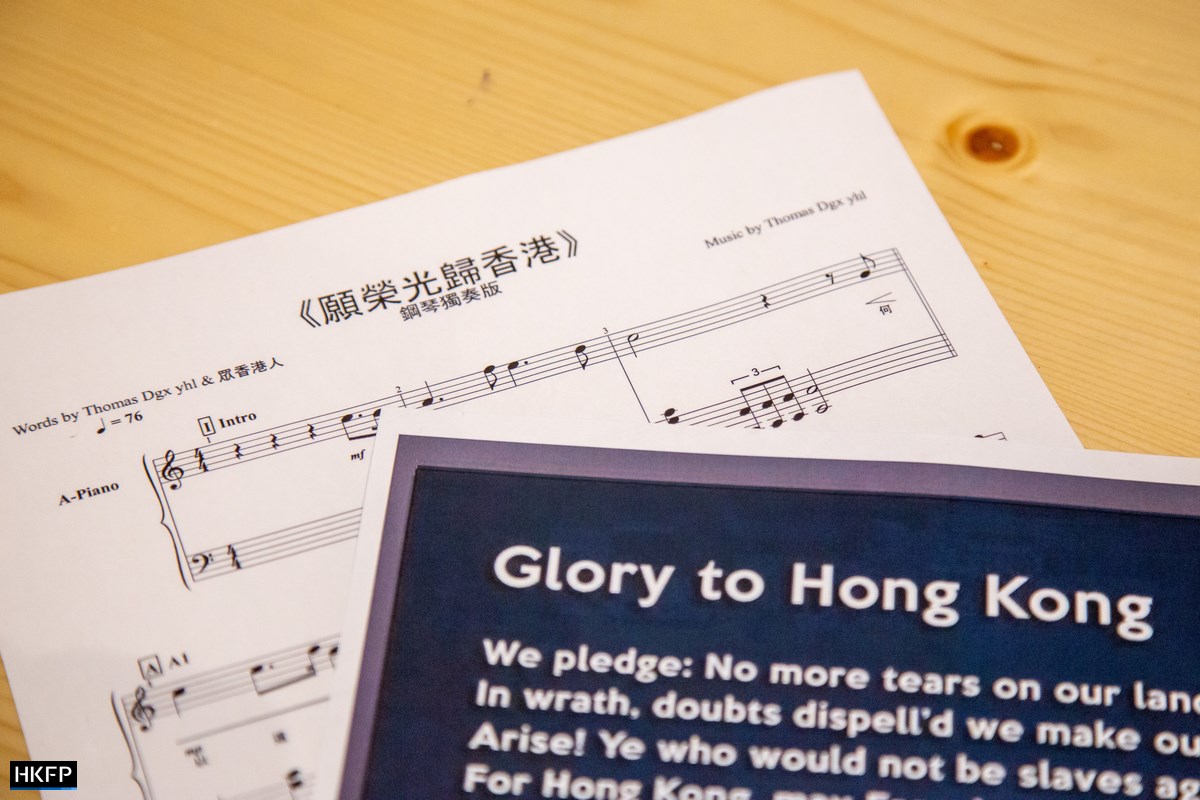
The Hong Kong Journalists’ Association said it was looking to intervene in a legal bid by the government to ban all forms of the protest song Glory to Hong Kong, in the hopes of gaining an exemption for media reporting. A statement said the press group wants to “protect the work of journalists.”
Citizens’ Radio, a pro-democracy pirate radio station, ceased operating on June 30 after its founder said the station’s bank account had been frozen.
A prominent Chinese financial journalist who compared the country’s economic problems to the Great Depression was banned from social media.
Blocking pro-democracy media tycoon Jimmy Lai’s overseas counsel from representing him in his national security trial is “persecution not prosecution,” his lawyer said in an application to halt the trial.
Hong Kong transport news site Transit Jam ceased operations, its owner announced, making it the latest outlet to disappear in the wake of the security law. The closure came days after its founder was targeted in the state-run press.
Hong Kong’s security minister hit back at the Hong Kong Journalists’ Association after it said the suspension of a long-standing political cartoon strip following repeated government complaints showed that the city “could not tolerate critical voices.”
The defence questioned whether an exchange between the head of Hong Kong’s largest journalists’ group, Ronson Chan, and a plainclothes police officer could have happened as described, as the trial against Chan began.
Hong Kong’s Court of First Instance rejected attempts by pro-democracy media tycoon Jimmy Lai to challenge a decision made by Hong Kong’s national security committee relating to the admission of an overseas lawyer for his trial.
Hong Kong Chief Executive John Lee refused to comment on reports received by the city’s largest press group that reporters had been followed by unknown men.
Hong Kong journalists who have emigrated faced a number of difficulties when trying to start their careers in media overseas, according to a report published by an overseas journalists’ body.
RTHK said it would “follow up” with Twitter, after the social media platform added a “state-affiliated media” label to the news outlet’s official account.
Hong Kong pro-democracy media tycoon Jimmy Lai filed a legal bid against the government’s decision to reject any further work visa applications from an overseas counsel he had hired for his national security case.
The Hong Kong government barred several government-registered media outlets from covering a National Security Education Day event, ignoring emails and evading questions by phone when challenged as to why.
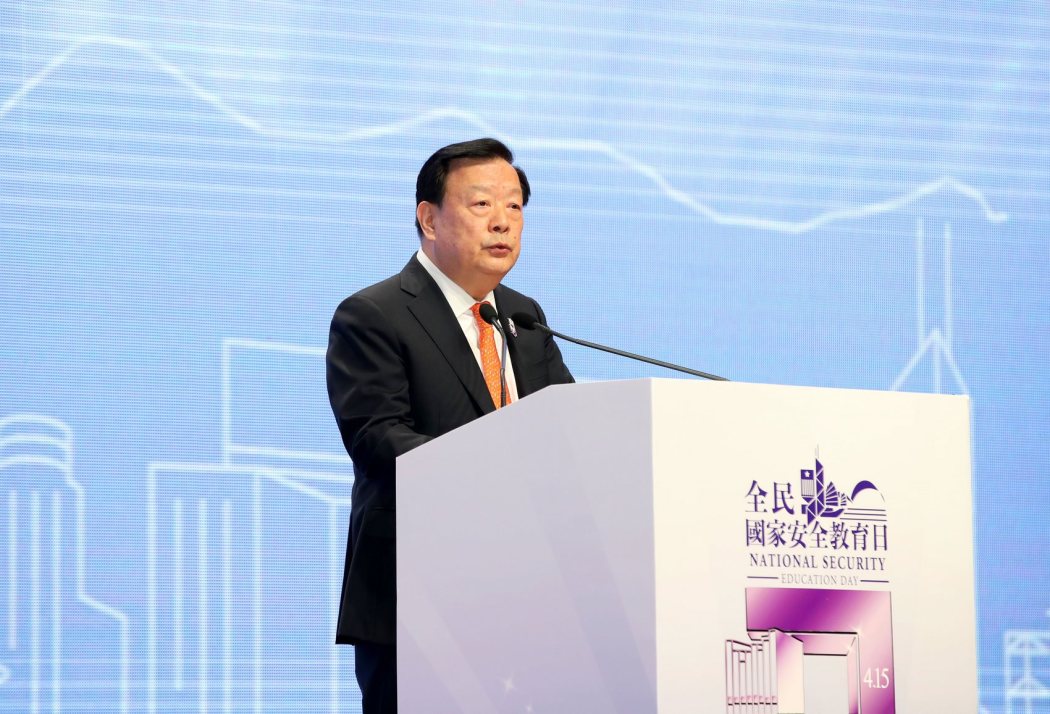
Director of the Hong Kong and Macau Affairs Office Xia Baolong attends the opening ceremony of the National Security Education Day on April 15, 2023. Photo: HKMAO.
The son and overseas lawyers of Jimmy Lai urged the United Nations to condemn the prosecution on “trumped-up” charges of the pro-democracy media tycoon, sparking criticism of them from the Hong Kong government.
Coconuts wound down its Hong Kong news site, citing commercial and journalistic challenges. The announcement came days after a new general manager took over the publishing group.
The trial against two former Stand News top editors charged under the colonial-era sedition law continued as the prosecution carried on the cross-examination of Chung Pui-kuen, ex-editor-in-chief.
The Hong Kong government submitted a proposal to introduce legislative amendments which would require local courts to obtain a certificate from the city’s leader before considering whether to allow foreign counsel to act in national security cases.
A committee on safeguarding national security in Hong Kong urged the city’s government to change the law as quickly as possible so it can ban a British lawyer from representing former pro-democracy media tycoon Jimmy Lai at his security trial.
The local legal team representing jailed Hong Kong media tycoon Jimmy Lai in his high-profile national security trial said it was not “professionally associated” with an international group of lawyers who reportedly met with a UK minister over Lai’s case.
Chung Pui-kuen, former chief editor of Stand News, at the District Court on January 26, 2023. Photo: Lea Mok/HKFP.
Hong Kong’s top court allowed journalist Bao Choy to appeal her conviction over accessing car licence information for an investigative documentary about a mob attack in Yuen Long in July 2019.
The government watchdog rejected a complaint filed by HKFP related to the authorities’ refusal to disclose their media invite list for Chief Executive John Lee’s inauguration last July 1.
The sedition trial against two ex-chief editors of defunct media outlet Stand News continued, as the court heard testimony from one of the defendants, former editor-in-chief Chung Pui-kuen.
December 2022
The national security trial of pro-democracy media tycoon Jimmy Lai was adjourned on its scheduled starting date until December 13 as Hong Kong waits for Beijing to “clarify” the law as to whether overseas lawyers are allowed to appear in such cases.
Defendants charged under the national security law could be sent to mainland China for trial if they cannot find a lawyer in Hong Kong, the city’s top delegate to Beijing’s advisory body said.
Journalist Bao Choy speaks with reporters outside High Court on Nov. 7, 2022. Photo: Lea Mok/HKFP.
The Hong Kong Journalists Association said it was “disappointed and worried” by the court’s decision to reject an appeal filed by journalist Bao Choy, convicted over accessing public data for a documentary about a mob attack in July 2019.
A Hong Kong citizen journalist who waved the British colonial-era flag while the Chinese national anthem was being played was jailed for three months for insulting the anthem, following the first conviction under a new law.
Hong Kong’s top court adjourned its decision on whether to allow the Department of Justice to appeal against an earlier ruling that let media tycoon Jimmy Lai hire a UK lawyer for his national security trial.
The International Federation of Journalists’ Hong Kong Freedom of Expression Report 2022. Photo: International Federation of Journalists, via screenshot.
Jimmy Lai, the founder of defunct Hong Kong pro-democracy tabloid Apple Daily, was convicted of fraud after being found to have violated the terms of the lease for the newspaper’s headquarters.
Two reporters quit the South China Morning Post last year after a senior editor axed their three-month investigation into human rights abuses in China’s Xinjiang region, according to an editor who resigned shortly after.
Ronson Chan, the chairperson of the Hong Kong Journalists Association, was granted bail after pleading not guilty to obstructing police officers and an alternative charge of obstructing another person lawfully engaged in a public duty.
Self-proclaimed non-pro-establishment party Path of Democracy appealed to the government to enact a fake news law as part of a broad list of suggestions for Chief Executive John Lee ahead of his policy address.
Hong Kong courts should not blur the line between criminal and civil cases, the District Court heard as the prosecution and defence presented their closing statements during the fraud trial against media tycoon Jimmy Lai.
Hong Kong’s High Court heard journalist Bao Choy’s appeal against her conviction over accessing public vehicle registration records when she researched and produced an investigative documentary about the Yuen Long mob attack in 2019.
Disclosing the media invite list for the July 1 leadership inauguration ‘would harm Hong Kong’s security,’ the government claimed.
Hong Kong democracy has taken a “quantum leap forward,” officials told a United Nations rights committee, during a grilling over the national security law, declining press freedom and other developments in the wake of the 2019 protests.
Hong Kong’s leader John Lee said journalists are “in the same boat” as him and that he hoped the news sector would join him in promoting the success of One Country, Two Systems to the world.
A United Nations rights monitor urged Hong Kong to repeal its national security law, citing the “overly broad interpretation” of its provisions and the subsequent violation of free expression in the city.
The Hong Kong Journalists Association held its annual general meeting, in which members approved changes to the group’s constitution to make dissolution easier.
Reporters Without Borders said Hong Kong authorities wielded a draconian new security law to silence critical news outlets and jail journalists in its latest report, as the city plummeted down an international press freedom chart.
The president of Hong Kong’s Foreign Correspondents’ Club said that the club still has a “role to play” following its decision to cancel this year’s Human Right Press Awards, citing legal risks.
The ex-acting chief editor of the now-defunct Stand News told a Hong Kong court that he intended to plead not guilty to sedition charges, as the case was adjourned until late June.
Hong Kong national security police demanded that Passion Times, an online news outlet which had ties with a defunct opposition group, remove “sensitive” content.
A Hong Kong citizen journalist was sentenced to one month in jail for behaving in a disorderly manner in a public place on National Security Education Day in 2021.
Hong Kong veteran journalist Allan Au was arrested by national security police for allegedly conspiring to publish seditious materials, and was released on bail after spending over 17 hours in police custody.
Pro-democracy cartoonist Ah To has announced his departure from Hong Kong, saying he would face “great mental stress” if he were to continue to produce political cartoons in the city.
A statement signed by 21 Western nations condemned a press freedom crackdown in Hong Kong and the arrests of journalists at the defunct independent media outlet Stand News.
Citizen News’ China news team. Photo: Citizen News screenshot, via YouTube
The Registry of Trade Unions launched a probe into the Hong Kong Journalists Association, asking it to provide answers on how certain events it held were relevant to its objectives.
Hong Kong public broadcaster RTHK “paused” the social media pages of a dozen programmes, including the axed political satire show Headliner and the popular Hong Kong Connection, which was still in production.
Hong Kong public broadcaster RTHK removed from its website a news report about Chinese tennis star Peng Shuai, who accused a former top Chinese official of sexual assault.
Chief Executive Carrie Lam vowed to “proactively plug loopholes” in the city’s internet regulation to ensure “fake news” circulating online does not “harm society.”
Two Hong Kong news organisations were barred from attending a reception organised by the local media sector in celebration of the upcoming Chinese National Day.
Hong Kong public broadcaster RTHK refused to say why it deleted a story from its website about proposals for a new law criminalising insults against public officers.
The head of the Hong Kong Journalists Association said that the security chief’s suggestion that the group could make public its members’ information may be in violation of the Privacy Ordinance.
Chairperson of the Hong Kong Journalists Association Ronson Chan. Photo: Screenshot.
It is announced that pro-democracy media tycoon Jimmy Lai is to stand trial on national security charges in Hong Kong’s High Court, where the maximum penalty is life imprisonment.
RTHK’s YouTube Channel. Photo: RTHK Screenshot via YouTube.
The Hong Kong Press Freedom Index hit a record low, with close to 99 per cent of respondents saying the Beijing-enacted national security law harmed the city’s free press.
Hong Kong journalist Bao Choy filed an appeal against a magistrate’s decision to convict her after she accessed public records to investigate police behaviour during the “7.21” mob attack at Yuen Long MTR station in 2019.
An executive producer who led Hong Kong’s longest-running TV documentary programme, Hong Kong Connection,resigned from RTHK.
Trading in shares of Next Digital, the parent company of Hong Kong’s largest pro-democracy newspaper Apple Daily, was suspended at the company’s request.
Hong Kong’s Security Secretary John Lee denied that the freezing of the assets of pro-democracy media tycoon Jimmy Lai represented a crackdown on press freedom.
WhatsApp chats which democrat Claudia Mo had sent to media organisations like the BBC and the New York Times outlining her fears for freedom of speech in the city were deemed by a High Court judge to be sufficient grounds to deny her bail.
April 2021
RTHK said that the Hong Kong government has the power to surcharge its employees for the cost of axed programmes.
The public perception of the independence and credibility of Hong Kong’s news media dropped to a record low, according to an opinion poll.
Chief Executive Carrie Lam said the Hong Kong government is the “biggest victim of fake news,” after pledging to submit a bill to tackle “doxxing” within the current legislative term.
RTHK dropped veteran journalist Steve Vines as a regular current affairs commentator on its Morning Brew programme after more than ten years.
Hong Kong journalist Yvonne Tong, who famously challenged a WHO official, resigned from RTHK.
Reporters Without Borders East Asia warned that silence from the Hong Kong authorities over an attack on the Epoch Times is fostering a “climate of suspicion” against journalists and “encouraging” violent attacks on the media.
Police chief Chris Tang said that media outlets that endanger the security of Hong Kong by publishing “fake news” will be investigated.
State-owned newspaper Ta Kung Pao, in a full-page cover story, accused Apple Daily and other pro-democracy “yellow media” of “constantly creating fake news.”
Reporters without Borders warned that the national security law posed a “grave threat” to the city’s journalists as Hong Kong remained 80th out of 180 regions in the 2021 world press freedom index.
Journalist Bao Choy appears in court on April 22, 2021. Photo: Studio Incendo.
RTHK rejected a media award for a TV documentary about the police handling of the Yuen Long mob attack in 2019.
Hong Kong documentary producer Bao Choy was found guilty and fined HK$6,000 for knowingly making false statements to obtain vehicle ownership records for the RTHK programme on the Yuen Long mob attacks of 2019.
Police confirmed that a journalist from Ta Kung Pao was arrested in February for making false statements to obtain public vehicle records.
The Foreign Correspondents’ Club urged Hong Kong’s police chief to clarify his recent comments about “foreign forces” attempting to stir hatred and conflict in the city using disinformation.
Beijing accused the FCC of being an external force interfering with China’s internal affairs and undermining the city’s rule of law.
A top Beijing official said the principle of “patriots governing Hong Kong” extends to the judiciary, the education sector and the media, in addition to public officials.
A leading civil servant with no broadcasting experience took over as head of RTHK, where three senior employees quit in the space of two weeks.
RTHK made a last-minute decision to cancel a programme featuring a panel discussion of Beijing’s plans for a drastic election overhaul.
Press freedom in 2021. Photo: RSF.
The cinema screening of a documentary about a violent campus clash between student protesters and police in 2019 was cancelled at short notice after a pro-Beijing newspaper claimed the film may violate the national security law.
Hong Kong’s Ombudsman said that it would investigate the Immigration Department for refusing a work visa to Hong Kong Free Press for its incoming editor in 2020.
Bao Choy went on trial for allegedly violating the Road Traffic Ordinance in seeking to obtain vehicle licence plate information for a documentary.
Security officers at the West Kowloon Magistrates’ Courts barred at least two reporters from attending a trial hearing to protect the identity of a police officer who had provided a witness statement anonymously.
Hong Kong’s High Court refused to grant bail to media mogul Jimmy Lai again over national security law charges.
Police visited the newsrooms of Apple Daily, InMedia and StandNewswith search warrants demanding documents relating to the primary election for LegCo in July 2020.
Three people convicted of rioting and assaulting a mainland journalist at the airport during anti-government protests in 2019 were jailed for up to 5 1/2 years.
Bao Choy pleaded not guilty to making false statements after she obtained vehicle registration information for a film about the 2019 Yuen Long mob attacks.
The head of Hong Kong’s largest police union slammed public broadcaster RTHK for allegedly biased reporting of a weekend lockdown to combat Covid-19.
A silent protest staged by the RTHK union to support their colleague Nabela Qoser. Photo: Candice Chau/HKFP.
The staff union at RTHK staged a silent protest to support fellow journalist Nabela Qoser, after she was told to accept a new short-term contract or face dismissal.
The Communications Authority ruled that three episodes of RTHK’s satirical programme Headliner insulted and denigrated the police force, and “strongly advised” the station to follow broadcasting regulations more closely.
Freelance producer Bao Choy was arrested for searching car licence plate records while researching a TV documentary about the 2019 Yuen Long mob attacks.
Hong Kong Chief Secretary Matthew Cheung banned a planned journalists’ protest against the arrest of Choy, citing Covid-19 restrictions, despite earlier approval.
A district councillor was given a suspended prison sentence for publicly identifying the policeman who allegedly shot an Indonesian journalist in the eye.
The government reportedly told an independent film distributor to include an official warning in two documentaries about the anti-extradition bill protests.
Three-time Chinese Olympic champion swimmer Sun Yang filed a police report after being subjected to “large-scale” cyberbullying, his team said Friday.
Chinese swimmer Sun Yang. File photo: Olympics.
Sun, 34, returned to competition in 2024 after a four-year ban for smashing vials of blood during a 2018 doping test, the circumstances of which he still disputes.
His team said Friday that false information including “maliciously fabricated rumours” had circulated online recently, calling it “organised and planned cyberbullying and defamation”.
They did not specify what false information had been spread about Sun.
The swimmer reported the case to police in the eastern city of Hangzhou, his team said on social media, posting a photo of a notice he had received after filing the complaint.
“We solemnly warn all rumour-mongers and malicious disseminators: immediately delete all infringing content and cease forwarding,” his team said.
The Olympic rings. File photo: Wikicommons.
“Our legal team has secured evidence and will pursue civil, administrative, and even criminal liability according to the law.”
Chinese authorities have been grappling with what state media has called “toxic fandom” surrounding its sports stars.
It includes fans obsessing over athletes’ personal lives and attacking opponents online.
The nearly two-metre tall (six feet seven inches) Sun was China’s first male Olympic swimming champion, winning the 400m and 1500m freestyle at the 2012 London Games.
But he has long been a controversial figure in the pool.
Some rivals accused him of cheating at the 2016 Rio Olympics and two competitors refused to stand with him on medal podiums at the 2019 World Championships.
Sun was also given a three-month ban in 2014 after testing positive for a banned substance.
Christine Li is a model and influencer, but not an actor, so when she saw herself playing a cruel character in a Chinese microdrama she felt bewildered, then angry and afraid.
The 26-year-old is one of two people who told AFP their likenesses were cast without consent in the AI-generated show “The Peach Blossom Hairpin”, which ran on Hongguo, a major microdrama app owned by TikTok parent company ByteDance.
A photo taken in Hong Kong on April 16, 2026, shows phones displaying screenshots of a video from Chinese model and influencer Christine Li accusing an AI microdrama of stealing her likeness without consent. Photo: Mahmoud Rizk/AFP.
Li plans to sue the drama makers and the platform, highlighting new legal and regulatory grey areas created by artificial intelligence.
“I was genuinely shocked. It was clearly me,” said Li, who lives in Hangzhou in eastern China.
“It was so obvious that they used a specific set of photos I took two years ago” and had posted on social media, she said.
Microdramas are ultra-short, online soap operas hugely popular in China and elsewhere.
When Li’s fans alerted her to the series, she was horrified to find her digital twin shown slapping women and mistreating animals.
“I also felt a deep fear. I kept wondering what kind of person would do something like this,” Li said.
Hongguo hosts thousands of free, bite-sized shows — both live-action and AI-generated — whose episodes are two or three minutes long.
As of October, the platform had around 245 million monthly active users, according to data cited by Wenwen Han, president of the Short Drama Alliance.
A Hongguo statement in early April said it had taken the series down because the producers had violated platform rules and contractual obligations.
‘Sleazy’ antagonist
AI’s ability to mimic real people has sparked global concern for actors’ jobs, and over such deepfakes being used for scams and propaganda.
Li and a man who says he was portrayed as her AI husband in the series, which became a hit last month on Hongguo, spoke out online about their separate unwelcome discoveries.
But even as their stories sparked a public outcry about AI ethics, AFP saw that “The Peach Blossom Hairpin” kept running for days before its removal, with the disputed characters quietly replaced.
A photo taken in Hong Kong on April 16, 2026, shows phones displaying the screenshots of Chinese “hanfu” stylist Baicai’s social media post (left) and the AI microdrama (right) accused of stealing his likeness without authorisation. Photo: Mahmoud Rizk/AFP.
The man, a stylist specialised in traditional Chinese clothing and make-up, had posted photos of himself in costume on the Instagram-like Xiaohongshu app.
Like Li, he was upset by the “ugly” portrayal of his likeness as a “sleazy” antagonist in the show.
“Will it have an impact on me, on my job, on my future work opportunities?” said the man, who asked to use the pseudonym Baicai.
To keep audiences hooked, microdramas are often full of shocking, larger-than-life moments.
Li and Baicai both showed AFP their original photos and the characters in “The Peach Blossom Hairpin”, which bore a strong resemblance.
Legal risk
For low-budget AI microdramas, Chinese regulations say platforms must be the primary checkpoint for potentially dodgy content.
If they do not carry out mandatory content reviews, the videos will be forcibly taken down, according to the National Radio and Television Administration.
If the platforms were aware of any infringement but failed to act on it, parties affected can alert China’s cyberspace authorities which can impose administrative penalties, according to Zhao Zhanling, a partner at Beijing Javy Law Firm.
Hongguo said in a second statement this month it would continue to strengthen how it reviews content and how it authorises creators, among other steps.
It said it had dealt with 670 AI microdramas that violated regulations, with most taken down, and warned it would crack down on repeated breaches.
When approached for comment, parent company Bytedance referred AFP to the two Hongguo statements.
ByteDance office building in Shanghai. Photo: ByteDance.
Li and Baicai say they need more information from Hongguo to confirm the identity of the drama’s creator — with two companies as potential candidates.
One is linked to a verified account on the Chinese version of TikTok that also published the series. Another is listed as the drama’s producer on an official Chinese filing system.
AFP contacted both firms but received no response.
Using AI to slash costs may be tempting in the fast-growing, multi-billion-dollar microdrama market.
But featuring someone in a demeaning way without permission “may constitute an infringement of both portrait rights and reputation rights”, said Li’s lawyer Yijie Zhao, from Henan Huailv Law Firm.
‘Associated with controversy’
National regulations require microdrama makers to register to obtain a licence — a step made mandatory for AI-generated animations from this month.
But producers could remain in the shadows by registering temporary outfits, Zhao said, while some allegedly use overseas servers to hide.
In 2024, a Beijing court ordered a company to apologise and pay compensation to a celebrity after its AI software enabled users to produce a virtual persona using his photos and name that could exchange intimate messages.
China’s foreign minister on Thursday urged the United States to maintain “stability” between the two powers and warned that Taiwan posed the biggest risk, weeks before President Donald Trump visits Beijing.
Chinese Foreign Minister Wang Yi speaks at the 2026 Munich Security Conference on February 14, 2026. File photo: Munich Security Conference.
In a call with US Secretary of State Marco Rubio, Foreign Minister Wang Yi said that Beijing and Washington should “safeguard the hard-won stability” in China-US relations, China’s foreign ministry said.
The talks also discussed the Middle East, where China has been a key partner of Tehran but has largely kept its distance after Trump joined Israel in attacking Iran, sending global oil prices spiralling.
A State Department official confirmed the phone call and said it was to arrange Trump’s trip but did not give further details.
Trump is scheduled to visit China on May 14-15 to see President Xi Jinping — the Republican billionaire’s first trip to the rival power since returning to the White House in January 2025.
During Trump’s first year back in office, Washington and Beijing clashed over trade and tariffs until a truce was declared in October, when Trump and Xi met in South Korea.
The Taiwan flag. Photo: Olaer/Elmer Anthony/Flickr.
“Both sides should safeguard the hard-won stability, prepare well for key high-level interactions, expand areas of cooperation” and manage their differences, Wang told Rubio, according to a readout from the Chinese foreign ministry.
While ties have “generally remained stable” under Trump and Xi, Wang “emphasised that the Taiwan issue concerns China’s core interests and is the biggest risk point in China-US relations”, it said.
Beijing claims Taiwan as part of its territory awaiting reunification and is sharply critical of US military assistance to the self-ruled island and its support of Taipei on the international stage.
“The United States must honor its commitments and make the right choices, opening new perspectives for bilateral cooperation and do its part to promote world peace,” Wang said.
The statement from the Chinese ministry said Wang and Rubio had “exchanged views” on the situation in the Middle East, without offering further details.
Taiwan’s economy expanded at its fastest pace in nearly 39 years thanks to robust demand for artificial intelligence technology, data showed Thursday, despite concerns over the Middle East crisis.
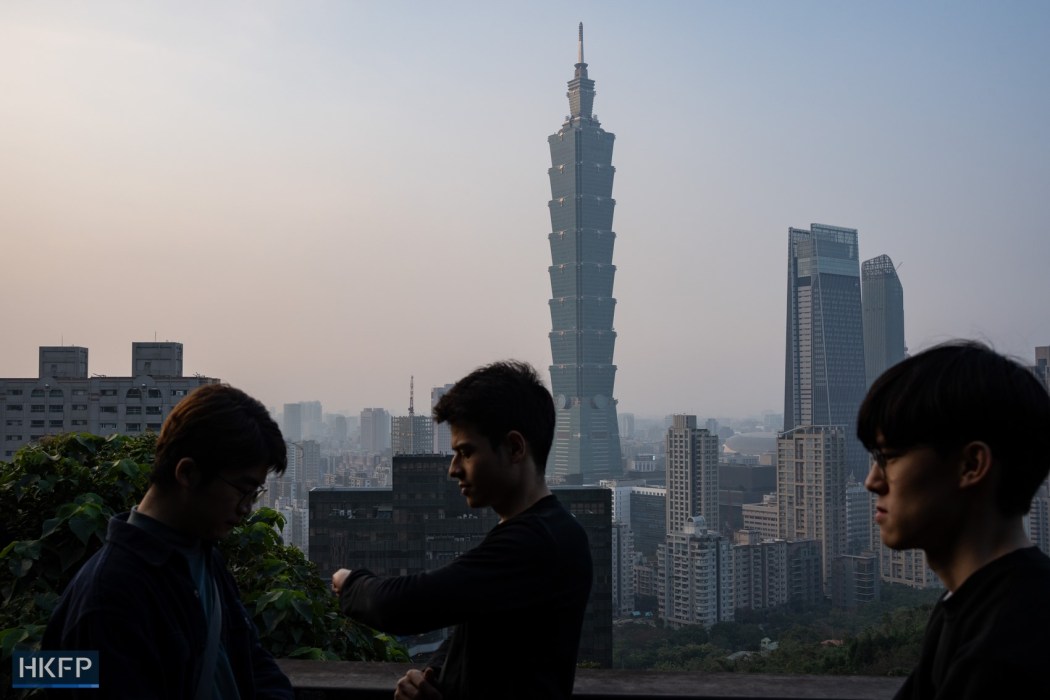
Taipei, Taiwan. File photo: Kyle Lam/HKFP.
The island is a global powerhouse in the manufacturing of semiconductor chips, which power AI, and its economy has been growing at a fast clip in recent years.
But the Iran war has raised concerns about the potential impact on the economy, particularly the critical chips sector, owing to Taiwan’s almost total reliance on energy imports to keep the lights on and production lines running.
Gross domestic product expanded 13.7 percent on-year in the first quarter of 2026, the fastest pace since the second quarter of 1987, according to the statistics agency.
It was also better than the 11.3 percent forecast in a survey by Bloomberg News, and a pick-up from the 12.7 percent recorded in the previous three months.
“The rapid expansion of AI applications has sharply boosted demand for computing power, which in turn has driven strong export momentum for products in AI infrastructure–related supply chains,” said Chiang Hsin-yi, an official at the Directorate General of Budget, Accounting and Statistics.
She added that the impact from the Middle East war “doesn’t seem that evident at this point”, although some data for March “is not that complete yet”.
Taipei has sought to limit the economic impact of the Iran war by absorbing most of the increase in fuel prices, while also ensuring the island has a secure supply of LNG and oil, much of which comes from the Middle East.
TSMC building. Photo: Taiwan Semiconductor Manufacturing Co Ltd.
Wendell Huang, chief financial officer of chip titan TSMC, said this month that the company did not expect the war to impact its supply of key chipmaking materials such as helium and hydrogen in the near term.
TSMC is the biggest contract maker of microchips that are used in everything from Apple iPhones to Nvidia’s processors.
Nevertheless, Taiwan’s “consumption likely slowed” and “investment probably fell” in the first quarter as sentiment was hurt by the conflict, Bloomberg reported before the data was released.
The export-driven economy grew 8.6 percent in 2025, its fastest pace in 15 years, but is expected to expand 3.5 percent this year.
Hong Kong photographer Gareth Brown has spent the past 19 years working on a personal project called “Bodies in Motion, Bodies at Rest” – using dance to showcase the city’s unique spots.
Hong Kong Dance Company dancer Debby Chuang at a derelict industrial building in Tsing Yi, reputedly a major paint factory operated by Swire in post-war Hong Kong. Photo: Gareth Brown.
For what he called a “very personal passion project,” he photographed ballerinas, contemporary and traditional dancers, as well as artistic swimmers and aerialists, against the backdrop of heritage buildings, natural landscapes, and modern infrastructure.
Dance artist Sudhee Liao at Pun Uk, a Meixian Hakka mansion in Yuen Long, dating back to 1934. The building was built by Hakka businessman Pun Kwan-min, who contributed financially to the 1911 Revolution to overthrow the Qing dynasty. In 1938, future Chinese premier Zhou Enlai stayed at Pun Uk. The mansion has a Grade II listing, and though seemingly sound, the structure has been left derelict for many years. Photo: Gareth Brown.
Aquatic performers Nora Cho, Grace Pang, Carmen Leung, Michelle Pang, and Chan Hoi-lam – members of the Hong Kong artistic swim team – at a river pool in Sheung Luk Stream, Sai Kung. The photo was taken before the deeper pools became popular with social media influencers and daredevil tombstoners. Photo: Gareth Brown.
Suku Limbu and Sajna Gurung, from the Hong Kong Nepalese Dance Group, at the Hindu Temple in Burma Lines, the former Queen’s Hill Army Camp in Fanling. The abandoned temple is a visually striking architectural gem. Designed as a place of worship for the Gurkhas of the British army, its hexagonal shape is reminiscent of a lotus blossom. Photo: Gareth Brown.
“Over the years, I’ve kept the works mostly to myself, dance and heritage friends,” said Brown, who is originally from the UK.
Having amassed a large collection, “I’m attempting to bring it to the attention of a wider audience.”
Contemporary dancer-choreographer Abby Chan at the Kam Tin Tree House, where the roots of a massive banyan tree have intertwined with the remains of an ancient study hall. It is located in Kam Tin, a historic traditional village famous for its many temples. Photo: Gareth Brown.Former Hong Kong Ballet star Irene Lo, now associate director of the Hong Kong Academy of Ballet, at the House of Convenience, or Fong Pin Yuen in Cantonese, on the outskirts of Tai O, Lantau Island. The facility was established by a Buddhist woman named Yip Sin-hoi in 1934 for seriously ill and dying patients to pass their final days. Photo: Gareth Brown.
The photographer said he usually found locations of interest – “culturally, historically, or they just look good” – and then chose dancers who best fitted the spot.
For example, at a river pool in Sheung Luk Stream, Sai Kung, he worked with members of the Hong Kong artistic swim team. At an abandoned Gurkha Hindu temple in Burma Lines, he collaborated with traditional dancers from the Nepalese community. An aerialist posed at a wall tree of the former Tung Chi College on Ship Street, which has since been demolished.
Prima ballerina Faye Leung, previously senior principal at Hong Kong Ballet, at Island Eastern Corridor, a prime example of the ambitious mass infrastructure projects that embody Hong Kong’s can-do spirit. The ballerina’s movements, full of power and grace, pay homage to this remarkable feat of modern engineering. Photo: Gareth Brown.
Joana Cambeses, an aerialist and acrobatic performer, hanging from a wall tree at the former Tung Chi College, on Ship Street in Wan Chai. The building has been redeveloped since the image was taken. Some of the most impressive wall trees could be found on Ship Street. Photo: Gareth Brown.
Contemporary dancer Sarah Xiao at the 33-metre historic granite edifice at Tai Tam Upper Reservoir Dam. Photo: Gareth Brown.
“If nothing else, the project is an interesting historical record of the [Hong Kong] dance industry, as well as locations that no longer exist or probably won’t exist for much longer,” Brown said.
The project gave him the chance to work with some of the city’s prominent dancers, such as Hong Kong Ballet principal dancer Yang Ruiqi, former Hong Kong Dance Company principal dancer Laura Pan, and dancer-choreographer Abby Chan.
Contemporary dancer-choreographer Flora Hon and actor-dancer Rick Cheung at Sunset Peak, Hong Kong’s third-highest peak, on Lantau Island. At the summit, there are 20 small concrete huts, constructed by missionaries in the 1920s. Legend has it that the huts served as a refuge from the sweltering heat and humidity of Hong Kong summers, as well as from the many spiritual distractions in the burgeoning city. Photo: Gareth Brown.Contemporary dancer Siobhan Dumigan braves cold temperatures at Cape D’Aguilar Battery, on the southernmost tip of Hong Kong Island. The World War II relic sits on a rocky outcrop in a hostile environment. Photo: Gareth Brown.
“I’ve been very lucky,” the photographer said of the collaborations.
At the heels of Brown’s solo exhibition at the Foreign Correspondents’ Club last year and another show at the Hong Kong Dance Awards ceremony last week, “Bodies in Motion, Bodies at Rest” is currently on display at The Corner Shop, a small gallery in Tsim Sha Tsui managed by the hotel Mondrian Hong Kong.
The exhibition will run until May 17.
Hong Kong Ballet principal dancer Yang Ruiqi at Plover Cove Reservoir in Tai Mei Tuk, the first freshwater coastal lake to be built in Hong Kong. The dam has a clean, futuristic aesthetic. Photo: Gareth Brown.
Laura Pan, former principal dancer at the Hong Kong Dance Company, at Shek Lo, an imposing abandoned colonial mansion in Fanling. The building – built in 1924 by Peter Tsui, founder of Wah Yan College – is a blend of Chinese and European architectural styles. Having been uninhabited since the 1980s, the Grade 1 historic structure has become a sanctuary for a large colony of bats. Photo: Gareth Brown.
Modern dancer-choreographer Lemon Doo and dance partner Tonia Wan at the Innovation Tower, designed by Zaha Hadid. The futuristic-looking building, located on the campus of the Hong Kong Polytechnic University in Hung Hom, has fluid curves with an ethereal, otherworldly appearance. Photo: Gareth Brown.
Exhibition: “Bodies in Motion, Bodies at Rest” – Photography by Gareth Brown.
Dates: April 20 – May 17, 2026.
Opening Hours: 11am to 11pm.
Venue: The Corner Shop by Mondrian, 11A-11D Hart Avenue, Tsim Sha Tsui.
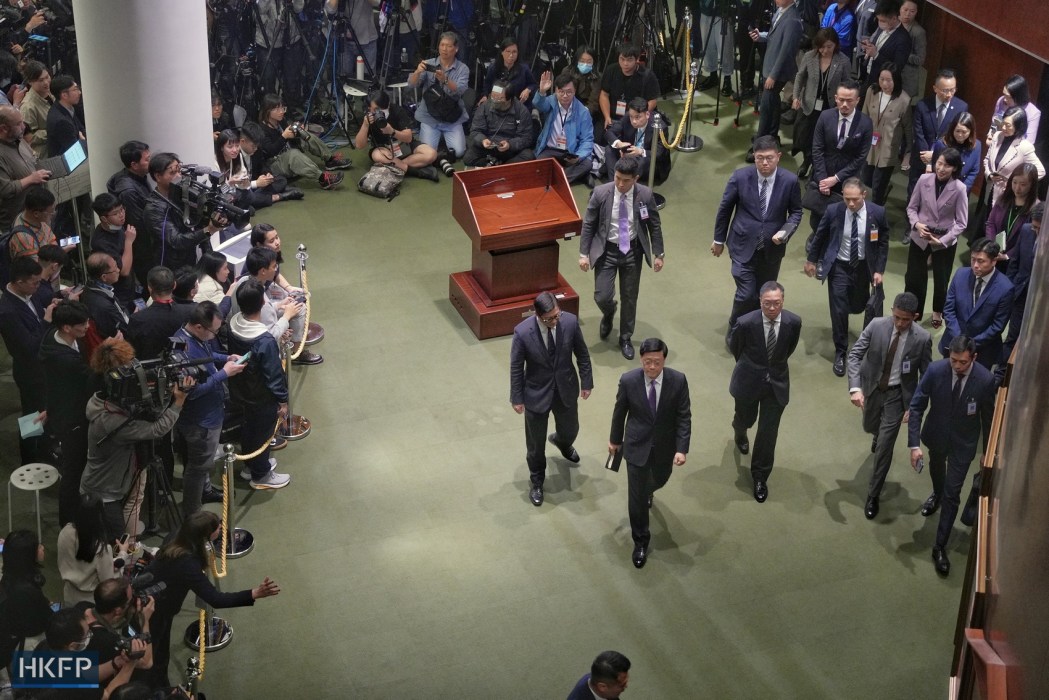
In the second half of April, the public inquiry into the deadly Tai Po blaze heard from multiple government departments about authorities’ oversight during a major renovation at Wang Fuk Court before the tragedy unfolded.
Andy Yeung, director of fire services, testifies before an independent committee investigating the massive Tai Po fire in Hong Kong, on April 24, 2026. Photo: Kyle Lam/HKFP.
In the first 10 days of the hearings, residents gave damning testimony of how their complaints about potential fire hazards during the renovation had fallen on deaf ears. Departments passed around their complaints, and when officers did inspect the housing estate in Tai Po, they said they failed to find evidence of irregularities.
During the 11 days of hearings from April 13 to Friday, a number of high-ranking officials and frontline officers acknowledged that the ways departments handled residents’ complaints were “not good enough” and that things could have been “done better.”
Victor Dawes, the lead lawyer for the independent committee investigating the inferno, summed it up well last week.
“During this inquiry, it appears that all government departments agree that things were not ideal. I have lost count of how many times we have heard, ‘Not good enough,” he said in Cantonese.
Judge David Lok, the committee chair, also noted that the blaze had exposed a “grey area” in which government departments lacked clear communication and a demarcation of responsibility for specific fire hazards.
So far, witnesses from the Fire Services Department, the Labour Department, the Buildings Department, the Home Affairs Department, and the Urban Renewal Authority have testified before the committee. Here is the summary.
Fire department as ‘ultimate gatekeeper’
The Fire Services Department (FSD) has the highest number of witnesses among government departments so far, with a total of 14 officers – ranging from frontline commanders to the director of fire services, Andy Yeung.
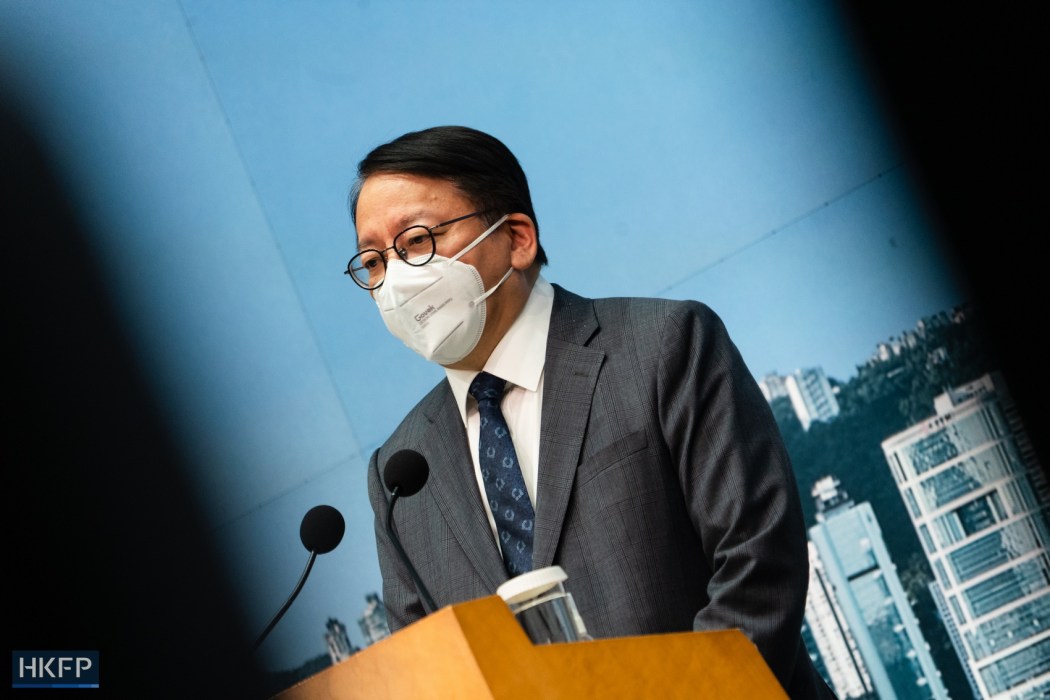
In his testimony on April 24, Yeung – the first departmental chief to testify – touched on several issues relating to the FSD’s oversight of fire hazards arising from building renovation projects.
Yeung also corrected the accounts given by some of his senior subordinates who had earlier given testimony.
Judge David Lok (centre), chair of the independent committee tasked with investigating the Tai Po fire, at City Gallery, Central, on April 24, 2026. Photo: Kyle Lam/HKFP.
For example, Michael Yung, assistant director of fire safety at the FSD, told the committee on April 22 that fire hazards like non-fire-retardant scaffold netting, flammable foam boards and workers smoking on construction sites fell outside the department’s purview.
The FSD is only responsible for “active” fire safety measures, such as alarm systems, and lacks the expertise on construction work, Yung said, while risks concerning construction materials fall under the purview of the Buildings Department.
Yeung, the fire services chief, said otherwise. He agreed with Dawes when the lawyer suggested that the FSD should be the “ultimate gatekeeper” to eradicate fire risks.
Yeung said the FSD and the Buildings Department should complement each other when it comes to mitigating fire risks, citing the experience following the fatal mini-storage unit fire in 2016, which killed two firefighters.
At that time, there was no law regulating the size of and the distance between storage units, Yeung recalled.
After the 2016 blaze, the FSD and the Buildings Department worked together to develop the regulations, ensuring they aligned with fire safety, as well as other structural elements, such as lighting and ventilation.
The Fire Services Department brought Wednesday’s deadly Tai Po fire under control in the early hours of November 27, 2025. File photo: Kyle Lam/HKFP.
Yeung said that, following the Tai Po fire, the two departments had conducted a review of several issues, such as wooden boards in emergency staircases – which served as temporary openings for workers to access bamboo scaffolding – and foam boards used to protect windows from falling debris.
He also said both departments could make prosecutions and that inter-departmental communication would be improved regarding enforcement.
Labour Department admits shortcomings
On April 21, three occupational safety officers from the Labour Department, including the chief officer of operations, Murphy Yuen, testified before the committee.
Lam Sau-ching, an occupational safety officer who had handled Wang Fuk Court residents’ complaints, said the department conducted a total of 17 inspections, none of which found evidence of workers smoking.
“When officers say the complaint could not be justified, they meant that during the inspection, they could not see evidence for the complaint,” Lam said in Cantonese.
Lee Shu-wun, a lawyer for the independent committee, said workers may have smoked even though the department did not find any evidence, to which Lam agreed.
Hong Kong’s Labour Department. Photo: Kyle Lam/HKFP.
Lam admitted that an e-mail response she wrote to a resident to address a complaint regarding the fire-retardant quality of scaffold netting “could be improved.” In the e-mail, Lam mistakenly said the Labour Department had no regulations on the fire-resistance quality of the nets.
She also admitted that the department did not check the issue dates on fire-retardancy certificates submitted by Prestige Construction & Engineering, the main contractor for Wang Fuk Court’s renovation.
Yuen, the chief officer of operations, said the Labour Department could have referred to a list of approved laboratories provided by the Housing Department to check the authenticity of certificates, but his department still relied on the contractor’s integrity.
“If some contractors are bent on tricking us, there is nothing we can do other than refer the case to law enforcement agencies,” he said in Cantonese.
Li Man-pong, a senior occupational safety officer, said the installation of wooden boards in emergency staircases did not breach labour safety regulations as it was to facilitate workers accessing bamboo scaffolding safely.
Judge Lok said Li’s account appeared to suggest a conflict of interest between workers and residents.
The committee had previously heard that the temporary openings allowed smoke to enter the emergency staircases, accelerating the spread inside the buildings and trapping residents.
Karen Cheung, assistant director of mandatory building inspection, said both access openings for workers and foam boards used to seal windows violate the city’s building construction regulations.
Not only did Cheung’s testimony differ from that of the Labour Department officers, her account also appeared to contradict a written submission by Andy Ku, a senior surveyor of the Housing Bureau’s Independent Checking Unit (ICU).
The ICU oversees construction works at government-subsidised housing estates like Wang Fuk Court.
The blackened exterior of an apartment block in Wang Fuk Court, Tai Po, on November 27, 2025, with what appears to be styrofoam boards attached to the windows. Photo: Kyle Lam/HKFP.
According to Ku’s submission, Hong Kong’s laws do not regulate the use of foam boards because they are “temporary materials.” It is unclear if Ku will testify before the committee in person.
However, Cheung said using foam boards to cover windows extensively violated regulations as the laws stipulate that every unit of a residential building should have natural light and ventilation.
When asked by Dawes about her discrepancy with Ku regarding the regulations, Cheung said: “I think Mr Ku should be the one explaining this point.”
Cheung also said the Buildings Department would never inform contractors ahead of an inspection following a complaint. Officers would only seek the contractor’s assistance when they need to collect samples of construction materials for testing, she said.
The committee previously heard that the ICU had notified the consultant firm of Wang Fuk Court’s renovation project, Will Power Architects, about details of scaffold netting checks in advance.
Jenkin Suen, representing the government in the hearings, defended the ICU’s practice last month. He said at the time that inspections carried out by Buildings Department officers would also inform the inspected parties in advance.
Cheung declined to comment on the ICU’s practice. However, when pressed by Dawes, Cheung said: “This is not how we do things generally.”
Foam boards used to seal windows are visible in a Wang Fuk Court building in Tai Po after the deadly fire. File photo: Kyle Lam/HKFP.
In his written statement, Ku said that he consulted with Tse Kam-ming, a former senior building surveyor at the Buildings Department who was seconded to the ICU between 2023 and 2025, regarding foam boards used at Wang Fuk Court.
However, Tse told the committee that he had no recollection of giving any advice to Ku regarding the matter.
Tse called it “unacceptable” to dismiss foam board hazards, citing the 2017 Grenfell Tower fire in the United Kingdom as a warning of the dangers posed by combustible cladding and foam.
Home Affairs Department on district councillors
Also testifying on Monday was Chan Hau-man, former Tai Po district officer at the Home Affairs Department, who spoke about district councillors.
Multiple residents had testified that Tai Po South District Councillor Peggy Wong, a member of the pro-Beijing Democratic Alliance for the Betterment and Progress of Hong Kong (DAB), had amassed proxy votes from residents and interfered with meetings about renovation matters.
Wong denied the allegations in a written submission to the committee, saying she had only voted on behalf of residents twice during a residents’ meeting that sought to oust a controversial owners’ committee. On both occasions, Wong voted against the motion.
Tai Po South District Councillor Peggy Wong, a member of the Democratic Alliance for the Betterment and Progress of Hong Kong (DAB), in 2024. Photo: Peggy Wong, via Facebook.
Chan said her department “respects” district councillors when it comes to estate affairs, as long as they do not violate any law.
A district councillor has their own “community network,” and authorities respect that they may have an opinion and provide advice to residents regarding renovation, Chan added.
While current regulations do not specify an upper limit on the number of proxy votes a person can acquire, the department is reviewing whether a cap is needed, she said.
Urban Renewal Authority on bid-rigging risks
On Thursday, the committee heard testimony from Matthew Chan, a case manager for the Urban Renewal Authority (URA), which oversaw tender applications for the renovation work at Wang Fuk Court, a government-subsidised housing estate.
He said that the semi-government department had not considered the risks of bid-rigging in the tendering process for the large-scale renovation at the estate.
After securing the contract at a low price, Will Power Architects was able to “rig” the tendering process in favour of Prestige Construction & Engineering, an affiliated contractor, and carried out “rubber-stamp” inspections.
When Dawes presented a 2016 Competition Commission report on the prevalence of bid-rigging in Hong Kong’s building maintenance industry, Chan said that the URA did not take such risks into account despite being aware of rampant collusive tendering.
The case manager also said that the URA “would not comment on [Will Powers’] professionalism,” as the authority trusted the consultant’s experience and would want to avoid appearing biased or intervening in the owners’ board’s affairs.
The URA receives more than 10,000 tenders every year and has no ability to scrutinise every application in detail, Chan said.
China’s factory activity grew for a second straight month in April, official data showed Thursday, showing resilience despite surging energy prices and shipping disruption caused by the war in the Middle East.
This picture shows cars made by MG on a dock before being loaded onto a ship for export at the port in Lianyungang, in Chinas eastern Jiangsu province on April 29, 2026. Photo: CN-STR/AFP/China OUT.
The manufacturing purchasing manager’s index –- a key measure of industrial activity — was 50.3 in April, according to the National Bureau of Statistics (NBS), above the 50-point mark that divides expansion and contraction.
That figure fell from 50.4 in March, but was ahead of a forecast of 50.1 in a Bloomberg survey of economists.
The world’s second-largest economy has been struggling with a slowdown in domestic demand and investment in recent years that has weighed on its vast manufacturing sector.
March’s figure was the highest in a year, with manufacturing activity contracting in 10 out of 11 months before that.
April’s statistics showed economic output had “maintained expansion” while manufacturing “continued to show a positive trend”, according to NBS statistician Huo Lihui.
There was strong demand for electrical and IT equipment, but weaker market activity for petroleum and coal processing, Huo said in a statement.
But manufacturers faced higher costs as the prices of raw materials rose significantly, particularly in the energy and chemical sectors, Huo said.
Beijing’s central business district with the Forbidden City in the foreground. File photo: Wikicommons.
The data suggests Chinese producers remain resilient despite global economic disruption caused by the US-Israeli war with Iran that has seen energy prices surge and Tehran restrict access to the vital Strait of Hormuz.
“The PMI index shows the manufacturing sector has not been adversely affected by the conflict in the Middle East,” according to Zhiwei Zhang, president and chief economist at Pinpoint Asset Management.
“The monetary policy stance seems to have a marginally loosening bias, which helps to mitigate the higher energy prices,” he said in a note.
Julian Evans-Pritchard at Capital Economics added that exports and strong external demand were the main drivers.
“Soaring demand for memory chips and green tech products likely played a key role,” he said.
Despite the positive factory data, China’s non-manufacturing PMI — a gauge of activity across services and construction — slumped to 49.4 in April, down from 50.1 in March.
Business activity in the wholesale and retail sectors contracted, suggesting consumer demand remains weak.
The authority that oversaw tender applications for the renovation work at the fire-hit Wang Fuk Court had not considered the risks of illegal tendering practices, a case manager has told an inquiry into the deadly blaze.
A tender document listing Prestige Construction & Engineering Company as the top-rated contractor for maintenance works at Wang Fuk Court. Photo: Kyle Lam/HKFP.
Testifying on Thursday, Matthew Chan, a case manager for the Urban Renewal Authority (URA), said the semi-government body had not considered the risks of bid-rigging in the tendering process for the large-scale renovation at Wang Fuk Court, a government-subsidised housing estate in Tai Po.
In a typical bid-rigging scheme, a consultancy firm usually offers a low price to oversee renovation or construction work at a fraction of the market rate.
In the case of Wang Fuk Court, where the massive fire in November killed 168 people and displaced thousands of residents, Will Power Architects was chosen to oversee the renovation project after offering a HK$308,000 consultancy fee and another HK$220,000 to inspect the entire estate.
The consultancy firm then had the opportunity to “rig” the tendering process in favour of Prestige Construction & Engineering, an affiliated contractor and carried out ineffective “rubber-stamp” inspections, the independent committee investigating the cause of the fire heard last month.
Despite being aware that there was a significant range of prices submitted for the renovation contract – with deceptively cheap consultancy fees at the lower end – the URA did not intervene in the bidding procedure, Chan told Victor Dawes, the lead counsel for the committee.
‘We wouldn’t intervene’
The URA case manager said that price discrepancies were common for various reasons, such as when a newcomer in the field wanted to gain experience by offering lower prices.
Wang Fuk Court in Tai Po, pictured on November 28, 2025, in the aftermath of the fatal blaze. Photo: Kyle Lam/HKFP.
Chan told Dawes that he did not analyse whether the prices were reasonable.
“We wouldn’t intervene in the decision-making process of the owners’ corporation,” Chan said.
Dawes asked Chan whether he had thought Will Power’s price seemed “suspiciously cheap.” The case manager said that it did, “in terms of the number,” but added that he did not dwell on any possible wrongdoing involved.
Chan also said that the URA had “no role” in hiring the registered inspector and consultancy firm for Wang Fuk Court’s renovation work despite the service contract stipulating that it should have done so.
When Dawes presented a 2016 Competition Commission report on the prevalence of bid-rigging in Hong Kong’s building maintenance industry, Chan said that the URA did not take such risks into account despite being aware of rampant collusive tendering.
Chan also said that the URA “would not comment on [Will Powers’] professionalism,” as the authority trusted the consultant’s experience and would want to avoid appearing biased.
He also told the hearing that the URA receives more than 10,000 tenders every year and has no ability to scrutinise every application in detail.
Chan added that the URA’s “Smart Tender” platform, which anonymises the bidding procedure and arranges third-party price estimates to provide a fairer tendering process, could not address risks “with 100 per cent certainty.”
Australia’s foreign minister said Wednesday that China has agreed to work together to facilitate exports of jet fuel, in an attempt to ease supply disruptions caused by the war in the Middle East.
Australian Foreign Minister Penny Wong. File photo: Penny Wong, via Facebook.
The conflict and closure of the Strait of Hormuz, through which a fifth of the world’s crude oil transits, have caused fuel prices to soar and left many Asia-Pacific nations facing an energy crisis.
China, a major exporter of jet fuel and diesel to Australia and other countries, has avoided the worst of the war’s energy impacts thanks to its vast oil stocks, but paused exports at the start of the war to protect its domestic supplies.
“I can confirm… that the Chinese government is facilitating engagement with Australian businesses on jet fuel,” Foreign Minister Penny Wong told reporters in Beijing, following talks with her Chinese counterpart Wang Yi and Chinese Vice President Han Zheng.
She added that the move was “an important step, however, it is the first step”.
Earlier in the day, Wong pressed her case to Han, telling him that refineries in the Indo-Pacific region have been disproportionately affected by the blockage of the Strait of Hormuz, according to an Australian foreign ministry readout.
In the talks, she called for greater reciprocity in trade, emphasizing that Australia’s steady supply of raw materials and food to China should be matched by a reliable flow of gasoline, kerosene and fertilizers back to Australia.
“I made the point that the import inputs China supplies to Australia, including jet fuel, support the Australian resources sector, which in turn helps to maintain the flow of commodities that are so important in the bilateral trading relationship,” Wong told the press conference.
China is set to resume exports in May with major state-owned companies applying for licenses to do so, the Financial Times reported Tuesday, citing industry sources.
Chinese authorities have not commented publicly on the matter.
During her talks with Chinese officials, Wong added: “We were able to speak frankly, as we do, about those areas of difference, including consular issues, human rights, foreign interference, and regional and international security.”

 Login
Login