
 Login
Login
Colombia renewables conference comes at critical moment for global energy
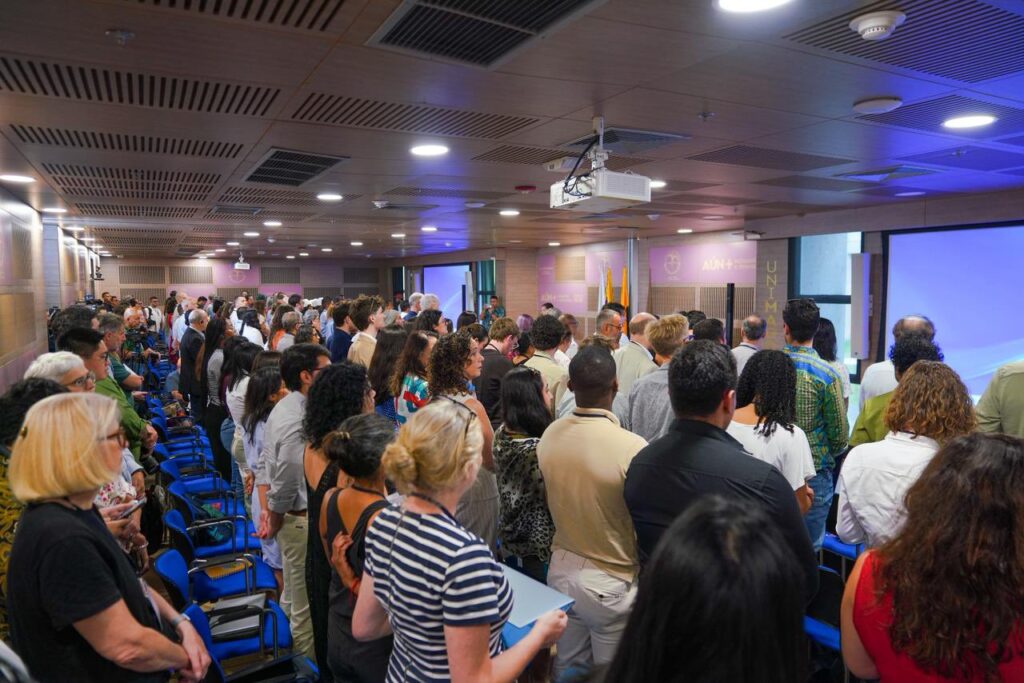
Bogotá, Colombia – The first global summit on “Transitioning away from Fossil Fuels” kicked off today in Santa Marta, Colombia, with 50 country delegations and dozens of civil society organizations in attendance.
Unlike other climate conferences, the six-day meeting will focus on implementing measures to end dependence on oil, coal, and gas, rather than negotiating international environmental commitments.
The summit comes at a pivotal time for global energy, with conflict in the Middle East restricting oil and gas supplies and creating economic woes for countries reliant on fossil fuels.
Because of the ongoing oil turmoil, the conference came at the “best possible moment” to shift world opinion towards renewables, said Colombia’s environment minister Irene Vélez.
Talking to the UK’s Guardian newspaper this week, the minister, who was a prime mover of the conference, said nations were “at a fork in the road” in their choices between clean power sources such as solar or wind, or continuing to back fossil fuels that created climate crises and conflict.
It promised to be a “coalition of the willing”, said the minister, providing a road map to support nations already dedicated to transitioning from fossil fuels.
The conference organizers were combative in refusing to invite nations and organizations wedded to climate change denial.
“Whatever nations have not yet taken that decision, then this is not the space for them. We are not going to have boycotters or climate denialists at the table,” Vélez told the Guardian.
Behind the conference is the Fossil Fuel Treaty Initiative, an alliance of nation states, technical bodies, communities and individuals “working to secure a global just transition from coal, oil and gas”.
According to the initiative, globally nations were planning to extract 120% more fossil fuels by 2030 than the “amount consistent with managing the impacts of climate change” – taking warming past the point of survival.
“The science is unequivocal. For the last decade, oil, gas, and coal have been responsible for 86% of the CO2 pollution heating our planet, as well as causing one in five deaths worldwide from fossil fueled-air pollution.”
For three decades global climate negotiations had focused on managing the symptoms of the crisis — fossil fuel emissions — while ignoring its root cause: the unchecked proliferation of oil, gas, and coal extraction.
This was a theme picked up by Kevin Koenig, director of climate and energy at Amazon Watch, a California-based nonprofit supporting indigenous communities attending the conference.
The last major summit, COP 30, was held last year in Brazil and saw “fossil fuel lobbyists outnumbering country delegates” he told Latin America Reports, adding that declarations at the end of that meeting “barely mentioned fossil fuels at all”.
In Santa Marta he expected things to be different: “This is the conference that is finally going to address the elephant in the room and get to the source of the climate change problem.”
Several factors were contributing to a momentum towards renewables, added Koenig, with recent data showing that cities and even whole countries have run for weeks off renewable energy as the Middle East crisis exposes the dangers of oil addiction.
“This is the moment where we are seeing both wars linked to fossil fuels politics and dependencies, but also for the first time renewables energies are not just theoretical, they are real, and decision-makers know they are scalable,” said Koenig.
This was supported by data from the Center for Energy and Clean Air, which reported that global power generation from fossil fuels fell in the first month after the U.S.- Iran conflict closed the Strait of Hormuz – a vital waterway for oil tankers – while energy generated by solar and wind power increased.
Another conference goal was to identify economic and legal barriers to transitioning to renewables, said Koenig.
An example was the hegemony of interconnected global norms feeding fossil fuel dependence, such as arbitration laws that punished small countries in international courts if they attempted to free themselves from big oil contracts. This architecture kept countries dependent, he said.
“Countries transitioning get beat up in arbitration courts or penalized by credit rating agencies. When Ecuadorians voted to keep fossil fuels in the ground, for example, their credit rating went down.”
In countries like Colombia, fossil fuels were also linked to localized conflict and armed groups, explained Koenig; over 30 years Amazon Watch has supported many indigenous communities under attack for defending their territories against drilling.
“Some countries use oil extraction as a reason to open areas, saying ‘we can militarize it and it will be safer’. In fact, oil and energy infrastructure are a magnet for armed groups, for political attacks or blackmail,” he explained.

That dynamic was more visible than ever on the world stage.
“Fossil fuels are fueling dictatorships, violence, conflict and authoritarian regimes,” said Koenig. “The Middle East crisis underscores the urgency to transition.”
“Yes, abandoning fossil fuels is about climate – but also about security and democracy.”
Featured image description: Delegates register at the fossil fuel conference in Santa Marta on April 24, 2026.
Featured image credit: @MinAmbienteCo via X
The post Colombia renewables conference comes at critical moment for global energy appeared first on Latin America Reports.
