Charlie Chan in Honolulu directed by H. Bruce Humberstone in 1938, starring Sidney Toler as the detective Charlie Chan. The film is the first appearance of both Toler as Chan and Victor Sen Yung as "number two son" Jimmy.
While Charlie is distracted with the birth of his first grandchild, son Jimmy impersonates his father in order to investigate a murder aboard a freighter in the harbor.
Charlie Chan in Honolulu directed by H. Bruce Humberstone in 1938, starring Sidney Toler as the detective Charlie Chan. The film is the first appearance of both Toler as Chan and Victor Sen Yung as "number two son" Jimmy.
While Charlie is distracted with the birth of his first grandchild, son Jimmy impersonates his father in order to investigate a murder aboard a freighter in the harbor.
Charlie Chan in Honolulu directed by H. Bruce Humberstone in 1938, starring Sidney Toler as the detective Charlie Chan. The film is the first appearance of both Toler as Chan and Victor Sen Yung as "number two son" Jimmy.
While Charlie is distracted with the birth of his first grandchild, son Jimmy impersonates his father in order to investigate a murder aboard a freighter in the harbor.
Enn Li Photography/Getty ImagesFour percent of Americans – roughly 12 million people – believe that “lizard people” secretly control the Earth. At least, that was the finding of an infamous 2013 public opinion survey.
Do so many people really believe such outlandish claims? Or do results like these partly reflect people giving silly answers or deliberately skewing surveys for fun?
US psychiatrist Alexander Scott believes the latter plays a significant role.
Using the survey as an example, he
Four percent of Americans – roughly 12 million people – believe that “lizard people” secretly control the Earth. At least, that was the finding of an infamous 2013 public opinion survey.
Do so many people really believe such outlandish claims? Or do results like these partly reflect people giving silly answers or deliberately skewing surveys for fun?
US psychiatrist Alexander Scott believes the latter plays a significant role.
Using the survey as an example, he coined the term “the Lizardman constant” to describe the idea that a certain amount of noise and trolling will always exist in surveys about unusual beliefs.
As Scott warned: “Any possible source of noise – jokesters, cognitive biases, or deliberate misbehaviour – can easily overwhelm the signal.”
As researchers who study uncommon beliefs such as conspiracy theories, we wanted to investigate how this kind of cheeky trolling can muddy the waters.
We did this in two ways. First, we directly asked people a yes/no question at the end of the survey:
“Did you respond insincerely at any earlier point in this survey? In other words, did you give any responses that were actually just joking, trolling, or otherwise not indicating what you really think?”
Second, we included in the survey a “conspiracy theory” so ridiculous we could assume most, if not all, people who said they believed it were taking the mickey.
We asked them if they believed:
The Canadian Armed Forces have been secretly developing an elite army of genetically engineered, super intelligent, giant raccoons to invade nearby countries.
In our representative online sample of 810 New Zealanders, 8.3% of respondents confessed to being insincere in the survey.
Another 7.2% said they thought the Canadian raccoon army theory was probably or definitely true. That proportion – similar to findings from Australia – would equate to more than 300,000 adult New Zealanders.
To complicate things slightly, there was some overlap between those admitting to insincere answers and those claiming to believe the raccoon conspiracy. Combined, 13.3% of respondents fell into one or both groups – roughly one in eight people not appearing to take the survey seriously.
Importantly, these respondents were also much more likely to endorse other conspiracy theories, inflating estimates of how widespread those beliefs really are.
For instance, 6.5% of the full sample endorsed the claim that governments around the world are covering up the fact that 5G mobile networks spread coronavirus.
But once we removed the insincere responders, that figure dropped by more than half to 2.7%.
Across 13 different conspiracy theories, the estimated proportion of believers fell substantially once those respondents were excluded.
Another interesting insight from our study was that people endorsing contradictory conspiracy theories were much more likely to show signs of responding insincerely.
Previous studies have found some people appear to believe conspiracy theories that directly contradict each other. In our survey, for example, some participants agreed both that COVID-19 is a myth and that governments are covering up the fact that 5G networks spread the virus.
But nearly three-quarters of those respondents also showed signs of joking or dishonest answers.
This suggests genuinely believing contradictory conspiracy theories may be less common than previously thought.
Not every conspiracy believer is joking
Our findings add further weight to the idea that surveys may overestimate how many people truly believe some conspiracy theories – thanks, in part, to trolls.
But does that mean all conspiracy theory research is bunk?
Fortunately not. Most research in this area is not focused on counting conspiracy believers, but on understanding why people hold these beliefs and what effects they can have.
We tested several well-established findings from earlier conspiracy theory research to see whether they still held up once insincere respondents were removed from the data.
For example, previous studies have found that people who endorse conspiracy theories are more likely to see the world as a dangerous and threatening place.
We found the same pattern. In fact, removing insincere respondents made little difference to the broader relationships identified in earlier research.
Nevertheless, we recommend that future surveys include ways to gauge whether respondents are answering sincerely and account for this in the analysis. At the very least, researchers should acknowledge that trolls and joking responses can distort their results.
While our research suggests some people are taking the mickey in surveys, it also shows a significant minority genuinely appear to believe some of these claims.
In some cases – such as believing authorities are covering up the fact that the Earth is flat – this may be relatively harmless. But other conspiracy beliefs can lead to real-world harm.
Good-quality research is essential for understanding how sincere believers end up down these rabbit holes, and how those beliefs influence real-world behaviour.
Research into why people embrace conspiracy theories – and the real-world consequences of those beliefs – remains important.
But when surveys suggest millions may believe in lizard overlords or genetically engineered raccoon armies, it is also worth remembering the “Lizardman constant”: some respondents may simply be having us on.
The authors acknowledge the contributions of Rob Ross, Mathew Ling and Stephen Hill to this article.
John Kerr is supported by a Royal Society Te Apārangi Mana Tūānuku Research Leader Fellowship.
This research was supported by the Marsden Fund Council from Government funding, managed by Royal Society Te Apārangi.
Mathew Marques does not work for, consult, own shares in or receive funding from any company or organisation that would benefit from this article, and has disclosed no relevant affiliations beyond their academic appointment.
Marie-Laure Cérède, who led the studios of both Cartier and Harry Winston in roles spanning jewellery and watchmaking, will ‘bring a new perspective to the Chanel codes’ as interest in the French couture giant surges.
Marie-Laure Cérède, who led the studios of both Cartier and Harry Winston in roles spanning jewellery and watchmaking, will ‘bring a new perspective to the Chanel codes’ as interest in the French couture giant surges.
Retail investors’ share of US equity trading is poised to rebound after falling to a four-year low by the end of the first quarter, according to JPMorgan Chase & Co. strategists, potentially providing a fresh tailwind for stocks.
Retail investors’ share of US equity trading is poised to rebound after falling to a four-year low by the end of the first quarter, according to JPMorgan Chase & Co. strategists, potentially providing a fresh tailwind for stocks.
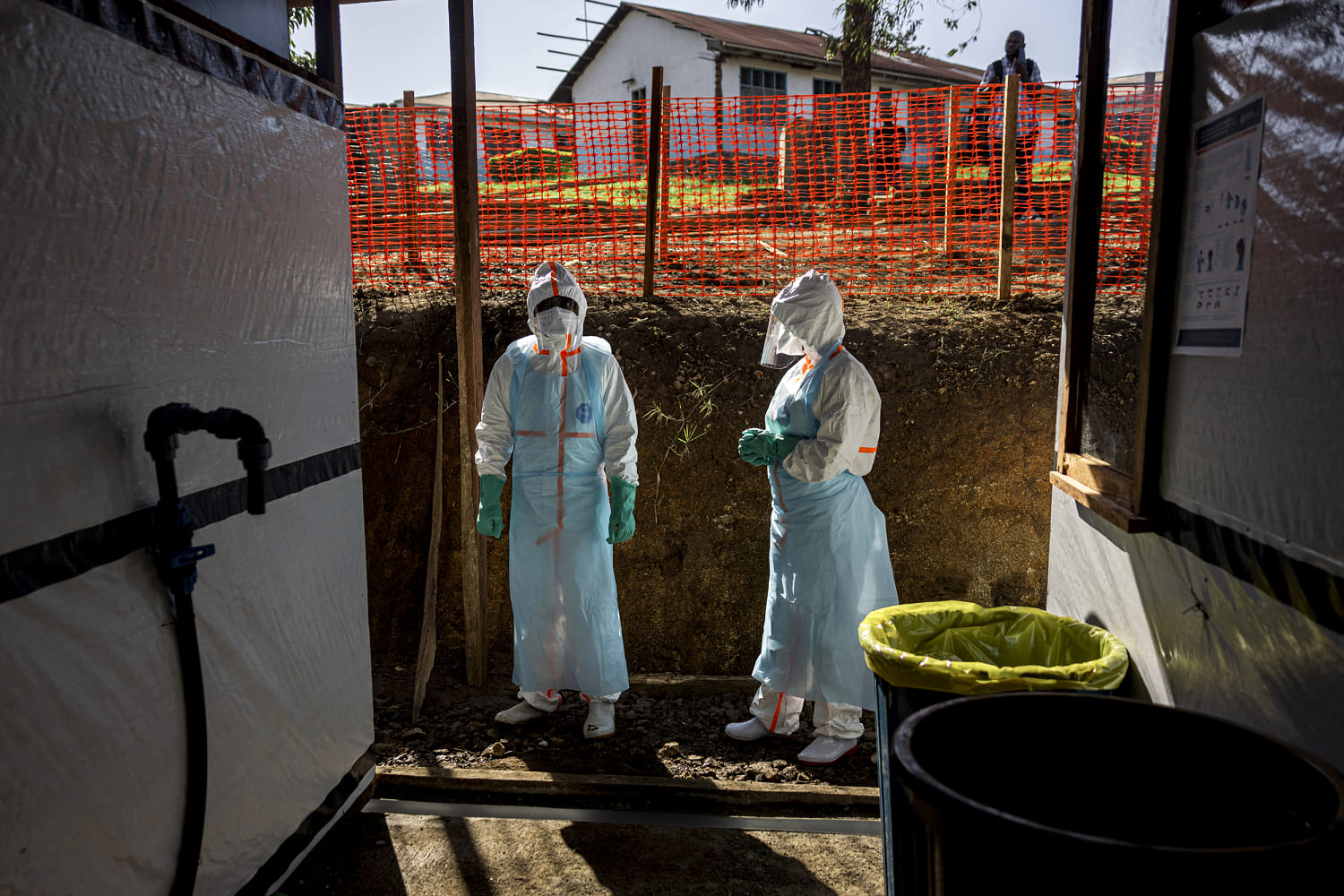
WASHINGTON — The Trump administration is urging European countries to mirror U.S. travel restrictions implemented in response to Ebola as the U.S. prepares to host the largest-ever World Cup amid growing concerns about the spread of the disease, according to a State Department cable reviewed by NBC News
WASHINGTON — The Trump administration is urging European countries to mirror U.S. travel restrictions implemented in response to Ebola as the U.S. prepares to host the largest-ever World Cup amid growing concerns about the spread of the disease, according to a State Department cable reviewed by NBC News
Sherlock Holmes and the Secret Weapon from 1942 is the fourth in the series of 14 films which placed the characters of Sir Arthur Conan Doyle into the 1940s. The film is an adaptation of Conan Doyle's short story "The Adventure of the Dancing Men," although the only element retained from the original story is the dancing men code. Rather, it should be seen as a spy film taking place on the background of the ongoing Second World War. The film concerns the kidnapping of a Swiss scientist
Sherlock Holmes and the Secret Weapon from 1942 is the fourth in the series of 14 films which placed the characters of Sir Arthur Conan Doyle into the 1940s. The film is an adaptation of Conan Doyle's short story "The Adventure of the Dancing Men," although the only element retained from the original story is the dancing men code. Rather, it should be seen as a spy film taking place on the background of the ongoing Second World War. The film concerns the kidnapping of a Swiss scientist by Professor Moriarty, to steal a new bomb sight and sell it to Nazi Germany. Sherlock Holmes and Dr. John Watson have to crack a secret code in order to save the country.
Sherlock Holmes and the Secret Weapon from 1942 is the fourth in the series of 14 films which placed the characters of Sir Arthur Conan Doyle into the 1940s. The film is an adaptation of Conan Doyle's short story "The Adventure of the Dancing Men," although the only element retained from the original story is the dancing men code. Rather, it should be seen as a spy film taking place on the background of the ongoing Second World War. The film concerns the kidnapping of a Swiss scientist by Professor Moriarty, to steal a new bomb sight and sell it to Nazi Germany. Sherlock Holmes and Dr. John Watson have to crack a secret code in order to save the country.
Defense Secretary Pete Hegseth on Saturday said the U.S. naval blockade in the Strait of Hormuz is “very much still in place,” as President Trump weighs a ceasefire extension with Iran that would unlock the critical energy corridor. Hegseth told NewsNation’s Kellie Meyer that the prolonged closure of the strait “came up relatively often” in...
Defense Secretary Pete Hegseth on Saturday said the U.S. naval blockade in the Strait of Hormuz is “very much still in place,” as President Trump weighs a ceasefire extension with Iran that would unlock the critical energy corridor. Hegseth told NewsNation’s Kellie Meyer that the prolonged closure of the strait “came up relatively often” in...
Brett Jordan/PexelsMore people are relying on social media – such as TikTok, Instagram, YouTube and Reddit – to learn about mental health conditions and to interact with people who have shared experiences.
These aren’t only long-familiar disorders such as depression, anxiety and schizophrenia. They also include conditions often placed under the “neurodivergent” umbrella such as autism, ADHD (attention-deficit hyperactivity disorder), Tourette syndrome and dyslexia.
For instance, on TikTok the
More people are relying on social media – such as TikTok, Instagram, YouTube and Reddit – to learn about mental health conditions and to interact with people who have shared experiences.
These aren’t only long-familiar disorders such as depression, anxiety and schizophrenia. They also include conditions often placed under the “neurodivergent” umbrella such as autism, ADHD (attention-deficit hyperactivity disorder), Tourette syndrome and dyslexia.
For instance, on TikTok the hashtag #adhd has had more than 50 billion views.
We wanted to explore how social media platforms shape how we understand mental health. So we analysed more than 14 million posts and comments about mental health on Reddit.
We show a shift in conversations toward ADHD and autism, and away from anxiety and depression.
Our findings have important implications for how people make sense of, and seek help for, mental health problems.
A complex relationship
Social media coverage of mental health has made it more visible, with some positive effects. It has probably reduced the stigma of mental illness and increased the use of mental health services.
However, it also has downsides. It can induce or exacerbate eating disorders, can contribute to the spread of symptoms (such as tic-like behaviours), and has been attributed to the rise of questionable self-diagnoses.
Misinformation is common in social media discussions of mental health. One study found a majority of the most popular TikTok videos on ADHD were misleading. Inaccurate information about manyothermental health conditions on social media is common.
Discussions change and evolve
Mental health content has not merely risen in volume. Some conditions have increasingly attracted the spotlight, others have receded from view, and the relationships among them have shifted.
In our Reddit study published last year, we found that as the largest ADHD- and autism- related communities (subreddits) became increasingly more prominent from 2012 to 2022, their content gradually became more similar, and their users increasingly overlapped.
Discussions in both communities increasingly emphasised the experiences of adults, challenges in accessing diagnostic assessments, and struggles with personal relationships.
This growing convergence of these two conditions on Reddit illustrates how social media can reshape representations of mental health.
Our latest study takes this further
In our new study, we analysed more than 14 million posts and comments from several of the largest mental health communities on Reddit.
The 14 communities we studied included those related to mood, anxiety, trauma, personality, dissociation and psychosis, as well as those focused on conditions often placed under the “neurodivergent” umbrella, such as autism, ADHD, Tourette syndrome and dyslexia.
We investigated how the people belonging to these communities and the language they used changed from 2015 to 2022.
We explored which communities became more or less closely associated over time – sharing more or fewer members and containing posts and comments with similar or different linguistic content. We also looked at whether these changes reflected shifts in the amount of attention the 14 conditions received.
Although our analysis only covered a seven-year period, it revealed a striking pattern of changes. The two diagrams show how the 14 communities were interrelated at the beginning and end of the period.
The size of the circles represents the relative size of the communities. The width of the links between them indicates how closely they were associated.
In 2015, depression and anxiety were prominent mental health communities on Reddit. They were among the most active and their members and content overlapped with those of many other communities. In this sense, they were “central” to the network.
However, in 2022, ADHD and autism communities had become most popular and prominent, displacing depression and anxiety. ADHD, autism and other neurodivergent conditions became more closely associated with other communities, and consequently more central to the network.
These analyses suggest that on Reddit the mental health landscape has been re-configured. Mood and anxiety disorders once dominated discussions. But discussions of mental health have increasingly pivoted to discussing conditions related to being neurodivergent.
Reddit users do not represent the general population; they tend to be younger, male, more educated, and have a higher income. Nevertheless, our study offers important insights into changes in mental health discussions on one social media platform over time.
Why does it matter?
The rising prominence and centrality of ADHD and autism makes them increasingly popular explanations for mental health problems. This might promote accurate self-diagnosis by people who once would not have recognised the nature of their difficulties.
However, it could also lead people to misinterpret and mislabel their experiences as ADHD and autism when there’s another explanation.
The rising prominence of these conditions on social media may also lead people to interpret mood or anxiety symptoms as signs of ADHD or autism.
Misinterpretations can lead people to pursue inappropriate diagnoses or unhelpful treatment, delaying access to the help they need. This in turn places increasing pressure on mental health services, and can lead to other conditions being overlooked.
Jemima Kang receives funding from an Australian Government Research Training Program Scholarship, an Australian Academy of Technological Sciences and Engineering Elevate Scholarship, and a University of Melbourne Helen Macpherson Smith Scholarship.
Nick Haslam receives funding from the Australian Research Council.
Mike Conway does not work for, consult, own shares in or receive funding from any company or organisation that would benefit from this article, and has disclosed no relevant affiliations beyond their academic appointment.
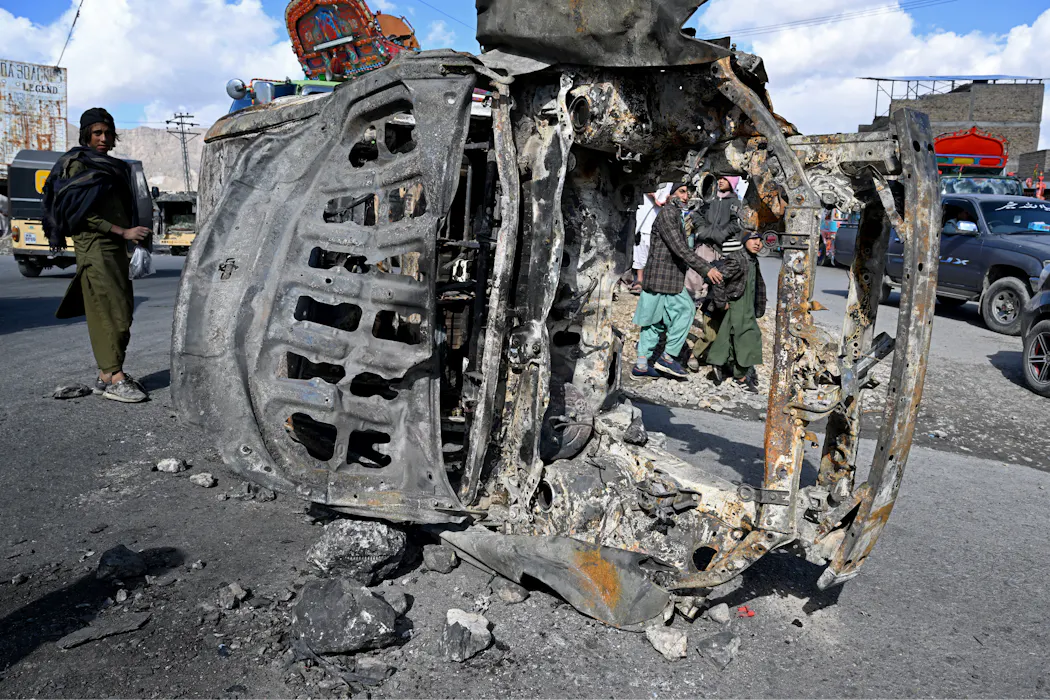
The aftermath of an attack by Baloch separatists in Quetta, Pakistan, on Feb. 1, 2026. Banaras Khan/AFP via Getty ImagesIn the space of 10 days in late April 2026, insurgents in Pakistan purportedly carried out 27 attacks in the country’s southwest province of Balochistan, killing at least 42 military personal. Then, on May 11, authorities announced that a suicide bombing plot on the capital, Islamabad, had been foiled. Authorities arrested a girl over the incident – a nod to militants’ increasi
In the space of 10 days in late April 2026, insurgents in Pakistan purportedly carried out 27 attacks in the country’s southwest province of Balochistan, killing at least 42 military personal. Then, on May 11, authorities announced that a suicide bombing plot on the capital, Islamabad, had been foiled. Authorities arrested a girl over the incident – a nod to militants’ increasing use of young Baloch women to carry out attacks.
These incidents represent the latest flaring up of a long-running insurgency in Pakistan’s largest province and home to around 15 million people.
For a rundown of what you need to know about the Baloch insurgency and groups involved, The Conversation turned to Amira Jadoon and Saif Tahir, experts on militantand terrorist organizations currently researching such groups’ operational activities and strategic messaging in Afghanistan and Pakistan.
What is the Baloch insurgency about?
Pakistan’s southwestern province of Balochistan has long been the site of resistance and armed movements involving Baloch, an ethnic group of an estimated 8 million to 10 million people that straddles parts of Pakistan and Iran.
Their insurgency is rooted in both contemporary and historical grievances. Its origins trace back to the contested annexation of the princely state of Kalat in 1948, months after the partition of British India into India and Pakistan, and the resulting confrontations between Baloch tribal leaders and the newly formed Pakistani state.
While the insurgency long remained a low-level struggle framed around Baloch marginalization and economic exploitation, it turned violent in the early 2000s with the rise of militant factions, including the Balochistan Liberation Army, or BLA, in 2000 and the Balochistan Liberation Front, or BLF, which was revived in 2004 under current leader Allah Nazar Baloch decades after its 1964 founding. The insurgents’ goals vary, from greater autonomy and control over the province’s natural resources to full independence.
Baloch militants generally cast their emergence as a nationalist rebuttal to the Pakistani government’s long-standing narrative, which states that the unrest is driven by a handful of tribal chiefs resisting development rather than a broad-based movement.
In practice, the contemporary insurgency has expanded well beyond its tribal base, and Baloch militant groups have invested heavily in strategic communications that directly challenge the Pakistani state’s framing.
Today, Baloch militants’ propaganda targets the local educated youth, including women. They play on existing grievances over enforced disappearances, state repression and resource extraction. Balochistan is home to significant deposits of copper, gold, natural gas and coal, including at the Reko Diq mine, one of the world’s largest undeveloped copper and gold reserves. Yet the province remains Pakistan’s poorest.
Baloch militants’ efforts are designed to broaden the insurgency’s appeal, adding an urban, middle-class layer to what was once a primarily tribal revolt that casts itself as a struggle to defend the Baloch “motherland” and achieve national liberation.
The Baloch insurgency has emerged as one of Pakistan’s most consequential internal security challenges. In 2025, the BLA claimed 521 attacks and 1,060 security-force fatalities, though independent monitoring records substantially fewer attacks, at around 254 events, in Balochistan over the same period.
Two Baloch militants’ operations bookend the recent escalation. In March 2025, BLA fighters hijacked the Jaffar Express – a heavily used passenger train connecting Quetta, the capital of Balochistan, to Peshawar in northwestern Pakistan – holding more than 350 passengers in a 30-hour siege. In April 2026, the group announced a new naval wing, the Hammal Maritime Defence Force, following its first maritime attack on a Pakistan coast guard vessel near Jiwani, in Gwadar district.
These tactical innovations have been reinforced by deliberate efforts at broadening the support base for Baloch separatism. The 2018 formation of Baloch Raji Ajohi Sangar, an alliance of Baloch militant groups, and the 2020 entry of the non-Baloch Sindhudesh Revolutionary Army, a Sindhi separatist group based in neighboring Sindh that has extended Baloch militants’ operational reach into Karachi, signal an expanding ethno-regional coalition aimed at broadening the geographic and ideological scope of the insurgency.
Why the uptick in violence now?
Four converging factors explain the recent escalation.
First, the Pakistani state’s crackdown on peaceful political space in recent months has accelerated social discontent. Following the March 2025 Jaffar Express attack, prominent Baloch rights defender Mahrang Baloch was arrested under anti-terrorist laws, while three protesters were shot dead at a peaceful sit-in in Quetta.
As nonviolent avenues close, aggrieved civilians become more receptive to Baloch militants’ recruitment narratives.
Second, Baloch militants have acquired U.S. weapons left behind in Afghanistan during the 2021 withdrawal, including M4 and M16 rifles fitted with thermal optics. Recent reports have linked the arms used in the Jaffar Express attack directly to abandoned U.S. stockpiles in Afghanistan.
Third, militant operational collusion has deepened between the Balochistan Liberation Army and the Tehrik-i-Taliban Pakistan, the latter ranked by the Institute for Economics and Peace as the world’s fastest-growing insurgent group in 2024.
Despite the groups’ divergent ideologies, the cooperation appears to have produced clear tactical convergence, including town takeovers, the use of suicide bombings, and sniper and ambush tactics.
Finally, Baloch groups have excelled in the effective use of social media to influence and recruit educated young people, including women.
A policeman stands guard near the blast site in Quetta after an attack by Baloch separatists on Jan. 31, 2026.Adnan Ahmed/AFP via Getty Images
The BLA’s elite Majeed Brigade has formalized a women’s wing, and the use of female suicide bombers has now spread across multiple Baloch factions. At least five known cases have been reported since 2022.
Tehran’s destabilization creates new tactical space for insurgents. Ethnic Baloch communities straddle the Pakistan-Iran border, and the BLA already maintains a presence in Iran’s Sistan and Baluchestan province.
The “Greater Balochistan” narrative promoted by Baloch nationalists, which envisions the reintegration of Baloch lands across both states, is gaining traction on the Iranian side. Moreover, weaker border enforcement gives militants greater freedom to move, recruit and coordinate.
Cross-border trade flows have dropped sharply since the war in Iran began, but the disruption is more likely to expand than to shrink Balochistan’s illicit economy over time. As state enforcement weakens on both sides of the border, the cross-border fuel and narcotics smuggling networks that Baloch militants tax and target are likely to expand further.
The cross-border problem had already escalated to interstate confrontation. In January 2024, Iran and Pakistan exchanged tit-for-tat strikes on Baloch militant groups operating across their shared border.
With Iran’s stability weakening, these dynamics are likely to deepen, potentially raising tensions between Islamabad and Tehran over separatists in the future.
How are Pakistan-US relations affected?
The Baloch insurgency is now also an increasingly important focus of a warming U.S.-Pakistani relationship.
In August 2025, the U.S. State Department designated the BLA and its Majeed Brigade as foreign terrorist organizations – a move Islamabad had long pressed for.
Months later, the U.S. Export-Import Bank approved US$1.3 billion for the Reko Diq copper-gold project in Balochistan, its single largest critical minerals investment to date.
The current insurgency directly contests Pakistan’s capacity to deliver security in Balochistan. The Reko Diq mine lies in the same district where Zareena Rafiq, a BLF-affiliated female suicide bomber, struck a base of Pakistan’s federal paramilitary force on Nov. 30, 2025.
Further, in April 2026, a BLF commander declared that the group would target all foreign companies operating in Balochistan, regardless of country of origin.
Yet the present alignment between the U.S. and Pakistan is transactional: Its durability depends on Pakistan delivering on counterterrorism, mediation with Iran and mineral access.
Meanwhile, absent a counterinsurgency approach that addresses the underlying political and social drivers of the Baloch insurgency – including state repression, political marginalization and resource grievance – the broader U.S.-Pakistan reset is unlikely to deliver the stability its investments require.
The authors do not work for, consult, own shares in or receive funding from any company or organization that would benefit from this article, and have disclosed no relevant affiliations beyond their academic appointment.
Two of Matthew Perry‘s sisters, Caitlin and Madeline Morrison, have claimed the late actor’s assistant, Kenneth Iwamasa, left him “in a hot tub to die.”
According to a Tuesday, May 26, report by People, who obtained victim impact statements filed on Wednesday, May 20, that relate to Perry’s October 2023 death, the sisters placed significant blame on Iwamasa, 60, who served as the actor’s live-in personal assistant. (Iwamasa is one of five people who have pleaded guilty for various charges relati
Two of Matthew Perry‘s sisters, Caitlin and Madeline Morrison, have claimed the late actor’s assistant, Kenneth Iwamasa, left him “in a hot tub to die.”
According to a Tuesday, May 26, report by People, who obtained victim impact statements filed on Wednesday, May 20, that relate to Perry’s October 2023 death, the sisters placed significant blame on Iwamasa, 60, who served as the actor’s live-in personal assistant. (Iwamasa is one of five people who have pleaded guilty for various charges relating to supplying the Friends star with ketamine, the drug that killed him at age 54.)
After the Department of Justice determined that Iwamasa had injected Perry repeatedly with ketamine, despite him being “without medical training,” Madeline, 37, wrote in her statement that Iwamasa “had injected my brother with a lethal dose of ketamine and left him in a hot tub to die.”
Her statement continued, “It is difficult to put into words the sense of betrayal I felt when I found out what Kenny had done. In many ways, it felt like my brother died all over again. Everything I believed about the day he died—everything Kenny told us—was a lie. The idea that someone my brother considered family could betray him in such an unimaginable way is something I never could have conceived.”
Caitlin, 43, echoed the sentiment in her own statement. “I cannot read Kenny’s thoughts. I will never know if the lethal dose of ketamine was only lethal by accident. But I know that when Kenny left the house, he was doing one of two things. He was either escaping from something he knew he had done or he was willfully abandoning a vulnerable person in a dangerous situation,” she wrote.
Iwamasa was one of five people who were indicted on federal charges after Perry died as a result of the “acute effects of ketamine” on October 28, 2023. Iwamasa pleaded guilty to one count of conspiracy to distribute ketamine causing death, while Jasveen Sangka, also known as “The Ketamine Queen,” pleaded guilty to three counts of distribution of ketamine, one count of distribution of ketamine resulting in death or serious bodily injury, and one count of using her home for drug distribution.
Erik Fleming also pleaded guilty to one count of distribution of ketamine resulting in death, Dr. Salvador Plasencia pleaded guilty to four counts of distribution of ketamine and Dr. Mark Chavez pleaded guilty to one count of conspiracy to distribute ketamine.
While four of the five have been sentenced to a mix of prison time and home confinement, Iwamasa is scheduled to be sentenced later today.
If you or someone you know is struggling or in crisis, help is available. Call or text 988 or chat at 988lifeline.org. https://988lifeline.org/

 Login
Login