Normal view

  • ✇Eos
  • Antibiotic Resistance Might Get a Boost from Droughts Javier Barbuzano
    The spread of antibiotic resistance, a growing threat to global health that causes millions of deaths annually, is typically blamed on the overuse of drugs in hospitals and in the food industry. However, a new study published in Nature Microbiology suggests that normal geological processes could be accelerating the development of new resistances. Soil microorganisms naturally produce antibiotics as a form of chemical warfare to compete with each other. When soils dry out, these natural compo
     

Antibiotic Resistance Might Get a Boost from Droughts

29 April 2026 at 13:19
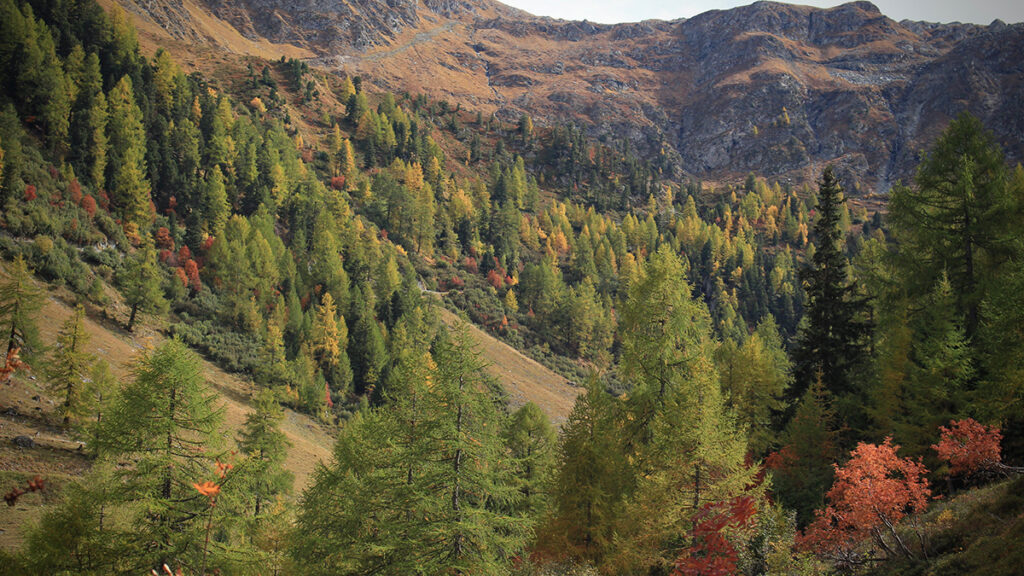
A forest on a mountainside has mostly green trees, with sprinkles of autumn red and yellow. A brown mountain is in the distance.

The spread of antibiotic resistance, a growing threat to global health that causes millions of deaths annually, is typically blamed on the overuse of drugs in hospitals and in the food industry. However, a new study published in Nature Microbiology suggests that normal geological processes could be accelerating the development of new resistances.

Soil microorganisms naturally produce antibiotics as a form of chemical warfare to compete with each other. When soils dry out, these natural compounds become more concentrated because there is less water to dilute them. Like a dosage increase, this concentration can create a harsher environment, killing sensitive microbes and sparing those with the capacity to resist. This phenomenon, in turn, is an evolutive driver that favors the appearance of new and more effective resistance genes.

“If you have more antibiotics in your environment, only the organisms that can withstand it…can resist it.”

To test whether this mechanism is having real genetic effects, Xiaoyu Shan, a microbial ecologist and postdoctoral researcher at the California Institute of Technology (Caltech), and colleagues looked at soil samples under controlled conditions as the samples transitioned from a wet state to a desiccated one. They found that as the soil dried, the presence of genes related to antibiotic production and resistance spiked, suggesting that drought leads to a rapid escalation in the subterranean biological arms race. Importantly, they did not look for pathogenic bacteria specifically, only for resistance genes, which can be present in a variety of microbes, whether those microbes are pathogenic or not.

“Drought leads to this elevation of antibiotic producers and bacteria that are resistant,” said team member Dianne Newman, a professor of biology and geobiology also at Caltech. “It’s a pretty simple idea: If you have more antibiotics in your environment, only the organisms that can withstand it…can resist it.”

Alternative Explanations

However, there could be other potential explanations for the observed increase in antibiotic-producing and antibiotic resistance genes, according to Enrique Monte, a microbiologist at the Universidad de Salamanca in Spain who wasn’t involved with the new study. For instance, arid soils are naturally more diverse than humid soils, making it common to find a more diverse gene pool in the ground, Monte said. In addition, the mere presence of antibiotic genes might not result in an actual release to the environment, or a release could happen in dosages that are too small to cause noticeable effects. “There are antibiotics that are volatile; they escape into the air, so they never reach a therapeutic concentration to kill others,” Monte said.

The authors, however, took some precautions to show that the increase in antibiotic resistance genes was actually a biological response to environmental stress. For instance, they also tracked other genes that should remain unaffected or decline under desiccation. As expected, genes that are needed for basic survival remained stable, while genes responsible for bacterial movement declined in dry soil, where mobility is restricted. Even some species that were not favored by desiccation saw an increase in resistance-related genes, “which is even stronger evidence,” Shan said.

Geographic Limitations

As the researchers combed through publicly available metagenomic data libraries, they had to select collections with strict control of all variables and in which the only changing factor was water content. That limited the analysis to five locations: two grasslands and a sorghum field in California; a forest in Valais, Switzerland; and a wetland in Nanchang, China.

The scarcity of locations might limit how extrapolable these results are, said Fiona Walsh, a microbiologist at Maynooth University in Ireland who was not involved with the work. “There are thousands of high-quality metagenomes available online with excellent metadata. I would really like to see a comparison where they apply their analysis to a broader map of global metagenomic data to see if they reach the same conclusions,” she said.

From the Soil to the Hospital

Drier regions consistently showed a higher number of resistant bacteria cases in hospitals, even after adjusting for confounding factors such as local income.

The study also suggests that dry soils might be a hidden driver of clinical cases of antibiotic resistance worldwide. The authors combined hospital data on the number of cases of resistant infections from 116 countries with the local aridity index, which measures temperature and precipitation, for each location. They found a strong correlation: Drier regions consistently showed a higher number of resistant bacteria cases in hospitals, even after adjusting for confounding factors such as local income.

However, the authors admitted that this is only a correlation effect and doesn’t prove causation. “It motivates follow-up research to see how environmental concentration weighs against human overuse and poor stewardship,” Newman said.

Even this correlation could be a stretch, according to microbiologist Sara Soto, head of the Global Viral and Bacterial Infections Programme at the Instituto de Salud Global de Barcelona. At the end of the day, she said, the authors have soil data from only five locations in three countries, and they are not tracking the specific bacterial varieties that make people sick, only resistance genes.

For the thesis to be solid, Soto said, the ideal approach would have been to contrast hospital strains from a specific area with soil data from that same region during the same drought episode. “Making such a vast inference—that what happens in the soil of one location affects what happens in a hospital elsewhere—is a big leap,” she said.

The authors, however, point out that resistance genes from soils can eventually make their way into human pathogens. Microbes have the capacity to share genetic material across species—a process known as horizontal gene transfer. In their analysis, the team identified specific resistance sequences that appeared to have been transferred between soil bacteria relatively recently, perhaps within the past decade. How they are reaching hospitals remains a matter for a future study, they said.

As droughts increase in numerous regions in the face of climate change, this selective pressure within soil ecosystems is expected to intensify. Though these findings do not show that drought directly puts drug-resistant pathogens in hospitals, they still suggest that a drying climate could set the scene for an increase in antibiotic resistance, the researchers report.

—Javier Barbuzano (@javibar.bsky.social), Science Writer
Citation: Barbuzano, J. (2026), Antibiotic resistance might get a boost from droughts, Eos, 107, https://doi.org/10.1029/2026EO260132. Published on 29 April 2026.
Text © 2026. The authors. CC BY-NC-ND 3.0
Except where otherwise noted, images are subject to copyright. Any reuse without express permission from the copyright owner is prohibited.
  • ✇Eos
  • A Hot Jupiter’s Cloudy Mornings and Clear Evenings Provide Clues to Its Chemistry Javier Barbuzano
    Clear skies are important for astronomers—not just here on Earth but also on the alien planets they are looking at. For the past 20 years, scientists studying exoplanets have been literally blinded by fog. Many “hot Jupiters” (massive gas giants orbiting extremely close to their host stars) are constantly wrapped in clouds. This overcast condition acts like a fogged-up window, blocking telescopes from getting a clear reading of the planets’ true composition. Astronomers using the James We
     

A Hot Jupiter’s Cloudy Mornings and Clear Evenings Provide Clues to Its Chemistry

16 June 2026 at 12:47
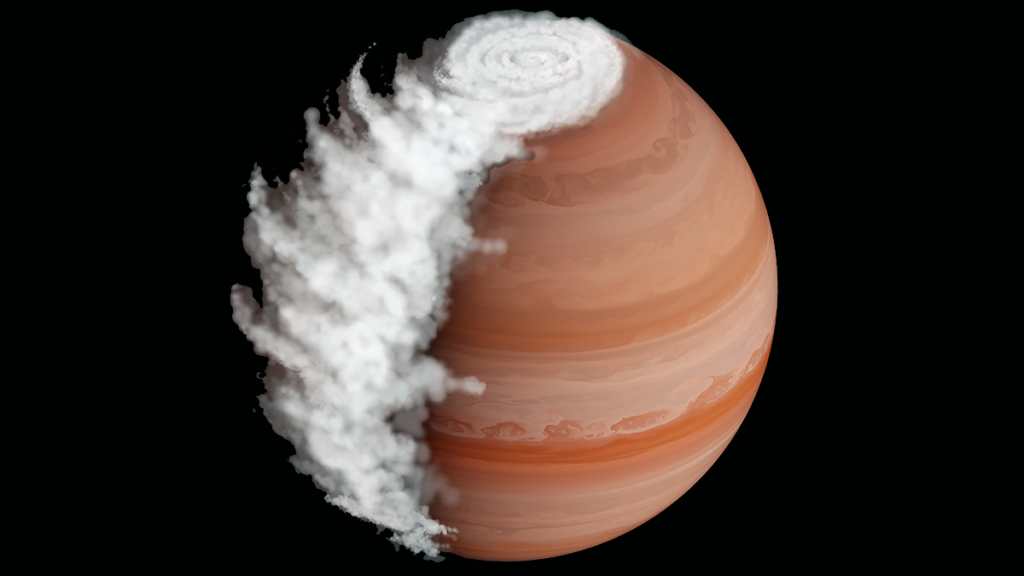
An artist’s interpretation of a reddish planet shows clouds swirling at its top and trailing down its left side.

Clear skies are important for astronomers—not just here on Earth but also on the alien planets they are looking at.

For the past 20 years, scientists studying exoplanets have been literally blinded by fog. Many “hot Jupiters” (massive gas giants orbiting extremely close to their host stars) are constantly wrapped in clouds. This overcast condition acts like a fogged-up window, blocking telescopes from getting a clear reading of the planets’ true composition.

Astronomers using the James Webb Space Telescope (JWST) have now lifted the fog veil by using a novel observation technique published in Science. The technique was used to analyze data from WASP-94A b, an exoplanet nearly 700 light-years away discovered about a decade ago. The scientists were able to detect and account for atmospheric clouds on WASP-94A b by analyzing the planet’s sunrise and sunset zones separately as it crossed in front of its host star.

“It’s almost like we were able to part the clouds and figure out what’s going on three-dimensionally with this planet.”

“It’s almost like we were able to part the clouds and figure out what’s going on three-dimensionally with this planet,” said study coauthor David Sing, a planetary scientist at Johns Hopkins University.

WASP-94A b is so close to the star that it is tidally locked, meaning its rotation has stopped and the same side always faces the star. This creates extreme temperature variations across the planet. While the dayside reaches torrid temperatures well above 1,600 K, the night hemisphere is about 450 K colder. These milder conditions on the dark side allow clouds made of magnesium silicate, a common mineral found in Earth’s rocks, to condense.

This extreme thermal variation drives powerful winds that circulate air throughout the atmosphere, carrying cloud-filled colder air from the nightside over to the dayside. The clouds don’t last long, though. Like morning fog dissipating in the Sun’s warmth, the silicate clouds of WASP-94A b evaporate shortly after they hit the scorching dayside. Because the planet’s weather patterns are locked in place by its synchronized rotation, the morning edge of the planet, where the winds move from nightside to dayside (what we view as the leading edge of the transit from Earth), is permanently overcast, while the evenings (the trailing edge) remain always clear.

Timing Is Everything

The key to this observation was not so much where to look, but when. From our vantage point, WASP-94A b crosses right in front of its star, allowing the researchers to capture the precise moments when the giant planet begins its transit and when it finally moves beyond the edge of the star. As starlight filtered through WASP-94A b’s atmosphere, astronomers separately measured its leading and trailing edges (also known as terminators, or limbs) at the times when the planet began and concluded its transit. By analyzing how the spectral signatures changed between these two phases, they were able to reveal the differences between the morning and evening hemispheres.

These measurements require extreme precision. “As the planet is going in front of the star, you have to measure it in that very short time where only part of the planet is blocking the star,” Sing said. “In only about 10 minutes, you have to get the spectra of a planet, which is really hard because planets are faint and the signals are small. We really needed JWST, the largest telescope in space, to be able to make that measurement that quickly.”

What unfolded was a totally unprecedented view of an exoplanet. “What we found was really surprising,” Sing said. “All of the clouds were basically piled up on the morning terminator, while the evening terminator, which is hotter, was clear.”

The team also realized that the clouds were floating much higher up than anyone anticipated—way above the stratosphere—and were made of surprisingly large particles. This suggests the atmosphere undergoes far more violent, turbulent mixing than previously predicted.

“It’s pretty clear they are magnesium silicate clouds,” Sing said. While scientists expected that this material would form clouds on these planets, “we haven’t really been able to show that before.”

“The study is a great example of how we can measure and understand the multidimensional and complex nature of exoplanet atmospheres,” said Hannah Wakeford, an astrophysicist at the University of Bristol in the United Kingdom who was not involved with the study. “Clouds are the most important part of a planetary atmosphere, and they play a major role in the amount of energy coming into and leaving the planet.”

A Different Composition

Breaking through the cloud barrier allowed researchers to see the true chemical makeup of this world. Previous observations of exoplanet atmospheres using the Hubble Space Telescope had to rely on an “average spectrum,” blending the composition of both sides of a planet on a single profile, mostly because Hubble can’t get a planet’s spectra as quickly and precisely as JWST does. As a result, researchers were getting wrong readings of essential components, such as the amounts of oxygen, carbon, and other heavy elements.

“That kind of rewrites much of what we’ve been learning with Hubble over the last few decades.”

These average spectrum readings meant that models were predicting that WASP-94A b had a heavy metal abundance up to 100 times greater than our Sun. By separating the limbs, the new observations have revealed that this number is actually closer to 10. “That kind of rewrites much of what we’ve been learning with Hubble over the last few decades,” Sing said.

Sing and his colleagues think the same findings could apply to countless other hot Jupiters. In fact, there’s nothing special about WASP-94A b, except that it has the right geometry. “Not all hot Jupiters will be good candidates to reveal this limb asymmetry,” Sing said. “For instance, if a planet just grazes across the bottom of the star during transit, you won’t be able to cleanly separate the two sides out.”

Getting a better handle on what hot Jupiters are made of is a significant step for planetary science and could also help refine atmospheric circulation models on Earth and beyond, Sing said.

Apart from WASP-94A b, the team applied the same method to eight other hot gas giants, discovering hints of similar cloud cycles in two of them: WASP-39 b and WASP-17 b. The team plans to continue studying similar planets with JWST, including a gas planet in the habitable zone of its host star.

—Javier Barbuzano (@javibar.bsky.social), Science Writer
Citation: Barbuzano, J. (2026), A hot Jupiter’s cloudy mornings and clear evenings provide clues to its chemistry, Eos, 107, https://doi.org/10.1029/2026EO260195. Published on 16 June 2026.
Text © 2026. The authors. CC BY-NC-ND 3.0
Except where otherwise noted, images are subject to copyright. Any reuse without express permission from the copyright owner is prohibited.
❌
Subscriptions