Normal view

  • ✇The Independent SG
  • Grab’s new delivery AI robots to ease Singapore’s worker shortages and labour costs Nick Karean
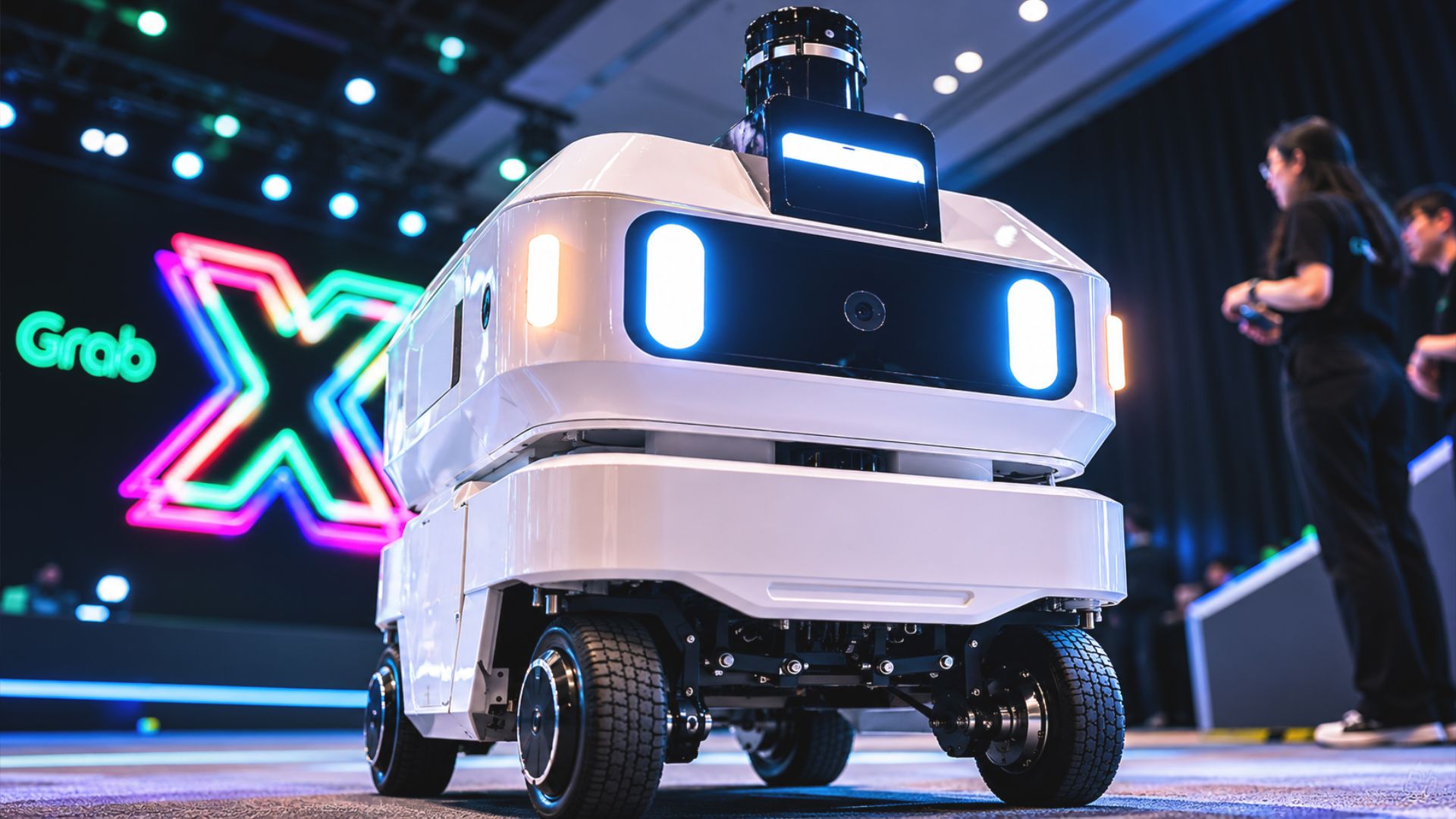
    SINGAPORE: Singapore’s delivery economy may soon gain a new co-worker; one that doesn’t ride a bike, wait for lifts, or search for block numbers. Grab plans to launch a pilot of its first delivery AI robot in Punggol in late 2026 as it pushes further into physical artificial intelligence (AI) and robotics, according to Fortune’s report. The move is to address a problem many Singapore businesses already know all too well: service demand keeps growing, but workers remain hard to find, and labour c
     

Grab’s new delivery AI robots to ease Singapore’s worker shortages and labour costs

27 May 2026 at 04:30

SINGAPORE: Singapore’s delivery economy may soon gain a new co-worker; one that doesn’t ride a bike, wait for lifts, or search for block numbers.

Grab plans to launch a pilot of its first delivery AI robot in Punggol in late 2026 as it pushes further into physical artificial intelligence (AI) and robotics, according to Fortune’s report.

The move is to address a problem many Singapore businesses already know all too well: service demand keeps growing, but workers remain hard to find, and labour costs keep staying high. So rather than replacing Grab drivers outright, Grab says the robots are meant to handle the least efficient parts of delivery.

Carri, Grab’s AI robot, will handle the first and last 100-metre deliveries

Grab’s robot, called Carri, is built to handle the first and final 100 metres of delivery journeys, including tasks such as moving food or parcels from roadside pickup points to apartment doorsteps.

Speaking at the Asia Tech (ATx) summit on May 20, Grab chief technology officer Suthen Paradatheth said these small stretches consume meaningful time across thousands of deliveries each day.

Mr Paradatheth further explained that most Grab deliveries already travel more than two kilometres. The usual friction happens before and after the actual trip, where drivers spend time walking, locating units, waiting, and completing handoffs. Grab estimates that these final steps account for around 10% of delivery time.

For Grab drivers, that could mean fewer repetitive tasks. For customers, the company hopes to improve delivery coverage in areas with demand where drivers are less likely to wait around.

Punggol becomes a testing ground for AI robots and autonomous vehicles on the ground

Mr Paradatheth said autonomous vehicles could help expand services in supply-constrained markets such as Singapore.

Grab will not be alone in AI, robotics, and autonomous vehicle tests. Seven other firms, including logistics company DHL and local startup Quikbot, are expected to test autonomous systems in Punggol. The pilots extend beyond food delivery. Other projects will focus on parcel handling, cleaning, and security work.

Singapore’s Minister for Digital Development and Information, Josephine Teo, said at the ATx summit that the government plans to support these trials through shared testing systems, operating rules, and infrastructure that enable robots to move safely across the district. Her view was that these tools can help workers extend services into places that are harder to serve consistently.

Singapore’s public messaging around AI has increasingly focused on augmentation rather than replacement, helping workers do more instead of reducing headcount.

Grab’s bigger AI ambition goes beyond just delivery

The robot trial also fits into Grab’s wider AI strategy. The company has already partnered with OpenAI since 2024 to improve areas including mapping, accessibility and customer support.

Grab is also working with the Chinese autonomous driving company WeRide and has invested in autonomous vehicle firms, including May Mobility and Momenta.

Grab’s chief executive officer, Anthony Tan, previously said automation could create new job paths instead of eliminating the work entirely. Examples discussed included remote safety monitoring, data work, and maintenance of sensing equipment.

Mr Paradatheth described Grab’s internal direction as one in which people and AI systems work side by side, an idea that is already evident within the company. He said most Grab engineers now use AI coding tools in their daily work while keeping human review before the software goes live.

Singapore’s broader AI race is also gathering speed. On the same day as the announcement, OpenAI said it would invest S$300 million into Singapore’s AI capabilities, including its first applied AI lab outside the United States. NVIDIA also announced a local research centre focused on embodied AI.

The more important question is not robots; it is where drivers and people fit in

Delivery AI robots tend to ignite the same debate each time: convenience versus jobs. But Singapore’s labour market has long relied on finding ways to stretch limited manpower.

If these pilots succeed, the real test may go beyond whether the robots can deliver food. It may be a question of whether companies can redesign work so people spend less time on repetitive tasks and more time on work where human judgment still matters.

Because, at the end of the day, technology still works best when it removes friction, not people.


Read related: NVIDIA to launch its new research hub in Singapore, marking latest boost to city-state’s artificial intelligence drive

This article (Grab’s new delivery AI robots to ease Singapore’s worker shortages and labour costs) first appeared on The Independent Singapore News.

  • ✇Antiques and Vintage - flickr
  • 20260405-MECCANO-NB006-2K Manuel Gual
    Manuel Gual posted a photo: Modular Metal Engineering Models: Vintage Construction Kits, Gears, Bridges and Mechanical Assemblies Description A detailed visual series exploring the world of vintage modular metal construction systems, inspired by classic engineering kits, mechanical model building and technical drafting culture. The collection presents carefully arranged perforated metal strips, brass gears, axles, pulleys, bolts, nuts, brackets, wheels, bridge trusses, gearbox assemblies,
     

20260405-MECCANO-NB006-2K

17 June 2026 at 08:40

Manuel Gual posted a photo:

20260405-MECCANO-NB006-2K

Modular Metal Engineering Models: Vintage Construction Kits, Gears, Bridges and Mechanical Assemblies

Description

A detailed visual series exploring the world of vintage modular metal construction systems, inspired by classic engineering kits, mechanical model building and technical drafting culture. The collection presents carefully arranged perforated metal strips, brass gears, axles, pulleys, bolts, nuts, brackets, wheels, bridge trusses, gearbox assemblies, cranes, vehicle chassis and miniature mechanical structures laid out across workshop tables, blueprint sheets and clean studio surfaces.

The images combine nostalgic industrial design with precision engineering aesthetics: aged metal textures, brushed steel surfaces, brass components, technical drawings, exploded assembly layouts and realistic workshop lighting. The series moves from organized component catalogues and close-up mechanical studies to fully assembled structures such as bridge modules, gearboxes, steering systems, pulley frames, cranes and vintage vehicle models.

The overall mood is technical, educational and tactile, evoking model engineering, mechanical invention, mid-century construction toys, industrial prototyping and hands-on craftsmanship. This set is suitable for themes related to engineering education, mechanical design, STEM learning, vintage technology, maker culture, workshop creativity, structural design and the beauty of functional metal components.

These images have been generated by Artificial Intelligence.

  • ✇Antiques and Vintage - flickr
  • 20260405-MECCANO-NB003-2K Manuel Gual
    Manuel Gual posted a photo: Modular Metal Engineering Models: Vintage Construction Kits, Gears, Bridges and Mechanical Assemblies Description A detailed visual series exploring the world of vintage modular metal construction systems, inspired by classic engineering kits, mechanical model building and technical drafting culture. The collection presents carefully arranged perforated metal strips, brass gears, axles, pulleys, bolts, nuts, brackets, wheels, bridge trusses, gearbox assemblies,
     

20260405-MECCANO-NB003-2K

17 June 2026 at 08:40

Manuel Gual posted a photo:

20260405-MECCANO-NB003-2K

Modular Metal Engineering Models: Vintage Construction Kits, Gears, Bridges and Mechanical Assemblies

Description

A detailed visual series exploring the world of vintage modular metal construction systems, inspired by classic engineering kits, mechanical model building and technical drafting culture. The collection presents carefully arranged perforated metal strips, brass gears, axles, pulleys, bolts, nuts, brackets, wheels, bridge trusses, gearbox assemblies, cranes, vehicle chassis and miniature mechanical structures laid out across workshop tables, blueprint sheets and clean studio surfaces.

The images combine nostalgic industrial design with precision engineering aesthetics: aged metal textures, brushed steel surfaces, brass components, technical drawings, exploded assembly layouts and realistic workshop lighting. The series moves from organized component catalogues and close-up mechanical studies to fully assembled structures such as bridge modules, gearboxes, steering systems, pulley frames, cranes and vintage vehicle models.

The overall mood is technical, educational and tactile, evoking model engineering, mechanical invention, mid-century construction toys, industrial prototyping and hands-on craftsmanship. This set is suitable for themes related to engineering education, mechanical design, STEM learning, vintage technology, maker culture, workshop creativity, structural design and the beauty of functional metal components.

These images have been generated by Artificial Intelligence.

  • ✇Hong Kong Free Press HKFP
  • ‘Definitely different’: AI robot cleaners leave the lab for China’s living rooms AFP
    By Emily Wang Beijing cleaner Lin Meiqiong found her work a little easier the day she was paired with an unlikely new colleague — a tall, wheeled robot with AI-powered tidying skills. The 56-year-old and her white-and-silver partner, fitted with cameras and two mechanical claws, are part of a new human-robot cleaning service offered by Chinese household help platform 58.com. It’s a baby step towards a future espoused by tech evangelists in which robots increasingly take over manu
     

‘Definitely different’: AI robot cleaners leave the lab for China’s living rooms

By: AFP
13 June 2026 at 02:00
X Square robot featured image

By Emily Wang

Beijing cleaner Lin Meiqiong found her work a little easier the day she was paired with an unlikely new colleague — a tall, wheeled robot with AI-powered tidying skills.

The 56-year-old and her white-and-silver partner, fitted with cameras and two mechanical claws, are part of a new human-robot cleaning service offered by Chinese household help platform 58.com.

It’s a baby step towards a future espoused by tech evangelists in which robots increasingly take over manual labour from humans — though at the moment, such services are largely a data-gathering exercise for companies and a novelty for curious customers.

“It’s definitely different,” Lin told AFP in between cleaning the kitchen and wiping down windows.

“I used to have to do everything myself,” she said. “It’s reduced the workload a bit.”

An X Square Robot carrying a bottle to a rubbish bin as a housekeeper cleans the floor at a customer's home in Beijing on May 21, 2026.
An X Square Robot carrying a bottle to a rubbish bin as a housekeeper cleans the floor at a customer’s home in Beijing on May 21, 2026. Photo: Wang Zhao/AFP.

The cleaning service, a collaboration between 58.com and Chinese robotics company X Square, costs 149 yuan (US$22) for three hours and is available in Beijing and tech hub Shenzhen.

Helped into the apartment by an X Square engineer, the AI-operated Quanta X1 Pro robot uses its cameras to identify areas it could spruce up.

As Lin scrubbed the floor on her knees, it picked up rubbish and folded clothes strewn across a sofa.

Grasping a pair of dark grey trousers, it raised its upper body to stretch the fabric taut, before laying it flat and arranging it into neat halves.

The process took several minutes and resembled a child learning to fold clothes for the first time.

Future iterations of the robot will respond to voice commands and even be able to chat, said the engineer, Hu Bowen.

‘Better than a lab’

Around 200 households have booked the service since it was rolled out in March.

Tan Pei, who works in advertising and booked the robot to clean her Beijing flat, said she had chosen the service because she was interested to “see what it could do”.

X Square robot
An X Square robot tidies up a flat. Photo: X Square Robot Overseas Markets, via YouTube.

“Even though it’s not that perfect, there are still parts of it that surprised me,” such as folding a pair of trousers “quite well”, she said.

China’s robots have wowed audiences with fluid dancing and set-piece martial arts displays onstage, but their application and performance in real-life settings remains limited.

For companies like X Square, the logic of launching an imperfect service lies in data collection for so-called embodied artificial intelligence.

Unlike large language models trained on vast quantities of internet content, robots lack comparable real-world datasets.

“We don’t have a robot internet yet,” Christoforos Mavrogiannis from the University of Michigan told AFP.

“It is much more informative to put the robot out there and study what happens than staying forever in the lab.”

X Square engineer Hu said he sends his robots to work in a “completely unfamiliar environment”.

“That is very challenging, but this unfamiliar data is also very helpful for the robot’s growth.”

As investment into embodied AI booms, similar trials in China include robots directing traffic in cities like Hangzhou or working on factory floors.

On the domestic help front, firm GigaAI also plans to deploy 100 humanoid robots into households in central Wuhan this autumn for free home-service trials.

Investors have poured more than 57.7 billion yuan (US$8.5 billion) into China’s embodied AI industry so far this year, already soaring past the total for last year as a whole, according to business database ITjuzi.

‘Very elementary stage’

But a myriad of hurdles stand in the way of widespread deployment.

Engineers train humanoid robots to do household tasks at the X Square Robot facilities in Shenzhen, southern China's Guangdong province, on May 22, 2026. Photo: Hector Retamal/AFP.
Engineers train humanoid robots to do household tasks at the X Square Robot facilities in Shenzhen, southern China’s Guangdong province, on May 22, 2026. Photo: Hector Retamal/AFP.

As the Quanta X1 Pro’s clothes folding demonstrated, robots still can’t match human dexterity.

“Even though many companies are working on building better hands and building autonomy for hands, we don’t have that yet,” the University of Michigan’s Mavrogiannis said.

There are multiple regulatory issues even once the physical capability is there.

Privacy will become a big issue, as robots would have access to huge amounts of personal data.

“We don’t know where that data is going, where it’s located… who is looking at that information,” said Valeria Alessandra Macalupu Chira from Queensland University of Technology.

The safety of clients and their homes is another unresolved issue.

“I think we are still at a very elementary stage,” said Yang Jianfei from Singapore’s Nanyang Technological University.

Robots currently require supervision by humans who can activate emergency stop functions, he noted, and there are not yet recognised industry-wide safety standards.

Experts agree broad adoption seems a long way off.

Asked whether she thought robots would revolutionise her industry, cleaner Lin did not seem too concerned.

“Compared with people, it’s obviously still not quite there,” she said. “After all, it’s a robot.”

❌
Subscriptions