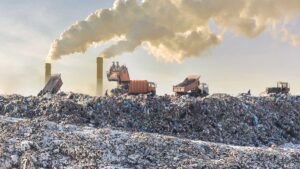
Corrugated cardboard makes its way from warehouse to mill in about two weeks. In contrast, plastic packaging can take centuries to break down, and even the most optimistic estimates say only 5 to 6 percent of U.S. plastic is actually recycled. This difference highlights both the promise and the challenges of creating a circular packaging economy.
Back in April 2020, when this article first appeared, the recycling industry was still struggling after China banned imported recyclables in 2018. Arou
Corrugated cardboard makes its way from warehouse to mill in about two weeks. In contrast, plastic packaging can take centuries to break down, and even the most optimistic estimates say only 5 to 6 percent of U.S. plastic is actually recycled. This difference highlights both the promise and the challenges of creating a circular packaging economy.
Back in April 2020, when this article first appeared, the recycling industry was still struggling after China banned imported recyclables in 2018. Around that time, DS Smith opened its first North American recycling plant in Reading, Pennsylvania, marking the first closed-loop corrugated packaging system. Five years later, the circular packaging sector has become a $245 billion global market and is expected to nearly double by 2034.
However, growth does not always mean true circularity. The gap between what companies promise and what recycling systems actually deliver is under more scrutiny than ever.
How the Recycling Loop Works and Where It Breaks
Many people picture recycling as a simple process: items go from the curbside bin to a materials recovery facility (MRF) and then become new products. In reality, the process is more complicated. Mixed curbside collections have about a 25 percent contamination rate in baled recyclables from MRFs, so more sorting is needed before they can be turned into new materials. In the past, this extra sorting was often done cheaply in other countries.
After China stopped buying U.S. recyclables in 2018, the U.S. was left with about a third of its collected materials and no place to send them. This led to a crisis: many communities lost their recycling programs, and it became obvious that the U.S. needed more domestic processing and cleaner materials from better recycling programs.
Paper and corrugated cardboard are still the big success stories in circular packaging. In 2024, the U.S. recycled over 33 million tons of cardboard, or about 90,000 tons each day, reaching a recovery rate between 69 and 74 percent, according to the American Forest & Paper Association. The share of recycled paper used at U.S. mills has grown from 36.6 percent in 2005 to 44.4 percent in 2024.
Plastic is still a major challenge. Only about 5 to 6 percent of U.S. plastic packaging is recovered and made into new packaging or products.
A Growing Market With Caveats
Europe is leading the way in recycling growth, thanks to strict regulations. North America is catching up through corporate ESG commitments, extended producer responsibility programs, and state-level policies.
Paper-based packaging leads in circular packaging revenue, making up about 40 percent of the global market in 2024. This is due to advances in fiber recovery technology and the fact that consumers are used to recycling cardboard. Reusable and refillable packaging is growing quickly, but it is still a small part of the market. As a result, the food and beverage sector makes up nearly 47 percent of circular packaging demand, and packaging companies are teaming up with recyclers to meet this need.
Industry consolidation signals how seriously investors have bet on this sector. In July 2024, Smurfit Kappa completed its acquisition of WestRock to form Smurfit WestRock, one of the world’s largest paper-based packaging companies, with $32 billion in combined revenue and 100,000 employees across 40 countries. Separately, International Paper announced an agreement to acquire DS Smith in a deal valuing DS Smith at approximately $9.9 billion. These deals suggest that fiber-based, recyclable packaging is a durable growth market.
The DS Smith Model, Five Years Later
In March 2020, DS Smith opened its first North American recycling plant in Reading, Pennsylvania, right next to an existing paper mill and corrugated packaging facility. These three sites could make, use, collect, and recycle corrugated boxes in about two weeks, creating a true closed loop. DS Smith got clean materials from distribution centers, packaging facilities, and retailers instead of mixed curbside collections, which helped keep contamination low.
Since then, this model has grown significantly. DS Smith, now part of International Paper, and other companies have shown that fiber-based packaging circular systems can work on a large scale. The Ellen MacArthur Foundation’s 2024 Global Commitment Progress Report, which covers over 1,000 organizations representing 20 percent of global plastic packaging production, noted that companies like Amcor have “doubled the share of recycled content in their plastic packaging, making as much progress in four years as in the four decades before,” according to EMF leader Rob Opsomer.
Where Optimism Meets Reality
But the numbers are more complex than market growth projections suggest. The Ellen MacArthur Foundation (EMF) found that the 2025 targets set by its member companies in 2018—to cut virgin plastic use by 18 percent, reach 26 percent recycled content, and achieve 100 percent reusable, recyclable, or compostable packaging—are now mostly out of reach without major changes. Together, these companies have avoided using 9.6 million tons of virgin plastic since 2018, but that is less than 3 percent of annual plastic production. At the same time, the overall market increased plastic packaging use by 8 percent.
Scaling up reusable packaging has been especially hard. Even though 64 percent of EMF Commitment participants have started pilot programs, reuse models make up only 1.3 percent of packaging, according to the Foundation’s 2024 analysis. The main obstacles are structural: the U.S. lacks a shared reverse logistics system, does not offer enough consumer incentives, and has no binding policies to make reuse practical.
Greenwashing has made the credibility problem worse. In October 2024, the legal advocacy group ClientEarth released a report saying that vague plastic recycling claims, like “100-percent recyclable” and circular loop images, mislead consumers about the real environmental impact of products and violate UK and EU consumer protection laws.
“The thing that blew my mind,” said Myles Cohen, founder of consulting firm Circular Ventures, at the September 2024 Packaging Recycling Summit, “is that in the company’s defense, they argued, ‘Hey, our statements were just classic puffery.’” Cohen called greenwashing “a pet peeve that damages not just individual companies but the packaging and recycling industries as a whole.”
Not all circular packaging strategies are equally effective. The evidence shows a clear ranking of materials:
Fiber-based packaging, like corrugated cardboard and paperboard, has proven circularity supported by real infrastructure. The DS Smith model is successful because it uses clean materials and relies on commercial, not residential, collection systems.
Aluminum is the most valuable recyclable material. Recycling just one can saves as much energy as half a gallon of gas. Beverage cans contain 73 percent recycled content, and steel cans are recycled at an 80 percent rate, so metal packaging truly supports a circular system.
Reusable packaging is most effective in closed-loop commercial settings, such as logistics, food service, and institutional supply chains. It does not work as well in consumer retail or quick-service restaurants, where returning packaging is expensive and unreliable.
Compostable packaging is only a limited solution. More industry analysts are skeptical because most communities do not have home composting, industrial composting facilities often reject packaging, and composting creates greenhouse gases instead of recovering materials.
Plastic recycling needs a very specific approach. PET bottles and HDPE containers are recycled more successfully than most other plastics. Flexible plastics like films, pouches, and sachets are still mostly unrecyclable on a large scale and often end up polluting the environment.
The EPA estimates that updating U.S. recycling infrastructure will cost between $36.5 and $43.4 billion, mainly for better packaging recovery, more composting capacity, and improved plastics processing. This investment has been slow to happen because there are no binding policy requirements.
The E.U. Regulatory Push and the U.S. Gap
Europe has moved decisively. The E.U.’s Packaging and Packaging Waste Regulation (PPWR) requires 70 percent of all packaging waste to be recycled by 2030, with plastics recycling rates targeted to double to 55 percent. Member states must cut packaging waste per capita by 15 percent by 2040 versus 2018 baselines. The European Commission is also requiring products claiming to be biobased, biodegradable, or compostable to meet minimum, verifiable standards to combat greenwashing.
In the U.S., California is leading the way with extended producer responsibility (EPR) laws and the new Voluntary Carbon Market Disclosures Act, both aimed at reducing greenwashing in sustainability claims. However, there is little action at the federal level.
At the November 2024 Busan negotiations for a UN Global Plastics Treaty, countries failed to reach a binding agreement. This has left a major policy gap and prevents a coordinated global effort.
What You Can Do
If you want to make a positive difference, it helps to be both a conscious shopper and an active citizen. Here are some steps you can take in your daily life:
Choose fiber and aluminum products. Corrugated boxes, paperboard, and aluminum cans have real end-of-use recycling systems. Recycling these materials truly closes the loop.
Don’t just trust the label. “Recyclable” does not always mean it can be recycled where you live. Check if your local program accepts the material, and use Earth911’s recycling search to see what is accepted in your area.
Focus on reducing packaging, not just recycling. Buying products with less packaging, choosing concentrates, or picking refillable options has a bigger environmental impact than recycling alone.
Support EPR policies. Extended producer responsibility moves recycling costs from cities and taxpayers to the companies that create packaging. This is a structural solution that market growth alone cannot achieve.
Ask companies for details. If you see vague claims like “eco-friendly” or “100-percent recyclable,” ask questions: Where is it recyclable? What infrastructure is used? What percentage of the material is actually recycled? Demand clear, verifiable answers.
If you value the environment, keep a variation on Smokey Bear’s familiar advice in mind: Only you can prevent the economy from burning down the planet. Your response needs to combine thoughtful choices when shopping with active communication with friends, family, the businesses you frequent, and the representatives you elect.
Editor’s Note: This article, originally authored by Gemma Alexander on April 14, 2020, was substantially updated in April 2026.
Recycling in Ontario is changing in a big way. As of January 1, 2026, the province has fully transitioned to a new Blue Box system that changes who is responsible for recycling and is intended to make the process more consistent across Ontario.
Under the new rules, recycling is now managed and funded by the companies that produce packaging and paper products, rather than municipalities. This shift is known as Extended Producer Responsibility (EPR). The idea is that companies should take more r
Recycling in Ontario is changing in a big way. As of January 1, 2026, the province has fully transitioned to a new Blue Box system that changes who is responsible for recycling and is intended to make the process more consistent across Ontario.
Under the new rules, recycling is now managed and funded by the companies that produce packaging and paper products, rather than municipalities. This shift is known as Extended Producer Responsibility (EPR). The idea is that companies should take more responsibility for the waste they create, while making recycling systems easier for residents to navigate.
The goal is to recycle more, send less waste to landfills, and move toward a more circular economy. But for many Ontarians, the new rules also raise a lot of questions. Here are some of the most common ones.
Frequently Asked Questions
1. What changed in Ontario’s recycling system in 2026?
Ontario’s Blue Box program is now fully run by producers – the companies that create packaging and paper products. That means they are responsible for collecting, sorting, and recycling those materials.
An organization called Circular Materials now helps operate the Blue Box program across Ontario.
For most residents, the day-to-day experience may still look similar. The province will continue using the same blue boxes, the same curbside pickup and will continue to accept many of the same items. But behind the scenes the system has changed significantly, with the goal of creating more consistent recycling rules across the province.
2. Why is Ontario changing its recycling system?
Before this transition, municipalities shared the cost and responsibility of recycling programs, and each city or region often had its own rules. That meant something recyclable in one community might not be accepted in another.
The new system is meant to reduce that confusion. By making producers responsible for the materials they put into the marketplace, the Blue Box program should, in theory, put more pressure on companies to reduce unnecessary packaging and design products that are easier to recycle. However, advocates have raised concerns about the true efficacy of this program, including looser reporting requirements, lack of transparency in operations, increased incineration of recyclable materials, and the exclusion of many groups like multi-residential buildings, public spaces and schools.
3. Will recycling rules still differ depending on where I live?
Historically, yes. What you could recycle in Toronto might not have been accepted in London, Kingston, or another municipality.
The new Blue Box system is designed to make accepted materials more consistent across Ontario. However, some local differences may still exist in how recycling is collected. For example, some municipalities may use blue boxes, while others use large recycling carts. Pickup schedules and collection contractors may also vary by region.
So while the rules about what can be recycled are becoming more standardized, the way recycling is collected may still look different from place to place.
4. Can I recycle…?
If you’ve ever stood over your recycling bin wondering, “can I recycle this?” You’re not alone.
Some cities across Ontario have helpful tools. For example, if you live in Toronto, one of the easiest ways to check is by using the Waste Wizard, an online tool that lets you search specific items and find out whether they belong in recycling, garbage, organics, or special drop-off.
Although Toronto’s Waste Wizard is one of the best-known examples, other municipalities across Ontario offer similar search tools or waste apps. They can be especially helpful for sorting items like black plastic, coffee pods, takeout containers, or mixed-material packaging.
The updated Blue Box program expands the list of accepted materials. In many cases, you can now recycle more types of packaging than before, including items like foam containers, black plastic, and certain flexible plastics. But contamination — such as food waste, liquids, or hazardous materials — can still create major problems in the recycling stream.
5. If the province has one system, why do municipalities still matter?
Even though the recycling rules are now set at the provincial level, municipalities still play a major role in waste management.
They are often responsible for services like garbage collection, green bins or organics, household hazardous waste depots and local public education. Municipalities also help residents understand changes to collection schedules, bin types and local disposal options.
In other words, the province may be standardizing the recycling system, but municipalities are still an important part of how that system works in practice.
This is one of the most important questions and one of the hardest to answer simply.
Recycling can help reduce landfill waste and recover useful materials, but it is far from a perfect solution. In Canada, recycling rates remain low. Currently, only 7% of Ontario’s waste is recycled through the Blue Box. This is due to a combination of factors, including contamination, complex materials, and limited recycling markets.
Ontario’s new recycling system is intended to improve outcomes by making producers more accountable and expanding what can be collected. But recycling alone will not solve the waste crisis.
Reducing waste in the first place and reusing materials whenever possible remains essential.
7. What should I do with electronics or hazardous waste?
Electronics and hazardous materials should never go in your Blue Box.
Items like batteries, old phones, chargers, paint, propane tanks, light bulbs, and cleaning chemicals require special handling. If they are placed in recycling, they can contaminate other materials, damage equipment, or create safety risks for workers.
Instead, these items should be taken to a designated drop-off depot, household hazardous waste site, or e-waste collection program in your municipality. Many communities in Ontario offer permanent depots or seasonal collection events for these materials.
If you are unsure, your municipality’s waste lookup tool is the best place to check.
The Bottom Line
Ontario’s new recycling rules are a major shift. By making producers responsible for the packaging they create the province is trying to improve recycling and reduce confusion for residents.
But even the best recycling system depends on public understanding and participation. Knowing what belongs in your Blue Box and taking the extra moment to check when you’re unsure can make a real difference.
At the same time, recycling is only one part of the solution. If Ontario is serious about reducing waste and protecting the environment, we also need to focus on addressing the systemic root of continuous waste generation in the first place.
Most business leaders believe sustainability costs money. They’re wrong. The proof is sitting right under their noses, bleeding out quietly as waste, excess heat, and byproducts every day the factory runs. Danish manufacturing data shows that more than 20% of raw materials purchased by the average company never reach a finished product. In a sector where resource costs account for more than 50% of total operating expenses — compared to less than 25% for salaries — that’s not a compliance proble
Most business leaders believe sustainability costs money. They’re wrong. The proof is sitting right under their noses, bleeding out quietly as waste, excess heat, and byproducts every day the factory runs. Danish manufacturing data shows that more than 20% of raw materials purchased by the average company never reach a finished product. In a sector where resource costs account for more than 50% of total operating expenses — compared to less than 25% for salaries — that’s not a compliance problem or a branding challenge. It’s a structural, strategic failure that most business leaders have never been trained to see. Jasper Steinhausen spent two decades watching that failure play out across more than 100 companies in the Nordic countries. He came to sustainability not from the environmental side, but from marketing, where the core lesson was that people act on what they care about, not on what you think they should care about. When he started connecting the dots between resource-flow analysis and business strategy, the conversation changed. Leaders who tuned out every sustainability pitch suddenly leaned in when the frame was cost reduction, supply chain resilience, and competitive advantage. The “green” problem turned out to be a business problem in disguise — and a solvable one. That reframing is in his book, Making Sustainability Profitable: A Leader’s Guide to Growing a Thriving Business That Makes the World a Better Place. A free digital copy of the book is available at freebook.scoreapp.com — Jasper recommends starting with Chapter Three.
Jasper Steinhausen, Founder and CEO of Business With Impact and author of Making Sustainability Profitable, is our guest on Sustainability In Your Ear.
The argument Jasper makes is structural. Today’s business leaders have been trained rigorously in managing time and money, but almost never in managing material flows, even though materials dwarf payroll in the cost structure of most manufacturing companies. The result is a generation of leaders who are leaving more than half their cost base strategically unmanaged. The narrative problem compounds the structural one. When every leader wakes up believing sustainability is a cost, a constraint, and a compromise, they never get to the question of whether it might be something else. Jasper’s idea, which he posts about on LinkedIn and tests with clients ranging from small manufacturers to government advisory roles, is that the narrative is the first hurdle. The mental transformation has to precede the business transformation. Companies that clear that hurdle and start treating sustainability as an innovation platform consistently find themselves with a layer of competitive advantage their rivals haven’t even thought to open. Our conversation also covers the greenwashing trap, and how to avoid it by going around it entirely. The problem with leading on sustainability as a marketing message, Jasper argues, is that it inverts the logic. The job isn’t to convince customers to care about the planet. It’s to identify the problem they’re already trying to solve and deliver a better solution. Once that happens to be more sustainable because sustainability, done right, produces better outcomes. “Impact follows perceived value,” he says. A water company with a genuinely pure, chemical-free source doesn’t lead with environmental stewardship. It leads with safer drinking water for your kids. The sustainability isn’t hidden — it’s structural. It’s why the product delivers what it promises. Communicating it means doing what you say, saying what you do, and backing every claim with data and a visible roadmap. That’s not a compromise. That’s the only version of sustainability communication that survives contact with a skeptical market.
You can learn more about Jasper’s work at bwimpact.com and connect with him on LinkedIn.
Hello, good morning, good afternoon, or good evening, wherever you are on this beautiful planet of ours. Welcome to Sustainability In Your Ear. This is the podcast conversation about accelerating the transition to a sustainable, carbon-neutral society, and I’m your host, Mitch Ratcliffe. Thanks for joining the conversation.
Today we’re going to talk about sustainable business — making it sustainable, making it profitable; in other words, making it a business. Many people still believe that sustainability is just a cost center: a compliance hassle, a PR move, or something that hurts profits. This belief has kept many companies from joining the green transition. Instead, they’re waiting for rules to change or for others to show how it works. But the data tells a different story, and according to our guest today, when manufacturers in Denmark account for all their inputs, more than 20% of raw materials they purchase never reach a finished product. Instead, they bleed out as waste, excess heat, and other byproducts. That’s not just an environmental problem — that’s money leaving through a hole in the floor. And it points to something deeper: sustainability, when done right, isn’t a cost to be managed. It’s a source of competitive advantage that most business leaders have not yet learned to see.
So I’m joined today by Jasper Steinhausen, founder and CEO of Business With Impact, and the author of the book Making Sustainability Profitable. Jasper is a longtime circular economy business consultant to businesses in the Nordic countries. Over the past two decades, he’s worked with over 100 companies and has served as an advisor to the Danish government’s Green Transition Fund. He’s developed a framework — the Impact Blueprint — that guides business leaders through five key actions connecting sustainability with growth, resilience, and profit. Companies that use it have reported their best financial results ever.
So let’s talk with Jasper about common mistakes small and medium-sized companies make when starting with sustainability, how circular economy thinking is really about using resources better and making more profit, and how companies that go beyond compliance can stand out from the competition. We’ll also try to get into some tougher questions: Why isn’t the business case catching on faster? How do you tell real sustainability from greenwashing? And can businesses move quickly enough to meet what science says is needed?
To learn more about Jasper’s work, you can visit bwimpact.com — that’s all one word, no space, no dash. You can find his book Making Sustainability Profitable on Amazon or at your local bookseller. If sustainability is truly a profit driver hiding in plain sight, why do so many business leaders still see it as a burden, and what would it take to change that? Let’s find out right after this brief commercial break.
[COMMERCIAL BREAK]
Mitch Ratcliffe 2:58
Welcome to the show, Jasper. How are you doing today?
Jasper Steinhausen 3:01
Thank you, Mitch. I’m doing really, really well. Looking forward to having this conversation with you.
Mitch Ratcliffe 3:06
Well, thank you for joining me. I really appreciate it. You know, like myself, you’ve been working for 20 years or so at the intersection of sustainability and business strategy. I’m wondering — was there a moment, or maybe a specific client, that made the bell ring for you, that these two things are intimately connected?
Jasper Steinhausen 3:23
Well, for me, the problem is that most people tend to focus on only one problem at a time, right? We tend to isolate problems, especially those we don’t quite understand. And that’s not just a sustainability thing — that’s just how our brains work. But the reality is that sustainability integrates into so many areas in a business, as you probably realize yourself.
And I’ve always been looking at the positive side of things, looking for the opportunity. At some point, back in the mid-2000s or so, I was very much into climate. This was heading up towards COP 15 in Copenhagen, so climate was the thing — also for me. I started looking at climate as the opportunity to innovate and to rethink, and thereby to solve more than one problem at the same time, because there was lots of stuff that needed fixing.
My experience from working in marketing right after I left university was that the more I talked to people about what they care about, the more they listened. So I started connecting the dots: what are the types of problems they do care about? Because a lot of people don’t necessarily care enough about sustainability — it’s not their top priority. So I started to look at it this way: What if I get curious, try to understand what your top priority is, and then figure out how climate — or sustainability, or whatever your slice of this pie is — intersects with that problem? And then speak to solving that problem in a way that also has impact. Basically turning sustainability into the toolbox and using it to solve the problems people actually care about.
And things started moving more easily. Conversations were more interesting to people. From there, I’ve just been refining that process for — yeah, 20-plus years.
Mitch Ratcliffe 5:32
Well, as you say, there are a lot of problems, and the range of challenges a business or policymaker faces today is growing constantly. What do you find the primary motivation is — is it profitability, or is it a combination of financial sustainability and a genuine desire to do better? Where does the motive lie these days?
Jasper Steinhausen 5:56
Well, it depends. Usually I just start by asking people: What are your top priorities right now? What do you really want to succeed with? Not necessarily in sustainability, but where’s your head on the line — what have you promised the board, or your senior leadership, or whoever I’m speaking to in the organization? So rather than having a conversation around sustainability, I find it more interesting to have a conversation about what we really want to achieve.
But I do find that many leaders feel a fairly significant pain around the gap between the values they live by in their private life — the choices they make about food, cars, travel, housing, what they buy, what they choose to repair — and their professional life. In their private life, they make conscious, deliberate choices that factor in sustainability. Then they go to work for eight or nine hours a day, and there they just can’t connect the dots. So they’re basically living a split, unable to live up to their values in their professional life — which is a big part of your life. And that’s painful.
So for some there is an underlying personal pain point, but it always comes back to: I’m being measured on delivering business results. And if you’re not in a company that’s advanced and mature in sustainability — where it’s an integrated part of the brand — well, then it’s a distant second to cutting costs, increasing sales, and attracting talent. So to come back to your question: the short answer is that it’s the business side for the vast majority, but a lot of them have a personal drive underneath. They just can’t connect the two, so they don’t even try. When I help them do that, it becomes a real personal relief as well.
Mitch Ratcliffe 8:30
So what would you say is the most common objection you hear when you make the argument to, say, a room full of CEOs that sustainability can be profitable? Is there a common myth you can dispel right off the bat?
Jasper Steinhausen 8:42
Yeah, I guess they don’t say this, but I’m pretty sure they think it — “BS, this can’t be true” — though they’re polite people and don’t say it to my face. But the thing is, I’ve asked people on every continent, and I get the same response: sustainability is a problem, it’s expensive, it’s hard for business, and you have to compromise in so many ways. That seems to be the decisive narrative globally on what sustainability is.
The reality is that sustainability delivers competitiveness. It drives down cost. It drives innovation. It fuels engagement — and engagement equals productivity, less sick leave, attracting talent, more innovation. And combine all those, as you advance further and further, it also starts to lead to increased customer loyalty, because you make better solutions and find people and companies who see that alignment. There is so much business value to be gained, and people just don’t get that.
When we make what I call a mental transformation — before we’re capable of doing a business transformation — it’s kind of like all of a sudden thinking: well, what have I been thinking for all these years? You can read more about this process in Making Sustainability Profitable.
Mitch Ratcliffe 10:31
Well, you’re describing the recognition of a series of connections that constitute the system in which the business does its work — whatever that work might be. And one of the things that was interesting, and why I wanted to talk with you, is that you frame this all initially as a waste issue. I was surprised by the Danish manufacturing results you reported — that 20% of raw materials never make it into the product or service. For business leaders who haven’t thought about it that way, how does framing sustainability primarily as a resource-efficiency problem change the conversation? Does it make it easier to take that first step?
Jasper Steinhausen 11:08
Well, it’s a really good question. In general, it shifts things quite a lot. The thing is that business leaders don’t really know how to deal with resource flow strategically, and there’s a reason for that. From around the early 1950s to the early 1970s — what’s often referred to as the golden age of capitalism — there was a notion of seemingly endless abundance in energy and materials, and prices just kept falling. So it became less of a strategic issue and more like a cost of operations, something to hand down the chain to the head of manufacturing or wherever it sits today. In leadership literature, it gradually disappeared as a strategic topic, meaning that today’s leaders have never really been trained to strategically look at the flow of resources. They focus mainly on the flow of time and the flow of money.
So through no fault of their own — because nobody ever taught them, it was never part of their education or their portfolio — now this massive area has been ignored. I once had an opportunity to dig into Danish national statistical data — about ten years ago, though I’m quite sure the picture is the same today, perhaps even more significant. Less than 25% of costs go to salary. A bit more than 50% is tied to resources. If you combine these two things — it’s kind of mind-blowing. More than 50% of all costs are not part of leadership’s strategic focus. Let’s leave that for listeners to chew on, because that’s insane when you look at it like that. But it kind of just disappeared.
So when I come in and help rewire this connection — have them look at where the resource flows are — it becomes quite easy to see that there are things really going wrong in how we produce today. When I look at a company or a value chain, I basically see money bleeding out all over the place. If I’m asking how we can increase competitiveness and reduce cost, the first thing I’d say is: well, why don’t we start by stopping some of these holes? And the response is: “Oh, yeah, okay — I hadn’t thought about that.” Because that’s just how things run. Procurement procures, manufacturing produces, sales sells, everybody’s busy, the cost structure is baked into the price, and that’s it. Just intercept a bit and show them what it really is, and it’s kind of “holy moly.” And then you can start doing things.
Mitch Ratcliffe 14:39
Well, you’re describing what happens when suddenly the water is off and you recognize you’ve been counting on it without thinking about it for a long time. Each organization within the entity is in its own silo, focused on its own thing. So how do you move from being reactive to being proactive about sustainability? What does the sweet spot look like in practice?
Jasper Steinhausen 14:58
Yeah, well, I guess you could say that things move a little more easily once you align strategy and offering, and you and your team are working toward something bigger than yourselves. As some of your listeners probably know, we understand quite a lot about intrinsic versus extrinsic motivation. And we know that when we contribute to something beyond ourselves — something bigger — it feels really good.
So if you’re in a company that’s not just about profit, but also a profitable way to be part of making the world a better place — in whatever area fits that company — we can all see that a lot of things in this world are out of balance and moving in the wrong direction, whether that’s climate change, biodiversity, plastics, the amount of chemicals, or something in the social space. Whatever is your flavor, that’s up to you. And the second you can see: “Now I’m part of a team or a culture or movement that’s actually taking some real steps” — and you’re leveraging the full power of a business to do it — it becomes this massively leveraged change. You make better products because you use sustainability as an innovation platform. You put customers’ problems at the center, so you come up with solutions that are better for clients and better for the planet. Your team becomes more engaged, stays longer, works harder. And that’s why they beat the competition. It’s simply a better way of doing business.
Mitch Ratcliffe 17:15
Well, you see yourself within a larger system and a bigger context, and that allows you to find greater motivation as well as more opportunities for innovation. Can you share the principles of the Impact Blueprint — the five steps a leader listening right now on their commute can identify and potentially apply when they get to the office?
Jasper Steinhausen 17:39
Sure. There are five steps: mindset, mission, mapping out a course to move toward it, actually doing stuff, and then going out and talking about it. You can read through all of them in depth in Making Sustainability Profitable — and I’d be happy to gift your listeners a digital copy. Check the show notes for a link to download a free copy.
The mindset step is a lot of what we’ve already been talking about: shifting out of “it’s bad, costly, and a compromise” and into the opportunity space. Don’t start with “what environmental problems should I solve?” Start with “what business problem am I most focused on solving?” and then look at that through the lens of sustainability or resource flow. How does that intersect with the problem? Don’t go in thinking it’s more costly — it’s an innovation game. Find ways to make better solutions.
Mitch Ratcliffe 19:11
Great. We’ll include a link in the show notes.
Jasper Steinhausen 19:15
Perfect. Just read Chapter Three — that’s about a 20-minute read and you’ll be all good to go.
Mitch Ratcliffe 19:23
Chapter Three. Check it out.
Jasper Steinhausen 19:23
Check it out. The mission step is figuring out why we’re all doing this. What’s the bigger thing? Where do we want to go with this? Say you’re a smaller company, or founder-led, or owner-operated — where do I really want to go with this? What’s important to me? And making sure that matches with the business. You can look at a SWOT analysis — strengths, weaknesses, opportunities, and threats — and then match that with what’s personally important to you. Kind of like legacy thinking: what would you like to be known for? Is it children? Is it animals? Is it climate change? And then make sure those match, so you don’t choose an impact area you have no ability to actually move.
I’ve worked with clients who really wanted to do something on climate, but had a business with a very insignificant direct climate impact, or where the impact was tied into a supply chain where they had zero ability to influence anything, because they were a small company with giant suppliers on the other side of the world. So you need to match those things so you actually choose something that gives you a real chance of working on sustainability in a way that also improves your business.
Mitch Ratcliffe 20:56
And those two — mindset and mission — are a great place to anchor the rest of the conversation. What is the minimum viable move in terms of its ability to catalyze the passion you’re talking about for making the world a better place, while balancing the day-to-day challenge of covering payroll at the end of the month? Is there some initial investment or activity that takes you out of your comfort zone — where the silos stop you in your tracks?
Jasper Steinhausen 21:41
Well, you’re very right that getting out of the comfort zone is part of it. I find that the absolute majority of leaders don’t know how to lead sustainability — they see it as this separate thing.
Mitch Ratcliffe 21:54
And I would argue that they may not even know how to lead.
Jasper Steinhausen 22:00
Point taken — yes, duly noted. And especially for smaller businesses. A lot of founders or engineers who suddenly have 20 people on their hands are struggling just to keep everything going. Some even dream about going back to being in the weeds doing the actual work rather than all this leadership stuff. So, yeah.
Mitch Ratcliffe 22:28
The lone innovator is often where a lot of us begin this journey.
Jasper Steinhausen 22:32
Exactly — true. But what I would say is that there’s a lot you can do that doesn’t require big, long-horizon investments. The story about sustainability is very often that it’s about investing for the long view or future-proofing. But what I sometimes refer to as the “brilliant basics” — not a phrase coined by me, but still very valid — is to look at your company and see what you’re going to keep doing for a very long time. You’re going to keep taking raw materials, running them through process A, B, and C, and turning out a product for your customers. And your customers will keep wanting good quality, reliability, and the best possible price. OK — so here is something you can invest in, because it’s going to be ongoing. Are you doing it the right way?
And again, back to the resource flow and waste issue: you are not doing it the right way if you’ve never really looked at it. Unless you’re a very high-volume, low-margin Walmart-type operation that scrutinizes every penny — or you’ve been on the brink of bankruptcy — odds are good you’ve never really looked hard at this. When the Ukraine war broke out four years ago, what we saw here in Europe was a massive, near-overnight increase in energy prices. All of a sudden, companies saw a doubling or more of their energy costs, and for many, that was lethal. All hands on deck.
And within weeks, so many things were changed — none of which required big new investments. It was just smarter practice: let’s produce at night when energy is cheaper; maybe we don’t need the temperature at 98 degrees — maybe 92 is fine. All these things that were never looked at, because it wasn’t on the radar. You can do a lot of that. The minimum viable move is really just getting the basics right.
Mitch Ratcliffe 25:41
So you’re describing that moment of crisis when the reframing is almost automatic — because you don’t have control anymore. This is also a great place to take a quick commercial break, folks, because the wheels have been clipped off the plane. Will we land it? We’ll find out right after a quick commercial break.
[COMMERCIAL BREAK]
Mitch Ratcliffe 26:08
Welcome back to Sustainability In Your Ear. Now, let’s get back to my discussion with Jasper Steinhausen, author of Making Sustainability Profitable and founder and CEO of Business With Impact. So Jasper, one of the testimonials I read about your work is that in a single coaching session, you reframed an entire business through your questions. What do those questions look like when you sit down with somebody who says, “I know I need to do something — I think it might be sustainability.” How do you drill in to find out what they can actually do?
Jasper Steinhausen 26:41
Well, I can walk you back to that specific session, because I think it’s a story that underpins quite well what we’ve been talking about. So it’s a company that sells a water product of really, really high standard, and the founder is passionate about sustainability — but they were struggling a bit with getting traction in the marketplace and getting people to support it, whether that was investors, partners, or whatever. She was clearly more passionate about the sustainability part than a lot of the peers around her that she was trying to persuade.
But the thing is, she had really, really clear water — one of the few sources that could actually claim it was not contaminated with any man-made substances: no plastics, no chemicals, no PFAS, nothing. So I thought: what if we reframe this not as “a sustainable source” but as “better for your health”? How many people walk around caring about what they eat and drink? How many are worried about chemicals in their bodies or in their children? If this was the truly safe source of drinking water, what would that look like compared to pitching it as “the sustainable drinking water”? And she was like —
Mitch Ratcliffe 28:31
However — does that get them away from sustainability as a focus of the company? How do you avoid repositioning defocusing the mission?
Jasper Steinhausen 28:46
Well, the thing is that in order to deliver on that promise, she had to maintain exactly those sustainability standards. I was just reframing from selling the “green” solution to selling the value that comes out of doing that work.
Mitch Ratcliffe 29:03
Back to what I was asking about. So is leading with sustainability the wrong way to think about this, generally?
Jasper Steinhausen 29:12
It depends on your target market. So if you’re targeting people like you and me, it’s probably a good idea to lead with sustainability, because when I’m looking for something, my starting point is: where can I find anyone who’s done something remotely interesting in terms of sustainability? But the majority of people don’t start there. So if it’s green versus better, I’ll almost always go with better. What’s the better outcome that comes out of it?
In the water story, the pitch is cleaner and safer drinking water — P.S., it also happens to be sustainable. And that’s why she would not bottle it in plastic, obviously, because micro-plastics would migrate in and destroy the quality of the product. So it has to be in glass bottles — but you’re still not devaluing your mission. You’re just reframing the value. And basically it goes like this: impact follows perceived value. The job is to figure out what your ideal client perceives as valuable right now, and then show how your sustainable practice supports that. How do my choices become a reason for you to feel more confident in the product — because it helps you with the problem you know you have? And I know that, at the same time, it’s also good for climate or for whatever else. But that’s the icing on the cake.
Mitch Ratcliffe 31:05
One of the things I’ve learned over the years is that basing your product positioning on your own preference can be very challenging, because your preference and values may not map to the market’s. In this case, people are thirsty. They want good, clean, healthy water. Some of them — maybe not even most of them — want it delivered sustainably. Is it really important to lead with sustainability in any way, shape, or form? Or is that a subterranean activity? The thinking should be: let’s do this sustainably — but we don’t necessarily need to pitch that upfront. Let your quality speak first: you’re going to drink good, clean water; it won’t harm your kids; and, by the way, we’re going to be able to continue doing this without having destroyed nature.
Jasper Steinhausen 31:57
Yeah, I would probably go with something like that — but it depends on the room. Say I’m pitching this at Patagonia’s annual leadership assembly. Well, it’s probably a good idea to start by saying this is an amazing, sustainable product. They’re exactly the right audience for that. So it’s audience first — it’s page two of any book on selling.
So if people are on their commute back to the workplace thinking “what do I do?” — it’s just business. Sales is sales. Marketing is marketing. Innovation is innovation. What you can see is that sustainability is just an extra layer in the toolbox — and it’s one you probably haven’t utilized, and one that most of your competitors have never even thought about. That’s why you can beat the competition: by starting to utilize a layer in the toolbox nobody else is looking at, to develop better solutions, better business, lower costs, and more innovation.
And once you’ve done that, there’s a completely separate discussion: how much do you want to flag this externally? That comes back to who your target market is. Some you want to flag it a lot. Others — maybe not. “I’m trying to sell this to the White House right now, okay, I probably shouldn’t lead with sustainability. Let’s save that for later.” But if I’m selling to Patagonia, I probably want to flag it quite a lot. That’s a different discussion. You use the toolbox to make the better solution, and then you make a choice about whether and how much to flag it.
Mitch Ratcliffe 34:02
Well, in a lot of ways, what you’re doing is going around the greenwashing problem by actually focusing on why you’re making the decision. Greenwashing is a credibility killer in this space. If you were to go to Patagonia and say “we’re sustainable,” and it turns out you’re generating vast amounts of PFAS you’re dumping into the local water supply — you’re done with that audience. How do you recommend companies communicate sustainability in an authentic way, without making exaggerated claims? Because often, at the beginning of the process, they’re talking about their long-term goal rather than how they’re actually performing today. How do you begin that reveal in a way that lets people see you’re making progress, but without overpromising?
Jasper Steinhausen 34:51
Yes. If I should put this in really plain English: do what you say, say what you do, and be able to back it up with data. End of story. You could add: please don’t lie. In Europe, there’s regulation against this — it’s tied into marketing law. So making false claims is just breaking the law, the same as trying to sell liquor to minors.
But the key thing is: always be specific. Stay away from the generics — “I’m sustainable,” “I’m green,” whatever. No. We have done this specific thing. The problem is that when sustainability is pursued mainly as a branding exercise, because companies still believe it’s costly for business and the only return is PR — they try to push the envelope as far as possible. And that’s where all the greenwashing problems come from.
Whereas, if you go about it the way we’ve been discussing, the approach is: What are the three to five biggest business problems we have? What are the three to five biggest problems our clients have? Go to work on those. If you solve one of a customer’s biggest priorities, you don’t go out and say “this is amazing for climate.” You go out and say “we just fixed your problem — and, by the way, it’s also better for the climate.” See Chapter 3 of Making Sustainability Profitable for a full walk-through of this approach.
So there are three things to try to get at least a dash of in your communications. First, the mission — the bigger picture, the roadmap, the plan, whatever you call it. Show that this isn’t a standalone thing; it’s one in a series, and here’s what you plan to do next year and the year after. Then spend the majority of your time on the actual results: we have removed X, optimized Y, extended product life by Z. And be able to back it with data. In Europe, you need trusted third parties to verify the data. I’m not sure about the regulations on your end —
Mitch Ratcliffe 38:02
— here, we don’t have regulations anymore. Makes it easier, doesn’t it? Ha. You made reference earlier to potentially selling to our White House — which I’d argue is a fool’s gambit, because you’ll get stabbed in the back. But sorry, folks — it’s true. Do you see, in this environment of political pushback against sustainability, that the green transition is actually taking deeper hold — not just in Europe, but in business everywhere — because of the underlying resource-cost crisis you’ve been talking about? If we don’t find ways to reuse and reduce the cost of virgin material extraction, prices will just keep going up. Are we on the path to a greener, more environmentally responsible economy, or is it more talk than action?
Jasper Steinhausen 39:06
Well, that’s a really good question. There’s a long-form answer and a short form. Which one do you want?
Mitch Ratcliffe 39:13
Let’s go short — we’ve been talking for a while, and the commute for our listener is probably getting close to an end.
Jasper Steinhausen 39:19
I think we are nowhere near realizing the potential, simply because way too few people have the right understanding of what this is all about. There’s a great misconception we’ve referred to a couple of times, and that’s really what’s holding us back. It’s what makes politicians pass the wrong type of laws and legislation; it’s what makes decision-makers pull back again. It’s somewhere between tragic and hilarious — because in the name of cutting costs and increasing competitiveness, we’re ignoring one of the most powerful levers available to do exactly that. This is probably one of the biggest opportunities to increase competitiveness in our time, rivaled only by AI. And yet, because we don’t understand it, we’re removing focus from it.
Mitch Ratcliffe 40:20
That’s a really important point — and it goes all the way back to the beginning of the conversation. You’re in your silo, focused on your particular challenge. If you just look up a little and see the synergistic opportunities in thinking across silos — first to reduce waste overall, and potentially even to begin regenerating nature by putting raw material back into it — that can be transformative.
One problem a lot of businesses have is that they think of the circular economy only as waste management or recycling. How do you talk about that with your clients? How do you make the case for a full life-cycle approach versus “I took care of my part of the job, I hope somebody else does theirs”?
Jasper Steinhausen 41:15
Well, basically — if they’re not ready to talk circularity, I don’t talk circularity. I might get there eventually, but I use different words. If the reason for taking materials back is to get cheaper or less risky raw materials — because right now they’re sourcing everything from the other end of the world, and we’ve all learned that international supply chains are far more fragile than we thought, what with wars and conflicts and all of that — then perhaps the smarter move is to start sourcing from more regional waste streams. OK, well, then maybe we’re talking about de-risking the supply chain, or cutting cost through access to cheaper raw materials. Whatever it is, I try to listen, tune in, and translate.
I’ve trained myself to speak the language of the CFO, CEO, CTO, head of manufacturing, and sales — whatever the role, I can probably find my way into it. The goal is to make sure they feel they’re on their own turf. In reality, I’m just getting them to use my tools — they’re just not necessarily aware of it. And if they are ready to talk circularity, great — we can go as deep as you like. But for most, that’s not the case.
Mitch Ratcliffe 43:09
Well, you’re hitting on the opportunity of the times, really — the era of code-switching, being able to move from one dialogue to another while maintaining continuity. That’s the authenticity piece, the non-greenwashing part we were discussing a moment ago. If this business case is so compelling, why isn’t every company doing it? What’s the real barrier — is it knowledge, lack of incentives, the need for a new culture, or the need to connect with a bigger culture than your organization? How would you encapsulate that for a business leader who asks?
Jasper Steinhausen 43:49
Well, my analysis is that the single biggest — or perhaps the first — hurdle to get over is changing the narrative. When every business leader wakes up every morning thinking “this is bad for business, this is costly, and it’s going to restrict me and force me to compromise” — and then sits down and thinks “OK, I’m trying to cut costs, trying to find new creative ways to expand into new territory” — they immediately think: “I’m probably not going to use this tool, because I know it’s more costly. It restrains me, and I’m trying to create maneuvering space.” When they think that’s what sustainability is, it never fits the purpose.
The reality is, it fits the purpose extremely well. But nobody knows why — which is also why I spend so much time pushing this narrative by posting six days a week on LinkedIn and being lucky enough to be invited onto programs like this. We need this change in narrative, because otherwise people never even get started. They never get to ask the questions. They never open their eyes to realize: “Huh, that’s strange — maybe we should have a look at this.”
Mitch Ratcliffe 45:19
And it’s because, in a lot of ways, we tell ourselves the same old stories — both because they’re comfortable and because you don’t have to explain them to anyone. As you think about the transition we need to make, what’s that one factor you would urge a business leader to consider as they think about the story of their business — is it the missed opportunity to do the world-improving work they want? Is it missed profitability? Or something else?
Jasper Steinhausen 45:51
Well, in the world of today — where competition is as fierce as it’s ever been for most — I would probably lead with the business side. Just: stop wasting money all the time. Stop that. So you could start by simply looking at what percentage of your overall cost is tied to resources, and how much of what you buy is turning into waste.
Waste is the most expensive and idiotic thing we can create. First, you pay good money to get raw materials. Then you pay people and equipment to work on them. You also pay for marketing, advertising, and sales. And by the time you’re nearly done, some of all of this is lost — and then you pay somebody to come and take it away. It’s lose, lose, lose, lose all the way through. And it’s also bad for the world.
So if we could just eliminate some of that, you’ll save money in procurement. You’ll save money in wasted time, salary, machinery, energy — all of it. And you’ll do a really, really good thing for the planet. And you can turn that into part of your story as well — your people will love you for it, and your clients potentially will too, depending on how you position it. It could turn a lose, lose, lose, lose, lose into a win, win, win, win. Or you could stay where you are and just be damned ineffective. It’s up to you.
Mitch Ratcliffe 47:41
I almost don’t know how to follow that last line — because that is the “I’m just going to stick to my guns” approach I hear from so many business leaders: “I don’t have time for that.” But when you open your thinking to new options, almost invariably, any business can recover. How can folks keep up with your thinking? Where can they see you? Posting on LinkedIn every day?
Jasper Steinhausen 48:03
Yeah, it’s fairly simple, because there’s only one person called Jasper Steinhausen. So if you find me on LinkedIn, I’d really love to have you following and engaging with my content. Hopefully there will be something that inspires you. And, as I said, I’ll be happy to gift you a copy of the book — check the show notes for a link to download a free copy. Start with Chapter Three, as we talked about.
Mitch Ratcliffe 48:29
Well, thank you, Jasper, for your time today. It’s really been a great conversation. I appreciate it.
Jasper Steinhausen 48:34
Likewise, likewise. And thank you for doing all of this. Thank you.
[COMMERCIAL BREAK]
Mitch Ratcliffe 48:43
Welcome back to Sustainability In Your Ear. You’ve been listening to my conversation with Jasper Steinhausen — sorry about mispronouncing his name earlier, by the way. He’s founder and CEO of Business With Impact and the author of Making Sustainability Profitable. You can learn more about his work at bwimpact.com — all one word, no space, no dash. And you can download a free digital copy of his book at freebook.scoreapp.com. When you do, check out Chapter Three first.
Jasper’s reframing of sustainability as a resource-efficiency problem hiding in plain sight is an effective tool for sustainability advocates in any organization. Danish manufacturing data shows that more than 20% of raw materials purchased by the average company never reach a finished product — instead, they bleed out as waste, excess heat, and byproducts. And by the way, you can also be wasting electricity excessively or burning too much coal. Don’t do that. That’s money leaving through a hole in the floor, not to mention an environmental impact too long ignored by business.
But as Jasper points out, this isn’t a failure of character on the part of business leaders. It’s a failure of training and culture. Ever since capitalism began, it has ignored the importance of resource costs. Sure, people talk about it — but when you actually look at it, we waste so much it’s insane. Today’s leaders have been schooled in managing time and money, but almost never in managing material flows, even though resource costs dwarf payrolls and account for more than 50% of the total cost in the average manufacturing company.
The second takeaway I urge you to think about is Jasper’s argument that the single biggest barrier to a green transition isn’t regulation, capital, or technology — it’s a narrative problem. In other words, we have to tell the story that becomes behaviors, repeated over and over to become culture. When every business leader wakes up believing sustainability is a cost, a constraint, and a compromise, their mental calculation about its value is over before it begins. Jasper’s bet is that once companies make the mental transformation — recognizing waste reduction, supply-chain resilience, and innovation capacity as the actual deliverables of a sustainable practice — the business case becomes self-evident. The companies that crack this beat the competition simply by using a layer of the strategic toolbox other companies never bother to open.
Finally, there’s the idea that runs counter to much sustainability advocacy: leading with sustainability as a primary value in your marketing is often the wrong move. Jasper’s principle that “impact follows perceived value” makes the job of the sustainable business clear — it isn’t to convince the market to care about the planet; it’s to identify the problem the customer is already trying to solve, and then bring a sustainable practice to bear on that problem in a way that makes the solution visibly better. That water company with the purest, chemical-free source doesn’t lead with environmental stewardship — it leads with safer drinking water for your kids. Sustainability is structural: it goes deeper than product messaging to why the product delivers what it promises. But it’s best positioned as a consequence of quality, not a call to conscience. Yes, it works with some consumers — like myself, who really pay attention — but for most people, we need to lead with quality. And that distinction matters, especially now, because greenwashing remains one of the fastest ways to destroy trust with an audience that cares most about the environment.
Jasper’s suggestion that you should do what you say, say what you do, and back it with data summarizes the challenge for any sustainability effort — whether it’s an internal initiative or the basis for a major product launch. Communicate specific results, not general claims, which we see far too often from companies pitching stories to Earth911. Anchor your results in a visible roadmap, so that your progress today can be seen as the first accomplishment on your road to a more sustainable world — not just the first in a long series of promises not yet kept.
So here’s the tension worth sitting with. Jasper’s model depends on business leaders choosing to look up from their siloed priorities long enough to see the resource flows bleeding money all around them. The global narrative that sustainability is a burden rather than a tool is nowhere near being corrected. It’s still driving policy decisions, investment decisions, and competitive strategy in the wrong direction. The irony is almost painful: in the name of cutting costs and increasing competitiveness, companies are ignoring one of the most powerful levers available to do exactly that — reducing resource costs by eliminating waste.
The window to act is open — wide open — and people are screaming for us to do better. The question is whether enough leaders will decide to stop leaving money and a livable planet on the cutting-room floor. We’ll keep talking with the leaders who do see the light and use it to illuminate the waste we can no longer afford — as a species, as a society, and as an economy.
I hope you’ll also take a look at our archive of more than 540 episodes of Sustainability In Your Ear. We’re in our sixth season, and I guarantee there’s an interview you’ll want to share. Writing a review on your favorite podcast platform will help your neighbors find us — because folks, you’re the amplifiers that can spread more ideas to create less waste. Please tell your friends, family, co-workers, and the people you meet on the street that they can find Sustainability In Your Ear on Apple Podcasts, Spotify, iHeartRadio, Audible, or whatever purveyor of podcast goodness they prefer.
Thank you for your support. I’m Mitch Ratcliffe. This is Sustainability In Your Ear, and we’ll be back with another innovator interview soon. In the meantime, folks, take care of yourself, take care of one another, and let’s all take care of this beautiful planet of ours. Have a green day.
Less than 2% of Americans can put plastic film in their curbside recycling bin, according to The Recycling Partnership. Meanwhile, the country generates millions of pounds of bags, pallet wrap, bubble mailers, and dry cleaner sleeves every year that machinery at materials recovery facilities is designed to reject. The plastic film problem has been the recycling industry’s white whale for three decades — too contaminated for most processors, too light for most economics. But more than 30 years a
Less than 2% of Americans can put plastic film in their curbside recycling bin, according to The Recycling Partnership. Meanwhile, the country generates millions of pounds of bags, pallet wrap, bubble mailers, and dry cleaner sleeves every year that machinery at materials recovery facilities is designed to reject. The plastic film problem has been the recycling industry’s white whale for three decades — too contaminated for most processors, too light for most economics. But more than 30 years ago, Trex Company, then a small operation in the Shenandoah Valley of Virginia, decided to build its supply chain around exactly this material. By the end of 2024, Trex had upcycled more than 5.5 billion pounds of waste plastic film into composite decking and had become one of the largest plastic film recyclers in North America. On this episode of Sustainability In Your Ear, Amy Fernandez, Chief Legal and Sustainability Officer, and Zachary Lauer, Chief Operations Officer at Trex, discuss how the company designs an entire manufacturing process around feedstock variability, why Trex indexed its 2024 sustainability report to IFRS standards before any US regulator required it, and what has to happen for old Trex decks to become new Trex decks.
Trex Company Chief Sustainability & Chief Legal Officer, Amy Fernandez, and Chief Operating Officer Zach Lauer are our guests on Sustainability In Your Ear.
Most manufacturers spend their engineering effort narrowing input tolerances. Trex went the other direction. Zach described thousands of recipes the production lines can run through, swapping between cleaner stretch film one day and heavily contaminated industrial trimmings the next. Artificial intelligence reads each feedstock stream in real time and adjusts extrusion temperatures and line speeds to keep the finished board within specification. In 2024, the company sourced over 1 billion pounds of reclaimed PE film and wood scrap, including 377 million pounds of waste plastic, through a national collection network of more than 10,000 retail drop-off locations and hundreds of school and community partners enrolled in its NexTrex program. The company is also preparing for the first generation of Trex decks, which are reaching replacement age, and its manufacturing lines can reabsorb the company’s own boards. The recycling bottleneck is contractors pulling up old decks who don’t want to sort screws from boards. Underneath all of it is a point worth lingering on: Trex’s poly feedstock isn’t priced off a barrel of crude, which means in a period of reshoring, tariff volatility, and oil-market disruption, recycled supply chains are structurally more stable than virgin ones, not less.
To find out more about Trex and its sustainability work, visit trex.com. The 2024 Sustainability Report is available on the company’s investor relations site.
Hello, good morning, good afternoon, or good evening, wherever you are on this beautiful planet of ours. Welcome to Sustainability In Your Ear. This is the podcast conversation about accelerating the transition to a sustainable, carbon-neutral society. And I’m your host, Mitch Ratcliffe. Thanks for joining the conversation today.
Americans throw away roughly 100 billion plastic bags a year, and most curbside programs won’t take a single one of them. Plastic film, those bags, the pallet wrap in the back of the stores, the bubble mailers, the dry cleaner sleeves, the overwrap on a case of bottled water — all of this has been the recycling industry’s white whale for decades. It jams machinery at materials recovery facilities, contaminates other waste streams, and ends up in landfills and oceans, and increasingly that plastic, especially microplastic, ends up in human tissue.
Meanwhile, the lumber industry sends sawdust to landfills by the truckload, and old orchards full of dying trees become a disposal problem for farmers. Two waste streams nobody wants, generated at industrial scale with very few takers. But more than 30 years ago, a small company in the Shenandoah Valley of Virginia looked at both of those streams and saw raw material. Today, that company has upcycled more than 5.5 billion pounds of waste plastic film and sourced over a billion pounds of waste wood in 2024 alone, and as a consequence, they’ve built one of the largest plastic film recycling operations in North America, all in service of making something as ordinary as backyard decking.
The deck happens to last about 25 to 50 years, requiring no staining, no sealing, and competes head to head with pressure-treated lumber on a price and performance basis. The sustainability story isn’t a marketing layer on top of the product, it is the product. And we’re talking about Trex, Trex decking.
Our guests today run two of the most consequential functions inside Trex. Amy Fernandez is Senior Vice President, Chief Legal Officer and Secretary, and Chief Sustainability Officer at Trex Company Incorporated, the world’s largest manufacturer of wood-alternative composite decking and railing. She holds the unusual combination of legal and sustainability oversight at a moment when these two domains are converging fast, with the IFRS Sustainability Disclosure Standards, California’s climate disclosure laws, and the SEC’s evolving stance all reshaping what public companies must say about their environmental performance. In 2024, Trex indexed its sustainability report to the IFRS standards before being required to, which tells you something about how Amy thinks about the relationship between disclosure, governance, and competitive position.
She’ll be joined today by Zachary Lauer, who is Senior Vice President and Chief Operations Officer at Trex, where he oversees manufacturing, supply chain, engineering, and research and development. His teams run plants in Virginia and Nevada, and they’re bringing a major new facility online in Little Rock, Arkansas, having built the operational machinery that turns approximately 95% recycled and reclaimed content into a product that has to perform outdoors for half a century. The R&D side of his portfolio is where Trex has cracked feedstock streams that other recyclers can’t process, including industrial film trimmings, end-of-life packaging from food and chemical manufacturers, and dunnage returns from distribution partners. All this work happens at the intersection of material science, logistics, and the unglamorous reality that recycled inputs don’t behave like virgin ones. It’s more expensive sometimes to recycle this stuff.
We’ll talk with Amy and Zach about how Trex actually makes its products, where the materials come from, and what it has taken to build a national feedstock network through the NexTrex program, a collection program spanning more than 10,000 retail drop-off locations and nearly 1,000 schools and community organizations. We’ll dig into a harder question, too: why Trex’s absolute emissions rose alongside production growth in 2024, and what the company is doing about end-of-life recycling of Trex boards now that the first generation is reaching replacement age, and what other manufacturers can learn from a company that is building a recycling infrastructure before there’s a market to feed it.
To learn more about Trex and its sustainability work, visit trex.com. So, circularity is a word that gets thrown around a lot these days. Trex was practicing it before the word existed. Let’s find out what three decades of doing that work has taught Amy Fernandez and Zach Lauer, right after this.
Welcome to the show, Amy Fernandez and Zachary Lauer. How are you doing today?
Zachary Lauer 4:54
Doing great.
Amy Fernandez 4:55
Great, great. Thank you, Mitch.
Mitch Ratcliffe 4:57
Well, thank you for joining me. And Trex does such interesting work. I mean, you were demonstrating what circularity means before the word had any cultural traction. I know you weren’t there at the beginning, but was this framed internally as an environmental project or as a sourcing strategy? Just the recognition that there was this massive volume of feedstock there that could be used.
Zachary Lauer 5:16
It was initially an environmental initiative by our founder, Roger Wittenberg. You know, he was bothered by the fact that there was no way to recycle or reuse his bread bags, and he wanted to formulate a product of value from that. He went through a couple of iterations and partnered with some other people, and they decided to turn it into composite decking and market it that way. Ever since that, it’s been part of our DNA, and we were always looking to extract value out of waste streams, you know, that aren’t currently used, and we continue to develop the next generation of materials out there that we can extract value from and create a great product from.
Mitch Ratcliffe 6:09
These days — just last week, a couple of weeks ago, we talked with the CEO of Emerald Packaging, who’s also looking for recycled PE to use in their products. There’s competition for this feedstock now. How has that changed the way that Trex organizes its efforts to collect and bring this to the three different locations you manufacture the decking?
Zachary Lauer 6:30
So, you know, with opportunities and growth in this space, one of the things that has developed over time, over the last 10 to 15 years, is the growth in the availability of recycled polyethylene films from distributors. Right, as Amazon grows and direct shipments to homes grow, the materials that are used continue to expand. So that’s opened up markets for increased stretch film and those types of materials. But as those markets grow, we often go deeper and deeper into the stream, more contaminated into the stream, to go after material streams that most people can’t deal with or process.
Mitch Ratcliffe 7:17
Well, one of the benefits of this kind of recycling is that you don’t have a lot of health-quality, you know, food-contact kinds of restrictions, and so forth with the plastic. You mentioned contamination. Just how contaminated can the loads be for Trex in order to make a viable product?
Zachary Lauer 7:36
We grade our materials on a scale of 5 to 15% contamination. We can go deeper than that. The contamination that we typically find in our streams are metals, non-ferrous metals, other forms of plastic, polypropylene, polystyrene, and those types of material, paper, cardboard. And so we’re able to design processes that can accommodate those and process those materials. Out-sorting is still critical to the long-term viability.
Amy Fernandez 8:10
Oh, yes. And we can go more contaminated depending on what that contamination is. So if it’s paper, we can handle more of that. If it’s metal, it’s a bit harder to handle. So the type of contamination also matters in terms of, you know, at what level we can accept that contaminated poly.
Mitch Ratcliffe 8:31
Amy, the 2024 sustainability report describes the program as a win-win for both business and society at large. As we all know, we live in a time where that’s a contested idea — that sustainability is a good thing for the economy. What’s the most concrete way that you explain or demonstrate that the business case and the environmental case are genuinely the same for Trex, that this is an inseparable configuration?
Amy Fernandez 8:58
Yeah, you know, a really good example was our last earnings call. And during that call, you might have heard our CFO started talking about the price of PVC and virgin materials and the volatility associated because of their connection to oil. So that’s one very recent concrete example of the fact that, because our material is this poly that we recycle, we’re not as exposed to that volatility that you might get from those virgin streams. And so that is truly one of those competitive advantages that we have — that we recycle this material, and we can make a beautiful, well-performing product out of it. That is the business case. So you see it through these little examples.
Mitch Ratcliffe 9:51
So in an era of reshoring, you’re actually in a position to be even more competitively advantaged.
Amy Fernandez 9:56
Yes.
Mitch Ratcliffe 9:58
Amy, you stepped into the CSO role while also serving as Chief Legal Officer, and that’s a combination that’s becoming more common as sustainability disclosure is shifting from voluntary to regulated. How has all of the upheaval in the regulatory environment that we live in changed Trex’s approach over the past year or two in terms of what you report and what you tell customers?
Amy Fernandez 10:19
Trex has always been a highly ethical company, and so we do what’s right. And if you’re founded in doing the right thing, you’re not as subject to these whims of, you know, what’s happening either politically or, you know, with changes with government regulations, things like that. And so because we’re grounded in this reality of, we’re not going to go out there and start talking about targets that we don’t think are achievable — so when it was, you know, common to start saying “by 2030” or “by 2050” or whatever dates companies were out there saying “we’re going to get to this target” without actually having a plan to get there, Trex would never do that.
And so one of the things that you would see is that we get asked questions: “Why don’t you have targets?” And it’s because our target is to continuously keep improving from a very solid base that we have, but we’re not going to put an unrealistic number out there just to try to get points. So the regulatory changes don’t affect us as much when we start from that just basic ethical “do the right thing, disclose important information that we think our investors, our communities, others want to see, want to know that is true and not misleading in any way.”
Mitch Ratcliffe 11:39
From a marketing perspective, saying that you live by a higher standard is pretty effective. Do you think it’s necessary to be a lawyer to be a chief sustainability officer these days?
Amy Fernandez 11:49
No, not at all. And actually, I think the only reason that we did decide to put it this way — yes, of course, I do have the regulatory mindset, but I also have a passion for this, right? I mean, I joined this company because it is something that is important for me personally. And so the chief sustainability officer could have lived in other places and just been informed by legal the way that I inform other functions in this company. But I basically raised my hand for it and said, I think it lives well here, and I have a passion for it.
Zachary Lauer 12:22
It resided in other areas in our business as well, right, under other people that have that same passion.
Mitch Ratcliffe 12:29
So, Zach, what happens between the time when a plastic bag is dropped at one of the 10,000 grocery stores that collect bags and a finished Trex board leaving the factory? Can you walk us through that process?
Zachary Lauer 12:40
Yeah, you’ve kind of highlighted the ends of that value chain, right? From the pickup to the actual product that goes to the customer. We actually have over 15,000 collection points across this country that come back to centralized collection points, and then actually make their way to our recycling facilities, where the cleaner films are put directly into our production lines, and the more contaminated films go into a reprocessing operation that turns it back into a pellet.
But the most challenging engineering point for us in this entire value chain is actually at the extrusion production line, and managing variation in the streams. We call it recipes, and we have a rolodex of thousands of recipes that can be used in the production process. I liken it to a cooking analogy. Today we’re baking with wheat flour, and tomorrow we might be baking with almond flour.
And so we’ve used a lot of technology to help us — machine intelligence, artificial intelligence — to help us manage those recipes. And not only does it help us manage the streams coming into the production lines, those raw materials, but then it modifies the process parameters, the cooking temperatures, and the speeds in order to process those streams. So that’s where the complexity is for us.
Amy Fernandez 14:14
We design our own equipment. And I mean, we don’t — you can’t just buy this equipment from equipment manufacturers. So being able to design and set up this equipment to be able to process this changing raw material stream continues to be one of our areas of excellence.
Mitch Ratcliffe 14:35
That’s fascinating. The idea that if you had a different kind of fiber, for instance, coming in — you brought in a chipped orchard as a source — that you’d have a different recipe, but you’re producing a product that is consistent in its standards and specifications. That’s, I mean, Zach, that’s got to be very complicated. You mentioned AI. Was this possible before AI, or slower before AI?
Zachary Lauer 14:57
No, we still did it, but we had to program a lot more, right, and program the intelligence on the line a lot more. It’s just becoming more rapid as we can read those streams and read the variation in line. It just makes that reaction quicker and faster for us on those production lines to do that. But no matter what our recipe is for the day, to your point, Mitch, it comes out a consistent product at the end.
And it just shows that we design our product around variability. Whereas most people focus on reducing variation in their raw material streams, we’ve designed our whole manufacturing process around being flexible and adapting to material streams — not only the ones we use today, but the ones we’ll use in the future.
Mitch Ratcliffe 15:51
The other area where you’ve got that kind of volatility is in the volume of recycled polyethylene that you’re bringing in. You had a big year in 2022; it went down by almost 100 million — excuse me, 100 million pounds — the next year, and then recovered, not quite back to the 2022 range, in ’24. What’s behind that volatility? Is it competition for feedstock? The fact that retailer collection participation changes? The contamination rates?
Zachary Lauer 16:20
A lot of things go into it. But what I tell people is, don’t equate our collection volume to our consumption volume. You know, one of the unique challenges about being a recycler is the fact that it’s a winner-take-all market. When you pick up an account, maybe a large grocery store, it’s like picking up the trash — you have to be there and you have to collect it regularly. Service is key. So there could be times when there is more availability or more collection in a period, and you have to accept it.
So how we manage that volatility, or, you know, the changes that can occur from year to year or season to season, is we do a very good job of long-term demand and supply planning in this space, and combining that with our space planning, and then we kind of layer in anticipated regulatory, market, and consumer preference changes into that. And so there could be a period where we see maybe a deficit or a surplus, and we will go in and consume that and store it for a future period, or there just could be a surge in a particular market where there’s the availability and you just have to be willing to take it. And that’s difficult to absorb — those huge swings like you mentioned — into your supply chain without having a plan.
Mitch Ratcliffe 17:55
You just said “as a recycler,” but should we be thinking about this in general as simply part of the manufacturing process — going back to onshoring and keeping more materials in country and reusing them across a wider variety of production streams? How does Trex think about organizing the wider material flow rather than recycling programs in the United States? What have you learned that we should be applying as a nation?
Zachary Lauer 18:23
You know, I think you have to be intentional if you’re going to enter into a stream where you’re going to recycle or pull materials out there. We’ve focused our effort on North America, right? And we do take collection from other areas, but it’s rare. And we adapt our collection based on changing preferences. So, Mitch, what I mean by that is, you know, one year we could be doing a lot of store collection or distribution collection, but then all of a sudden in a region of the country, regulation changes, or things change, and we go more to the recyclers for our material.
We continuously monitor and adapt to the changes that we see there, because our desire is to keep our supply chains as close to our factories as possible. We bear the cost of the freight, right? And we bear the entire cost of the supply chain. We develop the supply chain, and so we’re continuously looking at ways to optimize that and keep our costs manageable.
Mitch Ratcliffe 19:34
As you say, you’ve built this vast alternative collection system — 10,000 retail drop-off locations, you’ve got 84 grassroots community partners, there’s 936 schools that were involved as of 2024. What strategies did you have to develop in terms of communicating to the public what they should put in those bins at stores so that you get a clean load? And does that actually impact the quality of the materials you receive?
Zachary Lauer 20:02
It does. From our foundation, education has been key, right? So this has been a marketing and supply chain integrated strategy from the very beginning. And so we utilize things like our NexTrex program to educate students, to educate communities, and motivate them to recycle and incentivize them to recycle. But we’ve also at the same time incentivized our value chain or our supply chain to collect and be a part of it.
And some of that education is based on teaching people what can be used and how it can be used, and to let them know it’s actually being turned into a product that they can later consume and use. But we also come alongside other businesses to support their environmental sustainability goals as well. Most of our partners want to do the right thing too, and sometimes it only takes a little bit of incentive to get them to participate in this program that we have.
Amy Fernandez 21:09
And Zach, why don’t you add also a little bit about the logistics piece of this, because — so you talked about marketing and supply chain, but part of the supply chain was the logistics with the trailers and how we track them, and time them, and send them out at appropriate, you know, to basically maximize our efficiency in getting the materials.
Zachary Lauer 21:30
Yeah. So we also help our supply chain collect this material. We provide those that are willing to collect with balers to bale this, so that we’re efficient in hauling materials back. We also are very good at calculating what collection will be like in certain areas, and where to leave trailers, and where to incentivize them to backhaul to certain locations.
Right, the grocery stores, for example, they’re backhauling anyway to their warehouses — corrugate, all these other materials — so we take advantage of that backhaul to get to their distribution centers, and then collect from those points where they can fill a trailer within a couple of days. And we manage that entire network of trailers and supply chain, and we ensure that they’re weighed out before they hit the road, so that we’re optimizing the cost of bringing those materials in as well.
Mitch Ratcliffe 22:36
Does that mean that you generally collect this material at a lower rate than most of the industry could possibly achieve at this point?
Zachary Lauer 22:43
That’s correct. Because we’re getting it directly from the source versus maybe through a waste collector or a municipal recycling facility where it’s already been handled a couple of times, and the cost could be higher.
Mitch Ratcliffe 22:59
Amy, it doesn’t sound like it, but I want to ask about this — do the partners also come to you asking about getting credit for this, ESG credit, carbon credits, and so forth? Are you starting to hear that kind of conversation about how we can create further incentives within the collection economy?
Amy Fernandez 23:17
So we’re not starting to hear that yet, unless it’s come through Zach’s team. But as far as I know, we’re not hearing that. We are, though, starting to explore, for example, those companies that do want to say that their plastic is recyclable, because, as you know, all these regulations are coming out around that. If they want to put, for example, the NexTrex logo on there, and can assure that we’re picking it up. If we pick it up, it gets to our manufacturing site. So people that have put those trackers and things like, “Is my bag actually going to get where it’s supposed to go?” — we find them, they get to us. And so that’s part of it, is to support their recycling claims. We’re starting to get some questions and conversations about that.
Zachary Lauer 24:04
The other incentive too, Mitch, is for a lot of these individuals: they have their own goals, and one of those is to minimize what goes to the landfill. And so they’re also incentivized to not throw it away, and so we can help in that process too — we can help meet that need.
Mitch Ratcliffe 24:25
I know neither of you is in the marketing organization, but when people encounter a Trex deck, do you want them to think about the fact that it’s recycled? Do you want them to identify with the circular process?
Zachary Lauer 24:36
We do, and it is meaningful to the consumer. You know, if you were to have asked that question when I just joined Trex — and I’ve only been here 10 years — that, you know, that may have been, you know, it was still in the top 10 of the consumer preference, but it was around eight or nine. That continued to climb up the ladder, and it is in the top five of what the consumer is looking for when they’re looking for a product.
It’s a luxury product that lasts an extremely long time, and they can feel good about the product that they’re purchasing when they do it. And Trex obviously leads in this space with our recycled content on our decking products.
Amy Fernandez 25:27
We still start with performance and aesthetics, but sustainability is right there, right along with it.
Mitch Ratcliffe 25:35
I have to admit, I do stand on my deck and think about the fact it’s recycled. This is a great place to take a quick commercial break, folks. We’re going to be right back to continue this conversation. Stay tuned.
Welcome back to Sustainability In Your Ear. We’re talking with two of Trex Company’s leadership team: Amy Fernandez, she’s Chief Sustainability Officer, Chief Legal Officer, and I’m forgetting one other at Trex, and Zachary Lauer, who’s Senior Vice President and Chief Operations Officer. We’re talking about how Trex has built one of the largest recycling systems in the United States to source materials for its composite decking products.
Amy, Trex in 2024 decided to embrace the IFRS Sustainability Disclosure Standards, which were not mandated by the federal government as a requirement. What drove that choice? Why are you getting ahead of the game?
Amy Fernandez 26:30
There’s a big difference between complying when you’re required to comply and adopting best practices proactively. And in looking at the IFRS disclosure standards, it is a best practice. It’s benchmarking using globally consistent frameworks. It’s, you know, well recognized. It is a good-faith process that shows rigor. And so we’re not going to wait for a US regulation to force us to do something when, again, like I mentioned before, it’s just the right thing to do, and it’s a good framework, because it’s recognized globally. So although we are a US company, we do still have, you know, investors, customers, and others globally that are connected with Trex, so we want to be able to reach them.
Mitch Ratcliffe 27:23
Did taking that higher road require more work? Were there things about your business that the IFRS framework forced you to confront and address that you wouldn’t have otherwise? And this obviously would be of interest to other companies that are thinking about whether or not to pursue them.
Amy Fernandez 27:42
Well, we are looking at some of the gaps in there, right? So our scope three, for example, we’re working on that now, and we’re going to get limited assurance from some auditors just to start. That’s something that isn’t required yet in the US, but under IFRS it is a best practice. So we’re starting to work on that now, because that is one of our gaps with alignment to that framework.
And then the other piece of this too is the rigor around any financial planning related to sustainability risk. So by doing that benchmarking, we were able to identify where we have maybe some best-practices gaps — not regulatory gaps, of course, because we’ve already talked about, this isn’t required — but best practices. And what do we want to start doing, and what might be helpful for everybody that’s looking at Trex, right? Our employees, our prospective applicants, our investors and our communities. So that is part of what we’re finding from this exercise.
Mitch Ratcliffe 28:43
I also noted that Trex’s scope one and two emissions — you mentioned scope three a moment ago — have risen about 17%, partly due to greater volume and partly due to greater energy use. As you grow as a business — and this is one of those challenges that I think the sustainably-minded confront, which is, these companies are going to produce more carbon but less carbon relative to other alternatives — how do you talk to investors and within the organization itself about that rising net impact, and how do you rationalize that given your desire to reduce environmental impact?
Amy Fernandez 29:25
Yeah. You hit the nail on the head, right? When we bring on more production lines — so we did bring more on in ’24 than what we had in ’23, which accounted for a big portion of that increase that you saw in ’24. And then we also, by adding Little Rock, the Little Rock plant into the network — although we don’t have production there, we’re still using energy while we’re, you know, bringing it up. And so you’re absolutely right that because we are running more, that is going to require more energy.
But we’re trying to improve our efficiency of what we’re using. We’re also looking at our network and the grids and the energy available across Nevada, Arkansas, and Virginia, because they’re not all the same. So we’re going to start looking at where we can optimize that as an entire network. And, you know, just be working on that equipment that we talked about earlier that we design ourselves — what else can we put in there in order to reduce the energy use there?
Mitch Ratcliffe 30:28
Zach, what are the carbon intensity goals? I know you don’t necessarily state public goals, but how do you work toward reducing carbon intensity as a continuous improvement operation?
Zachary Lauer 30:39
So we’re always looking at how we’re manufacturing, and throughout the entire supply chain how we’re — I mentioned before, are we getting the maximum weight per load that we’re hauling? And on a per-pound basis of raw materials, we will actually, Mitch, fine or reduce the cost of what we’ll pay if the loads aren’t maximized and optimized.
But when we look at our manufacturing, we want it to be the lowest possible consumption of energy, because energy is expensive, right? And we want to be as efficient with that equipment as possible. Technology is going to continue to help us get there with that. But also, we drive our facilities off of manufacturing efficiencies, and our goal every year is to keep on getting faster, better, and higher, so that content per pound, that content per linear foot — because it is better and better every year. And that’s a focus for us.
Mitch Ratcliffe 31:41
When you enter a new location like the Little Rock plant that you’ve launched, which is purportedly — I haven’t seen the results yet, but supposed to drive 7.4 million kilowatt-hours in annual energy savings and reduce the use of water through a closed-loop recycling system — how do you decide what efficiency investments are going to pay back fast enough to justify the initial investment?
Zachary Lauer 32:05
Well, you know, not everything we do has a great — you know, our goal is for everything we do to have a great return on invested capital, but there are some things that you do just because it’s the right thing to do. One of those areas that’s difficult to get tremendous payback on is water, right? Water is generally still relatively inexpensive in this country. Now, we all know that water is becoming more and more of a challenge.
But a lot of what we do is not just motivated by the return on invested capital, it’s that we’re motivated by doing the right thing. Our employees live in the communities that we operate in. They take a lot of pride. A lot of people come to work for Trex for what we’re doing. Our brand equity is enhanced by what we do and how we go about doing it — not just what, but how we go about doing it.
And our employee brand matters in the communities that we’re in, because labor is extremely competitive in this nation. And somebody that goes to work and feels the impact of what they’re doing is valuable to the community as well — is important to us, and helps us recruit. We have a lot of people that apply to Trex merely because we do things responsibly, we do recycle. So it doesn’t only matter to our consumers, it matters to our employees as well.
Mitch Ratcliffe 33:35
Does the board have a set of “we do the right things” heuristics that they apply to some of these decisions, when you come and say, “Well, we need to do this, and it’s going to be more expensive”? How do they, as a group, create a systematic approach to making the right decision?
Zachary Lauer 33:50
We’re looking at it on an enterprise level, Mitch, where we’re looking at that return on invested capital at an enterprise level. And we will more than offset with our efficiency projects and our cost savings projects and those items on capital that allow us to do these types of things. And so we, for lack of a better term, try to overachieve in some areas to make sure that we can cover our bases in other areas.
Amy Fernandez 34:22
And our nominating and corporate governance committee is the one that gets a sustainability report every quarter. So every meeting we’re reporting on these metrics. Some of these metrics being very important — like our 95% recycled and reclaimed content in our composite decking — maintaining that is something that we report to them every quarter. We also report to them what we just talked about, our energy use, so there’s various metrics that we’re reporting to them.
And so it’s not only just that board-level oversight of our capital, it’s also the nominating and corporate governance committee oversight of our sustainability targets. So you’ve got two lenses looking at it.
Mitch Ratcliffe 35:04
Do you tie executive compensation to success on those metrics as well?
Amy Fernandez 35:08
We do not. We do not. Our executive compensation — it’s in our proxy statement, but no, there is not a modifier or a target for that. No, it’s overall company performance.
Mitch Ratcliffe 35:22
One of the changes that I noticed recently is that between 2022 and 2024, the NexTrex program recovered six times as much material as it did just two years before. What drove that growth, and where do you see a ceiling, potentially, in what NexTrex can deliver?
Zachary Lauer 35:42
Yeah. So when it comes to the NexTrex program, in 2025 we collected over 4 million. In 2026 we’re on trend to get pretty close to 6 million. You know, as we continue to expand the opportunity to rural communities and other avenues to capture this material, it’s just part of our supply chain. As you mentioned before, as competition enters in the space, we’re already moving into the future on different collection points and then different materials.
And where we see — just this grassroots reference that you’re talking to — non-grocery, non-distribution, non-traditional space, this could get to 20 million pounds or greater for us over the next 10 years.
Mitch Ratcliffe 36:33
As extended producer responsibility laws come into effect in various states, does that represent competition for the material, or could Trex even become part of the producer responsibility organization solution to collection and processing of materials within the state?
Amy Fernandez 36:49
Yeah, I mean, we’re in conversations with some of those folks about what they think they might be doing in the states that are starting to implement some of these, or, you know, discussing implementing some of this legislation. But we haven’t really seen that we’re going to have significant impact at all to Trex. There’s just, you know, given where we source our materials from, we’re not really seeing competition resulting from that legislation.
Mitch Ratcliffe 37:18
How do you see the NexTrex model continuing to evolve? Do you want to expand geographically, or is there potential for collecting other materials?
Zachary Lauer 37:18
Yes, I mean, we’re continuously working on the next-gen and the gen-after-that materials. We have a very extensive materials program here to evolve that. But we will continue to reach out to rural communities and those communities that aren’t served as strongly with collection points, and continue to expand those collection efforts nationally.
There’s probably only five to six states that we don’t even have a grassroots collection point in — we’re almost nationally covered in every state with these. And we set targets every year for this team to grow those programs. We have specific people that are dedicated to establishing these programs in underserved collection areas, and they have aggressive targets, and they’re passionate people.
Mitch Ratcliffe 38:25
Let me ask about the other side of the recycling equation here, which is, with many of the earliest Trex decks coming to the end of their expected life, reaching replacement age, what do you have to do in terms of policy partnerships and pricing to create a closed-loop solution to recycle those materials as well, so that old Trex decks become new Trex decks?
Amy Fernandez 38:49
So we have the manufacturing capability to reuse our material, so that isn’t the hurdle. The hurdle is at that collection stage. And when you have a contractor that is replacing a deck, they don’t want to sort, so they want to just have everything in there. And right now that is the hurdle — it’s the sorting piece of it, because we can recycle our own decking, but we can’t take — we talked about metal earlier, right? That’s something that we’re not going to be able to use. So that’s where the challenge is.
And what we’ve done is we’ve partnered with, for example, one of our distributors. We partnered with them to bring back truckloads of material back for recycling. So we’re trying to work with our distribution network. We do merchandising, and so for those, we’re able to get that back from our merchandising vendor to send scrap back to us. And then we’re also able to implement some communication around — if there is a big job, let’s start trying to get that product back to Trex so that we can recycle it.
That being said, anecdotally, I hear from friends that have had their first-gen Trex deck, and it is still looking beautiful. So although the warranties are 25 to 50 years, you know, we don’t —
Mitch Ratcliffe 40:15
It could go longer.
Amy Fernandez 40:16
It could go much longer. And so it’s a matter of, you know, starting to see, well, how can we start to put in place a program for when these do start to get replaced or age out?
Zachary Lauer 40:28
But we would use our network to do that reverse collection, right? The network that distributed would be the means to recollect it back.
Mitch Ratcliffe 40:39
That makes complete sense. For years, Earth911 has worked with Owens Corning on driving collection of shingles, but it’s interesting because shingle collection has spikes — extreme weather events, hurricanes, and so forth. And so they focus on communities and regions that are subject to disaster. It gives them the opportunity to get people to sort at a time when there’s a vast volume of material. Have you analyzed opportunities for that kind of optimized, focused geographic collection? Maybe a little ticky-tacky question, but I’d be curious.
Amy Fernandez 41:17
I hadn’t thought of it, and now that you mention it, I will.
Zachary Lauer 41:20
We’ve typically looked at our partners in the value chain for that versus external, you know, for those opportunities. So, and taking advantage of those backhauls and those types of situations, we already have trucks delivering. Can we have trucks collecting? The other thing — as we talked about the rural communities too, we’ve looked at offering the opportunity at those rural collection sites to take back product as well, because we already have trucks and trailers there.
Mitch Ratcliffe 41:49
If you were speaking with a manufacturer in another category, say textiles or electronics or other kinds of building materials, and they asked you what the single most important thing Trex got right early on, what would you tell them?
Zachary Lauer 42:04
We designed the manufacturing process, and we designed the supply chain to support it, from the very onset. And we had the mindset from the very onset that the variation was going to be there — figure it out. And through the decades we have refined the ability to do that. So we always had that end in mind: no matter what, we were going to figure out a way to do this. And we specifically designed our manufacturing processes and our collection processes to support that end-to-end supply chain to do that.
And the other thing that’s unique, and what I would recommend, is we’ve never depended on a middle partner or middle player in this chain. So as our collection may change over time, as our material streams change, I don’t have to go find somebody that can do that for me, right? I’m just modifying what I do today to a different material stream.
Mitch Ratcliffe 43:08
Are there moves you made that you wouldn’t recommend that others copy, because maybe it worked only because of where Trex was at the time? Are there ways to get into a blind alley and get stuck there?
Zachary Lauer 43:19
I really can’t think of any. You know, regardless, we’ve always tried to locate our facilities close to our raw material streams that allow us to maintain our 95% recycled content of materials in our decking. And so we specifically saw where we locate our plants to optimize that feed of material.
Mitch Ratcliffe 43:50
Well, Amy and Zach, this has been a fascinating conversation. How can folks keep up with what Trex is doing?
Amy Fernandez 43:57
We’ll be publishing our sustainability report as usual, probably sometime in that July timeframe, so be on the lookout for that next one. Our website — NexTrex is on our website as well, so those are probably the best places.
Zachary Lauer 44:10
Yeah. I mean, our website, and especially the NexTrex link there, has, you know, great videos and just great learning for people, and social media, right, is powerful too, for our NexTrex and our branding. So those are all platforms that we utilize to inform and educate, so that people can participate in the value chain and participate in this endeavor.
Amy Fernandez 44:36
Yep. So trex.com, Why Trex? The first link under that is sustainability.
Mitch Ratcliffe 44:41
Well, we will point folks to that. This has been a fascinating conversation, and really so impressive — what Trex has accomplished. Thanks so much for your time today.
Amy Fernandez 44:50
Thank you, Mitch. It’s our pleasure.
Zachary Lauer 44:52
Thank you.
Mitch Ratcliffe 44:53
Welcome back to Sustainability In Your Ear. You’ve been listening to my conversation with Amy Fernandez, Chief Legal Officer and Chief Sustainability Officer, and Zach Lauer, Chief Operations Officer at Trex Company, the largest manufacturer of wood-alternative composite decking in the world. And you can learn more about Trex and NexTrex collection programs at trex.com — that’s T-R-E-X, folks, trex.com.
You know, for the second time in less than a month, we’ve spoken with a company whose leaders chose to do the right thing regarding their environmental impact, and as a result, built a successful business from it. Kevin Kelly, CEO of Emerald Packaging, explained how they use recycled polyethylene in food packaging just a couple of weeks ago. But Trex got there in 1996, before “circular economy” was a phrase that anyone used in a boardroom, or, well, almost anywhere outside of a small cadre of design and architectural thinkers. Three decades later, it’s upcycled more than 5.5 billion pounds of plastic film and runs roughly 95% recycled and reclaimed content into its products. And I think, most impressively, operates one of the largest plastic film recycling operations in North America.
The sustainability work and the business are the same thing. It’s not a different choice to become sustainable — it’s part of the underlying philosophy of the company, and that’s the headline here. The structural insight is that Trex designed its manufacturing processes around variations in feedstocks, instead of trying to standardize and therefore eliminate the use of most of the material that they would receive. Zach described a rolodex of thousands of recipes that the production lines run through, swapping feedstocks the way that a baker swaps wheat flour for almond flour, for instance. And machine intelligence is making it easier to read the stream in real time and adjust temperatures and speeds on the line.
Most manufacturers spend their time narrowing input tolerances, but Trex developed tolerance for inputs that nobody else wanted and made it profitable. That’s a different theory of operations, and it explains why the company can go deeper into contaminated film streams — the dunnage returns that we heard about, the industrial trimmings, the bubble mailers that went to landfill before. Other recyclers walk away from this stuff, but Trex embraces and uses it. The lesson for any building products, textile, maybe electronics manufacturer thinking about recycled content is that variability is the design constraint. Solve for that first, or the supply chain will keep breaking on you.
Trex’s poly feedstock isn’t priced off a barrel of crude, which means in a period of reshoring, tariff uncertainty, and due to the war in Iran, oil-price swings, the recycled-content company holds a competitive advantage the virgin-material companies cannot match. And this is the version of the climate story that doesn’t get told often enough: recycled supply chains can be more stable than virgin ones in a volatile economy, not less.
So it’s refreshing to hear Trex acknowledge that the loop isn’t closed yet. The first generation of Trex decks is reaching replacement age — though I have to admit that my deck is looking pretty good at almost 20 years old — and the manufacturing side can reabsorb this material, but the recycling bottleneck is contractors pulling up those old decks who don’t want to sort the screws from the boards. And Amy named this directly. That’s the kind of candor that builds trust with the audience, and it points to the next phase in the circular economy work that requires leaping into the messy human logistics of deconstruction, sorting incentives, and reverse-haul economics.
Trex’s instinct to use its existing distribution backhauls is the right one, and it’s the model that other durable-goods manufacturers will need to copy if extended producer responsibility laws keep expanding state by state.
Two interviews this month with companies that chose the harder path early and now hold more defensible market positions. That isn’t a coincidence. It’s a leading indicator of which businesses get to keep operating in the climate economy that’s arriving right now. We’ll keep tracking the manufacturers building the infrastructure before the regulations force them to, because they’re the ones writing the playbook that everyone else will be reading in five years.
So stay tuned, folks. And hey, if today’s conversation gave you something to think about, share this episode with someone in your life who’s wondering whether sustainability and business strategy can actually be the same thing. And it turns out, in some companies, they already are. Folks, you’re the amplifiers — to spread more ideas to create less waste. And there are more than 550 episodes in our archive waiting for you on Apple Podcasts, Spotify, iHeartRadio, Audible, and other purveyors of podcast goodness, whatever you prefer.
Thanks for your support. I’m Mitch Ratcliffe. This is Sustainability In Your Ear, and we will be back with another innovator interview soon. In the meantime, folks, take care of yourself, take care of one another, and of course, let’s all take care of this beautiful planet of ours. Have a green day.
Subscribe to receive transcripts by email. Read along with this episode.
What if the solution to the retail industry’s $890 billion returns crisis wasn’t better logistics, but better logic? Disney Petit, founder and CEO of Liquidonate, is proving that the most sustainable return skips the trip back to a warehouse and goes directly to a community in need. Americans returned nearly 17% of all retail purchases last year, generating 2.6 million tons of landfill waste and 16 million tons of CO2 emis
What if the solution to the retail industry’s $890 billion returns crisis wasn’t better logistics, but better logic? Disney Petit, founder and CEO of Liquidonate, is proving that the most sustainable return skips the trip back to a warehouse and goes directly to a community in need. Americans returned nearly 17% of all retail purchases last year, generating 2.6 million tons of landfill waste and 16 million tons of CO2 emissions. Each return costs retailers between $25 and $35 to process, yet 52% of consumers admit to participating in return fraud at least once. Petit witnessed this broken system firsthand as employee number 15 at Postmates, where she built the customer service team and created Civic Labs, the company’s social responsibility arm. Her food security product Bento, which allowed people without smartphones to access free food via text message, won Time Magazine’s 2021 Invention of the Year Award. Now Liquidonate has earned recognition as one of Time’s Best Inventions of 2025.
Disney Petit, founder and CEO of LiquiDonate, is our guest on Sustainability In Your Ear.
Liquidonate integrates directly with retailers’ existing warehouse and return management systems. When a product comes back and can’t be resold—open box, slightly damaged, or simply unwanted—the platform automatically matches it with a local nonprofit or school that needs it. “It’s the same reverse logistics workflow they already use,” Petit explains. “It’s just redirected toward community good instead of going to the landfill.” The platform handles everything: shipping labels, pickup coordination, and tax documentation so retailers can write off donations. Retailers recover logistics costs through tax benefits while communities receive quality products, and millions of pounds of goods stay out of landfills.
To date, retailers using Liquidonate have diverted over 12 million items from landfills, working with more than 4,000 nonprofits across the country. Liquidonate also tackles return fraud by eliminating “keep it” returns, when customers claim they want to return something but are told to keep the item and still receive a refund. “One hundred percent of the time we’re producing a shipping label for a nonprofit who wants that product,” Petit says. “We completely eliminate that keep-it return option, so we eliminate the returns fraud option.” With $900 billion worth of inventory potentially available for redirection, Petit approaches the business through the lens of environmental justice, building a for-profit company designed to prove that doing good and doing well aren’t mutually exclusive—they’re interdependent.
Imagine if every time the world made $100, it threw away $31 of it. Not lost. Not saved. Just wasted — in food that rotted before anyone ate it, in phones and washing machines that broke way too soon, and in heat that escaped from factories and power plants. That’s roughly what the global economy does every year, according to a new report from the research group Circle Economy and the consulting firm Deloitte.
The Circularity Gap Report 2026, released this month, puts a price tag on all that was
Imagine if every time the world made $100, it threw away $31 of it. Not lost. Not saved. Just wasted — in food that rotted before anyone ate it, in phones and washing machines that broke way too soon, and in heat that escaped from factories and power plants. That’s roughly what the global economy does every year, according to a new report from the research group Circle Economy and the consulting firm Deloitte.
The Circularity Gap Report 2026, released this month, puts a price tag on all that waste: €25.4 trillion, or about $29 trillion at today’s exchange rate. That is almost 31% of the entire world economy, which is valued at around $96 trillion. The researchers call it the Value Gap — the gap between the value the economy creates and the value it lets slip away.
For several years, the Circularity Gap Report has tracked one number: the share of materials that are reused or recycled rather than thrown out. That number has been dropping. It fell from 9.1% in 2018 to just 7.2% in 2023, meaning more than 92% of everything we use is extracted from nature, used once or not used at all, and tossed in the trash.
This year, the researchers tried something different. Instead of measuring waste in pounds of metal or plastic, they measured the cost of waste in euros, which we’ve converted to dollars. The report explains that it is easier to get governments and big companies to care about waste when you can show them what it costs.
Where the money disappears
The $29 trillion in yearly losses comes from five main places:
End-of-life waste — about $11.6 trillion. This is the biggest chunk. It is the value of all the stuff thrown out before it should have been, such as clothes that are still wearable, appliances that could be fixed, and electronics that were upgraded before they were obsolete.
Energy losses — about $10.1 trillion. Every time energy turns from one form into another — gasoline into motion, coal into electricity — a lot of it escapes as heat. For example, most cars waste more than half the energy in their fuel.
Worn-out buildings and infrastructure — about $6.0 trillion. Roads, bridges, schools, and factories that fall apart faster than they should because they are not maintained or were not built to last.
Processing losses — about $1.05 trillion. Material that gets wasted between the mine or farm and the finished product. Everything from mine tailings to the leftover textiles generated during clothing production.
Food waste — about $755 billion. Food that’s grown, shipped, and stocked but never eaten.
One of the most interesting findings is where the waste actually happens. About 40% of the total, roughly $12 trillion happens after products are in consumers’ hands. That is more than the value lost in mining, manufacturing, or recycling combined.
What does that mean in plain terms? When a $1,200 phone gets cracked and replaced after 18 months, when a refrigerator quits and goes unrepaired after seven years instead of fifteen, when a car gets junked because one expensive part broke. That is the “use phase” in a product lifecycle, and it is where the biggest pool of avoidable waste hides.
Why things break too soon
The report points to the culprit behind our take-make-waste economy: premature obsolescence. Stuff is designed to die, not endure, not deliver full value. About $7.5 trillion a year is lost because long-lasting things — buildings, machines, electronics — are retired before their expected useful life ends.
Sometimes this happens because companies make products that are hard to fix. Sometimes a single part fails and the rest gets thrown out with it. Sometimes a phone software update slows the device down, forcing owners to buy a new one.
Governments are starting to push back. The European Union’s Right to Repair law takes effect across Europe in July 2026. In the United States, more than a quarter of Americans now live in states that require companies to make repair manuals and spare parts available.
What this means for companies and shoppers
For companies, Circularity Gap Report is a warning shot. Trillions of dollars of value can be unlocked with better design, longer-lasting products, and smarter material use. The businesses that figure out how to capture some of that value will have an edge. Some are already trying. Startups are recycling solar panels, blended fabrics, and rare metals that were once considered impossible to recover. Brands that make their products easy to repair or, better, provide maintenance services that reduce the need for repairs, can earn customers’ loyalty over the long haul.
For shoppers, the report makes a point that might be uncomfortable: recycling alone won’t fix this. The biggest savings come from using less stuff in the first place and keeping the stuff we have for longer. Repair beats recycling. Buying nothing beats both.
This is the first time the world’s waste has been measured this way, and the researchers admit the numbers are rough. The $29 trillion total comes with a margin of error of roughly $5 trillion either way. The exact figure will likely change in future reports as the method improves.
Why this matters now
Earlier versions of this report told us the world was using its resources less efficiently every year. This edition tells us what that inefficiency costs: nearly a third of everything the global economy produces. That is a big enough number to get the attention of finance ministries, investors, and corporate boards — the people who actually move money around. Whether they act on it is the question that the next few years will answer. But the number is on the table now, and it is hard to look away from.
The case for a circular economy as a climate solution was already strong. Now there is an economic argument sitting right next to it, measured in trillions. For an economy that runs on take, make, waste, that is a hard bill to keep ignoring.
That foam coffee cup, takeout box, or packing block likely won’t be recycled. It’s not your fault; most Americans lack access to recycling systems for these materials. The plastics industry says it’s improving, and that’s true in some ways. But there’s still a gap between industry claims and what people can actually do when taking out the trash.
Before we talk about why foam is hard to recycle, it’s helpful to know what it really is. “Polystyrene” is the material, though it is often referred to
That foam coffee cup, takeout box, or packing block likely won’t be recycled. It’s not your fault; most Americans lack access to recycling systems for these materials. The plastics industry says it’s improving, and that’s true in some ways. But there’s still a gap between industry claims and what people can actually do when taking out the trash.
Before we talk about why foam is hard to recycle, it’s helpful to know what it really is. “Polystyrene” is the material, though it is often referred to by the brand name “Styrofoam,” and it comes in different forms. EPS is the foam used in coffee cups, takeout boxes, and packing blocks. The hard kind, found in utensils and appliance parts, is GPPS or HIPS. Both are polystyrene but need different recycling methods.
The #6 symbol on the foam container only tells you what kind of plastic it is, not if it can be recycled. If you put it in the bin just because you see a number and the recycling arrows, it can actually contaminate your other recyclables, like paper, cardboard, and aluminum, and might cause the whole batch to be rejected.
The Recycling That Happens Without You
The plastics industry recently launched the Polystyrene Recycling Alliance (PSRA), which commissioned a detailed study of where polystyrene foam is actually recycled in the US. Its headline stat: about 105 million Americans — roughly one in three — have access to recycling services that handle at least one type of polystyrene.
That sounds promising. But one must read the fine print to see the whole picture.
The PSRA–RRS Polystyrene End Markets Study, published in February 2026, is the most detailed inventory of US and Canadian polystyrene recycling infrastructure to date. It identified 81 companies handling recovered EPS and XPS foam, with 119 facilities spread across 30 US states and four Canadian provinces. About 52% of those companies are manufacturing end markets, businesses that actually turn recovered foam into new products like transport packaging and insulation.
Most of this recycling happens through business-to-business systems that regular people don’t use. Big retailers, warehouses, and appliance stores create large amounts of packing foam. They have private deals with haulers who collect the foam, compress it into dense bricks called “densified foam,” and send it to manufacturers, mainly to make new packaging and insulation. Some European and Asian companies also import compressed EPS from North America for manufacturing. There are also more than 700 drop-off locations for foam across the country.
Environmental groups note that EPS drop-off access, in stark contrast to industry claims, currently reaches only about 3% of the US population.
Between 2019 and 2023, Foam Recycling Coalition-funded programs nearly doubled the amount collected, according to Waste Dive‘s reporting. The Alliance reported 168.6 million pounds of EPS foam were diverted from disposal in North America in 2022. But it’s largely invisible to consumers, and almost none of it involves your curbside bin.
For the rigid forms of polystyrene, the stuff in your fridge’s vegetable drawer or your blender housing, the recycling picture is much less encouraging. The same PSRA–RRS study found just 45 companies handling recovered GPPS and HIPS in the US and Canada, and only 13% of those actually turning it into new products. Those 45 companies operate just 50 facility sites across 22 US states and four Canadian provinces, compared to 119 facilities in 30 states for foam. Most post-consumer rigid polystyrene that does get recycled comes from medical equipment and e-waste programs, not household recycling.
Foam is a recycler’s nightmare, and the reason is simple: it’s mostly air.
EPS is about 95% air by volume. A regular collection truck can fill up with foam that weighs almost nothing, so the hauler spends the same amount of money to collect much less valuable material. Also, foam breaks apart easily, and small pieces can mix with paper and cardboard in the same bin, making everything else less valuable.
A 2024 study in the journal ChemSusChem found that processing polystyrene costs about $1,456 per metric ton, more than for most other plastics. This rate works only when there are grants, subsidies, or a guaranteed supply chain in place, but none of those exist at the scale needed to handle all the foam Americans throw away.
What “Chemical Recycling” Can and Can’t Do
You may have heard that polystyrene can be “chemically recycled,” meaning it is broken down by heat into its original building blocks to make new plastic. While that’s technically possible, it’s not happening on a large scale.
The only US facility dedicated to this polystyrene process, run by a company called Regenyx in Oregon, shut down in early 2024. A National Resources Defense Council report from March 2025 found only eight chemical recycling facilities of any kind operating in the entire US. Most of what these plants produce isn’t new plastic; it’s fuel oil, which means the material isn’t really being recycled so much as burned in a different way. The Regenyx plant generated approximately one ton of hazardous waste for every ton of usable output, a serious problem the industry doesn’t advertise.
The 79% Nobody Talks About
Here’s a number worth sitting with: only 21% of all residential recyclables in the US actually get recycled, according to The Recycling Partnership’s 2024 State of Recycling Report — one of the most comprehensive independent analyses of the US system.
What about the other 79%? Most of it is lost at home before it ever reaches a recycling facility. People might not have access to a recycling program, might not know what their local program accepts, or just don’t take part. The report, along with EPA plastics data, shows that the overall US plastic recycling rate is only about 5–6%. For foam, which most curbside programs don’t accept, this gap at the household level is even harder to close. The industry’s solution is drop-off programs, but these require people to know where to go, make a special trip, and bring clean, uncontaminated foam. That’s asking a lot.
The Recycling Partnership says the biggest problem in the US recycling system isn’t technology or end markets. It’s getting people involved, and the main way to do that is through funding for education and outreach, which most municipalities lack. The EPA’s 2024 Recycling Infrastructure Assessment estimated it would take $36–$43 billion to upgrade the US system by 2030. A Resource Recycling summary found that nearly half of US states don’t even track how many curbside programs they have. You can’t fix a system if you aren’t measuring it.
How The U.S. EPS Recycling Rate Compares
The US lags well behind other wealthy countries when it comes to foam recycling.
Market data compiled through 2023 indicate that EPS recycling rates for comparable packaging are approximately 88% in South Korea, 83% in Taiwan, and 68% in Japan. Europe averages around 40%, though that figure masks wide variations. Some countries, including Portugal and Norway, approach 90% recovery rates, largely driven by fish box collection programs, while thers sit well below the average. North America comes in at roughly 31%, and that figure is almost entirely commercial collection programs, not household recycling.
It’s worth noting that all of these figures come primarily from GESA (the Global EPS Sustainability Alliance) and affiliated national industry groups, organizations with a direct stake in presenting favorable data. Independent verification is limited.
Japan’s foam recycling program has been running since 1978, and the country’s EPS industry group reports an effective utilization rate of 94.2% in 2024. That “effective utilization” figure includes incineration with energy recovery, not just mechanical recycling. South Korea made packaging producers legally responsible for recycling costs as early as 2000, a policy approach called Extended Producer Responsibility (EPR). The US has no federal EPR law for packaging and only seven states that have passed one so far.
Overall, the US ranked 30th in the world on the 2024 Environmental Performance Index’s waste recovery score. Germany, Japan, South Korea, and most of Western Europe all rank higher.
The Biggest Companies Are Giving Up on Foam
One of the clearest signs about foam’s future isn’t coming from regulators. It’s coming from the brands that use it.
The Ellen MacArthur Foundation (EMF), which tracks voluntary sustainability commitments from over 1,000 companies representing about 20% of global plastic packaging production, released its final progress report in late 2025. Since 2018, signatory companies have removed over 775,000 metric tons of the most problematic plastics, including polystyrene and PVC, from their packaging entirely.
The EMF classifies certain polystyrene formats, especially foam foodservice containers, as plastics that should be eliminated rather than recycled. In its framework for problematic plastics, it consistently identifies these materials as candidates for phase-out, not circularity. That’s the stated view of an organization whose members include Nestlé, Unilever, Coca-Cola, and L’Oréal.
Meanwhile, those same companies are falling short of their overall recycled-content targets for plastics. The share of recycled plastic in the broader global packaging market barely moved — from 3.4% to 4.2% — even as committed companies tripled their own use of recycled content. As Chemical & Engineering Newsreported in November 2025, plastics recycling is struggling across the industry.
Voluntary commitments move the leaders, but they don’t move the system.
States Are Banning Expanded Polystyrene
Twelve states and three US territories have chosen not to wait for the recycling system to improve. They’ve banned foam food containers completely, and Earth911 tracks these changes. Oregon, California, Delaware, Rhode Island, and Hawaii all joined the ban list as of January 1, 2025.
California’s law included a recycling test: foam producers had to show a 25% recycling rate by January 2025 to keep selling EPS foodware in the state. When CalRecycle reported to the legislature that the industry had fallen far short—the rate was about 6% when the law passed—foam containers were effectively banned.
Not every ban effort has succeeded. Montana’s legislature passed a phase-out bill in spring 2025 — only to have the governor veto it. And while a federal “Farewell to Foam Act” has been introduced in Congress, it hasn’t passed.
Globally, the bans are further along. The EU banned foam food containers in 2021. Canada followed with federal legislation in 2022. Over 97% of Australians now live somewhere with an EPS ban in place, according to Wikipedia’s phase-out tracker.
What Would Actually Fix Polystyrene Recycling
The most honest answer is that recycling alone won’t solve the foam problem. But better policy can.
The Recycling Partnership’s EPR analysis finds that states with Extended Producer Responsibility laws have recycling rates up to 3 times higher than those without them. EPR generates funds for consumer education, access, and infrastructure that cash-strapped municipalities can’t provide on their own.
The PSRA’s end markets study is candid about what’s missing for rigid polystyrene. For GPPS and HIPS to be recycled at scale, the industry needs to solve a chicken-and-egg problem. Sorting facilities won’t invest in the equipment without a guaranteed buyer for the output, and buyers won’t commit without a reliable supply. The study’s concrete suggestion is to offer subsidies per pound to sorting facilities that would need to separate polystyrene from mixed plastic streams. Without that financial nudge, the economics don’t work.
The broader lesson is that without policy structures that change the economics, including embracing EPR, mandatory recycled content standards, or bans, voluntary action produces incremental progress against a systemic problem. As Chemical & Engineering News reported, even companies with strong sustainability commitments are falling short.
What You Can Do At Home
Find a drop-off:
Search Earth911 for EPS foam drop-off locations near you. These are separate from your curbside bin — call ahead to confirm they accept your specific type of foam.
For foam meat trays, most facilities won’t take food-soiled containers, so they must be clean and dry.
Retailers like The UPS Store accept clean packing peanuts for reuse.
Cut foam out of your routine:
Bring your own insulated mug to the coffee shop instead of accepting a foam cup.
When ordering takeout, ask for paper or compostable containers.
When shipping things, use crumpled newspaper, shredded paper, or molded pulp instead of foam peanuts.
Push for better policy:
Find out whether your state has a packaging EPR bill pending. If it does, contact your representative in support. The trend is moving in that direction.
$850 billion. That’s what retail and e-commerce returns will cost in 2026, generating 8.4 billion pounds of landfill waste — and a surprising share of it involves products that worked perfectly. They just didn’t look the way people expected. About 22% of consumers return items because the product looked different in person than it did online, and for home goods and textiles, that number climbs higher. The culprit has a name: metamerism — the way colors shift under different light sources, so th
$850 billion. That’s what retail and e-commerce returns will cost in 2026, generating 8.4 billion pounds of landfill waste — and a surprising share of it involves products that worked perfectly. They just didn’t look the way people expected. About 22% of consumers return items because the product looked different in person than it did online, and for home goods and textiles, that number climbs higher. The culprit has a name: metamerism — the way colors shift under different light sources, so the navy sectional and the matching throw pillow that looked identical on your screen clash under your living room LEDs. Don Carli, founder of Nima Hunter and Senior Research Fellow at the Institute for Sustainable Communication, joins Sustainability In Your Ear to explain why this keeps happening and what it would take to stop it.
Don Carli, founder of Nima Hunter Inc. and columnist for WhatTheyThink.com, is our guest on Sustainability In Your Ear.
The fix isn’t a moonshot. The relevant standards — glTF for digital rendering and ICC Max for physical material appearance — already exist and were designed to be connected. Digital textile printing already makes it possible to produce fabrics with pigment recipes that match under any lighting condition, not just one. What’s missing is coordination: brands putting spectral consistency requirements into their supplier purchase orders, the same way the GMI certification transformed packaging quality once Target and Home Depot required it. The Khronos 3D Commerce Working Group has already standardized how products look across digital screens — the next step is bridging that standard to the physical object. When we get this right, a sofa stays in the home it was ordered for instead of traveling a thousand miles back to a distribution center and ending up in a landfill. That’s what circularity looks like when it’s applied to the seam between the digital world and the physical one. Follow Don’s work at WhatTheyThink.com and on X at @DCarli.
Hello — good morning, good afternoon, or good evening, wherever you are on this beautiful planet of ours. Welcome to Sustainability In Your Ear, the podcast conversation about accelerating the transition to a sustainable, carbon-neutral society. I’m your host, Mitch Ratcliffe. Thanks for joining the conversation today.
Let’s take another look at the topic of e-commerce returns and how to reduce them by tuning the economy for less waste. We’re going to start with making what you see online look like what you receive on your doorstep.
Now here’s a number that should stop you in your tracks the next time you shop online: $850 billion. That’s how much retail and e-commerce returns will cost in 2026. And here’s another number: 8.4 billion pounds of landfill waste generated by those returns in a single year — roughly the same as burying 10,500 fully loaded Boeing 747s in the ground. That’s a lot of waste.
Now you might assume that most of these returns are about fit — pants that don’t fit, shoes that pinch. But 22% of consumers report returning items because the product looked different in person than it did online, and for home goods and textiles categories, where fit isn’t the issue, that percentage climbs even higher. A sofa that passes every quality specification still gets returned because it clashes with the throw pillow that also passed every specification — when they don’t look alike in the home, both can end up in a landfill, because repackaging costs more than recovery.
Today’s conversation is about why that happens and what we can do about it. My guest today is Don Carli. Don’s a good friend and the founder of the consulting firm NEMA Hunter Incorporated. Two of Don’s recent articles on the site What They Think got me thinking about how an apparently esoteric discussion of color calibration and spectral profiles actually represents something much larger — the fine-tuning we can do to the 20th-century industrial system that was never designed to connect digital promises to physical reality.
Don is also a Senior Research Fellow with the nonprofit Institute for Sustainable Communication, where he has directed programs on corporate responsibility, sustainability, advertising, marketing, and enterprise communication. He’s also a member of the board of advisors for the AIGA Center for Sustainable Design and a member of the Institute for Supply Management.
So here’s why this matters beyond the print and packaging industry, where Don has spent most of his career. The 20th century built industrial systems optimized for mass production: make a lot, ship it out, and hope people keep it. These systems created enormous efficiencies on the one hand, but they also created enormous waste — often hidden in the seams between suppliers, brands, and retailers, where no single stakeholder owns enough of the problem to force a solution. In fact, it really means nobody lost enough money to care.
What Don’s work reveals is that we now have the technical architecture to fine-tune these legacy systems — not replace them, but recalibrate them. The standards exist. The measurement hardware exists. The digital rendering pipelines exist. What’s missing is the coordination: getting brands, retailers, and others to share data they currently hold separately, and to recognize that the costs they’re each absorbing individually are symptoms of the same system failure — a failure of color calibration.
And this is what sustainability can look like in practice: not moonshot reinventions, but the patient technical work of closing gaps between digital and physical, between specification and reality, and between what we promise customers and what we deliver. If we get this right, we can reduce waste, cut costs, and rebuild trust with consumers who’ve learned to expect that what they see online isn’t quite what they’re going to get.
You can follow Don’s work on X. His handle is @DCarli — that’s spelled D-C-A-R-L-I, all one word, no space, no dash.
So can we calibrate what we see online with what we experience when we open a package, reducing the need to return a purchase? Let’s find out after this brief commercial break.
[COMMERCIAL BREAK]
Mitch Ratcliffe 4:29
Welcome to the show, Don. How are you doing today?
Don Carli 4:31
Fantastic, Mitch. I’m really glad to be here with you today and looking forward to the conversation.
Mitch Ratcliffe 4:37
Always great to talk with you, Don. This came up in our discussions over the past couple of months, and then I read the article and wanted to follow up. To start off, can you walk us through a typical scenario? A customer orders a navy sectional and a matching throw pillow from different suppliers. They appear to be the same color — they both pass all the quality specifications we’ve talked about — but under the living room lights, the consumer finds they clash. What happened between the approved image and her disappointment? Where did the system break down?
Don Carli 5:15
We’ve all had this experience at some point in our lives. In part, it’s because of the nature of human perception. We would like to think that color is a constant thing, but color is an interaction of multiple variables.
One variable is the light source — specifically, the distribution of wavelengths in that light. As you know, the visible spectrum is a small part of all the radiation there is. There’s ultraviolet light you can’t see, there’s infrared light you can’t see, and then there’s all the colors in between — the ROYGBIV: red, orange, yellow, green, blue, indigo, violet — the colors we’re familiar with. Every light source has a different distribution of those energies.
Second, the material an object is made of has its own capacity to absorb different wavelengths, and that can vary. So you have variation in the energies emitted by the light source, variation in the energies absorbed and reflected by the object, and then there’s the viewer. Our visual system takes up a big part of our brain — it’s not just our eyes, but our eyes have a lot to do with it. Some of us are colorblind, for example, and in other cases, color is simply not a constant thing.
I worked with the Bauhaus artist Josef Albers for many years — he wrote the book The Interaction of Color. He used to say, ‘When you put one color next to another color, you get a third color for free,’ because those two colors interact with each other.
To put it simply: you put on a pair of socks and a pair of pants in your bedroom under incandescent light. The pants are brown, the socks are brown. You go out into the daylight. The pants look green. The socks are still brown. What happened? The light changed. Because daylight has more energy at one end of the spectrum, it reflects more blue light, making the brown look greener.
Mitch Ratcliffe 7:56
That’s really interesting to think about — how we’ve moved from an era of commerce where, say, items in the Sears catalog were originally sketched, versus photographed. As we introduced greater verisimilitude in our catalogs, or on Amazon —
Don Carli 8:17
We set expectations differently. Exactly.
Mitch Ratcliffe 8:20
So how should we think about the expectations we’re setting — both as sellers of things and as consumers? How should we be thinking about this?
Don Carli 8:30
In part, most of this is simply not taught. Most students in grade school, high school, or even university are not given any exposure to the psychology of human perception. There’s a physiological and psychological basis to all of this, and we just don’t know about it.
The problem has always existed. What’s happened with e-commerce — and with sophisticated computer graphic rendering of objects that don’t yet exist in the real world but look real — is that we’re setting expectations. On my screen I see this couch. It looks brown. The pillows look brown. So I expect that when they arrive, they’re both going to look brown.
Unfortunately, the lighting in homes now is no longer even incandescent. LEDs have really unusual spectral curves — they can be the problem. If I had been able to see what those items were going to look like under the lighting in my home, I might be less disappointed. I’d say, ‘Oh, wait — they don’t match.’ But in developing the systems for e-commerce, the companies that develop software for rendering — the tools designers use to develop the rendering of images for websites and monitors — simply don’t take these things into consideration.
Mitch Ratcliffe 10:10
Our economy was massified in the 20th century but it’s moving toward personalization in the 21st century. And what you’re describing — what you named in the article — is metamerism.
Don Carli 10:21
It’s not my term. It’s metamerism — or ‘metamerism,’ yes. That’s fine.
Mitch Ratcliffe 10:27
This phenomenon, combined with changing lighting technology and the changing nature of our homes — which can allow more or less light in, and offer a variable lighting palette —
Don Carli 10:37
A variable lighting palette, yeah.
Mitch Ratcliffe 10:38
— suggests that the palette will always be changing. So how do we create consistent expectations among consumers when we’re trying to communicate what we offer?
Don Carli 10:57
Well, standards help to begin with. We do not have a set of coordinated standards today that allow the designer to anticipate the observer’s environment and lighting conditions for a given product. Second, we don’t have standards in place to communicate between what the designer intends and what the manufacturer produces — because it is possible to create pigments and dyes that do not exhibit metamerism. Really.
It’s been standard practice in some industries where it matters. If you go to an informed paint company and say, ‘I want a non-metameric match of this swatch,’ they would use a device called a spectrophotometer, which measures the absorption curve of the pigments employed — so that under any lighting condition, the appearance doesn’t change, because the curves have been matched.
But I can create a match that only looks correct under one light source, which is typically what happens when people revert to either a monitor — which only has three emitters: red, green, and blue — or printing, where typically you have cyan, magenta, yellow, and black. If you want to truly match, you have to match the curve.
New printers being used for digital textiles actually have 10 channels, and it is possible to use pigments across those channels to make the absorption curve of the material non-metameric — or at least less metameric. We’re waiting for standards to come together, and that will only happen, I believe, if the brands suffering the greatest economic loss from this mismatch problem take action to put the requirements in their purchase orders and to support pilots that address that 22% of returns due to color perception that you described.
Mitch Ratcliffe 13:27
You do point out that IKEA, Amazon, Wayfair, and others have funded the Khronos 3D Commerce Working Group to ensure that products look consistent across different apps and websites. So they want consistency when rendered on a digital screen, but they’re apparently okay with the fact they don’t look the same when they arrive?
Don Carli 13:54
Yes, I like the disconnect. It’s interesting. First of all, it would require collaboration across industry — across groups that don’t typically talk to each other. I don’t think it’s willful. I think it’s more like, ‘Wow, they just haven’t gotten around to that.’ Nobody fully realized how much was at stake. And the potential for a connection between the two standards that do exist is actually very good and straightforward, because they’re both extensible standards.
What’s needed — as I said — is for the businesses that are right now losing approximately $850 billion a year due to returns to ask: How much of that is attributable to consumers who’ve been given permission by e-commerce companies to say, ‘Something doesn’t look right, so I want to return it’? We’ve made it easy to return things.
Mitch Ratcliffe 15:09
The customer was always right.
Don Carli 15:11
That’s correct. And it’s going to be hard to put that one back in the bottle. So now we have to ask: out of the $850 billion — which is just the retail cost of the goods, not the cost of reverse logistics, not the cost of reprocessing, not the disposal of that returned product to landfill or incineration — if you take it all together, it’s probably $1.25 trillion, maybe even $1.5 trillion. And if you said, ‘Okay, but how much of that is because somebody said the colors don’t match?’ — even being very conservative, say 10% — that’s still enough money to justify addressing the root cause of the problem.
Mitch Ratcliffe 16:00
$150 to $200 billion….
Don Carli 16:03
Just rounding error, right? So you could say to companies like Adobe — that develop the software for rendering objects that are going to be manufactured — take IKEA as an example. IKEA doesn’t fill its catalogs, whether online or physical (though there’s no longer a physical catalog), with actual photography. Those are computer-generated images. They look real, but they don’t exist in the physical world when rendered. Very often, the product isn’t manufactured until after you’ve bought it — you bought it on the basis of a computer graphic rendering that looks photorealistic. It’s called Physically Based Rendering.
So if those systems were specifying color with the manufacturing process in mind — which is very often digital textiles printing — they could choose their colors to be less subject to metamerism, or even to specifically eliminate metamerism. They could also provide the ability to predict: run the model through a set of tests to see, ‘Is this design going to be subject to metamerism?’ And carry that logic forward to the manufacturer. They’d have to put that in their purchase orders. They’d have to bridge two standards — one called glTF, the other called ICC Max.
The point is, the consumer doesn’t need to know any of this. The consumer needs to understand that it’s possible to make things match under different lighting conditions — or at least to have less divergence from their expectations under different lighting conditions.
Mitch Ratcliffe 17:58
I agree that the consumer should be able to expect that. What I hear is that so far, the pain hasn’t been great enough. But we’re also at a point where simply reducing the waste would be worthwhile on its own, with other benefits as well —
Don Carli 18:10
Oh, absolutely. But the financial ones alone —
Mitch Ratcliffe 18:15
The financial ones are enough? Yes. And then all the environmental and social costs of returns on top of that. But let’s talk about how to actually hack toward a solution. Is it possible now — or over the course of the next decade, say — for me to have a phone app that I use in my home? I sample the light in the morning, I sample the light at noon, I sample it at sundown, and in the evening — sometimes with external light, sometimes with just internal. I could say, ‘This is my light profile. Give me things that will look like what I expect.’
Don Carli 19:00
That’s a great question. The question is: would the average consumer go to that extent? Probably not. But the retailer could do what amounts to a survey of the whole home that the products are going to go into. If it’s a major purchase — a couch, carpets, a new home — you could model the interior of that house very easily.
Technologies like Matterport, for example, can scan the interior of a house and give you a virtual view of what it looks like — they use it in real estate all the time. So that’s possible. And it’s also possible to model different lighting scenarios: you say, ‘I’m going to put in LED lighting with variable color temperature, so during the day I may look at it under one light, and at night it’s going to be warmer.’ You can factor in where natural light comes in through windows across the year.
But that may be overkill for most consumers. It might be appropriate for businesses — especially places where the harmony of floor coverings, wall coverings, and furnishing objects matters. Still, it shouldn’t be necessary for the average consumer.
Phones are increasingly gaining the ability to sense color in a spectral sense. I think within three years, that capability should be standard in most phones as a matter of course, and more specialized devices will be available for around $100 if you want them. But I think it’s really incumbent on the retailer and the brands — not on the consumer — to meet expectations first and foremost. And I think an increasing number of consumers who care about environmental and social costs are going to put that expectation on the retailer and the brand: model the environment, predict the degree to which the products being manufactured are subject to metamerism. Those variables can be measured and controlled in design and manufacturing so that the in-home or in-store environment is less subject to lighting variation affecting the perception of color match.
Mitch Ratcliffe 21:55
So I think this is a great place to stop and take a quick commercial break, because we’ve set the stage — and the lighting — to talk about what’s going to come next. Let’s figure out the hack. Stay tuned. We’ll be right back.
[COMMERCIAL BREAK]
Mitch Ratcliffe 22:13
Welcome back to Sustainability In Your Ear. Let’s get back to my conversation with my friend Don Carli. He’s founder of NEMA Hunter, a market research and product design advisory firm in New York City.
Don, so we understand the variability of light, the variability of settings, the combination of colors — all of these affect our perception of color. And we talked about the fact that phones will have increasing photographic analysis capabilities, so they can sense the full spectrum, not just what we see but the entire range of light affecting our perception. But as you say, it really is incumbent upon the retailer to have a solution that makes something look like my expectation when it arrives at my home. Is this a suggestion that the future of retail is more personalized — that there may be personal shoppers who come to your home early in a brand relationship and do a scan, or who give you the tool? Maybe they send it to you and you return it after completing your color profile. Are we at the beginning of really tuning the economy to deliver exactly what we want so that waste can be reduced?
Don Carli 23:29
I think there are examples of it already in place. There’s a very interesting company that grew out of a team of Navy SEALs and special operations people who had to model environments they were going to enter — and they couldn’t do that using big, complex systems. They needed a hack. They were able to take imagery from various sources and build a 3D model reconstruction of a building so they could plan their approach. One of them left and started a company called Hover.
This isn’t a commercial for Hover, but it’s an interesting case. Hover solved a problem for people who wanted to remodel the exterior of their homes. You could take your phone, take six to eight photos of your house from the exterior, send those photos to Hover, and they would create a 3D reconstruction of your home. Then they worked with manufacturers of siding, roofing, and windows, and allowed the builder to generate not only an estimate of what it would cost to put new siding and windows on your house, but a rendering of what it would look like. The precedent is there: the consumer had the device, nobody had to go out to do an estimate, the contractor loved it because they didn’t have to send anyone to measure — all done accurately using cell phone imagery.
Matterport is another company that makes a device for interiors and does the same thing. And there are small sensors that a retailer could send you that measure color temperature of light — but I don’t think that will be strictly necessary.
Mitch Ratcliffe 25:31
Nor necessarily environmentally responsible, to send out loads of sensors.
Don Carli 25:34
Exactly. So for the retailer, like Radio Shack, if it’s an in-store environment, that’s one thing — they do have the ability to simulate different lighting conditions in-store. Think of it like going to an audio shop —
Mitch Ratcliffe 25:54
You can’t do that anymore, but okay.
Don Carli 25:56
Just imagine going to buy a stereo, or to an audiophile shop —
Mitch Ratcliffe 26:03
We’re showing our age, knowing what that is.
Don Carli 26:05
They bring you into a listening room. The point is, it’s constructed for the purpose of evaluating what something is likely to sound like in your home. I think we can do the same thing in-store with variable lighting.
But online is becoming e-commerce where items are never in a store. You order from a computer-rendered image on your screen, and after your order is placed, the item is manufactured. That’s the link that has to be established: the link between the creator of the design for the object and the supply chain instructions provided to the manufacturer, so that the objects are not subject to metamerism — so they are less subject to variation in the lighting conditions in your home. It is a matter of giving the correct instructions about the materials to be used, and specifying how they’re to be measured by the manufacturer. The brands that design the couch, the pillow, the carpet, the curtain, the flooring — they should own the equipment to do the measurement and support the linkage of the standards that communicate how to maintain color consistency across different lighting and viewing conditions, so the consumer isn’t disappointed.
Mitch Ratcliffe 27:41
This brings me to another concept you introduced, which is the appearance bill of materials — which is in many ways similar to the digital product passports we’ve talked about on the show a number of times, which describe a product’s components and potentially how to recycle it. But this color profile — what would be involved in making that happen at scale? What would it look like to make that a common practice for a furniture retailer, for instance?
Don Carli 28:10
Think of recipes. The way a fabric is produced is changing because of digital printing. We used to make fabric in large quantities using dyes — extremely polluting, very complex — or with high-volume screen printing using fixed screens. Increasingly, fabric printing is achieved digitally, where you can print just one yard or 10 yards of a material using any palette of pigments, matched not just to look correct under one lighting condition, but to look consistent under any lighting condition.
The example of metamerism is: if I have two objects that are supposed to match, and under one lighting condition they do match, but under another they don’t — that is metameric. It changes. But if I blend, or use the right pigment recipe on a given substrate material, they will match regardless of the lighting condition. The pillow matches the couch, the wall covering matches the floor covering.
To do that, you have recipes. I’m going to use this combination of inks, and I have to measure them with a spectrophotometer. The specifier has to tell the manufacturer what the material characteristics are. It’s the same as saying, ‘Use butter, sugar, and flour’ — but not all butter, sugar, and flour are the same. Or like architects who say, ‘Use concrete, aluminum, steel, and wood’ — but what’s the actual recipe for the steel, the concrete, the wood? We have to be more specific at the design and manufacturing stages.
It is kind of like a digital product passport. The standard for glTF, which is used for Physically Based Rendering on monitors, is consistent for rendering on screens — but it doesn’t extend to the world of physical objects, inks, and substrates.
Mitch Ratcliffe 30:59
So that’s the link. Thank you. You’ve also pointed out that the GMI certification — which Target, Home Depot, and CVS began to require, and which describes packaging — was broadly accepted once those brands introduced it. Would color matching with the guarantee that it will look like what you saw when you receive it be a significant differentiator — a value-added differentiator — that would set a brand apart if they embraced and practiced it consistently?
Don Carli 31:34
Why not? We know that consumers are disappointed enough to go through the return process — and it’s not simple. It’s an annoyance. You’re putting people out of their way. They want their couch, they want their cushions, they want their floor covering. They don’t want to go through what it takes. It’s going to be another two weeks, and I’ve got to document all of this, and I have a party this Friday — we’re getting married, whatever it is.
So I think the demand is there. And what GMI established reflects something I believe has been true in manufacturing as long as I’ve known it: manufacturers are going to do what their customers call them to do. If the requirement in the purchase order is that you must adopt this standard or use this material, you don’t argue — if you want the work, you do it. But if you leave innovation in materials to manufacturers and expect them to market and sell it, that’s not their strength. They’re not marketers.
On the other hand, retailers and brands are marketers — and ultimately, the cost is not just economic but environmental and social. That’s where I think today’s consumers, if made aware, will be able to apply enough incentive to brands to build those linkages, use those standards to minimize the cost of returns and the environmental impact of returns, and have a positive impact on customer satisfaction, customer loyalty, and the ability to attract consumers for whom systems thinking and circularity matter.
Mitch Ratcliffe 33:30
So the cost of these returns — which we’ve estimated in the $1.3 to $1.5 trillion range — who actually ends up paying that? Would solving this problem represent a tangible reduction in costs for consumers overall?
Don Carli 33:47
It is costing consumers in the end. Let’s say a retailer bought the product for 25% of the retail price. So the thing sold for $100 but cost them $25. When they say they lost $850 billion, they’re estimating that at the full retail price — but it only cost them $25.
Mitch Ratcliffe 34:19
Of course, because that gives them an advantage in taxes — but if —
Don Carli 34:23
If in fact they’re losing 25% of their sales to returns, that’s still going to factor into what they mark things up to recover those costs. It does impact the cost to consumers in the end. And then there are the real costs associated with reverse logistics — shipping it back from you to the distribution center — and then that has to be reprocessed: someone has to inventory it now that it’s been returned, inspect it to see if it’s viable for resale, find a resale partner. Or, as some retailers now do, they simply keep them in huge containers labeled as ‘lot number four’ and have people bid on them sight unseen — unpack those, find the few things in the box that were worth something, and discard the rest.
Mitch Ratcliffe 35:33
So the consumer today expects greater and greater personalization, as you’ve described. On-demand manufacturing is a potentially scalable solution that’s beginning to emerge. But if we don’t master this metameric strategy, returns may actually increase — because the expectation is even greater that it should look exactly like it did when I ordered it.
Don Carli 35:59
Yeah. Appearance mismatch is not the greatest reason for returns — but it’s a substantial percentage.
Mitch Ratcliffe 36:12
My point is to think systemically, rather than just about this particular issue. Is this the right time for us to move toward on-demand manufacturing — particularly now that we want to reduce imports? And if we do that, who should convene the effort to create consistent perception of color and quality for that next generation of a much less wasteful economy?
Don Carli 36:43
I think it ultimately falls to the brands and the retailers, as well as the technology providers for rendering — for the design and rendering of the objects — because circularity and circular thinking is a systems design challenge. You want to design the problem out of existence, rather than trying to cope with it downstream.
There’s no question that the greatest potential leverage is through a better design process that anticipates these downstream factors that lead to returns — whatever they are, whether it’s appearance, fit, or any other reason why people return things. The ability to predict through true digital twins of the object is one key element. You need the NVIDIAs of the world, the Adobes, the Hewlett-Packards, and the instrument manufacturers who can measure color and surface characteristics — the things that allow you to define the recipe for making the object, as well as the recipe for rendering it on screen.
Those are the key stakeholders: the brands using those tools, the companies providing those tools, and the standards bodies that help to encode them in open, extensible standards that allow businesses to communicate one-to-many, instead of being locked into proprietary one-to-one communication chains.
Mitch Ratcliffe 38:26
If a brand is listening, what should their first diagnostic step be? Where’s the right place to begin?
Don Carli 38:36
The first step, of course, is to have a breakdown of the reasons for returns. If they want to address appearance mismatch, they need to know what percentage of their returns are reported by consumers as: ‘The product I received didn’t meet my expectations in appearance compared to what I saw on my screen or in the store.’ They need to know first: is this a problem big enough to make a business case for addressing it?
In most cases, I think they’ll find that if it’s 10%, 15%, or 20% of returns, that’s material. And if they looked at it not just economically but in terms of environmental and social impact — triple bottom line, if you will — I think they can make a business case for why they should seek out a group of like-minded brands to address the root cause through standards and paid pilot programs with manufacturers: to establish and prove that a workflow is possible, practical, and delivers results that reduce cost in a material way, reduce environmental impact in a measurable way, and have a positive impact on customer satisfaction, loyalty, and the ability to attract consumers for whom systems thinking and circularity matter.
Mitch Ratcliffe 40:15
You do a lot of product research and market research. Are brands thinking about this?
Don Carli 40:21
Not enough. Not enough. I believe brands like IKEA do take it quite seriously — and maybe that’s one of the luxuries of being a privately owned entity. So I think we can look to brands like IKEA for leadership. They’ve exhibited that in the past and can continue. But one brand can’t solve this. This is a bigger problem than any one brand can handle.
I think the path forward is really through a coalition of brands that work together and share the costs, the risks, and the benefits of connecting these existing standards — to the benefit of not just current consumers, but consumers going forward. And I think it will reduce the impact on the environment, help make better use of our manufacturing capacity and digital technology, and support onshoring more of our production. That’s an important way to minimize risk — not just the risk of returns, but supply chain risk as well.
Mitch Ratcliffe 41:39
What you’re describing is an optimized system that we don’t currently have. I know we’ve only scratched the surface of the color perception problem here, Don. Thank you for helping me understand it. How can folks follow what you’re working on?
Don Carli 41:53
I write on this topic in an industry publication called WhatTheyThink.com. And there is an active discussion taking place within the Khronos Group, 3D Commerce, and related standards bodies about this general concept of Physically Based Rendering. In the printing world, there’s another group called the International Color Consortium — ICC.org — that has been looking at the problem from a manufacturing perspective: how do you manage appearance, not just color but appearance overall, because it’s not only the color of a thing that can differ, sometimes it’s the surface characteristics or texture. These standards take both into consideration.
I think some preliminary discussions are starting to emerge — whether in Reddit or in these two groups, which are open — that are beginning to look at how these things connect.
Mitch Ratcliffe 42:59
There’s a saying that an airplane is a set of standards in flight. What we’re talking about here is the setting of a standard set of expectations about how our economy should work efficiently. I hope folks take to heart what we talked about today. I want to thank you for your time, Don; this was a fascinating conversation.
Don Carli 43:19
I think it can have a profound impact on the amount of waste that goes to landfill, and I think it will also improve the ability to satisfy increasingly conscious consumers along the way. Thank you, Mitch. Take care.
[COMMERCIAL BREAK]
Mitch Ratcliffe 43:49
Welcome back to Sustainability In Your Ear. You’ve been listening to my conversation with Don Carli, founder of NEMA Hunter, a market research and product design advisory firm in New York. Don’s commentary on color perception, metamerism, and the gaps in our digital-to-physical rendering pipeline appears regularly at WhatTheyThink.com — all one word, no space, no dash — and you can follow him on X at @DCarli, that’s D-C-A-R-L-I.
This conversation started with a sofa and a throw pillow that refused to match, and it ended somewhere much larger. The $850 billion in annual e-commerce returns we discussed — growing toward $1.25 to $1.5 trillion when you add reverse logistics and disposal costs — is what happens when a 20th-century industrial system tries to serve 21st-century expectations without changing its underlying architecture. The system was designed to produce at scale and absorb returns as a cost of doing business. The consumer was always right. The platform made returns frictionless. And what got lost in the middle — in landfills, in incinerators, and in the carbon cost of reverse logistics — was invisible to the balance sheet and to the customer who clicked ‘return.’ In other words, we engineered a system to overwhelm people with choice so that they would inevitably buy, but at the cost of tremendous waste.
So Don isn’t just describing a color problem. It’s a calibration problem — and calibration is a systems problem. You heard about all the parts of the solution that are available already. What doesn’t exist is a coordination layer: the shared commitment by brands and retailers to making a product and the recipe for showing it on screen speak the same language, so that it represents things accurately across a variety of different lighting settings.
The transition Don is pointing toward is from mass manufacturing to what we might call calibrated manufacturing — production designed not just to meet a specification, but to meet the specific expectations of one person. Personalized manufacturing. The on-demand, digital-first model that’s already emerging will only work if the variety of perceptions we experience is accounted for from the start. If we move to on-demand without solving the metamerism problem, Don warned, returns will increase, not decrease. We will have built a faster, more responsive system for disappointing people.
The circular economy framing that anchors so much of this podcast is usually applied to materials — keep them in use, close the loop on plastics, design products for disassembly and reuse. But Don’s argument adds a dimension we don’t talk about enough: design for reduced returns is design for circularity too. The waste reduction potential is real, and it needs to happen upstream — at the design and specification stage — before a single unit of the product actually ships.
This is what tuning the economy looks like in practice: not a moonshot reinvention of everything, but the patient technical work of closing the gaps — the many gaps between what we promise and what we deliver as businesses. The leverage points are well defined. Brands and retailers that own product specifications need to bridge the color standards challenge in their purchase orders. And consumers who are already demanding more and returning more can apply market pressure too, especially the growing segment of people for whom systems thinking and environmental impact are part of how they evaluate a brand. But we have to communicate that to the brand and to the policymakers around that market in order to drive systemic change.
Don’s closing thought is what stays with me: when we actually tune the system to deliver what people want and expect, we can stop producing waste that nobody intended and nobody wants. That’s not just good business. That’s what a circular economy looks like in practice when it’s applied to the seam between the digital world and the physical one — the place where, right now, billions of pounds of material quietly disappear into the ground.
We’ll continue to explore this — we’ll probably have Don back to talk more — and in the meantime, I hope you take a look at our archive of more than 550 episodes of Sustainability In Your Ear. We’re in our sixth season, folks, and I guarantee there’s an interview you’re going to want to share with a friend or member of your family. And by the way, writing a review on your favorite podcast platform will help your neighbors find us — because folks, you are the amplifiers that can spread more ideas to create less waste. Please tell your friends, your family, your co-workers, the people you meet on the street, that they can find Sustainability In Your Ear on Apple Podcasts, Spotify, iHeartRadio, Audible, or whatever purveyor of podcast goodness they prefer.
Thank you, folks, for your support. I’m Mitch Ratcliffe. This is Sustainability In Your Ear, and we will be back with another innovator interview soon. In the meantime, take care of yourself, take care of one another, and let’s all take care of this beautiful planet of ours. Have a green day.
Most school uniforms are retired while they are still perfectly wearable. Children cycle through them on a predictable annual schedule as they grow, which sends a steady stream of usable clothing toward the landfill at the same moment families on tight budgets are paying to replace what their kids have grown out of. The waste side of that equation is substantial: the EPA estimates Americans generated about 17 million tons of textiles in 2018, and roughly 11.3 million tons of it was landfilled.
Most school uniforms are retired while they are still perfectly wearable. Children cycle through them on a predictable annual schedule as they grow, which sends a steady stream of usable clothing toward the landfill at the same moment families on tight budgets are paying to replace what their kids have grown out of. The waste side of that equation is substantial: the EPA estimates Americans generated about 17 million tons of textiles in 2018, and roughly 11.3 million tons of it was landfilled. Ethan and Desmond Hua, brothers from San Mateo, California, looked at textile waste and the cost of raising a family and saw a single solvable loop. In 2020, while they were still in middle school, they founded the HOPE Uniforms Program — HOPE stands for Help Our Planet Earth — a student-led nonprofit that collects gently used school uniforms families have outgrown and redistributes them, free, to families who need them. What began in one elementary school, run out of the family garage, now serves about 10 schools across three districts. By the brothers’ count, HOPE has kept more than 14,000 uniforms out of landfills, redistributed over 12,000 of them, and served more than 1,400 households, saving those families an estimated $141,000. On this episode of Sustainability In Your Ear, Ethan and Desmond discuss why reuse sits a rung above recycling, how two teenagers built a multilingual logistics operation with a live inventory system, and what it took to talk Costco into donating 2,000 new uniforms. Ethan’s work has earned him a 2025 Gloria Barron Prize for Young Heroes and a Samaritan House Young Samaritan Award.
Desmond and Ethan Hua, cofounders of the H.O.P.E. uniform reuse program, are our guests on Sustainability In Your Ear.
The environmental case rests on a point that’s easy to miss: the highest-value thing you can do with a garment is keep it whole and in use. What makes HOPE worth attention is the operations as much as the intent. The brothers engineered the return step directly into the model: families request uniforms through a website available in English, Spanish, and Mandarin Chinese; the uniforms are returned when kids outgrow them; and Ethan and Desmond spot-check and reissue them. That return loop, paired with a deliberate decision to treat families as repeat customers who deserve a dependable service, is what converts a one-time donation into a repeating cycle. The approach is also honest about scale — a garage operation in San Mateo County will not move the national textile-waste numbers on its own. The brothers’ wager is replication; Ethan’s dream is HOPE in another garage, and then another, and the model is plain enough for a motivated student in another district to copy. Whether thousands of small local loops can add up to a circular economy is the open question this conversation puts on the table.
Hello. Good morning, good afternoon, or good evening, wherever you are in this beautiful planet of ours. Welcome to Sustainability in Your Ear. This is the podcast conversation about accelerating the transition to a sustainable, carbon-neutral society, and I’m your host, Mitch Ratcliffe. Thanks for joining the conversation today, and it’s one I particularly enjoy — talking to a young person. Well, actually, two of them, making a positive impact.
Textile waste has become one of the most stubborn problems in the American waste stream. Americans throw away roughly 17 million tons of clothing every year, and a great majority of it ends up buried in landfills, where natural fibers slowly decompose and release methane — a greenhouse gas many times more potent than carbon dioxide. Over a century, as things break down in a landfill, clothing is uniquely wasteful, because so much of what gets discarded is still perfectly usable, and it’s simply been outgrown, or it’s gone out of style, or fallen out of someone’s rotation.
And the environmental cost we pay is paid twice: once when a still-good garment is thrown away, and again when a brand-new one is manufactured to replace it, consuming water, energy, and raw materials in the process. And nowhere is that double cost more visible than with children’s school uniforms. Kids outgrow them on a predictable annual cycle, long before the clothing wears out. And for families on a tight budget, replacing a uniform every year is a recurring expense that arrives whether the household can afford it or not.
The result is a steady stream of good clothing headed for the trash and a parallel stream of families struggling to pay for its replacement — two problems that, looked at the right way, turn out to be each other’s solution. And our guests today saw that connection when they were still in middle school.
Ethan and Desmond Hua are the founders of HOPE — H-O-P-E — the HOPE Uniforms Program. HOPE stands for Help Our Planet Earth, a student-led nonprofit that they launched in 2020 in San Mateo, California. The idea was simple: collect gently used school uniforms that families had outgrown and redistribute them for free to families who need them.
What began in a single elementary school run out of the family garage has grown into an operation serving 10 schools across three districts, and to date, HOPE has kept more than 14,000 uniforms out of landfills, redistributed over 12,000 of them back to families, and served more than 1,400 households, saving those families an estimated $141,000 in clothing costs along the way.
The spark, as Ethan has said, was a single moment: a classmate came to school in shorts on a cold day because he couldn’t afford another pair of pants to last until laundry day. And from that, Ethan and Desmond built something with real operational sophistication — an online request system with a live inventory tracker, and a website in English, Spanish, and Mandarin Chinese to reach every corner of his multilingual community. They’ve since secured a donation of 2,000 brand-new uniforms from Costco, and their work has earned Ethan a 2025 Gloria Barron Prize for Young Heroes, a Samaritan House Young Samaritan Award, and coverage on national television.
So we’re going to talk with Ethan and Desmond about what started it all, why reuse is one of the most underrated tools in the sustainability toolkit, and the environmental case for keeping a garment whole and in circulation rather than recycling or replacing it. We’ll dig into how they built a real logistics operation as teenagers and why they made the program multilingual from the start, as well as how they designed it so that asking for help feels routine rather than uncomfortable. And we’ll look ahead at what’s next for HOPE, and what they’d tell any listener sitting on an idea but waiting for money, permission, or someone else to go first.
So, to learn more, visit hopeuniformsprogram.com. That’s all one word, no space, no dash — hopeuniformsprogram.com. And if you’re a teen making a difference for the planet, check out the Barron Prize at barronprize.org. Again, all one word, no space, no dash — barronprize.org — to learn how to enter your work for recognition by the Gloria Barron Prize program.
Can a teenager with a garage, a good idea, and a little persistence really make a dent in two of our most intractable problems at once — textile waste and the cost of raising a family? Let’s find out, right after this.
Mitch Ratcliffe 4:30
Welcome to the show, Ethan and Desmond. Hey, introduce yourselves so people can recognize the difference.
Ethan Hua 4:42
Hi, I’m Ethan. I just graduated as a senior.
Desmond Hua 4:46
My name is Desmond, and I just finished my freshman year at Aragon High School.
Ethan Hua 4:51
And we’re the co-founders of the HOPE Uniforms Program, HOPE standing for Help Our Planet Earth.
Mitch Ratcliffe 4:56
You guys have done some amazing work already, and I just want to start off by — tell me about how this started. You saw a classmate come to school in shorts, and it was a cold day, and he was wearing them because they couldn’t afford a pair of pants until laundry day. What went through your mind, and how did you come to the conclusion, “I can solve that problem”?
Desmond Hua 5:13
Well, I guess what went through our minds was that when we were in elementary school, when we saw our friends, we realized that we outgrow so much clothes ourselves when we grew up, and we wondered, what do we do with them when we outgrow them? So when we went — how do…
Ethan Hua 5:27
…they go?
Desmond Hua 5:28
Yeah, like to—
Ethan Hua 5:29
Narnia. Like, some place.
Desmond Hua 5:33
Yeah. So when we went home, we talked to our parents, and we asked them, where does our clothes go? And they said we used to just throw them away, don’t usually have a better purpose. So me and my brother wanted to give them a new life, something to reuse those uniforms, and so we actually founded HOPE around five years ago.
Ethan Hua 5:54
One of the biggest travesties that we saw in these uniforms is that they’re very reusable, they’re gently used, there’s nothing wrong with them, and it’s a shame that, with this little time that we spent with the uniform, they’re going thrown away — when they’re able to be perfectly used and given a second life. In fact, we tell that these uniforms not only have a second life in them, but a third life and a fourth life as well, and because of that, it just seemed like a shame to be tossed away after one single use.
Mitch Ratcliffe 6:23
You picked the name “Help Our Planet Earth,” but this program obviously does something else. It helps families just as much as the planet. Which did you really feel like was the right focus at the time you launched?
Desmond Hua 6:34
I think the main focus at first was our community, because we, you know, grew up in the elementary school. But then at the same time our mission was also helping the earth, because this cause not only impacted the community, but also took out over 40 tons of textile waste from the landfills — 40 metric tons of textile waste, or 30, 30 metric tons of textile waste out of the landfills. So we wanted to cover both aspects while we’re doing HOPE.
Ethan Hua 7:06
So yes — when we first addressed this problem, the community, it was based on a problem that we experienced, that we witnessed from peers. However, we did act, because we’re Scouts, and we’ve been part of the Scouting program since kindergarten, so we have a lot of sustainability virtues instilled in us, like Leave No Trace principles, and we thought that there’s something we can give back to the environment.
Mitch Ratcliffe 7:33
Clothing reuse, thrift shopping, is a big deal these days. Is clothing reuse gaining traction? Is it becoming cool to say these clothes are being reused? Or is that still a point of resistance in people who you might give a uniform to?
Ethan Hua 7:48
I think that there’s, in the youth, there’s a little disparity, but I guess between the youth and the more grown-up adults. We live — me and Desmond live — 10 minutes away from San Francisco, and some people don’t know this, but San Francisco is one of the thrifting capitals of the nation, and because of that, it’s very trendy. I thrift. A lot of kids love thrifting as a hobby; it’s something fun to do on the weekends, so there’s nothing wrong with thrifting. However, there are certain stigmas surrounding getting used clothes, and it’s understandable.
However, to combat that, what we do is, once we get our donations from the community, we process them, we check them for any rips, stains, tears, make sure they’re gently used. We want these families to have — we want these uniforms to have — many, many lives, not just one life or two. We’re in for the long, the long sustainable impact, long-term impact. Because of that, we check them, and what we pride ourselves in is ensuring that our families are repeat customers.
So we get all our uniforms from families all across the community — we get them from families who no longer need to use their uniforms — so we receive them through donation bins in each of our partner schools’ offices. We drop them off in these wooden bins that we’ve built, and then once we take these uniforms back, we process them, we do the check, as I said. And on our website, a family would request, okay, I need three articles of size-medium white polo tops. And our website is multilingual, because we serve a very diverse customer base across the community, across the Bay Area.
And on these websites we see, okay, this family at so-and-so school needs this amount of uniforms at this size. Let’s go check our inventory — a spreadsheet of all the uniforms we have in our inventory. Currently, we have roughly 2,000; it’s all sitting in our garage. And then we refill this order, we put it in the bag, we drop it off to the school, and these families would receive them. And, say, it’s probably six months down the line, hopefully: they wear the uniforms, they take good care of them, and they outgrow them, and at this point they’re back at stage one. The family goes, “Hey, at least out of four, I have these uniforms that they’ve outgrown — what do I do with them?” And they send it back to us.
So because of that, we want to make sure these uniforms are kept very nice, they’ve been spot-checked, so the families are happy with their services and they will reuse us in the future, thereby forming an eco-friendly cycle — a long-term sustainability impact.
Mitch Ratcliffe 10:31
So, by getting them involved in the return process too, you’re also reinforcing the value of reuse, and that makes it feel more normal to them to get what would, in earlier generations, be described as hand-me-downs. Does that activation of their concern about the planet play a big part in that messaging?
Ethan Hua 10:49
We try to include that message — we do include that messaging in all our announcements. That’s one of our main selling points. However, it’s hard to beat the word “free” when it comes to advertising to the community, especially when it’s across different cultures or languages — Spanish, Chinese, and English. It’s a lot more direct to say, hey, we have free uniforms that are reused through our program, and it’s a really cool benefit that we prevent them from going to landfills. One of our most proud statistics, actually — Des, you might want to share the statistics. Yeah, okay. So the reason why I’m sharing this with you is that, since inception, we have diverted roughly 14,900 garments from landfills and given back out to the community roughly 12,700 uniforms. Desmond, do you want to share our most proud statistics that sprung up from that?
Desmond Hua 11:45
So I think we’ve roughly also helped around 1,400 families, and we’ve also saved families around $140,000 through uniforms, so they don’t have to keep buying uniforms over and over as they grow up. Also, the methane equivalent to carbon emissions is around 3,000 kilograms, and, as I said, the 30 metric tons is saved from the landfills through HOPE’s Uniform Program, and those are some of our proudest statistics.
Ethan Hua 12:16
When we — so this is our message to the community — when we usually talk about HOPE, we mention the 30 to 30,000 methane-equivalent carbon emissions avoided from landfill diversion. So when uniforms reach landfills, what someone might ask is, why are they so harmful to the atmosphere? The answer to that question is that when they sit in these landfills, over time they decompose — first goes the cotton, then go the poly fibers, the plastics — and throughout the years it takes for a uniform garment to decompose, it releases harmful greenhouse gases, such as methane. Especially methane: methane is 20 times more potent than carbon dioxide to our atmosphere, and throughout these many years it just releases more and more of these gases, and it builds up, adding to the greenhouse effect, warming up our planet.
Mitch Ratcliffe 13:08
Both of you have articulated a number of benefits and a number of the concerns that people should be aware of. You mentioned that “free” is the driving force in a lot of this — the messaging, and the reuse generally. When you think about how your generation is growing up in a world where it’s very difficult to be unaware of the environmental consequences of our life, are we beginning to see a change in their relationship with materials like clothing that you see as promising for a more sustainable economy?
Desmond Hua 13:42
I feel like I would say so, because — I think not just here, but around the world — there’s many ways people are trying to find ways to reuse, recycle, and, right, there’s like new methods, and, I guess, new technology now that we’re able to access, to find ways to reduce carbon emissions and make things more eco-friendly.
Ethan Hua 14:07
Just to specify your question — are you asking, is the next generation more willing to reuse?
Mitch Ratcliffe 14:13
More willing to reuse, but also, to what Desmond was just saying — are we also seeing a generation grow up that recognizes they have tools to do things with material that we weren’t able to do before? When I was growing up, there was a garbage can and there was nothing else. Now there’s a recycling bin too. How do you imagine the world will be configured to support what your generation recognizes it needs to do with regard to reuse, with creating a circular economy?
Ethan Hua 14:42
I think, of course, we’re a lot more well-equipped to deal with the climate crisis, and, more importantly, a lot of people are a lot more aware. For example, we know a lot about the textile world because we run a uniform organization. But one thing that we’ve noticed has taken on in the industry is that a lot more fabrics have been developed to become more eco-friendly, such as hemp. Hemp is a little coarse of a fabric, so… very comfortable, but it’s all plant-based. Well, it’s a lot more plant-based than just microfibers and plastics, and it’s very durable as well, and it seems like that could be a possible trend, and something that the textile industry is going towards in the future. So, trends like that — just seeing things like that — it’s very encouraging to see that there are good people concerned about our future and thinking of keeping that in mind.
Mitch Ratcliffe 15:48
So, you’ve run this out of your family’s garage, as you said, but you’ve also built an inventory management system. Tell us about how you learned to run an operation like this, because that’s another key to unlocking the potential your generation has to make a really massive difference in the way the economy runs.
Desmond Hua 16:06
I think, in the beginning, in order to talk to families and reach out to families, we actually had to do a really slow system where we just had to email back and forth. We realized, you know, if we want the operation to grow or to improve, it would require a much more mechanical process. So I think we started to use a spreadsheet, taking everything that came in, managing how much of each uniform we have, roughly, and what we’re giving out. So, like, we have a spreadsheet of our entire inventory, and even when we do orders to give out to families, we keep track of everything we give out. So I think, in order for us to have a mechanical process and to know what we have and how much we can help the families, and remove gas emissions — that’s how the spreadsheet would really help, because it just keeps everything in track.
Mitch Ratcliffe 17:11
So, how do you deliver the uniform once you have that need identified? Is it — you hand it to them, or do they pick it up?
Desmond Hua 17:21
So we actually drop it off at their school’s front office, and they can just pick it up at the school.
Ethan Hua 17:29
We send them an announcement to come pick it up, as well as the school does, to their emails.
Mitch Ratcliffe 17:33
So, is it getting easier with the new tools — the vibe-coding tools and things like that — for you to start to solve some of these problems? Have you explored them?
Ethan Hua 17:42
Oh, yeah. We have automation. We have, like, automated emails to the families that, yes, your order is in queue, it’s coming up, we’re working on it, and we have ways to let them know that, yeah, your order is ready for pickup. And social media is a very great tool for that — we use Instagram. Follow us on our HOPE Uniforms Program Instagram. It’s a very good way to let families know en masse. And one thing that I’d like to add to Desmond’s point: in our journey of collecting uniform orders from families, originally in 2020 when we started this program, we were doing it by email — literally one-on-one email chains, so we’re managing 50 email chains at once, which was very logistically challenging. On top of that, we’re receiving emails not even in English — we’re in Chinese, in Vietnamese, in Spanish — so, using Google Translate, it was just a lot of steps to take to get to the final product of getting the uniforms to the family.
Desmond Hua 18:47
Yeah.
Ethan Hua 18:47
And because of that, we set up this multilingual website to help us address the multilingual, cultural diversity in our community, which was very helpful.
Mitch Ratcliffe 18:57
I guess the question I want to get to before we take a quick commercial break is: do you think the satisfaction that both of you are expressing about the impact you’re having — as well as the satisfaction people have in participating in the program — is the catalyst for jump-starting thousands of local programs to solve thousands of different problems across the country? Like keeping uniforms in circulation, but potentially collecting a lot of other things for reuse?
Ethan Hua 19:23
Is it worth it? Is that your question?
Mitch Ratcliffe 19:24
Is this the kind of thing that can inspire people to solve local problems? Do you have a template here for a solution to jump-starting the circular economy in the many small places it needs to happen?
Ethan Hua 19:38
I think it matters — or, I think true sustainability is very hard to reach. When I hear the word “sustainability” nowadays, I think of words like gourmet and adventure. What do I mean by that? So, if you look at the Merriam-Webster definition of adventure, you see it connotes risk-taking and danger, yet when you go on adventure travel, it’s rarely ever dangerous. And for gourmet — if you eat a gourmet burger at a restaurant, sometimes it’s not even that tasty, yet it’s still labeled as gourmet. Same thing with sustainability. When you hear the word “sustainability” — sustainability buildings, for example — yes, they might be carbon-neutral, yet the process to get these net-carbon-zero buildings, it’s not sustainable, like all the building practices; it takes a lot of energy and resources to get that building to energy perfection, as you could say.
And likewise, in the real world, achieving true sustainability is very, very hard, and clothing is one of these things that we noticed could have a cyclical life cycle, and being able to be reused for these many, many life cycles. Again, we’re long-term impact; it’s something that you could reuse many times, not just one or two. So, yes, I think that we are jump-starting and inspiring a lot of grassroots efforts in achieving these reuse programs. Not everything can be reused, though. However, the idea, and getting it into people’s minds, is, I think, the biggest, most important part.
Mitch Ratcliffe 21:16
And then we’ll start to solve problems. So, this is a great conversation. I want to take a quick commercial break. Folks, we’re going to be right back to continue the conversation.
Mitch Ratcliffe 21:28
Welcome back to Sustainability in Your Ear. Let’s continue the discussion with Ethan and Desmond Hua, who created Help Our Planet Earth, or HOPE — a clothing reuse program that helps teens in need while reducing the volume of textile waste headed for landfill. And Ethan was a 2025 winner of the Gloria Barron Prize for Young Heroes. Ethan, what has that recognition — as well as the Samaritan House Young Samaritan Award that you won — done for the program? Are you getting more attention now?
Ethan Hua 21:55
Yes, we are getting more attention. The biggest thing this exposure has helped us with is that it gives us credibility to talk to new schools, and then it’s just really helpful, because when we first started this program, we started with one school — me and Desmond’s elementary school — and we started by announcing it just to the couple of families at our school, saying that we have this program available, it’d be pretty cool for the environment and for other families, if you could help out. And now, instead, with this exposure to the Gloria Barron Prize and Samaritan House, and our interviews on ABC, NBC — it just helps us a lot, because schools were like, okay, these guys are legit, they’re really in the business of helping the community, they’ll do their job, and they’ve been verified by all these organizations. And because of that, it’s all the easier to spread and make a bigger impact on the community.
Mitch Ratcliffe 22:55
So, how big can this get before you outgrow your garage, and your parents say, “Look, that’s just too many uniforms”?
Ethan Hua 23:02
Well, I would say — I’m not exactly sure about the limit, that’s a good question. Yeah, it’s certainly going to reach a limit, and I think the beauty about HOPE is that anyone can do it. Yes, me and Desmond, we do have backgrounds in scouting, and we have strong sustainability virtues, however, that does not make us that unique, and students like us could take on the program. And in the long term, what I think would be great is if we could spread HOPE to other districts — like, other districts beyond what we can manage — and we’ll have HOPE in another garage.
Desmond Hua 23:47
Yeah.
Ethan Hua 23:48
And then maybe another one. And I think that is what makes HOPE — I think that is the biggest impact that HOPE could have: it’s not, of course, only the environmental impact of diverting uniforms from landfills and saving them from decomposing into the atmosphere, but it’s also putting the idea in other kids’ minds that they could do something as well. And I see a lot of kids in the Bay Area having a lot of reuse programs, like saving food waste, or other service projects in parks. I think that’s very, very powerful — just the fact that you’re doing it, and you’re telling other people about it. It puts the idea in kids’ minds, saying, I could do something like that as well.
Mitch Ratcliffe 24:29
Well, you’re also creating new communities by connecting different lingual groups — you do English, Spanish, Mandarin on the site right now. As you think about the various communities you serve and the reuse challenges that are emerging all around you — the Bay Area being a hotspot for a variety of new trends in the world — how would you use a multilingual website and other services to help people understand what they could do together to solve some of our environmental problems?
Ethan Hua 25:00
So what we like to do is fully contextualize the problem. It’s very important for families to understand that this is an issue, in order for them to fully appreciate their usage of our services. Going back to our number-one most serious statistic — the 30 metric tons of carbon emissions prevented through uniform reuse — we tell families this. We need to fully explain what goes behind that 30 metric tons. So that 30 metric tons represents the 12,700 uniforms that we’ve given back to the community; this represents all the carbon that would have gone into making 12,700 uniforms, but was saved because they used one that was pre-existing. So this carbon waste includes — when we try to calculate a rough estimate — all the carbon used through all the land that it takes to grow the cotton for these uniforms, all the water that was used to grow the cotton, all the pesticides, all the chemical dyes used to dye the uniforms, the energy that goes into making it in the factory, and all the car emissions that are emitted through that, the transportation costs to the store. It’s a long laundry list of all the things that go into making a uniform. Although it’s a lot of carbon going into a uniform, just a rough estimate, it adds up — it does make a really sizable difference when you add up all the 12,000 uniforms. And it’s important to tell the families that, because if they don’t understand what it means to reuse the uniform, then they won’t understand the true impact of their actions, and I want them to appreciate it.
Mitch Ratcliffe 26:48
Well, so that’s really what I’m getting at. Are there other areas where you can see being able to tell that story in a variety of languages, rather than just in English, which shuts out a lot of people, that we could start to activate within many communities a lot of different circular cycles? Not just uniforms, but maybe school supplies that go unused, and so forth. Have you thought about what else HOPE could eventually manage within the circular economy?
Desmond Hua 27:16
Definitely, I think so. Actually, recently I’ve been trying to expand to some schools in San Jose. They actually do especially have a need for uniforms, and seeing that, I think it’s definitely a school that would appreciate getting free uniforms. And seeing that, I think if we showed them the true meaning of what we’re trying to aim for — which is helping, or helping Planet Earth — I think the families would be more willing to, first of all, help with the eco cycle, which is donating back to HOPE, where we can, and then we can give back to them. So it’s like a process. So, but yes, there’s definitely schools around here that would appreciate HOPE.
Mitch Ratcliffe 28:06
Now, Ethan, you’ve said that meaningful change doesn’t take a lot of resources or institutional backing — just an idea and the willingness to act. For someone who’s listening, who has an idea but assumes that they need a lot of money or some permission to get started, what would you tell them?
Ethan Hua 28:23
I remember when me and Desmond started, we were very, very scared talking to adults in that moment, but deep down, we knew what we were doing was good. It was good for the community. It was going to be a benefit for the community and the environment. We didn’t have any doubt about that. Our biggest fear was that, right now, we’re just going to say the wrong thing and embarrass ourselves, but deep down we knew that it was an ultimate good — there’s no way that it couldn’t be an ultimate good for the community. And I think most people do understand: if they’re trying to launch an initiative, and it truly is a net benefit for the community, I think people deep down know what’s good, and I would say, keep pushing on that feeling.
Mitch Ratcliffe 29:21
If a student wanted to start something like HOPE in their own district, where would you point them, so they could take a first step? What did you learn that allowed you to confidently pursue that vision you just described?
Ethan Hua 29:35
It’s like — you want to foster your idea in an environment where you know it will succeed. At first, you always want to start strong, you always want to start in a community where you understand your community 100%. So we started ours in our elementary school. We knew the principal, we spoke Chinese — it was a Chinese-immersion school — so we knew that we could address this community. And I want everyone to address their own community at first. Help your community first, make sure it survives — sorry, let me say, make sure it survives, make sure it grows — until you can expand to other areas that you know can be helped.
Mitch Ratcliffe 30:21
Knowing a community is something that a lot of brands wish they could do, and you managed to get Costco to give you 2,000 new uniforms. How did that relationship emerge, and is that potentially a pointer to the new relationships you could build in order to take HOPE to the next level?
Desmond Hua 30:40
Well, what we did with Costco is, both of us actually reached out to the CEO, Ron Vachris, and we asked him if, in our local Costco area, they had any extra uniforms they could possibly donate to us.
Mitch Ratcliffe 30:57
Wait — so you sent an email to the CEO of Costco?
Desmond Hua 31:00
So what we did is, we actually reached out to Ron Vachris, the CEO of Costco, and we told him that we had such a low supply of uniforms at that time, and for—
Ethan Hua 31:11
—the back-to-school season. Yeah, our most popular demand season is back-to-school.
Desmond Hua 31:16
Yeah, so we reached out to him asking if he had any extra uniforms he could possibly donate to HOPE’s Uniform Program, and he actually responded saying yes, he does have surplus inventory. And so—
Mitch Ratcliffe 31:31
—I think that’s a nervy move, but boy, congratulations.
Desmond Hua 31:35
Thank you. Yeah, both of us. Yeah.
Mitch Ratcliffe 31:37
That says a lot about the potential for an initiative like yours to make a difference in the world.
Desmond Hua 31:44
Yes, that actually does show — when you try to reach out, and when you have a good cause, whether it’s in the community or in the world, I think reaching out to people who could help you is definitely a thing that — it’s like an opportunity for you to expand and to improve the initiative, or your passion.
Mitch Ratcliffe 32:05
Ethan, you’ve just graduated from high school. What’s next for you?
Ethan Hua 32:10
So, in the fall, I’ll be attending Wharton at UPenn. And I think, if there’s one thing I’d like people to know about me, it’s that I enjoy addressing unmet needs in the community with self-sustaining solutions. With HOPE, I’ve done that; and in my work at the San Mateo–Foster City School District, I built a repository of Eagle Scout projects in order to create an outlet for schools to get their service projects out to the community, and to help other scouts like us find their Eagle Scout projects. By the way, an Eagle Scout project is the final step a scout can take in their scouting journey to achieve the rank of Eagle, which is the highest rank.
Mitch Ratcliffe 32:55
Desmond, what are your plans? I mean, you’ve got a couple more years of high school, but what are you thinking about doing?
Desmond Hua 33:00
Well, first of all, for HOPE, I think my mission is to keep expanding HOPE into further areas — even though I may not be as familiar with the communities, I want to reach out to as many people and families as I’m able to help, beyond the San Mateo–Foster City School District. I guess outside of HOPE, I would also love to continue Boy Scouts as the senior patrol leader this year. The senior patrol leader is basically — it’s like a CEO; not CEO, club president — yeah, the highest rank.
Ethan Hua
I’m very proud of Desmond.
Desmond Hua
Yeah, yeah. So I think — he’s been a senior patrol leader, and I’m going to be one this year, so being in that position, leading younger scouts and showing them the right path, I think that’s going to be a really fun experience. That’s what I’m looking forward to this year, too.
Mitch Ratcliffe 33:52
So, Ethan, you’re going to business school, and based on what both of you are saying, leadership is really that instigator of the change that you want to see in the world. Is business the primary lever that you see as our opportunity for change?
Ethan Hua 34:07
Yes. In fact, I think that business is going to be the discipline that helps push the world to be more sustainable. If you think about it, all too often the careers that attack the climate crisis are very siloed — for example, politicians in their chambers, engineers in their labs, or lawmakers in their courts — but all too often these disciplines are not very interconnected and working together in unity to address these issues. And I think that business is something that — its profit is what connects all these efforts together. It’s what pushes people to attempt to create a greener world: financial incentives. Okay, let me give you an example: the solar panel industry. Families would be less incentivized to purchase a solar panel for their home if they didn’t understand that it would save them money in the long term. Because they understand that solar panels will save them money on their electricity bills, they’re like, okay, not only does it save me money, but it’s also a lot greener for the planet. So because people have that — it’s an example of the power of financial incentives to motivate people to join sustainable causes. I think that’s why that cause and effect is what interests me in pursuing business.
Mitch Ratcliffe 35:31
Do you see that as the pursuit of vast wealth, or distributed prosperity?
Ethan Hua 35:38
Distributed prosperity. I think that financial incentives are what’s going to push sustainable efforts, and that’s kind of how HOPE is founded upon, too — free uniforms for families who then don’t have to go out and spend roughly $100 a year per child, with the added benefit that it saves landfill waste.
Mitch Ratcliffe 36:02
So obviously there’s a lot of opportunity in front of you, and for HOPE. What are you thinking about growing into, and where can people find out how to donate, or to request uniforms, or maybe just make a contribution to help make this bigger?
Desmond Hua 36:18
I think just helping out HOPE in general. First of all, donating to HOPE is a really big thing. Contacting HOPE — of course, we have a multilingual website, so visiting that, we have all the info on where to donate, where to request. But I think also what we’re trying to aim for is expanding into bigger schools, where we reach out with HOPE, with our mission, to help out families that, like you said, need uniforms, so they don’t have to spend that $100 to $200 every single year.
Mitch Ratcliffe 36:57
So, Ethan, how can people track what you all are doing and get involved?
Ethan Hua 37:01
Follow our Instagram, @hopeuniformsprogram. Stay on our website; we update our statistics there. You can find out a lot more about how we started this, where we are, and why we do what we do, on our website. We provide it so that families across the community, no matter what language they speak, can understand us — understand our story, understand our passion, our mission.
Mitch Ratcliffe 37:27
Congratulations, gentlemen, to both of you, for an immense good that you have brought into the world. And I wish you both the greatest success in the future. And Ethan, enjoy Wharton.
Ethan Hua 37:38
Thank you, Mitch.
Mitch Ratcliffe 37:46
Welcome back to Sustainability in Your Ear. You’ve been listening to my conversation with Ethan and Desmond Hua. They are brothers who founded the HOPE Uniforms Program. HOPE is short for Help Our Planet Earth, and that’s a student-led nonprofit that collects gently used school uniforms and redistributes them free to families who need them. You can learn more about their work at hopeuniformsprogram.com. That’s all one word, no space, no dash — hopeuniformsprogram.com.
And if you know a teenager doing this kind of work, the Gloria Barron Prize for Young Heroes is something you should point out to them. Ethan was recognized by the program last year, and you can learn more about the Gloria Barron Prize for Young Heroes at barronprize.org. Again, all one word, no space, no dash — barronprize.org, and Barron has two R’s.
The circular economy won’t be built only in boardrooms and at pilot plants; it will also grow from the grassroots, in garages like the one we’ve heard about today. That happens when people recognize human needs and take steps to address them. Ethan and Desmond started HOPE in 2020 while they were still in middle school, after a classmate showed up in shorts on a cold day. That’s a failure of material flows, in the same sense as when a species within an ecosystem struggles because something further up or down the food chain is disrupted.
Ethan kept returning to the idea that the highest-value thing you can do with a uniform is keep it whole and keep it in use, flowing through the economy. Keep the garment in circulation, and you can avoid a variety of environmental impacts, including the water used to grow the cotton, the pesticides, the oil drilled to create the synthetic textiles, the dyes, the factory energy, and the freight emissions produced simply by transporting a uniform to the store. We’ve trained a generation to feel good about the recycling bin, but reuse sits a rung above recycling, and textiles are only the clearest case for it. Americans throw away something like 17 million tons of clothing every year, most of it still wearable.
HOPE’s answer to that isn’t a new material or a chemical process; it’s a reverse-logistics system — a community solution based on a phone number and a website — that keeps uniforms in use. And you’ll note that HOPE is building a closed loop, not a one-way consumption model. That’s an important shift. Families request uniforms through the website; the uniforms come back when kids outgrow them; and the brothers spot-check and then reissue them for another use.
Ethan and Desmond built in the return mechanism, and that’s important. It’s a blocker that many big players are running into. Think back a couple of weeks ago to my conversation with Amy Fernandez and Zach Lauer of Trex, the synthetic decking company. They struggle to recapture material because contractors don’t want to separate old Trex decking from the sprues and connectors used to make the deck in the first place. HOPE started by making returns routine and building a solution for getting the material back, and then communicating about the services in three languages, so that no family is shut out. They also refuse to treat what they’re doing as charity, focusing on raising the service experience for families, which is the basis for long-term engagement and long-term behavior change.
Ethan said his goal is distributed prosperity, and that echoes the idea shared by many of our guests, that sustainability can be a profitability lever rather than a cost center, even while creating social benefits. Ethan’s pitch is that HOPE is replicable — a model that other communities can use. As he said, anyone can do it, and the dream is HOPE in another garage, and then another. And I think Desmond’s comment that the biggest impact isn’t the uniforms diverted, it’s putting the idea in another kid’s head that they could do this too — that’s an important point. We can spread this virally. We’re building the systems for the next generation, not the last.
When I was growing up, there was a garbage can, and nothing else — no recycling bin, no curbside pickup. The recycling system that we know today, the one that we take for granted, didn’t exist even within living memory. It’s going to be built again by another generation, piece by piece, by people who start small and local and don’t wait for permission to do so. And, of course, we have to acknowledge this: the scale of challenges and adverse environmental impacts faced by this generation is daunting. But every system we now treat as permanent was once somebody’s improbable idea, run out of a garage, a church, a basement, or a classroom.
What Ethan and Desmond have proven at the scale of San Mateo County is that circular economies are waiting for people willing to do the unglamorous work of moving material back to where it’s needed. Ethan heads off to Wharton this fall with a thesis already tested in the field: the belief that business is a lever for prosperity. And that’s the important point. We’ll be watching where they take HOPE, and who copies them.
And if this conversation gave you something to think about, please share it with a young person in your life who’s sitting on a great idea. You folks are the amplifiers to spread more ideas and create less waste, and I hope you’ll take a moment to share one of the more than 550 episodes in our archive to help others get up to speed on recycling, circularity, and sustainable business. Please point your friends, family, coworkers, and the people you meet on the street to Sustainability in Your Ear on Apple Podcasts, Spotify, iHeartRadio, Audible, or whatever purveyor of podcast goodness you prefer, and if you take a moment to leave a rating or review, that will go a long way toward helping others find the show.
Thanks for your support. I’m Mitch Ratcliffe. This is Sustainability in Your Ear, and we will be back with another innovator interview soon. In the meantime, folks, take care of yourself, take care of one another, and, of course, let’s all take care of this beautiful planet of ours. Have a green day.

 Login
Login