The acting US Navy secretary said Thursday that arm sales to Taiwan had been put on “pause” to ensure that the American military had sufficient munitions for its Iran operations.
Acting US Navy secretary Hung Cao speaks before the House Armed Services Committee on May 14, 2026. File photo: Acting Secretary of the Navy Hung Cao, via Facebook.
Asked at a congressional hearing about the stalled US$14 billion weapons purchase by Taiwan, acting secretary Hung Cao said that “right now we’re doi
The acting US Navy secretary said Thursday that arm sales to Taiwan had been put on “pause” to ensure that the American military had sufficient munitions for its Iran operations.
Acting US Navy secretary Hung Cao speaks before the House Armed Services Committee on May 14, 2026. File photo: Acting Secretary of the Navy Hung Cao, via Facebook.
Asked at a congressional hearing about the stalled US$14 billion weapons purchase by Taiwan, acting secretary Hung Cao said that “right now we’re doing a pause in order to make sure we have the munitions we need for Epic Fury — which we have plenty.”
“But, we’re just making sure we have everything, then the foreign military sales will continue when the administration deems necessary.”
The US State Department and the Pentagon did not immediately respond to requests for comment on Cao’s remarks.
US President Donald Trump has not committed to following through with the sale, raising concerns over his commitment to support for Taiwan, which China claims as its own territory.
Taiwan military conducts a drill on January 29, 2026. Photo: Taiwan’s Defense Ministry Spokesperson, via Facebook.
Afterward, he said he had made no commitments to Xi about Taiwan and would be making a determination on the arm sales “over the next fairly short period of time.”
The United States recognizes only Beijing, but under US law is required to provide weapons to the self-ruled democracy for its defense.
China has sworn to take the island and has not ruled out using force, ramping up military pressure in recent years.
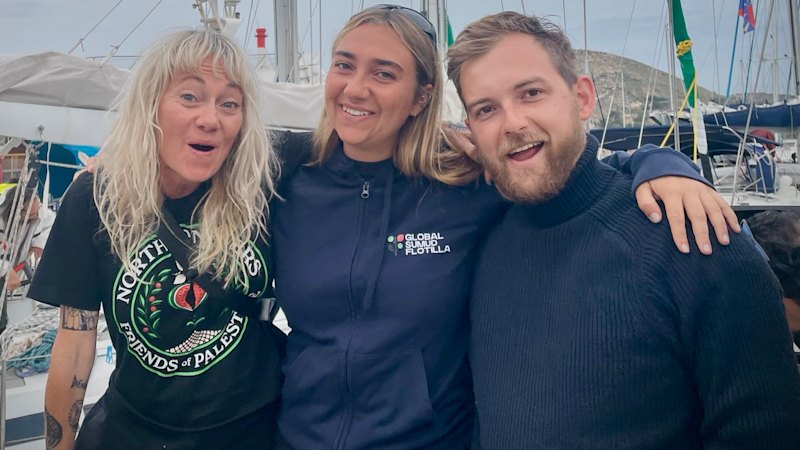
Worried families back home claim the Australian government is asking them for updates, rather than giving them. Here’s what we know about those detained in the Negev Desert.
Worried families back home claim the Australian government is asking them for updates, rather than giving them. Here’s what we know about those detained in the Negev Desert.
This year's United Nations report on sexual violence in conflict zones will include Israeli entities in an annex of entities responsible for or suspected of carrying conflict-related sexual violence, Israeli officials confirmed Thursday in comments slamming the decision. Last year's report said it had received "credible information" of sexual violence carried out by security forces in Israeli detention centres.
This year's United Nations report on sexual violence in conflict zones will include Israeli entities in an annex of entities responsible for or suspected of carrying conflict-related sexual violence, Israeli officials confirmed Thursday in comments slamming the decision. Last year's report said it had received "credible information" of sexual violence carried out by security forces in Israeli detention centres.
France has banned the display of Israeli offensive weapons at the 2026 Eurosatory international defence and security exhibition, organisers said Monday. While the Israeli defence ministry denounced the "disgraceful decision", Eurosatory organisers said Israeli defence systems were authorised to participate, according to a French government decision.
France has banned the display of Israeli offensive weapons at the 2026 Eurosatory international defence and security exhibition, organisers said Monday. While the Israeli defence ministry denounced the "disgraceful decision", Eurosatory organisers said Israeli defence systems were authorised to participate, according to a French government decision.
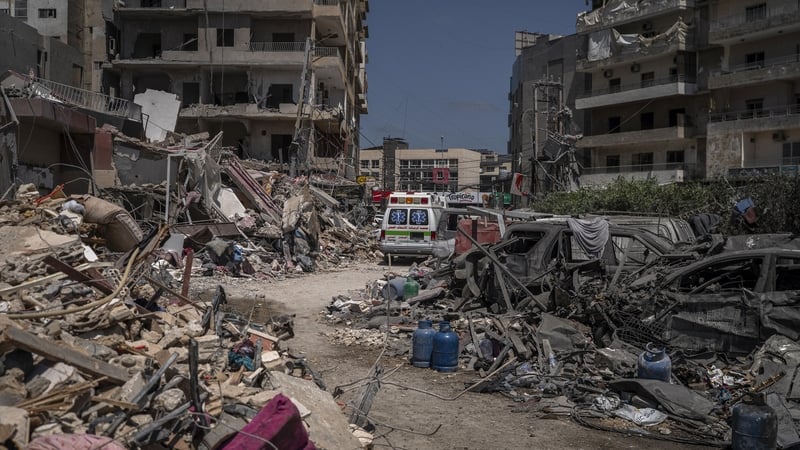
The Israeli army on Saturday issued evacuation warnings for the southern city of Nabatieh and more than 20 other locations across Lebanon as strikes were reported in the country's south and east. The latest strikes came as the US and Iran indicated they were close to reaching a deal on ending the Middle East war that could also include Lebanon.
The Israeli army on Saturday issued evacuation warnings for the southern city of Nabatieh and more than 20 other locations across Lebanon as strikes were reported in the country's south and east. The latest strikes came as the US and Iran indicated they were close to reaching a deal on ending the Middle East war that could also include Lebanon.
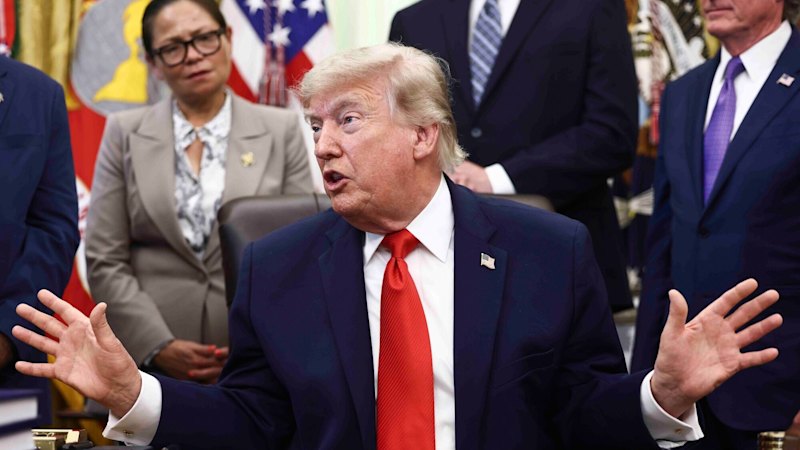
President Donald Trump said he had made “fantastic trade deals” with China’s Xi Jinping, as the pair met on Friday at final talks of a superpower summit that according to the US leader has also reaped a Chinese offer to help open the Strait of Hormuz.
US President Donald Trump (left) poses for photos with Chinese President Xi Jinping during a visit to Zhongnanhai Garden in Beijing on May 15, 2026. Photo: Evan Vucci/Pool/AFP.
Trump had arrived in Beijing seeking to seal deals in sectors in
President Donald Trump said he had made “fantastic trade deals” with China’s Xi Jinping, as the pair met on Friday at final talks of a superpower summit that according to the US leader has also reaped a Chinese offer to help open the Strait of Hormuz.
US President Donald Trump (left) poses for photos with Chinese President Xi Jinping during a visit to Zhongnanhai Garden in Beijing on May 15, 2026. Photo: Evan Vucci/Pool/AFP.
Trump had arrived in Beijing seeking to seal deals in sectors including agriculture, aviation and artificial intelligence, as well as to contain differences between the two sides in a number of tense geostrategic areas — not least the Middle East war.
Trump’s overtures to Xi, whom he described as a “great leader” and “friend”, have so far been met with more muted tones by the Chinese leader.
But the US leader said “a lot of good” has come out of the visit.
“We’ve made some fantastic trade deals, great for both countries,” he said after a walk with Xi among the rosebushes in the gardens of Zhongnanhai, a central leadership compound next to Beijing’s Forbidden City.
“We’ve settled a lot of different problems that other people wouldn’t have been able to solve,” he added, without providing details.
Xi said it was a “milestone visit”, and that the two sides had to date established “a new bilateral relationship, which is a relationship of constructive strategic stability”.
He promised to send Trump seeds for the White House Rose Garden.
‘Help on Hormuz’
In an interview with Fox News after the first day of the summit wrapped, Trump said Xi had agreed to several US wishlist points.
China’s President Xi Jinping (right) and US President Donald Trump at the Great Hall of the People in Beijing on May 14, 2026. Photo: Mao Ning Chinese Foreign Ministry Spokesperson, via Facebook.
On the topic of the war in Iran, the US president said Xi had effectively assured his counterpart that China was not preparing to militarily aid Tehran, which has essentially closed the Strait of Hormuz.
“He said he’s not going to give military equipment… he said that strongly,” Trump told Fox.
“He’d like to see the Hormuz Strait open, and said ‘if I can be of any help whatsoever, I would like to help,'” Trump added.
Asked whether the two leaders had discussed Iran, the Chinese foreign ministry on Friday released a statement calling for “a comprehensive and lasting ceasefire”.
“Shipping lanes should be reopened as soon as possible in response to the calls of the international community,” it added.
Taiwan policy ‘unchanged’
The warm handshakes and pomp on Thursday were somewhat overshadowed by a blunt warning from Xi on a much longer standing geopolitical flashpoint, Taiwan.
Taiwan flag aboard the island’s coast guard vessel. Photo: Kuan Bi-ling, via Facebook.
Shortly after talks started, Chinese state media reported Xi had told Trump that missteps on the sensitive issue of Taiwan could push their two countries into “conflict”.
The Fox News interview did not touch upon Taiwan, and Trump did not comment to reporters when asked about the matter on Thursday.
US Treasury Secretary Scott Bessent told CNBC the president would say more “in the coming days”.
Secretary of State Marco Rubio told NBC on Thursday though that “US policy on the issue of Taiwan is unchanged… as of the meeting”.
Beijing had raised the topic, he said, but “we always make clear our position, and we move on to the other topics”.
Taipei responded Friday thanking Washington “for repeatedly expressing its support”.
Boeing, oil, soybeans
Trump did not spell out on Friday the trade agreements that he said had been sealed with China.
Chinese President Xi Jinping and US President Donald Trump attend talks with high-ranking officials in Beijing on May 14, 2026. Photo: Mao Ning Chinese Foreign Ministry Spokesperson, via Facebook.
However, in the Fox interview, Trump said one big business deal struck involved Xi agreeing to purchase “200 big” Boeing jets.
Shares of the US aviation giant fell after Trump’s comments, in a sign the market had expected a more robust purchase from China.
The US president also said Beijing had also voiced interest in buying US oil and soybeans.
China, which is the key foreign customer of Iranian oil, bought small amounts of US oil before Trump imposed tariffs last year.
It has sharply slowed down purchases of US soybeans, turning instead to Brazil.
Bessent told CNBC that Trump and Xi were talking about setting up “guardrails” for the use of artificial intelligence.
Bessent said the world’s “two AI superpowers are going to start talking”, though US export controls on the advanced technology to China remain a sore point in relations.
The United States launched a second round of airstrikes on Iran into Thursday morning after President Donald Trump warned that Tehran would “pay the price” for stalled negotiations. Iran said it had closed the Strait of Hormuz in response to US attacks and launched its own strikes on Bahrain and Kuwait. Follow our liveblog for the latest updates.
The United States launched a second round of airstrikes on Iran into Thursday morning after President Donald Trump warned that Tehran would “pay the price” for stalled negotiations. Iran said it had closed the Strait of Hormuz in response to US attacks and launched its own strikes on Bahrain and Kuwait. Follow our liveblog for the latest updates.
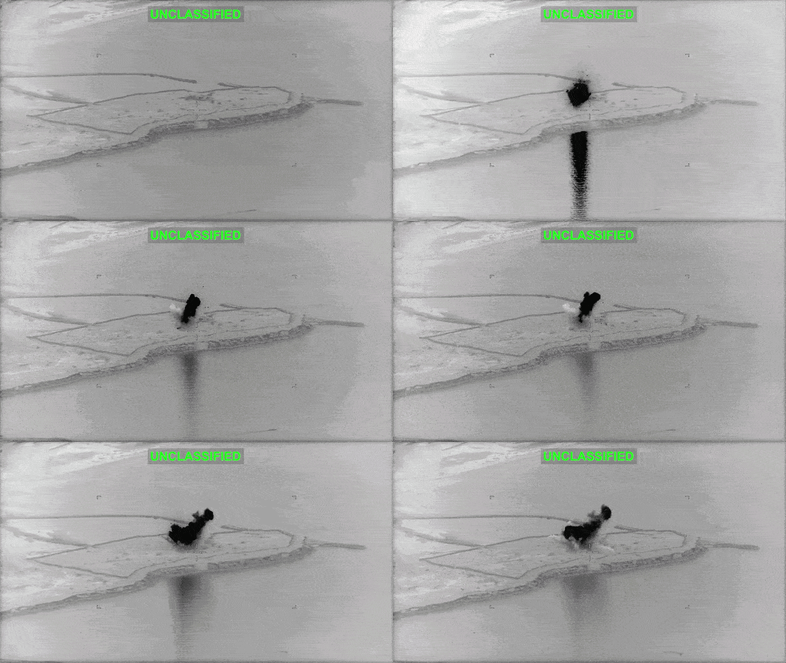
The fragile truce between the US and Iran has come under further stress in the Gulf, with American forces striking Iranian drones and radar sites, and Iran firing missiles at US bases in the Gulf.
The fragile truce between the US and Iran has come under further stress in the Gulf, with American forces striking Iranian drones and radar sites, and Iran firing missiles at US bases in the Gulf.
Lebanon reported Israeli strikes on the country's south shortly after the Israeli army issued an evacuation warning for 20 locations including the city of Nabatieh ahead of raids there.
Lebanon reported Israeli strikes on the country's south shortly after the Israeli army issued an evacuation warning for 20 locations including the city of Nabatieh ahead of raids there.
 Login
Login