How do you reduce your digital life’s environmental impact? Making changes to reduce your environmental impact around the house is straightforward — you can eat less meat, reduce your purchases of single-use plastic or turn down the thermostat by a few degrees to make a difference. But when you go online, there aren’t many obvious choices to cut your impact. Enter Ecosia.org, which has planted more than 143 million trees to offset the environmental impact of web searches. Ecosia remains a stalw
How do you reduce your digital life’s environmental impact? Making changes to reduce your environmental impact around the house is straightforward — you can eat less meat, reduce your purchases of single-use plastic or turn down the thermostat by a few degrees to make a difference. But when you go online, there aren’t many obvious choices to cut your impact. Enter Ecosia.org, which has planted more than 143 million trees to offset the environmental impact of web searches. Ecosia remains a stalwart of ecologically responsible tech four years after this interview.
Christian Kroll, founder of the tree-planting search engine Ecosia.org, is our guest on Sustainability in Your Ear.
Christian started Ecosia in 2009 after seeing the devastating impact of deforestation first-hand while traveling after graduating from college. The company was also the first B Corporation in Germany. While the search engine does produce CO2, the trees planted offset more emissions than ecosia.org creates — they estimate that the trees planted result in a net reduction of CO2 of 2.2 lbs. per search. To put that in context, Ecosia estimates that if it had the same volume of searches as Google, it could plant enough trees to remove 15% of humanity’s CO2 emissions each year. You can search, plant trees, and learn more at ecosia.org.
As the spring flowers start to appear and the days get longer, the urge to dig in the dirt returns. But you don’t have to wait for warmer weather to get growing. Starting plants from seed extends your relationship with the garden, gives you more control over seed sourcing, and saves real money compared to buying nursery starts, sometimes as much as 90% per plant.
Seed starting is also a lower-waste choice. You don’t need plastic nursery pots or peat-heavy commercial growing media, and get the op
As the spring flowers start to appear and the days get longer, the urge to dig in the dirt returns. But you don’t have to wait for warmer weather to get growing. Starting plants from seed extends your relationship with the garden, gives you more control over seed sourcing, and saves real money compared to buying nursery starts, sometimes as much as 90% per plant.
Seed starting is also a lower-waste choice. You don’t need plastic nursery pots or peat-heavy commercial growing media, and get the option to select organic or open-pollinated varieties that big-box stores rarely carry. Here’s how to do it right.
This article includes affiliate links. If you buy something through these links, we earn a small commission that helps support our work.
Choose Seeds Worth Growing
Not all seeds are created equal, or equally easy. For beginners, stick to varieties with reliable indoor germination rates. Good bets include basil, broccoli, cabbage, cauliflower, chives, lettuce, melon, onion, pepper, and tomatoes.
For direct sowing outdoors, which lets you skip the indoor start entirely, beans, beets, carrots, corn, peas, spinach, squash, and zucchini all transplant poorly and are better started where they’ll grow.
The sustainability case for seed starting is strongest when you skip buying new plastic plug trays. Save nursery flats from prior seasons or raid the recycling bin for 2- to 3-inch containers such as single-serve yogurt, applesauce, or pudding cups. Wash thoroughly and punch drainage holes in the bottom.
A more advanced option is soil blocking. A soil blocker tool compresses growing medium into self-contained cubes that need no container at all. Roots hit air at the block’s edge and stop growing (a phenomenon called air pruning), which produces a denser, healthier root mass.
Don’t use garden soil or standard potting mix for seed starts; both are too dense and can introduce pathogens. You need a dedicated starter mix: light, sterile, and fine-textured enough to let tiny roots push through.
A premixed option, Old Potters’ Professional Germination Mix, offers a pH-adjusted medium made from peat moss, perlite, and vermiculite that eliminates the guesswork of blending your own starter soil. Or mix your own by combining equal parts perlite, vermiculite, and peat moss, then add 1/4 teaspoon of lime per gallon to neutralize the peat’s acidity.
Peat moss extraction raises sustainability concerns. It’s a slow-renewing carbon store. Coco coir, made from coconut processing byproduct, is a renewable alternative with similar moisture-retention properties. Plantonix’s coco coir + perlite + vermiculite bundle is worth considering if you want to skip peat entirely.
Heat Is the Underrated Variable
Most vegetable seeds germinate best between 65–85°F, and soil temperature matters more than air temperature. A spot near a heat vent can work, but that can be inconsistent. A seedling heat mat is the most reliable solution because it warms the root zone 10–20°F above ambient air temperature, which can cut germination time.
Before germination, seeds need consistent moisture, not light. Cover your flat with plastic wrap, a humidity dome, or a pane of glass to hold humidity while seeds sprout. Once you see green, remove the cover immediately: trapped humidity post-germination promotes damping-off, a fungal disease that collapses seedlings at the soil line.
Water Smart, Not Hard
Overwatering kills more seedlings than drought does. The goal is consistent moisture, which will make the soil feel like a well-wrung sponge, not a puddle. A fine-mist spray bottle is better than pouring water from above, which can displace seeds and compact the growing medium.
Grow Lights: Non-Negotiable Unless You Have a South-Facing Window
Seedlings need 12–16 hours of light per day. A sunny south-facing window might deliver 6–8 hours on a clear day. The gap produces leggy, weak starts that struggle when transplanted. Grow lights eliminate the variable entirely.
Position the bulb 2–4 inches above seedlings and use an outlet timer to automate the schedule. Full-spectrum LEDs are the current standard, as they run cooler and more efficiently than fluorescents. GROWFRIEND’s 40-cell all-in-one kit includes dual LED grow lights, a heat mat, humidity dome, and a soil moisture meter in one package.
Label Everything Because You Will Forget
This sounds obvious until you’re staring at 60 identical seedlings in March. Label every cell or flat immediately after sowing, noting the variety and the date. Reusable plant markers and a waterproof pen cost almost nothing and save considerable grief later.
Commercial seed-starting mix contains little to no fertilizer by design, as high fertility can burn delicate seedlings. But after the first true leaves appear, plants need a nutritional boost. Start with a diluted liquid fertilizer (half the label-recommended strength) and apply weekly.
Fish emulsion and kelp-based fertilizers are popular organic choices that provide a balanced nutrient profile without the risk of chemical burn from synthetic fertilizers.
Thin Ruthlessly
Sowing two or three seeds per cell is standard practice. It hedges against low germination rates. But once sprouts emerge, you need to thin to one per cell. The instinct is to leave multiples “in case.” Resist it. Crowded seedlings compete for light, water, and nutrients, and the result is weaker plants across the board.
Thin by snipping extras at soil level with small scissors rather than pulling, which can disturb roots of the seedling you’re keeping.
Pot Up Before Roots Get Crowded
Seed-starting mix has almost no nutrients. Once seedlings develop their first true leaves, which are the second set, after the initial seed leaves, they need more root space and fertility. Move them into 3- to 4-inch pots filled with a nutrient-rich potting mix.
This “potting up” step is often skipped, and seedlings suffer for it, becoming stunted, yellowed, slow to establish when finally transplanted. Pot up early rather than late.
Harden Off: Skipping This Step Is Costly
Indoor seedlings are soft. They haven’t experienced wind, direct UV, or temperature swings. Transplanting directly from a grow light to full outdoor sun causes transplant shock that can set plants back weeks or can kill them outright.
Harden off over 7–10 days: start with 2–3 hours in filtered shade on a mild day, gradually increasing sun and wind exposure. Growveg’s hardening-off guide has a clear day-by-day schedule.
Timing: Use a Planting Calendar, Not Gut Feel
The single most common beginner mistake is planting too early. Tomatoes and peppers in the ground before nights are consistently above 50°F will sulk rather than grow. Frost-tender crops started too early indoors get root-bound before it’s safe to plant them out.
The Old Farmer’s Almanac planting calendar calculates seed-starting dates based on your last frost date. Input your zip code and it generates a personalized schedule. Check the forecast in the 48 hours before any outdoor transplanting.
What You Can Do
Start with easy wins: basil, broccoli, lettuce, and tomatoes have high germination rates and forgive beginner mistakes.
Choose open-pollinated seeds: you can save and replant them each year, building independence from annual seed purchases.
Skip peat when possible: coco coir-based growing media performs similarly and avoids harvesting slow-renewing peat bogs.
Reuse containers: clean nursery flats or single-serve food containers reduce plastic demand before a single seed goes in.
Use a heat mat and grow light: these two tools account for the majority of seed-starting failures when absent.
Harden off every seedling: skipping this step costs plants; the process takes 10 days and pays off every time.
Time your starts correctly: use a frost-date-based planting calendar, not the date on the seed packet, which isn’t calibrated to your region.
Stewart Brand, who popularized the “blue marble” photograph that changed humanity’s perspective on the fragility of the Earth, points out that Californians and Europeans use half the energy of the typical American, without losing any quality of life. This quote comes from Whole Earth Discipline: Why Dense Cities, Nuclear Power, Transgenic Crops, Restored Wildlands, and Geoengineering Are Necessary, and Brand is also the creator of the Whole Earth Catalog.
Post and share Earth911 posters to help
Project Repat, founded by Ross Lohr and Nathan Rothstein, had prevented more than 11 million T-shirts from landfills while bringing some sewing work back to the United States when we talked with them in 2019. They’re still going strong. Tune into a classic conversation as Earth911’s Mitch Ratcliffe talks with Rothstein about the inspiration behind Project Repat and the massive changes in U.S. T-shirt manufacturing over the past 30 years. After migrating to Mexico, T-shirt printing jobs have gon
Project Repat, founded by Ross Lohr and Nathan Rothstein, had prevented more than 11 million T-shirts from landfills while bringing some sewing work back to the United States when we talked with them in 2019. They’re still going strong. Tune into a classic conversation as Earth911’s Mitch Ratcliffe talks with Rothstein about the inspiration behind Project Repat and the massive changes in U.S. T-shirt manufacturing over the past 30 years. After migrating to Mexico, T-shirt printing jobs have gone overseas and few American companies still make them.
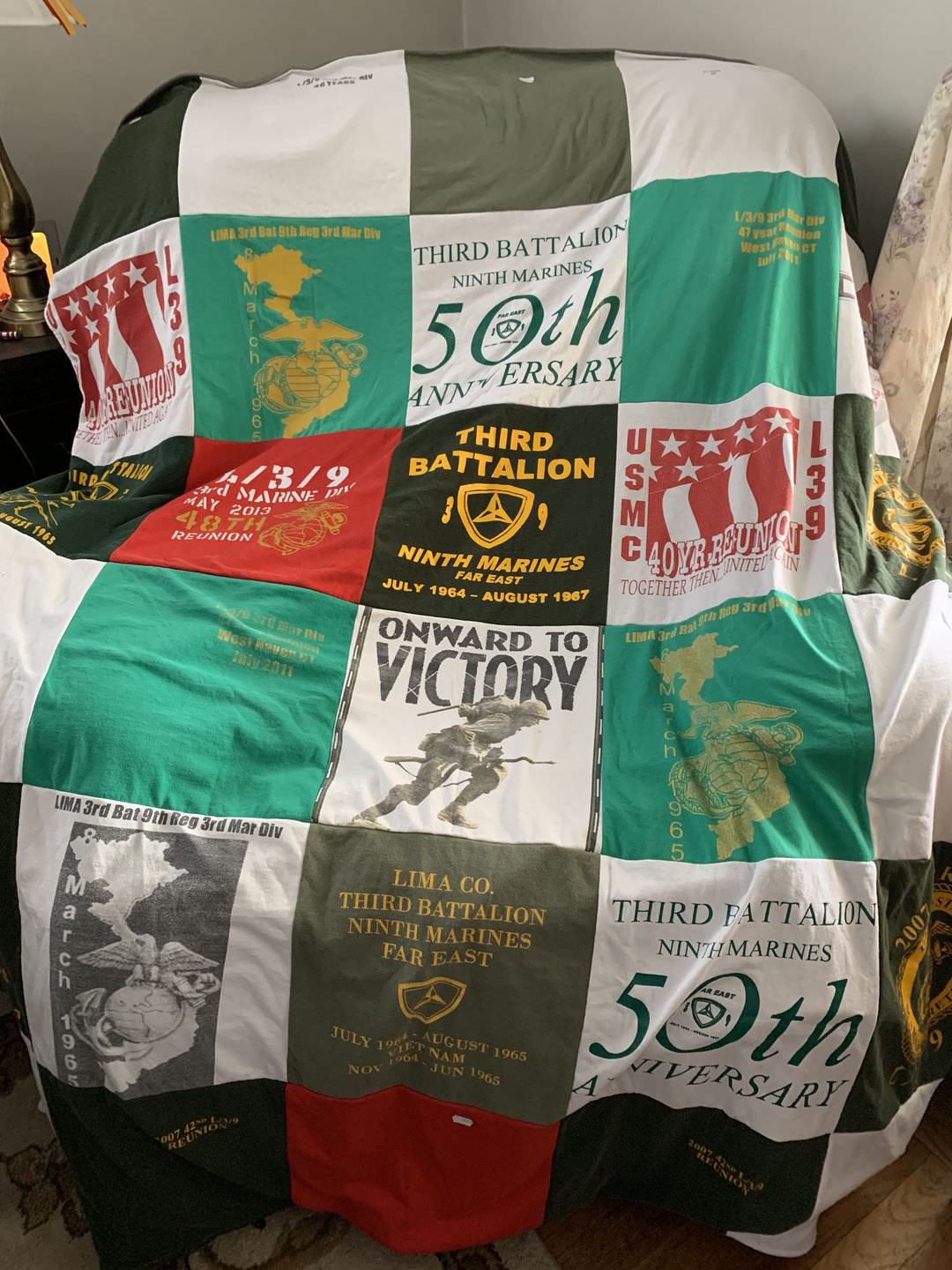
A Project Repat quilt memorializes a soldier’s tours of duty.
Project Repat has a better idea: turn old shirts into keepsake quilts hand-sewn using T-shirts sent by customers. Instead of tossing a T-shirt in the donation bin, it can be turned into a part of a memorable and snug quilt. Love a sports team? Make a quilt of the team T-shirts and jerseys you’ve purchased over the years. Want to remember a school or a company where you worked? In all likelihood, you have the makings of a Project Repat quilt. Reasonably priced based on the size, Project Repat takes your order and receives your shirts by mail, then turns them into fleece-backed quilt.
Fair Trade aims to create a more ethical and sustainable way of trading that puts people and the environment first. It offers a conscious alternative to global markets, where profits often come at the cost of farmers, fishers, and factory workers at the start of the supply chain.
When you pick up a bag of coffee or a chocolate bar with a Fair Trade label, you’re being asked to pay a little more on the premise that the extra money reaches the people who grew it. But does it?
To understand why Fai
Fair Trade aims to create a more ethical and sustainable way of trading that puts people and the environment first. It offers a conscious alternative to global markets, where profits often come at the cost of farmers, fishers, and factory workers at the start of the supply chain.
When you pick up a bag of coffee or a chocolate bar with a Fair Trade label, you’re being asked to pay a little more on the premise that the extra money reaches the people who grew it. But does it?
To understand why Fair Trade premiums matter, it helps to know the position smallholder farmers occupy in the global food system. Smallholder farmers produce 46% of the world’s food on just one-third of the world’s agricultural land, yet they remain among the most vulnerable populations, with many experiencing food insecurity. Over 90% of global cocoa is grown by smallholders, small-scale farmers produce 73% of the world’s coffee, and 75% of its cotton. These are the people who literally work the soil and process raw goods at the beginning of supply chains for the products most American consumers buy every week.
When you think about paying more for a Fair Trade product, remember that these numbers reflect real decisions made by real people. In a Fair Trade USA survey of 3,857 smallholder farmers, fishers, and other workers, 68% said Fair Trade made a positive difference in their lives, and 71% were happy with how the money was used.
Fair Trade’s Origins
Fair Trade, as Americans know it today, started in the 1990s. Paul Rice worked with Nicaraguan coffee farmers to develop cooperatives. When he returned to the U.S., he founded the organization TransFair, now known as Fair Trade USA, encouraging large companies that sold commodity goods like cocoa, bananas, and tea to get certified. Rice stepped down as CEO in 2024 after 26 years, and Felipe Arango now leads the organization.
Getting fair-trade certified takes time and involves a detailed process. Independent auditors regularly check that farms and factories meet standards for workers’ rights, fair labor, and responsible land use. Certified products cost a bit more, and that extra money goes straight to farmer cooperatives or worker groups, who decide together how to use it.
The Fair Trade system has grown to include 1,896 certified producer organizations, representing more than 1.9 million farmers and workers, earned $241.6 million in Fairtrade Premium in 2023. That money doesn’t flow to corporate headquarters; it goes directly to cooperatives, which decide collectively how to invest it.
Fair Trade USA also has a big impact. Its program supports 1.6 million certified producers in more than 50 countries. So far, farmers, workers, and fishers have received over $1 billion in Community Development Funds. In May 2025, Fair Trade USA and its partners announced they had raised $100 million in these funds just for factory workers and their communities around the world.
What the Research Shows
The evidence on whether Fair Trade actually improves farmers’ lives is genuinely mixed, and it’s worth being honest about that complexity.
On the positive side, a study of cocoa farmers in Côte d’Ivoire found that Fairtrade certification increases aggregate household consumption expenditures by about 9% on average. That may not sound dramatic, but for families living close to subsistence, a 9% increase in what they can buy is meaningful.
On the more critical side, research on Fair Trade coffee in Costa Rica found that only about 12% of Fair Trade-eligible coffee was actually sold at Fair Trade prices during the study period. When price-benefit-to-certification payments increased by 1 cent, the average payment to Fair Trade-certified mills was less than a penny. The gap between what’s certified and what’s actually sold under Fair Trade terms is a persistent structural problem.
A 2025 study of Fairtrade certification for four crops in Ghana found big gaps in how it was carried out. Problems included not enough training, rare inspections, and farmers not knowing about price premiums. Just having certification on paper doesn’t always mean real benefits for farmers.
The Community Development Difference
Fair Trade often has the biggest impact through community projects funded by these premiums. Since workers and cooperatives decide together how to spend the money, Fair Trade helps build teamwork and support networks.
Fair Trade USA’s 2023 annual report gives examples like farmworkers in Mexico getting dental and eye care for the first time, garment workers in Vietnam providing hepatitis vaccines, and small coffee farmers in Ethiopia setting up scholarships for their children. These are projects chosen by the communities themselves, not imposed from outside.
Which Label Should You Trust?
With so many sustainability and other certifications, it can be hard for consumers to identify Fair Trade options. Most Americans encounter two systems: Fairtrade International (also called Fairtrade America) and Fair Trade USA. They certify different products with different standards, and their relationship has been tense since Fair Trade USA split from the international group in 2011.
The Fair World Project, a nonprofit that reviews certification systems, recommends Fairtrade International as one of several strong third-party labels that help farmers. They suggest being more cautious with Fair Trade USA’s label because of concerns about its standards and loopholes. However, Fair Trade USA has made big updates to its standards in 2023 and 2024, especially for factories and farms.
Rainforest Alliance certification, which appears on many coffee and chocolate products, focuses more on environmental practices and uses different labor standards than Fair Trade labels.
Is Fair Trade Worth It?
Fair Trade is most effective in markets where cooperatives are strong, certification is affordable, and buyers agree to purchase all their goods at fair trade prices, not just a small portion.
One thing is clear: buying the cheapest products with no certification almost always means farmers and workers get paid the lowest possible price for their work. Research shows that Fair Trade cooperatives often improve farmer incomes, community ties, and environmental practices, even if not every worker benefits equally.
It’s worth taking a few minutes to learn about the different certification systems. Fair Trade labels aren’t a guarantee, but they’re better than nothing. For everyday items like coffee, chocolate, bananas, and tea, picking a certified product from a brand that buys most of its supply at fair trade prices is one of the most direct ways your shopping can support the people who grow these products.
Editor’s Note: This article was originally written by Gemma Alexander on March 22, 2019, and was substantially updated in March 2026.
Every pair of jeans you buy took roughly 2,000 gallons of water to produce. Every cotton t-shirt, about 700 more. The clothes you wear are the second-largest consumer of water among all industries, and fashion as a whole generates as much carbon as international aviation and maritime shipping combined. Where and how you shop makes a big difference for the planet that you want to get outside, into nature, and enjoy.
Men’s clothing brands are making the moves to reduce damage to the nature. They’r
Every pair of jeans you buy took roughly 2,000 gallons of water to produce. Every cotton t-shirt, about 700 more. The clothes you wear are the second-largest consumer of water among all industries, and fashion as a whole generates as much carbon as international aviation and maritime shipping combined. Where and how you shop makes a big difference for the planet that you want to get outside, into nature, and enjoy.
Men’s clothing brands are making the moves to reduce damage to the nature. They’re using organic and recycled fibers, paying fair wages, publishing their supply chains, repairing garments for free, and planting trees. Some are even rethinking what fabric itself can be made from.
Still, fast fashion is growing by more than 10% each year and could double to $291 billion by 2032. Only 0.3% of textile fiber worldwide is recycled, and 85% of discarded clothing in the U.S. goes to landfills. The brands here are working hard to change that, which is why they deserve your support.
The Ellen MacArthur Foundation’s A New Textiles Economy report says that if we doubled how often we wear each piece of clothing, greenhouse gas emissions from clothing would drop by 44%. The best way to help is to use what you already have. After that, buying from brands that are truly making an effort is the next best step. Here are 12 such brands.
This article contains affiliate links. If you purchase an item through the Amazon links below, Earth911 receives a small commission that helps fund our Recycling Directory. If you don’t return an item, Amazon shipping is typically more efficient than retail shopping.
The Brands
1. Nudie Jeans
Nudie Jeans has built one of the most honest sustainability programs in denim. Their 2024 report shows that 93% of fiber usage is organic, Fairtrade, or recycled cotton, and in 2024 they finalized their first garments made from regenerative organic cotton—farming that doesn’t just avoid harm but actively rebuilds soil health. They also run 33 free-for-life repair shops across 20 cities, repaired 68,342 pairs of jeans in 2024, and sell pre-owned jeans directly on their site. If you want denim that’s designed to be worn, repaired, and worn again rather than replaced, this is the brand.
Current Pick: Gritty Jackson Jeans
The Gritty Jackson is Nudie’s main men’s jean, with a regular straight fit made from 100% organic cotton. It now comes in styles that use the new regenerative organic cotton. Buy directly from Nudie to use their repair program, or find them on Amazon.
2. Asket
Asket operates on a simple premise, that the most sustainable garment is one you already own. So, the Swedish brand makes a permanent, no-new-seasons collection and publishes the full CO₂ impact and material traceability of every single product on its website. No other brand in this guide is more transparent about what your clothes are made of and what it cost the planet to make them.
Current Pick: Oxford Shirt
The Oxford Shirt comes in seven colors, is made from 100% yarn-dyed cotton, and carries a disclosed CO₂ impact of 5.5 kg per shirt. It’s the kind of shirt you buy once and wear for a decade. Asket ships directly to the U.S and offers full transparency data for your purchase.
3. prAna
prAna is a great choice for men who want clothes that work for hiking, yoga, or a night out. The brand uses recycled and organic fibers, supports Fair Trade, and shares full supply chain details, including factory names and conditions. Since being bought by Columbia Sportswear in 2014, prAna has kept its focus on sustainability and uses bluesign® certified fabrics.
Current Pick: Stretch Zion Pant II
The Stretch Zion Pant II is prAna’s top men’s pant, made from recycled nylon and bluesign® certified. It’s built for climbing and hiking but comfortable enough for travel. You can find it on Amazon.
4. tentree
tentree has planted over 120 million trees in 13 countries and aims to reach one billion by 2030. That’s ten trees for every item sold. The brand is a certified B Corp, has been carbon-neutral since 2022, and uses organic cotton, TENCEL™ lyocell, hemp, and recycled polyester. They also run a Circularity program that takes back clothes from any brand for resale or recycling. In 2024, they funded 100 beehives at planting sites in Kenya to help support local communities after reforestation projects end.
Current Pick: Juniper Classic Hoodie
The Juniper Classic Hoodieis made from recycled polyester and organic cotton. It’s a simple, versatile layer that comes with tentree’s tree-planting promise. You can find it on Amazon.
5. Warp + Weft
Warp + Weft might be the most underrated brand here. While regular jeans use about 1,500 gallons of water to make, Warp + Weft jeans use less than 10. They treat and recycle 98% of their water, power their mill with solar panels, and use Dry Ozone technology instead of chemical bleaching. All their pieces cost under $100 and come in sizes up to 3X, making sustainable denim more accessible. Their Fall 2024 collection added stretch corduroy, knit denim, and a new relaxed-fit men’s jean.
Current Pick: GRR Relaxed Jean
The GRR Relaxed Jean has a mid-rise and loose leg, made from Warp + Weft’s low-water denim. You can find them on Amazon.
6. Everlane
Everlane ranked first in Remake’s 2024 Fashion Accountability Report, beating 52 other brands and earning its highest score ever. Their 2024 impact report shows that 90% of their materials now meet lower-impact standards, and they have cut Scope 1–3 emissions by 52% since 2019. The ReNew collection, made from recycled plastic bottles and fishing nets, has grown, and 95% of the cotton Everlane uses is certified organic, regenerative, recycled, or farm-traceable. A 2020 labor scandal still affects their “radical transparency” claims, and their goal of 100% preferred materials by the end of 2025 is still in progress. Still, the data shows real improvement.
Current Pick: The ReNew Fleece Jacket
Made from 100% recycled materials and bluesign®-approved dyes, the ReNew Fleece Jacket is the updated staple of the ReNew collection. It’s versatile enough for layering in spring and fall.
7. Nau
Nau started in Portland in 2005 with the goal of proving that business could be a force for environmental good. Now owned by South Korean outdoor company Black Yak, the brand continues to make versatile performance-lifestyle clothing from recycled polyester, organic cotton, TENCEL, and ethically sourced Merino wool, using PFC-free coatings instead of the persistent chemical water repellents most outdoor brands still rely on.
Current Pick: Latitude Crew Pullover
The Aeroshell Hooded Shirt is made from recycled nylon and works well for both city commutes and weekend hikes. You can find Nau on Amazon.
8. Thought Clothing
Thought Clothing, formerly Braintree, is a UK brand built on natural, traceable fibers: hemp, organic cotton, TENCEL, bamboo, recycled polyester, and Merino wool. Their packaging is compostable cornstarch or recycled paper. Hemp is the standout material here—it requires roughly 300–500 liters of water per kilogram to grow, compared to nearly 10,000 liters for conventional cotton. If you’re looking for warm-weather shirts that wear well and wash easy, Thought is worth the international order.
Current Pick: Golf Socks with Panache
The Kinley Golf Course Bamboo Socks in Cobalt Blue are a standout from Thought’s men’s sock line — a golf-course-ready pattern built from a blend of 53% bamboo-derived viscose, 28% recycled polyester, 16% organic cotton, and 3% elastane. Bamboo is one of the fastest-growing renewable crops on the planet, and in fabric form, it delivers genuine performance benefits: the material is naturally breathable, antibacterial, and antifungal, with zero plastic packaging. £7.95 direct from thoughtsocks.com, with international shipping available.
9. Pact
Pact is the easiest brand to start with on this list. They use GOTS-certified organic cotton, Fair Trade Certified™ factories, offer optional carbon offsets at checkout, and use 100% post-consumer recycled packaging. Their prices are much lower than most sustainable brands. Pact covers the basics: underwear, t-shirts, socks, and pants. If you’re just starting to move away from fast fashion and don’t want to spend $100 on a hoodie, this is a good place to begin.
Current Pick: Daily Twill Midweight Pant
The Daily Twill Midweight Pant is an organic cotton trouser with an elastic waistband and drawcord—equally at home at a desk or on a trail. Their Backyard Collection adds organic cotton shorts and button-ups for summer. Find Pact on Amazon.
10. PANGAIA
PANGAIA has moved well beyond the recycled cashmere hoodie it was known for in 2021. The brand now functions as a material science company developing fibers from seaweed (C-FIBER™), fruit waste (FRUTFIBER™), nettles (PANettle™ Denim), and plant-based nylon ((gaia)PLNT). Their PPRMINT™ natural peppermint oil treatment discourages odor-causing bacteria, which means you wash less, and every wash avoided is microplastics not released into waterways. If you want to wear something genuinely on the frontier of what sustainable textiles can be, this is your brand.
Current Pick: Men’s DNA Hoodie
The DNA Hoodie is made from 50% organic cotton and 50% recycled cotton, with an oversized fit and PPRMINT™ treatment. It’s PANGAIA’s most accessible men’s item and a highlight of their collection. Also consider the 365 Hoodie, which comes in C-FIBER™ and recycled cotton blends.
11. Outerknown
Outerknown was co-founded by 11-time world surfing champion Kelly Slater in 2015 and has become one of the most respected men’s sustainable brands in the U.S. Its reputation comes from its supply chain, not just its founder. The brand claims to be the first built on a full commitment to sustainability, using Regenerative Organic Certified® cotton, Fair Trade Certified™ factories, and full transparency about where products are made. Outerknown also has a Pre-Loved resale program for used items.
Current Pick: The Blanket Shirt
The Blanket Shirt is Outerknown’s most iconic piece and deserves its reputation. Made from 100% organic cotton BlanketWeave™ twill with buttons from nuts, it’s built to be the shirt you reach for constantly and wear for years. Available in more than 20 colors and patterns. Also worth considering: the S.E.A. Jeans made from organic cotton denim in a Fair Trade Certified factory. Find Outerknown on Amazon.
No brand on this list is perfect. Every piece of clothing has some environmental impact, and “sustainable” is a spectrum, not a certification. Still, all 12 of these brands are making real, documented efforts to improve: better materials, better factories, more transparency, and in some cases, taking back clothes when you’re done with them.
Buy less and wear your clothes longer. When you do shop, choose brands that can show where their products come from and what their impact is on the planet. That’s the whole approach.
Editor’s Note: Originally published on March 19, 2021, this article was updated in March 2026.
At Earth911, people often ask us, “Is shredded paper recyclable?” The answer is still “yes, but”—and how and where you can recycle it has changed a lot since our last update.
In 2024, 60% to 64% of paper and 69% to 74% of cardboard were recycled in the United States, according to the American Forest & Paper Association. U.S. mills used 32.7 million tons of recycled paper to make new products. Paper is one of the most recycled materials in the country, but shredded paper is an exception becau
At Earth911, people often ask us, “Is shredded paper recyclable?” The answer is still “yes, but”—and how and where you can recycle it has changed a lot since our last update.
In 2024, 60% to 64% of paper and 69% to 74% of cardboard were recycled in the United States, according to the American Forest & Paper Association. U.S. mills used 32.7 million tons of recycled paper to make new products. Paper is one of the most recycled materials in the country, but shredded paper is an exception because it is more complicated to recycle.
Why Shredded Paper Is Tricky to Recycle
Paper is made of fibers, and longer fibers make paper more valuable for recycling. Each time paper is recycled, the fibers get shorter and lose value. Eventually, recycled paper is turned into tissue or toilet paper. Shredded paper is especially difficult to recycle, so many programs will not accept it.
Shredding accelerates fiber shortening and lowers the paper grade from high-grade to mixed-grade. Mixed-grade paper is still recyclable, but it ends up baled and processed into products like paper towels and packing paper. However, the smaller piece size creates real problems at material recovery facilities (MRFs). Loose shreds fall through sorting screens, jamming optical scanners that need a minimum piece size to identify materials correctly. Shredded paper often contaminates glass, plastic, and other streams. That’s why most programs require you bag shredded paper if they accept shredded paper at all.
The 2026 Curbside Reality: Check Before You Toss
Starting July 1, 2025, Oregon residents saw a change. Under Oregon’s Plastic Pollution and Recycling Modernization Act, shredded paper will no longer be accepted in curbside bins in counties like Clackamas. However, new recycling centers are being set up to take shredded paper. In the Portland metro area, shredded paper was also removed from curbside collection under new Extended Producer Responsibility rules, but new facilities are being built to handle it.
If your local program does accept shredded paper, you’ll almost always need to place it in a paper bag — a standard brown grocery bag works well — and label it clearly as “Shredded Paper” so recycling workers can sort it correctly. Only use a clear plastic bag if your facility explicitly instructs you to; otherwise the whole bag typically goes to the landfill.
One of the biggest changes for shredded paper recycling in 2025 and 2026 is the opening of special drop-off centers run by Producer Responsibility Organizations (PROs) in states with extended producer responsibility (EPR) laws.
Oregon’s RecycleOn Centers: At the RecycleOn Center in Ashland, the first of 144 planned statewide facilities under the Recycling Modernization Act, shredded paper is among the materials now collected, along with aluminum foil, expanded polystyrene, and other items that often contaminate curbside bins. The network began in Southern Oregon and is expanding to Deschutes County, with the Portland metro region expected to see new sites coming in 2026. Find local options at RecycleOn.org.
California, Colorado, Maine, and Minnesota have since passed similar EPR laws, and more states are expected to build comparable drop-off infrastructure for hard-to-recycle materials, including shredded paper.
Professional Shredding Events and Services
Businesses use paper shredders most often to protect confidential information. Many communities offer free shredding events, usually sponsored by banks, credit unions, or local government offices. The shredded paper from these events is reliably recycled instead of being sent to a landfill.
If you have a large amount of paper to shred, certified shredding services offer both security and environmental responsibility. For example, Iron Mountain shreds over 40,000 tons of material each month at its secure facilities and recycles it, helping save more than 4 million trees each year. Shred-it also recycles shredded materials whenever possible, following NAID AAA-certified processes. When choosing a shredding service, look for the NAID AAA designation to make sure your paper is recycled, not just destroyed.
Think Before You Shred
The best recycling strategy often starts before the shredder. In most cases, the information you want to delete is only on one line, such as a name or number. You can use a permanent marker to cover personal data; this ink is easily removed during recycling — then recycle the whole document intact. Intact paper has a higher value, is easier for MRFs to process, and is more likely to make it all the way through the recycling stream.
Only shred documents that really need it, like tax records, medical files, financial statements, or anything with full account numbers or Social Security numbers. For other papers, recycling the whole sheet is better for the environment.
If Recycling Isn’t an Option: Compost Or Reuse
Shredded paper is a great carbon source for composting because it is already partly broken down. You can add it to compost, but avoid glossy or heavily inked paper, which may have harmful chemicals. Mix shredded paper with food scraps, leaves, and other organic material for the best results. You can also reuse shredded paper as packing material or bedding for small animals like hamsters or rabbits, keeping it out of the trash.
Editor’s Note: Originally published on April 19, 2011, this article was updated in March 2026.

 Login
Login