 Login
LoginSecret Panel HERE 🥂 https://tinyview.com/mrlovenstein/2026/05/10/drug-comme…
11 May 2026 at 13:42
Secret Panel HERE 🥂 https://tinyview.com/mrlovenstein/2026/05/10/drug-commercials




Secret Panel HERE 🥂 https://tinyview.com/mrlovenstein/2026/05/10/drug-commercials

Note: We’re in the second week of a double issue (May 11 & 18, 2026) so no new issue for us to thumb through. The regular Monday Tilley Watch will return next Monday, May 18th with a look at the cartoons appearing in the issue of May 25, 2026. Today , for fun, we’ll time travel to the issue of May 19, 1951.
75 Years Ago In The New Yorker

Here’s a quick look at a few highlights from long long ago.
I love this Arthur Getz cover. As in so many of his paintings there seems to a story being told; the reader (at least this reader) lingers, thinking about what the heck is going on.
And what’s not to love about this Abe Birnbaum GOAT drawing:

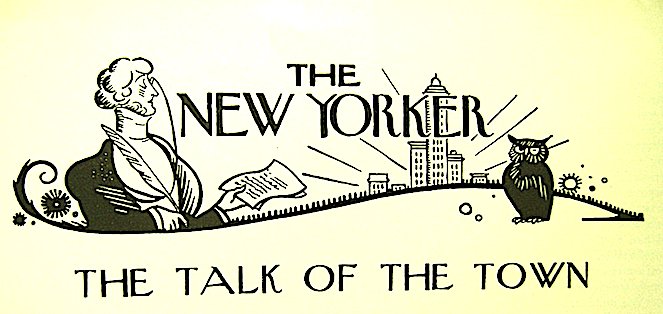
The Talk Of The Town section was headed by, ta-da!, Rea Irvin’s iconic design (read more here about the unfortunate tinkering that began 66 years later :
A terrif bonus at the bottom of the Talk page…this Thurber spot drawing:

Of the many cartoonists represented in the issue here are just a few favorites:
From Anatol Kovarsky:

From Frank Modell:

and finally, this classic from Chon Day:

And I’ll end with this truly wonderful Henry Martin “spot” drawing that ran –postage stamp size!– along with that week’s Current Cinema review.

The post Monday Spill: 75 Years Ago In The New Yorker first appeared on Inkspill.
The world of animation is a strange planet indeed. Mysterious events burst in front of our eyes, are taken for granted, and vanish into thin air before anyone takes notice of them. Yet none have reached the proportions of the strange case of the first animated feature, a category that fosters all kind of competence among the nations: Only the perceptive know that France released its own specimen twice, whilst Italy released two at the same time! The moral to be drawn from this fact is beyond me, but anyway….
The case of France: “Le Roi et l’Oiseau” by Paul Grimault (1953 or 1980, depending on your choice).
To say that “Le Roi et l’Oiseau” is the first French animated feature involves some trickery, which is generally solved by labeling it as “the first feature film in color” or “the first animated drawn feature” (dessin animé), you can choose, since the first animated feature produced in France is actually the incredible “Le Roman de Renard”, directed and animated by Ladislav Starevich in the early 1930s and released in 1937. But Starevich produced it using stop-motion rather than drawings, and worse: even though his film was based on a French folk tale (the medieval cycle of “Le Roman de Renart,” which would also be the central theme of the best film never produced by Disney), Starevich was not French but Russian —with Polish roots— which made his classification somewhat problematic.
In contrast, “Le Roi…” exudes France from every angle. Directed by a luminary of local animation, Paul Grimault, and written by the star screenwriter Jacques Prévert, it had everything it needed to be one of the greatest animated films of all time (which it indeed is, to a large extent), but, Alas, or rather, Hélas!
A little research on the basics reveals that “Le Roi et l’Oiseau” is a film by Paul Grimault, written by Prévert, and based on Hans Christian Andersen’s fairy tale “The Shepherdess and the Chimney Sweep,” whose development began in 1946 (or even 1942, depending on the source). Produced by the animation studio “Les Gémeaux”, co-directed by Grimault and producer André Sarrut, financial disagreements led the team to collapse by the end of that decade. After Sarrut and Grimault parted ways, the former retained all rights to the material and released a version of the film in May 1953. Under the title “La Bergère et le Ramoneur,” it was publicly disavowed by its director and writer in a campaign that undermined the promotion of a work which, despite everything, won an award at the Venice Film Festival and was admired by many (including the future founders of Japan’s Studio Ghibli).

Grimault and Sarrut
In other words, “Le Roi” is a film that is two films, and its production also has two stories, which coincide only superficially. These versions can be summarized in the books that have been written about it so far. The first, which we might call the canonical version, is “Le Roi et l’Oiseau: Voyage au coeur du chef-d’oeuvre de Prévert et Grimault” by Jean-Pierre Pagliano, whose title already provides the general key to his thesis. The other, a reexamination of the official account, is titled “La bergère et le ramoneur de Paul Grimault et Jacques Prévert: Chronique d’un désastre annoncé” by Sébastien Roffat, which also has the virtue of being clear.
The debate between these two viewpoints can be summarized in how fair it is to portray the producer Sarrut as a kind of unscrupulous shark who destroyed the creators’ original visión, bearing in mind that seven years of production is a significant amount of time, and, above all—as emphasized in Roffat’s book—that, for a battle over copyright by the creators of an artistic work (the central issue of the various legal disputes that accompanied the release of the film’s first version)—the work of the many collaborators tended to be overlooked in the subsequent narrative focused on Grimault and Prévert. As the “protected” version of Wikipedia states: “Le Roi et l’oiseau is, in short, the symbol of a deep creative partnership between Grimault and Prévert, which was only broken by the poet’s death, while both were still working on the film.”

Le Petit Soldat
“Le Petit Soldat” can be viewed as part of a documentary that summarises Grimault’s long career: “La table tournante” (1988).
By then, the Gémeaux team consisted of about twenty people. The new production involved hiring new collaborators and creating a structure on the fly, so the film got underway before preparations were complete. Finances suffered and the atmosphere deteriorated. According to Carole Arouet (interviewed by Brieuc Coudennec on his blog “Le Paratonerre”), André Sarrut then changed his approach: he turned to Disney and sought out an agent. Upon his return, he requested more comedic scenes or the removal of a giant snake that, in his view, would frighten children; in short, the “Disneyfication” of the film—a point that concerns not merely a matter of taste or style but it was seen also as political (and even more so when considering the leftist leanings of Grimault-Prévert).
 From the other side, Grimault was criticized for excessive perfectionism, which, combined with an “essential dilettantism,” allegedly led to the financial strangulation of the production. Among other accusations were those of destroying “perfect” backgrounds that had already been completed, starting completely animated sequences back from scratch, constantly redesigning the characters, and even spending too much time at the corner bistro—a charge that also extends to Prévert, who in turn was blamed for failing to find a suitable ending for the story (the bistro accusation is an infamy: taking it away from a French artist would be like shaving Disney’s mustache). “Excessive perfectionism,” was not unique to the Grimault-Prévert duo but extended to their key collaborators (screenwriters and animators), many of whom were replaced by the producer with less scrupulous colleagues to save face financially when the going got tough.
 Attentive readers will note the excessive use of potential verbs in this account, due to the lack of documentary material combined with the efforts to preserve an Official Myth (it seems Orson Welles encountered this same bottleneck in his unsuccessful attempt to make a documentary on the history of Les Gémeaux).
In any case, watching the 1953 version is an impossible task. The closest thing available is a very poor-quality copy, dubbed into English (by Peter Ustinov, among others), and it is difficult to tell whether it stays true to the original French version or is a loose adaptation. The original 1953 film has been wiped off the map, even though its soundtrack featured the voices of luminaries of French cinema such as Pierre Brasseur and other distinguished larynges whose work would be redubbed in the 1980 version.
The plot of the story, in any of its versions, can be summarized as follows: a despotic, cross-eyed king rules the Kingdom of Tachycardia, a sort of colossal palace/city that rises from the desert. The only character who seems to oppose his wishes is an insolent bird that mocks him, dodging his bullets, since the monarch spends his free time hunting birds. One night, the King’s portrait (a flattering version of himself) takes his place to court the portrait of a young Shepherdess hanging in the Royal Gallery, who is in turn in love with the portrait of a young Chimney Sweep. The Shepherdess and the Chimney Sweep flee together down through the palace: guided by the bird and pursued by the King (riding a Giant Robot, putative father of all Japanese giant robots). The young couple sink into the depths of the city and discover the people of the underground, a populace that has never seen sunlight, confined alongside some poor beasts used to terrify them. Finally, they are captured: the shepherdess will be forced to marry the King, while the Chimney Sweep and the bird are forced to join the King’s mass production workshops (that looks suspiciously similar to a big animation studio). Etc.
 And yet, the two versions do not differ terribly, with the exception of the ending: while the 1953 version offers a rather silly solution, the 1980 version chooses ‘a message for youth’, which at least has some emotional weight. Other changes include a greater focus on the Palace/City (true protagonist of the film), the inclusion of a lengthy scene in which the King’s portrait is painted—which, given its execution, appears to have been created for the original version—a reworking of the wild beasts, who grow dull and compassionate by 1980, and a greater emphasis on the sequences of the King’s wedding and some prison-factory very à la Chaplin’s “Modern Times”.
In any case, there is one element where Paul Grimault’s perception appears to have become more refined over time: the name change of the film suggests that the director has realized that the only real character in his story is the King and the King alone (the Bird acts merely as a sort of host), a notable paradox in a work that loudly proclaims its love for democracy.
But the more striking difference lies in the visuals: whereas Grimault was able to secure the services of the original animators—and there were quite a few of them (Henri Lacam, Gabriel Allignet, Alberto Ruiz, Jean Vimenet)—the stylistic leap that can occur in a production revived thirty years later is, to some extent, avoided. But at times, the accusation of ‘excessive perfectionism’ does not hold water: many of the adjustments in the 1980 version are glaringly obvious. The plasticity of the original animation is somewhat lost. The wild beasts, in particular, retouched to suit the tastes of the 1970s Grimault, do not blend well with the rest. In this sense, many of the fixes, whilst occasionally resolving rather clumsy compromises of the original, do not work entirely either due to an artwork that simply does not measure up.
The Robot
As Hayao Miyazaki said: “It was whilst watching Paul Grimault’s ‘Le Roi et l’Oiseau’ that I realized we had to use space vertically. If you draw a village in great detail, it won’t come to life unless you introduce the vertical dimension. In a film, a complete upward trajectory is necessary for the story to take on its true dimension.”
So, if there were a chance to present it in a third version – combining the 1953 forgotten elements with the successes of 1980 – we should celebrate it as an opportunity to see this gem where it belongs: on the big screen.
And here we have a clear expression of what we might call the “French genius”, which consists of cleverly taking advantage of superficial disagreements between actors (in this case, filmmakers, audiences or historians) who nevertheless agree on the fundamentals. After all, releasing the same film twice (and in the name of Art, no less) shows some business acumen.
NOTE: An integral copy of the 1980 film can be seen on ok.ru – below is the trailer for the 1980 restoration:

The Tilley Watch Online, May 4-8, 2026
 An end of the week listing of New Yorker artists whose work has appeared on newyorker.com features
Daily Cartoon: Emily Flake, Victoria Roberts, Ben Schwartz, Bob Eckstein, Olivia Pecini (a bonus cartoon by an online only cartoonist), Meredith Southard.
See them here (in a slideshow)
Barry Blitt’s Kvetchbook: “Straight Outta Hormuz”
_____________________________________________________________________
Happy Mother’s Day
One from The New Yorker, August 19, 1985.

The post Sunday Spill: The Tilley Watch Online, May 4-8, 2026; Happy Mother’s Day first appeared on Inkspill.

Cartoon Caption Contest Podcast Celebrates Its 250 Episode

Congrats to the fine folks at the Cartoon Caption Contest Podcast on their 250th! Listen to their special episode here.
____________________________________________________________

Paul Noth Cartoon Collection Cover Revealed
The collection by Mr. Noth, who has been contributing to The New Yorker since 2004, will be out this October.
The post Saturday Spill: Cartoon Caption Contest Podcast Celebrates Its 250 Episode; Paul Noth Cartoon Collection Cover Revealed first appeared on Inkspill.