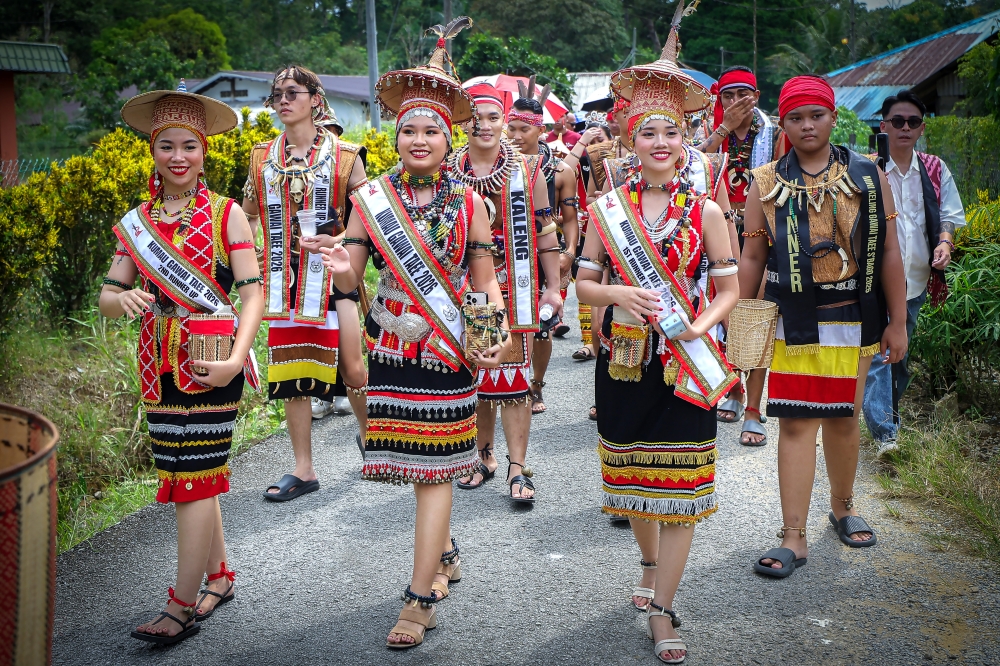
SERIAN, June 2 — Beneath the vibrant costumes, thunder of gongs and pulse of ethnic music at today’s Gawai Dayak Parade in Kampung Taee lies a remarkable story of 56 years of unwavering commitment by the local community to preserve a tradition, passed down uninterrupted since 1970.As modern pressures wear away at age-old practices, the Bidayuh of Kampung Taee, just 60 kilometres from Kuching, refuse to let their ancestral heritage fade, keeping it alive through
SERIAN, June 2 — Beneath the vibrant costumes, thunder of gongs and pulse of ethnic music at today’s Gawai Dayak Parade in Kampung Taee lies a remarkable story of 56 years of unwavering commitment by the local community to preserve a tradition, passed down uninterrupted since 1970.
As modern pressures wear away at age-old practices, the Bidayuh of Kampung Taee, just 60 kilometres from Kuching, refuse to let their ancestral heritage fade, keeping it alive through the annual birarak (parade), where young and old march together.
For Malvern Lister, 42, that continuity was clear to see as he watched his two children join a parade that has been part of his life since childhood.
Having first taken part at the age of ten, Malvern has never missed the opportunity to join the procession, which stands as the centrepiece of the Gawai Dayak celebration in his home village.
“Ever since I was born, my whole family has been involved in this birarak. Now my two children are taking part too… so that’s three generations. I hope they will continue to keep this tradition alive in the years ahead,” he said.
“We take pride in still being able to host this parade every year. We hope more people from across the globe will come to Kampung Taee to experience Bidayuh culture and heritage for themselves,” he told Bernama.
He added that the parade, deeply rooted in the Dayak community’s rice harvesting tradition, is far more than an annual event. It is a unifying force for the community and a vital link between multiple generations.
That same passion is shared by McWilkins Benadik, 33, who views the five-kilometre procession winding through the village as a powerful platform to introduce Bidayuh culture to the outside world.
James Handfield-Jones from the United Kingdom said the allure of the Land of the Hornbills has kept him coming back to various Gawai celebrations throughout more than two decades of living in the state. — Bernama pic
The father of one said Kampung Taee welcomes visitors every year from various states and countries, all eager to witness firsthand how the Bidayuh Bukar community in Serian celebrates Gawai Dayak.
“These visitors don’t just help showcase our culture globally, they also give a real boost to local tourism and economy,” he said.
The presence of international visitors at this year’s parade shows that the event’s appeal has clearly stretched far beyond the borders of Sarawak.
Aaron Richards, 42, from the United States, who now works in Kuala Lumpur, attended the Gawai Dayak celebration for the first time after being invited by his girlfriend, a Bidayuh native of Sarawak.
“My girlfriend invited me to join in the Gawai celebration with her family. This is my first time joining such an event and I am looking forward to seeing the local culture and interacting with the local people,” he said.
Sharing a similar enthusiasm for Sarawak’s culture, James Handfield-Jones from the United Kingdom said the allure of the Land of the Hornbills has kept him coming back to various Gawai celebrations throughout more than two decades of living in the state.
True to the Malay proverb tak lapuk dek hujan, tak lekang dek panas (untouched by rain nor faded by heat), the joint effort by the Gawai Taee organising committee and Kampung Taee’s Village Development and Security Committee remains a lasting symbol of Bidayuh identity. Despite the forces of modernisation, the event drew some 3,000 participants and visitors this year.
Besides parading through the village, participants also stopped at several stations to interact with residents and join various cultural activities that form an integral part of the celebration.
Meanwhile, Sarawak Premier Tan Sri Abang Johari Tun Openg told reporters at the Gawai Dayak 2026 Open House that holding such parades helps introduce Sarawak’s culture to both Malaysians and the international community.
He noted that local television channels and digital platforms like YouTube make it possible to showcase the unique cultural traditions of the state’s diverse ethnic communities to a much wider audience.
“We are grateful to media practitioners who cover and promote these Gawai Dayak parades in Sarawak.
“In fact, through YouTube, these traditions are also being shared with the global community, sparking their interest to learn more about the multi-ethnic, multi-faith way of life in Sarawak,” he said. — Bernama
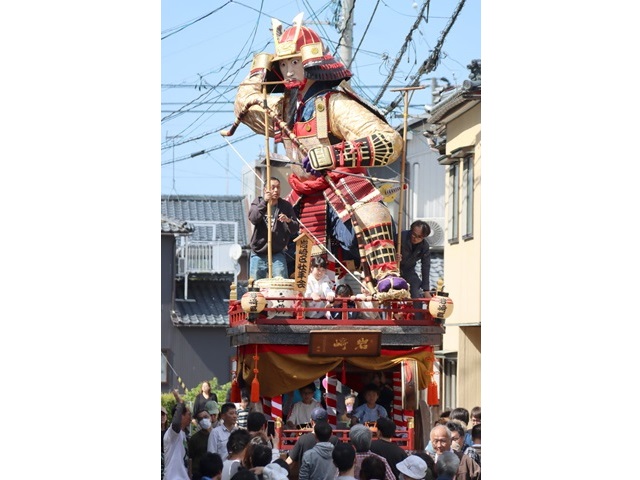
This annual procession is the perfect stop for samurai buffs who enjoy traditional Japanese festivals with a warrior twist.
The streets of Sakai, Fukui Prefecture, are about to be packed when the city’s Mikuni Festival kicks off on May 19 for three days. Considered one of the Hokuriku region of Japan’s “three great festivals,” the annual festival spans approximately 300 years of tradition. This year, six newly crafted floats over six meters (6.6 yards) in height that depict historical samurai
This annual procession is the perfect stop for samurai buffs who enjoy traditional Japanese festivals with a warrior twist.
The streets of Sakai, FukuiPrefecture, are about to be packed when the city’s Mikuni Festival kicks off on May 19 for three days. Considered one of the Hokuriku region of Japan’s “three great festivals,” the annual festival spans approximately 300 years of tradition. This year, six newly crafted floats over six meters (6.6 yards) in height that depict historical samurai of legend as well as famous scenes from kabuki plays and historical battles will be paraded around different districts of the city.
▼ Kamakura Gongoro Kagemasa (born 1069), as depicted in the play “Shibaraku,” one of the 18 Best Kabuki Plays
▼ Keiji Maeda (1543-1612)
The new floats were first unveiled to the public on 9 May. Festivities will officially begin at 6:30 p.m. on 19 May when the Maeda Keiji float will be showcased in the vicinity of Mikuni Shrine by the harbor. Then, at 1 p.m. on 20 May, all six floats will join in a procession around the city beginning at Mikuni Shrine. On this day, a special mikoshi portable shrine will also leave from the shrine, along with a procession of locals donning warrior-inspired garb.
▼ Magistrate Kinshiro Toyama (1793-1855)
▼ Minamoto no Yoshitsune (1159-1189)
In addition, this year’s festival marks a first as the newly assembled Sakai City Board of Education’s Mikuni Festival General Investigative Committee, comprised of 11 expert individuals from the municipality, will begin conducting a multi-year, comprehensive study of the festival. Their investigation will examine everything from the craftsmanship of the floats and how they’re pulled around, to the various musical accompaniments in different districts of the city. It will also seek to answer overarching questions such as why the floats came to include figures of samurai in the first place and why those are destroyed upon the conclusion of the festival every year. As the first study of its kind to be funded by governmental aid, a formal written report is expected to be published in 2029.
▼ Taira no Tomomori (1152-1185) with the anchor he used to drown himself upon losing the Sea Battle of Dan no Ura (1185)
▼ The assault of Naganori Asano (1667-1701) on Yoshinaka Kira (1641-1703) in the Pine Corridor of Edo Castle, the trigger that led to the legend of the 47 Ronin (1703)
Another new feature of this year’s festival is the creation of a special seated viewing area in the Echizen Railway’s Mikuni Station plaza. Between 4:30-6:30 p.m. on 20 May, spectators can view all six floats in succession as they approach the station and circle the intersection. 40 seats are available for purchase for 5,000 yen ($31.55) each in advance or for 6,000 yen on the day of the event. The viewing area will be split into four levels, with the highest one at 1.8 meters for prime viewing. Seats can be reserved by contacting the Mikuni Community Center at mikuni-cc@city.fukui-sakai.lg.jp or (+81) 0776-82-6400.
While you’re in town, you may also want to see what Fukui has to offer in the gastronomic delights department, such as the sasazuke preserved fish that’s popular among the locals.
Teaching full-time has one big perk: A summer of a lot less commitments and time to work a lot more without interruption on all sorts of things. With me, it’s career-related in that I get to work on the Thunderbean stuff in a more full-time way.
Tomorrow I’m off the Columbus Moving Picture Show in Columbus, Ohio. I’ll be there for a handful of days, so if you come to the show, say hi! I love chatting all things animation as well as talking about the stuff in progress for Thunderbean. Informat
Teaching full-time has one big perk: A summer of a lot less commitments and time to work a lot more without interruption on all sorts of things. With me, it’s career-related in that I get to work on the Thunderbean stuff in a more full-time way.
Tomorrow I’m off the Columbus Moving Picture Show in Columbus, Ohio. I’ll be there for a handful of days, so if you come to the show, say hi! I love chatting all things animation as well as talking about the stuff in progress for Thunderbean. Information on the event is HERE.
There’s a handful of major projects on the plate here that are making major progress right now while on their way to being an actual finished set. Here is the status of the eight that are most on my mind, daily:
Rainbow Parades, Volume 2: The set is done and will be starting to ship within a month or so. This is one of my favorite projects we’ve ever done, and I’m glad to have given these films the best treatment possible. Here’s the first sneak preview of the cover art by Mike Kazaleh with background by Jesse Smith:
Lantz Studio Treasures: Another upgrade from the DVD we released some years back, with even more things included. This one is waiting for just a few films to get finished.
Cartoons For Victory: This set just rounded another corner right at the end of the school year. There’s a few films left to clean up, several bonus things to upgrade to HD from the previous DVD sets (from 2005 and 2012). The propaganda poster section is something I especially love. I’ve shown it for years in my animation history class at CCS, and have heard from other folks teaching animation history how useful the DVD sets are for an overview of propaganda. My idea is that the sets (and the Blu-ray now) help to fill in the gaps between the Disney and Warners sets. For the Blu-ray, we’ve upgraded across the board in materials, and after working many years off and on in getting it finished, I’m happy that there’s such a broad representation of countries on the set. The material ranges in quality somewhat in the release, from acceptable to spectacular. This one is the closest next to the finish line right now. We’ll have it out over the summer along with others.
The Comi-Color cartoons: *easily* the hardest project here right now. Our hope is to have one of the two sets out at the end of the summer and both by year’s end if we’re able. The work involves scanning all the negatives that exist. Cleanup isn’t as hard since the material is beautiful- newer scanner technology has made all the difference. We have quite a few done already and I’ll be sharing as we get closer on the first set (I’ve been holding the cards close on this one). Everything exists in 35mm, with only a few titles not having their camera negative or black and white separations. It’s been a long road on all the Iwerks stuff to the finish line, but we’re finally getting there. Looking forward to getting a few of the other titles done so this gets first place in production.
A Spooky Cartoony Halloween: This title is finished, just waiting for replication as soon as we’re able. We sent a ‘tide-me-over’ for last Halloween to the folks that pre-ordered this. If you ordered it, I think you’ll like the surprises we’ve included.
American Animated Cartoons, 1929 and American Animated Cartoons, 1930: These two are getting closer to the finish line as well, and have been so much fun to work on. They’re a mix of 35mm and 16mm material, and a pretty fun overview if you want to introduce someone to the early sound era of American animation.
Lou Bunin’s Magic Puppet Animation, Featuring Alice in Wonderland: This is the project most wrapped up in things out of my control but *almost*. Let’s hope they’re back in control soon. There’s some material that we really *need* to utilize to make this set what I really want it to be— and that it *needs* to be. More on that soon. If I walked into a famous building with 5k right now, the whole thing would move forward much faster. Working on that. Also, with all that said, what we do have done looks lovely on this title. Trying to finish by summer’s end, and that’s looking possible.
I’ll give an honorable mention to Toby the Pup, who isn’t properly dressed at the moment, yet.
It’s off to Columbus for me now. Thanks to all for keeping the faith and keeping the lights on for this tiny business. Hopefully it has been and continues to be worth it for everyone.
On a sprawling promenade in West Kowloon, a gay choir lit up the stage with a chorus of harmonies. Children listened attentively at a storytelling session led by a drag queen dressed in pink from top to bottom.
Pink Dot at the West Kowloon Cultural District on December 10, 2023. Photo: Pink Dot HK, via Facebook.
Around them, dozens of tents representing LGBTQ-friendly NGOs promoted their services and ran mini games.
These were scenes from Hong Kong’s largest LGBTQ event, Pink Dot, whe
On a sprawling promenade in West Kowloon, a gay choir lit up the stage with a chorus of harmonies. Children listened attentively at a storytelling session led by a drag queen dressed in pink from top to bottom.
Pink Dot at the West Kowloon Cultural District on December 10, 2023. Photo: Pink Dot HK, via Facebook.
Around them, dozens of tents representing LGBTQ-friendly NGOs promoted their services and ran mini games.
These were scenes from Hong Kong’s largest LGBTQ event, Pink Dot, when it was last held in September 2024. The event attracted thousands of people, including families with young kids.
Since then, the annual outdoor carnival, which aims to celebrate diversity, has been axed for two consecutive years, including the one scheduled for this month.
The organisers announced the cancellation on May 18, around five weeks after they said Pink Dot would take place at Stanley Plaza and Murray House in mid-June, coinciding with Pride Month.
The event was also cancelled last year after the West Kowloon Cultural District Authority (WKCDA) declined to rent its Art Park venue to the organisers, although it had done so for five years.
Pink Dot started in Singapore in 2009, and five years later, Hong Kong held its inaugural event. For the first two years – in 2014 and 2015 – the carnival was held at Tamar Park in Admiralty.
In later years, Pink Dot took place at Art Park – except during the 2019 protests and the pandemic restrictions between 2020 and 2022, when the organisers cancelled or moved the event indoors.
Pink Dot Hong Kong co-director Brian Leung at Art Park, in West Kowloon Cultural District, on May 22, 2026. Photo: Kyle Lam/HKFP.
To hold a public event like Pink Dot, organisers must apply for a Temporary Places of Public Entertainment Licence from the Food and Environmental Hygiene Department (FEHD).
Brian Leung, co-director of Hong Kong’s Pink Dot, told HKFP in late May that Link REIT, the venue operator, had informed the organisers that it could not rent the site in June because it had heard of “problems” with the event’s licence application to the FEHD.
Leung said it was unclear how Link REIT heard there were “problems” with the event’s licence application. He was never aware that there was ever any problem.
“So far, I have received no official explanation,” Leung said in Cantonese. “As an organiser, I cannot guess [what happened].”
Pink Dot at the West Kowloon Cultural District on December 10, 2023. Photo: Kyle Lam/HKFP.
In response to HKFP’s enquiry, the FEHD said on May 21 that it received Pink Dot’s application in late April, but the event organisers told the department on May 18 that they had cancelled the event.
The applicant “said it would formally withdraw the application later, so the department does not have any follow-up,” the FEHD wrote in an email.
‘No political aims’
Pink Dot is not the only LGBTQ event that has encountered problems over the past year. The WKCDA axed a queer-themed play, We Are Gay, in October, nearly six weeks before it was set to open at the Xiqu Centre in the cultural district.
The following month, the Hong Kong Pride Committee – which used to hold the city’s Pride marches – called off an outdoor festival at Kwun Tong Promenade after the venue operator said the site was unavailable due to construction work. The last Pride march was held in 2018.
The cancellations have raised questions among LGBTQ activists about the future of holding events in Hong Kong.
“We do have concerns,” Leung said. “Does it mean that going forward, it will be very hard or impossible to find venues for events that are LGBTQ-related?”
In late July last year, Pink Dot’s organisers were forced to cancel – four weeks after the government released its proposed framework for a bill allowing same-sex partners to register their relationships. The bill was to comply with a Court of Final Appeal ruling in a lawsuit filed by LGBTQ activist Jimmy Sham.
LGBTQ activist Jimmy Sham outside the Legislative Council on Sept. 10, 2025. Photo: Kyle Lam/HKFP.
Sham, a former district councillor, told HKFP that when Pink Dot was cancelled last year, he thought it might be because the timing was sensitive, citing the government’s attempt to pass the framework.
“But now that it’s been cancelled for a second year, people don’t have any idea why,” Sham said in Cantonese.
Leung said he brought Pink Dot from Singapore – where the event is still held every year – to Hong Kong in 2014, seeing it as a family-friendly celebration of diversity.
Pro-democracy lawmakers Raymond Chan and Kwok Ka-ki take part in Hong Kong’s Pride Parade in 2017. Photo: Kris Cheng/HKFP.
At the time, Hong Kong had annual Pride parades, with different themes each year, such as “Call for the law, equality for all” and “Stand up for diversity.” It was an opportunity for LGBT groups and their allies, including pro-democracy lawmakers, to rally on the city’s streets, waving rainbow flags and chanting slogans.
Since the Covid-19 pandemic, the organisers of the Pride march have only held indoor events.
“I thought it would be good to have an event like Pink Dot, which is different in nature. The Pride marches had clear political aims, while Pink Dot is softer, with no political aims,” Leung said.
Shrinking LGBTQ space in mainland China
Restrictions on the LGBTQ community in mainland China, where advocacy groups have been forced to disband and queer content has been censored, are not lost on Hong Kong activists and academics.
Jamie Zhao, an assistant professor and scholar on queer media at the City University of Hong Kong, said the shrinking space for LGBT activism could not be separated from mainland authorities’ lack of tolerance for publicly disruptive and “rights-demanding” activities.
The official attitude towards the LGBTQ community is closely aligned with the country’s renewed emphasis on family values, marriage and fertility, Zhao told HKFP. Amid an ageing population and low birth rates, the Chinese government has been encouraging citizens to marry and have children.
“Queer life can be framed as non-reproductive, individualistic, foreign-influenced, or insufficiently aligned with the future of the nation,” Zhao said.
However, Zhao said mainland authorities’ approach to the LGBT community could not be described as a total crackdown. The growth in gay and lesbian bars, “boys’ love” and “girls’ love” drama series, LGBTQ reality dating shows and other elements that make up the “pink economy,” the academic said, shows that “commercially useful queer-coded culture” is still allowed to exist.
Posters featuring boys’ love at a merchandise shop in Beijing on July 9, 2025. Photo: Adek Berry/AFP.
John Burns, an honorary professor at the University of Hong Kong’s Department of Politics and Public Administration, also said the official stance on LGBT matters in mainland China was a mixed picture.
Despite restrictions, Chinese production companies are still making new “boys’ love” dramas to meet popular demand, and they have not been shut down by authorities, Burns said.
In any case, the scholar said he did not believe the Hong Kong government was attempting to ban LGBTQ communities from gathering, or that there had been any related directive from the central government.
“I don’t think the central government is micromanaging Hong Kong on [LGBTQ] issues. I think they’re more likely to be micromanaging Hong Kong on national security issues,” Burns told HKFP.
‘Greater risk of disorder’ outdoors
Since the Beijing-imposed national security law was passed in 2020, large-scale outdoor events like marches and rallies have all but dried up. Besides political protests, the city no longer sees marches on topics like labour issues and women’s rights as it used to.
“If the real issue is that the police are worried about national security, and people exploiting the outdoor event for something that it wasn’t designed for, then [the Hong Kong government] should say so,” Burns said.
Former lawmaker Regina Ip, who leads the government’s advisory body, the Executive Council, told HKFP that police tend to think outdoor events carry a “greater risk of disorder.”
She pointed to the Gay Games opening ceremony in 2023, which “was held at the Queen Elizabeth Stadium and went very well.”
Top government adviser Regina Ip delivers a speech at the opening ceremony of Gay Games 2023 on November 4, 2023. Photo: Graham Uden/Gay Games Hong Kong.
Hong Kong co-hosted the international sporting event with Mexico in 2023, welcoming participants from around the world. However, the Gay Games in the city, which did not receive government sponsorship, saw far less participation than originally expected.
Like last year, Pink Dot organisers are looking into holding a private indoor event that will be livestreamed to the public, Leung said.
Asked whether Pink Dot would consider moving its event indoors in the future, Leung expressed concerns that they would still face problems getting an entertainment licence.
To Zhao, the visibility of the LGBT community has become “politically more vulnerable” in recent years because of its association with the non-establishment camp.
“Many openly queer or queer-associated public figures were connected directly or indirectly to pro-democracy politics, civil society, activism or critical public discourse,” she said.
Cantopop singer Denise Ho. File photo: Jennifer Creery/HKFP.
Zhao referred to singer Denise Ho, who came out publicly during the Pride parade in 2012 and has spoken out about her pro-democracy stance.
Many politicians who took part in Pride parades belong to the pro-democracy camp, such as Leung Kwok-hung, also known as “Long Hair”; Raymond Chan, the first openly gay lawmaker; and Sham, one of the openly LGBTQ district councillors elected in 2019.
Leung, Kwok, Chan, and Sham were among the 47 democrats charged in a landmark national security case involving a primary election in 2020, and among the 45 who were jailed.
Zhao said: “This close association between queer culture and civil society has made queer visibility in Hong Kong more politically charged than in many mainland commercial contexts.”
‘Big loss’
Despite Pink Dot’s cancellation, some local activists are still hopeful that an LGBTQ space exists for the community to gather and celebrate diversity.
Jerome Yau on January 8, 2026. Photo: Kyle Lam/HKFP.
Jerome Yau, co-founder of Hong Kong Marriage Equality and chief executive of AIDS Concern, pointed to the fact that an outdoor event marking International Day Against Homophobia, Biphobia, and Transphobia (IDAHOBIT) went ahead over a weekend in mid-May.
On May 16 and 17, various organisations – from NGOs to an LGBTQ-friendly church and a queer advocacy media outlet – set up street booths in the heart of the Causeway Bay shopping district. The same event was held last year.
Yau acknowledged that organisers of large-scale events in Hong Kong faced “growing challenges” nowadays, but said he saw “no evidence” that Link REIT was under pressure.
LGBTQ groups mark International Day Against Homophobia, Biphobia and Transphobia (IDAHOBIT) on May 17, 2025. Photo: Kyle Lam/HKFP.
“Whatever those licensing issues may be, I hope there is more clarification,” he said.
Nick Lee, a lecturer at the Chinese University of Hong Kong’s Gender Studies Programme, however, said he felt it was possible that the venue operator did not experience direct pressure to refuse rental to Pink Dot organisers, but withdrew on its own accord out of an abundance of caution.
Still, Yau found it disappointing that Pink Dot could not be held for a second year in a row.
The event “had a good track record. It was a good sign that Hong Kong at the very least embraces diversity and inclusion,” he said.
“It’s obviously a big loss not just to the LGBTQ community, but to the whole of society.”
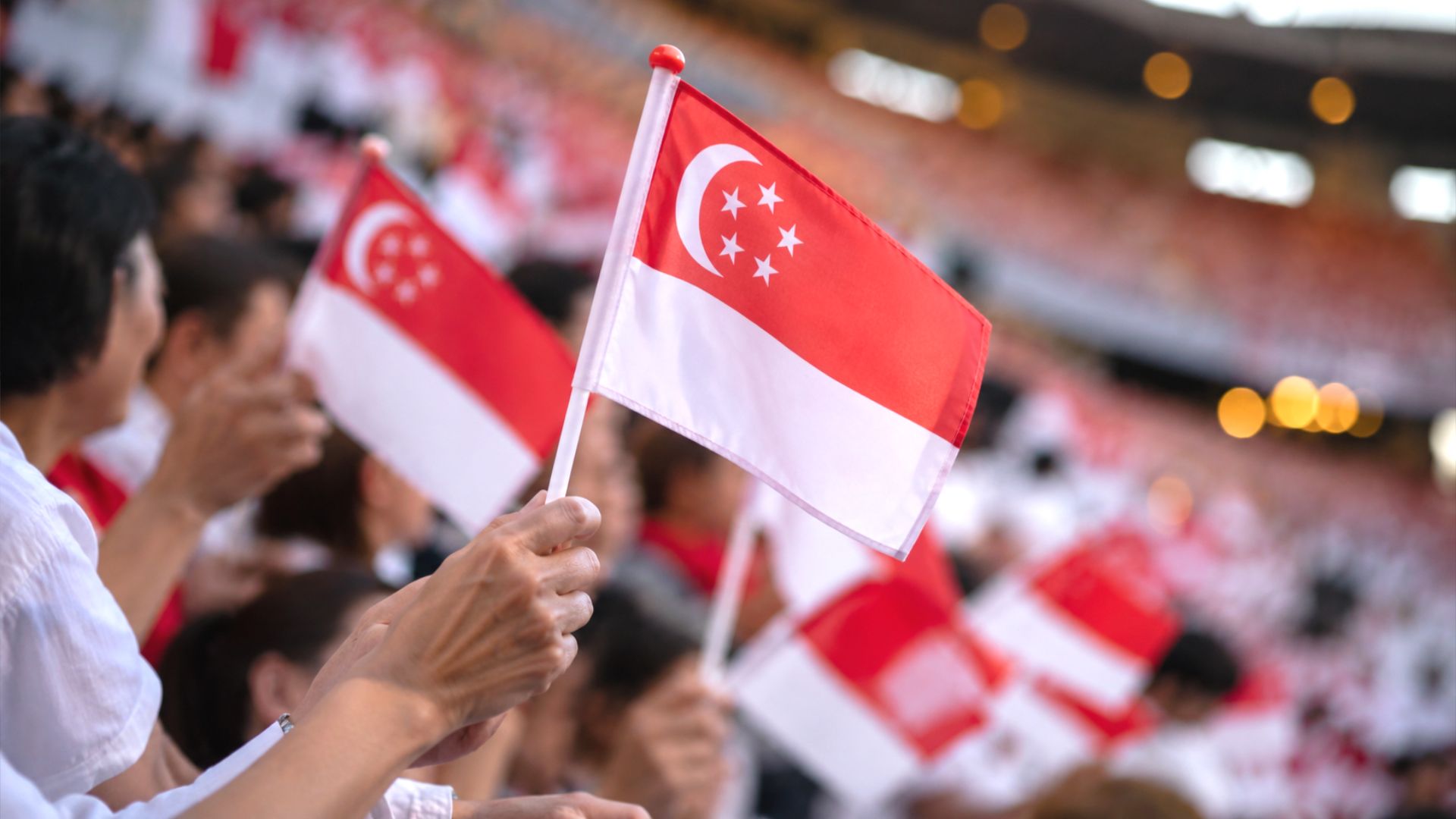
SINGAPORE: The race for National Day Parade (NDP) tickets is back, but this year, being fast to get them will not improve anyone’s chances. Unlike concert sales or limited-edition launches, NDP tickets aren’t given out on a first-come, first-served basis. Instead, applications will go through a ballot after the window closes.
Applications for NDP 2026 tickets opened at 12 pm on May 23 and will remain open until 12 pm on June 6. Singapore citizens and permanent residents can apply for tickets to
SINGAPORE: The race for National Day Parade (NDP) tickets is back, but this year, being fast to get them will not improve anyone’s chances. Unlike concert sales or limited-edition launches, NDP tickets aren’t given out on a first-come, first-served basis. Instead, applications will go through a ballot after the window closes.
Applications for NDP 2026 tickets opened at 12 pm on May 23 and will remain open until 12 pm on June 6. Singapore citizens and permanent residents can apply for tickets to either of the two preview shows on Jul 25 and Aug 1, or the main parade on Aug 9.
Organisers stressed that applications submitted through other links or forms shouldn’t be trusted. This warning follows almost every major public event: Scams move fast wherever demand appears.
One application, one ballot opportunity
Applicants can request two, four, or six tickets. Each person gets only one ballot opportunity. If multiple applications are submitted, organisers said only the latest entry will count, while earlier attempts will be discarded.
Successful applicants will receive notifications between Jun 15 and Jun 17 through official government channels only. SMS messages and email notifications will be sent from gov.sg and info@mail.postman.gov.sg, or from approved email addresses listed by organisers. Messages from elsewhere should be treated with caution.
Organisers also reminded the public that tickets are strictly not for sale and warned that action will be taken against scalping and fraud.
A National Day show with missing favourites, but with new features
NDP 2026 marks the parade’s return to the National Stadium for the first time since 2016.
This year’s edition promises several additions, including a live indoor drone show, three new songs and a nationwide treasure hunt leading up to National Day. The organisers also said civilian participation will be the largest seen in more than a decade.
Some long-time crowd favourites, however, will sit this one out. The Red Lions parachute display, military aircraft flypast and mobile column involving military, police and civil defence vehicles will not return this year due to operational and safety reasons.
Still staying are familiar ceremonial moments such as the state flag flypast, Feu de Joie, and the presidential gun salute, which will take place at Kallang Basin for the first time.
The ballot keeps the focus on participation rather than competition
The ticket ballot may feel less exciting than a fast online scramble, but it removes the pressure to queue and reduces the advantage of speed, multiple devices or automated attempts.
For a national event built around broad public access, that approach keeps the focus where it belongs: participation rather than competition.
If there is one practical takeaway, it is to apply once, use official channels, and ignore messages promising shortcuts, because, as National Day comes every year, scams do too.
HONG KONG, June 7 — Most people come to Hong Kong for the food, shopping (well, once upon a time) but very seldom cultural events. The cultural/festival calendar in Hong Kong is quite a full one and one particularly interesting one is the annual Piu Sik parade featuring children “floating” in the air.At Hong Kong’s outlying island Cheung Chau, the parade falls on the eighth day of the fourth lunar month that marks the celebration of Buddha’s birthday.During the P
HONG KONG, June 7 — Most people come to Hong Kong for the food, shopping (well, once upon a time) but very seldom cultural events.
The cultural/festival calendar in Hong Kong is quite a full one and one particularly interesting one is the annual Piu Sik parade featuring children “floating” in the air.
At Hong Kong’s outlying island Cheung Chau, the parade falls on the eighth day of the fourth lunar month that marks the celebration of Buddha’s birthday.
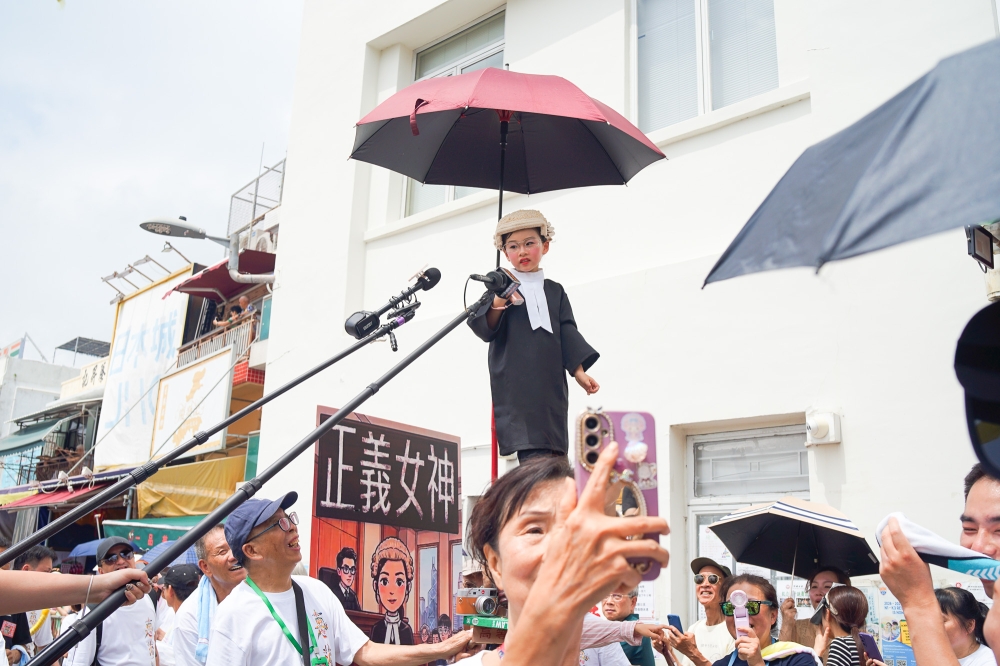
During the Piu Sik (飄色 or Floating Colours) parade, Cheung Chau’s residents dress up their children who appear to be standing in mid-air (almost one-storey high).
The “Sik Sum” (色芯 or floating children), who can be as young as five years old, are actually safely seated and securely supported on a metal rod.
The magic behind the ‘floating children’ are the hidden metal supports made as a traditional craft, and part of Hong Kong’s intangible cultural heritage. — Picture by Ida Lim
These supports are cleverly hidden under the children’s costumes, which change every year, based on what the “kaifong” or local neighbourhood associations choose.
The parade lasts a couple of hours and also sees deities being carried around the narrow streets of Cheung Chau.
You also get the chance to see other performances that are a part of Hong Kong’s intangible cultural heritage — lion dances, and dances featuring the mythical creature “qilin” (sometimes also known as the Chinese unicorn).
A ‘qilin’, with two persons operating its head and body, is seen here during the Piu Sik Parade at Cheung Chau, Hong Kong. — Picture courtesy of Hong Kong Tourism Board
This parade is part of the century-old Taoist festival Cheng Chau Jiao Festival, which is now also known as the Cheung Chau Bun Festival and has been on China’s national list of intangible cultural heritage since 2011.
The festival gets its popular name from traditional white steamed buns, now typically stamped with the Chinese characters “平安” (pronounced as “Ping On” in Cantonese and signifying peace or safety).
Don’t rush off after the Piu Sik parade though as there is more to see and do on this island.
Buy a Ping On bun if you haven’t tried one before; have a dinner with fresh seafood and views of the harbour at one of the restaurants along Pak She Praya Road; and maybe have mango mochi or other mango-themed desserts at Wan Sing Dessert.
Then head over to Pak Tai temple to watch Cantonese opera which runs for four nights during the festival.
A Cantonese opera show with ‘live’ music at the Pak Tai temple, Cheung Chau in conjunction with the Cheung Chau Bun Festival. — Picture by Ida Lim
It’s a rare treat to see this traditional theatre performance, which became part of China’s national list of intangible cultural heritage in 2006 and also a similar list by Unesco in 2009.
A race to the top or grab all the buns you can
At midnight, it’s the bun scrambling race final that everyone has been waiting for — 12 of the fastest climbers (out of a maximum 200 participants) rush for the highest score or the most number of buns they can grab.
Bun scrambling finalists stuffing as many buns they can grab into their bags. This year’s ‘Bun King’ Kwok Ka-ming is seen here wearing the vest with the number one. — Picture courtesy of Hong Kong Tourism Board
They climb up a 14 metre-tall tower mounted with 9,000 buns, with the buns having higher points the higher you climb (buns are worth nine, three points or one point each in the three zones).
Firefighter Kwok Ka-ming was the “Bun King” again this year as he won the men’s category with 999 points, his 11th win in the race.
Hong Kong’s ice-climbing athlete Janet Kung Tsz-shan was the “Bun Queen” again at 760 marks, having previously won the women’s division thrice in 2025, 2024 and 2019.
Ma Hok-ming won the “Full Pockets of Lucky Buns” award as he gathered 177 buns — which is also the highest number since this award’s introduction in 2013.
There is also the relay race, where teams of three climbers compete to be the fastest to scale up and down the tower — the winning team this year was the Shenzhen Mountaineering and Outdoor Sports Association which took just about two minutes 31 seconds.
The ‘Ping On’ bun: A sweet piece of culture and tradition
Second-generation owner Martin Kwok, 45, said Kwok Kam Kee bakery at Cheung Chau is an official supplier of the festival’s Ping On buns.
Martin Kwok at Cheung Chau’s 54-year-old Kwok Kam Kee bakery, which he has kept unchanged even after taking over the business in 2017. — Picture by Ida Lim
Before opening this bakery in 1972, Kwok’s father Kwok Kam Chuen learned baking from his uncle for about three years.
Kwok said his father’s late uncle had in the past supplied Ping On buns for the Cheung Chau Bun Festival, and that his father started doing the same about 30 to 40 years ago.
He said there are four types of bun towers at the festival (the bun scrambling tower, three large ones, three medium-height ones, and 36 smaller towers.)
When the bun scrambling competition resumed in 2005 after a 26-year hiatus, Kwok said Kwok Kam Kee supplied edible buns for the bun scrambling tower for the first two years.
But from the third year onwards, the festival organiser shifted to using plastic buns, as the tower was not sheltered and was exposed to the sun and rain, he explained.
Seen here in the middle are the three large towers with 2,000 edible Ping On buns each, flanked by the medium and smaller bun towers at Pak Tai temple, Cheung Chau. — Picture by Ida Lim
As for the other bun towers (three big, three medium, 36 small) at the Pak Tai Temple, Kwok said his bakery and another bakery in Cheung Chau continue to supply the edible buns mounted on them.
In the past, the three big towers featured a total of 18,000 buns, with 6,000 buns each.
But the big towers’ height and size was reduced several years ago to around 2,000 buns each, he said.
After prayers over these bun towers, the buns would be distributed to the public.
Kwok said the island’s residents traditionally put these buns at their altars and at their shops for one whole year, as they believe it brings blessings.
A bun stamped with the Chinese characters for peace and pronounced as ‘Ping On’ in Cantonese, and its traditional white sesame filling. In the past, it was stamped with the Chinese character 寿 pronounced in Cantonese as ‘Sau’ (longevity). — Picture courtesy of Hong Kong Tourism Board.
60,000 buns in about a week or so
Kwok Kam Kee originally only sold the Ping On buns during the festival, but started selling it year-round about 10 years ago due to popular demand, Kwok said.
Usually, the bakery makes less than 1,000 Ping On buns daily to be sold throughout Hong Kong, including below 100 buns at its Cheung Chau outlet, he said.
But when it comes to the annual peak period during the festival, Kwok said the buns sell extremely well: “In these eight to 10 days, I think we make around 60,000-plus buns. So that’s why it’s a very huge project for us.”
On the day of the Piu Sik Parade itself, the bakery makes more than 10,000 buns, he said.
During the peak period, the bakery employs around 10 “masters” for the labour-intensive and time-consuming process of making the buns by hand, he said.
He said the Cheung Chau Bun Festival is like a “reunion” for the Kwok family, even more so than Chinese New Year, as everyone including relatives, his siblings, and his children would come and help out.
Customers queuing to buy the Ping On buns at Kwok Kam Kee, which also sells traditional Chinese pastries such as wife cakes and walnut cookies. — Picture by Ida Lim
Polishing the diamond
Born and raised in Cheung Chau, Kwok is the eldest son and the fourth of seven children.
When his father wanted to retire, Kwok made a big decision in 2017 to quit his senior finance job in Singapore to take over the bakery, despite the big drop in personal income.
Kwok said he did not want the brand Kwok Kam Kee to end, viewing it as an “unpolished diamond” that his father had spent his life on, and believing that he can “polish it” to become more shiny with his ability and vision.
Currently, Kwok Kam Kee makes Ping On buns at Cheng Chau before freezing them to be sold in Macau; the UK; and at 30 to 40 supermarkets and department stores throughout Hong Kong.
Apart from preserving the traditional Ping On bun, Kwok plans to make Kwok Kam Kee into a household brand, to expand its product range and sell in more countries in the future.
The bakery carried out limited-edition crossovers for its Ping On buns (including by stamping them with Sanrio characters Hello Kitty, Pompompurin and Gudetama in 2018, and superhero Spider-Man in 2019), and also had limited-edition fillings (such as taro, matcha and pumpkin).
This is all part of Kwok’s plan to introduce the brand to more customers and make it “younger”.

 Login
Login