David May, a two-time Grammy-winning producer who worked many of music’s biggest names and was a former longtime VP at Warner Records and Rhino Entertainment, has died. He was 68. Deadline confirmed that he died April 13 in Nashville of natural causes. Specializing in new audio formats and mastering, May worked on projects ranging from studio […]
David May, a two-time Grammy-winning producer who worked many of music’s biggest names and was a former longtime VP at Warner Records and Rhino Entertainment, has died. He was 68. Deadline confirmed that he died April 13 in Nashville of natural causes. Specializing in new audio formats and mastering, May worked on projects ranging from studio […]
Marcia Lucas, who won an Oscar for editing the original Star Wars and scored a nom for American Graffiti, both directed by her then-husband George Lucas, and worked with Martin Scorsese and Francis Ford Coppola, died May 27 of cancer in Rancho Mirage, CA. She was 80. Her family’s attorney, Deidre Von Rock, confirmed the […]
Marcia Lucas, who won an Oscar for editing the original Star Wars and scored a nom for American Graffiti, both directed by her then-husband George Lucas, and worked with Martin Scorsese and Francis Ford Coppola, died May 27 of cancer in Rancho Mirage, CA. She was 80. Her family’s attorney, Deidre Von Rock, confirmed the […]
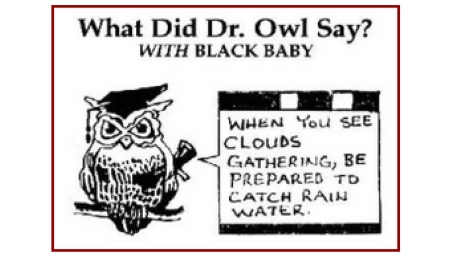
Liberian cartoonist Harrison “Black Baby” Jiedueh has passed away. Harrison Chea “Black Baby” Jiedueh March 2, 1958 — April 26, 2026 From the obituary: Mr. Harrison Chea Jiedueh, widely known as Black Baby, was a man of many talents. He excelled as a professional artist, political cartoonist, entrepreneur, DJ, clothing designer, photographer, videographer, and IT […]
Liberian cartoonist Harrison “Black Baby” Jiedueh has passed away. Harrison Chea “Black Baby” Jiedueh March 2, 1958 — April 26, 2026 From the obituary: Mr. Harrison Chea Jiedueh, widely known as Black Baby, was a man of many talents. He excelled as a professional artist, political cartoonist, entrepreneur, DJ, clothing designer, photographer, videographer, and IT […]
Albert Wolsky, a two-time Academy Award winning and Tony nominated costume designer whose many high-profile credits include his Oscar-taking work on All That Jazz (1979) and Bugsy (1991), died Saturday, May 23, at his home in Hollywood. He was 95. His death was announced by friends and colleagues on social media and confirmed by Deadline. Born in Paris, France, […]
Albert Wolsky, a two-time Academy Award winning and Tony nominated costume designer whose many high-profile credits include his Oscar-taking work on All That Jazz (1979) and Bugsy (1991), died Saturday, May 23, at his home in Hollywood. He was 95. His death was announced by friends and colleagues on social media and confirmed by Deadline. Born in Paris, France, […]
Jeffrey Lane, an Emmy-winning writer and producer with TV credits spanning the sitcom Mad About You, dramas Cagney & Lacey and Lou Grant, soap opera Ryan’s Hope as well as Tony Awards broadcasts and the Broadway musical Dirty Rotten Scoundrels, died May 20 in New York following a lengthy illness. He was 71. Over the […]
Jeffrey Lane, an Emmy-winning writer and producer with TV credits spanning the sitcom Mad About You, dramas Cagney & Lacey and Lou Grant, soap opera Ryan’s Hope as well as Tony Awards broadcasts and the Broadway musical Dirty Rotten Scoundrels, died May 20 in New York following a lengthy illness. He was 71. Over the […]
David Hockney, the legendary British artist behind some of the most recognizable works of contemporary painting, such as ‘The Splash’ and ‘Pool with Two Figures’, has died. He was 88. News of Hockney’s death was first reported in the French press and was later confirmed by his publicist in a statement to the BBC and […]
David Hockney, the legendary British artist behind some of the most recognizable works of contemporary painting, such as ‘The Splash’ and ‘Pool with Two Figures’, has died. He was 88. News of Hockney’s death was first reported in the French press and was later confirmed by his publicist in a statement to the BBC and […]
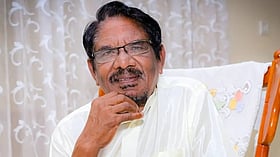
The death of veteran filmmaker, screenwriter, and actor P. Bharathiraja, 84, in Chennai on the morning of 10 June brings to an end an era of a towering titan who broke the shackles of studio-bound filmmaking to inject raw, rural realism into Tamil screenplays.The national award-winning director had been battling prolonged age-related ailments and recurring respiratory complications for several months. Family associates noted that his physical decline was accelerated by severe emotional trauma fo
The death of veteran filmmaker, screenwriter, and actor P. Bharathiraja, 84, in Chennai on the morning of 10 June brings to an end an era of a towering titan who broke the shackles of studio-bound filmmaking to inject raw, rural realism into Tamil screenplays.
The national award-winning director had been battling prolonged age-related ailments and recurring respiratory complications for several months. Family associates noted that his physical decline was accelerated by severe emotional trauma following the sudden demise of his son, actor-director Manoj Bharathiraja, in March 2025. He is survived by wife, Chandraleela, and daughter, Janani.
Chief minister C Joseph Vijay was among the early visitors at the director's residence to pay tributes. In his condolence message he said, “A director who rose from a rural background and infused his films with vibrant life and realism, Mr Bharathiraja left a distinct mark on Tamil cinema with numerous successful films. For his work, he received many national and state honours, including the prestigious Padma Shri.”
The CM announced that in recognition of his contributions to cinema, state honours would be accorded to Bharathiraja.
TN chief minister pays homage to Bharathiraja
The actor-director was known as a trendsetter for his choice of stories and their treatment. A multiple national award winner known for his predominantly rural content, Bharathiraja shot to fame with his debut directorial venture 16 Vayathinile in 1977. It also marked his maiden association with legendary musician Ilayaraja as the songs went on to become chartbusters.
Kamal Haasan and the late Sridevi were the lead pair, with superstar Rajinikanth playing the villain in a film that went on to rule the box office. 16 Vayathinile is rated one among the best Tamil films even today.
Rajinikanth and Kamal Haasan were also among those who visited Bharathiraja’s residence.
In an emotional tribute, Kamal Haasan said, “The gentleman has gone, but his art will continue to live on. I'm not counting the losses; I'm counting the gains. He was there, and he made films with me. I am very grateful."
Rajinikanth recalled how his ‘dear friend’ Bharathiraja was open-hearted. “He was like a child at heart. Whatever he felt, he would say it directly. He used to criticise me too. He would tell me, I like you as a person, but I don't like your acting. That was the kind of honesty he had.”
Indian cinema has lost one of its greatest storytellers, #Bharathiraja garu.
He transformed the fragrance of village soil, the beauty of human relationships, the innocence of love, and the emotions of ordinary people into timeless cinematic poetry. His films touched millions of… pic.twitter.com/MdoUfpztji
— Chiranjeevi Konidela (@KChiruTweets) June 10, 2026
Born Chinnasamy on 17 July 1941, in Allinagaram, Theni district, Bharathiraja rose from humble beginnings to alter the trajectory of South Indian cinema permanently. Before his arrival in the late 1970s, Tamil cinema was heavily dominated by indoor studio sets, high-decibel theatrical melodramas and urban-centric narratives.
Bharathiraja shattered this status quo by taking his cameras out of the studio floors and onto the dusty, sun-drenched tracks of actual villages. He introduced mainstream audiences to an unglamorous, authentic rural landscape. 16 Vayathinile became a cultural phenomenon and established a new lexicon for commercial filmmaking.
The iconic '16 Vayathinile'
His signature technique coupled folk aesthetics, localised dialects, and complex human vulnerabilities. For generations of viewers, the filmmaker's booming, emotive voiceovers introducing his works with the iconic phrase, ‘My dear Tamilians’ became synonymous with high-quality, rooted storytelling.
Over a prolific career spanning nearly five decades, Bharathiraja helmed more than 40 feature films across Tamil, Telugu and Hindi. He demonstrated a remarkable stylistic range, moving effortlessly from rural dramas to psychological thrillers.
His pathbreaking films in Tamil include Sigappu Rojakkal (1978), a sophisticated, gritty psychological thriller that broke his rural mould; Alaigal Oivathillai (1981), a poignant, critically acclaimed romance addressing caste and religious barriers; Mudhal Mariyathai (1985), a masterful, mature narrative on platonic love featuring Sivaji Ganesan; and Karuthamma (1994), a hard-hitting social commentary tackling the menace of female infanticide.
Beyond his technical prowess behind the lens, Bharathiraja was widely recognised as the industry’s ultimate star-maker. He possessed an uncanny eye for raw talent and systematically introduced a generation of performers who would go on to shape the future of Indian cinema.
In a characteristic and superstitious tradition, he frequently rechristened his lead actors with names beginning with the letter "R". Through this unique grooming school, he introduced iconic artistes such as Radikaa, Revathi, Radha, Rekha and Vijayashanti. He was also instrumental in launching the careers of male stars like Karthik and Pandian, alongside legendary technicians, comedians, and character actors.
Furthermore, the Bharathiraja School of Filmmaking served as a foundational training ground for several highly successful directors, including K Bhagyaraj, R Parthiban, and Pandiarajan, all of whom began their careers as his assistant directors.
In the latter half of his career, Bharathiraja seamlessly transitioned to the front of the camera, reinventing himself as a formidable character actor. His powerful screen presence and distinct dialogue delivery earned him widespread critical acclaim from younger generations of filmgoers.
As a director, his final creative output was a critically praised segment in the 2023 OTT anthology 'Modern Love Chennai'.
He was conferred the Padma Shri in 2004. His illustrious trophy cabinet also included six national film awards, four Filmfare awards south, and six Tamil Nadu state film Awards.
Magazine cartoonist Tom Wuthrich, Who signed as “SWISS,” has passed away. Thomas Frederick (Tom) Wuthrich (“SWISS”) August 28, 1945 – May 14, 2026 From the obituary: Tom was a talented Cartoonist, and was also known by his pen name, “Swiss” of Swisstoons. Tom Wuthrich began writing gags for greeting cards in 1972 and then was […]
Magazine cartoonist Tom Wuthrich, Who signed as “SWISS,” has passed away. Thomas Frederick (Tom) Wuthrich (“SWISS”) August 28, 1945 – May 14, 2026 From the obituary: Tom was a talented Cartoonist, and was also known by his pen name, “Swiss” of Swisstoons. Tom Wuthrich began writing gags for greeting cards in 1972 and then was […]
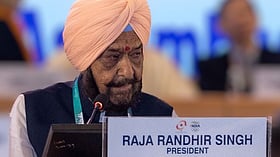
Former Olympian and one of India’s most respected sports administrators, Randhir Singh, passed away on Wednesday at the age of 79, marking the end of a remarkable era in Indian sport.A five-time Olympian and Arjuna Award recipient, Singh was widely credited with shaping India’s modern Olympic movement and playing a key role in strengthening Asia’s sporting governance. He had stepped aside from his role as President of the Olympic Council of Asia (OCA) earlier this year due to health concerns, af
Former Olympian and one of India’s most respected sports administrators, Randhir Singh, passed away on Wednesday at the age of 79, marking the end of a remarkable era in Indian sport.
A five-time Olympian and Arjuna Award recipient, Singh was widely credited with shaping India’s modern Olympic movement and playing a key role in strengthening Asia’s sporting governance. He had stepped aside from his role as President of the Olympic Council of Asia (OCA) earlier this year due to health concerns, after briefly becoming the first Indian to head the continental body. Sheikh Joaan bin Hamad Al Thani later succeeded him.
Born in Patiala on 18 October 1946, Singh came from a distinguished sporting family. His uncle, Yadavindra Singh, played Test cricket for India, while his father, Raja Bhalindra Singh, served as an International Olympic Committee (IOC) member for nearly five decades.
A versatile athlete in his early years, Singh explored golf, swimming, squash and cricket before excelling in shooting — particularly trap and skeet. He represented India in five Olympic Games: Mexico 1968, Munich 1972, Montreal 1976, Moscow 1980 and Los Angeles 1984, having also been a reserve at the 1964 Tokyo Olympics.
His defining sporting achievement came at the 1978 Asian Games, where he won gold in individual trap shooting, becoming the first Indian shooter to achieve the feat at the continental level. He added a bronze and a team silver at the 1982 Asian Games. In recognition of his achievements, he received the Arjuna Award in 1979 and the Maharaja Ranjit Singh Award.
Singh transitioned into administration while still competing, beginning a long and influential career. He served as Honorary Secretary General of the Indian Olympic Association from 1987 to 2012 and was a governing board member of the Sports Authority of India for over two decades. He also played a key role as Vice-Chairman of the Organising Committee for the 2010 Commonwealth Games in Delhi.
At the continental and global level, Singh served as Secretary-General of the Olympic Council of Asia from 1991 to 2015, later becoming its Life Vice-President before being appointed Acting President. He also founded and led the Afro-Asian Games Council between 1998 and 2007.
In international sports governance, Singh was a member of the IOC from 2001 to 2014 and later an honorary member. He contributed to several IOC commissions, including Olympic Games Study, Women and Sport, Sport for All, and Youth Olympic Games coordination. He also served on the ANOC Executive Council and held roles in the World Anti-Doping Agency (WADA).
Throughout his career, Singh was honoured with multiple international recognitions, including the OCA Award of Merit (2005), ANOC Merit Award (2006), and the Olympic Order (Silver) in 2014.
Paying tribute, colleagues in the sporting world remembered him as a “pillar of Indian sport and a bridge between generations of athletes and administrators”, noting his lifelong commitment to strengthening the Olympic movement in India and beyond.
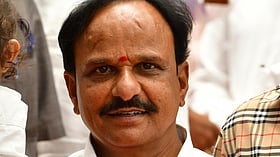
D. Sudhakar, Karnataka’s planning and statistics minister and senior Congress leader, passed away in the early hours of Sunday following a prolonged illness, hospital authorities confirmed. He was 66.Sudhakar breathed his last at Krishna Institute of Medical Sciences in Electronic City, Bengaluru, where he had been undergoing treatment for a severe lung infection for the past two months.In an official medical bulletin, Dr R. Chinnadurai, medical director of the hospital, stated: “Honourable mini
D. Sudhakar, Karnataka’s planning and statistics minister and senior Congress leader, passed away in the early hours of Sunday following a prolonged illness, hospital authorities confirmed. He was 66.
Sudhakar breathed his last at Krishna Institute of Medical Sciences in Electronic City, Bengaluru, where he had been undergoing treatment for a severe lung infection for the past two months.
In an official medical bulletin, Dr R. Chinnadurai, medical director of the hospital, stated: “Honourable minister Mr Sudhakar D, 66 years old, was declared dead at 3.15 am on 10.05.2026 at Krishna Institute of Medical Sciences, Electronic City.”
A prominent face in Karnataka politics, Sudhakar represented the Hiriyur assembly constituency in Chitradurga district and was regarded within the Indian National Congress as an experienced grassroots leader with strong organisational influence.
ನಮ್ಮ ಸರ್ಕಾರದ ಯೋಜನೆ ಮತ್ತು ಸಾಂಖ್ಯಿಕ ಸಚಿವರು, ಹಿರಿಯ ನಾಯಕರು ಆಗಿದ್ದ ಡಿ.ಸುಧಾಕರ್ ಅವರ ಅಕಾಲಿಕ ನಿಧನದಿಂದ ದುಃಖಿತನಾಗಿದ್ದೇನೆ. ಕಳೆದ ಕೆಲವು ದಿನಗಳಿಂದ ಅನಾರೋಗ್ಯ ನಿಮಿತ್ತ ಆಸ್ಪತ್ರೆಗೆ ದಾಖಲಾಗಿ ಚಿಕಿತ್ಸೆ ಪಡೆಯುತ್ತಿದ್ದರು. ಇತ್ತೀಚೆಗೆ ನಾನು ಖುದ್ದು ಆಸ್ಪತ್ರೆಗೆ ಭೇಟಿನೀಡಿ ಸುಧಾಕರ್ ಅವರಿಗೆ ಚಿಕಿತ್ಸೆ ನೀಡುತ್ತಿದ್ದ ವೈದ್ಯರಿಂದ… pic.twitter.com/2OO7VvWLrs
ಅನಾರೋಗ್ಯದಿಂದ ಚಿಕಿತ್ಸೆ ಪಡೆಯುತ್ತಿದ್ದ ನಮ್ಮ ಸಂಪುಟ ಸಹೋದ್ಯೋಗಿ, ನನ್ನ ಆತ್ಮೀಯ ಸ್ನೇಹಿತ ಡಿ. ಸುಧಾಕರ್ ಅವರು ಇಂದು ಕೊನೆಯುಸಿರೆಳೆದ ಸುದ್ದಿ ಅತೀವ ದುಃಖವನ್ನುಂಟು ಮಾಡಿದೆ.
ಹಿರಿಯೂರು ಶಾಸಕರು, ಚಿತ್ರದುರ್ಗ ಜಿಲ್ಲಾ ಉಸ್ತುವಾರಿ ಸಚಿವರು ಹಾಗೂ ರಾಜ್ಯದ ಯೋಜನೆ ಮತ್ತು ಸಾಂಖ್ಯಿಕ ಸಚಿವರಾಗಿದ್ದ ಡಿ. ಸುಧಾಕರ್ ಅವರು ಜನಪರ ಕಾಳಜಿಯುಳ್ಳ… pic.twitter.com/GFngq5BAYt
Chief minister Siddaramaiah expressed deep sorrow over the minister’s demise, recalling his recent visit to the hospital and saying he had hoped Sudhakar would recover.
“Sudhakar was a person with immense concern and commitment towards public service. Such a person should have remained among the people for many more years,” Siddaramaiah said in a post on X.
“Despite the continuous efforts of doctors and the prayers of all of us, Sudhakar has left us today. This is an extremely painful moment,” he added.
Deputy chief minister D.K. Shivakumar also condoled the veteran leader’s death, describing him as a people-centric politician who had rendered exemplary public service throughout his career.
“I pray that God grant eternal peace to D Sudhakar and give strength to his family to bear the grief. Om Shanti,” Shivakumar wrote on X.
Leader of Opposition R. Ashoka too expressed grief over Sudhakar’s passing, joining leaders across party lines in mourning the loss of a senior public representative.
Sudhakar’s death marks a significant loss for Karnataka’s political landscape, particularly in the Old Mysuru and central Karnataka regions where he enjoyed considerable public support and political goodwill.
Jay Daniel, the Emmy-winning executive producer of the hit 1980s and ’90s TV series Roseanne, Moonlighting and Cybil, among others, died Wednesday, May 27, in Los Angeles of a pneumonia-related illness. He was 82. His death was announced by his frequent producing partner Glenn Gordon Caron. The cause of death was reported by Daniel’s wife, […]
Jay Daniel, the Emmy-winning executive producer of the hit 1980s and ’90s TV series Roseanne, Moonlighting and Cybil, among others, died Wednesday, May 27, in Los Angeles of a pneumonia-related illness. He was 82. His death was announced by his frequent producing partner Glenn Gordon Caron. The cause of death was reported by Daniel’s wife, […]

 Login
Login