Normal view

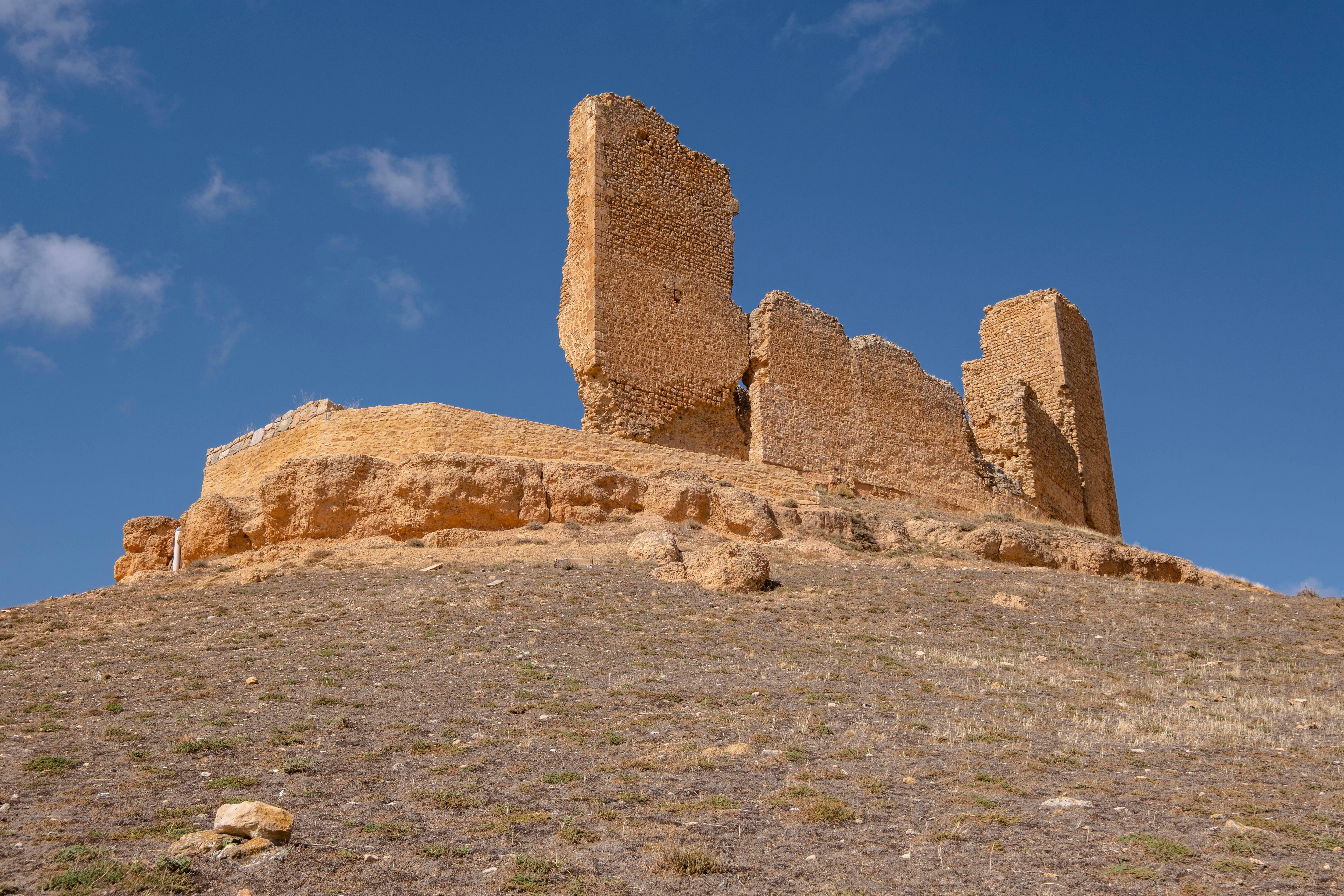
Underinvestment, crumbling walls and rave parties: Spain doesn’t know what to do with its castles

16 May 2026 at 04:00

“A nursery of ruins functioning as a quarry.” Architect Ignacio Gil Crespo adopts the analysis that art critic Juan Antonio Gaya Nuño used in the early 1950s to assess the state of Spanish castles. “When you visit a town where the castle is somewhat ruined, it’s very easy to see fragments of it in the houses,” explains the specialist, a member of the National Defensive Architecture Plan commission. Although the general state of fortresses remains, in general, dilapidated, some things have changed in the last century. “We have 800 or 1,000 years of neglect and 100 years of awareness and restoration,” he clarifies.

Seguir leyendo

© Zoonar GmbH / Alamy Stock Photo (https://www.alamy.com)

Ruins of Montuenga Castle, in Soria.
  • ✇Malay Mail - All
  • As Opec+ meets, Iran war hobbles power to shape oil market
    LONDON, June 7 — Opec+ ministers meet today to weigh higher production quotas in a bid to cap oil prices that have surged since the Iran war effectively choked off Gulf crude shipments.But even if the cartel members vow to ramp up output by thousands of barrels per day, analysts say geopolitical realities mean they probably won’t move the needle on prices.With the crucial Strait of Hormuz shut since US and Israeli attacks on Iran in late February, oil prices have
     

As Opec+ meets, Iran war hobbles power to shape oil market

7 June 2026 at 05:18

Malay Mail

LONDON, June 7 — Opec+ ministers meet today to weigh higher production quotas in a bid to cap oil prices that have surged since the Iran war effectively choked off Gulf crude shipments.

But even if the cartel members vow to ramp up output by thousands of barrels per day, analysts say geopolitical realities mean they probably won’t move the needle on prices.

With the crucial Strait of Hormuz shut since US and Israeli attacks on Iran in late February, oil prices have nearly doubled, igniting inflation pressures worldwide.

Ministers from the 21 member states of Opec+, the main oil producing nations and their allies, are holding their quarterly meeting online.

The group is likely to beef up its production quotas by “188,000 barrels a day”, said Jorge Leon, analyst at Rystad Energy, similar to recent increases.

But in reality, only seven members — Saudi Arabia, Russia, Iraq, Kuwait, Kazakhstan, Algeria and Oman — have the capacity to do so.

Dwindling supply

Tehran’s threats of retaliatory attacks to US and Israeli strikes have virtually blocked the vital Strait of Hormuz, through which roughly a fifth of global oil and gas supplies normally pass.

That is equivalent to about 20 million barrels a day.

But with key Gulf producers shut out of the global market, pledges to raise output in a bid to ease spiralling prices are unlikely to sway traders.

“Any announced production increases or changes to output targets will have limited practical value,” said Ole Hansen, a commodities analyst at Saxo Bank.

“There is very little Opec can do,” he told AFP.

Opec+ itself says daily production has plummeted to just 33 million barrels a day as tankers remain stuck, compared to nearly 43 million before the conflict.

A US blockade on Iranian ports means “it will be even less than that” in reality, said Homayoun Falakshahi, head of crude oil analysis at data firm Kpler.

UAE slams the door

The United Arab Emirates’ recent decision to quit Opec further saps away at the cartel’s influence, given its huge excess production capacity.

And Abu Dhabi has made clear it wants to boost output.

“They don’t want to be dictated to, they want to maximise their revenues,” said Lawrence Haar, a lecturer in finance at the University of Brighton in England.

And the cartel risks seeing other countries follow the UAE’s example.

“If Iraq were to leave, it could mark the end of Opec+,” Falakshahi said.

Saudi Arabia, by far the cartel’s most influential member, “is going to do what it takes to stop anyone else from leaving,” Falakshahi predicted.

That could translate into more flexible output quotas or decreased penalties for any excess production.

But “for now, the compensation framework has effectively become irrelevant due to widespread production shut-ins,” Hansen said.

As a result, the Iran war has largely neutralised the cartel’s stated mission “to secure an efficient, economic and regular supply of petroleum to consumers, and a steady income to producers”.

For Falakshahi, the only factor limiting further oil price spikes at the moment is China, “which is buying less oil than normal” by tapping into its vast strategic reserves. — AFP


  • ✇Antiques and Vintage - flickr
  • Grooved Marble-Topped Round Table Leo Cloma
    Leo Cloma posted a photo: Grooved Marbletop Center Table ca. 1860 Golden narra wood (“Pterocarpus indicus”) White marble top from southern China H: 31 3/4" (81 cm) D: 43 1/2" (110 cm) PROVENANCE Made in Binondo, Manila found in Manila and adjacent provinces The Ultimate Prestige of the Mutli-Grooved Marble-Top Table by AUGUSTO MARCELINO REYES GONZALEZ III It was during the second half of the nineteenth century (1850–99) that every big “bahay-na-bato” in Las Islas Filipinas (Luzon, Visaya
     

Grooved Marble-Topped Round Table

12 June 2026 at 14:39

Leo Cloma posted a photo:

Grooved Marble-Topped Round Table

Grooved Marbletop Center Table

ca. 1860
Golden narra wood (“Pterocarpus indicus”)
White marble top from southern China
H: 31 3/4" (81 cm)
D: 43 1/2" (110 cm)

PROVENANCE
Made in Binondo, Manila found in Manila and adjacent provinces

The Ultimate Prestige of the Mutli-Grooved Marble-Top Table by AUGUSTO MARCELINO REYES GONZALEZ III

It was during the second half of the nineteenth century (1850–99) that every big “bahay-na-bato” in Las Islas Filipinas (Luzon, Visayas, and Mindanao) had two round marbletop tables with tripod bases, which signified the high social status of the homeowners, be they hacenderos (plantation owners), merchants, or both. The standard baluster bases had capitals of either upright acanthus leaves or squashes in the 1860s, and the tripod feet were of ball–and–claw in the 1860s and, later in the 1880s, of alternating C-scrolls. The one with a plain molded marble top was placed in the middle of the “caida”/entrance hall, which was the family living room and the center of everyday life. The much more expensive one with multiple grooves on the sides of the marble top — the more grooves, the more expensive, therefore the richer the owner (according to the esteemed Filipiniana researcher and scholar Martin I Tinio Jr) — was placed in the center of the “sala”/living room, which was the formal reception room for important guests and occasions.

This stately round center table with well–articulated, robust carving features a marble top with three grooves from Southern China. The marble top is supported by a simple “cenefa” apron or round frame reinforced horizontally by two crossbars centered by a plinth set on the two long pegs at the top of the tripod base. The thick baluster base has a capital of upturned acanthus leaves and a ring of egg–and– dart motifs underneath. The tripod feet are adorned with stylized, upturned acanthus leaves punctuated with single catmon flowers and terminate with eccentric, indigenized, ball–and–claw feet that look more like human fingers with nails holding a ball — rather than Oriental dragon claws clutching a jewel or Western eagle talons clutching a pearl, or lion paws. This type of upturned acanthus–leaf capital table base, alternating with the squash capital baluster, as well as the indigenized tripod, ball–and–claw feet were the earliest designs when these tables first became available in the 1860s. That became evident when these kinds of tables were found in the older 1840s–1860s “bahay–na– bato” houses.

There are not many of these Filipino grooved marble- top tables extant. Only a few have passed through the Leon Gallery auctions in the last ten years. Many of the extant ones actually have traceable provenances to the “de buena familia” old Filipino families of Manila and the surrounding provinces. They carry the weight of Filipino history. For example, the Lacson–Araneta witnessed the bold proclamation of the Republica de Negros by General Aniceto Lacson during the Philippine Revolution. The Yaptinchay–Yatco saw the great prosperity of the Sangley community of Biñan, but also the grief and fear of the Mercado and Alonso–Alberto clans, indeed all of Binan and Calamba, when one of their own, Dr Jose Rizal, was executed in December 1896. The Arnedo–Sioco table observed the promising youth of Maximino Paterno, Antonio Paterno, Felix Resurreccion–Hidalgo, Jose Rizal, Juan Luna, et al as they played cards and other games on it with Ateneo Municipal schoolmates Cayetano, Macario, and Eugenio Arnedo during summer vacations at the “La Sulipena” villa in Apalit, Pampanga.

True, there are similar, antique grooved marble-top tables to be found in France, Spain , or England, but none of them have seen momentous events infused into all Filipino material culture.

STARTING BID: ₱ 600,000

Lot 145 of the Leon Gallery's
Spectacular Mid Year Auction 2026
Saturday, June 13, 2026
G/F Eurovilla 1, Rufino corner Legazpi Street, Makati City

For more information and to place an online bid, please see leon-gallery.com and leonexchange.com

  • ✇Antiques and Vintage - flickr
  • Fernando Amorsolo: Baguio Trail Leo Cloma
    Leo Cloma posted a photo: FERNANDO AMORSOLO (1892 - 1972) Baguio Trail signed and dated 1940 (lower left) oil on canvas 18" x 23" (46 cm x 58 cm) PROVENANCE Acquired directly from the artist Indeed, Baguio Trail showcases another remarkable feature of Fernando Amorsolo’s oeuvre: the painstakingly detailed foreground, where every element receives meticulous attention. Simultaneously, the background appears shrouded in a thick mist, with each feature blending with the shadows. With his mast
     

Fernando Amorsolo: Baguio Trail

9 June 2026 at 15:18

Leo Cloma posted a photo:

Fernando Amorsolo: Baguio Trail

FERNANDO AMORSOLO (1892 - 1972)
Baguio Trail

signed and dated 1940 (lower left)
oil on canvas
18" x 23" (46 cm x 58 cm)

PROVENANCE
Acquired directly from the artist

Indeed, Baguio Trail showcases another remarkable feature of Fernando Amorsolo’s oeuvre: the painstakingly detailed foreground, where every element receives meticulous attention. Simultaneously, the background appears shrouded in a thick mist, with each feature blending with the shadows. With his masterful strokes and exemplary use of color, this piece breathes with life. The distinct mountain air permeates the scene, almost palpable and perceptible to viewers, as if they were looking out a window.

Amorsolo’s masterpieces capture the light and colors he observed during his travels to far-flung provinces. Witnessing the grandeur of the Philippine landscape with his own eyes enabled him to capture its hues and tonal variations with precision in his canvases, as well as to create authentic representations of Philippine topography, people, and daily life. Moreover, his deep understanding of color placement, shadows, and highlights further enhances the realism of his work.

The Cordilleras, especially Baguio City, served as both a favorite retreat and a frequent subject for Amorsolo. The mountain scenery, often depicted in his paintings, not only showcases its natural beauty but also provides a picturesque backdrop for the hardworking rural folk he often portrayed, emphasizing the harmony between nature and Filipino life.

This 1940 piece, painted a few years before the Japanese occupation, undeniably captured the essence of a peaceful Philippines, a time of simplicity and grace. The maestro depicted a group of people, perhaps a family, on a mountain trek. They were carrying big baskets containing their belongings–or products to sell–as they traversed the rocky and steep mountainside. The sun is high up in the sky, but the altitude and the trees around neutralize the heat.

The rise of modernism posed as one of the greatest threats to Amorsolo’s career. As many artists shifted to abstraction and abandoned the Amorsolo school of art, collectors’ tastes also changed, and his market gradually declined. Subsequently, many people criticized and made harsh remarks about him and his work. Still, the maestro persisted in his artmaking and stayed true to his light and palette for as long as he could hold a paintbrush, a testament to his perennial artistic prowess and dedication to the arts. (Jessica Magno)

STARTING BID: ₱ 4,600,000

Lot 105 of the Leon Gallery's
Spectacular Mid Year Auction 2026
Saturday, June 13, 2026
G/F Eurovilla 1, Rufino corner Legazpi Street, Makati City

For more information and to place an online bid, please see leon-gallery.com and leonexchange.com

❌
Subscriptions