 Login
LoginTouring D.C.
7 June 2026 at 00:13


JillyBeanSSF posted a photo:

Sindy: "Every Girl's Best Friend!" UK Magazine Issue No. 25 - October 4 (Marvel Comics LTD.) 1986


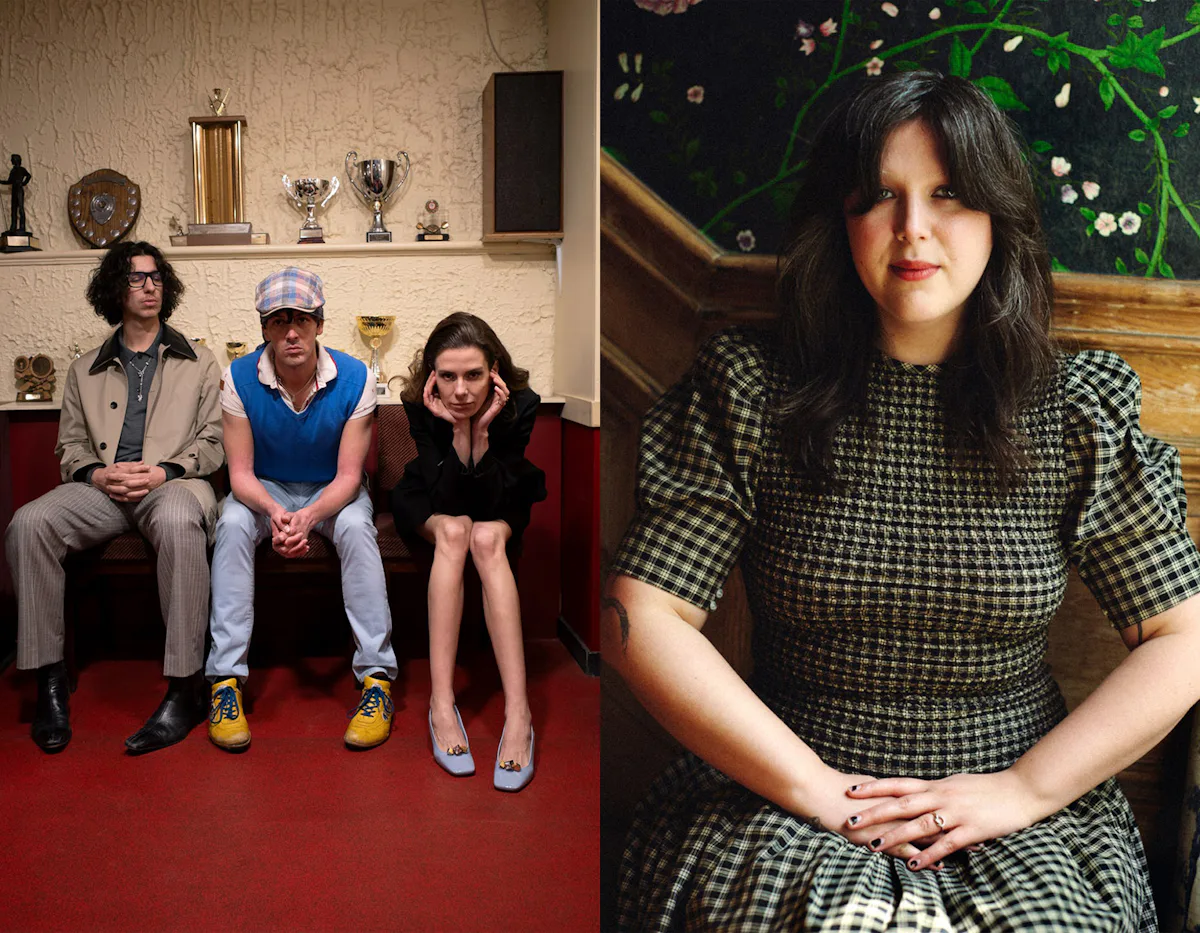
At first glance, indie rock in recent times appeared to be on life support.
Fan pages for the AI folk-rock band the Velvet Sundown flooded TikTok. Recommendation engines churned out playlists for everything from “helping you pass a kidney stone” to “watching a commercial for an allergy medicine.” The last true indie artist to win the Grammy for album of the year was Arcade Fire, for The Suburbs, in 2011. But recently, a cohort of indie acts—from singer-songwriters Lucy Dacus and Nate Amos to bands like Momma and Chanel Beads—has been presenting an improbably fresh picture of music’s left-of-center scene, one that evokes the generational breakthrough of ’00s bands like the Strokes, Yeah Yeah Yeahs, and Interpol.
“Indie” is a mercurial term, perhaps best understood as music that exists slightly outside the mainstream and embodies peculiarity over polish. Even the most committed purists have lost count of the genre’s revivals. Since punk, indie has mutated from the DIY drama of Buzzcocks and Hüsker Dü to the alt-frequencies of Sonic Youth and Pavement to the freak-folk flamboyance of Animal Collective and Joanna Newsom.
“Every so often, a generation of bands discovers the Velvet Underground, Television, Suicide, and Talking Heads and tries to write their own version,” said Ronen Givony, author of Us v. Them: The Age of Indie Music and a Decade in New York (2004–2014). What makes this cycle different is that the infrastructure that once sustained independence has been replaced by paywalls and playlists. It’s a far cry from the early-aughts peak, when file-sharing spread the music, blogs boosted scrappy bands, and corporations like Red Bull underwrote shows. Even Jay-Z and Beyoncé caught Grizzly Bear at the Williamsburg Waterfront. “For an indie artist to break through now,” Givony said, “they’re almost doing it with one arm tied behind their back.”
If attention is the scarcest resource in the streaming economy, Lucy Dacus has stood out by doing less. “We’re not meant to understand everything all at once,” she said. “You can only frame one idea.” Forever Is a Feeling, which came out last March, is only her fourth album in 10 years. Boygenius—her supergroup with Phoebe Bridgers and Julien Baker—dropped their debut album in 2023, toured arenas, and walked away as a Grammy-winning band. “I’m making art selfishly, to understand myself,” Dacus said. “If people don’t like it, that’s their business. If they do, that’s also their business.”
At a recent set in the National Gallery of Ireland, she sang “Modigliani”—a love song about seeing a partner beyond their persona, which Dacus has said is about Baker. Deliberate, with a touch of tremble, her voice echoed through the empty halls, allowing the lyric “You will never be famous to me” to feel romantic, precisely because it was raw. “I don’t know if I would succeed doing it a different way,” she said.
To audiences, that reserve reads as a guarantee that what you’re getting is real because she made it for herself. “I’m not gonna pander to my fans,” she said. “That would feel like a death sentence. I feel sweetly toward my fans. We all chose to be in the same room. Them showing up is such a gift. I’m not entitled to their attention.”
Nate Amos operates with similar self-awareness, albeit with the obsessive tinkering of a mad scientist. Water From Your Eyes, his performance art–rock project with Rachel Brown, has opened for Interpol in Mexico City. With his solo project, This Is Lorelei, Amos endlessly remixes and revisits his extensive back catalog. “The goal is for a song to exist outside of any one version of itself,” he said. His 2024 album, Box for Buddy, Box for Star, mixes irony and openness in songs that land like a gut punch. The compositions proved sturdy enough to function like standards. Alt-country crooner MJ Lenderman transformed one hyperpop-punk track into a retro-country dirge. Geese frontman Cameron Winter performed a grand piano version of “Where’s Your Love Now” on his solo tour. A super deluxe edition of the album, released in April, features guest takes on Amos’s Bandcamp bedroom pop by 10 different acts—among them Fantasy of a Broken Heart and Jeff Tweedy, Power Snatch, Waxahatchee, and Momma. “There’s a secondary gratification when a song survives surgery,” Amos said.
If Dacus, 31, and Amos, 35, represent indie’s new sincerity, Momma might just be the genre’s poppiest architects. On a recent afternoon, singer-guitarists Etta Friedman and Allegra Weingarten, a pair of late-20-somethings who met in high school outside of Los Angeles, sat at the bar of Forgtmenot, a neighborhood pub in New York’s Chinatown. Weingarten’s cherry-dyed hair matched the spicy watermelon margaritas they had ordered. Behind them, the walls were plastered with vintage concert flyers and other downtown ephemera.
The band, which also features bassist and producer Aron Kobayashi Ritch and drummer Preston Fulks, is often grouped with the gritty ’90s sounds of Veruca Salt or Liz Phair. But Weingarten and Friedman also acknowledge a more mainstream influence: the mid-2000s power-pop-punk of Avril Lavigne, Ashlee Simpson, Hilary Duff, and Disney-era Miley Cyrus. “Those Hannah Montana songs are expertly crafted,” Weingarten said. “There’s a real skill to writing something catchy and timeless.”
That prowess is the secret sauce of Welcome to My Blue Sky, Momma’s fourth album. By beefing up the pop-punk gloss with fuzzy neo-grunge textures, Momma turns guitar-driven escapism into catchy earworms. The New York Times declared the lead single, “I Want You (Fever),” one of the best songs of 2025, and said it was the shoegaze answer to Robyn’s “Call Your Girlfriend.”
The band had just returned from a run through Japan and Australia. In Tokyo, a fan showed up at their hotel to deliver a gift. Friedman recalled that in Sydney crowds went “so fucking hard” for the album’s scream-along hooks: “Australia feels like the farthest place in the world, so to have a bunch of people be that hyped felt crazy.” During a night off at a Sydney karaoke bar, Friedman and Weingarten fronted a live band to perform Tenacious D’s “Tribute,” a song about a demon who threatens to eat a band’s soul unless they play the best song in the world.
These days, making music can feel like a similar Faustian bargain. “We’re not impressed with indie rock right now,” Weingarten said. “We find it to be very algorithmic.” She illustrated the point with an anecdote about hearing Momma play on “some female indie rock” Pandora station at a hair salon. “At first I was like, Woo, okay, fun!” she said. But as the playlist droned on, all the songs sounded the same. She promised herself right then and there that “whatever we do, whether it’s well received or poorly received, I want it to be controversial,” even if that causes “people to hate the next thing we do.” Friedman agreed: “You can’t keep feeding the formula. Maybe we need to just do whatever the fuck we want.”
In a landscape that rewards predictability, other artists are also keeping rock’s rebel spirit alive through disruption. The London trio Bar Italia—Nina Cristante, Sam Fenton, and Jezmi Tarik Fehmi—trade linear storytelling for voyeuristic snapshots. Testing an outside producer for their upcoming album is an intentional act of instability. “We’ve made three or four albums in a certain way,” Fenton said. “It’s almost more exciting that it could go horribly wrong.” Imperfection also guides Chanel Beads, the project of Shane Lavers. On the band’s debut album, Your Day Will Come, digital distortions and archival sound collages suggest subversive counter-programming to an era in which new music rapidly disappears from the Spotify Top 50. “It’s not really a debate or decision when making music,” Lavers said. “It’s more like planting something, and whatever fruit grows is what you have to eat.”
The Philadelphia quartet Mannequin Pussy—singer Marisa “Missy” Dabice, synth guitarist Maxine Steen, drummer Kaleen Reading, and bassist Colins “Bear” Regisford—have had to literally fight not to let streaming platforms define their existence. Searching their name on TikTok once yielded no results, but when they typed “Mannequin Cock,” their music appeared. The platform wasn’t policing obscenity, they concluded—it was policing femininity. Asking Amazon’s Alexa to play Mannequin Pussy caused the device to shut off entirely. Eventually, the tech-bro powers that be backed down and algorithms were reprogrammed so that, as Dabice put it, “the only type of ‘pussy’ that can be searched on TikTok is ‘Mannequin.’ ”
Their lyrics also flout conventions: “Not a single motherfucker who has tried to lock me up / Could get the collar round my neck or find one that’s big enough,” Dabice growls on the track “Loud Bark,” from the band’s most recent release, I Got Heaven. Pitchfork declared the record a “mouthy, messy” masterpiece. Mannequin Pussy didn’t adapt to the streaming era so much as win it over on their own terms. Like the rest of indie’s new guard, they’re making the industry accommodate them, rather than the other way around.
Mannequin Pussy and Lucy Dacus: Hair by Gregg Lennon Jr. for Oribe at The Only Agency; makeup by Nick Lennon for Prada Beauty at The Only Agency; production: Suki Smith Studios; producer: Julia Steeger; fashion assistants: Anabelle Hernández, Eric Jackson Chen; hair assistant: Emily Blair; makeup assistant: Luna Vela; tailor: Jackie Martirosyan at Susie’s Custom Designs.
Bar Italia: Hair by Kei Terada for Ouai at Julian Watson Agency; makeup by Erin Green for VIOLETTE FR at Artlist Paris; photo assistant: Rory Cole; hair assistant: Takumi Horiwaki; makeup assistant: Hanna Fee Friedrich.
Chanel Beads: Grooming by Ginger Leigh Ryan for Make Up for Ever; photo assistant: Diego Salcedo; fashion assistant: Isabel Choi; special thanks to Flux Studios.
This Is Lorelei: Grooming by Kazu Katahira for Oribe at Forward Artists; photo assistant: Lux Nguyen; fashion assistant: Isabel Choi; grooming assistant: Rio Kinoshita.
Momma: Hair by Ginger Leigh Ryan for Bumble and Bumble; makeup by Mical Klip for Sofie Pavitt Skincare; photo assistant: Huy Vu; fashion assistants: Isabel Choi, Sofia Prochilo; makeup assistant: Mason Harper; special thanks to Forgtmenot.
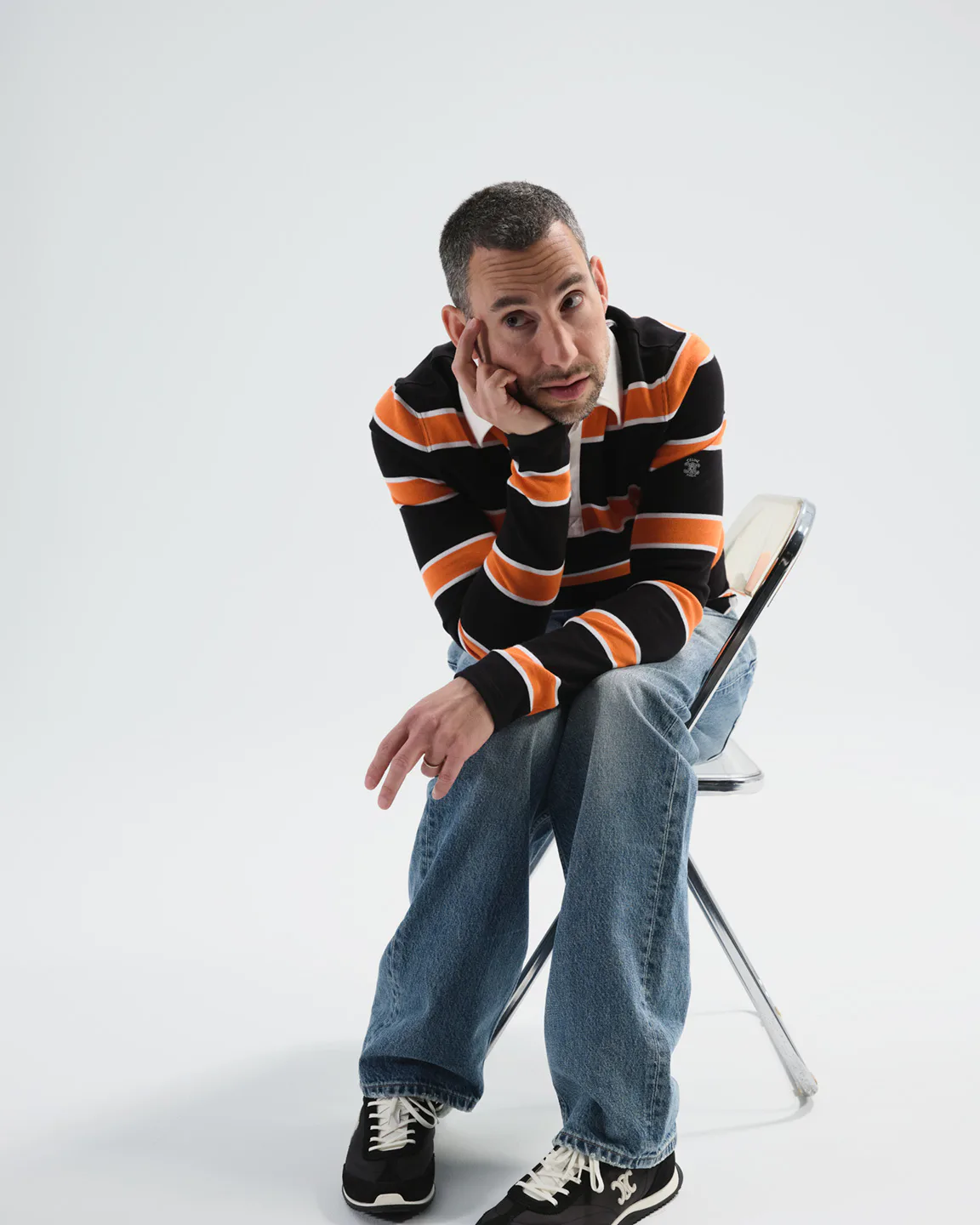
After many years of playing in the indie music scene as the lead guitarist of the band Fun., you had your breakout moment in 2011 with the song “We Are Young.” Thirteen Grammys later, you’re now associated with the sound of a generation, producing and writing for artists like Taylor Swift, Lana Del Rey, and Kendrick Lamar. Do you ever think about your influence on culture?
It’s really hard to think about. I don’t want to be a part of culture—I want to have my own culture. I want to move culture in the directions that I feel necessary. It’s what I’ve done since I was 15. I say, “This is what I think is the shit,” and then I go do that.
This month, you’re releasing Everyone for Ten Minutes, your fifth studio album with Bleachers, the rock band you formed in 2013. What’s the title referencing?
The whole world right now is this endless gallery of people talking who have no knowledge or intentionality. I was sending myself a song when I saw that “Everyone for 10 Minutes” feature on AirDrop, and I thought, How interesting, the machine knows there have to be protections in place for who you let in. The album is about love and loss, but the lens this time is things I really want to leave behind.
Your song “Dirty Wedding Dress,” about your and Margaret Qualley’s wedding, touches on this.
The lyric is “Only my people can see me / Only my people come in.” At our wedding, there were people taking pictures outside the venue, and a big scene, but we closed the door. We’re all gonna live, we’re all gonna die. I don’t want to spend my time on the temporary thoughts or feelings of a dissolving culture.
Why do you think culture is dissolving?
The biggest lie of our time is that community exists on the Internet. I went to a very typical high school in New Jersey, where it looked like Abercrombie had vomited on the place. Freshman year, I remember seeing this one guy, Pete, wearing a shirt of a band I liked, and I gravitated toward him. We would go to shows and meet up with other people who felt like us. That’s how I see the world, and that’s how I see being an artist.
Loneliness is a theme that runs through your music, from albums you’ve produced, like Swift’s Folklore and Midnights, to your own work in Bleachers.
I’m always in touch with the lonely part of myself. The lonely are a beautiful group of people. We get some of our greatest art and wisdom from the lonely.
The first two songs on the album, “Sideways” and “The Van,” are about your memories of being 15. Why start there?
A lot of people got to know me publicly in my late 20s, and that’s a funny time in your life. When you get known for different things, you can feel really seen, but you can also feel like other parts of yourself get erased. That’s where I got the line “Shouted hello bastards / As we left our ancestors.” For my whole lineage—an Eastern European, Holocaust-surviving immigrant story—the theme was just to get safe, get a house, earn a wage, have a family. But at 15, I left [that path]. You make decisions you don’t even think twice about, but they set you on a complicated course.
You described working on Kendrick Lamar’s latest album, GNX, as being part of a “secret society.”
You know you’re doing the right thing when you’re supposed to be somewhere at 2, and you get there at 1:30. There was nothing we made—and we made a lot of music—that didn’t completely touch my heart. When I’m working with people, I get really obsessive about where they’re at, what it’s like to be them, and then trying to take all that and put it into something that you can hit play on. I don’t think in terms of genre. Great is great.
You and Lana Del Rey started working together in 2018 and have made three albums together. How does a collaboration stay alive for so long?
I never expect to work with people over and over. You just get called back to each other or not. With me and her, it’s just “Where are you? Maybe let’s catch a day.” We caught three days in New Orleans randomly, and that’s when we did [her single] “White Feather Hawk Tail Deer Hunter.”
Where is pop music heading?
I think pop music will become way more organic, and anything that is very algorithmic will probably get swallowed by AI—honestly, as it should. What survives will be a more direct expression of hearing or feeling someone in the room. People are screaming and crying for that because they can’t take another second of their humanity being reduced to something getting their attention.
Photo assistants: Jeremiah Cumberbatch, Ricardo Lara; digital technician: David Gannon; fashion assistant: Juje Hsiung.


