 Login
Login




Manuel Gual posted a photo:

The Quiet Discipline of Japanese Woodworking: A Traditional Joinery Workshop
Description
Inside a serene Japanese woodworking studio, the images reveal the slow, precise, and deeply tactile world of traditional cabinetmaking. Soft natural light filters through shoji screens, illuminating aged wooden workbenches, hand planes, chisels, saws, measuring tools, stacked timber, polished drawers, iron hardware, and carefully assembled joinery. The atmosphere is calm and contemplative, shaped by patience, repetition, and respect for material.
The series follows the full rhythm of artisanal creation: selecting and preparing raw boards, drawing measured plans by hand, sharpening blades on a wet stone, cutting and carving joints, planing long ribbons of wood from a board, assembling drawers and cabinets, fitting metal handles, brushing lacquer, polishing surfaces, and finally presenting finished tansu-style furniture in a quiet tatami room. Every scene emphasizes craftsmanship over speed, touch over machinery, and inherited knowledge over industrial production.
The visual language combines documentary realism with a refined cinematic sensibility. Warm wood tones, indigo work garments, soft diffused daylight, shallow depth of field, sawdust, wood grain, worn tools, and traditional Japanese interiors create an intimate portrait of a craft that feels timeless. The images celebrate not only furniture making, but also the philosophy behind it: restraint, precision, durability, balance, and beauty found in useful objects.
This collection is ideal for themes related to Japanese culture, traditional carpentry, handmade furniture, heritage crafts, sustainable design, woodworking, wabi sabi aesthetics, slow craftsmanship, interior design, and the quiet dignity of manual labor.
The images have been generated by Artificial Intelligence.



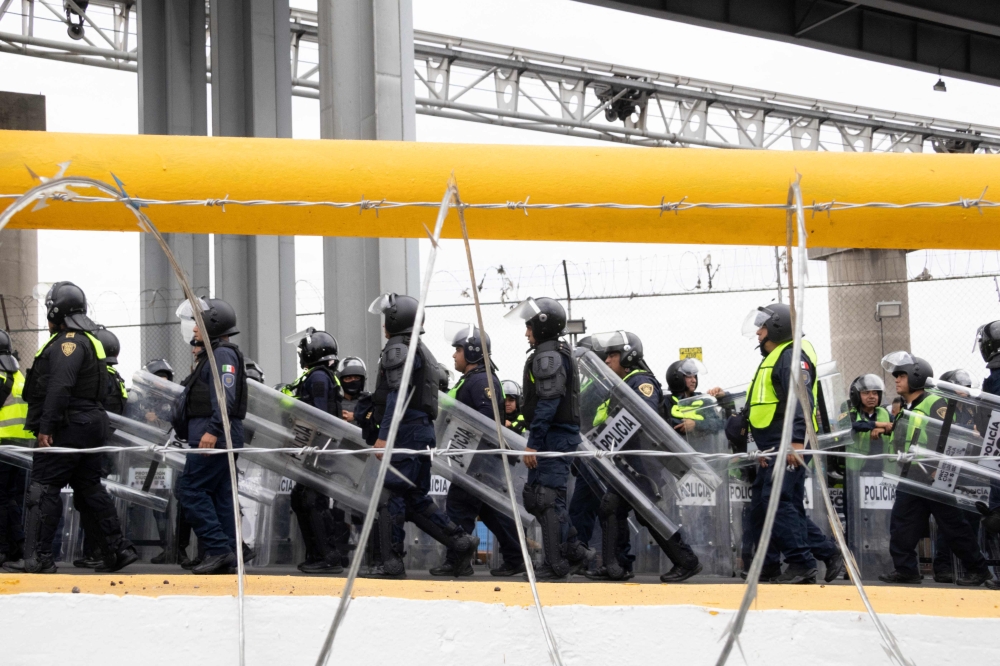
MORELIA, June 11 — Five Mexican police officers were shot dead and five others wounded yesterday in violence-hit Michoacan state on the eve of the World Cup opener in Mexico City, local authorities said.
The officers were attacked by unknown assailants in an Indigenous region of the western state, which is plagued by cartel violence, the state government reported.
The pickup truck they were traveling in was riddled with bullet holes, according to images obtained by AFP.
The attack took place in the municipality of Nahuatzen, a region inhabited by the Purepecha people where the powerful Jalisco New Jalisco New Generation Cartel (CJNG) operates.
In May, the brazen murder of a small-city mayor, allegedly by the CJNG, prompted angry protests targeting symbols of the state, which many residents accused of failing to combat spiralling violence.
Michoacan’s capital Morelia is situated around 300 kilometers from both Mexico City and fellow World Cup host city Guadalajara.
The state’s security department said police were searching for the perpetrators of Wednesday’s attack.
Mexico’s government insists that there is no security threat to visiting World Cup fans.
Mexico is co-hosting the tournament with Canada and the United States. — AFP

NEW YORK, June 11 — The World Cup isn’t only about football: Fifa is drawing on music stars to elevate the competition into a global cultural event, broadening its reach beyond sports fans.
From world-famous artists performing at the opening ceremonies to an unprecedented Super Bowl-style halftime show during the final, here is what to expect.
A musical opening
The festivities begin on Wednesday, on the eve of the tournament, with concerts in Mexico City, Toronto, and Los Angeles that combine international superstars and major regional figures.
Big names include American pop singer Katy Perry, Canadian artist Alanis Morissette, US rapper Future, Brazilian urban pop figure Anitta, Thai K-pop icon Lisa, and Nigerian afrobeats star Rema.
They will perform alongside artists with strong home country followings, such as Mexican institution Los Angeles Azules Bollywood singer Nora Fatehi, and French rapper Vegedream.
“There’s a concerted effort around the Fifa World Cup and their marketing team to leverage music as a through line to connect different audiences from around the world,” said Clayton Durant, a music industry entrepreneur and New York University professor.
This initiative is not new: in 2021, the organisation launched its Fifa Sound programme, describing it as “a strategy to connect with audiences worldwide through shared passions of football and music.”
Grand finale
The most striking event will be the halftime of the final, on July 19 at the MetLife Stadium in New Jersey.
For the first time, the show will feature a concert with three global headliners: American singer Madonna, Colombian star Shakira, and South Korean group BTS.
That lineup was conceived in the “spirit of trying to unite the whole world,” said Hugh Evans, head of the NGO Global Citizen, which is producing the show.
Imagined by Chris Martin, the frontman of Coldplay, the halftime performance is designed to highlight “the best of humanity” and “all the things that unite us,” Evans told AFP.
He said the amount spent on producing the event is comparable to the Super Bowl halftime show — the final of the American football championship. That is somewhere between US$10 and US$20 million (RM40 and RM80 million), according to sources.
The artists themselves will be performing for free.
The show is intended to support an education fund that Fifa — regularly accused of putting financial profits first — has set up with Global Citizen.
Hit single?
For the official World Cup song, Fifa turned to a safe bet: Shakira. She was behind Waka Waka, the 2010 World Cup anthem that became a global sensation.
Her new track Dai Dai, performed with Nigerian singer Burna Boy, blends Latin pop and afrobeats.
It appears on an official 18-track album that includes the electro group Major Lazer, reggaeton artist Daddy Yankee, and the Rolling Stones — once again heavily mixing genres.
Artist exposure
The artists featured in these globally broadcast concerts stand to gain a great deal in visibility.
Durant said those performing will see “fans who have maybe never heard of them and really start to gain a ton of new attention and fandom and consumption on their music and their intellectual property.”
The World Cup also creates opportunities for more seasoned musicians like Madonna, who at 67 has not had a major success since Confessions on a Dance Floor in 2005.
The July 19 concert represents a chance for her to rekindle the spark during the promotion of her new album Confessions II, scheduled for release on July 3. — AFP
Manuel Gual posted a photo:

The Quiet Discipline of Japanese Woodworking: A Traditional Joinery Workshop
Description
Inside a serene Japanese woodworking studio, the images reveal the slow, precise, and deeply tactile world of traditional cabinetmaking. Soft natural light filters through shoji screens, illuminating aged wooden workbenches, hand planes, chisels, saws, measuring tools, stacked timber, polished drawers, iron hardware, and carefully assembled joinery. The atmosphere is calm and contemplative, shaped by patience, repetition, and respect for material.
The series follows the full rhythm of artisanal creation: selecting and preparing raw boards, drawing measured plans by hand, sharpening blades on a wet stone, cutting and carving joints, planing long ribbons of wood from a board, assembling drawers and cabinets, fitting metal handles, brushing lacquer, polishing surfaces, and finally presenting finished tansu-style furniture in a quiet tatami room. Every scene emphasizes craftsmanship over speed, touch over machinery, and inherited knowledge over industrial production.
The visual language combines documentary realism with a refined cinematic sensibility. Warm wood tones, indigo work garments, soft diffused daylight, shallow depth of field, sawdust, wood grain, worn tools, and traditional Japanese interiors create an intimate portrait of a craft that feels timeless. The images celebrate not only furniture making, but also the philosophy behind it: restraint, precision, durability, balance, and beauty found in useful objects.
This collection is ideal for themes related to Japanese culture, traditional carpentry, handmade furniture, heritage crafts, sustainable design, woodworking, wabi sabi aesthetics, slow craftsmanship, interior design, and the quiet dignity of manual labor.
The images have been generated by Artificial Intelligence.


Manuel Gual posted a photo:

The Quiet Discipline of Japanese Woodworking: A Traditional Joinery Workshop
Description
Inside a serene Japanese woodworking studio, the images reveal the slow, precise, and deeply tactile world of traditional cabinetmaking. Soft natural light filters through shoji screens, illuminating aged wooden workbenches, hand planes, chisels, saws, measuring tools, stacked timber, polished drawers, iron hardware, and carefully assembled joinery. The atmosphere is calm and contemplative, shaped by patience, repetition, and respect for material.
The series follows the full rhythm of artisanal creation: selecting and preparing raw boards, drawing measured plans by hand, sharpening blades on a wet stone, cutting and carving joints, planing long ribbons of wood from a board, assembling drawers and cabinets, fitting metal handles, brushing lacquer, polishing surfaces, and finally presenting finished tansu-style furniture in a quiet tatami room. Every scene emphasizes craftsmanship over speed, touch over machinery, and inherited knowledge over industrial production.
The visual language combines documentary realism with a refined cinematic sensibility. Warm wood tones, indigo work garments, soft diffused daylight, shallow depth of field, sawdust, wood grain, worn tools, and traditional Japanese interiors create an intimate portrait of a craft that feels timeless. The images celebrate not only furniture making, but also the philosophy behind it: restraint, precision, durability, balance, and beauty found in useful objects.
This collection is ideal for themes related to Japanese culture, traditional carpentry, handmade furniture, heritage crafts, sustainable design, woodworking, wabi sabi aesthetics, slow craftsmanship, interior design, and the quiet dignity of manual labor.
The images have been generated by Artificial Intelligence.

