Exclusive: Greater Manchester mayor ‘serious’ about taking over ‘essentials of life’ if he becomes PM, a move critics say could cost taxpayer billions
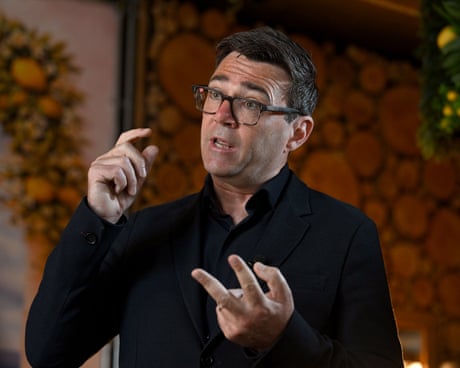
A decade-long project to bring water and energy into public control will lie at the heart of Andy Burnham’s agenda should he become prime minister, according to sources close to the Greater Manchester mayor.
Several close allies of Burnham have said he wants to take over broad swathes of UK utilities in an effort to improve performance and potentially reduce bills for consumers.
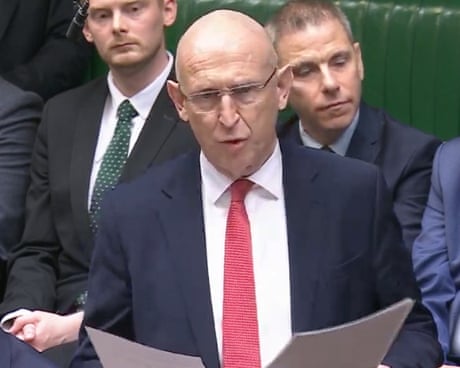
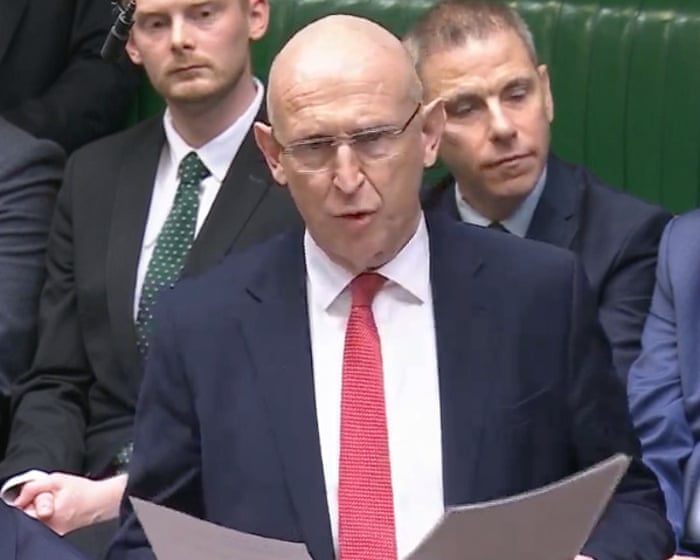
Ex-defence secretary John Healey and ex-defence minister Al Carns have given resignation statements to MPs
Speaking to reporters at the G7, Keir Starmer also defended the defence investment plan (DIP) draft that led to John Healey’s resignation as defence secretary last week. Starmer confirmed that Dan Jarvis, the new defence secretary, is getting some input before the publication of the DIP in its final version.
Starmer said:
The position on investment in defence is firstly that we increased last year defence spending from 2.3% to 2.6%, that’s the biggest increase since the 1980s, and that means £270bn will be spent this parliament on defence.
On top of that [the] defence investment plan which obviously gives us capability for the future. We will put even more money in relation to that. I’ve been really clear that’s required difficult decisions, I have taken the decision to reallocate money from other departments.
The words of successful entrepreneurs carry extraordinary weight. They've walked the path of innovation, faced countless challenges, and emerged as leaders who shape our global economy. This collection brings you the most recent and widely-cited quotes from 25 of today's most influential living entrepreneurs, offering wisdom to fuel your own journey toward success.
1. "If I were a student today, irrespective of whether it's for math or science or chemistry or biology—doesn't matter what field of science I'm going into or what profession—I'm going to ask myself, 'How can I use AI to do my job better?'" —Jensen Huang, NVIDIA CEO
Context: Speaking in the "Huge Conversations" show, Huang emphasized the critical importance of learning to work with AI tools early in one's career. As the leader of the company powering the AI revolution, his advice reflects the reality that AI literacy will be essential for future success.
2. "There is the possibility in the next three to five years that one of these techniques would get enough true logical Qubits to solve some very tough problems." —Bill Gates, Microsoft Co-founder
Context: Gates offered an optimistic timeline for quantum computing breakthrough during a Yahoo Finance interview, demonstrating his continued forward-thinking approach to transformative technologies even decades after founding Microsoft.
3. "If you want to be autonomous, start your own company." —Brian Chesky, Airbnb CEO
Context: Chesky challenged conventional management wisdom about employee autonomy, advocating for his "founder mode" approach to leadership that emphasizes being deeply involved in company details while empowering teams.
4. "Our bet is sort of that in the next year probably...maybe half the development is going to be done by AI, as opposed to people, and then that will just kind of increase from there." —Mark Zuckerberg, Meta CEO
Context: At LlamaCon in April 2025, Zuckerberg shared Meta's aggressive timeline for AI-powered development, illustrating how even software creation itself is being revolutionized by artificial intelligence.
5. "Let your joy be in your journey—not in some distant goal." —Tim Cook, Apple CEO
Context: Cook's philosophy emphasizes the importance of finding fulfillment in the process of building and creating, rather than fixating solely on end results. This mindset has helped Apple maintain its culture of excellence while pursuing ambitious innovations.
6. "For me, it matters that we drive technology as an equalizing force, as an enabler for everyone around the world." —Sundar Pichai, Google/Alphabet CEO
Context: Pichai's vision for technology's role in society reflects Google's mission to organize the world's information and make it universally accessible, emphasizing technology's potential to level playing fields globally.
7. "The cloud is still in its early stages, and we're going to see decades of growth ahead of us." —Andy Jassy, Amazon CEO
Context: Jassy continues to champion cloud computing's transformative potential, drawing from his experience building AWS from the ground up into one of the world's most valuable business divisions.
8. "Stone Age. Bronze Age. Iron Age. We define entire epics of humanity by the technology they use." —Reed Hastings, Netflix Co-founder
Context: Hastings' perspective on technological eras reflects his understanding of how fundamental shifts in technology reshape entire civilizations—insight that guided Netflix's transformation from DVD-by-mail to streaming giant.
9. "The future of work is not about replacing humans with technology, but about augmenting human capabilities with technology." —Marc Benioff, Salesforce CEO
Context: Benioff's vision for AI and automation emphasizes enhancement rather than replacement, reflecting Salesforce's approach to building tools that empower rather than eliminate human workers.
10. "I'd say maybe 20%, 30% of the code that is inside of our repos today and some of our projects are probably all written by software." —Satya Nadella, Microsoft CEO
Context: Speaking at Meta's LlamaCon in April 2025, Nadella revealed how deeply AI has penetrated Microsoft's development processes, showcasing the practical transformation happening in tech companies today.
11. "The key is not to predict the future, but to be prepared for it." —Daniel Ek, Spotify CEO
Context: Ek's approach to innovation emphasizes adaptability over prediction, a strategy that has helped Spotify navigate the complex music industry and expand globally.
12. "Infrastructure is about removing friction. The best infrastructure is invisible." —Patrick Collison, Stripe CEO
Context: Collison's philosophy on building payment systems reflects Stripe's approach to creating seamless financial infrastructure that enables rather than complicates business operations.
13. "The biggest opportunities often come disguised as impossible problems." —Drew Houston, Dropbox CEO
Context: Houston's perspective on problem-solving reflects the entrepreneurial mindset that turned file synchronization challenges into a multi-billion-dollar business opportunity.
14. "Culture is not about what you say, it's about what you do repeatedly." —Dara Khosrowshahi, Uber CEO
Context: Khosrowshahi's focus on cultural transformation has been central to Uber's evolution from a controversial startup to a more mature public company focused on sustainable growth.
15. "The most important thing is to try and inspire people so that they can be great at whatever they want to do." —Susan Wojcicki, Former YouTube CEO
Context: Wojcicki's leadership philosophy emphasizes empowerment and inspiration, principles that guided YouTube's growth into the world's largest video platform.
16. "Starting a company is like jumping off a cliff and assembling a plane on the way down." —Reid Hoffman, LinkedIn Co-founder
Context: Hoffman's vivid metaphor captures the essence of entrepreneurship—taking bold action despite uncertainty and building solutions while navigating challenges in real-time.
17. "Make every detail perfect and limit the number of details to perfect." —Jack Dorsey, Former Twitter CEO
Context: Dorsey's design philosophy emphasizes the power of simplicity and focus, principles that have guided his approach to building both Twitter and Square.
18. "We think, mistakenly, that success is the result of the amount of time we put in at work, instead of the quality of time we put in." —Arianna Huffington, Thrive Global CEO
Context: Huffington's advocacy for well-being and work-life balance challenges traditional notions of entrepreneurial success, promoting sustainable approaches to achievement.
19. "I truly believe that we have to change the way we think about how we treat people, how we love people, and how we lift people up." —Whitney Wolfe Herd, Bumble Founder
Context: Wolfe Herd's philosophy extends beyond business to social impact, reflecting Bumble's mission to create healthier relationship dynamics both in dating and professional networking.
20. "The best way to predict the future is to build it, one customer at a time." —Tony Xu, DoorDash CEO
Context: Xu's customer-centric approach has driven DoorDash's growth from a Stanford dorm room idea to the leading food delivery platform in the United States.
21. "Data is the new oil, but insights are the new gold." —Ryan Smith, Qualtrics CEO
Context: Smith's perspective on data analytics emphasizes that raw information is less valuable than the actionable insights derived from it—a principle at the heart of Qualtrics' experience management platform.
22. "The whole world should be able to design. We want to democratize design and make it accessible to everyone." —Melanie Perkins, Canva CEO
Context: Perkins' vision has driven Canva's mission to simplify graphic design, making professional-quality design tools accessible to millions of non-designers worldwide.
23. "The best software is the software that helps people do things they couldn't do before." —Stewart Butterfield, Slack Co-founder
Context: Butterfield's philosophy on product development emphasizes enablement and empowerment, principles that transformed workplace communication through Slack's intuitive design.
24. "The most successful entrepreneurs are the ones who can turn their personal pain points into solutions for millions of people." —Julia Hartz, Eventbrite Co-founder
Context: Hartz's insight reflects the entrepreneurial journey of identifying universal problems through personal experience and building scalable solutions that benefit entire markets.
25. "Transportation is not just about getting from point A to point B; it's about connecting communities and creating opportunities." —Logan Green, Lyft Co-founder
Context: Green's broader vision for mobility extends beyond ride-sharing to urban planning and social equity, reflecting Lyft's mission to improve how people move through their cities.
Key Themes from Today's Entrepreneurial Leaders
These quotes reveal several powerful themes that define successful entrepreneurship today:
1. AI as the Great Equalizer: Leaders like Huang, Nadella, and Pichai emphasize that artificial intelligence is not just a tool but a fundamental shift that will determine competitive advantage across all industries.
2. Purpose Over Profit: Many of today's most successful entrepreneurs, from Chesky to Wolfe Herd, emphasize that meaning and mission drive sustainable success more than pure financial motivation.
3. Continuous Learning: Whether it's Gates exploring quantum computing or Huang advocating for AI tutors, top entrepreneurs never stop learning and adapting to new technologies and market realities.
4. Quality Over Quantity: From Dorsey's focus on perfecting fewer details to Huffington's emphasis on quality time over total hours, effective leaders prioritize depth over breadth.
These thoughts from today's most successful entrepreneurs offer more than inspiration—they provide a roadmap for navigating an increasingly complex and rapidly changing business landscape. Their wisdom reminds us that success is not just about having great ideas, but about executing them with purpose, resilience, and an unwavering commitment to continuous growth.
As you build your own entrepreneurial journey, let these insights guide your decisions, inspire your vision, and remind you that today's impossible dreams often become tomorrow's inevitable realities. The future belongs to those who are bold enough to embrace change, wise enough to learn from both success and failure, and passionate enough to pursue purpose over profit.
"The biggest risk is not taking any risk," as Zuckerberg reminds us. In a world of unprecedented change and opportunity, these entrepreneurial voices light the path forward for the next generation of innovators and leaders.
Dominique A. Harroch is the Chief of Staff at AllBusiness.com. She has been the Chief of Staff or Operations Leader for multiple companies where she leveraged her extensive experience in operations management, strategic planning, and team leadership to drive organizational success. With a background that spans over two decades in operations leadership, event planning at her own start-up and marketing at various financial and retail companies. Dominique is known for her ability to optimize processes, manage complex projects and lead high-performing teams. She holds a BA in English and Psychology from U.C. Berkeley and an MBA from the University of San Francisco. She can be reached via LinkedIn.
Richard D. Harroch is a Senior Advisor to CEOs, management teams, and Boards of Directors. He is an expert on M&A, venture capital, startups, and business contracts. He was the Managing Director and Global Head of M&A at VantagePoint Capital Partners, a venture capital fund in the San Francisco area. His focus is on internet, digital media, AI and technology companies. He was the founder of several Internet companies. His articles have appeared online in Forbes, Fortune, TIME, MSN, Yahoo, Fox Business and AllBusiness.com. Richard is the author of several books on startups and entrepreneurship as well as the co-author of Poker for Dummies and a Wall Street Journal-bestselling book on small business. He is the co-author of a 1,500-page book published by Bloomberg on mergers and acquisitions of privately held companies. He was also a corporate and M&A partner at the international law firm of Orrick, Herrington & Sutcliffe. He has been involved in over 200 M&A transactions and 250 startup financings. He can be reached through LinkedIn.
Watch the competition or sample multiple burgers in the sales area during this weekend celebration of gourmet burgers from around the world.
Although burgers are often associated with the U.S., we’ve got beef with anyone who says that a quality burger can’t be found in Japan. In fact, finding one is about to get even easier with the return of the prestigious Japan Burger Championship next month in its fifth edition. The event has attracted a total of 170,000 attendees over the past four years and promises to be a bun-believable showdown once again.
From June 12 through 14 at Yokohama’s landmark Akarenga Soko–otherwise known as the Red Brick Warehouse–visitors can enjoy a variety of festivities related to gourmet burger appreciation, which includes watching the competition, sampling a variety of burgers, and voting on which burger should be crowned the inaugural winner of the new Sales Division Award for the best gourmet burger being sold in the sales area. Entrance to the event is free, though individual food and drink purchases are not.
For the competition portion of the event, 12 competitors from around Japan who have already passed an initial screening round will take part in the semifinals on June 12 and 13, after which the top six will proceed to the finals on June 14. This year’s theme for the finals is “Energy Burger,” and competitors will be expected to concoct a gourmet burger that can be eaten for stamina in the hot summer. The overall winner of the competition earns the honor of becoming the Japanese representative to compete in the Hamburger Category for the World Food Championships to be held in the U.S. in October.
▼ Flow of the competition
At the same time as the competition, 27 gourmet burger shops will be in full operation in the sales area for visitors to conduct their own taste tests. The representatives include a mix of international gourmet burger chefs, past competition winners, famous steakhouses, and Japanese chefs making use of local and regional ingredients from their areas of origin. Some will even offer burgers crafted exclusively for this event.
While we’ve never encountered a burger that we couldn’t topple, we also understand that visitors will likely want to sample as many burgers as possible. Thankfully, the event has designed a system for visitors to request cutting a full burger into either halves or quarters or a half-burger into halves for a small additional fee. This makes for the perfect solution to share with family and friends so everyone doesn’t fill up on one shop’s burger alone. Anyone who is really up for the full undertaking, however, can participate in a social media challenge by taking a photo of a burger (full or half-sized OK) from every single shop and posting it on social media with a special hashtag. Anyone who clears this test will receive a limited prize–and as a bonus, the profound respect of the SoraNews24 writing team.
▼ A variety of ways to share burgers for a small additional fee (an extra 200 yen for a full burger cut into quarters, or 100 yen for the other options)
For a sneak peek of what you may want to taste test, pictured below are two previous Japan Burger Championship winners that will be selling their culinary crafts in the sales area. The 2024 champion, Harry’s Junction from Miyagi Prefecture, has a burger that combines the local zunda (sweetened, mashed edamame) specialty with sour cream (it’s also one of the 12 semifinalists competing in this year’s championship!). Meanwhile, the 2025 champion Brisk Stand from Hyogo Prefecture is offering a double cheeseburger with alternating layers of cheddar cheese and onions.
▼ Burgers from Harry’s Junction (top) and Brisk Stand (bottom)
A handful of gourmet burger shops from abroad will also be on site, including:
● One More The Burger House Dubai (UAE): Making its Japanese debut, the shop that previously won first place in the World Food Championships offers a burger featuring Japanese-style milk buns infused with truffle fragrance and wild arugula.
● Melting Soul (South Korea): This shop won the 2023 Korean Championship with its two smash patties, thick cheese, and bacon skirt gourmet burger.
● Zesty Saloon (South Korea): This shop won the 2026 Korean Championship with its smash patty, double cheese, and bacon skirt gourmet burger.
▼ Burgers from One More The Burger House Dubai (top), Melting Soul (middle), and Zesty Saloon (bottom)
For anyone who reaches their burger limit (if such a state of satiation is even possible), the event will also have plenty of fries, sweets, and drinks for you to order while you give your stomach a burger break.
Finally, food isn’t the only thing on the menu as several forms of entertainment will also be available to enjoy. For instance, Yokohama-based rock band Aonowa will hold a live performance on June 13 at 10:30 am at the venue.
▼ Aonowa
Other family-friendly activities will be the chance to see the elite, all-female White Angels police motorcycle unit and a performance by the 35-member Kanagawa Prefectural Police Band.
This isn’t the first time that the Akarenga Red Brick Warehouse has hosted a large-scale gastronomic event, and we certainly hope that it won’t be the last. We’re certain that the Japan Burger Championship 2026 is going to be well done, too.
Event information
Japan Burger Championship 2026 / グルメバーガー日本一決定戦
Address: Kanagawa-ken, Yokohama-shi, Naka-ku, Shinko 1-1-1, Red Brick Warehouse (Event Plaza A/B)
神奈川県横浜市中区新港 1-1-1 横浜赤レンガ倉庫(イベント広場A/B)
Duration: June 12-14, 2026
● Friday, June 12: 11 a.m.-9 p.m. (food last orders at 8 p.m., drink last orders at 8:30 p.m.)
● Saturday, June 13: 10 a.m.-9 p.m. (food last orders at 8 p.m., drink last orders at 8:30 p.m.)
● Sunday, June 14: 10 a.m.-8 p.m. (food last orders at 7 p.m., drink last orders at 7:30 p.m.) Website
Sting will star in a newly adapted production of his musical “The Last Ship” at Theatre Royal Drury Lane in London from Sept. 22 to Oct. 3, produced by Karl Sydow, with Barney Norris contributing a new book. Leo Warner directs, with 59 – a Journey studio – handling set and video design. The production […]
Modular Metal Engineering Models: Vintage Construction Kits, Gears, Bridges and Mechanical Assemblies
Description
A detailed visual series exploring the world of vintage modular metal construction systems, inspired by classic engineering kits, mechanical model building and technical drafting culture. The collection presents carefully arranged perforated metal strips, brass gears, axles, pulleys, bolts, nuts, brackets, wheels, bridge trusses, gearbox assemblies, cranes, vehicle chassis and miniature mechanical structures laid out across workshop tables, blueprint sheets and clean studio surfaces.
The images combine nostalgic industrial design with precision engineering aesthetics: aged metal textures, brushed steel surfaces, brass components, technical drawings, exploded assembly layouts and realistic workshop lighting. The series moves from organized component catalogues and close-up mechanical studies to fully assembled structures such as bridge modules, gearboxes, steering systems, pulley frames, cranes and vintage vehicle models.
The overall mood is technical, educational and tactile, evoking model engineering, mechanical invention, mid-century construction toys, industrial prototyping and hands-on craftsmanship. This set is suitable for themes related to engineering education, mechanical design, STEM learning, vintage technology, maker culture, workshop creativity, structural design and the beauty of functional metal components.
These images have been generated by Artificial Intelligence.
Modular Metal Engineering Models: Vintage Construction Kits, Gears, Bridges and Mechanical Assemblies
Description
A detailed visual series exploring the world of vintage modular metal construction systems, inspired by classic engineering kits, mechanical model building and technical drafting culture. The collection presents carefully arranged perforated metal strips, brass gears, axles, pulleys, bolts, nuts, brackets, wheels, bridge trusses, gearbox assemblies, cranes, vehicle chassis and miniature mechanical structures laid out across workshop tables, blueprint sheets and clean studio surfaces.
The images combine nostalgic industrial design with precision engineering aesthetics: aged metal textures, brushed steel surfaces, brass components, technical drawings, exploded assembly layouts and realistic workshop lighting. The series moves from organized component catalogues and close-up mechanical studies to fully assembled structures such as bridge modules, gearboxes, steering systems, pulley frames, cranes and vintage vehicle models.
The overall mood is technical, educational and tactile, evoking model engineering, mechanical invention, mid-century construction toys, industrial prototyping and hands-on craftsmanship. This set is suitable for themes related to engineering education, mechanical design, STEM learning, vintage technology, maker culture, workshop creativity, structural design and the beauty of functional metal components.
These images have been generated by Artificial Intelligence.
In a significant reversal, Kaouther Ben Hania’s Oscar-nominated feature “The Voice of Hind Rajab” has been cleared by India’s Central Board of Film Certification (CBFC) that had blocked the politically sensitive film’s release in March. After weeks of controversy in India over its initial censorship of the film – which tells the real story of […]
Starting a business is one of the most exciting and challenging undertakings an entrepreneur can pursue. Interest in entrepreneurship is at an all-time high, and there have been spectacular success stories of early-stage startups growing into multi-billion-dollar companies—from Uber and Facebook to WhatsApp, SpaceX (a trillion-dollar company), and Airbnb. Yet behind every headline-grabbing success story lies years of hard work, countless decisions, and no shortage of obstacles. Understanding the fundamental questions that come with building a startup from the ground up is an essential first step for any aspiring founder.
Starting a business entails understanding and dealing with many issues—legal, financing, sales and marketing, intellectual property protection, liability protection, human resources, and more. Whether you are a first-time entrepreneur or a seasoned business professional exploring a new venture, getting clear answers to the most common startup questions can help you avoid costly mistakes and put your company on a stronger footing from day one. Below are ten frequently asked questions about startups, along with thorough answers drawn from the expertise at AllBusiness.com.
1. What Kind of Legal Entity Should I Set Up for My Startup?
One of the first and most important decisions a founder must make is how to legally structure the company. The founders of a company must initially determine whether to organize the business as a limited liability company (LLC), a general partnership, a sole proprietorship, or a corporation. If formed as a corporation, the company must also decide whether to file an election to be taxed as an "S corporation" rather than a "C corporation." Each structure carries distinct tax implications, ownership rules, and protections for the founders.
As a general rule, you should never form a company as a general partnership or sole proprietorship, as these structures carry the significant disadvantage of potential personal liability for the debts and liabilities of the business. If the company plans to bring in outside investors, it will most likely need to be structured as a C corporation, since venture capitalists typically invest only in preferred stock issued by C corporations. An S corporation can be a solid starting point for a simple company with one or two individual owners, and it can always be converted to a C corporation as the company grows and brings in additional investors.
An LLC offers another viable option, providing limited liability protections similar to a corporation along with favorable flow-through taxation. However, LLCs can be somewhat more complex to set up, maintain, and file taxes for than S corporations. The right choice ultimately depends on how many owners the company will have, whether outside investment is anticipated, and how the founders wish to handle taxation and decision-making authority.
2. Where Should I Incorporate My Startup?
Corporations are formed under the laws of a specific state, and the choice of where to incorporate can have real legal and financial consequences. Many advisors recommend incorporating under Delaware law, given that Delaware has a well-developed body of corporate law, a specialized Court of Chancery for business disputes, and is widely preferred by investors and venture capital firms. However, another reasonable approach is to incorporate in the state where the business is actually located, which can save on fees, filings, and administrative complexities in the early stages.
If the company grows and begins attracting venture capital or institutional investors, it can always reincorporate in Delaware later. The key is not to let the incorporation decision paralyze early progress—getting the business legally established quickly and correctly is far more important than perfecting the state of incorporation at the outset. What matters most is that the proper entity is formed, corporate formalities are observed, and personal and business assets are kept clearly separate from day one.
3. How Should Equity Be Divided Among Co-Founders?
Equity division is one of the most sensitive and consequential decisions a founding team will face, and it is essential to address it early and put the agreed-upon terms in writing. There is no single correct formula, but the split should take into account the relative value of each founder's contributions, who originated the core idea, the amount of time each founder will commit to the business, the compensation each founder is accepting in lieu of full market salary, and whether any founder is contributing cash as an investment in the company.
It is also important to build in vesting provisions tied to continued participation in the business. You do not want to give away a significant equity stake to a co-founder who departs after only a few months. A standard approach is a four-year vesting schedule with a one-year "cliff," meaning no equity vests until the founder has been with the company for one year, after which the remaining equity vests monthly over the following three years. This protects the company and the remaining founders if someone leaves early.
If you are the original founder and the primary driver of the idea, a reasonable case can be made for retaining more than 50% ownership. Additional dilution will occur in the future as investors come in and stock options are granted to employees, so it is important to plan the initial equity split with the long-term ownership picture in mind. Formalizing the agreement in a written founder agreement—sometimes called a "co-founder agreement"—is essential to avoiding misunderstandings and potential legal disputes down the road.
4. How Can I Come Up with a Great Name for My Startup?
Choosing the right name is more important than many first-time founders realize. A poor name can create legal hurdles, confuse customers, and make branding far more difficult. When brainstorming potential names, avoid those that are hard to spell or pronounce, and steer clear of names that could become limiting as the business grows into new markets or product lines. It is also important to avoid names so abstract or nonsensical that customers have no sense of what the business actually does.
Once you have a list of candidate names, conduct a thorough internet search to see what is already in use. That initial search will likely eliminate the vast majority of your options. Next, perform a trademark search through the U.S. Patent and Trademark Office (www.uspto.gov) to ensure the name is not already registered. Secure a ".com" domain name—not a ".net" or other variant—as the ".com" extension remains the most trusted and recognizable online. You can use the WHOIS search at a domain registrar to find the current owner of any domain name you want to acquire, and be prepared to pay a fair market price for premium names.
Test your top choices with prospective partners, employees, customers, and mentors before committing. Getting candid feedback from people outside the founding team often surfaces issues—pronunciation problems, unintended connotations, confusion with existing brands—that founders who are close to the idea might miss. A well-chosen name that is memorable, distinctive, and easy to find online is a genuine competitive asset in the long run.
5. How Can I Protect My Startup's Intellectual Property?
Intellectual property (IP) issues are among the most important considerations a startup will face, yet they are often overlooked in the rush to get a product to market. For technology companies in particular, intellectual property is frequently the most valuable asset the company owns, and protecting it can be essential to attracting venture capital funding and keeping competitors at bay. A startup will encounter IP issues at nearly every stage—when developing its product, when hiring employees, when bringing on contractors, and when raising capital from investors.
One critical first step is to ensure that the company, not any individual founder or employee, owns all relevant intellectual property. Generally, IP rights belong to the individual who created the work, absent a written agreement to the contrary. This means that all employees and contractors should be required to sign a comprehensive Confidentiality and Invention Assignment Agreement, which ensures that any work product or innovations related to the business are legally assigned to the company. Venture capitalists and acquirers alike will look for these agreements during due diligence, and missing signatures can derail a financing or acquisition deal.
Beyond employment agreements, startups should consider filing for patents on genuinely novel inventions, registering trademarks for the company name and key product names, and using non-disclosure agreements (NDAs) when sharing sensitive information with partners, vendors, or potential investors. While NDAs provide limited protection on their own, they establish a clear expectation of confidentiality and can support legal remedies if information is misused. The broader point is that IP protection requires active, ongoing effort—it does not happen automatically.
6. What Are the Biggest Mistakes Made by Startup Entrepreneurs?
New entrepreneurs can make a wide range of mistakes, and many of the most damaging ones are entirely avoidable with proper planning and realistic expectations.
Among the most common pitfalls are not starting with enough capital, assuming that success will come quickly, failing to carefully budget and forecast when funds will run out, and underestimating the importance of sales and marketing relative to product development. Many founders pour enormous energy into perfecting their product while neglecting the revenue-generating activities that will ultimately determine whether the company survives.
Other frequent mistakes include not understanding the "product/market fit"—the degree to which a product genuinely meets the needs of a target market—and failing to adapt or pivot quickly enough when early signals indicate that the original approach isn't working. Taking too long to get a product to market in pursuit of perfection can delay meaningful progress and allow better-funded competitors to move ahead. Equally damaging is underestimating the competition; founders who insist they have no real competitors are almost always proven wrong, often quickly.
On the people and legal side, hiring the wrong employees and not parting ways with poor performers swiftly enough is a persistent problem for early-stage companies. Ignoring legal and contractual matters—particularly around intellectual property and employment agreements—is another costly error that often surfaces at the worst possible time, such as during a financing round or acquisition. Mispricing a product or service and underestimating how hard and time-consuming it is to raise angel or venture capital financing round out the list of the most common and avoidable startup mistakes.
7. Do I Need a Business Plan for My Startup?
The traditional lengthy business plan has become less central to the startup process than it once was, but that does not mean planning itself is unimportant. Most professional venture capital investors today prefer to see a concise, compelling investor pitch deck for an initial review rather than a multi-page business plan. That said, the exercise of thinking through the key elements of a business plan—the market opportunity, competitive landscape, financial projections, and go-to-market strategy—is enormously valuable for founders, regardless of whether they produce a formal document.
If you are seeking financing from angel investors, lenders, or certain institutional investors, a written business plan may still be requested or expected. The most important components of any business plan are a clear identification of the company's unique competitive advantages, a credible set of financial projections with stated assumptions, a realistic go-to-market strategy, and a detailed breakdown of how capital will be used and what milestones it will help the company achieve. Investors want to see evidence that founders have done their homework and understand the business they are building.
The key is not whether you call the document a "business plan" or a "pitch deck"—it is whether you have clearly thought through the fundamentals. Startups that can articulate their value proposition, target market, revenue model, and competitive differentiation in plain language are far more likely to gain traction with investors and customers alike. Whatever format you choose, make sure your story is clear, your numbers are defensible, and your projections are grounded in realistic assumptions.
8. How Can I Raise Angel or Seed Financing for My Startup?
Raising early-stage financing is one of the hardest and most time-consuming challenges any startup founder faces. If a company has only an idea and little or no progress in executing on that idea, it will be very difficult to obtain financing from professional angel or seed investors. In that situation, founders typically need to rely on personal savings, family and friends, or crowdfunding platforms such as Kickstarter or Indiegogo to fund initial development. Most professional seed and angel investors want to see meaningful traction before they will seriously consider writing a check.
Traction can take many forms: a working prototype of the product, initial revenues, a strong and complementary management team, strategic partnerships, pilot customers—particularly well-known brand names—customer testimonials, or admission into a competitive accelerator program such as Y Combinator. The more traction a startup has demonstrated, the more likely it is to attract financing and command a favorable valuation. Every data point that shows real-world validation of the business model makes the fundraising conversation easier.
The mechanics of getting in front of investors also matter enormously. Investors receive a flood of unsolicited executive summaries and pitch decks from startups, and most of those go unread. The most effective way to get a serious hearing is through a warm introduction from a trusted mutual contact—another entrepreneur, a lawyer, an investment banker, or an existing investor in the fund. Checking LinkedIn for shared connections and nurturing relationships with the startup ecosystem well before you need money is a far more effective strategy than cold outreach.
9. What Should a Startup Look for When Hiring Early Employees?
Hiring for a startup is fundamentally different from recruiting for a large, established organization. Early employees help drive innovation, shape company culture, and often determine the direction the company will take in its formative months. Because job descriptions at early-stage companies are inherently fluid and employees typically need to juggle multiple responsibilities, hiring primarily for a rigid set of technical skills can be a mistake. Character, adaptability, and a genuine passion for the company's mission matter enormously at this stage.
Among the qualities most valuable in early startup hires are intellectual humility, a willingness to pitch in at any level regardless of title, a high tolerance for ambiguity and change, and the emotional intelligence to build strong working relationships with a small team. While employees must be confident enough to speak up and disagree, ego battles can be genuinely destructive in a small startup environment. People who take ownership of their work, accept responsibility when things go wrong, and are willing to ask for help when they need it tend to thrive in early-stage companies.
It is also important to move quickly to address hiring mistakes. A wrong hire in the early days of a startup can cost the company dearly—in time, money, morale, and momentum. Founders should have honest conversations early and often with new hires about expectations and performance, and be willing to make difficult people decisions without undue delay. Equally important is ensuring that all new hires sign appropriate confidentiality and invention assignment agreements from day one to protect the company's intellectual property and proprietary information.
10. Do I Need an Investor Pitch Deck, and What Should It Include?
Yes—if you are seeking capital from angel investors or venture capitalists, a compelling investor pitch deck is not optional, it is essential. Professional investors expect to see a concise and well-organized summary of the business before they will even consider scheduling a meeting.
A pitch deck that tells a clear, compelling story about the problem you are solving, the size of the opportunity, and why your team is uniquely positioned to win is one of the most important tools a startup founder can develop. The look and feel of the deck matters too—a polished, professionally designed presentation signals that the founders take their work seriously.
A strong pitch deck should cover, in roughly this order: a company overview, the mission and vision, the founding team and their relevant backgrounds, the problem being addressed, the proposed solution and its differentiation, the size of the market opportunity, the product or service in detail, the target customer and demand drivers, the underlying technology, the competitive landscape, early traction and validation, the business model, the marketing plan, financial projections with key assumptions, and the specific funding ask along with how the capital will be deployed.
Keep the deck at 15-20 slides. If a startup cannot tell its story with brevity and clarity, it cannot tell it well. Use plain English and avoid excessive jargon or acronyms that could confuse rather than impress. Do not underestimate or dismiss the competition—sophisticated investors will see through it, and this damages credibility. Make sure all data, metrics, and financial figures are current and accurate. Send the deck as a PDF in advance of any meeting, and be prepared to expand on every slide with thoughtful, data-backed answers during the presentation itself.
Conclusion About Startups
Building a startup from the ground up is one of the most demanding and rewarding endeavors an entrepreneur can take on. The questions covered in this article—from entity formation and equity division to fundraising, hiring, and intellectual property—represent only a fraction of the decisions founders will face, but they are among the most consequential. Getting these foundational elements right from the start can mean the difference between a company that gains real traction and one that stumbles before it ever finds its footing. The entrepreneurs who succeed are typically those who take the time to understand the landscape, seek out experienced advisors, and make thoughtful, informed decisions rather than acting on instinct alone.
Entrepreneurship involves resilience, adaptability, and a willingness to learn from mistakes—including the mistakes of those who have built companies before you. The startup ecosystem offers an enormous wealth of resources, mentors, accelerator programs, and communities designed to help founders navigate the challenges ahead. By staying curious, remaining open to feedback, and building a strong team and a product that genuinely solves a real problem for real customers, any entrepreneur stands a far better chance of joining the ranks of the companies that not only survive but thrive.
The Hormuz ceasefire calmed markets fast, but Iran gained leverage, Israel lost tempo, and the Gulf faces a bigger resilience bill. What each actor actually won.
LONDON, June 17 — Britain’s former health minister, Wes Streeting, said he would be prepared to trigger a Labour leadership contest to replace Keir Starmer as prime minister as soon as next week, urging a speedy end to the “uncertainty and paralysis”.
Streeting, who has said he has the backing of the 81 Labour lawmakers needed to trigger a challenge, told BBC Newsnight late on Tuesday he thought a contest should be initiated sooner rather than later.
But Starmer, speaking at the G7 summit in Evian, repeated on Wednesday that he would fight to stay in his job if a formal challenge was launched against his leadership.
“If there is a challenge, I intend to fight in any challenge to my leadership,” Starmer said.
“I don’t think there should be a challenge, because I think that is a bad thing for the country.”
The Labour Party is waiting to see if Andy Burnham, the Greater Manchester mayor, can win a local election in Makerfield on Thursday to return to parliament, where he would become the frontrunner in any challenge to Starmer.
Streeting, who quit last month in protest at the prime minister’s record, said he wanted Starmer to take “time to reflect over the weekend and I think we should see where we are then”.
“I would prefer the PM to take a decision on his own terms rather than leave it for me or Andy or anyone else to trigger a contest... We can’t carry on with this uncertainty and paralysis.”
In a further blow to Starmer’s authority, the highly respected defence minister, John Healey, resigned last week, accompanied by a scathing critique of Starmer’s record in allocating funds to increase defence spending. — Reuters

 Login
Login