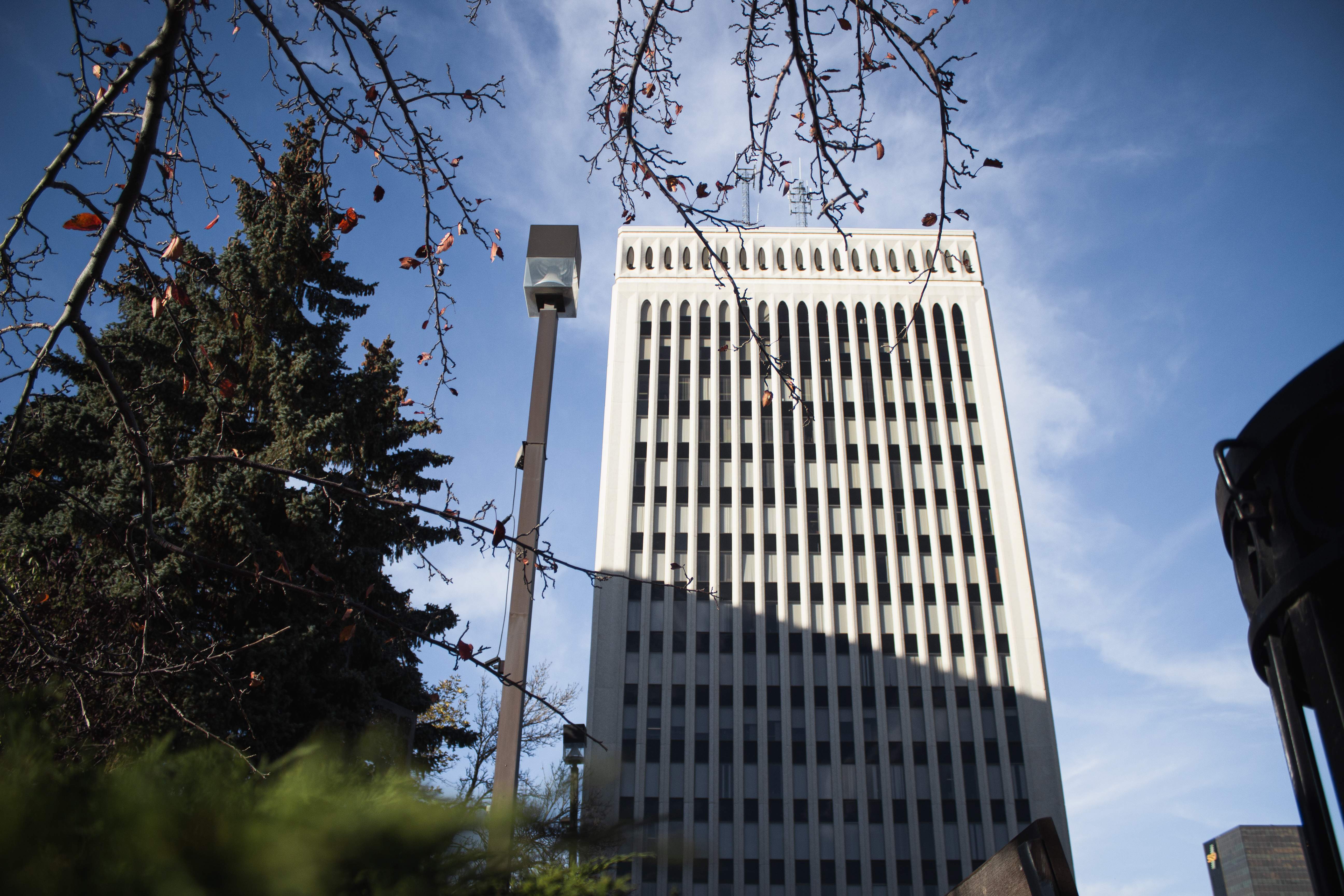
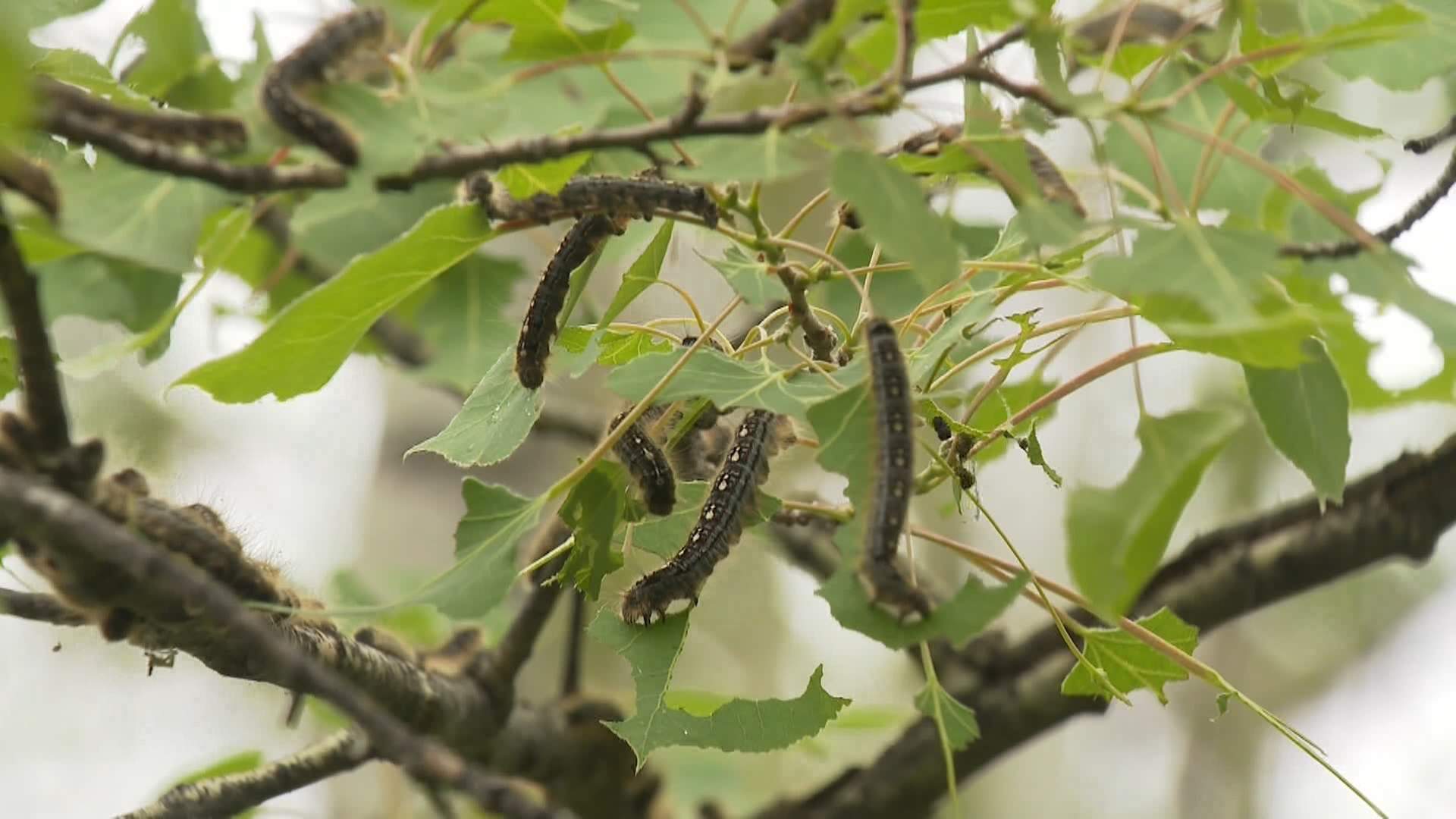
Visitors to Pigeon Lake Provincial Park, southwest of Edmonton, are being forced to contend with an army of visitors that are in the midst of a 'cyclical boom.'
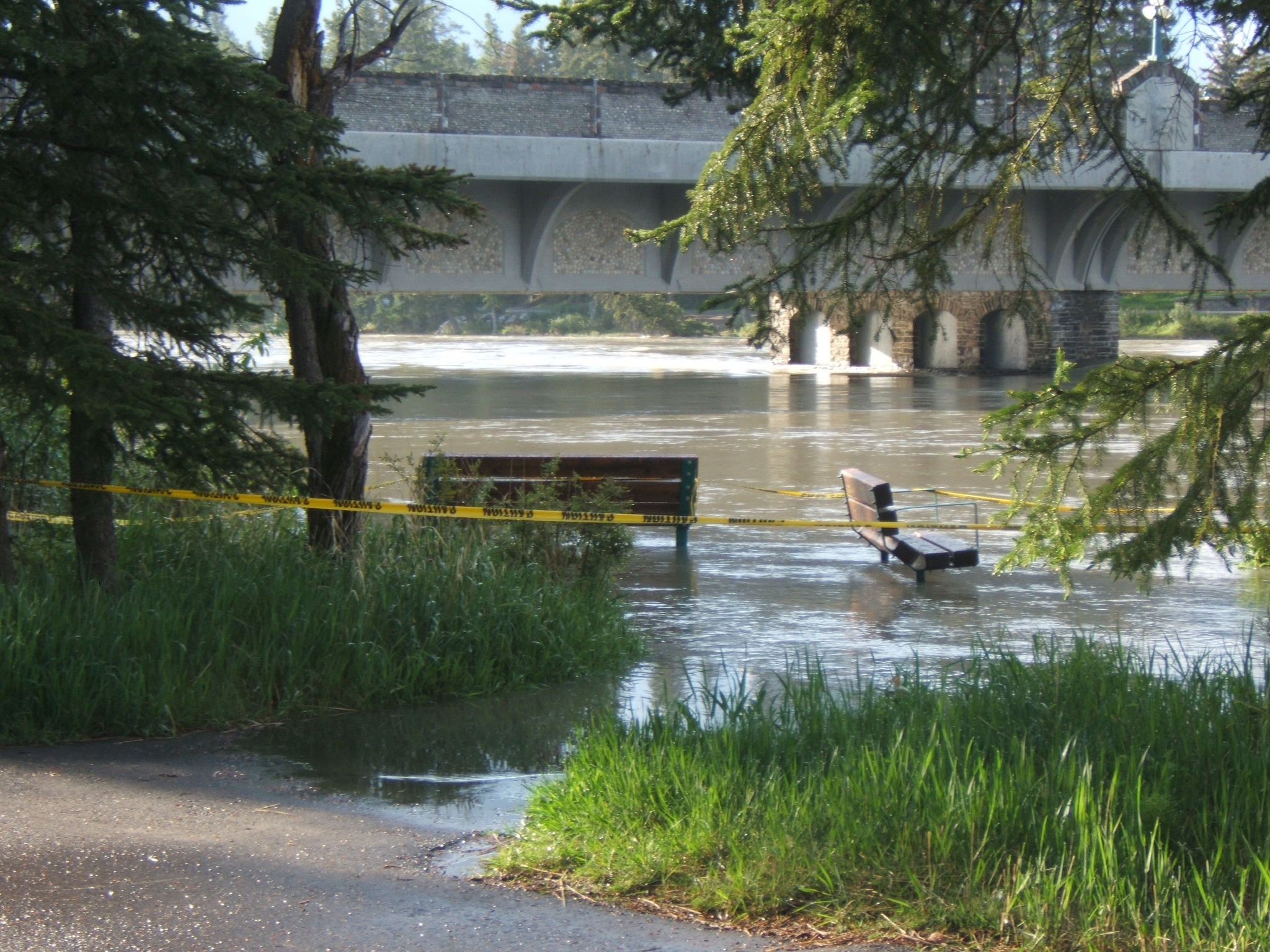
Rising waters, caused by unseasonably warm temperatures, has prompted a high streamflow advisory to be issued for the Bow River in Banff National Park.
When I set out for Waterton National Park in Alberta, Canada, I imagined fall forests resplendent in golds, accented by oranges and reds. The smell of leaves composting into the earth and the peace of the earth quieting into winter. What I found was a blackened landscape, still deeply scarred by the 2017 Kenow Fire eight years ago.
Crandall Lake Vista
When the foliage is gone, the structure lies bare. Undulations ripple along the mountainsides; seeps and drainages stand out.
The rhythms of the forest are speaking in structure, not color. This gift in this landscape of open vistas is long sightlines – a dream for wildlife spotting.
The Kenow Fire ignited with a lightning strike and burned slowly until September 11, 2017, when it blew up in critically dry conditions, surging from 30,000 to 104,000 acres overnight, overtaking Waterton National Park. The Kenow Wildfire was a fire of exceptional severity exceeding every fire since the Park’s records began in 1700. In the end, half of the vegetated land and 80% of the hiking trails in the Park were burnt.
In almost all of this burn area, most or all of the organic matter was seared away by the fire. The topsoil burned away to a depth of three feet.
Dense conifer forests are being replaced by young aspens and shrubs such as Saskatoon berry, thimbleberry, and huckleberry. It’s a bear’s delight! The conifers will come back, too. They grow relatively slowly.
Licking the berries off the branches like lollipops.
Fire is necessary, natural, “normal” for these forests. Our human misunderstanding and resulting meddling have given rise to an increase in these large, catastrophic (by human standards) fires. This was a dramatic fire. The recovery is being documented and studied, providing insights into the land’s history and the resilience of nature.It’s often not what I expected, but it’s always an adventure.
If you’re interested in purchasing or licensing any images you see here, please email me at SNewenham at exploringnaturephotos.com, and I’ll make it happen.
Subscribe here to receive an email whenever a new blog posts.
GEORGE TOWN, June 5 — The Penang State Health Department (JKNPP) has issued 597 notices for smoking within the George Town UNESCO World Heritage Site here, through 114 enforcement operations since 2022.
State Youth, Sports and Health Committee chairman Daniel Gooi Zi Sen said the world heritage site was gazetted as a smoke-free zone since 2015 and is now subjected to the Control of Smoking Products for Public Health Act 2024 (Act 852).
“Throughout last year, 106 notices were issued. However, that number has increased this year, with 127 notices issued so far, surpassing the previous year’s total.
“In view of this, we will continue to step up monitoring and enforcement to ensure compliance with the stipulated regulations,” he told reporters after launching the Penang Smoke-Free (PENBAR) promotional materials at the George Town World Heritage Site here today.
Gooi said the increase in notices shows some individuals still fail to comply with the ban despite ongoing educational and advocacy efforts.
He said under Act 852, individuals found smoking in smoke-free zones can face a compound fine of RM250 for each offence.
“We understand that alongside continuous public education, enforcement action must be taken to ensure compliance within the George Town World Heritage Site,” he said.
He added that the state government and JKNPP are intensifying public awareness by installing more promotional materials and warning boards.
Gooi said besides the George Town Heritage Site, several other locations in Penang have also been gazetted as smoke-free zones under Act 852, namely the Jalan Utama Municipal Park, Jalan Air Terjun Botanical Gardens, Air Itam Dam, and Teluk Bahang Dam on the island.
On the mainland, the ban covers the Mengkuang Dam in Berapit and the Ampang Jajar Town Park.
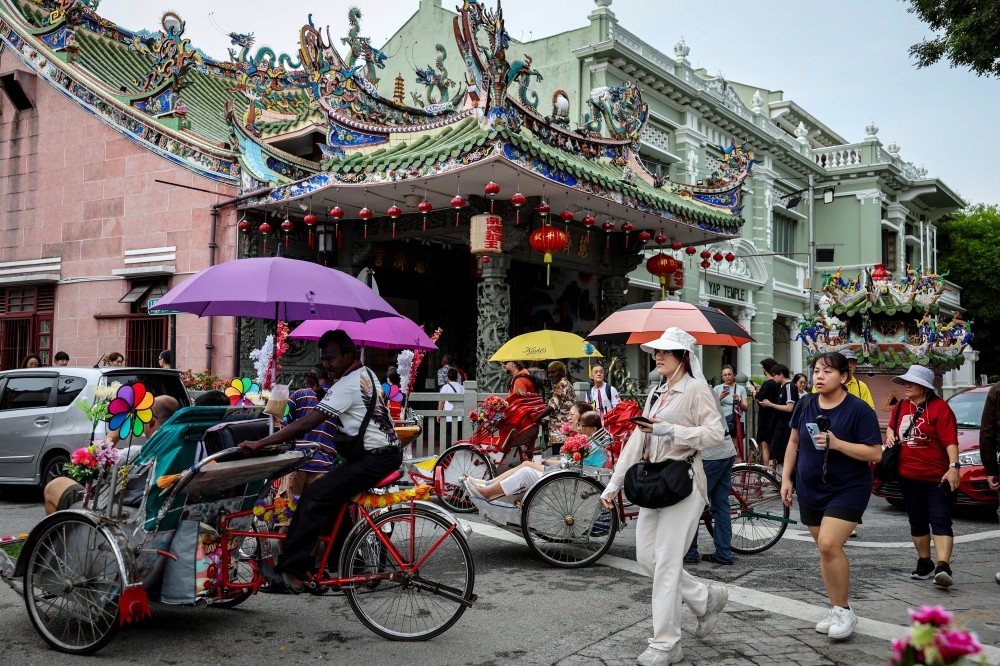
Earlier, Gooi and 70 personnel from the JKNPP Enforcement Division distributed campaign leaflets at premises and fitted banners and special sunshades on trishaws to boost tourist awareness of the smoking ban within the heritage zone. — Bernama
President Trump’s focus on repair and beautification projects around Washington, D.C., risks backfiring on Republicans ahead of the midterms as the issue of affordability takes center stage across the country. Just this week, Trump began an unrelated executive order signing and an energy announcement in the Oval Office talking about the completion of repairs of...
Activists Lee Cheuk-yan and Chow Hang-tung once led thousands of Hong Kongers in candlelight vigils every June 4 to remember China’s 1989 Tiananmen crackdown.
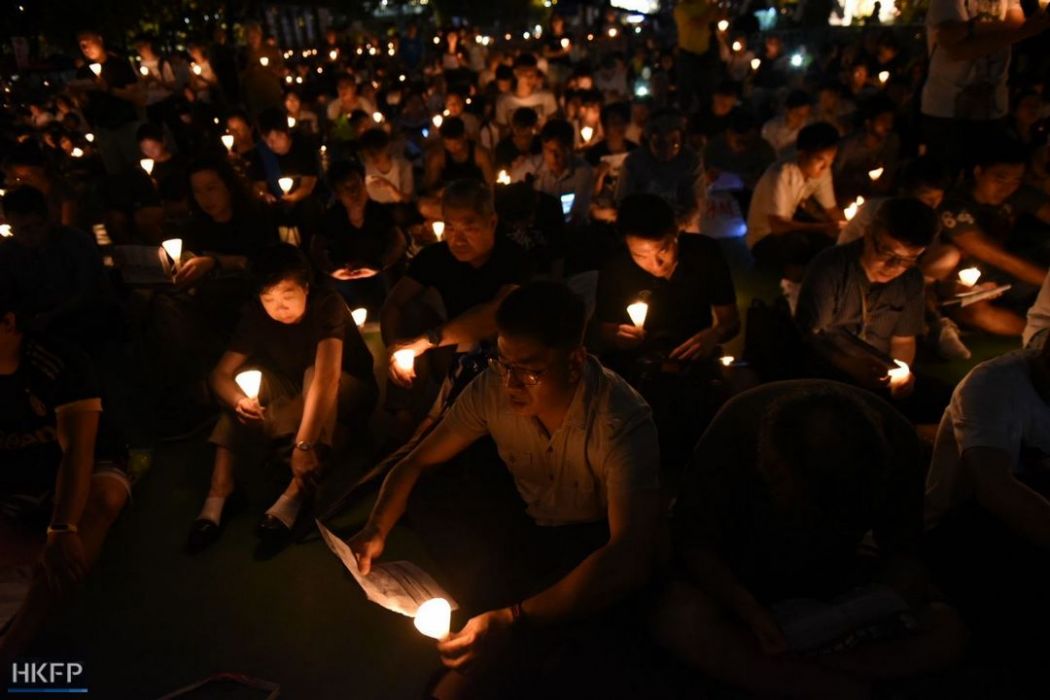
A group of pro-democracy activists, including Lee Cheuk-yan, Chow Hang-tung, and Albert Ho, hold candles during a candlelight vigil at Victoria Park in Hong Kong on June 4, 2019, to mark the 30th anniversary of the 1989 Tiananmen crackdown in Beijing. It was the last official memorial event organised by the Hong Kong Alliance in Support of Patriotic Democratic Movements of China. Photo: Philip Fong/AFP.
This year, the pair are facing up to 10 years in jail after their trial under a Beijing-imposed national security law, during which they sought to defend the slogans they had chanted openly for decades.
Hong Kong and Macau used to be the only places on Chinese soil that permitted large-scale vigils to mourn those who died on June 4, 1989, when the government sent troops and tanks to crush protests calling for political reform.
But public commemoration has been effectively banned since the national security law’s introduction in 2020, following huge and sometimes violent pro-democracy protests the year before in Hong Kong.
Lee and Chow’s fate is a “gesture by the government to tell everyone where the boundary is, what is no longer allowed to be discussed”, Dennis, a 29-year-old Hongkonger who used to attend the vigils, told AFP.
“The space for public discussion is much smaller, if it even exists,” he said, using a pseudonym for fear of retaliation.
Lee and Chow, who organised the vigils as leaders of the now-defunct Hong Kong Alliance, are expected to receive their verdict in July on charges of “incitement to subversion”.
‘Space for discussion’
At the time, the Chinese government officially defined the Tiananmen protests as a “counter-revolutionary riot” driven by a “very small number of people”, justifying the use of force on June 4 as necessary to restore order.
It said around 200 protestors were killed, as well as several dozen soldiers.
The precise toll is unknown, but most other estimates range from 400 to over 1,000.
The Hong Kong Alliance, formed in May 1989 to support the demonstrators, began campaigning for redress after the crackdown.
For decades, its annual vigils were attended by tens of thousands, turning the city’s Victoria Park into a sea of candlelight.
The Tiananmen vigil in 2018. File photo: Catherine Lai/HKFP.
Calls to “end one-party rule” and “build a democratic China” were commonplace — a fact prosecutors in Lee and Chow’s trial now argue amounted to incitement to subvert the state.
Dennis remembers watching livestreams of the gatherings as a child, and debating their relevance as a university student when they came to be considered old-fashioned by some.
“At least before… whether you considered (the vigil) cheesy or not, there was still space for discussion,” he told AFP.
‘Everything has changed’
Former legislator Emily Lau said she no longer recognises her own city.
“Everything has changed, there are many things that you are not allowed to say, do not dare to say, won’t say… many media outlets have shut, much of civil society has vanished,” she told AFP.
In recent years, police have detained mourners around Hong Kong’s central Victoria Park and arrested multiple people for Tiananmen-related online posts.
Hong Kong artist Sanmu Chan is stopped and searched in Causeway Bay on June 3, 2026. Photo: Kyle Lam/HKFP.
Others will mark the day more subtly.
Dennis said he plans to listen to songs that were played at the vigils while walking around the area.
University student Laurie told AFP she didn’t “feel free speaking my mind… publicly” and would commemorate the day through prayers or a moment of silence.
“The issue is the lack of clear information on what is or is not allowed to (be talked) about, so people end up not saying anything altogether,” the 22-year-old said, using a pseudonym.
Hong Kong’s government told AFP it was committed to safeguarding the freedoms of citizens “that are protected by law”, but added that these were “not absolute”.
It warned that anyone using “the commemoration of a special day… to incite hatred” of China could be in violation of the city’s national security laws.
Zhou Fengsuo. File photo: Tom Grundy/HKFP.
Zhou Fengsuo, a student leader during the 1989 demonstrations, said it was a “great loss” that the gatherings could no longer influence a young generation of Hong Kong activists.
“Every year on June 4th this (vigil) became a topic of international concern,” he said.
“That’s a crucial factor why the legacy of June 4th, 1989, is still known to the world today despite the Communist Party’s attempts to smear and obliterate it.”
China accused the United States on Thursday of distorting facts and smearing its political system, after Secretary of State Marco Rubio said censorship could not “erase” the memory of Beijing’s 1989 Tiananmen crackdown.
US Secretary of State Marco Rubio delivers remarks to members of the media at the White House on May 5, 2026. Photo: The White House, via Flickr.
On June 4 that year, the Chinese government sent troops and tanks to crush protests calling for political reform in and around Beijing’s Tiananmen Square.
The death toll remains unknown, and discussion of what happened is censored in mainland China.
Rubio told a news conference on Wednesday that “no amount of censorship can erase the past”.
“Those who sacrificed to uphold their unalienable rights of free expression and peaceful assembly will be vindicated someday,” he said.
China’s foreign ministry said Thursday it firmly opposed Rubio’s comments.
“The Chinese government has long since reached a clear conclusion regarding that political turmoil that occurred in the late 1980s,” ministry spokeswoman Mao Ning told a regular news briefing.
“The relevant erroneous remarks by the US side distort historical facts, smear China’s political system and development path, and interfere in China’s internal affairs,” she said.
This year, authorities reportedly prevented the families of those who died in 1989 from visiting their graves at Beijing’s Wan’an Cemetery, with Amnesty International calling the move “a heartless act”.
Beijing has also moved in recent years to snuff out all public commemorations in Hong Kong, where an annual candlelight vigil had been held for decades before the imposition of a national security law in 2020.
Tang Ngok-kwan, a former member of the Hong Kong Alliance in Support of Patriotic Democratic Movements of China, outside West Kowloon Law Courts Building on January 22, 2026. Photo: Kyle Lam/HKFP.
AFP reporters saw a heavy police presence on Wednesday near Hong Kong’s Victoria Park, the former site of the event.
Late that night, activist Tang Ngok-kwan stood alone in the park, reading the names of hundreds of victims in a low voice under the watchful eyes of several plainclothes police officers.
 Login
Login




 The Kenow Wildfire was a fire of exceptional severity exceeding every fire since the Park’s records began in 1700. In the end, half of the vegetated land and 80% of the hiking trails in the Park were burnt.


 It’s often not what I expected, but it’s always an adventure.