Cat’s been out of the bag for a while: I’d rather be operating a switchboard than a megaphone these days.
To that end: I’ve been hosting more Zoom calls for my Patreon crew to hang out together, build community, and talk about their creative and adventurous projects on the regular. It turns out it’s extremely nice to do!
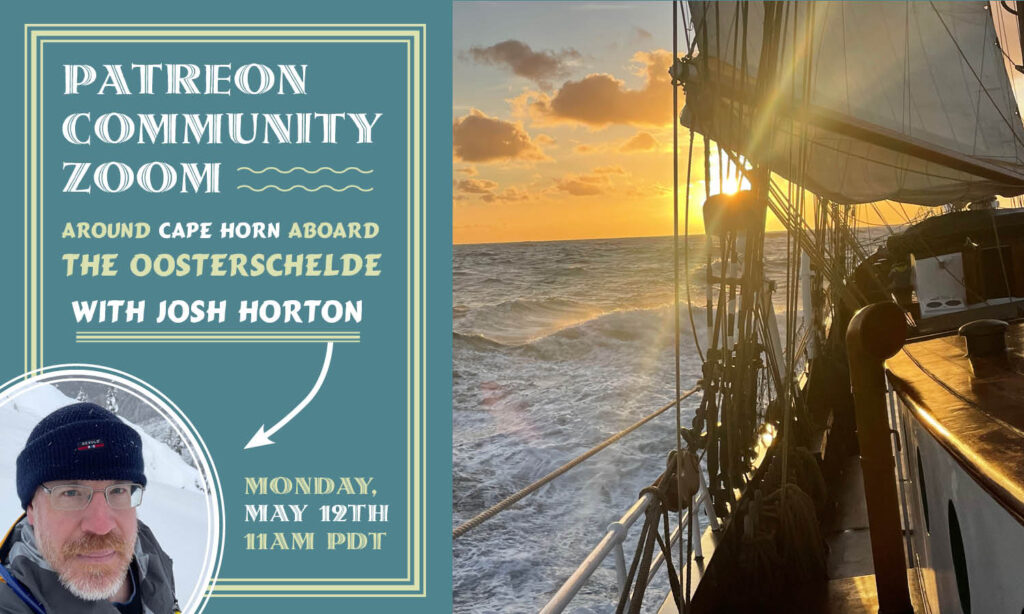
This month we’ve got a real treat: Patron Josh Horton will be giving a presentation about his journey around Cape Horn aboard the Dutch tall ship Oosterschelde. Josh joined up as part of Darwin200, an audacious voyage that’s been tracing the original path of HMS Beagle since 2023. They’re doing amazing work, and I’m really looking forward to getting a peek aboard.
The call happens Monday, May 12th at 11am Pacific Time. You can find the Zoom link and everything here. Can’t wait!
Every year, there are two major migration events. Birds, insects, fish, and many mammals head north in the spring to nest and breed and return south in the winter to feed and raise their young. Using BirdCast, a tool that’s active seasonally and allows anyone to see bird migration “heat maps” around the U.S., ornithologists tracked a record-breaking one billion birds migrating on a single October night in 2023 (last year, that number reached 1.2 billion). But on the night spanning October 4 to 5, something else really big happened: nearly 1,000 birds died in Chicago after hitting a single building.
McCormick Place Lakeside Center is situated along the Lake Michigan shoreline, set apart from other buildings in a park-like space, and it has roughly enough windows to cover two football fields. As birds cruise along the shore, flitting over greenery, they sometimes mistake the reflections of nature in glass for the real thing. On the morning of October 5, hundreds of birds fell victim to architecture.
When artist and educator Holly Greenberg heard this news, she was stunned. No stranger to nature and long interested in sustainability and the environment, she was nevertheless totally unaware of the scale of bird collisions in the U.S. During a day out in a Chicagoland arboretum, on sabbatical from her role as assistant professor at Syracuse University, she worked with a group to remove invasive buckthorn and make room for native trees. A fellow volunteer rued the sad irony of planting new bird habitat when the feathered creatures try to fly into their reflections in glass instead.
“That was the first time that I’d heard that these birds were crashing into windows in Chicago,” Greenberg says. When she later read about the mass collision at McCormick Place, she thought, “Oh man, something needs to be done.” That’s when the multi-year project Bird Collisions in the Anthropocene was born.
Greenberg launched the initiative in 2024 to not only raise awareness of the problem but also to educate people about preventing incidents. Using data from the Chicago Field Museum and with the help of its lead ornithologist Dave Willard, Greenberg landed on a specific number: 10,863. That’s how many were found dead after hitting Chicago buildings in 2023 alone.
It’s estimated that around one billion birds die in window collisions annually throughout North America. One of the organizations working to collect this data and—just as importantly—to protect, rescue, and advocate for avians is the Chicago Bird Collision Monitors (CBCM) program. Every morning, volunteers walk the streets of the city to count and collect fallen individuals, taking them to wildlife sanctuaries for treatment or rehabilitation where possible. Most, however, don’t survive the impact.
Bird specimens at the Field Museum
Paul Groleau, president of a company called Feather Friendly that makes bird-safe window treatments, suggests that many more die from window impacts than we realize. Greenberg hears people at her workshops say things like, “I heard a bird hit my window, but it flew off, so it’s fine.” Groleau, however, posits that about 60 percent of birds that are stunned do not survive. Their skulls are paper-thin, and if they don’t hemorrhage, they may sit under some shrubbery as they try to recover, which makes them more vulnerable as prey.
When CBCM volunteers find dead specimens, they take them to the Field Museum, where the bodies become part of an archive Willard has overseen for decades. Many are preserved in the museum’s collection, each tagged and identified. At the very least, they are added to a carefully tended data set, which lists thousands upon thousands specifically killed by impacting windows at speed.
10,863 is the number Willard had recorded in 2023. Of course, the actual number of birds that collided with windows that year is exponentially higher, but the figure reflects the number that Willard and the CBCM volunteers found. And it’s the exact number that Greenberg is getting thousands of people to help recreate from fabric and glue. At the same time, she’s sharing knowledge about collisions with others through craft, science, advocacy, and social practice.
Starting with a small grant and a group of interns at Syracuse University, Bird Collisions in the Anthropocene began with the list of avians from the Field Museum, some basic crafting supplies, and photographs of individual birds so that makers could replicate the actual species. Eventually, Greenberg relocated to Evanston, Illinois, a suburb of Chicago, and opened a studio where she hosts workshops and processes birds that are sent in from all over North America.
Workshops are facilitated across the U.S. and Canada, and so far, a total of more than 140 have been held. Materials can be downloaded from the website, and anyone can host a workshop. Popular locations include public libraries and schools. Cornell Lab of Ornithology, which is behind the BirdCast tool, has even launched a pilot program to send hundreds of sew-a-bird kits to biology teachers in New York State in order to help students complete a core education requirement.
The hands-on, participatory, and very communal aspect of the bird workshops is fundamental to the project’s success. Greenberg opens her studio to the public on the first Saturday of every month as part of the Evanston Made program, and private gatherings can be organized, too. “People get into the flow, no one is touching their phone, and everyone is super concentrated,” Greenberg says. “They’re working with awkward materials, and it’s a mess, but it’s a good creative mindset.”
Studies have shown that hands-on or experiential learning is linked to greater knowledge retention, attentiveness, and experimentation. As people create their house sparrows, dark-eyed juncos, golden-crowned kinglets, and many more—and one’s level of technical skill is no matter—a sense of camaraderie builds around a common pursuit. Greenberg then provides resources about how to help prevent bird collisions, such as information about remediation technologies.
Businesses like Feather Friendly make products that can be applied directly to any window, most commonly in the form of small vinyl dots. It also offers Bird Divert, which uses clear dots that are actually hard for us to see, but due to the way birds’ vision works, the application helps them to differentiate between architecture and nature. Fritted glass is another method, which involves ceramic details baked right onto the surface of the glass.
Artist Taro Takizawa in front of the ‘Bird Collisions in the Anthropocene’ studio in Evanston
Greenberg sees the artistic potential in the remedial window coverings, and she has previously invited artist Taro Takizawa to apply beautiful organic lines made of hand-cut vinyl on the top windows of her Evanston studio. For a forthcoming social project this summer, Greenberg plans to install different types of remediation dots on the large storefront windows of the space, plus an installation by artist Alice Hargrave, who creates abstract works using the sound waves of bird calls.
While the official number of finished birds is currently at 3,451, Greenberg estimates there are at least 1,000 more awaiting tagging and entry into the project’s handwritten ledger, which is reminiscent of museum catalogues before computerized records came into widespread use. With the help of a team of interns, she labels each bird individually with its species name, its artist, and where it “flew” in from. And installation opportunities abound.
Eventually, the birds will create one giant “carpet” to illustrate not only the poignant and urgent reality of bird collision deaths, but the power of collective action. In the meantime, groups of the fabric critters go on view occasionally in other exhibitions. One of these is Chicago Architecture Center’s forthcoming show, Flyway City, which “aims to catalyze positive change on making cities safer and more welcoming for birds and diverse wildlife” by focusing on how architecture can help to protect avians from the get-go.
The exhibition is organized by Studio Gang, whose lead architect, Jeanne Gang, has also encouraged the city of Chicago to enact building codes that are more bird-friendly. While Evanston has an ordinance that requires bird-friendly building design, Chicago does not yet, although it’s been on the table many times. Greenberg hopes that continued advocacy and information-sharing empowers others to speak up, too, so that these types of changes will be seen in more communities all over North America.
Flyway City runs from June 11 to January 3, 2027, in Chicago. Keep updated about workshops and other ways to get involved by following Greenberg’s Instagram.
KUALA LUMPUR, June 17 — Protecting e-hailing drivers must be made a national priority amid increasing reports of assault, intimidation, robbery and violence by unruly passengers, said Alliance for a Safe Community chairman Tan Sri Lee Lam Thye.
He said the safety and well-being of e-hailing drivers must therefore be given greater attention by all stakeholders, including the government, e-hailing platform operators, law enforcement agencies and passengers themselves.
“I urge all relevant stakeholders to work together to develop comprehensive safety measures that will better protect e-hailing drivers and create a safer transportation environment for everyone.
“Law enforcement agencies must continue to act firmly against individuals who assault, threaten or harass e-hailing drivers. Such offences should not be treated lightly as they not only endanger the victim but also undermine public confidence in the safety of e-hailing services,” he said in a statement today.
Among the measures proposed, Lee called for the wider adoption of in-car cameras or dashcams capable of recording both road activity and the vehicle interior, saying that such systems could deter criminal behaviour and provide valuable evidence during investigations.
He also urged e-hailing companies to strengthen passenger verification processes to ensure that users can be identified and traced in cases involving criminal or abusive conduct, adding that anonymous accounts and fraudulent registrations should not be tolerated.
In addition, he suggested enhancing emergency safety features within e-hailing applications, including providing drivers with access to a panic button that can immediately alert platform operators, emergency contacts and the police whenever they feel threatened or unsafe.
Lee also said e-hailing companies should establish clear protocols to identify high-risk rides, unusual passenger behaviour and suspicious travel patterns through the use of technology and real-time monitoring systems.
“The feasibility of installing protective barriers or partitions between drivers and rear-seat passengers may also be explored, particularly for drivers who frequently operate during high-risk hours or in areas with higher crime rates,” he added.
At the same time, he emphasised drivers should be provided with regular safety awareness training on conflict management, threat recognition, emergency response procedures and personal security measures.
“Every driver deserves to return home safely after a day’s work. Ensuring the safety of e-hailing drivers is not only a matter of occupational safety but also a matter of public safety. A safer environment for drivers ultimately benefits passengers and society as a whole,” he said. — Bernama
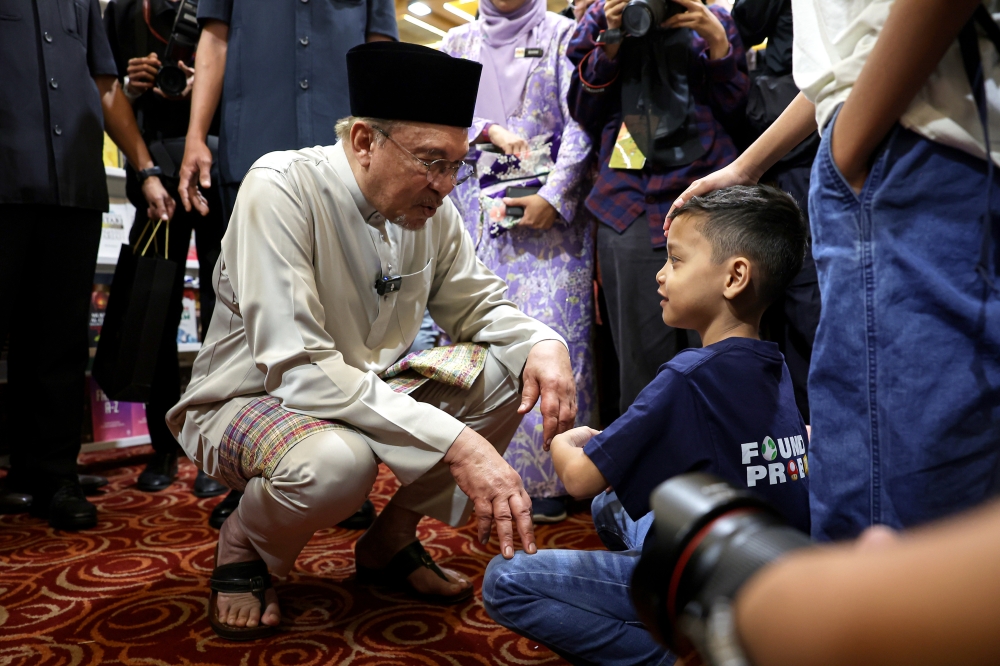
KUCHING, June 1 — Prime Minister Datuk Seri Anwar Ibrahim is expected to attend this year’s Sarawak state-level Gawai Day celebrations to be held here on June 21, said Sarawak Deputy Premier Datuk Amar Douglas Uggah Embas.
He added that the Yang Dipertua Negeri of Sarawak Tun Dr Wan Junaidi Tuanku Jaafar will be the guest of honour at the event, which is also expected to be attended by Sarawak Premier Tan Sri Abang Johari Tun Openg and Deputy Prime Minister Datuk Seri Fadilah Yusof.
“We will hold the Niti Daun (parade) in Kuching on June 20, while on June 21 the highlight of the state-level Gawai Day celebration will be a gala dinner attended by distinguished guests,” he said.
He told reporters this at the 2026 Gawai Dayak Day Open House at the Unit for Other Religions (UNIFOR) Complex here today.
According to him, Gawai Dayak continues to serve as an important platform for showcasing the culture, traditions and heritage of the Dayak community to people of all races.
“The tradition of ‘ngabang’ (visiting one another), which is practised by the people of Sarawak, symbolises unity, as every celebration is observed together regardless of race or religion,” he said.
At the same time, Uggah described the response to the Gawai Dayak Open House held today as encouraging, with attendance believed to have exceeded the initial target of 2,000 visitors. — Bernama
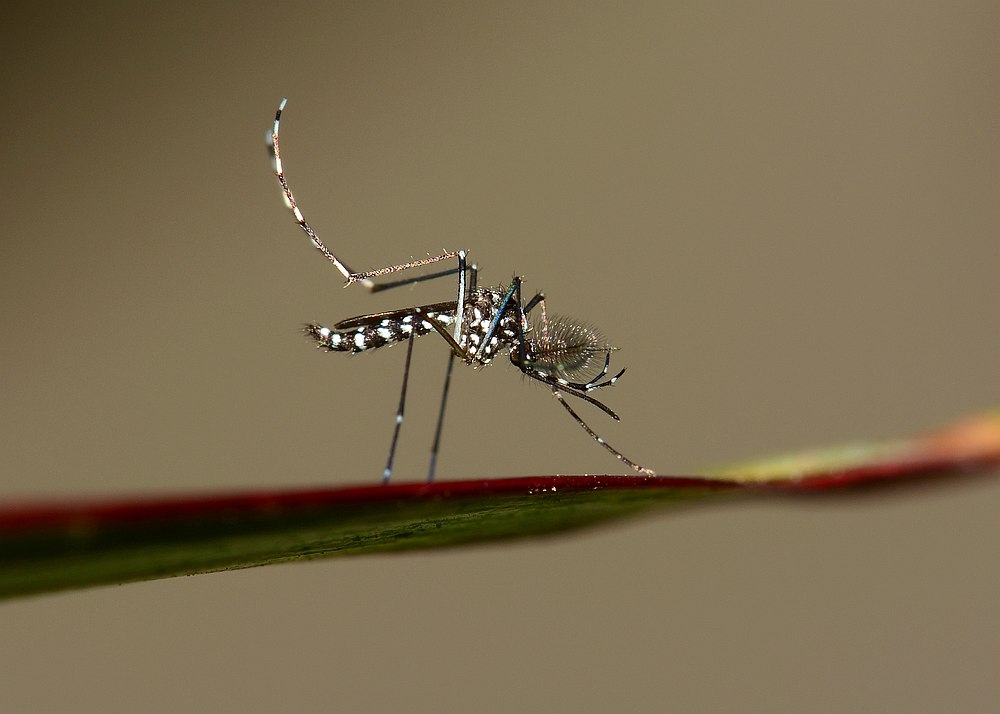
KOTA KINABALU, June 14 — Dengue cases nationwide rose 27 per cent to 33,367 as of June 13 (Epidemiological Week 23), compared with 27,640 cases recorded during the corresponding period last year.
Health Minister Datuk Seri Dzulkefly Ahmad said the situation in Sabah was more concerning, with the state recording a sharp 50.4 per cent increase to 2,866 cases, compared with 1,905 cases during the same period last year.
He said several districts in Sabah had been identified as the main contributors to the state’s caseload, namely Kota Kinabalu, Kota Marudu, Tawau, Sandakan, Penampang and Putatan.
“We know that this surge falls within the expected cyclical trend of infections that occurs every four to five years, but we must remain vigilant in dealing with the situation,” he told reporters in Manggatal here today.
Earlier, he officiated the national-level Asean Dengue Day, World Malaria Day and Mega Gotong-Royong held in conjunction with the 2026 National Healthy Malaysia Agenda (ANMS) Roadshow at the Manggatal Community Hall here.
Dzulkefly said that, apart from the cyclical trend, the Health Ministry had also identified a shift in the circulating dengue virus sub-variants, with the DEN-3 sub-variant now becoming dominant, as a contributing factor to the rise in cases.
To address the challenge, he said the ministry had introduced a new strategic approach based on Behavioural Insights (BI) through the Dengue-Free Community (Kombat) programme.
“We are introducing several new initiatives, particularly through the application of the BI approach, which draws on behavioural economics and examines human behaviour, including how people can be influenced or nudged towards positive change.
“The nudging strategy is aimed at encouraging behavioural change. People may be aware of what needs to be done, but that alone does not necessarily lead to action. Awareness and literacy are not enough. We need to create conditions that enable people to change, with support from both the federal and state governments,” he said.
He said Kombat focuses on three key strategies: environmental interventions, community empowerment and a whole-of-society approach, including the strengthening of entomological surveillance. — Bernama
Designer Taekhan Yun’s parents run an English school in Cambodia. One day, during a visit, he noticed how the kids were constantly shifting in their chairs, trying to get comfortable. “It made me realize how naturally furniture and spaces are designed around adult standards, while children are often expected to adapt and conform to those environments,” he tells Colossal. That’s when the idea was born to not only create functional pieces that would better suit the students’ needs but to invite them to create their own.
Yun has always been interested in participatory creative projects, especially because of “the unexpected outcomes that emerge when people from different backgrounds come together to create something collectively,” he says. “Children, in particular, tend to view objects with a freedom that is less constrained by function, convention, or rules. Their choices and interventions often transform not only the final result but also the process itself.”
Through a series of hands-on workshops, Yun invited the children to conceive of whimsical chairs and birdhouses, first by inviting them to draw with colored pencils and then sculpt prototypes out of clay. The artist then fashioned their dream designs into full-scale wooden objects that exactly translate their ideas. The result is a joyful and inviting collection of functional artworks that celebrate community. Each object is lovely on its own, but when gathered with its peers, the group is even more vibrant and inspirational, much like the way ideas can expand and evolve through brainstorming and learning.
Yun plans to continue presenting similar workshops and is currently coordinating a couple in South Korea and Saudi Arabia. “Working with children has gradually shifted my focus from the final objects themselves to the ways children perceive, imagine, and interpret the world around them,” he says. “I hope to expand the chair project internationally in the near future by collaborating with children from different cultural and social backgrounds around the world.”
GEORGE TOWN, June 16 — The Penang state government is fully supportive of more systematic and controlled management of refugees in the state, particularly the Refugee Registration Document (DPP) mechanism, said Chief Minister Chow Kon Yeow.
He said the DPP is not a policy to increase the number of refugees in Penang, but a federal mechanism to know who they are, where they are located and how they can be monitored more effectively.
“For the state government, our priority is to ensure public safety, the well-being of local communities and compliance with the law are always preserved,” he said in a statement issued today.
Earlier, during a press conference, he was asked to comment on the Rohingya community in Penang.
Chow said he would release a statement to ensure accuracy in his remarks on the issue.
“The Penang state government has always adopted a pragmatic, prudent and responsible approach in dealing with the issue of refugees and asylum seekers in the state, in line with the policies and decisions set by the federal government,” he said.
Citing data from the United Nations High Commissioner for Refugees (UNHCR), Chow said there were an estimated 20,022 refugees and asylum seekers in Penang as of August 2023.
He said the state government would not compromise on any violation of the law, including criminal activity, document abuse, human trafficking, immoral activities or immigration offences, regardless of those involved.
He said these will be dealt with by the authorities in accordance with the provisions of the law in force without any exception.
At the same time, he called on all parties to assess this issue objectively and based on facts.
“The issue of refugees is a challenge faced by many countries around the world, and requires a balance between humanitarian considerations, national security and the interests of the local population,” he said.
He said the state government will continue to work closely with security agencies and the federal government to ensure that the management of refugees and asylum seekers is carried out in an orderly, registered and controlled manner so that it does not affect the safety, social stability and well-being of the public.
SINGAPORE, June 6 — The Singapore government has ordered YouTube, Facebook and X to block 14 social media posts that authorities said targeted the Indian community and sought to undermine the country’s multiracial model.
The Ministry of Home Affairs (MHA) said police issued disabling directions under the Online Criminal Harms Act, requiring the platforms to take “all reasonable steps” to stop Singapore users from accessing the posts, local news outlet CNA reported today.
Second Minister for Home Affairs Edwin Tong said the content appeared to have originated overseas.
“From what we know so far, the content originated from overseas,” he was quoted telling reporters at Siglap South Community Centre.
MHA said investigations showed the material likely came from a China-based platform before being shared on other platforms and websites.
Tong said there was no evidence so far that the posts were part of a coordinated campaign by any government.
He said the content appeared to have been generated organically by various foreign netizens.
“These videos attack our multiracial society and they try to divide people based on race,” said Tong, who is also law minister.
“This, however, is not who we are.
“Every community in Singapore here is valued and everyone has an equal place.”
MHA said the posts began circulating in Chinese online spaces in May and carried inflammatory claims about Singapore’s cultural diversity.
The posts claimed Singapore was being “overrun by Indians”, that its multiracial policy was a “facade” to appeal to “Western values”, and that the country’s stability was due to its Chinese majority rather than its multicultural system.
They also alleged that more ethnic Indian politicians in Singapore would act in favour of Indian immigrants.
MHA said the posts selectively used images of Little India and Indian devotees at a religious festival to back claims that Singapore was becoming overcrowded with Indians.
The ministry said some posts used derogatory language against the Indian community, including comparing its growth to a “concentration of curry”.
MHA said the content was a malicious attempt to incite hostility against Indians in Singapore, including migrant workers in sectors such as construction.
“They contribute to Singapore’s growth and development, and are valued members of our society,” it said.
The ministry said the posts likely breached Section 298A of the Penal Code, which covers acts that promote enmity, hatred or ill will between racial groups.
The offence carries up to three years’ jail and a fine.
Tong said Singapore would not tolerate narratives that undermine racial harmony, “especially when it is propagated by foreigners”.
“Any attempt to pit one community against another here must be firmly rejected,” MHA said.
“These attacks coming from a foreign source are doubly unacceptable.”
Tong said the government would continue to monitor such content and would take further action if needed.
He also urged Singaporeans to be careful about what they consume online and not to share content that could harm social cohesion.

 Login
Login