Reading view

The best thing Democrats can do for the climate: Stop talking about it

People hold signs outside the US Capitol, including one with white text on a green background reading “Jobs, justice, climate action, Green New Deal.”
Green New Deal supporters in front of the US Capitol on February 6, 2024. | Celal Gunes/Anadolu via Getty Images

With a little over five months until the midterm elections, Democrats in Washington and on the campaign trail are trying to show voters they care about cost-of-living issues. 

To make that pitch, some parts of the party’s usual message may be going by the wayside. That includes the conversation about combating climate change. Once a pillar of the Democratic agenda, it may now be fading into the background. According to Matt Huber, a professor of geography and the environment at Syracuse University and the author of Climate Change as Class War, Democrats, and the climate, might be better off for it. 

Huber, who recently wrote an essay for the New York Times titled “Democrats Don’t Have to Campaign on Climate Change Anymore,” spoke with Today, Explained co-host Sean Rameswaram about why Democratic candidates can and should de-center climate change from their platforms and streamline their campaigns on affordability issues. 

Below is an excerpt of their conversation, edited for length and clarity. There’s much more in the full podcast, so listen to Today, Explained wherever you get podcasts, including Apple Podcasts, Pandora, and Spotify.

What made you want to write this appeal to Democrats to essentially shut up about climate change right now?

I try to argue that it’s the end of a 20-year period in Democratic Party politics where a lot of Democrats were thinking that climate would be this urgent issue that could galvanize this mass majoritarian coalition around green jobs. 

What I’ve come to in the last few years is that I’m just not sure that rhetorically centering the climate crisis as the impetus of this kind of politics is actually going to be effective in building that power, building that majority. Most Americans don’t really prioritize this as an urgent issue, and they prioritize other cost-of-living issues much more.

When did fighting climate change become such a core issue for the Democratic Party? 

2006, which was 20 years ago, was a big flashpoint where Al Gore’s An Inconvenient Truth was released. And that did coalesce in the zeitgeist with a massive financial crisis a couple of years later. 

There was a lot of feeling, just like in the Great Depression, that there had to be this mass jobs program, public investment program, and that climate change actually provided the urgency and impetus to center around that kind of large scale investment program and it could create jobs and appeal to these more economic concerns.

When the Green New Deal became a big deal, spread by Rep. Alexandria Ocasio-Cortez and others, I think they too were thinking it would actually be a more effective politics in the context of a large-scale economic crisis like the original New Deal was. 

“To win and to campaign, they’re realizing that talking about the apocalyptic existential nature of the climate crisis is not going to really inspire and motivate people to support them.”

Unfortunately for them, I think we never really entered that kind of crisis since the Green New Deal politics took off. We did have a recession, but it was this Covid recession that was a strange kind of economic shutdown and not the kind of crisis that called for this big jobs program.

That label,“Green New Deal,” became so polarizing. And it was a strategy to make it so, obviously. Do you think anything like that kind of messaging is just bunk now?

I’m really sad [about it]. I was a big Green New Deal stan, if I can use that word. I really loved this broad vision and a positive vision. I think a lot of climate politics can be pretty doomer-ist. 

It did go wrong, though. I think when Alexandria Ocasio-Cortez announced the House resolution on a Green New Deal in 2019, she did this media blitz around it and she released this FAQ document — or her office released this very bizarre FAQ document — with the sort of media blitz about the Green New Deal. And in the document it had some very stream of consciousness language about how we’re not quite ready to ban farting cows and airplanes.  

Of course, as you would expect, that language got taken up by the Fox News culture war machine and almost immediately the Green New Deal became “We’re going to ban hamburgers. We’re going to ban air travel.”

What was supposed to be this broad-based majoritarian politics that could appeal to working-class people became yet another kind of polarized culture war issue, unfortunately.

Biden clearly realizes he can’t use this Green New Deal marketing to get this kind of legislation through Congress. But he does get this kind of legislation through Congress, weirdly called the Inflation Reduction Act.

Here we are in 2026 and no one ever talks about [the IRA], even though when they were doing it, they said it was the most consequential environmental legislation in American history. How did that happen?

In many ways the Inflation Reduction Act was based on this Green New Deal idea that jobs and investments in the green economy will lead to material benefits and help win back some of these working-class voters who had been shifting to Trumpism. 

Of course, a lot of these investments were very long term. The style of policymaking that has been in vogue for a while in the Democratic Party is to incentivize these investments through tax credits, which means you’re incentivizing the private sector to do a lot of the building of these projects. I cite a study in the piece that found, basically, when you survey communities where these investments are going, they actually didn’t identify it with a political project coming from Biden. They just associated it with the private firm that is investing. 

Meanwhile, inflation is really hammering the working class and the cost of living is skyrocketing as the number one issue voters care about. The Biden administration was saying that the economy was actually really good. If you look at unemployment, if you look at GDP numbers, everything’s going great. And so you really had no answer for the core material cost-of-living concerns that really shaped the 2024 election. 

Of course, with Trump in office, they’ve repealed a good portion of that legislation. Emissions in 2025 in the United States went up, which is very depressing. It was a real disaster on a number of fronts.

You write in your opinion piece in the Times about how we’re already seeing Democrats shift away from climate change. Where do you see it specifically?

You can see a lot of working-class candidates that are union members that are fighting for this progressive agenda of taxing the rich, public investments, Medicare-for-All. But they are steering clear from the climate issue. And if they are talking about climate change, they’re linking it directly to cost-of-living issues like energy affordability. To win and to campaign, they’re realizing that talking about the apocalyptic existential nature of the climate crisis is not going to really inspire and motivate people to support them. 

I profiled someone named Sam Forstag in Montana. And he is a smoke jumper — someone that literally parachutes out of planes to fight forest fires in the west. Because he’s a government employee, he is a union member too, and he is fighting on this kind of working-class agenda. Bernie Sanders and AOC have endorsed him. I profile an iron worker in Oklahoma. A flight attendant in Minnesota. Some of their websites literally don’t mention climate change at all, and if they do, it’s just very brief and links it to energy affordability jobs, things like this. 

That’s a real shift. These are exactly the types of candidates that I would say five or six years ago would’ve been the central messengers of this kind of Green New Deal message of unions, jobs, blue-collar workers that are going to kind of build the energy transition. These would be the kind of workers that’d be front and center, but they’re not, and I think that’s telling. 

One thing I mention in the piece is Zohran Mamdani, who ran a very successful campaign. But there’s been reporting showing that he barely talked about climate change in his campaign. And that’s after he had really been a climate activist in the Democratic Socialists of America and ran on climate change and public power in his assembly campaign in 2020. The whole affordability message, I think, came out of his campaign and people realizing that’s a way to build a mass coalition. And that’s a way to win. 

As someone who’s written the books, who’s done the research, who’s a college professor talking about these issues, how much does it break your heart that this is where we’re at, that you have to write an opinion piece in the New York Times that tells politicians that they need to Trojan horse climate issues into their platforms?

It doesn’t really break my heart. It actually reinforces what the Climate Change as Class War book was arguing, which is that the climate challenge is really a question of power.

I mentioned in the book four years ago that it’s convenient that the sectors we need to decarbonize are energy, transport, things like housing. These are end-of-month concerns for working-class people. So if we can kind of build a decarbonization agenda around those sectors, we can link climate to those working-class needs. 

Since the book, I’ve become less convinced that shouting about the climate crisis as this existential threat is going to be the central motivating impetus of that kind of politics. Why not just focus directly on those material needs? Once you build the power, you figure out how to really make those investments and build towards decarbonization.

  •  

Niching Down Transforms Your Marketing Agency

Niching Down Transforms Your Marketing Agency written by Jordan E read more at Duct Tape Marketing

Catch the Full Episode:

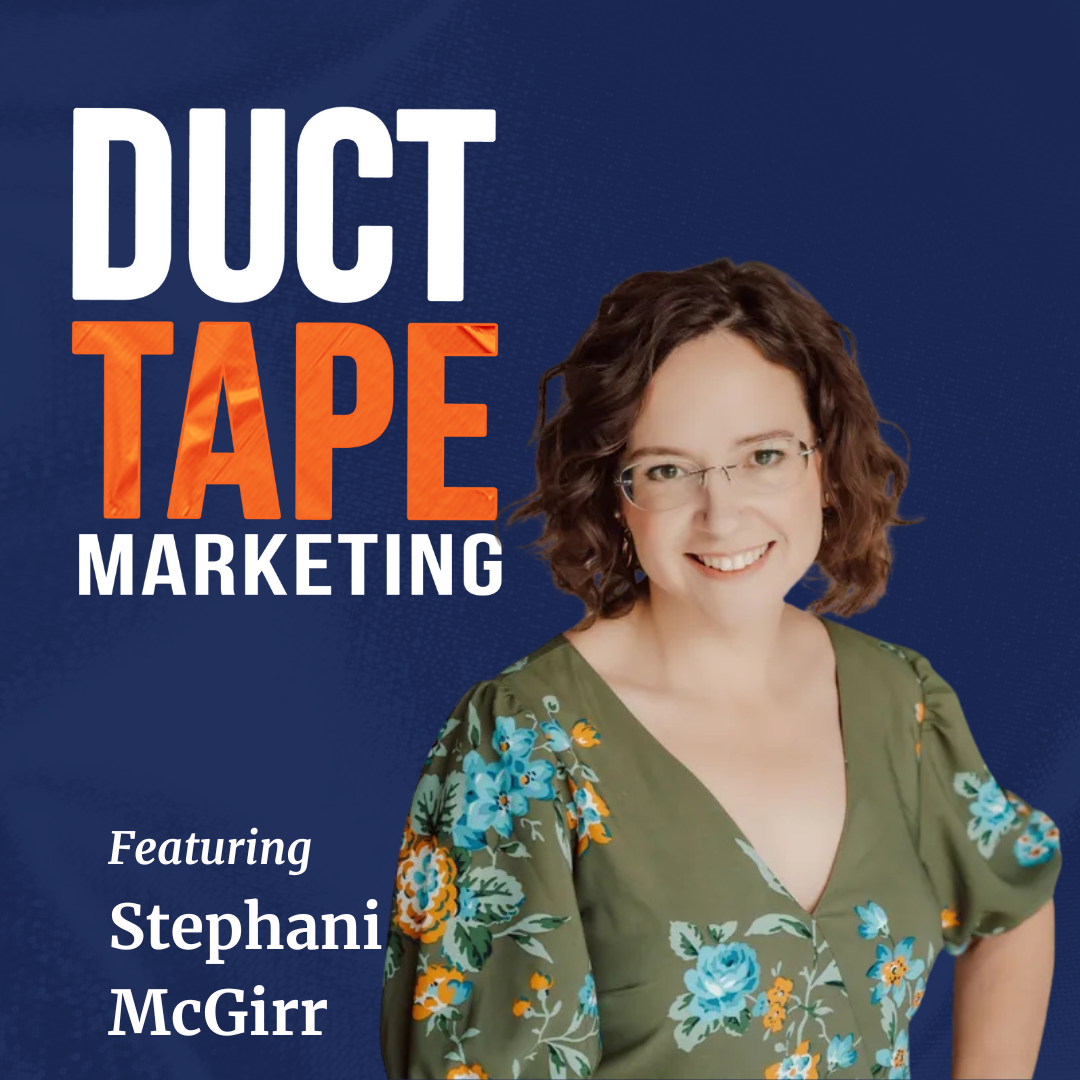
Stephani McGirrEpisode Overview

In this episode of the Duct Tape Marketing Podcast, Duct Tape Marketing CEO Sara Nay, sits down with Stephanie McGirr, founder of EGS Marketing Solutions and Amplify DPC. Stephanie shares how niching into the direct primary care (DPC) space transformed her agency, allowing her to streamline processes, build scalable systems, and deliver more impactful results.

The conversation dives into the importance of strategy before tools, how automation can empower small healthcare practices, and why marketing leadership—especially through fractional CMO services—is becoming essential. Stephanie also offers a grounded perspective on AI in marketing, emphasizing its role as a tool rather than a replacement for human insight.

This episode is a must-listen for agency owners, healthcare marketers, and small business leaders looking to scale with clarity and efficiency.

Guest Bio

Stephanie McGirr is the founder of EGS Marketing Solutions and Amplify DPC. With over 20 years of experience in marketing, she specializes in helping direct primary care practices grow through streamlined systems, automation, and strategic marketing leadership. Combining healthcare insight with agency expertise, Stephanie supports both startup and established practices in building sustainable, scalable businesses.

Key Takeaways

1. Niching Down Drives Growth and Efficiency

Focusing on a specific industry allowed Stephanie to refine her processes, improve client results, and generate consistent referrals. Specialization led to deeper expertise and more scalable systems.

2. Systems and Automation Are Essential for Small Practices

Many direct primary care practices operate with minimal staff. By simplifying workflows and automating administrative tasks, providers can focus more on patient care and less on operations.

3. Strategy Must Come Before Tools

Jumping into platforms without a clear strategy leads to wasted effort. Successful marketing starts with understanding goals, challenges, and existing processes before implementing tools or campaigns.

4. Fractional CMO Services Fill a Critical Gap

Small business owners often lack marketing leadership. Fractional CMO support provides strategic direction, helping businesses move beyond task execution to intentional growth.

5. AI Is a Tool—Not a Replacement

AI is transforming marketing, but human oversight remains essential. The most effective approach blends AI efficiency with human creativity and strategic thinking.

6. Education Is Key in Emerging Markets

In industries like direct primary care, marketing must focus heavily on educating prospects. Longer sales cycles require clear communication of value and consistent engagement.

7. Business Ownership Challenges Are Universal

Many struggles faced by healthcare providers are not industry-specific—they are common to all entrepreneurs. Recognizing this helps reduce overwhelm and focus on solutions.

Great Moments

  • 00:57 – Stephanie shares how becoming a patient led her to niche into direct primary care
  • 02:16 – The impact of niching on processes, referrals, and business growth
  • 06:03 – How to simplify and automate operations for small practices
  • 07:57 – Why strategy must come before tools in marketing
  • 10:21 – The role of fractional CMO services in small businesses
  • 14:13 – The growing influence of AI in marketing
  • 16:40 – The “dating relationship” analogy for customer journeys
  • 18:30 – Why education is critical in direct primary care marketing
  • 20:35 – Advice for marketers navigating AI and industry changes

 Quotes

“If I can do nothing but help them grow, then I’d feel really good about what we do—and I went all in.”

“This is not a DPC problem. This is a business ownership problem.”

“AI is a tool, not the end game. Human oversight will never go away.”

“Don’t let fear drive your efforts—use it, learn with it, and grow with it.”

Duct Tape Transcript

Sara Nay (00:00.996)

Hello and welcome to another episode of the Duct Tape Marketing Podcast. This is Sara Nay stepping in for John Jantsch and today my guest is Stephani McGirr. Stephani is the founder of EGS Marketing Solutions and Amplify DTPC where she helps direct primary care practices grow through smarter marketing systems and strategy. With more than 20 years of experience, she brings a unique mix of healthcare insight, agency leadership and practical.

marketing expertise. Stephanie, welcome to the show.

Stephani McGirr (00:31.817)

Hi, thank you for having me.

Sara Nay (00:33.912)

glad you're here. So I know we've spoken previously because I've gotten to know you in different business settings. And one of the things that you shared with me early on is that you decided at some point to focus on a very specific niche for your agency. And it's been a really positive decision for your business. So I would love to hear what drove you to focus on a niche specifically and how that's been beneficial to you.

Stephani McGirr (00:57.516)

Yeah, actually I started working with this industry just because I love it. And I am a patient of a direct primary care clinic. It's how I got started. My own provider was asking me, hey, can you help me with some things? I know you do marketing. And the conversation started and we just went deep and I've helped her grow from one to three practices. It's been a fun journey to be given that opportunity. And then referrals in the industry started coming naturally before I was helping

just any local based small business owner, right? The small local service area, different services. So not e-commerce or physical stores, really focus on the service industry. And by being able to niche down into this one area, it really helped us focus our efforts and become really streamlined not only with our processes and what we do for campaigns and strategy development, but also being able to stream

all of the processes on the client side and help them get really good at what they're doing. So referrals started coming in for this one industry and I thought, you know, I really believe in what this industry is doing and if I can do nothing but help them grow, then I'd feel really good about what we do and I went all in.

Sara Nay (02:16.964)

Yeah, I love that. I've been in the game for about 16 years myself and whenever we're working with businesses that are doing good and making an impact in the world, it just gives you so much more drive in the work that you're doing. So I love that. Thank you for sharing. One of the things that you noted is niching down has helped you develop your processes, but also your clients processes. And so in the small business space, what I see often is people are kind of just making it up as they go when it comes to marketing and there's not a lot of systems and processes behind what they do.

And so can you talk to me more about how you come in to a client of yours and help them build out their systems and processes a bit more?

Stephani McGirr (02:54.349)

Yeah, so it kind of starts to giving a deep dive into what tech pieces are you using? Where are you? How big are you? How involved is tech in the management of the practice? Some people are doing everything manually. Some people have literal multiple systems connected together or spreadsheets and the tech stack that can be. And so we first analyze what's going on and then what is essential to move over,

they have to keep, we started using Go High Level as an agency, which is our Amplify DPC platform. We started using it for service-based clients at first. I had no intention of selling it as a separate software on a different name. It helped us streamline everything we were doing. So instead of logging into a different system for every client with a different process, we were able to streamline our inside.

SOPs. And then for the clients who didn't have a tool, they were given a tool to be able to manage their practice. Just as we put more and more clients in the same industry on the system, we realized that we were custom creating sales funnels and workflows with every single person. And a lot of these things were something that every practice could implement, like a patient onboarding workflow. So what's unique about the DPC industry is that they don't take insurance in their membership model of health care. So you pay one

flat rate and you have unlimited access to your provider with no co-pays per visit. Some people refer to it as like the streaming for your healthcare like you do for online movies and TV shows. But so with that analogy, the onboarding process and the retention and the referral process in that industry is really big. And so we just had all of these workflows that were working across the board and

realizing that as this industry is also very new, it's been around a long time, but it's still new enough that direct primary care is not mainstream, right? People aren't looking for direct primary care. They're still looking for just a doctor or a healthcare provider. So the education piece of that is also really big. And when I'm gonna stop, I'm rambling and I lost track of where I was going.

Sara Nay (05:15.295)

Okay, no worries.

Stephani McGirr (05:18.497)

You were asking me, I wanna get back to the point, and I just realized I went off in a different tangent.

Sara Nay (05:23.172)

That's okay, that's okay. We can always edit it as we need. So I was asking you really about bringing systems and processes to your client was the focus of the conversation. Yeah, of course.

Stephani McGirr (05:31.265)

Yes, thank you. And I went completely the other way. OK, so I'm just going to start stop back and I can just start that question that answer over again. I remember where I was. I am so sorry. All right, thank you for editing this. OK, so how have we created systems and processes for clients or why? OK. Yeah, OK.

Sara Nay (05:39.194)

Of course, yeah.

It's okay, no worries.

Sara Nay (05:51.578)

Yep, essentially, Yep, because I was talking about how a lot of people, like lot of small businesses in general, kind of playing a guessing game with their marketing without putting a lot of systems and processes in place. And so how do you bring that structure to your clients?

Stephani McGirr (06:03.105)

Yes. Yes. OK. Well, all our clients are kind of all over the place because we work with smaller direct primary care startups and larger practices that have multiple providers, multiple locations. So being able to figure out what tool they need and how to simplify and automate their practice, those are the two goals. Simplify their their business.

and practice procedures and then automate as much because a lot of these practices are small and they don't have a large office staff. They work outside the traditional insurance world so they don't need a large staff to be able to handle the billing and insurance processing and a lot of them are just the provider and maybe a supplemental staff member. So by being able to give them a tool to handle the administration side of things and automate the business processes in that way, it's been

really helpful that they can grow their practice, focus on patient care, and not have to spend extra time on admin. That's where we focused on the tool implementation.

Sara Nay (07:12.056)

Yeah, that's great. And so I went through things a bit backwards based on that first conversation asking about tools and processes where typically when we're coming in and working with clients, we think about the strategy and then we think about the processes and tools. And that's where I actually see a lot of small businesses get stuck when it comes to marketing as they bring in a platform, they bring in a process, they start executing marketing without taking the step back and saying,

as a practice, what are we trying to accomplish strategically and what workflows do we need in place and all of that good stuff. So I believe you are a believer in strategy as well. And so when you're working with a client, how do you get started with them to understand what they actually need to do before you even start talking about specific tools?

Stephani McGirr (07:57.25)

Well, we use a tool for our clients. So when you become a client of our agency, we give you our Amplify DPC tool. That is a benefit of working with us. It is part of what we do for you, because when we run our services, we're running it through the system. And then you just get to use all of the features of it. Amplify DPC is a go high level.

as a white label. it is the tool that's built for marketing automation, the one tool that has all of the pieces for you. So it simplifies subscriptions and it reduces the cost in all of these other ways, as well as simplifies their processes and the number of systems they're having to log into. So it helps us and it helps them. And the reason why we sell it separately outside of services, because this was not our first intention, right? We were just implementing it for actually

our services and for the clients that we are supporting. But then we realized there are so many startup practices in the industry that need the help, need the tools, need the guidance, but they don't have the budget to pay an agency. And so by being able to provide them the tool, then we're just helping another level of providers in a larger group until they are large enough with a budget to be able to support somebody to help them along the way.

Sara Nay (09:17.368)

Yeah, okay. And so they might come in and start with a tool, but let's say they're ready for more strategic guidance and leadership. What does that look like in terms of your services for clients?

Stephani McGirr (09:27.405)

We would, everything starts with a conversation, right? We have a consultation, we talk about what are your goals, what are the struggles that you're currently having, what are the processes you're currently implementing, and then we look at, you know, what's working, what's not. I love to do that strategy first piece where we're really digging in deep before we commit to a specific plan.

of action. So that way we know everything that we're going to implement is for what they need in their unique practice level.

Sara Nay (09:58.902)

Great. One of the elements that we're thinking about and talking about a lot when it comes to marketing right now is the need for marketing leadership. And so not just necessarily always more people doing marketing, like yes, the doing needs to get done. But where a lot of businesses are seem to be struggling right now is having someone actually leading their marketing. And so is that an avenue that you've stepped into for your clients as well?

Stephani McGirr (10:21.237)

Yes, I also offer the fractional CMO services. And so in this aspect, it's really helpful because it's a personal struggle of mine being an agency owner as well. We offer a set plan for somebody who doesn't have the additional funds to be able to have a fractional CMO or that strategic oversight, but they need the tasks to be done, right? They have to get the work completed. So we do offer that.

But what I don't like about that is the inability to customize it according to what they need. And when you're a practice owner, you are the service provider, right? You are the healthcare provider. So you're not the person with a marketing degree, business degree, all of that. And that's what's interesting with this industry is they're leaving one system and they're joining a new or creating a new way to run their practice. It's a different model.

outside of the standard industry norms. And it's like they're escaping their frustrations with the system that they've been in. They've started their independent practice and then they discover that they're in a new world of frustration. It's a business owner frustration. It's the entrepreneurship, right? Wearing all the hats, exactly.

Sara Nay (11:30.232)

Yeah. Yeah. It's all the hats that they're wearing now.

Stephani McGirr (11:37.166)

And the last time I was at a conference and this conversation actually came up, they're like, the struggle for DPC, right? You have to do this, this, that, and the other. And I just, I stepped up to say I want to...

kind of give you some reassurance, this is not a DPC problem. This is a business ownership problem. When you are the business owner, the CEO, if you don't have the support staff or the means to operate your business more streamlined, then you are going to be overwhelmed, busy doing all of those things. So it was...

I felt like it was really encouraging for them to realize they're not alone in their industry. It's just, it's that business owner problem and being able to take that understanding and say, okay, this is normal. It kind of gives a little bit of relief. And then they can focus on what the next step is to overcome the overwhelm, how to streamline, how to automate. And so we do focus on both sides. And then from that fractional CMO side,

coming in, being able to support them in that more in-depth way, and then helping them work through what's right for their practice and their situation.

Sara Nay (12:50.712)

Yeah, that's great. We often say, you know, helping the business owners stay in their zone of genius versus doing all of the things. And so as entrepreneurs, you know, oftentimes you get into a business because you're passionate about something and then all of sudden you have to become somewhat passionate about finance and marketing and sales and managing team and hiring and onboarding, all the things that go along with it. And so it's, it's overwhelming. And I would agree like they're not alone. That's just a common.

Stephani McGirr (13:18.412)

Mm-hmm.

Sara Nay (13:18.572)

struggle in the small business space. That's great. Thanks for sharing your perspective on that. Next question is because you've been in marketing for 20-ish years, I believe at this point.

Stephani McGirr (13:29.805)

Yeah, experiencing marketing, learning marketing. I did run a different business earlier on and I was learning marketing by running my own business because I was the business owner doing all the things. I was collecting more certifications along the way because I was learning by doing. Yeah.

Sara Nay (13:33.274)

Great.

Sara Nay (13:38.872)

because you needed to.

Sara Nay (13:45.624)

Yeah, that's great. I've worked with lot of marketers over the years where they were in a business, they ended up having to learn marketing, they kind of enjoyed it, got the hang of it and then transitioned to helping others. So think it's fairly common path. Okay, so being in marketing over the years though, regardless if it was in your business or working with others, how do you feel like the landscape is changing right now versus in previous years?

Stephani McGirr (14:13.237)

Of course, it's all around AI, right? This new tool, new technology, people don't all accept it yet, but some love it and are willing to dive in. So I think it's almost like DPC itself. DPC is not mainstream. People don't get it. People don't understand it, but it's growing, right? So right now, what's changing the landscape most is AI. And people don't understand it yet. And trying to figure out ways to...

Sara Nay (14:33.412)

Yeah.

Stephani McGirr (14:42.375)

still keep marketing human, the message human, the connection human, but being able to use the tool to be able to be more efficient at what you're doing. That's, think the biggest piece of it.

Sara Nay (14:51.982)

Yeah. And so for you and your agency and your fractional CMO services, are you using AI as part of your team or are you empowering your clients to use AI? How are you approaching it specifically?

Stephani McGirr (15:06.797)

Yeah, a little bit of both. So we have some clients that don't want AI anything and we make sure that we write the content and we're really in on that. But for the most part, our clients are even giving us feedback. Hey, I went to chat GPT and gave me this. Can we do something like this? They'll bring their ideas, run it through AI and then give us the idea. And that's how we kind of start the...

Sara Nay (15:25.454)

Yeah. Yeah.

Stephani McGirr (15:33.856)

ideation of a new concept that they want to implement. So it's really hit or miss depending on what the client wants, but we are incorporating it in our processes. I think it's smart, you know, just being efficient. I don't believe we're at a place yet where AI can do what it needs to do without human oversight. So I say it's a tool, not the end game of using it and relying on it. Yeah.

Sara Nay (15:59.982)

Yeah.

Yeah, it's a great tool, I would say, but it can be misused and overhyped in many ways. And so I think a lot of people got into AI of like with the original thinking of like, we don't have to hire anyone and we can have super lean teams and we're going to like have all these agents and automation set up. And maybe that's where marketing is going.

Maybe, but right now I still believe as you said, human on the front end, human on the back end, approaching things strategically, editing, feeding AI all of your story, like all of that stuff still needs to happen from humans at this point too. Yeah.

Stephani McGirr (16:40.023)

Right, right. And I always use the analogy of the dating relationship for marketing and the customer journey, right? So having that relationship is important, especially in the industry I work with. It's a very close relationship model of healthcare where the providers really get to know their patients on a deeper level because they spend time with them. They're not rushed in and out. They take longer time and...

Sara Nay (17:03.108)

Yeah.

Stephani McGirr (17:06.921)

that model just allows a deeper connection to grow. And so I bring that into the marketing concept of it. Well, that should start with leads and the lead to conversion into membership cycle. It shouldn't start once they become a patient. And the right tools and automations can help you streamline your work, but stay personal and stay relational.

Sara Nay (17:26.938)

Yeah. Yeah. Yeah. And imagine for the practice that you serve, you know, it's a lot of awareness and education on the front end when it comes to marketing, but then a lot of retention and probably some referrals on the back end when it comes to marketing where, know, lot of doctors offices out here, I'm in Idaho, like it's hard to get into doctors offices, like to get an appointment anytime soon. And so they're not really having to do a lot in terms of retention. Then people call them when they're sick and they come in.

with this model where it's more membership based, I imagine you're doing more of like ongoing education events retention type of marketing. Is that a correct assumption?

Stephani McGirr (18:04.117)

Yeah, absolutely. You these practices are not getting patients just because they're on an insurance plan. So they have to actually be visible and they have to let the public around them know that their practice exists. And then once they do become aware of the practice, the education part is huge and the lead to conversion time is typically longer just because it's so different. The questions are, why don't you take my insurance?

Sara Nay (18:08.995)

Yeah.

Stephani McGirr (18:30.219)

the monthly membership, why do I have to pay, what if I don't come in every month, little pieces like that. And so it's the education of the value of the membership, what you get above and beyond a single visit. And then once somebody realizes that they have that level of healthcare, they're more likely to go in to see their provider because it's not gonna nickel and dime them for every visit and they get better healthcare and results because of it.

Once the model is more well understood, think that lead to conversion time will definitely lessen and go much higher, but there's a lot of education involved. Yeah.

Sara Nay (19:03.066)

Yeah.

Sara Nay (19:06.862)

Yeah, yeah, that's great. Where do you see marketing going in the next year or two? Any major shifts or changes that you're thinking about or considering either for your business or for your clients?

Stephani McGirr (19:19.893)

Yeah, yeah, that's a good question. You know, at this point, honestly, I'm kind of along for the ride and I feel like the sky right now with the way and the speed that technology is advancing and changing. I can't honestly say if I could pinpoint one idea or another, but it's it's I feel like if we don't embrace the AI technology, we will get left behind. And it's it's smart. It's speed.

for implementation and research. So I think those pieces of the tool are important to use and know and be aware of, and then being able to take advantage of how to use it.

Sara Nay (20:01.774)

Yeah, I think it is hard to predict the future right now when it comes to marketing because stuff changes so quickly. I was on a podcast recently and someone asked me where I see marketing being in 10 years and I'm like, your guess is as good as mine in 10 years. Who the heck knows? So I can relate. Well, if anyone's listening today and you want them to take away one tip or piece of insight from our conversation or maybe it's something that I didn't ask you that you think would be helpful.

Stephani McGirr (20:16.461)

I know what I feel like.

Sara Nay (20:31.7)

anything comes to mind that you want to double tap on.

Stephani McGirr (20:35.437)

I think the only thing I can think of right now is, if you're talking from an agency perspective, don't be fearful of AI. Don't be fearful of being squeezed out of a job market. I think if you're embracing it in the right way, if you use it the right way, that strategic human oversight will never go away. So being able to stay relevant in the market is more important.

Sara Nay (20:49.156)

Yeah.

Stephani McGirr (21:03.499)

Yeah, just don't let fear drive your efforts, but use it and learn with it and grow with it.

Sara Nay (21:12.11)

Yeah, I often, you know, in the personal growth journey that I've been on is, if something scares you a little bit, it's usually worth looking into or at least exploring a bit more versus completely shutting it out altogether. Well, I you also recently went through our fractional CMO certification. And so anything you're willing to share in terms of a takeaway or anything that was beneficial from that program as we wrap up.

Stephani McGirr (21:36.628)

Yeah, it was really interesting for me because I've been working as a fractional CMO for much longer than before this certification program, but I still decided to take it because I liked the interesting aspect that you guys brought to it and the way it helps guide the services after.

not just big campaign concepts. So I've been coming from the bigger campaign concepts, these bigger pieces, and then rolling into regular retainers. And so this is really helping us customize and really get very specific to those business individual.

use cases. So that's what I really love about it. And also you bring a lot of AI implementation knowledge into it. And that's helpful because I love learning from different people, different tools and ways to implement AI. So it was all very beneficial.

Sara Nay (22:35.706)

Great. Thank you so much for sharing and for being on the show. If people want to connect with you online, where can they find you?

Stephani McGirr (22:42.125)

Sure, you can find me under EGS Marketing Solutions as the marketing agency or Amplify DPC as the software. And I'm on LinkedIn as well.

Sara Nay (22:52.308)

and we'll put those in the show notes as we publish this recording. So thank you so much Stephanie for being here and thank you everyone for listening to the Duck Tape Marketing Podcast. We'll see you next time.

Stephani McGirr (23:02.008)

Thank you.

Sign up to receive email updates

Enter your name and email address below and I'll send you periodic updates about the podcast.

powered by

  •  

Can Graham Platner win?

A bearded man wearing a dark collared shirt speaks into a microphone; behind him is a two-colored banner with text partially obscured, reading “Graham Platner for U.S. Senate”
Graham Platner speaks to Mainers at a town hall at the Elks Lodge 188 on June 7, 2026, in Portland, Maine. | Laura Brett/Getty Images

Last fall, Graham Platner — an oysterman running for the Democratic nomination for US Senate in Maine — landed in hot water, when some of his old Reddit posts, showing him blaming victims of sexual assault and calling himself a communist, surfaced. Then, there was a story about the Nazi imagery tattooed on his chest. He had the tattoo covered up. Platner emerged from those scandals relatively unscathed by admitting to his checkered past and saying that he had changed. 

In late May, however, the Wall Street Journal reported that Platner’s wife informed his campaign that he had sexted women outside of their marriage on an app called Kik. And last week, the New York Times published reports of “unsettling” behavior by Platner from former girlfriends.

Nonetheless, on Tuesday, Platner won the Democratic Senate primary to take on Republican Sen. Susan Collins in the November general election. (By Tuesday, Platner was running largely unopposed; his only serious opponent, Maine Gov. Janet Mills, suspended her campaign in late April.) 

As deputy editor of the Midcoast Villager, a local newspaper based in Camden, Maine, Alex Seitz-Wald has been tracking Platner’s rapid political ascent — and how Mainers of all stripes, the people Platner will have to win over to defeat Collins, feel about him. Seitz-Wald told Today, Explained co-host Noel King that many people are torn over the scandal, but not so torn that they’re not still voting for Platner. He breaks down the results of the primary, Platner’s chances this fall, and more. 

Below is an excerpt of their conversation, edited for length and clarity. There’s much more in the full podcast, so listen to Today, Explained wherever you get your podcasts, including Apple Podcasts, Pandora, and Spotify.

What do Maine voters think about Graham Platner? You live there; you talk to people. What’s the read? 

I’ve been talking to Platner voters since he jumped in as this totally unknown oyster farmer in August, who no one had heard of, running against a two-term sitting governor. And he instantly connected with people and developed this strong bond; people really related to him.

I think that helped him survive that first round of scandals in the fall with his tattoo and the Reddit controversies. Then, with this latest round, these later ones definitely hit differently. They didn’t roll off his back the way the earlier ones did. There was a lot of concern; there was a lot of disappointment. But ultimately, Maine Democrats have been trying to get rid of Susan Collins and failing for so long, and they have tried running more traditional candidates and lost. And so, I think they are willing to take a chance on him. 

It seems like a very pragmatic calculation that a lot of Maine Democrats are making right now, which is, “We need to beat Susan Collins. The stakes are too high. Supreme Court, control of the Senate, everything else, and we’ll put aside any concerns we have with his personal life if he’s our only chance to beat Collins.”

You will know that outside of Maine, there is so much speculation about who Graham Platner really is. Are people in Maine speculating about who Graham Platner really is?

Yes, and no. I think there’s been a major disconnect between what I’ve seen and heard on the ground — when I drive my daughter to school every day, I pass dozens of Platner yard signs that have been out every day for months — and between what the national narrative is, which is typically much more negative. 

I think there are very legitimate questions about his past that a lot of Maine Democrats have been asking. But he is also just a type of guy that is very familiar in Maine, and I think a lot of people felt like they could connect with him, could relate with him, even if they didn’t know exactly who he is. I think he also did a really effective job of weaponizing this chip on its shoulder that Maine has about how it’s viewed by the rest of the world. 

There’s this concept of: You’re either a Mainer, or you’re from away, and he is coded as extremely Maine. He was able to use that to say all these attacks from the New York Times or whatever, outside world, don’t listen to them. That’s people from away trying to tell us in Maine what to do. And that’s hitting deep in the core of the Maine psyche.

It is notable that Platner’s scandals have unfolded over a long period of time. The allegations in late May — again, I’m in DC, not in Maine, and that felt huge to me. Are you seeing any shakiness after the most recent round?

There’s definitely a lot of shakiness and a lot of concern, a lot of disappointment. 

One voter told me they were heartbroken about it, because they really thought that he was different, that he was not a typical politician and especially the way he responded to that first round of scandals with the Reddit post and the tattoo. He really took ownership. And it was part of this whole redemption arc that he had built about how he was a combat veteran with PTSD and in a really dark place. And then, he came home to Maine, got involved with his community and his business, met his now-wife, and was a different man. But the latest round of scandals kind of punctured that narrative, because he only got married in 2023, and those [sexts] were from just a couple of years ago. He wasn’t a young man in his early 20s. And so, I did hear a lot of disappointment about that and also a lot of cynicism from people who thought he was different relegating him back to, “Oh, he’s just a politician like the rest of them.”

But ultimately, partisanship is a very powerful force, and the stakes being what they are in a race that could tip control of the Senate, most Democrats are going to put aside their concerns. But — and this is a big “but” — the thing to watch, I think, heading into November, Susan Collins has a proven, almost unique ability in this day and age, to win split-ticket voters, to get people to vote for Joe Biden at the top of the ticket and, then, vote for her. So it would only take a relatively small number of defections to potentially tip things back into Collins’ column, especially if there are more revelations yet to come.

Do you think he can win against Collins?

I do think he can win against Susan Collins.

Just to level set for a second, I think any Democrat would have a tough time beating Susan Collins. A lot of people look at Maine — it’s New England, it’s a blue state. We haven’t voted for a Republican president since 1988, so they assume this is low-hanging fruit. It’s really not. Susan Collins is a very effective politician. So I think this race, no matter who the Democrat was, was always going to be a tight, within the margin of error race. 

That said, Platner has been able to raise the money. He’s been able to hold the coalition together. So far, despite all these scandals, he hasn’t really had any defections from elected officials. He’s done this enormous number of town halls. This is a small state where retail politics goes a long way and connecting with voters face-to-face can really make a difference. And that’s not something that Susan Collins does. 

In 2020, Democrats ran a squeaky-clean, well-qualified candidate who raised twice as much money as Susan Collins and still lost by nine percentage points. So I think there’s a willingness — almost a sense of necessity — among some Maine Democrats that we have to try something different, and there’s a good chance we’re going to lose anyway, so let’s take a flyer on this guy and maybe he can do it.

  •  

Write Press Releases That Generate Real Media

Write Press Releases That Generate Real Media written by John Jantsch read more at Duct Tape Marketing

Catch the Full Episode:

Overview

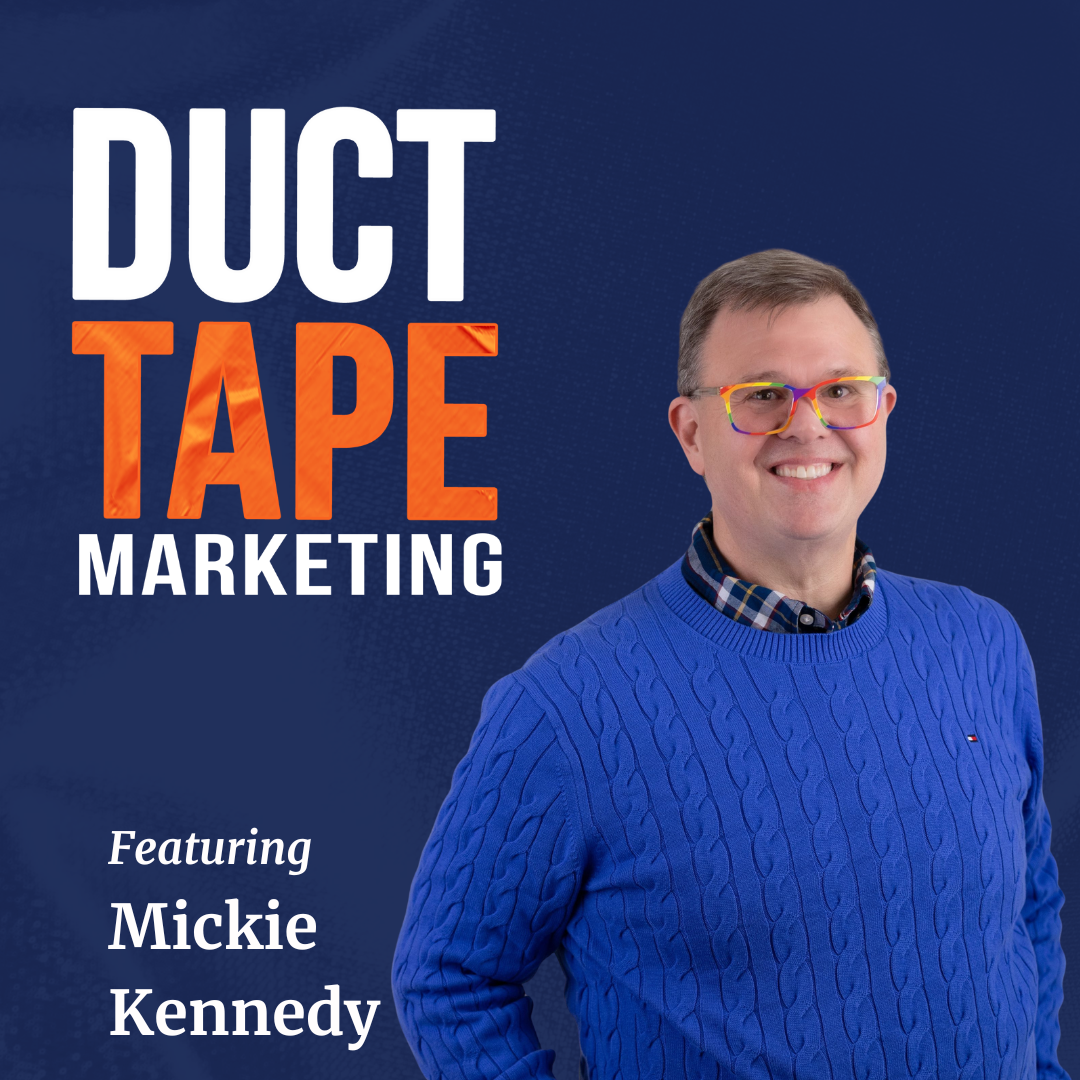
Most small businesses have written off the press release as a relic. They should not have. In this episode, John Jantsch sits down with Mickie Kennedy, founder of eReleases, to make the case that earned media is more valuable now than it has been in decades — and that AI is changing how smart businesses write press releases, but not in the way most people think.

Kennedy draws on over 25 years of press release distribution to explain why 97% of press releases fail to generate a single article, and what the other 3% have in common. The conversation covers story arc, the contrarian angle, using surveys to manufacture news, and why putting the spotlight on a customer often works better than talking about your own product.

The AI component here is practical and specific. Kennedy walks through a paragraph-by-paragraph approach to using AI as a writing tool — not a strategy tool — and explains why letting AI decide what to write about is where most people go wrong. If you are a small business owner who has dismissed PR as too expensive or too complicated, this episode will change that.

About Mickie Kennedy

Mickie Kennedy is the founder of eReleases, a press release distribution service he launched in 1998 after watching small businesses get priced out of PR agencies charging $20,000 minimums. eReleases gives small businesses and entrepreneurs access to the same national newswire infrastructure used by major corporations, at roughly a quarter of the cost. He has worked with more than 32,000 clients and distributes around 10,000 press releases per year. He teaches PR strategy through a free masterclass at ereleases.com/plan.

Key Takeaways

  • Syndication links are not earned media. Getting your press release replicated on 200 subdomains means nothing if no journalist wrote an article about you. The only metric that matters is whether a human being covered your story.
  • AI is changing the value of earned media. Search engines and AI tools lean on credible industry publications as sources. One article in the right trade publication now carries more weight than it ever did.
  • 97% of press releases fail to generate coverage. The ones that do share common patterns: a story arc, stakes, a contrarian angle, or a data-backed finding from an original survey.
  • Do not let AI decide what to write about. Use AI to structure and write the press release once you have a strong strategic idea. The idea itself has to come from you.
  • Build press releases paragraph by paragraph with AI. Ask for structure first, then headline options, then opening paragraph variations. The whole process takes about 12 minutes and produces far better results than a single prompt.
  • Find an enemy or a blind spot. The carpet company that called out big box home improvement stores got picked up in every major flooring trade publication. Nobody had said it before. That is the opportunity.
  • Put the spotlight on a customer, not yourself. A story about a company that was losing money for three years and turned profitable using your software is more interesting than a feature list.
  • Surveys manufacture news in any industry. Partner with a smaller trade association, run a survey, find the most surprising result, and build the release around that finding.
  • The contrarian position is less crowded. Journalists outside of politics want balance. If everyone in your industry agrees on something, being the thoughtful voice of dissent gets you quoted every time the topic comes up.

Timestamps

[00:01] — Opening hook: the press release is not dead, but there is a catch when AI is involved.

[01:30] — How PR and press releases have changed since the web arrived, and why syndication feeds created a false sense of results.

[03:51] — Earned media vs. owned media, and why AI is pushing earned media back to the top of the priority stack.

[06:15] — The waste management client who got one article and landed $30 to $40 million in contracts from Australia.

[08:27] — How to find a newsworthy angle when you are not naturally in a newsworthy business.

[10:13] — The carpet company in New Jersey that called out Home Depot and Lowe’s and got picked up everywhere.

[12:05] — Why blasting a media database is killing your chances with journalists and what to do instead.

[14:47] — How to use AI to write press releases the right way: structure first, headlines second, paragraphs third.

[18:28] — Using AI for deep research and brainstorming contrarian ideas by industry.

[19:09] — Why the contrarian position is strategically underused and how it gets you recurring media mentions.

Memorable Quotes

“When a journalist writes an article about you, it’s an implied endorsement. Someone has transformed the press release into a written article.”

“You have to take what you want, and that’s the pill. Sometimes you’ve got to put it in cheese to get the journalist to swallow it.”

“AI is very good at writing the press release. The ideas behind it — it’s not very good at that. It’ll make a press release like you see out there, and you’re like, this is as good as that one. Well, that one probably didn’t get any pickups either.”

“The contrarian position is a much easier place because fewer people are competing for that spot.”


Learn more at ereleases.com. Mickie’s free PR strategy masterclass is at ereleases.com/plan.

Duct Tape Transcript

John Jantsch (00:01.71)

So what if the press release isn't a relic of the pre-internet era, but actually one of the most underused tools a small business has right now, especially when AI can help write them, but there's a catch. Hello and welcome to another episode of the Duct Tape Marketing Podcast. This is John Jantsch. My guest today is Mickie Kennedy. He's the founder of eReleases, a press release distribution service started back in 1998.

After watching small businesses get turned away from PR agencies, it charged a minimum of $20,000. He's since distributed over 150 press releases, more than 30,000 customers. And today we're going to talk about how to train AI to write press releases that journalists actually read and use. So Mickey, welcome to the show.

Mickie Kennedy (00:49.141)

Thanks for having me.

John Jantsch (00:50.872)

So I've been in this business over 30 years. And so certainly the press release and PR and media relations were a big component of marketing. Seems like when the web came along, they sort of lost a little bit of their use and usability. And I wonder how you've been in this game a long time as well. E-Release really came around.

kind of when the web was just starting. how have you seen the practice of PR in general and certainly the PR or the press release tool changed dramatically over the last couple of decades?

Mickie Kennedy (01:30.241)

So I think the biggest change I've seen is the proliferation of noise in the PR space. There is a lot of, I guess you'd call them syndication feeds where for $49 or $119 your press release gets replicated on a bunch of websites, but it's usually like a sub domain or a folder on the website. And if you go to the website and you do a search for your company, it won't show up.

John Jantsch (01:36.066)

Yeah, sure.

Mickie Kennedy (02:00.481)

So, you know, humans aren't actually seeing this and it's more of just a, I don't know, an ego lift. And it's gotten to the point that, you know, people don't recognize the opportunity of what a proper newswire is. In the US, it's largely a duopoly between Businesswire owned by Berkshire Hathaway and PR Newswire. And PR Newswire is the oldest and largest. And they also charge, they both charge

quite a bit being a duopoly, around $1,800 for a 600 WordPress release to go out nationally. That being said, all the releases that go out through e-releases go out nationally and it's probably about 25 % the cost of that. The caveat is you have to be a small business or entrepreneur. Basically the type of customer that PR Newswire sells team has no interest in pursuing. And that's sort of what I act as a co-op for small businesses and entrepreneurs. And we move about 30,

Let's see, right now we're moving about 10,000 press releases a year. Altogether, we've worked with over 30, I think right now around 32, 33,000 clients that we've helped. And so we're moving a lot of volume and as a result, we're really helping people. But you know, there are people who have used the other services, then they'll do a press release with us and they'll actually say, we had less impact with you. And I'm like, well, I see you got no earned media.

and you got no earned media with them. They're like, no, we got picked up by 200 links. And I'm like, where? And they're just the syndication links. And I'm like, nobody wrote an article about you. These are all the press release replicated on a bunch of syndication websites. And they, you know, it's just hard to, I find education has become the thing now where we try to get people to understand the opportunity.

John Jantsch (03:51.736)

Well, let's talk about that because in the old days, certainly the press release was a vehicle to get media coverage, even if you were just trying to get it in your town. Then when the web came along, it actually became as much or more of an SEO play than a PR play, right? Yeah, because unfortunately in the early days, those links buried 10 rows deep were getting picked up by the search engines.

Mickie Kennedy (04:07.861)

Yeah, people trying to game that.

John Jantsch (04:18.19)

Even though no people really saw them, they were getting indexed. And so they did actually have some value in that regard. But certainly the search engines now are onto the game and those days are certainly over. So talk a little bit about this idea of earned media versus owned media, because I think we're actually back in a window of time when earned media is probably going to become more important than it maybe ever was or certainly

Mickie Kennedy (04:21.909)

But right now.

John Jantsch (04:46.978)

more so than it's been in the last couple of decades.

Mickie Kennedy (04:49.685)

Right. I think with AI, people are looking for stuff and AI is leaning on credible sources. And believe me, when I tell you it's not this subdomain on a website that no one knows, it's, if you're in the waste management space and you've been picked up in Waste News, which is the industry standard publication, and they've written about you doing something exciting.

John Jantsch (05:03.459)

Right.

Mickie Kennedy (05:17.537)

the AI as well as the search engines are going to know that that's a very relevant publication. And as a result, you're going to stand out. you know, that let's just take that one as an example. I mentioned it because I had a client who did a press release about them where they build facilities for municipalities. And it's everything nuts and bolts from waste as well as recycling. And, you know, a city orders it.

And there's nothing else. They handle everything. They work with the contractors and they build out a complete facility. very, you know, there's nobody really doing that. And so, they sent that press release out. They got one article and waste news, magazine. It's like the perfect magazine, but it was just one article. They were contacted by, a city in Australia and, within six months they were under contract to build two facilities in Australia.

John Jantsch (06:06.136)

Mm-hmm.

Mickie Kennedy (06:15.297)

And it was I think over 30 or 40 million dollars from one article and so And you know, they'll continue to get leads and recognition for that and that's what happens with our media I tell you you know you appearing on a website that no one's looking at nothing is ever going to happen But when a journalist writes an article about you it's like an implied endorsement You know, it's someone has transformed the press release into a written article

John Jantsch (06:18.83)

Sure.

Mickie Kennedy (06:42.977)

You know, during the pandemic, we helped an initiative called the dining bond initiative to help restaurants that were closed during the pandemic. It was sort of like a volunteer effort. And if they you you nominated a favorite local restaurant, if they were able to contact them, you could give money that went directly to them back by dining bonds for like a gift certificate scenario. And it raised over $10 million in revenue, it got picked up in over 100 places. It got

You name it Wall Street Journal picked it up New York Times lots of food publications and I saw over 80 daily newspapers who picked it up and so it did extremely well and again that would never happen on these syndication sites, know, these were all individual articles that people wrote about and I think that you know what people are missing is You know, what's what's the magic sauce and its strategy, you know in this case it was a lot of unknown

John Jantsch (07:21.4)

Yeah.

John Jantsch (07:27.566)

100 %

Mickie Kennedy (07:40.279)

You know, we were sent home two weeks to flatten the curve and there was an uncertainty. And here was something that was potentially positive news, but it was also actionable. You know, we have, we are powerless, but we could give $50 to the favorite restaurant we go to for our anniversary every year and make sure we're helping them in some small way. And I think that that's

John Jantsch (07:59.896)

Well, that, I mean, I think that brings up a really good point because a lot of times when people think about promoting something, there is like, here's my new product, you know, press release. and you know, that's not very interesting, it's interesting to that person, but maybe nobody else. So how do you find those? mean, you know, the pandemic was kind of an interesting opportunity, but in, in, in the real world, every day of small business, how do you find that thing that, that, that nobody's covering or that

Mickie Kennedy (08:11.329)

No.

John Jantsch (08:27.33)

that's really unique inside your industry instead of just self-promotion.

Mickie Kennedy (08:31.798)

you have to, you know, sort of put your thinking cap on. You have to play the contrarian. You have to look at different angles. Do you have to think and talk to people? Like if we were at a trade show or conference, what are the things you'd want to ask people right now? Have you noticed that this is happening with your company or is it just mine? Those are the things that are ripe for bringing out because often these are industry blind spots that the industry is not reporting on yet.

but you've noticed this trend and now you're looking for verification from someone else. And if you can get that verification, they're like, yeah, I'm seeing that too. You can break that. And that puts you in control for getting that news out there. And I've had that work really well, especially for clients that traditionally aren't very newsworthy. There was a local carpet company in New Jersey and talking to them during a brainstorm, we asked who their biggest enemy was and they says the big box home improvement stores.

And not only are they our biggest enemy, they give consumers a really poor product and a poor experience. And this is why. And so we did a press release about that. And they got picked up in almost every floor trade publication. No one had discussed it ever before. And yet it was something that really excited everybody. And we continued to milk that cow for a few more weeks, talking about different ways of which this company

know, targets and markets against the big box of improvement stores and brings home the value of why having seasoned people install your carpet rather than Home Depot going down a list of saying, here's the list of people who have a certification for home improvement license in our state. And that's the only qualification that Home Depot and Lowe's uses. They,

John Jantsch (10:13.944)

That's a pretty good, like if people are looking for a hook, like find an enemy, right, in the industry, like find a bad guy to kind of rail against. That's a pretty proven practice, isn't it?

Mickie Kennedy (10:27.53)

And also, think putting the spotlight on a customer, you talk about a new product or service, you get greedy, and you want to put the spotlight on you. But often you're not the most interesting story. But if you had someone who beta tested your product or software, and they had an amazing outcome, sometimes putting the spotlight on them and saying, we have this new product or service, here's a company that used it three years in, they lost money every year, looks like they're going to be one of the casualties of these companies that

John Jantsch (10:31.276)

Yeah, yeah,

John Jantsch (10:39.534)

Right.

Mickie Kennedy (10:57.164)

fail in the first five years of business. And by using our software solution to write better invoices that are more profitable, they're now projected to have their first profit ever. And then you have a quote by them. And it's like that shows the stakes. And it makes it so much more intriguing and interesting for an audience. And a journalist is at the end of the day doesn't care about

John Jantsch (11:04.12)

Mm-hmm.

Mickie Kennedy (11:18.518)

whether this is going to make a strong article for you, but is it going to make an intriguing and interesting article that their audience is going to want to listen to or read? And that's the biggest metric. Sometimes I say, you have to take what you want, and that's the pill. And sometimes you've got to put it in cheese to get the journalist to swallow it. And what is that magic thing that you're going to do? And sometimes putting the spotlight on others, it's really just creating a compelling story arc. Because naturally,

John Jantsch (11:25.41)

Right. Right. Right.

Mickie Kennedy (11:47.863)

Journalists like to write in a story arc. It's something that we learn from children onward and having a product or service with a list of features doesn't yield much of a story. So what are the things that you can do to make the stakes higher and to put more of that story arc in there?

John Jantsch (12:05.102)

So another sort of casualty of PR practice was the fact that we could hit a button and send out 20 million. I get pitches every single day. like, who on the planet thought this was relevant to my audience? And so how do you kind of balance that? I mean, in a perfect world, I wrote this press release for you, journalist, in this publication in this city. I mean, how do you balance that?

with the fact that you're probably gonna need to send a few out to get a hit.

Mickie Kennedy (12:36.278)

Yeah. So I think that it's one of the cases where going over a newswire now is more important than ever. And it sucks that it's in a duopoly environment because it's expensive. But, you know, that being said, the newswire is very clean. And so if you go into your log in on PR newswire, you have an industry feed that you've signed up for, and you can actually tailor it to exclude, you know, press releases with certain keywords, make sure that you capture

John Jantsch (13:02.53)

Mm-hmm.

Mickie Kennedy (13:05.89)

and pin certain press releases that mentioned certain keywords that are really important to you. And so it's the opposite of their inbox. know, media databases have become prolific over the last 20 years. And, you know, if you're a golf club company who spent $10,000 for a yearly license, and you sent to 2400, you know, people who cover golf, and they all passed, you now start talking yourself into

Well, know, bankers and financial people like to play golf. So let's send it to financial analysts and reporters. And it's like, they'll never cover golf clubs. But you know, that's happening in every industry. People are talking themselves because it costs nothing to just hit a few keys and blast to everybody. And so I find that with everybody, but perhaps local media, email has become a really difficult way to reach journalists. And I think that the newswire

John Jantsch (13:46.35)

Yep, right.

Mickie Kennedy (14:00.382)

is a better way to reach them. You just have to make sure that, you know, when you're spending money to go over a newswire, even if it's a reduced price with us, that you're really playing with something that's strategic and you're not doing a press release that's like, hey, we hired Judy as the new HR associate or something like that. It's a meaningful press release. And so I tell people to really, you know, put a little bit of effort into the strategy behind the press release.

John Jantsch (14:19.416)

Right.

Mickie Kennedy (14:28.515)

you know, look for ways in which you can make a compelling story and help develop a story arc because almost anything that people do you can sort of play with it and elevate it and try to create nuances that brings out more of a story element.

John Jantsch (14:47.534)

So we mentioned AI and certainly, you know, if hitting the button to send has gotten easier, certainly writing the press release has gotten easier. In theory, you can do one prompt and tell it what your product is and what your company name is and voila, it'll put it in a press release format even for you. How do you actually write, how do you actually use the AI tools to write better press releases, ones that are going to get picked up? mean, what does that look like in practice?

Mickie Kennedy (15:15.267)

So I never let AI decide what to write on. I tell people the metric is about 97 % of press releases that even go through the newswire where people paid $1,700 plus to go out naturally. They do not generate earned media. So what I tell people to do is focus on the 3 % of press releases that do get picked up because there's patterns in there. The story arc is an important one.

John Jantsch (15:40.706)

Mm-hmm.

Mickie Kennedy (15:43.172)

you know, building in an industry survey or study, that's something anyone can do. Nobody owns an industry, you can do the legwork, get a survey in your industry, partner with a smaller independent trade association, not the big one, they'll often because it's a smaller independent one, they don't get a lot of love from the media. So they see it as a win win themselves. And I'd say more than two thirds of the time, they will cooperate with you to send that out to their members. And

you know, focus not on all the questions, but what was the most, uh, the biggest surprise or aha of that, uh, survey that you did and then focus on that, uh, as the press release. then ask AI, Hey, I've got this idea for a press release. Here's me. Here's my company. Do not write the press release. Give me the structure of what you feel would be the perfect press release on this subject. It'll probably write the press release anyways. And I go, okay.

I see you wrote the press release. Now give me just the structure. And then finally it gives you the structure and say, okay, give me eight headline options for this press release. And then if I find one that I really like, I'll get it. Otherwise we'll refine one. It's like number three comes closest, but I want to make sure that this is in there. And then I say, okay, now give me three opening paragraph options using this target headline. And it, this way takes longer. It might take.

John Jantsch (17:07.822)

Thanks

Mickie Kennedy (17:08.355)

I've the most has ever taken me to do a whole press release is 12 minutes. So you don't get it in 30 seconds. But if you take it top down, paragraph by paragraph, and then focus like, hey, I'm the second paragraph, I want to make sure I have a quote. And I want to say something very powerfully, you know, make sure active verbs are used, and that really stands out. And, you know, if you're comfortable,

John Jantsch (17:11.923)

Yeah.

Mickie Kennedy (17:33.88)

being a contrarian, you could even say you can make it a contrarian quote or something like that. like, let's say you did a survey of graphic designers and 80 % believe that they're gonna be replaced by AI in five years. could say, you could disagree with that and say, while this survey shows a lot of people are scared of the industry, I think this is a bit alarmist. And I do believe that those who don't know how to start incorporating AI into their graphic tools toolbox,

they're going to be at a huge disadvantage in the coming years. And you know, that you're not necessarily agreeing with what the survey said, but it makes you seem very thoughtful and rational. And, you know, those types of things. And then, you know, just going top down until you get what you will, you know, get it finished. AI is very good at writing the press release, but the ideas behind it, it's not very good at it'll, it'll make a press release, like you see out there. And you're like, this is as good as that one. Well, that one probably didn't.

John Jantsch (18:23.661)

Yeah.

John Jantsch (18:28.782)

Well, it's because it's read all the bad press releases, right? That's right. You know, one of the things I think people really under utilize is the deep research aspect of it. I mean, you can get to the point where you could go to just about any industry and ask it something like, what are generally accepted practices in this industry?

Mickie Kennedy (18:31.734)

Right. And it's like, yeah, you're right. It did as well as another bad press release that didn't get any media pickups. So,

John Jantsch (18:53.614)

that nobody is questioning. mean, questions like that can all of a sudden really spark some things that will be polarizing, controversial potentially. And that's really where the gems are, isn't it?

Mickie Kennedy (19:09.56)

Yeah, absolutely. mean, the research capability of AI is so good. And a lot of people also don't brainstorm with it. It's like, hey, what are some contrarian ideas that we could use for my industry and just brainstorm them. And maybe it gives you five or six, and you're sitting there saying, well, I would never feel comfortable saying that in my industry, but maybe number four.

is one that I could get behind and I wouldn't alienate my customer base. But being a contrarian is a really great way to stand out with the media because so many times everybody agrees in one direction. And as a result, stories get written that are one sided. And believe it or not, outside of politics, journalists like to be fair and balanced. So if you're the only one raising your hand and saying, hey, electric cars are bad for the environment, they're bad for right now,

you know, taking a lithium battery fire and getting it under control often involves 12 fire trucks and 50,000 gallons of water and and it burns to X amount of degree. Plus, we don't know what we're gonna do with these batteries at the end of the life. Maybe we could hit pause for a few years until we figure some things out before we embrace electric cars so strongly. And that way you stand the likelihood of every time they discuss this subject, you get plugged in as that rational contrarian viewpoint.

And that's a much easier place because less people are competing for that spot.

John Jantsch (20:40.75)

Well, Mickey, I appreciate you taking a few moments to stop by the Duck Tape Marketing Podcast. Where would you invite people to learn more about e-releases and connect with you?

Mickie Kennedy (20:49.902)

So our website's ereleases.com. I have a free masterclass where I teach people in less than an hour these strategic types of press releases that work, the 3 % of press releases that are actually working. And again, it's completely free and it's a great place for anybody to start. And that's at ereleases.com slash plan, P-L-A-N. And again, it's completely free and you can feel free to call or email my office or chat with us.

You know, we work with people all the time on their first real PR campaign and we're great at holding hands and sort of teaching people the way to do this. And I always tell people, this is something that anybody can do. You don't need to hire a PR firm. This is something that you can do yourself. It just takes a little bit of thought and effort, but it's a way in which I think a small business can sort of implement it and maybe do it quarterly or every other month, you know, find a cadence that works for you.

John Jantsch (21:45.516)

Well again, I appreciate you taking a few moments and maybe we'll run into you one of these days out there on the road.

Mickie Kennedy (21:50.735)

Sounds good. Thank you.

Sign up to receive email updates

Enter your name and email address below and I'll send you periodic updates about the podcast.

powered by

  •  

7 Steps to Small Business Marketing Success – Episode 2

7 Steps to Small Business Marketing Success – Episode 2 written by John Jantsch read more at Duct Tape Marketing

Catch the Full Episode

john jantsch (1)Overview

Most small business owners are not failing at marketing because they lack effort. They are failing because they lack a foundation. In this solo episode of the Duct Tape Marketing Podcast, John Jantsch breaks down the second step in his seven-part framework for small business marketing success: diagnosing and solving the “random acts of marketing” problem that keeps businesses busy but stuck.

John walks through the three core elements of a Strategy First approach: defining your ideal client, identifying your true differentiator, and crafting a clear core message. He then ties it all together with the Marketing Hourglass, Duct Tape Marketing’s model for the full customer journey. This episode is built for small business owners, consultants, and marketers who feel like they are doing everything but seeing none of it add up.

Whether you are chasing every new tactic, working with vendors who all have different plans, or generating leads that never convert, this episode gives you a practical framework to stop guessing and start building a marketing system that works.

Key Takeaways

  • Random acts of marketing are not a budget or effort problem. They are a foundation problem rooted in the absence of a clear strategy.
  • Strategy must come before tactics. Every tactic should connect back to a central plan the business actually owns.
  • An ideal client profile is not just demographics. It is defined by the specific problem you are uniquely suited to solve, the attitude of the client, and the profitability of the relationship.
  • Niching down is less about picking an industry and more about owning the problem you solve better than anyone else.
  • Differentiators like “quality,” “service,” and “experience” are not differentiators. They are claims anyone can make. Real differentiation lives in the voice of your actual customers.
  • Customer reviews, Reddit threads, and organic feedback are underused goldmines for discovering how customers actually describe the problem you solve.
  • A core message is one sentence: customer language, clear, different, and credible. It is not a tagline and it is not a list of services.
  • The Marketing Hourglass maps seven customer behaviors: know, like, trust, try, buy, repeat, and refer. All seven require intentional activation.
  • Post-purchase experience matters as much as acquisition. Turning customers into advocates is a planned marketing activity, not an accident.
  • The companion workbook for this series is available at dtm.world/sevensteps and is designed to turn this framework into action.

Great Moments

[00:01] Introduction to the seven-step series and what to expect from Episode 2

[02:23] Reframing random acts of marketing as a systems problem, not a character flaw

[03:10] The Strategy First philosophy and why it has anchored 30+ years of work

[04:00] Breaking down the ideal client profile: beyond demographics to the problem you solve

[06:58] How to find your real differentiator in the voice of the customer

[08:00] What a core message actually is (and what it is not)

[09:21] Introducing the Marketing Hourglass and the seven buyer behaviors

[11:00] Your homework: define your ideal client, the problem you solve, and your core message

Memorable Quotes

“Strategy needs to come before tactics. That’s really been the basis of my body of work.”

“We’re doing a lot of things, but it’s not adding up. Every vendor has a different plan; they’re all executing the way they want to execute rather than around a cohesive plan that the business is directing.”

“Quality, service, experience: those aren’t differentiators. Even if it’s not true, it’s pretty easy for somebody to claim.”

“A core message is not about here’s what we do. It says: this is who we serve, this is the problem we solve for them, and this is how we solve it.”

“After they become a customer, what are we going to do to surprise and delight them and turn them into advocates? Those are intentional marketing activities.”

Duct Tape Transcript

John Jantsch (00:01.016)

Hello and welcome to another episode of the Duct Tape Marketing Podcast. This is John Jantsch, and again, no guests. This is actually, if you've been playing along, you know that I'm doing a series of seven podcast episodes based on the seven steps to small business marketing success, which is a new workbook program framework that we have created. You can find it at dtm.world/slash seven steps. So

if you did not listen to episode one, you can go to Duct Tape Marketing, go to the podcast tab, and find episode number one if you'd like. it's obviously on Apple and all the other places that you get your podcasts. This is episode number two, and today I am going to talk about one of my favorite topics, and that is random acts of marketing. So I think it's just a hopefully lighthearted way.

To name what is a common affliction, if you will, with a lot of small business owners. We we see somebody doing something, we go to a conference, we read a book, and next thing we know, we're telling the team we need to do this. and we do that for a while or two, and then we change our mind. So that's what random acts of marketing really is. And a lot of times it comes not as a budget problem, not as an effort problem. it's really a foundation problem. So

You know, a lot of times we'll sit around and say our our our marketing is busy, but nothing adds up. Ever said that? We're doing a lot of things, but it's not adding up. every vendor that you hire, you know, somebody do SEO, somebody do content, somebody do ads, they all have a different plan. they're all just executing the way they want to execute rather than around a cohesive plan that that you or the business is somehow directing.

We're doing a lot, but the the pipeline's not only unpredictable, but you know, we're we're not closing as much business. maybe we're even getting leads, but they're the wrong leads. You know, these are all symptoms. really, really diagnostic symptoms, I guess it would be the way to talk about it. I mean, they're not character flaws. So please, if random actual marketing sounds harsh, it's not you. It's really in a lot of cases what you've been told, what you've seen, the advice you've gotten from.

John Jantsch (02:23.562)

from marketers. So I really want to position it that way because let's talk about what would help fix that idea. And it really comes down to something that I have been saying for really more than 30 years now that strategy needs to come before tactics. And that's really that's really been the basis of my body of work, if you will. Everybody that hires our firm hires us to or is at least going to receive

an a part of the engagement that we call strategy first. And it really has very set components, it has a very set purpose that that is really can then inform any of the tactics or any of the acts of marketing now that will now be intentional acts of marketing random rather than random. So first element. I'm gonna talk about really the three core elements, and that is your ideal client.

Not who you're trying to attract, what demographic are you trying to attract, you're trying to attract anybody who has money, but it's it's really a it's a it's a really an exploration into what would make an ideal client. In fact, a lot of times I will tell people, okay, think of your existing clients today or clients you've had over the years, and and and picture one or two or three that you that that you would easily say, I would take.

I would take that kind of client every day because they had the right problem, they had the right attitude, the right beliefs. We were able to solve that problem. We were able to deliver a tremendous amount of value very profitably. those are the elements that really go into an ideal client profile. Now, it doesn't necessarily mean that you will never take anything else as part of your business, but it's a specific

It it might be a set of demographics. I mean, if you are in a certain geographic space and you sell to a certain type of buyer, you can demographically have some elements there. But it's also going to be about the problem that you're uniquely suited to solve really better than any alternatives. It's going to be about their specific situation. And sometimes that can be a 25-year-old demographic and a 65-year-old demographic. It's that they had the same.

John Jantsch (04:47.306)

issue or challenge. So a lot of times people get really stuck on trying to define an age or a gender or a lifestyle or a income. And and it really is much more than that. Those can be components of it, but it's really you really have to get a handle on what the how what problems you can uniquely solve, right? So I'm going to use a home service example. it might be people that have been in their homes for 20 years. They certainly live in certain zip codes.

They are thinking about doing something like aging in place, for example. so those are those are ways that we start kind of refining and narrowing this ideal client. and what happens then is then you could start making decisions, ads, even photos, pricing, content, everything that you are offering, you know, aligns to that person and to the problem that you solve for that person. So

You know, there's there's a saying about, you know, niches. and I I think a lot of people lose, you know, the the what what's the saying? The reach riches are in the niches. I guess it should be reaches are in the niches. I don't know. Riches are in the niches. the the idea that people had with that was that they had to narrowly define an industry or a certain type of person. And again, what I'm suggesting is that

You focus more on the messaging of the problem that you solve and not necessarily industry. I mean, in some cases an industry makes sense, but even inside of that industry, you focus on the client that has or or the client that at least the problem you solve resonates. and talk about that. So the second component then, even if you've narrowly defined who you serve and you're starting to communicate that, the second component is, Well, why you? I mean, how are you different or or you know?

Well, what can you do that is different than what everyone else claims, right? So quality, service, experience, I mean, those aren't differentiators because even if it's not true, it's pretty darn easy for somebody to claim. So

John Jantsch (06:58.114)

The real challenge is to then understand in the voice of the customer, what are they saying? How you're different? How are they communicating the problem that you solve for them? That's going to be one of the real challenges. And this is a this is a really great place to start. and the beauty of this is that it in many cases, you can find this information. You we we've we've for many years done interviews with our clients, clients. That's a great place to start.

But in this day and age, you know, people go and they they make reviews and they make comments and they participate in places like Reddit. and so they're actually sharing, even without you asking in a lot of cases, most cases, frankly, they're sharing what they believe is the problem that you're solving for them. So we would need to really focus on that differentiation and start communicating that. And then the last piece is

what what I have just called for for years your core message. And this is going to be one sentence customer language. is it clear? Is it different? Is it credible? And and it's not about here's what we do. It's not a clever tagline. a core message is very clear that says you know this is who we serve. This is the problem we solve for them and this is how we solve it.

so it the the challenge with it in in many, many years of doing this with folks is there's a real temptation to want to say everything that you do or why you're great. and this is really about, you know, we like for us. I mean, in in duct tape marketing, what I tell people is that that we install small business marketing systems. and that is a huge differentiator, believe it or not. it certainly identifies who we serve, but it also communicates.

the difference. Now, if I were taking a longer version of that, I would say, you know, so that that businesses can, you know, stop guessing, performing random acts of marketing and and start really focusing on what actually moves the needle. So the last component then of a strategy first is something we call the marketing hourglass. So any longtime duct tape marketing listeners know that that you know that is our version of the customer journey.

John Jantsch (09:21.656)

There are seven behaviors. You know, a lot of people call them stages. I like to refer them to them as behaviors that businesses or or buyers want to participate in, and they are no like trust, try by, repeat, and refer. and we have to really think in terms of it's not enough to say, okay, we're going to run an ad so somebody can come to know us. we have to actually then intentionally plan out the steps where we can activate the behavior of like and trust and and that they might be able to try what it

You'd like to work with this. And obviously, we want to keep the buying decision or the buying experience just as high as everything that led them to that. And then after they become a customer, what are we going to do to surprise and delight them and turn them into advocates? Those are all intentional marketing activities that can come directly out of developing this marketing strategy. So you can get this full framework. This is session number two.

I'm going to do five more sessions on this. Hopefully you'll get a chance to listen to the entire series. But if you want to also get the companion workbook that goes with this, it is at DTM.world slash seven steps. So DTM like duct tape marketing.world slash seven steps. So here's what I would give you as your challenge today. Think about your ideal customer. Again, you may not have defined it yet, but think about

Let's hope you have one or two of those, right? So think about who that ideal customer is, if you could go out and find more of them. and thinking about the problem that you really solve for them, not the service or product that you provide, the problem that they are trying to solve when they engage you. and think about, you know, what would be a core message that that you could actually write for them. So that's your your your homework today.

and hopefully we will see you in out there on the road someday, but also in episode number three or step number three of the seven steps to marketing success.

Sign up to receive email updates

Enter your name and email address below and I'll send you periodic updates about the podcast.

powered by

  •  

Build a Business AI Can’t Replace

Build a Business AI Can’t Replace written by John Jantsch read more at Duct Tape Marketing

Catch the Full Episode:

Overview

Most conversations about AI focus on tools, workflows, and competitive advantage. This episode goes deeper. John Jantsch sits down with Derek Rydall, bestselling author of A Whole New Human, to explore a question that rarely gets asked: what happens to the human being while the tools are getting smarter?

Rydall draws on 25 years of work in human development, neuroscience, and consciousness to argue that the greatest risk of AI is not job displacement. It is cognitive and creative atrophy. When we outsource thinking, writing, communication, and decision-making to machines, we weaken the very capacities that make us irreplaceable. The episode makes a compelling case that authenticity, taste, lived wisdom, and deep self-knowledge are not soft ideals. They are the most durable competitive advantages left.

This episode is for business owners, entrepreneurs, and anyone who suspects that running harder on the AI treadmill may not be the right race. If you are building a brand, serving clients, or trying to stay relevant in a world that is changing faster than your business plan, this conversation will reframe what it means to grow.

About Derek Rydall

Derek Rydall is a two-time bestselling author and human development teacher with over 25 years of experience. He is the creator of the Emergence model, a framework rooted in the idea that the fullest version of what a person can become is already present within them, waiting for the right conditions. His background spans tech, neuroscience, and consciousness studies, and his work has been influenced by a near-death experience that reshaped how he understands human potential. His podcast, Emergence, has millions of downloads. His newest book is A Whole New Human: 10 Ways We Must Evolve to Survive in the AI Age.

Key Takeaways

  • The biggest AI threat is not replacement. It is exposure. AI reveals the parts of you that were never fully developed. The answer is to develop them now, not outsource them.
  • Outsourcing cognition leads to atrophy. GPS weakened spatial memory. Generative AI, used passively, will do the same to thinking, writing, and communication. This is not hypothetical. MIT research is already documenting it.
  • The moat of the future is an authentic human being. Everything else will be commoditized. Your lived experience, perspective, and hard-won wisdom are the one thing AI cannot replicate.
  • Taste and discernment are the new premium. People who came up through liberal arts, storytelling, and judgment-based work are better positioned than those trained to execute repeatable tasks.
  • Use AI to strengthen yourself, not replace yourself. Write the first draft. Have the real conversation. Let your head hurt a little. Then use AI to scale and refine what is already yours.
  • The businesses that will struggle most are those clinging to a model that still works, right up until it does not. Kodak and Blockbuster were not surprised by change. They were in denial about the timing.
  • Get back to your founding energy. Most businesses were built on something genuine and human. Then the machine took over. That original core, the story, the community, the touch, is what differentiates you now.
  • Live and raw beats polished. On YouTube and beyond, live streamers are outperforming produced content because people trust what feels real. Authenticity is an audience strategy.
  • Scale wisdom, not just output. The opportunity is not to produce more. It is to use AI to amplify a singular perspective that only you have.

Timestamps

[00:02] — Opening hook: AI does not replace you. It exposes what was never developed.

[01:21] — Derek explains the Emergence model and where the idea came from.

[03:43] — His personal story: from suicidal and broke to building a six-figure business within 12 months by applying emergence principles.

[05:11] — Why the real AI risk is cognitive outsourcing, and what the history of technology tells us about where this leads.

[08:28] — Practical advice for business owners using AI daily: how to stay sharp while still using the tools.

[12:39] — Why liberal arts backgrounds may outperform technical training in the AI era, and the role of taste and discernment.

[14:25] — How emergence thinking applies to a business owner stuck at a revenue plateau.

[19:00] — The inner shift entrepreneurs need to make instead of running faster in the wrong race.

[20:33] — Why live, raw, and human content wins against polished AI production every time.

Memorable Quotes

“The biggest threat from AI isn’t that it replaces your job. It’s that it exposes the parts of you that were never fully developed in the first place.”

“The moat of the future is an authentic human being. Everything else will be commoditized.”

“Use AI to scale wisdom, to scale authentic taste, to scale a singular perspective, to actually magnify an algorithm only you have.”

“What got you to where you are isn’t going to get you to the next level. Something about you has to change.”

“Get back to the story. Get back to the humanity. Get back to the community. Get back to real connection. That’s going to be most fundamental.”


Connect with Derek Rydall at derekrydall.com or search Emergence on your podcast platform.

Duct Tape Transcript

John Jantsch (00:02.129)

What are the biggest threat from AI? Isn't that it replaces your job. It's that it exposes the parts of you that were never fully developed in the first place. Sound interesting? Stay tuned. Hello and welcome to another episode of the Duck Tape Marketing Podcast. This is John Jantsch. My guest today is Derek Reddall. He's a true time bestselling author and transformational leader who has spent over 25 years helping people unlock what he calls their emergent

potential, the idea that everything you need to become is already inside you waiting for the right conditions. We're going to talk about his new book, A Whole New Human, 10 Ways We Must Evolve to Survive in the AI Age. There we go. Got it right. Derek, welcome to the show.

Derek (00:48.558)

Thank you, John. It's an honor and pleasure to be here.

John Jantsch (00:50.981)

So we're not, some tells me we're not gonna talk about prompt engineering, at least not right off the bat, are we?

Derek (00:55.374)

Maybe how we have to prompt the AI within us, but not more than the AI outside of us, yes.

John Jantsch (00:59.783)

Right.

So for 25 years, your teaching has started with this idea of emergence. There's a lot of people on here that maybe that's the first time they've heard that word applied particularly to self-development or self-improvement. You want to give us kind of what you mean by that?

Derek (01:21.304)

Sure, I mean obviously in science there's an understanding of the emergent property of things and you know that something emerges that is more than or different than the sum of the initial parts etc. you know oxygen and what is it hydrogen comes together to make water so you get water as an emergent property and so that's one way to think about emergence and what I speak of it it's more about an experience I actually had

after a near death experience where I saw this and I began to see that, you know, in every living thing, it begins with a seed. There's a pattern. There's a pattern behind everything that is alive. And whether it's the acorn, the oak is already there in the acorn. And even from a quantum physics standpoint or a platonic form standpoint, the oak, the idea of the oak is a pattern in the field.

as a part of the superposition. So we can get scientific about it or not, but the bottom line is the oak tree is already there and it's there in potential. It's there in a pattern and the mechanics of its fulfillment are there. It's simply waiting for the right conditions. When the conditions are a match to the pattern within anything, that potential emerges naturally. And when I saw that

not just theoretically, but experienced it and began to consider there was a pattern in me. There was a seed pattern planted in the soil of my soul or whatever and began to ask what that was, you know. And this really brings us back to the Oracle of Delphi and the OG success self-help guru when she said, know thyself or aristocraties said an unexamined life is not worth living.

the fundamental pattern of knowing what I'm really made of and made for and learning what are the right questions to ask. And then to say, okay, this is what I am like a gardener with a seed going, what are there for the right conditions for that seed to thrive? And I began to cultivate the inner and outer conditions that were a match to the pattern that I was discovering within me. And I went from broke

John Jantsch (03:36.999)

Mm.

you

Derek (03:43.385)

broken, literally suicidal in a one-room apartment, living on macaroni and cheese, no kidding, got very good at mac and cheese though, I could make it in a lot of ways. Within the first 12 months, I ended up launching my life's work, growing my business into six and then multiple six figures, falling in love. My whole life began to emerge or unfold.

John Jantsch (03:49.095)

you

Derek (04:09.824)

And what I saw was that before that, I'd been a self-help person trying to improve myself, you know, for years and years and years. And I found that most of our efforts to fix change, heal and improve ourself is a form of resistance against what is naturally trying to emerge. We end up creating conditions that are oppositional to what is really in us. So that's in a nutshell or in an acorn shell.

John Jantsch (04:30.289)

Yes.

John Jantsch (04:38.009)

You

Derek (04:39.128)

basically where the idea of emergence, I read a book on it called Emergence.

John Jantsch (04:41.223)

So we're all just waiting around for the right squirrel to bury us in the dirt? that it? That's right.

Derek (04:46.698)

Exactly. Squirrels are farmers of the forest, right? And they luckily don't have good memory because they forget about 80 % of where they buried it or something. And then we get oak trees as a result. Exactly.

John Jantsch (04:57.511)

So I've had a lot of guests on here, obviously. AI is a topic of certainly the last 18 months or so. And it's typically about tools and tactics. What's the different argument you are making when it comes to AI?

Derek (05:03.192)

for sure. Yes.

Derek (05:07.682)

Yes.

Derek (05:11.724)

Yeah, I mean, obviously I think it's an important thing. We should learn AI. should master the tools. You should know how to use them. Just like you can use internet and use a phone because you won't be replaced immediately by AI. You'll be replaced by somebody who's really good at it. And, but you are going to be replaced one way or the other. So you want to make sure you replace yourself with AI rather than being replaced by it. But basically the approach is, you know, I've spent 25 years, I started off in tech. I was a computer nerd. I built programs.

John Jantsch (05:24.58)

Mm-hmm.

Derek (05:41.357)

I watched war games. thought it was a great idea to build a program to hack into the government and start global thermonuclear war. Don't ask me why. And so I was, and then I got into the brain and was going to be a neuroscientist. And then I had this opening spiritually, whatever you want to call it near death. And I became more interested in consciousness and the deeper dimensions of us. But what I saw is that I've been practicing the inner technologies and

that we have to understand that AI is an expression and a prosthetic of our capacity for intelligence. And from the Tower of Babel to Chatch-EPT, we're still just building these outer tools. And that's OK. But with every new technology, we outsource a little bit of ourselves. And so on the one level, the very real danger, and it's already happening. MIT has studies about this.

John Jantsch (06:30.8)

Mm-hmm.

Derek (06:38.094)

that we're outsourcing the thing that makes us us, the ability to think, to think for ourself, to think deeply, the ability to create, to communicate, to connect, et cetera. And as you outsource something, if you study the technology history, you atrophy that capacity. Exactly, exactly. I don't even remember where I am right now. It's only been a few minutes. No, and so I don't have my GPS to see where I'm going.

John Jantsch (06:55.514)

Can't remember my phone number.

you

Derek (07:05.302)

And so in like GPS, our spatial cognition, our mapping capacity, all these things, and it's important to understand that cognition is not just linear, it's layered. And so as one cognitive ability starts to collapse or atrophy, there's a cascading effect. so we see this over, and I talk about this in my book, kind of the history of industrial revolutions and the unfoldment of technology.

and the outsourcing and where we're heading in a trajectory is to become like the characters in the movie WALL-E that are basically these slabs on a conveyor belt staring at screens with no more agency and no more even concern with what's happening outside in the world. That's not science fiction. There's already a lot of people sitting in their basement just like those characters. And it's especially dangerous with men who need to have

John Jantsch (07:51.441)

Yeah.

Derek (08:02.121)

utility and usefulness and if they don't, they become self-destructive or destructive in the world and that's also happening now. And the second big piece is it will do everything a human can do better, faster, cheaper. And so the big existential question of our times has to be if that's the case, what's a human for? And there is an answer to that, and we'll talk about.

John Jantsch (08:28.603)

Well, you do lay out some ways that we need to evolve or that you suggest we need to evolve. So for the person that's like, yeah, well, my job is my boss tells me I got to go in and get this work done. Here's the tools I use. it's an occupational hazard, right, that I'm doing this. So what are some of the ways that you teach people to counteract that?

Derek (08:33.315)

Yes.

Derek (08:52.451)

Yeah, when you say counteract that, you mean use the AI tools? And you're basically training the AI.

John Jantsch (08:55.993)

Yeah, just the fact that I'm there on front of that computer screen all day long using these tools, you know, because that's my job. Yeah, yeah, yeah, yeah, yeah.

Derek (09:00.951)

All that, right. That you're becoming like a WALL-E character potentially. Well, yeah, you know, just using the tools, the danger again, yes, we're using these tools and the danger with AI first and foremost is you have to make sure you use the tool to become a better version of yourself. Not like when we started to use power tool, you know, like the plow and all these different things or the automobile.

They got us somewhere faster. They made us more productive, but we didn't have to walk anymore. We didn't have to use our muscles anymore. And you can study the increase of disease by the fact that we don't have to move anymore. so, so we had to build other industries like gyms and exercise and running clubs to do the things. And that's okay. But as we start to outsource our cognition of these things, we just have to make sure, first of all, we are

John Jantsch (09:36.261)

Yeah. All right.

Derek (10:00.483)

doing hard and challenging things on a regular daily basis, because you were evolved and adapted to be chased by tigers and to chase wooly mammoths. And if you're not chasing and being chased a little bit every day, you're going to get fat and sick and cognitively decline much faster. But the great news is you can use AI to strengthen you. You can, and I talk about that with each evolution. I mean, the first evolution is AI is going to think for you.

think for yourself. So we have to deepen our ability. Right now, this is already happening with kids, happening with students. They're hitting a button, they're producing an essay, and over a semester their cognition is falling off a cliff. And already kids cannot read handwriting. They're losing that cognitive ability, let alone do it. So we have to make sure, and you can, and I show people how, to use it to know yourself better.

to use it to become a better writer, a better communicator, a better creator, a better and a deeper thinker. And again, thinking is what got us out of the trees on the savanna and up into the stars. And if we keep giving it to AI, there will come a day not too far in the future, we literally won't have the ability and we will be forced to bow before our AI overlord. That's not a science fiction trope.

So we have to use it to think deeply. If you're writing a paper or doing research, do the first amount yourself. Write the first draft. Make your head hurt a little bit every day thinking as an example. There's other examples, because it's also showing up in communication. Write that first draft of the email. Really try to communicate with that person. Have a real conversation with a human being every day.

You know, these are skills that aren't just nice to have. You know, they call them soft skills, but they're really very hard. But these kinds of skills also will make you more human, more creative, more intuitive, more alive, and it will make you irreplaceable. Because your lived wisdom, your lived experience, your internal technology, that's the one thing AI can't do.

John Jantsch (12:14.801)

Right.

Derek (12:24.727)

AI will do everything else. But if you can embed that in your work, your words, your world, now you become valuable. The moat of the future is an authentic human being. Everything else will be commoditized.

John Jantsch (12:39.953)

Well, I believe that, and I've kind of made the case for saying, think the people that are thriving in this right now are people that came from more liberal arts backgrounds instead of like a technical training to do a thing because taste and discernment I think are going to be what's left. Yeah.

Derek (12:49.903)

Correct. Correct. Correct.

Correct. Bingo, bingo, bingo, bingo. Yeah. Taste and discernment and everybody has it. They just haven't necessarily developed it. And you know, you have a lived experience. Your greatest wisdom will come from your greatest wounds. Your deepest purpose will come from all the pain and the problems you've worked through. And it builds a story and it builds a perspective that only you have, which creates taste, which creates, you know, real embodied wisdom and

John Jantsch (13:04.444)

Yeah, yeah.

Derek (13:24.685)

That is the new Prada and the new Gucci of the brave new world. Because again, AI will do everything that, you know, we're going to see more businesses started than ever before in history until business loses all meaning. We're going to see more books published, more songs produced, more websites, more apps until it's a tsunami that makes everybody want to tune out and look away and become apathetic. But then there'll be those individuals

who get to know themselves, excavate and harvest the wisdom of their life, have real taste, real point of view, real wisdom, and then use AI to scale wisdom, to scale authentic taste, to scale a singular perspective, to actually scale and magnify an algorithm only they have.

Those are the individuals that are going to become a signal in the noise.

John Jantsch (14:25.095)

So let's talk a little bit. So the emergence model says the answer is already in you, or maybe is. How does a business owner who's listening to this and maybe stuck at a revenue plateau, I mean, how did they apply that idea?

Derek (14:38.317)

Yeah, well, you know, there's different reasons why you're stuck at a revenue plateau. Some, mean, you are the biggest bottleneck usually, but sometimes depending on the business, there's, there's just different things. What got us to where we are, isn't going to, at a certain point, isn't going to get us to the next level. What got you to a hundred thousand won't get you to a million, won't get you to five, won't get you to 10 or 15, et cetera, et cetera, depending. And that's the same thing even in not just business, but I know this is business, but you know, you all have relationships too.

What got you to the first year in your relationship is not going to get you to your five, et cetera. It's something about you that has to change a new model, a new paradigm, somewhere where you have to either delegate or outsource or dig deeper. And, you know, the biggest challenge with, with businesses and it's going to be that now is, you know, it's the Kodak experience, the blockbuster experience, the businesses that were in denial, that we're holding onto an old model.

John Jantsch (15:34.459)

Mm-hmm.

Derek (15:36.515)

because it worked and it was still working up to the moment it wasn't. And so we have to be willing to create, creative destruction on ourselves, but not just on our business, but really, you know, this is, this is what could be one of the, it's the biggest existential crisis we're going to face, but it's also, I think one of the greatest opportunities to become the people we're meant to be and to have a whole new Renaissance. So you have to, again, understand that

John Jantsch (15:39.717)

Yes.

Derek (16:02.575)

There's a guy that just launched, started a, just built a billion dollar business. He didn't know anything about the business he built. He used AI and he built a team of agents, but he had a perspective and he tapped into a current zeitgeist. So he had a bit of wisdom and intelligence to identify that, which is what a great entrepreneurial creative mind does. And then he was able to scale it and build a billion dollar business. I think he just hired his brother cause he was getting lonely.

So they're gonna see a lot of the potential for that. But that required somebody to have a couple things that were human, which is a perspective, a bit of intuition, a lot of courage, some grit, the willingness to work hard. And the problem is once you build something, especially nowadays, again, that's gonna be completely competed away, that particular margin.

John Jantsch (16:56.977)

Yeah, right.

Derek (16:58.543)

The worst thing he ever did was have a New York Times article told about him because everybody's now aiming their arrows at him. what's that?

John Jantsch (17:06.503)

Is that 11 Labs, I'm guessing? Is that the company called 11 Labs? Is that who it was? Oh, okay. Yeah. Oh, okay.

Derek (17:12.067)

No, 11 Labs is something else. I think that's got more than one person. This was all about Ozempic and stuff. He just sold Ozempic, but he's not a doctor. He just was a middleman, built a billion dollar business. I think he did it in like a year. But so there's a lot of opportunity if you're creative and entrepreneurial and you're willing to trust your taste, your intuition and perspective. And of course AI can help you there. But when you understand, just follow the logic that

John Jantsch (17:20.401)

Yeah. Funny.

Derek (17:40.021)

Everything is going to be commodified because AI is just units of cognition and intelligence and it can do everything a human can do. And with embodied humanoids, it'll include the physical. You just have to keep going down the stack or up the stack or whatever and ask, well, what's left? And you want to go where the puck's going, not where it already is. And, and like I said, you're going to, you're going to, unless you have the chips.

or the capex, the money, or the energy, the only thing that's left is the humanity of it all. And if you're a company or a person, the most authentic, unique, bold, willingness to be and be creative and intuitive and also be very flexible, know, like all of those things that are natural state as children and as people until we calcify around something.

John Jantsch (18:10.417)

Mm-hmm.

Derek (18:38.369)

or a business, if it has a founder energy, keeps evolving and then it gets, it loses that and then it calcifies. So we have to get back to that and that will become again, the new moat is to be that flexible.

John Jantsch (18:51.911)

So for a lot of folks, business owners, particularly, who feel like, I'm running as fast as I can to keep up with the AI race, right? So what's the first kind of inner shift that you'd encourage them to make instead?

Derek (19:00.227)

Which is the wrong race.

Derek (19:06.179)

Yeah, again, I understand you want to learn the tools. You want to try to become as AI native as you possibly can as fast as you can, because if you don't, you will be competed out of existence. And you may have a moat for now and some things, the moats will last longer because of regulations and different things like that. And just, you might have a really good brand. And so you'll have loyalty up to a point until they can get the same thing for half the cost or less. So you have some time, but, but, but again, what's you got to think about?

Community, real humanity, real authenticity. Yes, people want stuff cheaper and faster and better. There's no doubt about it. Amazon built Amazon over that. But ultimately we have, you have to ask, what is it about me or the thing I do that is truly irreplaceable? And you, and you have to start to really be looking at, and what's interesting is you'll find

The way you built your business in the beginning often had a lot more for most, a lot, a lot more of that humanity in it, a lot more of that touch. And we're going to have to, it's like what I call a handcrafted humanity. We have to return to that. What people, what's going to be a differentiator. It's why like on YouTube, the people that are the most successful now are the live streamers because it's live.

John Jantsch (20:13.927)

Thanks

John Jantsch (20:33.307)

Mm-hmm.

Derek (20:33.443)

because it's in depth, because people feel like they can trust you, they know you versus all of the AI slop and the highly polished and produced stuff. So something that feels real and authentic and raw and live is going to win above all the polished stuff over and over and over again. So this is the kind of thing we have to start thinking about. Again, if you look back to your roots,

A lot of the ways you lived and the things you valued and the things you did are what made you successful. Then you started building a machine and it became all about scaling the machine instead of scaling the original core and heart of why you were doing it in the first place. Get back to the story. Get back to the humanity. Get back to the community. Get back to real connection. That's going to be most fundamental.

John Jantsch (21:27.203)

Awesome. Well, Derek, I appreciate you taking a few moments to drop by the Duct Tape Marketing Podcast. Where would you invite people to connect with you and find out more about your work?

Derek (21:34.275)

Yeah, I mean, they can certainly get my book, obviously on Amazon or wherever books are sold or any of the books, whole new human. They can also go to Derek Rydell, legendary life on YouTube, lots and lots of videos or my website, Derek Rydell D E R E K R Y D A L L. And there's lots of free trainings and support. And then there's my podcast emergence, millions of downloads there. And there's, there's more of this deep dive conversation for sure.

John Jantsch (22:01.287)

Awesome. Great. Again, I appreciate you taking a moment to stop by and hopefully we'll run into you one of these days out there on the road.

Derek (22:06.839)

Likewise, John, thank you so much. been a pleasure.

Sign up to receive email updates

Enter your name and email address below and I'll send you periodic updates about the podcast.

powered by

  •  

What’s fueling AI companies’ IPO rush

Elon Musk speaks virtually from a large video screen above a stage.
Elon Musk speaks during a video interview in Tel Aviv, Israel, on May 18, 2026. | Kobi Wolf/Bloomberg via Getty Images

Welcome to the era of the big three.

We’re not talking rappers here — although according to Kendrick Lamar, it’s “just big me” — we’re talking AI companies: Anthropic, SpaceX, and OpenAI. 

These three leading artificial intelligence companies are all expected to go public this year. Elon Musk’s SpaceX, which recently acquired another Musk company, xAi, is on track to open up to investors later this month. Anthropic, the company behind the chatbot Claude, just filed confidentially with the States Securities and Exchange Commission for its own initial public offering. Reports say OpenAI could also go public as soon as September. (Disclosure: Vox Media is one of several publishers that have signed partnership agreements with OpenAI. Our reporting remains editorially independent.)

SpaceX’s IPO, when it happens, could be the largest in history and mint Musk as the world’s first trillionaire. With Anthropic and OpenAI, the combined value of AI IPOs could total over $3 trillion.

But it’s not as simple as going public and raking in cash. “There’s this race that’s been going on between SpaceX, OpenAI, and Anthropic,” Liz Lopatto, a senior writer at The Verge said. “There’s this fear that if you don’t go public at the right time or you don’t go public first, investors aren’t going to wait for you.”

To understand why some of the world’s richest men, at the helm of some of the world’s richest companies, are now courting the public’s money, Today, Explained co-host Sean Rameswaram spoke with Lopatto. 

She’s been deep in SpaceX’s public filings and has been covering the court drama between Musk and OpenAI’s Sam Altman. Her latest piece for the Verge is titled “The SpaceX IPO is great for Elon Musk and terrible for you.” 

Sean and Lopatto chat about what each of the companies hope to gain from the public, why this moment could be like internet 1.0’s dot-com bubble, and whether these companies chasing shareholder profits will be good for us.

Below is an excerpt of their conversation, edited for length and clarity. There’s much more in the full podcast, so listen to Today, Explained wherever you get podcasts, including Apple Podcasts, Pandora, and Spotify.

Why do [these companies] need to go public right now?

Whoever goes public first is going to scoop up better investors or have an easier time convincing investors. That is fueling this rush toward the market. So that’s thing one. 

But thing two is that AI is extremely expensive. And I think that’s something that people often forget about because right now we’re sort of in, like, the early days of Uber, where you’re using this very expensive tool for free and then they’re going to try to get you hooked on it so that you’ll pay real prices later on. 

In order to get the money that you need for compute, to build all of these data centers, to do all of the things that you need to do in order to have these frontier models, that’s just an incredibly capital-intensive business. One way to get capital is to go public.

Anthropic has had some better discipline than the other companies in terms of behaving like actual adults. They might actually tell us a little bit less before it happens than we’ve heard from, for instance, SpaceX.

Tell me more about behaving like adults when it comes to IPOs, which feels like a very adult thing to do.

There are sort of a lot of things that come into play with an IPO. And basically what you’re doing is you are setting out what your company is, what the company’s vision is, how you plan to make money, and what you’re going to do with all the money that you’re raising in the IPO. And for SpaceX, there’s a bunch of nonsense about Mars in there that doesn’t really feel real to me. There’s nothing about the biological risks of going to Mars, for instance, and the risk factors, which, if that were a real thing, you’d see it. 

One of the things that’s been notable is that both Anthropic and OpenAI seem to have better businesses, based on what we know. Anthropic is actually about to make a profit. Anthropic in particular didn’t make any images with its AI. It stuck to text and it focused specifically on programming. It’s not a sexy business, it’s enterprise software. But you don’t have to be sexy to make money.

Just looking at the difference between like the flash we’re seeing about, like, spreading the light of human consciousness among the stars and actually making money, which is the point of a company. I would say that Anthropic seems like it’s run by adults by comparison. And then I would put OpenAI somewhere in the middle.

Why? What is Open AI doing that isn’t very adult-like behavior?

OpenAI as a business is really scattered. They created and shut down Sora, which was AI-generated videos. They have these AI image generators that have created a whole new level of headaches for them. They’re embroiled in a number of lawsuits.

Sam Altman, the CEO, was running it effectively as a startup composed of little startups within it and was like, “Well, we’ll just see which one of them wins.” And that’s maybe not the best way to run a company. It’s a fine way to run a portfolio, but a company is not a portfolio.

Liz, you’re very tapped into this world out there in Silicon Valley and you were at the trial between Altman and Musk. It sounds like these companies are all being talked about in the same breath even though two of them are very specifically AI companies and one of them wants to colonize Mars. Why is that? Is it just because they all may IPO soon?

I think that’s part of it. I also think there’s been this investment thesis that frontier AI models are effectively going to be a boom on the scale of internet 1.0, if you remember 1999.

This is sort of the moment where we’re going to find out who’s Google and who’s Amazon and who’s Pets.com, right? And so I think that’s why people are talking about them in this way, because it’s not just these three companies that are AI companies. Obviously Google has an AI arm that is very good. But then you have companies like Databricks, which you maybe haven’t heard of. 

Can’t say I know her.

Yeah. This is a perfectly fine company. It’s got a business. But it’s not in that conversation because I don’t think people expect it to be one of the behemoths in the way that they’re looking at these three as the potential behemoths of this generation of technology.

This reminds me that when social media companies went public, they started prioritizing things like shareholder profit rather than safety. I think Facebook — Meta — is probably the most prominent example of this. 

Do we want the still mostly dudes holding our future in their hands to be beholden to market forces and profits above all else?

Arguably they already are. 

This is one of the arguments that has been made about OpenAI: that the reason they’ve had some of these issues around safety has been because they are motivated by chasing the market and trying to raise money. Because unlike social media, this is a very capital-intensive business.

You need to be showing investors something. You need to be proving yourself out in a way that you didn’t necessarily have to with social media right off the bat. So I think that’s part of it. But I think that going public potentially makes that worse. The chatbot will try to keep you engaged. It will give you an answer and then it will ask a tag question. And that’s an engagement tool that keeps you engaged with the AI. 

You see that also with some of the sycophantic behavior you see with these AI where they’re like, “Wow, that’s such a smart question. Gee, you’re so bright.”

And is that really good for us? I don’t think it is. But it does keep people involved, and it does keep people engaged with the AI, and if you need to be showing user numbers or otherwise showing metrics to investors, those are the ones you show.

It seems almost silly to ask if being a publicly traded company could make these companies more accountable or even safer. But then again, if you think about Anthropic and their whole dustup with the Pentagon, without being publicly traded, they said, you know, you guys are crossing the red line and we have to reassess our relationship.

Do you think something about being publicly traded post-IPO could make a company like Anthropic or OpenAI a little bit more conservative in their developments and their technology?

To the degree that you can say, “Hey, like I was misled by this company as a shareholder because they told me there were these safety practices that actually were not in play and then take them to court” — that is something that can be done, sure. Unless you’re talking about SpaceX, which has a governance structure that effectively bars shareholder suits, unless you have a specific percentage of holding.

So not SpaceX, but maybe Anthropic, maybe OpenAI have this additional measure of accountability where shareholder lawsuits can potentially move the needle.

But most likely of all we just start to see a lot more ads.

I think that’s right. I think you also see prices go up for the enterprise products — and maybe for all of the other products as well.

  •  

A death doula’s advice on thinking about mortality

A sign reading “Death Doula Days at the chapel” with an arrow point up stands next to a brick path through a cemetery.
A sign for “Death Doula Days, a weekly program hosted by Laura Lyster-Mensh” is seen near the chapel at the Congressional Cemetery in Washington, DC, on January 7, 2023. | Carolyn Van Houten/the Washington Post via Getty Images

Death doulas, also called end-of-life doulas, wear many hats. In helping patients and their families prepare for a peaceful end of life, they can offer solace and companionship, handle logistics, mediate with medical staff, and more.

As my colleague Anna North reported recently, public interest in the job is growing. Celebrities like actor Nicole Kidman and director Chloé Zhao have spoken about training to become death doulas, and the hospital drama The Pitt recently featured a death doula character.

“The interest from celebrities mirrors interest that we’re seeing from the population as a whole,” North told Today, Explained co-host Noel King. “There’s been a rising interest in death doulas in recent years, especially since the Covid-19 pandemic began, when so many people were forced to encounter death at the same time.”

Noel spoke with North and a death doula, Jane K. Callahan, for a recent episode of Today, Explained.

Callahan, who works in Durham, North Carolina, and wrote A Death Doula’s Guide to a Meaningful End, shared the experiences that made her want to be a death doula, what the job entails, and how the “death-positive” movement encourages us to acknowledge our inevitable demise and prepare for the best death we can imagine for ourselves.

Below is an excerpt of the conversation, edited for length and clarity. There’s much more in the full podcast, so listen to Today, Explained wherever you get podcasts, including Apple Podcasts, Pandora, and Spotify.

Why do you do this work?

In 2009, I got a call that my mother was in the hospital. She would end up dying two weeks later. I was 27 years old. And that was my first exposure to anything involving death and dying. And during those two weeks, I realized how broken this healthcare system is when it comes to helping people die versus fixing them. 

I didn’t understand what was happening to my mother’s body, because I had no knowledge of how the body dies. It was hard to get a direct answer from a doctor. In fact, no one told me until toward the end that she was dying. I was waiting for her to be discharged. 

I sat with that for a couple of years, and, eventually, I got pregnant, and I had my son. And when I gave birth to my son, I did not have a birth doula. I didn’t really understand what that was. A lot of things went wrong. So, I started researching birth doulas and realized that would’ve really helped. That’s how I found out that there are death doulas, which are based on the birth doula model. I realized those were all the things that were missing in the last two weeks of my mother’s life. So, I attended a training, and I started volunteering with hospice, and I’ve been doing that for eight years.

Do you think that you are more comfortable with death than most people?

I think I’ve gotten comfortable with being uncomfortable, which is really the main skill of being a doula. We’re not untouched by the work we do. I have moments where losing someone I’ve worked with is very hard, and watching them suffer and die is very hard. But you start to accept the reality of it through learning how to sit with discomfort.

Do you think that being in close proximity to death changes the way you think about being alive?

Absolutely. In Bhutanese culture, they’re encouraged to think about death five times a day. Do I think it’s mentally healthy to just spend your entire day every day thinking about death? No, that’s not healthy. It’s also not really possible. But, I think being consistently aware of the fact that we’re not here for very long, and that it can end at any time — today, even — makes you appreciate what you have. 

Since I’ve started doing this work, I have found myself being a lot more present in my everyday life and appreciating small things. Definitely more gratitude and more awareness.

I think that one of the many things that freaks us out about death is the finality of it. The sense of, “Oh, I will never see this person again.” 

I wonder whether you have ideas about where we go after we die and if there’s something in there that you find comforting.

Yes, but I will say, as a disclaimer, doulas are trained not to answer that question. When a client asks you, “Do you believe in an afterlife?” you should really reflect it back on them and say, “Why is that important to you?” 

When someone is scared and unsure, maybe even desperate, they see doulas as a guide, and your answer has an influence. And doulas are not meant to influence people. Doulas are meant to facilitate what someone wants. By sharing my opinion directly with a client about what I believe, there’s potential there to influence them and their journey towards the end of life. And so, I try to steer the conversation away from my beliefs, because, really, what I’m there for is them, and their beliefs, and their values, and goals. 

But, I will say, before I started this work, I was a hardcore atheist. I am not anymore. I am not going to pretend I have any idea what happens, but I’ve seen enough in the dying process and in death itself that there’s something I just can’t put my finger on. But I just cannot say that there’s nothing.

What is it that’s making you think that?

You know, when someone is in what we call active dying — which, by the way, can last up to two weeks, dying can be a long process — the person looks different. It’s the same person. Their body’s still working to a different degree obviously, but something looks different. Something feels different. 

And there’s a point where someone loses consciousness, and you can just feel, and I know this is not very scientific, but you can just feel like they’re halfway somewhere else. And right before the moment of death, there’s almost like a brightening of the person, kind of like this clarity in appearance is the best way I could explain it. 

I don’t want to say glowing, but when you see someone who’s in love, and they just look different — it’s kind of like that. And after they die, in those minutes, their face has not changed at all. They’ve just died, but something looks and feels different. 

And do you find that comforting to a degree?

I think there’s always going to be a fear if the light switch turns off and there’s nothing. But I see that as kind of a win-win situation, because if there’s nothing, then I’m not going to know what I’m missing. And if there’s something, then, great.

What’s the best part of this work, and what’s the worst part?

The best part of this work is the huge difference that doulas can make for patients and families at the end of life. Losing someone you love and losing your own life is sad. Sometimes, it’s even tragic, but when a doula is involved early enough in the process, it does not become a trauma. And that is absolutely what is happening to families without death doula care.

“It’s really about giving what control is left in these situations to the dying person. And it’s also about avoiding panic and chaos by thinking ahead and talking these things through.”

The thing that I don’t like about this work is, because there’s not enough awareness of us, because people are referred to hospice way too late, I’m often called at the 11th hour when a family is in crisis, and there’s only so much I can do to help. 

That’s hard, because I’m very aware of how differently that could have gone if there had been a more timely referral to hospice, if there had not been high levels of denial.

What would it look like for this, in your view, to be better?

I think that our healthcare system is focused on curing and fixing, and doctors will internalize death as a medical failure. We have to shift how we care for someone when they’ve reached the end of the road. We’re already seeing that shift in the growing presence of palliative care, which is a great field.

As far as working with a doula, doulas are not covered by insurance, Medicare, or Medicaid. And so, that means doulas either work pro bono or offer a sliding scale, or they only serve the people who can afford a doula. And that can exacerbate the division we’re seeing with the haves and the have-nots in having a good death.

Are you able to make a living doing this? Are you pro bono? How does your life work?

I do charge sometimes, if the family has sufficient funds. I don’t charge a lot of the time. And that is a personal choice, and I’m acknowledging I have the ability to do that. 

There are people who can make a living off this. I would say that’s mostly possible in large metropolitan areas where there’s a huge number of people. I think that’s far less possible in smaller towns. Only so many people are dying. Only so many dying people know about a doula or want a doula. And only so many of those people can afford one.

What’s it like to get trained as a death doula? Do you end up with a certificate or a degree?

There’s pros and cons to that. Right now, there is no national standard. There are not even state standards for death doula work, and there is no formal or formally recognized licensure. That’s part of why we’re not reimbursed right now.

What you’re seeing is you have a couple of major organizations who offer trainings across the country, and then, increasingly, you’re seeing a lot of death doula schools pop up online. 

These courses vary in their content, and their quality, and in how much they cost. Every curriculum has its own content. There are things some curriculums touch on that others may not. Some people will take the training and immediately market themselves as doulas to their community. But there’s no clear pathway to hands-on mentorship, or apprenticeship, or anything like that.

Can you tell me about someone that you’ve worked with, someone who stands out in your mind?

I’ve been doing this for eight years, so, a lot of people. I think there was one family that I learned a lot from, and that’s primarily because they engaged me early enough, which is not as common. 

It was two adult children, and they reached out to me. Their mother had terminal cancer. She was still being treated with chemo. She had some other health issues, and her teams were not speaking to each other. She was low income, and there were issues with her housing. There were issues with her being able to get transportation to her chemo appointments. Both of her adult children were working full time. One was dipping into the 401k to pay for mom’s care. Another one took a second job driving Uber at night to pay for mom’s care. And there was tension within the family. 

And so, we come in and, as doulas, we can do some of the logistical stuff: Do you have your advanced directives? And then we worked on logistical issues, like “let’s find ways for you to get transportation to your appointments.”

Once she enrolled in hospice — and this is a very common misunderstanding with families — most people get home hospice, which means they die in their own homes, and the hospice team comes to them. Many people think that that means 24/7 care. It does not. A nurse will come to your house, toward the end, one hour a day. The other 23 hours are on the family, who have no caregiver training. And if they don’t have money for that, then there’s a problem. 

And then also creating what we call a vigil plan or a death plan. I talked to the dying woman about what kind of environment she would want: “Well, I love country music.” So we made sure we had her favorite country musicians playing. Any kind of scents? She loved roses, so we had a rose candle. She wanted fuzzy socks and a fuzzy blanket. She really liked that feeling for her comfort. We talked about, “do you want to be touched?” “Yes, hold my hand, but don’t touch my feet.” 

Some people want all their friends and family coming and going, and laughing, and telling stories, and looking at photos, whereas other people, like this woman, said, “I want my dignity, and when I start going into active dying, I really just want these couple of people around me. I don’t want anyone else coming in and out.” 

It’s really about giving what control is left in these situations to the dying person. And it’s also about avoiding panic and chaos by thinking ahead and talking these things through. If I’m having a conversation with you, then you’ve never died before, so you may not know what to think about and what to ask. You don’t know what you don’t know. And doulas who have that experience know how to help you think about planning for the most peaceful death possible. 

It’s so cool how much you learn about people. Some people want everybody coming in and out, and talking, and laughing. And other people, I imagine, find that exhausting. People are very different in life. And it is just so cool to hear you talk about how different people are in death, as well.

Yeah, I have my whole death plan. I want lots of plants around me, because I like plants. And then, have you ever been really sick with the flu or cold, and you wake up in the middle of the night ,and there’s no sense of time and it’s just horrible? Well, I want to have Christmas lights, because I associate those with comfort and coziness.

The thing is, it asks us to have an imagination about our own death. And that’s really challenging for some people. And doulas, a skilled doula will be able to help someone open that door at a pace that works for them.

One of the values of doulas outside of patient work is this public education about, “Hey, we do have to think about these things if we want the best for ourselves.” This is the death-positive movement. That’s what it’s referred to. Educate yourself, have these conversations, normalize talking with your parents about what they want at the end of life instead of guessing. 

The death-positive movement isn’t asking people to be excited and happy about dying. All it is asking people to do is understand that this is an inevitability. It is part of being a human being. And you can also still be scared, and you can also still grieve the fact that this ends one day. You can have both. And I think I exist in both.

  •  

Why Some Entrepreneurs Keep Growing While Others Stall

Why Some Entrepreneurs Keep Growing While Others Stall written by John Jantsch read more at Duct Tape Marketing

Catch the Full Episode:

Overview

Most business owners are not failing because they lack ambition. They are failing because the daily practices that drive performance quietly erode under pressure, and nobody notices until the stall is already underway. In this episode of the Duct Tape Marketing Podcast, John Jantsch sits down with Jon Gordon, bestselling author of The Energy Bus and his latest release, The Power of Positive Habits, to talk about the micro-practices that separate leaders who keep growing from those who plateau.

Gordon has spent two decades working with organizations including the LA Dodgers, Miami Heat, Clemson football, Southwest Airlines, and Dell. His work is grounded in a simple premise: habits are not just personal development tools. They are leadership infrastructure. Without them, you cannot show up consistently for your team, your clients, or your business.

This episode is for entrepreneurs and small business owners who feel like they are already working as hard as they can and still losing ground. Gordon walks through specific, actionable habits around mindset, leadership, health, and relationships, and explains why simplicity and practicality are the only things that make habits stick long-term.

Guest Bio

Jon Gordon is a bestselling author of more than 30 books, including The Energy Bus, which has sold over 4 million copies worldwide. He is a sought-after keynote speaker and consultant whose clients include professional sports franchises, Fortune 500 companies, and leadership teams across industries. His work focuses on how positive habits, energy, and mindset drive individual and organizational performance. His latest book, The Power of Positive Habits, compiles 93 proven practices into a practical framework leaders can start using immediately.

Key Takeaways

  • Habits are not just personal development. They are leadership tools. If you are not showing up with the right energy and mindset, your team cannot perform at their best.
  • The thank you walk, taking a morning walk while practicing gratitude, floods the brain with positive emotions that build resilience over time. It is one of the highest-leverage single habits in the book.
  • Connect before you correct. Building genuine relationships with your team is not a soft skill. It is the prerequisite to feedback that actually lands and performance that actually improves.
  • Do not try to build 93 habits at once. Start with one. Master it. Then add a second. The compounding effect of three solid habits will outpace the chaos of chasing all of them simultaneously.
  • Good habits are the first thing to go during stressful times, but they are exactly what you need most when things get hard. Your habits are your foundation, not a reward for when things calm down.
  • Positive thinking is not about ignoring reality. It is about maintaining the belief and optimism necessary to navigate challenges and find a path forward. Pessimists do not build businesses.
  • Most plateaus are caused by a leadership gap or an unresolved wound that is quietly constraining growth. Identifying and working through it is how leaders move to the next level.
  • Mastering the morning, reading, thinking, and doing something positive before the day begins, creates a success anchor. You start the day already winning, which makes you more resilient when the punches come.
  • Principles inform, practices transform. Knowing what you should do is not enough. The habits you actually put into practice are the only thing that changes your life.
  • Jon Gordon was not naturally positive. His habits are the result of deliberate, consistent work over 20 years, not personality. That means these habits are available to anyone willing to practice them.

Great Moments (Timestamps)

[00:01] — The owners losing ground without knowing it, and why habits are the hidden culprit

[01:17] — Why Jon wrote this book for leaders specifically, and what makes it different from other habit books

[02:18] — The comparison to Atomic Habits: what ChatGPT said, and why it is worth hearing

[03:26] — The thank you walk explained, and the research behind why gratitude in the morning changes your brain chemistry

[04:43] — How these habits apply to small business owners and entrepreneurs, not just corporate teams

[06:42] — The one thing that makes habits stick long-term, and why complexity is the enemy

[09:07] — What happens when someone tries to do all 93 habits, and what Jon recommends instead

[12:23] — The honest answer to “can you be positive and still face hard realities?” Jon’s response is worth the whole episode

[14:22] — Why plateaus happen, what is really holding people back, and how to move through it

[17:16] — Jon’s personal story: how a failing marriage and a naturally negative mindset led him to build the habits he now teaches

Memorable Quotes

“Principles inform, practices transform. It’s going to be the practices that transform you.” — Jon Gordon

“Being positive doesn’t mean you ignore reality. It means you maintain optimism, belief, and faith in order to create a better reality.” — Jon Gordon

“If you grow your capacity for leadership, you will become greater than your problems.” — Jon Gordon

“Good habits go out the window during stressful times, and they actually need to be our foundation during those stressful times so we stay strong in the storm.” — Jon Gordon

“I’m not naturally positive. And so I have all these positive mindset tips in the book because thinking is a habit.” — Jon Gordon

  •  

The 5 Stages From Operator to Owner

The 5 Stages From Operator to Owner written by John Jantsch read more at Duct Tape Marketing

Catch the Full Episode:

Overview

Most agency founders think becoming CEO is the finish line. Jason Swenk says it is actually one of the traps. In this episode, John Jantsch sits down with Jason Swenk, founder of Agency Mastery and author of Operator to Owner, to walk through the five stages every agency founder has to climb and why so many get stuck long before they reach the top.

Jason built and sold his own digital agency after working with brands like AT&T, Hitachi, and LegalZoom. Now he works with seven and eight figure agency founders who are still doing too much, holding on too long, and wondering why the business cannot run without them. The conversation covers the identity shift required at each stage, why founders are usually the worst managers, and what it actually looks like when you finally get out of your own way.

This one is for agency owners and consultants who know the business depends on them too much and are ready to do something about it.

About Jason Swenk

Jason Swenk is the founder of Agency Mastery and host of the Smart Agency Masterclass Podcast. He built his own digital agency from scratch, working with clients including AT&T, Hitachi, and LegalZoom, before selling it. He now advises seven and eight figure agency founders on building businesses that run without them. His book, Operator to Owner, maps the five stages every agency founder must navigate to build a business they actually own. Find the book and a free diagnostic at operator2ownerrevolution.com.

Key Takeaways

  • Being the CEO is not the finish line. Most founders mistake the operator or manager stage for success and never push through to genuine ownership.
  • The agency owning you is a choice you keep making. You started a business to escape the nine to five and accidentally created a 24 by seven. Getting out requires an intentional identity shift, not just better systems.
  • Founders are usually terrible managers. Hiring people without systems, clarity, or defined outcomes is why you end up doing their work on top of your own.
  • The bottleneck is almost always the founder. Until you build decision-making layers that let your team act without coming to you, you are the ceiling on your own growth.
  • You held on to sales too long. Almost every agency founder does. And competing with your own sales team for leads is not a strategy.
  • Do not hire a salesperson before you have a system. Giving someone a quota with no context, no stories, and no process is like prompting an AI with no instructions.
  • You do not have to reach owner level. Architect is a legitimate destination. Know what stage you want to reach and build toward that intentionally.
  • Picking a niche takes time and that is fine. Treat it like a Vegas buffet. Try things, notice what works, and ask yourself who you would serve on a performance-only basis.
  • AI adds work before it removes it. If you do not build decision systems and layers first, AI will amplify your bottleneck, not eliminate it.

Timestamps

[00:01] Opening hook: being CEO of your agency might be the trap you mistook for the finish line.

[00:40] The moment Jason’s wife told him to shut the agency down and get a job, and the two questions from a NASCAR interview that changed everything.

[02:25] The five stages: operator, manager, architect, CEO, and owner, and why most founders stall in the first two.

[04:24] The rubber band effect: why founders sabotage their own teams to feel important again.

[06:20] What the agency actually needs from you at each stage changes. Most founders never update their job description.

[08:29] Why hiring a salesperson never works until you have systems and stories behind them.

[11:34] Throwing your team into the deep end without floaties, and why fender benders are acceptable but train wrecks are not.

[13:34] The E-Myth reference and why most agency owners start a business to be free and end up less free than before.

[14:08] The niche question: why forcing a niche too early backfires and how to find the right one over time.

[16:11] What a true owner’s week actually looks like day to day.

[17:52] The one thing Jason held on to too long and what finally changed when he let it go.

[19:46] One move agency owners can make in the next 30 days based on which stage they are in right now.

Memorable Quotes

“We start an agency to leave the nine to five and end up starting a 24 by seven. It does not make any sense.”

“It is not about who you need to hire. It is about who you need to become.”

“If you are not evolving, you are not doing anything. Especially now, more than ever.”

“I held on to sales too long. I was even competing with my own sales team, which is completely unfair.”

“If you had to be paid on performance only, who would you do it for and what would you do for them? That is how you find your niche.”


Get the book and take the free stage diagnostic at operator2ownerrevolution.com.

  •  

The most underrated sites at our national parks — according to a guy who’s seen them all

Painted Hills Overlook Trail Sign
John Day Fossil Beds | Bernard Friel/UCG/Universal Images Group via Getty Images

Before Transportation Secretary Sean Duffy took his great big American road trip, Mikah Meyer did it first. 

Meyer is a travel writer and blogger. In 2019, he became the first person to visit all of the National Park Service sites in a single journey — over 400 in total. The full list includes national monuments, battlefields, and rivers — and the 63 national parks that most of us think of when we plan our summer trips. 

Now, with ultra-high gas prices, park staffing shortages, and funding cuts to the NPS, Meyer has some guidance for how to enjoy the outdoors responsibly this summer. He told Today, Explained that Americans should start with exploring their own backyard this summer — and think outside the box. 

Meyer talked with Today, Explained co-host Sean Rameswaram about the hidden outdoor gems in each region of the US and what his number one spot in the country is. Hint: It’s not one of the heavy hitters. 

Below are some of Meyer’s favorites, divided by region and edited for length and clarity. There’s much more in the full podcast, so listen to Today, Explained wherever you get podcasts, including Apple Podcasts, Pandora, and Spotify.

The Northwest

One of my favorites in the northwest is the John Day Fossil Beds National Monument [in Oregon]. There’s a unit called the Painted Hills Unit, which has these incredible red stripes that cut through the earth. And whether you live in Seattle or Portland, you can access it within a day’s drive and you’re not going to have any of the crowds that you’ll experience at Mount Rainier or at Olympic [National Park]. It’s just one of the most otherworldly places I’ve seen up there.

The Southwest

For the Southwest, I would not go to Saguaro National Park. If you go a few more hours away to Organ Pipe Cactus National Monument, the cactuses are way cooler looking.

There are way more epic hikes. There are way more epic vistas and views. It’s on the border with Mexico. If it’s between just Saguaro or Organ Pipe, I would go to Organ Pipe.

The Southeast

If you are in the Southeast, I would skip the crowds of the Everglades and hop a short flight over to the Virgin Islands, where there is an island off the island of St. Croix, which is called Buck Island Reef National Monument

It’s a natural turtle nesting ground that you can actually snorkel underwater down a trail that the Park Service has made. It’s incredible. It’s not going to be crowded because most people, when they go to the Virgin Islands, go to Virgin Islands National Park, which is the majority of the island of St. John. And so St. Croix is like the forgotten kid, [which] is amazing. You just have to take a little boat over there.

The Midwest

Through the Twin Cities of Minneapolis and St. Paul, there is a 72-mile river corridor called the Mississippi National River and Recreation Area, and it is a federally protected riverfront that is full of places to fish and hike and run and see amazing wildlife. And it’s one that I actually go to on a daily run every day. 

The Northeast

Acadia is a really popular one, but really close to there and far from the crowds is the end of the Appalachian National Scenic Trail, which starts in Georgia and runs all the way up to the center of Maine. You don’t have to do the whole thing, but in just one day you could go hike the final few miles to the center of Maine and you can actually see people finishing their months-long trek. 

It’s this super cool experience just as a day tripper to get to meet these folks, to talk to them. You get to the top of this mountain, and you get to witness people complete a historic National Park Service trail and feel just a little bit of that for yourself. 

His all-time favorite

My favorite National Park Service site in the whole system is in Utah. And when I wrote a blog ranking all of Utah’s Park Service sites, I got a lot of flack because my number one was not Zion, it was not Bryce, it was not Arches. It was Dinosaur National Monument

Because it’s a national monument and not a national park, most people haven’t heard of this site. If tomorrow Congress upgraded it to Dinosaur National Park, it would get millions of visitors. But that’s just because most people think America’s park system is only the 63 parks. They don’t realize that it’s over 400 sites. 

Dinosaur National Monument only gets 7 percent as many visitors as nearby Rocky Mountain National Park or Zion National Park, but I think it’s the best that the entire National Park Service system has to offer, all in one less-visited site where you, for example, can touch a dinosaur bone if you would like.

  •  

Owen Wilson & Jason Keller On The Impact Of Father Figures On Burgeoning Athletes In ‘Stick’ – Crew Call Podcast

If you have a high school student in competitive sports, then when it comes to Apple TV’s Stick, if you know, you know. Although set in the world of golf, the Jason Keller-created series captures the idiosyncrasies, cynicisms, headaches and ambitions of young athletes no matter how talented they are. Oh, and that nagging coach […]

  •  
❌