Reading view

Europe fears US pullback ordered by Trump will open the door to a reconfiguration of NATO

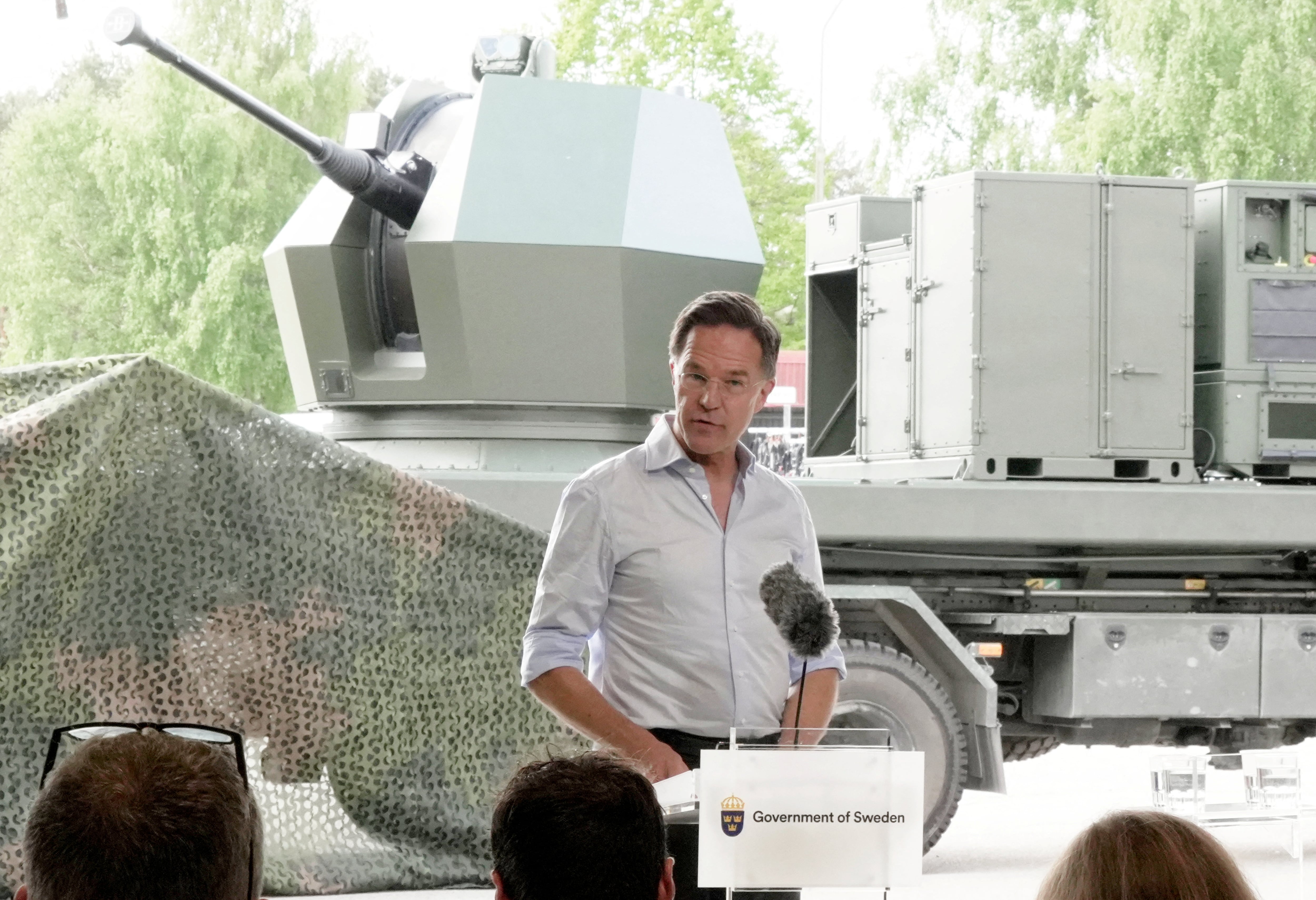
Donald Trump’s decision to withdraw thousands of U.S. troops from Germany, review a planned deployment to Poland, and freeze a project to station Tomahawk missiles on German soil has set off alarm bells in European capitals. In the Old Continent, fears are growing that those moves could be the first step toward a structural reconfiguration of NATO — or even a deeper U.S. pullback within the alliance.

Seguir leyendo

© Tom Little (REUTERS)

NATO secretary general Mark Rutte on Thursday in Revinge, Sweden.
  •  

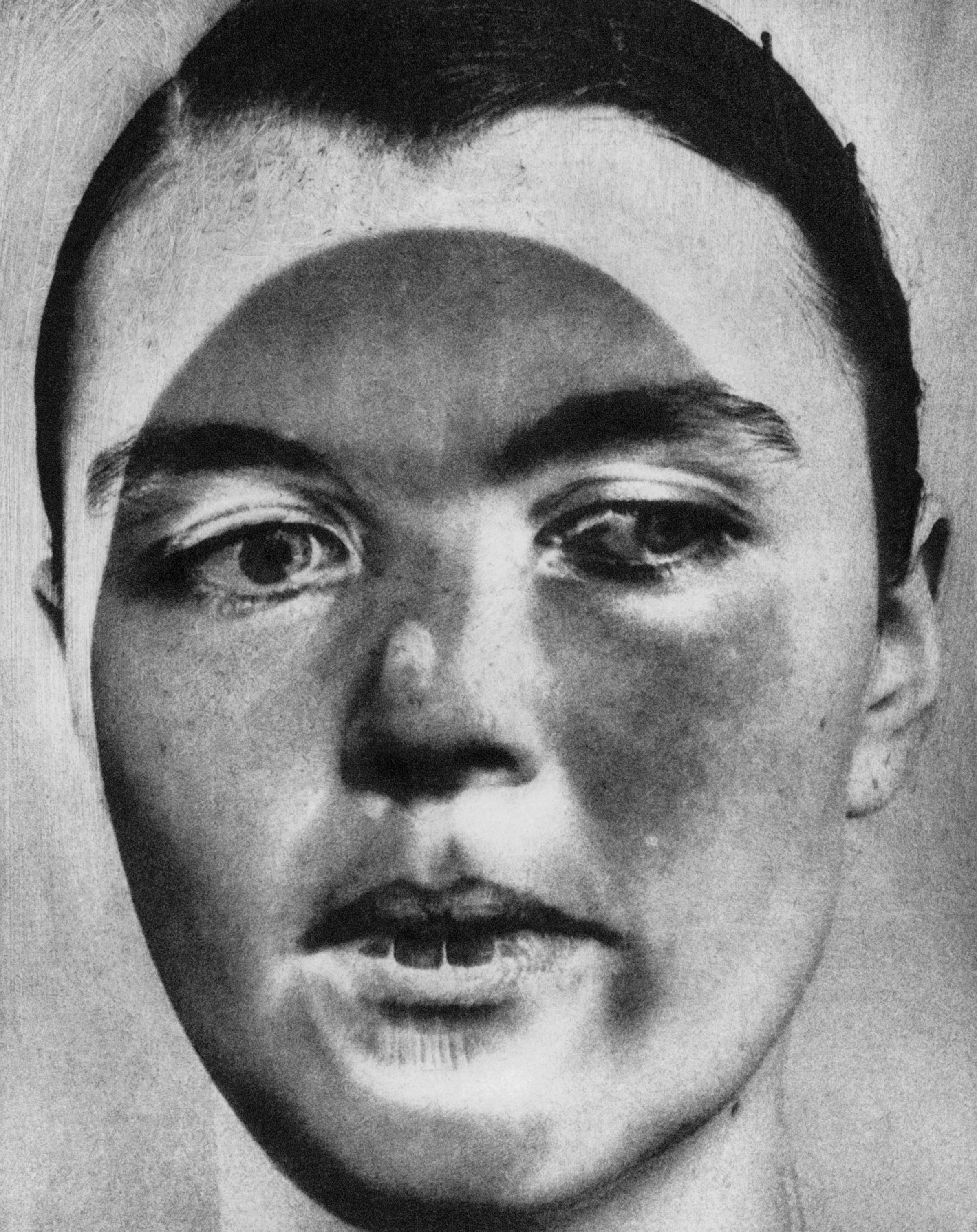
Photographer Jack Davison’s challenge: Three days in London and 111 portraits (37 per day)

At the latest edition of Paris Photo, held in November 2025, a series of black-and-white portraits caught the attention of both the public and the media. Their public display followed a large-scale installation from the 2024 edition, dedicated to the complete works of the German portrait photographer August Sander (1876-1964). That year, the newly-renovated Grand Palais had welcomed visitors with his celebrated project, People of the 20th Century.

Seguir leyendo

© Jack Davison (EL PAÍS)

Image from the book "13–15 November. Portraits: London", published by Helions. Courtesy of Cob Gallery.

© Jack Davison

Image from the book "13–15 November. Portraits: London", published by Helions. Courtesy of Cob Gallery.

© Jack Davison (EL PAÍS)

Image from the book "13–15 November. Portraits: London", published by Helions. Courtesy of Cob Gallery.

© Jack Davison

Image from the book "13–15 November. Portraits: London", published by Helions. Courtesy of Cob Gallery.

© Jack Davison

Image from the book "13–15 November. Portraits: London", published by Helions. Courtesy of Cob Gallery.

© Jack Davison

Image from the book "13–15 November. Portraits: London", published by Helions. Courtesy of Cob Gallery.

© Jack Davison

Image from the book "13–15 November. Portraits: London", published by Helions. Courtesy of Cob Gallery.

© Jack Davison (EL PAÍS)

Image from the book "13–15 November. Portraits: London", published by Helions. Courtesy of Cob Gallery.

© Jack Davison (EL PAÍS)

Image from the book "13–15 November. Portraits: London", published by Helions. Courtesy of Cob Gallery.

© Jack Davison

Image from the book "13–15 November. Portraits: London", published by Helions. Courtesy of Cob Gallery.

© Jack Davison

Image from the book "13–15 November. Portraits: London", published by Helions. Courtesy of Cob Gallery.

Double spread from the book "13–15 November. Portraits: London", published by Helions. Courtesy of Cob Gallery.

Double spread from the book "13–15 November. Portraits: London", published by Helions. Courtesy of Cob Gallery.
  •  

Failure of European fighter jet program exposes the weakness of EU defense

The European Future Combat Air System (FCAS), a joint project led by France and Germany with participation from Spain, has failed because of disagreements between Airbus, the German representative, and Dassault, the French firm. It was the most ambitious European project at a time when the EU says it wants to increase and coordinate military spending to develop shared defense technologies, programs, and platforms — like the one that collapsed on Monday, June 8. What happened with FCAS casts doubt on whether Europe can ever reconcile national sovereignty with the demands of building next-generation, complex weapons systems, at a moment when the EU is trying to bolster its defense sovereignty and the United States is beginning to withdraw its security umbrella. It also adds pressure and lessons for other projects trying to move forward.

Seguir leyendo

© NurPhoto (NurPhoto via Getty Images)

An FCAS fighter during the Paris Air Show in 2023.
  •  

Jean-Luc Mélenchon: ‘The right no longer has anything to offer except fear’

Jean-Luc Mélenchon in his Paris office last Tuesday.

Jean-Luc Mélenchon, 74, electrified the streets on Sunday at the launch of his campaign. It was in Saint-Denis, land of kings, a Paris suburb turned epicenter of immigration and multiculturalism. But also where he gets the narrative material that weaves the idea of the New France that the leader of the far-left party La France Insoumise (LFI, or France Unbowed) has put forward to win over the suburbs in the presidential election of spring 2027. And, incidentally, to capture the roughly 400,000 votes that were missing last time to reach the runoff.

Seguir leyendo

  •  

Scientists solve century-old mystery of how Venus flytraps snap shut

Malay Mail

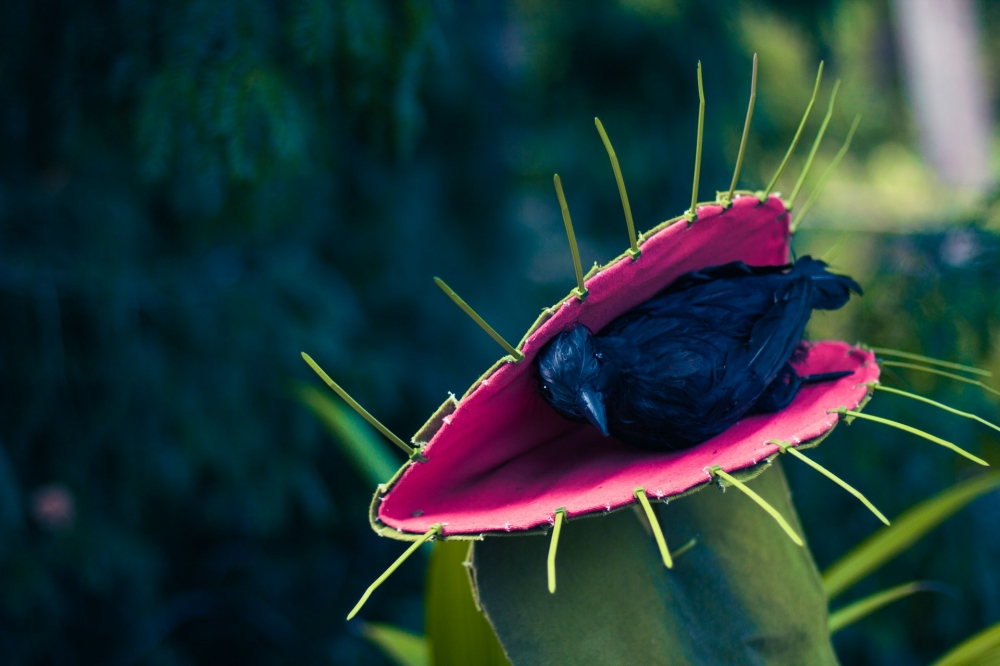
PARIS, June 12 — Pity the poor fly that lands on a Venus flytrap. When the insect touches hair-like structures on this remarkable carnivorous plant, its trap snaps shut, dooming the victim to be digested over several days in secreted enzymes. Scientists have now found the physical mechanism behind this snapping action.

Researchers said experiments showed that the Venus flytrap’s closure is initiated by a rapid softening of the cell walls in the outer layer of the plant’s trap, which is a highly modified leaf divided into two hinged lobes that resemble jaws with teeth.

For more than a century, the prevailing hypothesis had been that the trap’s closure was driven by a rapid redistribution of water within the leaf, with water moving between cells to swell one side of the leaf. The new research points to a different biological mechanism.

“One of the most iconic plants in the world can still surprise us. After more than a century of research, we are still discovering fundamentally new things about how the Venus flytrap works,” said physicist Yoël Forterre of the French research agency CNRS and Aix-Marseille University, senior author of the study published yesterday in the journal Science.

The Venus flytrap is a small carnivorous plant native to a limited region of North Carolina and South Carolina in the United States. Like many carnivorous plants, it grows in nutrient-poor environments and supplements its nutrition by capturing and digesting insects.

In experiments conducted in Marseille, the researchers used high-speed imaging, mechanical measurements by indentation of the plant’s outer layer and mechanical modelling. They also measured water transport within the plant tissue to rule out that as the mechanism at play.

“The plant uses specialised trigger hairs located on the inner surface of the trap. When an insect touches these hairs twice within a short period of time, the trap closes. Closure can occur in as little as one tenth of a second,” Forterre said.

“Our hypothesis is that the trap is already mechanically loaded before triggering, much like a spring. When the trap is stimulated, the cell walls of the outer epidermal layer rapidly soften by roughly 30 to 40 per cent, meaning that the cell wall becomes more flexible. This releases internal stresses stored in the tissue and causes the trap to bend and close. The softening develops within about one second,” Forterre said.

When the trap snaps shut, the insect is sealed inside for digestion.

“By directly measuring the mechanics of the living trap as it responds, we pinned down the internal ‘motor’ that drives the leaf across its instability threshold and sets off the snap-buckling that closes it,” said physicist and study lead author Jeongeun Ryu, who worked on the study as a postdoctoral researcher at the CNRS and Aix-Marseille University.

After the plant absorbs the nutrient-rich liquid produced by the digestive processes, the trap reopens, with the insect’s empty exoskeleton left behind.

“What I find remarkable is that evolution often does not invent entirely new mechanisms, but rather reuses and refines existing ones. Plants are known to modify the mechanical properties of their cell walls during growth, but the Venus flytrap appears to push this mechanism to an extreme, using it on a timescale of about one second,” Forterre said.

There are roughly 800 known species of carnivorous plants. They are not all closely related, indicating that flesh-eating evolved independently multiple times during plant evolution.

How the Venus flytrap snaps shut is a topic that has long interested scientists including Charles Darwin, the 19th century naturalist who advanced the theory of evolution by natural selection. The researchers see potential practical applications from their findings.

“To our knowledge, this is the first time such a rapid change in the mechanical properties of cell walls has been seen in a plant,” Ryu said.

“It settles a question that goes back to Darwin — what drives one of the fastest movements in the plant kingdom — and points to a new way for a living thing to move: not by pumping fluid or simply collapsing, but by actively tuning the stiffness of its own material. That principle could eventually inspire soft robots or smart materials, though that remains a longer-term prospect,” Ryu said. — Reuters

  •  

A red star in the sky over the banlieue of Paris

Street vendors and market stalls begin to pack up by mid-afternoon on Saturday. In the narrow streets there is the smell of roast lamb and on the terraces locals from the neighborhood, retired laborers, and third-generation immigrants mix with groups of young people with a hipster look wearing expensive clothes and drinking IPA beers. Saint-Ouen marks the first boundary between that Haussmannian Paris, already unaffordable for many family budgets, and its famous banlieue, until recently known for youth unrest, episodes of jihadist terrorism, and large concrete apartment blocks. But it is also the product of investment from the Olympic Games, a symbol of the gentrification of the Paris periphery and the home of the city’s oldest and most charismatic soccer club: Red Star.

Seguir leyendo

© SOPA Images (SOPA Images/LightRocket via Getty Images)

Red Star players applaud their fans after a match on April 24.
  •  
❌