Reading view

China bans New Zealand lawmakers over Taiwan trip

New Zealand

By Ben Strang

Beijing said Thursday it barred a group of New Zealand lawmakers from entering China after they visited officials in Taiwan in May, accusing them of interfering in Chinese domestic affairs.

Taiwan's Vice President Hsiao Bi-khim (centre) poses for a group photo with New Zealand lawmakers Laura McClure (left), Maureen Pugh (second left), Duncan Webb (second right) and David Wilson (right) at the Presidential Office in Taipei on May 7, 2026. Photo: Taiwan's Presidential Office, via Flickr.
Taiwan’s Vice President Hsiao Bi-khim (centre) poses for a group photo with New Zealand lawmakers Laura McClure (left), Maureen Pugh (second left), Duncan Webb (second right) and David Wilson (right) at the Presidential Office in Taipei on May 7, 2026. Photo: Taiwan’s Presidential Office, via Flickr.

New Zealand voiced concern over the barring of the four MPs, who visited as part of a cross-party delegation, noting its lawmakers have paid visits to Taiwan for decades.

But Beijing’s embassy in Wellington said the delegation had defied repeated warnings in travelling to the self-ruled island, where they met with Vice President Hsiao Bi-khim.

“The actions of these MPs violate the one-China principle and constitute interference in China’s internal affairs,” an embassy spokesperson said, referring to Beijing’s position that it is the sole legitimate government of China.

“Whoever crosses the red line on the Taiwan question will face the consequences,” the spokesperson added.

China claims self-ruled Taiwan is part of its territory and opposes the democratic island’s participation in international organisations and exchanges with other countries.

New Zealand Foreign Minister Winston Peters’ office denied the visit violated his government’s position on the status of the island democracy.

He defended the MPs’ right to visit Taiwan and said he had instructed the nation’s diplomats “to express concern at this departure from past practice and to better understand it.”

New Zealand Foreign Minister Winston Peters.
New Zealand Foreign Minister Winston Peters. Photo: Winston Peters, via Facebook.

“New Zealand Members of Parliament are free to make their own individual decisions, independent of the government, about how they respond to invitations to travel overseas,” his spokesperson said.

While Wellington does not have diplomatic relations with Taiwan, “this does not preclude New Zealand from maintaining trade, economic, cultural and indigenous exchanges”, the foreign ministry said.

“We intend to continue these exchanges as they benefit the people of New Zealand and are entirely consistent with our One China policy.”

Australia’s Foreign Minister Penny Wong told a hearing of the country’s Senate that Canberra was “concerned” by the bans and diplomats would raise the issue with Chinese counterparts.

Taiwan’s foreign ministry said it “strongly condemns” the ban, insisting “China has no right to interfere” in its international interactions.

‘Disappointing’

New Zealand lawmakers Simon O’Connor and Ingrid Leary created the All Party Parliamentary Group on Taiwan in March 2023 with the goal of improving ties with the island and holding discussions about trade, healthcare and semiconductor technology.

New Zealand flag.
New Zealand flag. Photo: Edward Hyde, via Flickr.

The Chinese embassy in Wellington raised immediate concerns about their visits.

Taiwan’s foreign affairs ministry said last month the trip was the third by the group since the group’s founding.

One of the MPs hit with a ban, Laura McClure, told RNZ that China was trying to intimidate New Zealand lawmakers.

“New Zealand is sovereign, and members of parliament have the right to represent the communities and constituents that we do, and we have the right to travel freely around the globe,” she said. “That is part of living in a free democracy.”

RNZ reported that the Chinese Embassy in Wellington had said it would reverse the ban if the politicians apologised.

“It’s not exactly clear what we would be apologising for, and if it is just for travelling to Taiwan, I personally will not be apologising,” McClure said.

Labour MP Duncan Webb, who took part in the trip, told RNZ that the lawmakers had been warned by the Chinese embassy before travelling that they faced a ban if they went.

“With the increasing tensions I suppose a response wasn’t surprising, but I think it is disappointing,” he said.
  •  

Landslides are New Zealand’s most expensive natural hazard, and the costs are rising quickly

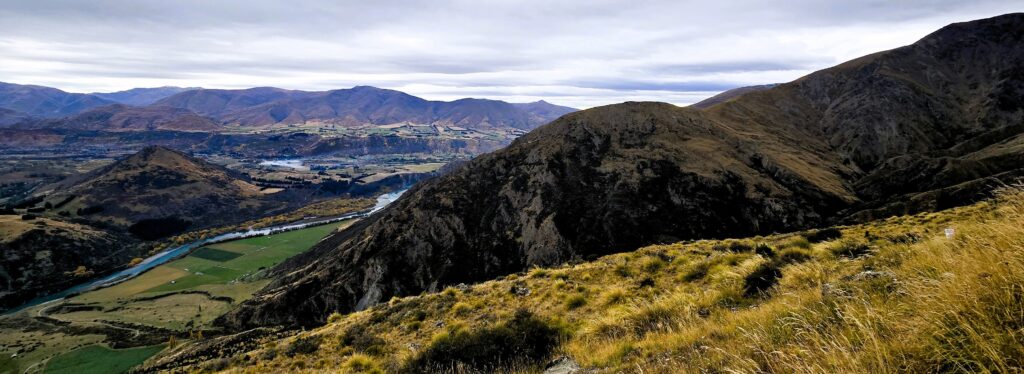
Here be landslides - typical landslide-prone terrain in New Zealand.

New evidence from the Natural Hazards Commission – Toka Tū Ake (NHC) shows that landslides are now New Zealand’s most costly natural hazard.

Image of a landslide partially covered with a transparent sand-colored overlay and the words “The Landslide Blog,” centered, in white

New Zealand is a country that is prone to a range of natural hazards. Located on a series of major fault systems, earthquakes cause high levels of loss. The country is also volcanically active, with occasional tragedies. Heavy rainfall brings floods.

To share the cost of these perils, following the 1942 Wairarapa earthquakes, the New Zealand government established the Earthquake Commission (EQC) in 1945, initially focusing on earthquakes and war damage, but subsquently expanded to cover other natural hazards.

In the subsequent years, the EQC has evolved into the Natural Hazards Commission – Toka Tū Ake (NHC), with a purpose “to reduce the impact of natural hazards on people, property, and the community”. Essentially it operates as a financial pool, with home owners paying a levy on top of their insurance to generate the fund. In the event of a loss, the fund pays for the rebuild costs up to a cap (currently NZ$300,000); the remainder is then covered by the property’s insurance. Claims are funded directly from the pool, with reinsurance cover and ultimately a government guarantee in place to ensure that there are sufficient funds.

In reality, NHC does much more than this, acting to manage and settle claims, and to understand the range of hazards to which New Zealand is prone.

In the last few days, a range of media outlets in New Zealand have been reporting new data from NHC about losses from natural hazards in New Zealand. This is the headline from 1News:

“Landslides are New Zealand’s most expensive natural hazard – and new data reveals a sharp rise in damage claims and growing risks to homes, infrastructure and communities.”

In total, since 2021 NHC has received 13,000 landslide claims and has paid out NZ$322 million (US$191 million). New Zealand is seeing an abrupt increase in landslide losses, driven primarily by increasingly frequent high magnitude rainfall events. NHC is urging property owners to undertake preventative maintenance and to be aware of the limitations of EQC cover.

Here be landslides - typical landslide-prone terrain in New Zealand.
Here be landslides – typical landslide-prone terrain in New Zealand.

In common with many other places, these landslide hazards represent a major challenge to New Zealand. The landscape has many dormant landslides that are being reactivated by these increased rainfall events, and many new failures are also occurring. But, generating reliable risk maps for landslides remains a major challenge. This needs to be a major research focus in the coming years. It will require better understanding of triggering events (rainfall and earthquakes primarily); of the initiation processes within the slope; of runout / debris mobility; and of vulnerability and consequent losses. It is probably true to say that in all of these areas, landslide research lags behind that of earthquakes and floods, primarily because of a lack of long term investment.

In many countries, landslides are not an insured risk for this reason. On its own, this will be a major challenge that must be addressed. For those countries in which landslides are insured, we need quickly to get up to speed.

Text © 2026. The authors. CC BY-NC-ND 3.0
Except where otherwise noted, images are subject to copyright. Any reuse without express permission from the copyright owner is prohibited.
  •  

HBO Max To Be Offered Through Prime Video In New Zealand

EXCLUSIVE: HBO Max will roll out on Prime Video in New Zealand when it launches later this year. The service debuts next week on June 16 and will offered to viewers locally through Prime Video, including those without Amazon subscriptions. Standard and premium plans will be offered, with subs subscribers able to reduce costs from […]

  •  

New Zealand passenger from hantavirus cruise ship quarantines in Taiwan

Taiwan CDC featured image

A New Zealand passenger from the hantavirus-stricken MV Hondius cruise ship is in hospital quarantine in Taiwan, Taiwanese health authorities said Friday.

The Taiwan Centers for Disease Control's fever screening station at Taoyuan International Airport. Photo: Taiwan Centers for Disease Control.
The Taiwan Centers for Disease Control’s fever screening station at Taoyuan International Airport. File photo: Taiwan Centers for Disease Control.

The person, who has tested negative for the rare disease and is showing no symptoms, arrived in Taiwan on May 7 after disembarking the cruise ship in Saint Helena on April 24.

Taiwan’s Centers for Disease Control (CDC) was informed by New Zealand authorities on Wednesday that the person was in Taiwan, CDC spokeswoman Tseng Shu-hui told AFP.

The person was admitted to hospital the same day and will remain there until June 6, Tseng said.

Tseng declined to provide details about the person’s age, gender or current location in Taiwan.

“At present, we believe their probability of developing the disease is relatively low,” Tseng said.

“Their last exposure with the other passengers was on the 25th (of April), which is about 20 days ago.”

See also: Hong Kong urged to step up rodent checks despite no local residents on hantavirus-hit cruise ship

The virus has a potential incubation period of 42 days.

CDC director-general Lo Yi-chun told reporters that the person did not return to New Zealand after leaving the cruise ship, but he would not provide information on the route they took to Taiwan.

New Zealand’s de facto embassy in Taipei declined to comment.

Health authorities have repeatedly emphasised that the broader risk to public health from the outbreak of the Andes strain of hantavirus — the only one known to spread between people — is low.

Globally, the death toll remains at three.

The ship set sail from Argentina on April 1, charting a course across the Atlantic Ocean.

No vaccines or specific treatments exist, but health officials have said the risk is low and have dismissed comparisons to the Covid-19 pandemic.

  •  

Chinese spies pose as recruiters to glean state secrets, Five Eyes alliance warns

LinkedIn app featured image

Chinese spies are posing as job recruiters to trick staff in western governments into disclosing sensitive information, the Five Eyes alliance of security agencies has warned.

China’s military intelligence services advertise false jobs such as foreign policy or defence analysts on platforms including LinkedIn, the spy agencies of Britain, the United States, Australia, Canada and New Zealand said jointly late Wednesday.

LinkedIn app.
LinkedIn app. Photo: Zulfugar Karimov, via Pexels.

The agents pretend to be HR consultants or employees of “legitimate-looking” private consultancies or think-tanks that claim to be located outside of China.

They pressurise candidates into revealing “non-public” information during the interview process, including by writing a report, the intelligence agencies said.

People with security clearance, military personnel, journalists and academics are among those targeted, the Five Eyes added.

Military staff may be asked about their roles and unit activities, home base or naval vessel.

Recruits receive anywhere from a few hundred to several thousand dollars per report, and may be offered more money in return for increasingly sensitive information, the agencies said.

They warned that “while applicants often have no direct access to classified information, even unclassified information” can be helpful to the Chinese government.

“Certain types of data can place the lives of frontline military or other personnel at risk, can weaken our economic prosperity, and enable interference in our democratic processes,” the agencies wrote.

They said they had identified people who had been duped by the scam, “leading to criminal prosecutions, job losses, and security-clearance revocation”.

Western spy agencies have repeatedly warned of the threat of espionage from China, as well as from Russia and Iran, in recent years.

Last month, two Chinese-British dual nationals were convicted by a jury in London of spying on Hong Kong dissidents on Beijing’s behalf. They are awaiting sentencing.

  •  
❌