Reading view

PM Anwar orders urgent cloud seeding in Kedah, Perlis, calls for drones to overcome aircraft shortage

Malay Mail

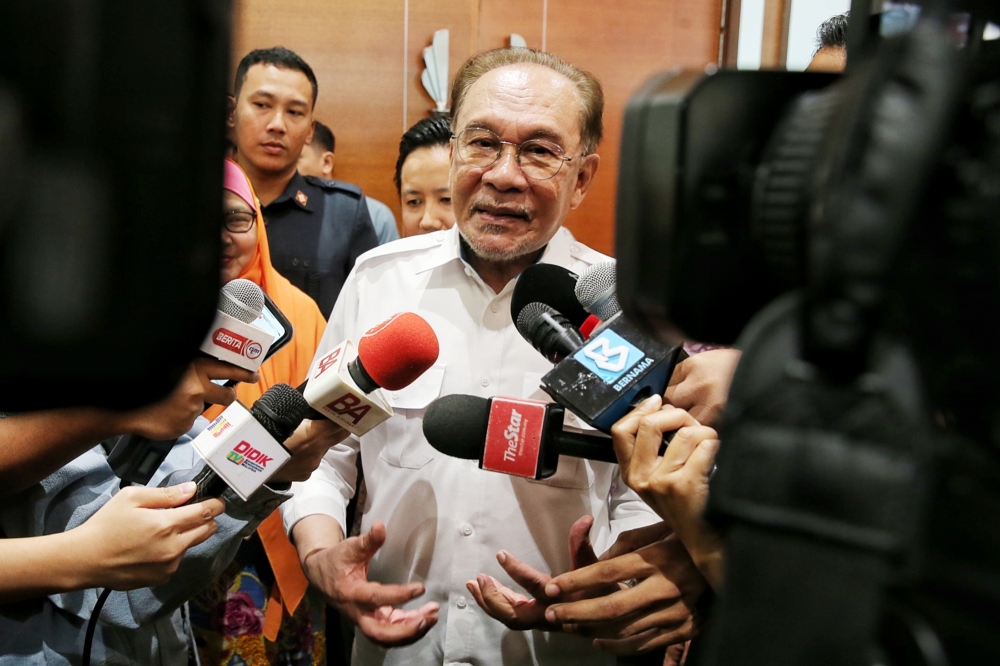
KUALA LUMPUR, May 4 — Prime Minister Datuk Seri Anwar Ibrahim has instructed the Malaysian Meteorological Department (MetMalaysia) to expedite cloud seeding operations in states currently at critical levels, particularly Kedah and Perlis.

Saying the move is urgently needed to deal with current weather conditions, he also suggested the use of drone technology to overcome logistical constraints so that the operations can be carried out smoothly.

“I have instructed MetMalaysia to expedite its implementation, including exploring the use of drone technology and cooperation with various parties to address the shortage of suitable aircraft, to ensure the well-being of the people is protected,” he said in a post on his official Facebook page today.

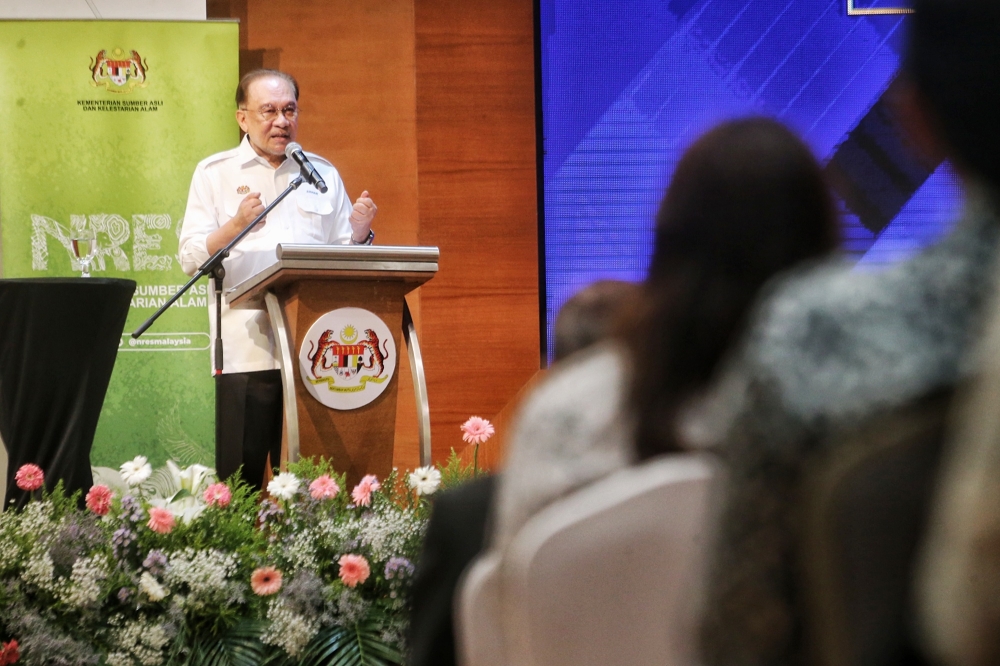
Earlier, Anwar held a meeting with senior management of the Ministry of Natural Resources and Environmental Sustainability (NRES) to review policy planning and the ministry’s priorities for the year.

Apart from weather issues, the meeting also discussed the welfare of three national elephants – Dara, Amoi and Kelat – currently in Japan.

On this matter, he stressed that the welfare of the animals must be prioritised by NRES and Taiping Zoo, alongside the need for transparent information to the public.

“Any decision and action must be based on facts and take into account the best welfare of Dara, Amoi and Kelat. Transparent and factual information must be continuously shared so that the public has a clear understanding of their condition there,” he said.

Anwar also reminded the ministry on matters of management and governance.

“In concluding the meeting, I stressed the importance of good governance, strong integrity and zero tolerance for leakages. These are the foundations of our efforts in building an inclusive, prosperous and sustainable Malaysia,” he said. — Bernama

  •  

How our universities can truly climb the rankings ladder — Ahmad Ibrahim

Malay Mail

MAY 4 — Malaysia has just launched a new 10-year national education blueprint 2026-2035. Many have lauded the ambitious nature of the plan. Equally, many have warned about the many challenges of implementation. Malaysia’s ambition to become a global education hub is both laudable and logical. With a strong multilingual base, strategic location, and decades of investment in campus infrastructure, the foundation is solid. 

The visible presence of Malaysian universities in international rankings, driven by a concerted push for publications, proves the strategy has momentum. However, in today’s hyper-competitive arena, where rankings increasingly value the impact and relevance of research, a simple “publish or perish” treadmill is no longer enough. To rise decisively, Malaysian universities must strategically pivot from quantity to quality, and from visibility to genuine global influence.

The first, and most critical, shift must be in the culture of publication itself. The current incentive system at many institutions often rewards quantity and journal prestige points (e.g., Q1 journals) above all else. This has yielded growth, but risks creating a factory-like output of incremental studies with limited resonance. The new strategy must incentivise research ambition and rigour. 

This means providing protected time, seed funding for high-risk/high-reward ideas, and celebrating papers not just for where they are published, but for their citation impact, policy influence, or public engagement. Universities should actively foster interdisciplinary research clusters — mixing engineers with economists, medical researchers with data scientists — to solve complex problems. This is where groundbreaking science often happens.

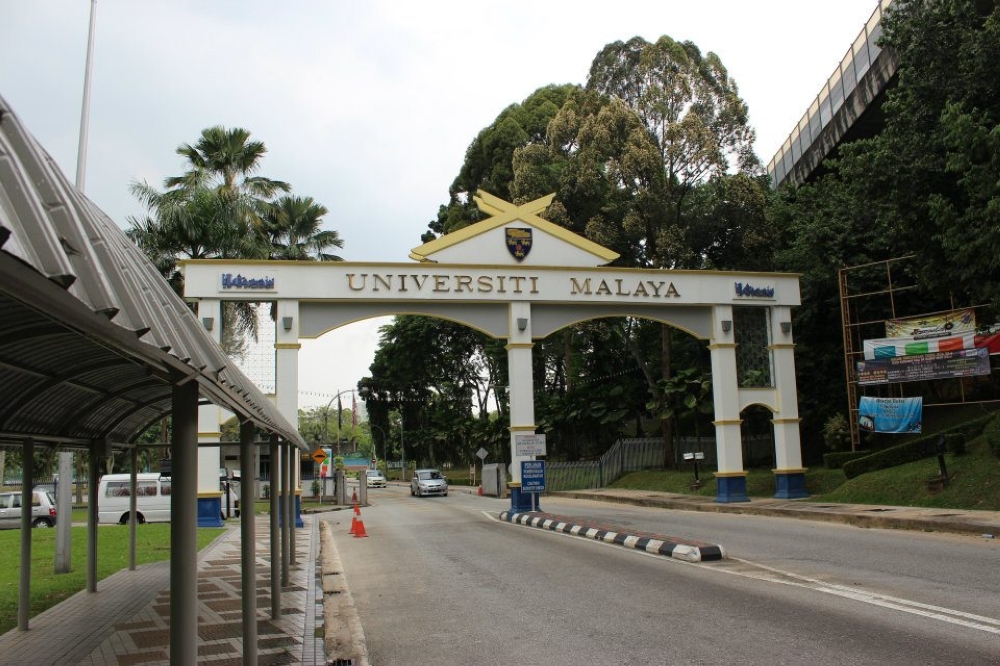
The author argues that Malaysia’s new 10-year education blueprint can strengthen the country’s ambition to become a global education hub only if universities shift from prioritising publication quantity to research quality, SDG-driven relevance, meaningful international collaboration, and stronger support systems for academics and innovation. — Wikimedia pic

This leads directly to the second pillar: authentically embedding the Sustainable Development Goals (SDGs) into the research DNA. SDG alignment is not a branding exercise; it is a powerful framework for relevance. Malaysian universities are uniquely positioned to lead on SDG research that speaks to both local and global challenges. Think of pioneering work on sustainable palm oil alternatives, climate-resilient urban planning for tropical megacities, equitable healthcare models for ageing societies, or biodiversity conservation in Asean rainforests. 

This requires moving beyond tagging existing projects with SDG keywords. It demands strategic hiring, creating SDG-focused research institutes, and aligning postgraduate programmes to train the problem-solvers of tomorrow. Research on local issues with global parallels will attract international scholarly attention and partnerships organically.

Speaking of partnerships, the third pillar requires transforming international collaboration from a transactional metric to a transformational engine. The goal should not be to simply add foreign co-authors to papers. The strategy must be to build deep, equitable consortiums around shared challenges. Malaysian universities should position themselves as indispensable hubs for research in the Global South and on tropical themes. 

Pursue joint PhD programmes, co-supervision networks, and shared laboratory access with top universities worldwide. Crucially, they must also become better at telling the story of their research. A powerful publication in a specialist journal is just the start. Investing in science communication, policy briefs, and media engagement to translate findings for public and government consumption amplifies impact — a factor rankings are increasingly attuned to.

Furthermore, universities must empower their greatest asset: their academics. The academics must be suitably empowered to bring change. This means reducing excessive administrative burdens, streamlining ethics approval processes, and providing robust grant-writing support. Simultaneously, they must be ruthless in upgrading critical infrastructure — not just labs, but high-speed computational resources and open-access publishing funds. Most important is the art of people management, especially how to effectively motivate them. 

The race up the ranking ladder is not won by playing a short-term game. It is won by building a vibrant, confident, and impactful research ecosystem. For Malaysia, the opportunity is not merely to appear in the rankings, but to redefine what excellence from a non-Western hub looks like: excellence that is scientifically rigorous, globally connected, and passionately relevant to humanity’s pressing needs. The rankings are a symptom of health, not the cause. 

By strategically focusing on quality, SDG-led relevance, and deep partnerships, Malaysian universities will not just climb the ladder — they will help build a new one. If universities can embrace such path, that would effectively silenced the growing critics of the ranking investment.

* Professor Datuk Ahmad Ibrahim is affiliated with the Tan Sri Omar Centre for STI Policy Studies at UCSI University and is an Adjunct Professor at the Ungku Aziz Centre for Development Studies, Universiti Malaya. He can be reached at ahmadibrahim@ucsiuniversity.edu.my 

** This is the personal opinion of the writer or publication and does not necessarily represent the views of Malay Mail.

  •  

Why Japan lost its lustre in Malaysia and how it can shine again — Ahmad Ibrahim

Malay Mail

MAY 4 — There was a time when the rising sun of Japan was the guiding light for Malaysia’s economic ambitions. The “Look East Policy,” inaugurated by Tun Dr Mahathir Mohamad in the early 1980s, was more than just a diplomatic slogan; it was a national ethos. It painted Japan not just as a trading partner, but as a civilisational model — a testament to what an Asian nation could achieve through discipline, hard work, and a unique brand of corporate capitalism.

Today, however, the landscape tells a different story. The billboards that once championed Sony and Mitsubishi now glow with the branding of Huawei, BYD, and Samsung. China has unquestionably become Malaysia’s dominant economic partner. The question is why this tectonic shift has occurred, and whether the Land of the Rising Sun can ever reclaim its former glory.

To understand Japan’s diminished role, one must first look at the stagnation of its own economy. The “Lost Decades” following the asset bubble burst in the early 1990s transformed Japan from a aggressive global investor into a cautious, risk-averse player. Japanese corporations, once eager to build sprawling manufacturing complexes in places like Shah Alam and Johor, became conservative. Their model, based on lifetime employment and consensus-based decision-making, was ill-suited for the breakneck speed of the digital age and the hyper-competitive landscape of the 21st century world.

While Japan was looking inward, China was aggressively looking outward. The 2010s saw Beijing’s Belt and Road Initiative (BRI) pour billions into Malaysian infrastructure. The pace was dizzying. Where a Japanese feasibility study might take three years, a Chinese state-owned enterprise could break ground in three months. This speed, coupled with a willingness to invest in massive, visible projects like the East Coast Rail Link (ECRL), captured the Malaysian imagination and filled a vacuum that Japanese caution had created.

The author argues that Japan’s influence in Malaysia has waned due to decades of economic stagnation and China’s rapid rise as a dominant regional investor, but that Tokyo can still regain relevance by focusing on high-tech collaboration, innovation partnerships, and a renewed form of cultural diplomacy suited to the demands of the 21st century. — Unsplash pic

The simple truth is that the “special relationship” with Japan was sustained by strong personal rapport at the top. As Dr Mahathir’s direct influence waned and a new generation of Malaysian leaders and consumers came of age, they felt no such nostalgia. They witnessed Japan’s slow-motion retreat from the region and simply looked elsewhere for the economic dynamism they craved.

Regaining its place will not be easy. The world has moved on, and a return to the 1980s is impossible. However, Japan’s decline is not irreversible. To reclaim its relevance, Tokyo must fundamentally change its strategy, moving from a model of general manufacturing to one of high-tech, high-value specialisation.

First, Japan must pivot from competing on volume to leading in niche excellence. While China dominates mass-market EV production, Japan holds the keys to the future of mobility: advanced batteries, lightweight materials, and the complex supply chain for the semiconductors that will power the next generation of smart cars. Instead of trying to sell the most cars, Japanese giants like Toyota and Panasonic should position themselves as the indispensable technological partners for Malaysia’s own automotive ambitions, particularly in the EV sector.

Second, Japan needs to rediscover its innovative edge through genuine collaboration. The old model was Japan teaching, and Malaysia learning. That era is over. The new model must be one of co-creation. Japan is a global leader in robotics, IoT, and green technology. Malaysia, with its industrial base and digital aspirations, is the perfect testbed for these innovations. Instead of just building factories, Japanese firms should establish joint R&D centres with Malaysian universities and startups to solve local problems — from smart agriculture in Sabah to flood mitigation technology in Kuala Lumpur.

Third, and perhaps most importantly, Japan must engage in a new form of cultural diplomacy. The “Look East” policy needs a 2.0 version. This isn’t about asking Malaysians to bow more deeply or work longer hours. It is about showcasing Japan’s soft power in the 21st century. This means leveraging its global dominance in anime, gaming, and design to build bridges with Malaysian youth. It means promoting tourism not just for shopping, but for educational exchanges in tech and the arts. It means making Japan seem fun, accessible, and futuristic again.

The narrative that Japan has permanently lost its place in Malaysia is not yet a foregone conclusion. Its economic footprint may have shrunk, but its reputation for quality, precision, and reliability remains intact. If Japan can leverage these assets with the urgency and adaptability of a challenger, rather than the complacency of an established power, it can carve out a new and vital role. The sun may have faded, but it has not yet set. Whether it rises again depends entirely on whether Japan is willing to look east once more — and see a partner, not just a pupil.  

* Professor Datuk Ahmad Ibrahim is affiliated with the Tan Sri Omar Centre for STI Policy Studies at UCSI University and is an Adjunct Professor at the Ungku Aziz Centre for Development Studies, Universiti Malaya. He can be reached at ahmadibrahim@ucsiuniversity.edu.my 

** This is the personal opinion of the writer or publication and does not necessarily represent the views of Malay Mail.

  •  

Malaysia to pursue balanced economic diplomacy without compromising energy security, says Anwar

Malay Mail

PUTRAJAYA, May 4 — Prime Minister Datuk Seri Anwar Ibrahim stressed that Malaysia adopts a balanced approach in economic diplomacy, prioritising national interests, including energy security.

He said trade negotiations with strategic partners such as Australia are conducted on a reciprocal basis, taking into account Malaysia’s need to import raw materials such as phosphate for fertiliser production, while exporting urea.

“We import phosphate, we export urea… that is why in my discussions with the Prime Minister of Australia, Anthony Albanese, who was here two weeks ago, he asked for urea and I said that is possible provided he supplies phosphate.

“He (Albanese) asked for oil, and I said if we have a surplus we can supply it, but if we do not, we cannot — despite claims out there asking how Anwar sold oil to the Philippines; when did we sell oil to the Philippines?” he said when addressing the Ministry of Natural Resources and Environmental Sustainability’s monthly assembly here today.

As such, he called on all parties to provide accurate facts, as this is a matter of national security and should not be treated as a political issue.

Anwar said Malaysia will continue to strengthen economic cooperation with key trading partners, including China and the United States, despite differences in views on geopolitical issues.

“The United States remains Malaysia’s number one trading partner and investor. Do we agree with its foreign policy? No. Do we agree with its actions in attacking Iran? No. Do we agree with it allowing the killing of children and women in Gaza? No.

“So we continue to uphold the independence I refer to as Asean centrality. We speak up because we are an independent and sovereign nation,” he said.

At the same time, he stressed that Malaysia will not compromise on key national policies, including those related to Bumiputera interests, in any trade negotiations.

“We can trade, but we will not allow others to dictate our policies. If we dismantle or overhaul these policies, it could create domestic political tensions that we cannot control. So there are limits,” he said.

He also stressed the need to maintain a pragmatic approach in international relations to ensure foreign investment flows are not disrupted.

“If we confront everything, new investments will be affected,” he said.

In a related development, he said Malaysia still has strengths in high-value sectors such as electrical and electronics (E&E) and artificial intelligence (AI), which continue to attract global investors.

He added that multinational companies such as Intel and Amazon Web Services continue to expand their investments in the country.

“This means that while we face challenges in some areas, we are still benefiting from others,” he said. — Bernama 


  •  

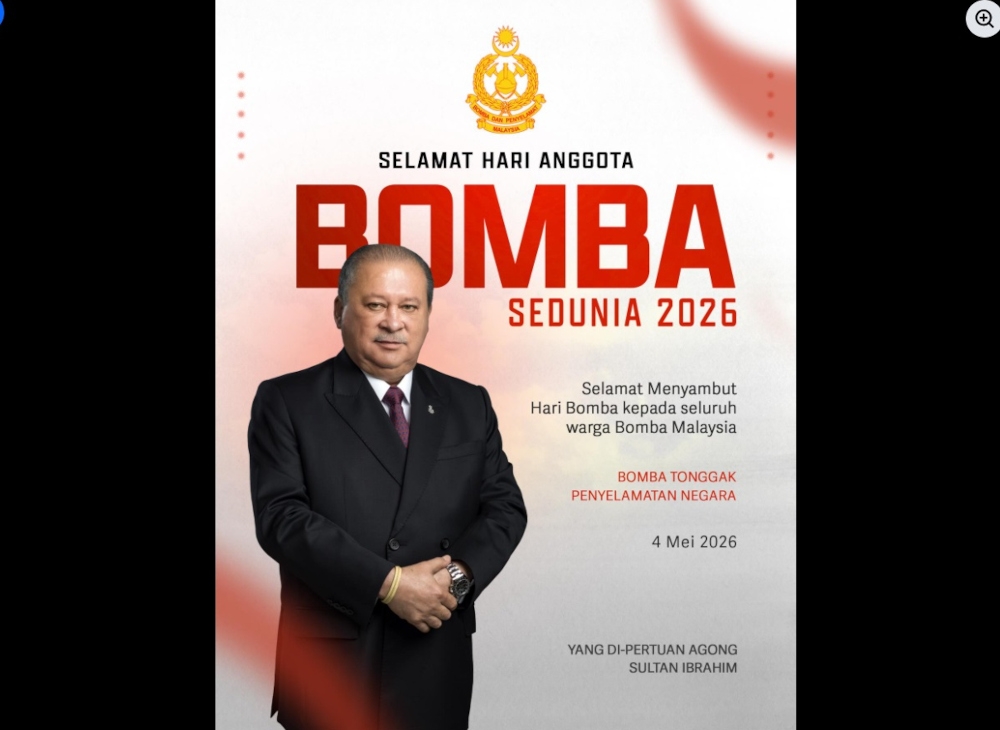
King salutes ‘Red Heroes’ on International Firefighters’ Day

Malay Mail

KUALA LUMPUR, May 4 — His Majesty Sultan Ibrahim, King of Malaysia, today extended International Firefighters’ Day 2026 greetings to the Malaysian Fire and Rescue Department (JBPM) personnel.

In a post on Sultan Ibrahim Sultan Iskandar’s Facebook page, His Majesty expressed appreciation for the service, sacrifices, and steadfast commitment of the “Red Heroes”, always ready to risk their lives for public safety and national wellbeing.

Sultan Ibrahim also expressed pride in the vital role JBPM plays in handling emergencies, from fires and natural disasters to rescue operations.

The King also prayed for the safety and protection of all firefighters and personnel as they carry out their duties.

“Al-Fatihah for those who have left us forever. May they be placed among the faithful and the martyrs,” Sultan Ibrahim said. — Bernama 

  •  

N. Sembilan crisis: Anwar won’t comment on Umno’s stance, but urges respect for Ruler’s decree

Malay Mail

PUTRAJAYA, May 4 — Prime Minister Datuk Seri Anwar Ibrahim today called on all parties to respect the royal decree that the current Negeri Sembilan’s Pakatan Harapan led state government would remain in power.

The comment comes as the state’s Umno chapter insisted it would stay as the opposition, a move that could potentially derail efforts to see an amicable solution as the state faces its worst political crisis.

“What Umno leaders said was unclear so I don’t want to comment on it,” he said in a brief press conference here.

“I only want to say if this involves the Royal Institution I listen directly to what the Negeri Sembilan’s Yang Dipertuan decrees…which is that the situation remains stable, the menteri besar remains and see what happens next,” Anwar added.

“Is this true that (the sitting MB) have lost all confidence, that will be done according to process but so far if you claim to be a party that upholds the Royal Institution, then uphold it.”

MORE TO COME

  •  

Anwar: Price hikes squeezing petty traders to be raised at Cabinet this Wednesday

Malay Mail

PUTRAJAYA, May 4 — Prime Minister Datuk Seri Anwar Ibrahim said the issue of rising prices faced by petty traders will be brought to the Cabinet meeting this Wednesday to examine measures to ease the burden on the group.

He said feedback obtained directly from petty traders, such as food stall operators, shows that prices are rising gradually week by week, but with a significant impact on business operations.

“I’m not hearing this from the Treasury secretary-general (Datuk Johan Mahmood Merican) or secretaries-general — I’m hearing it from the shops,” he said.

Anwar said that while official reports indicate prices remain under control, the reality at the grassroots level must be taken into account in formulating government policy.

He stressed the importance of closer monitoring if price increases cannot be fully contained.

“So at Cabinet meeting this Wednesday, I will raise this issue. I want to know how we can monitor it more effectively, and if it truly cannot be controlled, what more we can do to ease the burden on people like this woman running a small business.

“That is why I say that even though we are capable, knowledgeable and surrounded by leading experts, we must still listen to those on the ground and at the grassroots,” he said. — Bernama 

  •  

Anwar says austerity measures won’t hit healthcare or hiring of new doctors

Malay Mail

PUTRAJAYA, May 4 — Austerity measures that could see billions of ringgit slashed from several ministries will not affect core programmes, including critical healthcare services and the recruitment of new doctors.

Prime Minister Datuk Seri Anwar Ibrahim clarified the matter this morning amid concerns that spending cuts, driven by ballooning subsidy bills, could hurt crucial public programmes.

“There was some confusion about the review of certain expenditures,” Anwar told reporters after speaking at the Ministry of Natural Resources and Environmental Sustainability’s monthly assembly here.

“It won’t affect healthcare services or the hiring of new doctors and nurses. Even the construction of new clinics will continue.”

Critical education spending will also be kept, Anwar explained. He said while there will be some cuts, the plan to build new classes for the incoming Year 1 students will continue.

“Yes education spending will have some reduction but building of new classes for Year 1 won’t stall. Some people reacted prematurely when the news came out but no (they are mistaken),” he said.

“We are talking about big spending, such as sending students for courses abroad, if they can do it here just do it locally,” Anwar added.

“Then celebrations and all that, we will stop it. Also the scope of construction — any excess will be reduced.”

The prime minister’s clarification came following weeks of public anxiety over the national budget, after news reports surfaced that the Treasury would make cuts of up to RM10 billion as part of broader push to save cost.

The government had indicated that it would take swift measures to tackle the global crude oil price surge, which has exceeded US$115 per barrel as the Middle East conflict plunged the world into one of the worst energy supply crises.

Anwar said his administration would commit to keeping RON95 petrol at RM1.99 per litre, but this had shot the fuel subsidy bill for April 2026 up to an estimated RM7 billion from just RM700 million previous month.

  •  

Anwar calls on civil servants to help explain govt’s subsidy balancing act amid Middle East energy shock

Malay Mail

PUTRAJAYA, May 4 — Prime Minister Datuk Seri Anwar Ibrahim today urged civil servants to play their role in explaining the fiscal strain facing the government amid a global energy shock triggered by conflict in the Middle East.

He said the government could be paying up to RM5 billion a month for petrol subsidies alone based on current oil prices, as he reiterated previous assurances that RON95 petrol and diesel prices would remain low despite the ballooning subsidy bill.

Despite attempts to mitigate the impact of rising oil prices, Anwar conceded that the prices of some basic goods had increased.

“Do we have a problem with living cost? Yes, I am not denying it,” he said at the Ministry of Natural Resources and Environmental Sustainability’s monthly assembly here.

“Must we manage this wisely? Yes. Can we afford to provide full assistance? I would say partially yes, because we cannot give total help because as you can see, even Budi95 has reached (RM5 billion) a month,” Anwar added.

“So as for Budi95, we will try our best to keep it because the number of those using it is too big.”

Malaysia’s fuel subsidy bill for April 2026 is estimated at approximately RM7 billion, raising concerns over pressure on public finances as critics call on the government to rethink petrol assistance that also benefits top income earners.

Malaysia has one of the cheapest RON95 retail fuel prices in the world, at just RM1.99 per litre.

The Anwar administration has said petrol and gas supplies remain secure at least until June, but officials have hinted at the possibility of inflationary pressures creeping up as supplies of oil derivatives such as fertilisers remain disrupted by the shutdown of the Strait of Hormuz and export curbs elsewhere.

Malaysia imports phosphate used to fertilise food produce such as tomatoes and cucumbers, but exports urea.

Anwar’s Cabinet is expected to discuss cost-of-living issues at its meeting this Wednesday.

“Last Friday, I dined at a stall in Rawang. I asked the lady running the shop how business was, and she said it’s okay, business is good, but there’s a slight problem — every week there is a small price increase (for supplies),” Anwar said at the assembly.

“So, if it’s a little bit more for three weeks in a row, it starts to affect the shop. From what I heard, it certainly impacts small businesses. Therefore, I will bring this matter up during the Cabinet meeting this Wednesday.”

  •  

Unity government council to discuss Negeri Sembilan MB row next week

Malay Mail

KUALA LUMPUR, May 3 — The Unity Government Leadership Consultative Council is scheduled to meet next week to discuss a range of current issues, including the status of the Negeri Sembilan menteri besar post.

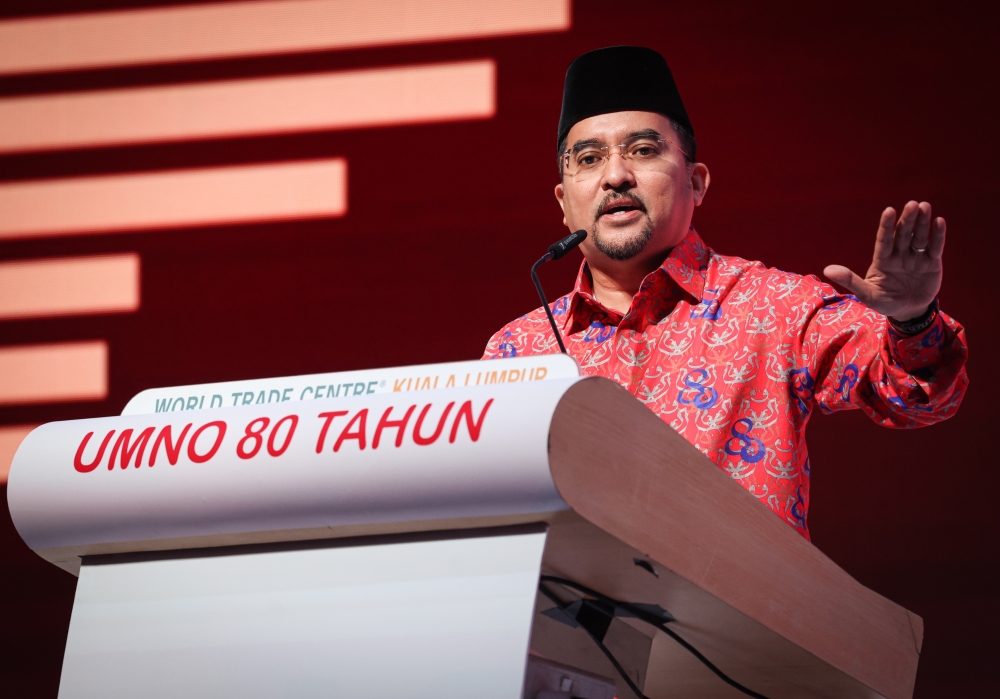
Its secretariat chief, Datuk Dr Asyraf Wajdi Dusuki, said the meeting is important to deliberate on policy matters and positions among parties in the government, as well as issues involving the monarchy and customs in the state.

Asyraf, who is also Umno secretary-general, said discussions will be guided by the spirit of the memorandum of understanding (MoU) underpinning the formation of the Unity Government, which emphasises resolving differences through the consultative council.

“Insya-Allah, the meeting will be held next week and various aspects will be discussed comprehensively, and the matter (menteri besar’s position) may be among those discussed,” he told reporters after the Mara 60th anniversary celebration at the World Trade Centre Kuala Lumpur here today. 

Umno had earlier called for an urgent meeting between its Political Bureau and Pakatan Harapan (PH) to address the situation in Negeri Sembilan.

On Tuesday, Prime Minister Datuk Seri Anwar Ibrahim said Datuk Seri Aminuddin Harun would continue to carry out his duties as menteri besar as consented to by the Yang Dipertuan Besar of Negeri Sembilan, Tuanku Muhriz Tuanku Munawir. — Bernama

  •  

Anwar orders Mara Act amendments to be completed within three months

Malay Mail

KUALA LUMPUR, May 3 — Prime Minister Datuk Seri Anwar Ibrahim has instructed that the draft amendments to the Majlis Amanah Rakyat (Mara) Act be completed within three months.

Anwar, who is also Finance Minister, said the move includes streamlining Mara’s role as a key umbrella for the Bumiputera economy as well as a one-stop centre for development through better coordination of related agencies and policies.

He said emphasis would also be placed on governance to ensure the Bumiputera agency not only speaks up on key issues, but also demonstrates stronger commitment to good governance practices.

“In its 60 years, Mara has seen its ups and downs. There were times when governance issues were seen as weak and problematic. That is why I thank the Mara chairman for giving due attention to governance.

“I therefore expect the new Mara Act to be ready before the end of the year. I do not want to wait too long. There is no need to take seven to eight months…submit the draft to me within three months,” he said when speaking at the Mara 60th anniversary celebration at the World Trade Centre Kuala Lumpur here today.

Also present were Deputy Prime Minister Datuk Seri Dr Ahmad Zahid Hamidi, Mara chairman Datuk Dr Asyraf Wajdi Dusuki and Mara director-general Datuk Zulfikri Osman.

The prime minister said the amendments are in line with one of the seven thrusts under the Mara 40-Year Vision, which is designed to position the institution as a key driver of a more inclusive, competitive and globally oriented Bumiputera economic development agenda.

He said the first thrust focuses on transforming Mara into a successful conglomerate anchored in education and entrepreneurship.

“The second emphasises the 3P approach - participation, ownership and control - to strengthen the economic foundation of the Bumiputera community.

“The third relates to talent development, including producing skilled and semi-skilled workers in line with evolving needs, particularly in sectors such as oil and gas and technologies like artificial intelligence (AI),” he said.

Anwar said the fourth thrust focuses on capital development for micro, small and medium enterprises (MSMEs) to expand globally, including in the halal sector, while the fifth and sixth thrusts aim to position Mara as a one-stop centre for education, investment and entrepreneurship, as well as to penetrate international markets.

“And finally, the seventh focuses on governance, integrity and transparency, as we have consistently emphasised,” he said. — Bernama


  •  

‘We belong to the public’: Singer Khadijah Ibrahim tells artistes to stay humble and professional

Malay Mail

KUALA LUMPUR, May 3 — Veteran singer Khadijah Ibrahim has advised artistes, particularly those from the younger generation, not to be arrogant but instead remain humble and appreciative of fans, who are the lifeblood of their careers.

Khadijah, 66, said in the fast-moving entertainment industry, humility and professionalism are essential foundations to ensure an artiste remains relevant and respected over the long term.

According to her, fans are the most crucial element in the arts ecosystem, as without their support, an artiste’s career would not last.

“If we are arrogant, who loses? In the end, we are the ones who lose. We need fans, we need people to support this career,” she told Bernama when asked to comment on netizens’ claims about artistes behaving arrogantly.

She added that as public figures, artistes must realise their lives are no longer entirely private, as they are constantly under public scrutiny.

“As artistes, we automatically become public figures who no longer have the same exclusive personal space as ordinary people; we belong to the public, so there is no place for arrogance. Always remember, we will be happy when we make others happy,” she said.

Khadijah, who is also chairman of Persatuan Karyawan Malaysia (Karyawan), also touched on the attitude of some industry players who are overly selective or slow to respond in professional matters, making production planning difficult.

She stressed that professionalism is not only about talent, but also involves discipline, communication and respect for other people’s time.

“As chairman of Karyawan, there are now many welfare programmes, concerts, dinners and more, all aimed at helping artistes earn a living and stay visible. We do not want young artistes to be left behind.

“However, when we invite them to collaborate with veteran artistes like us, it sometimes feels as though we have no value. We have to wait weeks, even months, just to get a response,” she said, adding that Karyawan’s intention is to help elevate young artistes’ careers.

Khadijah emphasised that experience and discipline are the key factors that enable an artiste to endure in the industry, not just fleeting popularity.

She said all industry players must uphold good manners, respect fans and never forget their roots, as these form the foundation of dignity in the entertainment world.

The Ku Pendam Sebuah Duka singer also took aim at a culture fixated on ratings, warning that it risks overshadowing genuine talent.

“Sometimes ratings kill talent. If we are good, we should still be appreciated based on our ability, not numbers,” she said. — Bernama

  •  
❌