Reading view

Police: Several Paroi roads to shut for Pakatan rally in Seremban

Malay Mail

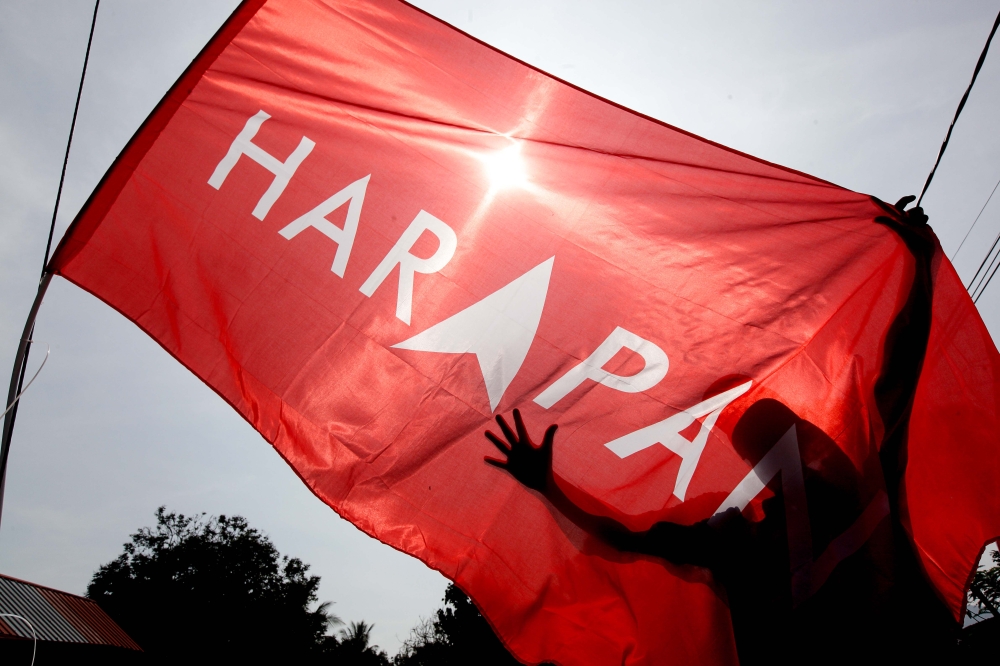
SEREMBAN, May 5 — Several roads in Paroi will be temporarily closed to facilitate the organisation of Ceramah Perdana Pimpinan Utama Pakatan Harapan Negeri Sembilan programme, scheduled to take place at Stadium Tuanku Abdul Rahman parking grounds tomorrow.

Seremban district police chief ACP Azahar Abdul Rahim said the roads involved are Jalan Kedidi, Taman Paroi Jaya, and Lorong Kedidi 1, 2, 3, 4, 5 and 7, which will be closed from 7pm until the programme concludes.

“Road users, especially residents in Lorong Kedidi 1 to 7, are advised to use alternative routes via Jalan Persiaran Merak and Jalan Tok Dagang.

“The event is expected to be attended by Prime Minister Datuk Seri Anwar Ibrahim and key Pakatan Harapan leaders,” he said in a statement here today.

The public is advised to comply with instructions from police personnel on duty to ensure smooth traffic flow and safety throughout the event.

Enquiries can be directed to the Seremban district police headquarters operations room at 06-6033477 or 06-6014999. — Bernama

  •  

Govt approves RM200 per hectare advance aid for paddy farmers across Malaysia, says Anwar

Malay Mail

PUTRAJAYA, May 5 — The government has agreed to provide an advance payment of RM200 per hectare under the Ploughing Incentive Special Aid to help padi farmers nationwide.

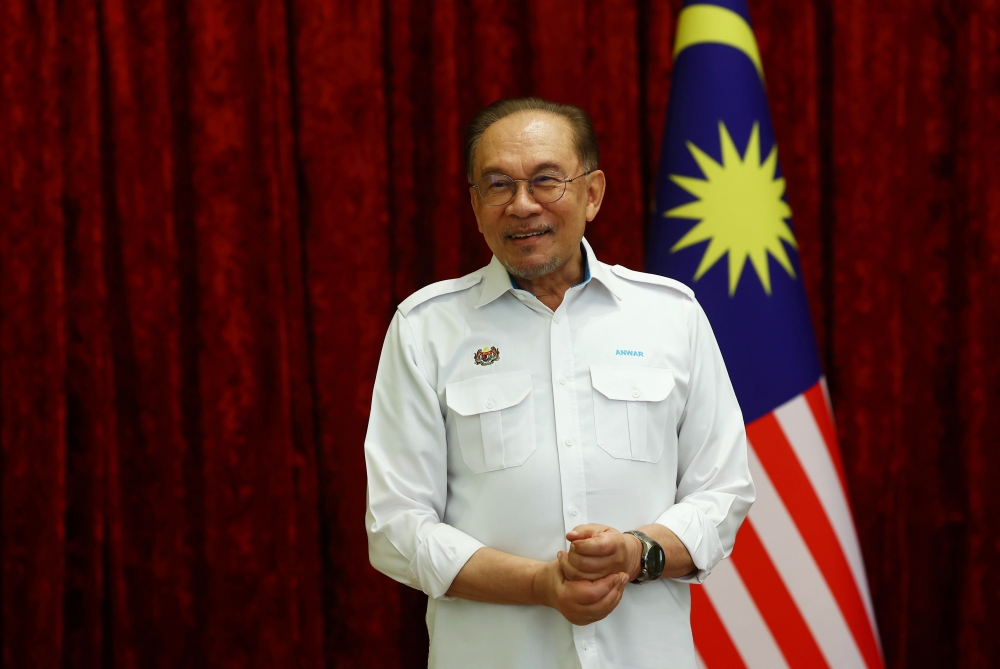
Prime Minister Datuk Seri Anwar Ibrahim said the initiative, approved at today’s National Economic Action Council MTEN) meeting, is expected to benefit nearly 240,000 registered farmers, with a financial implication of RM48 million.

“This is because farmers have to rent ploughing machinery, and while the ploughing programme must continue, they require upfront capital.

“We believe it is better to provide them with the RM200 per hectare advance so they can proceed with their planting activities,” he said at a press conference on the global supply crisis, here today.

Anwar, who is also Finance Minister, stressed that the government remains attentive to the challenges faced by farmers, particularly rising fuel and agricultural input costs linked to geopolitical tensions in West Asia.

Anwar said farmers’ concerns have also been addressed through the Ploughing Incentive for Padi Farmers (IPKP), announced earlier by Agriculture and Food Security Minister Mohamad Sabu on April 14.

“The assistance was increased from RM160 to RM300 per hectare to help farmers cope with higher commercial diesel prices,” he said.

Anwar added that the government would continue exploring measures to ease the cost burden on the public amid ongoing global supply pressures.

“We are facing significant challenges, but we will do our utmost to alleviate the burden on the people, especially those who are relatively poorer and more vulnerable,” he said. — Bernama 

  •  

Anwar directs intensified cloud seeding operations in northern Peninsular Malaysia amid dry spell

Malay Mail

PUTRAJAYA, May 5 — Prime Minister Datuk Seri Anwar Ibrahim has directed the Royal Malaysian Air Force (RMAF) and the Fire and Rescue Department (JBPM) to step up cloud seeding operations in northern Peninsular Malaysia in view of the hot and dry weather.

Anwar, who is also Finance Minister, said the operations must be carried out urgently.

“We are aware that northern Kedah, in particular, is experiencing a longer-than-usual dry spell, causing difficulties for farmers and padi growers.

“As such, we have instructed the RMAF to intensify cloud seeding, and I have also asked JBPM, which has relatively smaller capacity, to continue the operations over the next few days,” he said at a press conference on the global supply crisis here today.

Yesterday, Anwar also instructed the Meteorological Department to expedite similar operations in critically affected states, particularly Kedah and Perlis.

He said the move is an urgent response to current weather conditions, adding that the use of drone technology should be explored to overcome logistical constraints and ensure smoother implementation of the operations. — Bernama 

  •  

Anwar: Govt to expand Jualan Rahmah with weekly sales in all state constituencies

Malay Mail

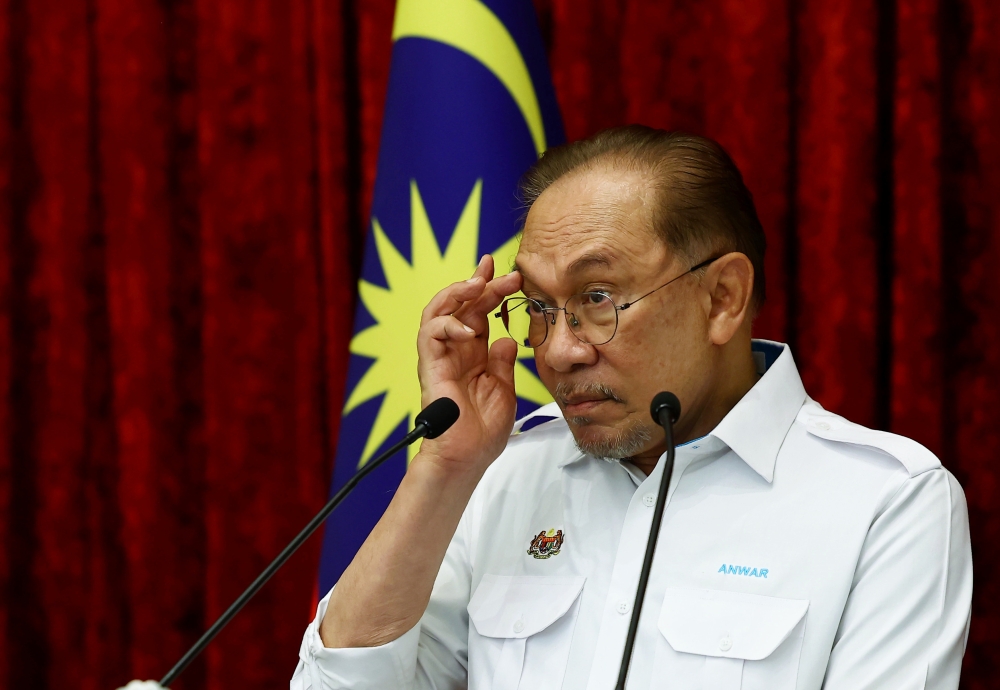
KUALA LUMPUR, May 5 — The government will expand its Jualan Rahmah Madani initiative to be held weekly in every state constituency nationwide, Prime Minister Datuk Seri Anwar Ibrahim announced today.

He said the move is part of broader efforts to ease cost-of-living pressures, particularly by ensuring consistent access to essential goods at lower prices.

“In this way, consumers will have certainty about where and when they can purchase essential goods at lower prices,” he said at a special press conference on the global supply crisis.

Anwar said the programme, led by the Ministry of Domestic Trade and Consumer Affairs, has already shown results, with some goods sold at prices more than 30 per cent lower than market rates, while others see reductions of between five and 15 per cent.

Last year, over 25,000 Jualan Rahmah events were held nationwide, covering all state constituencies.

“For 2026, we have increased this target to 30,000 programmes. This means every constituency will host them, and they will be held weekly,” he said.

Anwar also said the government will ensure the programme reaches beyond urban centres, with selected rural and village areas included in the rollout.

At the same time, he stressed that small businesses must be part of the initiative.

“We do not want this to become a platform dominated solely by large companies. We want to ensure small traders also have the opportunity to participate and benefit,” he said.

While acknowledging that the measure alone would not resolve all cost pressures, Anwar said it could help ease the burden faced by households.

“Not all problems can be solved immediately, but I believe this will help reduce some of the current pressures,” he said, adding that the government will continue to assess further measures through its regular Cabinet and economic meetings.

  •  

Pakatan presidential council to meet ahead of talks with BN, says Saifuddin Nasution amid speculation over N. Sembilan

Malay Mail

SEPANG, May 5 — Pakatan Harapan’s (PH) presidential council will hold a meeting this evening before speaking to leaders of Barisan Nasional later today as the alliance between the two coalitions face a critical test in Negeri Sembilan.

PH secretary-general Datuk Seri Saifuddin Nasution said Prime Minister Datuk Seri Anwar Ibrahim will chair the meeting in Putrajaya, as well as PKR’s political bureau meeting beforehand.

The series of meetings will be held amid rumours that Negeri Sembilan Menteri Besar Datuk Seri Aminuddin Harun could call for a snap election.

“Once these meetings are done PH and BN leaders will sit down to talk later this evening,” Saifuddin said briefly after inspecting operations at the Kuala Lumpur International Airport Terminal 1 here.

Earlier today, Umno president and Barisan Nasional chairman Datuk Seri Ahmad Zahid Hamidi gave his assurance that the party’s Negeri Sembilan assemblymen will remain in the state’s governing unity coalition.

Zahid’s statement appeared to be a directive to the state’s liaison body that it would not withdraw from Aminuddin’s government.

Zahid was reported saying that the decision is final.

“We have no intention of becoming the opposition. Umno at the national level has decided that all 14 assemblymen will remain part of the unity government,” Bernama quoted him as saying.

Saifuddin had described today’s meeting with BN as “routine” but did not outright discount the possibility that tension in Negeri Sembilan could be among the agenda as the two coalitions meet.

“Today’s meeting may have drawn more attention given what’s happening...but we will touch on various matters, though not in the context of a crisis. This is a routine meeting,” he said.  

  •  

Anwar orders rent cuts at federal govt-linked premises to aid small traders, urges states and local councils to follow suit

Malay Mail

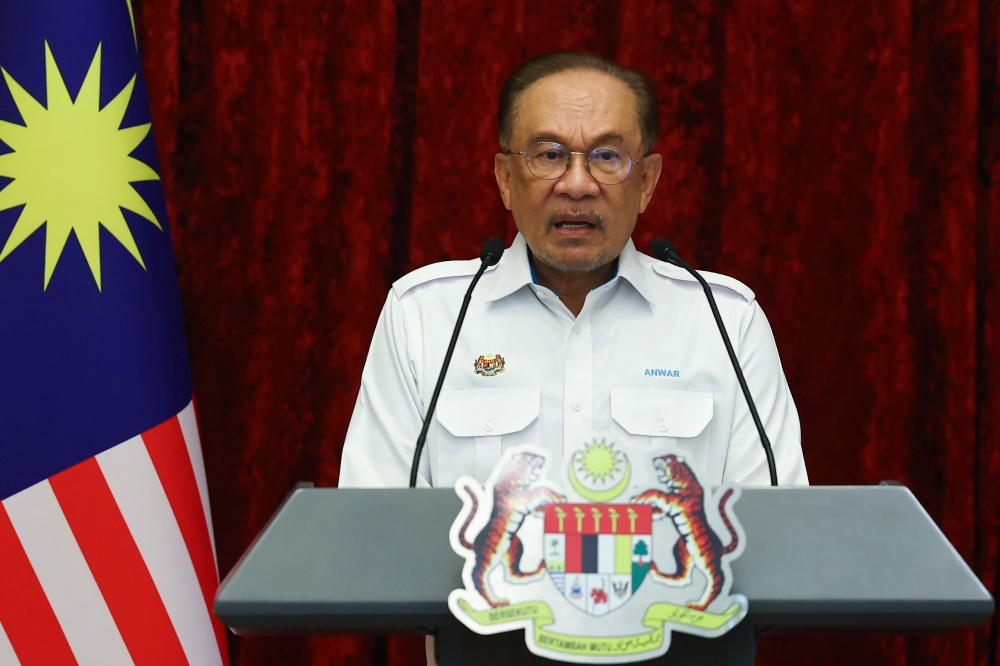
KUALA LUMPUR, May 5 — Putrajaya will lower rental rates at federal government-owned commercial premises from this month to ease cost pressures on small traders, Prime Minister Datuk Seri Anwar Ibrahim said today.

He said the move would involve premises owned by government-linked entities and agencies, and urged state governments and local councils nationwide to adopt similar measures.

“I have sought ways to reduce the burden on small traders within our means. The first step is to reduce rental rates. Many of these shop premises are owned by government-linked entities or agencies such as MARA (Majlis Amanah Rakyat) and UDA (Urban Development Authority).

“Starting this month, they will reduce rental rates across all their business premises, with announcements to be made according to districts shortly,” he said in a special press conference on the global supply crisis, which was broadcast live on YouTube.

Anwar said the decision was aimed at providing immediate relief to small traders facing steadily rising input costs.

He said he was prompted to act after meeting a food stall operator in Rawang last week who raised concerns over the gradual increase in the cost of goods.

“She is having to cope with rising costs of goods, even if the increases are small, they happen week after week. Over four weeks, these increases accumulate and inevitably affect her business, making it more difficult to sustain,” he said.

The matter was later raised at the National Economic Action Council meeting, where it was discussed alongside broader cost-of-living pressures linked to global supply disruptions.

Anwar noted that Kuala Lumpur City Hall (DBKL) had already reduced rental rates, and called on other local authorities and state administrations to act without delay.

“I urge all local authorities and state governments to reduce rental rates effective this month,” he said.

He also thanked Selangor Menteri Besar Datuk Seri Amirudin Shari for responding positively, adding that the state government is expected to announce similar measures soon, particularly for small traders and food operators.

While acknowledging that rental policies fall under the jurisdiction of state governments and local councils, Anwar stressed that coordinated action was needed to cushion the impact of rising costs on vulnerable groups.

  •  

‘Must look at issue comprehensively’: Perak exco meets Anwar over elephants sent to Japan

Malay Mail

IPOH, May 5 — Perak Housing and Local Government Committee chairman Sandrea Ng Shy Ching met the Prime Minister Datuk Seri Anwar Ibrahim yesterday to present the latest developments regarding the relocation of three elephants from Zoo Taiping & Night Safari to Tennoji Zoo in Japan.

Ng said the meeting, held at the Prime Minister’s Office, discussed several key matters, with particular emphasis on the welfare of the three elephants, namely Dara, Amoi and Kelat (DAK), as well as the importance of maintaining good diplomatic relations and honouring existing commitments and agreements.

“The public’s concern over this issue is greatly appreciated, and at the same time it is important for us to look at it comprehensively, based on facts and current developments.

“Emphasis was also placed on ensuring all relevant parties adopt a careful approach in every action, with priority given to animal welfare and continuous monitoring to ensure their condition remains at a good level,” she said in a Facebook post yesterday.

She said any further developments would be shared from time to time by the relevant authorities.

The Prime Minister, in a Facebook post yesterday, stressed that the welfare of the three Malaysian elephants must be prioritised by the Ministry of Natural Resources and Environmental Sustainability (NRES).

Anwar said any decision and action must be carried out based on facts while taking into account the best welfare of the elephants.

Prior to that, Natural Resources and Environmental Sustainability Minister Datuk Seri Arthur Joseph Kurup said that DAK should be brought back to Malaysia from Japan if the implementation of the existing agreement is found to be no longer aligned with conservation principles, wildlife welfare and current sensitivities. — Bernama

  •  

‘True heroes’ in action: Anwar salutes firefighters’ life-saving role on global day

Malay Mail

KUALA LUMPUR, May 5 — Prime Minister Datuk Seri Anwar Ibrahim yesterday expressed his highest appreciation to all firefighters for their significant role in minimising national losses through their speed and efficiency in handling emergencies.

He said that the services and sacrifices of firefighters go beyond saving lives and property, serving as a crucial pillar in supporting the nation’s continued development and well-being.

“The speed and efficiency of firefighters in executing their mandate and responsibilities have successfully minimised damage, thereby supporting the nation’s continued development and well-being,” he said in a Facebook post yesterday in conjunction with International Firefighters’ Day.

Anwar also prayed that all personnel of the Fire and Rescue Department of Malaysia (JBPM) remain protected and be granted the resilience to shoulder their responsibilities tirelessly.

Meanwhile, Minister of Higher Education Datuk Seri Dr Zambry Abd Kadir also expressed his appreciation to all JBPM personnel for their high level of dedication and commitment in serving the community, regardless of the situation.

In a Facebook post, he described firefighters as “true heroes” who are always ready to provide assistance in various emergency situations, including unique rescue missions.

“When a fire occurs, we call the fire department. When a cat gets stuck in a tree, the fire department comes to the rescue. Even when someone gets stuck in a toilet bowl, the fire department comes to assist.

“When accidents, disasters, floods, or any emergency occur, they are always present without question. That is what a true hero is — always ready in any situation,” he said.

Zambry also extended his Happy International Firefighters’ Day wishes, expressing appreciation for the courage and tireless service rendered by the team.

International Firefighters’ Day is celebrated on May 4 every year to honour the services and commitment of rescue teams worldwide. — Bernama 

  •  

PM Anwar orders urgent cloud seeding in Kedah, Perlis, calls for drones to overcome aircraft shortage

Malay Mail

KUALA LUMPUR, May 4 — Prime Minister Datuk Seri Anwar Ibrahim has instructed the Malaysian Meteorological Department (MetMalaysia) to expedite cloud seeding operations in states currently at critical levels, particularly Kedah and Perlis.

Saying the move is urgently needed to deal with current weather conditions, he also suggested the use of drone technology to overcome logistical constraints so that the operations can be carried out smoothly.

“I have instructed MetMalaysia to expedite its implementation, including exploring the use of drone technology and cooperation with various parties to address the shortage of suitable aircraft, to ensure the well-being of the people is protected,” he said in a post on his official Facebook page today.

Earlier, Anwar held a meeting with senior management of the Ministry of Natural Resources and Environmental Sustainability (NRES) to review policy planning and the ministry’s priorities for the year.

Apart from weather issues, the meeting also discussed the welfare of three national elephants – Dara, Amoi and Kelat – currently in Japan.

On this matter, he stressed that the welfare of the animals must be prioritised by NRES and Taiping Zoo, alongside the need for transparent information to the public.

“Any decision and action must be based on facts and take into account the best welfare of Dara, Amoi and Kelat. Transparent and factual information must be continuously shared so that the public has a clear understanding of their condition there,” he said.

Anwar also reminded the ministry on matters of management and governance.

“In concluding the meeting, I stressed the importance of good governance, strong integrity and zero tolerance for leakages. These are the foundations of our efforts in building an inclusive, prosperous and sustainable Malaysia,” he said. — Bernama

  •  

How our universities can truly climb the rankings ladder — Ahmad Ibrahim

Malay Mail

MAY 4 — Malaysia has just launched a new 10-year national education blueprint 2026-2035. Many have lauded the ambitious nature of the plan. Equally, many have warned about the many challenges of implementation. Malaysia’s ambition to become a global education hub is both laudable and logical. With a strong multilingual base, strategic location, and decades of investment in campus infrastructure, the foundation is solid. 

The visible presence of Malaysian universities in international rankings, driven by a concerted push for publications, proves the strategy has momentum. However, in today’s hyper-competitive arena, where rankings increasingly value the impact and relevance of research, a simple “publish or perish” treadmill is no longer enough. To rise decisively, Malaysian universities must strategically pivot from quantity to quality, and from visibility to genuine global influence.

The first, and most critical, shift must be in the culture of publication itself. The current incentive system at many institutions often rewards quantity and journal prestige points (e.g., Q1 journals) above all else. This has yielded growth, but risks creating a factory-like output of incremental studies with limited resonance. The new strategy must incentivise research ambition and rigour. 

This means providing protected time, seed funding for high-risk/high-reward ideas, and celebrating papers not just for where they are published, but for their citation impact, policy influence, or public engagement. Universities should actively foster interdisciplinary research clusters — mixing engineers with economists, medical researchers with data scientists — to solve complex problems. This is where groundbreaking science often happens.

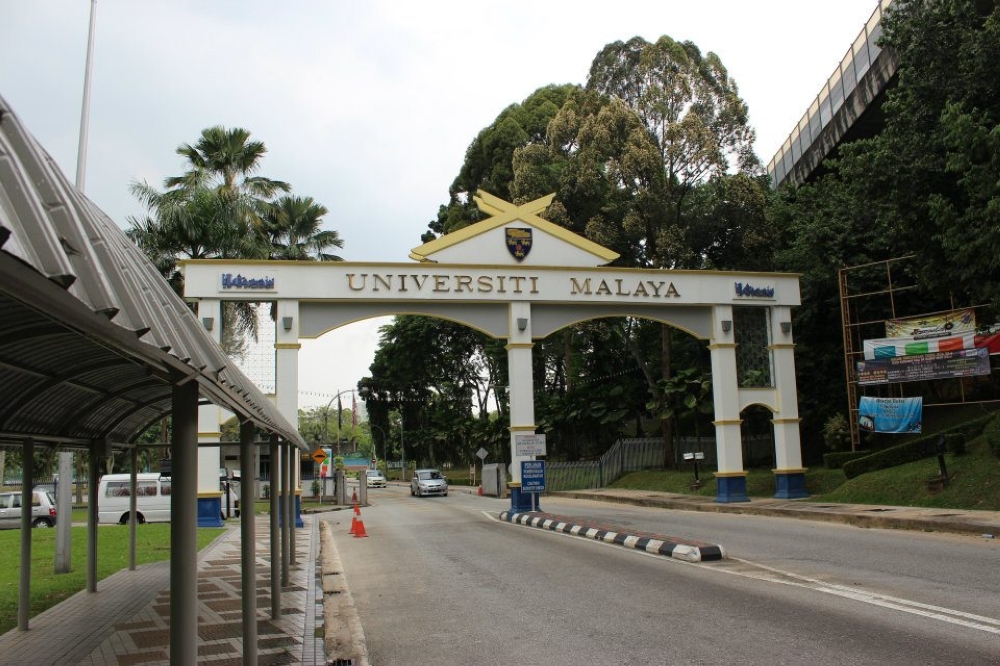
The author argues that Malaysia’s new 10-year education blueprint can strengthen the country’s ambition to become a global education hub only if universities shift from prioritising publication quantity to research quality, SDG-driven relevance, meaningful international collaboration, and stronger support systems for academics and innovation. — Wikimedia pic

This leads directly to the second pillar: authentically embedding the Sustainable Development Goals (SDGs) into the research DNA. SDG alignment is not a branding exercise; it is a powerful framework for relevance. Malaysian universities are uniquely positioned to lead on SDG research that speaks to both local and global challenges. Think of pioneering work on sustainable palm oil alternatives, climate-resilient urban planning for tropical megacities, equitable healthcare models for ageing societies, or biodiversity conservation in Asean rainforests. 

This requires moving beyond tagging existing projects with SDG keywords. It demands strategic hiring, creating SDG-focused research institutes, and aligning postgraduate programmes to train the problem-solvers of tomorrow. Research on local issues with global parallels will attract international scholarly attention and partnerships organically.

Speaking of partnerships, the third pillar requires transforming international collaboration from a transactional metric to a transformational engine. The goal should not be to simply add foreign co-authors to papers. The strategy must be to build deep, equitable consortiums around shared challenges. Malaysian universities should position themselves as indispensable hubs for research in the Global South and on tropical themes. 

Pursue joint PhD programmes, co-supervision networks, and shared laboratory access with top universities worldwide. Crucially, they must also become better at telling the story of their research. A powerful publication in a specialist journal is just the start. Investing in science communication, policy briefs, and media engagement to translate findings for public and government consumption amplifies impact — a factor rankings are increasingly attuned to.

Furthermore, universities must empower their greatest asset: their academics. The academics must be suitably empowered to bring change. This means reducing excessive administrative burdens, streamlining ethics approval processes, and providing robust grant-writing support. Simultaneously, they must be ruthless in upgrading critical infrastructure — not just labs, but high-speed computational resources and open-access publishing funds. Most important is the art of people management, especially how to effectively motivate them. 

The race up the ranking ladder is not won by playing a short-term game. It is won by building a vibrant, confident, and impactful research ecosystem. For Malaysia, the opportunity is not merely to appear in the rankings, but to redefine what excellence from a non-Western hub looks like: excellence that is scientifically rigorous, globally connected, and passionately relevant to humanity’s pressing needs. The rankings are a symptom of health, not the cause. 

By strategically focusing on quality, SDG-led relevance, and deep partnerships, Malaysian universities will not just climb the ladder — they will help build a new one. If universities can embrace such path, that would effectively silenced the growing critics of the ranking investment.

* Professor Datuk Ahmad Ibrahim is affiliated with the Tan Sri Omar Centre for STI Policy Studies at UCSI University and is an Adjunct Professor at the Ungku Aziz Centre for Development Studies, Universiti Malaya. He can be reached at ahmadibrahim@ucsiuniversity.edu.my 

** This is the personal opinion of the writer or publication and does not necessarily represent the views of Malay Mail.

  •  

Why Japan lost its lustre in Malaysia and how it can shine again — Ahmad Ibrahim

Malay Mail

MAY 4 — There was a time when the rising sun of Japan was the guiding light for Malaysia’s economic ambitions. The “Look East Policy,” inaugurated by Tun Dr Mahathir Mohamad in the early 1980s, was more than just a diplomatic slogan; it was a national ethos. It painted Japan not just as a trading partner, but as a civilisational model — a testament to what an Asian nation could achieve through discipline, hard work, and a unique brand of corporate capitalism.

Today, however, the landscape tells a different story. The billboards that once championed Sony and Mitsubishi now glow with the branding of Huawei, BYD, and Samsung. China has unquestionably become Malaysia’s dominant economic partner. The question is why this tectonic shift has occurred, and whether the Land of the Rising Sun can ever reclaim its former glory.

To understand Japan’s diminished role, one must first look at the stagnation of its own economy. The “Lost Decades” following the asset bubble burst in the early 1990s transformed Japan from a aggressive global investor into a cautious, risk-averse player. Japanese corporations, once eager to build sprawling manufacturing complexes in places like Shah Alam and Johor, became conservative. Their model, based on lifetime employment and consensus-based decision-making, was ill-suited for the breakneck speed of the digital age and the hyper-competitive landscape of the 21st century world.

While Japan was looking inward, China was aggressively looking outward. The 2010s saw Beijing’s Belt and Road Initiative (BRI) pour billions into Malaysian infrastructure. The pace was dizzying. Where a Japanese feasibility study might take three years, a Chinese state-owned enterprise could break ground in three months. This speed, coupled with a willingness to invest in massive, visible projects like the East Coast Rail Link (ECRL), captured the Malaysian imagination and filled a vacuum that Japanese caution had created.

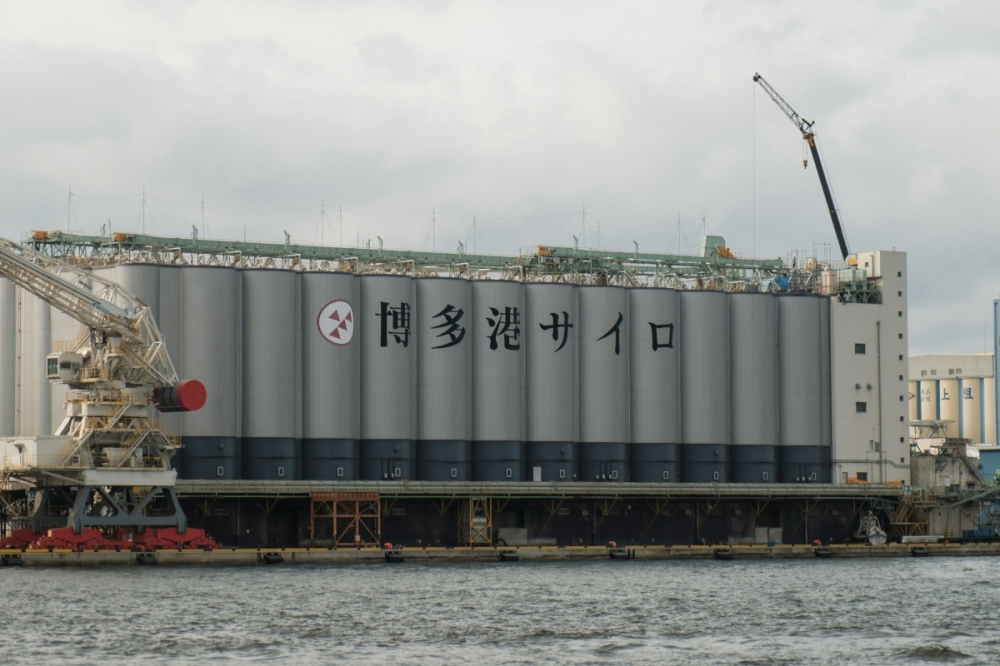
The author argues that Japan’s influence in Malaysia has waned due to decades of economic stagnation and China’s rapid rise as a dominant regional investor, but that Tokyo can still regain relevance by focusing on high-tech collaboration, innovation partnerships, and a renewed form of cultural diplomacy suited to the demands of the 21st century. — Unsplash pic

The simple truth is that the “special relationship” with Japan was sustained by strong personal rapport at the top. As Dr Mahathir’s direct influence waned and a new generation of Malaysian leaders and consumers came of age, they felt no such nostalgia. They witnessed Japan’s slow-motion retreat from the region and simply looked elsewhere for the economic dynamism they craved.

Regaining its place will not be easy. The world has moved on, and a return to the 1980s is impossible. However, Japan’s decline is not irreversible. To reclaim its relevance, Tokyo must fundamentally change its strategy, moving from a model of general manufacturing to one of high-tech, high-value specialisation.

First, Japan must pivot from competing on volume to leading in niche excellence. While China dominates mass-market EV production, Japan holds the keys to the future of mobility: advanced batteries, lightweight materials, and the complex supply chain for the semiconductors that will power the next generation of smart cars. Instead of trying to sell the most cars, Japanese giants like Toyota and Panasonic should position themselves as the indispensable technological partners for Malaysia’s own automotive ambitions, particularly in the EV sector.

Second, Japan needs to rediscover its innovative edge through genuine collaboration. The old model was Japan teaching, and Malaysia learning. That era is over. The new model must be one of co-creation. Japan is a global leader in robotics, IoT, and green technology. Malaysia, with its industrial base and digital aspirations, is the perfect testbed for these innovations. Instead of just building factories, Japanese firms should establish joint R&D centres with Malaysian universities and startups to solve local problems — from smart agriculture in Sabah to flood mitigation technology in Kuala Lumpur.

Third, and perhaps most importantly, Japan must engage in a new form of cultural diplomacy. The “Look East” policy needs a 2.0 version. This isn’t about asking Malaysians to bow more deeply or work longer hours. It is about showcasing Japan’s soft power in the 21st century. This means leveraging its global dominance in anime, gaming, and design to build bridges with Malaysian youth. It means promoting tourism not just for shopping, but for educational exchanges in tech and the arts. It means making Japan seem fun, accessible, and futuristic again.

The narrative that Japan has permanently lost its place in Malaysia is not yet a foregone conclusion. Its economic footprint may have shrunk, but its reputation for quality, precision, and reliability remains intact. If Japan can leverage these assets with the urgency and adaptability of a challenger, rather than the complacency of an established power, it can carve out a new and vital role. The sun may have faded, but it has not yet set. Whether it rises again depends entirely on whether Japan is willing to look east once more — and see a partner, not just a pupil.  

* Professor Datuk Ahmad Ibrahim is affiliated with the Tan Sri Omar Centre for STI Policy Studies at UCSI University and is an Adjunct Professor at the Ungku Aziz Centre for Development Studies, Universiti Malaya. He can be reached at ahmadibrahim@ucsiuniversity.edu.my 

** This is the personal opinion of the writer or publication and does not necessarily represent the views of Malay Mail.

  •  

Malaysia to pursue balanced economic diplomacy without compromising energy security, says Anwar

Malay Mail

PUTRAJAYA, May 4 — Prime Minister Datuk Seri Anwar Ibrahim stressed that Malaysia adopts a balanced approach in economic diplomacy, prioritising national interests, including energy security.

He said trade negotiations with strategic partners such as Australia are conducted on a reciprocal basis, taking into account Malaysia’s need to import raw materials such as phosphate for fertiliser production, while exporting urea.

“We import phosphate, we export urea… that is why in my discussions with the Prime Minister of Australia, Anthony Albanese, who was here two weeks ago, he asked for urea and I said that is possible provided he supplies phosphate.

“He (Albanese) asked for oil, and I said if we have a surplus we can supply it, but if we do not, we cannot — despite claims out there asking how Anwar sold oil to the Philippines; when did we sell oil to the Philippines?” he said when addressing the Ministry of Natural Resources and Environmental Sustainability’s monthly assembly here today.

As such, he called on all parties to provide accurate facts, as this is a matter of national security and should not be treated as a political issue.

Anwar said Malaysia will continue to strengthen economic cooperation with key trading partners, including China and the United States, despite differences in views on geopolitical issues.

“The United States remains Malaysia’s number one trading partner and investor. Do we agree with its foreign policy? No. Do we agree with its actions in attacking Iran? No. Do we agree with it allowing the killing of children and women in Gaza? No.

“So we continue to uphold the independence I refer to as Asean centrality. We speak up because we are an independent and sovereign nation,” he said.

At the same time, he stressed that Malaysia will not compromise on key national policies, including those related to Bumiputera interests, in any trade negotiations.

“We can trade, but we will not allow others to dictate our policies. If we dismantle or overhaul these policies, it could create domestic political tensions that we cannot control. So there are limits,” he said.

He also stressed the need to maintain a pragmatic approach in international relations to ensure foreign investment flows are not disrupted.

“If we confront everything, new investments will be affected,” he said.

In a related development, he said Malaysia still has strengths in high-value sectors such as electrical and electronics (E&E) and artificial intelligence (AI), which continue to attract global investors.

He added that multinational companies such as Intel and Amazon Web Services continue to expand their investments in the country.

“This means that while we face challenges in some areas, we are still benefiting from others,” he said. — Bernama 


  •  
❌