Reading view

Tiong says Malaysia’s tourist arrivals continue to grow despite Middle East conflict

Malay Mail


KUALA LUMPUR, May 1 — Tourism, Arts and Culture Minister Datuk Seri Tiong King Sing said tourist arrivals in Malaysia continue to grow despite the Middle East conflict.

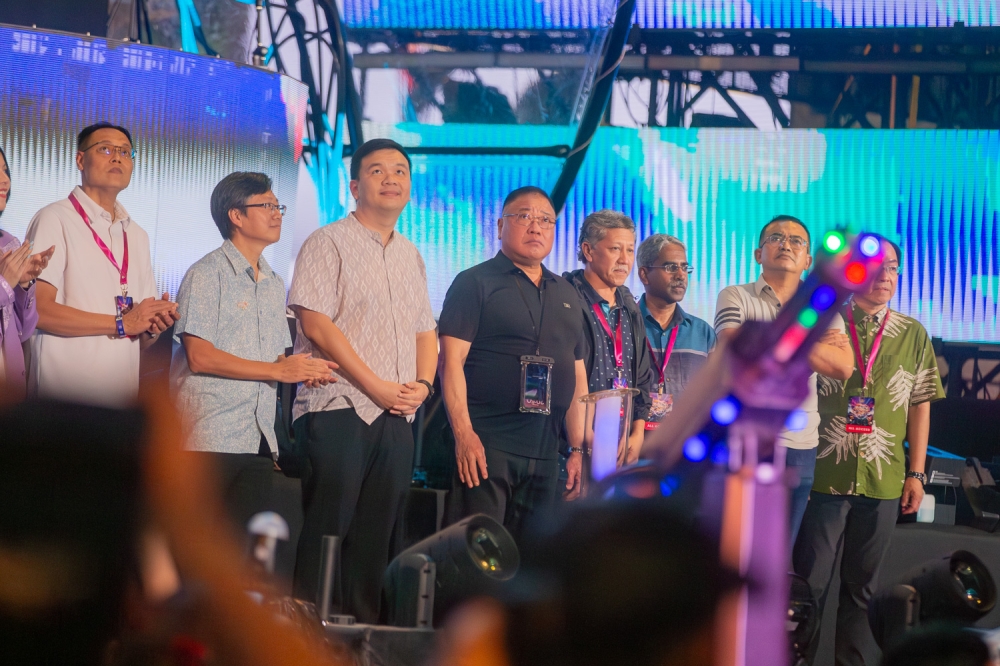
Tiong said this during a press conference with local media following the launch of the Rain Rave Water Music Festival (RRWMF) at Bukit Bintang last night.

“Up until today, our tourist numbers continue to grow, thank God for helping us.

“Although there is a dip in tourists from the Middle East, there is a slight increase in the number of tourists coming from Asian and European countries,” Tiong said.

He added that the decline in tourist numbers from the Middle East is due to the current US-Israel conflict with Iran, which is contributing to a global energy crisis.

Apart from that, Tiong also said that in light of the current economic situation, the RRWMF programme is one of the ways to further spur local economic growth, while dismissing critics who called the three-day music festival a waste of resources.

“We have conducted thorough calculations and internal discussions; this is far from a waste of resources,” Tiong clarified.

“Without initiatives like this, tourist arrivals would likely dwindle. Furthermore, these programmes provide vital business opportunities for the B40 community. How can we expect to revitalise our economy if we do not create these platforms?”

“We must help them but at the same time, whichever areas we can save, we save, and whichever need a bit of push, we can run programmes — this is to help stabilise the local economy,” he added.

The three-day RRWMF runs from April 30 to May 2 and is held in conjunction with the Visit Malaysia Year 2026 campaign, which aims to attract 43 million visitors to the country.


  •  

Infantino: Iran will compete in World Cup and play matches in United States as scheduled

Malay Mail


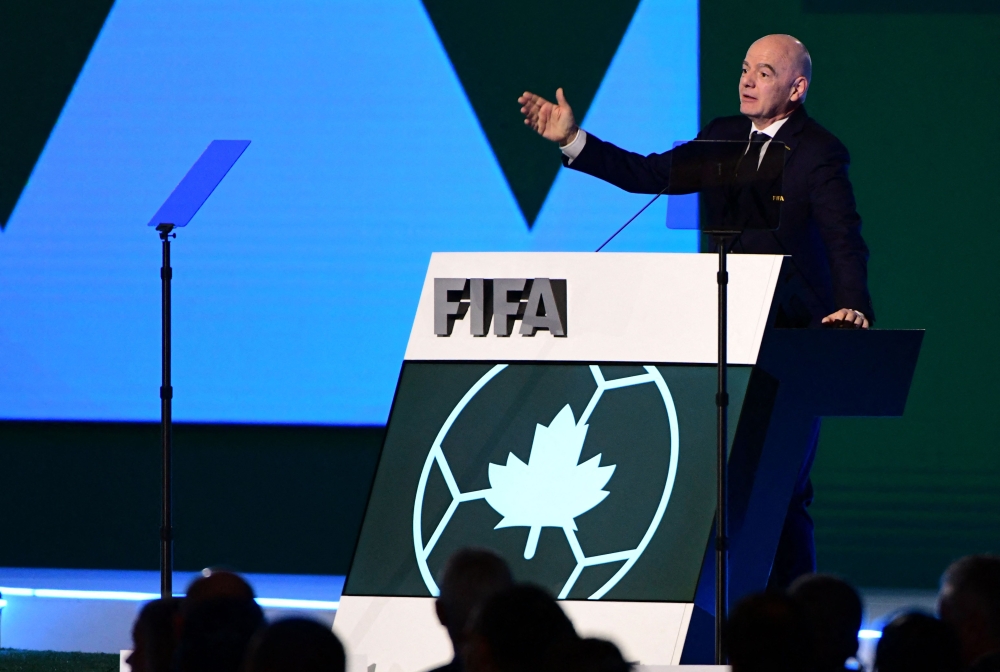
VANCOUVER, May 1 — Fifa President Gianni Infantino reiterated that Iran will play their World Cup games in the United States as scheduled, as football’s power-brokers met in Vancouver yesterday. 

Iran’s participation at this year’s World Cup in Canada, Mexico, and the United States has been shrouded in uncertainty since the eruption of war in the Middle East in February following strikes by the United States and Israel.

Infantino, who has repeatedly stated that Iran will be at the World Cup, underscored that stance at the start of his address to delegates as Fifa’s 76th Congress got underway in western Canada.

“Let me start by the outset, confirming straightaway that of course Iran will be participating at the Fifa World Cup 2026,” Infantino said. “And of course, Iran will play (in) the United States of America.”

Infantino’s remarks drew swift support from close ally US President Donald Trump, who told reporters in the Oval Office he was “OK” with Iran’s participation.

“Well, if Gianni said it, I’m OK,” Trump said. “I think let ‘em play.”

Iranian officials had floated the idea of shifting their group games from the United States to Mexico, but that proposal had already been nixed by Infantino.

In a further twist last week, Italy-born US special envoy Paolo Zampolli was reported to have floated the idea of Italy taking Iran’s World Cup place.

The US government later distanced themselves from that proposal, with US Secretary of State Marco Rubio saying Iran’s footballers would be welcome.

But the tension surrounding Iran’s World Cup participation rumbled into the build-up to Thursday’s summit.

Iran’s delegation was the only absentee from the 211-member congress as Thursday’s meeting got under way after a clash with Canadian border officials earlier this week.

Officials from the Iranian football federation (FFIRI) abruptly left Canada after landing in Toronto, abandoning their onward trip to Vancouver.

Iranian media said FFIRI president Mehdi Taj—a former member of Tehran’s Islamic Revolutionary Guard Corps (IRGC) — and two colleagues flew home after being “insulted” by Canadian immigration officers.

Canada, which designated the IRGC a terrorist organization in 2024, said Wednesday that individuals linked to the force were “inadmissible.”

Iran, who are due to be based in Tucson, Arizona, during the World Cup, face New Zealand, Belgium and Egypt in Group G.

The Iranians open their World Cup campaign against New Zealand in Los Angeles on June 15.

Infantino election boost 

Fifa supremo Infantino went into yesterday’s summit with his organization under fire over skyrocketing ticket costs for the World Cup, which one supporters group has branded a “monumental betrayal” of fans.

Infantino brushed off those criticisms in his address, insisting that all revenues from the World Cup—estimated between US$11 and US$13 billion—would be pumped back into football development.

“There are expensive tickets, yes, (but) there are also affordable tickets,” Infantino said. “And what is important is that all the revenues that we generate from the world go back to the entire world and finance football in all of your countries.”

Infantino’s close ties to US President Trump have also come under scrutiny.

Advocacy group Fairsquare filed a formal complaint in December arguing that Infantino had breached FIFA rules concerning political neutrality by awarding Trump the inaugural “FIFA Peace Prize” during last year’s World Cup draw.

However Infantino received a huge boost to his hopes of securing re-election as the head of world football yesterday after receiving pledges of support from the African and Asian regional confederations.

The Confederation of African Football (CAF) and Asian Football Confederation (AFC) have both said they will back Infantino if, as expected, he stands for a fourth term in 2027.

The African and Asian confederations account for 101 votes in FIFA’s presidential election out of a total of 211.

Infantino has already secured support for re-election from South American football’s ruling body CONMEBOL, which is worth a further 10 votes. — AFP


  •  

Braga strike late to beat Freiburg 2-1 in Europa League semi-final first leg

Malay Mail


BRAGA, May 1 — Braga will take a slender advantage to Germany for the return leg of their Europa League semi-final after Mario Dorgeles scored in injury-time to give the hosts a 2-1 win over Freiburg in the first leg yesterday. 

Demir Ege Tiknaz opened the scoring early for the hosts, before Vincenzo Grifo quickly levelled for Freiburg.

Despite being forced into numerous changes due to injuries, Carlos Vicens’ Braga made a roaring start in their first European semi-final for 15 years.

Turkey midfielder Tiknaz slid in to finish from close range on eight minutes at their Estadio Municipal.

The lead only lasted eight minutes as Freiburg playmaker Grifo applied a cool finish to Jan-Niklas Beste’s pinpoint cross.

After a frantic opening quarter-hour, the match calmed down until one minute before the interval as VAR intervened to award a penalty to Braga after Philipp Lienhart fouled Gustaf Lagerbielke.

However, German shotstopper Noah Atubolu plunged to his right to tip Rodrigo Zalazar’s effort from 12 yards to safety.

Braga boss Vicens made attacking changes in the second period.

The breakthrough came for Braga two minutes into added time as Atubolu spilled Vitor Carvalho’s effort and Dorgeles was on hand to squeeze the ball home from close range.

“Even after we conceded, the team prevailed. We missed a penalty and still managed to win,” Vicens said.

“The team never stopped wanting to win... And we got the reward in the form of a 2-1 victory.

“In Germany, Freiburg will try to turn it around and we will have to be ready to give a good performance again.”

The winners of the tie will meet either Nottingham Forest or Aston Villa in the final on May 20 in Istanbul. Forest won the first leg of the clash between the two Premier League rivals 1-0. — AFP


  •  

Police arrest four foreigners in Seremban over alleged obscene video scam syndicate

Malay Mail


SEREMBAN, May 1 —  Police detained four Chinese nationals during a raid here on April 23 for suspected involvement in an online scam syndicate selling obscene videos.

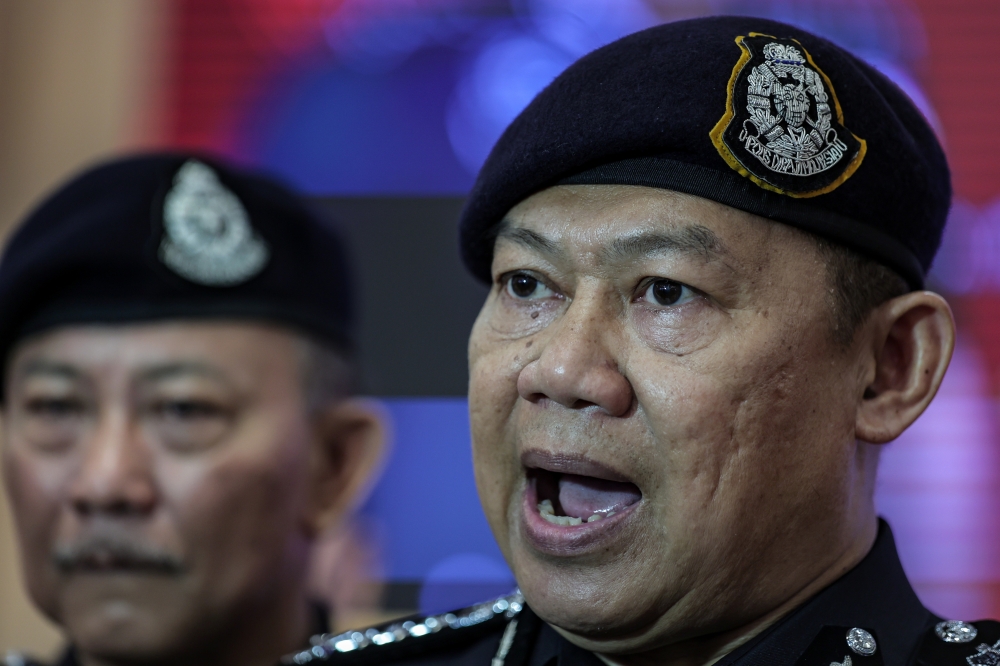
Seremban Deputy Police Chief Supt Ahmad Lutfti Abdul Mutalip said the suspects, aged between 25 and 40, were apprehended by a team from the District Police Headquarters (IPD) Commercial Crime Investigation Division and the Negeri Sembilan Contingent Police Headquarters Commercial Crime Investigation Department (CCID).

He said police seized four computers, 19 mobile phones of various brands, a router, a set of keys, and a remote control during the raid at a house. The seized items are estimated to be worth RM10,000.

“Preliminary investigations revealed that the syndicate advertised and provided obscene videos via a website, in addition to using applications such as Tang Tang, Telegram, and WeChat to attract customers,” he said in a statement here yesterday. 

All suspects have been remanded for seven days until today to assist with the investigation.

The case is being investigated under Section 420 of the Penal Code for cheating, which carries a jail term of between one and 10 years, with whipping and a fine, upon conviction. — Bernama


  •  

How Trump exploits oil reservoirs to be strategic pressure point on Iran — Phar Kim Beng and  Jitkai Chin

Malay Mail

MAY 1 — There have been weeks of naval blockade along the Iranian Gulf coast by the United States.

The maritime pressure on Iran is now pushing the country towards a far more dangerous threshold.

Millions of barrels of crude that would normally leave the country each day are instead backing up into onshore storage.

Its largest terminal, which handles roughly 90 per cent of Iran’s crude exports, Kharg Island, has only 12–13 days of usable capacity remaining.

Once the tanks are full, the problem is no longer simply that Iran cannot sell its oil, but that it may not be able to keep producing it.

The strategy behind the blockade by Donald Trump’s administration is clear and brutally simple: The real pressure begins when crude keeps flowing from the fields but has nowhere to go.

Blocking tankers at sea is only the first layer; the inner layer is to force Iran to shut in producing wells.

In fact, this is a very real problem for Iran, and obviously, the team behind the Trump administration clearly understands the natural characteristics of Iranian reservoirs far better than many expected.

This is not only a matter of stopping exports or creating short-term financial pain; it is a calculated pressure point aimed at the subsurface itself.

The reason forcing crude well shut-ins is an effective strategy is because, fundamentally, a crude reservoir is not a storage tank that can simply be switched off and restarted at will.

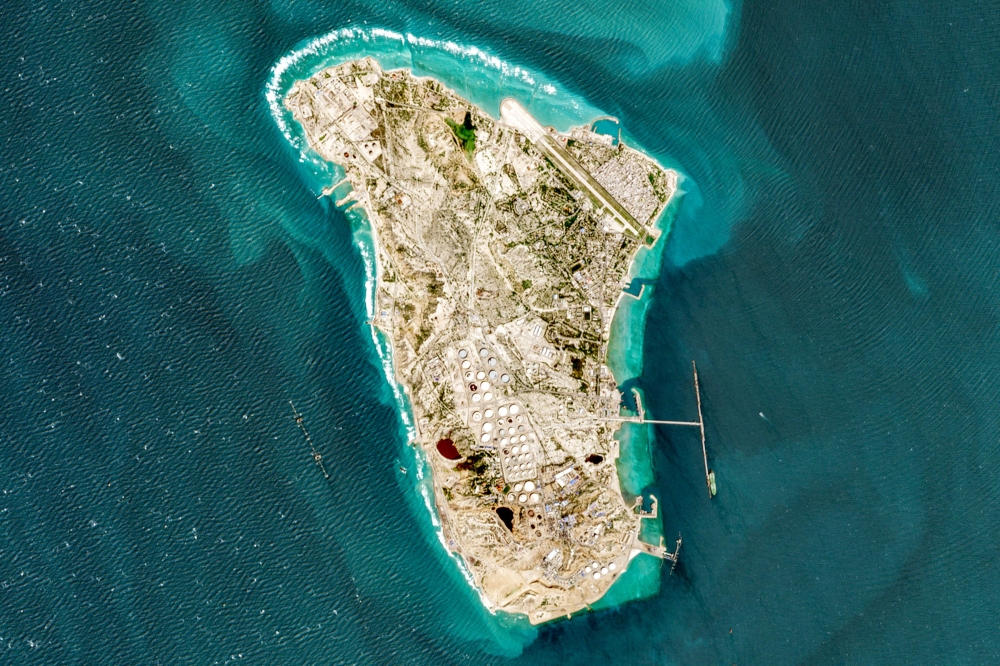
This handout image taken by the European Space Agency (ESA) captured by the Copernicus Sentinel-2 satellite shows a view of Iran’s Kharg Island, which hosts the country’s main crude export terminal. — AFP pic

Most of the major crude-producing fields, particularly in the southwest of Iran, such as Ahvaz, Marun and others, are mature carbonate reservoirs with strong dual-porosity characteristics – the natural rock fracture matrix that stores the crude, while also providing pathways for crude to flow towards the wellbore.

This system works only when reservoir pressure is carefully maintained.

After decades of production, many of these ageing fields have lost a significant portion of their natural pressure and rely heavily on continuous gas reinjection to sustain output and prevent rapid decline.

Once production is forcibly shut in, pressure redistribution inside the reservoir changes fluid movement and cool-down of liquids.

It leads to precipitation of asphaltene and halite clogging, a phenomenon in which precipitation of sodium chloride and calcium chloride may build up geostress, leading to the collapse of corroded wells.

Reopening these wells is therefore not as simple as reopening a valve.

Some crude wells may require major intervention, pressure support restoration, chemical treatment, or even expensive workovers to return to normal operation.

In general, depending on the duration of closure, reopening old crude wells normally sees a significant drop in production index (PI), which quantifies crude production.

Let’s carry out a general case study.

A mature Iranian onshore carbonate well producing 2,000 STB/d before shut-in (PI ≈ 2.5 STB/d/psi, water cut ~35 per cent), with a 12-month unmanaged shut-in, typically results in a 40–50 per cent permanent PI loss, driven by combined near-wellbore chemical reactions, including asphaltene precipitation, fines migration and scale deposition.

Using a mid-case 45 per cent PI loss, the restarted oil rate falls to ~1,100 STB/d, a loss of 900 STB/d (≈328,500 bbl/yr) compared to pre-shut-in levels.

Even with standard remediation such as acid stimulation and lift replacement, full PI recovery is rarely achieved in such reservoirs because the field experiences partial restoration, leaving a structural, long-term rate penalty.

This magnitude of PI degradation is consistent with long shut-ins in sour and mature carbonate wells.

Let’s look at the financial impact in a simple numerical simulation.

At an oil price of US$65/bbl, variable opex of US$12/bbl, 10 per cent discount rate, and seven years of remaining field life, the permanent rate loss from the 45 per cent PI degradation reduces annual net cash flow by approximately US$17.4 million/yr.

This is equivalent to approximately US$87 million of net present value (NPV) destruction from rate loss alone.

Adding deferred production value erosion from the 12-month shut-in (~US$4 million), restart capex for stimulation, electrical submersible pump (ESP) replacement, and integrity work (US$3 million), and incremental opex due to higher water handling and lift inefficiency, the total NPV impact approaches US$98 million per well.

In practice, this means that even if a well can be restarted successfully, the restart economics become negative unless the oil price is exceptionally high.

However, what is shown above is not the worst case.

In a multi-well plateau decline model, plateau loss is more economically catastrophic because the plateau of a field is a system-level outcome, rather than a simple aggregation of independent wells.

In a simple simulation, a 20-well mature carbonate field producing 40,000 STB/d suffers a one-year shut-in, inducing an average 45 per cent permanent PI loss across the wells.

When production restarts, each well can deliver only ~1,000 STB/d instead of 2,000 STB/d, collapsing the field plateau abruptly to 20,000 STB/d.

The loss of 20,000 STB/d is not a temporary decline but an irreversible step-down caused by near-wellbore damage, increased water and gas encroachment, as well as the loss of drawdown headroom that balances strong and weak wells.

Over the remaining five-year plateau window, approximately 33 million barrels of oil will never be produced.

Hence, at a net margin of US$53/bbl, the plateau collapse alone causes approximately US$1.3 billion in NPV, dwarfing ~US$70 million restart capex and higher opex, pushing total value destruction towards US$1.7 billion for the field.

This is a staggering economic loss as plateau barrels are high-rate, early-life barrels with the highest present value.

When PI degradation forces the field into a lower-rate regime, the operation changes from capacity-limited to reservoir-limited.

The field permanently forfeits its most valuable cash flow years.

As a practical rule of thumb, beyond 45 per cent PI loss, plateau recovery is practically impossible without infilling or massive lift upgrades.

The pressure campaign from Washington is not merely on seaborne crude exports, but on deeper vulnerabilities embedded in Iran’s reservoirs.

When sanctions and blockades force ageing and rate-controlled plateau wells offline, the damage is not unimaginable.

From the standpoint of strategy, time and patience are assets: Every additional month of constrained production quietly degrades the future revenue base.

As Iran diverts its limited resources towards deterrence and domestic stability, it lacks both the capital and operational freedom to protect reservoir integrity at scale.

Time is not on Iran’s side.

Iran may survive the sanctions and blockade politically, but its core economic engine is being structurally impaired by time.

*Phar Kim Beng is a professor of Asean Studies and director of the Institute of International and Asean Studies, International Islamic University of Malaysia. Jitkai Chin is from the Department of Chemical Engineering, Universiti Teknologi Petronas, and also expert committee member in Centre of Strategic Regional Studies.

** This is the personal opinion of the writer or publication and does not necessarily represent the views of Malay Mail.

 

  •  

Musk grilled on AI profits at OpenAI trial as judge probes for-profit shift claims

Malay Mail

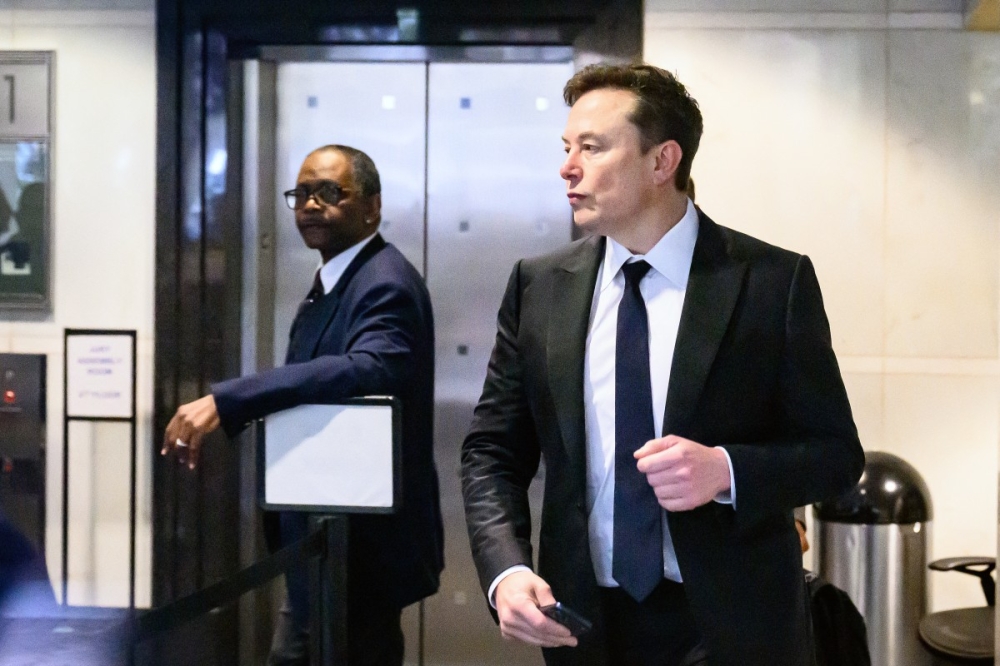
OAKLAND, May 1 — Elon Musk sparred with lawyers for a third day yesterday at his California trial against OpenAI, struggling to explain why his own for-profit AI empire differs from the one he is trying to take down.

“Few answers are going to be complete, especially when you cut me off all the time,” the visibly irritated multibillionaire said as he resumed his duel Thursday morning with the defense attorney for OpenAI.

Federal Judge Yvonne Gonzalez Rogers, who must decide whether OpenAI—the creator of ChatGPT—betrayed its original nonprofit mission, had to intervene several times to compel the world’s richest man to answer questions.

After the judge accused him of playing lawyer by complaining that opposing counsel’s questions were “leading,” the tech mogul conceded: “I am not a lawyer.”

“Well, technically I did take Law 101 in school,” he added, drawing laughter from the courtroom.

A benefactor to OpenAI’s co-founders—to whom he gave $38 million during the project’s early days from 2015 to 2017 -- Musk accuses CEO Sam Altman and his partner Greg Brockman of betraying the startup’s charitable mission by transforming it into a commercial company valued at more than $850 billion and poised to go public.

He is seeking to have OpenAI—which rivals Anthropic and Google at the top of the global AI race—return to nonprofit status, in a trial whose outcome could reshape the question of who controls AI innovation in the United States.

OpenAI’s attorney William Savitt sought to demonstrate that Musk is a mirror image of what he denounces: all of his companies—Tesla, Neuralink, X and his own AI firm xAI, recently absorbed into SpaceX—are for-profit, and the entrepreneur himself presents them as beneficial to humanity.

“There’s nothing wrong with having a for-profit organization,” Musk answered, repeating his mantra: “You just can’t steal a charity”—meaning OpenAI should simply have started as a normal company from the outset.

“The worst-case situation would be that AI kills us all, I suppose,” Musk declared with a smile, seizing an opening from his own attorney to invoke the climactic scenario from the film “Terminator.”

The judge had sought to bar such digressions, telling Musk’s attorney at the start of the hearing: “I think it’s ironic that your client, despite these risks, is creating a company that’s in the exact same space.”

Musk’s testimony concluded Thursday, his third day on the stand, although he could be called back before mid-May.

Altman, his former protégé turned adversary, was present for Thursday’s exchanges and left the courthouse shortly after Musk finished.

Altman’s testimony is expected next week or the week after. OpenAI President Brockman, another early co-founder, will precede him on the witness stand. A ruling on the merits is expected in mid-May. — AFP


  •  

Over 7,000 turn up for Rain Rave day one, KL police chief warns public against misconduct

Malay Mail


KUALA LUMPUR, May 1 — The opening of the Rain Rave Water Music Festival (RRWMF), held in conjunction with Visit Malaysia Year 2026, saw a massive turnout with over 7,000 attendees gathered in the heart of the city.

KL police chief Datuk Fadil Marsus told local media that the number was expected to swell past the 10,000 mark by midnight.

“The atmosphere is incredibly vibrant, and we anticipate this momentum to continue through tomorrow afternoon, which will conclude on May 2.

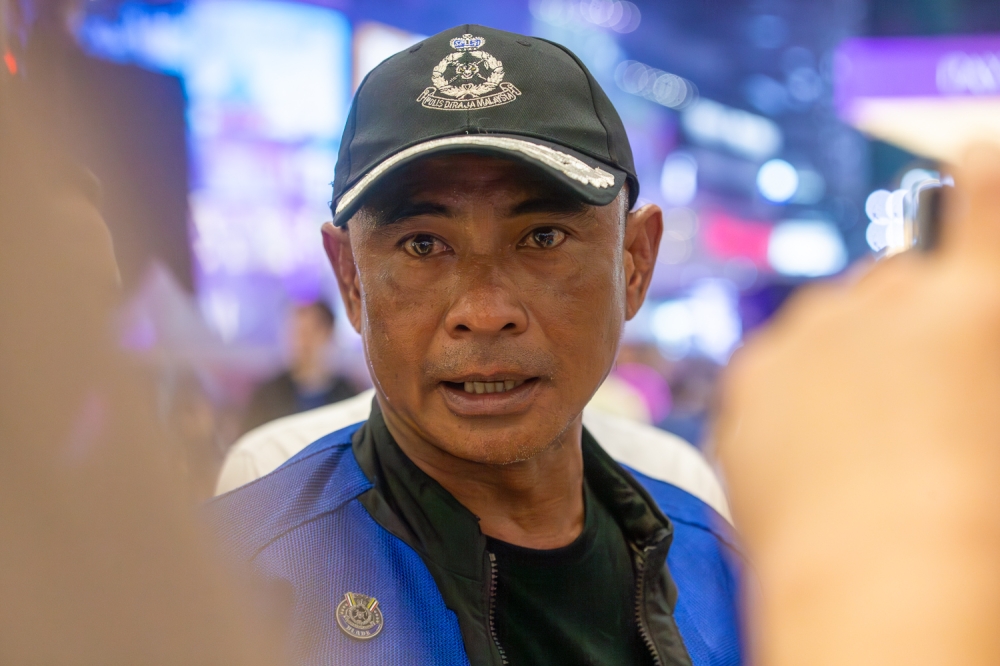
“My officers are stationed throughout the venue. We are committed to ensuring this programme runs smoothly and safely,” he said last night when met by reporters. 

He added that 500 officers and personnel, including reinforcements from Bukit Aman and all district police headquarters in Kuala Lumpur, were deployed for the opening night alone.

Organised by the Ministry of Tourism, Arts and Culture (MOTAC), the three-day music festival has transformed the streets of Bukit Bintang into a massive, high-energy wet dance floor.

In light of that, Fadil reminded the public to pay close attention to official traffic updates and to plan their journeys accordingly, as numerous roads in the area are currently closed.

He also issued a firm reminder about social conduct, warning against drug use and any immoral behaviour at the event.

“Numerous roads are currently closed. Please pay close attention to official traffic notices and plan your journeys accordingly to avoid congestion.

“To those visiting, I want to emphasise: please prioritise your safety. Ensure there is no involvement with drugs or any immoral behaviour,” he said.


  •  

Clearer guidelines needed on cargo handling after Hin Leong, Ocean Tankers scandals, says industry player

Malay Mail


KUALA LUMPUR, May 1 — The maritime industry is urging regulators to provide clearer guidance on cargo handling practices, particularly involving oil commingling in shore tanks, following key lessons from past corporate failures in Singapore.

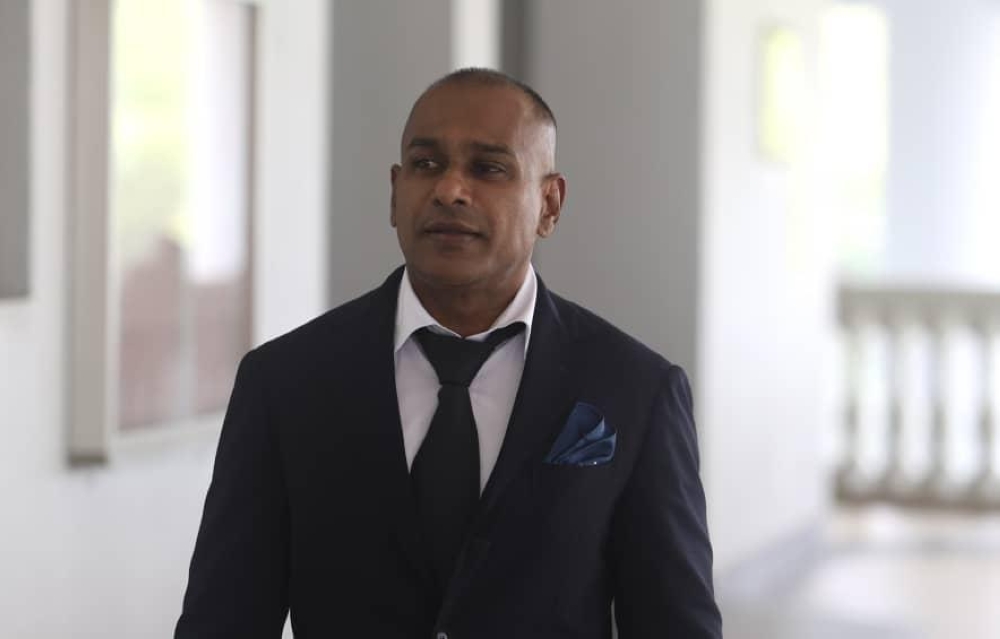
Maritime Network Sdn Bhd chief executive officer Datuk Seri Jeyenderan Ramasamy, in a statement, said the collapses of Hin Leong Trading and Ocean Tankers (Pte) Ltd exposed serious weaknesses in how physical oil inventories are reconciled with documentation and financial records.

With over three decades of industry experience, the maritime expert said there is a need for greater clarity in how cargo is handled once it is blended or reclassified at storage facilities.

“The cases exposed weaknesses in reconciling physical oil stocks with paper records across trading, storage and vessel operations, underscoring broader risks related to inventory verification, documentation integrity and traceability within the petroleum supply chain,” he said.

He added that without proper alignment between physical cargo conditions and documentation, the industry risks ongoing compliance gaps.

Against this backdrop, he called for clearer regulatory frameworks to ensure cargo handling practices, particularly post-discharge commingling, are properly reflected in official records.

He also stressed the need for stronger standards in record-keeping and audit trails to ensure declared cargo quantities and classifications remain consistent with actual physical movements.

He further said inconsistencies between physical cargo and documentation could lead to valuation disputes, compliance risks, and reduced confidence in regulatory oversight of the petroleum sector.

The renewed push for clarity comes as regional trading hubs continue to tighten scrutiny over oil storage, blending, and transshipment practices to prevent similar systemic failures.


  •  

Johor police chief: Two army personnel arrested over assault that left soldier with fractured skull

Malay Mail


MERSING, May 1 — Police have arrested two army personnel to assist in investigations into an incident that left a soldier seriously injured, including a fractured skull, at Kem Iskandar, here.

Johor police chief Datuk Ab Rahaman Arsad said the two suspects, both 24 and from the same camp, were arrested by the Criminal Investigation Division of the Mersing district police headquarters at about 11.45 pm on March 14.

“We also seized a 72-centimetre cane, believed to have been used as a weapon,” he said in a statement here last night. 

Ab Rahaman said checks found that the suspects had no prior criminal records, and both tested negative for drugs.

The case is being investigated under Section 326 of the Penal Code for voluntarily causing grievous hurt using a weapon.

He said the investigation papers have been referred to the State Prosecution Director’s Office on Wednesday for further instructions from the Attorney General’s Chambers.

“At the same time, the public is advised not to make any speculation or comments that could interfere with the investigation process,” he said.

He added that the 25-year-old victim is currently receiving treatment at Universiti Malaya Medical Centre (UMMC) in Kuala Lumpur.

Earlier, Defence Minister Datuk Seri Mohamed Khaled Nordin said appropriate action against those involved would be determined based on the outcome of investigations by the authorities.

It was earlier reported that the victim, Abdul Hamid Talib, 25, from Bum Bum, Semporna, Sabah, who serves with the 22nd Commando Regiment, is now unable to speak and dependent on breathing assistance after suffering serious injuries in the incident. — Bernama


  •  

Trump lifts Scottish whisky tariffs ‘to honour’ King Charles after US state visit

Malay Mail


WASHINGTON, May 1 — US President Donald Trump said yesterday he was removing tariffs on Scottish whisky in honor of Britain's King Charles III and Queen Camilla as they wrapped up their state visit.

Trump's announcement as the royal couple ended their four-day trip to the United States represents a major trade concession to key ally Britain even as the Iran war strains transatlantic relations.

Shortly after bidding the British royals goodbye at the White House, Trump posted that he was making the gesture "in Honor of the King and Queen of the United Kingdom."

"The King and Queen got me to do something that nobody else was able to do, without hardly even asking!" Trump said on his Truth Social network.

Scotch whisky from the UK has faced a 10-percent tariff during Trump's second presidency. But the rate was on course to jump later this year when the suspension of an earlier 25-percent tariff -- part of a previous trade truce -- expires.

In his post, Trump said he was "removing the tariffs and restrictions" on whisky but added that it related to Scotland's trade with the bourbon-making state of Kentucky, particularly on wooden barrels.

But US Trade Representative Jamieson Greer later appeared to confirm the announcement applied to the alcoholic drink itself.

"The United States will allow preferential duty access for whiskey produced in the United Kingdom," Greer said in a statement.

He added that move was part of a broader trade deal announced by the United States and Britain in an Oval Office appearance by Trump last year.

Almost from the moment that Trump returned to power last year, Britain has been trying to make the case for whisky to be exempted from tariffs.

During Trump's first term, his tariffs in 2019 against the European Union -- which then included Britain -- also targeted the UK's whisky industry.

The United States remains the primary export market for Scotch whisky, accounting for $1.2 billion per year.

But the royal charm offensive by King Charles appeared to have paid off.

Trump hailed Charles as the "greatest king" as he waved him and Camilla off at the White House.

The visit was officially meant to celebrate transatlantic ties as the United States marks its 250th anniversary of independence from Britain, but much of Charles's time has been spent smoothing over tensions over Iran.

Trump has bitterly criticized British Prime Minister Keir Starmer over his opposition to the US-Israeli war on Iran. — AFP


  •  
❌