Normal view

In the final stretch of Colombia’s presidential campaign, undecided voters are in high demand

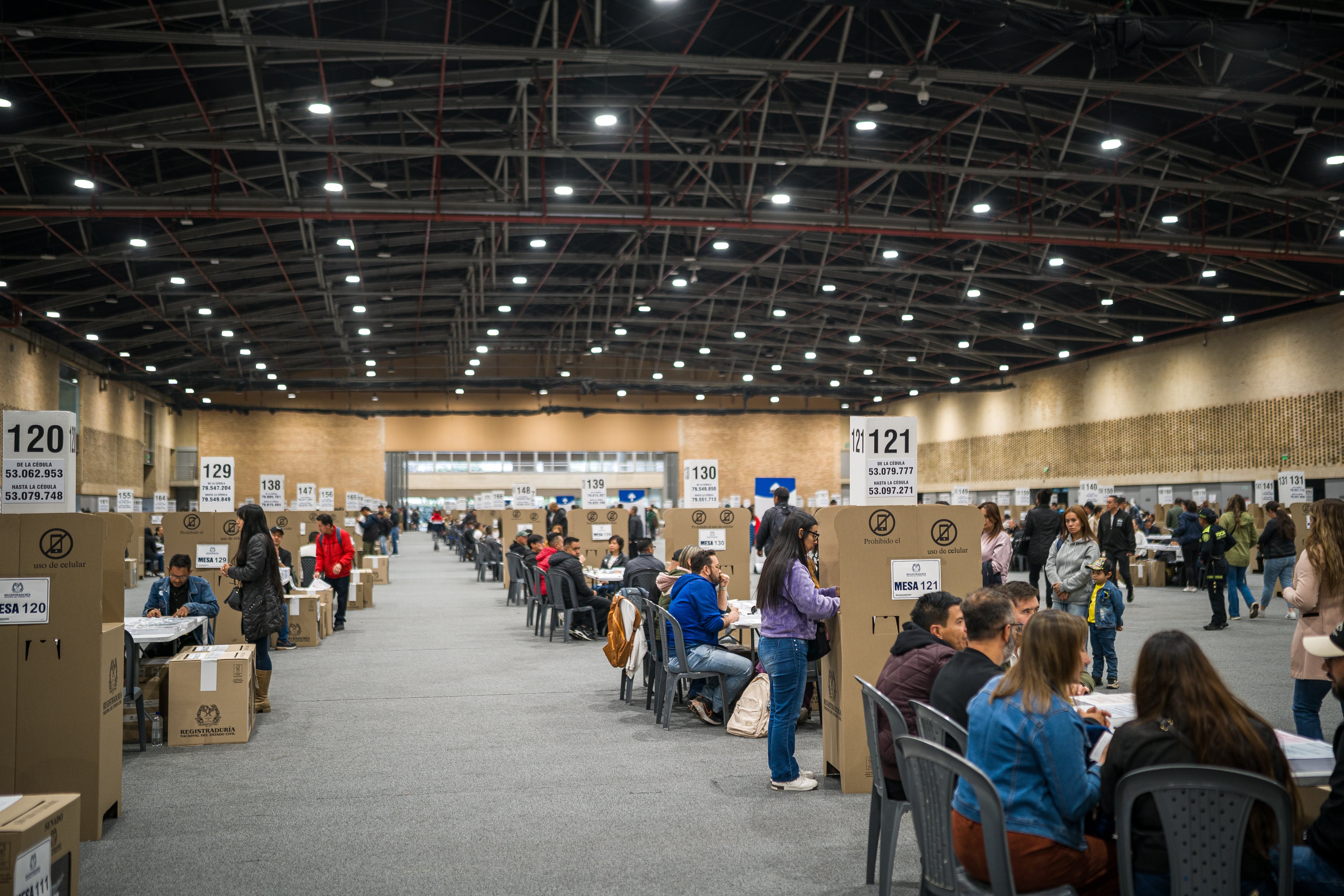
Legislative election day in Bogotá, Colombia, March 8.

Just days remain until the first round of Colombia’s presidential election on May 31, and millions of citizens still haven’t decided which of the 12 candidates to vote for.

Seguir leyendo

  • ✇Latin America Reports
  • Bolivia dismisses Colombia ambassador after Petro comments Alfie Pannell
    Bogotá, Colombia – Bolivia’s government ordered Colombia’s ambassador to leave the country just days after Colombian President Gustavo Petro expressed support for ongoing anti-government protests. “The Bolivian government has decided to request that the Ambassador of the Republic of Colombia accredited to the country conclude her diplomatic duties in Bolivian territory,” read a statement on Wednesday morning by Bolivia’s Ministry of Foreign Relations. The ministry expressed its disapprov
     

Bolivia dismisses Colombia ambassador after Petro comments

20 May 2026 at 18:25

Bogotá, Colombia – Bolivia’s government ordered Colombia’s ambassador to leave the country just days after Colombian President Gustavo Petro expressed support for ongoing anti-government protests.

“The Bolivian government has decided to request that the Ambassador of the Republic of Colombia accredited to the country conclude her diplomatic duties in Bolivian territory,” read a statement on Wednesday morning by Bolivia’s Ministry of Foreign Relations.

The ministry expressed its disapproval of Colombia’s involvement in its domestic affairs amid mounting anti-government protests.

“Bolivia considers it essential that any external assessment or statement regarding the country’s internal situation be made with responsibility, diplomatic prudence, and full respect for… institutions,” continued the statement.

While the government did not explicitly mention Petro, the measure came just days after the Colombian president weighed in on the protest movement, describing it as a “popular insurrection” in an X post last Sunday.

In recent weeks, miners, teachers, farmers and Indigenous groups have been calling for President Rodrigo Paz to resign over economic hardships, including soaring inflation and the suspension of fuel subsidies.

Bolivia’s foreign ministry responded to Petro the same day, saying his words, “do not reflect the relation of friendship, respect and cooperation between the peoples of Bolivia and Colombia.”

Petro, whose term ends in August, did not backtrack following the Ambassador’s dismissal.

“If they expel the ambassador simply for proposing dialogue ​and mediation, it means we’re sliding toward extremism that could lead ​to a very difficult situation for the Bolivian people,” the president told Caracol radio today.

Despite the spat, Bolivia’s foreign ministry said diplomatic channels remained open and the expulsion did not count as a full-scale rupture in relations.

The government added that it had granted Ambassador Elizabeth García Carrillo “the appropriate period of time in accordance with current international standards” to leave the country.

Featured image description: President Gustavo Petro (L) and President Rodrigo Paz (R). I

Featured image credit: Wikimedia Commons

The post Bolivia dismisses Colombia ambassador after Petro comments appeared first on Latin America Reports.

  • ✇Latin America Reports
  • Despite prominent female winners, Colombia elections highlight slow path to parity Angie Acosta
    Bogotá, Colombia – On March 8, Colombians elected members of the Senate and House of Representatives, as well as choosing their preferred candidates in three presidential primaries for the left, right, and center coalitions.  The elections, which coincided with International Women’s Day, saw a record number of female candidates partake as well as a woman, Paloma Valencia, winning the most votes in the primaries in a historic first. But with women’s representation in Congress stagnating, a
     

Despite prominent female winners, Colombia elections highlight slow path to parity

16 March 2026 at 20:42

Bogotá, Colombia – On March 8, Colombians elected members of the Senate and House of Representatives, as well as choosing their preferred candidates in three presidential primaries for the left, right, and center coalitions. 

The elections, which coincided with International Women’s Day, saw a record number of female candidates partake as well as a woman, Paloma Valencia, winning the most votes in the primaries in a historic first.

But with women’s representation in Congress stagnating, analysts say there is still much progress to be had in the way of gender equality in Colombian politics. 

Following the March 8 elections, two women emerged as the favorite presidential candidates in their primary coalitions: Paloma Valencia, representative for the Centro Democrático (Democratic Center) party, won a landslide victory in the right-wing coalition, while ex-Bogotá mayor Claudia López took the lead in the center.

“We women have to work twice as hard so that people can actually understand that we are doing our job. Female leadership is normally interpreted as being ‘too bossy,’ and then, we are restricted to certain areas,” said Valencia during an interview with Latin America Reports.

Despite Valencia receiving more than 3 million votes, soaring past the other 15 candidates in the primaries, female representation in Congress still stopped short of expectations.

“Female leadership is recognized for its power to mobilize, collaborate, and build bridges; it tends to be a much more transformational type of leadership, oriented toward motivation, building consensus,” Nathalie Méndez, associate professor in government at Bogotá’s Universidad de los Andes, told Latin America Reports.

But the success of a single individual isn’t enough. For the first time in history, female candidacies reached 40.9% of the total lists registered for Congress, according to a report by the Interior Ministry

However, despite being the election with the highest female participation, this surge was not reflected in the results. For the 2026-2030 period, there were 32 women elected to the Senate (31.4%) and 53 women elected to the House of Representatives (28.96%). This marks a total of 85 women out of 286 seats, representing only 29.7% of the total Congress.

Underscoring the lack of material advances in representation is the fact that  the exact same number of women were elected to Congress in the 2022 elections. 

“Women don’t receive the same resources as men, nor are they placed in positions with real chances to win the elections. Consequently, the rise of female candidates remains nothing more than a figure on paper,” explained Méndez.

Colombian society is also deeply conservative, creating a cultural environment where patriarchy persists and invalidates women in all spheres.

“What we see in Colombia is that a dual-type barrier persists, which I call institutional and cultural,” said Méndez. 

These barriers are especially pronounced in certain provinces, such as Caldas and Quindío, where not a single woman represents their communities in the House of Representatives.

“In local politics, financing is tied to political machineries and regional elites that are still deeply entrenched in male leadership. Breaking this panorama remains very difficult for women,” claimed Méndez. 

In addition, some party lists were closed, meaning people vote for a party logo rather than a specific person. With this, some voters are focused primarily on the party’s brand and could be unaware of the specific women’s names on the list, potentially making female candidates more invisible.

“Women are required, for example, to demonstrate much more experience, to hold more degrees, and even after proving they are just as good as men, cultural prejudices continue to surface,” Méndez declared. 

Yet the most-voted candidate for the entire Congress was Nadia Blel. The Conservative Party leader secured a massive victory, winning over 178,000 votes and becoming the highest individual vote-getter in the 2026 elections. Her success on March 8 proves that while progress for women overall appears to be blocked, individual female leaders are winning their own battles and shattering expectations at the polls.

“What this represents is that there are women who have managed to break the glass ceiling through their own trajectories or strong political legacies, but that is not enough to change the Colombian political culture,” added the researcher.

These elections showed that having names on a ballot is not enough; the real victory will come when every region in Colombia allows women to occupy political spaces on par with men.

Featured image description: International Women’s Day march in Colombia, 2024

Featured image credit: Wikimedia Commons

The post Despite prominent female winners, Colombia elections highlight slow path to parity appeared first on Latin America Reports.

  • ✇Latin America Reports
  • Nearly 100 human rights defenders killed every year in Colombia: UN report Lily O'Sullivan
    Medellín, Colombia – During each of the last nine years around 100 human rights defenders have been assassinated in Colombia, according to a United Nations (UN) report published this Thursday. The 972 deaths recorded between 2016 and 2025 make Colombia “one of the most dangerous countries in the world” for such activists, according to the UN’s High Commissioner for Human Rights, Volker Türk.  Following the historic peace accords between the government and the Revolutionary Armed Forces of
     

Nearly 100 human rights defenders killed every year in Colombia: UN report

19 March 2026 at 21:06

Medellín, Colombia – During each of the last nine years around 100 human rights defenders have been assassinated in Colombia, according to a United Nations (UN) report published this Thursday.

The 972 deaths recorded between 2016 and 2025 make Colombia “one of the most dangerous countries in the world” for such activists, according to the UN’s High Commissioner for Human Rights, Volker Türk. 

Following the historic peace accords between the government and the Revolutionary Armed Forces of Colombia (FARC) in 2016, the report noted a gradual increase in assassinations. 

This was linked to the state’s inability to maintain a strong presence in areas previously controlled by the guerrilla group. 

Over 70% of identified perpetrators were armed non-state actors, with the majority of cases analyzed by the report involved in drug trafficking, illegal mining, illegal logging, and human trafficking. 

The number of attacks and threats against human rights defenders investigated by the UN between 2022 and 2025 was 2,018, however this is thought to represent “only a fraction” of the true number due to underreporting and the lack of efficient government records of such cases. 

The report recognized the work of the current Historic Pact (Pacto Histórico) government of Gustavo Petro, which has publicly recognized the gravity of the situation and worked to develop a national strategy to counter it. 

This included the 2022 law that established peace as a matter of state policy, recognizing the state’s responsibility to “guarantee human security” through a “territorial and intersectional approach”. 

However, the UN says the state’s response has failed human rights defenders due to its fragmented nature that lacks coordination between national, departmental, and municipal authorities. 

“In addition to ensuring accountability for the murders that have taken place, addressing the structural causes of this human tragedy through a comprehensive approach must be a priority for all relevant authorities in Colombia, in order to protect human rights defenders and enable them to carry out their vital work safely,” Türk said. 

High levels of impunity have also persisted, with only 55 out of the 800 cases investigated between 2022 and 2025 ending in sentencing. In over half of these cases, no suspects have been identified. 

Nearly a quarter of victims identified by the UN were Indigenous (23%) highlighting a disproportionate effect on this population that represents less than 5% of Colombians. 

Other disproportionately affected groups include Afro-Colombians, LGBTQ+ individuals, rural community leaders and environmental protectors, as well as political leaders. 

The report concluded by urging the Colombian state to take action to combat this issue, recommending institutional reforms and criminal investigations into perpetrators.

Feature image credit: Leon Hernandez via Flickr.

The post Nearly 100 human rights defenders killed every year in Colombia: UN report appeared first on Latin America Reports.

  • ✇Latin America Reports
  • Guatemala Supreme Court revokes arrest warrant for Colombia Attorney General   Alfie Pannell
    Bogotá, Colombia – The Supreme Court of Guatemala has overturned 26 arrest warrants issued last year by the country’s Public Prosecutor’s Office, which targeted high-profile figures including Colombian Attorney General Luz Adriana Camargo.  In a decision made public on Monday, the country’s high court ruled that the prosecutor’s office did not have the authority to issue the warrants in June last year.  The court order marks a setback for Guatemala’s Public Prosecutor’s Office, which right
     

Guatemala Supreme Court revokes arrest warrant for Colombia Attorney General  

14 April 2026 at 23:43

Bogotá, Colombia – The Supreme Court of Guatemala has overturned 26 arrest warrants issued last year by the country’s Public Prosecutor’s Office, which targeted high-profile figures including Colombian Attorney General Luz Adriana Camargo. 

In a decision made public on Monday, the country’s high court ruled that the prosecutor’s office did not have the authority to issue the warrants in June last year. 

The court order marks a setback for Guatemala’s Public Prosecutor’s Office, which rights groups have condemned as a rogue and politically-motivated body.

“[The Prosecutor’s Office] exceeded its legal powers by unlawfully issuing arrest warrants without having the legal authority to do so,” declared the Supreme Court in its ruling.

“The issuance of arrest warrants is a power reserved for trial judges… who are responsible for overseeing the investigation,” it continued.

In addition to targeting Camargo, the warrants issued last year sought the arrest of former Colombian Defense Minister and current Ambassador to the Holy See, Ivan Velasquez.

Both high-ranking Colombian officials were accused of obstruction of justice, corruption, and influence peddling during their tenure overseeing an investigation into bribes paid to Guatemalan officials by Brazilian construction giant Odebrecht. 

Camargo and Velasquez helped lead the United Nations-backed International Commission against Impunity in Guatemala (CICIG), which investigated the Odebrecht case, a sweeping corruption scandal in which the construction firm was found guilty of bribing officials in 10 Latin American countries.

But the warrants, spearheaded by Guatemalan public prosecutor Rafael Curruchiche, were widely decried at the time. 

Guatemala’s own government condemned the move, writing, “these actions are carried out with a clear political objective, without grounding in the national and international legal system.”

“These are part of a series of actions by the Public Prosecutor’s Office, the Attorney General of the Republic and judges associated with corruption that have distorted the meaning of justice in Guatemala,” added the Guatemalan government at the time. 


For years, Guatemala has seen a power struggle between its Attorney General’s Office, led by Maria Consuelo Porras, and the government.

Consuelo Porras has been condemned by rights groups for her efforts to block anti-corruption efforts in the country, which have seen her sanctioned by 40 countries, including the United States.

Public Prosecutor Curruchiche has also been widely condemned for interfering in democratic processes, suspending then-presidential candidate Bernardo Arevalo’s party during elections in 2023; Arevalo went on to win.

Following the Supreme Court’s ruling overturning the warrants, Curruchiche said he would launch an appeal in the country’s Constitutional Court. 

Featured image description: Colombian Attorney General Luz Adriana Camargo gives a speech.

Featured image credit: @FiscaliaCol via X

The post Guatemala Supreme Court revokes arrest warrant for Colombia Attorney General   appeared first on Latin America Reports.

Pro-Trump lawyer De la Espriella pulls ahead in Colombia's presidential race with promise of crime crackdown

De la Espriella, whose rise reflects a shift in Latin America towards leaders favoring heavy-handed crime policies, is expected to gain more support in the June 21 runoff.

  • ✇Latin America Reports
  • Colombia president rejects preliminary election results Alfie Pannell
    Bogotá, Colombia – President Gustavo Petro rejected the results of first-round presidential elections on Sunday, alleging irregularities. Hard-right populist Abelardo de la Espriella defied pollsters’ predictions to beat the candidate representing Petro’s leftist Historic Pact party, Iván Cepeda, although neither surpassed the 50% required to win outright. “The so-called count being transmitted is not legally binding. Its data is not considered official. As president, I do not accept the r
     

Colombia president rejects preliminary election results

1 June 2026 at 01:46

Bogotá, Colombia – President Gustavo Petro rejected the results of first-round presidential elections on Sunday, alleging irregularities.

Hard-right populist Abelardo de la Espriella defied pollsters’ predictions to beat the candidate representing Petro’s leftist Historic Pact party, Iván Cepeda, although neither surpassed the 50% required to win outright.

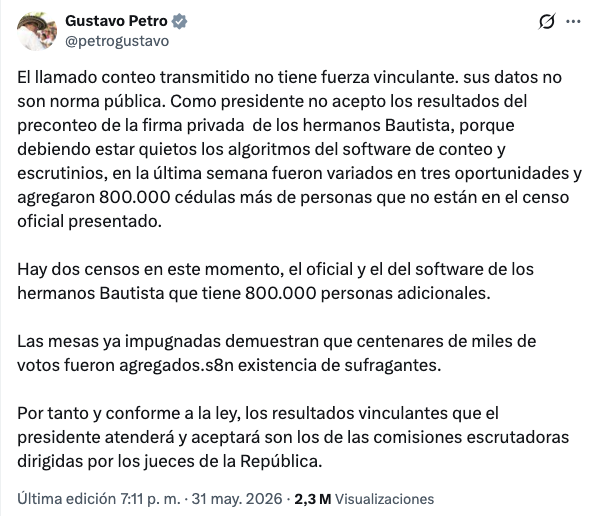
“The so-called count being transmitted is not legally binding. Its data is not considered official. As president, I do not accept the results of the preliminary count,” wrote Petro on X shortly after the election was called.

In Colombia, the “pre-conteo”, or preliminary count, is based on officials tallying the ballot sheets and entering them into an online software. But the “escrutinio”, or scrutinized results, usually take several days to be announced and are ratified by judges.

According to the Registrar’s Office, which is responsible for overseeing the voting process, the pre-count is “for informational purposes only” and has “no legal standing.”

But de la Espriella received nearly 700,000 more votes than Cepeda, a gap which is very unlikely to be closed after the scrutiny.

Delivering a speech after the results were released, Cepeda said he would not address the elections until the scrutinized count came out.

A post from President Gustavo Petro on May 31 saying he would not accept the pre-count results of Sunday’s elections.

“Only once the vote-counting committees have fully, clearly, and thoroughly clarified this matter will we comment on tonight’s results,” the senator told a crowd of supporters at the Hotel Tequendama in central Bogotá.

He also referred to historic efforts by Colombia’s traditional parties and institutions to repress the leftist movement embodied by the Historic Pact: “Our life has been a constant struggle.”

A crowd of Cepeda voters gathered nearby to watch the speech on a large screen, with some chanting the Spanish anti-fascist slogan “No Pasarán”. One pair held a sign reading “Fraud!”.

Petro has repeatedly warned that the elections may be stolen, part of a long-running dispute with Thomas Greg & Sons, a multinational company responsible for electoral logistics.

In 2022, the Historic Pact gained some 500,000 votes in legislative elections following the scrutiny.

Regardless of the final results of the election, Cepeda and de la Espriella are set to face off in a second round on June 21.

Featured image description: President Gustavo Petro at a cabinet meeting, October 22, 2025.

Featured image credit: @InfoPresidencia via X.

The post Colombia president rejects preliminary election results appeared first on Latin America Reports.

  • ✇El País in English
  • The far right takes flight in Colombia under Abelardo de la Espriella Diego Stacey
    The global far right, which has achieved major milestones in recent years by seizing power in countries such as Argentina and Chile, is now watching closely the elections Colombia will hold on May 31. Abelardo de la Espriella, a lawyer making his political debut as an outsider, has emerged as the country’s extremist figure, invoking epic rhetoric to position himself as the ideal candidate to defeat the left. His campaign has focused on defending a “miracle homeland,” a country of traditional val
     

The far right takes flight in Colombia under Abelardo de la Espriella

26 May 2026 at 09:30

The global far right, which has achieved major milestones in recent years by seizing power in countries such as Argentina and Chile, is now watching closely the elections Colombia will hold on May 31. Abelardo de la Espriella, a lawyer making his political debut as an outsider, has emerged as the country’s extremist figure, invoking epic rhetoric to position himself as the ideal candidate to defeat the left. His campaign has focused on defending a “miracle homeland,” a country of traditional values with the economy and security at its core, where the left— or “communism,” as he calls it—and moderate parties play no leading role. His message has resonated in a society battered by violence, where many see the self-styled “Tiger” as a necessary change.

Seguir leyendo

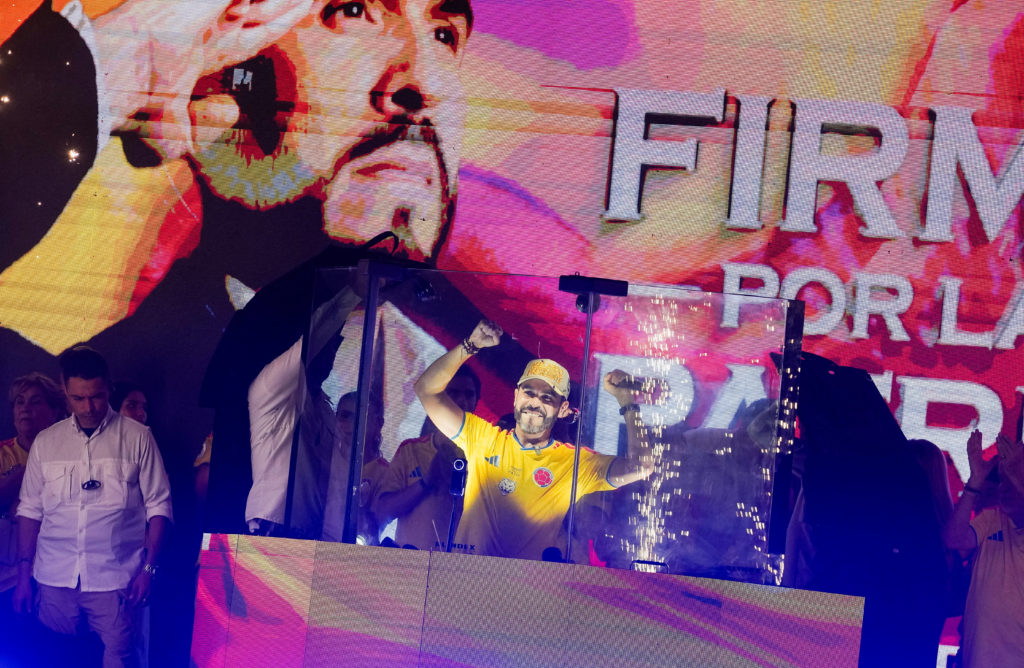
Supporters of Abelardo de la Espriella at a campaign event in Cali on March 12.Abelardo de la Espriella at a campaign event in Cali.

© Mauricio Dueñas Castañeda (EFE)

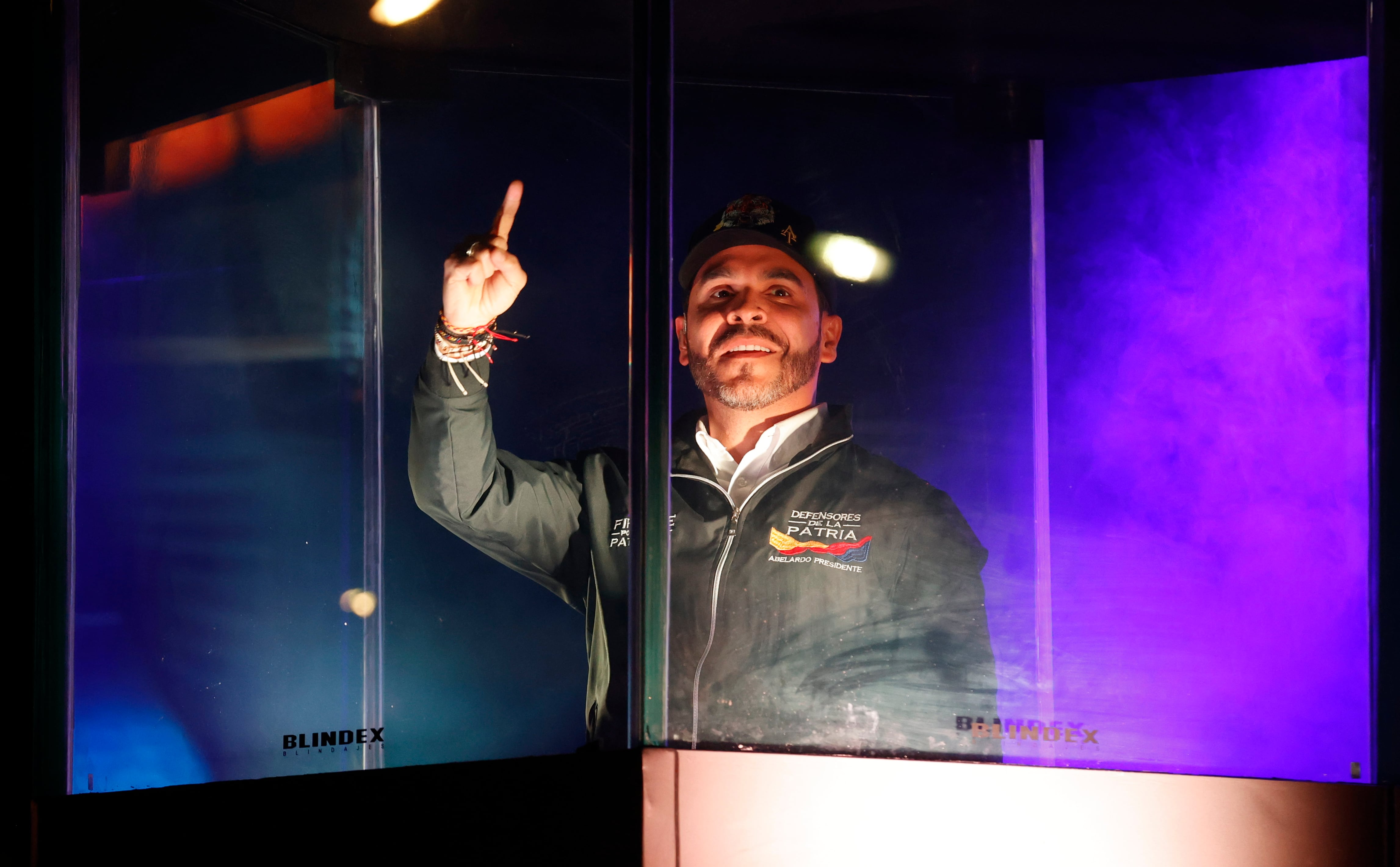
Abelardo de la Espriella during the closing speech of his campaign in Bogotá on Wednesday.
  • ✇Latin America Reports
  • What Venezuela is watching ahead of Colombia’s elections on Sunday Julio Blanca
    Caracas, Venezuela — Colombia is preparing to elect President Gustavo Petro’s successor on Sunday in a race that has generated significant regional interest, especially next door in Venezuela.  As sister nations, Colombia and Venezuela’s relations — which have been strained for years under former President Nicolás Maduro — play a key factor in everything from politics, migration, the economy, security and the fight against drug trafficking.  Interim president Delcy Rodríguez will undou
     

What Venezuela is watching ahead of Colombia’s elections on Sunday

29 May 2026 at 15:46

Caracas, Venezuela — Colombia is preparing to elect President Gustavo Petro’s successor on Sunday in a race that has generated significant regional interest, especially next door in Venezuela. 

As sister nations, Colombia and Venezuela’s relations — which have been strained for years under former President Nicolás Maduro — play a key factor in everything from politics, migration, the economy, security and the fight against drug trafficking. 

Interim president Delcy Rodríguez will undoubtedly be keeping an eye on which candidate succeeds, given the vast differences in how the presidential hopefuls say they’ll interact with Venezuela’s government. 

Of the three leading candidates, two — the Centro Democratico’s Paloma Valencia and Defensores de la Patria’s Abelardo de la Espriella — have signaled they’d follow Washington’s lead on Venezuela while the current leader in the polls, leftist Iván Cepeda (Pacto Histórico), has remained quiet despite his past support for Chavismo. 

The elections are also shaping up to be the most polarizing in recent memory. 

“Of all the societies I have studied, Colombia is perhaps the one with the most extreme positions—people who identify more strongly with the right or those who identify more strongly with the left,” Carmen Beatriz Fernández, a political consultant and professor of public communication, political systems and electoral campaigns, told Latin America Reports.  

Colombian news outlet La Silla Vacia’s poll rankings have Cepeda ahead by 8 percentage points, followed by de la Espriella and Valencia. According to pollster AtlasIntel, if elections were to go to a run-off between Cepeda and de la Espriella today, the hard-right de la Espriella would win. 

“Cepeda is the candidate who, in theory, would have the strongest ties to Chavismo, but it’s no less true that de la Espriella has never denied his close relationship with Alex Saab, right? So, that’s where the extremes perhaps meet,” said Fernández

De la Espriella, a lawyer by trade, famously represented Maduro’s alleged money launderer and also allegedly received payments from Saab’s front companies, according to an investigation by journalist Daniel Coronell. 

Venezuelan political columnist and international affairs expert Beatriz de Majo, told Latin America Reports, “I have my reservations about de la Espriella, because for us he could be a huge surprise. He is a man who does not seem to be entirely above board in every aspect of his conduct, and God only knows what kind of surprise he might have in store for us now. However, it feels as though that battle will undoubtedly be decided between Cepeda and de la Espriella.”

De Majo said it’s hard to gauge where Colombia is heading following four years of Petro’s administration. 

“The electoral process in Colombia’s case is particularly interesting because the country’s compass has been turned off during the four years of Petro’s administration. It really wasn’t possible to tell from the outside where the country was headed,” she said. According to De Majo, Petro’s only defining project, his “Total Peace” plan, “was never even close to being achieved.”

Should his political successor Cepeda win, said de Majo, we could see an outflow of capital from Colombia to Venezuela and elsewhere. 

“Capitalism in Colombia is deeply entrenched; it is an enormously industrious country, and it is highly likely that if Cepeda wins, there will be a massive migration of capital from Colombia to Venezuela,” she commented.

While Colombia’s wealthy had threatened to move their money abroad when Petro was first elected, Spanish newspaper El País recently reported on companies setting up now to help Colombians move their assets should Cepeda win, saying that Panama, Spain, Costa Rica and the United States were the most sought after countries for relocating Colombians. Venezuela wasn’t listed. 

On the other hand, De Majo thinks that if de la Espriella is elected, he’ll follow the U.S.’s lead for the most part and will not prioritize relations with Venezuela. 

“If de la Espriella wins, he has said on more than one occasion that he will align with the United States, and moreover because that has been the Colombian trend in recent decades. They have been under the control and protection of the U.S. Armed Forces, and things went very well for them—until the Petro administration—in everything related to drug control,” she said. 

Since September 2025, the U.S. has killed nearly 200 alleged drug traffickers by bombing boats in the eastern Pacific ocean and Caribbean, including Colombians. The Trump administration sanctioned Petro for allegedly allowing  “drug cartels to flourish” and in March The New York Times reported that prosecutors were investigating Petro — the administration later assured him he faces no current charges. 

What about Venezuelan migrants?

According to data from Colombia’s migration office, there are more than 2.8 million Venezuelans in Colombia, by far the country that has received the highest number of Venezuelans fleeing poor economic conditions. 

Despite the gravity of the issue,  de Majo doesn’t see the election outcome impacting migrants, who are more likely to be watching what happens in Venezuela to see if they can return home. 

“The situation of Venezuelans in Colombia will not depend so much on what Colombia does to help them, but rather on what happens in Venezuela, because if a democratic process and freedoms are truly restored in Venezuela and the economy takes off again, the first Venezuelans to return to the country will not be those in Europe or the United States; they will be those in Colombia,” she said.

Featured image: Colombian President Gustavo Petro met with interim President of Venezuela Delcy Rodríguez on April 24, 2026.

Image credit: Gustavo Petro via X.

The post What Venezuela is watching ahead of Colombia’s elections on Sunday appeared first on Latin America Reports.

Organized crime weaves a new maritime trafficking network between Mexico and Guatemala

31 May 2026 at 04:00
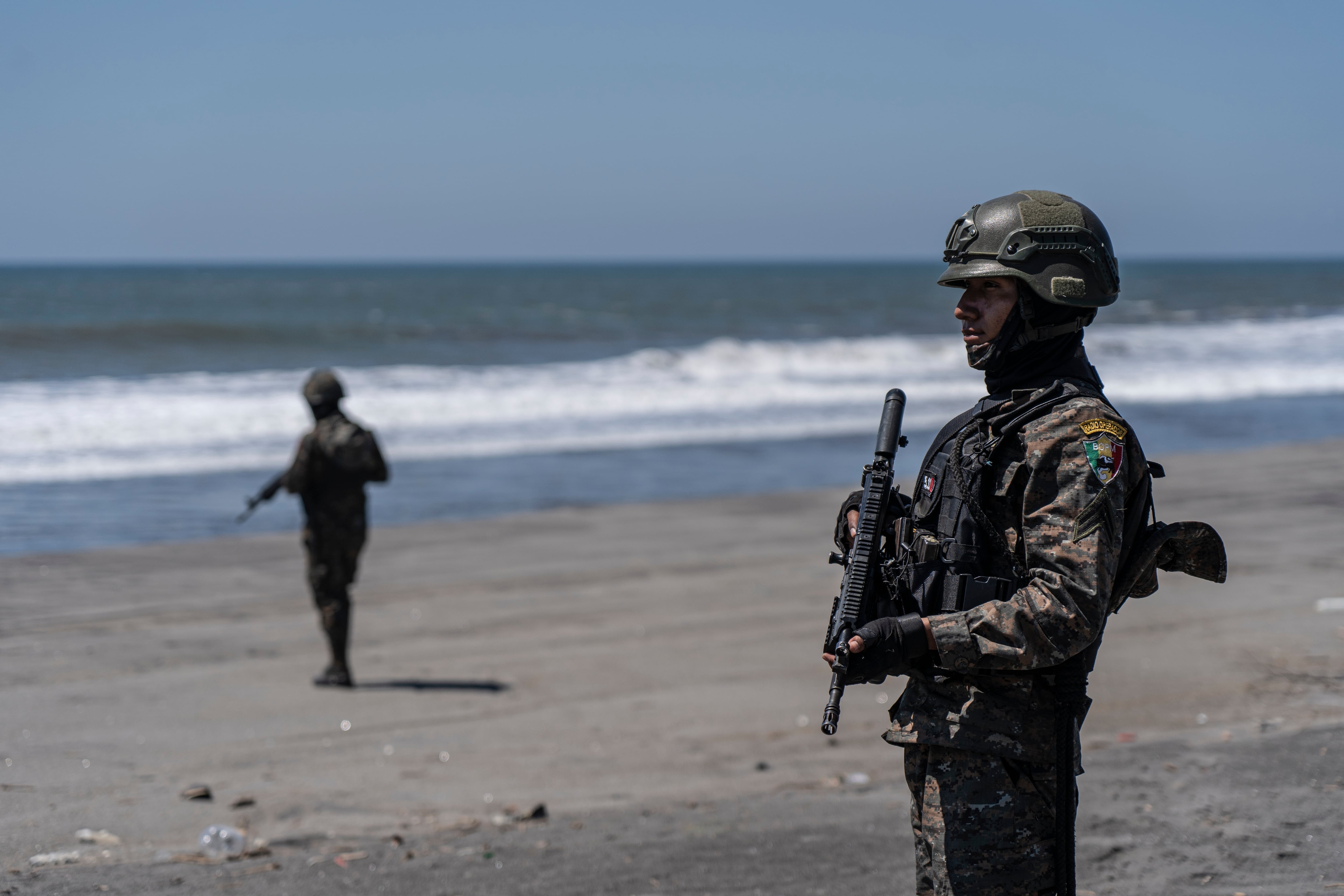
Guatemalan troops patrol the border with Chiapas on February 12, 2024.

Organized crime has returned to the Pacific route for drug trafficking. Since the start of 2026, at least eight vessels have been detected on the “maritime bridge” between Guatemala and Chiapas, Mexico with dozens arrested and several tons of cocaine seized. The detection and interdiction of these speedboats at sea is further evidence of the pressure the United States is exerting on the governments of Mexico and Central America.

Seguir leyendo

Guatemalan troops patrol the border with Chiapas.

Colombian president declares three days of national mourning after military plane crash kills 69

25 March 2026 at 21:00

Bogotá, Colombia — President Gustavo Petro on Tuesday declared three days of national mourning in Colombia following a military plane crash on Monday which killed 69 soldiers. 

The accident occurred at the Puerto Leguízamo airport in Putumayo, a region located in the southwest of the country, involving a C-130 Hercules aircraft normally used to transport troops and humanitarian aid to remote regions.

According to the latest official reports, at least 69 soldiers and crew members were killed in the disaster. The military transport plane, belonging to the Colombian Aerospace Force (FAC), was carrying over 120 people when it smashed onto the grounds of a nearby farm just after takeoff. 

During the period of national mourning, Petro confirmed that flags will fly at half-mast and military honors will be given to the victims of the tragedy and their families.

He decretado tres días de duelo en todo el territorio nacional en memoria de los 69 uniformados pertenecientes al Ejército, Fuerza Aeroespacial y la Policía Nacional que perdieron la vida en el accidente aéreo en Puerto Leguízamo – Putumayo el pasado 23 de marzo.

Las banderas… pic.twitter.com/INUAnW4bWy

— Gustavo Petro (@petrogustavo) March 24, 2026

Many households are grieving the loss of their children, but one family in particular mourns the loss of two: brothers Santiago and Daniel Esteban Arias. Originally from Puerto Libertador, in the Caribbean department of Córdoba.

Monday’s crash is one of the worst aviation tragedies in the country’s recent history. In 2016, a plane carrying players from Brazil’s Chapecoense soccer team crashed into the mountains outside Medellín, killing over 70 people. 

Lamentamos profundamente informar que, tras culminar las labores de búsqueda y rescate, hoy confirmamos con dolor los nombres de nuestros héroes que ofrendaron su vida en el accidente aéreo en Puerto Leguízamo, #Putumayo.

Cada uno de ellos partió cumpliendo su deber, con honor,… pic.twitter.com/cr25JbYdjr

— Ejército Nacional de Colombia (@COL_EJERCITO) March 24, 2026

In Puerto Leguízamo, survivors of the military plane crash were transferred to specialized medical centers across the country.

Authorities are investigating the causes of the accident but have dismissed preliminary claims of an attack by guerrilla forces active in the region. 

The Mayor of Puerto Leguízamo, Luis Emilio Bustos Morales, told local media, including Blu Radio and Noticias RCN, that “they have many hypotheses.” 

He noted that among them, “there is talk that they were carrying too much weight” or “that the runway was too short for them.”

During the emergency, residents used their own motorcycles to evacuate the survivors before official help arrived; some of them were also injured by ammunition exploding in the flames. 

The medical center known as ‘Hospital Militar Central’, located in the capital Bogotá, confirmed that a local rescue worker is among those being treated there.

President Petro expressed his gratitude through his X account, stating that “this is how a nation is built.” He thanked the local citizens who rushed to save the survivors. He also highlighted the soldiers who ran to save others during the disaster, calling their actions a “beautiful proof of love and solidarity.”

The painful moments were detailed by soldier Mauro Peñaranda, who survived and described the scene as the aircraft went down to local media outlets: “It was leaning to one side, and there was a weird noise (…) the plane was creaking,” he told RTVC. Mauro also stated that they did not receive clear instructions from the cockpit during the situation. 

“I honestly don’t even know how I got out of there… I just jumped and got out,” he said.

The governments of Ecuador, Panama, France, and the United States, among others, also offered their condolences to the Colombian military forces and the victims’ families.

Featured image: Photo of Colombian military plane crash site in Puerto Leguízamo on March 23, 2026.

This article originally appeared on The Bogotá Post and was republished with permission.

The post Colombian president declares three days of national mourning after military plane crash kills 69 appeared first on Latin America Reports.

  • ✇Latin America Reports
  • Colombian journalist found dead days after being reported missing Angie Acosta
    Bogotá, Colombia – Authorities in Colombia confirmed the discovery of the body of Mateo Pérez Rueda, an independent journalist and Political Science student at the National University in Medellín, who had traveled to Briceño, Antioquia, to document the security situation in that region, where the 36th Front of the dissidents of the former FARC operates. The body has been released to the family following dialogues between organized crime groups and humanitarian organizations, including the
     

Colombian journalist found dead days after being reported missing

9 May 2026 at 02:10

Bogotá, Colombia – Authorities in Colombia confirmed the discovery of the body of Mateo Pérez Rueda, an independent journalist and Political Science student at the National University in Medellín, who had traveled to Briceño, Antioquia, to document the security situation in that region, where the 36th Front of the dissidents of the former FARC operates.

The body has been released to the family following dialogues between organized crime groups and humanitarian organizations, including the ICRC. The family wasn’t allowed to enter the zone either.

“He was murdered by Jhon Edison Chalá Torrejano, from the Darío Gutiérrez front, which is a divided group from the 36th Front, fragmented into various criminal groups,” stated President Gustavo Petro through his X account.

The 25-year-old reporter had become an important voice for the communities of northern Antioquia, founding and serving as the director of the digital media outlet El Confidente de Yarumal.

In this role, he covered issues related to organized crime, administrative corruption, public order, security, and local politics in municipalities where organized crime and illegal armed groups operate actively, such as Valdivia, and Ituango. Because of this, he faced legal prosecutions, conciliation summons, and other hostile acts against him.

The country entered into an active search for Mateo following the report of his disappearance on May 5 in the rural hamlet of Palmichal, where local residents and relatives of the victim had reported that the journalist had been murdered by members of the criminal group led by alias Calarcá Córdoba.

Alias Calarcá is a guerrilla leader participating in President Gustavo Petro’s “Total Peace” negotiations, and his arrest warrant was suspended by the government to facilitate talks with the armed group.

According to local media, Mateo contacted several officials seeking someone to accompany him to a rural area to get information about the ongoing armed conflict in the region.

Reports state that authorities and neighbors reportedly recommended that he should not leave the urban center, as no one, even government officials, have guaranteed safety going into these sectors; the journalist reportedly ignored these warnings and set off on his motorcycle.

Defense Minister Pedro Sánchez initially handled the case as a disappearance, but Mateo’s loved ones pointed out that it could be a kidnapping and murder just a few hours after losing contact with him, when his vehicle, wallet, cell phone, and keys were found abandoned. 

Sánchez also offered a 300 million COP (around $80,500 USD) reward for information leading to those responsible for Mateo’s suspected murder. 

This situation also highlights the ongoing risks for those practicing journalism in Colombia, mostly in rural territories and conflict zones. 

According to the FLIP, a press freedom foundation, since 2022, armed groups have attacked the press 387 times, using threats and displacement to force silence.

Featured image: Mateo Pérez Rueda

Image credit: FLIP

The post Colombian journalist found dead days after being reported missing appeared first on Latin America Reports.

❌
Subscriptions