Normal view

  • ✇National Herald
  • Move over FCI, Adani is here Rashme Sehgal
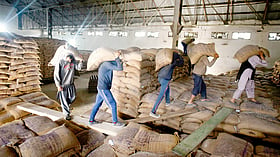
    The concentration of grain storage in the hands of Adani Agri Logistics and Leap India Food & Logistics Private Ltd heralds an alarming shift for Indian agriculture, transforming it from a decentralised, largely state-run model into a corporate-run entity.By cleverly removing the anti-monopoly clause that formed an integral part of the Food Corporation of India’s (FCI) silo modernisation programme, the government has awarded 110 of 134 contracts to the two companies to store and manage Rs 16
     

Move over FCI, Adani is here

7 June 2026 at 11:50

The concentration of grain storage in the hands of Adani Agri Logistics and Leap India Food & Logistics Private Ltd heralds an alarming shift for Indian agriculture, transforming it from a decentralised, largely state-run model into a corporate-run entity.

By cleverly removing the anti-monopoly clause that formed an integral part of the Food Corporation of India’s (FCI) silo modernisation programme, the government has awarded 110 of 134 contracts to the two companies to store and manage Rs 16,500 crore worth of grain.

The enormity of this allocation can be understood from the fact that 46.5 lakh metric tonnes (LMT) out of the total planned storage of 60 LMT will now be handled by Adani and Leap India (known to be financed by powerful private equity funds including the UK-backed Neev Fund and the Danish SGD Fund).

The partnership involves the construction of 200 new steel silos, the bigger hubs connected to railway lines and the smaller ones at procurement centres near farms. The estimated cost of land is between Rs 6,000 and 8,000 crore; the cost of building the silos between Rs 15,000 and 20,000 crore.

While in the short run, the government ‘saves money’ on the price of land acquisition and construction, in the long-term, the PPP model costs the public dearly. The FCI and the government could have completed the project at a cost of Rs 45,000 crore. Under the PPP model, at the rate of Rs 4,000 crore per annum for storage and handling over a 30-year period, the damages are Rs 1.2 lakh crore.

As critics point out, under the garb of ‘modernising’ our food chain, the Modi government is now practically underwriting private profit.

What makes it all the more alarming is that FCI had initially proposed an anti-monopoly clause as a safeguard against precisely such concentration. A crucial document from the PPP Appraisal Committee (PPPAC) files shows the NITI Aayog and the department of economic affairs altered the tender architecture.

The most important change was not just the deletion of the anti-monopoly clause, it was the deliberate move towards bundled bidding. The larger the bundle, the greater the financing requirement. The practical effect of this arrangement is that a Rs 3,000-4,000 crore bundle cuts out mid-sized warehousing firms.

“This signals the end of India’s food security and the annihilation of our public distribution system (PDS) which will now be dependent on this duopoly,” warns Aflatoon, social activist and member of the Samyukta Kisan Morcha. (Under the National Food Security Act, India’s public distribution system reaches around 81.35 crore people every month, making it the largest welfare programme in the world.)

****

By taking this ‘momentous’ decision, the government has reintroduced the three contentious farm laws to privatise agricultural marketing. While the government officially claims it will continue to procure rice and wheat under Minimum Support Prices (MSP), doubts prevail.

Farmers are more than worried. They point out that controlling the storage network would enable the Adani Group — already engaged in the procurement, import and export of foodgrains — to control the supply chain. This could depress the MSP to the advantage of private players.

Farmers see this as a step toward privatising food security, echoing their earlier protests against the farm laws. With Adani and Leap India controlling nearly 80 per cent of silo capacity, farmers will have fewer options, making them vulnerable to any terms set by the duopoly.

Traditionally, the FCI procures rice and wheat directly from farmers at MSP. With private players running silos, procurement is likely to shift to them. Corporates are likely to influence procurement terms, potentially squeezing margins.

Farmer unions argue that once storage and logistics are privatised, the state’s bargaining power will weaken and may reduce FCI’s own procurement footprint, indirectly undermining MSP. FCI has a regulated system for timely payments. Private players may not be bound by the same strict rules, raising concerns about delays, disputes and dispute redressal.

****

Corporate control of Indian agriculture — driven by agribusinesses monopolising inputs, supply chains and land — poses a severe threat to food security by endangering its four pillars: availability, access, utilisation and stability. Farm leaders contend that the shift from diverse, staple-based cultivation to cash crops (like broccoli, gherkins and other ‘exotics’) combined with volatile pricing will destroy the livelihood of over 160 million farmers.

Prominent farm leader Dr Ashish Mittal, general-secretary of the All India Kisan Mazdoor Sabha, believes there are two objectives behind the 2023 amendment to the Biological Diversity Act, 2002 and the awarding of storage contracts to corporates in 2026. “One, to allow Americans to dump heavily subsidised foodstuff such as soya and corn at rates our farmers cannot compete with, and to capture agricultural land at throwaway rates and hand it over to the builders’ lobby for urbanisation.”

Dr Darshan Pal, anaesthetist by profession, social activist by choice and president of Krantikari Kisan Union in Punjab, believes the entire purpose of the recent move is to ease the way for big landlords to take over agricultural land.

“Already, over the last decade, we have lost four million hectares of farm land (of the 143 million hectares under cultivation). This has caused massive displacement, with peasantry forced to migrate to urban pockets. The government seems to forget that 68.5 per cent of our population lives in villages. The Periodic Labour Force Survey (PLFS) accounts for only those workers who have actively applied for jobs. But there is a multitude who have not applied and are therefore not included in the PLFS. Even our PDS system is based on the last Census. I believe one-third of the requirement for subsidised grain is not being met,” Dr Pal said.

Rural households consume about 14.5 kg of cereals and pulses per month, but pulse intake remains far below nutritional requirements. While a minimally nutritious diet recommends 85 g of pulses per person per day, rural households consume only 0.46 kg per month in Rajasthan and 0.35 kg per month in Manipur.

It is obvious this government has no interest in sustaining our agricultural sector. India’s corporate debt has grown to $645 billion which works out to almost 17 per cent of our GDP. But the cost of urea is something the government has done little about (apart from claiming to provide a 90 per cent subsidy for every bag of urea sold in the country.) “Buying oil from Iran would bring down the cost of urea,” maintains Dr Darshan Pal. “The price of 45 kilos of urea is Rs 265 per bag but it is not available at even Rs 400 per bag.”

Yudhvir Singh, general-secretary, Bharatiya Kisan Union, says that once corporates are allowed to buy directly from farmers, the mandi system and the support farmers received from arhtiyas (traditional commission agents) will be destroyed: “Mandis have supported farmers through centuries. Now they will have no role.”

Singh cites the example of Adani Agri Fresh practically taking over the apple market in Himachal Pradesh by forcing smaller orchard owners to accept lower rates. These apple farmers have protested against the government’s free trade pacts with countries like New Zealand and the US. If imported apples flood the domestic market, the livelihoods of over 15 lakh farming families in the state will be threatened.

“We have no choice but to fight. We are planning to meet in mid-June to see what strategy we can evolve to take on the government,” Singh added.

Vijoo Krishnan, general-secretary of the All India Kisan Sabha (AIKS) has demanded an immediate reinstatement of the ‘anti-monopoly’ clause and a cap on any single corporate group’s share of silo capacity.

The AIKS has also demanded an inquiry by a joint parliamentary committee into the role of the PPPAC in eliminating the anti-monopoly and other clauses that would have prevented market concentration. Strengthening the FCI’s own storage capacity through public investment, rather than wholesale handover to corporate monopolies is, he says, the need of the hour.

  • ✇National Herald
  • RBI announces record Rs 2.87 lakh cr dividend to govt amid West Asia conflict NH Business Bureau
    The Reserve Bank of India (RBI) on Friday announced a record surplus transfer of Rs 2.87 lakh crore to the Centre for the year ended March 2026, giving the government a significant fiscal cushion at a time of rising import costs and supply chain strains linked to the West Asia conflict.The payout of Rs 2,86,588.46 crore is 6.7 per cent higher than the Rs 2.69 lakh crore transferred in the previous financial year.In a statement, the RBI said its net income before risk provisioning and transfers t
     

RBI announces record Rs 2.87 lakh cr dividend to govt amid West Asia conflict

22 May 2026 at 13:04

The Reserve Bank of India (RBI) on Friday announced a record surplus transfer of Rs 2.87 lakh crore to the Centre for the year ended March 2026, giving the government a significant fiscal cushion at a time of rising import costs and supply chain strains linked to the West Asia conflict.

The payout of Rs 2,86,588.46 crore is 6.7 per cent higher than the Rs 2.69 lakh crore transferred in the previous financial year.

In a statement, the RBI said its net income before risk provisioning and transfers to statutory funds stood at Rs 3.96 lakh crore in FY26, up from Rs 3.13 lakh crore in FY25. The central bank also reported that its balance sheet expanded by 20.61 per cent to Rs 91,97,121.08 crore as of 31 March, 2026.

The decision was taken at a meeting of the RBI’s central board of directors, which reviewed domestic and global economic conditions, including risks to the outlook, before approving the surplus transfer.

The RBI said the revised Economic Capital Framework (ECF) allows flexibility in maintaining the Contingent Risk Buffer (CRB) within a range of 4.5 per cent to 7.5 per cent of the balance sheet size.

Taking into account prevailing macroeconomic conditions, the RBI’s financial performance and the need to maintain adequate risk buffers, the Central Board approved a transfer of Rs 1,09,379.64 crore to the CRB for FY26, sharply higher than Rs 44,861.70 crore in the previous year.

However, the CRB was maintained at 6.5 per cent of the RBI’s balance sheet size, lower than the 7.5 per cent level in FY25.

The 623rd meeting of the RBI central board was chaired by governor Sanjay Malhotra and attended by deputy governors Swaminathan J., Poonam Gupta, Shirish Chandra Murmu and Rohit Jain. Other directors of the board, including Nagaraju Maddirala, secretary, Department of Financial Services; Satish Kashinath Marathe, Revathy Iyer, Sachin Chaturvedi, Anand Gopal Mahindra, Venu Srinivasan and Pankaj Ramanbhai Patel too attended the meeting.

The record transfer comes against the backdrop of heightened economic uncertainty triggered by the West Asia conflict, which has pushed up prices of crude oil, fertilisers and other commodities while disrupting supply chains.

The rupee has also weakened sharply, adding to import costs for India, which depends on overseas purchases for around 88 per cent of its crude oil requirements.

With PTI inputs

  • ✇TheHill - Just In
  • Appeals court rules Trump's 10 percent global tariff can stay, for now  Zach Schonfeld
    On Thursday, federal appeals court ruled that President Trump’s 10 percent global tariff is likely legal, deciding it can remain in place until the court delivers its final word.  Trump imposed the new levy after the Supreme Court invalidated his previous emergency tariffs as exceeding his authority.  Last month, a federal trade court found the new tariff unlawful and blocked officials from forcing a group...
     

Appeals court rules Trump's 10 percent global tariff can stay, for now 

12 June 2026 at 00:08
On Thursday, federal appeals court ruled that President Trump’s 10 percent global tariff is likely legal, deciding it can remain in place until the court delivers its final word.  Trump imposed the new levy after the Supreme Court invalidated his previous emergency tariffs as exceeding his authority.  Last month, a federal trade court found the new tariff unlawful and blocked officials from forcing a group...

Latin America's largest investment bank targets Uruguay as regional hub after acquiring local HSBC unit

23 April 2026 at 12:28

Founded in 1983 in Rio de Janeiro, the group is present in Brazil, Argentina, Chile, Colombia, Mexico, and Peru Brazilian group BTG Pactual, Latin America's largest investment bank, is awaiting authorisation from Uruguay's Central Bank (BCU) to begin operating in the local financial market following its $175 million acquisition of HSBC Uruguay, agreed in July 2025. Group executives expect regulatory approval to come through by mid-year, allowing them to begin operations gradually in the second half of 2026.

  • ✇National Herald
  • India bans sugar exports until September 2026 to protect domestic supplies NH Economic Bureau
    India has imposed a ban on sugar exports until 30 September 2026 in a bid to safeguard domestic supplies and keep prices under control amid concerns over lower-than-expected production.The Directorate General of Foreign Trade (DGFT), operating under the Ministry of Commerce and Industry, announced the decision through a notification revising the country’s export policy for sugar.Under the new rules, the export status of raw sugar, white sugar and refined sugar has been changed from “restricted”
     

India bans sugar exports until September 2026 to protect domestic supplies

14 May 2026 at 05:10

India has imposed a ban on sugar exports until 30 September 2026 in a bid to safeguard domestic supplies and keep prices under control amid concerns over lower-than-expected production.

The Directorate General of Foreign Trade (DGFT), operating under the Ministry of Commerce and Industry, announced the decision through a notification revising the country’s export policy for sugar.

Under the new rules, the export status of raw sugar, white sugar and refined sugar has been changed from “restricted” to “prohibited”. The restrictions will remain in place until the end of September next year or until further government orders are issued.

The government said the move was aimed at ensuring adequate domestic availability of sugar in one of the world’s largest producing and consuming nations.

However, exports to the European Union and the United States under existing CXL and Tariff Rate Quota (TRQ) arrangements will continue through established procedures outlined in official public notices.

Authorities also clarified that exports carried out under the Advance Authorisation Scheme (AAS) would still be permitted in line with the provisions of the Foreign Trade Policy 2023 and the associated Handbook of Procedures.

India, the world’s second-largest sugar producer after Brazil, had previously approved exports of around 1.59 million metric tonnes after estimating that production would comfortably exceed domestic demand.

The latest restrictions are expected to tighten global sugar supplies and could support international raw and white sugar prices. Analysts believe the curbs may create opportunities for competing exporters such as Brazil and Thailand to increase shipments to markets across Asia and Africa.

The announcement comes shortly after an industry report showed that sugarcane production in India had risen by roughly 10 per cent compared with the previous year, providing support for both sugar manufacturing and ethanol production.

However, the report noted that growth across the sector remained uneven, with stronger gains largely concentrated among mills that have integrated ethanol production facilities.

With IANS inputs

  • ✇The Guardian World news
  • US inflation jumped to 4.2% in May, the third consecutive increase since start of Iran war Gaya Gupta
    Before the conflict began, inflation was at 2.4%, but the closure of the strait of Hormuz has affected energy pricesUS inflation jumped to an annual rate of 4.2% in May, the third consecutive monthly increase since the start of the Iran war and a three-year high, as Americans continue to face steep oil prices.Prices have increased sharply over the past several months, rising at an annual rate of 3.3% in March before going up to 3.8% in April. In February, before the conflict began, inflation was
     

US inflation jumped to 4.2% in May, the third consecutive increase since start of Iran war

10 June 2026 at 13:47

Before the conflict began, inflation was at 2.4%, but the closure of the strait of Hormuz has affected energy prices

US inflation jumped to an annual rate of 4.2% in May, the third consecutive monthly increase since the start of the Iran war and a three-year high, as Americans continue to face steep oil prices.

Prices have increased sharply over the past several months, rising at an annual rate of 3.3% in March before going up to 3.8% in April. In February, before the conflict began, inflation was at 2.4%.

Continue reading...

© Photograph: Bonnie Cash/UPI/Shutterstock

© Photograph: Bonnie Cash/UPI/Shutterstock

© Photograph: Bonnie Cash/UPI/Shutterstock

  • ✇MercoPress
  • Brazil’s central bank starts easing cycle, cuts Selic rate to 14.75%
    Brazil’s central bank on Wednesday cut the Selic benchmark rate from 15% to 14.75% a year, marking the first reduction since May 2024 and the formal start of an easing cycle that policymakers had already flagged. In its statement, the Monetary Policy Committee, or Copom, said the move was consistent with its strategy to bring inflation back to target and noted that the external environment had become “more uncertain” because of the intensification of geopolitical conflicts
     

Brazil’s central bank starts easing cycle, cuts Selic rate to 14.75%

18 March 2026 at 22:44

The decision comes as Brazil combines softer inflation with signs of slower economic growth Brazil’s central bank on Wednesday cut the Selic benchmark rate from 15% to 14.75% a year, marking the first reduction since May 2024 and the formal start of an easing cycle that policymakers had already flagged. In its statement, the Monetary Policy Committee, or Copom, said the move was consistent with its strategy to bring inflation back to target and noted that the external environment had become “more uncertain” because of the intensification of geopolitical conflicts in the Middle East.

Brazil coffee exports fall 21% in Q1 despite record crop forecast

14 April 2026 at 01:34

March figures continued the downward trend: shipments declined 8% year-on-year to three million bags and revenues dropped 15.1%, to US$1.125 billion Brazil, the world's largest coffee producer and exporter, shipped 8.4 million 60-kilogram bags between January and March 2026, a volume 21.2% below the same period in 2025, the Brazilian Coffee Exporters Council (Cecafé) reported on Monday. Export revenues also fell 13.6%, to US$3.371 billion.

French luxury store Galeries Lafayette shuts Beijing flagship branch after 13 years

27 May 2026 at 03:15
French luxury retailer Galeries Lafayette closed its flagship Beijing store on Wednesday after 13 years, underscoring weak consumer spending and changing shopping habits in China. Shoppers snapped up final bargains as staff cleared unsold goods and dismantled displays at the six-floor department store before its indefinite closure.

Pocock says Australia is ‘sleepwalking’ into AI impacts – as it happened

This blog is closed

Albanese says Australia still impacted by Middle East conflict ‘each and every day’

The prime minister, Anthony Albanese, is now on the ABC News Breakfast couch. He said Australia remains concerned about the economic impact of the turmoil in the Middle East.

Our job now is to demonstrate that we are a genuine and credible alternative to this terrible Labor government.

He’s a great supporter of the party, he’s a great supporter of Angus Taylor, I think this is a great opportunity. The Liberal party has always been what John Howard called the broad church: we like having different opinions.

We listen to everybody’s views, and we represent them.

Continue reading...

© Photograph: Lukas Coch/AAP

© Photograph: Lukas Coch/AAP

© Photograph: Lukas Coch/AAP

❌
Subscriptions