Two New Yorker Artists Are Pulitzer Finalists
We learned yesterday that Peter Kuper (above, left) and Ivan Ehlers (on the right) were named finalists in the Pulitzer Prize category of Illustrated Reporting and Commentary. The Spill congratulates both of these fine folks.
Mr. Kuper began contributing to The New Yorker in 2011; Mr. Ehlers in 2021.
Peter Kuper’s website
Ivan Ehlers’ website
See the full list of 2026 winners and finalists here.
________________________________________________________________
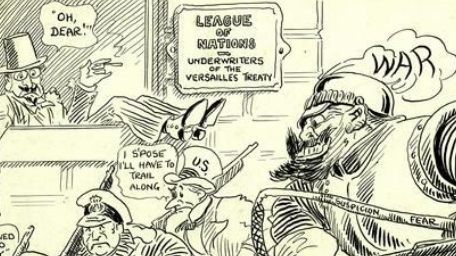
Article Of Interest: Alan Dunn’s Architectural Drawings
From Apollo Magazine, April 27, 2026, “The Cartoonist with A Fine Line In Architectural Criticism”
— this piece by Will Wiles comes just weeks before the publication of Gabriele Neri’s Alan Dunn: The Cartoonist As Architectural Critic (May 25, 2026. MIT Press).
Mr. Dunn was, for many years, the most published New Yorker artist.
(My thanks to Mike Rhode for the link)
______________________________________________________
Alan Dunn’s A-Z Entry:
Alan Dunn (self portrait above from Meet the Artist) Born in Belmar, New Jersey, August 11, 1900, died in New York City, May 20, 1974. New Yorker work: 1926 -1974 Key collections: Rejections (Knopf, 1931), Who’s Paying For This Cab? (Simon & Schuster, 1945), A Portfolio of Social Cartoons ( Simon & Schuster, 1968). One of the most published New Yorker cartoonists (1,906 cartoons) , Mr. Dunn was married to Mary Petty — together they lived and worked at 12 East 88th Street, where, according to the NYTs, Alan worked “seated in a small chair at a card table, drawing in charcoal and grease pencil.”
____________________________________________________________________
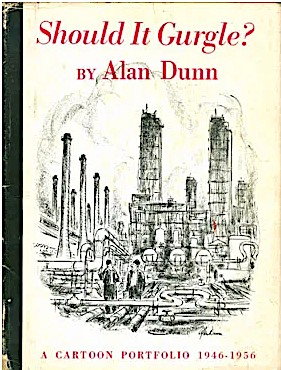
More Dunn…Rejections (Knopf, 1931), and Who’s Paying for This Cab? A Book of Cartoons from the New Yorker (Simon and Schuster, 1945).
__________________________________________________________
The post
Tuesday Spill: Two New Yorker Artists Named Pulitzer Finalists; Article Of Interest…Alan Dunn’s Architectural Drawings first appeared on
Inkspill.

 Login
Login