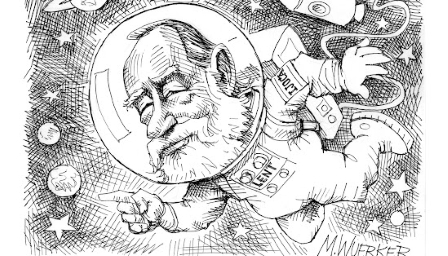
Comics scholar and researcher John Lent has passed away.John Anthony Lent September 8, 1936 – May 16, 2026 From The International Comics Art Forum: Dr. John A. Lent is one of the leading proponents of the international study of comics, and of comics research within academia. Having lectured and taught on comics and mass communications […]
Comics scholar and researcher John Lent has passed away.John Anthony Lent September 8, 1936 – May 16, 2026 From The International Comics Art Forum: Dr. John A. Lent is one of the leading proponents of the international study of comics, and of comics research within academia. Having lectured and taught on comics and mass communications […]
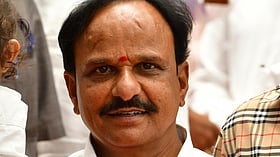
D. Sudhakar, Karnataka’s planning and statistics minister and senior Congress leader, passed away in the early hours of Sunday following a prolonged illness, hospital authorities confirmed. He was 66.Sudhakar breathed his last at Krishna Institute of Medical Sciences in Electronic City, Bengaluru, where he had been undergoing treatment for a severe lung infection for the past two months.In an official medical bulletin, Dr R. Chinnadurai, medical director of the hospital, stated: “Honourable mini
D. Sudhakar, Karnataka’s planning and statistics minister and senior Congress leader, passed away in the early hours of Sunday following a prolonged illness, hospital authorities confirmed. He was 66.
Sudhakar breathed his last at Krishna Institute of Medical Sciences in Electronic City, Bengaluru, where he had been undergoing treatment for a severe lung infection for the past two months.
In an official medical bulletin, Dr R. Chinnadurai, medical director of the hospital, stated: “Honourable minister Mr Sudhakar D, 66 years old, was declared dead at 3.15 am on 10.05.2026 at Krishna Institute of Medical Sciences, Electronic City.”
A prominent face in Karnataka politics, Sudhakar represented the Hiriyur assembly constituency in Chitradurga district and was regarded within the Indian National Congress as an experienced grassroots leader with strong organisational influence.
ನಮ್ಮ ಸರ್ಕಾರದ ಯೋಜನೆ ಮತ್ತು ಸಾಂಖ್ಯಿಕ ಸಚಿವರು, ಹಿರಿಯ ನಾಯಕರು ಆಗಿದ್ದ ಡಿ.ಸುಧಾಕರ್ ಅವರ ಅಕಾಲಿಕ ನಿಧನದಿಂದ ದುಃಖಿತನಾಗಿದ್ದೇನೆ. ಕಳೆದ ಕೆಲವು ದಿನಗಳಿಂದ ಅನಾರೋಗ್ಯ ನಿಮಿತ್ತ ಆಸ್ಪತ್ರೆಗೆ ದಾಖಲಾಗಿ ಚಿಕಿತ್ಸೆ ಪಡೆಯುತ್ತಿದ್ದರು. ಇತ್ತೀಚೆಗೆ ನಾನು ಖುದ್ದು ಆಸ್ಪತ್ರೆಗೆ ಭೇಟಿನೀಡಿ ಸುಧಾಕರ್ ಅವರಿಗೆ ಚಿಕಿತ್ಸೆ ನೀಡುತ್ತಿದ್ದ ವೈದ್ಯರಿಂದ… pic.twitter.com/2OO7VvWLrs
ಅನಾರೋಗ್ಯದಿಂದ ಚಿಕಿತ್ಸೆ ಪಡೆಯುತ್ತಿದ್ದ ನಮ್ಮ ಸಂಪುಟ ಸಹೋದ್ಯೋಗಿ, ನನ್ನ ಆತ್ಮೀಯ ಸ್ನೇಹಿತ ಡಿ. ಸುಧಾಕರ್ ಅವರು ಇಂದು ಕೊನೆಯುಸಿರೆಳೆದ ಸುದ್ದಿ ಅತೀವ ದುಃಖವನ್ನುಂಟು ಮಾಡಿದೆ.
ಹಿರಿಯೂರು ಶಾಸಕರು, ಚಿತ್ರದುರ್ಗ ಜಿಲ್ಲಾ ಉಸ್ತುವಾರಿ ಸಚಿವರು ಹಾಗೂ ರಾಜ್ಯದ ಯೋಜನೆ ಮತ್ತು ಸಾಂಖ್ಯಿಕ ಸಚಿವರಾಗಿದ್ದ ಡಿ. ಸುಧಾಕರ್ ಅವರು ಜನಪರ ಕಾಳಜಿಯುಳ್ಳ… pic.twitter.com/GFngq5BAYt
Chief minister Siddaramaiah expressed deep sorrow over the minister’s demise, recalling his recent visit to the hospital and saying he had hoped Sudhakar would recover.
“Sudhakar was a person with immense concern and commitment towards public service. Such a person should have remained among the people for many more years,” Siddaramaiah said in a post on X.
“Despite the continuous efforts of doctors and the prayers of all of us, Sudhakar has left us today. This is an extremely painful moment,” he added.
Deputy chief minister D.K. Shivakumar also condoled the veteran leader’s death, describing him as a people-centric politician who had rendered exemplary public service throughout his career.
“I pray that God grant eternal peace to D Sudhakar and give strength to his family to bear the grief. Om Shanti,” Shivakumar wrote on X.
Leader of Opposition R. Ashoka too expressed grief over Sudhakar’s passing, joining leaders across party lines in mourning the loss of a senior public representative.
Sudhakar’s death marks a significant loss for Karnataka’s political landscape, particularly in the Old Mysuru and central Karnataka regions where he enjoyed considerable public support and political goodwill.
Joe Negri, a jazz guitarist best known to generations of children and their parents as the kindly, music-loving handyman of Mister Rogers’ Neighborhood, died Saturday, May 30, at a senior living facility outside Pittsburgh. He was 99. His death was announced by his family. Beginning in 1968 and continuing through 2001, Negri, who had been […]
Joe Negri, a jazz guitarist best known to generations of children and their parents as the kindly, music-loving handyman of Mister Rogers’ Neighborhood, died Saturday, May 30, at a senior living facility outside Pittsburgh. He was 99. His death was announced by his family. Beginning in 1968 and continuing through 2001, Negri, who had been […]
Walter Parazaider, a founding member of the jazz-rock band Chicago whose saxophone provided the punch of “Just You ‘n’ Me” while his flute solo on “Colour My World” lent that song its romantic poignance, died of complications from Alzheimers disease died this morning, June 17, while in hospice care. He was 81. His death was […]
Walter Parazaider, a founding member of the jazz-rock band Chicago whose saxophone provided the punch of “Just You ‘n’ Me” while his flute solo on “Colour My World” lent that song its romantic poignance, died of complications from Alzheimers disease died this morning, June 17, while in hospice care. He was 81. His death was […]
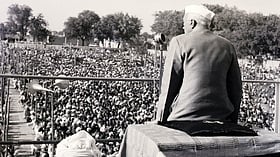
It was around 2.00 pm on 27 May 1964. Suddenly, telephones in government offices across Delhi began ringing frantically. Employees at All India Radio rushed toward their studios. Unease spread through the corridors of Parliament House. Something extraordinary — and tragic — had happened. Moments later, a solemn voice broke the silence over radio waves across the country: “Prime Minister Pandit Jawaharlal Nehru is no longer amongst us.”Earlier that morning, at around 6.20 am, Jawaharlal Nehru ha
It was around 2.00 pm on 27 May 1964. Suddenly, telephones in government offices across Delhi began ringing frantically. Employees at All India Radio rushed toward their studios. Unease spread through the corridors of Parliament House. Something extraordinary — and tragic — had happened. Moments later, a solemn voice broke the silence over radio waves across the country: “Prime Minister Pandit Jawaharlal Nehru is no longer amongst us.”
Earlier that morning, at around 6.20 am, Jawaharlal Nehru had complained of severe back pain to his daughter Indira Gandhi. Soon afterward, in a frail voice, he reportedly whispered, “I think I am finished."
Senior physicians, including Dr B.N. Chugh and Dr Talwar, rushed to Teen Murti Bhavan. Oxygen cylinders were brought in. Emergency injections were administered. Yet despite every effort, at 1.44 pm, Nehru’s heart stopped beating. Indira Gandhi remained by his side.
Gulzarilal Nanda was immediately summoned. Outside Teen Murti Bhavan, anxiety had already begun spreading among staff members who sensed the gravity of the situation.
When confirmation finally came, grief engulfed the residence. Many longtime employees — some who had served Nehru since before Independence — broke down uncontrollably. An elderly gardener reportedly repeated the same sentence over and over again: “Panditji is gone… who will come here now to inspect the garden in the morning?”
A nation in mourning
Sorrow engulfed the nation, transcending distance, region, language and class.
Cinema halls in Delhi halted screenings midway. Shops in Connaught Place shut spontaneously. At Old Delhi Railway Station, passengers gathered around radios in stunned silence. In villages without electricity, people assembled at post offices and public squares to hear the broadcasts.
For countless Indians, Nehru was more than just a prime minister; he was the face of independent India itself, the man whose voice had announced freedom at midnight and whose leadership had guided the republic through its uncertain formative years.
On the morning of 28 May 1964, Nehru’s funeral procession departed from Teen Murti Bhavan.
His mortal remains, draped in white flowers, were placed upon an army gun carriage that moved slowly through Delhi’s overflowing streets. Indira Gandhi wept intermittently throughout the journey. Beside her stood her sons Rajiv Gandhi, then just 19, and Sanjay Gandhi.
According to historians and newspaper accounts, more than 1.5 million people lined the streets of Delhi. Some foreign reports estimated the crowd at nearly 2 million. People climbed trees and electric poles merely to catch one final glimpse of 'Panditji'.
Women lifted children onto their shoulders so they could witness history. Many fainted in the crushing crowds. The Army struggled to maintain order amid the sea of mourners.
Among those gathered was an elderly farmer from Agra who offered a simple explanation for his journey: “I have come to see, for the last time, the man who gave us the power of the vote."
The world pays tribute
India’s political leadership walked together in mourning. President Dr Sarvepalli Radhakrishnan, acting Prime Minister Gulzarilal Nanda, Lal Bahadur Shastri, Morarji Desai, Jagjivan Ram, K. Kamaraj, Indira Gandhi, V.K. Krishna Menon and chief ministers from across the country joined the procession.
Leaders and representatives from around the world also arrived to pay tribute. Lord Mountbatten came from Britain. Both the Soviet Union and United States sent condolences despite the tense climate of the Cold War. Egyptian President Gamal Abdel Nasser described Nehru as the “voice of Asia and Africa,” while Yugoslav leader Josip Broz Tito mourned the loss of “a great leader of peace”.
Their tributes were a quiet affirmation of Nehru’s stature as a world statesman, who helped shape the Non-Aligned Movement and gave newly independent nations a voice distinct from the competing power blocs of the era.
In his will, Nehru had expressed the wish that some of his ashes be immersed in the Ganga at Allahabad, and the rest scattered over India’s fields from an aircraft, so they might mingle with the soil of the country he loved.
And so it was done. An Indian Air Force aircraft scattered his ashes.
The architect of modern India
Nehru’s death created not only a political vacuum but also a profound psychological uncertainty about the future of the republic.
He had inherited a nation scarred by Partition, poverty, communal violence and deep social divisions. Yet he sought to hold India together through its commitment to parliamentary democracy, constitutionalism, secularism and its institutions.
Under his leadership arose many of the foundations of modern India: the IITs, AIIMS, the Bhakra Nangal Dam, scientific research institutions, public sector enterprises, the nuclear programme and the early vision that would eventually lead to India’s space ambitions.
On 27 May 1964, India lost one of its greatest sons, the towering figure who guided a newly independent country through its impossibly difficult early years, who gave it a dream, a sense of self-worth and a proud place in the comity of nations.
Hasnain Naqviis a former member of the history faculty at St Xavier’s College, Mumbai. More of his writing here
David May, a two-time Grammy-winning producer who worked many of music’s biggest names and was a former longtime VP at Warner Records and Rhino Entertainment, has died. He was 68. Deadline confirmed that he died April 13 in Nashville of natural causes. Specializing in new audio formats and mastering, May worked on projects ranging from studio […]
David May, a two-time Grammy-winning producer who worked many of music’s biggest names and was a former longtime VP at Warner Records and Rhino Entertainment, has died. He was 68. Deadline confirmed that he died April 13 in Nashville of natural causes. Specializing in new audio formats and mastering, May worked on projects ranging from studio […]
Marcia Lucas, who won an Oscar for editing the original Star Wars and scored a nom for American Graffiti, both directed by her then-husband George Lucas, and worked with Martin Scorsese and Francis Ford Coppola, died May 27 of cancer in Rancho Mirage, CA. She was 80. Her family’s attorney, Deidre Von Rock, confirmed the […]
Marcia Lucas, who won an Oscar for editing the original Star Wars and scored a nom for American Graffiti, both directed by her then-husband George Lucas, and worked with Martin Scorsese and Francis Ford Coppola, died May 27 of cancer in Rancho Mirage, CA. She was 80. Her family’s attorney, Deidre Von Rock, confirmed the […]
Jay Daniel, the Emmy-winning executive producer of the hit 1980s and ’90s TV series Roseanne, Moonlighting and Cybil, among others, died Wednesday, May 27, in Los Angeles of a pneumonia-related illness. He was 82. His death was announced by his frequent producing partner Glenn Gordon Caron. The cause of death was reported by Daniel’s wife, […]
Jay Daniel, the Emmy-winning executive producer of the hit 1980s and ’90s TV series Roseanne, Moonlighting and Cybil, among others, died Wednesday, May 27, in Los Angeles of a pneumonia-related illness. He was 82. His death was announced by his frequent producing partner Glenn Gordon Caron. The cause of death was reported by Daniel’s wife, […]
Magazine cartoonist Tom Wuthrich, Who signed as “SWISS,” has passed away. Thomas Frederick (Tom) Wuthrich (“SWISS”) August 28, 1945 – May 14, 2026 From the obituary: Tom was a talented Cartoonist, and was also known by his pen name, “Swiss” of Swisstoons. Tom Wuthrich began writing gags for greeting cards in 1972 and then was […]
Magazine cartoonist Tom Wuthrich, Who signed as “SWISS,” has passed away. Thomas Frederick (Tom) Wuthrich (“SWISS”) August 28, 1945 – May 14, 2026 From the obituary: Tom was a talented Cartoonist, and was also known by his pen name, “Swiss” of Swisstoons. Tom Wuthrich began writing gags for greeting cards in 1972 and then was […]
David Hockney, the legendary British artist behind some of the most recognizable works of contemporary painting, such as ‘The Splash’ and ‘Pool with Two Figures’, has died. He was 88. News of Hockney’s death was first reported in the French press and was later confirmed by his publicist in a statement to the BBC and […]
David Hockney, the legendary British artist behind some of the most recognizable works of contemporary painting, such as ‘The Splash’ and ‘Pool with Two Figures’, has died. He was 88. News of Hockney’s death was first reported in the French press and was later confirmed by his publicist in a statement to the BBC and […]
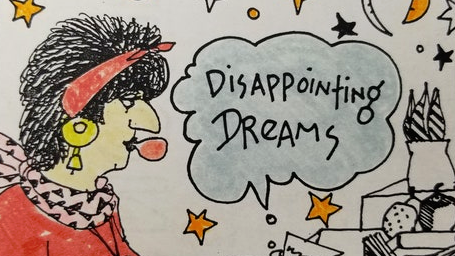
Feminist cartoonist and Sylvia creator Nicole Hollander has passed away. Nicole Marilyn Hollander (née Garrison) April 25, 1939 – April 23, 2026 It is being credibly reported on social media that cartoonist Nicole Hollander has passed away. From Michael Bonesteel: NICOLE HOLLANDER, the edgy and entertaining creator of “Sylvia,” passed away last night. She was […]
Feminist cartoonist and Sylvia creator Nicole Hollander has passed away. Nicole Marilyn Hollander (née Garrison) April 25, 1939 – April 23, 2026 It is being credibly reported on social media that cartoonist Nicole Hollander has passed away. From Michael Bonesteel: NICOLE HOLLANDER, the edgy and entertaining creator of “Sylvia,” passed away last night. She was […]
Dick Parry, whose saxophone solos on Pink Floyd’s classic albums The Dark Side of the Moon and Wish You Were Here helped places such songs as “Money”, “Us and Them” and “Shine On You Crazy Diamond” in the classic rock firmament, died May 22. He was 83. His death was announced by David Gilmour, the […]
Dick Parry, whose saxophone solos on Pink Floyd’s classic albums The Dark Side of the Moon and Wish You Were Here helped places such songs as “Money”, “Us and Them” and “Shine On You Crazy Diamond” in the classic rock firmament, died May 22. He was 83. His death was announced by David Gilmour, the […]

 Login
Login