Login
Login


What is Section 702? The US surveillance law expiring on June 12
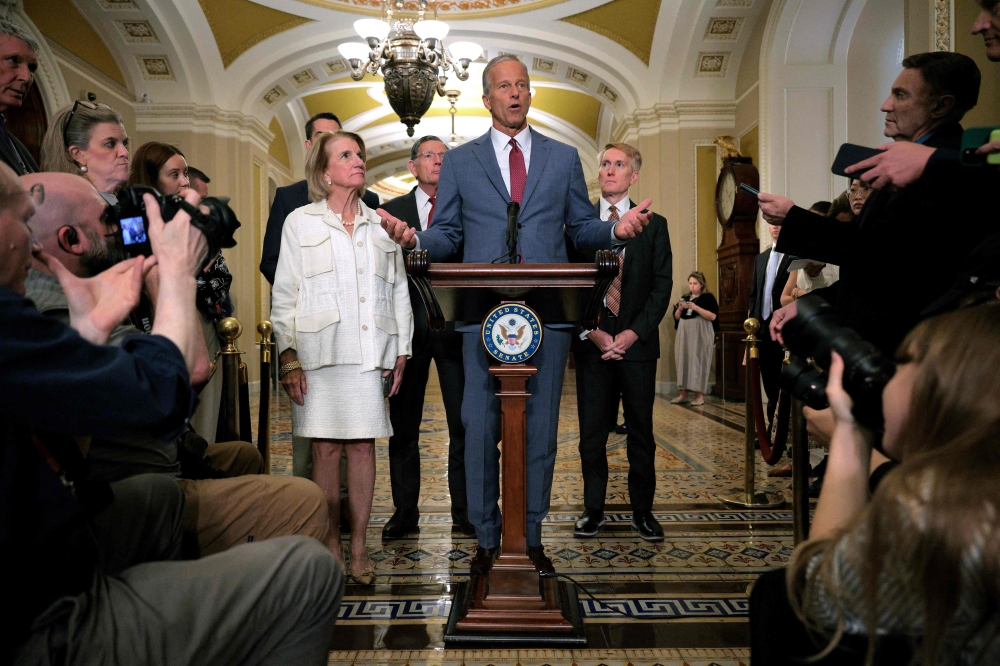
WASHINGTON, June 11 — A US surveillance law that allows federal authorities to collect the communications of foreigners abroad and search them for Americans’ data without a warrant is set to expire on June 12, amid debate over warrant rules and President Donald Trump’s planned appointment of a political loyalist as acting Director of National Intelligence.
Section 702 of the Foreign Intelligence Surveillance Act (FISA) is a key tool for collecting foreign intelligence, officials say.
It allows authorities to gather communications from foreign targets overseas and then search that data, including for information about Americans who may have been in contact with them, a central concern for critics.
The June 12 deadline is the second extension deadline for the law this year. Here’s how we got here:
What is section 702?
Section 702 is "a key provision” of the FISA Amendments Act of 2008 that "permits the government to conduct targeted surveillance of foreign persons located outside the United States, with the compelled assistance of communication providers,” the Office of the Director of National Intelligence said in an explainer document.
The law allows targeting of non-US citizens abroad, but bars US agencies from targeting US citizens, "regardless of location."
It also prohibits collecting data on anyone located in the US, or targeting a non-American to get to a US citizen.
Millions of Americans are caught up in this surveillance, however, if they happen to communicate with a foreigner who is under surveillance.
The FBI, NSA, CIA and the National Counterterrorism Center "routinely” search the data for Americans’ phone calls, emails and text messages without having to obtain a warrant, the Brennan Center for Justice said in March 2026.
Why is it expiring on June 12?
Section 702 expired on April 20, 2026, but Congress passed a 10-day extension.
Bipartisan critics pushed for a warrant requirement to better protect Americans’ data, while the White House and intelligence officials sought a "clean” renewal with no changes to the law.
Supporters of the clean reauthorization said that 2024 reforms to the law had addressed concerns, but critics pointed to data showing that Americans’ data was still being searched in questionable ways.
On April 30, Congress again passed another extension, this time for 45 days.
As part of that agreement, Senator Ron Wyden, a Democrat who has long opposed warrantless data collection, secured an agreement to publicly release a secret FISA court ruling related to how Section 702 has been used.
What happens if Section 702 is not renewed?
Federal authorities may still be able to query Americans’ data under Section 702 even if it were to expire on June 12, according to the Brennan Center for Justice’s Hannah James and Elizabeth Goitein, because the program operates under yearlong certifications last renewed in March.
However, telecommunications companies may be reluctant to provide information without a clear reauthorization, according to James and Goitein, while also facing heavy federal fines if they fail to comply with lawful requests.
A T-Mobile representative said the company "carefully (reviews) each request and provide legally required information.
Our teams are closely monitoring developments, and our focus remains on complying with the law and protecting our customers' information."
Neither AT&T nor Verizon responded to requests for comment.
Even without Section 702, US authorities have other surveillance tools.
The Department of Homeland Security uses facial recognition, social media monitoring, phone hacking tools and cell site simulators, which allow for granular surveillance of mobile phones in some cases, and the deployment of MQ-9 Predator drones.
Local police departments also employ facial recognition technology under various laws, news outlet Stateline reported last year. — Reuters