A pleasant swim at the beach or pool can quickly turn deadly. Every year, over 4,000 people die from unintentional drowning across the United States.
Swim safety experts say drowning is highly preventable. They recommend learning basic swimming skills, designating “water watchers” to keep an eye on children in the water, and avoiding swimming alone or under the influence.
But what if your outfit could stop you from drowning? Swim safety experts say wearing the right color on your next bea
A pleasant swim at the beach or pool can quickly turn deadly. Every year, over 4,000 people die from unintentional drowning across the United States.
Swim safety experts say drowning is highly preventable. They recommend learning basic swimming skills, designating “water watchers” to keep an eye on children in the water, and avoiding swimming alone or under the influence.
But what if your outfit could stop you from drowning? Swim safety experts say wearing the right color on your next beach day is a good way to stay visible and out of harm’s way—especially for inexperienced swimmers and kids.
So what are the safest swimsuit colors?
Lisa Zarda, Executive Director of the U.S. Swim School Association, says people wearing bright, neon colors are easiest to spot in pools, lakes, and oceans, while blue, black, white, and gray swimsuits blend into the water.
“When the water is moving and reflecting the sunlight, certain colors just disappear under the water,” she said. “Especially in open water, where it can be kind of murky and hard to see: The brighter the color, the better.”
Wearing bright colors helps lifeguards and other safety officials identify and rescue people who are at risk of drowning. Vivid orange and super-bright, highlighter yellow are two standout colors for swim safety.
“Think safety vests and traffic cones,” Zarda said. “Those are bright colors also for a reason—so that they can be easily seen.”
An informal study by Alive Solutions, a public safety group, tested swimsuit visibility in three different conditions: in a pool with a standard light bottom, a pool with a dark bottom similar to dark blue ocean environments, and in an outdoor lake with brown-gray water.
Across the board, the study identified bright, neon orange as the most visible color. But there was some slight variation of which colors stood out best in different environments. Against a dark pool bottom, neon yellow, green, and orange were the most eye-catching, while even brighter reds and pinks appeared darker, and both light and dark colors faded into the water.
In a pool with a light bottom, most colors stood out, while light colors like white and light blue disappeared almost instantly.
In a lake, only neon colors were visible while all other colors quickly blended. So bottom line: stick to a neon orange swimsuit if you want to be sure to be seen.
Dark colored swimsuits can be especially hard to spot in open water. Image: mrs / Getty Images / MARTINS RUDZITIS
What makes neon stand out?
All visible color is the result of reflected light. A red apple, for instance, absorbs many wavelengths along the light spectrum, but bounces back red wavelengths. So to the human eye, an apple appears red.
Ordinary colors, like the red of an apple, only reflect the light they receive, but fluorescent pigments do more than that. They also absorb incoming nonvisible ultraviolet and some visible blue light and then re-emit part of that energy as intensely visible light. This is why fluorescent colors almost seem to glow.
Fluorescent shade’s high-contrast is why traffic safety signs, protective gear, and safety and rescue objects, like buoys, are often made with neon materials. It’s also what makes fluorescent swimsuits extra safe.
Swim safety for kids
As summer comes into full swing, Zarda says wearing a neon swimsuit is just one piece of the puzzle to prevent drowning, particularly for kids.
Children are extremely vulnerable to drowning accidents. Kids between ages one to four die from drowning more than any other cause of death, according to the Centers for Disease Control and Prevention. For children aged five to 14, drowning is the second leading cause of unintentional injury.
“Choosing the right swimsuit color doesn’t replace any of the other important layers of protection.” Zarda said.
“Always having undistracted adult supervision, having a fence around your pool, enrolling your child in swim lessons so that they know how to swim and navigate in the water—those are all still very important.”
In Ask Us Anything, Popular Science answers your most outlandish, mind-burning questions, from the everyday things you’ve always wondered to the bizarre things you never thought to ask. Have something you’ve always wanted to know? Ask us.
Fractions are a difficult math concept for many children to learn, but pairing lessons with basketball may offer some help. After participating in an experimental workshop that combined education with shooting hoops, students in Denmark performed an average of 15 percent better in fraction tests than a control group that did not play basketball..
“I am convinced that sport and physical activity can open up mathematics for pupils who are not otherwise engaged by the subject,” explained Univers
Fractions are a difficult math concept for many children to learn, but pairing lessons with basketball may offer some help. After participating in an experimental workshop that combined education with shooting hoops, students in Denmark performed an average of 15 percent better in fraction tests than a control group that did not play basketball..
“I am convinced that sport and physical activity can open up mathematics for pupils who are not otherwise engaged by the subject,” explained University of Copenhagen sports exercise researcher Jacob Wienecke.Wienecke is also the co-author of an accompanying study on the fraction experiment published in the journal Educational Psychology Review.
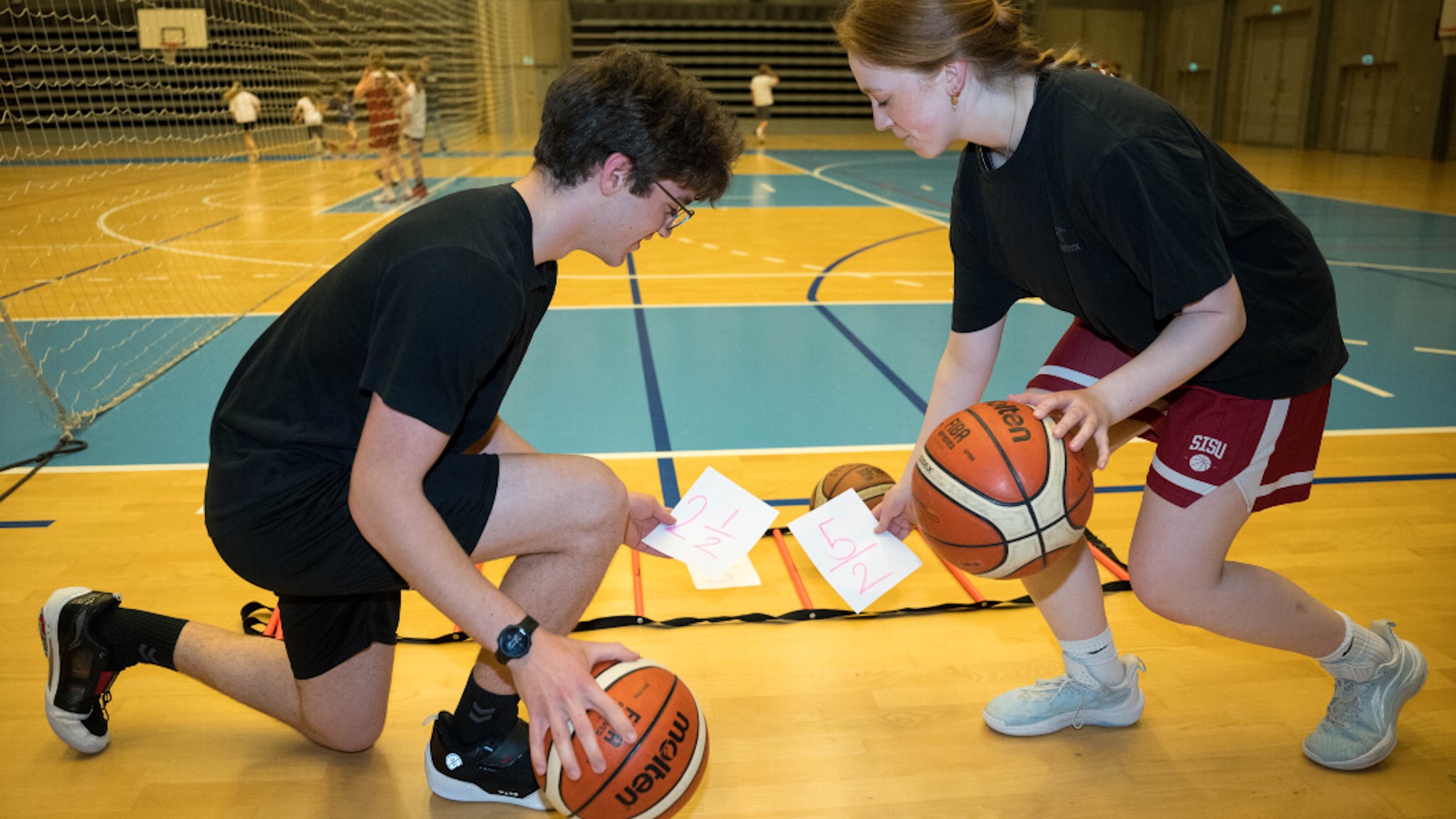
The project involved over 300 students between ages 11 and 13, who attended a one hour, once-a-week meetup that tied fraction lessons to specific basketball drills. For example, teachers asked kids to throw 10 shots at a hoop, then determine the fraction of successful versus unsuccessful attempts. They then practiced converting those numbers into percentages.
The subject area improvements also went beyond fractions. Study participants also saw around five percent improvement in other math concepts after the workshop. And, of course, their skills on the court benefitted from the extra hoop time.
“Our research shows that you can easily invite other subjects into physical education and make it work,” said Wienecke“And it can actually make children experience that subject in a completely different way, while still preserving their motivation and enjoyment of learning.”
Who knows? By expanding similar programs to more school districts, future NBA Finals teams may also be filled with mathletes.
As a woman approaching 40 myself, I understand firsthand the shifts that can come with this stage of life … perimenopause, menopause, and beyond. From gradual body composition changes to dips in energy and mood changes to hot flashes, these experiences are common, and you may be noticing some of them too (1,2).
What can feel especially frustrating is doing all the “right” things, yet not seeing the changes you expect. If that sounds familiar, you’re not alone. Many of the women I work with s
As a woman approaching 40 myself, I understand firsthand the shifts that can come with this stage of life … perimenopause, menopause, and beyond. From gradual body composition changes to dips in energy and mood changes to hot flashes, these experiences are common, and you may be noticing some of them too (1,2).
What can feel especially frustrating is doing all the “right” things, yet not seeing the changes you expect. If that sounds familiar, you’re not alone. Many of the women I work with share the same concerns. The good news is that with a few adjustments, consistent effort, and a shift in approach, meaningful progress is absolutely within reach, especially when strength training becomes part of your routine (3).
Strength training isn’t about chasing a certain look or striving for perfection. It’s one of the most well-supported, effective ways to support your body through hormonal changes, preserve and build muscle, and feel stronger, more energized, and more capable in everyday life (3). Keep reading to learn why building muscle is essential after 40 and how to properly fuel your body to support it.
Why Strength Training Matters More For Women After 40
The beauty of getting older is that you certainly become wiser (or so I believe!) The downside of getting older is that your muscle mass and bone density begin to take a hit unless you’re proactively doing things to maintain it, especially during the season of menopause (4).
Here are 4 reasons why strength training matters more for middle-aged women:
It counteracts muscle loss.
Declining estrogen levels before, during and after menopause can alter your body’s ability to maintain lean muscle mass (4). Regular strength training counteracts this, helping to build and maintain lean muscle mass (5).
It modifies body composition.
We’re not talking about the number on a scale here, we’re talking about the percent of muscle to fat you carry. Regular strength training is important to build muscle, supporting a leaner body composition, meaning you have more muscle than fat. This bodes well for total body health as you age (6). Not only will you burn more calories at rest but your risk of developing other conditions related to high body fat go down as well (7).
It protects bone density (reducing fracture risk).
Putting pressure on your bones through strength training helps preserve bone density, a key component of healthy aging (3). While diet plays a role as well, movement, like strength training, also plays an important role (3).
Research shows consistent strength training helps improve metabolic and hormonal markers, as well as may reduce hot flashes and improve heart rate and blood pressure (3). Consistency is key to seeing these results, so adding a variety of strength training exercises into your routine (with appropriate supervision) is important.
Building Muscle For Women in Their 40s With Strength Training
Building muscle doesn’t mean you need a gym membership or have to train like an Olympian. Consistent strength training, done right at home with minimal equipment, can be highly effective for building and maintaining lean muscle. And no, gaining muscle doesn’t mean getting bulky. It means feeling stronger, looking more defined, and being better prepared to handle the hormonal shifts of midlife without compromising your health (3).
Working with a personal trainer or qualified fitness professional can be helpful for tailoring exercises to your individual needs and comfort level. But if that’s not always accessible, here are a few practical options to get started on your own.
Strength Training Exercises for Perimenopause and Menopause
Compound movements, or exercises that engage multiple muscles at once, are an efficient way to incorporate resistance training into your routine (8). Starting with lighter loads, or even just your body weight depending on your current fitness level, is perfectly fine. The goal is to gradually increase the challenge over time, a principle known as progressive overload, which is key to building and maintaining lean muscle (9).
Note, research is ongoing as to the best types of strength training to include for women during menopause, but current evidence suggests that incorporating any form of strength training is beneficial (3). Consider adding these exercises into your strength training routine.
Squats
How to Perform: Stand with feet shoulder-width apart, support your core, push your hips back and bend your knees, lowering your body as if sitting into a chair. Keep your chest up and weight in your heels, then press through your feet to return to standing.
Modification: Make it easier by using a chair for support or not going down as far in the squat. Make it harder by adding free weights.
Benefit in Midlife: Supports everyday movements, from sitting to standing.
Deadlifts
How to Perform: Stand with feet hip-width apart, holding weights in front of your thighs. Hinge at your hips by pushing them back while keeping a neutral spine and slight knee bend. Keep the weights close to your legs as you lower them until your torso is nearly parallel to the floor or you reach your comfortable range of motion, then drive through your heels and squeeze your glutes to return to standing.
Modification: If you have lower back pain, reduce how far you bend down. To increase the challenge, consider a standing one-leg deadlift (which also builds core strength and balance.)
Benefit in Midlife: Protects lower back and strengthens muscles that support posture.
Push-ups
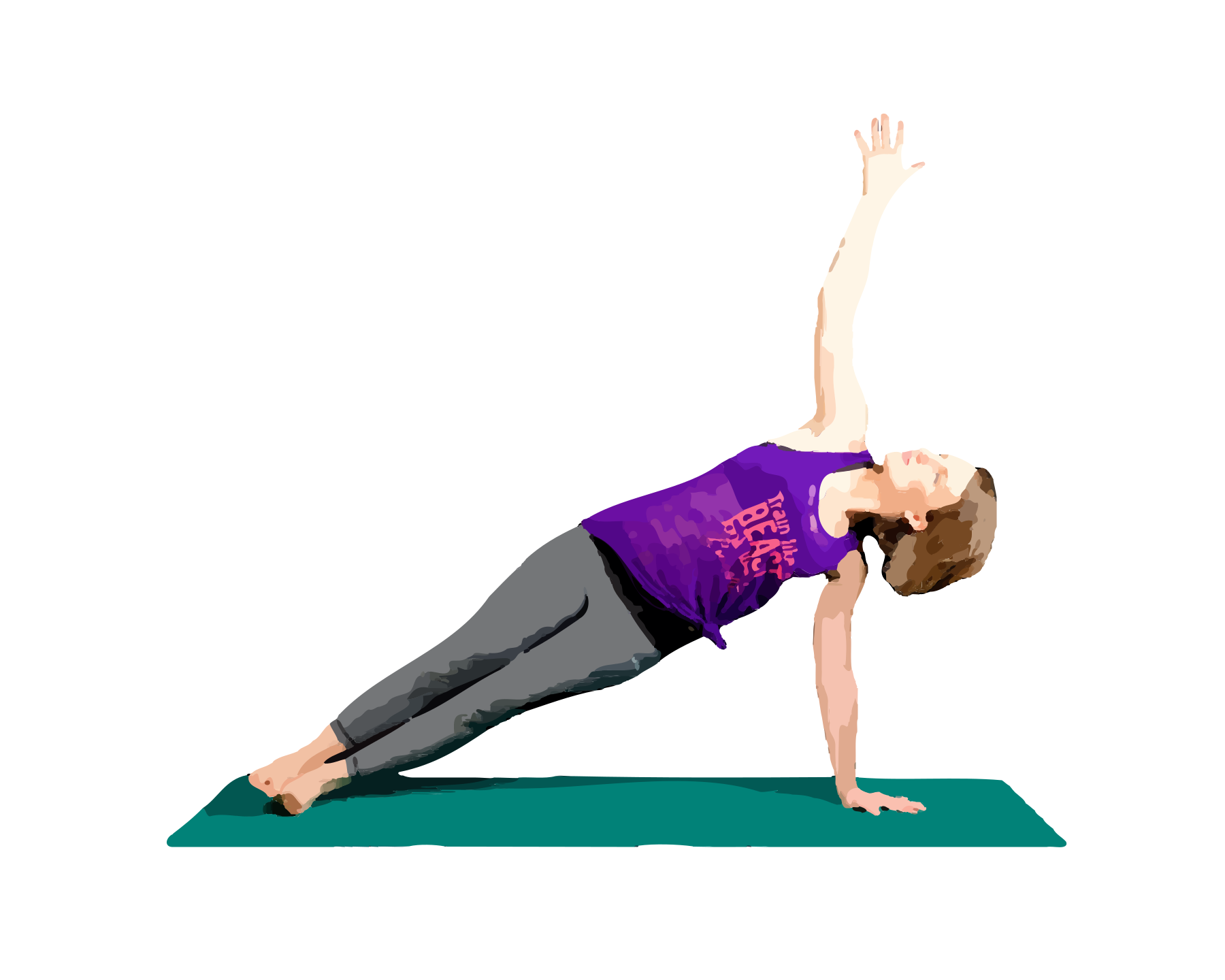
How to Perform: Start in a plank position with hands under your shoulders, core braced. Lower your body in a straight line by bending your elbows until your chest is close to the floor, then push back up to the starting position while keeping your core engaged.
Modification: Start on your knees to make it a bit easier. For those more advanced, increase the challenge by raising one leg.
Benefit in Midlife: Supports core stability, posture, and builds upper body strength.
Kettlebell (or Dumbbell) Swings
How to Perform: Stand with feet slightly wider than hip-width, grip the kettlebell (or dumbbell) with both hands, hinge at your hips. Lower the weight back between your legs, then explosively extend your hips and squeeze your glutes to propel the weight forward, raising it to chest level before lowering it (with control) back down.
Modification: Complete this with a small weight or towel to get the movement down until you’re ready to add heavier weights.
Benefit in Midlife: Supports posture, hip strength, glutes and core.
Frequency and Consistency in Your Routine
National guidelines recommend at least two days per week of resistance training to gain its full health benefits, and that recommendation remains especially important during midlife (10). If you’re just starting out with strength training, begin with two sessions per week and gradually build up to three or four, focusing on different muscle groups each time to allow for recovery.
If you already feel comfortable with resistance training, you can continue progressing by increasing your weights or adding an extra set to further challenge your muscles and support continued strength gains.
Safety, Stability, and Mobility
As you get started including strength training as part of your routine, you need to keep safety top of mind. It will do you no good if you head into your first workout and pull a muscle. That’s why the key to safe, effective strength training you can do for the long run should prioritize these components:
Include a warm-up and cool-down period.
Don’t neglect mobility training.
Incorporate regular core strength to support posture.
Focus on proper form.
Listen to your body, take rest days.
Nutrition and Fueling Your Training
Strength training is only one piece of the puzzle. You need to properly fuel your training to see the results you want, especially when it comes to those body composition changes (11). Keep these strategies in mind as you plan your weekly meals to support your strength training routine.
Prioritize protein.Protein is important, especially for supporting muscle tissue after a resistance training session (11). More isn’t necessarily better, though, depending on your personal health history and starting point. Research also supports emphasizing plant-based protein sources while meeting your individual needs (11).
For a female weighing 150-pounds, this would be between 54 and 82 grams per day.
Incorporate complex carbs. Whole grains, fruits, and starchy-veggies, like sweet potatoes, are great sources of complex carbohydrates that provide a variety of vitamins, minerals, and other micronutrients to keep your body supported while strength training. These foods offer important fuel for your muscles and provide fiber, a key nutrient that supports satiety (11).
Consider foods rich in micronutrients that support bone density, like calcium, vitamin D, vitamin C, and boron (11,12). Think dairy foods like Greek yogurt, low-fat cottage cheese, and even dried fruit, like prunes (11).
Don’t neglect sleep. Sleep is an important piece of the menopause support system (2). You’re more likely to get injured during your strength training session if you’re running low on sleep. Stick to a consistent wind-down routine and prioritize logging those zzz’s.
Some of our user favorite MyFitnessPal recipes that support your nutrient needs for strength training include:
Age is just a number, meaning unless you’ve been specifically advised otherwise by your medical team, building strength and improving overall health is achievable at any stage of life. In fact, midlife is one of the most important times to prioritize strength training for women. Consistent strength training supports muscle mass, bone density, metabolism, and even mood as you navigate the changes of menopause. And the best part? Your own bodyweight is enough to get started at home.
When combined with supportive nutrition and healthy lifestyle habits, strength training can help you move through this season with greater confidence, energy, and ease. Surrounding yourself with a like-minded community can make all the difference along the way. You can join the MyFitnessPal community here to find the support and motivation you’ve been looking for. We can’t wait to see the strength you build.
SINGAPORE, June 18 — Singapore has introduced the S$48 million (RM152 million) Digital Content and Capability Development (DCCD) programme to support media professionals in creating digital content.The Infocomm Media Development Authority (IMDA) said the four-year initiative will help Singapore’s media professionals and companies compete in an increasingly digital-led media landscape.“At the same time, media professionals will be given opportunities to harness ar
SINGAPORE, June 18 — Singapore has introduced the S$48 million (RM152 million) Digital Content and Capability Development (DCCD) programme to support media professionals in creating digital content.
The Infocomm Media Development Authority (IMDA) said the four-year initiative will help Singapore’s media professionals and companies compete in an increasingly digital-led media landscape.
“At the same time, media professionals will be given opportunities to harness artificial intelligence (AI) as a tool for content creation to stay ahead of the curve,” IMDA said in a statement on Thursday.
IMDA said the DCCD programme aims to help media professionals respond to these shifts through two core pillars: digital content development and capability development.
It said media companies interested in joining the programme will participate in an accreditation exercise which will assess their current content development capabilities and track record.
“The accreditation exercise will be conducted twice yearly and accredited companies will be eligible to participate in Calls for Proposals (CFPs),” it added.
According to IMDA, the first accreditation exercise, conducted between April 17 and May 18, resulted in 117 companies being accredited, while the first CFP was launched on June 18 and will run until July 31, 2026.
The initiative also builds on IMDA’s S$200 million Talent Accelerator Programme (TAP) launched in December 2025 to strengthen the capabilities of Singapore’s media talent.
“IMDA is committed to supporting Singapore’s media ecosystem in developing new digital content formats and building digital capabilities to remain innovative and competitive.
“Collectively, these efforts also help create opportunities to better connect with Singapore audiences across various platforms, with the potential for selected stories and formats to travel beyond Singapore. — Bernama
You can learn a lot about a society from the way they raise children. That includes not only what children learn, but how, when, and where they play.
Our modern concept of childhood emerged during the Enlightenment movement of the 18th century. Influential figures like philosopher Jean-Jacques Rousseau promoted the idea that children need special opportunities to explore and express themselves through playtime.
Before then, children were treated essentially as small adults. Of course, kid
You can learn a lot about a society from the way they raise children. That includes not only what children learn, but how, when, and where they play.
Our modern concept of childhood emerged during the Enlightenment movement of the 18th century. Influential figures like philosopher Jean-Jacques Rousseau promoted the idea that children need special opportunities to explore and express themselves through playtime.
Before then, children were treated essentially as small adults. Of course, kids in ancient or medieval times liked to run around and play as much as kids today, and they did so wherever they could. But only after childhood became thought of as a distinct stage of life with unique needs did adults start to design spaces like playgrounds.
When we look at the history of playgrounds, we can see how ideas about children’s play have changed over time.
The first playgrounds weren’t for children
The term “playground” predates the modern definition and was first used “to describe a general place of recreation,” Jon Winder, a historian of urban environments at the University of Liverpool in the UK, tells Popular Science. Winder explains that the modern children’s playground originated in 1840s England, when parks in the cities of Manchester and Salford set aside areas for children’s activities.
The first playgrounds were just areas set aside for recreation. This circa 1914 photograph shows boys playing baseball on a so-called “playground.” Image: HUM Images / Contributor / Getty Images .
The park designers were influenced by earlier German education reformers like Friedrich Fröbel, who outfitted his schools with sandboxes for young students. Best-known for coining the term “Kindergarten,” Fröbel believed that cooperative outdoor play was essential to children’s development.
In the 19th century, “there was quite a lot of sharing of ideas between the UK and Europe” regarding social issues like education and public health, says Winder. The massive changes wrought by the Industrial Revolution, including an ever-growing urban population, brought with them concerns about how these changes were affecting adults and children alike.
Early children’s playgrounds were meant to get kids off city streets
While rural children could still play in fields and forests, working-class urban children often played in the street, exposed to a variety of dangers. Adding children’s playgrounds to cities “was partly about removing [children] from the street” for their safety, says Winder. However, “that idea merged with these ideas about recreation, that there was something inherent about city life that led to physical degeneration of people.”
The perceived negative effect of city living was considered a potential threat to the British Empire, which needed strong, healthy citizens. Gymnastic exercise regimens like Pilates became the health craze of the time. What people thought was best for adults extended to children, and “the spaces that were set aside for children to play in invariably also had gymnastic equipment,” says Winder.
The first playgrounds were not for fun
Some of the equipment in those first 19th century playgrounds resembles what we might see in an Olympic gymnast’s routine today, such as vaulting horses and climbing rings. Winder points out the absurdity of children being expected to know how to safely and effectively use such things. However, he explains, “It wasn’t about play as we would understand it. It was about physical exercise and strength.” Playgrounds were less about imagination and more about “wholesome strengthening exercises.”
Winder notes that these early athletic playgrounds were also used to enforce Victorian gender norms. Not only were the first playgrounds separated by gender, he explains, “They had different equipment in them, because social reformers thought that girls and boys were capable of different types of physical exercise.” While a girls’ playground might have space for hopscotch and shuttlecock, boys would get more physically challenging equipment like ladders and climbing ropes.
Furthermore, the design of the first playgrounds seemed intended to keep children themselves conveniently out of sight. Winder noted in 2022 that the first English playgrounds in Manchester “were hidden in the shrubbery on the boundary of the park, to prevent them from spoiling the view of the picturesque landscape.”
Playgrounds spread around the world
As playgrounds spread to other cities in the UK and continental Europe, British companies began to mass-manufacture playground equipment. The reach of the British Empire meant that such equipment could be exported as far afield as South Africa and New Zealand, bringing with it contemporary ideas about what playgrounds were for.
American social reformers and urban planners soon joined the international conversation. “There were playground campaigners in the UK who were in correspondence with some of the organizations in the U.S.,” says Winder. “They swapped letters and did site visits.”
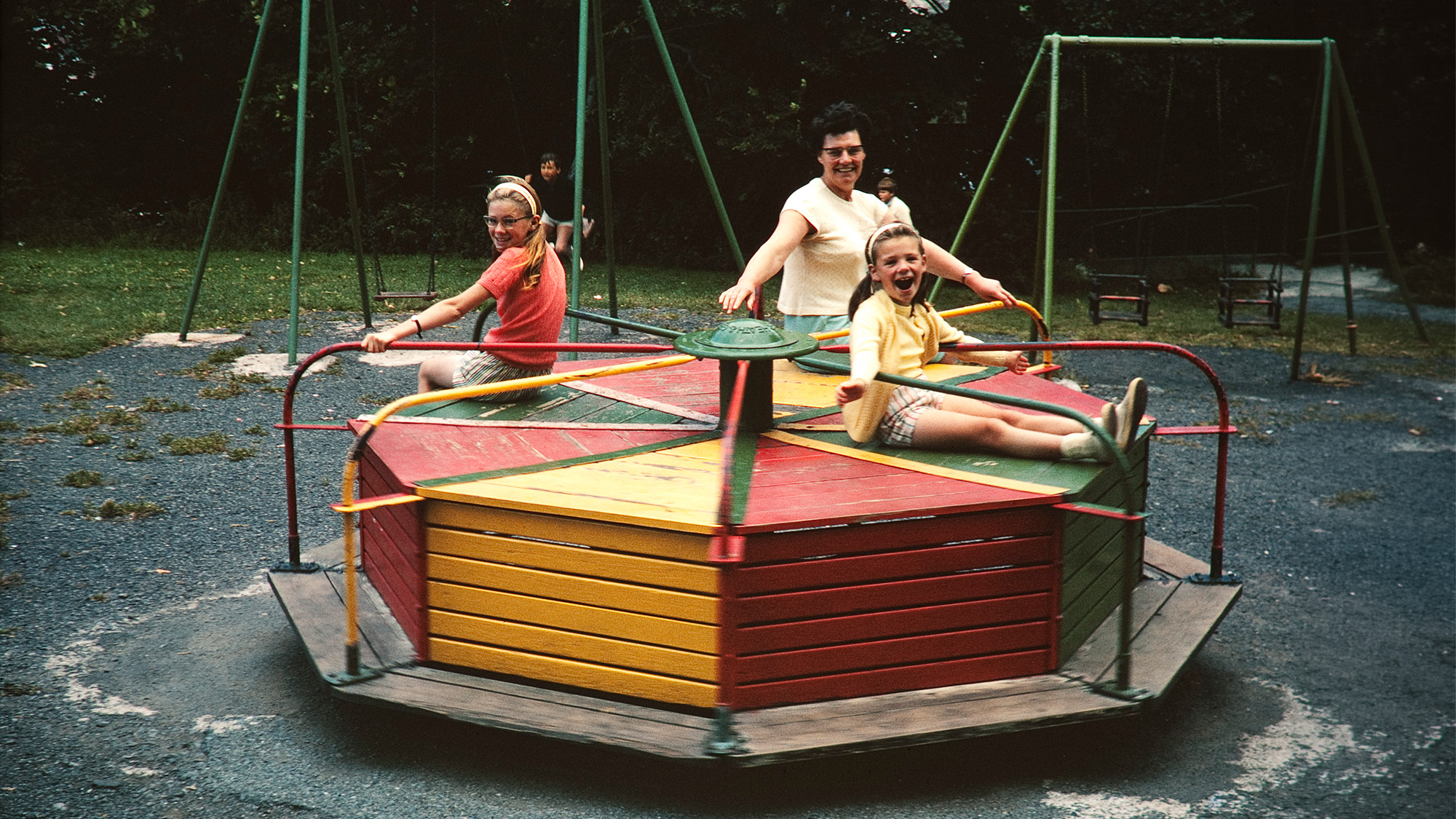
American educator Henry Barnard drew up plans for a playground as early as 1848. It featured rotary swings, blocks, toy carts, and a shaded area for teachers to keep watch from. However, the first public playgrounds in the United States weren’t built until the late 1880s, with both Boston and San Francisco claiming the record.
Following the earlier British model of the playground as a place to work out more than to play, Boston’s children’s playgrounds were part of a larger “open-air gymnasium” for all ages, and were separated by gender.
Early playgrounds mostly consisted of gym equipment. Boys and girls were also divided for play time. This circa 1905 photograph shows girls playing on an early playground on Harriet Island in St. Paul, Minnesota. Image: Getty Images / Universal History Archive / Contributor / Circa Images / Glasshouse Images
However, there were some differences between American and European playgrounds. Early American playgrounds often featured adult facilitators who led athletic activities, something like modern gym teachers, as well as indoor activity spaces for bad weather. And as public playgrounds spread throughout the United States, racial segregation (both legal and de facto) was enforced in many such spaces until the 1950s.
Putting the “play” back in playground
In 1921, industrialist Charles Wicksteed opened Wicksteed Park in Kettering, England, which Winder calls “a big, significant shift in the development of these children’s spaces.” Unlike earlier public playgrounds, Wicksteed Park emphasized amusement over exercise. Decked out with an ever-evolving range of equipment, as well as a theater, fountains, and refreshment areas, the space was designed to be enjoyed equally by boys, girls, and adults.
Rather than having gymnastics equipment, Wicksteed debuted some new kinds of playground equipment at his park based on fairground rides, such as the first playground slides, which were inspired by early roller coasters.
Wicksteed is also credited with designing the modern playground swing, after the homemade swings that children had previously hung from trees (or even street lamps). Wicksteed sold his equipment to other parks, and the influence of Wicksteed Park spread far and wide.
By the 1930s, says Winder, many designers had begun to accept the idea that “playgrounds perhaps needed to be fun to attract children and get them off the street.” While the playground was still seen as a place for children to get physical exercise in the 20th century, it increasingly became a site of entertainment.
In 1921, industrialist Charles Wicksteed opened Wicksteed Park in Kettering, England, which was one of the first playgrounds actually designed for amusement. Later playgrounds like this one followed Wicksteed’s approach. Image: Getty Images / Edoardo Frola
The playground’s present and future
Both playground equipment and our perception of playgrounds have become more focused on fun over time. However, this also means that specific manufactured equipment has become increasingly viewed as essential to the playground. Today, park and school administrators may feel pressured to buy the right products to make a playground feel complete. Is it really a playground if there’s no slide or swing set?
Winder identifies a tension between equipment that stimulates creativity, and the constraints of budget and practicality. Kids can do a lot more with sand than with a set of swings, but it’s also a lot more work to keep clean and tidy.
But as ideas about education and the role of play in children’s lives have continued to evolve, the 20th century has also seen an increase in playgrounds that integrate more thoughtfully with the space around them.
Dutch architect Aldo Van Eyck transformed hundreds of abandoned urban spaces into unique playgrounds designed to inspire children’s natural creativity, without dividing them from the rest of the environment, like the first Victorian playgrounds.
Designing playgrounds “was never about making city streets better places to play,” says Winder. “It was about removing kids from the street and segregating them into one place.”
Winder advocates for urban design that “creates a more balanced relationship between people and vehicles on streets.” With more pedestrian-friendly spaces meshed into urban environments, children can be safe to let their imaginations run wild, whether that’s in a playground, in a park, or in other places set up for foot traffic.
“Kids are inherently playful,” says Winder, and they’ll find ways to play wherever they are. The challenge for adults has always been to try and get them to play the way we want them to.
In The History of Every Thing, Popular Science uncovers the hidden stories and surprising origins behind everyday things.
Sciatica afflicts millions of people each year—though not as many people as think they have it. A growing catchall term among the undiagnosed for all manner of back problems, sciatica is a specific lower-back nerve condition that requires specific action to address.
“Early detection matters,” John Gallucci Jr. MS, ATC, PT, DPT, the CEO of JAG Physical Therapy, tells Popular Science. “If you start feeling sciatica pain, do not wait to get it treated. Prolonging the pain will only make it worse
Sciatica afflicts millions of people each year—though not as many people as think they have it. A growing catchall term among the undiagnosed for all manner of back problems, sciatica is a specific lower-back nerve condition that requires specific action to address.
“Early detection matters,” John Gallucci Jr. MS, ATC, PT, DPT, the CEO of JAG Physical Therapy, tells Popular Science. “If you start feeling sciatica pain, do not wait to get it treated. Prolonging the pain will only make it worse.”
So, anyone seeking sciatica stretches and exercises should be certain they’ve received the right diagnosis for what they’re suffering before embarking on a concerted effort to relieve it. Once they do, however, they’ll find that sciatica can be improved fairly simply.
We asked Dr. Gallucci about the physical therapy exercises for sciatica he recommends, and he bent over backwards—don’t worry, it’s forward movement that triggers sciatica—to help. Learn about each below along with the symptoms, provocations, and prevention methods of sciatica.
What is sciatica?
Sciatica refers to pain or tingling caused by irritation of the sciatic nerve, which governs much of your lower body function. It’s the body’s largest nerve, running from several roots in the lower spine, through the glutes, then down the back of the thigh and into the lower leg and foot.
“When any portion of this nerve becomes compressed or inflamed, the result can be pain or altered sensation anywhere along its long pathway,” Gallucci says.
A common misconception among amateur orthopedists mischaracterizes any lower back pain as sciatica, but that label applies strictly to pain originating from the sciatic nerve. Notably, a condition called piriformis syndrome can mimic sciatica symptoms due to the proximity to the sciatic nerve of the piriformis muscles that connect the spine and femur. Sciatica and piriformis syndrome stem from different causes and call for different remedies.
6 signs of sciatica
Sciatic pain is characterized by a sharp, shooting sensation that radiates from the low back into the buttock and leg, typically following along a discernible line. Besides pain, there are several other indicators of sciatica to watch for, according to Dr. Gallucci.
Numbness or tingling in the buttock, thigh, calf, and/or foot.
Leg or foot weakness such as difficulty lifting the toes or pushing off when walking.
Muscle spasms in the low back or glutes, often triggered by transitions like standing up from sitting or rolling in bed.
Worsened symptoms after prolonged sitting or long car rides. Many patients report “burning” or a “deep ache” after 20 to 40 minutes of sitting.
Pain that eases with gentle walking.
In the vast majority of cases, sciatica only affects one side of the body at a time.
When to see a doctor
If you experience these more serious symptoms, seek immediate medical care:
Leg weakness that causes stumbling
Numbness in the groin or “saddle” area
Change in bowel or bladder control
What causes or worsens sciatica?
The most common cause of sciatica is a herniated or bulging lumbar disc, something only an MRI or CT scan can confirm. There are a number of factors that can contribute to both.
Prolonged sitting: especially when combined with poor posture or deep, couch-style seats.
Job: Incidence of sciatica has shown to be higher for certain occupations, including machine operators, truck drivers and workers placed in awkward positions (see below).
Lifting with poor mechanics. Failing to use proper form when picking up even moderately heavy objects can overload the lumbar spine both acutely and chronically.
Smoking: Cigarette use causes blood vessels to constrict, reducing an already limited nutrient supply to spinal discs, which may degrade faster with prolonged smoking.
Tight hip flexors or hamstrings, which increase lumbar stress.
Weak core and glutes, which can increase nerve strain and decrease stabilization.
Sciatica is generally inflamed by movements involving repetitive lumbar spine flexion (think: crunching), twisting of the trunk, frequent elevation of arms above shoulder height, even coughing. Prolonged sitting while driving or working at a desk can exacerbate this by increasing load on the intervertebral discs in your lower back, which can further irritate a herniated disc.
One thing that doesn’t appear to have an impact on sciatica is gender; no greater predisposition has been shown among men or women, though men are two to three times likelier to experience sciatica owing to their greater incidence of physically demanding work.
Most cases of sciatica resolve in four to six weeks with no long-term complications, even absent medical treatment. More severe cases may be accompanied by a longer recovery time.
7 Stretches and Exercises to Help Relieve Sciatica
The answer to your back pain is likely some form of movement. This selection of glides, stretches and exercises recommended by Dr. Gallucci provides seated, standing and lying options to decompress the lumbar spine and reduce pressure on the sciatic nerve.
1. Sciatic nerve glide (or “flossing”)
So called because it’s not quite a stretch, rather this movement gently mobilizes the nerve—rather than lengthening the muscle—to decrease sensitivity and improve circulation.
Sit upright on the edge of a chair with both feet flat on the floor.
Slowly straighten your right knee while pulling your right toes upward.
Return to the starting position by returning your right foot to the floor while simultaneously bringing your chin toward your chest.
Repeat by straightening your knee and bringing your head back up to neutral.
Reps: 10 to 15 per leg, 1 to 2 times per day
Tip: This movement should feel smooth, so avoid any sharp pulling.
2. Figure-4 piriformis stretch
This more conventional seated stretch reduces tension in the piriformis, a common compression point.
Sit upright on the edge of a chair with both feet flat on the floor.
Cross the ankle of your right leg over your left thigh, just above your knee.
Keeping your spine straight, gently lean forward until you feel a stretch and hold for 20 to 30 seconds.
Reps: Perform 2 to 3 rounds per leg.
Tip: Pull your knee toward the opposite shoulder for a deeper stretch.
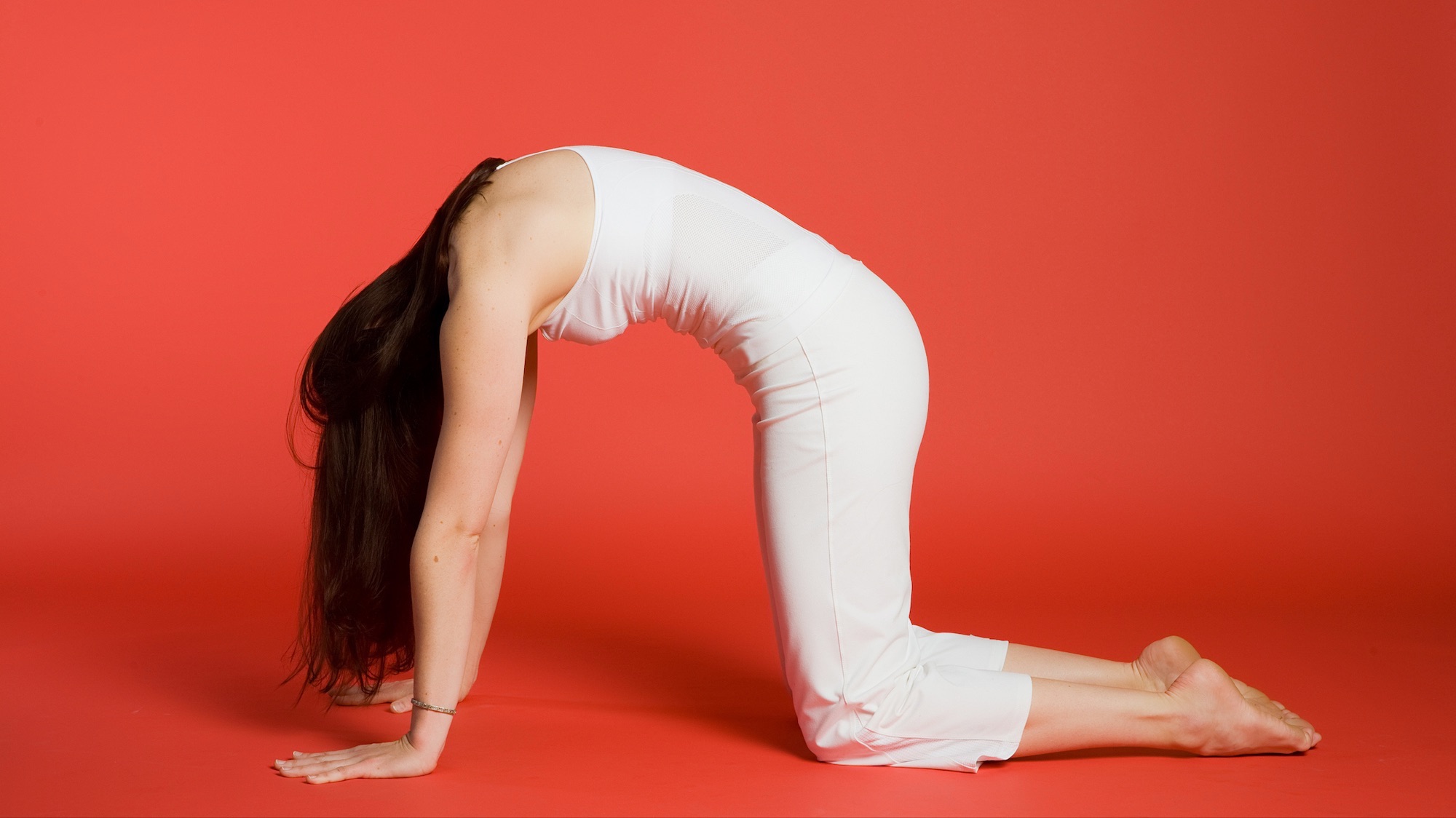
3. Cat-cow spinal mobility
This classic yoga sequence improves spinal mobility and decreases stiffness around irritated segments.
Get down on the floor in tabletop position, with your hands directly under your shoulders and your knees directly under your hips.
Round your spine up toward the ceiling while simultaneously tucking your chin toward your chest and drawing your belly button inward.
Reverse the move, slowly arching your back, while lifting your chest and tailbone upward, allowing your abdomen to relax.
Reps: Perform 10 to 15 cat-cows in a slow and controlled manner.
Tip: Focus on smooth lumbar movement rather than forcing large ranges of motion.
4. Child’s pose
Another yoga-inspired stretch that gently lengthens the spine and reduces lower-back pressure.
Get down on the floor in tabletop position, with your hands directly under your shoulders and your knees directly under your hips.
Sit your hips back toward your heels, and extend your arms forward on the floor.
Allow your forehead to rest on the floor and hold for 30 to 45 seconds
Tip: If your knees bother you, widen them or rest on a pillow.
5. Standing hamstring stretch
The lone standing movement on the list helps loosen hamstrings and relieve stress on your lumbar spine.
Stand tall with your feet hip-width apart.
Plant your right heel on the floor slightly in front of you with your knee straight and your toes pointing upward.
Keeping your back flat, gently hinge forward at your hips until you feel a stretch in the back of your thigh.
Hold for 20 to 30 seconds and repeat on the other leg.
Tip: Lengthen through your spine, hinging at your hips rather than rounding your back.
6. Glute bridge
This lying hip extension exercise strengthens glutes and the posterior chain, reducing load on your lumbar spine.
Lie on your back with your arms at your sides and your feet flat on the floor.
Engaging your core, drive through your heels and lift your hips toward the ceiling until your body forms a straight line from your knees to your shoulders.
Slowly lower your hips back to the floor.
Reps: Perform 12 to 15 bridges per set, completing 2 to 3 sets.
Tip: Avoid arching your lower back.
7. Side-lying clamshell
Reduce load on your lumbar spine by strengthening your hip abductors, piriformis muscles, and glutes with this abduction exercise.
Lie on your right side with your hips stacked and your knees bent 90 degrees. Rest your head on your right arm if it feels comfortable.
Draw your knees in toward your body until your feet are in line with your glutes.
Without allowing your hips to rotate, raise your top knee as far as you can and return it to the starting position.
Reps: Perform 20 to 30 clamshells per set, completing 2 to 3 sets per side.
Finally, it’s important to note that this article is intended for informational purposes only and does not constitute medical advice. You should always consult a healthcare professional before beginning a new exercise or treatment regimen.

 Login
Login