In putting together this list of the best-ever summer appetizers, two key guardrails guided my selections. The dishes that made the cut had to 1) reflect the season’s vibrant hues and 2) be filled with fresh summer flavor. I’m talking herby dips, crisp, crunchy, and colorful salads, and light but satisfying finger foods that are perfect for warm-weather hosting.
Of course, I’m all about easy prep and make-ahead recipes, too. Whether you’re planning a backyard dinner party, a casual happy hou
In putting together this list of the best-ever summer appetizers, two key guardrails guided my selections. The dishes that made the cut had to 1) reflect the season’s vibrant hues and 2) be filled with fresh summer flavor. I’m talking herby dips, crisp, crunchy, and colorful salads, and light but satisfying finger foods that are perfect for warm-weather hosting.
Of course, I’m all about easy prep and make-ahead recipes, too. Whether you’re planning a backyard dinner party, a casual happy hour, or a laid-back al fresco meal, the best summer appetizers should feel effortless, seasonal, and special. Essentially, the following 10 picks had to be nothing short of perfection—and delicious perfection they definitely are.
10 Summer Appetizers for Easy Entertaining
These summer appetizers are just the thing to whet your palate before the main course is served. Of course, I wouldn’t blame you if you fill up on these bites and delights. They’re that good.
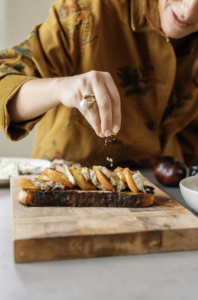
Tartines with Heirloom Tomato, Blue Cheese, and Golden Beets
A great tartine is all about contrast, and this one gets it exactly right. Think crisp, golden bread, juicy heirloom tomatoes, creamy blue cheese, sweet roasted beets, and crunchy pepitas—all layered into a simple recipe that’s as beautiful as it is satisfying.
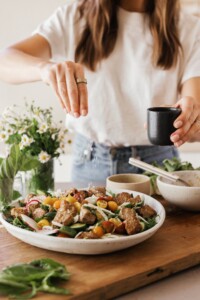
For a salad that can actually hold its own at a warm-weather gathering, this one checks every box. It’s crisp, tangy, and layered with unexpected flavor, made with sturdy vegetables that stay fresh and vibrant long after they’re dressed.
Consider this your reminder that zucchini doesn’t always need to be grilled, roasted, or baked into bread. When shaved thin and tossed with fresh herbs, cucumber, goat cheese, and a little lemony sweetness, it becomes one of the simplest and most elegant summer salads.
There’s a reason beets and tomatoes work so beautifully together. One brings earthiness, the other brings acidity and sweetness, and when finished with olive oil, lime, and a textured sprinkle of dukkah, the result is bright and balanced
Think of this as the summer version of your favorite open-faced sandwich. It’s quick enough for a weekday lunch but pretty enough to serve as an appetizer, especially when finished with olive oil, flaky salt, and a generous dusting of za’atar.
This recipe is caprese in its most laid-back form. Instead of a composed salad, everything gets tossed together with pasta and sun-dried tomatoes for a dish that’s unfussy, flavorful, and exactly what we want next to anything grilled.
This is the kind of no-cook recipe that summer hosting dreams are made of. The gazpacho comes together quickly, chills until guests arrive, and brings a fresh green moment to the table before the main course begins.
Sweet, slow-roasted tomatoes and creamy ricotta sit atop toasted slices of sourdough (a personal fave). In other words, layer upon layer of summery goodness.
These crostini ask for nothing more than 15 minutes of your time. Broil your baguette slices and blend the pesto in the food processor. Assemble and enjoy. The good news is that once you’ve served up your crostini for a crowd, any of the pea pesto leftovers pair perfectly with crisp summer crudités or are delicious spread on a veggie-lover’s sandwich.
This salad is nothing short of mind-blowing. Let it kick off the meal or enjoy this salad alongside grilled meat or fish. However you serve it, light summer goodness awaits.
As I write this, my “Beach House” Pinterest board has exactly 1,323 images saved to 44 different sections. There’s a whole folder just for “kitchen hardware.” Another one called “vibes???” that is exactly what it sounds like. Six years of planning and permitting for our beach house renovation gives you a LOT of time to make decisions—and then re-make those decisions as you discover new ideas and your taste inevitably evolves.
But for all that obsessive research, there was one area where my b
As I write this, my “Beach House” Pinterest board has exactly 1,323 images saved to 44 different sections. There’s a whole folder just for “kitchen hardware.” Another one called “vibes???” that is exactly what it sounds like. Six years of planning and permitting for our beach house renovation gives you a LOT of time to make decisions—and then re-make those decisions as you discover new ideas and your taste inevitably evolves.
But for all that obsessive research, there was one area where my board came up pretty empty: the outdoor kitchen.
I knew what I saw when I imagined it—an organic, earthy space where you’d flow between the prep area, the grill, and the pizza oven. Where the materials told a story: teak weathered by salt air, terracotta tile that looked like it had been there for decades, stucco walls that connected the whole thing to the landscape. Where the inspiration was equal parts Mallorcan kitchen and a long weekend in Oaxaca.
What my research kept turning up? The complete opposite of that. So many outdoor kitchens that looked like a carbon copy of the last one: stainless steel appliances, polished concrete, and brick that was just a little too perfect. Many of them were pretty, but styled within an inch of their lives (in a way that made you feel like the grill had never been turned on).
SO… Adam and I did what we always do when designing a space. We turned to our camera roll to start drawing from inspiration photos we’d taken on our travels.
Our Visual References
We scrolled through years of iPhone pictures from trips. There were meals eaten at long wooden tables in dusty courtyards, kitchens tiled in patterns we’d photographed through restaurant windows, and pizza ovens glowing orange at dusk. We sketched layouts on napkins. We pulled together a reference folder that was half travel diary, half mood board, and handed it to our landscape architect, Michael Fioré, who got it immediately.
What’s taking shape is a space that doesn’t look like anything I’ve seen before (which is always the goal).
So What Are We Actually Building?
The outdoor kitchen will have three main structures working together: a full countertop workspace housing our grill, a separate station for the pizza oven, and a center bar-height teak table that pulls the whole space together. That table is doing a lot of work in this design. It’s the gathering spot, the extra prep surface, the build-your-own-pizza station during parties, and honestly, probably where everyone will end up sitting with a glass of wine while Adam grills.
One of my favorite details that you can see in the renderings: the Clay Imports terracotta brick underfoot, laid in a herringbone pattern that gives the whole space that warm, sun-baked feel. There’s nothing like terracotta to make a space feel lived-in and loved from day one.
The kitchen will also connect directly to the interior kitchen through a huge window with sliding glass panes, which means there will be an outdoor countertop acting as a pass-through. I keep picturing serving platters being passed through the window, or just posting up on a barstool there with a drink while the pizza comes out of the oven. The line between inside and outside is going to be beautifully, intentionally blurry.
We’re installing a Zwilling Flammkraft Grill, and I will just come out and say that it’s undoubtedly the prettiest grill I’ve ever seen. German-engineered, infrared technology, individual cooking and heating zones—which is genuinely key when you’re trying to grill a whole meal at once. (Basically what we do every single weekend.) The built-in gas grill will be fully integrated into the countertop design so it looks truly custom. Which, if you’ve been following along, you know is exactly the vibe we’re going for.
When we were in Mexico a couple of years ago, I took a photo of this small restaurant kitchen that had terracotta tiles running across the countertop and up the backsplash. It was one of those moments where I just stood there absorbing every detail so I wouldn’t forget it. I’ve referenced that photo more times than I can count while planning this space.
So for the backsplash behind the grill, we’re working with our friends at Clay Imports to use their terracotta antique matte 2.5×8 tiles. They have this gorgeous warmth and slight texture that you can see even in the renderings—catching the light differently throughout the day, making the whole wall feel handmade in the best possible way. It’s the element I think will give the kitchen its true signature look.
Okay, THIS is the part I’ve been dreaming about since we first started talking about this house. We ordered a DIY kit from Forno Piombo to build a large, custom wood-fired pizza oven—big enough to cook 3 or 4 pizzas simultaneously. (Read: actual pizza parties are happening.) We’ll install it onto the countertop and build up a dome with a smooth stucco cover for that rustic, Italian farmhouse look. You can already see it in the renderings—that glowing arch, just sitting there looking like it belongs in the Italian countryside.
The Detail That Will Make Everything
In the center of the space, we’re planting one large ornamental olive tree. This is the thing I will look at every morning from the kitchen window. Just an ancient, gnarled, perfect olive tree in the middle of a Mediterranean garden, with lavender drifting around the edges and terracotta pots of herbs and small citrus trees scattered throughout, so I can literally grab a handful of rosemary or squeeze a lemon straight from the tree while I’m cooking.
Looking at these renderings, the table set under that canopy of branches, the bowl of lemons sitting out, the lavender in full bloom in the foreground—it already feels like the space I’ve been trying to find on Pinterest for six years. Turns out it didn’t exist yet, so we’re making it.
Construction’s moving quickly, and we’re planning for a June completion. Which means we’ve got some major outdoor cooking ahead this summer! More soon.
It’s time to celebrate the ladies who get it done. Mother’s Day is the best because it’s about the women who raised us, the sisters in arms who are raising us now, and of course, you and me. (Tip to avoid unmet expectations: Spend the day doing what your fam thinks you want to do, then take yourself on a solo date the next day to do what you actually want to do. Works every time.)
With so many people to celebrate, I’m always tracking affordable Mother’s Day gifts that still feel thoughtful.
It’s time to celebrate the ladies who get it done. Mother’s Day is the best because it’s about the women who raised us, the sisters in arms who are raising us now, and of course, you and me. (Tip to avoid unmet expectations: Spend the day doing what your fam thinks you want to do, then take yourself on a solo date the next day to do what you actually want to do. Works every time.)
With so many people to celebrate, I’m always tracking affordable Mother’s Day gifts that still feel thoughtful. My Notes app is basically a running list of ideas, constantly updated throughout the year when I spot something someone I love would appreciate. I’ve dropped some of those gold-mine finds here, alongside a few current faves from the mommas on our team.
28 Affordable Mother’s Day Gifts Under $50 for Every Type of Mom
Whether you’re shopping for your mom, your sister, your friend, or yourself (because yes, solo date = solo shopping), you’ll find something here worth gifting. Let’s unpack it—the best affordable Mother’s Day gifts under $50 are here.
For Her Home
Gifting for the home can be tricky—it can easily veer into “here’s something to help you do more chores.” And if there’s one thing moms don’t need, it’s another reminder of everything on their plate (though, to be fair, there are caveats—I freakin’ love the blender I got last year).
The key is choosing pieces she’ll use often and enjoy every time she reaches for them. Think: a handmade mug that feels special in her hands, the cutest citrus squeezer she’ll actually leave on the counter, or a set of bowls destined for nightly ice cream. These are joy gifts: functional, but never just functional.
When it comes to edible gifts, going budget-friendly just means getting a little creative. I love a high-low pairing, for example. A good bottle of white wine with her favorite movie theater candy. Or, try something elevated paired with something equally thoughtful—like Alison Roman’s pasta sauce with bronze-cut pasta in the fancy bag. It’s simple, a little indulgent, and guaranteed to be used (and enjoyed) immediately.
There’s a phase of motherhood when facemasks start collecting dust—little reminders of a time that once was. Instead, I like to give wellness gifts that she can incorporate into her daily routine, so she can enjoy some deep breaths even in the midst of the chaos. A weighted eye mask she can slip on at the end of the day. A bath soak for Sunday nights. A journal that doesn’t require a 5 a.m. wake-up call. These are small ways to build in a moment of pause, even when life feels full.
Our team tests a lot of products, and these are the ones that consistently make the cut. A mix of current favorites and longtime staples, each one earns its place in her routine—easy, effective, and a little bit luxurious.
One of the best affordable Mother’s Day gifts is something that taps into what she loves right now. A puzzle that’s almost too pretty to put away. A book for the aspiring birdwatcher (we all know one). The water bottle that replaces all others. A cookbook for the baker who treats every recipe like an occasion. Because sometimes the best gift is the one that reminds her she’s more than just “mom.”
There are very few ways to go wrong with lemon. Something about this tart citrus fruit makes it almost impossible not to work into every kind of dish—from simple vinaigrettes and pastas to fresh fruit compotes and something sweet at the end of the meal. When life gives you lemons, they inevitably find their way into some of the most vibrant recipes in your kitchen.
As the weather warms, lemon recipes start to feel especially appealing. Their bright acidity adds just the right lift to spring
There are very few ways to go wrong with lemon. Something about this tart citrus fruit makes it almost impossible not to work into every kind of dish—from simple vinaigrettes and pastas to fresh fruit compotes and something sweet at the end of the meal. When life gives you lemons, they inevitably find their way into some of the most vibrant recipes in your kitchen.
As the weather warms, lemon recipes start to feel especially appealing. Their bright acidity adds just the right lift to spring cooking—bringing freshness to everything from weeknight dinners to light desserts and easy entertaining.
A Few Tips for Cooking With Lemon
Working with lemons is simple, but a few small tricks can take any recipe to the next level. When a dish calls for lemon juice, roll the lemon on the counter until it feels slightly soft—this helps release the juice more easily. And if zest is on the ingredient list, a Microplane is the easiest way to capture all that fragrant citrus oil, though a box grater or vegetable peeler works just fine in a pinch.
10 Bright Lemon Recipes to Make This Spring
From vibrant vinaigrettes and pasta dishes to simple desserts that highlight lemon’s natural sweetness, these recipes celebrate everything we love about this citrus. Whether you’re planning a spring dinner party or just looking for a fresh weeknight upgrade, these lemon recipes add the perfect bright note to the season.
Blistered Broccolini Pasta with Garlic, Lemon & Toasted Breadcrumbs
It’s the perfect example of a low-effort dinner that still feels thoughtful. Simple pantry staples and a few smart techniques turn broccolini, pasta, lemon, and garlic into something glossy, crisp-edged, and genuinely dinner-party worthy.
This cake is everything I want in a spring dessert: sunny, simple, and just decadent enough. The lemon and raspberries keep it fresh and vibrant, while the ricotta creates that fluffy-meets-creamy texture that makes each slice taste so good.
These are the kind of muffins that make an ordinary morning feel a little brighter. They’re tender, citrusy, and just sweet enough, with the poppy seeds adding that subtle texture that makes lemon poppy seed feel so nostalgic.
There’s something so charming about a dessert that feels a little retro and completely irresistible. This one takes the classic icebox cake formula and gives it a bright lemony twist that makes it feel fresh, playful, and very hard to stop at one slice.
This salad dressing is proof that a handful of good ingredients can go a long way. The lemon keeps it fresh, while the overall flavor is balanced enough to make even the simplest salad taste better.
No-bake desserts always find their way onto my weekly menu. I mean, how can you deny something so delicious and even simpler? No-bake fillings can sometimes be tough to master (we’re looking at you, cheesecake), but this recipe uses white chocolate to bind everything together without the stress.
If you’re short on time and baking supplies, these cookies have you covered. With a simple glaze made from lemon juice and powdered sugar to complement this classic dessert, we doubt there will be many of these cookies left over.
Fruit-filled desserts are a great option when you’re feeling something on the lighter side. These light and fluffy Dutch babies are filled with an easy blueberry and lemon compote, but the choice of fruit is truly up to your heart’s desire.
Lemon Pesto Orzo with Honey Toasted Walnuts & Kale
This lemon pesto orzo strikes a solid balance between comforting and elevated. It’s simple to pull together, but the bright citrus and herby pesto make it taste like so much more than a basic pasta night.
I love a soup that’s simultaneously hearty and light. This one has all the cozy familiarity of a weeknight chicken soup, but the citrusy finish and creamy texture make it feel a little more special.
If you’ve ever wondered why you can eat a “healthy” breakfast and still feel starving by 10 AM—or why your energy tanks every afternoon like clockwork—there’s a good chance it comes down to what’s on your plate. Too many carbs (without enough protein and fat!), skipping meals, or relying on snacks are your blood sugar’s worst nightmare. As a nutrition consultant, this is one of the first things I work on with clients, because once you understand blood sugar (a.k.a. blood glucose), so many of th
If you’ve ever wondered why you can eat a “healthy” breakfast and still feel starving by 10 AM—or why your energy tanks every afternoon like clockwork—there’s a good chance it comes down to what’s on your plate. Too many carbs (without enough protein and fat!), skipping meals, or relying on snacks are your blood sugar’s worst nightmare. As a nutrition consultant, this is one of the first things I work on with clients, because once you understand blood sugar (a.k.a. blood glucose), so many of those frustrating symptoms start to click into place.
In this guide, we’re covering the basics of blood sugar, why it matters for hormone balance and overall health (especially for women), and a full blood sugar balancing meal plan you can start this week.
Beginner’s Guide to Blood Sugar
Without knowing exactly what it means, you’ve probably heard of the term. Blood sugar plays a role in energy, emotions, cognitive function, hormonal health, sleep, and more. You may already be familiar with spikes and dips in blood sugar. Hello, hanger! That said, few recognize its effects daily. In essence, blood sugar is the amount of sugar (or glucose) in your blood at any given time. And it’s produced when we break down carbohydrates. Be it a slice of cake or a piece of toast, that carb is absorbed into our bloodstream. Immediately or eventually, it’s used as a source of energy.
How Does Blood Sugar Work?
Here’s the best way to visualize and think about blood sugar:
1. You eat food. Let’s assume you ate a balanced combination of carbohydrates, protein, and fat. Your digestion breaks down your food. Carbs get broken down into glucose. This is your body and your brain’s primary source of preferred energy.
2. Blood sugar levels rise. Glucose enters your bloodstream, and blood sugar levels naturally increase. How much they increase is dependent largely on the macronutrient breakdown of the meal. More carbs = higher blood sugar. More protein + fat = lower blood sugar spike.
3. Insulin is released. As soon as your body senses the rise in blood sugar, your pancreas releases insulin. Insulin is an important hormone involved in managing blood sugar levels. We want not too much, but also not too little.
4. Blood sugar lowers. Insulin acts as the key that opens your cells and transports glucose from the bloodstream into cells. Glucose is either used immediately for energy or stored for later use. Insulin is what keeps blood sugar from getting too high.
The Goal: A Gradual Rise in Blood Sugar
The goal is to have a gradual rise in blood sugar levels after we eat, and a slow and steady decline in the hours after. We want to avoid large increases in our blood sugar. Why? Because they lead to a very drastic and significant decrease. In other words, it’s not just about high blood sugar levels. We want to minimize low blood sugar levels and crashes, too.
Finding a Happy Medium
Just like cortisol and inflammation aren’t inherently bad (in fact, they’re vital for keeping us alive!), the same goes for blood sugar. Glucose also isn’t the enemy, and neither is insulin. Ultimately, it’s a matter of eating in a way that keeps glucose and insulin at a happy medium. We’re not avoiding carbs and sugar altogether. Rather, it’s about maintaining a healthy balance and honoring the foods that make us feel our best.
How to Achieve Steady Blood Sugar
Large spikes lead to equally dramatic crashes, and those crashes are what trigger the cycle of cravings, fatigue, and overeating that so many women find themselves stuck in. Here’s where to start.
This is the single most impactful change you can make. Protein slows digestion and blunts glucose spikes, while fiber acts as a buffer—slowing the rate at which sugar enters your bloodstream. A breakfast of just toast and juice will spike blood sugar fast, but add eggs and a side of sautéed greens and the response looks completely different. Aim for at least 25-30 grams of protein and a solid serving of fiber-rich veggies or whole grains at each meal.
Take a 10-15 Minute Walk After Eating
This one is free, easy, and backed by a growing body of research. Walking after meals helps your muscles use glucose for energy, which lowers your post-meal blood sugar response. You don’t need to power walk or break a sweat; a casual stroll around the block or even pacing while you take a phone call works.
Prioritize 7-9 Hours of Sleep
Sleep and blood sugar have a bidirectional relationship: poor sleep worsens blood sugar regulation, and unstable blood sugar disrupts sleep. Even a single night of inadequate rest can decrease insulin sensitivity the following day, meaning your body needs more insulin to do the same job. If you’re doing everything right with food and movement but skimping on sleep, you’re undermining your own progress.
Manage Your Stress
This is the underrated one. Most people don’t realize that stress raises blood sugareven if you haven’t eaten anything. When cortisol is elevated, your liver releases stored glucose into your bloodstream to prepare for a perceived threat. Chronic stress means chronically elevated blood sugar—no food required. Everything from deep breathing to building buffers in your schedule isn’t just a nice-to-have. They’re a metabolic tool.
What Causes Blood Sugar Imbalance?
Along with the aforementioned habits, you also want to avoid inconsistent meal times. Not eating enough or not eating consistently (every 3-4 hours, ideally) can both be highly stressful to the body. For this reason, I don’t recommend intermittent fasting for most women! Interestingly, both an overly sedentary lifestyle and working out too much will impact blood sugar levels. Again, it’s stressful on the body. Last but not least, gut dysbiosis (think bloating, etc.) will also negatively impact glucose levels.
Foods That Help Balance Blood Sugar
While there are many foods that help lower and regulate blood sugar, these are some of the best! They cause minimal blood sugar spikes, support sustained energy, and aid in fullness:
Animal protein sources (eggs, chicken, turkey, salmon, sardines, grass-fed beef, shrimp, bone broth, etc.)
Plant-based protein sources (tempeh, tofu, edamame, hemp seeds, spirulina, etc.)
This is a flexible framework, not a rigid prescription. Feel free to repeat your favorite meals, swap proteins based on preference, and adjust portions to your hunger and activity level. The through-line: every meal and snack pairs protein + fat + fiber-rich carbs to keep blood sugar steady.
Day 1
Breakfast: Two-egg veggie scramble with sautéed spinach, bell peppers, and a quarter avocado. Serve with a slice of sprouted grain toast.
Snack: A handful of almonds + a few slices of green apple.
Lunch: Large mixed greens salad with grilled chicken (5-6 ounces), cucumbers, cherry tomatoes, pumpkin seeds, and olive oil + lemon dressing. Side of quinoa.
Snack: Celery sticks with 2 tablespoons of almond butter.
Dinner:Baked salmon (5-6 ounces) with roasted broccoli and sweet potato wedges drizzled with olive oil.
Day 2
Breakfast: Overnight oats made with rolled oats, chia seeds, unsweetened almond milk, a scoop of protein powder, and topped with berries and a drizzle of almond butter.
Snack: Hard-boiled egg + a small handful of walnuts.
Lunch: Turkey and avocado lettuce wraps with shredded carrots, cucumber, and a side of hummus with sliced bell peppers.
Snack: Full-fat Greek yogurt with a sprinkle of ground flax and a few raspberries.
Dinner: Grass-fed beef stir-fry with broccoli, snap peas, mushrooms, and cauliflower rice. Season with coconut aminos and ginger.
Day 3
Breakfast:Strawberry matcha smoothie with a scoop of vanilla protein powder (or collagen peptides) added in.
Snack: Sliced turkey rolled around a cheese stick.
Lunch:Lentil soup loaded with carrots, celery, and kale. Serve with a side salad dressed in olive oil and apple cider vinegar.
Snack: A handful of walnuts + blackberries.
Dinner:Grilled chicken thighs served alongside roasted Brussels sprouts and a small portion of brown rice.
Day 4
Breakfast: Two-egg omelet with goat cheese, sun-dried tomatoes, and fresh basil. Side of sautéed greens.
Snack: A pear with a small handful of cashews.
Lunch:Grain bowl with quinoa, black beans, grilled chicken or tempeh, roasted sweet potato, pickled red onion, cilantro, and tahini dressing.
Dinner:Slow-roasted cod, baked sweet potatoes, and grilled asparagus.
Day 5
Breakfast:Chia pudding made with full-fat coconut milk, topped with hemp seeds, sliced almonds, and a handful of blueberries.
Snack: Cottage cheese with cucumber slices and everything bagel seasoning.
Lunch:Large salad with mixed greens, canned wild salmon, avocado, cherry tomatoes, sunflower seeds, and a lemon-tahini dressing.
Snack: An apple with a spoonful of no-sugar-added peanut butter.
Dinner: Turkey meatballs with marinara (no added sugar) over zucchini noodles, with a side of roasted cauliflower.
Tips to Make This Meal Plan Work for You
Eat within an hour of waking. Starting your day with a protein-forward breakfast sets the tone for stable blood sugar all day. Skipping breakfast means running on cortisol—and playing catch-up by lunch.
Pay attention to eating order. When you do eat carbs, try eating your veggies and protein first. This simple swap can blunt the blood sugar spike from the same exact meal.
Pair, don’t restrict. The goal isn’t to eliminate carbs; it’s to always pair them with protein, fat, or fiber. An apple by itself will spike blood sugar more than an apple with almond butter.
Meal prep is your friend. You don’t need to spend a whole Sunday in the kitchen. Even prepping a few basics (hard-boiled eggs, a batch of quinoa, washed and chopped veggies, etc.) makes it so much easier to throw together balanced meals during a busy week.
Move after meals. Even a 10-15 minute walk after eating can significantly reduce post-meal blood sugar spikes. It doesn’t need to be intense, just get moving!
Hydrate. Dehydration can actually concentrate blood sugar levels. Aim for at least half your body weight in ounces of water daily.
If you’re ready to go deeper—beyond just blood sugar and into the full picture of how to eat, train, and build a body that actually feels strong—my Strong(er) Body Blueprint covers everything from protein targets and progressive overload to the metabolic habits that keep blood sugar balanced for the long haul.
Edie Horstman
Edie is the founder of nutrition coaching business, Wellness with Edie. With her background and expertise, she specializes in women’s health, including fertility, hormone balance, and postpartum wellness.
This post was last updated on May 11, 2026, to include new insights.
Ever notice how your second (or third) cup of coffee has started to feel more like a necessity than a ritual? As a nutrition consultant, I hear this subtle shift described all the time—that sense of chasing energy rather than simply enjoying a morning routine. While stress and poor sleep often take the blame, low iron is one of the most common, easily overlooked contributors. Yes, even mild depletion can leave you feeling far more drained than your lifestyle alone would suggest! Which is exactl
Ever notice how your second (or third) cup of coffee has started to feel more like a necessity than a ritual? As a nutrition consultant, I hear this subtle shift described all the time—that sense of chasing energy rather than simply enjoying a morning routine. While stress and poor sleep often take the blame, low iron is one of the most common, easily overlooked contributors. Yes, even mild depletion can leave you feeling far more drained than your lifestyle alone would suggest! Which is exactly why paying attention to foods high in iron is one of the most supportive, sustainable ways to rebuild energy from the inside out.
Why Iron Matters More Than You Think
Iron is essential for producing hemoglobin, the protein in red blood cells that transports oxygen throughout the body. When iron levels dip, oxygen delivery suffers. And that’s when fatigue tends to move in. But what makes iron especially fascinating is how deeply it influences daily function. Adequate levels help support mental clarity, physical endurance, immune health, and hormonal balance. When stores run low, the effects are rarely subtle. If you know, you know: it’s a depletion that feels difficult to explain.
Why Women Are More Likely to Be Deficient
Did you know that iron deficiency disproportionately affects women? To no surprise, this is largely due to menstruation, pregnancy, and increased vulnerability to under-fueling. Heavy periods alone can significantly deplete iron stores over time. Add in restrictive eating patterns, very regimented plant-forward diets, or intense training schedules, and the gap can widen quickly. In practice, I often see women normalize symptoms that deserve a closer look. Their persistent fatigue, headaches, reduced exercise tolerance, or unusual cravings aren’t just a coincidence.
Signs Your Iron May Be Low
Iron deficiency often creeps in gradually. Fatigue tends to lead the conversation, followed by weakness, pale skin, headaches, shortness of breath, brittle nails, hair shedding, cold intolerance, dizziness, or restless legs. Because symptoms develop over time, many women adapt without recognizing the shift. If you suspect your iron is low, it’s time to schedule blood work! Chat with your healthcare provider about getting the following tested:
Ferritin
Hemoglobin
Serum iron
Transferrin saturation
These will help paint a complete picture.
Understanding Heme vs. Non-Heme Iron
With this information in hand, we can shift the focus toward nourishment—beginning with the types of iron found in food. For context, dietary iron appears in two forms:
Heme iron, found in animal foods, is more readily absorbed by the body. If you’re an omnivore, this is great news! Moderate portions can significantly support iron status.
Non-heme iron, found in plant foods, remains valuable but requires supportive conditions for optimal absorption. While you can absolutely meet your needs without meat, you need to be a bit more intentional with what’s on your plate.
Foods High in Iron
Rather than focus on a single category, it’s helpful to consider iron sources across a variety of foods. Variety is key.
Animal-Based Sources (Heme Iron)
Beef
Lamb
Poultry (particularly dark meat)
Shellfish (oysters, clams, mussels)
Organ meats (especially liver)
Plant-Based Sources (Non-Heme Iron)
Lentils
Beans
Tofu
Spinach
Quinoa
Pumpkin seeds
Dark chocolate
Fruits High in Iron
Dried apricots
Raisins
Prunes
Dates
Figs
Mulberries
Blackberries
Raspberries
While fruit isn’t the most concentrated source of iron, these options can meaningfully contribute— particularly dried varieties, where nutrients are more concentrated! Many also contain vitamin C, which helps enhance non-heme iron absorption.
How to Improve Iron Absorption
Speaking of vitamin C, let’s talk about absorption. Here’s where nuance matters. Consuming iron-rich foods is important, but absorption determines how much your body can actually use.
Pair Iron With Vitamin C
Vitamin C significantly increases non-heme iron absorption. A squeeze of lemon over leafy greens, berries alongside overnight oats, or sautéed bell peppers added to lentils can make a measurable difference.
Cook With Cast Iron
Cooking in cast iron, particularly with acidic ingredients (citrus, vinegar, tomatoes, etc.), can subtly increase the iron content of meals. It’s a small adjustment that works in your favor!
Be Mindful of Timing
Coffee, tea, and calcium-rich foods can inhibit iron absorption when consumed simultaneously. This doesn’t require elimination—simply spacing these items away from iron-rich meals can help.
The Bottom Line
Iron may not dominate wellness headlines, but its influence on how you feel each day is undeniable. When energy feels unreliable or fatigue becomes your baseline, small, intentional shifts can make a meaningful difference. As the seasons change, it’s time to prioritize deep nourishment—including meals with foods high in iron—to help you feel more vibrant this spring. Cheers to feeling more like yourself again.
This post was last updated on March 18, 2026, to include new insights.
Summer invites us to slow down in the best way—open the doors, uncork something chilled, and invite our favorite people for laid-back gatherings that stretch past sunset. And when you’re the one hosting, your outfit should feel as effortless as the gathering itself—comfy enough for at-home lounging, but polished enough to make you feel confident. This season, we’re reaching for the summer hosting outfits that move with us from kitchen to patio, all while feeling present for every moment.
Summer invites us to slow down in the best way—open the doors, uncork something chilled, and invite our favorite people for laid-back gatherings that stretch past sunset. And when you’re the one hosting, your outfit should feel as effortless as the gathering itself—comfy enough for at-home lounging, but polished enough to make you feel confident. This season, we’re reaching for the summer hosting outfits that move with us from kitchen to patio, all while feeling present for every moment.
The Hostess Edit: 5 Summer Outfit Formulas for Effortless Entertaining
Read on for five summer hosting outfits that take the guesswork out of getting dressed, so you can focus on what really matters: good food, great conversation, and even better company.
Blue Jeans + Flip Flops
When it comes to outfits for hosting at home, sometimes simpler is better. My go-to is usually a relaxed, straight pair of jeans with a frilly, feminine top that allows me to move around the house with ease. There’s nothing that screams cool, calm, and collected like flip flops, simple hoops, and vintage-looking denim—an energy every hostess aims to exude.
Easy to throw on and always flattering, a flowy dress instantly makes me feel confident and beautiful when I’m hosting. Balance out the fullness of the dress with a simple slide-on sandal, and stack a few chunky bangles up one arm for a hint of personality and edge.
Ideal for daytime or early evening hosting, this look feels fresh, minimal, and effortless. Opt for an oversized cotton or linen button-down tucked into a pair of high-waisted shorts to accentuate your waist. Leave the top slightly unbuttoned to show off a statement necklace and pair with feminine flats to embody the laid-back energy of the gathering.
If you’re looking for an outfit that requires zero effort but still feels pulled together, a matching linen set never fails. Lightweight and breathable, it’s comfortable for both the prep and the party. Add a strappy sandal and call it quits, or finish the look off with simple gold jewelry for an easy, polished touch.
To strike that ideal balance between casual and refined, style a simple tank with high-waisted, wide-leg linen trousers. Add a few colorful beads for a playful pop, and finish the look with sleek slides. It’s effortlessly elegant—perfect for those gatherings when you want to feel dressed up, without looking like you tried too hard.
Spring makes you want to become someone slightly different. Someone who wakes up early, wears linen, goes to the farmer’s market, and casually arranges tulips like it’s second nature.
And honestly, I love that version of things. My Pinterest is proof that I’ve been waiting for this season all year—pastels filling my saved boards, spaces that somehow always have the perfect light, and every kind of flower that blooms between March and May. I’m the person who will happily spend a weekend after
Spring makes you want to become someone slightly different. Someone who wakes up early, wears linen, goes to the farmer’s market, and casually arranges tulips like it’s second nature.
And honestly, I love that version of things. My Pinterest is proof that I’ve been waiting for this season all year—pastels filling my saved boards, spaces that somehow always have the perfect light, and every kind of flower that blooms between March and May. I’m the person who will happily spend a weekend afternoon wandering Portland (where life is “weird” but good), chasing cherry blossoms and magnolias in every shade of pink, white, and yellow, like it’s a completely reasonable way to spend three hours.
What It Actually Means to Romanticize Your Spring
Sure, there’s something a little precious about it. But romanticizing spring was never meant to be about perfection—or turning your life into a curated mood board you can’t actually keep up with.
Because in reality, most days don’t look like that. You’re answering emails, running errands, checking your phone more than you’d like—and still wondering why the season doesn’t feel as magical as you thought it would.
That’s where romanticizing your spring gets misunderstood. It’s not about becoming a different person or suddenly living a life that looks beautiful from the outside. It’s about paying closer attention to the one you already have, and letting it feel a little softer and slower—and taking the time to notice the magic all around you.
Why Spring Makes You Feel Like You Should Have Your Life Together
Spring shows up, and suddenly the bar shifts. The days are longer, the light is better, and people are outside again—walking more, making plans, and generally acting like they have a handle on things. Your group chats come back to life. Your weekends start to fill in. And without really deciding to, you start holding yourself to a slightly higher standard.
You should probably be working out. Getting outside more. Cooking something fresh instead of defaulting to the same three meals. Becoming, somehow, the version of yourself who just thrives this time of year.
None of this is explicit, but it’s easy to internalize. Spring doesn’t just bring new energy—it brings the expectation that you should be doing something with it. And if you’re not paying attention, that expectation can turn what’s meant to feel light and expansive into something that feels just a little bit like pressure.
Romanticize Your Spring: Simple Rituals That Actually Feel Good
You don’t need to overhaul your life to make spring feel more beautiful. Most of the time, it’s about small shifts: the way you start your morning, how you move through your day, and what you choose to notice. These aren’t things to add to your list—they’re ways of moving through what you’re already doing, just with a little more intention.
Morning
1. Open the windows before you check your phone. Let the air and light in before anything else has a chance to set the tone. Even a minute of this—before texts or email—creates a different starting point for your day.
2. Step outside for five minutes, and don’t bring anything with you. No phone, no coffee, no agenda. Just stand there for a minute longer than feels necessary. Let your body register: we’re here, it’s spring.
3.Wear something that feels like spring (even if no one sees you). Something lighter, softer, a color you’ve been waiting to wear. Not for the aesthetic, but because it subtly shifts how you move through your day.
Daytime
4. Take one walk without headphones, and follow what catches your attention. Instead of your usual loop, let yourself wander a little. Turn when something looks interesting. Stop when your eyes pick up on color. It turns a walk into something you’re actually aware of.
5. Choose a spring errand, and make it unnecessarily enjoyable. Walk to get your coffee instead of driving. Take the longer route home. Stop to look at flowers like you’re not in a rush—because, for five minutes, you aren’t.
6.Borrow a cookbook from the library and cook something you’ve never made before. Not for productivity, not to “get good at cooking”—just to try something new. There’s something romantic about following a recipe you didn’t find on TikTok. (Say it with me: I will resist AI slop.)
7. Bring something seasonal into your space, and move it until it changes the room. Clippings, branches, a bowl of citrus, even just rearranging what you already have. Treat your space like something you can interact with, not just exist in.
8. Do one everyday task more slowly than feels efficient, and notice what changes. Make lunch without rushing. Wash your face like you’re not trying to be done with it. The goal isn’t slowness for its own sake—it’s seeing how differently it feels.
9. Pick one street you’ve never walked down, and treat it like you’re visiting for the first time. Even if it’s five minutes from your house. Look at the details. Notice the homes, the trees, the way the light hits at that time of day. It’s a small way of interrupting autopilot.
Evening
10. Take a “closing walk” at the end of the day. A short loop around your block to signal that the day is done. It helps your body come down without overthinking it.
11.Let your evening happen outside first, inside second. Before you default to the couch, sit outside—even briefly. Bring your dinner, your drink, or nothing at all.
12. Create a soft end-of-day cue that doesn’t involve your phone. Lighting a candle, turning on a specific lamp, or opening a window again. Something small that signals a wind-down to the day.
13. Romanticize one weekday night like it’s a weekend. Put music on. Cook something slightly more involved than usual—or order something and plate it anyway. Let a random Tuesday feel like it counts.
Energy + Boundaries
14. Say no to one plan, and replace it with something you actually want to do. Not just canceling, but choosing something else: a walk, cooking, doing nothing on purpose. The point isn’t less—it’s better.
15.Leave space in your week on purpose. Not everything needs to be filled. The empty space is often the part that makes everything else feel better.
Awareness
16.Notice what’s blooming (literally or otherwise). The trees, the light, your own energy coming back online. Not everything needs to be changed—some things are already shifting on their own.
The Difference Between Romanticizing and Performing
You can do everything right and still feel like you’re performing your own life. Something that looks good, but doesn’t actually feel good. You buy the flowers, light the candle, put on the dress, and yet you still feel vaguely disconnected from your own life. Like you’re watching it instead of being in it.
That’s usually the difference. Performing your life is external. It’s about how things look, how they might be perceived, and whether they’re good enough to count. It often comes with an unspoken pressure to get it right.
Romanticizing your life is internal. It’s about how something feels while you’re inside of it.
It’s drinking your coffee outside because the air feels good—not because it would make a nice Instagram story. It’s taking the long way home because you want to explore, when the route you usually take is more efficient. It’s making a multi-course meal on a Tuesday night and not telling anyone about it.
There’s nothing to prove here. No version of your life you need to live up to. Just small moments that feel a little more like your own.
A Softer Way to Move Through Spring
Maybe this is what it actually looks like to romanticize your life—not more, not better, not beautifully optimized, but just letting your days feel a little more like your own. Reading before reaching for your phone. Taking the longer way home. A Tuesday night that’s more than a write-off. Spring doesn’t ask you to become a different person—it just offers a little more light, a little more space, and an invitation to meet your life where it already is.
Maybe that’s why I love romanticizing it so much.
Spring makes you want to become someone slightly different. Someone who wakes up early, wears linen, goes to the farmer’s market, and casually arranges tulips like it’s second nature.
And honestly, I love that version of things. My Pinterest is proof that I’ve been waiting for this season all year—pastels filling my saved boards, spaces that somehow always have the perfect light, and every kind of flower that blooms between March and May. I’m the person who will happily spend a weekend afternoon wandering Portland (where life is “weird” but good), chasing cherry blossoms and magnolias in every shade of pink, white, and yellow, like it’s a completely reasonable way to spend three hours.
What It Actually Means to Romanticize Your Spring
Sure, there’s something a little precious about it. But romanticizing spring was never meant to be about perfection—or turning your life into a curated mood board you can’t actually keep up with.
Because in reality, most days don’t look like that. You’re answering emails, running errands, checking your phone more than you’d like—and still wondering why the season doesn’t feel as magical as you thought it would.
That’s where romanticizing your spring gets misunderstood. It’s not about becoming a different person or suddenly living a life that looks beautiful from the outside. It’s about paying closer attention to the one you already have, and letting it feel a little softer and slower—and taking the time to notice the magic all around you.
Why Spring Makes You Feel Like You Should Have Your Life Together
Spring shows up, and suddenly the bar shifts. The days are longer, the light is better, and people are outside again—walking more, making plans, and generally acting like they have a handle on things. Your group chats come back to life. Your weekends start to fill in. And without really deciding to, you start holding yourself to a slightly higher standard.
You should probably be working out. Getting outside more. Cooking something fresh instead of defaulting to the same three meals. Becoming, somehow, the version of yourself who just thrives this time of year.
None of this is explicit, but it’s easy to internalize. Spring doesn’t just bring new energy—it brings the expectation that you should be doing something with it. And if you’re not paying attention, that expectation can turn what’s meant to feel light and expansive into something that feels just a little bit like pressure.
Romanticize Your Spring: Simple Rituals That Actually Feel Good
You don’t need to overhaul your life to make spring feel more beautiful. Most of the time, it’s about small shifts: the way you start your morning, how you move through your day, and what you choose to notice. These aren’t things to add to your list—they’re ways of moving through what you’re already doing, just with a little more intention.
Morning
1. Open the windows before you check your phone. Let the air and light in before anything else has a chance to set the tone. Even a minute of this—before texts or email—creates a different starting point for your day.
2. Step outside for five minutes, and don’t bring anything with you. No phone, no coffee, no agenda. Just stand there for a minute longer than feels necessary. Let your body register: we’re here, it’s spring.
3.Wear something that feels like spring (even if no one sees you). Something lighter, softer, a color you’ve been waiting to wear. Not for the aesthetic, but because it subtly shifts how you move through your day.
Daytime
4. Take one walk without headphones, and follow what catches your attention. Instead of your usual loop, let yourself wander a little. Turn when something looks interesting. Stop when your eyes pick up on color. It turns a walk into something you’re actually aware of.
5. Choose a spring errand, and make it unnecessarily enjoyable. Walk to get your coffee instead of driving. Take the longer route home. Stop to look at flowers like you’re not in a rush—because, for five minutes, you aren’t.
6.Borrow a cookbook from the library and cook something you’ve never made before. Not for productivity, not to “get good at cooking”—just to try something new. There’s something romantic about following a recipe you didn’t find on TikTok. (Say it with me: I will resist AI slop.)
7. Bring something seasonal into your space, and move it until it changes the room. Clippings, branches, a bowl of citrus, even just rearranging what you already have. Treat your space like something you can interact with, not just exist in.
8. Do one everyday task more slowly than feels efficient, and notice what changes. Make lunch without rushing. Wash your face like you’re not trying to be done with it. The goal isn’t slowness for its own sake—it’s seeing how differently it feels.
9. Pick one street you’ve never walked down, and treat it like you’re visiting for the first time. Even if it’s five minutes from your house. Look at the details. Notice the homes, the trees, the way the light hits at that time of day. It’s a small way of interrupting autopilot.
Evening
10. Take a “closing walk” at the end of the day. A short loop around your block to signal that the day is done. It helps your body come down without overthinking it.
11.Let your evening happen outside first, inside second. Before you default to the couch, sit outside—even briefly. Bring your dinner, your drink, or nothing at all.
12. Create a soft end-of-day cue that doesn’t involve your phone. Lighting a candle, turning on a specific lamp, or opening a window again. Something small that signals a wind-down to the day.
13. Romanticize one weekday night like it’s a weekend. Put music on. Cook something slightly more involved than usual—or order something and plate it anyway. Let a random Tuesday feel like it counts.
Energy + Boundaries
14. Say no to one plan, and replace it with something you actually want to do. Not just canceling, but choosing something else: a walk, cooking, doing nothing on purpose. The point isn’t less—it’s better.
15.Leave space in your week on purpose. Not everything needs to be filled. The empty space is often the part that makes everything else feel better.
Awareness
16.Notice what’s blooming (literally or otherwise). The trees, the light, your own energy coming back online. Not everything needs to be changed—some things are already shifting on their own.
The Difference Between Romanticizing and Performing
You can do everything right and still feel like you’re performing your own life. Something that looks good, but doesn’t actually feel good. You buy the flowers, light the candle, put on the dress, and yet you still feel vaguely disconnected from your own life. Like you’re watching it instead of being in it.
That’s usually the difference. Performing your life is external. It’s about how things look, how they might be perceived, and whether they’re good enough to count. It often comes with an unspoken pressure to get it right.
Romanticizing your life is internal. It’s about how something feels while you’re inside of it.
It’s drinking your coffee outside because the air feels good—not because it would make a nice Instagram story. It’s taking the long way home because you want to explore, when the route you usually take is more efficient. It’s making a multi-course meal on a Tuesday night and not telling anyone about it.
There’s nothing to prove here. No version of your life you need to live up to. Just small moments that feel a little more like your own.
A Softer Way to Move Through Spring
Maybe this is what it actually looks like to romanticize your life—not more, not better, not beautifully optimized, but just letting your days feel a little more like your own. Reading before reaching for your phone. Taking the longer way home. A Tuesday night that’s more than a write-off. Spring doesn’t ask you to become a different person—it just offers a little more light, a little more space, and an invitation to meet your life where it already is.
There’s something about spring that makes everything feel possible again. The longer days, the lighter air, the instinct to open the windows and start fresh—it’s energizing in a way that’s subtle but so powerful.
If you’re coming out of a season of hibernation (more comfort eating, less movement), I’ll say this first: no guilt, because there is a season for everything. But spring has this particular energy that makes me want to be more intentional—to choose how I feel each day, rather than w
There’s something about spring that makes everything feel possible again. The longer days, the lighter air, the instinct to open the windows and start fresh—it’s energizing in a way that’s subtle but so powerful.
If you’re coming out of a season of hibernation (more comfort eating, less movement), I’ll say this first: no guilt, because there is a season for everything. But spring has this particular energy that makes me want to be more intentional—to choose how I feel each day, rather than waiting for some future version of myself to magically show up.
So here’s what I’m actually doing this season to feel my best. I’ve learned it’s never just one thing. An approach that covers food, movement, sleep, and nervous system support is what really moves the needle. And once you’ve tapped into that cycle and gotten truly hooked on feeling good, you’ll want to repeat those healthier habits over and over.
I’m being fully transparent here because I love reading other people’s actual unfiltered routines—it’s the only way this kind of post is truly useful. I’m not a doctor. I’m just someone who has done a lot of trial and error, reading, and experimenting on herself. Take what serves you and leave the rest.
If you’re craving a reset right now, here’s the simplified spring self-care routine that’s been making the biggest difference for me.
What Is Spring Self-Care, Really?
For me, self-care is less about adding more to your routine and more about refining what’s working really well:
It’s a shift from “fixing” yourself to supporting yourself.
Food as (Delicious) Fuel
As someone who genuinely loves to cook (and eat!) I really lean into the vibe of a season to inspire a rotation of healthy meals that I love and know make me feel good.
My Go-To Spring Meals
Breakfast (after a period of intermittent fasting, I’ve been loving my AM meal again):
Paired with a roasted vegetable or salad served family-style
And there’s always room for pasta or pizza night. I’ve learned that when I create space for the foods I actually crave, everything else stays more balanced.
The biggest shift: prioritizing protein and healthy fats at meals so I’m not constantly reaching for snacks. It keeps my energy steady and makes meals feel more satisfying.
Less-But-Better Movement
If there’s one thing I’ve changed when it comes to exercise, it’s this (and it might seem counterintuitive): I work out less—but more intentionally. Feeling strong and fit doesn’t have to mean pushing yourself harder. For me, it’s about consistency and how movement makes me feel—which ultimately, is so much more motivating than working out for aesthetics alone.
My Weekly Routine
Daily walks (non-negotiable): 30 minutes most mornings + a short walk after dinner
Strength training 2–3x per week: Pilates, weights, or an at-home workout—focused on full-body strength
That’s pretty much it. Walking gives me energy and clears my head. Strength training keeps me feeling strong and capable. I’m no longer chasing a feeling of exhaustion—I’m focusing on sustainability, energy, and feel-good endorphins.
A More Intentional Approach to Supplements
Over time, I’ve built a supplement routine that supports my energy, sleep, and digestion—but I’ve also learned that more isn’t always better.
If you’re dialing in your own spring self-care routine, start simple:
High-quality, consistent sleep is the foundation of everything—it impacts every other aspect of health, but it’s often the one that doesn’t get the high priority it deserves. After years of struggling with sleep, I can genuinely say that I’ve mastered great sleep most nights. And when I don’t, I know just what to do to get back on track. These are the sleep rules I live by:
Going to bed earlier (before 10 pm whenever possible)
Reading instead of watching TV at night
Keeping my phone out of the bedroom
Creating a cool, dark, and quiet sleep environment
When my sleep is dialed in, everything else—energy, mood, cravings—falls into place. You can deep dive into my full sleep toolkit here, where I share exactly how I check all of these boxes every night.
Regulating my nervous system has been a long journey, but it’s been the biggest shift for me over the last year—and it has nothing to do with food or workouts.
It’s really been about simplifyingmy life. I’ve been slowly doing that through:
Saying no to things that feel off or misaligned with my top priorities/values
Letting go of versions of myself that I’ve outgrown
Trusting my instincts more quickly and following my gut
Spring naturally invites us to clear things out physically, but I think the deeper work is clearing out what’s draining us mentally and emotionally. When your nervous system feels supported, everything else—from digestion to energy—starts to improve.
5 Simple Spring Self-Care Habits to Start This Week
Okay, so if you want to jump-start your own spring wellness routine, here are some simple ways to do it that will make a major difference in how you feel:
Eat a protein-rich breakfast that will actually keep you full until lunch. Here are my favorite high-protein breakfast ideas.
Take a walk every day. Even 10–20 minutes counts.
Strength train 2-3x a week. This could be lifting weights, but it could also be pilates or any type of resistance training.
Go to bed 30 minutes earlierevery night this week. We get our highest-quality sleep before midnight.
Remove one thing from your calendar that doesn’t feel aligned with how you want to spend your time.
Self-care doesn’t have to be complicated to be effective.
The simpler it is, the more likely it is to stick. For me, this season is about choosing habits that support how I want to feel: energized, clear, and fully present in my life. Not perfectly optimized, just aligned.
And that shift, more than anything, is what makes everything feel like it falls into place more easily.
If you haven’t yet subscribed to my Substack, it’s where I get a little more personal—writing from the heart about self-care, motherhood, wellness, and all things in between. My community loved this post there, so I wanted to share an excerpt with you here.
Something most people don’t know about me is how much I LOVE makeup. Yes, I keep it simple and really natural, but that doesn’t mean I haven’t fully embraced the magic of a skin-perfecting cc cream, plumping lip color, or mascara that mak
If you haven’t yet subscribed to my Substack, it’s where I get a little more personal—writing from the heart about self-care, motherhood, wellness, and all things in between.My community loved this post there, so I wanted to share an excerpt with you here.
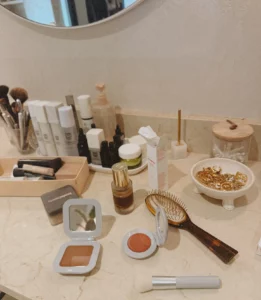
Something most people don’t know about me is how much I LOVE makeup. Yes, I keep it simple and really natural, but that doesn’t mean I haven’t fully embraced the magic of a skin-perfecting cc cream, plumping lip color, or mascara that makes my lashes look a mile long.
I worked my way through college at the Clinique counter, and it was there that I saw the transformative power of beauty in action. A woman who’d shyly wandered up would let me show her the blush placement that lifted her cheekbones, or the lipstick that truly suited her skin tone—and she’d walk away feeling like the most beautiful version of herself. That experience permanently shaped how I think about makeup: it should be simple, and it should make you feel like you.
Thanks to the weird world of influencer marketing, I get sent tons of new products to try. When it comes to makeup, I end up keeping maybe 5% of what I receive. I’m highly discerning when it comes to products that really work, and I’d rather have a makeup drawer full of simple, easy products I use daily than one bursting with things I rarely use.
Here’s what I’ve noticed, though: most people’s makeup drawers tell a different story. Too many products, too many steps, and somehow it still takes forever—or gets skipped entirely on the busy days when you actually want to look good.
So today I’m sharing the routine I’ve spent years refining down to its most essential form. Five minutes, start to finish—whether it’s a day full of Zooms or I’m going out at night. I’m also sharing the natural nail rehab routine that has finally gotten my post-gel nails actually growing again.
I’ve never actually written this out step-by-step before, so consider this the closest thing to watching me get ready in my bathroom. Below is the exact routine and the products that make it work.
My Daily Makeup Routine
After doing my skincare (all details here), I prep with this mattifying primer. I should mention that my t-zone gets really shiny throughout the day, which doesn’t do any favors for the appearance of my pores. So I aim to create a more matte look throughout the center of my face, and let the shine and highlights happen on my cheekbones, brow bones—wherever the light naturally hits.
Then I use my fingers to dot this foundation onto my nose, forehead, undereyes, eyelids, and chin, press it into my skin, and then blend out. I always go back to this one thanks to its good amount of coverage and natural finish, plus it looks like your real skin. And it really lasts through the day.
Unlock the full post here for my exact 5-minute makeup routine—the one I’ve refined over the years to feel polished, natural, and actually doable on busy days. I’m sharing every step, the products that make it work, and the nail rehab routine that finally got my post-gel nails growing again.
In uncertain, often overwhelming times, I’ve found solace in my houseplants. There’s a joy in tending to them—the ritual of watering, the slow unfurl of a new leaf, and the way a room softens in their presence. Over time, my home has filled with them.
But somewhere along the way, I realized: more plants didn’t necessarily mean a more beautiful space. Too many, placed without intention, and suddenly a living room starts to feel less like a sanctuary and more like a roadside nursery. What I wa
In uncertain, often overwhelming times, I’ve found solace in my houseplants. There’s a joy in tending to them—the ritual of watering, the slow unfurl of a new leaf, and the way a room softens in their presence. Over time, my home has filled with them.
But somewhere along the way, I realized: more plants didn’t necessarily mean a more beautiful space. Too many, placed without intention, and suddenly a living room starts to feel less like a sanctuary and more like a roadside nursery. What I was craving wasn’t more greenery—it was a sense of cohesion. A way to make my plants feel like part of the design, not an afterthought.
So I set out to understand how designers actually style plants at home. What I found, through conversations with San Francisco-based Little Trees owner Kathy Ho and Lindsay Pangborn, formerly a gardening expert at Bloomscape, is that the difference comes down to perspective. Plants aren’t just décor—they’re a design layer. And when you start to think about them that way, everything shifts: where you place them, how you group them, and how they shape the feeling of a room.
How to Design With Plants (By Thinking Like a Designer)
When you start to see plants as a design element—not just something to care for—the way you use them begins to change. It’s easy to slip into collecting mode. You find a plant you love, then another, then another—and before long, they’re scattered throughout your home with little thought for how they relate to one another.
Designers approach plants differently. Instead of asking Where can I fit this? they ask, What does this room need?
That shift—from accumulation to intention—creates a space that feels considered.
“Plants should complement your space and your lifestyle, not compete with it,” Pangborn says. In practice, that means thinking about plants the same way you would any other design element: in terms of scale, balance, and placement.
A single, well-placed plant can anchor a corner. A small grouping can create a focal point on a surface. Even negative space—what you choose not to fill—plays a role in how your plants are experienced.
1. Create Visual Moments (Not Plant Clutter)
Once you start thinking like a designer, the next step is editing—then arranging with intention. Instead of dispersing plants evenly throughout a room, focus on creating a few defined moments. Designers often group plants in twos or threes, treating them less like standalone objects and more like part of a vignette. The result feels grounded and cohesive, rather than scattered.
“Grouping plants can make a space feel more calm and considered,” says Ho. “It also makes care easier when plants with similar needs are placed together.”
Think of a cluster on a coffee table, a styled corner of a console, or a small trio anchoring a shelf. What matters isn’t the number of plants—it’s how they relate to one another and to the space around them.
Just as important: what you leave out. Giving each grouping room to breathe allows the eye to land, rather than constantly move.
One of the simplest ways to elevate your plant styling is to think vertically. When every plant sits at the same level—lined up on a windowsill or clustered at eye height—the effect can feel flat. Designers, instead, use plants to create movement throughout a space, guiding the eye up, down, and across the room.
Trailing plants are especially effective here. Placed on a high shelf, bookshelf, or cabinet, they soften hard lines and draw the eye upward as they grow. Hanging planters offer a similar effect, making use of often-overlooked ceiling space while adding a sense of lightness.
“Using vertical space is key, especially in smaller homes,” Pangborn notes. “It allows you to incorporate more greenery without sacrificing surface area.”
The goal isn’t to fill every level, but to create a sense of rhythm—something that feels layered and lived-in, rather than static. A taller plant on the floor, a cluster at mid-level, and something trailing above can be enough to shift the entire energy of a room.
3. Let Plants Fill the Space—Not Overwhelm It
One of the most common mistakes when decorating with plants is treating every empty spot as an opportunity to add one. But designers tend to approach it the opposite way. Instead of filling space, they use plants to resolve it.
That might look like placing a taller plant in an empty corner to soften a hard edge, or using a single, sculptural plant to anchor a blank wall. On the floor, especially, plants can create a sense of weight and presence—grounding the room in a way smaller accents can’t.
“Larger plants can make an immediate impact,” Pangborn says. “They help define a space and can bring balance to areas that feel unfinished.”
Just as important is what surrounds them. Giving a plant enough space—away from furniture, walls, or artwork—allows it to stand on its own without competing for attention.
A room doesn’t feel lush when every inch is filled. It feels lush when there’s contrast—between fullness and openness, presence and pause.
4. Balance Scale, Shape, and Texture
If you’re drawn to a home filled with plants, the key is to create contrast. A room full of greenery can feel rich and layered, but only when there’s variation. When every plant is similar in size, shape, or tone, the effect flattens. What designers do instead is mix elements deliberately: pairing something tall with something low, something structured with something soft, something bold with something more delicate.
“Combining plants with different leaf shapes and sizes keeps a space visually interesting,” Pangborn says. “It creates depth rather than repetition.”
Think of a broad-leaf plant set against something more airy, or a sculptural silhouette next to a trailing vine. These contrasts give the eye somewhere to move and a reason to linger.
The effect is what people often describe as a “lush” space, but what it really comes down to is composition. Not more plants, but better balance.
Design for Real Life, Not Just Aesthetics
Even the most beautifully styled plants should support the way you actually live in your space. It’s easy to get caught up in how something looks—especially when it comes to plants, which can instantly transform a room. But if they’re difficult to care for, constantly in the way, or require more attention than you can realistically give, that sense of ease starts to disappear.
“Plants should complement your space and your lifestyle,” Pangborn notes. “They should never feel like a burden.”
That might mean grouping plants with similar care needs so your routine feels intuitive. Or choosing fewer, more impactful pieces that you can tend to consistently. It might even mean moving things around as your space (or your energy) shifts.
When you start to see plants as part of your home’s design, the entire approach softens. You edit more. You place with intention, and you let the space breathe.
In turn, your home begins to feel the way you wanted it to all along: lush, yes—but also calm, cohesive, and entirely your own.
This post was last updated on April 17, 2026, to include new insights.
At first glance, Camilla Marcus is a study in contrasts. She takes her work seriously, yet brings a sense of playfulness to everything she does. She can pull off a dinner party for 100, but might not plan the menu until that morning, letting the farmers market be her guide. Her vegetable-forward cooking is deeply nourishing—and she’s never one to turn down a midday glass of wine.
But nothing about Camilla feels inconsistent. She’s so rooted in who she is that all of her layers come together
At first glance, Camilla Marcus is a study in contrasts. She takes her work seriously, yet brings a sense of playfulness to everything she does. She can pull off a dinner party for 100, but might not plan the menu until that morning, letting the farmers market be her guide. Her vegetable-forward cooking is deeply nourishing—and she’s never one to turn down a midday glass of wine.
But nothing about Camilla feels inconsistent. She’s so rooted in who she is that all of her layers come together as a beautifully aligned life—one that reflects the passionate approach she brings to her work as a regenerative chef, founder of west~bourne, and mother of four in Los Angeles.
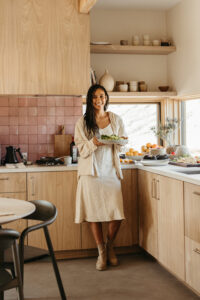
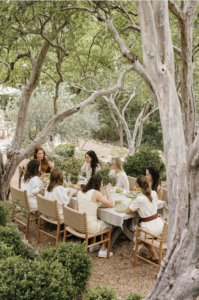
To celebrate the launch of her cookbook My Regenerative Kitchen, Camilla joined me for a backyard lunch under the trees with a few friends. We cooked vibrant, plant-based dishes from the book—tartines, a crunchy fennel salad, and the most stunning rose chocolate bark—poured natural wine, and soaked up her perspective on what it actually means to cook in a way that nurtures both our bodies and the earth.
Her philosophy, in her own words: “What’s good for our soil is always better for our health.”
What I love most about how Camilla thinks about food is the sense of liberation in it. She writes about improvisational cooking the way musicians talk about jazz—not knowing exactly where the notes will lead is the point. The farmers market becomes her guide, and “not being in control” becomes both liberating and inspiring rather than stressful. I left our lunch genuinely rethinking the relationship between spontaneity and nourishment.
Her book makes a compelling case that our everyday choices—the ingredients we buy, how we prep them, what we do with what’s left—are actually the most accessible entry points into climate action. Not through deprivation or a complete overhaul, but through small, cumulative shifts that start to feel natural over time.
Camilla Marcus’s Tips for a Zero-Waste Kitchen
Break up with paper towels. Keep a stack of washable kitchen towels within reach—you’ll be surprised how quickly you stop missing the paper.
Reimagine your pantry. Swap plastic wrap for beeswax alternatives. Use glass jars and metal tins for everything from flours to preserves.
Go reusable with storage. Stasher silicone bags replace Ziploc. Camilla also freezes stocks, sauces, and leftover wine in silicone molds for future meals.
Use the whole vegetable. No stalk left behind. Fennel fronds become garnish, stalks go into stock, and most produce doesn’t need peeling.
Rethink “scraps.” Before you toss it, ask: Can this add flavor to a broth or sauce? Onion peels, herb stems, cheese rinds—all fair game. Compost what you truly can’t cook.
Clean green. Look for nontoxic brands like Koala Eco, Branch Basics, and Grove Collaborative.
Start composting. A countertop bin (Camilla loves the Bamboozle) is a low-barrier start. Composting emits 20x fewer greenhouse gases than landfilling food waste.
Adapted from My Regenerative Kitchen
All of this—the swaps, the scraps, the compost bin—sounds like discipline. But sitting in the backyard that afternoon, none of it felt that way. It felt like the most natural extension of how Camilla moves through the world: paying attention, wasting nothing, finding pleasure in the process. The menu below is where we started. Where you take it is entirely up to you.
The Whole Stalk or Bulb Salad
A salad that earns its name. Every part of the fennel shows up here—fronds, stalks, bulb—and the result is crunchy and bright.
Tartines with Heirloom Tomato, Blue Cheese, and Golden Beets
The tartines came together the way Camilla cooks everything—intuitively, with whatever looked best at the market. Proof that the simplest things, made with good ingredients, don’t need much else.

 Login
Login