Normal view

Published — 4 June 2026 Ontario Nature Blog
  • ✇Ontario Nature Blog
  • Conservation Groups Strengthen 2SLGBTQIA+ Inclusion in Nature Cristina Murano
    Recently, there has been an increase in the number of conservation groups working with the 2SLGBTQIA+ (Two-Spirit, lesbian, gay, bisexual, transgender, queer, intersex and asexual) community to host events. This has signalled a new wave of support for 2SLGBTQIA+ people in the environmental movement; and not only is there a growing demand for this programming, but it is also essential. 2SLGBTQIA+ Positivity in Wild Spaces Ontario Nature spoke with conservation organizations hosting 2SLGBTQI
     

Conservation Groups Strengthen 2SLGBTQIA+ Inclusion in Nature

4 June 2026 at 18:48

Recently, there has been an increase in the number of conservation groups working with the 2SLGBTQIA+ (Two-Spirit, lesbian, gay, bisexual, transgender, queer, intersex and asexual) community to host events. This has signalled a new wave of support for 2SLGBTQIA+ people in the environmental movement; and not only is there a growing demand for this programming, but it is also essential.

2SLGBTQIA+ Positivity in Wild Spaces

Ontario Nature spoke with conservation organizations hosting 2SLGBTQIA+ events, gaining valuable insights into how these initiatives are being developed and delivered.

Conservation Halton was established more than 60 years ago to protect our communities from flooding and erosion. Ontario Nature spoke with their Communications Specialist, Tamanna Kohi, about their approach to 2SLGBTQIA+ inclusivity, “When we received the accreditation from Canada’s 2SLGBTQIA+ Chamber of Commerce, we placed Rainbow Registered window decals at our park visitor centres. A park visitor pointed out how proud they are to support [our] parks and added that they felt seen and safe knowing we are committed to building a culture of inclusivity for all our communities.”

Enjoying a walk during an LGBTQ2SIA+ camping event, Pride, Lesbian Gay Bisexual Transgender Queer Two-spirited Intersex and Asexual +
Enjoying a walk during an LGBTQ2SIA+ camping event © David Prasad CC BY 2.0

This year, the Bruce Trail Conservancy (BTC) and its nine Bruce Trail Clubs also received Rainbow Registered designation. In a press release announcing the accreditation, Laura Tuohy, Manager of Community Engagement at the BTC, emphasized the importance of ensuring everyone feels welcome on the trail.

“People in 2SLGBTQIA+ communities deserve to feel safe, comfortable, and welcome to explore the Bruce Trail and be part of its future, whether that be through self-guided adventures, joining guided hikes, or taking part in volunteer activities,” says Tuohy.

Tuohy told Ontario Nature that participating in Pride events helped BTC better understand barriers people face when accessing outdoor recreation. “Attending Pride events has given us the opportunity to hear peoples’ apprehensions about going on organized group hikes and have direct conversations with people in the 2SLGBTQIA+ community,” she says, “With that feedback, we started our Rainbow Hike program the following year to provide a safe space for 2SLGBTQIA+ folks and allies.”

2SLGBTQIA+ Groups Break Through

If nature is to be for everyone, it must make itself so through active facilitation. Naming 2SLGBTQIA+ positivity and engaging in events, media and outreach that supports the community is a step forward.

The BTC’s approach is yielding impressive results. Tuohy shared, “We are inspired each day by [our] mission ‘preserving a ribbon of wilderness, for everyone, forever.’ … But we recognize that it’s not enough to say, ‘for everyone’, we have to demonstrate it, invite participation, facilitate safe spaces, and work to remove barriers to inclusion.”

As Rosalyn Endlich, Natural Environment Specialist with the City of Toronto elaborated, “Relationship building and supporting existing community networks is essential … we were grateful to partner with Friends of Hanlan’s, a queer landscape-based community advocacy group. Collaborating with them helped us reach additional people and support those that had already laid groundwork and built demand for engagement events.”

A large group of people support LGBTQ2SIA+ rights under the canopy of mature trees in a park or naturalized space, a large-scale Pride gathering
A large Pride gathering © Fibonacci Blue CC BY 2.0

Building Inclusive Spaces in Nature

The groups operating at the intersection of sexual identity, gender identity, and nature programming are filling a gap for 2SLGBTQIA+ people and offering a service to the community.

“We also use the natural world as our guide … as natural ecosystems are more resilient and better able to adapt to change when they are biologically diverse, organizations and movements are stronger when they are diverse and inclusive,” says Tuohy, “When we are facing parallel crises of climate change, biodiversity loss and loss of connection to nature, we need to come together and involve as many people as possible in finding solutions.”

Endlich echoes, “For queer people to come together in a community event to plant and care for a queer space was something special. Now, whenever folks visit this beach, they hopefully will feel even more connected and invested in the space. Also, it was meaningful on a personal level both for our 2SLGBTQIA+ staff and folks who attended this event to all get to work together and see ourselves represented in forestry and environmental stewardship.”

And Kohi adds, “Conservation Halton’s Pride in Nature kick-off event, Birds of All Feathers, is hosted at Mountsberg Conservation Area. Staff, volunteers and event attendees are always excited to attend the event dressed up in their Pride gear,” Kohi adds. “The event features educational signage with animal facts that represent Pride out in nature — for example, the endangered species, Jefferson Salamander is a species with ‘unisexual reproduction’, meaning that females reproduce through cloning. … This was a great opportunity to showcase the diversity of nature.”

To learn more about 2SLGBTQIA+ organizing, visit Queer Ecology by Network in Canadian History & Environment, Making space for LGBTQ+ and wildlife communities by CBC and Five ways to become a better ally to 2SLGBTQ+ communities by Kristopher Wells.
Published — 28 May 2026 Ontario Nature Blog
  • ✇Ontario Nature Blog
  • How Blind Birders are Building a More Inclusive Birding Community Christine Malec
    The first time someone called me a birder, I was startled, not only because I’m completely Blind. I had accumulated bits of knowledge here and there over the years and felt smug when I could identify birds by their songs, but I’d never studied, and it had never even occurred to me to go on an outing. Birders get up early, which wasn’t my habit, and I believed falsely that birding was entirely centred on vision. While some are, many birders I’ve spoken to describe listening as one of the key tool
     

How Blind Birders are Building a More Inclusive Birding Community

28 May 2026 at 14:23

The first time someone called me a birder, I was startled, not only because I’m completely Blind. I had accumulated bits of knowledge here and there over the years and felt smug when I could identify birds by their songs, but I’d never studied, and it had never even occurred to me to go on an outing. Birders get up early, which wasn’t my habit, and I believed falsely that birding was entirely centred on vision. While some are, many birders I’ve spoken to describe listening as one of the key tools in finding birds to identify, especially in high summer when the foliage is at maximum density.

So on a sunny day in late summer, I accompanied Steve Garrett of the Toronto Ornithological Club (TOC), a Nature Network member group, to hear what was to be heard in Toronto’s High Park (mostly it was goldfinches and chickadees). We had our expectations set appropriately, as anyone who can distinguish a house sparrow from a bluejay can tell you, late summer isn’t the best time for birding.

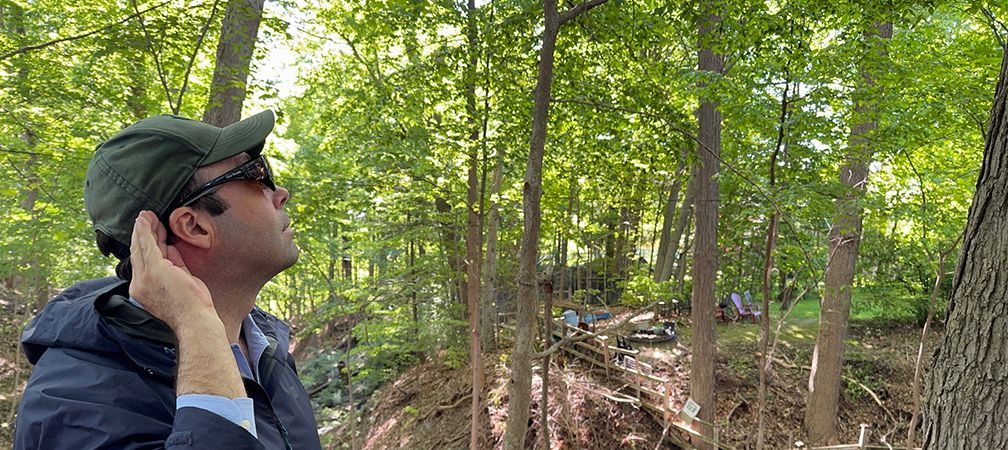
Listening to bird song in a forest, hearing bird calls, listening to songbirds, hearing robins sing vocalizations, a person cupping their hand to their ear to more easily listen to and detect bird songs
Listening to and identifying bird songs in a forest © Noah Cole

Despite the season, I learned a lot. I got acquainted with the Merlin Bird ID app, and grilled Steve about birders and their ways.

Things I learned:

  • A “spark bird” is the bird that first catches someone’s attention and turns them into a birder
  • A “lifer” is a first-ever sighting of a bird that a birder may have been chasing for years
  • And the best way to get a bird to stop singing is by turning on your ID app microphone

Steve told me the image of the classic birder has changed. The classic birder, armed with field glasses and reference manuals, isn’t quite as conspicuous anymore, because the smart phone offers options both for viewing, photographing, identifying and documenting.

Also, the idea of who a birder is has consciously shifted. “The birding community has followed the cultural shift towards diversity, equity and inclusion,” Steve told me. “When it was founded, way back in 1934, the Toronto Ornithological Club was exclusively men. Of course that’s not true anymore, and we’re actively interested in including people with a wide range of ages, backgrounds and abilities.”

This led to a discussion about an event involving the TOC and a group of Blind adults brought together by Balance for Blind Adults. One participant was Alex Bulmer, a Blind actor and director, who lives near High Park.

Alex, who lost her sight in her 20s, explained that one of the biggest barriers for Blind birding is access. “It’s one thing to walk down the street,” she says, “That’s good, cause there’re birds out on the street in the city and you can travel with your cane or your dog down the street, but you’re limited. Unless you can get into a woodland or a place that’s less navigable, I mean I can’t get into the depths of High Park with my cane or my dog, I just can’t without a sighted guide.”

I also think it’s important to tackle a common myth. Blind people have better hearing than sighted people. My conclusion is that, as a Blind person, I’m no more likely to excel at a hearing test than anyone else, but also as a Blind person, I rely heavily on sounds around me to make my way through the world and perceive what I can about it. This means that I often notice sounds my sighted friends don’t, not because I have quantitatively better hearing, but because I give more energy to processing what I hear.

A group of people use binoculars to watch birds and use smartphone apps to identify birds from their birdsongs
Observing and identifying birds, Rosedale Park, Whitby, Our Special Spaces 2025 © Rachel Chong

Technology has also changed birding for Blind people. Gone are the days when sighted birders carried around reference books or paper journals. As a Blind person it’s all about the phone now. And as a totally Blind person, I rely on the voiceover feature on my iPhone which reads screen text aloud as synthetic speech. If an app developer has built accessibility features into their app, my experience will be as smooth as anyone else’s.

I’ve appreciated the opportunity the Merlin Bird ID app gives me to participate in community science by sharing recordings with research databases. Jim Halilton, a retired Blind tech user, became interested in identifying birds through a course called Birdability: Birding By Ear, designed and offered by Birds Canada. I asked him about the Merlin ID app. “It has helped me answer bird-song questions which I have had for decades. since having this app, and recognizing more birds as a result, I now pay more attention to birds I hear, to try to identify those I have not heard before.”

As a Blind birder I won’t be taking photos of birds, but learning their songs and calls helps me fill in the auditory landscape in a way that centres nature rather than just the human-made sounds I hear in my urban life. That persistent trill in my backyard, I discovered, is not a dying squirrel but a dark-eyed junco; I looked it up.

Published — 20 May 2026 Ontario Nature Blog
  • ✇Ontario Nature Blog
  • Celebrate World Turtle Day 2026: Protecting Ontario’s Snapping Turtles Tony Morris
    World Turtle Day on May 23rd is dedicated to appreciating these extraordinary reptiles. It is also a good opportunity to highlight the need to protect these ancient species, as they are one of the most interesting and important groups of reptiles in Ontario. On this year’s World Turtle Day, we shed light on the significance of one of Ontario’s most beloved turtle species, the snapping turtle. Incredible Snapping Turtles in Ontario The snapping turtle, recognized for its large size and dinosau
     

Celebrate World Turtle Day 2026: Protecting Ontario’s Snapping Turtles

20 May 2026 at 13:14

World Turtle Day on May 23rd is dedicated to appreciating these extraordinary reptiles. It is also a good opportunity to highlight the need to protect these ancient species, as they are one of the most interesting and important groups of reptiles in Ontario. On this year’s World Turtle Day, we shed light on the significance of one of Ontario’s most beloved turtle species, the snapping turtle.

Incredible Snapping Turtles in Ontario

The snapping turtle, recognized for its large size and dinosaur-like features, is commonly found in shallow water bodies such as marshes, swamps, and creeks from the north of Lake Superior to the edges of southern Ontario. Although aquatic, snapping turtles migrate across terrestrial land in search of many resources, making their habitat range up to 20-30 square hectares!

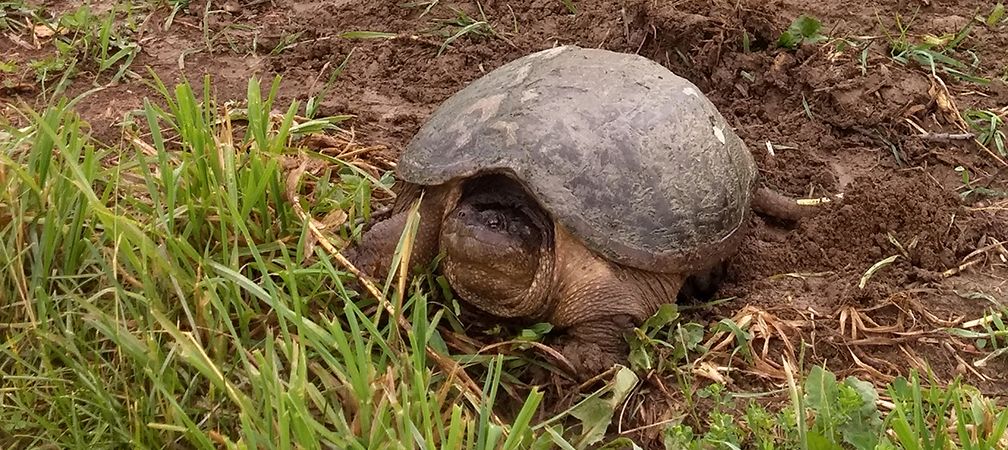
A large snapping turtle on land, snapping turtle prepares to dig a nest to lay eggs
Snapping turtle © Scott Mackie

These reptiles are necessary for maintaining the habitat of many water bodies. Their consumption of dead/decaying plant matter helps clean water bodies to support the survival of other organisms. Turtle eggs are also part of the diet of many young mammals and bird species.

In addition to their ecological benefits, snapping turtles have a strong cultural significance for Indigenous Peoples from across Ontario. The turtle is a symbol of creation, balance and patience. Further, wetland habitats are important sources for food and medicine, and also crucial for controlling floods, water pollution and storing carbon.

Snapping turtle on a road at risk of a wildlife-vehicle collision, Snapping turtle, species at risk, species of special concern, biodiversity, turtles, freshwater turtles
Snapping turtle © Peter Ferguson

Threats to Snapping Turtles

Passed in June 2025, Bill 5, also known as Protect Ontario by Unleashing Our Economy Act, poses significant threats to many species, including snapping turtles.

Through this bill, the Species Conservation Act (SCA) replaces the Endangered Species Act. The SCA weakens many protections for species at risk and will not even continue to list special concern species like the snapping turtle making it unclear how their wellbeing will be assessed on an ongoing basis.

One of the major problems with the SCA is that it defines “habitat” solely as a species nesting area, ignoring the fact that many species – including the snapping turtle – depend on a large area of land to survive.

Migration plays a key role in maintaining snapping turtle populations. They travel across terrestrial environments to find food and mates, and later nest in aquatic environments.

While listed as special concern, increasing habitat loss and fragmentation is likely to continue to impact this species with slow reproductive rates, making it difficult for them to recover from population declines.

A young, small snapping turtle in the water near shore
Juvenile snapping turtle © Peter Ferguson

What You Can Do

World Turtle Day is the perfect opportunity to be the voice for the protection of snapping turtles and their habitats.

Turtles and wetlands provide underacknowledged benefits that are necessary for the health of Ontario’s most beautiful spaces.

Sign and share the repeal Bill 5 petition so that we restore protections for our precious biodiversity. Ontario Nature has also created a wetland advocacy toolkit, which includes information regarding wetlands, their role in the environment and what you can do to help keep them protected.

The protection of turtles is not only dependent on how valuable they are to humans or the environment, but also their value as living beings. Ontario is also their home, show that you care by taking action this World Turtle Day.

Published — 11 May 2026 Ontario Nature Blog
  • ✇Ontario Nature Blog
  • Saving Thickson’s Woods: A Labour of Love, A Lasting Legacy Margaret Carney
    Spring migration in Thickson’s Woods starts with the lisps and whispers of golden-crowned kinglets flitting about in the leafless understory, and then — listen! — an endless, breathless song pumped out by the smallest set of lungs in the world, winter wren. Unless you have patience, persistence and a strong neck, don’t even try to spot pine warblers nosing about in the tops of the towering pines. Soon followed by yellow-rumped, black-throated green and blue, and magnolia warblers feeding at mor
     

Saving Thickson’s Woods: A Labour of Love, A Lasting Legacy

11 May 2026 at 19:22

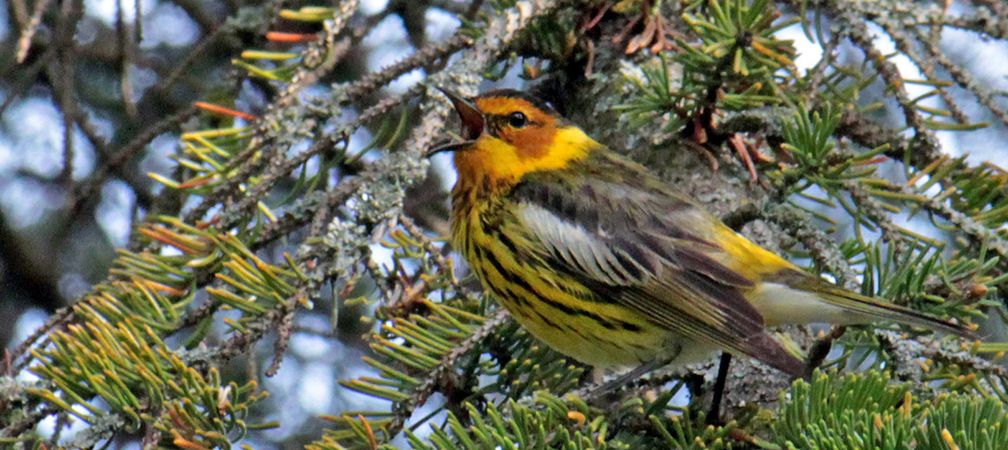
Spring migration in Thickson’s Woods starts with the lisps and whispers of golden-crowned kinglets flitting about in the leafless understory, and then — listen! — an endless, breathless song pumped out by the smallest set of lungs in the world, winter wren. Unless you have patience, persistence and a strong neck, don’t even try to spot pine warblers nosing about in the tops of the towering pines. Soon followed by yellow-rumped, black-throated green and blue, and magnolia warblers feeding at more-comfortable-for-binoculars elevations. By the time colourful Cape Mays and beautiful bay-breasted warblers are gobbling midges in spruce trees lining the waterfront trail, scarlet tanagers will be posing in the tops of the oaks, aglow in the morning sun. Plus, loons will be flying over, and red-necked grebes staging in the bay among amorous red-breasted mergansers, so be sure to check all habitats—lake, woods, marsh and meadow —when visiting this compact nature hotspot.

A bright and vibrant orange and yellow striped songbird sings at Thickson's Woods, Cape May warbler, spring songbird, Thickson's Woods Nature Reserve, Whitby, protected places, protected areas, Lake Ontario watershed, wetlands, marshes, old growth, white pines, meadow, biodiversity, habitat, migration, songbirds, wildflowers, mature trees, near urban nature, Lake Ontario shorelines, Lake Ontario wetlands, natural corridor, nature reserve, Thickson's Woods Land Trust
Cape May warbler, Thickson’s Woods Nature Reserve © Lois Gillette

Want to know why so many birders visit Thickson’s Woods in the spring? Because so many migrants do, dropping in for a much-needed break during their long flights north. With a feast of hatching midges on tap, no songbird ever goes away hungry, says local naturalist Dennis Barry. And he should know, since he’s birded there since the 60s and lived there since the early 80s. Dennis knows when the beaked hazel will be in bloom, right before marsh marigolds open their golden faces at the foot of the north ridge. Knows when wood thrushes will be singing, about the same time ovenbirds arrive, screaming, “Teacher! Teacher! Teacher!”

Fate surely played a part in having Dennis on hand when Thickson’s Woods was gutted by loggers in September 1983. Having already spent ten years fighting to save Oshawa Second Marsh alongside another eco hero, Jim Richards, Dennis knew how to reach out for support and get things done, and it was very much thanks to him, and equally caring and committed Margaret Bain, that the woods were rescued and restored.

Friends of Thickson's Woods, early supporters, Thickson's Woods, Whitby, From left to right, Dennis Barry, Margaret Carney, Edge Pegg, Margaret Bain, Mary Calvert and Dave Calvert, summer 1988
From left to right, Dennis Barry, Margaret Carney, Edge Pegg, Margaret Bain, Mary Calvert and Dave Calvert, summer 1988. © Betty Pegg

Put your money where your mouth is. The one sure way to protect precious wildlife habitat anywhere on the planet is to buy it, then look after it. That was the lesson we learned.

Saving Thickson’s Woods has been a labour of love for a great many folks these forty years plus. The exact right people served on the land trust board at each stage of the effort. Brian Steele, tireless treasurer for a quarter century now, has records of nearly 2,000 donors since he took over the books, and estimates 2,500 since the start. Most touching to me are the names on our “In Memoriam” list, many past donors themselves.

Through the years, birds and birders keep coming to this migration hotspot where the St. Lawrence and Mississippi River flyways intersect. The current checklist of birds is 329 species, not bad for just 26 acres of white pines and meadow.

Taking care of a woods includes worrying about the future, and praying you can leave it in capable hands. We’re deeply grateful that Ontario Nature, a keen, young, energetic group, is ready and willing to take on responsibility, ownership, protection. And that the Durham Region Field Naturalists will serve as local stewards.

Ontario Nature staff and Thickson's Woods Land Trust members, Thickson's Woods Nature Reserve, Whitby
Ontario Nature staff and Thickson’s Woods Land Trust members, Thickson’s Woods Nature Reserve © Jenna Quinn

One of my jobs and joys as Thickson’s Woods Land Trust secretary has been thanking supporters as I send their tax receipts. And now get to express our appreciation to Ontario Nature, and all its members, for coming forward and giving us great hope for the future.

On behalf of our famous “attack chickadees,” the family of foxes, and the multitude of moths, some 1,300, that live in Thickson’s Woods, plus all the visitors, human and avian, that stop by, we fervently thank you. Thank you so much!

Read Margaret’s full history of Thickson’s Woods Nature Reserve here.

Published — 7 May 2026 Ontario Nature Blog
  • ✇Ontario Nature Blog
  • Tracking Ontario’s Snakes: A Growing Monitoring Effort Teagan Netten
    Following the successful ten-year run of the Ontario Reptile and Amphibian Atlas, Ontario Nature developed a Long-Term Monitoring Protocol (LTMP) to fill important knowledge gaps about Ontario’s common and at-risk snakes. Since 2019, we’ve expanded the LTMP from nine monitoring locations to over 60 sites across the province! We recently published a Story Map where you can learn all about this project and how to get involved. The Long-Term Monitoring Protocol (LTMP) Ontario Nature’s Long-Term
     

Tracking Ontario’s Snakes: A Growing Monitoring Effort

7 May 2026 at 17:38

Following the successful ten-year run of the Ontario Reptile and Amphibian Atlas, Ontario Nature developed a Long-Term Monitoring Protocol (LTMP) to fill important knowledge gaps about Ontario’s common and at-risk snakes. Since 2019, we’ve expanded the LTMP from nine monitoring locations to over 60 sites across the province! We recently published a Story Map where you can learn all about this project and how to get involved.

The Long-Term Monitoring Protocol (LTMP)

Ontario Nature’s Long-Term Monitoring Protocol (LTMP) for snakes was launched in 2019. It uses standardized survey methods across a large geographic area to help improve our understanding of snake populations, detect changes over time, and guide conservation efforts. The LTMP brings together First Nations, scientists, landowners and volunteers to monitor snakes across the province, using plywood boards placed within snake habitat.

Long-term snake monitoring participants flipping pre-placed coverboards to look for snakes
Project participants checking under a plywood board for snakes at a training event © Ethan Owen

What’s in the Story Map?

The LTMP Story Map is a platform with text, maps, figures, and photos that showcases this project. It includes:

  • Background information about why we’re monitoring snakes
  • An overview of the methods used
  • Interactive maps showing our partners and how the project has grown over time
  • Early results from the first five years of data collection
  • Information about the events we run
  • How to get involved
  • Lots of photos!
Sites conducting snake surveys using the Long-Term Monitoring Protocol. Sites in darker green have been part of the project for longer; sites in lighter green have joined the project more recently.

Help us monitor snakes!

You can participate in snake surveys as a volunteer or set up a new snake monitoring site! Many of the existing sites are monitored by volunteers and may be looking for more people to help with surveys. If you have access to land with suitable snake habitat, you could set up your own site with plywood boards, survey for snakes, and contribute data to our province-wide database.

Eastern foxsnake found during LTMP surveys, species at risk, threatened species at risk in Ontario
Eastern foxsnake found during LTMP surveys © Teagan Netten

Learn more

Check out the LTMP Story Map to find out more about the project and how to join! You can learn more about snakes and other reptiles and amphibians of Ontario in the Ontario Reptile and Amphibian Atlas. Test your knowledge with our identification quizzes!


The Story Map development was generously supported by the Hodgson Family Foundation.


Published — 1 May 2026 Ontario Nature Blog
  • ✇Ontario Nature Blog
  • Mass Mortality of 142 Turtles Calls for Increased Conservation Efforts Grace McGrenere
    In 2022, Carleton University biologist, Grégory Bulté arrived at Opinicon Lake for his first day of field work for the season. Bulté has been studying and tracking northern map turtles since 2003, returning every spring to the lake. As he went to retrieve his camera from the hibernation site, he spotted a dead turtle. He paddled towards it and then noticed another. Sightings of turtles with crushed shells and missing limbs continued. In his wetsuit, he swam the shoreline to pick up the carcass
     

Mass Mortality of 142 Turtles Calls for Increased Conservation Efforts

1 May 2026 at 14:54

In 2022, Carleton University biologist, Grégory Bulté arrived at Opinicon Lake for his first day of field work for the season. Bulté has been studying and tracking northern map turtles since 2003, returning every spring to the lake.

As he went to retrieve his camera from the hibernation site, he spotted a dead turtle. He paddled towards it and then noticed another. Sightings of turtles with crushed shells and missing limbs continued. In his wetsuit, he swam the shoreline to pick up the carcasses, counting 142 in total —10 per cent of the total population.

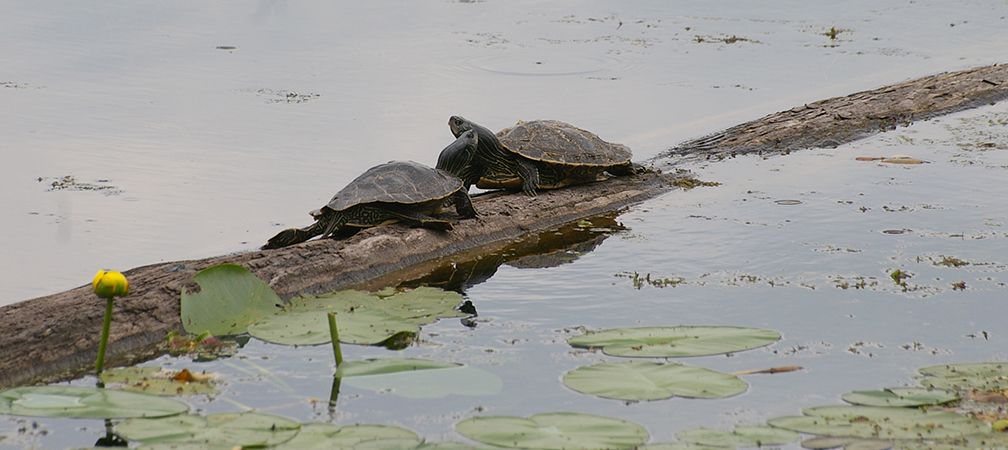
Two northern map turtles bask on a log along the shoreline of Opinicon Lake, Opinicon Lake, Frontenac Arch, natural corridor, wildlife corridor, biodiversity, eastern Ontario, forest, freshwater, natural splendour, shoreline, wetlands, healthy biodiversity, waterlilies
Northern map turtle, Opinicon Lake © Lisa Richardson

This was the first time Bulté had witnessed a mass mortality like this. His research points to river otters accessing the hibernating turtles through holes in the ice.

It is uncertain how the holes in the ice formed. Climate change, human-made openings, and shifting ecosystems may be potential causes.

“We don’t have direct evidence that any cause led to this particular event. However, we thought it was important to publish this study, because what it did show, is that map turtles hibernate in such a way that it makes them vulnerable to fatality if something goes wrong,” said Bulté.

Ice protects turtles from predation. While there are no de-icing bubblers, which push bubbles into the water to stop it freezing around docks, next to the hibernation site at Opinicon Lake, Bulté has seen an increasing trend in their overall use.

“We are worried that without any regulation or knowledge of where map turtles spend their winters, we could decimate a population rapidly if these tools are put in close proximity,” said Bulté.

Since 2022, Bulté has not witnessed another mass mortality event. He is currently working alongside a statistician to analyze data from 2022 to 2026 to better understand how the population has been affected.

He believes that humans need to learn how to cohabitate better with wildlife.

“If we cannot keep them in their environment, what does that say about everything else we do to the environment?”

A small island with an oak and a white pine is reflected on calm waters of a beautiful lake with wetlands in the foreground and forest in the background, Opinicon Lake, Frontenac Arch, natural corridor, wildlife corridor, biodiversity, eastern Ontario, forest, freshwater, natural splendour, shoreline, wetlands, white pines, healthy biodiversity, oaks
Opinicon Lake, Ontario Nature Annual Gathering 2012 © Noah Cole

Ontario Nature’s Acting Conservation Science and Stewardship Director, Jenna Quinn emphasized that turtle species are at risk and cannot afford additional threats.

“It is important that we always move with nuance and understand that every action we take has a consequence,” said Quinn.

Work is being conducted to conserve the ecosystems that inhabit the turtles.

Ontario Nature’s Reptile and Amphibian Atlas (ORAA) is one tool that is currently being used to inform ongoing conservation work. It documents current knowledge of the distribution of reptiles and amphibians in the province, increasing public awareness and appreciation of these species.

Additionally, the Rideau Canal is a part of Preserving Legacies, a global organization dedicated to safeguarding heritage places and practices by advancing climate adaptation solutions that strengthen community resilience.

The canal is currently in its second phase of the project, which involves the creation of a comprehensive Risk Assessment that will be shared with the community.

Published — 23 April 2026 Ontario Nature Blog
  • ✇Ontario Nature Blog
  • Volunteer for Pollinators: Join Community Science in Ontario Liz Ellis
    With National Volunteer Week now underway, it’s an ideal time to reflect on the role people play in protecting Ontario’s biodiversity. Community science is one meaningful way to get involved. And as spring returns to Ontario, pollinators begin to reappear in fields, forests, wetlands, and gardens making them a natural group of species to observe for community science programs. While these sightings may feel routine, they are becoming less predictable for many species. Pollinator populations ar
     

Volunteer for Pollinators: Join Community Science in Ontario

23 April 2026 at 18:56

With National Volunteer Week now underway, it’s an ideal time to reflect on the role people play in protecting Ontario’s biodiversity. Community science is one meaningful way to get involved. And as spring returns to Ontario, pollinators begin to reappear in fields, forests, wetlands, and gardens making them a natural group of species to observe for community science programs.

While these sightings may feel routine, they are becoming less predictable for many species. Pollinator populations are declining due to habitat loss, pesticide exposure (especially neonicotinoids), disease, invasive species, and climate change. These threats are reshaping where species can survive and fragmenting habitats that once supported stable populations. Getting involved as a volunteer observer is one of the most direct ways to support pollinator conservation in Ontario.

Pollinator and butterfly outing on Stone Road Alvar Nature Reserve, people observing a native bee species on Pelee Island
Pollinator and butterfly outing, Stone Road Alvar Nature Reserve © Ryan Wolfe

Why Pollinator Sightings Matter

Pollinators — such as bees, butterflies, moths, and even birds — are important indicators of ecosystem health. They support plant reproduction and help sustain food webs across the province and country. Because many species depend on specific plants or habitats, even small environmental changes can have significant impacts.

This also makes pollinators especially valuable for community science. Each observation helps researchers track biodiversity changes across Ontario over time.

Pollinators at Risk in Ontario

Under the Endangered Species Act, 2007, many species at risk received legal protection. However, Ontario’s new Species Conservation Act, 2025, introduced through Bill 5, changes how species are protected and may reduce protections for some, including certain pollinators.

Monarch on cupplant
Monarch on cupplant © Diana Troya

Monarch (Endangered in Canada / Special Concern in Ontario)

Herbicides and insecticides reduce milkweed, a crucial piece of the Monarch’s breeding habitat. Their long-distance migration also exposes them to threats such as habitat loss and declining wildflower availability.

Rusty-patched Bumble Bee (Endangered)

Once common in southern Ontario, this species has declined sharply. The last confirmed observation records in Canada come from two Ontario Parks, Pinery Provincial Park (2009) and St. Williams Conservation Reserve (2000).

Mottled Duskywing (Endangered)

This butterfly depends on rare oak woodlands and plants such as the New Jersey Tea and Prairie Redroot. These habitats are limited and fragmented, making populations vulnerable.

West Virginia White (Special Concern)

An early spring butterfly that depends on Two-leaved Toothwort. Invasive garlic mustard is a threat to this species as it disrupts egg laying behaviour.

Yellow-banded bumble bee, Saugeen Alvar Nature Reserve, Saugeen-Bruce Peninsula, alvars, globally endangered habitat, species at risk, species of special concern, pollinator, goldenrod
Yellow-banded bumble bee, Saugeen Alvar Nature Reserve © Noah Cole

Yellow-banded Bumble Bee (Special Concern)

An early spring pollinator of wild plants and crops such as blueberries and apples. This bumble bee’s abundance has decreased in Ontario and is associated with habitat loss, pesticide exposure, climate change, and disease.

Contribute your Sightings

If you spot these or other species, you can contribute to community science projects:

You can also join the global community of iNaturalist users to share and verify observations. The Natural Heritage Information Centre has a Rare Species of Ontario project.

The Ethics of Observation

Observe wildlife responsibly to avoid disturbance and ensure useful data. Follow A Nature Viewer’s Code of Ethics and be aware that many species are protected under Ontario’s Fish and Wildlife Conservation Act and Canada’s Species at Risk Act.

Every observation matters. Whether you notice pollinators in your garden, birds overhead, or frogs in a wetland, your sightings contribute to a better understanding of Ontario’s ecosystems—and how they are changing.

Published — 16 April 2026 Ontario Nature Blog
  • ✇Ontario Nature Blog
  • Recycling in Ontario: Your Questions Answered Macey Whiteside
    Recycling in Ontario is changing in a big way. As of January 1, 2026, the province has fully transitioned to a new Blue Box system that changes who is responsible for recycling and is intended to make the process more consistent across Ontario. Under the new rules, recycling is now managed and funded by the companies that produce packaging and paper products, rather than municipalities. This shift is known as Extended Producer Responsibility (EPR). The idea is that companies should take more r
     

Recycling in Ontario: Your Questions Answered

16 April 2026 at 18:08

Recycling in Ontario is changing in a big way. As of January 1, 2026, the province has fully transitioned to a new Blue Box system that changes who is responsible for recycling and is intended to make the process more consistent across Ontario.

Under the new rules, recycling is now managed and funded by the companies that produce packaging and paper products, rather than municipalities. This shift is known as Extended Producer Responsibility (EPR). The idea is that companies should take more responsibility for the waste they create, while making recycling systems easier for residents to navigate.

Reduce, reuse, recycle sign, homemade sign, support for recycling, 3 Rs
Reduce, reuse, recycle sign © Andy Arthur CC BY 2.0

The goal is to recycle more, send less waste to landfills, and move toward a more circular economy. But for many Ontarians, the new rules also raise a lot of questions. Here are some of the most common ones.

Frequently Asked Questions

1. What changed in Ontario’s recycling system in 2026?

Ontario’s Blue Box program is now fully run by producers – the companies that create packaging and paper products. That means they are responsible for collecting, sorting, and recycling those materials.

An organization called Circular Materials now helps operate the Blue Box program across Ontario.

For most residents, the day-to-day experience may still look similar. The province will continue using the same blue boxes, the same curbside pickup and will continue to accept many of the same items. But behind the scenes the system has changed significantly, with the goal of creating more consistent recycling rules across the province.

2. Why is Ontario changing its recycling system?

Before this transition, municipalities shared the cost and responsibility of recycling programs, and each city or region often had its own rules. That meant something recyclable in one community might not be accepted in another.

The new system is meant to reduce that confusion. By making producers responsible for the materials they put into the marketplace, the Blue Box program should, in theory, put more pressure on companies to reduce unnecessary packaging and design products that are easier to recycle. However, advocates have raised concerns about the true efficacy of this program, including looser reporting requirements, lack of transparency in operations, increased incineration of recyclable materials, and the exclusion of many groups like multi-residential buildings, public spaces and schools.

Recycling bins overloaded with recyclable paper with materials
Recycling bins with materials © John Lambert Pearson CC BY 2.0

3. Will recycling rules still differ depending on where I live?

Historically, yes. What you could recycle in Toronto might not have been accepted in London, Kingston, or another municipality.

The new Blue Box system is designed to make accepted materials more consistent across Ontario. However, some local differences may still exist in how recycling is collected. For example, some municipalities may use blue boxes, while others use large recycling carts. Pickup schedules and collection contractors may also vary by region.

So while the rules about what can be recycled are becoming more standardized, the way recycling is collected may still look different from place to place.

4. Can I recycle…?

If you’ve ever stood over your recycling bin wondering, “can I recycle this?” You’re not alone.

Some cities across Ontario have helpful tools. For example, if you live in Toronto, one of the easiest ways to check is by using the Waste Wizard, an online tool that lets you search specific items and find out whether they belong in recycling, garbage, organics, or special drop-off.

Although Toronto’s Waste Wizard is one of the best-known examples, other municipalities across Ontario offer similar search tools or waste apps. They can be especially helpful for sorting items like black plastic, coffee pods, takeout containers, or mixed-material packaging.

The updated Blue Box program expands the list of accepted materials. In many cases, you can now recycle more types of packaging than before, including items like foam containers, black plastic, and certain flexible plastics. But contamination — such as food waste, liquids, or hazardous materials — can still create major problems in the recycling stream.

5. If the province has one system, why do municipalities still matter?

Even though the recycling rules are now set at the provincial level, municipalities still play a major role in waste management.

They are often responsible for services like garbage collection, green bins or organics, household hazardous waste depots and local public education. Municipalities also help residents understand changes to collection schedules, bin types and local disposal options.

In other words, the province may be standardizing the recycling system, but municipalities are still an important part of how that system works in practice.

Five municipal blue recycling bins in a row
Recycling bins © Dano CC BY 2.0

6. Does recycling actually work?

This is one of the most important questions and one of the hardest to answer simply.

Recycling can help reduce landfill waste and recover useful materials, but it is far from a perfect solution. In Canada, recycling rates remain low. Currently, only 7% of Ontario’s waste is recycled through the Blue Box. This is due to a combination of factors, including contamination, complex materials, and limited recycling markets.

Ontario’s new recycling system is intended to improve outcomes by making producers more accountable and expanding what can be collected. But recycling alone will not solve the waste crisis.

Reducing waste in the first place and reusing materials whenever possible remains essential.

7. What should I do with electronics or hazardous waste?

Electronics and hazardous materials should never go in your Blue Box.

Items like batteries, old phones, chargers, paint, propane tanks, light bulbs, and cleaning chemicals require special handling. If they are placed in recycling, they can contaminate other materials, damage equipment, or create safety risks for workers.

Instead, these items should be taken to a designated drop-off depot, household hazardous waste site, or e-waste collection program in your municipality. Many communities in Ontario offer permanent depots or seasonal collection events for these materials.

If you are unsure, your municipality’s waste lookup tool is the best place to check.

The Bottom Line

Ontario’s new recycling rules are a major shift. By making producers responsible for the packaging they create the province is trying to improve recycling and reduce confusion for residents.

But even the best recycling system depends on public understanding and participation. Knowing what belongs in your Blue Box and taking the extra moment to check when you’re unsure can make a real difference.

At the same time, recycling is only one part of the solution. If Ontario is serious about reducing waste and protecting the environment, we also need to focus on addressing the systemic root of continuous waste generation in the first place.

❌
Ontario Nature Blog