Normal view

  • ✇National Herald
  • Numbers aren’t the whole story Rashme Sehgal
    The recent death of 24-year-old Deepika Nagar in Greater Noida has forced the country to confront a brutal truth: crimes against women continue to surge, despite what the statistics show.Deepika died in the wee hours of 18 May, after allegedly being thrown from the roof of her marital home over unmet dowry demands. Her parents say they had already paid a dowry of Rs 20 lakh, but her husband and in-laws were allegedly demanding another Rs 50 lakh and a Toyota Fortuner.Barely a week earlier, on 12
     

Numbers aren’t the whole story

24 May 2026 at 10:39

The recent death of 24-year-old Deepika Nagar in Greater Noida has forced the country to confront a brutal truth: crimes against women continue to surge, despite what the statistics show.

Deepika died in the wee hours of 18 May, after allegedly being thrown from the roof of her marital home over unmet dowry demands. Her parents say they had already paid a dowry of Rs 20 lakh, but her husband and in-laws were allegedly demanding another Rs 50 lakh and a Toyota Fortuner.

Barely a week earlier, on 12 May, model and actress Twisha Sharma was found hanging in her in-law’s house in Bhopal. (Her mother-in-law is retired principal district and sessions judge Giribala Singh.)

During the post-mortem, investigators failed to produce the belt used in the alleged suicide. Women’s rights activist Dr Ranjana Kumari of the Centre for Social Research publicly questioned how such a crucial lapse could occur in a sensitive dowry death investigation. In Twisha’s, as in many such cases, husbands and key accused conveniently disappear before arrests can be made.

These are not isolated tragedies. They are part of a far larger national emergency only partially reflected in the National Crime Records Bureau’s latest data.

According to the NCRB, 4.41 lakh cases were registered in 2024, slightly lower than the 4.48 lakh recorded in 2023. The crime rate also dipped marginally from 66.2 to 64.6 per lakh women. Does this mean women are safer? Read on.

India recorded 5,737 dowry deaths in 2024 — that’s an average of nearly 16 deaths every day. Even as the number of crimes against women continue to rise — which the NCRB attributes to improved reporting — conviction rates remain scandalously low.

Twisha Sharma's father
Deepika Nagar
Twisha Sharma

A rape is reported in India every 18 minutes. Yet the national conviction rate in rape cases stands at just 24.4 per cent. In practical terms, that means not even 25 of every 100 reported cases end in conviction. In deeply patriarchal states such as Uttar Pradesh and Haryana, conviction rates often fall below 20 per cent; in poorer states including Bihar and Jharkhand, below 10 per cent. In dowry death cases, conviction rates hover between 11 and 17 per cent nationally.

The notorious delays in the Indian judiciary system don’t help either. Witnesses are often intimidated and the accused, often better-connected and with better resources, are known to influence the judicial process.

Delhi exemplifies this institutional failure. Despite recording some of the country’s highest rape figures (1,058), its conviction rate remains at 33.5 per cent — technically above the national average but still alarmingly inadequate. More damningly, Delhi is the most unsafe city for women despite the police functioning directly under the Union home ministry for the last twelve years.

Domestic violence remains the most widespread but underreported crime against women. Of the 13,396 cases registered in Delhi, 4,647 pertained to cruelty by husbands or relatives. NCRB figures show that domestic violence accounts for 42.3 per cent of all crimes registered against women. Activists say the real numbers are far higher.

According to National Family Health Survey-5 data, nearly one in three married Indian women has experienced physical, sexual or emotional violence at the hands of her husband. Most never approach the police. Even among reported cases, conviction rates average barely 11 per cent.

What emerges from state-wise crime data is equally disturbing.

Gujarat, the apple of Prime Minister Narendra Modi’s eye, site of the famous ‘Gujarat model’, witnessed a 33 per cent increase in violent crime in 2024 (6.15 lakh cases) as against 2023, with further increases reported in 2025. Ahmedabad reported 62 rape cases, Surat 84.

Shockingly, Gujarat recorded the highest number of rape cases against tribal women in the country, with 384 FIRs filed in a single year. Another 7,355 cases of sexual assault against minors were registered, many involving young girls.

Odisha, considered comparatively safer for women, has seen a worrying deterioration following the swearing-in of BJP chief minister Mohan Charan Majhi. Official data show a 7.3 per cent rise in cognisable crimes in 2025, with total cases increasing from 2,14,113 to 2,29,881. Crimes against women and children rose by 5.6 per cent, crossing 32,000 reported cases. In Bhubaneswar alone, crime increased by nearly nine per cent.

Madhya Pradesh continues to remain among the country’s worst-performing states on women’s safety. As of June 2025, more than 23,000 women and girls were reported missing. Around 1,500 rape-accused are absconding.

Chief minister Mohan Yadav should hang his head in shame because his state recorded the highest number of rapes on pregnant women in the country — for the third consecutive year. Reports from districts such as Bhopal, Dhar, Shivpuri and Satna detail repeated incidents of extreme sexual violence involving politically connected individuals.

In Haryana, violent crime has become a major political issue under chief minister Nayab Singh Saini, who also holds the home portfolio. NCRB data indicate that five sexual offences occur every day in the state. Congress leader Kumari Selja recently pointed out that 7,547 cases of crimes against children were registered in Haryana in 2024, nearly 18 per cent higher than the 6,401 cases recorded in 2023. These included serious offences such as sexual abuse, kidnapping, violence and murder.

In Bihar, reported incidents surged from 52,165 in 2023 to more than 1,07,303 in 2024 — an increase of over 105 per cent. Reports emerging through early 2026 indicate repeated incidents of gang rape, including assaults on minors in villages, trains and rural districts.

Maharashtra recorded an 89 per cent increase in violent crime, jumping from 46,249 cases in 2023 to 87,791 in 2024. The state also reported the country’s highest number of crimes against children (24,171) with Mumbai second only to Delhi in crimes against women among major metropolitan cities.

In the hill state of Uttarakhand, crimes against women rose by 36 per cent — rape cases alone rose by 30 per cent after 2022. Sadly, investigations have been marred, with the police accused of giving clean chits to suspects because of their links to the ruling party.

Take the example of the alleged gang rape of a 16-year-old Class 10 student in Champawat on 5 May 2026. (Champawat falls in chief minister Pushkar Singh Dhami’s constituency.) The father named a BJP functionary and his colleagues as the rapists. Dhami — who hasn’t been able to put a lid on the statewide protests that continue to simmer over Ankita Bhandari’s murder in 2022 — ordered senior bureaucrats and police to swing into action. The case was ‘solved’ in 24 hours — the police announced there had been no rape and the girl’s father withdrew his complaint.

Uttar Pradesh, despite chief minister Yogi Adityanath’s repeated assertions of “zero tolerance” towards crime, continues to report the highest number of crimes against women in India. Reported cases rose from 49,385 (2020) to 56,083 (2021) to over 65,000 (2022-24). Clearly, 15,726 ‘encounters’ staged between March 2017 and December 2025 have not eliminated all the “hardened criminals”.

Looking south, Telangana saw total cognisable offences rising nearly 19 per cent in 2024. While Bengaluru stood third among 19 metropolitan cities with 5,612 cases of violent crime, Karnataka recorded a decline in crime rates for 2024.

Those who draw comfort from the marginal decrease in the national crime rate would do well to remember that political rhetoric around women’s safety is collapsing against the ground reality. As the latest video (17 May) of rape-accused (Sushil Prajapati, a former member of Hindu Yuva Vahini) being garlanded and paraded by supporters on release from jail reveals, perpetrators know they can, and will, get away with it.
  • ✇National Herald
  • Move over FCI, Adani is here Rashme Sehgal
    The concentration of grain storage in the hands of Adani Agri Logistics and Leap India Food & Logistics Private Ltd heralds an alarming shift for Indian agriculture, transforming it from a decentralised, largely state-run model into a corporate-run entity.By cleverly removing the anti-monopoly clause that formed an integral part of the Food Corporation of India’s (FCI) silo modernisation programme, the government has awarded 110 of 134 contracts to the two companies to store and manage Rs 16
     

Move over FCI, Adani is here

7 June 2026 at 11:50

The concentration of grain storage in the hands of Adani Agri Logistics and Leap India Food & Logistics Private Ltd heralds an alarming shift for Indian agriculture, transforming it from a decentralised, largely state-run model into a corporate-run entity.

By cleverly removing the anti-monopoly clause that formed an integral part of the Food Corporation of India’s (FCI) silo modernisation programme, the government has awarded 110 of 134 contracts to the two companies to store and manage Rs 16,500 crore worth of grain.

The enormity of this allocation can be understood from the fact that 46.5 lakh metric tonnes (LMT) out of the total planned storage of 60 LMT will now be handled by Adani and Leap India (known to be financed by powerful private equity funds including the UK-backed Neev Fund and the Danish SGD Fund).

The partnership involves the construction of 200 new steel silos, the bigger hubs connected to railway lines and the smaller ones at procurement centres near farms. The estimated cost of land is between Rs 6,000 and 8,000 crore; the cost of building the silos between Rs 15,000 and 20,000 crore.

While in the short run, the government ‘saves money’ on the price of land acquisition and construction, in the long-term, the PPP model costs the public dearly. The FCI and the government could have completed the project at a cost of Rs 45,000 crore. Under the PPP model, at the rate of Rs 4,000 crore per annum for storage and handling over a 30-year period, the damages are Rs 1.2 lakh crore.

As critics point out, under the garb of ‘modernising’ our food chain, the Modi government is now practically underwriting private profit.

What makes it all the more alarming is that FCI had initially proposed an anti-monopoly clause as a safeguard against precisely such concentration. A crucial document from the PPP Appraisal Committee (PPPAC) files shows the NITI Aayog and the department of economic affairs altered the tender architecture.

The most important change was not just the deletion of the anti-monopoly clause, it was the deliberate move towards bundled bidding. The larger the bundle, the greater the financing requirement. The practical effect of this arrangement is that a Rs 3,000-4,000 crore bundle cuts out mid-sized warehousing firms.

“This signals the end of India’s food security and the annihilation of our public distribution system (PDS) which will now be dependent on this duopoly,” warns Aflatoon, social activist and member of the Samyukta Kisan Morcha. (Under the National Food Security Act, India’s public distribution system reaches around 81.35 crore people every month, making it the largest welfare programme in the world.)

****

By taking this ‘momentous’ decision, the government has reintroduced the three contentious farm laws to privatise agricultural marketing. While the government officially claims it will continue to procure rice and wheat under Minimum Support Prices (MSP), doubts prevail.

Farmers are more than worried. They point out that controlling the storage network would enable the Adani Group — already engaged in the procurement, import and export of foodgrains — to control the supply chain. This could depress the MSP to the advantage of private players.

Farmers see this as a step toward privatising food security, echoing their earlier protests against the farm laws. With Adani and Leap India controlling nearly 80 per cent of silo capacity, farmers will have fewer options, making them vulnerable to any terms set by the duopoly.

Traditionally, the FCI procures rice and wheat directly from farmers at MSP. With private players running silos, procurement is likely to shift to them. Corporates are likely to influence procurement terms, potentially squeezing margins.

Farmer unions argue that once storage and logistics are privatised, the state’s bargaining power will weaken and may reduce FCI’s own procurement footprint, indirectly undermining MSP. FCI has a regulated system for timely payments. Private players may not be bound by the same strict rules, raising concerns about delays, disputes and dispute redressal.

****

Corporate control of Indian agriculture — driven by agribusinesses monopolising inputs, supply chains and land — poses a severe threat to food security by endangering its four pillars: availability, access, utilisation and stability. Farm leaders contend that the shift from diverse, staple-based cultivation to cash crops (like broccoli, gherkins and other ‘exotics’) combined with volatile pricing will destroy the livelihood of over 160 million farmers.

Prominent farm leader Dr Ashish Mittal, general-secretary of the All India Kisan Mazdoor Sabha, believes there are two objectives behind the 2023 amendment to the Biological Diversity Act, 2002 and the awarding of storage contracts to corporates in 2026. “One, to allow Americans to dump heavily subsidised foodstuff such as soya and corn at rates our farmers cannot compete with, and to capture agricultural land at throwaway rates and hand it over to the builders’ lobby for urbanisation.”

Dr Darshan Pal, anaesthetist by profession, social activist by choice and president of Krantikari Kisan Union in Punjab, believes the entire purpose of the recent move is to ease the way for big landlords to take over agricultural land.

“Already, over the last decade, we have lost four million hectares of farm land (of the 143 million hectares under cultivation). This has caused massive displacement, with peasantry forced to migrate to urban pockets. The government seems to forget that 68.5 per cent of our population lives in villages. The Periodic Labour Force Survey (PLFS) accounts for only those workers who have actively applied for jobs. But there is a multitude who have not applied and are therefore not included in the PLFS. Even our PDS system is based on the last Census. I believe one-third of the requirement for subsidised grain is not being met,” Dr Pal said.

Rural households consume about 14.5 kg of cereals and pulses per month, but pulse intake remains far below nutritional requirements. While a minimally nutritious diet recommends 85 g of pulses per person per day, rural households consume only 0.46 kg per month in Rajasthan and 0.35 kg per month in Manipur.

It is obvious this government has no interest in sustaining our agricultural sector. India’s corporate debt has grown to $645 billion which works out to almost 17 per cent of our GDP. But the cost of urea is something the government has done little about (apart from claiming to provide a 90 per cent subsidy for every bag of urea sold in the country.) “Buying oil from Iran would bring down the cost of urea,” maintains Dr Darshan Pal. “The price of 45 kilos of urea is Rs 265 per bag but it is not available at even Rs 400 per bag.”

Yudhvir Singh, general-secretary, Bharatiya Kisan Union, says that once corporates are allowed to buy directly from farmers, the mandi system and the support farmers received from arhtiyas (traditional commission agents) will be destroyed: “Mandis have supported farmers through centuries. Now they will have no role.”

Singh cites the example of Adani Agri Fresh practically taking over the apple market in Himachal Pradesh by forcing smaller orchard owners to accept lower rates. These apple farmers have protested against the government’s free trade pacts with countries like New Zealand and the US. If imported apples flood the domestic market, the livelihoods of over 15 lakh farming families in the state will be threatened.

“We have no choice but to fight. We are planning to meet in mid-June to see what strategy we can evolve to take on the government,” Singh added.

Vijoo Krishnan, general-secretary of the All India Kisan Sabha (AIKS) has demanded an immediate reinstatement of the ‘anti-monopoly’ clause and a cap on any single corporate group’s share of silo capacity.

The AIKS has also demanded an inquiry by a joint parliamentary committee into the role of the PPPAC in eliminating the anti-monopoly and other clauses that would have prevented market concentration. Strengthening the FCI’s own storage capacity through public investment, rather than wholesale handover to corporate monopolies is, he says, the need of the hour.

  • ✇National Herald
  • An idea delinked from commonsense Rashme Sehgal
    An engineer from IIT-Bombay, Himanshu Thakkar is currently the coordinator of South Asia Network on Dams, Rivers & People (SANDRP) and the editor of Dams, Rivers & People. He has been associated with the water and environment sector for more than 25 years and has worked closely with the World Commission on Dams, the Narmada Bachao Andolan and the Centre for Science and Environment. Rashme Sehgal draws him out on India’s ill-conceived river-linking projects:Prime Minister Modi says interl
     

An idea delinked from commonsense

6 May 2026 at 15:49

An engineer from IIT-Bombay, Himanshu Thakkar is currently the coordinator of South Asia Network on Dams, Rivers & People (SANDRP) and the editor of Dams, Rivers & People. He has been associated with the water and environment sector for more than 25 years and has worked closely with the World Commission on Dams, the Narmada Bachao Andolan and the Centre for Science and Environment. Rashme Sehgal draws him out on India’s ill-conceived river-linking projects:

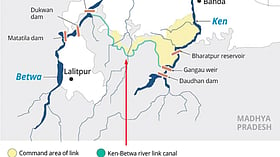
Prime Minister Modi says interlinking the Ken river (in Madhya Pradesh) to the Betwa (in neighbouring Uttar Pradesh) will help irrigate 1.06 million hectares, provide drinking water to 6.2 million people and generate 130 MW of hydropower and solar energy. Are these valid claims?

The Ken-Betwa Link Project (KBLP) that PM Modi laid the foundation for in December 2024 does not have (valid) forest or wildlife clearances. Let me clarify. Both clearances were on the condition that the hydropower component would be taken out of the protected area. But it hasn’t been done.

The hydrological figures remain a state secret and have not been peer reviewed or put out in the public domain. There is absolutely no basis to conclude that Ken has surplus water and Betwa is water-deficient. Worse, the project documents do not even look at far cheaper, quicker, less destructive alternatives. To paraphrase what PM Modi said in the context of the Polavaram dam, politicians think of dams as ATMs.

The environmental impact assessment of the project is so shoddy it hasn’t even properly studied the impact on the Panna Tiger Reserve (PTR). When the MoEF (ministry of environment and forests) expert appraisal committee (EAC) on river valley projects refused to clear the project after four meetings, Uma Bharati (then Union water resources minister) threatened a dharna.

Himanshu Thakkar

The ministry then reconstituted the EAC, with S.K. Jain as chairman, and cleared the Ken-Betwa project in its very first meeting in December 2016, overruling the reasons for refusal. The same S.K. Jain went on to become director-general of the project.

The forest advisory committee (FAC) and the Supreme Court-appointed central empowered committee (CEC) argued forcefully against the project, but the CEC report was not even considered by the apex court!

Senior foresters had warned against building a dam on the Ken and a connecting canal between the two rivers. The Betwa already has seven dams on it and none provide the amount of irrigation water being claimed by the irrigation department.

The official minutes of the FAC meeting note that the project will involve felling 46 lakh trees (each of a girth greater than 20 cm) from the forest area alone. This will have a huge hydrological impact, besides adversely impacting the environment, biodiversity and climate of this entire region. But none of these impacts have been properly assessed.

The FAC and the National Board for Wildlife (NBWL) had recommended the height of the dam be reduced, and all inflows into the dam be released as environment flows in non-monsoon months. It wanted an independent assessment of the claim that there is no alternative for Bundelkhand. The CEC report had conclusively proved that this claim was false.

The project was sold with one USP: that it would solve Bundelkhand’s water problem. But from the very beginning, the detailed project report (DPR) showed that the key objective of the project was to facilitate water transport to the upper Betwa basin areas like Raisen and Vidisha. So, the Ken-Betwa project will in fact facilitate export of water out of drought-prone Bundelkhand!

The project lays down a plan to irrigate 6.35 lakh hectares of farmland in six districts (three each in MP and UP) at a cost of Rs 45,000 crore, besides providing jobs in construction and tourism.

There is no hydrological justification for spending Rs 45,000 crore. The ground reality is that this interlinking is not about helping the tribal people of this region or even those living in the downstream areas of UP’s Banda district. Most of Bundelkhand has an average annual rainfall of over 900 mm, which if harvested can solve Bundelkhand’s water problems.

Far better alternatives exist. Four decades ago, Bundelkhand was not known for water stress. It was a region of dense forests and good local water systems. Continuous neglect has led to the present situation and the project will end up destroying the hydrological backbone of the Ken.

Recent studies show that the gap between the so-called surplus and deficit basins has narrowed, which further negates the justification for ILR (inter-linking of rivers).

Studies have also shown that ILR projects can adversely impact the thermal and temperature gradient in the Bay of Bengal and Indian Ocean, thereby impacting our monsoons, but the government has chosen to ignore all this data.

But the government is planning river-linking at scale — in Punjab, Kerala, Telangana... Is it even feasible?

The ILR concept is flawed. The suggestion that floods indicate water surplus and drought means water deficit is flawed. By that logic, parts of Rajasthan are water surplus these days, as they have excess rainfall, and parts of Meghalaya, the home of rain-clouds, are water-deficit.

Water-intensive crops like sugarcane and paddy can turn any area drought-prone. So, the [ILR] concept itself is flawed. As [flawed as] the notion that water flowing into the sea is a waste. Rivers are supposed to flow to the sea, and estuaries, where the river meets the sea, are the most fertile and biodiverse areas.

All states are ready to accept water from another state, but no state wants to give water to another state — the party in power would consider it suicidal.

The Ken-Betwa project will submerge 6,017 ha. of forest land in the heart of the Panna Tiger Reserve (PTR). The Ken Gharial Sanctuary is also endangered.

The adverse impact of the project on the PTR is well documented even in the official CEC report. PTR is home to tigers, leopards, sloth bears, chinkara, chausinga, wolves, the mugger crocodile, the long-snouted gharial, mahseer fish and several species of raptors. Striped hyenas, civet cats, jackals, foxes, nilgai, chital, sambar, wild pigs, langurs and rhesus monkeys are also found in the area.

The massive dam is bound to isolate the upstream aquatic fauna, directly impacting the breeding habits of the aquatic life forms both upstream and downstream of the dam.

What is not so well known is that the project will also destroy some of the geological wonders of India. Raneh Falls, just downstream from the proposed dam site is described as India’s mini Grand Canyon and mini-Niagara. This wonderful geological site is likely to be permanently destroyed.

You’ve been vocal on the urgent need for an overhaul of the institu-tional architecture of our water sector, on disbanding the Central Water Commission.

The CWC has a large number of conflicting functions and responsibilities and its record is very poor — in areas like hydrology, geomorphology, rivers, dam safety and design, flood forecasting, flood management and early warning systems, which are supposed to be its core competency areas. The CWC functions more like a lobby for large dams with practically no accountability.

The state of our water resources is worrisome. We have meandered along using groundwater as our back-up. Groundwater is our water lifeline.

Ninety per cent of the additional water India has used in the past 50 years was groundwater — where the CWC has no role. In the shadow of the CWC’s dam advocacy, our local water systems, rivers, wetlands have been completely neglected and destroyed. This has had a hugely adverse impact on groundwater recharge, which is fast approaching an ICU-like situation.

What kind of local water management solutions should we go for?

Local, participatory management has to be the backbone of water governance. It must extend to all aspects of monitoring, managing, developing water resources, including groundwater, rivers, local water systems as also rainfall monitoring and sand mining. Rainwater harvesting, groundwater recharge, water budgeting and selection of appropriate crops are all best left to local communities.

  • ✇National Herald
  • Leak, cancel, repeat: not so NEET, after all Rashme Sehgal
    The 13 May arrest by the CBI of Bharatiya Janata Yuva Morcha district secretary Dinesh Bilwal and his brother Mangilal Bilwal from Ramgarh in Rajasthan for their alleged involvement in the NEET-UG 2026 paper leak has triggered a political storm. Opposition parties in Rajasthan have alleged that the brothers acted as intermediaries in a larger network involving influential political leaders. The controversy has already led to the cancellation of the NEET-UG exam held on 3 May. It will now be held
     

Leak, cancel, repeat: not so NEET, after all

16 May 2026 at 04:20

The 13 May arrest by the CBI of Bharatiya Janata Yuva Morcha district secretary Dinesh Bilwal and his brother Mangilal Bilwal from Ramgarh in Rajasthan for their alleged involvement in the NEET-UG 2026 paper leak has triggered a political storm.

Opposition parties in Rajasthan have alleged that the brothers acted as intermediaries in a larger network involving influential political leaders. The controversy has already led to the cancellation of the NEET-UG exam held on 3 May. It will now be held on 21 June.

Over 22 lakh students appeared for this prestigious and India’s largest medical entrance exam across 5,432 centres. The NEET-UG is a gateway to 1.3 lakh medical seats across India’s medical colleges and the National Testing Agency (NTA), which conducts the exam, earns Rs 1,300 crore just in fees.

Investigators suspect the question paper was sold for Rs 15 lakh to be distributed to students. Rajasthan’s Special Operations Group (SOG) is investigating reports that a handwritten ‘guess paper’ was circulated among students via WhatsApp groups.

Senior officials in the SOG confirmed that over 100 Biology and Chemistry questions matched those in the actual test paper. The document was allegedly circulating among students as early as fifteen days before the test.

The investigation has linked the alleged guess paper to an MBBS student from Churu in Rajasthan, currently studying in Kerala. He is reported to have sent the document to his father who runs a paying guest accommodation in Sikar. The father in turn ‘sold’ these questions to his political contacts and to students. This document was then widely disseminated through coaching networks and messaging apps.

The latest episode puts the spotlight on Sikar’s booming coaching hub once again. Maheshwar Peri, founder of Careers360, claimed in a post on X that Sikar is the epicentre of a widespread network that has gained notoriety for such work. He said the region’s NEET success rate is six times higher than the national average. He further alleged that students in Sikar were summoned for a ‘mock test’ the day before the exam and were coached on these specific questions. He added that similar accusations had surfaced in 2024 but were not looked at with seriousness.

देश के युवाओं के सामने एक गंभीर बात रखना चाहता हूँ।

एक काम कीजिए - खुद Google कीजिए: “NEET 2024 की भयंकर चोरी के दौरान NTA का DG कौन था, और मोदी सरकार ने उसे आज कहां बैठाया है?”

देखा? समझ आया?

BJP इसी तरह आप जैसे लाखों मेहनती विद्यार्थियों के भविष्य से खिलवाड़ करने वालों को…

— Rahul Gandhi (@RahulGandhi) May 12, 2026

Educationists point to the nexus of politicians, coaching centres and the bureaucracy. One of them claimed that the leaked question paper had been widely circulated before the exam and had created a ‘social media storm’. This strangely went undetected by the NTA.

NTA director-general Dr Abhishek Singh — an IT expert who assumed office only two months ago — defended the agency, saying the examination was cancelled as soon as evidence emerged that some questions matched a PDF circulating online before 3 May.

“With the help of Central agencies, we found that some questions did match a PDF that had been circulating before the exam. Based on this, we took the decision to cancel the exam in line with our principle of ‘zero-error, zero-tolerance’ policy,” Singh said.

Investigators are examining whether the original NEET paper may have been leaked directly from the Nashik printing facility where this year’s papers were printed — a significant shift from the earlier paper leak cases that typically occurred during transportation or distribution.

DIG (retd) Shantanu Sen, a former CBI joint director, said, “Paper leaks occur primarily either where the paper is set or where it is printed. During my 33 years in service, we handled one UPSC paper leak. We solved the case within 15 days. It was the superintendent of the printing press who was responsible for the leak. In the last seven years, however, over 70 paper leaks for major examinations have occurred.”

Lok Sabha Leader of Opposition Rahul Gandhi also targeted the government for the repeated leaks. “In ten years, there have been 89 paper leaks and 48 re-examinations. Every time, the same promises are made, followed by the same deafening silence,” he wrote on X.

Gandhi also posted his concern at learning that former NTA director-general Subodh Kumar Singh, who had been removed from his post following major irregularities in NEET 2024, is currently serving as principal secretary to the chief minister of Chhattisgarh.

****

NEET 2026 के पेपर लीक की खबर सुनी।

परीक्षा नहीं - NEET अब नीलामी है।

कई सवाल परीक्षा से 42 घंटे पहले WhatsApp पर बिक रहे थे।

22 लाख से ज़्यादा बच्चे साल भर रात-रात भर आँखें जलाकर पढ़ते रहे और एक रात में उनका भविष्य बाज़ार में सरेआम नीलाम हो गया। यह पहली बार नहीं है। 10 साल में…

— Rahul Gandhi (@RahulGandhi) May 11, 2026

Questions are also being raised on how the NTA, which does not receive budgetary support from the Central government, meets its administrative costs from money collected as fees from students. A Rajya Sabha committee report noted that the NTA generated thousands of crores as surplus revenue.

In a written response submitted in Rajya Sabha on 31 July 2024, minister of state for education Sukanta Majumdar presented year-wise data on the income and expenditure of the NTA since its establishment in 2018, showing a profit of Rs 488 crore over the past six years.

For more than 22 lakh students who sat for the test on 3 May, the cancellation is traumatic considering the months of preparation that goes into it. For those who belong to disadvantaged communities, the experience is even more painful given that their families have made huge sacrifices to ensure access to expensive coaching and tuition.

While announcing the cancellation on 12 May, the NTA had promised that the exam would be reconducted without fresh registration or examination fees and that the exam fee paid by the students would be refunded. On 14 June, students will be issued fresh admit cards for the 21 June test. The registration data and candidature from the May 2026 cycle will be carried forward to the new exam date.

Ironically, the NTA claims the examination is conducted under a ‘full security protocol’, including GPS-tracked movement of question papers, biometric verification, AI-assisted CCTV monitoring and deployment of 5G jammers.

“If the security is so foolproof, how did such a leak occur?” asks Nikhil Malhotra, a Delhi-based student who appeared for the exam this year.

❌
India