❌

Normal view

Five Japanese men in Penang scam probe unable to enter plea as language hurdle delays court proceedings

15 June 2026 at 05:57

Malay Mail

KUALA LUMPUR, June 15 β€” Proceedings against five Japanese men linked to an international scam syndicate were delayed at the Magistrates’ Court in Bukit Mertajam today after language barriers prevented charges from being read out.

Berita Harian reported that all five accused β€” identified as Nakahara Riku, Matsumoto Ryuto, Dono Harisu, Inaba Sho and Umeda Tokeya β€” are in their 20s to 40s and do not understand either Malay or English.

As a result, the charges could not be formally read to them during today’s proceedings.

Magistrate Roshayati Radellah instead fixed June 22 for mention of the case to allow a Japanese-speaking interpreter to be present in court.

The court also denied bail for all five accused.

The case was prosecuted by deputy public prosecutor Zulfadzli Hassan, while the accused were not represented by counsel.

Earlier reports said police in Penang had dismantled three international scam syndicates in separate raids on call centre premises around Bukit Mertajam earlier this month.

The syndicates were believed to be involved in love scams, cryptocurrency fraud and phone scams, and were reportedly operating by impersonating Japanese police officers to deceive victims in Japan and Taiwan.

  • βœ‡Malay Mail - All
  • Rosmah lodges report over RM55m US property claim, police say viral account likely fake Malay Mail
    KUALA LUMPUR, June 15 β€” Datin Seri Rosmah Mansor has lodged a police report over viral allegations linking her to the purchase or financing of a luxury property in New Jersey, United States, reportedly valued at RM55 million (US$13 million), Inspector-General of Police Tan Sri Mohd Khalid Ismail said today.She has denied the claims, describing them as false and malicious, and said they were intended to tarnish her reputation, Harian Metro reported today.She also
     

Rosmah lodges report over RM55m US property claim, police say viral account likely fake

15 June 2026 at 08:31

Malay Mail

KUALA LUMPUR, June 15 β€” Datin Seri Rosmah Mansor has lodged a police report over viral allegations linking her to the purchase or financing of a luxury property in New Jersey, United States, reportedly valued at RM55 million (US$13 million), Inspector-General of Police Tan Sri Mohd Khalid Ismail said today.

She has denied the claims, describing them as false and malicious, and said they were intended to tarnish her reputation, Harian Metro reported today.

She also rejected allegations of involvement in shell companies, offshore financial structures, or links to individuals or entities mentioned in a viral video.

Tan Sri Mohd Khalid said preliminary investigations suggested the social media account behind the allegation was likely fake.

β€œPreliminary investigations found that the social media account spreading the allegation is believed to be fake,” he said at a press conference during the launch of the Perangi Scam: Two Teams, One Goal campaign here.

He said police had received three reports over the matter and had recorded statements from several relevant witnesses, with assistance from the Malaysian Communications and Multimedia Commission (MCMC).

Investigations are being carried out under Section 500 of the Penal Code, Section 233 of the Communications and Multimedia Act 1998, and Section 4(1) of the Sedition Act 1948.

Mohd Khalid also cautioned the public against spreading speculation or unverified claims, warning that it could interfere with investigations and complicate court proceedings.

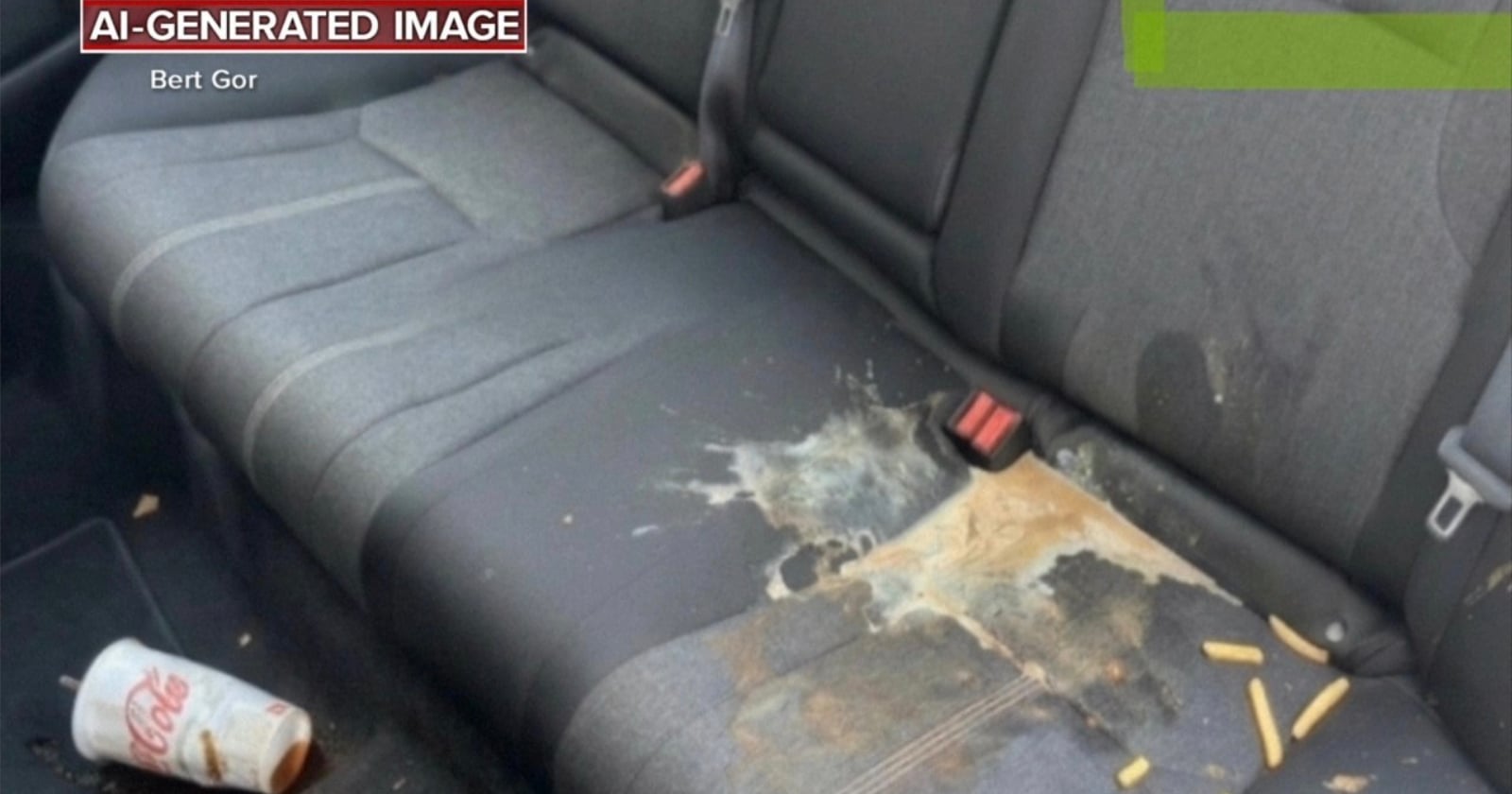
Lyft Driver Tries to Scam Customer with AI-Generated Photo of β€˜Damage’ to Vehicle

22 May 2026 at 15:15

A car’s backseat is stained with spilled food and drink, including a tipped-over cup, scattered French fries, and a large messy liquid spill on the seat upholstery.

A Lyft driver has been accused of using an AI-generated image to create a fake damage fee claim against a teenage passenger.

[Read More]

  • βœ‡Malay Mail - All
  • Scam β€˜salary’ of RM85 costs 37-year-old nearly RM100,000 in online job ruse Malay Mail
    KUALA TERENGGANU, June 12 β€” A 37-year-old housewife lost RM95,715 after falling victim to an online job scam that promised easy earnings but delivered only a token RM85 commission, Harian Metro reported today.Kuala Terengganu police chief Assistant Commissioner Azli Mohd Noor said the victim was first drawn in after seeing a job advertisement on Facebook on May 8.She then clicked on a link in the advertisement and began communicating with an unknown individual vi
     

Scam β€˜salary’ of RM85 costs 37-year-old nearly RM100,000 in online job ruse

12 June 2026 at 02:59

Malay Mail

KUALA TERENGGANU, June 12 β€” A 37-year-old housewife lost RM95,715 after falling victim to an online job scam that promised easy earnings but delivered only a token RM85 commission, Harian Metro reported today.

Kuala Terengganu police chief Assistant Commissioner Azli Mohd Noor said the victim was first drawn in after seeing a job advertisement on Facebook on May 8.

She then clicked on a link in the advertisement and began communicating with an unknown individual via WhatsApp, where she was offered a part-time job with attractive returns.

The victim agreed and was instructed to join a Telegram group, where she was given simple tasks and initially paid RM85 as β€œcommission”.

Encouraged by the small payout, she proceeded to follow further instructions and carried out seven transactions to seven different bank accounts between May 8 and May 18.

Azli said the victim only received RM85 for the first two tasks before the scam escalated into larger transfers.

He said the victim only realised she had been deceived after communicating with other individuals linked to the scheme.

β€œThe victim also used personal savings jointly owned with her husband,” he said.

The case is being investigated under Section 420 of the Penal Code for cheating, punishable with a jail term of between one and 10 years, a fine, and whipping.

Β 

Singapore’s PayNow use of β€˜X’ to mask customer names spells out inappropriate words, ABS cites system limitations

12 June 2026 at 01:30

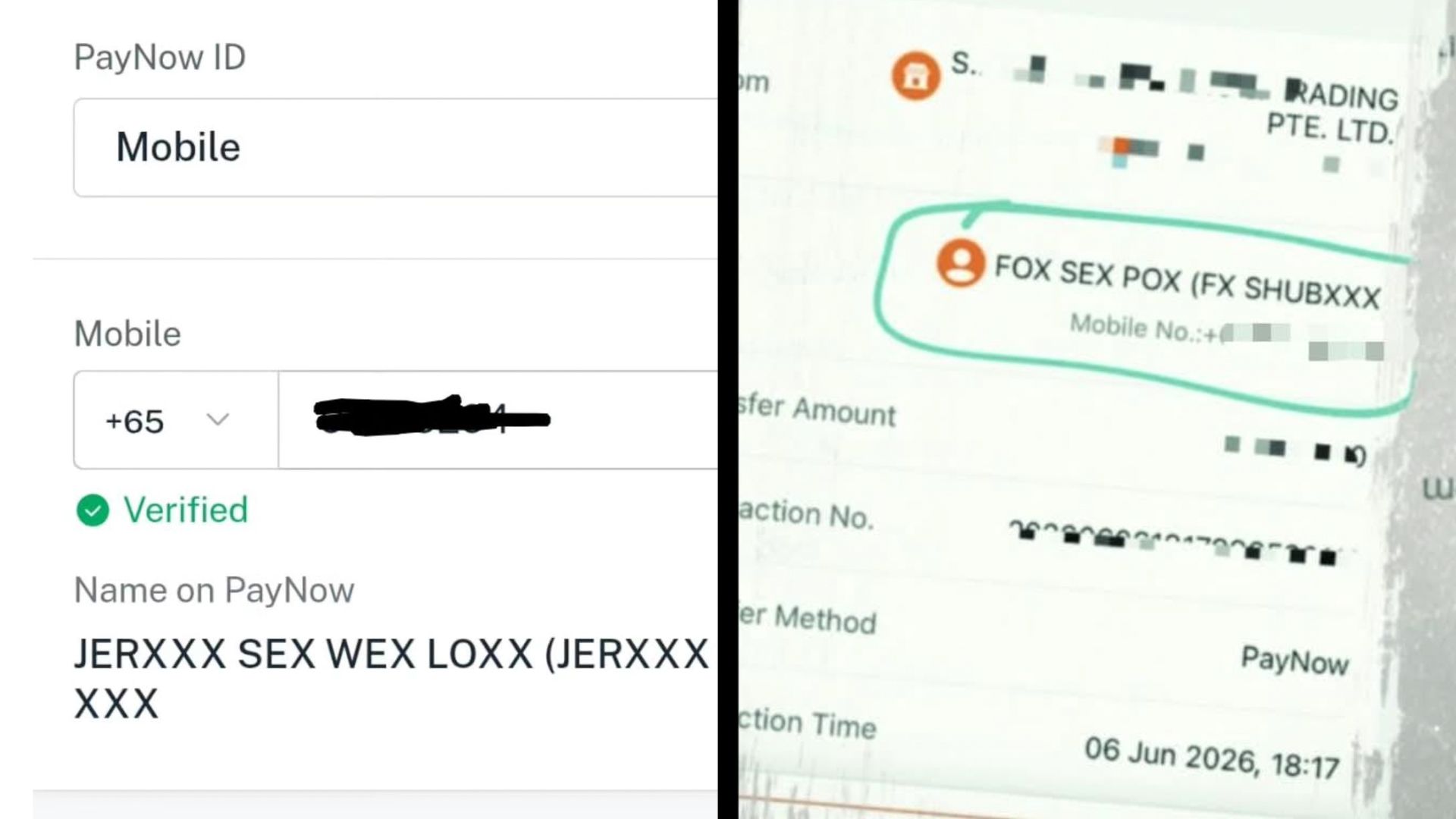
SINGAPORE: A recent change to Singapore’s PayNow system has triggered a wave of complaints after some users discovered their masked names were displaying unintended and sometimes inappropriate words.

The problem emerged after the Association of Banks in Singapore (ABS) removed PayNow’s nickname feature on June 6 as part of efforts to combat impersonation scams. In place of nicknames, users’ registered names are now displayed, with certain letters replaced by the letter β€œX”. The bank’s action was intended to improve customer security. Instead, it caught public attention for a different, or rather, for all the wrong reasons.


Several users shared screenshots of their X-ed names on Reddit and Facebook, showing how the new masking format had transformed parts of their names into combinations that spelt words such as β€œSEX”. The posts received hundreds of comments and reactions, with some poking fun at the unexpected results and others questioning the choice to use β€œX” as the masking character. ABS said it was aware of the feedback and was reviewing customer responses, according to a June 11 Channel NewsAsia (CNA) report.

Symbol limitations in PayNow systems

ABS explained that not all PayNow-related systems across its 29 participating financial institutions currently support special characters, symbols such as asterisks or dashes, which couldn’t be used consistently across the network.

As that was the case, ABS opted for the letter β€œX” instead because it’s generally recognised as a marker for concealed or missing information and visually resembles a crossed-out character.

Ong-Ang Ai Boon, Director of the Association of Banks in Singapore, said the approach was chosen so the nickname feature could be removed quickly while keeping the payment system running smoothly for users. She added that ABS hopes customers will understand the need for the fast change and said customer feedback will continue to be reviewed for improvements.

A security fix that created a public relations headache

The nickname feature has been part of PayNow since its launch in 2017. It was originally introduced to address privacy concerns among people who didn’t want their full registered names displayed when receiving payments through their mobile numbers or revealing their National Registration Identity Card (NRIC) details.

However, ABS recently found that scammers were exploiting the feature by creating nicknames that resembled trusted organisations or individuals. This made it easier to trick victims into sending money to fraudulent accounts.

The removal of nicknames was therefore aimed at reducing impersonation risks, a growing concern as scam cases continue to affect Singapore residents.

While the security rationale is understood, the naming mishaps show how even well-intentioned technical fixes can produce unexpected outcomes once they reach millions of users.

Changes made to solve one problem create another

PayNow has become a routine part of daily life in Singapore. From splitting restaurant bills to paying small businesses and transferring money to friends and family, many people use the service regularly. So when such a system touches everyday transactions, even a minor design choice can become highly visible.

The incident also brought to light a common challenge in technology and policy decisions. Changes made to solve one problem can sometimes create another, even if the new issue is far less serious than the original one.

For now, businesses receiving payments through their Unique Entity Number (UEN) are unaffected, as they have always used their registered business names and never had access to the nickname feature.

Nevertheless, security remains the bigger priority, and customer responses do suggest that user experience matters too. A small adjustment to how names are masked could go a long way towards preventing future awkward moments at the payment screen.

This article (Singapore’s PayNow use of β€˜X’ to mask customer names spells out inappropriate words, ABS cites system limitations) first appeared on The Independent Singapore News.

❌
Subscriptions