Normal view

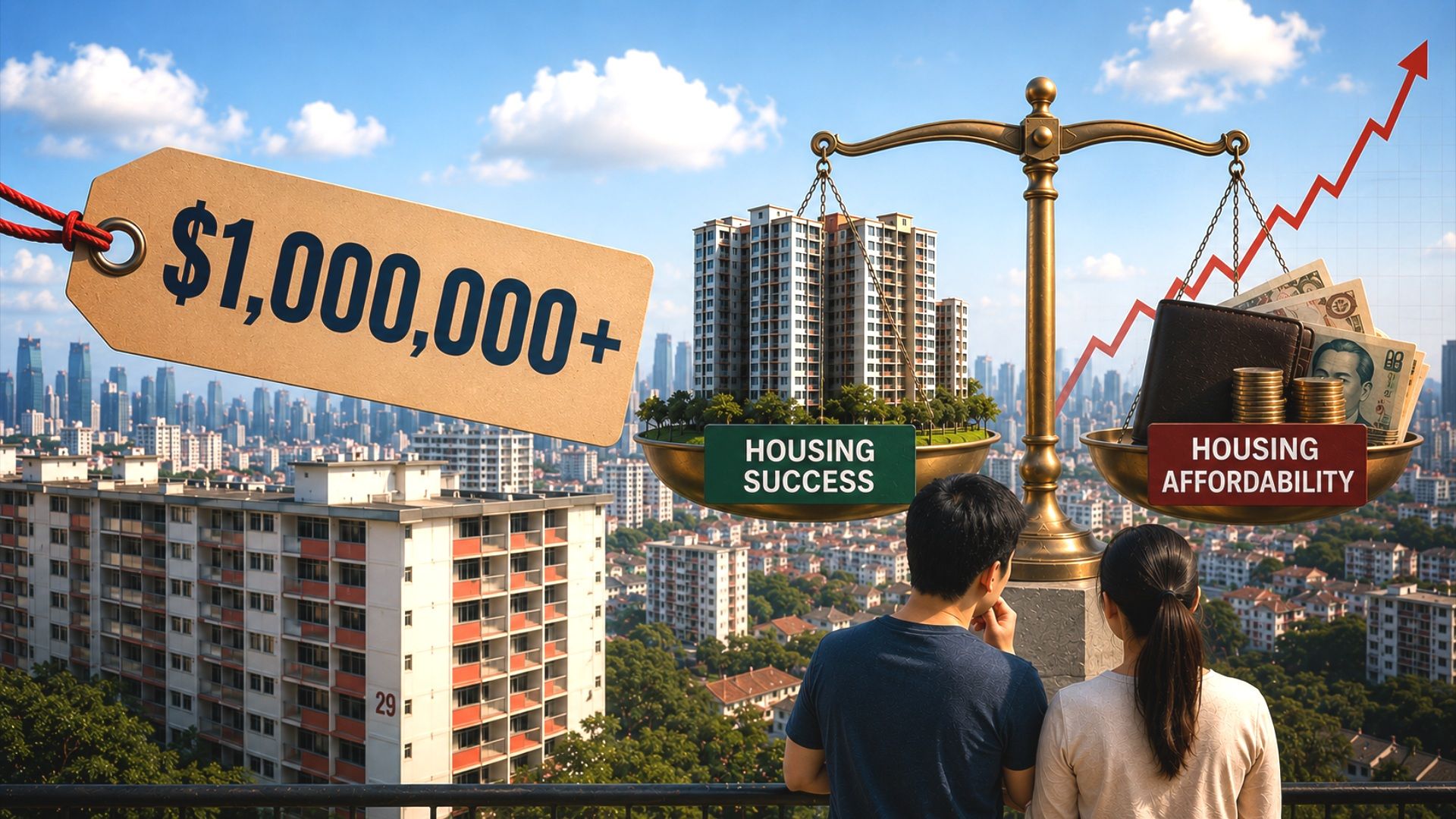
The rise of million-dollar HDBs in Singapore: A sign of housing success or a threat to housing affordability?

19 June 2026 at 16:31

SINGAPORE: The number of million-dollar HDB flats changing hands is climbing, even as Singapore’s resale market shows signs of cooling.

The HDB Resale Price Index slipped by 0.1% in early 2026, offering some relief to buyers after years of rising prices. Yet during the same period, million-dollar resale transactions jumped by more than 17% from the previous quarter, a feature of Singapore’s housing model rather than a failure of it.

Public housing was designed to grow in value

For many Singaporeans, HDB flats are more than just homes. They are also a retirement asset.

Since the early days of public housing, policymakers have promoted homeownership as a way to provide affordable housing and to help households build wealth over time.

Families buy bigger flats while raising children. Later in life, when their children move out, some owners choose to downsize. If their flat has appreciated in value, the proceeds from selling and moving into a smaller home can help fund retirement. This means rising resale prices have long been part of the system’s intended outcome.

As a result, million-dollar flats may feel shocking, but they are a predictable consequence of decades of price growth. The trend is especially visible in mature estates, where larger flats and desirable locations continue to attract strong demand.

Prices have risen faster than incomes

Housing affordability has become a concern, particularly for buyers entering the resale market. Between 2015 and 2025, the HDB Resale Price Index increased by about 50.7%, according to figures cited by Vulcan Post.

Over the same period, median household income rose by 42.7%, while cumulative inflation was around 19%, meaning housing prices outpaced income growth, but by a smaller margin than many may assume.

For existing homeowners, rising prices can be beneficial because the value of their current home typically rises alongside the homes they may later buy or sell.

The challenge falls most heavily on those who cannot access subsidised Build-To-Order (BTO) flats and must enter the resale market directly.

Some experts see rising prices as necessary

The debate over HDB prices focuses on affordability. Yet there is another side to the discussion. If resale flat prices merely kept pace with inflation or worse, stayed stagnant, older Singaporeans could see the real value of their housing assets shrink over time, undermining one of the pillars of retirement that many households rely on.

Vulcan Post’s Michael Petraeus noted that the ideal situation is for resale prices to rise faster than inflation but slower than wage growth. In that scenario, working Singaporeans would continue to afford better housing, while retirees would still benefit from home appreciation.

Over the past decade, however, resale prices have grown somewhat faster than that ideal range. Still, even if price growth had been more moderate, million-dollar HDB transactions would likely continue increasing as Singapore’s housing stock ages and values accumulate.

Balancing today’s affordability with tomorrow’s security

The rise of million-dollar HDB flats expresses a tension at the heart of Singapore’s housing model. Homeowners generally want their properties to retain or increase their value. Buyers, especially younger households, want homes to remain affordable.

Both goals matter. The challenge for policymakers is keeping that balance intact.

As more HDB flats cross the million-dollar mark, public debate will continue. But the growing number of seven-figure transactions may say less about a housing crisis and more about a system working largely as intended, even as it faces pressure to remain accessible to the next generation.

Housing policy is ultimately about balancing today’s affordability with tomorrow’s security. The harder task is ensuring neither side is left behind.

This article (The rise of million-dollar HDBs in Singapore: A sign of housing success or a threat to housing affordability?) first appeared on The Independent Singapore News.

HDB: 6,952 BTO flats launched across 7 projects in Singapore, with 2 prime projects in Bishan and Bukit Merah for June sales exercise

20 June 2026 at 09:01

SINGAPORE: Singapore’s latest Build-To-Order (BTO) exercise offers nearly 7,000 new flats across five towns, but one policy change may attract as much attention as the homes themselves.

The Housing and Development Board (HDB) launched 6,952 flats across seven projects on June 17, including highly anticipated developments in Bishan and Bukit Merah. At the same time, it doubled the allocation quota under the Third Child Priority Scheme (TCPS), giving families with three or more children a better chance of securing a flat.

The move comes as Singapore continues efforts to support larger families while maintaining a steady supply of public housing amid strong demand.

Larger families receive a stronger boost in the ballot

One of the biggest changes in this launch is the enhancement of the TCPS.

According to HDB, the quota reserved for eligible families with three or more children has increased from up to 5 per cent to up to 10 per cent of flats offered under BTO and Sale of Balance Flats exercises.

The scheme will also be extended to families expecting their third child.

Prime projects in Bishan and Bukit Merah

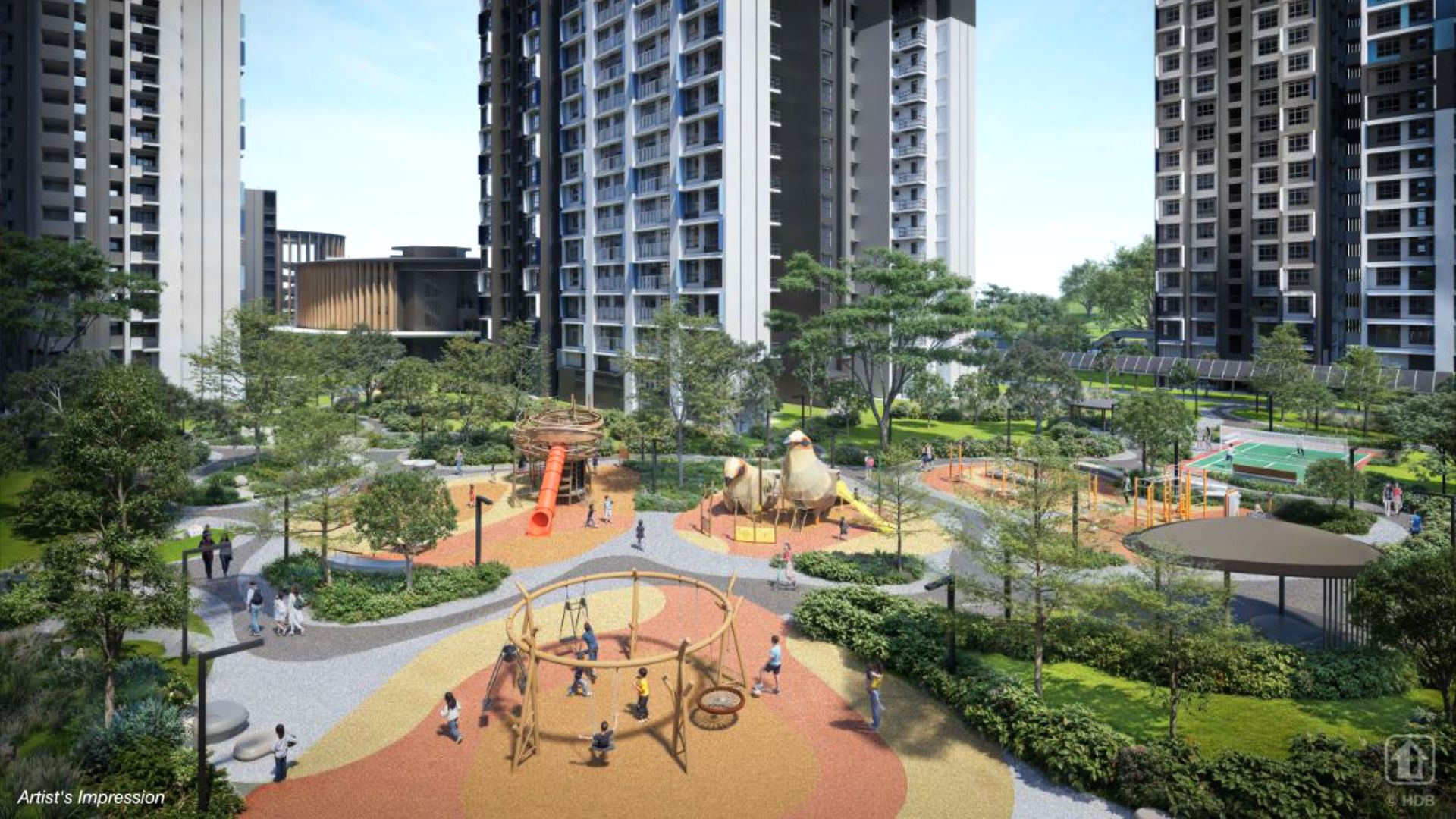
Among the seven projects launched, two are classified as Prime projects: Lakeview Cascadia in Bishan and Berlayar Rise in Bukit Merah.

Lakeview Cascadia is particularly notable because it marks the return of new public housing to the Lakeview area after more than four decades. The project will offer 1,221 flats and forms the first of two planned BTO developments in the estate. The launch also includes two Plus projects in Ang Mo Kio and three Standard projects in Sembawang and Woodlands.

As with other Plus and Prime flats, buyers will receive additional subsidies but face stricter resale conditions, including a 10-year minimum occupation period and subsidy recovery upon resale. The recovery rates range from 8 per cent for the Ang Mo Kio Plus projects to 14 per cent for Berlayar Rise.

Shorter waiting move-in times remain available for buyers

For buyers eager to move in sooner, HDB is offering more than 2,000 flats with waiting times of under three years. These include units at Sembawang Portico and Sembawang Brook.

Another 485 flats at Kebun Baru Ridge have an estimated waiting time of three years and one month.

June 2026 BTO exercise Flat prices by Housing and Development Board (HDB)

The shorter waiting periods could appeal to young couples and families who may not want to wait the typical three to five years associated with many BTO projects.

Grants continue to keep flats within affordability reach

HDB said eligible first-time families can receive up to S$120,000 through the Enhanced CPF Housing Grant.

With grants, a three-room Standard flat can start from around S$145,000, while a four-room Standard flat can start from about S$222,000. Actual grant amounts depend on household income and eligibility.

Flat mix by Housing and Development Board (HDB)

Flat mix by Housing and Development Board (HDB)

The June launch also includes about 2,300 two-room Flexi flats, making up nearly one-third of all units offered. These flats are primarily for first-time singles and seniors.

More housing supply is on the way later this year

Applications for the June exercise are open until June 24 through HDB’s online portal. A computer ballot, rather than application timing, determines who gets shortlisted.

Looking ahead, HDB plans to launch about 7,960 flats in October across Bedok, Geylang, Sembawang, Tengah, Toa Payoh and Yishun. Community Care Apartments for seniors will also be offered in Toa Payoh.

The continued rollout of new flats suggests that housing supply is a central priority. HDB said it is prepared to launch more than 55,000 flats between 2025 and 2027 if demand requires it.

The latest launch is about more than securing a home for many Singaporeans. It’s a balance between affordability, family support, and access to well-located housing. More housing supply helps, but buyers still need to choose carefully, stay within budget and focus on a home that fits their long-term needs rather than chasing the most popular project.


Read related: HDB: 2,520 BTO flats with wait times of 3 years or less to be offered across 3 projects in Sembawang and Ang Mo Kio in June sales

This article (HDB: 6,952 BTO flats launched across 7 projects in Singapore, with 2 prime projects in Bishan and Bukit Merah for June sales exercise) first appeared on The Independent Singapore News.

  • ✇The Independent SG
  • Ex-independent candidate Jeremy Tan says Singapore’s fertility crisis is a housing crisis Anna Maria Romero
    SINGAPORE: In a lengthy interview, Jeremy Tan, who contested in GE2025 as an independent candidate at Mountbatten SMC, talked about a wide range of issues, including why he entered politics, public housing, and what seems to be everyone’s favourite topic of the moment: the record-low birth rate, On the June 15 (Monday) episode of the BRAVE Southeast Asia Tech podcast, Mr Tan, an entrepreneur, argued that housing, inequality, and political complacency, not immigration or culture wars, are the rea
     

Ex-independent candidate Jeremy Tan says Singapore’s fertility crisis is a housing crisis

19 June 2026 at 07:30

SINGAPORE: In a lengthy interview, Jeremy Tan, who contested in GE2025 as an independent candidate at Mountbatten SMC, talked about a wide range of issues, including why he entered politics, public housing, and what seems to be everyone’s favourite topic of the moment: the record-low birth rate,

On the June 15 (Monday) episode of the BRAVE Southeast Asia Tech podcast, Mr Tan, an entrepreneur, argued that housing, inequality, and political complacency, not immigration or culture wars, are the real threats to the future of the city-state.

While he lost his bid to the ruling People’s Action Party’s Gho Sze Kee, a fellow political newbie, he ended up with over 36% of the vote and grew popular with many Singaporeans.

He shared his insights on last year’s GE, underlining that he believes Singapore needs stronger political competition rather than less, telling hosts Jeremy Au and Shiyan Koh, “I think the system itself requires a high level of competition. If team two and team three are ready, your team one will always be good… But at the same time, team one will never be ready unless team two and team three are pushing them to be ready.”

He also had interesting things to say about where opposition parties should concentrate their efforts on fielding candidates at Single Member Constituencies (SMCs) instead of spreading themselves too thin at Group Representation Constituencies (GRCs). He argued that doing so would give people a chance to prove their competencies first and therefore gain voters’ trust.

As for boosting Singapore’s birth rate, Mr Tan claimed that the fertility crisis is, in reality, a housing crisis. If housing is made affordable, people will have more children.

“Don’t capitalise HDBs. I think that’s the issue. A flat in Tengah just sold for $2.8 million for 1,200 square feet. That’s crazy. I used to go to the army at the Tengah area. There were just cemeteries behind there. I don’t know why people go there,” he said, adding that if a home is available to Singaporeans for S$200,000, they would take it and start having families.

“It’s the financial risk that deters them,” he added, also saying, “You cannot capitalise properties so much that the basic cost of being a family is compromised.”

If HDB flats are seen as investments, this would mean that Singaporeans would face longer mortgages as well as larger financial commitments, something that young people may understandably be reluctant to do, while in the past, in comparison, they could pay off homes relatively quickly and start families earlier. Today’s conditions have given rise to delayed marriage, delayed childbearing, and fewer children overall, he argued.

Watch Mr Tan’s interview in full here. /TISG

Read also: Singaporean man says he’s confused why people keep saying public housing is ‘unaffordable for low-income individuals’

This article (Ex-independent candidate Jeremy Tan says Singapore’s fertility crisis is a housing crisis) first appeared on The Independent Singapore News.

  • ✇The Independent SG
  • Fellow single Singaporeans, how are you all affording a flat? Netizens share their experiences Aiah Bathan
    SINGAPORE: Living independently and owning a flat truly entails enough savings, especially if one is single and is managing all of his/her finances alone. This is the concern of a 29-year-old single netizen on Reddit, where she shared that affording her own flat looks so ‘bleak’ as of the moment. She said that she was earning $5K per month, and if she were to stay single, she will have to fight for a build-to-order (BTO) at the age of 35, and the earliest age that she might be able to have on
     

Fellow single Singaporeans, how are you all affording a flat? Netizens share their experiences

21 June 2026 at 06:02

SINGAPORE: Living independently and owning a flat truly entails enough savings, especially if one is single and is managing all of his/her finances alone.

  • This is the concern of a 29-year-old single netizen on Reddit, where she shared that affording her own flat looks so ‘bleak’ as of the moment. She said that she was earning $5K per month, and if she were to stay single, she will have to fight for a build-to-order (BTO) at the age of 35, and the earliest age that she might be able to have one is at 38, if she’s lucky enough to win the ballot lottery. 

“If not, buy a resale HDB at 35 for an exorbitant sum, and my retirement funds left would be next to NIL. And that’s assuming I don’t quit or get retrenched,” she added. 

With this, she is curious as to how her fellow Singaporeans plan this kind of concern. 

Many netizens shared their thoughts and opinions on the subject matter. One suggested that she should save and invest diligently, and find a resale 3rm flat around 500-600k. She can also budget another 80k or so for renovation. 

“Try to raise your income by getting raises at your current company or hopping job. Avoid or at least minimize exorbitant/frivolous spending like grabbing daily or buying luxury things,” the commenter added. 

Another netizen declared: “Actually, 5k monthly at 29 ain’t so bad…Even without significant cash savings, your CPF OA will likely have about 100k-150k by the time you’re 35. And with the housing loan, you’ll likely be able to afford resale flats upwards of $450k-500k.” 

One more commented that it is actually doable if she does not have crazy expectations. 

“The key is to save a lot, try to improve income during this 6 year period,” a comment shared. Furthermore, for some, they claimed that her 6 years of trying to save and invest more could also be the time that she could meet a suitable partner.

This online discussion highlights a wider concern among younger Singaporeans about housing affordability and financial security. Whether through disciplined financial savings, boosting earnings in ways possible, or adjusting expectations, many people agreed that early planning and realistic goals are important for singles aiming to buy a flat without sacrificing much more.

This article (Fellow single Singaporeans, how are you all affording a flat? Netizens share their experiences) first appeared on The Independent Singapore News.

❌
Subscriptions