At first glance, Camilla Marcus is a study in contrasts. She takes her work seriously, yet brings a sense of playfulness to everything she does. She can pull off a dinner party for 100, but might not plan the menu until that morning, letting the farmers market be her guide. Her vegetable-forward cooking is deeply nourishing—and she’s never one to turn down a midday glass of wine.
But nothing about Camilla feels inconsistent. She’s so rooted in who she is that all of her layers come together
At first glance, Camilla Marcus is a study in contrasts. She takes her work seriously, yet brings a sense of playfulness to everything she does. She can pull off a dinner party for 100, but might not plan the menu until that morning, letting the farmers market be her guide. Her vegetable-forward cooking is deeply nourishing—and she’s never one to turn down a midday glass of wine.
But nothing about Camilla feels inconsistent. She’s so rooted in who she is that all of her layers come together as a beautifully aligned life—one that reflects the passionate approach she brings to her work as a regenerative chef, founder of west~bourne, and mother of four in Los Angeles.
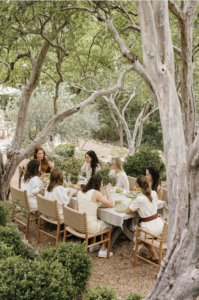
To celebrate the launch of her cookbook My Regenerative Kitchen, Camilla joined me for a backyard lunch under the trees with a few friends. We cooked vibrant, plant-based dishes from the book—tartines, a crunchy fennel salad, and the most stunning rose chocolate bark—poured natural wine, and soaked up her perspective on what it actually means to cook in a way that nurtures both our bodies and the earth.
Her philosophy, in her own words: “What’s good for our soil is always better for our health.”
What I love most about how Camilla thinks about food is the sense of liberation in it. She writes about improvisational cooking the way musicians talk about jazz—not knowing exactly where the notes will lead is the point. The farmers market becomes her guide, and “not being in control” becomes both liberating and inspiring rather than stressful. I left our lunch genuinely rethinking the relationship between spontaneity and nourishment.
Her book makes a compelling case that our everyday choices—the ingredients we buy, how we prep them, what we do with what’s left—are actually the most accessible entry points into climate action. Not through deprivation or a complete overhaul, but through small, cumulative shifts that start to feel natural over time.
Camilla Marcus’s Tips for a Zero-Waste Kitchen
Break up with paper towels. Keep a stack of washable kitchen towels within reach—you’ll be surprised how quickly you stop missing the paper.
Reimagine your pantry. Swap plastic wrap for beeswax alternatives. Use glass jars and metal tins for everything from flours to preserves.
Go reusable with storage. Stasher silicone bags replace Ziploc. Camilla also freezes stocks, sauces, and leftover wine in silicone molds for future meals.
Use the whole vegetable. No stalk left behind. Fennel fronds become garnish, stalks go into stock, and most produce doesn’t need peeling.
Rethink “scraps.” Before you toss it, ask: Can this add flavor to a broth or sauce? Onion peels, herb stems, cheese rinds—all fair game. Compost what you truly can’t cook.
Clean green. Look for nontoxic brands like Koala Eco, Branch Basics, and Grove Collaborative.
Start composting. A countertop bin (Camilla loves the Bamboozle) is a low-barrier start. Composting emits 20x fewer greenhouse gases than landfilling food waste.
Adapted from My Regenerative Kitchen
All of this—the swaps, the scraps, the compost bin—sounds like discipline. But sitting in the backyard that afternoon, none of it felt that way. It felt like the most natural extension of how Camilla moves through the world: paying attention, wasting nothing, finding pleasure in the process. The menu below is where we started. Where you take it is entirely up to you.
The Whole Stalk or Bulb Salad
A salad that earns its name. Every part of the fennel shows up here—fronds, stalks, bulb—and the result is crunchy and bright.
Tartines with Heirloom Tomato, Blue Cheese, and Golden Beets
The tartines came together the way Camilla cooks everything—intuitively, with whatever looked best at the market. Proof that the simplest things, made with good ingredients, don’t need much else.
If your bedroom feels cramped, cluttered, or smaller than it should, the solution usually isn’t more space—it’s a few smarter design decisions. The way your furniture is arranged, how your eye moves through the room, and even the scale of your lighting can make a noticeable difference in how spacious it feels.
We’re all drawn to those impossibly charming spaces: the Paris apartment, the cozy but perfectly arranged bedroom, and the ones that feel light-filled and effortless even when they’re
If your bedroom feels cramped, cluttered, or smaller than it should, the solution usually isn’t more space—it’s a few smarter design decisions. The way your furniture is arranged, how your eye moves through the room, and even the scale of your lighting can make a noticeable difference in how spacious it feels.
We’re all drawn to those impossibly charming spaces: the Paris apartment, the cozy but perfectly arranged bedroom, and the ones that feel light-filled and effortless even when they’re not especially big. The fact that they work has nothing to do with square footage. Instead, it’s because everything inside them feels considered.
That’s the shift: creating a bedroom that feels bigger is about how the space functions—and how it makes you feel when you’re in it. The easiest solve? Remove what’s getting in the way.
Small Shifts That Make Your Bedroom Feel Bigger—Fast
Sure, it’s subtle, but in practice, it’s what changes everything. If your bedroom feels smaller than it should, a few thoughtful shifts can change how the entire space reads—fast. Start here:
1. Leave at least one area intentionally open. A room feels bigger when not every corner is trying to do something.
2. Remove one piece of furniture you don’t actually need. If it’s not essential, it’s taking up visual space.
3. Choose fewer, better-proportioned pieces. Oversized furniture closes a room in faster than you think.
4. Keep surfaces intentionally clear. Not empty—just free of anything that doesn’t need to be there.
5. Use lighting that gives the room breathing room. Think slimmer lamps, sconces, or anything that doesn’t crowd the surface it sits on.
6. Draw the eye upward. Artwork, vertical lines, or even higher curtain placement can subtly expand the space.
7. Let your bed have space on at least one side. Even a small gap can make the layout feel more open.
8. Stick to a more tonal color palette. When colors flow, the eye moves more easily—and the room feels larger.
9. Use mirrors to reflect light, not just fill a wall. Placement matters more than size.
10. Keep sightlines clear from the doorway inward. What you see first shapes how spacious the room feels.
These shifts might feel small, but they’re the same principles designers use to make a space feel considered, balanced, and more expansive. To take it a step further, I asked designers how they approach small bedrooms. Take out your notepad (and prepare your Pinterest board). These small bedroom design tips are gold.
9 Designer-Approved Ways to Make a Bedroom Feel Bigger
1. Start With Less Than You Think You Need
The fastest way to make a small bedroom feel bigger is to remove what isn’t essential.
It sounds obvious, but it’s where most spaces go wrong—trying to fit in one more chair, one more surface, one more piece that doesn’t quite have a role. As designer Katie Raffetto puts it, “less is more,” especially in a bedroom.
If it’s not helping you sleep, store, or soften the space, it’s likely adding visual noise.
Strip the room back to what you actually use—a bed, a place to set things down, lighting that works—and let everything else be intentional.
A bedroom feels bigger the moment it stops trying to be anything other than a bedroom.
2. Rethink the Scale of Your Furniture
In a small bedroom, the issue isn’t always how much you have—it’s how much space your furniture takes up.
A queen bed might feel like the default, but if it leaves you with barely any room to move, it’s working against the space. The same goes for bulky nightstands, oversized dressers, or anything that sits heavy in the room. Even creating space on just one side of the bed can make the entire layout feel more open.
Designer Cameron Johnson refers to this as “space engineering”—making decisions that create room around your furniture, not just filling the room with it. Sometimes that means choosing a smaller bed, a narrower nightstand, or a piece that can serve more than one function.
3. Use Color to Your Advantage (Not Just for Aesthetics)
Color doesn’t just change how a room looks—it changes how it feels. In smaller bedrooms, there’s often a tendency to default to all white in hopes of making the space feel bigger. But according to Raffetto, leaning into deeper, more saturated tones can actually create the opposite effect—in a good way. “Dark colors allow you to lean into the coziness,” she says, turning the room into something that feels intentional rather than constrained.
The key is consistency. When your palette feels cohesive—whether it’s light and tonal or rich and layered—the eye moves more fluidly through the space. And that sense of visual continuity can make a room feel larger, not smaller. A room feels bigger when your eye isn’t constantly stopping to process contrast.
4. Keep Your Sightlines Clear
What you see first when you walk into your bedroom sets the tone for how the entire space feels. If your line of sight is blocked—by bulky furniture, clutter, or awkward layout—the room immediately reads as smaller. But when that path is open, even a compact space can feel noticeably more expansive.
Designers often think about this as creating a clear visual entry point. The less your eye has to work to understand the space, the bigger it feels.
5. Draw the Eye Upward
One of the simplest ways to make a bedroom feel bigger is to change where the eye goes. When everything sits at the same level—low furniture, low art placement, nothing pulling your gaze upward—the room can start to feel compressed. Designers counter this by using vertical space to create a sense of expansion.
That might look like hanging artwork slightly higher than expected, extending the visual height of your headboard, or mounting curtains closer to the ceiling to elongate the walls. As Johnson notes, even something as simple as placing art above the bed can help “extend the headboard” and shift how the room is perceived.
It’s a subtle trick, but it works: when your eye travels up, the room opens with it.
6. Use Mirrors With Intention
Mirrors are often recommended for small spaces—but how you use them matters more than simply having one.
Placed thoughtfully, a mirror can reflect natural light, extend a sightline, or create the illusion of depth. Placed randomly, it just becomes another object on the wall. Again, you’re not filling the space for the sake of it. The goal is to amplify what’s already working.
7. Choose Pieces That Do More Than One Thing
In a smaller bedroom, every piece should earn its place. When square footage is limited, adding more furniture isn’t the answer—choosing smarter furniture is. Pieces that can serve multiple functions allow you to get what you need from the space without visually crowding it.
Raffetto suggests something as simple as placing a dresser next to the bed so it doubles as a nightstand. Johnson echoes this approach, pointing to bed frames with built-in storage as a way to eliminate the need for additional pieces.
Lighting has a bigger impact on how spacious a room feels than most people realize. Oversized lamps and bulky fixtures can take over a surface, making everything around them feel tighter. Raffetto recommends choosing streamlined lighting—slimmer lamps or wall-mounted sconces—that give your furniture room to breathe.
It’s also about placement. When light is distributed thoughtfully, it softens the edges of the room and reduces visual clutter. When it’s not, even a well-designed space can start to feel crowded.
Editing a room down is only half the equation. The other half is knowing when it feels complete.
A space can be minimal and still feel unfinished. The difference comes down to how the elements work together. When a room feels resolved, your eye isn’t jumping from object to object or looking for what’s missing—it can settle.
Designers create this sense of closure through a few intentional choices: curtains that frame the room, a rug that grounds the bed, and a mirror that reflects light into the space. Not more pieces—just the right ones, placed with purpose.
The One Thing That Makes a Bedroom Feel Smaller
Most bedrooms don’t feel small because of their size. They feel small because too many things are competing for attention. When every surface is filled, every corner is doing something, and every piece of furniture is slightly too big or slightly out of place, the room starts to feel visually crowded—even if there’s technically enough space.
Designers think about this differently. It’s about centering in on what the room doesn’t need. Because the moment your eye has space to move—to land, to rest—the entire room opens up.
This post was last updated on April 8, 2026, to include new insights.
Whether you need some extra cash, want to explore a new field, or desire more time at home with family, these top ten side hustles help you to meet your goals in a new way. With a little help from AI, I’ll go down the list of top-paying roles that you might not realize exist. As an ambitious entrepreneur, influencer, and mom, I find these positions exciting as they are opportunities to explore where your unique talents can make you an extra buck. Let’s get started. 1. Freelance Software Developm
Whether you need some extra cash, want to explore a new field, or desire more time at home with family, these top ten side hustles help you to meet your goals in a new way. With a little help from AI, I’ll go down the list of top-paying roles that you might not realize exist. As an ambitious entrepreneur, influencer, and mom, I find these positions exciting as they are opportunities to explore where your unique talents can make you an extra buck. Let’s get started.
1. Freelance Software Development
The highest-paying side hustles tend to require more than one online course. Skilled professionals in software development can make anywhere from $60 to $150 per hour. This profession demands some serious coding education and background. According to Forbes, the top coding “bootcamps” in 2025 include: Bloom Institute of Technology Full-Stack Web Development; American Graphics Institute Web Development Certificate; 4Geeks Academy Full-Stack Developer; Nucamp Back-End, SQL and DevOps Developer With Python; Coding Temple Software Engineering Bootcamp; Noble Desktop Front End Web Development; and the General Assembly Software Engineering Bootcamp. It might sound a little intimidating, but according to one report, 83% of bootcamp graduates found employment in a job that used the skills they learned in a bootcamp.
2. Consulting in Business, Marketing, or Finance
This side hustle is perfect for those with vetted knowledge in business, marketing, or finance, and for professionals ready to create their own schedule. Your level of experience will dictate how much you can make, but statistics show that it can be anywhere from $75 to $200 an hour. Corporate experience is a must. Define your niche and keep learning every chance you get. Build analytical and soft skills, and ensure your website is easy to navigate, thorough, and reflects both your personality and expertise. It’s not enough to be an authority in your industry; to find clients, you must find ways to demonstrate that authority to the world. Focus on networking through social media and in-person events, and watch as your wealth of knowledge helps companies to grow.
3. Copywriting/Direct Response Writing
Yes, in the age of ChatGPT, human writers are more important than ever. It is difficult for most to sit down and write a manual or book, let alone an email. The authentic written word is seeing a surge in e-commerce and beyond. Writers can make $50 to $150 an hour by doing something increasingly uncommon: Writing as a human for other humans. The best place to begin, if you have the natural talent, is by creating a profile on freelance sites such as Upwork, Fiverr, or Freelancer. Be ready for a sharp learning curve while you slowly build your clientele.
4. Online Tutoring
SAT, GRE, MCAT, coding, math, you name it–if you have a strong background in any of the subjects that young people and adults need to get ahead in life, you can begin to tutor online. The entire spectrum of education has changed in recent years, and online schooling is common and preferred by many. You can expect to make $50 to $120 an hour helping others’ educational dreams come true. What is more exciting than sharing what you know with curious minds? One-on-one coaching can be life-changing for others–and also helps with your electric bill.
5. Video Editing and Motion Graphics
There are now 69 million creators on YouTube. While these creators’ passion may be sharing, their downfall is editing their content. Great video editing and motion graphics are crucial for influencers who want the next viral video. It’s also fun to be a part of a creative vision and use your talent to help make a YouTube or TikTok star. A skilled editor can make $50 to $100 an hour. There are several courses online that can teach you content creation and video editing, but if you have your vision set on a career, film school is the best way to get the skills you need to turn a side hustle into a lifestyle.
6. UX/UI Design Freelance Work
I’m not going to lie, I had no idea what this was. Here’s AI’s definition: “UX, or User Experience, focuses on the overall journey and feeling a user has with a product, emphasizing research, planning, and testing to ensure it's logical and enjoyable. UI, or User Interface, is the visual and interactive part of that experience—the screens, buttons, icons, and layout a user directly interacts with.” Well…the long story short is that you can make $60 to $120 an hour. There are multiple bootcamps online to get you started in this side hustle, but if you’re already familiar with Figma, Adobe, XD, etc., then skip the bootcamps and start making some extra cash with the genius your momma gave ya.
7. Virtual Assistant
Our friendly AI told us that the end of this list contains “mid-paying” positions. That doesn’t make them any less important! A virtual assistant is responsible for calendar management, emails, and the general loose ends of someone’s busy schedule. A skilled and organized candidate can receive $25 to $50 an hour in this role. I’m not saying that your life will turn into “Two Weeks Notice” or “The Proposal,” but be prepared to be highly involved in another person’s fast-paced existence. This job will usually have you working for business owners, CEOs, and top-level creators. You’re in for an adventure.
8. Social Media Management
Social media management includes: “The strategic process of planning, creating, publishing, and analyzing content to maintain and optimize a brand's online presence across social media platforms.” If you can successfully achieve this, you’re a smart cookie. For $20 to $50 an hour, you’ll experience the ins and outs of helping small businesses, content creators, and other creatives manage their output and see how it’s landing. This requires a broad skillset combined with practical experience in monitoring social media metrics. When your vision aligns with someone else’s, their brand comes to life (and then you can splurge at a restaurant).
9. Selling Online Products
Although this one is referred to as “passive” income, there’s nothing passive about it. Some of the real heroes on this earth sell stuff on Etsy. Have you seen what beautiful human creativity can be found there? This category also includes self-publishing, selling original music, and any creative venture under the sun. This side hustle is incredible because not only does it allow you to pursue your artistic passions, but it also lets you learn the ropes of becoming an entrepreneur while making cash off your creative drive.
10. Real Estate Photography/Drone Footage
I appreciate that AI suggested this side hustle, but I want to take it a step further. Real estate photography can earn you $50 to $200 per job, but you may also want to consider wedding, event, and family photography. If you’re a budding artist, feel free to get your feet wet in these high-demand fields.
With all of these top side hustles, let your passion guide you. Work at your local grocery store as you pay the bills and pursue your talent at painting. Do what you need to do while you study coding, singing, crafting, or cooking. Turn that long-time interest into a side hustle. Get a bit more cash flow. Then watch as your passion becomes your career.
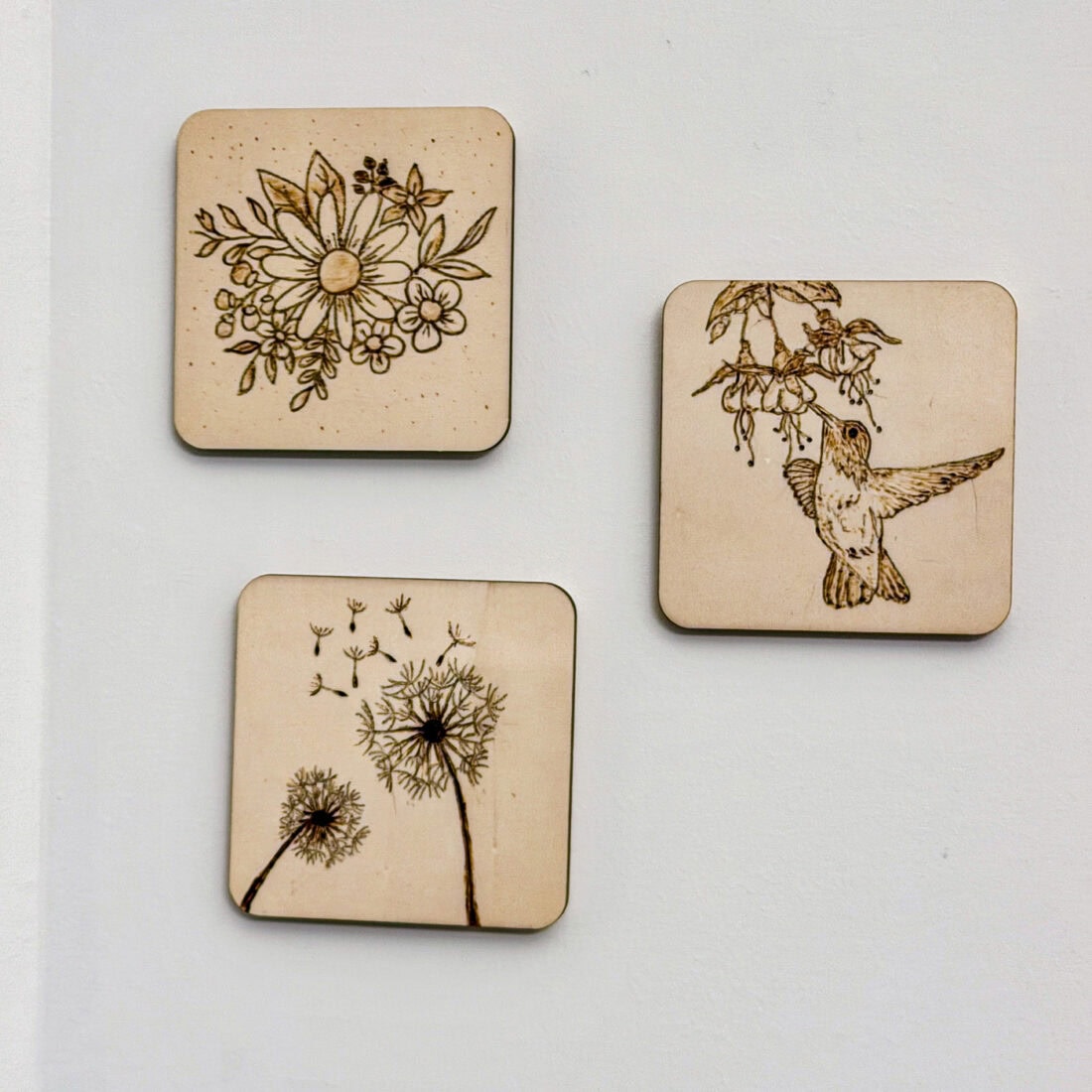
I remember when I was a little girl, my older brother had a wood burning set. I was fascinated by all the cool designs he used to create, but I only tried it once back then. He showed me how to do it, and that was that. I made one and never did it again…... Go To project
The post Wood Burning Nature Designs appeared first on Crafts by Amanda.
I remember when I was a little girl, my older brother had a wood burning set. I was fascinated by all the cool designs he used to create, but I only tried it once back then. He showed me how to do it, and that was that. I made one and never did it again…... Go To project
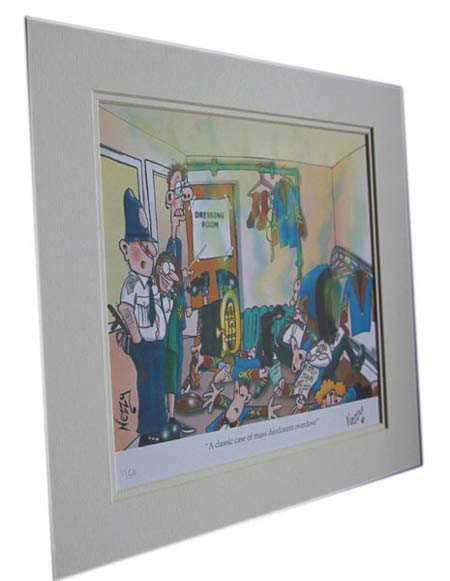
Paper based printables offer a wide range of creative possibilities and are the easiest to produce and sell. Many of the following ideas can be created using home printing equipment. Online printing costs have drastically reduced as printing technology has advanced, giving cartoonists the opportunity to have their art professionally printed at a cost that […]
The post 26 Ideas for Paper Based Printables You Can Create And Sell appeared first on .
Paper based printables offer a wide range of creative possibilities and are the easiest to produce and sell. Many of the following ideas can be created using home printing equipment. Online printing costs have drastically reduced as printing technology has advanced, giving cartoonists the opportunity to have their art professionally printed at a cost that […]
Cartoons have long been a beloved art form, capturing imaginations with vibrant characters, playful worlds, and expressive storytelling. Though traditionally created on a flat surface, skilled cartoonists have developed techniques to make their characters seem to “pop” off the page. By adding depth, dimension, and realism through the strategic use of shading, artists can elevate […]
The post Bringing 2D Cartoons to Life: Enhancing with Shading Techniques appeared first on .
Cartoons have long been a beloved art form, capturing imaginations with vibrant characters, playful worlds, and expressive storytelling. Though traditionally created on a flat surface, skilled cartoonists have developed techniques to make their characters seem to “pop” off the page. By adding depth, dimension, and realism through the strategic use of shading, artists can elevate […]
Little-known fact: I started my career as an event planner for a catering company. It was actually the perfect first job for me, combining my passions for food, design, and gathering people together. (The downsides included insane hours and high-stress clients, but it was a good experience for 22-year-old me.)
Though I’ve long been out of the event planning biz, I still love to host a party. But instead of the champagne towers and elaborate dessert bars of my past life, today my ideal type o
Little-known fact: I started my career as an event planner for a catering company. It was actually the perfect first job for me, combining my passions for food, design, and gathering people together. (The downsides included insane hours and high-stress clients, but it was a good experience for 22-year-old me.)
Though I’ve long been out of the event planning biz, I still love to host a party. But instead of the champagne towers and elaborate dessert bars of my past life, today my ideal type of gathering is a casual, kick-your-shoes-off affair, preferably outside in the sunshine. After all, everything tastes better al fresco!
That said, anyone who’s ever invited people for a casual backyard dinner knows: an outdoor party comes with its own set of challenges. Blazing sun, pesky mosquitoes, maintaining food temperatures (and keeping the flies away) are details that can make or break the festivities. My background in catering, combined with the countless parties I’ve thrown through the years, has taught me some invaluable lessons that I employ to make my own gatherings feel (almost) effortless.
So today, we’re rounding up the most frequently asked questions I get about how to host a summer party. I hope that you’ll be inspired to find the next open evening on your calendar (yep, weeknights work, too!), shoot a few texts to some friends, and grab some snacks to whip up a simple, delicious spread.
Read on for a handful of my tried-and-true secrets, menus, inspiration, and planning advice you need to host in style all season long.
Q: What’s the best way to invite people to a casual summer party?
A: Three words: keep it chill. An invitation sets the tone, so for a simple outdoor party, don’t overthink it! In my opinion, a group text or email is the way to go. And I’ve found that when I make things really easy on myself, I’m naturally inclined to invite friends over more frequently. In addition to arrival time, I like to let people know the approximate time we’ll be eating so we’re not firing up the grill multiple times over the course of an evening (i.e., “come at 4 to swim, burgers at 6!”)
It’s also helpful to provide a loose dress code so people know what to expect. Swimsuits? Shorts? Summer dresses? Since summer parties can have drastically different dress expectations, everyone will appreciate a few clues as to what they should wear.
Q: What are some simple menu ideas? I feel like I’m always stuck in the kitchen while everyone else is outside having fun.
A: I have a few strategies to keep the menu simple—the one I choose will depend on the type of party and who’s coming. Here are some ideas to get you started:
Snacks for dinner. Summer is the perfect time to curate a delicious spread of store-bought staples with a few artisanal treats. Assemble a snacking board full of delicious cheeses, olives, crudités, dips, dried fruit, nuts—really, your options are endless. Green goddess dressing is downright addictive, and the perfect accompaniment for any type of seasonal veggies.
Semi-homemade feast. The goal is to relax and hang out with your guests, so no matter how experienced a party thrower you are, it’s great to have a few hacks up your sleeve. To save tons of time, try a “semi-homemade” approach. Buy the main course from a fave spot (like a roast chicken from the deli, or bagels from your favorite bakery) and fill in with homemade sides and salads that can be made in advance and will make it feel like you cooked it all.
Throw it on the grill. Rule #1 when planning a menu: you don’t want to include anything that will have you cranking out food like a short-order cook when guests are there. Which is where the grillreally comes in handy. I like to have my proteins already marinated or seasoned before guests show up so that all that’s left to do is throw them on the grill. Often, I’ll also grill the veggie sides to keep things really easy on myself—and keep clean-up to a minimum!
A: Grilling is one of the most low-maintenance ways to cook for a group—with a little know-how. Here are my tips for grilling clean-up that save tons of time:
Oil the Grill Grates: Before grilling, oil the grates to prevent food from sticking. Use a brush or paper towel dipped in oil.
Pre-Clean the Grill: While the grill is heating up, use a grill brush to scrape off any residue from previous cooking sessions.
Marinate in Bags: Marinate meat and vegetables in resealable plastic bags. This reduces the number of dishes you need to clean. Then I use tongs to transfer them straight from the bag to the grill, so the only dish that’s actually getting used is what you’re serving it on.
Clean While Warm: After cooking, while the grill is still warm (but not hot), use a brush to remove any remaining food particles.
Q: What should I serve to drink that won’t leave me refilling glasses all night?
A: I sound like a broken record, but the key is to keep it as simple as possible—less time spent bartending means more time sipping cocktails yourself! For just about any summer occasion, you can get away with 3 drinks and call it a day:
A fun batched cocktail. Sangria, margaritas, punch—pre-mix a big pitcher, then let guests help themselves. A few favorite pitcher drinks? This Mezcal Paloma and this Strawberry Rosé Sangria are about as summery as they come. Aperol Spritz is a summer cocktail beloved by all, perfect for an Italian menu. Or, try a Blood Orange Margarita for a delicious twist on a classic.
A rosé or a white wine. This is a perfect thing for guests to contribute when they ask what they can bring to the party.
Flavor-infused water. Fill a large carafe with water and add fruit or herbs for a festive touch. Bonus points for providing a fun non-alcoholic option like sparkling lemonade or iced tea.
A good rule of thumb is to plan for 1 1/2 drinks per person per hour. And at an outdoor summer party, always have more water and ice than you think you’ll need.
Q: What if it’s super hot on the day of my party?
A: Again, have way more water at the ready than you think you’ll need! And—sunscreen is a non-negotiable. Do your guests a favor and have some sunscreen available for them to reapply as needed (browse our favorite clean options). I love the look of outdoor umbrellas, and I typically scatter 2 or 3 around a party space for lifesaving shade.
Q: What are some good outdoor activities to keep the vibes high?
A: Go all in on the carefree vibes of summer and plan some classic party games and activities to make your gathering unforgettable. A few of my faves:
Yard games like bocce ball, croquet, and cornhole are great for encouraging people to let loose and have a good time together.
Music is crucial to the vibe, so don’t leave this to chance. My favorite for hanging out and eating dinner is the Daybreak playlist from Casa Zuma. And you can always turn up the beat as the night goes on and see if an impromptu dance party breaks out.
Q: How can I cut the small talk and have engaging conversations?
A: You’re speaking my love language—good conversation is the key to any gathering! We put together a list of conversation starters to inspire thoughtful and engaging chats. Keep a few of these in your back pocket and you’ll step into every interaction with confidence (and curiosity!) And I guarantee, the party will never get boring.
Hosting is a practice, and gathering with loved ones is an opportunity to savor the sweetness of the season. We only get so many summers in our lifetime, after all, and squeezing every bit of joy out of it is well worthwhile. So light the candles, chill a few bottles of wine, and let the season do what it does best: bring people together.
This post was last updated on June 12, 2026, to include new insights.
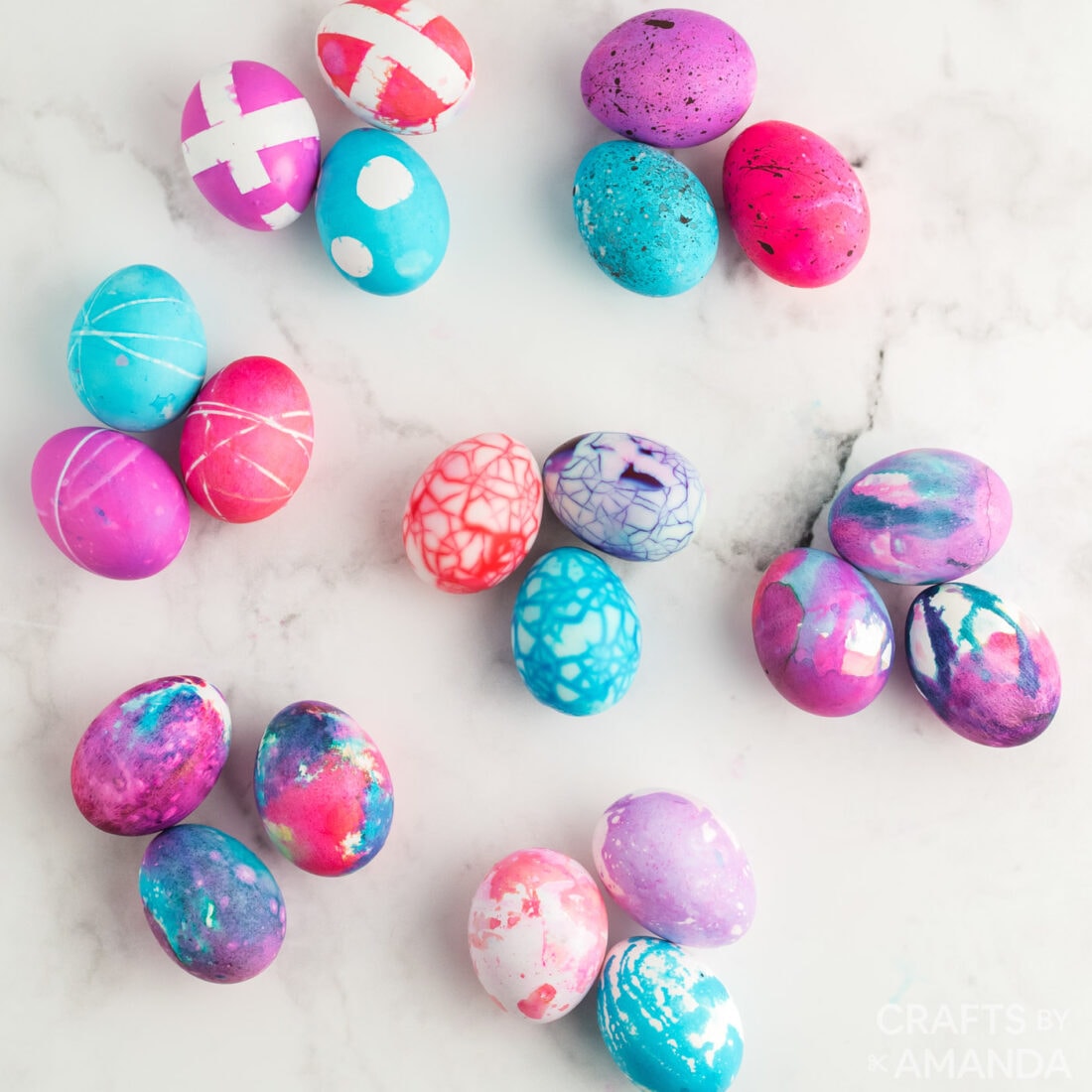
See how you can decorate Easter eggs in beautiful and unique designs with these 7 different methods. These colored eggs are easy for kids and adults alike to create! Why we love this project Decorating Easter eggs is a fun tradition for many, and it’s not just for kids! We’ve experimented with lots of different... Go To project
The post 7 Cool Ways to Decorate Easter Eggs appeared first on Crafts by Amanda.
See how you can decorate Easter eggs in beautiful and unique designs with these 7 different methods. These colored eggs are easy for kids and adults alike to create! Why we love this project Decorating Easter eggs is a fun tradition for many, and it’s not just for kids! We’ve experimented with lots of different... Go To project
We long for the feeling all winter. Bright sun on bare arms, a breeze blowing through dappled shade, and the first ripe berries spotted at the farmer’s market. When warm weather finally returns, there’s no better way to meet it than with a picnic. And the good news is that the best ones don’t require much planning at all.
The Ultimate Picnic Packing List for Every Occasion
This picnic packing list is built around that idea. Whether you’re stealing an hour alone with a good book,
We long for the feeling all winter. Bright sun on bare arms, a breeze blowing through dappled shade, and the first ripe berries spotted at the farmer’s market. When warm weather finally returns, there’s no better way to meet it than with a picnic. And the good news is that the best ones don’t require much planning at all.
The Ultimate Picnic Packing List for Every Occasion
This picnic packing list is built around that idea. Whether you’re stealing an hour alone with a good book, planning a sunset spread for two, or corralling the kids for an afternoon outside, the heart of a great picnic is simplicity—the kind that slows you down and reconnects you to the details that get lost in the rush of everyday life.
A picnic is grounding, and not just because your tabletop might literally be on grass. Everything here can be found at any grocery store or deli. Just add sunshine.
Picnic Packing List for One
To sit outside by yourself is to give yourself a gift—one that requires almost nothing except the willingness to show up for it. Resist the urge to scroll your phone or pop in earbuds. Notice what you taste, what you see, and how the light moves. As you eat, savor the silence, even if it’s only for the length of a lunch. You might be surprised how much you needed it.
There are few settings more reliably romantic than a blanket on the ground at golden hour: shoes off, crickets in the background, a bottle passing between two people with nowhere else to be. Plan your picnic for just before sunset so you have time to catch all its colors. Let the conversation go where it wants to. Linger longer than you planned. (Cue the butterflies.)
A charcuterie spread is the move here. It’s easy to assemble, impossible to rush through, and endlessly customizable to what you both love.
Here’s a reminder worth holding onto: as much as we think kids need to be entertained, they also thrive on imagination. A picnic is the perfect invitation for both—pack the food, then step back and watch what happens. Cloud-watching, bug-catching, rock-tossing contests in a stream.
Little minds have a way of finding wonder in exactly what’s in front of them, when we give them the space to look.
Keep the food simple and the options varied. The goal is less about the perfect spread and more about getting everyone outside and off their screens. That includes you.
We’re in that sweet stretch now—past the unpredictability of early spring, not quite into the full heat of summer. The evenings are long and the light is generous. It’s the kind of moment that doesn’t last forever, which is exactly why it’s worth showing up for. Pack the bag, find the blanket, pick a patch of grass. The best memories rarely come from the most complicated plans.
Of all the rooms to style (and sustain) in my home, the guest bedroom is where things seem to click. Unlike the primary, there’s less pressure to get things just right—it’s an opportunity to get more playful with patterns, lighting, and design styles. And because it’s the space in our home designed to be a welcome invitation to others, there’s a motivation to make it a warm, cozy retreat when guests come to visit.
Because the best guest bedroom ideas don’t just focus on styling, they priorit
Of all the rooms to style (and sustain) in my home, the guest bedroom is where things seem to click. Unlike the primary, there’s less pressure to get things just right—it’s an opportunity to get more playful with patterns, lighting, and design styles. And because it’s the space in our home designed to be a welcome invitation to others, there’s a motivation to make it a warm, cozy retreat when guests come to visit.
Because the best guest bedroom ideas don’t just focus on styling, they prioritize comfort. When someone stays in your home, what they remember most isn’t the decor—it’s how they felt. Did they sleep well? Did the room feel peaceful? Were they taken care of?
With a few thoughtful touches—from cozy bedding to practical storage—you can transform even a small guest room into a warm, welcoming retreat.
Prioritize a Bed That Makes Sleep Easy
If there’s one place to focus your energy in a guest room, it’s the bed. The most important thing a guest will do in this room is sleep, so the bed is more than just a pretty focal point. It should be inviting—and deliver on comfort.
Start with clean, comfortable bedding. Soft sheets, supportive pillows, a thick duvet, and an extra blanket at the foot of the bed are the perfect base. You never know if guests run warm or cold at night, so layering textures instantly makes the space feel thoughtful and cozy.
A beautiful guest room means very little if your guests can’t sleep well. Next to a comfortable bed, light and noise can make or break a good night’s sleep. Blackout curtains or lined drapes help block early morning light and make it easier for guests to rest—especially if they’re adjusting to a new environment or time zone.
Even in lighter, airier spaces, choosing window treatments that soften or darken the room at night can make a noticeable difference. And if blackout curtains feel too heavy for your aesthetic, look for layered window treatments that combine sheer curtains with a thicker panel for nighttime.
Guest rooms tend to feel most welcoming when the palette is soft and neutral. Light blues, warm whites, and sandy beiges create a calm backdrop that appeals to most people and helps the space feel brighter—especially if the room is on the smaller side. That said, don’t be afraid of being more playful in the space, especially if you’ve got an idea that might not make sense in another room—a color wash you want to try, bedding that feels less safe, or wall art that needs a home. You can still simplify around the unexpected design touch by keeping accents tonal or soft.
Keeping the palette simple also allows cozy textures like linen bedding, woven accents, and soft throws to take center stage. The result is a room that feels peaceful, uncluttered, and easy to relax in.
Layer the Lighting for Comfort and Flexibility
Lighting has a huge impact on how a room feels—especially at night. Instead of relying on one overhead light, layer a few different sources so guests can adjust the space to their needs. A bedside lamp makes it easy to read before bed, while a softer ambient light creates a calm, relaxing atmosphere.
If space is tight, consider wall-mounted lighting instead of table lamps. It frees up surface space while still giving guests the ability to control their lighting without getting out of bed. Warm, dimmable light instantly makes a guest room feel cozier and more restful.
Guest bedrooms are often smaller rooms in the house, but a few thoughtful choices can make them feel much more comfortable. Look for furniture with a smaller footprint—taller nightstands, round ottomans, or benches that double as seating and storage. Wall-mounted lighting can also free up valuable surface space. This allows the bed to remain the focal point while still leaving room for guests to move around comfortably.
One of the simplest ways to elevate a guest room is by giving visitors a place to open their suitcase. A folding luggage rack, bench at the foot of the bed, or even a small stool provides a convenient landing spot for bags and prevents guests from having to place their suitcase on the floor or bed. This small addition makes unpacking easier—and keeps the room feeling tidy throughout their stay.
Even for a short stay, having a place to put things makes guests feel more settled. You don’t need a full dresser to make this happen. An empty drawer, a luggage rack, or a few wall hooks can be enough to help guests unpack and organize their belongings.
Smaller nightstands can also work well in guest rooms since most visitors only need space for a few essentials. In tighter spaces, try pairing a nightstand on one side of the bed with a small ottoman or stool on the other—it doubles as both a drop spot and extra seating.
The goal is simple: create a space where guests don’t feel like they have to live out of their suitcase.
Create a Thoughtful Nightstand Setup
One of the easiest ways to make guests feel cared for is through the small details. A thoughtfully arranged nightstand might include a reading lamp, a glass of water, tissues, a small noise machine, and a place to charge a phone. These are the little conveniences people often miss when they’re away from home.
It’s also helpful to keep a small kit of essentials nearby—things like toothpaste, cotton pads, or extra hair ties in case someone forgot something while packing. These quiet touches make a stay feel effortless.
The most memorable guest rooms often include a few unexpected comforts. A basket with extra washcloths, cozy slippers, or a soft throw blanket instantly makes guests feel at ease. Even something as simple as a plush robe can make the room feel more like a boutique hotel than a spare bedroom.
One of my favorite ways to make guests feel at home is to place a book or magazine on the nightstand—something they can flip through as they wind down at night. These small gestures feel simple, but a little thoughtfulness goes a long way.
Keep Fresh Towels Within Reach
Ever stepped out of the shower at someone else’s house only to realize you don’t know where the towels are? Folded towels on the bed, draped over a bench, or neatly stacked in a basket signal that everything they need has already been thought of. Personally, I keep the guest towels separate and tucked away in the guest dresser, so they’re always fresh and ready to go (and so my kids don’t destroy them in between visits).
Bring in Soft Textures
Texture is what transforms a guest room from functional to cozy. Layering soft materials—linen bedding, woven blankets, plush throws, and textured pillows—instantly warms up the space and makes it feel inviting. These tactile elements also help neutral color palettes feel more interesting without overwhelming the room.
Think of texture as the finishing touch that makes a guest room feel lived-in and welcoming rather than overly styled.
Add a Mirror and a Few Getting-Ready Essentials
I’ve found that the single thing most guest rooms miss is simply a mirror. A full-length mirror or wall mirror helps guests check outfits and get dressed without needing to occupy the bathroom for long stretches of time. If space allows, placing a small tray nearby with a few basics—like a lint roller, tissues, or a small jewelry dish—can make the space feel even more thoughtful.
Add Personal Touches That Make Guests Feel Welcome
The most memorable guest rooms feel personal, not staged. This is the fun part: Fresh flowers on the nightstand, a favorite candle, or a small stack of books instantly add warmth to the space. Even a simple handwritten note welcoming guests can make the room feel thoughtful and intentional.
The Best Guest Bedroom Ideas Focus on Comfort
At the end of the day, the most memorable guest rooms aren’t the most elaborate—they’re the ones that make people feel cared for. A comfortable bed, soft lighting, thoughtful amenities, and a few personal touches go a long way toward creating a space where guests can truly relax. Because when someone feels rested, welcome, and at ease in your home, that’s the experience they’ll carry with them long after their visit ends.
This post was last updated on March 14, 2026, to include new insights.
Cooking wings in the Instant Pot yields fall-off-the-bone chicken in just 5 minutes and renders off some of the fat. Glazed with a sweet-spicy blend of antioxidant-rich pomegranate juice, honey and Sriracha instead of traditional hot sauce, these are a delicious (and healthier) alternative to deep-fried wings (1).
Active time: 10 minutes | Total time: 40 minutes
Pressure Cooker Hot Wings
Ingredients
2 lb (900g) chicken wings (assortment of drums and flats)
2 garlic cloves, minced
1/2 tsp salt
1
Cooking wings in the Instant Pot yields fall-off-the-bone chicken in just 5 minutes and renders off some of the fat. Glazed with a sweet-spicy blend of antioxidant-rich pomegranate juice, honey and Sriracha instead of traditional hot sauce, these are a delicious (and healthier) alternative to deep-fried wings (1).
Active time: 10 minutes | Total time: 40 minutes
Pressure Cooker Hot Wings
Ingredients
2 lb (900g) chicken wings (assortment of drums and flats)
2 garlic cloves, minced
1/2 tsp salt
1/4 tsp black pepper
1/2 cup (125ml) 100% pomegranate juice
1 tbsp Dijon mustard
2 tsp honey
1 1/2 tsp apple cider vinegar
1 tsp Sriracha
1 1/2 tsp cornstarch
Cooking spray
Directions
Pour 1 cup of water into an electric pressure cooker. Place a steaming basket in the pot. Toss the wings with the garlic, salt, and pepper and place them in the steaming basket. Cook on high pressure for 5 minutes. Quick-release the pressure and ensure the wings have reached an internal temperature of 165°F.
While the pot comes to pressure, make the glaze. In a small saucepan, whisk together the pomegranate juice, mustard, honey, vinegar, and Sriracha. Bring to a boil over medium-high heat and cook until slightly thickened, about 3 minutes. Reduce the heat to medium-low. In a small bowl, mix the cornstarch with 2 tsp water and add to the pan. Cook until thickened and bubbly, about 1 minute. Remove from the heat.
Place an oven rack 4 inches below the broiler element and preheat the oven to broil. Line a baking sheet with foil and coat lightly with cooking spray. Toss the wings in the pomegranate mixture and arrange them on the prepared baking sheet in an even layer. Pour any remaining sauce over the wings. Broil until browned and crispy, about 5 minutes. Flip the wings and broil for an additional 3 minutes, or until browned on the second side. Serve immediately.
Introduction to the Digital Art Revolution Embracing a New Era of Creativity Artistic expression is undergoing a significant shift with the transition from traditional to digital mediums. The adoption of graphics drawing tablets is not just altering the tools artists use but also transforming how art is conceptualized, created, and consumed. Traditionally, artists relied on […]
The post Paper to Pixels: Embracing Digital Art with Drawing Tablets appeared first on .
Introduction to the Digital Art Revolution Embracing a New Era of Creativity Artistic expression is undergoing a significant shift with the transition from traditional to digital mediums. The adoption of graphics drawing tablets is not just altering the tools artists use but also transforming how art is conceptualized, created, and consumed. Traditionally, artists relied on […]

 Login
Login