Generation Z are nearly five times more likely than their parents or grandparents to prepare their digital legacy and have a plan for their photos after they die, according to new research.
[Read More]
Generation Z are nearly five times more likely than their parents or grandparents to prepare their digital legacy and have a plan for their photos after they die, according to new research.
SHANGHAI, June 5 — China’s major solar panel manufacturers are ramping up higher-margin battery exports to boost revenue as growth in photovoltaic (PV) sales slows, betting on rising global demand for renewable energy storage to cut reliance on fossil fuels.The sector has been hit by weaker domestic installations, slowing exports and record-low prices, with executives expecting global demand to decline in 2026.That has pushed players including JinkoSolar, JA Sola
SHANGHAI, June 5 — China’s major solar panel manufacturers are ramping up higher-margin battery exports to boost revenue as growth in photovoltaic (PV) sales slows, betting on rising global demand for renewable energy storage to cut reliance on fossil fuels.
The sector has been hit by weaker domestic installations, slowing exports and record-low prices, with executives expecting global demand to decline in 2026.
That has pushed players including JinkoSolar, JA Solar, LONGi Green Energy and Trina Solar to accelerate expansion into battery storage, company executives told Reuters.
JinkoSolar plans to nearly triple its battery manufacturing capacity from 5 gigawatt-hours (GWh) to 13-14 GWh by the end of this year, as developers seek to address the intermittency of renewables, a company official said at SNEC — a solar industry gathering attended by over half a million people.
“We are seeing some goodwill from our company’s directors’ point of view, in that we are having massive investments,” Titus Koech, a regional technical head for energy storage systems, told Reuters.
Countries with high renewable penetration — including Japan, Vietnam and India, as well as Germany, the Netherlands, the US and Australia — were among the largest importers of batteries from China in 2025, according to energy think tank Ember.
At JA Solar’s booth, energy storage products took centre stage, marking a shift from PV-focused displays in previous conferences, said Gloria Gao, marketing director of its storage unit.
“If you only own a solar business, it’s not helping your business grow because the margins are really small. That’s why we started our energy storage business, because we foresee the future,” Gao told Reuters.
Solar panels exports, which typically carry better margins than domestic sales, grew 4.7 per cent in 2025 — the slowest pace since 2018, Ember data showed. Growth from May to December is expected to lag that seen in the first four months of the year, Rystad Energy analyst Fei Chen said.
By contrast, battery exports for energy storage are forecast to jump 30 per cent to 150 GWh in 2026, Rystad said.
One-stop-shop versus battery manufacturing giants
China’s solar manufacturers are entering a market dominated by battery giants such as CATL and BYD, but are betting on their supply-chain expertise and ability to offer integrated solar-plus-storage solutions.
Such integration has made energy storage “the second growth curve” after photovoltaics, a Trina Solar official said.
The company’s energy storage shipments in the March quarter — about 90 per cent exported — more than quadrupled year-on-year, added the official, who declined to be named as he was not authorised to speak to the media.
CATL, the world’s biggest battery maker, expects energy storage to account for half of its global sales by 2030, up from 25 per cent now, driven by the need to support intermittent renewable power.
LONGi’s solar-plus-storage integration initiative was advertised on a giant, curved LED screen that cut across the breadth of nearly its entire stall, taking precedence over standalone PV products at SNEC.
Consultancy Wood Mackenzie said the trend reflects a shift in buying patterns.
“When you’re buying solar and storage, you’re getting married to these companies for the next 20 years,” said Yana Hryshko, head of solar supply chain research.
“LONGi and JA just joined (the energy storage business) because you don’t buy your solar from one manufacturer and your storage from another. In the next two years, we’re not going to talk about solar without storage.” — Reuters
About a quarter of global greenhouse gas emissions come from the food system, but the public conversation about food and climate keeps getting stuck at the two ends of the chain — what farmers grow on one side, what consumers buy on the other. The middle of that chain — processing, packaging, distribution, storage — is where most of the practical climate levers actually live, and it is the part you almost never see. Brendan Niemira, Chief Science and Technology Officer at the Institute of Food
About a quarter of global greenhouse gas emissions come from the food system, but the public conversation about food and climate keeps getting stuck at the two ends of the chain — what farmers grow on one side, what consumers buy on the other. The middle of that chain — processing, packaging, distribution, storage — is where most of the practical climate levers actually live, and it is the part you almost never see. Brendan Niemira, Chief Science and Technology Officer at the Institute of Food Technologists (IFT), wants us to look there. Brendan spent more than 25 years at the USDA Agricultural Research Service leading a team of 30-plus scientists developing non-thermal treatments — cold plasma, high-intensity light, irradiation — that kill foodborne pathogens on produce, meat, poultry, and shellfish without cooking the food. He stepped into the IFT role on December 1, 2025, and joins Sustainability In Your Ear to walk through IFT’s new white paper, Food Science & Technology Solutions for Mitigating and Adapting to Climate Change, which lays out a roadmap covering circular bioeconomy practices, AI-enabled supply chain resilience, reusing food waste, precision fermentation, and cellular agriculture.
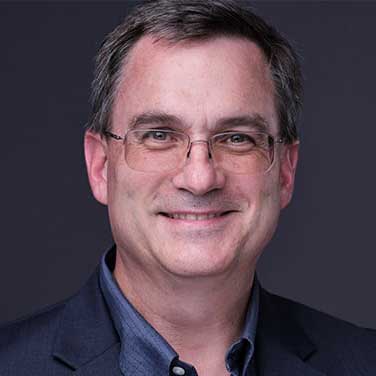
Brendan Niemira, Chief Science and Technology Officer at the Institute of Food Technologists, is our guest on Sustainability In Your Ear.
Brendan describes food safety as a three-legged stool — exclusion, containment, and eradication — and notes that in a warming world the first leg is getting harder. Pathogens travel further, persist longer, and show up in places they didn’t used to, with warming oceans already expanding Vibrio bacteria in shellfish that previously didn’t carry them. That reframes food safety as climate adaptation work — and it lands at the moment when federal research capacity is being thinned out. The conversation then opens into the ultra-processed food debate, where IFT is pressing the case that nutritional quality, not processing intensity, should define dietary guidance, because pasteurized milk, shelf-stable beans, and a deep-fried snack cake are all “processed,” and collapsing them into a single category hobbles the very technologies that extend shelf life and cut food waste. Brendan closes on the structural shift coming next: humans domesticated about 50 animal species over 25,000 years of agriculture, but precision fermentation — built on whole genome sequencing and metabolomics — opens up trillions of possible microbial community combinations, each able to turn side streams and waste streams into dairy proteins, vitamins, flocculants for water treatment, and food ingredients. Garbage in, gumdrops out, as he puts it. We’re not there yet, but the trajectory is clear.
To learn more about IFT’s work and download the climate white paper, visit ift.org.
Hello, good morning, good afternoon, or good evening, wherever you are in this beautiful planet of ours. Welcome to Sustainability In Your Ear. This is the podcast conversation about accelerating the transition to a sustainable, carbon-neutral society. I’m your host, Mitch Ratcliffe. Thanks for joining the conversation today.
We’re going to talk about food. Food is responsible for roughly a quarter of global greenhouse gas emissions each year, and the climate is now responsible for a growing share of what happens to our food. Food systems face dramatic challenges. Droughts are reshaping olive country in the Mediterranean. Warming oceans are increasing the frequency of shellfish pathogen outbreaks. Hurricanes are taking out manufacturing facilities. Sea level rise may flood key ports where food flows, and fluctuating precipitation is driving mycotoxin contamination in crops. And that’s only a partial list.
The food system must feed 8 billion people while the conditions it was designed for are unwinding underneath it. Meanwhile, the public conversation about food and climate gets stuck at the two ends of the chain: agriculture on one side, consumer choice on the other. But our guest today wants us to pay attention to what happens in between—the processing, packaging, distribution, and storage that turn a fall harvest into something you can eat in February. That middle segment is where a quarter century of food science meets the climate problem, and where most of the practical levers actually live.
Brendan Niemira is the Chief Science and Technology Officer at the Institute of Food Technologists, a Chicago-based scientific association that has served as the voice of the global food science community since 1939. Its 200,000-member network spans academia, government, and industry. He stepped into this role on December 1, 2025, after more than 25 years at the USDA Agricultural Research Service, where he led a team of more than 30 scientists, engineers, and students developing tools to kill foodborne pathogens on produce, meat, poultry, and shellfish.
Brendan’s specialty is non-thermal food safety systems that use cold plasma, high-intensity monochromatic light, irradiation, and pulsed light treatments to disinfect food without cooking it. He’s published more than 200 peer-reviewed papers, holds patents on the technology, and the 2024 citation rankings place him in the top 0.01% of food scientists worldwide.
Brendan joins IFT at a moment when food science is being pulled in two directions at once. On one side, climate pressure on supply chains, food safety, and resource efficiency is intensifying—the subject of IFT’s new white paper, Food Science & Technology Solutions for Mitigating and Adapting to Climate Change, which lays out a roadmap for circular bioeconomy practices, AI-enabled supply chain resilience, food waste valorization, and emerging technologies like cellular agriculture and precision fermentation—that is, growing food in vats.
On the other side, the public and political conversation about food is fixated on ultra-processed food, and the MAHA Commission—the Make America Healthy Again Commission—frames processing itself as the central problem rather than part of the solution. IFT has been one of the loudest scientific voices arguing for definitions grounded in nutritional quality rather than processing intensity. That’s a position that’s both scientifically defensible and complicated by the fact that IFT membership includes much of the food industry.
So we’re going to talk with Brendan about what the climate case for a redesign of the food system is, what IFT’s recent white paper does and doesn’t quantify, and where precision fermentation and cellular agriculture actually stand in 2026. We’ll also look into why food safety remains under-researched within climate science, and how IFT is navigating the MAHA debate. To learn more about IFT’s work, visit ift.org; the white paper we’ll be discussing is available there as well.
The climate fight runs through the food we eat, but most of the action is happening in the part of the supply chain that nobody sees. So let’s find out what Brendan Niemira sees right after this brief commercial break.
[COMMERCIAL BREAK]
Welcome to the show, Brendan. How are you doing today?
Brendan Niemira (4:46)
I’m doing great, Mitch. How are you?
Mitch Ratcliffe (4:49)
I’m well. It’s a beautiful morning here in Southern Oregon, and I’m excited about this conversation. You spent 25 years at the USDA. What does the food system look like from this new vantage point at IFT? How’s it different from the perspective at the lab bench?
Brendan Niemira (4:59)
Well, first let me say that I really enjoyed being a scientist for the USDA. There were a lot of great scientists working at the USDA, and I was absolutely proud to be one of them. Even with the recent losses, there are great scientists, engineers, and subject matter experts in different areas of the federal research continuum. The research done in those labs remains a crucial part of the overall science landscape for the US.
My work as a food microbiologist with the USDA Agricultural Research Service was focused on food safety and advanced food processing technologies—again, to improve food safety and extend shelf life. Now, as the Chief Science and Technology Officer for IFT, I get to engage with all of the technical areas of food science: microbiology, chemistry, sensory science, sustainability, food laws, and regulations. I also get to engage in the larger space around advocacy and science communication. I get to work with colleagues across the whole food system—all the way from primary producers like farmers and ranchers, to processors, product developers, all the way to nutritionists and retailers. So I get a much bigger-picture view.
Mitch Ratcliffe (5:56)
When you think of it from that perspective—from the industry side—what do you think the key issues we need to consider as a nation are in our food system as it stands today?
Brendan Niemira (6:08)
Food has to be safe, healthy, and wholesome, but it also has to be available, it has to be sustainable, and it has to be the kind of food that people will want to eat. It doesn’t matter if you produce something that’s super healthy and even super affordable; if it doesn’t meet the cultural needs of what people want to eat, if it doesn’t meet their expectations for how it looks, how it tastes, how it performs in their lifestyle, then it’s going to stay on the shelves, and all that science that you did to produce this product is not going to be any good, because it’s not going to provide any nutritional benefit to people.
Mitch Ratcliffe (6:43)
IFT draws a sharp line between food processing—what you do to the ingredients—and food formulation, which is the ingredient list itself. Why does that distinction matter, and why has the public conversation lost that distinction?
Brendan Niemira (6:56)
Well, we draw that distinction because if you take either one of those aspects alone—just the ingredient list, or just the ingredient processing—neither one is going to give you a complete indication of the healthfulness or the nutrient value of the food. If you use either one just as a simple shorthand—you say, well, there’s a certain thing on the list of ingredients, or a certain thing was done to that stuff—you miss the mark. You’re going to have to take both of them into account to look at the total healthfulness of the food.
Part of the issue with the public conversation is that, frankly, it’s a little bit more straightforward to give short, simple messages about which foods are healthy and which foods are not. Look for this ingredient, or look for that processing step, and it’s a thumbs up or a thumbs down. The fact that it’s simple is true, even if those short, simple messages don’t give a complete or, frankly, a fully accurate picture. Food is more complicated than that, and complicated stories are harder to tell.
Mitch Ratcliffe (7:53)
Our dialogue is, let’s just say, relatively simplistic right now. Are we diverging from the real issues we need to be exploring as a nation when we talk about the MAHA concerns?
Brendan Niemira (8:05)
Science communication tries to make complex issues of science and nutrition, nutritional availability—even getting to things like cultural tolerance, cultural acceptability, economics, and all that sort of stuff—it tries to make these very complex issues understandable. Not everybody is a nutritionist; not everybody is an economist. People just want to be able to get food that they want to feed their family. They want it to be safe, they want it to be healthy, they want to be able to afford it, they want to be able to provide for their family, and they want to be able to enjoy it.
Food is about more than just nutrition. Food is about culture, food is about satisfaction, food is about joy. Those are things that simple stories can speak to, but the science behind this can be very complicated. So it’s the job of us here at IFT, and the job, really, of all science communicators, to take these complicated issues and present accurate, factual, complicated science information in a way that people can understand, and that they can use to make decisions on.
Mitch Ratcliffe (9:08)
Having written about technology and sustainability and a variety of things over the years, I find that one of the challenges is that experts resort to their jargon, partly because it’s shorthand—it makes it easier to say something to somebody else—but it relies on an understanding of that jargon. Are we at an inflection point? I hate to put it this way, but is Bobby Kennedy simplifying this conversation in an important way?
Brendan Niemira (9:36)
This is why science communication is a distinct discipline. You can be a terrific microbiologist or chemist or toxicologist or nutritionist or economist, but if you’re not able to communicate to people outside of your discipline, then you run the risk of miscommunication, where you’re trying to say something but you’re just not communicating accurately. And unfortunately, you also set up a situation where people can take what you say in your good-faith effort to explain it properly, take a word here or a sentence or a phrase, and things get misunderstood or taken out of context. When people draw conclusions from material that is misinterpreted, then base decisions on that, or policies based on that, you can get to a point where the science is over here, the communication is in the middle, it gets a little bit muddled, and then policies arising from that are based on something not directly related to what the science is actually telling you.
That’s why we try to support good science communication and try to give people tools to communicate the science. At IFT we bring a lot of different scientists together in different disciplines, and we try to give them the tools to make sure that people are understanding their science and connecting on it appropriately.
Mitch Ratcliffe (10:56)
I think that’s a really important point: that we need to create full access to the conversation, so people who want to dig in further can go further and learn more, in order to deepen their understanding of the decisions they face, either as a consumer or as a policymaker. I’ll just give a quick shout-out to ift.org. We have lots and lots of information—some of which is intended for scientists, technicians, food scientists, and food technologists, and is very jargon-heavy—but we have a lot of information that is intended for the general public to consume, and that is intended for decision-makers in industry, academia, and government.
A moment ago, you talked about the food system needing to be sustainable. A recent meta-analysis found that processing, packaging, transport, and retail steps in the food process account for just a modest share of the overall greenhouse gas footprint of our food system—farm production and distribution account for most of the rest. If most of food’s climate damage is upstream, how big a sustainability lever can processing innovation actually be? Can we really lower the overall impact of our food?
Brendan Niemira (12:03)
Well, you’re absolutely right, a lot of the impact is on primary production, and that’s why people are also working on reducing the carbon footprint, water usage, and overall sustainability impact at the primary production stage: farms, ranches, fisheries. If you go talk to groups like the American Society of Agronomy, the Crop Science Society of America, the Soil Science Society of America, the American Meat Science Association—all those folks—they are working hard. They’re doing all of that science to develop and implement ways to improve sustainability in terms of carbon footprint, water-use efficiency, land-use programs, wildlife setbacks, insect refugia, and a host of other approaches.
Now, IFT does food. We do food processing, food science, food technology. So we are in the center part of that continuum, but we are actively working with those other scientific organizations to support the work that falls under those sectors, the overall food system, and to improve what we can do in processing, packaging, transport, retail, and so on.
Mitch, I would say this is one of those cases where we can’t allow ourselves to be tripped up by the false thinking that if we can’t do everything, then we shouldn’t do anything. Our Sustainable Food Systems interest group is an active and vibrant part of all the food science that we support. There’s a lot of communication between what they are doing and what other efforts are underway in other societies and other parts of it.
Mitch Ratcliffe (13:26)
Absolutely—we can’t let the perfect be the enemy of progress. We have to take important steps.
Brendan Niemira (13:31)
Here at IFT, we’re doing what we can, and we are supporting the other people that are working in their areas as well.
Mitch Ratcliffe (13:37)
When I read the white paper that I mentioned in the introduction, there was not a lot of quantified environmental data, but it seems to me that what you’re saying is that that’s an area we really need to dig into now. How do we do that?
Brendan Niemira (13:50)
It’s by talking to people who are on the ground doing that work. I would not sit back here as somebody who focuses on food production and food science and go talk to a soil scientist and tell them what to do, or what they should be doing, or what I think is most important in their area. When we’re all focused on the same overall goal of improving sustainability and reducing the impact of how we grow, how we harvest, how we process, how we ship, and how we consume our foods, then we need to listen to each other. There are people who have expertise in lots of different areas.
Our food is complicated. People think, well, there’s an apple on the shelf, or there’s some hamburger in the cooler. Food is complicated—it really truly is. And all of the different people that are contributing in all the different ways, all up and down across the food system, the food continuum—we need to draw on their expertise and get together to solve problems that will work across the entire system. If one person working on just one part of it rolls out a solution and says, ‘Yep, I’ve done my thing, and all the rest of you should change to do what I want,’ then that may not be a usable solution, because it breaks other parts of the system. There has to be a holistic approach.
Mitch Ratcliffe (15:04)
As you say that, I realize how hard it is just to get food from my garden at the beginning of the season onto a plate at the end of the year.
Brendan Niemira (15:12)
Yeah, and that’s encompassing. There are different people who grow different products, different commodities, different regions. You grow different kinds of tomatoes in different parts of the country, and there are different ways of growing food. Even on a very, very small scale, it gets to be very complicated. You have to have a lot of different kinds of knowledge, a lot of different kinds of infrastructure, a lot of different kinds of expertise and equipment, and so on. Plus, you have to comply with different regulations, different laws controlling different sorts of commodities in different parts of the country at different times of the year. All of this knowledge has to come together and be brought to bear on the problem.
Mitch Ratcliffe (15:50)
Again, it’s a huge storytelling problem, but we have to look at this as a system rather than a bunch of separate parts that don’t necessarily interact with everything else.
Brendan Niemira (15:58)
Absolutely, absolutely. It’s all one. That’s why we talk about the food system and the food continuum, because going right from primary production through all the various stages of getting food to you, and then on the back side, taking food waste—say, away from restaurants at their point of sale, point of service, point of consumption—some of those aspects of where the food goes, and what kind of advantages we can gain from paying attention to where those nutrients are ending up.
Mitch Ratcliffe (16:26)
One of the other—and probably the most shocking—parts of the white paper that I read was how our dietary recommendations are being undercut by climate change. For instance, the Mediterranean diet is recommended; it consists of olives, olive oil, tree nuts. But those come from regions that are warming 20% faster than the rest of the globe. How should we think about US dietary guidelines in terms of how climate stress is going to change the availability of food over the course of the next decades?
Brendan Niemira (16:58)
I think it starts with a clear-eyed understanding of what it takes to grow, deliver, and consume food. If you’re saying, well, I’m going to lean into one kind of a diet or another—whether it’s the Mediterranean diet or other specialty diets, either recommended by your doctor, by a nutritionist, or recommended by your own cultural or societal predilections—where does that food come from? Is it grown locally? Is it shipped far away? Does it come from other parts of the country? Does it come from other countries?
And then you have to understand: this is what food costs—not just the money, but in terms of the carbon you’re using to produce the food, the water, the land use. Once you have that accurate information and you have an accurate understanding of what goes into producing the food, then you can start to make some other decisions about the health and nutritional benefits of the food that you’re consuming, or one aspect of it, and then you can make other decisions about the other sustainability parts of how you’re getting your food and how you’re eating it.
Mitch Ratcliffe (18:07)
You mentioned the cuts we’ve seen in federal research recently. As a microbiologist, where do you think federal climate-health research should be focused at this point?
Brendan Niemira (18:17)
My specific work with food microbiology was in food safety, and so I was always very concerned with understanding the risks for human pathogens on foods. Despite the best efforts of food producers, you still do have instances where you have E. coli, salmonella, or listeria on one commodity or another. The way that you respond to that—there’s a sort of three-legged stool of responding to a food safety problem from a microbiology and food safety standpoint.
You can prevent these harmful organisms from being on your food commodity in the first place—that’s called exclusion. That’s where you do water quality monitoring, you do land-use history analysis, you do exclusion activities to make sure that the bad bacteria or viruses or parasites don’t get on the food in the first place.
Then you have containment, which is a monitoring system. That’s where you do continuous testing of foods being produced at the point of production, point of packaging, when they’re in shipping. Sometimes you pull samples, you hold them back a little bit, you test to make sure there are no pathogens on them, and then if you find any, that’s when you do the recalls and the trace-back analysis. Our Global Food Traceability Center at IFT is working very hard to develop protocols so that if we have a problem, we know where it came from, we can trace that back, we can isolate it, and we can contain it.
Then the third leg of the stool is eradication—that is to say, you apply techniques and technologies that will eradicate potential organisms. In one big way, we heat. If you’ve got ground beef, you can cook that ground beef, and you apply a thermal process that kills any potential E. coli or anything that might be on it. Now, heat is one technique, but you can’t apply that to lettuce. That doesn’t really work, which is why my research—and other people’s research—is working on other kinds of processing technologies that you can apply to more sensitive foods: fresh fruits, vegetables, berries, melons, other sorts of more sensitive products. Different kinds of novel sanitizers in the organic space, non-thermal processing technologies, other sorts of interventions that will kill the organism so they can’t cause any harm. So you’ve got exclusion, containment, and eradication, and all these different efforts working together. Those are the kinds of research that you’re going to do to have a good food safety impact.
Mitch Ratcliffe (20:56)
Well, because exclusion is getting harder—because of the rising temperatures globally encouraging the growth of more pathogens, or at least the propagation of more pathogens—it sounds like that’s raising the bar for containment and recall.
Brendan Niemira (21:09)
Yeah. If you find yourself in a situation where one of those things is not an option, or you’re not able to do it as well as you were before, then you lean into the other two. If effective technologies for eradication don’t exist, well, that’s where you need to put some research dollars in to create them.
I’ll give you an example. Years and years ago, we had lots and lots of outbreaks on sprouts. Sprouts were the cause of continuous outbreaks again and again, and research was put into place to find: how can we eliminate E. coli and salmonella on sprouts so they can be as safe, healthy, and wholesome as they can possibly be? But just because we were working on eradication steps does not mean we were ignoring the other two. There were things like seed certification processes to make sure the seed coming into these sprouting facilities is as healthy as it can be. There were containment efforts—let’s do better trace-back analysis, let’s do better testing, so that we know what’s on there, so we can act when we find it.
So it’s not a case of, ‘Well, we’re just going to work on one and ignore the other two.’ You’ve got to have an understanding of what the problem is. You can address all the different aspects of science at once. I would say this is one of the issues that happens when you start to see cuts in science: then you have to start making some hard decisions—well, we’re going to dial back on one and we’re going to keep our remaining resources and put them into one of the others. Maybe you’re leaving yourself in a situation where two years from now or five years from now, you might say to yourself, ‘Darn, I really wish we’d been working on that.’
Mitch Ratcliffe (22:45)
Do you think that the private sector can step into the gap that has opened? Or are we really at a point where we need to seriously reconsider our federal funding for food science research?
Brendan Niemira (22:55)
Private funding—corporate funding—has always been a huge part of food science research. Companies fund their own research, and then there’s funding through grants and consortia funding larger works. Industry funds provide grants for academic researchers, and academic research is a huge part of this. Government research is a huge part of this. And in a time when you’re looking at research funding that is cut or under threat, one of the unwanted outcomes is that there’s research that’s not being done.
Some of our advocacy priorities at IFT include seeing that we want food science research—including food microbiology, food safety, food toxicology, whether it’s chemical toxicology, chemical safety issues, or biological safety issues. We want to see that funding. We’d like to see it increase, honestly, but at least we’d like to see it not cut. Because you can’t have good data without good science, and you can’t make good decisions without good data. So, if you want to be able to make good decisions and develop good policies, you need good data, and for that, you need good science.
Mitch Ratcliffe (24:10)
We certainly have had a foundation of solid data in the United States for the past 50 years. I think we’ve got a great sense of the problems that we need to talk about. Let’s take a quick commercial break, folks. We’re going to come right back and talk more with Brendan.
[COMMERCIAL BREAK]
Welcome back to Sustainability In Your Ear. Let’s get back to the conversation with Brendan Niemira. He is the Chief Science and Technology Officer at the Institute of Food Technologists, a 200,000-member network focused on food production and safety.
Brendan, let’s talk about bugs. The paper discusses a Costa Rican study where they’re taking a variety of food waste to farm edible insects. What’s the realistic potential for adoption of food made of insect protein in the United States, and is there a path even to regulatory approval for that in this day and age?
Brendan Niemira (25:07)
Okay, here’s the thing. I actually just wrote a book chapter on edible insects and digging into all the ins and outs of this, so I happen to have a lot of this fresh in my mind. There are only a very small number of animals that we can take things that humans can’t eat—like cellulose—and convert. Humans can’t eat grass; humans can’t digest grass or the cellulosic material. Historically, the way that we have made cellulose into something that we can eat is to feed it to an animal and then eat the animal. Right now we do that with cows and other ruminants.
But you can do that with crickets. Crickets have some advantages over cows: they use a lot less space, they have a shorter generation time, so you can be more responsive to market changes, they use less water, they use less energy, and so on. But then at the end of the day, you have this insect protein, and what’s the realistic prospect for that?
I would say that, because of the cultural nature of Western society, Western society does not have a cultural heritage of entomophagy—eating bugs. That’s the Greek word for it. There are other parts of the world that do have a cultural heritage of this, and so they have lower cultural barriers to having insect proteins as part of the diet, either as just edible insects—as a commodity, where you look down and say, hey, here’s a cinnamon-crunch-flavored cricket. These are products that are on the market.
Mitch Ratcliffe (26:44)
I’ve tried these. They’re not the worst thing in the world, but they’re also not something that most people would pop in their mouth at a movie theater.
Brendan Niemira (26:50)
Well, certainly not in the US, and not in most Western societies that derive their cultural heritage from Europe. So if you’re not going to have these things that are identifiable as an insect, could you have insect protein powder as part of an insect supplement? I think these things are still in the market. I’ve tried it. I’ve got insect powder, and—you know, put my money where my mouth is—I’ve made brownies and cookies with cricket powder. They taste like brownies and cookies. It was okay.
As a large-scale process, I think you have to start with the cultural issue and the consumer issue, because if you’re going to make a product that—let’s generalize—very few people want to buy, it’s a very, very niche product. Then you are going to have that process remain a niche process, and so the overall impact on large issues of sustainability, or carbon usage, or moving away from conventional animal sources or plant sources of protein, is going to be kind of limited.
Where you might see much more of a penetration, however, is in taking these insect protein sources and using them as feeds for aquaculture. Right now, fish are not really able to digest soybean meal very well, so you can’t raise fish the same way that you raise cows and chickens. They’re trying to work to breed new kinds of trout, let’s say, that are better able to use soybean meals so you can get some of those economies of scale. But if you can lean into insect protein production, you essentially use the insect farms almost as a kind of bioreactor to turn cellulose—indigestible cellulose—into a digestible form of protein that can then be processed through aquaculture or chicken farms, conventional animal agriculture, that then would go into the human food supply.
I think it is still kind of a long way away, at least in the United States, from a time when insect proteins are going to be a significant or a major part of our daily diet. The FDA rules on insect proteins and edible insects, right now, are that they have to be safe and wholesome. They have to be tested for human pathogens, and so on. These insects have to be in a production facility that is dedicated to that production—they cannot be wild caught. So you can’t just go out into your local meadow and swing a net and start collecting crickets. They have to—
Mitch Ratcliffe (29:30)
They might be contaminated with pesticides.
Brendan Niemira (29:33)
Pesticides, who knows—there might be other pathogens on them, there might be fungi on them, there might be potentially heavy metal contamination. So these have to be grown in a dedicated production facility. The FDA is certainly on the ball in terms of having an understanding of the potential risks for some of these things, and they have put rules in place to make sure that if insects are produced as human food, they adhere to safety rules and regulations.
Mitch Ratcliffe (29:58)
The metaphor of the insect as a bioreactor with legs makes a lot of sense to me. But precision fermentation using bioreactors is another one of the paper’s big bets, and I’ve personally been involved in trying to raise some funding to create dairy proteins using acetate fermentation, which would reduce the need for concentrated animal feeding operations, so dairy’s environmental impact could be drastically reduced. Can you explain how precision fermentation works for our listeners?
Brendan Niemira (30:30)
Sure, absolutely. Precision fermentation is a really fascinating area of research right now. The work that we’re doing with whole genome sequencing and proteomics and metabolomics has just led to opening a whole new chapter in what we’re doing with fermentation.
What is precision fermentation, versus conventional fermentation? People have been fermenting foods for thousands of years, relying on yeast and bacteria to process raw ingredients and turn them into edible foods—everything from beer to bread to kimchi. Those microorganisms only ate certain things, and from a metabolic standpoint, they only produced certain things. They were useful because they were able to break down cellulose and hemicellulose into digestible sugars for humans. They’re able to take food which was not edible or provided very little nutritive value, into things that do provide nutritive value for us when we consume them.
But because it was gathering wild strains—and even after you get into the Louis Pasteur days of breeding new strains of yeast to make better beer—it was still kind of old-school breeding to get better fermentation cultures. Now, thanks to modern food science, we can really dig into the cellular, molecular microbial ecology. I mentioned whole genome sequencing, microbial community metabolomics, and so on. We can specify what metabolite or nutrient we want to produce, and we can design a multi-species microbial ecology that will produce it, and we can do that based on specific inputs.
Bacteria in the wild almost never live alone. You never have one species of bacteria; you have multiple species of bacteria all working together in conjunction with other kinds of fungi, and so on, to produce lots of different kinds of metabolites. Now we have a much greater understanding of that multi-species microbial economy.
The way I like to think of it is, if you imagine Little House on the Prairie, and you’ve got families—settlers—going out into this wide-open space, and you’ve got 50 families in some state, they establish a town, and that town behaves in a certain way. The behavior of that town will change dramatically if you introduce one person that comes in and opens up a church, and now the behavior of the town changes. The behavior of that town will change dramatically if one person comes into town and opens up a casino. If you have a church and a casino, even though they represent only very minor components of the overall population, they create this incredibly complex interaction—metabolomics, consumption, behavior. You get complex inputs, complex outputs.
Up till the last 10 years, a lot of this stuff has just been so complicated, such a black box. We have a good understanding now—a much clearer understanding. So we can take side-stream products from food processing, we can take waste-stream products from food waste, and we can lean into precision fermentation, design communities of microbes, give them the feedstocks that we want, and we can get valuable nutrients out the other side.
Mitch Ratcliffe (33:48)
What can we make?
Brendan Niemira (33:50)
Well, if you want to make lactic acid, you want to make certain kinds of vitamins, you want to make certain kinds of proteins, you want to do conversions of things. There are a lot of things that are useful in the food industry. You can make surfactants, you can make flocculants. Flocculants are stuff that, if you’ve got a bunch of solids suspended in material, you add a flocculant, and it causes everything to clump together and drop out, so you get clean water out the other side.
Mitch Ratcliffe (34:19)
So, to put a finer point on it, we can make both food materials and materials that help us process a variety of things, including our waste.
Brendan Niemira (34:29)
Correct. Absolutely. Flocculants are used very extensively in wastewater production, where you’ve got a lot of suspended organic matter, or you’ve got a lot of other suspended material. You add in some flocculants, all that stuff clumps up, and it drops out, and that really simplifies the process of filtration and cleaning the water, so you can get clean water back into the environment.
From a food standpoint—stepping away from the wastewater stuff—let’s say that you’re producing beer, you’re producing wine, you’re producing yogurt, you’re producing some other kind of liquid product. You might add one of these ingredients to cause oil droplets to remain suspended, or to cause sediments to drop out, or to give you better colors, or to give you different kinds of nutrients, or different kinds of vitamin production. All of these things can be the result of precision fermentation, because we have that understanding of what the microbes are doing, what they’re eating, and what they’re producing.
There’s a lot of research that’s going into this right now to work out those molecular details, those metabolomics details, and the position is to scale it up and then put it through its paces. Let’s get that cost engineering analysis. Let’s scale it up; see what’s it going to cost, where the weak points are, where we need to improve. So that you can then feed into developing a business case around it, selling your product, and working on consumer acceptance to get stuff out in the real world.
Mitch Ratcliffe (35:51)
Going back to simplification: what we’re talking about is that we have been farming as a species now for 25,000 years with macro-level cattle and products. Where we are moving now is micro-scale relationships with nature that allow us to produce our food and other forms of materials and supplies.
Brendan Niemira (36:14)
Right. So in conventional agriculture, let’s be generous—there are 50 species of animals that we use in animal agriculture, and these animals are used to take things that we can’t eat and turn them into things that we can eat or things that we want to eat. You’ve got cows, you’ve got chickens, you’ve got hogs, you’ve got goats, sheep, and so on. But it’s a relatively short list.
If you’re going from conventional vertebrate animals to insects, there are thousands and thousands of species of insects, only a small handful of which have really been looked at for optimization. Each one is capable of metabolizing different sorts of things, they live in different kinds of communities. And when you then go to the microbial world, you’ve got millions of kinds of organisms that you can use, and if you look at the different kinds of microbial community combinations, the numbers scale incredibly—like trillions of different kinds of combinations of microbial communities that you can create and cultivate and use in these bioreactor kind of environments, each of which eats different things and produces different things.
The goal is always to produce food and nutrients and food processing materials that are safe, healthy, wholesome, available, and sustainable. When you start to lift your eyes up to the skies and see all the possibilities out there, it really becomes—I don’t want to say magical, because I’m a scientist—but it becomes amazing to think about all the things that we could do if we were able to lean into the kind of science that would allow us to take advantage of all these different things.
Mitch Ratcliffe (38:02)
It is magical in the sense that Arthur C. Clarke meant it: any sufficiently advanced technology appears to be magic until it becomes normalized.
Brendan Niemira (38:11)
Just imagine that you had some kind of a tank and you put in garbage and you get out gumdrops. Wow, that’s magic. Well, okay, obviously we’re oversimplifying, because there are all the various steps involved in that. But at IFT, what we’re trying to do is bring together all of the different food scientists and food technologists who have the knowledge that will allow us to do some of those things—to increase the food supply, make it safer, make it more wholesome, make it more available, and do it in a way that people can access and that they can have knowledge and confidence in using.
Mitch Ratcliffe (38:50)
Another topic in the paper was cultivated meats, and this is something that we’ve had folks on the show talking about several times. In 2013, a burger grown in the lab cost about $300,000, and it’s under $40 today. We’re talking about meat that is coming out of a lab, not something processed to appear like meat. Where’s that technology realistically today? Because that number is 10 years old.
Brendan Niemira (39:16)
It’s getting better. I don’t recall exactly what the latest numbers on that are—whether it’s gone down to $20 or $15 or where it is—but this is one of the big areas of technology that people are looking at. Arthur C. Clarke might have predicted this back in 1955, but actually, I believe it was Winston Churchill who predicted this. I’m trying to remember the quote, but he said something like, someday we’re going to be able to raise chicken legs without having to raise a whole chicken.
Are we there yet? Well, we’re not quite there yet, but there’s been a lot of work that’s been done on this. Cellular agriculture, now, to create meat cells, whether they’re from pork or beef or chicken or fish, to grow these out so that they look, taste, perform, and smell like—I’m not saying like the real thing, because they are the real thing, and this is ultimately what it is, but like conventional, traditional things that everybody is used to.
Part of the work that’s gone into it has been to show that, yeah, you can do this—you can produce these, and they look like a burger, tastes like a burger. But can you do it in a way that’s going to allow you to make that available to people, so that it’s not just a very, very billionaire niche novelty product? That’s part of the challenge, but I think that’s part of the challenge with any kind of food technology innovation.
Mitch, you start in the lab, and you begin with saying, well, is this even possible? And once you’ve demonstrated that it’s possible, then you start to develop that out, and you say, well, how do we lean into some of the engineering stuff to make it realistic, and realism falls in—what people will be willing to buy, from a cultural acceptability standpoint, from their expectation of what food is, how much it’s going to cost, how available it’s going to be, and what are the inputs necessary to create it? That’ll dictate a lot of the overall feel and the overall landscape in which these new products are going to operate.
Mitch Ratcliffe (41:36)
It’s a data problem to a very great degree, and one of the areas the paper goes into in depth is how AI-driven supply chain modeling and various forms of traceability can perform as climate adaptation tools. Where are those technologies actually deployed today at commercial scale that you might be aware of? And do you have any evidence that they’re actually reducing emissions, reducing the overall impact of our food system on the planet?
Brendan Niemira (42:00)
A lot of the AI tools—I can tell you what the AI tools are doing now, and probably by the time this show airs, they might have changed.
Mitch Ratcliffe (42:09)
Obsolescence is an hourly thing today.
Brendan Niemira (42:12)
AI tools are moving so fast. But AI is one of those areas where, if you want to know how much something costs, or how much water you’re using to produce it, or how much of an impact you’re having—being able to go into the data and ask sophisticated questions of complicated datasets is one of the things that AI is very, very good at. It does it quickly, so you can get to: what are the trends, what are the key points, what are the key pain points, where do we need to lean in and do more research and do better, so that we can get a better outcome on the back side.
Mitch Ratcliffe (42:48)
So we’re just beginning in that process, along with the leaps that we’re taking in various forms of fermentation and cellular agriculture. Can you paint a picture of where you think the food system should be in 10 years in order for us to start to transition through the climate era?
Brendan Niemira (43:06)
The food system should be more holistic. That, I think, is one of the things that will make a big difference in terms of our overall ability to respond to issues of sustainability. It encompasses everything that falls under that. Right now there are disparate areas of science and disparate areas of scientific inquiry that are a little bit isolated.
I like to make the joke: if you’ve got an apple on the tree and you’ve got a bacteria on that apple, it’s a plant pathology problem. But as soon as the apple falls from the tree—well, now it’s a food microbiology problem. You need to get the plant pathologist and the food microbiologist talking to each other so they have an understanding of the continuum. I think if we’re going to respond to these large, complicated problems, then we need to have a greater connection between different areas and different scientific disciplines, so that we can adopt and create that holistic approach.
Mitch Ratcliffe (44:04)
Well, IFT is doing a lot of work to articulate that. You mentioned ift.org earlier. How do people follow your work? What do you recommend they do to keep track and keep at the cutting edge, so they understand these things as they evolve?
Brendan Niemira (44:19)
Well, you can join IFT. That’s an easy one. If you go to ift.org, there’s membership information right there. We’re a great group of folks, very active and very involved in all kinds of different areas of food science and food technology. We make a big effort to publicize what we’re trying to do, the science that’s done, the research that we connect. When we have all the different areas—people working within the field of food science come to the meeting and they connect with us—academia, industry, and government members of IFT—when we connect them all together, we publish, like the white papers we’re talking about right now. We do press releases, we do commentary on different things, we engage in media responses, all kinds of stuff. Some of this is kind of hot-button issue of the day, and other times we comment on larger scientific issues—big landscape issues that are going to affect us now and tomorrow, and over the next 20 years.
Mitch Ratcliffe (45:24)
Well, Brendan, thanks. This has been an eye-opening conversation, really interesting.
Brendan Niemira (45:27)
Well, Mitch, I’ve had a lot of fun with it. I really appreciate your having me on the show.
Mitch Ratcliffe (45:34)
Welcome back to Sustainability In Your Ear. You’ve been listening to my conversation with Brendan Niemira. He is Chief Science and Technology Officer at the Institute of Food Technologists, the Chicago-based scientific society that has connected food scientists across academia, government, and industry since 1939. You can learn more about IFT’s work and read that new white paper we discussed, Food Science & Technology Solutions for Mitigating and Adapting to Climate Change, at ift.org.
Most of the climate fight in food is happening in the middle of the supply chain, where the public has almost no visibility, and the policy debate keeps looking somewhere else. Brendan described a three-legged stool for food safety—exclusion, containment, and eradication—noting that as the planet warms, exclusion gets harder. That’s because pathogens can travel further, persist longer, and show up in places they didn’t used to. That single observation reframes food safety as climate adaptation work. And it lands at exactly the moment when federal research capacity at agencies like the USDA Agricultural Research Service is being thinned out. Roughly a quarter of global greenhouse gas emissions come from the food system, and the people best positioned to redesign safety and efficiency at the processing, packaging, and distribution layers of our food system are being asked to do more with less.
The first idea worth elevating from our conversation is the distinction that IFT keeps insisting on between food processing and food formulation. In other words, the question of what we should do to the ingredients, instead of what’s included in the ingredient list, is critical to the sustainability and health outcomes of what we eat. Brendan is right that the thumbs-up, thumbs-down approach we see in federal decisions these days may drive engagement, but it confuses policy.
The MAHA Commission’s framing treats processing intensity as the problem, and that collapses a category that includes both deep-fried snack cakes and shelf-stable beans, both ultra-formulated soda and pasteurized milk, into grossly simplified yes-no, us-versus-them choices. That’s not what we need right now.
The climate consequences matter. Many of the technologies that extend shelf life, cut food waste, and reduce cold-chain energy demand involve processing. If we regulate processing, treating it as a proxy for harm, we hobble some of the most useful tools we have for cutting the system’s environmental footprint and improving its safety. IFT’s response—to define nutritional quality by what the food does in the body, not by how it was made—is scientifically defensible. It is also, as Brendan acknowledged in his own way, complicated by the fact that IFT membership includes the companies whose products would be reclassified under any new rule.
The second idea I want to dig into for a moment is microbial agriculture as a structural shift in what farming means. Farming in 50 years will be as unrecognizable to us as today’s agricultural system would be to a farmer plucked from 1890, when 43% of Americans worked on farms. Humans had domesticated perhaps 50 animal species over 25,000 years of agriculture, and Brendan’s point is that precision fermentation, built on whole genome sequencing and metabolomics, opens up access to trillions of possible microbial community combinations. Precision fermentation can take side streams and waste streams from existing food processing and convert them into all sorts of things—dairy proteins, food ingredients, even in water treatment systems.
That’s a circular bioeconomy story, and one that all of you who’ve been listening for years are aware of. It aligns with the case made by my recent guest, Jasper Steinhausen, that sustainability should be a profitability lever, not just a cost center. We have the opportunity to invent entire new industries here, folks.
The third idea is one that we return to most often, and that’s holism—thinking in systems. The climate problem doesn’t respect the disciplinary boundaries that scientists observe every day. The IFT white paper’s call for AI-enabled supply chain modeling sits right at the center of this argument. That’s not because AI is magic, but because the food system data we rely on is fragmented across many actors who don’t currently talk to each other, and pulling that data into a coherent picture is the kind of work that modern LLMs are actually good at.
The critical issue here is that federal research cuts don’t just slow individual programs—they erode the connective tissue between disciplines, and the connective tissue is where climate adaptation has to happen. Innovation is the product of diverse solutions being combined in new ways, and the most unexpected connections often yield the greatest impact. So we need more cross-disciplinary discussion, not less.
The food system is being asked to feed 8 billion people under conditions that it wasn’t designed for, with less federal science capacity, a public conversation that mistakes processing for poison, and a set of emerging technologies that are scientifically ready but culturally challenging—as our discussion about insect protein showed.
So here’s the headline to remember from my conversation with Brendan Niemira: IFT is making the case that food science is climate science, and we’re going to be watching how that argument lands as the MAHA debate continues, and as the 2026 dietary guidelines evolve. Hopefully they won’t mutate too much.
If this episode gave you something to chew on, please share it with someone in your world to make new connections possible. And would you consider leaving a review of Sustainability In Your Ear on Apple Podcasts, Spotify, iHeartRadio, Audible, or any of the other purveyors of podcast goodness where you can listen to the show? You folks are the amplifiers that help spread more ideas to create less waste. And our archive of more than 550 episodes is there anytime you want to dig deeper.
Thanks, folks, for your support. I’m Mitch Ratcliffe. This is Sustainability In Your Ear, and we will be back with another innovator interview soon. In the meantime, take care of yourself, take care of one another, and let’s all take care of this beautiful planet of ours. Have a green day.
Making just one kilogram of regular milk protein can release up to 72 kilograms of CO₂-equivalent emissions. Now imagine making the same protein in a stainless-steel tank, using sugar or industrial byproducts, without any cows. That is what precision fermentation offers, and it’s already producing products you can find on retail shelves.
Methane from dairy cows is 28 to 34 times more potent than carbon dioxide at warming the planet over a century, and the world’s dairy cows produce a lot of it.
Making just one kilogram of regular milk protein can release up to 72 kilograms of CO₂-equivalent emissions. Now imagine making the same protein in a stainless-steel tank, using sugar or industrial byproducts, without any cows. That is what precision fermentation offers, and it’s already producing products you can find on retail shelves.
In our recent Sustainability In Your Ear interview with Brendan Niemira, the new Chief Science and Technology Officer at the Institute of Food Technologists (IFT), he described precision fermentation technology, which involves feeding microbes to make a variety of edible and industrial materials, as one of the biggest changes coming to agriculture. He described it as on par with the original domestication of livestock 25,000 years ago. Since then, humans have domesticated only about 50 animal species. Precision fermentation could allow for trillions of possible combinations of microbes to make almost anything.
That is a big claim. Here is what precision fermentation really means, why dairy is a great example of its environmental benefits, where this technology already outperforms cows, and where it still falls short.
What is Precision Fermentation?
People have been fermenting foods for thousands of years. Beer, yogurt, kimchi, and sourdough all rely on microbes to transform one ingredient into another. The big change in the last decade is that we can now control exactly what the microbes produce.
“We can specify what metabolite or nutrient we want to produce, and we can design a multi-species microbial ecology that will produce it,” Niemira said. Thanks to whole-genome sequencing, proteomics, and metabolomics, scientists now have a detailed map of what microbes eat, how they work together, and what they make. Engineers can add genetic instructions to yeast or bacteria so that, as they grow, they produce a target molecule such as a specific dairy protein, a vitamin, an enzyme, an industrial material, or a food preservative. Niemira summed it up as, “Garbage in, gumdrops out.”
While this is an oversimplification, it captures the engineering logic: with the right combination of microbes and feedstock, scientists can make food.
From Cow to Microbial Foundry
Dairy is a clear target because cow’s milk delivers a small group of proteins, mostly casein and whey, mixed with water, fat, lactose, and minerals. Precision fermentation can make these same proteins without relying on animals. Scientists insert the gene into a microbe to produce whey or casein, feed it a carbon source like dextrose or acetate, and the microbe produces the protein. Once filtered and dried, it can be used in products such as cheese, yogurt, ice cream, and protein powders.
Cows do this as well, but it takes a 1,500-pound animal that must be born, fed with forage and grain grown on irrigated land, kept healthy, milked twice a day, and eventually retired. Dairy cows typically live in a concentrated animal feeding operation (CAFO), which is a major source of air and water pollution. Microbes can do the same job in a tank in just days instead of years, with much less food and water.
The choice of feedstock is important and still changing. Most precision fermentation today uses purified sugar. The French company Standing Ovation, which raised $34 million to launch fermentation-derived casein in the U.S., uses acid whey, a byproduct from making cottage cheese and Greek yogurt that is expensive to dispose of, turning a cost center into a profit center. Other companies are exploring gas fermentation, using CO₂, hydrogen, or acetate as the carbon source.
Acetate-fed fermentation looks especially promising for the future, since acetate can be produced from captured CO₂ and renewable electricity, separating protein production from agriculture. Farmers, instead, could focus on higher-value artisanal uses of dairy milk, while working in much less polluted settings.
By the Numbers: Comparing Footprints
The best published comparison comes from California-based Perfect Day. Their animal-free whey was the first precision-fermented dairy protein to pass an ISO-compliant, third-party-reviewed life-cycle assessment. When compared to conventional whey produced at a CAFO, the benefits are clear:
Precision fermentation vs. CAFO dairy
Footprint metric
Precision fermentation vs. CAFO dairy
Greenhouse gas emissions
91–97% lower
Blue water consumption
96–99% lower
Non-renewable energy use
29–60% lower
Land use
78–90% lower in supporting studies
Sources: Perfect Day ISO-compliant LCA; supporting precision-fermentation life-cycle studies, 2021–2025.
Think of these numbers as the specs for a clean, large-scale industrial process. The environmental benefits depend a lot on the type of electricity used and the feedstock. A plant running on coal power loses much of its climate benefit, while one using renewables and processing food waste or other byproducts can do even better.
Even with these caveats, the difference compared to CAFO dairy is big. A typical California dairy CAFO emits about 438 kilograms of methane per hour on average, mostly from the cows’ digestion. They burp a lot. Cows make this methane as they digest grass, but microbes do not.
Precision fermentation is still developing. Three main challenges are slowing its adoption.
Cost. Recombinant dairy proteins still cost about $210 to $310 per kilogram to make, compared to $15 to $25 per kilogram for regular whey and casein. Engineering advances have significantly lowered the cost of precision fermentation over the past two years, and some developers expect prices to match the cost of certain traditionally grown proteins by the late 2020s.
Scale. The industry will need about a thousand times more global fermentation capacity by 2030 to meet the expected demand for alternative proteins. Building a single commercial fermentation plant can cost hundreds of millions of dollars. The U.S. still has less industrial fermentation infrastructure than some countries overseas.
Energy. Bioreactors consume a lot of energy, which already accounts for about 30% of their operating costs. Precision fermentation can help address climate change if these facilities use renewable electricity. If a fermenter runs on coal, it is not a climate solution.
There is also an ongoing debate about regulations and labeling. Proteins made by fermentation are chemically the same as those from cows and work the same way in cheese, yogurt, and baked goods. However, whether they can be sold as “dairy” is still being argued in several U.S. states.
Why This Matters Now
Conventional dairy is stuck in a high-emissions production system, one disrupted by climate change, so humanity needs alternatives. Heat stress reduces milk production in cows, drought raises feed costs, and areas with limited water must decide whether large-scale dairy farming is even possible.
Precision fermentation offers the same nutrition with a smaller, more resilient footprint that does not rely on rainfall, pasture, or feed grain. In some cases, a fermentation facility could switch between microbe populations and feedstocks to provide ample protein, vitamins, or other foods in a small region.
What You Can Do
Try dairy products made with fermentation. Ice cream, cream cheese, and protein powders that use Perfect Day’s ProFerm whey and similar ingredients are already available in stores. Buying these products shows retailers and investors that there is demand.
Check labels carefully. Terms like “animal-free dairy protein” and “non-animal whey” mean the product uses fermentation-derived ingredients. These differ from plant-based dairy alternatives, such as oat or almond drinks.
Support renewable energy policies in your state. The climate benefits of precision fermentation depend on having a clean electricity grid. The faster utilities switch to renewables, the better the results.
Push for transparency in life-cycle assessments. Encourage manufacturers to publish ISO-compliant LCAs. Independent checks help make sure environmental claims are accurate.
Crowds gather at sites across Belfast after Sudanese man charged with attempted murderFull report: Man seriously injured in Belfast stabbing Starmer describes as ‘sickening’Badenoch said, after the murder of Stephen Lawrence, it was right that people wanted to ensure this did not happen again.It led to the Macpherson report, she said.[It] wanted to put right what went wrong with policing in the 1990s.However, in attempting to do so, it also enshrined a principle which I believe is wrong that a r
Badenoch said, after the murder of Stephen Lawrence, it was right that people wanted to ensure this did not happen again.
It led to the Macpherson report, she said.
[It] wanted to put right what went wrong with policing in the 1990s.
However, in attempting to do so, it also enshrined a principle which I believe is wrong that a racist incident is racist if it is perceived as racist by the victim or any other person.
Equality law, properly designed, should protect us all in the same way. It should be a shield, not a sword.
It should protect people from discrimination. It should protect people from being treated differently because of their race, sex, religion, sexuality, disability or age.
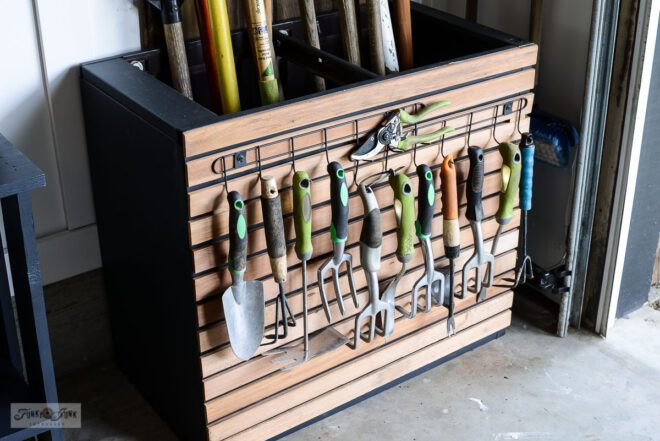
Transform an old file cabinet into clever, space-saving garden tool storage that keeps your outdoor essentials tidy and easily accessible! A creative DIY project that is affordable and useful by combining recycling with functionality for every gardening enthusiast. As a Fusion and Amazon Influencer, this post contains affiliate links in which I earn a small […]
The post Space-Saving DIY Garden Tool Storage With An Old File Cabinet appeared first on Funky Junk Interiors.
Transform an old file cabinet into clever, space-saving garden tool storage that keeps your outdoor essentials tidy and easily accessible! A creative DIY project that is affordable and useful by combining recycling with functionality for every gardening enthusiast. As a Fusion and Amazon Influencer, this post contains affiliate links in which I earn a small […]
Female mud snails are developing male reproductive organs near marinas. In Florida, alligators living in lakes contaminated with pesticides are being born with smaller genitals and disrupted hormones. Sea turtle populations are becoming almost entirely female as nesting sands get warmer. The same types of chemicals responsible for these wildlife changes are now found in human placentas, testes, and semen. A new peer-reviewed review brings all of this evidence together for the first time.
A cross
Female mud snails are developing male reproductive organs near marinas. In Florida, alligators living in lakes contaminated with pesticides are being born with smaller genitals and disrupted hormones. Sea turtle populations are becoming almost entirely female as nesting sands get warmer. The same types of chemicals responsible for these wildlife changes are now found in human placentas, testes, and semen. A new peer-reviewed review brings all of this evidence together for the first time.
A cross-species review published April 23 in npj Emerging Contaminants, led by Oregon State University toxicologist Susanne Brander and Mount Sinai researcher Shanna Swan, brings together evidence from many animal groups, including invertebrates, fish, birds, reptiles, amphibians, marine mammals, rodents, and humans. The main finding is that pollution and climate change together are now the biggest single cause of biodiversity loss. The chemicals at the heart of this problem—phthalates, bisphenols, PFAS, and microplastics—are lowering fertility and reproductive success in many species, including humans.
Of more than 140,000 synthetic chemicals registered under the EU’s REACH chemical safety regulation, only about 1% have been properly tested for safety, and over 1,000 are known endocrine-disrupting chemicals (EDCs). Each year, more than 2,000 new chemicals are introduced worldwide. The review’s authors say these chemicals can be effective at concentrations so low they are “analogous to a whisper that is powerful enough to redirect a hurricane.” Because the endocrine system is very similar across vertebrates, scientists have used fish to predict effects in mammals. This is why the human findings in the review are not surprising when compared to what has happened in wildlife.
The article provides new clarity on how climate change and chemical exposure interact. Warmer temperatures have been shown to worsen endocrine disruption. In some fish, heat combined with EDCs changes sex ratios more than either factor alone. At the world’s largest green turtle rookery, almost all hatchlings are now female. In humans, an 80-year study of U.S. birth data found that hotter weather is linked to fewer conceptions. Other studies show that higher temperatures are connected to lower semen volume, sperm count, and sperm quality.
Plastics aren’t inert and “BPA-free” doesn’t mean safe
The article pays special attention to microplastics and nanoplastics, which were only recently recognized as reproductive toxicants. In 2021, researchers found microplastics in human placentas. In 2023, another study found microplastics in human testis and semen samples. A follow-up study found microplastics in every canine and human testis examined, with higher levels in humans. Several studies in the review show that polystyrene microplastics lower fertility, fertilization, and hatching rates in fish, and these effects can last for generations.
The issue of chemical substitution is important here as well. Older PFAS chemicals like PFOA have mostly been replaced, but their substitutes, such as GenX chemicals and other similar compounds, show equal or even stronger estrogen-like effects in lab tests. BPA substitutes like BPS and BPF act almost the same way on hormones. The review also points out that bio-based plastics like polylactic acid (PLA) caused reproductive harm in earthworms, similar to regular polyethylene. This pattern of “regrettable substitution,” where a banned chemical is swapped for a similar, unregulated one that causes the same harm, is now well documented.
The federal regulatory response is the focus of much controversy. EPA finalized the first national drinking water limits for six PFAS in 2024, setting PFOA and PFOS at 4 parts per trillion. In May 2025, the agency announced it would keep those two limits but extend the compliance deadline to 2031, and eliminate limits on four other PFAS. In January 2026, the D.C. Circuit denied EPA’s request to summarily vacate those four limits; final briefs are due this spring, and a decision is expected in the second half of 2026. While that plays out, individual filtration is the only consumer-side lever that actually removes PFAS from the water already in the tap.
What you can do to reduce your family’s exposure
Individual actions alone cannot solve a problem this big. The review’s main point is that we need broad regulatory changes for whole classes of chemicals, not just one at a time. Still, you can lower your own exposure, and the most effective changes come from a few key steps. The list below is ordered by impact, not by how easy the steps are.
Drinking water: this is where to start
Start by checking your water. Enter your ZIP code into EWG’s Tap Water Database to find out what has been found in your local water supply. You can also use the EPA’s PFAS Analytic Tools for more information. If you have a private well, have it tested by an EPA-certified lab. Mail-in kits from SimpleLab and Cyclopure cost between $85 and $300.
Use a filter for your tap water. Choose filters that are certified to NSF/ANSI 53 (carbon-based) or NSF/ANSI 58 (reverse osmosis) for reducing PFAS. Be aware that “tested to NSF standards” is just a marketing term that can be abused, so check that the filter is actually certified. Reverse osmosis and granular activated carbon are proven to work, but most pitcher and refrigerator filters are not certified for PFAS.
Change filter cartridges on time. EWG senior scientist Tasha Stoiber points out that a used-up filter can release more PFAS than untreated tap water. Keeping up with the maintenance schedule is essential for protection.
Avoid using bottled water as a long-term fix. A 2024 Columbia University study found about 240,000 plastic particles per liter of bottled water, which is 10 to 100 times higher than earlier estimates. Around 90% of these particles are nanoplastics.
Food contact materials
Do not heat food in plastic containers. Phthalates are more likely to leach out when heated. Use glass or ceramic in the microwave. If you plan to reuse plastic food containers, avoid putting them through the dishwasher’s high-heat cycle.
Reduce takeout and fast food when possible. A 2016 study found that people who ate more fast food had higher levels of phthalate metabolites in their urine, likely due to plastic gloves, wraps, and containers. Maine will ban PFAS in food packaging starting in May 2026, with a wider ban by 2030. Other states are following Maine’s lead, but for now, eating fewer plastic-wrapped meals means less exposure.
Replace nonstick cookware when it becomes chipped or scratched, as it is damaged. PTFE-coated pans can release particles into food. Stainless steel, cast, good, long-lasting alternatives. Also, nonstick pans are not ideal for high-heat cooking like searing.
Store food in glass or stainless steel containers. This is the easiest change you can make. Glass jars and stainless containers do not release microplastics or phthalates and can last for decades. Replace plastic containers only when they break or stain, instead of buying more. products
Be cautious when you see the word “fragrance” on a product label. Diethyl phthalate (DEP) is often used as a fragrance carrier and does not have to be listed separately under U.S. labeling rules; it just appears as “fragrance” or “parfum.” Choose products that list all fragrance ingredients or are certified EWG VERIFIED or EPA Safer Choice.
Plug-in air fresheners are especially high in phthalates, so the easiest solution is to remove them and use ventilation instead.
Get rid of vinyl shower curtains. The “new shower curtain” smell comes from phthalates being released from PVC. Cotton, hemp, and PEVA shower curtains are easy to find and cost about the same as vinyl ones.
Check your cleaning products for parabens, triclosan, and APEs. EWG’s Guide to Healthy Cleaning rates products based on an EDC database. Laundry detergent and fabric softener residues stay on clothes and touch your skin for hours, so exposure can add up quickly.
Be careful with plastic toys labeled with codes 3, 6, or 7, especially for young children who put toys in their mouths. Code 3 is PVC, which contains phthalates. Code 6 is polystyrene. Code 7 is a general category that often includes polycarbonate, a source of BPA. Safer alternatives include wood, natural rubber, organic cotton, and silicone.
Stop pesticides at the property line.
Think twice before using pyrethroid-based treatments for your home or lawn. Bifenthrin, one of the most common pesticides in the U.S., has been shown to disrupt estrogen receptors in fish at levels often found in urban runoff after rain. The review also notes that people with higher levels of pyrethroid metabolites in their urine tend to have lower semen quality and more sperm DNA damage. If you hire a pest control service, ask about the active ingredients they use and request safer alternatives.
Buy organic for the produce items with the highest pesticide loads. EWG’s Shopper’s Guide to Pesticides in Produce (the “Dirty Dozen” / “Clean Fifteen”) lets you prioritize organic where it matters most, rather than treating the produce aisle as all-or-nothing.
Where individual action stops working
The authors of the review make it clear that consumer choices alone are not enough. These chemicals are found even in Arctic rainwater, can cross the placenta, and last for centuries in the environment. The solution they propose is coordinated regulatory action: a strong Global Plastics Treaty that targets harmful chemicals, not just plastics in general; regulations that cover whole classes of chemicals rather than one at a time; and rules that make polluters responsible for cleanup costs, rather than passing those costs to utilities and customers.
The reason the review looks at different species is to show that what happens to snails, alligators, and seabirds also happens to humans, just at a different pace. Wildlife data have been warning us for 40 years, and now human data are starting to show the same patterns.
Corrugated cardboard makes its way from warehouse to mill in about two weeks. In contrast, plastic packaging can take centuries to break down, and even the most optimistic estimates say only 5 to 6 percent of U.S. plastic is actually recycled. This difference highlights both the promise and the challenges of creating a circular packaging economy.
Back in April 2020, when this article first appeared, the recycling industry was still struggling after China banned imported recyclables in 2018. Arou
Corrugated cardboard makes its way from warehouse to mill in about two weeks. In contrast, plastic packaging can take centuries to break down, and even the most optimistic estimates say only 5 to 6 percent of U.S. plastic is actually recycled. This difference highlights both the promise and the challenges of creating a circular packaging economy.
Back in April 2020, when this article first appeared, the recycling industry was still struggling after China banned imported recyclables in 2018. Around that time, DS Smith opened its first North American recycling plant in Reading, Pennsylvania, marking the first closed-loop corrugated packaging system. Five years later, the circular packaging sector has become a $245 billion global market and is expected to nearly double by 2034.
However, growth does not always mean true circularity. The gap between what companies promise and what recycling systems actually deliver is under more scrutiny than ever.
How the Recycling Loop Works and Where It Breaks
Many people picture recycling as a simple process: items go from the curbside bin to a materials recovery facility (MRF) and then become new products. In reality, the process is more complicated. Mixed curbside collections have about a 25 percent contamination rate in baled recyclables from MRFs, so more sorting is needed before they can be turned into new materials. In the past, this extra sorting was often done cheaply in other countries.
After China stopped buying U.S. recyclables in 2018, the U.S. was left with about a third of its collected materials and no place to send them. This led to a crisis: many communities lost their recycling programs, and it became obvious that the U.S. needed more domestic processing and cleaner materials from better recycling programs.
Paper and corrugated cardboard are still the big success stories in circular packaging. In 2024, the U.S. recycled over 33 million tons of cardboard, or about 90,000 tons each day, reaching a recovery rate between 69 and 74 percent, according to the American Forest & Paper Association. The share of recycled paper used at U.S. mills has grown from 36.6 percent in 2005 to 44.4 percent in 2024.
Plastic is still a major challenge. Only about 5 to 6 percent of U.S. plastic packaging is recovered and made into new packaging or products.
A Growing Market With Caveats
Europe is leading the way in recycling growth, thanks to strict regulations. North America is catching up through corporate ESG commitments, extended producer responsibility programs, and state-level policies.
Paper-based packaging leads in circular packaging revenue, making up about 40 percent of the global market in 2024. This is due to advances in fiber recovery technology and the fact that consumers are used to recycling cardboard. Reusable and refillable packaging is growing quickly, but it is still a small part of the market. As a result, the food and beverage sector makes up nearly 47 percent of circular packaging demand, and packaging companies are teaming up with recyclers to meet this need.
Industry consolidation signals how seriously investors have bet on this sector. In July 2024, Smurfit Kappa completed its acquisition of WestRock to form Smurfit WestRock, one of the world’s largest paper-based packaging companies, with $32 billion in combined revenue and 100,000 employees across 40 countries. Separately, International Paper announced an agreement to acquire DS Smith in a deal valuing DS Smith at approximately $9.9 billion. These deals suggest that fiber-based, recyclable packaging is a durable growth market.
The DS Smith Model, Five Years Later
In March 2020, DS Smith opened its first North American recycling plant in Reading, Pennsylvania, right next to an existing paper mill and corrugated packaging facility. These three sites could make, use, collect, and recycle corrugated boxes in about two weeks, creating a true closed loop. DS Smith got clean materials from distribution centers, packaging facilities, and retailers instead of mixed curbside collections, which helped keep contamination low.
Since then, this model has grown significantly. DS Smith, now part of International Paper, and other companies have shown that fiber-based packaging circular systems can work on a large scale. The Ellen MacArthur Foundation’s 2024 Global Commitment Progress Report, which covers over 1,000 organizations representing 20 percent of global plastic packaging production, noted that companies like Amcor have “doubled the share of recycled content in their plastic packaging, making as much progress in four years as in the four decades before,” according to EMF leader Rob Opsomer.
Where Optimism Meets Reality
But the numbers are more complex than market growth projections suggest. The Ellen MacArthur Foundation (EMF) found that the 2025 targets set by its member companies in 2018—to cut virgin plastic use by 18 percent, reach 26 percent recycled content, and achieve 100 percent reusable, recyclable, or compostable packaging—are now mostly out of reach without major changes. Together, these companies have avoided using 9.6 million tons of virgin plastic since 2018, but that is less than 3 percent of annual plastic production. At the same time, the overall market increased plastic packaging use by 8 percent.
Scaling up reusable packaging has been especially hard. Even though 64 percent of EMF Commitment participants have started pilot programs, reuse models make up only 1.3 percent of packaging, according to the Foundation’s 2024 analysis. The main obstacles are structural: the U.S. lacks a shared reverse logistics system, does not offer enough consumer incentives, and has no binding policies to make reuse practical.
Greenwashing has made the credibility problem worse. In October 2024, the legal advocacy group ClientEarth released a report saying that vague plastic recycling claims, like “100-percent recyclable” and circular loop images, mislead consumers about the real environmental impact of products and violate UK and EU consumer protection laws.
“The thing that blew my mind,” said Myles Cohen, founder of consulting firm Circular Ventures, at the September 2024 Packaging Recycling Summit, “is that in the company’s defense, they argued, ‘Hey, our statements were just classic puffery.’” Cohen called greenwashing “a pet peeve that damages not just individual companies but the packaging and recycling industries as a whole.”
Not all circular packaging strategies are equally effective. The evidence shows a clear ranking of materials:
Fiber-based packaging, like corrugated cardboard and paperboard, has proven circularity supported by real infrastructure. The DS Smith model is successful because it uses clean materials and relies on commercial, not residential, collection systems.
Aluminum is the most valuable recyclable material. Recycling just one can saves as much energy as half a gallon of gas. Beverage cans contain 73 percent recycled content, and steel cans are recycled at an 80 percent rate, so metal packaging truly supports a circular system.
Reusable packaging is most effective in closed-loop commercial settings, such as logistics, food service, and institutional supply chains. It does not work as well in consumer retail or quick-service restaurants, where returning packaging is expensive and unreliable.
Compostable packaging is only a limited solution. More industry analysts are skeptical because most communities do not have home composting, industrial composting facilities often reject packaging, and composting creates greenhouse gases instead of recovering materials.
Plastic recycling needs a very specific approach. PET bottles and HDPE containers are recycled more successfully than most other plastics. Flexible plastics like films, pouches, and sachets are still mostly unrecyclable on a large scale and often end up polluting the environment.
The EPA estimates that updating U.S. recycling infrastructure will cost between $36.5 and $43.4 billion, mainly for better packaging recovery, more composting capacity, and improved plastics processing. This investment has been slow to happen because there are no binding policy requirements.
The E.U. Regulatory Push and the U.S. Gap
Europe has moved decisively. The E.U.’s Packaging and Packaging Waste Regulation (PPWR) requires 70 percent of all packaging waste to be recycled by 2030, with plastics recycling rates targeted to double to 55 percent. Member states must cut packaging waste per capita by 15 percent by 2040 versus 2018 baselines. The European Commission is also requiring products claiming to be biobased, biodegradable, or compostable to meet minimum, verifiable standards to combat greenwashing.
In the U.S., California is leading the way with extended producer responsibility (EPR) laws and the new Voluntary Carbon Market Disclosures Act, both aimed at reducing greenwashing in sustainability claims. However, there is little action at the federal level.
At the November 2024 Busan negotiations for a UN Global Plastics Treaty, countries failed to reach a binding agreement. This has left a major policy gap and prevents a coordinated global effort.
What You Can Do
If you want to make a positive difference, it helps to be both a conscious shopper and an active citizen. Here are some steps you can take in your daily life:
Choose fiber and aluminum products. Corrugated boxes, paperboard, and aluminum cans have real end-of-use recycling systems. Recycling these materials truly closes the loop.
Don’t just trust the label. “Recyclable” does not always mean it can be recycled where you live. Check if your local program accepts the material, and use Earth911’s recycling search to see what is accepted in your area.
Focus on reducing packaging, not just recycling. Buying products with less packaging, choosing concentrates, or picking refillable options has a bigger environmental impact than recycling alone.
Support EPR policies. Extended producer responsibility moves recycling costs from cities and taxpayers to the companies that create packaging. This is a structural solution that market growth alone cannot achieve.
Ask companies for details. If you see vague claims like “eco-friendly” or “100-percent recyclable,” ask questions: Where is it recyclable? What infrastructure is used? What percentage of the material is actually recycled? Demand clear, verifiable answers.
If you value the environment, keep a variation on Smokey Bear’s familiar advice in mind: Only you can prevent the economy from burning down the planet. Your response needs to combine thoughtful choices when shopping with active communication with friends, family, the businesses you frequent, and the representatives you elect.
Editor’s Note: This article, originally authored by Gemma Alexander on April 14, 2020, was substantially updated in April 2026.
Glyph has announced the Atom EX80, a new USB4 NVMe portable SSD built with creatives in mind. Alongside the SSD, upstate New York-based Glyph also unveiled new high-performance 80Gbps USB-C cables for end-to-end high-performance workflows.
[Read More]
Glyph has announced the Atom EX80, a new USB4 NVMe portable SSD built with creatives in mind. Alongside the SSD, upstate New York-based Glyph also unveiled new high-performance 80Gbps USB-C cables for end-to-end high-performance workflows.

 Login
Login