Normal view

  • ✇Cartoon Research
  • Frankly, I Don’t Give a Dam! (Part 2) Charles Gardner
    Our survey of the animated appearances of beavers wends its way into the last half of the 1930’s and through the beginnings of WWII. Animation has generally shown a marked improvement over the dog-yipping fuzzballs that populated early Disney efforts. Some studios spotlight the beaver as the center of storylines, while others present him in isolated spot gags among menageries of other animals. Some prominent directors try their hand at the critter, including Frank Tashlin, Sid Marcus, Tex
     

Frankly, I Don’t Give a Dam! (Part 2)

29 April 2026 at 07:01

Our survey of the animated appearances of beavers wends its way into the last half of the 1930’s and through the beginnings of WWII. Animation has generally shown a marked improvement over the dog-yipping fuzzballs that populated early Disney efforts. Some studios spotlight the beaver as the center of storylines, while others present him in isolated spot gags among menageries of other animals. Some prominent directors try their hand at the critter, including Frank Tashlin, Sid Marcus, Tex Avery, Chuck Jones, Rudolf Ising, and Alex Lovy

Porky’s Building (Warner, Porky Pig, 6/19/37 – Frank Tash[lin], dir.) is a fun 1930’s style animal romp – even if Porky doesn’t seem to be entirely the center of the cartoon’s activity. It begins with a rarely seen Foreward: “Any similarity of characters or happenings in this picture to actual people or events is definitely intended – If you think we’re going to sit around for days thinking up new ideas, you’re pixilated!” Porky, and a canine known as Dirty Diggs, are the town’s only construction contractors, and fierce rivals. They are each asked to submit a bid on building the town’s new City Hall according to pre-approved plans. (The plans guarantee the structure to be a politician’s paradise, with hot air outlets.) The two construction whizzes seat themselves at opposite desks in the office of commissioner Sandy C. Ment, and begin number-crunching to make the lowest bid (with a few attempts to sneak views of the other’s paper over the shoulder). Facing each other nose to nose, they hand in their bids simultaneously. According to the Commissioner, the bid amounts are identical! (However, Diggs’s paper actually displays a comma where a decimal point should be before the digits for pennies – so, shouldn’t Porky have won in the first place?) How to settle the matter? Of course – a competition. Each one tries to build a building. First one completed gets paid. (Such a deal! So the loser eats the $3,000,000.02 in construction costs? And who gets the second uncompleted building?)

Construction commences on adjoining lots, at the firing of a starter’s gun. Porky directs an all-species roster of animal workers, while Diggs’s crew seems to consist entirely of humanized dogs. Things begin pretty evenly matched. One character on Porky’s team will be familiar to long-time Warner viewers who may never have seen this picture – a meandering little dog better known for his recurring walk-ons in “Porky the Fireman”, with a signature walking tune. Here, he follows an electrical wire from a stash of dynamite ready to blast, over to the plunger detonator. A crowd of spectators huddles around him. He orders them back, telling them to “Stand back, folks, ya bother me.” But they keep pushing back in to the same proximity before the plunger can be pushed. Finally, the dog abandons the detonator, and travels over to the wire’s other end, pretending to inspect the explosives. The people follow him, huddling around the dynamite. The dog slips through the crowd between someone’s legs, returns to the plunger, and pushes it down, exploding away the intrusive crowd. A hod carrier scales the side of an erected girder with plumber’s helpers tied to his shoes. Dirty Diggs begins to engage in dirty tricks, and tosses a brick at him. The worker falls to the ground, but the two plungers continue scaling the girder on their own to the top. We finally get some beaver activity, as two beavers from Porky’s crew mix respective vats of sand and water with their tails, then flip scoops of their ingredients into a large container fastened between the humps of a camel. The camel shakes the concoction with movements of his humps as if mixing a drink, then pours out the completed cement into the inverted shells of a continuous line of turtles. They deliver the cement to a dispenser for aerial delivery by pelicans. Diggs plays dirty again, sending up a fish tied to the string of a toy balloon. The pelican takes the bait, spilling his cement load onto Porky below.

Throughout the cartoon, a running gag is provided by a small rabbit among Porky’s workers, anxious for an assignment. Whatever task goes wrong, he shows up wearing a t-shirt reading “Hod Carrier”, “Cement Worker”, or the like, asking to be sent in as if a bench player on the football squad. Porky repeatedly tells him “N-n-n-No!” But things become desperate, when mid-project, Diggs informs his entire crew that they can go home, as he doesn’t need them here anymore. From out of a warehouse, Diggs rolls out his secret weapon – a giant automatic brick-laying machine, which shoots bricks on a belt like machine gun bullets. Porky shouts. “You c-c-can’t do that”. Diggs replies, “Well, I’m doing it, aren’t I?” In a matter of a few seconds, Diggs has bricks laid to the 77th floor. “Woe is me”, moans Porky. But the rabbit again enters on cue, rapidly changing shirts from mere “Brick Layer” up to “Super-Colossal Brick Layer”. Porky finally gives the little guy a chance. It turns out that, using a combination of his arms and his ears, the rabbit can work just as fast as the machine, and the race is now neck and neck. Diggs struggles with the gearshift of his machine, trying to shift from “Super Speed” to “Gosh Darn Fast”. Instead, he kicks the machine into reverse. Bricks are miraculously sucked away from his structure, back into the machine, which explodes. Porky’s City Hall is completed first, and Porky allows the rabbit to upstage his own bows to the crowd at the top of the tower, by holding the rabbit high above him in one hand, as the rabbit clasps his ear-tips together in a wave of victory.


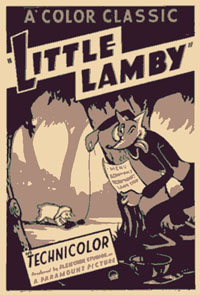
Max Fleischer would include the beaver in a “give him the works” setup in the Color Classic, Little Lamby (Paramount, 12/31/37 – Dave Fleischer, dir., Dave Tendlar/William Sturm, anim.). A traveling fox has a regular regimen planned for obtaining his meals when he visits strange places. Approaching the village of Animalville (population: 201), he views the community’s residents from a hillside through a spyglass. Many species and their offspring are viewed, including a beaver who has found a new use for his tail, having one end of a rubber band tied to it, and the other end ties to a ball, providing a natural game of paddleball. But the fox’s attention is drawn to a grazing baby lamb (one who predicts the later Thumper the Rabbit in not liking greens, only finding grass to be palatable when she (or he?) sprinkles sugar on it). The Fox predicts the results of his own plan, and rubs out the last digit of the population sign at the edge of town, drawing in as its replacement the reduced population tally of 200.

The fox posts a notice in the public square, announcing a Baby Contest, with big prize to the prettiest and healthiest baby (must be kind and tender). All the village takes notice, including a parent beaver carrying his youngster along, riding upon his tail. Soon, everyone is gussying-up their offspring as the logical choice for the prize, while the fox dons a fake beard and constructs a judge’s stand. The entrants parade past him in review, yet there is no sign of the beavers either in the preparation or in the contest. In fact, the beavers do not appear to have even entered, as they are not represented on a cross-off list the fox carries of rejects for his main course, ruling out squirrel on toast, roast duck, and fried rabbit. The lamb finally arrives, and is happily inspected by the fox for its plumpness. “The winner – and, my dinner!” shouts the fox, casting away his fake beard, dropping through the judge’s stand by way of a trap door, and exiting in a hurry upon a hidden motorcycle concealed beneath the stand, with the baby lamb clasped firmly under his arm.

The fox heads for his lair, zooming inside and slamming the door, with a sign hung on it reading “Gone to lunch”. The citizens of the village angrily pound upon his locked door, only to hear the fox inside holler “Scram!” Many means are employed by the animals to gain entry. A rabbit takes hold of the beaver like a power saw, and attempts with him to cut through the trunk base of the large tree stump that is the fox’s home. The fox sticks his head out of a knothole, and smacks the rabbit and beaver with a small club, knocking them out. Two birds fly with their claws clamped onto the handles of a twin-handled saw, flying back and forth in attempt to saw into the trunk from above. The fox, seeing the blade edge protruding into his wall, grabs a sledge hammer, and socks the blade in three places, bending the saw teeth in opposite directions to wedge the saw tight in the tree bark. Only the persistent efforts of a billy goat, holding onto the forward end of a battering ram, and the rest of the community carrying the log (plus a whole jar of headache pills for the goat’s aching noggin) finally bust down the front door. The lamb is rescued in the nick of time from the stove top, where she has been doused with sneeze-inducing pepper and perspires profusely from the stove’s anthropomorphic wood-eating flames. The fox is caught on the end of the battering ram, smacked into the opposite wall, then his arms and legs tied around a center pole support in his living room. A teeter-board is inserted under the fox’s rear, and the animals take turns jumping on one end of the board, launching the fox’s head into the ceiling over and over again. As the fox sits in a daze and with a lump on his head, the baby lamb sprinkles some of the pepper onto the fox’s nose, causing him to get his own case of the sneezes. “Gesundheit”, states the baby, for the iris out.


The House That Jack Built (Screen Gems/Columbia, Color Rhapsody, 4/14/39 – Sid Marcus, dir.) seems to have the distinction of featuring the first beaver character to have a name. The studio isn’t taking any chances as to the audience missing the point that Jack the Beaver is industrious – dressing him in the same worker’s hat and coveralls as Practical Pig, and even giving him a modification of the same voice (provided once again by Pinto Colvig, who also voies an ostrich featured in the story). Jack carries a box of tools and an armload of lumber through the forest to a vacant lot site. On the way, he is accosted by a bear panhandler. “Can you spare a dime for a cup of coffee?”, the bear asks in the standard sympathy ruse. Jack answers with a response I wish I’d turned on some panhandler, guaranteed to kerflummox their true intentions. “I haven’t got a dime…but here’s a cup of coffee.” The bear stares bewildered at the steaming cup handed to him as Jack continues on, and barely has the presence of mind to sip down the brew before tossing the cup away and continuing to pursue Jack. “What’cha doin’?”, asks the bear, seeing jack using a shovel to break ground. “Building a house”, replies Jack. The lazy bear immediately plops himself on his back onto the ground, and proposes. “Build one around me, buddy. I’m sick of the outdoors.” Jack gets as steamed as his coffee, and smacks the bear across the tummy with his shovel, forcing him to retreat a distance behind a tree. Jack begins to lecture in song about his work ethic, as Practical Pig was also prone to do, in a talk-sung number entitled, “You Don’t Get Nothin Doin’ Nothin’”. Bu the time the song is through, we have cross-dissolved our way to the home’s completion. (Being a beaver, Jack prefers lumber to Practical’s bricks.) The bear turns up right on cue, complementing how beautiful the house is, and proposing to an equally-shiftless ostrich pal of his that they should have a house warming. Jack immediately senses trouble, but can’t keep the two buttinskies from forcing their way through the front door, then locking Jack out behind them.

The two intruders are just natural-born troublemakers. The bear leaps into a bed with rollable casters on its poles, and rides the bed into the kitchen, where it stops in a corner directly in front of the refrigerator door, allowing the bear to feast on breakfast in bed. The ostrich isn’t so picky, and does what all cartoon ostriches do – swallow anything and everything in sight. Jack finally finds a point of entry into the house, and immediately rushes for the phone, attempting in a low whisper to phone the police. “Gimme that phone”, snaps the voice of the bear, as he yanks it away from Jack, and tosses it to the ostrich, who proceeds to swallow everything but the handset. Jack is still determined to get his call through, and pokes his finger into the ostrich’s belly to rotary-dial on the apparatus within him. Unfortunately, every time the call is connected, the ostrich hiccups, disconnecting the call. Finally, the bear again takes the matter out of Jack’s hands, grabbing the handset and yanking the rest of the phone out of the ostrich’s belly by the cord. As the ostrich keeps Jack busy in a tussle, the bear, out of pure spite, uses the phone to call the Termite Wrecking Company – a professional all-insect wrecking crew, and requests their services at the newly-built abode. Knowing the fate of Jack’s home is sealed, the bear and ostrich finally allow themselves to be chased out, mockingly bidding a neighborly goodbye as they depart. “Good riddance”, says Jack, settling down at his breakfast table. But…what table? It disappears in about one second flat – as does the chair. The termites have arrived. Within about a minute, the entire place has collapsed to the ground around Jack, and the bear and ostrich laugh uproariously outside at the show. Their laughter is abruptly silenced, as Jack produces from nowhere a shotgun. (Too bad he couldn’t have laid hands on this before.) Before long, the bear and ostrich are marched back to the lot at gunpoint, and work begins on a replacement home – that is, work performed solely by the meddlesome intruders, with Jack sitting by as supervising foreman, shotgun at the ready to dissuade any attempt at slacking off. The bear and ostrich close the film with a reprise of Jack’s song of industry – to be sung by them whether they like it or not.

Wish we had original credits for these. There’s been some mysteries as to whether credits got mixed at some point between the work of Sid Marcus and that of fellow director Art Davis at the studio. While multiple sources list this film as Marcus’s, there are a few artifacts that might suggest Davis’s presence. A few signature present-time dissolves occur between shots in the termite office, which was a camera style Davis was associated with in several Scrappys and even in later life in his Looney Tunes. And an appearance by a recognizable worm who had appeared in two Davis Scrappys, “The Early Bird” and “A Worm’s-Eye View”, in the last shot as Jack eats an apple for lunch. Could this be another instance of director miscrediting?


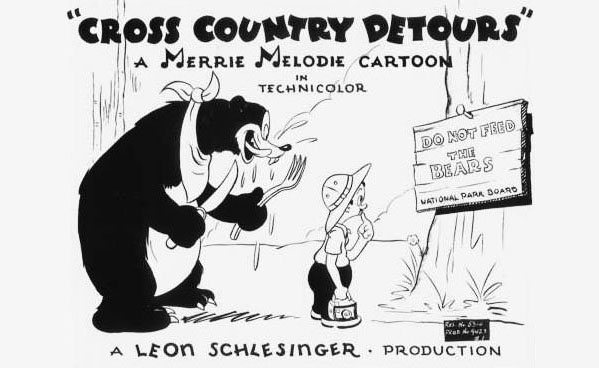
Cross-Country Detours (Warner, Merrie Melodies, 3/16/40 – Fred (Tex) Avery, dir.) – One of the best of Avery’s many spot-gag travelogue spoofs for the studio, featuring a variety of different types of gags. It is perhaps most remembered for its strip-tease rotoscope sequence of a lizard “shedding its skin” (even though this phenomenon of nature only occurs with snakes). Or for its split-screen imagery of something for the adults and something for the kiddies – a gila monster for the grown-ups, and a little girl reciting nursery rhymes for the tots. However, the little girl proves the more ferocious of the two, out-roaring the gila monster, causing him to run away in a panic. Beavers, however, are spotlighted in one sequence, constructing a dam. Before our very eyes, they built from concrete and mortar the mammoth Hoover Dam – then the best known and most modern hydroelectric dam in the nation. Avery would remember to use the structure as a prop again when he migrated to MGM, having his giant cat and mouse scramble over the top of it in King Size Canary.


Snowtime for Comedy (Warner, Merrie Melodies, 8/30/41 – Charles M. (Chuck) Jones, dir.) – Jones’s “two curious puppies” are in another of their battles for a bone – this time set against the icy backdrops of a frozen winter. Both dogs and the bone take a slide down a massive ski-jump, the bone in the lead. The little pup overshoots it, sliding out onto the banks of a not-yet frozen lake. He breaks off a small floe of ice from the banks before reaching the water, then sails out into the middle of the lake, helplessly trapped aboard the small floating chunk of ice. The larger dog also overshoots the bone, but avoids falling into the lake, negotiating a course adjustment in his slide that bowls him right into a small beaver dam just constructed (with the accompanying sounds of a bowling ball scoring a strike on a full lane of pins). The dog is next seen, still sliding, but with the dam’s logs piled atop him in the shape of an Indian teepee. Eventually, he sheds the lumber, only to slide into a snowbank, then collide below the snow surface into the trunk of a half-covered tree.

When the large dog next emerges, he is dazed and woozy, but spots the bone where he passed it, displayed in his POV blurred vision. He carefully tries to creep up upon the bone, but is blown backwards by an icy wind, again colliding with the half-buried tree. Again he attempts to advance, building up speed to fight the wind. He slides directly over the bone, but is unable to clamp his teeth together fast enough to grab it as he passes. What lies ahead? A new dam the beaver has constructed. CRASH! The end result of the collision leaves the sliding dog looking as if he is residing in Uncle Tom’s Cabin.

So what of puppy number 1? His ice floe has been severing into segments below him, again and again, until he is left standing with all four paws piled one-atop-another on one paw-sized fragment of ice. He just manages to hop off before it submerges, onto the icy bank, but is now pursued by a crack he has caused in the ice. The crack chases him right into the latest dam constructed by the beaver, with the typical results, and the lumber assuming the shape of a wooden steamboat surrounding the dog. The little pup is chased into the same snowbank previously occupied by pup #2, crashes into the same tree trunk, then the ice crack splits the entire tree up the middle. When the little pup emerges from the snow, he finally spies the resting place of the bone, and leaps for it. The bone squirts out from between his paws, propelled high into the air. The pup gives chase, and of course crashes into a beaver dam again (this time with no shape shifting gag for the lumber). The bone lands atop the seat of a chair lift leading high into the mountains, and the pup follows on a second chair. At the pinnacle, the bone is deposited by the seat as it turns for the return trip down the mountain, and the pup, leaping upon it, slides with the bone down a steep slope. Tumbling and gathering up snow in a giant snowball, the pup and bone are transformed into a gigantic snow sculpture of – a pup and bone! This mammoth mutt descends on pup number two – and on yet another beaver dam. The beaver isn’t going to stick around close with this monster apparition sliding right toward him, and flees to the highest hillside vantage point he can find, then turns to see the aftermath of the snow-dog’s collision with his construction project. Instead of destroying the new construction, the snow joins with it, emerging as another perfect snow replica of Hoover Dam! Carl Stalling appropriately underscores this finale gag with the notes of Ella Firzgerald’s recent hit, “Keep Cool, Fool.”


The Bear and the Beavers (MGM, Barney Bear, 3/28/42 – Rudolf Ising, dir.) – This picture is frameworked as if taking place within the illustrations of a children’s storybook, much in the same manner as Disney would later framework “Winnie the Pooh”, but without some of the page-turning and type-moving gimmicks. We are told by its pages that Barney (still apparently a nameless bear at the time of release) has gotten tired of living in cold, damp caves and old hollow trees, so has adopted human homebuilding style, constructing himself a sturdy log cabin with massive stone fireplace and chimney (a sign outside names the cabin the “Snuggly-Wuggly”). Barney sits in a plush easy chair padded with multiple pillows, dressed in a warm robe, loading logs into his fireplace only inches-distanced from his reach, and basking in the warmth and comfort. Life might be ideal, but one day he runs out of firewood. He enters the forest, wearing scarf and hat, and armed with an axe and a large box for his wood. We don’t know how Barney got his original supply of big and little logs to build his cabin and stoke his fires, but all indications are that Barney cannot claim the title of an experienced woodsman. He wrestles with an axe head with a talent for coming loose from its handle. It first causes Barney to swing at the tree with no blade, sending a wave of vibrations through his arms and up his entire torso upon impact. Replacing the blade on the handle, Barney swings again, flipping the axe head loose into the air, where it twirls like a Frisbee, and returns for circling passes at Barney’s face again and again like a boomerang. After repeatedly ducking out of its way, Barney stands erect, and extends out his arm with the axe handle, timing things perfectly to catch the whirling blade back upon the handle on the next pass. He finally gets a swing at the tall pine which has been his target. But now the tree gets the vibration shivers just as Barney experienced before, shaking down an avalanche of snow nestled in the tree’s upper branches, right on Barney.

All this while, Barney experiences slow-burn frustration at viewing the ease with which a pair of happy beavers addresses the same task nearby, efficiently alternating axe-swings to chop a tree just as tall into log-sized sections, then piling the perfectly-sized wood onto a small sled for hauling back to their home. When Barney emerges from under the snowbank emptied upon him by the tree, he first drums his fingers as the passing beavers tip their cap in friendly manner to him, and wonders what to do next – then hits upon a revelation. That nice, tidy wood pile on the beavers’ sled! What if…well, you read into Barney’s mind, as he just happens to stroll along whistling, along the same path as the beavers follow, then pitches his unneeded axe into the bushes. Barney ducks into a bush, then cautiously pokes his head through to see what the beavers are up to. What he views is more than he could have hoped for. The beavers have entered the busy little community of Beaverville, where everyone seems to be busy sawing and cutting away at lumber. But in this instance, they are not collecting it for any designated project such as a dam or den construction. Instead, all the collected wood is being stockpiled in one warehouse structure, bearing a sign reading, “Beaverville community woodpile.” This is all the information Barney needs, and his face pulls back into hiding, with a nefarious grin on his face, ready to wait his chance for action.

That night, Barney returns to what will be the scene of – the crime, armed with boxes galore. Displayed as still illustrations within the book pages, Barney “borrows” some wood. The next page displays him loaded – for bear, so to speak, adding the words, “Quite a bit.” The next page shows the beavers’ warehouse, empty, with the additional words, “In fact, all of it.” The theft of the century. However, Barney is as inept in covering his traces as he is as a woodsman. An elderly beaver with a walking cane, who acts as night watchman for the community, passes the warehouse on his rounds – and does a delayed double-take upon discovering the place laid “bear”. He races to a square in the center of the village, and rings a triangle to sound a community alarm, rousing all the other beavers from their dens, in a scene likely inspired by the “Giant on the beach” alarm sounded by Gabby in Fleischer’s “Gulliver’s Travels.” It’s not hard to find the path of the culprit, as the watchman points the community’s eyes to a long trail of huge bear pawprints left in the fallen snow. The trail ends obviously at the doorstep of Barney’s cabin. Inside Barney now basks in the heat of a monster blaze in the fireplace, stoked by a lumber pile at his sides reaching all the way to the ceiling. What’s more, embers and plumes of smoke pour out the chimney top, almost as visible as a rocket’s exhaust, making it elementary to determine from outside where the community woodpile is currently located.

A slow-marching mob (also possibly inspired by “Gulliver’s Travels”) forms from Beaverville, following the tracks to Barney’s door. The parade is led by the equivalent of a beaver “Spirit of ‘76″ fife and drum corps, and by the watchman carrying a yellow lantern (again matching Fleischer’s Gabby) and beckoning the community to follow with a wave of his cane. Everyone seems to be armed with wood-cutting devices, sleds for hauling, and ropes (one of them noticeably fashioned into the familiar form of a hangman’s noose). A beaver at the end of the procession signals the end of the parade with a red-colored lantern dragged along on his tail (possibly a nod to Dopey marching along at night in Snow White’s “Heigh-Ho” sequence). Everyone amasses outside Barney’s home, and the watchman signals with his cane for all to be silent. He peeks in the window of the cabin to get the layout of the room and a view of his opponent, then, when Barney begins to doze off, beckons again with the cane for everyone to advance. Beavers move in from all directions, taking up positions in squads in the cellar, upon the roof, and one beaver slipping into the cabin through some undisclosed entryway, taking up a stance upon a structural cross-beam over Barney’s head. The watchman gets an okay signal from each positioned beaver or squad. Barney meanwhile has heard some rustling, but is still too happily groggy to care about the unexplained disturbance, and settles into relaxed pose again. When all is ready, the watchman chooses the proper moment to blow a shrill note upon a small whistle, as the starting signal for all hell to break loose. The whistle rouses Barney from slumberland, causing him the leap high into the air, directly under the beaver on the rafter – who is carrying a large wooden mallet, with which he conks Barney soundly on the head. As Barney tries to collect his dizzied thoughts, the souds of friction upon wood fill his head from everywhere. Axes chop in random rhythms on the roof and walls. Elsewhere on the structure, hefty buck teeth gnaw their way through log sections. Below the floorboards, sawblades emerge through, carving out whole sections of the floor below Barney’s feet.

Barney is utterly Mesmerized by the flurry of activity, the din of the chopping, and the vibrations of the entire structure, and cannot gather his thought processes to formulate a counter-attack. He instead casts a look at the camera, expressing to us his utter helplessness to address this unexpected onslaught. Then a shout of “Timber” is heard from above the roof. The support beams of the cabin begin to crack and splinter, and within a few seconds, the entire structure collapses upon Barney’s head. Our image blacks out – much as it probably did to Barney, and we fade in to a reprise of the beaver parade, but now heading back home. The fife and drum team passes, then the watchman beckoning the others with his cane. Then the rest – but with a major change. Each beaver is completely loaded down with limber to tote home, forming a line that seems to extend all the way to horizon. At the end of the procession is one of the two beavers whom Barney originally met, carrying the last of the lumber in Barney’s own “wood box’ crate, and again politely tipping his cap to Barney as a good-bye. We see Barney, lying in a heap before the stones of his now empty fireplace, fingers again nervously dropping in frustration, as the camera pulls back, revealing nothing to be left of Barney’s home except the stone fireplace structure, portions of a window-frame with now-shattered glass, and the hanging remnants of the battered “Snuggly-Wuggly” sign outside. The beavers have recovered their own wood, and Barney’s logs as interest for the loan! In a scene excised for years on television release prints, the storybook closes, with the words “The End” on the back cover, while white letters dissolve in across the shot, providing the only dated reference to when the film was released – a standard motto which appeared on most MGM features and shorts from this season, reading “America needs your money. Buy defense bonds and stamps every pay day.”

For reasons I have never understood, some reviewers have criticized this film for slow and deliberate pacing. I have never seen such fault with it, and consider it one of my favorites in the Barney series. If anything, it follows in the same meticulous attention to detail that was the fascination of the tying-the-giant-up sequences of “Gulliver’s Travels”, which as mentioned above, appears to be its obvious inspiration in several respects. The detail of the animation on massed group shots is amazing, the facial expressions and personality animation on the characters is superb, and the backgrounds are picturesque and lush. Everything about the film speaks lavishness, and I have always classed this as among the closest efforts of the studio to matching the best of Disney and Fleischer feature output. View this as if part of an extended feature work without the need to rush through its material and ideas, and I think you’ll see my point.


Nutty Pine Cabin (Lantz/Universal, Andy Panda, 6/1/42 – Alex Lovy, dir.) – Another fun romp, that I remember fondly from early screenings on the Kelloggs’ Woody show as a child. Rustic woodland cabins must have been a part of the American dream in 1942, because Andy Panda has the same home-building fever as Barney Bear. Andy’s chosen material, however, is plywood instead of logs. Though his carpentry supplies include a tape measure, he could use some practice in measuring board length, as the first act of the cartoon displays his battle to hammer in place one board in the cabin’s side wall that is too long. It either pops out at the top, bends upwards at the bottom, or springs outward as a bulge in the middle. When Andy finally manages to hold it in place, its top edge raises the roof just slightly, allowing all the other wall boards to fall out of place, then the roof to collapse upon him for lack of structural support.

Meanwhile, a community of beavers works busily on a dam construction project. One beaver’s neck demonstrates great dexterity. After he has chewed 95% of the way through the trunk of a tree, he backs up a few steps, and allows another beaver to pump on his tail, causing his neck to elevate like an automotive jack to topple the tree above him. A stuttering beaver does an impression of Porky Pig, yelling “T-t-t-t-t….(POW falls the tree upon him)…TIMBER!!” The smallest beaver of the clan is getting nowhere gnawing at a giant tree assigned to him, when he spots Andy sawing away at more boards. Turning on his cutest charm, the little one assumes a begging position and a smile, thumping his tail to get Andy’s attention. Andy passes him a small sample of the lumber as “beaver board”, and thinks he’s done his good deed for the day. But the beavers are opportunists. Rather than waste their efforts on manual labor, the minute the small one shows off his prize and where he got it, all the beavers want Andy’s boards over their own home cuttings. And so, the tables are turned on the Barney Bear scenario, with the beavers becoming the thieves instead of the victims.

The first beaver Andy spots is the same little one he already met. “Want some more wood?”, Andy asks. The beaver quickly nods, and scurries away with another small piece, but only as a cover for the activities of his relatives, who emerge from the side of the house to make hasty exits, not only carrying Andy’s boards, but pails and hardware as well. The last in the line is stopped by Andy stepping on his tail, while the forward motion of the beaver’s feet digs him into a trench in the ground. The embarrassed thief replaces the box of wood he is carrying where he found it, and attempts to back away, stumbling into Andy’s paint supplies, and transforming himself into a Technicolor rainbow. The little beaver is next spotted swiping a mallet, which of course he returns the hard way when Andy demands, “Give it to me.” Andy begins chasing the little one around and around the cabin, Andy becoming a speed blur that transforms into multiple-exposure running images of himself clear around the cabin. When he comes to a stop, all his multiple images catch up with him, colliding themselves back into his person with wooden-sounding clunks. The little beaver descends from the roof with the aid of Andy’s roll-out tape measure, then paddles the panda on the head with his tail, causing Andy’s eyes to bounce in their sockets. Just as Andy is about to toss something at him, the panda is mown down by two other beavers, carting off one of Andy’s finished doors. Andy switches targets, and pursues the door-robbers, who position the door directly in front of a tree trunk. They swing the door open at the last second, and Andy hits the trunk at full speed, penetrating his silhouette through not only this trunk, but those of a dozen other trees in a row behind it.

Andy’s reached his limit, and in scenes often unkindly cut for television broadcasts, resorts to a shotgun, firing pot shots at the beavers. (A similar fate often befell another Lovy episode of Andy from the same season, “Good-bye, Mr. Moth”, where excising of the rifle shots rendered the cartoon’s ending absolutely unfathomable.) The beavers go into a huddle, and devise a new strategy to win the war. They converge upon one of the largest forest giants, with teeth bared, making short work of its trunk. The mighty forest monarch falls, in close proximity to Andy’s cabin, generating shock waves that launch the cabin into the sky. The cabin, with Andy along for the ride, comes to rest skewered atop the uppermost branches of another nearly equally tall tree. Now, the beavers converge again to gnaw the trunk base away to only a pinpoint. One beaver spits against the upper section of the tree to choose the direction of its fall. Good expectorating! With precision, the second tree collapses across the river, jamming Andy’s cabin right into the center gap in the existing dam construction, effectively sealing off the water and completing the project. A defeated Andy slowly raises his head from the chimney, only to be tail-whacked in the head again by the little beaver, who is hiding inside his hat. Andy’s closing expression seems a precise match to Barney Bear’s – a picture of exasperation, silently communicating the phrase, “Why me?”


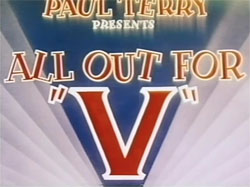
All Out For ‘V’ (Terrytoons/Fox, 8/7/42 – Mannie Davis, dir.) – An assortment of spot gags, as those in the animal community learn of the pronouncement of war declared from a newspaper extra. Among the first to react to the news are a population of beavers, who attack en masse a grove of trees in the wood, gnawing them within seconds into a bursting cloud of raining logs, which neatly stack into cabins in the newly-formed clearing, providing headquarters space for the War Production Office. The beavers later fell a tree with a shout of “Timber!”, while a woodpecker hammers a large tack into the sawed-off end of the log, a “caterpillar” tractor lassos the nail and tows the whole trunk away, and a team of termites uses their devouring power to cut the log into wooden boards. In a year when every studio got an automatic chance for an Oscar nomination, this film was under vote for the award – not that it had a chance of winning against Donald Duck’s “Der Fuehrer’s Face.”

NEXT TIME: Our buck-toothed friends remain “dammed” if they do, and “dammed” if they don’t.

  • ✇Cartoon Research
  • Frankly, I Don’t Give a Dam (Part 1) Charles Gardner
    The Disney and Pixar Studios have recently given us a bit of an over-saturation of feature animation spotlighting one of nature’s reputedly most industrious critters. At least one of such kind appears in a prominent part in Zootopia 2, while a swarm of them form the principal animal cast of Hoppers. As I have not yet been able to acquire home media versions of these films to review, I am not up to speed on them, and they will not be further discussed in this series. However, it might be said
     

Frankly, I Don’t Give a Dam (Part 1)

22 April 2026 at 07:01

The Disney and Pixar Studios have recently given us a bit of an over-saturation of feature animation spotlighting one of nature’s reputedly most industrious critters. At least one of such kind appears in a prominent part in Zootopia 2, while a swarm of them form the principal animal cast of Hoppers. As I have not yet been able to acquire home media versions of these films to review, I am not up to speed on them, and they will not be further discussed in this series. However, it might be said that this recent cinema trend is setting us up for the Year of the Beaver – so I thought it might be fun to trace the buck-toothed, flat-tailed character’s history in animation, and see how these character-actors of nature have fared in the dam-dest of situations, starting from the earliest days of sound.

(A note here is in order. While in the process of writing this first installment, which I had actually been percolating the research for as of at least a year ago, I happened to discover by chance online that another author, in anticipation of the “Hoppers” premiere, has been thinking along the same lines, and attempted a brief survey of the same subject on Cartoon Brew. I swear this was a case of coincidental independent creation. Nevertheless, in reviewing the other article, I observed that most of its material consisted of title-dropping and some clips without much discussion of cartoon content, and (as in the case of our recent coverage of bullfighting cartoons) many on-subject films were omitted from the title list. I thus proceed full steam ahead with the present project, to add some depth as to the gags and ideas presented in the subject films, and to fill in a number of gaps.)

Correct me if I’m wrong. It’s rather surprising that I seem to have come up empty in locating any verified appearances of a beaver in any known surviving silent cartoon. You would think Paul Terry’s Aesop’s Fables would be loaded with them somewhere – but they don’t seem to even turn up in natural settings where you’d expect all varieties of animals to be represented, such as “If Noah Lived Today” or “Amateur Night On the Ark”. Maybe the primitive pencils at the Terry studio couldn’t hit on a model design for the creature they felt comfortable with. Similarly, Max Fleischer missed his chance to include the species in his first Talkartoon, Noah’s Lark. It thus appears that Disney (as he often did in those days) got the jump on everybody, including the characters in one of his earliest Silly Symphonies, Autumn (Columbia, 2/13/30 – Ub Iwerks, dir.) (noticeably overlooked by the Cartoon Brew coverage, as were nearly all of this week’s films).

Part of a four-episode quad-rilogy, themed about the four seasons of the year (though one might say the follow-up, Night feels like it makes the series a set of five). All of the films are relatively plotless, concentrating on well-synchronized cavorting to a lively Carl Stalling score. The first half of this one deals with various animals gathering their stores for Winter while the leaves fall. Squirrels do most of the heavy lifting, while scavenger crows raid the squirrel’s hollow tree homes and swipe corn, storing it away inside the pantlegs of a farm scarecrow who isn’t scaring anyone. A skunk tries to roll a large pumpkin into a tree, but when it doesn’t fit, gives it a running tackle to push it through, only resulting in the fragile pumpkin shell cracking and depositing its innards all over him. A porcupine has a better method of harvesting, shaking a fruit tree and catching the falling fruit on the ends of his quills (a gag later repeated in Father Noah’s Ark, discussed below). Now comes a brief sequence for the beavers, changing subject.

The beavers dance atop a dam under construction in the foreground, tamping down lumber into its structure with their tails, while several other small groups of beavers are seen in the stream, constructing beaver dens with entrances below water. Two beavers dance together in synchronized rhythm along the bank, then chew down a small tree, which topples onto the head of one of them. In the later climax of the film, as the first cold blasts of winter wind are felt, one beaver calls an alarm to the others, and one-by-one, several beavers dive into the water and are seen as bulges and vibrations within the structure of a beaver den, having entered it from below. A stranger appears – a misguided duck, who doesn’t have the good sense to fly south, and instead also dives under the water, attempting to join the beavers in their comfy abode. He is quickly and rudely ejected, swimming away with complaining quacks. The skunk looks for shelter, but gets hit with a back of porcupine quills from inside one tree already occupied – so moves into another one, sending all of its furry occupants scattering for another tree next door. The crows get the final shot, taking up residence inside the hollow clothing of the scarecrow. One small crow is left out, and kicks the pantleg of the trousers, hoping for access. In an ending which nearly duplicates that of “The Skeleton Dance”, the bony foot of one of the crows reaches out from the drop-seat of the trousers, yanks the little crow inside, then re-buttons the drop-seat.


Minus Iwerks (who by this time had moved on to another animation studio), Disney’s beavers make a comeback in The Busy Beavers (Columbia, Silly Symphony, 6/22/31 – Burt Gillett, dir.). Obviously, with the beavers taking center stage, there’s a lot more room for action and gags in this one. It’s rather comical also to note that in both of these early cartoons, the sound engineers seem to have no idea what a beaver should sound like (their natural sounds are more like grunts), so decide to use what sounds like a squeaky toy to emit puppy-dog like high-pitched barks. This does have the advantage of permitting quick one-note tones that fit easily into the punctuated rhythms of an average cartoon score, but must still bring howls from anyone who’s studied the behavior of the animals in the wild. The sound effect also proved rather interchangeable – I swear I’ve heard the same “voice” given to foxes and bear cubs in productions from various studios, not to mention used in its proper place for Bosko’s pup at the end of early Looney Tunes. (Who was that pup anyway? Baby Bruno?)

The film opens with the usual construction under way of a dam and beaver dens – though with broader scope that the previous film’s opening shot, panning back and forth across the river full of busy workers. A first gag has one beaver curl up his tail to form a place to carry a load of lumber, then hold a small cylindrical stump between his hands. The beaver loading the lumber on takes hold of the other beaver’s rear feet, balancing him upon the held stump, and carts the lumber to the worksite, using the first beaver as a living wheelbarrow. Another beaver searches for just the right lumber in what seems to be a woodpile, but finds within a sleeping moose, who stands to reveal the beaver trapped as a passenger in his antlers. Another pair of beavers mix a muddy mortar in a hollow tree stump, one beaver loading up his cheeks with water from a nearby pond to spit into the stump, while the second mixes the solution in the stump with his tail. Then, a line of beavers arrives as hod-carriers, using large leaves held aloft atop Y-shaped tree branches as their tools to carry the mud to the dam, emptied into them by the tail of the mixing beaver.

More heavy construction occurs elsewhere. One beaver hangs by his tail from the limbs of a flexible sapling, whole another tugs at a lower branch like a crane operator, maneuvering the higher beaver into position to chomp upon and transport cut logs from a pile to an assembly line. One by one, the logs are threaded between two husky beavers, who combine with their sharp teeth to hone each log down into an elongated conical shape. Then, the shaped cones are flipped by beavers’ tails into the shallow water, point down, where they are hammered into place by the tails of two more beavers to serve as pilings. (I’m not aware that a dam requires pilings – are they also building an auxiliary pier?) In the woods, a team of two cutting beavers moves along, making short work of felling trees marked with X’s, while a scout beaver proceeds ahead of them, choosing just the right trees of strong grade for marking and felling like a lumber crew boss. Two large worm-like creatures in one tree save their home by spotting the freshly-chalked X left as a marker, and rubbing it off before the cutting crew spots it. Some beavers approach the cutting task solo. One, who might be the laziest of this beaver colony, is large and lethargic, casually cutting a very puny sapling and slowly walking away with it toward the dam, in a gait that suggests he is in no mood to exert himself. Eclipsed behind him is a much smaller beaver who is all energy, and fells an older-looking tall pine while an owl is still perched on its branch. Single-handedly, the young beaver pushes the heavy tree down a slope and into the river, then propels the tree downstream by spinning his tail as an outboard motor, tugging on the owl’s tail as if a ship’s whistle cord to pass a slower-moving log team of beavers who is rowing their lumber with tail action like the crew of a scull in a college boating race. As the young beaver’s log hits the riverbank, rolling the beaver off and up onto land to collide with a rooted tree, a lightning flash illuminates the sky, and the first drops of rain begin to fall.

In one of those elaborate long-cycles of animation that only Disney seemed capable of carrying out successfully in those days, a full shot of the river and just-completed dam shows the entire beaver community scurrying for the safety of their dens. The little beaver is bringing up the rear, and is the only one to spot that the construction project has not gone quite according to plan. The earthen-packed base of the dam has sprung a small leak, with a spout of the newly-arrived rain water shooting out. The beaver begins to play the role of the Dutch boy at the dike, plugging the hole with one paw, only to have another hole develop elsewhere. One paw after another, and even his face, are used to block the holes, but he soon finds himself short on number of appendages to hold back the current. Cleverly, he spies several small sticks protruding from the dam edge, and grabs them up, throwing them like darts to plug each of the previous holes – only to find that they had already been serving a blocking purpose in their original position, as a delayed spout of even more forceful water bursts from where he plucked the sticks out. In desperation, the beaver sits in the hole, providing a temporary plug, until his tail is chomped upon by the jaws of a snapping turtle swimming in the waters on the backside of the dam. The turtle is pulled through as the beaver leaps out of the hole in pain, and the beaver makes due by propping the turtle’s shell up against the hole in the dam to do the plugging job, the beaver bracing the turtle into permanent position by wedging a stick between the turtle’s chest and the dry river bottom.

Troubles are not over. A dark rain cloud above bursts as a lightning bolt tugs at a zipper in its bottom, dropping enough rain to form a massive wall of water in an area about a mile above the dam. A couple of wonderful shots show the progression of the flood that develops in the hills down the river, particularly a tracking shot just ahead of the flow as it careens around a continuing curve, taking out trees protruding into the river bed in 3-D style detail as it goes. The little beaver, now standing atop the dam edge, watches in horror as the leading edge of the flood waters reaches the beaver dens, nearly swamping them, and subjecting the dens to a beating from the floating logs passing in the waters. The beaver hops down into the river bed on the front side of the dam, and tries to hide in its shadow from the oncoming rush of water and debris. The water pounds repeatedly upon the dam’s backside, then suddenly breaks through, seemingly destroying the dam’s entire middle expanse – until the water recedes somewhat, showing that the beaver has been left on a small island of safety in the river’s middle, only a sliver of the dam center still standing to offer him protection.

With the other beavers still having their hands full within the dens, little beaver is forced to come to the rescue. He races for the tallest and largest pine along the riverbank, and like a buzzsaw chews deeper and deeper into its trunk, about 90% of the way across. The tree begins to tremble, and the beaver does an about-face to get out of the way, nearly getting trapped when the sagging trunk briefly catches his tail. He pulls out just in time to let the tree fall across the river, but is right in the path of its collapse, as the felled tree lands in perfect position to cover the complete expanse of the river width, proving to have dense-enough foliage to stop the flood water in its tracks. (Unlikely, given the general amount of space between branches of the average tree.) Dozens of birds emerge from the greenery and fly away from the fallen forest giant. In one of the earliest Disney moments where we are led to believe a character has passed, there is no further movement from the tree for a few seconds, and the musical tone turns somber as the camera slowly closes in on the tree’s uppermost limbs. Suddenly, the tension is relieved, as the smiling face of the little beaver, safe and sound, pops out of the greenery, wearing a bird’s nest as a hat. The other beavers, now safe in the still waters surrounding their dens, dance for the little one in celebration. The little beaver smiles and bows to his adoring fans, and takes off the nest as if tipping his hat to his public. His moment of glory is briefly marred by the egg in the nest choosing this moment to hatch, allowing a featherless baby to repeatedly utter “Cuckoo” at him, for the iris out.

Were this cartoon produced later, without the need for music synchronization timing to eat up footage and slow general pacing, the plot/gag material for this early outing was actually quite strong, and full of typical Disney innovation for a first cartoon focusing on a new subject idea. Though the picture hasn’t achieved an everlasting spot as a timeless classic in the Disney hall of fame, it deserves a second appraisal. And it seems a “dam” sure bet it was remembered by at least some folk in Chuck Jones’s unit in the 1940’s, as its story structure bears substantial similarity to and seems the direct inspiration for Chuck’s own classic, “The Eager Beaver”, to be discussed in later pages of this series. It’s easy to imagine how much of this cartoon’s material could have been directly interpolated by Jones into his own film had scripts been swapped, with Jones probably achieving just as lively results as his own film from the Disney gags.


Beavers almost miss the boat in Disney’s major animal adventure, Father Noah’s Ark (UA, Silly Symphony, 4/8/33 – Wilfred Jackson, dir.). They are never seen involved in the initial construction process for the ark, nor in woodland group shots, not in the stampede racing for the ark, nor on the boarding gangplank. And they certainly didn’t tag along with the pair of skunks who make the voyage on the roof of the ship. Yet, somehow, they are seen in the third-to-last shot of the film, disembarking. The male and female beavers march down the gangplank, side by side, each one carrying a new youngster along on its tail. Guess they stayed busy on the trip, even if they missed being on the passenger list and traveled as stowaways.


Either competing studios were blown away by the Disney efforts above, or just for unknown reasons were slow to adopt the beaver into their animation models for various forest-related cartoons of the period, as, for a few more years, no beavers seem to turn up in cartoons I’ve been able to discover. I again could be overlooking something, as reference to beavers rarely turns up in the titles of episodes, so if anyone remembers any other early beavers, feel free to comment. Harman and Ising seem to have missed their opportunities entirely, choosing not to include beavers in such possible vehicles as “Ain’t Nature Grand?”, “The Trees’ Knees”, and “Bosko’s Woodland Daze”. But, as Leon Schlesinger began to shift the Merrie Melodies series to color, we get Pop Goes Your Heart (Warner, 2-strip Technicolor, 12/8/34 – Isadore (Friz) Freleng, dir.). In essence, this is Friz’s idea of a Silly Symphony, considerably behind the times, and resembling something Disney might have produced several years before. It is another plotless romp in nature, with the likes of humming birds and humming bees, a papa grasshopper teaching his young ones to spit with chewing tobacco, turtles learning to swim by flipping over on their backs and stroking with reeds like a rowing crew, and some harp-stylist spiders playing the title tune on the strands of their web, while worms inside two apples simulate the limbs of a pair of dancers, and a trio of croaking frogs sings the lyric. (The song, by the way, was a semi-hit from Dick Powell’s feature, “Happiness Ahead”.)

About two-thirds of the way into the film, our attention shifts to a community of beavers, engaged in the usual dam and den building. Two beavers, however, prove that a beaver’s life shouldn’t be all work and no play, engaging in some recreation between shifts, finding their tails to be of natural use in an intense game of tennis, using them as racquets to hit a ball (where did they get it?) over a net of cobwebs. A bear comes lumbering through the woods, trying to let out intimidating roars, but having his first come out like a kitten’s meow – causing him to spray his throat with an atomizer to correct his tone. He first begins following one of the turtles too closely, only provoking the amphibian to bite a painful snap upon his nose. The bear thus turns to easier prey, chasing the beavers. The beavers duck into a hollow tree, and the bear sticks his head into the trunk to snarl at them, but can proceed no further. One beaver sneaks out of a hole in the upper trunk, then administers a light spanking to the bear’s rear with his tail. At the top of the tree, another beaver chomps at an overhanging limb, dropping a bombshell of a hanging bee hive upon the bear’s back. The hive bursts open, plastering the bear with honey and attracting the bees to swarm upon him. The bear runs for it, colliding with the fence of a farmer’s field and tumbling over the top of it into a pasture. With the gooey honey mixed into his fur, the bear is a magnet for the dry grass, and rolls down an incline, developing a growing coating of grass around his entire body in the manner of a rolling snowball. At the base of the hill, a farmer works with a hay-baling machine. He can’t tell the difference between a bear covered in grass and a haystack, so tosses the bear into the machine with his pitchfork. The bear emerges with torso encased in a bale of hay, and exits at a gallop over the hills, leaving the farmer to scratch his head in puzzlement.

• “Pop Goes Your Heart” is on Dailymotion


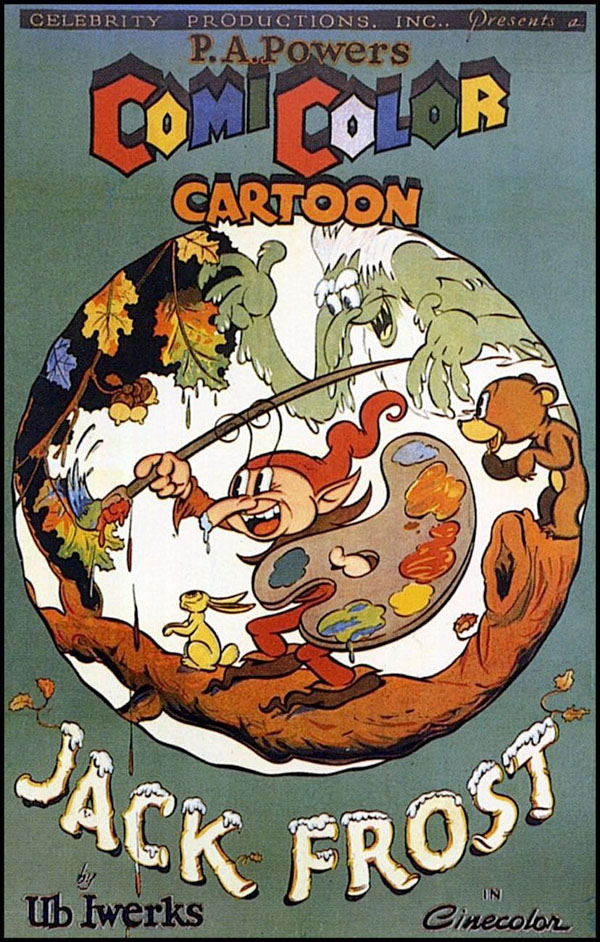
Though Ub Iwerks may have invented the animated beaver, he didn’t find much opportunity to use him in productions from his own cartoon studio. What appears to be the only such instance was a brief cameo shot in Iwerks’s wintertime classic, Jack Frost (ComiColor, 12/24/34). A forest full of various animals opens the first shots of the film, cavorting in a public game of leap frog (no, Flip is not a participant). A small bear is the first to notice an observer on a tree limb, with the mere utterance of his name drawing the undivided attention of the forest folk. A magical elf, by the name of Jack Frost, has appeared, carrying a paintbrush and artist’s palette, with which he performs magic by changing objects’ color and appearance to render them harbingers of approaching Autumn. He is seen painting the green leaves into orange and brown hues, and calls down an advance warning that summer’s gone, and Old Man Winter will be knocking at their door. Better get their food and nuts stored away. A dancing quartet of beavers responds, “Thanks, Mr. Jackie for your advice. We’ll hurry home to our wives”, while various squirrels complete the rhyming couplet by stashing nuts in their trees, and stating that they’ll “have their cupboard filled with supplies, when Old Man Winter Arrives.” That’s all the beavers get to do. The rest of the film follows the misadventures of a determined grizzly bear cub, who thinks he’s too tough to have to worry about winter cold thanks to his furry coat, and doesn’t want to hibernate like his parents. When the cub ventures out into the forest, Old Man Winter locks him away inside a hollow log with a row of icicle bars to block his exit. But Frost takes pity on the disobedient cub, and uses his paint magic to change the ice bars into peppermint sticks, allowing the cub to lick his way to an escape. Jack flies the cub home, tucks him in to sleep, then writes in frost upon the window as he exits, “Finis”.


Beavers also don’t get a lot to do in Van Beuren’s The Hunting Season (RKO, Rainbow Parade, 8/9/35 – Burt Gillett/Tom Palmer, dir.). This was in essence the first starring vehicle for the budding character of Molly Moo Cow, who had first appeared as a guest nemesis in the color Toddle Tale, “The Picnic Panic”, and who even as of this production had still not received a name. The beavers are oddly the first to be spotlighted in the film (Gillett by this time well-acquainted with animating them), building a dam and tamping down mud with their tails in a serene forest scene, shared with squirrels gathering nuts, a mother bird tending to two young ones in a nest, and two ducks swimming in circles in the river. Enter Molly, just randomly venturing through the woods. She decides to take a dip in the stream, and tests the water with her hoof and tail, which seems to be a bit colder than is to her liking. The ducks pull a prank upon her, tugging at her tail to pull her abruptly into the water. Molly counters the prank by sticking her head underwater and blowing bubbles that float the ducks off of the water surface into the air, pop, and deposit the ducks onto her back. Little by little, the joking relationship makes her and the ducks fast friends. Meanwhile, a human hunter prepares one of his shotguns at a nearby campsite, and strides into the area. Spotting the same serene forest scene we started the film with, he soon wreaks havoc upon it with his shotgun full of buckshot. He fires upon the bird family, shooting away the branch upon which the nest rests, causing mom to have to rescue in mid-air her falling flightless chicks. He blasts at the squirrels’ tree, piercing a gaping hole in the trunk, out of which pours all the nuts and the squirrels as well. And he takes pot-shots at the fleeing ducks in mid-air. Yet he takes no shots at the beavers! I guess he’s not in the market for trappers’ pelts. Molly gathers up the two ducks as they fall from the sky, at first mourning them, but finding them to be all right, as one of them rings her cow bell. They inform her what just happened, and Molly carries them to the hunter’s campsite, where they pick up a crate full of ammunition and a small arsenal of the hunter’s other shotguns, all threaded upon Molly’s tail. Together, they race back to the forest, where they deposit the weaponry for the others to see, inform them of a plan for revenge, and distribute shotguns and ammo to each of the forest residents. The hunter enters a clearing, looking for the fallen ducks but finding only a handful of feathers on the ground, while the camera pulls back, revealing the forest army surrounding him from all sides. This appears to be the first of many instances in which multiple studios would find use for beavers in “Give him the works” sequences of mass forest retaliation. Everyone opens fire upon the hunter from all directions. The beavers play their part in only one scene, apparently stocked for gunpowder but not for bullets, so they load their rifle with marsh reeds, which don’t have much lethal effect, but spear-off the hunter’s jacket, then tickle him like crazy under the armpits and in the tummy. The ducks decide to launch pumpkins off the end of their gun barrel, leaving the hunter wearing the shell of one like a helmet, with two more pumpkin shells rolling around his ankles like a set of wheels. The ducks next launch a bee hive, with end results similar to the bear’s retreat in “Pop Goes Your Heart”. Molly and the ducks march back to the rest of the forest folk in triumph, but the ducks drop their rifle, causing it to accidentally discharge, leaving Molly awkwardly scurrying up a tree, to moo to the camera for the fade out.


Porky in the North Woods (Warner, Porky Pig, 12/19/36, Frank Tash[lin], dir.) features a lot of beaver involvement. Porky is ranger of a game preserve (he calls it a game refuge), where there is (as declared by an endless display of signs posted in the forest) no hunting, no fishing, no trapping, no fires, and no, no, a thousand times NO! But one shadowy figure, who is seen through half the picture only as a silhouette on the snow while heard speaking in a French-Canadian accent, seems determined to ignore, and break, every rule. He shoots down the No Hunting signs, catches fish, starts campfires carelessly left burning, and lays strong steel traps throughout the woods. Two playful young beavers are engaged in a game of leap frog, propelling each other forward by flips of their tails under the other’s feet. They encounter a bright shiny apple hanging from a thread draped over a tree limb. One’s pulling upon the string triggers one of the jagged traps behind him to clamp upon his tail. He yells to his brother to go get Porky to help. Some historians, including Leonard Maltin, have incorrectly given credit to Tashlin’s work on the later “Porky’s Romance” as an innovation in the cutting and timing of action in super-speed. They neglect to mention that Tashlin was already experimenting with high speed and rapid-fire cutting at least as early as the battle finale of “Little Beau Porky” in mid-1936, and here in the beaver sequence, easily as finely timed as Petunia’s high-speed run after candy in the later acclaimed film. Beaver #2 zips out of frame, and in movement deliberately blurred by speed lines, traverses six scenic backgrounds in perspective in under four seconds! Just to make sure nobody blinked and missed it, the beaver screeches to a stop, realizing he’s forgotten something. At the same lickety-split tempo, he runs the course in reverse, to nab the coveted apple for his meal, before repeating the action a third time in his quest to locate Porky.

When Porky hears the news, he comes a-running, prying open the cruel trap holding beaver #1. The beaver’s tail is bent in a zig-zag, and the beaver frets that he hopes it isn’t a permanent wave. But Porky’s worries are only beginning, because the beavers aren’t the only victims. Everywhere he looks, he spots more traps, with more animals caught in them. A rabbit is caught by the ears. A fox by his bushy tail. Yes, even a skunk by his striped rear appendage, which Porky has to free while holding his breath with a clothespin on his nose. Each of the animals suffers the same zig-zag creasing from the traps’ jaws as did the beaver. So Porky sets up what resembles a laundry business in his ranger’s cabin, though his services are free of charge. A seemingly-endless queue of victimized animals waits their turn, as Porky performs miracles with a towel and hot flat iron, ironing smooth the ridges left in the animals’ anatomies by the traps. There is one, however, who is displeased at this turn of events. The mystery trapper, who can easily see the tell-tale signs of Porky’s and the animals’ footprints around each of his empty traps. Someone has confiscated all his prizes, and he wants revenge.

The trapper is finally revealed as one Jean Batiste – a large, burly, lumberjack-style dog. He easily traces the tracks back to the ranger station, and walks in on the line waiting for Porky’s ironing. Grabbing the iron, he uses it without the aid of insulating towel directly on Porky’s tail, straightening it like a dart, then sticks the rigid tail into the table woodwork, suspending Porky above it, to be punched back and forth like a punching bag. He throws Porky across the room, his tail again piercing the wood of the cabin wall like a dart, placing Porky’s rear end over the escaping hot steam of a whistling tea kettle atop Porky’s stove. Then, Batiste pulls out a sled dog whip, and removes one of his snowshoes. He lassoes Porky with the whip, pulls him out of the wall and back to him, then smacks Porky with the snowshoe, bouncing him off the wall like a tennis ball, and playing a painful one-man tennis game with Porky taking all the hits. Beaver #2 sees all this happening from the doorway, and again retraces his previous steps through the six scenic backgrounds at super-speed, finally coming to a stop below a fuzzy hanging object above, which he pulls. It is the goatee-like fur hanging from the throat of a giant moose, who bellows out a low-pitched wail as an alarm of distress to the forest. In several shots of fine animation detail, rows of bears come charging out of caves, skunks from within trees, a parade of snapping turtles tapping a beat on their shells with drumsticks as a marching band, and of course, hundreds of beavers from dens in the river bed. They converge on the cabin just as Batiste has succeeded in knocking Porky cold. Jean prepares to leave the cabin, but quickly spots the approaching stampede, and tries to bolt the door. No matter. The animals smash it down. Jean speeds out of a rear exit on skis. It’s time to “give him the works” again. Two bears launch the beaver twins at him via crosscut saw catapults, and they slap his head around with their tails as well as wooden sticks. The turtles slide between Jean’s skis, beating his bottom with clubs as they pass under. More beavers launch a barrage of small logs at the back of Jean’s head via slingshots rigged into the antlers of moose. The skunks also launch fitting weapons from their tails – smelly, rotten eggs. Finally, the beaver twins pull the old vine-across-the-path trick, tripping Jean and launching him skyward and off the mountain slope. Jean begins to descend, upside down, and his skis act like whirling propeller blades, spiraling him into a twist, so that he screws himself firmly into the snow-covered ground below, only his ankles and skis left protruding from the snow. The revived Porky, who seems to have recuperated entirely, joins the animals in cheers of victory – then smile at observing what the beaver twins are up to. They have taken advantage of Jean’s downfall and present position, by converting his inverted skis on Jean’s ankles into their new playground attraction – a see-saw (an ending likely “borrowed” from Morty and Ferdie’s similar see-saw atop Mickey Mouse’s head in Mickey’s Steam-Roller of a few seasons back).


Little Hiawatha (Disney/UA, Silly Symphony, 5/15/37 – David Hand, dir.) is a forest masterpiece that certainly earned director David Hand the future right to be supervising director of “Bambi”. It tells the tale of Longfellow’s mighty Indian warrior – when he was just starting out as a tiny boy, out for his first day of solo hunting in the woods. He is capable enough in rowing a canoe, but has a lot to learn when it comes to bringing back prize game. Try as he might, he can’t get close enough to the animals to take a shot with his small bow and arrow, as they keep running out of range. The only two creatures who stay still long enough for him to aim are a grasshopper (who proves himself the better marksman by spitting in Hiawatha’s face), and a tiny baby bunny, who is too inexperienced and becomes cornered atop a tree stump. Hiawatha shouts, “Yippee” and aims his bow. The bunny, however, turns on him a set of what Charlie Dog at Warner Brothers would have called the “big, soulful eyes”. Hiawatha starts losing his nerve to go through with it, sniffles, and sheds a single tear. He then gets hold of himself, and decides to make it a fair fight, reaching into his Indian trousers (which, by the way, someone really needs to buy him a belt for – as the running gag of the film has his pants falling down at least seven times!) and pulling out a matching bow and arrow with which he arms the bunny. Positioning himself and the bunny back-to-back, he paces off five steps in duel fashion, turns, and pulls back his bowstring to fire. The bunny, however, is no opponent, having no idea what to do with the weapon, which drops out of his trembling hands. Frustrated, Hiawatha kicks at the dirt, shoos the bunny away to his waiting parents, then breaks his bows and arrows across his knee. He’s given up picking on the little guy. This reaction brings cheers from the creatures of the woodland, embarrassing Hiawatha, who shyly backs out of the scene.

The re-reease poster

Hiawatha’s day seems to be entirely spoiled, until something catches his keen eye – large paw prints in the soft earth. Bear tracks! Forgetting his lack of weapons, Hiawatha’s tracking instincts take over, and he bends an ear to the ground to listen for vibrations of movement, then follows the trail of tracks deeper into the woods. Though the tracks seem large, the one that made them is by far not the largest of his species – a bear cub, whom Hiawatha comes up upon nose-to-nose. Hiawatha becomes excited, and seems to think he can bring this one back alive with his two “bear” hands, so pursues the cub further into the woods. He spots the cub hiding behind what seems a large brown rock, and climbs atop the rock to obtain a position of advantage over his opponent. Until the “rock” moves. We are never made aware whether it’s the mother or the father – but with an angry bear, does it really make a difference? The character model for the beast is gorgeous in detail, expressiveness, and ferocity – the most memorable design in the film – and was never surpassed until the ultra-realistic grizzly who battled Copper in The Fox and the Hound. Disney would fall back upon the same design for several films to follow, including Good Scouts, The Pointer, and Donald’s Vacation.

But where do beavers come into the picture? Right about now. The forest animals can see Hiawatha is in trouble, and decide to repay the act of kindness Hiawatha showed them. Thus begins another elaborate “give him the works” master plan to slow up the bear. Several beavers rally the forest creatures with an alarm, beat out in rhythms upon a hollow log with their tails. A squad of raccoons pull down a long vine from the branches of a tree and stretch it across the bear’s path to trip him up. The beavers are ahead at the bank of a stream, floating a log up to the shoreline for Hiawatha to climb upon as he reaches the water. The beavers paddle him a short distance into the stream, hoping to leave the bear high and dry. But they are not fast enough, and the beast leaps into the water, getting his front paws upon the end of the log, and flipping Hiawatha into the air and onto the trunk of a nearby tall tree. The bear continues swimming and reaches the base of the tree, swiftly climbing up after his target. The beavers shift to plan “B”, and a trio of them quickly gnaw away at the base of the tree. The tall pine begins to topple, with the bear clinging to the trunk for dear life. Hiawatha also clings above him, but begins slipping as the tree’s angle changes in its fall. A family of opossums are prepared for this, and hanging by their tails from several tress, grab Hiawatha before he can fall, swinging him from tree to tree like living vines might be used by Tarzan.

At a ledge closest to the last tree waits a deer, who has put her head though some vines connecting two long branches of wood, trailing the branches behind her in the fashion of an Indian travois. Hiawatha is tossed onto the branches, and begins to be towed through the woods with the swiftness of the deer who pulls him. And not a moment too soon, as the fallen bear has climbed out of a canyon, and gives chase once again. The beavers get back into the act, felling over a half-dozen trees into the bear’s path, but narrowly miss their attempts to conk the bear on the dome with them. The deer develops a good lead on the bear, allowing for some rabbits to carry out a masterstroke of deception. As the deer passes them, taking Hiawatha on one path leading back to the river, the rabbits get under, then uproot, a small shrub, shifting its position to block view of Hiawatha’s path, and exposing a second path that leads off to nowhere in the distant hills. The bear, seeing only one visible thoroughfare, assumes he is on the right track, and continues on at full speed into the mountains, presumably never to be seen again. Meanwhile, the deer makes it back to the lower riverbank where Hiawatha left his canoe, and two turtles act as stepping stones so that Hiawatha can board his vessel. For the return trip, Hiawatha won’t even have to raise a paddle. The beaver trio reappear, and from the rear end of the canoe, dip their tails in the water, one to serve as rudder, two to serve as oars, slowly but majestically propelling Hiawatha homeward, who stands proudly with arms folded at the helm of the canoe, while his animal fans “watch him as a friend departing”. The narrator adds, “And the beaver called him, brother.” And, brother, that’s enough for a first installment.

• “Little Hiawatha” is on Internet Archive.

NEXT WEEK: We’ll get busy with more beavers from the ‘30’s and ‘40’s.

  • ✇Cartoon Research
  • Spring Into Classic Cartoons Michael Lyons
    Spring arrives today. Well, at least according to calendars and meteorologists, it arrives today, March 20, at 10:46 a.m. eastern time. The weather itself may feel different. As temperatures still chill and snow still falls in some areas. A few weeks ago, there was a celebration of winter-themed cartoons as we looked forward to spring. Now that it’s arrived, it’s only fitting that we welcome this very welcome season with some spring-theme classic cartoons: Springtime (1929), Disney This Disney S
     

Spring Into Classic Cartoons

20 March 2026 at 07:01

Spring arrives today. Well, at least according to calendars and meteorologists, it arrives today, March 20, at 10:46 a.m. eastern time.

The weather itself may feel different. As temperatures still chill and snow still falls in some areas. A few weeks ago, there was a celebration of winter-themed cartoons as we looked forward to spring.

Now that it’s arrived, it’s only fitting that we welcome this very welcome season with some spring-theme classic cartoons:

Springtime (1929), Disney

This Disney Silly Symphony, “Drawn by Ub Iwerks,” as the titles inform us, celebrates the colorful season of change in glorious black-and-white.

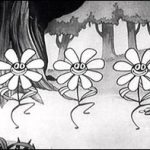
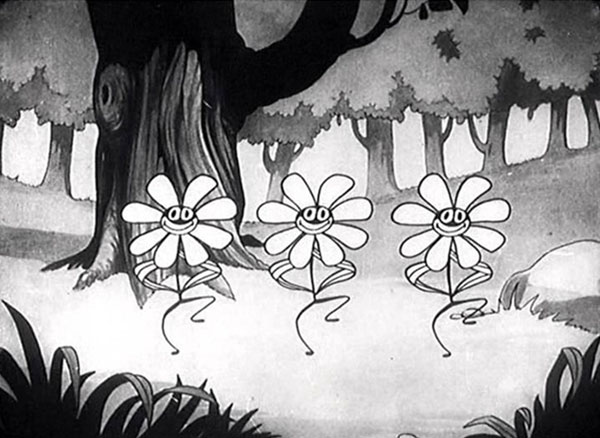
The short opens with the lovely music “Morning Mood” from Edvard Grieg’s Peer Gynt, as three flowers dance, with one flower then coming toward the screen as two ladybugs dance atop its pedals.

We then see a caterpillar dancing through the glen, and it splits into sections, all dancing independently. A crow then comes up behind it and eats each one of the sections.

The crow, wearing his top hat, then dances back to the nest where Mamma is sitting on eggs. The eggs hatch and the little hatchlings get out and immediately start dancing themselves.

A thunderstorm then arrives as lightning threatens a cloud, which tries to duck out of the way of the strikes, but the lightning finally pierces the cloud, and rain comes out of the cloud like a waterfall.

A somewhat bare tree treats the rainfall like a shower, scrubbing its branches like hair, and is then zapped in the rear end by lightning. As the rain stops, two grasshoppers, who have been using mushrooms as umbrellas, come out from underneath and begin dancing around to “Dance of the Hours” by Amilcare Ponchielli.

The two grasshoppers wind up unknowingly jumping into a frog’s mouth, and because they continue to dance, so does the frog. A spider then swings in does its own dance and uses its spider web as a harp.

A group of frogs then continues to dance, but they are tracked by a large water bird. For safety, all the frogs jump inside of each other like nesting eggs and take off, being chased by the bird, who manages to eat all of the frogs, after tossing them in the air. The bird skips through puddles, but the last puddle is deeper, and the bird sinks into the puddle as the cartoon ends.

While it’s typical of this era, with repetitive animation and a series of gags in place of its story, there is very creative animation here, including nice use of perspective and effects (when the frog dances we see its reflection rippling in the water below, which builds to a nice gag where the frog’s reflection seems to do its own dance steps).

Springtime has a vibe that’s as comforting as the season it celebrates.


Porky’s Spring Planting (1938), Warner Bros.

Another black and white entry, this one a sequel to the short, Porky’s Garden (1936), with Porky (Mel Blanc) looking to plant his vegetable garden, with assistance from his laconic dog, Streamline.

Streamline (also Blanc) digs the holes with his tail, and Porky rolls the seeds down the dog’s back to plant the garden. However, the chickens next door are hungry and see the garden as a diner (even hanging out a menu sign that reads: “Corn Beet and Cabbage”).

Porky’s efforts to rid his garden of the chickens are useless. He tries swinging a broom, but each time he does, an additional chicken appears. He eventually sends Streamline after the chickens, but they pummel the poor dog.

It all eventually leads Porky to try to come to some sort of agreement with the chickens and to try to get them to agree to creating one garden for himself and one for them. When he asks them what types of vegetables they want, and he mentions corn, the chickens break into an imitation of comedienne Martha Raye, as they declare, “Ohhh yeaaah!”

Directed by Frank Tashlin, this has his ingenious comedic touches throughout. Streamline’s thoughts come through the soundtrack in voice-over, and when Porky asks for the dog’s help, he mutters, “I’ll be able to sleep all day when I get my Social Security!”

Here, the humor is partnered with full animation and, much like Springtime, plays with perspective in the sequences where Porky plows the garden and nicely timed gags with the chickens, making Porky’s Spring Planting an entertaining entry from the title star’s early days.


Springtime for Thomas (1946), MGM

As this short opens, Jerry emerges from his mousehole (in the mailbox), ready for the day, and attempts to bother Tom by kicking the cat and pulling his hair out, but Tom simply shushes Jerry away.

Jerry looks out the window and sees what has Tom’s attention – Toodles, the female cat next door, lying out on a lounge chair, reading “Har-Puss Bazaar” magazine. Tom is in love, which is evident by the hearts that appear in his eyes and the fact that he kisses Jerry.

Toodles drops her handkerchief, and Tom buzzes over quickly to get it. She then blows a kiss, which flutters through the air and lands on Tom’s lips.

In a classic cartoon trope, a devil version of Jerry appears to the mouse and tells him that he needs to break up that relationship to save his friendship with Tom.

Jerry forges a letter from Toodles and gives it to an Alley Cat, voiced by Frank Graham (who reads it and notes that Toodles has always admired his physique, which he pronounces “fizzy-queue.”

The Alley Cat immediately goes over and breaks in between Tom and Toodles, throws Tom in the pool and immediately starts serenading Toodles with the song, “Quiéreme mucho.”

What follows is back and forth between Tom and the Alley Cat. Tom is thrown into a BBQ pit on a rotisserie, and the Alley Cat crashes into a pool that’s been drained of its water. It ends with Tom being ejected from the premises and meeting up with Jerry again.

The two gleefully start chasing each other, until Jerry encounters a female mouse and begins falling in love, as Tom did, as the cartoon ends.

Directed by William Hanna and Joseph Barbera, Springtime for Thomas is well-crafted, with beautiful visuals and lovely backgrounds by Robert Gentle, especially in the opening scene.

With a team of animators that includes Ed Barge and Kenneth Muse, the gags throughout play out perfectly (after Tom is kissed, his heart goes off like a fire alarm, he jumps in the air and is whacked in the head by a mallet from cupid, as the words “Love” appear in his eyes like a slot machine).

Additionally, the cigar-chomping, gruff Alley Cat is a great, additional rival for Tom. In all, Springtime for Thomas is a classic entry from the Golden Age of this legendary cartoon duo.

Just three of the many Springtime-themed cartoons (mention some of yours in the comments below). Once you’ve watched them, summer can’t be far behind.

❌