The Freedom Cartoonists Foundation will be marking World Press Freedom Day on Monday, May 4 with two events: the inaugural “Cartooning for Freedom” Exhibition and a ceremony to present the 2026 Kofi Annan Courage in Cartooning Award. “Cartooning for Freedom” ExhibitionThe exhibit opens today and runs through May. It features 60 cartoons selected by FreedomCartoonists […]
An AI agent doesn't just respond to customers; it resolves their problems independently, without human involvement.
About one-third of service calls are already handled by AI, according to Salesforce's November 2025 State of Service report, and that number will hit 50% by 2027. But what percentage of those calls are–or could be–resolved by AI without human intervention? That is an entirely different question.
AI agents are no longer just for enterprise. SMBs are adopting them to reduce costs, handle volume, and compete with larger players on service quality.
This guide is for the SMB owner or operator evaluating these tools for the first time.
What Is an Agentic AI Agent for Customer Service?
Originally, AI agents were non-agentic, similar to chatbots and AI-powered support platforms. But the term gets used loosely, and the differences matter when you're deciding what to buy:
Differences Between Chatbots, AI-powered Support Platforms, and AI Agents
The term “AI agent” has a precise meaning in the industry, but you would not know it from browsing the market. True AI agents can reason through problems, take independent action, and complete multi-step tasks without a human directing each move.
Most of what gets sold under that label cannot do any of that. Instead, it is AI-powered customer service software, which can be genuinely useful, but it is not the same thing.
The distinction matters because if you search for "AI agent" and buy the first thing that comes up, there is a good chance you are buying something far less capable than the name implies.
This table explains the differences:
True AI agents typically cost 2-3x more than a chatbot, but a chatbot that can't resolve the issue just moves the cost to your support team.
Why SMBs Are Adopting AI Agents Now
Two-thirds of businesses that have already adopted AI agents report measurable productivity gains, according to PwC's AI Agent Survey. More than half say they're seeing real cost savings and faster decision-making. And 54% credit AI agents with improving the customer experience.
Customers today expect fast answers wherever they reach out, whether that's chat, email, or social. Hiring enough staff to cover all those channels around the clock isn't realistic for most small businesses. Basic chatbots are affordable, but anyone who's used one knows how quickly they hit a wall. AI agents are a different thing entirely. They can handle complex, multi-step conversations across channels without the overhead of a full support team.
Nearly three-quarters of executives surveyed expect their AI agent strategy to be a significant competitive advantage within the next 12 months, and 46% are already worried they're falling behind. That's not just enterprises competing with other enterprises. SMBs are going to feel this too, competing with other SMBs who move faster.
What to Look for When Choosing an AI Agent Platform
Knowing AI agents deliver results is one thing. Choosing the right platform is where most SMBs get stuck. Not all AI agent platforms are built the same, and the wrong choice can mean paying for capability you can't use or getting locked into something you'll outgrow. These six factors are worth evaluating before you commit to any platform:
1. Resolution Capability
The most important question to ask any vendor is whether their agent actually resolves issues or just routes them. Triaging a customer inquiry and handing it off to a human likely isn't much of an upgrade over what you already have.
Look for platforms with documented resolution rates across real customer interactions, not just demo scenarios. That track record is the clearest signal of whether the AI is actually doing the work.
2. Omnichannel Support
Your customers aren't reaching out through one channel, and your AI agent shouldn't be limited to one either. A platform that handles chat but not email, or email but not voice, creates gaps that fall on your team to cover.
The goal is a single platform managing every channel consistently, so customers get the same quality of response whether they text, call, email, or open a chat window.
3. Ease of Use for Non-Technical Teams
If your support team needs to file a ticket with engineering every time they want to update the agent, the platform is going to create friction fast. The best platforms let support leaders configure, adjust, and retrain the agent themselves. That independence matters, especially for SMBs, where engineering resources are limited and support needs change quickly.
4. Integration with Existing Tools
An AI agent that can't talk to your CRM, helpdesk, or knowledge base is working blind. It needs access to customer history, open tickets, and your existing documentation to give accurate, useful responses. Before committing to any platform, map out which tools it needs to connect to and verify those integrations exist and actually work, not just that they're listed on a features page.
5. Responsible AI and Governance
This one gets skipped more than it should, especially by SMBs. If your agent is handling customer data, billing questions, or anything sensitive, you need to know how it makes decisions and where humans provide oversight. Look for platforms with clear oversight controls, visibility into the agent's reasoning, and relevant compliance certifications. A governance failure isn't just a technical problem, it's a customer trust problem.
6. Scalability
The platform that fits your business today needs to fit even when you've doubled your support volume or expanded into new channels. Switching platforms mid-growth is expensive and disruptive. Ask vendors directly how their pricing and architecture scale, and look for case studies from businesses that started where you are now.
Platforms Worth Considering
These platforms specifically describe their offerings as agentic, meaning they can act autonomously rather than just assist humans. Here's what to know about each:
Zendesk
Zendesk AI for customer service deploys AI agents that handle customer requests end-to-end across every channel while giving human agents real-time access to relevant knowledge for the conversations they do handle. It's one of the more established platforms on this list, which shows in its governance approach. Zendesk holds ISO 42001 certification for AI management systems with clear transparency and human oversight controls, making it a good fit for SMBs that need enterprise-grade reliability without the infrastructure to match.
Tidio Lyro
Lyro Conversational AI Agent sits in a useful middle ground, more capable than basic automation, less complex than enterprise platforms. It handles customer conversations across chat, email, and social media while taking real action in your business systems, checking order statuses, updating customer records, scheduling appointments, and escalating to a human when needed. Every response is grounded in your verified support content to keep answers accurate. Lyro is designed for SMBs that want true agentic capability without enterprise-level complexity or cost.
Fin (formerly Intercom)
Fin AI Customer Agent handles more than half of all customer questions without human intervention, pulling answers from your internal content, websites, PDFs, and databases across 45 languages. What sets it apart is how deeply it connects to existing business systems. It can retrieve and update customer data, process account changes, and take action directly within Salesforce, HubSpot, and Freshdesk. For SMBs already running those tools, that level of integration means the agent isn't just answering questions, it's actually taking action.
Gorgias
AI Agent Gorgias is built specifically for ecommerce brands, which makes it a different kind of tool than the others on this list. It handles the full range of ecommerce support, including order status, returns, and shipping updates, while also functioning as a shopping assistant that can recommend products during the conversation. It resolves around 60% of inquiries autonomously, supports 80+ languages, and integrates directly with Shopify and other ecommerce platforms to access real-time order and inventory data. If your business sells online, it's worth a close look.
Freshdesk
Freddy AI Agent is Freshworks' autonomous customer support and IT service agent, handling questions across Freshdesk, Freshservice, and Freshchat from a single platform. It manages the full support process without human intervention, working across email, chat, voice, and messaging. The flexibility to build custom agents for specific use cases makes it a practical fit for mid-sized SMBs that have outgrown basic automation but aren't ready for enterprise complexity. If your business is already in the Freshworks ecosystem, the integration is seamless.
Questions to Ask Before You Buy
Here are some questions an SMB decision-maker should ask any vendor before signing:
What is the average resolution rate?
How are agents updated when your products or policies change?
What governance controls are in place?
How long does it take to set up and train the AI on my business?
What happens when the AI can't answer a question or gets stuck?
How much does it cost per conversation or per resolved ticket?
Can I see real customer data from companies similar to mine?
What integrations do you have with my existing tools?
How do you handle customer data privacy and security?
Getting Started: A Simple Path to First AI Agent Deployment
Choosing the right AI agent isn't about picking the most advanced technology. It's about finding a platform that resolves customer issues reliably, scales with your business, and operates with the transparency and accountability your customers expect.
Start With Low-Stakes Interactions
The smartest way to start is narrow. Pick one high-volume, low-complexity use case, like order status questions, password resets, or basic account inquiries. These are interactions your team handles dozens or hundreds of times a week, the answers don't change much, and a failed response doesn't put a customer relationship at serious risk.
Set Your Baseline Measurements First
Before you go live, define what success looks like in concrete terms: resolution rate, average handle time, customer satisfaction score, escalation rate. Pick one or two metrics that matter to your business and measure them before and after.
From there, adding a channel or a more complex use case is a much easier internal sell than asking leadership to approve an unproven investment. The businesses that get AI agents right aren't the ones who launched with the most sophisticated setup. They're the ones who started somewhere specific.
Customers Notice When Problems Actually Get Resolved
By 2027, AI will handle half of all service calls. What matters for your business is whether those interactions actually resolve your customers' problems. That's what agentic AI agents are built to do.
Editorial cartoonist around the world are being encouraged to submit cartoons for the 2026 European Cartoon Award. The award recognizes “the impact of cartoons on societal dialogue” and serves to “encourage cartoonists in their vital role and stimulate conversations about Europe.”Requirements for entry include publications dates from June 2, 2025, and July 1, 2026, must […]
The Graphic Medicine International Collective (GMIC) has announced their shortlist for their GMIC Awards for outstanding health-related comic projects completed and/or published in 2025. There are three categories, long-form, short-form, and educational, with five finalists in each category. Winners will be announced at their annual conference in Baltimore on July 25.Here are the finalists:EducationalLong FormShort […]
In what would normally be great news for Archie Comics—a Hollywood deal to bring the Archie to the silver screen—has opened up a legal can of worms for co-CEO Jonathan Goldwater. Raven Capital Management claims that Goldwater defaulted on a loan in 2024 giving them control of the intellectual property and the deal with Universal […]
The Disney and Pixar Studios have recently given us a bit of an over-saturation of feature animation spotlighting one of nature’s reputedly most industrious critters. At least one of such kind appears in a prominent part in Zootopia 2, while a swarm of them form the principal animal cast of Hoppers. As I have not yet been able to acquire home media versions of these films to review, I am not up to speed on them, and they will not be further discussed in this series. However, it might be said that this recent cinema trend is setting us up for the Year of the Beaver – so I thought it might be fun to trace the buck-toothed, flat-tailed character’s history in animation, and see how these character-actors of nature have fared in the dam-dest of situations, starting from the earliest days of sound.
(A note here is in order. While in the process of writing this first installment, which I had actually been percolating the research for as of at least a year ago, I happened to discover by chance online that another author, in anticipation of the “Hoppers” premiere, has been thinking along the same lines, and attempted a brief survey of the same subject on Cartoon Brew. I swear this was a case of coincidental independent creation. Nevertheless, in reviewing the other article, I observed that most of its material consisted of title-dropping and some clips without much discussion of cartoon content, and (as in the case of our recent coverage of bullfighting cartoons) many on-subject films were omitted from the title list. I thus proceed full steam ahead with the present project, to add some depth as to the gags and ideas presented in the subject films, and to fill in a number of gaps.)
Correct me if I’m wrong. It’s rather surprising that I seem to have come up empty in locating any verified appearances of a beaver in any known surviving silent cartoon. You would think Paul Terry’s Aesop’s Fables would be loaded with them somewhere – but they don’t seem to even turn up in natural settings where you’d expect all varieties of animals to be represented, such as “If Noah Lived Today” or “Amateur Night On the Ark”. Maybe the primitive pencils at the Terry studio couldn’t hit on a model design for the creature they felt comfortable with. Similarly, Max Fleischer missed his chance to include the species in his first Talkartoon, Noah’s Lark. It thus appears that Disney (as he often did in those days) got the jump on everybody, including the characters in one of his earliest Silly Symphonies, Autumn (Columbia, 2/13/30 – Ub Iwerks, dir.) (noticeably overlooked by the Cartoon Brew coverage, as were nearly all of this week’s films).
Part of a four-episode quad-rilogy, themed about the four seasons of the year (though one might say the follow-up, Night feels like it makes the series a set of five). All of the films are relatively plotless, concentrating on well-synchronized cavorting to a lively Carl Stalling score. The first half of this one deals with various animals gathering their stores for Winter while the leaves fall. Squirrels do most of the heavy lifting, while scavenger crows raid the squirrel’s hollow tree homes and swipe corn, storing it away inside the pantlegs of a farm scarecrow who isn’t scaring anyone. A skunk tries to roll a large pumpkin into a tree, but when it doesn’t fit, gives it a running tackle to push it through, only resulting in the fragile pumpkin shell cracking and depositing its innards all over him. A porcupine has a better method of harvesting, shaking a fruit tree and catching the falling fruit on the ends of his quills (a gag later repeated in Father Noah’s Ark, discussed below). Now comes a brief sequence for the beavers, changing subject.
The beavers dance atop a dam under construction in the foreground, tamping down lumber into its structure with their tails, while several other small groups of beavers are seen in the stream, constructing beaver dens with entrances below water. Two beavers dance together in synchronized rhythm along the bank, then chew down a small tree, which topples onto the head of one of them. In the later climax of the film, as the first cold blasts of winter wind are felt, one beaver calls an alarm to the others, and one-by-one, several beavers dive into the water and are seen as bulges and vibrations within the structure of a beaver den, having entered it from below. A stranger appears – a misguided duck, who doesn’t have the good sense to fly south, and instead also dives under the water, attempting to join the beavers in their comfy abode. He is quickly and rudely ejected, swimming away with complaining quacks. The skunk looks for shelter, but gets hit with a back of porcupine quills from inside one tree already occupied – so moves into another one, sending all of its furry occupants scattering for another tree next door. The crows get the final shot, taking up residence inside the hollow clothing of the scarecrow. One small crow is left out, and kicks the pantleg of the trousers, hoping for access. In an ending which nearly duplicates that of “The Skeleton Dance”, the bony foot of one of the crows reaches out from the drop-seat of the trousers, yanks the little crow inside, then re-buttons the drop-seat.
Minus Iwerks (who by this time had moved on to another animation studio), Disney’s beavers make a comeback in The Busy Beavers (Columbia, Silly Symphony, 6/22/31 – Burt Gillett, dir.). Obviously, with the beavers taking center stage, there’s a lot more room for action and gags in this one. It’s rather comical also to note that in both of these early cartoons, the sound engineers seem to have no idea what a beaver should sound like (their natural sounds are more like grunts), so decide to use what sounds like a squeaky toy to emit puppy-dog like high-pitched barks. This does have the advantage of permitting quick one-note tones that fit easily into the punctuated rhythms of an average cartoon score, but must still bring howls from anyone who’s studied the behavior of the animals in the wild. The sound effect also proved rather interchangeable – I swear I’ve heard the same “voice” given to foxes and bear cubs in productions from various studios, not to mention used in its proper place for Bosko’s pup at the end of early Looney Tunes. (Who was that pup anyway? Baby Bruno?)
The film opens with the usual construction under way of a dam and beaver dens – though with broader scope that the previous film’s opening shot, panning back and forth across the river full of busy workers. A first gag has one beaver curl up his tail to form a place to carry a load of lumber, then hold a small cylindrical stump between his hands. The beaver loading the lumber on takes hold of the other beaver’s rear feet, balancing him upon the held stump, and carts the lumber to the worksite, using the first beaver as a living wheelbarrow. Another beaver searches for just the right lumber in what seems to be a woodpile, but finds within a sleeping moose, who stands to reveal the beaver trapped as a passenger in his antlers. Another pair of beavers mix a muddy mortar in a hollow tree stump, one beaver loading up his cheeks with water from a nearby pond to spit into the stump, while the second mixes the solution in the stump with his tail. Then, a line of beavers arrives as hod-carriers, using large leaves held aloft atop Y-shaped tree branches as their tools to carry the mud to the dam, emptied into them by the tail of the mixing beaver.
More heavy construction occurs elsewhere. One beaver hangs by his tail from the limbs of a flexible sapling, whole another tugs at a lower branch like a crane operator, maneuvering the higher beaver into position to chomp upon and transport cut logs from a pile to an assembly line. One by one, the logs are threaded between two husky beavers, who combine with their sharp teeth to hone each log down into an elongated conical shape. Then, the shaped cones are flipped by beavers’ tails into the shallow water, point down, where they are hammered into place by the tails of two more beavers to serve as pilings. (I’m not aware that a dam requires pilings – are they also building an auxiliary pier?) In the woods, a team of two cutting beavers moves along, making short work of felling trees marked with X’s, while a scout beaver proceeds ahead of them, choosing just the right trees of strong grade for marking and felling like a lumber crew boss. Two large worm-like creatures in one tree save their home by spotting the freshly-chalked X left as a marker, and rubbing it off before the cutting crew spots it. Some beavers approach the cutting task solo. One, who might be the laziest of this beaver colony, is large and lethargic, casually cutting a very puny sapling and slowly walking away with it toward the dam, in a gait that suggests he is in no mood to exert himself. Eclipsed behind him is a much smaller beaver who is all energy, and fells an older-looking tall pine while an owl is still perched on its branch. Single-handedly, the young beaver pushes the heavy tree down a slope and into the river, then propels the tree downstream by spinning his tail as an outboard motor, tugging on the owl’s tail as if a ship’s whistle cord to pass a slower-moving log team of beavers who is rowing their lumber with tail action like the crew of a scull in a college boating race. As the young beaver’s log hits the riverbank, rolling the beaver off and up onto land to collide with a rooted tree, a lightning flash illuminates the sky, and the first drops of rain begin to fall.
In one of those elaborate long-cycles of animation that only Disney seemed capable of carrying out successfully in those days, a full shot of the river and just-completed dam shows the entire beaver community scurrying for the safety of their dens. The little beaver is bringing up the rear, and is the only one to spot that the construction project has not gone quite according to plan. The earthen-packed base of the dam has sprung a small leak, with a spout of the newly-arrived rain water shooting out. The beaver begins to play the role of the Dutch boy at the dike, plugging the hole with one paw, only to have another hole develop elsewhere. One paw after another, and even his face, are used to block the holes, but he soon finds himself short on number of appendages to hold back the current. Cleverly, he spies several small sticks protruding from the dam edge, and grabs them up, throwing them like darts to plug each of the previous holes – only to find that they had already been serving a blocking purpose in their original position, as a delayed spout of even more forceful water bursts from where he plucked the sticks out. In desperation, the beaver sits in the hole, providing a temporary plug, until his tail is chomped upon by the jaws of a snapping turtle swimming in the waters on the backside of the dam. The turtle is pulled through as the beaver leaps out of the hole in pain, and the beaver makes due by propping the turtle’s shell up against the hole in the dam to do the plugging job, the beaver bracing the turtle into permanent position by wedging a stick between the turtle’s chest and the dry river bottom.
Troubles are not over. A dark rain cloud above bursts as a lightning bolt tugs at a zipper in its bottom, dropping enough rain to form a massive wall of water in an area about a mile above the dam. A couple of wonderful shots show the progression of the flood that develops in the hills down the river, particularly a tracking shot just ahead of the flow as it careens around a continuing curve, taking out trees protruding into the river bed in 3-D style detail as it goes. The little beaver, now standing atop the dam edge, watches in horror as the leading edge of the flood waters reaches the beaver dens, nearly swamping them, and subjecting the dens to a beating from the floating logs passing in the waters. The beaver hops down into the river bed on the front side of the dam, and tries to hide in its shadow from the oncoming rush of water and debris. The water pounds repeatedly upon the dam’s backside, then suddenly breaks through, seemingly destroying the dam’s entire middle expanse – until the water recedes somewhat, showing that the beaver has been left on a small island of safety in the river’s middle, only a sliver of the dam center still standing to offer him protection.
With the other beavers still having their hands full within the dens, little beaver is forced to come to the rescue. He races for the tallest and largest pine along the riverbank, and like a buzzsaw chews deeper and deeper into its trunk, about 90% of the way across. The tree begins to tremble, and the beaver does an about-face to get out of the way, nearly getting trapped when the sagging trunk briefly catches his tail. He pulls out just in time to let the tree fall across the river, but is right in the path of its collapse, as the felled tree lands in perfect position to cover the complete expanse of the river width, proving to have dense-enough foliage to stop the flood water in its tracks. (Unlikely, given the general amount of space between branches of the average tree.) Dozens of birds emerge from the greenery and fly away from the fallen forest giant. In one of the earliest Disney moments where we are led to believe a character has passed, there is no further movement from the tree for a few seconds, and the musical tone turns somber as the camera slowly closes in on the tree’s uppermost limbs. Suddenly, the tension is relieved, as the smiling face of the little beaver, safe and sound, pops out of the greenery, wearing a bird’s nest as a hat. The other beavers, now safe in the still waters surrounding their dens, dance for the little one in celebration. The little beaver smiles and bows to his adoring fans, and takes off the nest as if tipping his hat to his public. His moment of glory is briefly marred by the egg in the nest choosing this moment to hatch, allowing a featherless baby to repeatedly utter “Cuckoo” at him, for the iris out.
Were this cartoon produced later, without the need for music synchronization timing to eat up footage and slow general pacing, the plot/gag material for this early outing was actually quite strong, and full of typical Disney innovation for a first cartoon focusing on a new subject idea. Though the picture hasn’t achieved an everlasting spot as a timeless classic in the Disney hall of fame, it deserves a second appraisal. And it seems a “dam” sure bet it was remembered by at least some folk in Chuck Jones’s unit in the 1940’s, as its story structure bears substantial similarity to and seems the direct inspiration for Chuck’s own classic, “The Eager Beaver”, to be discussed in later pages of this series. It’s easy to imagine how much of this cartoon’s material could have been directly interpolated by Jones into his own film had scripts been swapped, with Jones probably achieving just as lively results as his own film from the Disney gags.
Beavers almost miss the boat in Disney’s major animal adventure, Father Noah’s Ark (UA, Silly Symphony, 4/8/33 – Wilfred Jackson, dir.). They are never seen involved in the initial construction process for the ark, nor in woodland group shots, not in the stampede racing for the ark, nor on the boarding gangplank. And they certainly didn’t tag along with the pair of skunks who make the voyage on the roof of the ship. Yet, somehow, they are seen in the third-to-last shot of the film, disembarking. The male and female beavers march down the gangplank, side by side, each one carrying a new youngster along on its tail. Guess they stayed busy on the trip, even if they missed being on the passenger list and traveled as stowaways.
Either competing studios were blown away by the Disney efforts above, or just for unknown reasons were slow to adopt the beaver into their animation models for various forest-related cartoons of the period, as, for a few more years, no beavers seem to turn up in cartoons I’ve been able to discover. I again could be overlooking something, as reference to beavers rarely turns up in the titles of episodes, so if anyone remembers any other early beavers, feel free to comment. Harman and Ising seem to have missed their opportunities entirely, choosing not to include beavers in such possible vehicles as “Ain’t Nature Grand?”, “The Trees’ Knees”, and “Bosko’s Woodland Daze”. But, as Leon Schlesinger began to shift the Merrie Melodies series to color, we get Pop Goes Your Heart (Warner, 2-strip Technicolor, 12/8/34 – Isadore (Friz) Freleng, dir.). In essence, this is Friz’s idea of a Silly Symphony, considerably behind the times, and resembling something Disney might have produced several years before. It is another plotless romp in nature, with the likes of humming birds and humming bees, a papa grasshopper teaching his young ones to spit with chewing tobacco, turtles learning to swim by flipping over on their backs and stroking with reeds like a rowing crew, and some harp-stylist spiders playing the title tune on the strands of their web, while worms inside two apples simulate the limbs of a pair of dancers, and a trio of croaking frogs sings the lyric. (The song, by the way, was a semi-hit from Dick Powell’s feature, “Happiness Ahead”.)
About two-thirds of the way into the film, our attention shifts to a community of beavers, engaged in the usual dam and den building. Two beavers, however, prove that a beaver’s life shouldn’t be all work and no play, engaging in some recreation between shifts, finding their tails to be of natural use in an intense game of tennis, using them as racquets to hit a ball (where did they get it?) over a net of cobwebs. A bear comes lumbering through the woods, trying to let out intimidating roars, but having his first come out like a kitten’s meow – causing him to spray his throat with an atomizer to correct his tone. He first begins following one of the turtles too closely, only provoking the amphibian to bite a painful snap upon his nose. The bear thus turns to easier prey, chasing the beavers. The beavers duck into a hollow tree, and the bear sticks his head into the trunk to snarl at them, but can proceed no further. One beaver sneaks out of a hole in the upper trunk, then administers a light spanking to the bear’s rear with his tail. At the top of the tree, another beaver chomps at an overhanging limb, dropping a bombshell of a hanging bee hive upon the bear’s back. The hive bursts open, plastering the bear with honey and attracting the bees to swarm upon him. The bear runs for it, colliding with the fence of a farmer’s field and tumbling over the top of it into a pasture. With the gooey honey mixed into his fur, the bear is a magnet for the dry grass, and rolls down an incline, developing a growing coating of grass around his entire body in the manner of a rolling snowball. At the base of the hill, a farmer works with a hay-baling machine. He can’t tell the difference between a bear covered in grass and a haystack, so tosses the bear into the machine with his pitchfork. The bear emerges with torso encased in a bale of hay, and exits at a gallop over the hills, leaving the farmer to scratch his head in puzzlement.
Though Ub Iwerks may have invented the animated beaver, he didn’t find much opportunity to use him in productions from his own cartoon studio. What appears to be the only such instance was a brief cameo shot in Iwerks’s wintertime classic, Jack Frost (ComiColor, 12/24/34). A forest full of various animals opens the first shots of the film, cavorting in a public game of leap frog (no, Flip is not a participant). A small bear is the first to notice an observer on a tree limb, with the mere utterance of his name drawing the undivided attention of the forest folk. A magical elf, by the name of Jack Frost, has appeared, carrying a paintbrush and artist’s palette, with which he performs magic by changing objects’ color and appearance to render them harbingers of approaching Autumn. He is seen painting the green leaves into orange and brown hues, and calls down an advance warning that summer’s gone, and Old Man Winter will be knocking at their door. Better get their food and nuts stored away. A dancing quartet of beavers responds, “Thanks, Mr. Jackie for your advice. We’ll hurry home to our wives”, while various squirrels complete the rhyming couplet by stashing nuts in their trees, and stating that they’ll “have their cupboard filled with supplies, when Old Man Winter Arrives.” That’s all the beavers get to do. The rest of the film follows the misadventures of a determined grizzly bear cub, who thinks he’s too tough to have to worry about winter cold thanks to his furry coat, and doesn’t want to hibernate like his parents. When the cub ventures out into the forest, Old Man Winter locks him away inside a hollow log with a row of icicle bars to block his exit. But Frost takes pity on the disobedient cub, and uses his paint magic to change the ice bars into peppermint sticks, allowing the cub to lick his way to an escape. Jack flies the cub home, tucks him in to sleep, then writes in frost upon the window as he exits, “Finis”.
Beavers also don’t get a lot to do in Van Beuren’s The Hunting Season (RKO, Rainbow Parade, 8/9/35 – Burt Gillett/Tom Palmer, dir.). This was in essence the first starring vehicle for the budding character of Molly Moo Cow, who had first appeared as a guest nemesis in the color Toddle Tale, “The Picnic Panic”, and who even as of this production had still not received a name. The beavers are oddly the first to be spotlighted in the film (Gillett by this time well-acquainted with animating them), building a dam and tamping down mud with their tails in a serene forest scene, shared with squirrels gathering nuts, a mother bird tending to two young ones in a nest, and two ducks swimming in circles in the river. Enter Molly, just randomly venturing through the woods. She decides to take a dip in the stream, and tests the water with her hoof and tail, which seems to be a bit colder than is to her liking. The ducks pull a prank upon her, tugging at her tail to pull her abruptly into the water. Molly counters the prank by sticking her head underwater and blowing bubbles that float the ducks off of the water surface into the air, pop, and deposit the ducks onto her back. Little by little, the joking relationship makes her and the ducks fast friends. Meanwhile, a human hunter prepares one of his shotguns at a nearby campsite, and strides into the area. Spotting the same serene forest scene we started the film with, he soon wreaks havoc upon it with his shotgun full of buckshot. He fires upon the bird family, shooting away the branch upon which the nest rests, causing mom to have to rescue in mid-air her falling flightless chicks. He blasts at the squirrels’ tree, piercing a gaping hole in the trunk, out of which pours all the nuts and the squirrels as well. And he takes pot-shots at the fleeing ducks in mid-air. Yet he takes no shots at the beavers! I guess he’s not in the market for trappers’ pelts. Molly gathers up the two ducks as they fall from the sky, at first mourning them, but finding them to be all right, as one of them rings her cow bell. They inform her what just happened, and Molly carries them to the hunter’s campsite, where they pick up a crate full of ammunition and a small arsenal of the hunter’s other shotguns, all threaded upon Molly’s tail. Together, they race back to the forest, where they deposit the weaponry for the others to see, inform them of a plan for revenge, and distribute shotguns and ammo to each of the forest residents. The hunter enters a clearing, looking for the fallen ducks but finding only a handful of feathers on the ground, while the camera pulls back, revealing the forest army surrounding him from all sides. This appears to be the first of many instances in which multiple studios would find use for beavers in “Give him the works” sequences of mass forest retaliation. Everyone opens fire upon the hunter from all directions. The beavers play their part in only one scene, apparently stocked for gunpowder but not for bullets, so they load their rifle with marsh reeds, which don’t have much lethal effect, but spear-off the hunter’s jacket, then tickle him like crazy under the armpits and in the tummy. The ducks decide to launch pumpkins off the end of their gun barrel, leaving the hunter wearing the shell of one like a helmet, with two more pumpkin shells rolling around his ankles like a set of wheels. The ducks next launch a bee hive, with end results similar to the bear’s retreat in “Pop Goes Your Heart”. Molly and the ducks march back to the rest of the forest folk in triumph, but the ducks drop their rifle, causing it to accidentally discharge, leaving Molly awkwardly scurrying up a tree, to moo to the camera for the fade out.
Porky in the North Woods (Warner, Porky Pig, 12/19/36, Frank Tash[lin], dir.) features a lot of beaver involvement. Porky is ranger of a game preserve (he calls it a game refuge), where there is (as declared by an endless display of signs posted in the forest) no hunting, no fishing, no trapping, no fires, and no, no, a thousand times NO! But one shadowy figure, who is seen through half the picture only as a silhouette on the snow while heard speaking in a French-Canadian accent, seems determined to ignore, and break, every rule. He shoots down the No Hunting signs, catches fish, starts campfires carelessly left burning, and lays strong steel traps throughout the woods. Two playful young beavers are engaged in a game of leap frog, propelling each other forward by flips of their tails under the other’s feet. They encounter a bright shiny apple hanging from a thread draped over a tree limb. One’s pulling upon the string triggers one of the jagged traps behind him to clamp upon his tail. He yells to his brother to go get Porky to help. Some historians, including Leonard Maltin, have incorrectly given credit to Tashlin’s work on the later “Porky’s Romance” as an innovation in the cutting and timing of action in super-speed. They neglect to mention that Tashlin was already experimenting with high speed and rapid-fire cutting at least as early as the battle finale of “Little Beau Porky” in mid-1936, and here in the beaver sequence, easily as finely timed as Petunia’s high-speed run after candy in the later acclaimed film. Beaver #2 zips out of frame, and in movement deliberately blurred by speed lines, traverses six scenic backgrounds in perspective in under four seconds! Just to make sure nobody blinked and missed it, the beaver screeches to a stop, realizing he’s forgotten something. At the same lickety-split tempo, he runs the course in reverse, to nab the coveted apple for his meal, before repeating the action a third time in his quest to locate Porky.
When Porky hears the news, he comes a-running, prying open the cruel trap holding beaver #1. The beaver’s tail is bent in a zig-zag, and the beaver frets that he hopes it isn’t a permanent wave. But Porky’s worries are only beginning, because the beavers aren’t the only victims. Everywhere he looks, he spots more traps, with more animals caught in them. A rabbit is caught by the ears. A fox by his bushy tail. Yes, even a skunk by his striped rear appendage, which Porky has to free while holding his breath with a clothespin on his nose. Each of the animals suffers the same zig-zag creasing from the traps’ jaws as did the beaver. So Porky sets up what resembles a laundry business in his ranger’s cabin, though his services are free of charge. A seemingly-endless queue of victimized animals waits their turn, as Porky performs miracles with a towel and hot flat iron, ironing smooth the ridges left in the animals’ anatomies by the traps. There is one, however, who is displeased at this turn of events. The mystery trapper, who can easily see the tell-tale signs of Porky’s and the animals’ footprints around each of his empty traps. Someone has confiscated all his prizes, and he wants revenge.
The trapper is finally revealed as one Jean Batiste – a large, burly, lumberjack-style dog. He easily traces the tracks back to the ranger station, and walks in on the line waiting for Porky’s ironing. Grabbing the iron, he uses it without the aid of insulating towel directly on Porky’s tail, straightening it like a dart, then sticks the rigid tail into the table woodwork, suspending Porky above it, to be punched back and forth like a punching bag. He throws Porky across the room, his tail again piercing the wood of the cabin wall like a dart, placing Porky’s rear end over the escaping hot steam of a whistling tea kettle atop Porky’s stove. Then, Batiste pulls out a sled dog whip, and removes one of his snowshoes. He lassoes Porky with the whip, pulls him out of the wall and back to him, then smacks Porky with the snowshoe, bouncing him off the wall like a tennis ball, and playing a painful one-man tennis game with Porky taking all the hits. Beaver #2 sees all this happening from the doorway, and again retraces his previous steps through the six scenic backgrounds at super-speed, finally coming to a stop below a fuzzy hanging object above, which he pulls. It is the goatee-like fur hanging from the throat of a giant moose, who bellows out a low-pitched wail as an alarm of distress to the forest. In several shots of fine animation detail, rows of bears come charging out of caves, skunks from within trees, a parade of snapping turtles tapping a beat on their shells with drumsticks as a marching band, and of course, hundreds of beavers from dens in the river bed. They converge on the cabin just as Batiste has succeeded in knocking Porky cold. Jean prepares to leave the cabin, but quickly spots the approaching stampede, and tries to bolt the door. No matter. The animals smash it down. Jean speeds out of a rear exit on skis. It’s time to “give him the works” again. Two bears launch the beaver twins at him via crosscut saw catapults, and they slap his head around with their tails as well as wooden sticks. The turtles slide between Jean’s skis, beating his bottom with clubs as they pass under. More beavers launch a barrage of small logs at the back of Jean’s head via slingshots rigged into the antlers of moose. The skunks also launch fitting weapons from their tails – smelly, rotten eggs. Finally, the beaver twins pull the old vine-across-the-path trick, tripping Jean and launching him skyward and off the mountain slope. Jean begins to descend, upside down, and his skis act like whirling propeller blades, spiraling him into a twist, so that he screws himself firmly into the snow-covered ground below, only his ankles and skis left protruding from the snow. The revived Porky, who seems to have recuperated entirely, joins the animals in cheers of victory – then smile at observing what the beaver twins are up to. They have taken advantage of Jean’s downfall and present position, by converting his inverted skis on Jean’s ankles into their new playground attraction – a see-saw (an ending likely “borrowed” from Morty and Ferdie’s similar see-saw atop Mickey Mouse’s head in Mickey’s Steam-Roller of a few seasons back).
Little Hiawatha (Disney/UA, Silly Symphony, 5/15/37 – David Hand, dir.) is a forest masterpiece that certainly earned director David Hand the future right to be supervising director of “Bambi”. It tells the tale of Longfellow’s mighty Indian warrior – when he was just starting out as a tiny boy, out for his first day of solo hunting in the woods. He is capable enough in rowing a canoe, but has a lot to learn when it comes to bringing back prize game. Try as he might, he can’t get close enough to the animals to take a shot with his small bow and arrow, as they keep running out of range. The only two creatures who stay still long enough for him to aim are a grasshopper (who proves himself the better marksman by spitting in Hiawatha’s face), and a tiny baby bunny, who is too inexperienced and becomes cornered atop a tree stump. Hiawatha shouts, “Yippee” and aims his bow. The bunny, however, turns on him a set of what Charlie Dog at Warner Brothers would have called the “big, soulful eyes”. Hiawatha starts losing his nerve to go through with it, sniffles, and sheds a single tear. He then gets hold of himself, and decides to make it a fair fight, reaching into his Indian trousers (which, by the way, someone really needs to buy him a belt for – as the running gag of the film has his pants falling down at least seven times!) and pulling out a matching bow and arrow with which he arms the bunny. Positioning himself and the bunny back-to-back, he paces off five steps in duel fashion, turns, and pulls back his bowstring to fire. The bunny, however, is no opponent, having no idea what to do with the weapon, which drops out of his trembling hands. Frustrated, Hiawatha kicks at the dirt, shoos the bunny away to his waiting parents, then breaks his bows and arrows across his knee. He’s given up picking on the little guy. This reaction brings cheers from the creatures of the woodland, embarrassing Hiawatha, who shyly backs out of the scene.
The re-reease poster
Hiawatha’s day seems to be entirely spoiled, until something catches his keen eye – large paw prints in the soft earth. Bear tracks! Forgetting his lack of weapons, Hiawatha’s tracking instincts take over, and he bends an ear to the ground to listen for vibrations of movement, then follows the trail of tracks deeper into the woods. Though the tracks seem large, the one that made them is by far not the largest of his species – a bear cub, whom Hiawatha comes up upon nose-to-nose. Hiawatha becomes excited, and seems to think he can bring this one back alive with his two “bear” hands, so pursues the cub further into the woods. He spots the cub hiding behind what seems a large brown rock, and climbs atop the rock to obtain a position of advantage over his opponent. Until the “rock” moves. We are never made aware whether it’s the mother or the father – but with an angry bear, does it really make a difference? The character model for the beast is gorgeous in detail, expressiveness, and ferocity – the most memorable design in the film – and was never surpassed until the ultra-realistic grizzly who battled Copper in The Fox and the Hound. Disney would fall back upon the same design for several films to follow, including Good Scouts, The Pointer, and Donald’s Vacation.
But where do beavers come into the picture? Right about now. The forest animals can see Hiawatha is in trouble, and decide to repay the act of kindness Hiawatha showed them. Thus begins another elaborate “give him the works” master plan to slow up the bear. Several beavers rally the forest creatures with an alarm, beat out in rhythms upon a hollow log with their tails. A squad of raccoons pull down a long vine from the branches of a tree and stretch it across the bear’s path to trip him up. The beavers are ahead at the bank of a stream, floating a log up to the shoreline for Hiawatha to climb upon as he reaches the water. The beavers paddle him a short distance into the stream, hoping to leave the bear high and dry. But they are not fast enough, and the beast leaps into the water, getting his front paws upon the end of the log, and flipping Hiawatha into the air and onto the trunk of a nearby tall tree. The bear continues swimming and reaches the base of the tree, swiftly climbing up after his target. The beavers shift to plan “B”, and a trio of them quickly gnaw away at the base of the tree. The tall pine begins to topple, with the bear clinging to the trunk for dear life. Hiawatha also clings above him, but begins slipping as the tree’s angle changes in its fall. A family of opossums are prepared for this, and hanging by their tails from several tress, grab Hiawatha before he can fall, swinging him from tree to tree like living vines might be used by Tarzan.
At a ledge closest to the last tree waits a deer, who has put her head though some vines connecting two long branches of wood, trailing the branches behind her in the fashion of an Indian travois. Hiawatha is tossed onto the branches, and begins to be towed through the woods with the swiftness of the deer who pulls him. And not a moment too soon, as the fallen bear has climbed out of a canyon, and gives chase once again. The beavers get back into the act, felling over a half-dozen trees into the bear’s path, but narrowly miss their attempts to conk the bear on the dome with them. The deer develops a good lead on the bear, allowing for some rabbits to carry out a masterstroke of deception. As the deer passes them, taking Hiawatha on one path leading back to the river, the rabbits get under, then uproot, a small shrub, shifting its position to block view of Hiawatha’s path, and exposing a second path that leads off to nowhere in the distant hills. The bear, seeing only one visible thoroughfare, assumes he is on the right track, and continues on at full speed into the mountains, presumably never to be seen again. Meanwhile, the deer makes it back to the lower riverbank where Hiawatha left his canoe, and two turtles act as stepping stones so that Hiawatha can board his vessel. For the return trip, Hiawatha won’t even have to raise a paddle. The beaver trio reappear, and from the rear end of the canoe, dip their tails in the water, one to serve as rudder, two to serve as oars, slowly but majestically propelling Hiawatha homeward, who stands proudly with arms folded at the helm of the canoe, while his animal fans “watch him as a friend departing”. The narrator adds, “And the beaver called him, brother.” And, brother, that’s enough for a first installment.
Doonesbury creator Garry Trudeau has an opinion piece in today’s issue of Rolling Stone (non-paywall version) on his relationship with Charles Schulz and more so on why Snoopy is an enduring and endearing comic character. It was this haiku-perfect character humor that dazzled Schulz’s peers. In Snoopy, he had created an American archetype – the […]
The Lakes International Comic Arts Festival is taking fire from British politicians for inviting Jordanian cartoonist Emad Hajjaj to be one of 13 guest cartoonists for their 2026 event in October. Critics, including Prime Minister Keir Starmer, are demanding public funding be withdrawn and the cartoonist be disinvited. At issue are two of Emad’s cartoons […]
Today, we cover nearly 30 years of television in one fell swoop. Beavers didn’t make a shattering impact upon the small screen in general during this period, their participation in the medium being sporadic at best. One memorable feature project would also debut at the outset of this chronology, which is probably the best remembered of all of today’s entries. Other contributions include possibly their only appearances in claymation and stop-motion, a television ad campaign, and items from Jay Ward, King Features, Hanna-Barbera, and Film Roman.
One of the better-remembered of cartoon beavers was a well-animated and notably-voiced member of the species, nameless on the screen but among studio records affectionately known as Mr. Busy, who appeared as a featured co-star in a popular sequence from Disney’s Lady and the Tramp (6/22/55). He becomes the unlikely answer to an otherwise unsolvable dilemma for Lady, starting when Aunt Sarah, believing that Lady has attacked her pet Siamese cats Si and Am (although the whole thing is a frame up by the felines), takes Lady to a pet shop and has her fitted with a “good, strong muzzle”. Poor Lady can’t tolerate the cruel device, and reflexively runs from the shop, the muzzle and its trailing leash still fastened around her head. She immediately encounters more difficulty when the leash snags loose objects that clank loudly behind her upon the pavement, calling attention to herself, and the unwanted following of a pack of menacing stray dogs from the bad part of town. But Lady has an ally who also knows these dark streets like the back of his paw – the devil-may-care Tramp, another stray who knows how to handle any tough mutt that crosses his path. Hearing Lady’s plight, Tramp follows the progress of the chase, then doubles back by way of a shortcut to come up on the back side of a fence, just as Lady reaches the fence from the opposite side, finding her path blocked and herself cornered. With a mighty leap, Tramp vaults over the fence, landing directly between Lady and her vicious pursuers, and in canine fashion, snarls his most intimidating snarl at the pack, ready to take on three at one time to save the fair damsel. A violent battle of tooth and claw follows, some of its action denoted artistically through clashing shadows against the fence. When the rough stuff subsides, it is the three toughs who have turned tail and run, and a panting but defiant Tramp stands victorious.
But there’s still the problem of this confounded contraption strapped to Lady’s face. It’s beyond Tramp’s abilities to know how to remove it – but he thinks he knows of a place where they likely can find someone who can – the municipal Zoo. Going through the place from A to Z, Tramp quickly rules out the apes for assistance: “Too closely related to humans.” Alligators might perform the task, but there’s just too much teeth to dodge at the same time. “If anybody ever need a muzzle, it’s him.” Suddenly, a call of “Timber!” is heard, as a large tree falls around Tramp, narrowly missing direct impact from its branches. The cause is Mr. Busy, a zoo beaver constructing a dam within his own habitat. (Kind of advanced for most zoos. I don’t recall seeing any other where there is enough stream and lumber for a beaver to do the same kind of natural thing it does in the wild.) Well, “B” is the next letter of the alphabet (though in correct alphabetical order, Tramp should have checked out the bears first). So Tramp tries to get the toothy-fellow’s attention. “This will only take a second of your time”, proposes Tramp. But the beaver sees things from a different viewpoint. “Do you realize every second, seventy centimeters of water is wasted over that spillway?” (The beaver, voiced by Stan Freberg, is the first rodent of Disney’s to display a pronounced whistling lisp upon uttering “S” sounds, due to his buck teeth – allowing Freberg to have his fun with the read of this “S”-loaded line, much as “R”s provided audio-fuel for the dialogue of Elmer Fudd. Disney would remember this comical “speech impediment”, allowing it to be later inherited by Gopher for the production of “Winnie the Pooh and the Honey Tree”.) So the beaver is to busy to be bothered, insisting that the felled tree has got to be moved for use on the dam. “T’ain’t the cuttin’ takes the time – It’s the dog-gone hauling”, he complains. This gives the observant and prone-to-con-games Tramp an instant idea. What the beaver needs is “the new, improved, patented handy-dandy never-fail little giant log puller!” In delayed reaction, the beaver’s attention is finally aroused. “Did you say log puller?”
Tramp, instantly adapting to the role of a super salesman, draws Lady into the scheme, calling upon the beaver to observe the product, “modeled by the lovely little Lady”. He also prompts the slow-to-understand Lady to go along with the gag, giving her instructions in hawker’s spiel, “Turn around, sister, and show the customer the merchandise.” Then, the irresistible hook: “And it cuts log hauling time sixty-six percent!” Now the beaver can’t wait to see how it works. Tramp simply slips a loop of the leash around a tree limb, and indicates it is now ready to haul off. The beaver now asks to slip it on for size – but is stumped when he encounters the leather straps holding the device in place on Lady’s head. “How d’ya get the consarned thing off, Sonny?” asks the beaver. Simple. Place the strap between your teeth, and bite hard. One chomp, and Lady is free. Now Tramp is ready to depart, but the beaver still wants to talk business. “I’ll have to make certain it’s satisfactory before we settle on a price.” To the beaver’s surprise, Tramp has no interest in being mercenary – and tells him he can keep it. “I can?” reacts the beaver in surprise. Even more surprising is Lady’s response. Some of Tramp’s tactics are finally rubbing off upon her, and in spite of her ladylike ways, she chimes in, “Uh huh. It’s a free sample!” Tramp shoots her a glance with a beaming smile across his face, recognizing that this new kid to the shell game has got possibilities and potential. The beaver begins to thank the two – but never finishes his sentence, as one tug on the leash sends the fallen tree rolling down the slope of a hill, dragging the beaver along by the leash end. Down and down the lumber rolls, splashing into the stream and dunking the beaver, then floating slowly in the water to lodge directly within the last remaining hole in the dam, stopping the flow of water. Lady and Tramp watch from the hill crest, wondering what the reaction of their hapless patsy will be to this development. The beaver’s head rises from below the water, then turns to see his dam completed. He glances back at the dogs, and with a stream of water gushing from between his front teeth, joyfully remarks, “Say, it works swell!”
Likely the earliest animated beaver to be created for television was Bucky Beaver, the spokes-critter for Ipana Toothpaste (which sponsor, nearly two decades after its abandonment of the full-length theatrical commercial film, “Boy Meets Dog” at Walter Lantz, finally found its niche in animation spots). Produced by Walt Disney’s commercial animation division in conjunction with the run of “The Mickey Mouse Club”, these spots were particularly aimed at the kiddies, and featured the familiar voice of Jimmie Dodd, master of ceremonies of the Mouseketeers, as both narrator and in speeded-up form as the voice of Bucky. Dodd is definitely not among the ranks of fine animation voice actors, and hams up his role considerably. What’s more, despite changing for every commercial the locale and Bucky’s occupation, the spots suffer from what might be called the “Casper” syndrome – they are all the same, written in the same formula pattern, and never with any zingy or surprise punchlines. Bucky sings his signature jingle (composed no-doubt by Dodd), “Brusha, Brusha, Brusha”, and points as his bright-and-shiny buck teeth. A villainous human called Decay Germ appears, and threatens menacing cavities. A fight ensues, with Germ seeming to get the upper hand over Bucky. But Bucky pulls out an oversized tube of Ipana Toothpaste. Without even being brushed or sprayed with the stuff, and before Bucky can even remove cap from tube, Germ withdraws with the shout, “Oh, no, not Ipana!”, and ends up in whatever trap or immobilization Bucky wants for him. Bucky sings his jingle again, and the commercial ends. A string of three such commercials is presented below. It is unlikely you will want to see any more of them on the same day.
Tree Trouble (aka “Eager Beavers”) (Gumby, 10/26/56 – Art Clokey, dir.) – With the help of an excavation machine fresh out of the box from Tonka toys, Gumby and Pokey follow a treasure map they have stumbled across into the deep woods, in search of the third tree on the riverbank, indicated on the map to conceal an undisclosed treasure buried below. Their big digger soon begins chomping at the base of the tree, and lifts the whole trunk onto its conveyor belt – disturbing the slumber of Mr. Wise Owl in the branches above. “Who [or is it “Hoo”?] ever gave you permission to tear up my tree?”, the owl asks. Gumby is forced to admit, “Nobody”, and Pokey blurts out their following of the map to find treasure. “What is this forest coming to?” the owl mutters, and declares that what these two need is a good fable. He begins to relate the tale with a moral of Benjamin Beaver and his two cousins, Flory and Zeb. One day, the three decide to build a dam, with Ben drawing up the plans and acting as head engineer, while his cousins handle the manual labor of cutting the logs, positioning them in the dam, and tamping them down firmly with their tails. The owl asks if they obtained permission from anyone downstream for the project, but Ben tells him not to be such a fuddy-duddy. “I’m a beaver, and I know how to build this sort of thing.” The logs thus keep coming, as the project nears completion.
Downstream, Gumby (who just happens to show up as a player in the owl’s narrative) is hiking through the woods, and encounters a racoon “washing out a few things” from a limb of his tree home overlooking the river, and a rabbit in a nearby hole just to one side of the riverbed. Gumby asks if he can go swimming, and the racoon invites him to enjoy himself. But when Gumby enters the river, he notices something strange, just as the racoon asks his opinion of the stream. How come the water is disappearing? Within a few seconds, the water drops to below Gumby’s indented ankles, and the riverbed becomes bone dry. The racoon goes into a panic, wondering how he is ever going to keep up with his washing. Of course, it is no mystery to us why this strange phenomenon is occurring – Ben’s dam has just been completed. However, Ben’s design should have called for more mud to fasten the logs together securely. A swell builds up in the river, and the force of the water’s wave blasts through the center of the dam, sending a flash flood winding as a torrent downstream. “Wow-ee!”, utters a shocked Ben, his hat spinning around atop his head as he watches the disaster. The rabbit’s hole is flooded out. The racoon’s tree is swept away in the water, ending up toppled upon the opposite riverbank. And confused Gumby can only remark that this is the craziest river he’s ever seen. Spotting a rustic hand-carved rowboat also washed up on the banks by the flood, Gumby and the two dispossessed animals decide to row upstream to see what the cause of the chaos was. But before they get too far, the water level begins to fall once again, and dwindles to zero, leaving their boat beached in the mud, as its bow encounters the new cause – Ben and the boys have gone ahead and built another dam, to make things as good as new for themselves all over again.
Before Gumby and his two animal friends can raise a protest, another voice comes to their rescue. Ben’s father has come out looking for the three beavers. Asking what that thing is in the river, he is informed by the boys that it’s the dam they just built. Papa knows his ethics, and scolds them that they had no right to do such a thing without obtaining the other animals’ permission, and orders them to tear the thing down immediately, and be home in time for supper, or there’ll be a spanking for the three of them. So the fable closes, as the owl observes that the beaver boys were just a little too eager – eager beavers, you might say. Gumby and Pokey see the point of the story, and admit they got too eager themselves. “But what’s this about buried treasure?”, asks the owl. Pokey shows him the map, then notices that the tree trunk has not been replaced precisely in its original position, revealing a hollow area at its base. Pokey trots over to investigate its contents, but after a pause, dejectedly informs Gumby, “Nuts! It’s just a lot of walnuts!” From nowhere, a squirrel appears, angrily announcing, “It may be just nuts to you, but it’s MY treasure! Now go away!” Gumby and the owl begin to laugh, Gumby closing with the remark, “I guess the joke’s on us, Pokey.”
The Frogs and the Beaver (Jay Ward, Aesop and Son (from “Rocky and his Friends”) – date unknown) – You might call this one sort of a latter-day remake of Columbia’s “The House That Jack Built”. Aesop (Charlie Ruggles) spins a tale to go with his latest moral, “Honesty Is the Best Policy” – a moral prompted by his witnessing of the horrendous act of a baseball player “stealing” second base. An industrious beaver has built a stone and mortar resort house on the banks of a river. Two shiftless frogs (Romeo and Julius) decide they are tired of beavers always having it easy, while frogs have to settle for life on a lily pad, and conspire to take over the beaver’s home. With a can of the beaver’s yellow paint, Romeo splatters Julius with spots, then carries Julius inside, claiming Julius is a victim of frog pox. When Julius pretends to go into fits, the beaver, fearing Julius may be contagious, runs away, abandoning the house. The two frogs are as destructive home residents as the Columbia film’s uninvited house guests, and reduce the house to a shambles within a week. Meanwhile, at another spot on the river, the beaver has hastily constructed a new abode made of wood. With their present place in ruins, the frogs opt for comfortable rustic living, with a new plan. The beaver is observed smoking a pipe, so Julius poses as forest ranger Smokey the Frog, stomping upon and busting the pipe, then stomping upon the beaver when he discovers the beaver also carries a book of matches. The beaver again runs off, and in three days the frogs have reduced the cabin to another wreck.
Three days is all the beaver needs to build a Spanish-style hacienda of dried mud. The frogs show up right on cue, but before they can spring plan number 3, the beaver stomps out his own pipe, displays a coat of painted frog pox he has applied to himself under his shirt, and announces that he can no longer be intimidated. In fact, there is no further reason for intimidation – as he has not built this house for himself, but for the frogs! The frogs are shocked, but not so much that they don’t immediately take occupancy – which is just what the beaver has been waiting for. As a rainstorm moves in, the frogs discover that a structure made of dried mud can quickly change to one made of wet mud when not weatherproofed, causing the whole home to sag and slide off the banks into the river. The frogs are swept away with it in the current, and never seen again. Aesop Jr. has his own idea of a closing moral – Grime does not pay. Aesop chooses to stick to his own line, and carries off to the ball park a gift-wrapped base pad to replace the one stolen last week. Junior wonders what will happen if there is another game played, and someone steals home.
Beaver or Not (Rembrandt Films/King Features, Popeye, circa 1960 – Gene Deitch, dir.) – As frequently happened in the rushed production schedule and with the low budgets allocated to the King Features Popeyes, this episode is loaded with technical flaws. Poor animation (Popeye’s mouth painted on separate cels from his head, resulting in his speaking often giving the impression that his lips have been surgically disconnected from his jaw line), missed sound-effect cues (Popeye remarking that there must be a saw mill in the area, though we’ve heard no audible buzzing), overlapping tracks (obliterating some dialogue with music or effects), and even a credits sequence where, for possibly the only time in the series, the shots are spliced together in reverse order, revealing the title of the cartoon before the director or producer credits. Plotwise, it bears a resemblance to the later Bugs Bunny “Wet Hare”, while borrowing an ending from Andy Panda’s “Nutty Pine Cabin”.
Popeye is on vacation (or is that shore leave?) in backwoods country, paddling a canoe to a small dock at one end of a path leading up to his mountain cabin. The first thing he wants to do is take a swim. (Honestly, being a sailor, shouldn’t getting drenched in water be classified as something of a busman’s holiday?) He runs up to his cabin to change into bathing trunks (though continuing to wear his sailor hat), then runs down again to perform a cannonball dive into the river. In the short time that he has been away from the stream, he quickly learns that there ain’t no stream no more, diving face first into a muddy but empty river bottom. The sound of laughter, at the speed of the voices of Alvin and the Chipmunks, is heard from further upstream. Two beavers have just completed work upon a dam blocking up the river water, and are laughing themselves silly observing Popeye.
Popeye addresses the beavers, telling them they’ve had their fun, but this dam had got to go, as it is ruining Popeye’s vacation. Popeye begins tugging at a central log. Before he can dislodge it, one beaver chews through the log’s middle, detaching Popeye’s end of the wood. Popeye stumbles backwards, getting another dip in the mud. He makes another attempt to yank logs away, but the beavers add to their stack by felling a new tree, right upon Popeye’s head. Popeye tries a two-handled saw across the dam’s middle, but the beavers swim underwater on their side, grab the other handle, and hold it fast. Popeye’s end of the saw bunches up, then propels him backwards with the force of a coiled spring. Popeye falls with his head inside a hollow tree stump, disturbing an owl roosting within. Popeye turns to dynamite. The beavers are able to yank out the stick just in time, launching it upon one of the beaver’s tails back at Popeye. Popeye shoots into the air, then crashes through the bottom of his beached canoe on the way down. There’s only one thing to be done, and Popeye is going to do it. Eat spinach
Returning to the dam, he picks up the top log with the beavers still upon it, and tosses them off to one side. He is then able to lift the whole dam out of the river as a unit, allowing the river water to rush back into place, and Popeye’s swim to finally commence. On the banks, the beavers find themselves sitting on the ground, in close proximity to Popeye’s food knapsack from the canoe, and the empty spinach can. “What happened?” asks beaver #1. “He ate some of this stuff – and WOW!”, responds beaver #2, pointing to the can. Investigating the knapsack, another can is discovered – so the beavers decide to try it out themselves, one using his teeth as a can opener to get at the contents. They both chow down, and suddenly, one of the beavers is able to pick up the log upon his feet and juggle it, remarking at how that “stuff” makes you strong. Popeye spots the display of strength, and knows he’s in for trouble.
The beavers race up the hill toward Popeye’s cabin, and both of them gnaw at the largest tree adjacent to the cabin, until 90% of its base in eaten away, aimed to tip right upon Popeye’s residence. Popeye sees the disaster in the making, and zooms up the hill, taking his place in the notch carved by the beavers to keep the tree from falling. But this is just what the beavers wanted to keep Popeye occupied. They position themselves under the porch of Popeye’s cabin, and gnaw away the supporting pillars. The house slides down the hillside, landing with a thud tight in the river bed, creating a new ready-made dam just as Andy Panda’s beavers did. Popeye runs down the hill to survey the irreparable damage. (In a continuity inconsistency that seems more calculated to save on animation budget rather than to be a mere error, the tree Popeye has been supporting does not fall.) The beavers emerge out of the water on their side of the new “dam”, and invite Popeye to “Come on in. This is fun.” Popeye decides when you can’t beat them, join them, and ends the film by challenging the beavers to a swimming race to reach the opposite shore.
The Ballad of Smokey the Bear (Rankin-Bass, 11/24/66 – Larry Roemer, dir.), seems to be among the least-remembered, Rankin-Bass projects, despite following upon the heels of the success of “Rudolph, the Red-Nosed Reindeer” and using the same script writer and musical composer. Its primary problems seem to boil down to a lead character with minimal personality traits, and a more somber mood for its storyline. It would receive no return network screenings, and would take decades before receiving any occasional airing as a one-shot rerun on some small local station.
The film creates a new origin story for our hero, failing to follow any of the reputed reality of a ranger allegedly rescuing the cub from a fire and giving him his name and identity. It takes quite a bit of time to get to the point, following him as a young cub, exploring his first honey tree and first dose of bee stings, flirting with a girl cub named Delilah, and accidentally battering a beaver dam at her persuasion. The beavers (Joe, and his southern-accented wife Bea) display a bit of personality inconsistency in the course of the production. Bea begins the film more interested in picking berries than in Joe’s preoccupation of constructing a dam. Joe declares that she might be the first lazy beaver in history (if we don’t count the one who co-starred with Mighty Mouse). Along come Smokey and Delilah, with Delilah insisting she wants to go swimming. When Smokey is hesitant, Delilah pushes him in, then jumps in herself. The wave resulting from their splashing breaks off half the dam, sending it drifting downstream. The angry beavers (years before the series of the same name) pitch wood and rocks at the bears until they leave. Bea attempts to console Joe with the thought that they can start rebuilding tomorrow. But Joe reminds her of what they learned in beaver school – never put off until tomorrow what you can do today. Suddenly, Bea seems to become reformed, and begins actively assisting Joe in resuming construction, by gathering raw materials and passing them to him as he busily attaches them to the remaining half of the dam.
Dallying in returning to his cave, Smokey (not yet named, by the way), smells the unfamiliar scent of smoke, and sees the animals of the community running for cover. He is caught in a raging forest fire alone, and remembers his mother’s warnings to climb a tree when danger threatens. When his larger brother (voiced by James Cagney) searches the woods for him, he is forced to duck under rocks while the blaze passes, then emerges to find the trees charred and leafless, with one holding the singed but still very much alive Smokey clinging to its topmost limbs. Smokey (named by his brother for the smell left in his fur) is in shock, will at first not talk, and has to be carried home by his brother – only to find that Mom also went out looking for Smokey, and was lost in the conflagration. (Shades of Bambi!)
The mood of the tale thus remains definitely dark, with Smokey growing to young bearhood while keeping largely to himself, and only exchanging minimal words with his brother alone. One day, a new menace stomps into the forest – an escaped zoo gorilla, who stupidly leaves a path of destruction in his wake. The beaver dam is one of his first targets for senseless battering, leaving the beavers to discover the center third of their dam smashed and scattered within the river. Others also lose their homes or get brutally shoved around by the beast. The animals follow the beast’s tracks to locate him. Joe Beaver is reluctant to join the searching party, fearsome of what he might encounter and making excuses to work on the dam first and search tomorrow. Bea, who again seems to have seen the light, throws Joe’s own words back at him about not putting off things until tomorrow, in perhaps the best song of the show, a lively number delivered in her Southern twang entitled “Don’t Wait”. (It should be noted that by this point in the show, the presence of each of the songs seems almost an intrusion upon the story-telling, clashing notably with the otherwise serious mood of the plot, and feeling like they could only belong in an entirely-different light-hearted musical comedy. This is perhaps another key factor in why this special didn’t capture audiences.)
The beavers are featured in one more sequence, in which, after the ape is tracked to a deserted hunter’s cabin (where he recklessly dumps waste into the stream and even dabbles in smoking, presenting the danger of setting the regrown forest ablaze again), each of the animals of the forest are invited at a group protest meeting to work on their own ideas to capture the ape, in the hopes that if one idea fails, another will work. Of course, not only do many fail, but others cross-up each other. The beavers gnaw a large tree’s trunk to the near snapping point, then set out a smelly dead fish as bait, tied to one of the branches. Their hope is that the ape will pull at the rope to which the fish is tied, tugging the tree down atop himself. The ape, however, is repulsed by the smell of the fish (though Joe believed the smell would either make him hungry or resemble his own scent so much, he’d think it was a visiting relative), and leans against the tree trunk instead of pulling at it. The tree falls upon the dam, smashing it again. Ultimately, when everyone’s plans fail, loner Smokey becomes convinced in his worries over the possible fate of the trees to take matters into his own hands, and batters down the door and front wall of the cabin. The collapse of the structure sets off a fire from the fireplace wood within, and traps the gorilla under fallen logs of the roof. Smokey forms a bucket brigade from the other animals, succeeds in having the fire doused, and uses a spade found in the cabin’s rubble to bury and stamp out the final embers. He also frees the gorilla from his log imprisonment, and becomes friends with him without a spoken word, coaxing the ape to walk with him paw in paw, and be led back to the zoo. Upon learning of his heroic battling of the beast and the fire, the Forest Service sends him his signature hat and shovel, and appoints him chief animal ranger of the forest. And thus, the legend is forged.
Hanna-Barbera’s Wacky Races included one of the rare beavers to score a regular berth in a TV series – Sawtooth, a beaver in a yellow racing helmet, who served as assistant to driver Rufus Ruffcut, a burly lumberjack who piloted The Buzzwagon (#10), a makeshift hot rod constructed of lumber and an ample supply of sawblades. Unfortunately, Sawtooth possessed negligible personality and almost as minimal screen time, serving more as a riding mascot rather than an assistant (just as Blubber Bear did in the competing Arkansas Chugabug) and having no dialog script. Most of the time he would just facially react if he was lucky. Once in a blue moon, he would get to do something, like industriously hammer back together loose boards on the Buzzwagon (accidentally hammering a nail into Rufus’s rear end), or gnawing Rufus a custom-made baseball bat out of a whole tree (lifting a gag from “Baseball Bugs”). He and Rufus did not “make the cut” for the Wacky Races reboot of 2017.
After what seems to be a long hiatus for the species, we get Garfield in the Rough (Film Roman, 10/26/84). This may not be an ideal Garfield special. Perhaps a few too many tunes. Perhaps overly-dramatic in places. But it was trying for something a little different – and still manages to deliver a goodly share of laughs and memorable verbal zingers. It begins in Wizard of Oz fashion, with black-and-white imagery, and a disclaimer not to adjust your TV set, as all the color has temporarily gone out of Garfield’s life. That goes for Jon too, who is so bored, he collapses on his face at the breakfast table. With his face still plastered on the tabletop, he mumbles that maybe it’s time they take a vacation. Garfield brightens, pulls up the windowshade, and the world turns to color once again. But where? Garfield fantasizes about jaunts to a tropical island, or maybe Mexico – each dream featuring a beautiful feline native or Senorita to woo. Then Jon drops the bombshell – they’re going camping. Not bad – if you’re in the mood for tolerating the insects, the dampness, the poor food, lack of a litter box – which Garfield definitely isn’t.
Garfield wants to pack half the house for the trip, including the TV set and a 200 mile extension cord. Jon leaves it all behind. The Arbuckle caravan of Jon, Garfield, and Odie arrives at the park grounds of Lake Wobegon. A ranger at the gate asks, “Is this your cat?’, then responds to Jon’s affirmative, “My condolences.” Garfield claws at the ranger from out the car window. Jon asks if there are any bears, and is informed that the park’s most ferocious animal is a beaver with a bad disposition. Our trio set up camp, with a waterproof tent guaranteed to sleep 3 – however, it looked much larger in the photo, and is barely large enough for Jon alone to shimmy into, as tight a fit as toothpaste in a tube. To make matters worse, our heroes hear an announcement on the radio of the escape from the zoo of a vicious black panther – scaring the life out of Garfield, but not Jon, who jumps to the conclusion that the panther has to be miles from here. Unaware, or course, that the beast is lurking in the shadows, eyeing them with its glowing yellow eyes.
Overnight, the food supply Jon has packed for a week’s rationing disappears. Garfield has declared it his midnight snack – except for the eggs, which dirty old egg-sucking dog Odie beat him to. Garfield dashes into the woods to lay low until Jon’s wrath dies down. He is finally struck with a begrudging admiration of the beauty of nature in the wild, but then remembers that wild things also live in the forest, and begins to imagine himself as next target for being eaten. Thus, when he chances to encounter a harmless rabbit, Garfield shrieks, flops on the ground, and begs for his life. A beaver walks up from the other direction. “What do you make of it, Dicky?”, asks the rabbit to the beaver. “Beats me, Billy”, responds the beaver. “Maybe he’s gotten into some fermented jujubeans or somethin’.” Garfield finally figures out, with some embarrassment, that these supposed-hostile animals are herbivores, and brushes himself off, declaring that you can’t be too careful in the wild. The rabbit suggests he’s been watching too many jungle pictures. But Garfield mentions the report about the panther – which sends both of his forest friends ducking for cover behind a log at his very mention. The beaver is the only one who’s seen it, just for a moment, as it turned its yellow eyes upon him while he was in the stream – and stared right through his soul. Now a rustling in the brush is heard. Garfield prepares to face the beast in a unifed front with his new friends – until he looks back to find they have deserted him and vanished. Garfield jumps into a hollow stump, and feels a tongue making contact with his fur. But panthers don’t lick. It is only Odie, slurping him through a knothole. Garfield tells Odie they’ve got to go back to camp and warn Jon.
Jon is still in camper’s euphoria, and fails to heed Garfield’s desperate efforts to tug him away, back to the car. Suddenly, with slow stealth, the panther makes its move from out of the brush, closing in with deliberate paces. Jon shouts to his pets to scatter. Garfield scrambles to climb up a tree. Jon ducks into his miniature tent, but the panther tears apart the canvas with one slash of its paw. Jon runs, gathering up Odie, and races for the car, locking the door. But he can’t leave without Garfield. The panther appears at the window, first clawing at the glass, then attacking it with powerful swipes of his paw, finally breaking through. The panther reaches a paw inside, slicing away a large portion of Jon’s shirt. Garfield watches in horror from the limb above – then, something snaps inside him. Garfield’s teeth clench in a jagged snarl. His claws emerge. And he leaps down upon the back of the big cat. The panther jumps around with an unwanted passenger clinging fast to his back, but finally succeeds in throwing Garfield like a bucking bronco. Garfield lies on his back, pinned against a rock face, as the panther’s attention switches to him, and he slowly moves in for the kill. At that moment, a shot rings out. The rangers have tracked the beast, scoring a direct hit upon him with a tranquilizer dart. The panther seems to collapse, inches short of his target – then opens his eyes again, placing his mighty paw atop Garfield’s chest – only to fade again, and pass out in a deep sleep. Garfield turns to the camera, and comments, “Nice touch.” The rangers are happy to find everyone is okay, and remark that it was a good thing they didn’t show up a second later. Garfield, in his silent pantomime and unheard dialog, attempts to boast to blow up out of proportion his own unexpected instinctive heroism, claiming that he simply would have turned on his inner ferocity to finish off the beast. “When the tough get going, the going gets tough…” Well, something like that, as Garfield spends the whole trip home trying to work out the correct words to the phrase.
This Thursday cartoonists and illustrators will meet to commemorate the life of Chilean-Mexican cartoonist José Palomo who passed in March and attend the opening night of the Palomo: Papel, tinta y memoria (Palomo: Paper, ink and memory) exhibit.From Aristegui Noticias, cartoonist Arturo Kemchs, speaks of his friend: Palomo proved himself to be a comedic genius with […]
Each week my ADHD brain finds some comic-related things on social media that must be chased down. There were several this week. Due to scheduling conflicts with some subject matter experts, I had to push two topics to next week. This week we chase two rabbits: how do artists draw character’s mouths based on the […]

 Login
Login









 Correct me if I’m wrong. It’s rather surprising that I seem to have come up empty in locating any verified appearances of a beaver in any known surviving silent cartoon. You would think Paul Terry’s Aesop’s Fables would be loaded with them somewhere – but they don’t seem to even turn up in natural settings where you’d expect all varieties of animals to be represented, such as “If Noah Lived Today” or “Amateur Night On the Ark”. Maybe the primitive pencils at the Terry studio couldn’t hit on a model design for the creature they felt comfortable with. Similarly, Max Fleischer missed his chance to include the species in his first Talkartoon, Noah’s Lark. It thus appears that Disney (as he often did in those days) got the jump on everybody, including the characters in one of his earliest Silly Symphonies, Autumn (Columbia, 2/13/30 – Ub Iwerks, dir.) (noticeably overlooked by the Cartoon Brew coverage, as were nearly all of this week’s films).
  The beavers dance atop a dam under construction in the foreground, tamping down lumber into its structure with their tails, while several other small groups of beavers are seen in the stream, constructing beaver dens with entrances below water. Two beavers dance together in synchronized rhythm along the bank, then chew down a small tree, which topples onto the head of one of them. In the later climax of the film, as the first cold blasts of winter wind are felt, one beaver calls an alarm to the others, and one-by-one, several beavers dive into the water and are seen as bulges and vibrations within the structure of a beaver den, having entered it from below. A stranger appears – a misguided duck, who doesn’t have the good sense to fly south, and instead also dives under the water, attempting to join the beavers in their comfy abode. He is quickly and rudely ejected, swimming away with complaining quacks. The skunk looks for shelter, but gets hit with a back of porcupine quills from inside one tree already occupied – so moves into another one, sending all of its furry occupants scattering for another tree next door. The crows get the final shot, taking up residence inside the hollow clothing of the scarecrow. One small crow is left out, and kicks the pantleg of the trousers, hoping for access. In an ending which nearly duplicates that of “The Skeleton Dance”, the bony foot of one of the crows reaches out from the drop-seat of the trousers, yanks the little crow inside, then re-buttons the drop-seat.
 Minus Iwerks (who by this time had moved on to another animation studio), Disney’s beavers make a comeback in The Busy Beavers (Columbia, Silly Symphony, 6/22/31 – Burt Gillett, dir.). Obviously, with the beavers taking center stage, there’s a lot more room for action and gags in this one. It’s rather comical also to note that in both of these early cartoons, the sound engineers seem to have no idea what a beaver should sound like (their natural sounds are more like grunts), so decide to use what sounds like a squeaky toy to emit puppy-dog like high-pitched barks. This does have the advantage of permitting quick one-note tones that fit easily into the punctuated rhythms of an average cartoon score, but must still bring howls from anyone who’s studied the behavior of the animals in the wild. The sound effect also proved rather interchangeable – I swear I’ve heard the same “voice” given to foxes and bear cubs in productions from various studios, not to mention used in its proper place for Bosko’s pup at the end of early Looney Tunes. (Who was that pup anyway? Baby Bruno?)
 Troubles are not over. A dark rain cloud above bursts as a lightning bolt tugs at a zipper in its bottom, dropping enough rain to form a massive wall of water in an area about a mile above the dam. A couple of wonderful shots show the progression of the flood that develops in the hills down the river, particularly a tracking shot just ahead of the flow as it careens around a continuing curve, taking out trees protruding into the river bed in 3-D style detail as it goes. The little beaver, now standing atop the dam edge, watches in horror as the leading edge of the flood waters reaches the beaver dens, nearly swamping them, and subjecting the dens to a beating from the floating logs passing in the waters. The beaver hops down into the river bed on the front side of the dam, and tries to hide in its shadow from the oncoming rush of water and debris. The water pounds repeatedly upon the dam’s backside, then suddenly breaks through, seemingly destroying the dam’s entire middle expanse – until the water recedes somewhat, showing that the beaver has been left on a small island of safety in the river’s middle, only a sliver of the dam center still standing to offer him protection.
  Were this cartoon produced later, without the need for music synchronization timing to eat up footage and slow general pacing, the plot/gag material for this early outing was actually quite strong, and full of typical Disney innovation for a first cartoon focusing on a new subject idea. Though the picture hasn’t achieved an everlasting spot as a timeless classic in the Disney hall of fame, it deserves a second appraisal. And it seems a “dam” sure bet it was remembered by at least some folk in Chuck Jones’s unit in the 1940’s, as its story structure bears substantial similarity to and seems the direct inspiration for Chuck’s own classic, “The Eager Beaver”, to be discussed in later pages of this series. It’s easy to imagine how much of this cartoon’s material could have been directly interpolated by Jones into his own film had scripts been swapped, with Jones probably achieving just as lively results as his own film from the Disney gags.
 Beavers almost miss the boat in Disney’s major animal adventure, Father Noah’s Ark (UA, Silly Symphony, 4/8/33 – Wilfred Jackson, dir.). They are never seen involved in the initial construction process for the ark, nor in woodland group shots, not in the stampede racing for the ark, nor on the boarding gangplank. And they certainly didn’t tag along with the pair of skunks who make the voyage on the roof of the ship. Yet, somehow, they are seen in the third-to-last shot of the film, disembarking. The male and female beavers march down the gangplank, side by side, each one carrying a new youngster along on its tail. Guess they stayed busy on the trip, even if they missed being on the passenger list and traveled as stowaways.
 Either competing studios were blown away by the Disney efforts above, or just for unknown reasons were slow to adopt the beaver into their animation models for various forest-related cartoons of the period, as, for a few more years, no beavers seem to turn up in cartoons I’ve been able to discover. I again could be overlooking something, as reference to beavers rarely turns up in the titles of episodes, so if anyone remembers any other early beavers, feel free to comment. Harman and Ising seem to have missed their opportunities entirely, choosing not to include beavers in such possible vehicles as “Ain’t Nature Grand?”, “The Trees’ Knees”, and “Bosko’s Woodland Daze”. But, as Leon Schlesinger began to shift the Merrie Melodies series to color, we get Pop Goes Your Heart (Warner, 2-strip Technicolor, 12/8/34 – Isadore (Friz) Freleng, dir.). In essence, this is Friz’s idea of a Silly Symphony, considerably behind the times, and resembling something Disney might have produced several years before. It is another plotless romp in nature, with the likes of humming birds and humming bees, a papa grasshopper teaching his young ones to spit with chewing tobacco, turtles learning to swim by flipping over on their backs and stroking with reeds like a rowing crew, and some harp-stylist spiders playing the title tune on the strands of their web, while worms inside two apples simulate the limbs of a pair of dancers, and a trio of croaking frogs sings the lyric. (The song, by the way, was a semi-hit from Dick Powell’s feature, “Happiness Ahead”.)
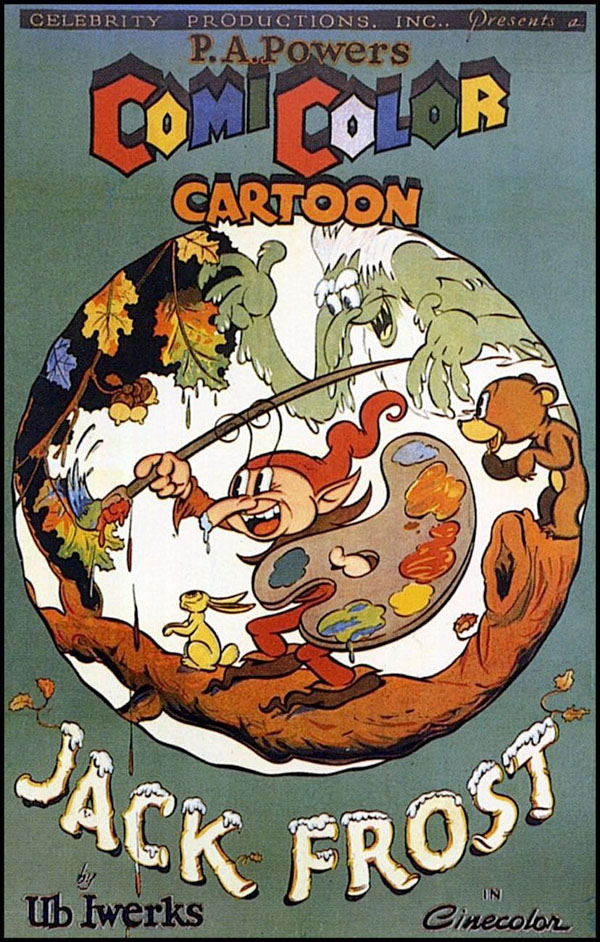


 The trapper is finally revealed as one Jean Batiste – a large, burly, lumberjack-style dog. He easily traces the tracks back to the ranger station, and walks in on the line waiting for Porky’s ironing. Grabbing the iron, he uses it without the aid of insulating towel directly on Porky’s tail, straightening it like a dart, then sticks the rigid tail into the table woodwork, suspending Porky above it, to be punched back and forth like a punching bag. He throws Porky across the room, his tail again piercing the wood of the cabin wall like a dart, placing Porky’s rear end over the escaping hot steam of a whistling tea kettle atop Porky’s stove. Then, Batiste pulls out a sled dog whip, and removes one of his snowshoes. He lassoes Porky with the whip, pulls him out of the wall and back to him, then smacks Porky with the snowshoe, bouncing him off the wall like a tennis ball, and playing a painful one-man tennis game with Porky taking all the hits. Beaver #2 sees all this happening from the doorway, and again retraces his previous steps through the six scenic backgrounds at super-speed, finally coming to a stop below a fuzzy hanging object above, which he pulls. It is the goatee-like fur hanging from the throat of a giant moose, who bellows out a low-pitched wail as an alarm of distress to the forest. In several shots of fine animation detail, rows of bears come charging out of caves, skunks from within trees, a parade of snapping turtles tapping a beat on their shells with drumsticks as a marching band, and of course, hundreds of beavers from dens in the river bed. They converge on the cabin just as Batiste has succeeded in knocking Porky cold. Jean prepares to leave the cabin, but quickly spots the approaching stampede, and tries to bolt the door. No matter. The animals smash it down. Jean speeds out of a rear exit on skis. It’s time to “give him the works” again. Two bears launch the beaver twins at him via crosscut saw catapults, and they slap his head around with their tails as well as wooden sticks. The turtles slide between Jean’s skis, beating his bottom with clubs as they pass under. More beavers launch a barrage of small logs at the back of Jean’s head via slingshots rigged into the antlers of moose. The skunks also launch fitting weapons from their tails – smelly, rotten eggs. Finally, the beaver twins pull the old vine-across-the-path trick, tripping Jean and launching him skyward and off the mountain slope. Jean begins to descend, upside down, and his skis act like whirling propeller blades, spiraling him into a twist, so that he screws himself firmly into the snow-covered ground below, only his ankles and skis left protruding from the snow. The revived Porky, who seems to have recuperated entirely, joins the animals in cheers of victory – then smile at observing what the beaver twins are up to. They have taken advantage of Jean’s downfall and present position, by converting his inverted skis on Jean’s ankles into their new playground attraction – a see-saw (an ending likely “borrowed” from Morty and Ferdie’s similar see-saw atop Mickey Mouse’s head in Mickey’s Steam-Roller of a few seasons back).


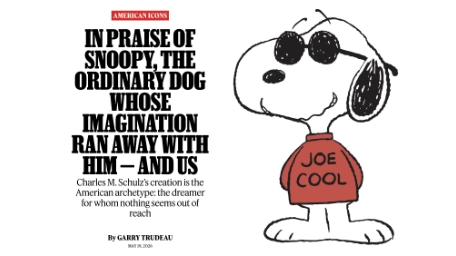


 One of the better-remembered of cartoon beavers was a well-animated and notably-voiced member of the species, nameless on the screen but among studio records affectionately known as Mr. Busy, who appeared as a featured co-star in a popular sequence from Disney’s Lady and the Tramp (6/22/55). He becomes the unlikely answer to an otherwise unsolvable dilemma for Lady, starting when Aunt Sarah, believing that Lady has attacked her pet Siamese cats Si and Am (although the whole thing is a frame up by the felines), takes Lady to a pet shop and has her fitted with a “good, strong muzzle”. Poor Lady can’t tolerate the cruel device, and reflexively runs from the shop, the muzzle and its trailing leash still fastened around her head. She immediately encounters more difficulty when the leash snags loose objects that clank loudly behind her upon the pavement, calling attention to herself, and the unwanted following of a pack of menacing stray dogs from the bad part of town. But Lady has an ally who also knows these dark streets like the back of his paw – the devil-may-care Tramp, another stray who knows how to handle any tough mutt that crosses his path. Hearing Lady’s plight, Tramp follows the progress of the chase, then doubles back by way of a shortcut to come up on the back side of a fence, just as Lady reaches the fence from the opposite side, finding her path blocked and herself cornered. With a mighty leap, Tramp vaults over the fence, landing directly between Lady and her vicious pursuers, and in canine fashion, snarls his most intimidating snarl at the pack, ready to take on three at one time to save the fair damsel. A violent battle of tooth and claw follows, some of its action denoted artistically through clashing shadows against the fence. When the rough stuff subsides, it is the three toughs who have turned tail and run, and a panting but defiant Tramp stands victorious.
 But there’s still the problem of this confounded contraption strapped to Lady’s face. It’s beyond Tramp’s abilities to know how to remove it – but he thinks he knows of a place where they likely can find someone who can – the municipal Zoo. Going through the place from A to Z, Tramp quickly rules out the apes for assistance: “Too closely related to humans.” Alligators might perform the task, but there’s just too much teeth to dodge at the same time. “If anybody ever need a muzzle, it’s him.” Suddenly, a call of “Timber!” is heard, as a large tree falls around Tramp, narrowly missing direct impact from its branches. The cause is Mr. Busy, a zoo beaver constructing a dam within his own habitat. (Kind of advanced for most zoos. I don’t recall seeing any other where there is enough stream and lumber for a beaver to do the same kind of natural thing it does in the wild.) Well, “B” is the next letter of the alphabet (though in correct alphabetical order, Tramp should have checked out the bears first). So Tramp tries to get the toothy-fellow’s attention. “This will only take a second of your time”, proposes Tramp. But the beaver sees things from a different viewpoint. “Do you realize every second, seventy centimeters of water is wasted over that spillway?” (The beaver, voiced by Stan Freberg, is the first rodent of Disney’s to display a pronounced whistling lisp upon uttering “S” sounds, due to his buck teeth – allowing Freberg to have his fun with the read of this “S”-loaded line, much as “R”s provided audio-fuel for the dialogue of Elmer Fudd. Disney would remember this comical “speech impediment”, allowing it to be later inherited by Gopher for the production of “Winnie the Pooh and the Honey Tree”.) So the beaver is to busy to be bothered, insisting that the felled tree has got to be moved for use on the dam. “T’ain’t the cuttin’ takes the time – It’s the dog-gone hauling”, he complains. This gives the observant and prone-to-con-games Tramp an instant idea. What the beaver needs is “the new, improved, patented handy-dandy never-fail little giant log puller!” In delayed reaction, the beaver’s attention is finally aroused. “Did you say log puller?”
  Tramp, instantly adapting to the role of a super salesman, draws Lady into the scheme, calling upon the beaver to observe the product, “modeled by the lovely little Lady”. He also prompts the slow-to-understand Lady to go along with the gag, giving her instructions in hawker’s spiel, “Turn around, sister, and show the customer the merchandise.” Then, the irresistible hook: “And it cuts log hauling time sixty-six percent!” Now the beaver can’t wait to see how it works. Tramp simply slips a loop of the leash around a tree limb, and indicates it is now ready to haul off. The beaver now asks to slip it on for size – but is stumped when he encounters the leather straps holding the device in place on Lady’s head. “How d’ya get the consarned thing off, Sonny?” asks the beaver. Simple. Place the strap between your teeth, and bite hard. One chomp, and Lady is free. Now Tramp is ready to depart, but the beaver still wants to talk business. “I’ll have to make certain it’s satisfactory before we settle on a price.” To the beaver’s surprise, Tramp has no interest in being mercenary – and tells him he can keep it. “I can?” reacts the beaver in surprise. Even more surprising is Lady’s response. Some of Tramp’s tactics are finally rubbing off upon her, and in spite of her ladylike ways, she chimes in, “Uh huh. It’s a free sample!” Tramp shoots her a glance with a beaming smile across his face, recognizing that this new kid to the shell game has got possibilities and potential. The beaver begins to thank the two – but never finishes his sentence, as one tug on the leash sends the fallen tree rolling down the slope of a hill, dragging the beaver along by the leash end. Down and down the lumber rolls, splashing into the stream and dunking the beaver, then floating slowly in the water to lodge directly within the last remaining hole in the dam, stopping the flow of water. Lady and Tramp watch from the hill crest, wondering what the reaction of their hapless patsy will be to this development. The beaver’s head rises from below the water, then turns to see his dam completed. He glances back at the dogs, and with a stream of water gushing from between his front teeth, joyfully remarks, “Say, it works swell!”
  Likely the earliest animated beaver to be created for television was Bucky Beaver, the spokes-critter for Ipana Toothpaste (which sponsor, nearly two decades after its abandonment of the full-length theatrical commercial film, “Boy Meets Dog” at Walter Lantz, finally found its niche in animation spots). Produced by Walt Disney’s commercial animation division in conjunction with the run of “The Mickey Mouse Club”, these spots were particularly aimed at the kiddies, and featured the familiar voice of Jimmie Dodd, master of ceremonies of the Mouseketeers, as both narrator and in speeded-up form as the voice of Bucky. Dodd is definitely not among the ranks of fine animation voice actors, and hams up his role considerably. What’s more, despite changing for every commercial the locale and Bucky’s occupation, the spots suffer from what might be called the “Casper” syndrome – they are all the same, written in the same formula pattern, and never with any zingy or surprise punchlines. Bucky sings his signature jingle (composed no-doubt by Dodd), “Brusha, Brusha, Brusha”, and points as his bright-and-shiny buck teeth. A villainous human called Decay Germ appears, and threatens menacing cavities. A fight ensues, with Germ seeming to get the upper hand over Bucky. But Bucky pulls out an oversized tube of Ipana Toothpaste. Without even being brushed or sprayed with the stuff, and before Bucky can even remove cap from tube, Germ withdraws with the shout, “Oh, no, not Ipana!”, and ends up in whatever trap or immobilization Bucky wants for him. Bucky sings his jingle again, and the commercial ends. A string of three such commercials is presented below. It is unlikely you will want to see any more of them on the same day.

 Before Gumby and his two animal friends can raise a protest, another voice comes to their rescue. Ben’s father has come out looking for the three beavers. Asking what that thing is in the river, he is informed by the boys that it’s the dam they just built. Papa knows his ethics, and scolds them that they had no right to do such a thing without obtaining the other animals’ permission, and orders them to tear the thing down immediately, and be home in time for supper, or there’ll be a spanking for the three of them. So the fable closes, as the owl observes that the beaver boys were just a little too eager – eager beavers, you might say. Gumby and Pokey see the point of the story, and admit they got too eager themselves. “But what’s this about buried treasure?”, asks the owl. Pokey shows him the map, then notices that the tree trunk has not been replaced precisely in its original position, revealing a hollow area at its base. Pokey trots over to investigate its contents, but after a pause, dejectedly informs Gumby, “Nuts! It’s just a lot of walnuts!” From nowhere, a squirrel appears, angrily announcing, “It may be just nuts to you, but it’s MY treasure! Now go away!” Gumby and the owl begin to laugh, Gumby closing with the remark, “I guess the joke’s on us, Pokey.”
  The Frogs and the Beaver (Jay Ward, Aesop and Son (from “Rocky and his Friends”) – date unknown) – You might call this one sort of a latter-day remake of Columbia’s “The House That Jack Built”. Aesop (Charlie Ruggles) spins a tale to go with his latest moral, “Honesty Is the Best Policy” – a moral prompted by his witnessing of the horrendous act of a baseball player “stealing” second base. An industrious beaver has built a stone and mortar resort house on the banks of a river. Two shiftless frogs (Romeo and Julius) decide they are tired of beavers always having it easy, while frogs have to settle for life on a lily pad, and conspire to take over the beaver’s home. With a can of the beaver’s yellow paint, Romeo splatters Julius with spots, then carries Julius inside, claiming Julius is a victim of frog pox. When Julius pretends to go into fits, the beaver, fearing Julius may be contagious, runs away, abandoning the house. The two frogs are as destructive home residents as the Columbia film’s uninvited house guests, and reduce the house to a shambles within a week. Meanwhile, at another spot on the river, the beaver has hastily constructed a new abode made of wood. With their present place in ruins, the frogs opt for comfortable rustic living, with a new plan. The beaver is observed smoking a pipe, so Julius poses as forest ranger Smokey the Frog, stomping upon and busting the pipe, then stomping upon the beaver when he discovers the beaver also carries a book of matches. The beaver again runs off, and in three days the frogs have reduced the cabin to another wreck.
 Three days is all the beaver needs to build a Spanish-style hacienda of dried mud. The frogs show up right on cue, but before they can spring plan number 3, the beaver stomps out his own pipe, displays a coat of painted frog pox he has applied to himself under his shirt, and announces that he can no longer be intimidated. In fact, there is no further reason for intimidation – as he has not built this house for himself, but for the frogs! The frogs are shocked, but not so much that they don’t immediately take occupancy – which is just what the beaver has been waiting for. As a rainstorm moves in, the frogs discover that a structure made of dried mud can quickly change to one made of wet mud when not weatherproofed, causing the whole home to sag and slide off the banks into the river. The frogs are swept away with it in the current, and never seen again. Aesop Jr. has his own idea of a closing moral – Grime does not pay. Aesop chooses to stick to his own line, and carries off to the ball park a gift-wrapped base pad to replace the one stolen last week. Junior wonders what will happen if there is another game played, and someone steals home.
 Beaver or Not (Rembrandt Films/King Features, Popeye, circa 1960 – Gene Deitch, dir.) – As frequently happened in the rushed production schedule and with the low budgets allocated to the King Features Popeyes, this episode is loaded with technical flaws. Poor animation (Popeye’s mouth painted on separate cels from his head, resulting in his speaking often giving the impression that his lips have been surgically disconnected from his jaw line), missed sound-effect cues (Popeye remarking that there must be a saw mill in the area, though we’ve heard no audible buzzing), overlapping tracks (obliterating some dialogue with music or effects), and even a credits sequence where, for possibly the only time in the series, the shots are spliced together in reverse order, revealing the title of the cartoon before the director or producer credits. Plotwise, it bears a resemblance to the later Bugs Bunny “Wet Hare”, while borrowing an ending from Andy Panda’s “Nutty Pine Cabin”.
 Popeye addresses the beavers, telling them they’ve had their fun, but this dam had got to go, as it is ruining Popeye’s vacation. Popeye begins tugging at a central log. Before he can dislodge it, one beaver chews through the log’s middle, detaching Popeye’s end of the wood. Popeye stumbles backwards, getting another dip in the mud. He makes another attempt to yank logs away, but the beavers add to their stack by felling a new tree, right upon Popeye’s head. Popeye tries a two-handled saw across the dam’s middle, but the beavers swim underwater on their side, grab the other handle, and hold it fast. Popeye’s end of the saw bunches up, then propels him backwards with the force of a coiled spring. Popeye falls with his head inside a hollow tree stump, disturbing an owl roosting within. Popeye turns to dynamite. The beavers are able to yank out the stick just in time, launching it upon one of the beaver’s tails back at Popeye. Popeye shoots into the air, then crashes through the bottom of his beached canoe on the way down. There’s only one thing to be done, and Popeye is going to do it. Eat spinach
 The beavers race up the hill toward Popeye’s cabin, and both of them gnaw at the largest tree adjacent to the cabin, until 90% of its base in eaten away, aimed to tip right upon Popeye’s residence. Popeye sees the disaster in the making, and zooms up the hill, taking his place in the notch carved by the beavers to keep the tree from falling. But this is just what the beavers wanted to keep Popeye occupied. They position themselves under the porch of Popeye’s cabin, and gnaw away the supporting pillars. The house slides down the hillside, landing with a thud tight in the river bed, creating a new ready-made dam just as Andy Panda’s beavers did. Popeye runs down the hill to survey the irreparable damage. (In a continuity inconsistency that seems more calculated to save on animation budget rather than to be a mere error, the tree Popeye has been supporting does not fall.) The beavers emerge out of the water on their side of the new “dam”, and invite Popeye to “Come on in. This is fun.” Popeye decides when you can’t beat them, join them, and ends the film by challenging the beavers to a swimming race to reach the opposite shore.
  The Ballad of Smokey the Bear (Rankin-Bass, 11/24/66 – Larry Roemer, dir.), seems to be among the least-remembered, Rankin-Bass projects, despite following upon the heels of the success of “Rudolph, the Red-Nosed Reindeer” and using the same script writer and musical composer. Its primary problems seem to boil down to a lead character with minimal personality traits, and a more somber mood for its storyline. It would receive no return network screenings, and would take decades before receiving any occasional airing as a one-shot rerun on some small local station.
 Dallying in returning to his cave, Smokey (not yet named, by the way), smells the unfamiliar scent of smoke, and sees the animals of the community running for cover. He is caught in a raging forest fire alone, and remembers his mother’s warnings to climb a tree when danger threatens. When his larger brother (voiced by James Cagney) searches the woods for him, he is forced to duck under rocks while the blaze passes, then emerges to find the trees charred and leafless, with one holding the singed but still very much alive Smokey clinging to its topmost limbs. Smokey (named by his brother for the smell left in his fur) is in shock, will at first not talk, and has to be carried home by his brother – only to find that Mom also went out looking for Smokey, and was lost in the conflagration. (Shades of Bambi!)
  The beavers are featured in one more sequence, in which, after the ape is tracked to a deserted hunter’s cabin (where he recklessly dumps waste into the stream and even dabbles in smoking, presenting the danger of setting the regrown forest ablaze again), each of the animals of the forest are invited at a group protest meeting to work on their own ideas to capture the ape, in the hopes that if one idea fails, another will work. Of course, not only do many fail, but others cross-up each other. The beavers gnaw a large tree’s trunk to the near snapping point, then set out a smelly dead fish as bait, tied to one of the branches. Their hope is that the ape will pull at the rope to which the fish is tied, tugging the tree down atop himself. The ape, however, is repulsed by the smell of the fish (though Joe believed the smell would either make him hungry or resemble his own scent so much, he’d think it was a visiting relative), and leans against the tree trunk instead of pulling at it. The tree falls upon the dam, smashing it again. Ultimately, when everyone’s plans fail, loner Smokey becomes convinced in his worries over the possible fate of the trees to take matters into his own hands, and batters down the door and front wall of the cabin. The collapse of the structure sets off a fire from the fireplace wood within, and traps the gorilla under fallen logs of the roof. Smokey forms a bucket brigade from the other animals, succeeds in having the fire doused, and uses a spade found in the cabin’s rubble to bury and stamp out the final embers. He also frees the gorilla from his log imprisonment, and becomes friends with him without a spoken word, coaxing the ape to walk with him paw in paw, and be led back to the zoo. Upon learning of his heroic battling of the beast and the fire, the Forest Service sends him his signature hat and shovel, and appoints him chief animal ranger of the forest. And thus, the legend is forged.
 After what seems to be a long hiatus for the species, we get Garfield in the Rough (Film Roman, 10/26/84). This may not be an ideal Garfield special. Perhaps a few too many tunes. Perhaps overly-dramatic in places. But it was trying for something a little different – and still manages to deliver a goodly share of laughs and memorable verbal zingers. It begins in Wizard of Oz fashion, with black-and-white imagery, and a disclaimer not to adjust your TV set, as all the color has temporarily gone out of Garfield’s life. That goes for Jon too, who is so bored, he collapses on his face at the breakfast table. With his face still plastered on the tabletop, he mumbles that maybe it’s time they take a vacation. Garfield brightens, pulls up the windowshade, and the world turns to color once again. But where? Garfield fantasizes about jaunts to a tropical island, or maybe Mexico – each dream featuring a beautiful feline native or Senorita to woo. Then Jon drops the bombshell – they’re going camping. Not bad – if you’re in the mood for tolerating the insects, the dampness, the poor food, lack of a litter box – which Garfield definitely isn’t.
 Overnight, the food supply Jon has packed for a week’s rationing disappears. Garfield has declared it his midnight snack – except for the eggs, which dirty old egg-sucking dog Odie beat him to. Garfield dashes into the woods to lay low until Jon’s wrath dies down. He is finally struck with a begrudging admiration of the beauty of nature in the wild, but then remembers that wild things also live in the forest, and begins to imagine himself as next target for being eaten. Thus, when he chances to encounter a harmless rabbit, Garfield shrieks, flops on the ground, and begs for his life. A beaver walks up from the other direction. “What do you make of it, Dicky?”, asks the rabbit to the beaver. “Beats me, Billy”, responds the beaver. “Maybe he’s gotten into some fermented jujubeans or somethin’.” Garfield finally figures out, with some embarrassment, that these supposed-hostile animals are herbivores, and brushes himself off, declaring that you can’t be too careful in the wild. The rabbit suggests he’s been watching too many jungle pictures. But Garfield mentions the report about the panther – which sends both of his forest friends ducking for cover behind a log at his very mention. The beaver is the only one who’s seen it, just for a moment, as it turned its yellow eyes upon him while he was in the stream – and stared right through his soul. Now a rustling in the brush is heard. Garfield prepares to face the beast in a unifed front with his new friends – until he looks back to find they have deserted him and vanished. Garfield jumps into a hollow stump, and feels a tongue making contact with his fur. But panthers don’t lick. It is only Odie, slurping him through a knothole. Garfield tells Odie they’ve got to go back to camp and warn Jon.
 Jon is still in camper’s euphoria, and fails to heed Garfield’s desperate efforts to tug him away, back to the car. Suddenly, with slow stealth, the panther makes its move from out of the brush, closing in with deliberate paces. Jon shouts to his pets to scatter. Garfield scrambles to climb up a tree. Jon ducks into his miniature tent, but the panther tears apart the canvas with one slash of its paw. Jon runs, gathering up Odie, and races for the car, locking the door. But he can’t leave without Garfield. The panther appears at the window, first clawing at the glass, then attacking it with powerful swipes of his paw, finally breaking through. The panther reaches a paw inside, slicing away a large portion of Jon’s shirt. Garfield watches in horror from the limb above – then, something snaps inside him. Garfield’s teeth clench in a jagged snarl. His claws emerge. And he leaps down upon the back of the big cat. The panther jumps around with an unwanted passenger clinging fast to his back, but finally succeeds in throwing Garfield like a bucking bronco. Garfield lies on his back, pinned against a rock face, as the panther’s attention switches to him, and he slowly moves in for the kill. At that moment, a shot rings out. The rangers have tracked the beast, scoring a direct hit upon him with a tranquilizer dart. The panther seems to collapse, inches short of his target – then opens his eyes again, placing his mighty paw atop Garfield’s chest – only to fade again, and pass out in a deep sleep. Garfield turns to the camera, and comments, “Nice touch.” The rangers are happy to find everyone is okay, and remark that it was a good thing they didn’t show up a second later. Garfield, in his silent pantomime and unheard dialog, attempts to boast to blow up out of proportion his own unexpected instinctive heroism, claiming that he simply would have turned on his inner ferocity to finish off the beast. “When the tough get going, the going gets tough…” Well, something like that, as Garfield spends the whole trip home trying to work out the correct words to the phrase.